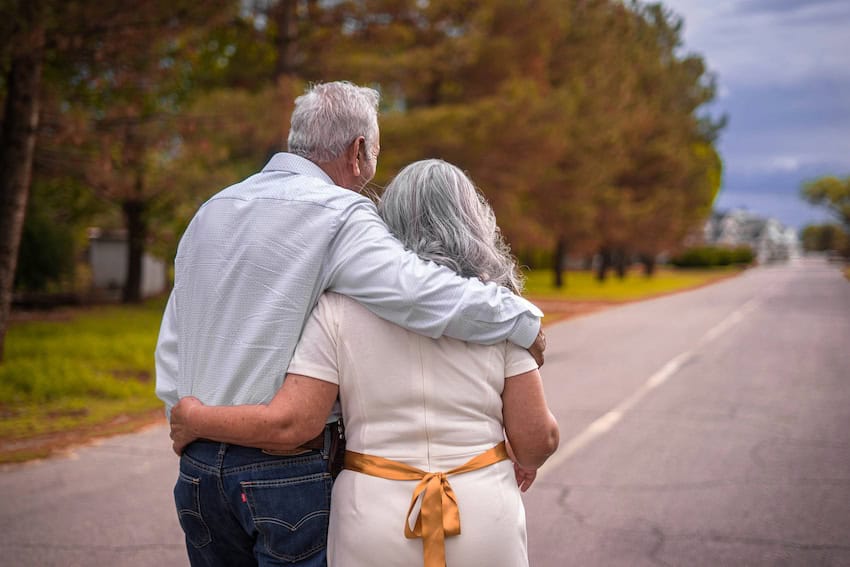
Has moving to Mexico rekindled your sexuality? Therapist Jenna Mayhew can help navigate the wild world of sex in your 60s. (Esther Ann/Unsplash)
Do you live in Mexico, and are you wondering about sex in your 60s? Jenna Mayhew has been working as a psychologist in Mexico for eight years. At her practice, Hola Therapy, she has made it her mission to help foreigners living in Mexico, Mexicans with a foreign partner, foreigners with links to Mexico and Mexicans with links to foreigners or foreign countries.
Now, Jenna answers MND readers’ questions on the pressing issues of relationships, mental health and navigating changes that come with relocating to and living in Mexico.
Psychologist Jenna Mayhew is here to answer reader questions. (Hola Therapy)
Dear Jenna,
I’m a 63 year old woman and I’m living in Mexico. I’ve recently started dating again. What are realistic expectations for a sexual relationship at my age?
Shy but open
Dear Shy but open,
What a great question! It sounds like you’re stepping into an exciting new chapter, and it’s completely natural to feel both tentative and hopeful.
Let me start by saying that you can set your expectations high! Many people find that their sex lives improve with age, experiencing higher sexual satisfaction than younger adults. Further to that, the Journal of Sexual Medicine in 2021 found that 10% of adults over the age of 90 remained sexually active. So you potentially have many more decades of great sex ahead of you.
Despite the improved enjoyment and satisfaction, it’s important to acknowledge some physical changes that come with age. Physical health problems such as arthritis, chronic pain or incontinence can complicate sex. The sex organs themselves start to function differently. The vagina can shorten and narrow and there’s less vaginal lubrication. In men, erectile dysfunction (impotence) also becomes more common. Even when erections are achieved, they may not be as long-lasting or rigid.
In your 60s, it’s common that more time is needed for physiological arousal for both women and men. This is a normal and to-be-expected change. It shouldn’t be considered a reflection of the attraction your partner has to you or vice versa. Conversely, pain is not and should not be considered normal. There are often relatively simple solutions that doctors, pharmacists and therapists can offer and physical changes need not be a barrier to a healthy, safe and very satisfying sex life.
Sex in your 60s might be slightly different from when you were younger, but many report it to be much more pleasurable.(Hector Reyes/Unsplash)
I want to add that many adults/older adults haven’t received the type of sexual education that is common in school these days. So it’s worth mentioning that even if pregnancy isn’t a risk, you still need to protect yourself from sexually transmitted infections (STIs). If you choose to be exclusive, you may want to both be tested. This applies to same-sex sex as well. Given that almost half of older lesbians have had heterosexual intercourse at some point in their life, and that female-to-female transmission of STIs like HIV is possible (albeit rare), protection against STIs is still needed.
At this age and stage, you have a great opportunity to create the kind of sexual relationship/s that you’d like. Don’t hesitate to educate yourself and seek support from professionals. Here’s to a long, joyful, and fulfilling sexual future!
Jenna
Ask your questions
To submit your question to Jenna, leave a comment on this article with the heading “QUESTION”. Please include as much detail as you would like to about yourself (age, location etc) and why you are interested in the question.
Jenna Mayhew is an Australian psychologist based in Mexico, with over 20 years of experience in Australia, England and Mexico. She is the founder of Hola Therapy, a bilingual practice dedicated to supporting the immigrant and cross-cultural communities in Mexico.
Hola Therapy aims to give back to the community and one way they achieve this is by providing by clinical and financial support Misión México Foundation. https://www.misionmexico.org Misión México Foundation is a charity in Tapachula, Chiapas, Mexico. They provide a stable, therapeutic environment for some of the state’s most vulnerable children, with a focus on safety, emotional recovery and education.
If you have enjoyed the “Ask Jenna” column, please consider giving back by making a small donation to the Misión México Foundation
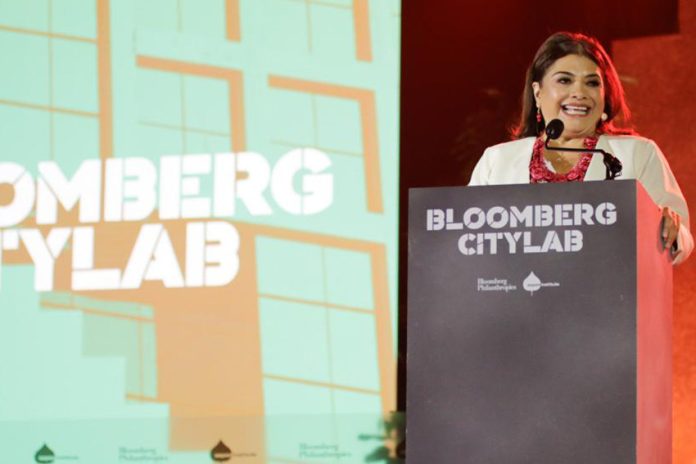
Mexico City Mayor Clara Brugada spoke at the Bloomberg CityLab Summit on Tuesday in the nation's capital. (Clara Brugada/X)
Mexico City Mayor Clara Brugada addressed the Bloomberg CityLab Summit in Mexico City on Tuesday, 10 days after she took office as the capital’s second elected female mayor.
Brugada, who was mayor of the Mexico City borough of Iztaplala on two occasions before winning this year’s mayoral election, will govern the capital for the next six years, continuing the Morena party’s rule in the nation’s biggest city.
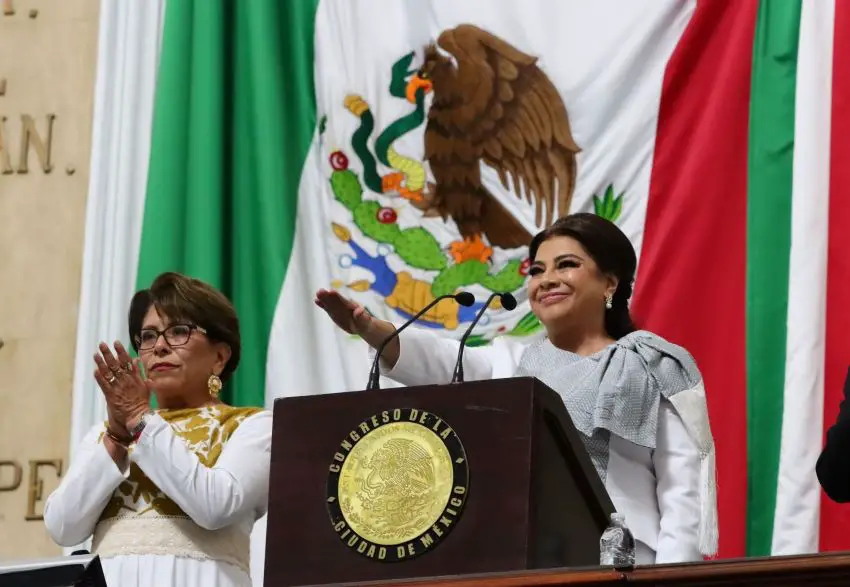
Newly inaugurated Mexico City Mayor Clara Brugada is Mexico City’s second woman mayor, as well as its second consecutive woman mayor. (Clara Brugada/X)
She replaced the interim Mexico City mayor, Marti Batres, who took over for then-mayor Claudia Sheinbaum after she resigned to run for the presidency.
Here are some of the highlights of the speech Brugada made on Tuesday to an audience that included scores of her fellow mayors from countries around the world.
‘It’s time for women’
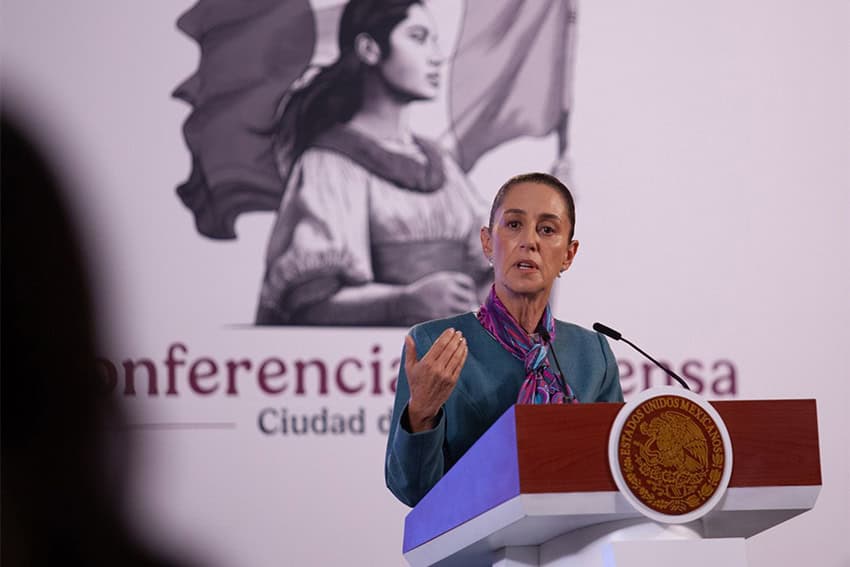
Echoing the words of former Mexico City mayor and new Mexican President Claudia Sheinbaum, Brugada declared that “it’s time for women in this country and the world.”
Mexico, she said, is currently in “historic times,” given that the country has its first female president.
Brugada stressed that the “it’s time for women” declaration doesn’t just apply to political representation, but is also a commitment to improving the lives of all women.
Brugada said one of the goals of her government is to make care of children, the elderly and the disabled a more public obligation, freeing up their caregivers, who Brugada said are mostly women. (Clara Brugada/X)
She asserted that achieving gender equality is “one of the most important priorities” for her, and for Sheinbaum.
“So, with women, we’re building a great and substantive equality plan for Mexico City,” Brugada said.
“For me, ‘it’s time for women’ means it’s time to deliver justice to women, and this means public policies that place combating gender inequality at their center,” she said.
Caregiving can become a ‘public responsibility’
Further outlining her plan to deliver justice to women, Brugada said that one of the “fundamental” goals of her government will be to create “the Mexico City public care system.”
“This is very important because it’s a new way to rethink cities,” she said.
Brugada said that her proposal entails “ceasing to think that care is solely a private task,” explaining that her government will build new public infrastructure where children, the elderly and the disabled can access care services, thus relieving pressure on their current carers, the majority of whom are women.
“We’re going to create robust [caregiving] infrastructure that includes more than 200 childcare and development centers,” Brugada said, “… but also day centers for senior citizens, rehabilitation centers for people with disabilities.”
By building adequate infrastructure, care can become a “public responsibility” rather than a private one, Brugada said, adding that access to the city’s care services will be a “right” for citizens and that the city government has an “obligation” to provide those services in accordance with the Mexico City constitution.
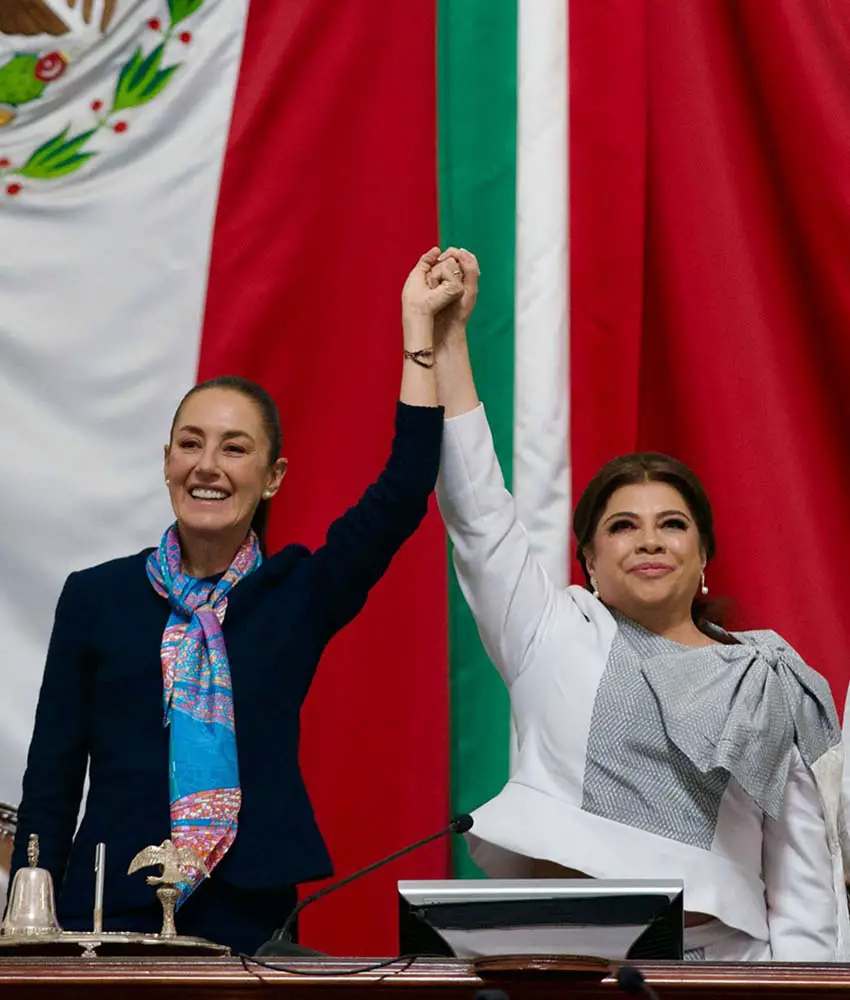
Brugada, right, and President Claudia Sheinbaum, left, have a shared history. Brugada was borough mayor of Iztapalapa in Mexico City while Sheinbaum was city mayor, and they worked together on projects. (Presidencia)
CDMX’s ‘second story’ of transformation
“Our task is to build the second story of the transformation of this great city,” Brugada said, once again borrowing from the discourse of President Sheinbaum, who says her government will consolidate the so-called “fourth transformation” (4T) of Mexico initiated by former president Andrés Manuel López Obrador.
“… What does that mean? [It means] building territories of peace and equality, deepening security models that are close … to the people,” she said, referring to policing strategies.
“This means continuing with a [security] model that has yielded results,” Brugada said, citing an almost 60% decline in high-impact crimes such as murder during the term of the previous Mexico City government.
She also highlighted the importance of using technology in the ongoing fight against crime.
The Cablebús cable car transport system has been in operation in Mexico City since July 2021. It’s first line saw 78% more ridership than expected. (Photo: Victoria Valtierra Ruvalcaba/Cuartoscuro)
More sustainable, time-saving transport coming
Before emphasizing the importance of continuing to build new transport infrastructure, Brugada told the Bloomberg CityLab Summit that 78% of Mexico City residents regularly use public transport to get around the capital.
She highlighted her pledge to build an additional five cable car (cablebús) transportation lines that link (mainly disadvantaged) neighborhoods to other transport services, such as the Mexico City Metro.
She also pledged to build additional cycleways and to continue investing in electromobility, or e-mobility, in Mexico City, where many electric buses already operate.
“We want the main force of transport in Mexico City to be sustainable,” Brugada said.
“We will continue with electromobility [initiatives], we will continue building accessible, sustainable infrastructure that reduces transport times. In this city, we want people to be able to enjoy themselves with their families instead of spending hours and hours on transport,” the mayor added.
Among the attendees at the Bloomberg event were mayors from around the world. (Clara Brugada/X)
Problems need ‘metropolitan solutions’
Brugada highlighted that while the population of the 16 alcaldías, or boroughs, of Mexico City is approximately 9 million, some 22 million people call the capital’s greater metropolitan area home.
Issues that affect Mexico City proper affect the entire metropolitan area, she said.
The mayor acknowledged that “one of the fundamental issues for the city is water” and pledged to change the way water is managed to reduce waste of the essential liquid.
Brugada also spoke briefly about waste management, telling the summit attendees that some 13,000 tonnes of trash are produced in Mexico City every day
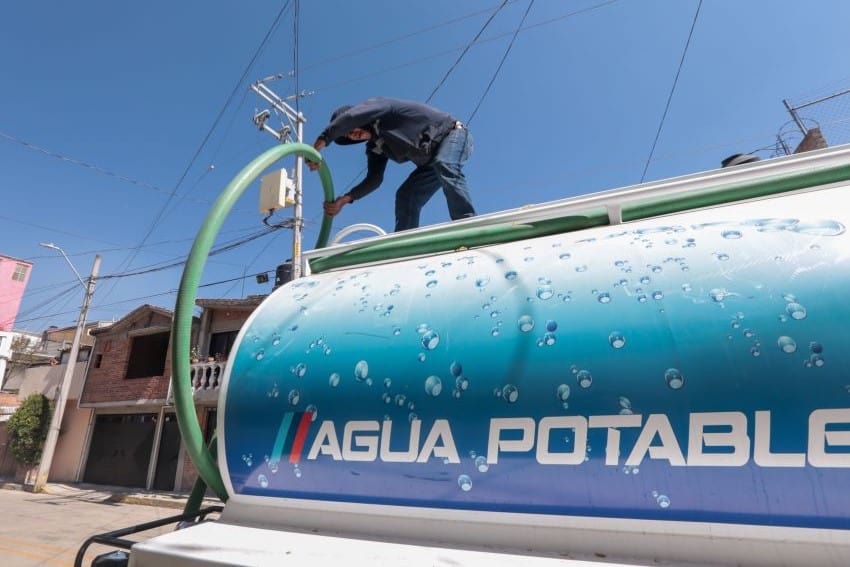
Many residents of the greater metropolitan area of Mexico City regularly have limited access to running water and depend on water deliveries from trucks sponsored by the city. (CRISANTA ESPINOSA AGUILAR /CUARTOSCURO.COM)
“Within six years, we’re proposing recycling half of all of Mexico City’s waste. This is very important. … We have the method, which is large recycling plants,” she said.
New ‘utopías’ on the horizon
Brugada is perhaps best known for Iztapalapa’s “utopía” community center projects, which provide free athletic, recreation and education opportunities in the disadvantaged borough.
On Tuesday, the former Iztapalapa mayor spoke about her government’s plan to build an additional 100 “beautiful” utopías across the capital.
“This city is planning a great project for the transformation of public spaces,” Brugada said.
“… What are the utopías? … [They are] great, transformative projects that have infrastructure for sport, recreation, culture, well-being and caregiving,” she said.
Brugada is known for building community centers called “utopias” which offer family recreational and educational activities. This one that opened in 2023 has a digital aquarium. (@Claudiashein/Twitter)
Brugada said that the 100 new utopías will be built in parts of the capital where they are most needed
In keeping with the 15-minute urban planning concept, the utopías will be situated so that a large number of Mexico City residents can get to them in less than 15 minutes from their homes, she added.
“The utopías are our big bet for [achieving] equality, for delivering social and territorial justice in this city,” Brugada said.
“I come from an outlying area [of the city], so one of the big objectives we have is for the outlying areas of Mexico City to not be synonyms of inequality and abandonment,” she said.
A city with ‘shared prosperity’
Brugada noted that Mexico City has the largest economy of any city in Mexico, and set out a broad economic vision for the capital.
“We want this city to continue being a prosperous city, a city with shared prosperity, a city in which generating income comes with an environmental responsibility, a city in which we see that the best social program is employment,” she said.
The mayor also said she wants her administration to be “a great digital government, an open government and a government that promotes [internet] connectivity and modernity.”
Making another reference to López Obrador’s 4T, Brugada added that Mexico City is the “capital of the transformation” of Mexico.
“It’s a global, cosmopolitan and diverse city,” she told summit attendees from around the world.
By Mexico News Daily chief staff writer Peter Davies (peter.davies@mexiconewsdaily.com)
The IMF explained its gloomy outlook by citing, among other factors, investor concerns about a recently passed judicial reform package. (Shutterstock)
The International Monetary Fund (IMF) on Tuesday lowered its 2024 economic growth forecast for Mexico to 1.5% while projecting even slower growth in 2025.
Citing capacity limitations and a restrictive monetary policy, the IMF foresees Latin America’s second-biggest economy dipping to 1.3% in 2025, but it does expect Mexico to guide inflation toward the Bank of Mexico’s 3% target.
President Sheinbaum inherited the controversial set of judicial reforms that passed just before she took office. She has tried to reassure global investors that it will not destabilize the rule of law in Mexico’s courts. (Andrea Murcia Monsivais/Cuartoscuro)
The IMF — a financial agency of the United Nations headquartered in Washington, D.C., and funded by 190 member countries — also explained its gloomy outlook by citing investor concerns about a recently passed judicial reform package that raises questions about the effectiveness of contract enforcement and the predictability of the rule of law in Mexico.
The IMF’s prediction is just the latest in a recent trend of pessimistic growth forecasts for Mexico.
The World Bank now sees the Mexican economy growing by 1.7% this year, 0.6 percentage points lower than its 2.3% forecast in June. At the same time, the World Bank also lowered its 2025 forecast by 0.6 points to 1.5%, while its 2026 forecast shrank from 2% to 1.6%
And last week, BBVA México — Mexico’s largest financial institution — released a report showing a decline in consumer confidence this year, its biggest downturn since the beginning of the COVID-19 pandemic.
In the same report, BBVA projected 2024 economic growth to top out at 1.2% (down from a previous forecast of 2.5%), while forecasting just 1.0% growth for 2025, citing weak internal demand and uncertainty resulting from the judicial reform.
A recent report by the financial institution BBVA México also forecast lower growth for Mexico in 2024, citing the decline in consumer confidence and weak internal demand. (Mireya Novo/Cuartoscuro)
Although consumer spending kept increasing during the first nine months of 2024, for a total growth of 9.8%, BBVA reported, this figure was actually down 1.8% from the same period last year.
In addition, consumer spending in September showed signs of deceleration. A 1.5% increase in September lagged behind the 2.2% increase posted in August.
The newspaper El Economista reported that the BBVA Research team predicts that consumer confidence will continue to decline in the next few months as GDP growth remains low and real wages dip because of modest job growth in the industrial sector.
Mexico's National Meteorological Service (SMN) says a cold front is bringing cooler temperatures this week to higher elevations in México state, Chihuahua and Durango. (Cuartoscuro)
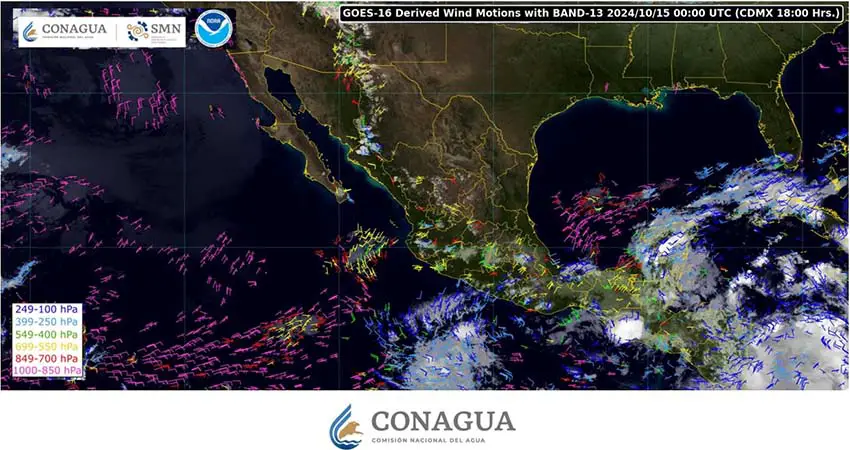
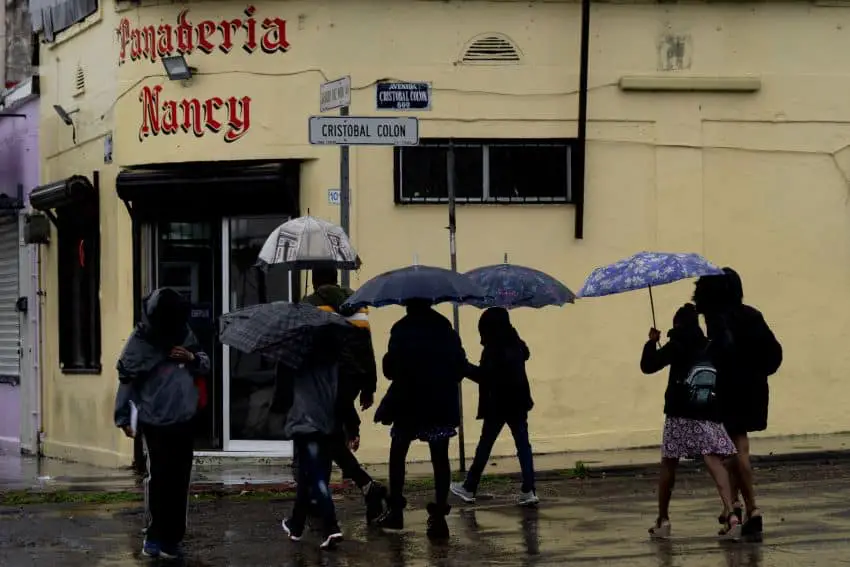
Mexico may expect rainfall and cooler temperatures in some areas this week, according to the National Meteorological Service (SMN).
The SMN has warned that rainfall may lead to reduced visibility, landslides and flooding of rivers and streams. It urged residents to follow the recommendations of Civil Protection authorities as strong winds may knock down trees and advertisements.
Intense rainfall is currently headed toward the states of Campeche, Yucatán and Quintana Roo, thanks to a low-pressure system moving from the Caribbean toward Central America that will pass over the Yucatán Peninsula. (Conagua/X)
Rain forecast by state
Weather forecasts predict that a low-pressure system is moving from the Caribbean toward Central America, passing through the southern part of the Yucatán Peninsula, the Gulf of Mexico and the Isthmus of Tehuantepec. This system, in interaction with a cold front, will cause rainfall this week in several states:
Intense rainfall (75 to 150 mm): Chiapas.
Very heavy rainfall (50 to 75 mm): Campeche, Tabasco and Yucatán.
Heavy rainfall (25 to 50 mm): Oaxaca, Quintana Roo and Veracruz.
Meanwhile, another low-pressure channel extending over the north, west and center of the country, coupled with the entry of humidity from the Pacific Ocean, will cause rains in the following states:
Heavy rainfall (25 to 50 mm): Guerrero and Michoacán.
Light showers (5 to 25 mm): Chihuahua, Colima, Durango, México state, Jalisco, Morelos, Nayarit, Puebla and Sinaloa.
Isolated rains (0.1 to 5 mm): Baja California, Baja California Sur, Mexico City, Guanajuato, Tlaxcala and Zacatecas.
The SMN also is forecasting northerly winds with gusts of 50 to 70 kilometers per hour in the Isthmus and Gulf of Tehuantepec. Potential dust devils and gusts of 40 to 60 kilometers per hour are expected for Baja California Sur, Chihuahua and Sonora.
Weather forecast by region
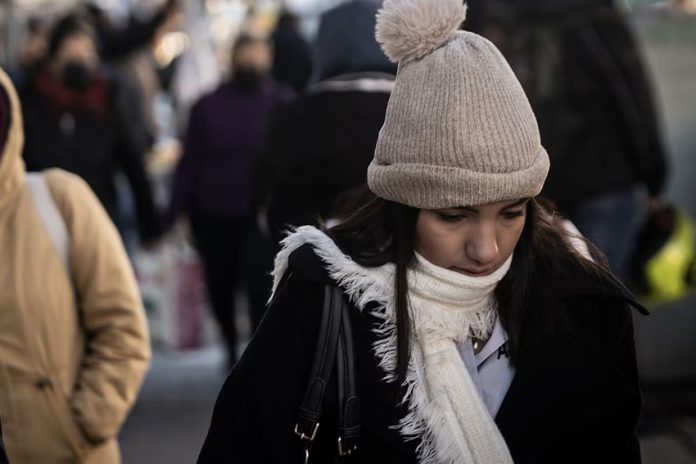
Minimum temperatures of minus 5 to zero degrees Celsius and frost are expected in the mountainous regions of Chihuahua, Durango and México state.
In Tijuana and other parts of Baja California, residents can expect temperatures between 30 and 35 degrees Celsius and isolated rainfall. (Omar Martínez/Cuartoscuro)
Temperatures ranging between zero to 5 degrees Celsius are forecast in higher parts of Aguascalientes, Coahuila, Guanajuato, Hidalgo, Jalisco, Michoacán, Nuevo León, Querétaro, San Luis Potosí, Oaxaca, Puebla, Tlaxcala, Veracruz and Zacatecas.
In contrast, high temperatures are expected for other regions in the country.
Baja California Sur, Sinaloa and Sonora will see temperatures range between 35 to 40 degrees Celsius.
Meanwhile, temperatures ranging between 30 and 35 degrees are expected in Baja California, Campeche, Chiapas, western Chihuahua, Coahuila, Colima, western Durango, Guerrero, Jalisco, Michoacan, Nayarit, Nuevo Leon, Oaxaca, San Luis Potosi, Tabasco, Tamaulipas, Quintana Roo, Veracruz and Yucatán.
The awarded taquería will open a pop-up on Oct. 16 at Tacombi’s Flatiron location on West 24th Street in New York City. (Tacombi/Instagram)
The famed tacos of Taquería El Califa de León, Mexico’s only taquería with a Michelin star, will be available in Manhattan this month in partnership with Tacombi, a fast-casual Mexican restaurant chain.
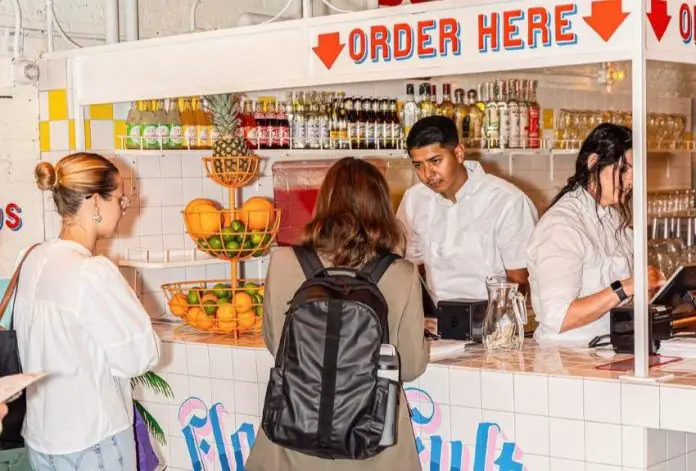
The awarded taquería will open a pop-up on Oct. 16 at Tacombi’s Flatiron location on West 24th Street in New York City. The tacos will be served from 6 to 10 p.m. Subsequently, from Oct. 17 through Oct. 31, two of El Califa’s tacos will be available at other Tacombi locations throughout New York City.
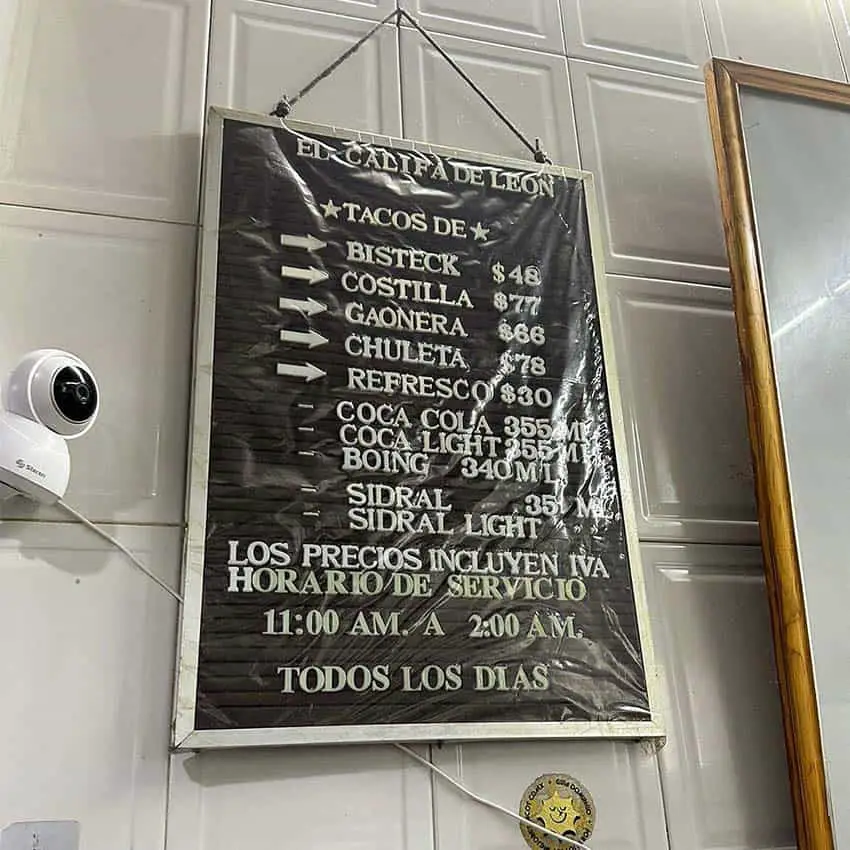
The culinary event on Oct. 16 will feature the four award-winning tacos from El Califa de León — Bisteck, Costilla, Gaonera and Chuleta tacos — as well as its two popular sauces, created and served by the owner of El Califa, Mario Hernández Alonso.
“We are honored to partner with El Califa de León and share their tradition with our Tacombi diners,” Tacombi founder Dario Wolos told the magazine El Restaurante. Wolos told the magazine that he came up with the idea of taking the tacos to New York after meeting Hernández during a recent trip to Mexico City.
Tacombi, which started out of a Volkswagen van — sometimes called a combi — in Mexico’s Yucatán Peninsula over a decade ago, now has Tacombis in Miami Beach, New York, Chicago and the suburbs of Washington D.C. It has 16 locations in total and has plans to open 60 more in the next five years.
For its part, Taquería El Califa is a tiny, no-frills taquería in the modest San Rafael neighborhood of Mexico City. Founded in 1968 by Hernández’s parents Juan Hernández González and Josefina Alonso Ruiz, it is the only taco purveyor among the 18 restaurants that received one or two stars in the first-ever Michelin Guide to Mexico 2024.
The menu at El Califa de León has only four items to choose from — simple but sublime, say the folks at Michelin. (Rodrigo M./Internet)
After earning the accolade, Hernández told the newspaper El Universal that this recognition was “a reward for perseverance, hard work and the quality of the products.”
“It is a responsibility that makes us better every day,” he said. “And it encourages us to continue meeting the standards to which our clientele is accustomed. Few taquerías in Mexico actually offer their diners authentic 50-gram beef filet tacos.”
In Mexico City, El Califa operates 365 days a year, from 11 a.m. to 2 a.m., except on Holy Thursday and Good Friday.
The Environment Ministry (Semarnat) says the now-shuttered quarry operations “completely destroyed” three nearby cenotes. (Archivo/Cuartoscuro)
A limestone quarry owned by the Alabama-based company Vulcan Materials caused an “ecological disaster” in Quintana Roo, Mexico, and the company must restore the site, Environment Minister Alicia Bárcena said on Friday.
Mexico’s Environment Ministry (Semarnat) claims that operations at a limestone quarry managed by a subsidiary of Vulcan Materials destroyed three cenotes before the property was seized by Mexican authorities.
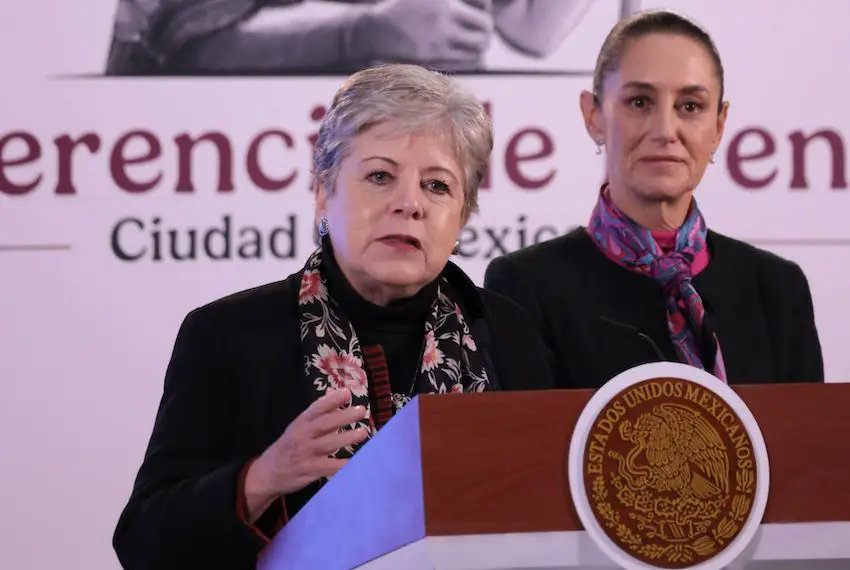
On Friday, Environment Minister Alicia Bárcena said the government did not “expropriate” Vulcan’s land in Quintana Roo. “The only thing we are saying is they can not extract one more gram of limestone,” she explained. (Presidencia/Cuartoscuro)
Last week, Bárcena — previously Mexico’s Foreign Affairs minister — defended a Sept. 23 presidential decree declaring a 50,000-hectare stretch of land in the state of Quintana Roo part of a protected natural reserve. This vast tract, which stretches from Playa del Carmen to Tulum, includes a mine and a marine port operated by Vulcan subsidiary Sac-Tun, formerly known as Calizas Industriales del Carmen (Calica).
Speaking during President Sheinbaum’s Friday morning press conference, Bárcena said the now-shuttered quarry operations “completely destroyed” three cenotes — natural sinkholes that are the primary source of water in the region.
The company also violated their mining permits, extracting more limestone than allowed and discharging water with higher-than-permitted levels of pollutants, Bárcena said, citing an investigation by the Federal Attorney’s Office of Environmental Protection (Profepa).
According to the newspaper El Economista, Bárcena claimed that the company’s quarrying permits had expired in 2020 and it did not have all the necessary water-use permits. She also accused Calica of falsely claiming to have concessions to operate in designated archaeological zones.
Vulcan — which has been operating in Mexico since 1986 — announced it would fight the expropriation, but Bárcena said the decree was not an expropriation. “The land still belongs to [Calica],” she said on Friday. “The only thing we are saying is they can not extract one more gram of limestone.”
Bárcena also said the decree requires Calica to repair the damage done to the landscape and possibly reforest the property.
The conversion of the region into a protected natural reserve was the latest salvo in a long-running battle dating back three years.
President Andrés Manuel López Obrador issued the decree during the final week of his six-year term.
For years, López Obrador criticized Vulcan’s activities as “ecocidal.” He finally ordered Vulcan’s Calica unit to halt the quarrying of the limestone — which was primarily exported to the United States for road-building purposes — two years ago.
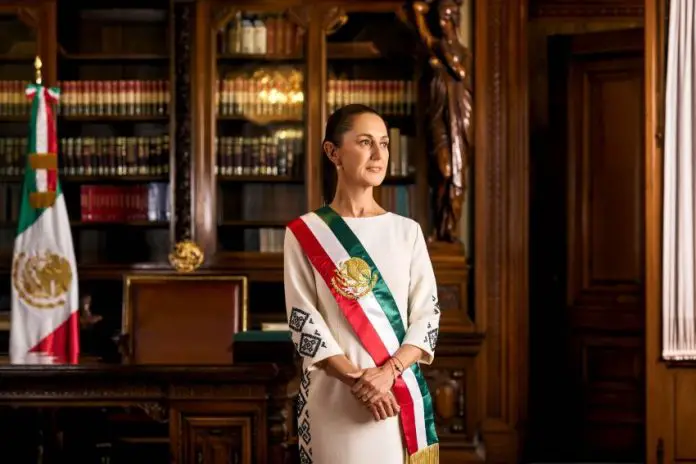
The new president posted the portrait to social media on Sunday. “Official photograph in the presidential office of the National Palace,” Sheinbaum captioned the photo.
El equipo me convenció de tomar la foto oficial. Así fue el detrás de cámaras. pic.twitter.com/HT9Ou0dIy4
On Friday, the 62-year-old former Mexico City mayor said on X that her team had “convinced” her to pose for “the official photo.”
She also posted a 35-second “behind the cameras” video to the social media platform.
The official photo released on Sunday shows the president standing in her office wearing a white dress and the presidential sash, an adornment that is particularly common among Latin American leaders.
Sheinbaum’s decision to stand for the portrait sets her apart from previous Mexican presidents who posed while seated in the presidential chair. In the first presidenta‘s photo, that chair appears behind her.
Sheinbaum’s decision to pose for and release an official photo shortly after taking office also sets her apart from her political mentor, former president Andrés Manuel López Obrador, who didn’t initially sit — or stand — for an official snap.
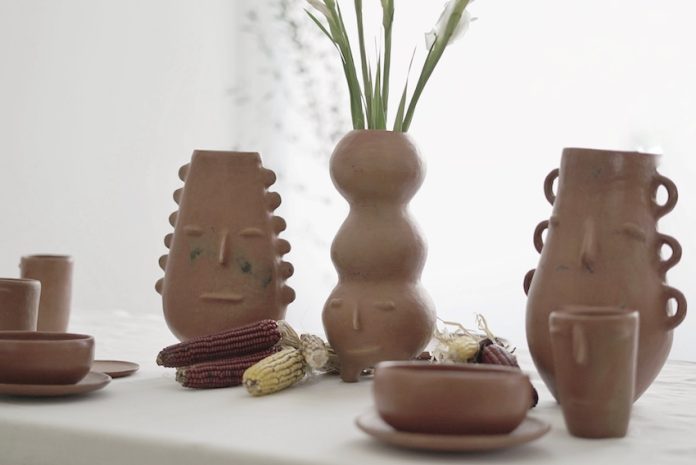
Inspired by Indigenous designs and production techniques, Sustancia is bringing tradition back to Mexican interior design. (Sustancia).
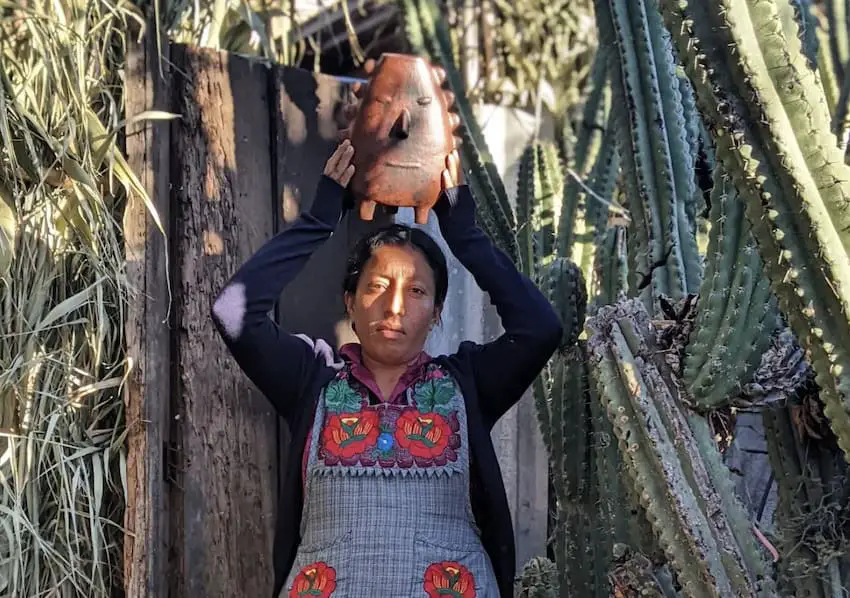
Aruna Calderón Rivera fell in love with the ancient clay techniques of Oaxaca, nestled in the mountains of the Sierra Mixe and the Valles Centrales. While at that point working as an industrial designer, he soon felt the urge to create something more meaningful. Thus, in 2019, he launched Sustancia — an interior design project that blends pre-Columbian pottery techniques — dating back at least 3,000 years, with contemporary design. This exceptional enterprise thrives on true collaboration with artisans.
In Oaxaca alone, there are 70 active communities engaged in the art of pottery, “preserving about 3,000 years of unbroken lineage shared through oral traditions and maintained through the practice of trueque, an exchange of goods as an economic system”, Aruna explained to Mexico News Daily. The state is home to the Sierra Mixteca and Sierra Sur, often compared to a “crumpled sheet of paper” due to its orography. This topography is one reason why the region’s rich cultural diversity, including its exquisite clay traditions, is preserved.
The famed artisans of Oaxaca have been producing traditional arts for centuries. (Sustancia/Instagram)
“I refer to it as the resistance of the clay, it has been so for thousands of years. The farther you travel from the capital in Oaxaca, the more you will encounter different types of clay, such as the mud from the Sierra Mixe, which is very special. At first, it may seem quite rustic, but once you start to touch and work with it, you notice the color and texture. You realize the mastery in the use of the earth and a sophisticated technique: they polish the pieces with river stones, which gives them a shine, closes the pores, and enhances the durability of the pieces from their land, for example”.
Learning to design together
When Aruna began visiting these communities — there are a total of six: four in Oaxaca, one in Chiapas, and one in Morelos — he realized that a genuine design proposal would require co-designing with artisans. This journey has fostered beautiful surprises, including “a deep and lasting bond with the families and a profound respect for the traditional clay and the cultural and ritual identity behind it,” he shared.
Aruna adopted collaborative design methods that resulted in unique creations, such as a lamp that also serves as a flower stand. One of the most poignant stories of this venture occurred after the 2017 earthquake in the Zapotec community of San Marcos Tlapazola, when a family unearthed ancient objects shaped like faces. Inspired by this aesthetic, the Faces series was born and has since become a hallmark of Oaxacan ceramics.
“I understood that I needed to delve deeper into the design and move beyond the designer’s desire for personal recognition in the pieces. I realized that the community members were interested in understanding and participating in the design process. This created a fascinating partnership, as they are the masters of their technique, while I bring a contemporary vision, respecting various boundaries and fostering a participatory design approach.”
Aruna Calderón, founder of Sustancia (Ana Paula de la Torre).
Today, Sustancia collaborates with the community of Amatenango del Valle in Chiapas, Los Reyes Metzontla in Puebla, Ayala in Morelos, and in Oaxaca, with the Sierra Mixe communities of Las Flores and Tamazulapam del Espíritu Santo to create original designs. In the Valles Centrales, they work with San Marcos Tlapazola and Santa María Atzompa. Sustancia employs various techniques, including “burnished clay,” “red clay,” “glazed clay” and another known as “churro.” This technique involves making “churro” shaped rollers and using them to create the finished piece. At the end, it is smoothed with a cob or an olote and given another shape. They have their own polishing technique,” Aruna explains.
The contemporary and the millenary
Sustancia is an artisanal interior design company that intertwines research, knowledge, traditions, techniques and identity with contemporary creativity to the forefront of the current scene. 43% of sales go directly to the families, 30% cover operating expenses, and the remaining 20% is allocated to research, combining social design principles with solutions to specific community needs.
Regarding the Mexican interior design landscape and its connection to ceramic traditions, Aruna believes a revaluation of this millenary jewel is taking shape. This movement began with academic and research initiatives reflected in iconic publications such as Great Masters of Oaxacan Folk Art and Clay and Fire, leading to a growing market that embraces this knowledge and the ritual energy embodied in clay.
Ana Paula de la Torre is a Mexican journalist and contributor for Milenio, Animal Político, Vice, Newsweek en Español, Televisa and Mexico News Daily.
Reader beware: Cash is king in Mexico, even in 2024. (Steve Johnson/Unsplash)
Have you traveled to Mexico for any amount of time? If so, you’ve probably quickly realized something: Paying cash in Mexico is an absolute must at (almost) all times.
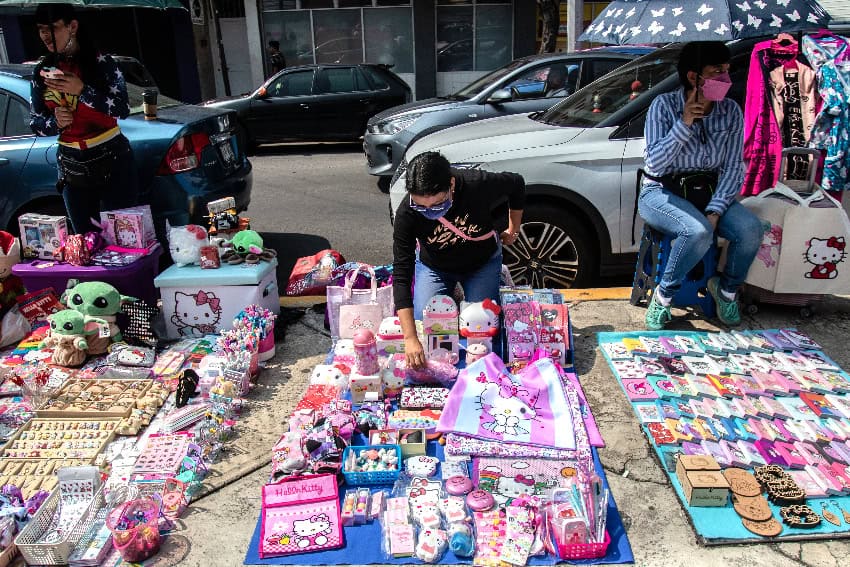
If you want to buy something at the market, you need cash. If you want to tip one of themany tippable people, you need cash. If you want to buy something from an artisan, you need cash. If you want to pop into a local “tiendita” (neighborhood corner store) for something, you need cash.
It’s no surprise that these small street stalls are cash only – but much more of Mexico runs on cash than you might expect. (Cuartoscuro)
When I think of my trips back to the U.S., on the other hand, I realize I haven’t taken U.S. dollars out of an ATM there for at least the past 10 years. Every interaction, it seems, is done through cards, or even “Apple Pay,” which is still foreign to me.
Like, another new technology whose only purpose is to make parting with my money easier? We were supposed to have flying cars by now, people, and magic machines that sucked any disease right out of you. Seriously, what is this silliness?
The bills: the ones you want, and the ones you don’t
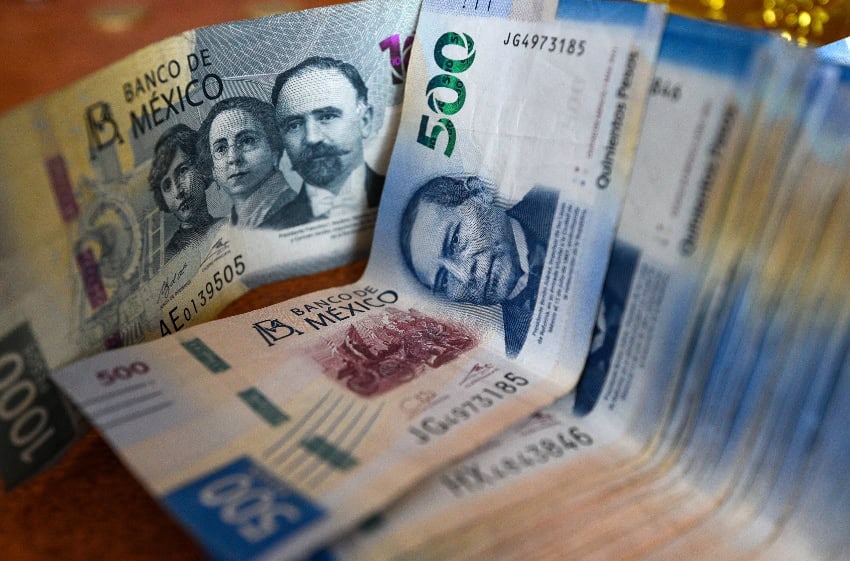
But I digress. In Mexico, it’s all about the Juanas. And the Miguels, and the José Marías, and the Benitos. And if you’re especially unlucky at the ATM, the Carmens, Hermilas, and Franciscos, the three who currently grace the 1000 peso note.
Get a high-denomination note from the ATM? Bad luck! (Cuartoscuro)
On the one hand,Mexico’s money is really, really pretty and has won lots of awards. The 50 peso note has an axolotl on it! When they first came into circulation, people would save them as if they were fine works of art to be conserved. And really, they are.
If you’ve got coins, 20s, 50s, and even 100s, you’re probably okay in most places. 200s are iffy, but typically okay in bigger establishments (though generally fine in major cities). 500s and 1000s are only for decidedly more expensive or at least established places, likely national or international chains.
¿No tendrá cambio?
Why? Because so, so many places simply do not have a lot of extra money on hand.
Most Mexican small businesses operate with an incredibly small cash cushion, if any. Many operate on debt. Even if they are “official” places, like restaurants and cafés, there’s no guarantee that they’re starting the day off with money in the register. They are counting on earning money as the day goes on, and hoping that the first chunk of customers will pay them in small bills.
If you think this seems like a precarious plan, it’s because it is. But most businesses do not earn enough to simply keep a pile of cash in small bills on hand just for change-making. The money that goes into the business gets used for the business, often to pay the workers at the end of the day. Also, most people do try to pay pretty close to what they owe so that minimal change will need to be made.
Try to pay for a 50 peso item with a 200 or 500, and you might get a slightly-embarrassed, ¿No tiene cambio? (You don’t have change?) response. If you say no, one of two things will happen: they will go off, or send someone else off, to try to make change with a neighboring vendor or store. Other times they’ll simply say, “Es que no tenemos cambio” (We just don’t have change) and stare at you.
That’s your cue to either magically produce the exact change, or, if you’re me on a bad day, scowl and say, “Oh well!” and leave. I mean, really. Do you want my business or not? I’m not going to run around looking for change so you can sell me something. Sheesh.
What to do
Use your cash wisely. (Shutterstock)
As I mentioned a couple of weeks ago, it’s important to be strategic about your cash. When you’re able to break a larger bill, do not – I repeat, do not – miss the opportunity. If you have to, you or anyone else can do it at any bank, though you might have to stand in line for a while.
First strategy: at the ATM, try to not ask for a multiple of 500 exactly. For example, you might ask for 5,300 pesos, which would at least give you a 200 and a 100 note.
You can also almost always get change at large, established chains. When I’ve got a 500 to break, for example, I’ll walk down to the Fasti and buy maybe a little over 100 worth of goods. Don’t be “abusive,” about it, though, as Mexicans would say. If you try buying a 15 peso item with a 500, they might very well tell you to go to hell – or at least tell you that there’s a higher minimum if you’re going to pay with that much.
Anyway, once I get that change, it goes into a separate coin purse that I pretty much guard with my life. This is the change you use in all the places that don’t have change, and I don’t use it unless I have to. And if you’re the type to give tips or money to people asking, put a bunch of change in one of your pockets for easy access!
So before you go out, think about the places you’re going, if you’ll need to give tips, or if you’ll be able to use debit or credit cards. It takes some planning, but it can save you a lot of headaches! Trust me.
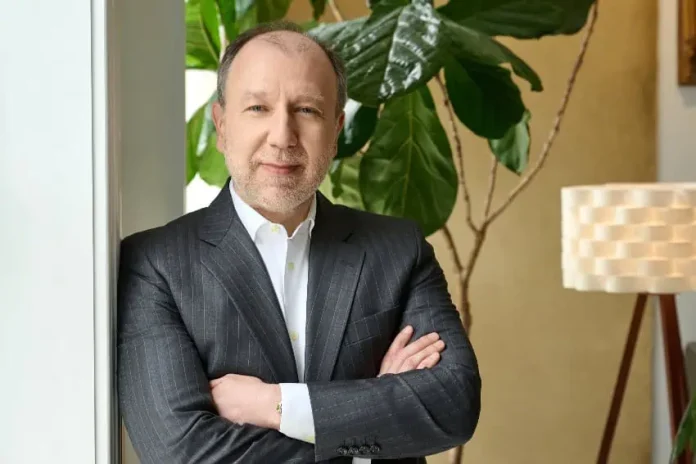
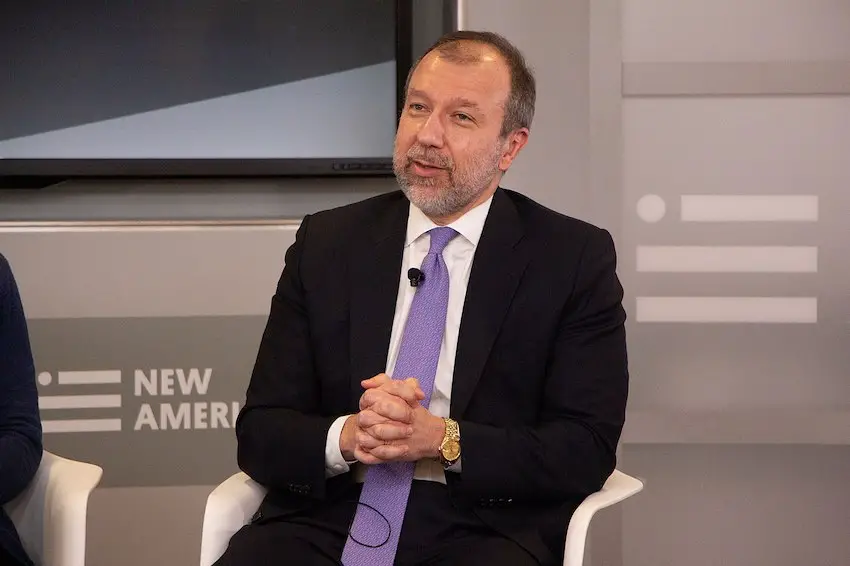
Jorge Guajardo was Mexico's ambassador to China until 2013 and is now a partner in an advisory firm. Mexico News Daily asked him five questions about Mexico's trade relationships with both the U.S. and China. (Courtesy)
Reduce reliance on Asian imports to Mexico, especially Chinese imports. Increase Mexico’s manufacturing capacity. Seize the nearshoring opportunity by proactively seeking foreign investment.
Economy Minister Marcelo Ebrard said last week that the federal government is looking at “how we can reduce all the imports we have” and “increase domestic content in any way we can.”
He also said that Mexico would “mobilize all legitimate interests in favor of North America” amid the ongoing trade war between the United States and China.
For his part, Deputy Economy Minister for Foreign Trade Luis Rosendo Gutiérrez Romano revealed that the Sheinbaum administration has asked U.S. companies and other foreign firms that operate in Mexico to look at substituting some goods and components made in China, Malaysia, Vietnam and Taiwan with locally-made products.
Mexico News Daily recently discussed the objectives listed at the top of this article — and related issues — with Jorge Guajardo, Mexico’s longest serving ambassador to China (2007-13) and a former consul general in Austin, Texas.
Guajardo told MND that previous Mexican administrations, and other governments around the world, have started their terms “thinking they could establish a new trade relationship with China.”
He said that many presidents and prime ministers come into power thinking they are going to “reset relations with China” before realizing later that their government’s trade relationship with the East Asian economic powerhouse is not in fact in their best interests.
“So the fact that the Sheinbaum administration starts from day one saying we’re going to be keeping an eye on Asian imports is very important and deserves a lot of credit,” Guajardo said.
“They’re not wasting a single day. … We should understand how big a statement that is. Right off the bat they understand that Mexico has nothing to gain from trading with Asia and a lot to gain from trading within North America,” he said.
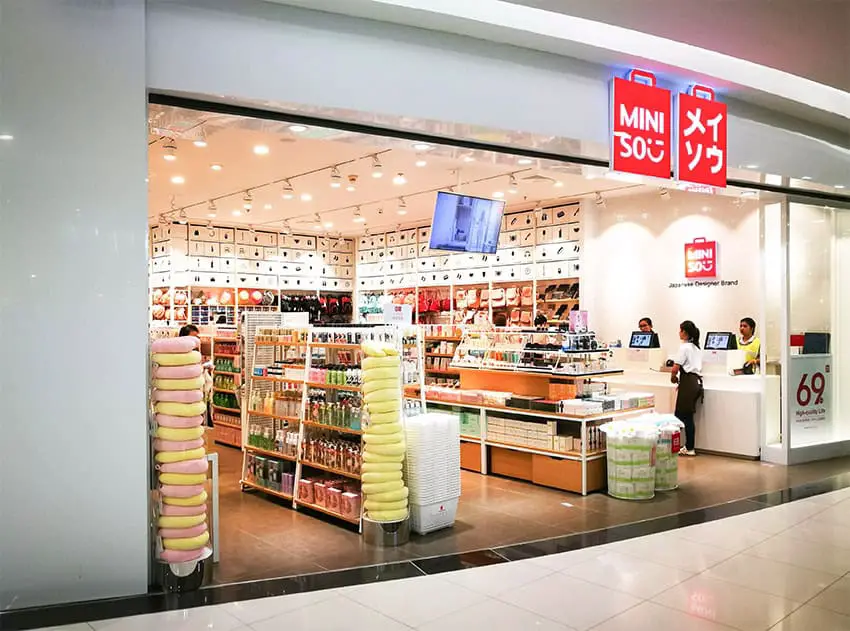
While the federal government considers how to reduce reliance on imports from Asia, low-cost Chinese import stores are thriving in Mexico. (Shutterstock)
Guajardo noted that Sheinbaum administration officials have referred more broadly to Asia in their remarks about the desire to reduce Mexico’s dependence on imports, “and not just China.”
Guajardo said that the fact the current government is talking about import substitution is “visionary.”
With China, which has a vast industrial capacity — overcapacity in fact — a global trade environment that is open and free is not viable, he said.
“You will get overrun,” Guajardo said, emphasizing the need to protect “the industries we already have in Mexico” and the importance of not subjecting them to an “unfair playing field” by making them compete with Chinese products, many of which can be produced very cheaply, in part thanks to generous subsidies from the Chinese government.
The ex-ambassador said he didn’t know how realistic it is for Mexico to substitute a significant portion of the imports it receives from China and other Asian countries, but noted that Mexican companies already produce some of the products that are currently shipped here from there.
Guajardo said that the import substitution plan should be supported by both tariffs — he advocated even higher duties than those recently implemented by the Mexican government — as well as regulations that help to protect Mexican industry.
(Guajardo spoke to MND earlier this year about the need for the Mexican government to be “more creative with regulations” to shut out exports in certain sectors.)
Is protectionism worth it?
Before seeking to broaden the range of goods produced in Mexico, the government should first offer greater protection to existing industries whose products are being substituted by Chinese imports, Guajardo said.
“That in and of itself would be a huge step,” he said.
Guajardo cited the glass, petrochemical and textiles industries as three Mexican sectors that need to be protected.
The protection of domestic industries could incentivize other companies to invest in Mexico, he said.
The glass, petrochemical and textiles industries are three Mexican industries that would benefit from government protection, Guajardo says. Pictured: a Pemex petrochemical refinery in Dos Bocas, Veracruz. (lopezobrador.org.mx)
“You can not do that if there are no protections because there is no business model” for potential investors, Guajardo said.
He acknowledged that there will be blowback because protectionism will inevitably cause the price of goods to go up — say goodbye to dirt cheap Chinese imports, in other words.
However, “the question you have to ask yourself,” Guajardo said, is the following: “Is it worth paying a higher price [for goods] and in the process avoid being totally dependent on China and have a more independent supply chain?”
“Eventually I believe we have to come to terms with the answer being yes,” he said.
“We have to be willing to absorb a higher price in exchanging for having sovereignty over supply chains,” Guajardo added.
The importance of a supportive industrial policy
Guajardo told MND that the new government is cognizant that industry in Mexico will need government support to succeed.
The “realization” of the need to have a supportive industrial policy is “important,” he said, noting that the administration of former president Andrés Manuel López Obrador was “reluctant to give any help to business” — even during the COVID pandemic.
Guajardo highlighted that the implementation of a supportive industrial policy is not risk-free: It could lead to corruption via the “misallocation of funds” and there is a “risk of betting on companies that end up losing.”
China, he continued, “inherently understands that industrial policy will create some duds.”
Providing government support to Mexican industry comes with risk, but is necessary to foster the sectors’ development, Guajardo said. (Wikimedia Commons)
“They’re willing to assume that risk and in the process create a lot of champions. As a country we have to understand that there will be duds, there will be things that don’t work out, but it’s important nevertheless that we take the risk in supporting sectors in which we want to have champions,” he said.
Doing so will mean “we have technology and [our own] intellectual property,” Guajardo added.
Promptly and unequivocally siding with the US is ‘huge’
Guajardo noted that many countries around the world come under pressure to choose between the United States and China in an economic and strategic sense, but most are reluctant to do so.
However, under the leadership of Sheinbaum, Mexico is “not hesitating for a second” in declaring that it is on the United States’ side, he said.
“Again that is a huge statement and I think the new administration deserves a lot of credit,” Guajardo said.
Rather than “hedging,” Mexico under Sheinbaum is going all in on the U.S. side, he stressed.
“Right off the bat they say, we’re going to put a stop to this [trade imbalance] and we’re going to align with North America. I’m hard pressed to think of another country that has been able to do that,” Guajardo said.
“That is big, that is significant and I give them a lot of credit for that. … It’s huge, I haven’t seen it in any other country in the world,” he said.
President Sheinbaum has emphasized the inseparable links between the Mexican and U.S. economies. (Comentario U de C/X)
In response, she said that Mexico has an “inseparable” trade relationship with the United States and noted that the two countries are “economically integrated” whereas “there is no free trade agreement with China.”
“… The relationship with China exists and it has to continue existing, but the agreement with the U.S. has to be maintained and strengthened as well,” Sheinbaum said of the USMCA free trade pact, which also includes Canada.
Proactively seeking investment is ‘very positive’
Guajardo said that the new federal administration has shown it is going to be “very aggressive” in its efforts to attract investment, and declared that such an approach is “very positive.”
However, he conceded that the judicial reform — which will allow Mexican citizens to directly elect judges, including Supreme Court justices — is the “elephant in the room” as far as investors, and potential investors, are concerned.
The proposed energy reform, which seeks to provide a constitutional guarantee for the state’s majority (54%) stake in electricity generation, “may also be a problem for investors,” Guajardo said.
However, he chose to “set those [concerns] aside for now and suspend judgement because I’m very optimistic about the way they’re trying to reach out [to potential investors] and really ride this nearshoring wave.”
“Hopefully with this new strategy of fitting the country into North America, industrial policy and import substitution we will make headway in bringing in new industries [to Mexico],” Guajardo said.
By Mexico News Daily chief staff writer Peter Davies (peter.davies@mexiconewsdaily.com)