Home Blog Page 489

10 easy steps to help keep Mexico’s beaches clean

9
Keep mexico's beaches clean
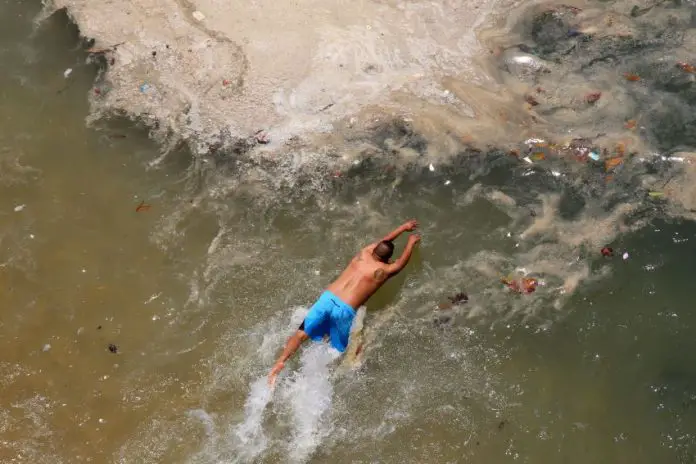
Mexican beaches are often overrun with waste from holidaymakers. Here's how you can play your part in keeping Mexico's perfect beaches... perfect. (Carlos Alberto Carbajal/Cuaroscuro)

Our little town of Chacala recently experienced a waste crisis when the trash pickup service stopped for several weeks. The landfill that usually accepts our garbage had caught on fire — the second time this year — and couldn’t take more waste until it was under control. Piles of trash accumulated on every street corner. Rotting food, plastic bags and bottles, styrofoam containers, soiled toilet paper, and other unmentionables were strewn everywhere. 

The county government provided no alternate plan for trash removal, leaving the community on its own to figure out a solution. Several Chacaleños rallied to pay for dump trucks to haul trash away, at a cost of tens of thousands of pesos. 
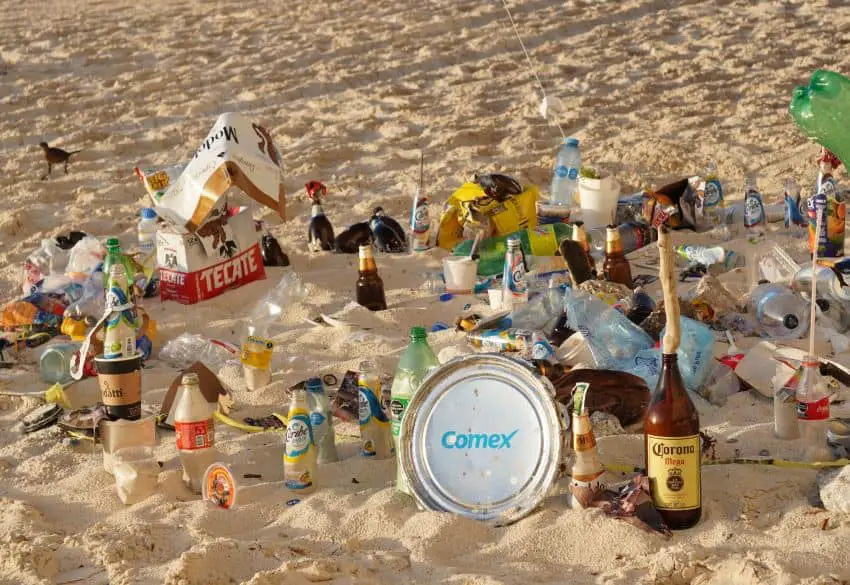
Beach towns might seem like a weekend paradise – but spare a thought for what happens after the crowds go home. (Elizabeth Ruiz/Cuartoscuro)

The crisis got me thinking about just how much trash is left behind on Mexico’s beaches, how waste removal is handled (and mishandled), who is responsible, and how we can all do a better job reducing waste, especially tourists.

Tourists often complain about how much litter is on Mexico’s beaches and assume that local Mexicans are primarily responsible. This is not only condescending and harmful cultural stereotyping, it couldn’t be further from the truth. Foreign tourists and out-of-area visitors contribute far more waste than locals, putting extreme pressure on communities to keep beaches clean with little to no government support. 

Take Chacala as an example, our resident population is about 500 people. But on any given weekend or holiday, we can see our population quadruple to 2,000 people or more. Mondays are the worst day to walk the beach after everyone has gone and the evidence is left behind – styrofoam plates, plastic cups and bottles, dirty diapers, plastic bags, cigarette butts – you name it. While plenty of people use the trash cans provided, there is simply too much waste for them to hold.

And when the garbage cans are overflowing, it falls on community members and local business owners to organize volunteers to clean up or pay someone to collect it, all at their own time and expense.
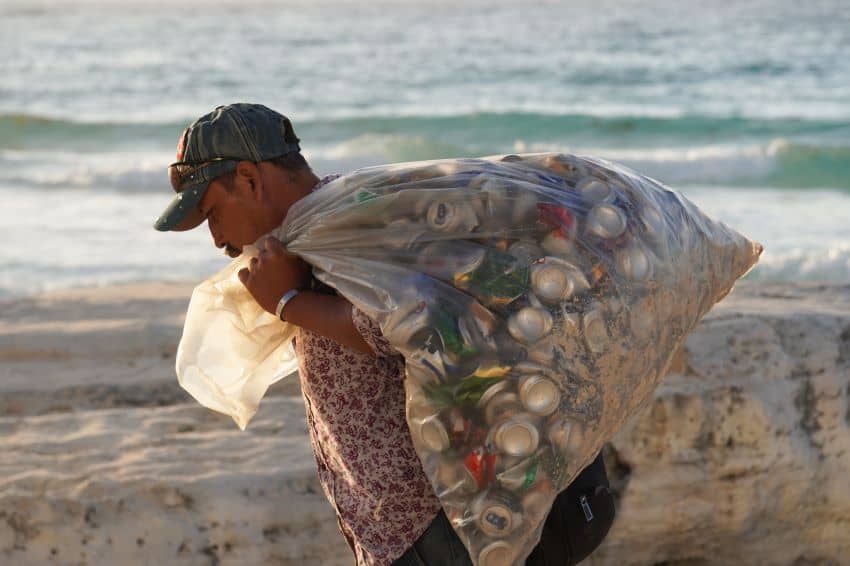
Beach cleanups are often run by local communities, at their own expense. (Elizabeth Ruiz/Cuartoscuro)

Instead of complaining about trash, here are some ideas for visitors to help keep beaches clean:

  1. Separate your trash: Much of the waste people generate is recyclable or biodegradable. You can reduce the amount of waste that ends up in landfills by separating recyclables and food waste from other trash. Many beach towns have receptacles or collection centers for recyclables and organics. 
  2. Bring reusable shopping bags: This is already common practice in many parts of the world, but for some reason, when people go on vacation, they seem to forget. When you travel, pack your good habits and a few reusable bags with you. Or buy some bags here. Mexico has one of the longest reusable market bag traditions in the world.
  3. Buy more whole foods: Fill those reusable bags with fresh fruit, vegetables, bread, tortillas, and other goods that can be bought locally and don’t come in plastic packaging. 
  4. Bring a plate to taco stands: No one can resist the temptation of a street taco, but you can resist being given a styrofoam plate to eat it on. Next time you have a hankering for a taco, leave no trace and bring your plate (and cloth napkin) with you.
  5. Order drinks that come in returnable bottles: Skip beverages that come in plastic bottles and choose ones that come in returnable glass bottles or are made fresh in large batches like aguas frescas that are served in glass cups or clay mugs. 
  6. Bring a to-go container to restaurants: If your eyes are bigger than your stomach and you often have leftovers when eating out, make sure to bring a reusable container to bring leftovers home instead of having the restaurant put them in a styrofoam box.
  7. Patronize businesses that reduce waste: It’s becoming more common in Mexico (and in some cities, it’s the law) to not use disposable plates, bags, and other items at shops and restaurants, and opt for natural and biodegradable products. (We have a local ice cream shop in Chacala that uses coconut husks as bowls!) Seek out and patronize those businesses that are taking action to reduce waste.
  8. Put trash in cans with lids: Leaving trash in bags on the street attracts dogs that scatter it around and leave a mess. Put trash in a can with a lid, and if your hotel or rental doesn’t have one, be a champ and buy one for them.
  9. Collect trash while walking the beach: Since you are likely to walk the beach anyway, why not bring a trash bag with you and pick up some litter along the way?
  10. Donate to local limpieza efforts: The community you are visiting most likely has an environmental committee or limpieza campaign that is working to educate the public and raise money for waste removal, reduction, and recycling efforts. Ask around and find the groups in your community you can support.

This goes without saying, but companies that produce throw-away products are the real culprits of the world’s waste problem, not consumers. We are pressured to make better choices, and that certainly helps, but it’s corporations that need to be responsible for the life cycle of their products. As a society, we must continue to advocate for laws that hold companies accountable for the waste they produce, and as consumers, we must stop supporting companies that contribute to the problem.

Debbie Slobe is a writer and communications strategist based in Chacala, Nayarit. She blogs at Mexpatmama.com and is a senior program director at Resource Media. Find her on Instagram and Facebook.
Sheinbaum to CEOs: ‘Your investments are safe in Mexico’

8
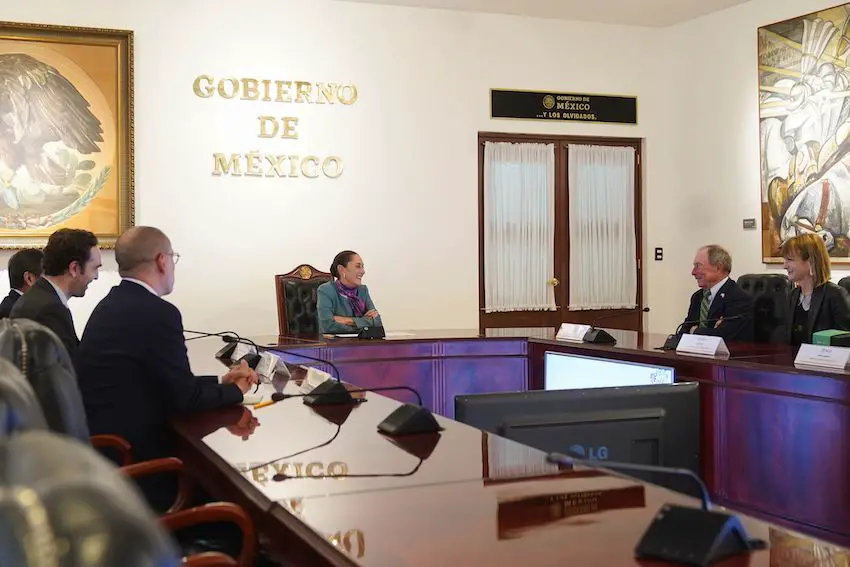
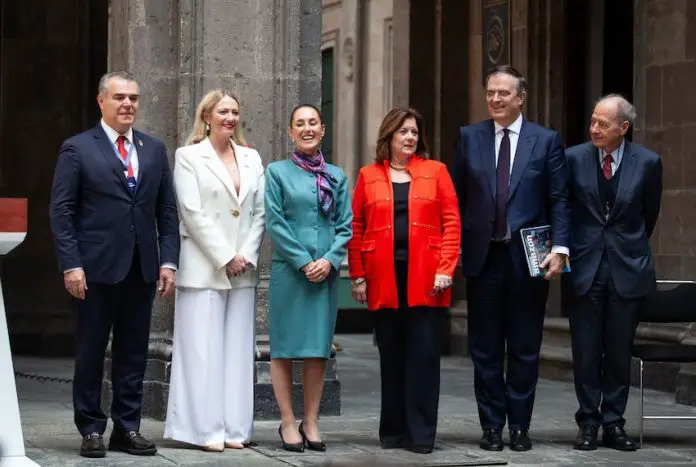
President Claudia Sheinbaum met with more than 200 business leaders at the United States-Mexico CEO Dialogue meeting in Mexico City on Tuesday.
President Claudia Sheinbaum met with more than 200 business leaders at the United States-Mexico CEO Dialogue meeting in Mexico City on Tuesday. (Andrea Murcia/Cuartoscuro)

None of the federal government’s recently approved and proposed constitutional reforms will be detrimental to investment in Mexico, President Claudia Sheinbaum said Tuesday after meeting with more than 200 business leaders at the United States-Mexico CEO Dialogue meeting in Mexico City.

In support of that assertion, Sheinbaum and Economy Minister Marcelo Ebrard told reporters that companies on Tuesday announced plans to invest more than US $20 billion in Mexico in 2025. However, the bulk of the investments had previously been announced.

Sheinbaum with Michael Bloomberg
Sheinbaum said that there will be ongoing dialogue between the government and the business sector to clear up “any doubts” they have about the policies of her administration. (Presidencia/Cuartoscuro)

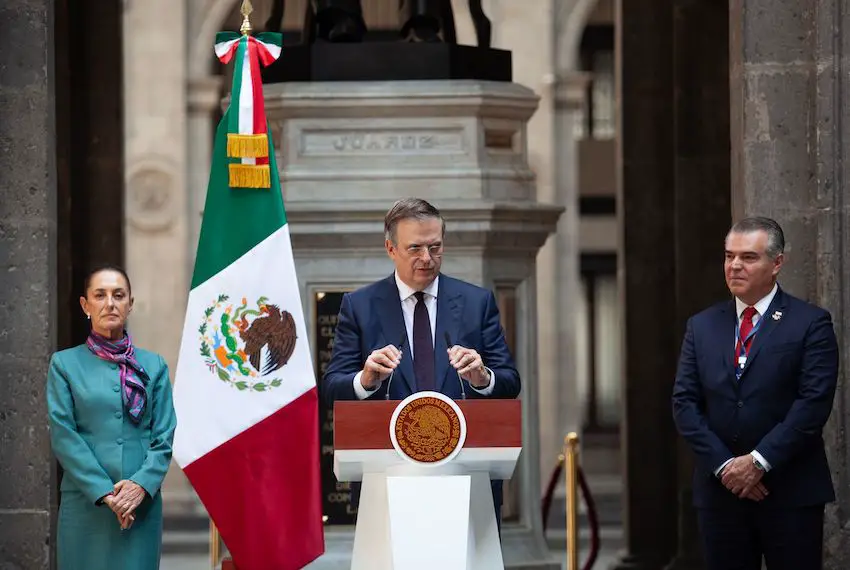
At a press conference at the National Palace, Sheinbaum said that the meeting with 240 business leaders was “very good” and asserted that the government addressed the concerns the business sector has about the recently enacted judicial reform as well as a range of reform proposals that have not yet passed Congress, including one aimed at disbanding a number of autonomous government agencies.

She also said that there will be ongoing dialogue between the government and the business sector to clear up “any doubts” they have about the policies of her administration.

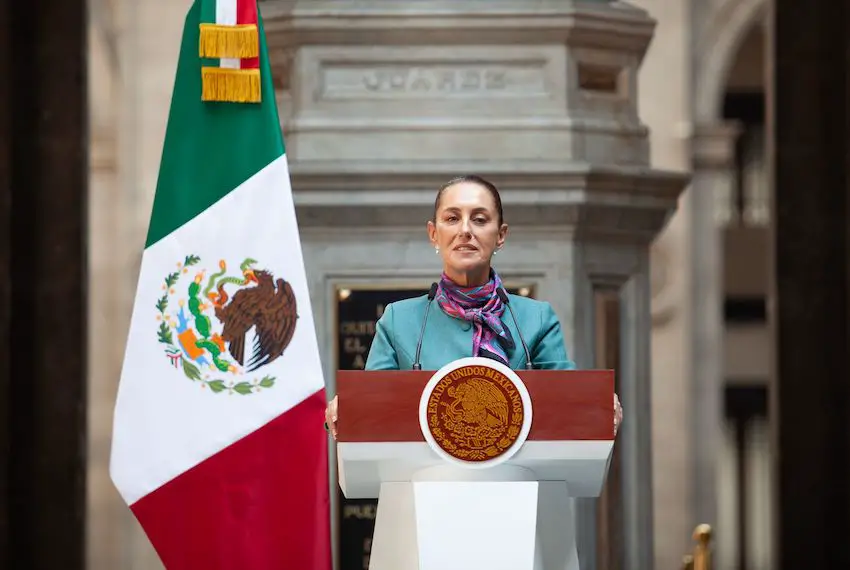
“Your investments are safe in Mexico,” Sheinbaum told the CEOs during a speech at the annual meeting.

Referring to the judicial reform, a proposed energy reform currently before Congress and a range of other constitutional bills that former president Andrés Manuel López Obrador put forth in February, the president told the Tuesday afternoon press conference that “none of these reforms represents a problem for investment in Mexico.”

“The opposite is true. The rule of law will be strengthened, the national electricity system will be strengthened,” Sheinbaum said.

Investors are particularly concerned about the plan to allow citizens to elect all of Mexico’s judges, including Supreme Court justices. Many investors — and others — fear that judges sympathetic to the ruling Morena party’s legislative agenda could come to dominate the nation’s courts, effectively removing an important check on government power and possibly posing a threat to their investments.

The energy reform proposals seek to enshrine in the constitution a majority share (54%) of the electricity generation market for the Mexican state, a move that could dissuade private investment in the sector.

Ebrard touts ‘the investment announcements made today’

Early in the post-CEO Dialogue press conference, Ebrard said that “the investment announcements made today in the presence of President Claudia Sheinbaum” exceed $20 billion.

Economy Minister Marcelo Ebrard referred to several investment announcements for 2025in his speech that are neither new nor completely certain.
In his speech, Economy Minister Marcelo Ebrard referred to several investment announcements for 2025 that are neither new nor completely certain. (Andrea Murcia/Cuartoscuro)

The economy minister referred to four investment announcements for 2025.

The Associated Press reported that “much” of the investment announced (or reaffirmed) on Tuesday “was neither new, nor completely certain.”

For example, Mexico Pacific’s plan to build an LNG plant and export terminal on the Gulf of California in Puerto Libertad, Sonora, “has been on the drawing boards since at least 2020, and still depends on getting cross-border gas pipelines approved and built,” AP said.

The company’s CEO, Sarah Bairstow, co-chaired the U.S.-Mexico CEO Dialogue on Tuesday and spoke at Sheinbaum’s press conference at the National Palace.

“We’ve had a wonderfully constructive dialogue here today, very important to the bilateral relationship between the U.S. and Mexico. It’s been fantastic hearing the vision directly from the presidenta herself around investment in the country and the support for these critically needed assets,” she said.

“At Mexico Pacific, we’re proud to be developing the Saguaro Energía LNG facility and accompanying gas pipeline. This represents the largest foreign direct investment into Mexico to date and we’ve certainly reaffirmed our investment on the back of the conditions we see here for investment in Mexico,” Bairstow said.

Ebrard said that Sheinbaum conveyed messages of “certainty” to investors at Tuesday’s meeting, and declared himself that “investments in Mexico are safe.”

During a speech at the CEO Dialogue, Sheinbaum shared that her government is creating an Agency for Digital Transformation and Telecommunications, which aims to expedite investment in Mexico.
During a press conference following the CEO Dialogue, Sheinbaum shared that her government is creating an Agency for Digital Transformation and Telecommunications, which aims to expedite investment in Mexico. (Andrea Murcia/Cuartoscuro)

Sheinbaum: Investment approvals to be expedited 

Sheinbaum told the CEO dialogue attendees that “starting in January next year, we’re going to create the Agency for Digital Transformation and Telecommunications.”

“In a single institution we’re going to concentrate everything related to the simplification and digitalization of bureaucratic procedures,” she said.

“This will allow an investment to become reality in months, instead of two or three years.”

At the press conference, Sheinbaum said that a bill allowing the creation of the new agency will be presented to Congress “very soon.”

“… One of the reasons why national and foreign investors avoid investing in Mexico is because of the delay in [completing] bureaucratic procedures,” she said.

“… If we facilitate this, it’s an enormous incentive [for investors],” she said.

Sheinbaum also told reporters that the government outlined its “investment strategy” to the U.S. and Mexican business leaders present at the meeting.

“[It includes] investment in housing, investment in trains, investment in highways, investment in ports, … investment in infrastructure in general,” she said.

“… Essentially that was the dialogue. The majority of [business] chambers were present, as well as Mexican business people … and [there was] a very important representation of United States companies,” she said.

Asked about the 2026 review — or even renegotiation — of the USMCA, Sheinbaum said she hoped to largely keep the North American free trade pact as is.

“We have the idea of maintaining the agreement with few modifications,” she said.

Francisco Cervantes, president of Mexico’s influential Business Coordinating Council, told the same press conference that Sheinbaum had made it clear that she is very supportive of investment in Mexico.

“In the voice of the president, the line of action moving forward in Mexico was ratified, and it is [promoting and supporting] investment,” he said.

The new federal government appears determined to take a very proactive approach in seeking new investment in Mexico, as demonstrated by Finance Minister Rogelio Ramírez de la O’s recent meetings with the CEOs of JP Morgan and BlackRock.

In the first six months of 2024, foreign direct investment exceeded US $31 billion, a new record for Mexico. The government hopes that even more impressive numbers can be recorded in the near future as companies act on their investment announcements and other foreign firms are attracted to the country amid the ongoing nearshoring trend.

With reports from El Financiero, El Economista, Reforma and AP

Former security minister Genaro García Luna gets 38 years in US prison

5
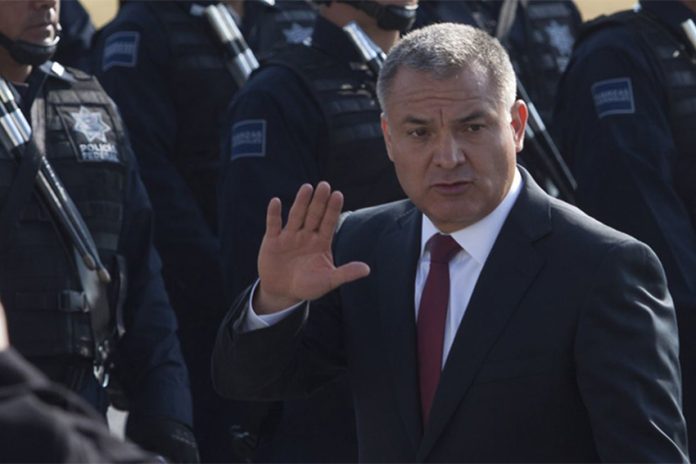
Genaro Garcia Luna in 2011 waving at the camera while Mexico's Federal Police stand at attention in rows to his right
Genaro García Luna was sentenced to 460 months in US federal prison. Prosecutors had asked for a life sentence. (File photo/Moisés Pablo Nava for Cuartoscuro)

Mexico’s former security minister Genaro García Luna was sentenced to just over 38 years in prison on Wednesday, almost 20 months after he was convicted of colluding with the Sinaloa Cartel.

At a hearing in U.S. federal court in Brooklyn, New York, District Judge Brian M. Cogan sentenced García Luna to 460 months’ imprisonment and a US $2 million fine “for his decade-long assistance to the Sinaloa Cartel in exchange for millions of dollars in bribes,” according to a press release from the United States Attorney’s Office.

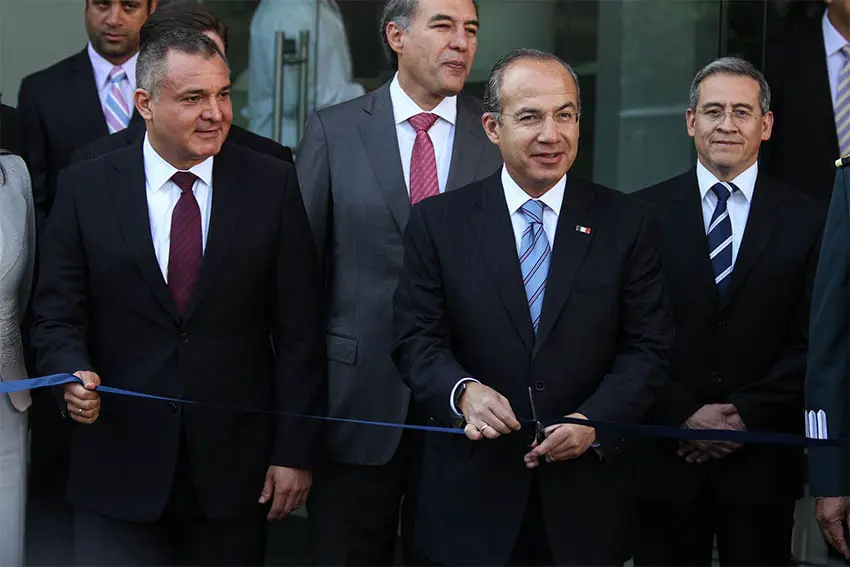
Genaro Garcia Luna standing next to President Felipe Calderon an a ribbon cutting event in 2013.
Garcia Luna, left, was Mexico’s security minister under President Felipe Calderón, center, (2006–2012). (Octavio Hoyos/Shutterstock)

“Following a four-week trial in February 2023, Garcia Luna was convicted by a jury of engaging in a continuing criminal enterprise, international cocaine distribution conspiracy, conspiracy to distribute and possess with intent to distribute cocaine, conspiracy to import cocaine and making false statements,” the statement said.

García Luna served as security minister in the 2006–2012 government led by former president Felipe Calderón. Before taking up that position he was director of the now-defunct Federal Investigation Agency.

He was arrested in Texas in late 2019.

Calderón has denied having any knowledge of García Luna’s illicit dealings.

United States Attorney Breon Peace said that the sentencing of the 56-year-old — the highest-ranking Mexican official to have ever faced justice in the U.S. — “is a critical step in upholding justice and the rule of law.”

“His betrayal of the public trust and the people he was sworn to protect resulted in more than one million kilograms of lethal narcotics imported into our communities and unleashed untold violence here and in Mexico,” he said.

Garcia Luna’s case attracted protests and the curious outside the Brooklyn federal courthouse where his trial occurred.

“This sentence sends a strong message that no one, regardless of their position or influence, is above the law.”

Drug Enforcement Administration (DEA) chief Anne Milgram said that the sentencing “sends a clear message to corrupt leaders around the world who use their positions of power to help the cartels.”

The message? “No amount of power will shield you from justice.”

“… Instead of protecting the citizens of Mexico, Garcia Luna was protecting drug cartels.  The DEA will continue to relentlessly pursue drug trafficking organizations and those who protect them,” Milgram added.

While serving as security minister, the now convicted and sentenced criminal was a “close partner” of the DEA, “which gave him multiple awards over the years to honor his work fighting crime,” The Los Angeles Times reported.

“At the same time he was receiving DEA accolades, however, he was also leaking secrets to the Sinaloa cartel,” the Times added.

The U.S. Attorney’s Office statement said that “Garcia Luna’s conduct included facilitating safe passage of the [Sinaloa] Cartel’s drug shipments, providing sensitive law enforcement information about investigations into the Cartel and helping the Cartel attack rival drug cartels, thereby facilitating the importation of multi‑ton quantities of cocaine and other drugs into the United States.”

“In exchange for bribes, the defendant’s Federal Police Force acted as bodyguards and escorts for the Cartel, allowing Cartel members to wear police uniforms and badges and helping to unload shipments of cocaine from planes at Mexico City’s airport, then delivering the cocaine to the Cartel. The defendant was paid in U.S. currency, stuffed variously in suitcases, briefcases and duffel bags,” it said.

The statement also said that after he moved to the United States in 2012, García Luna applied for U.S. citizenship in 2018, and on his application “lied about his past criminal conduct on behalf of the Cartel in an attempt to become a U.S. citizen.”

García Luna’s wife and daughter were in the court when Cogan read out the 460-month sentence.

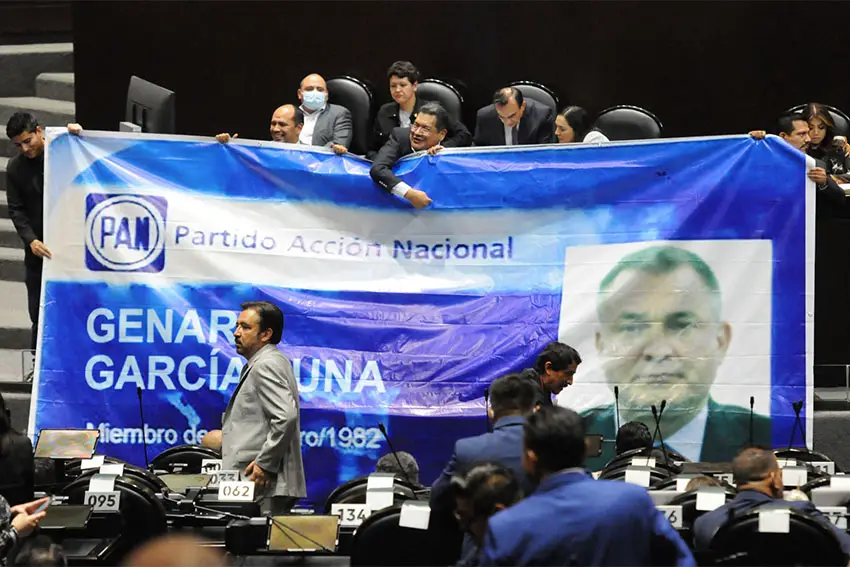
Members of Mexico's Lower House of Congress in session holding up a banner with a photo and the name of Genaro Garcia Luna with the logo of Mexico's National Action Party.
Former president Andrés Manuel López Obrador and his Morena party have frequently used the García Luna case for political currency against the National Action Party (PAN), the party of former president Felipe Calderón, suggesting that Calderón and his party was also corrupt. (Daniel Augusto/Cuartoscuro)

Prosecutors sought a sentence of life imprisonment, but the judge said that the ex-security minister should have “some light at the end of the tunnel.”

He acknowledged García Luna’s work teaching fellow prisoners at the Metropolitan Detention Center but also said that the former federal official lived a “double life,” and the harm he caused outweighed his good deeds.

“Aside from your very pleasant demeanor and your articulateness, you have the same kind of thuggishness as El Chapo, it just manifests itself differently,” Cogan said, referring to convicted drug lord Joaquín Guzmán Loera.

Before his sentence was handed down, García Luna accused the Mexican government and criminals of making false allegations against him.

“I have not committed any of these crimes,” he said. “I am not the person that the criminals point to.”

Former president Andrés Manuel López Obrador claimed that the arrest and conviction of García Luna was evidence that Mexico was a narco-state when Calderón was in office.

AMLO has faced similar claims himself.

Three media organizations reported in January that López Obrador’s 2006 presidential campaign received millions of dollars in drug money, an accusation he denied. The New York Times subsequently published allegations that people close to the former president, including his sons, received drug money after he took office in late 2018.

López Obrador’s predecessor, Enrique Peña Nieto, denied an allegation made at El Chapo’s 2019 trial that he received a $100 million bribe from the Sinaloa Cartel.

The Los Angeles Times reported that “the recent arrest of Ismael ‘El Mayo’ Zambada, a longtime partner of El Chapo known for high-level political connections, has fueled speculation in Mexico that U.S. authorities could be building cases against other top officials or politicians.”

With reports from Reforma and Reuters 

Tourism to Nuevo León shoots up 250%

1
Nuevo León is an industrial state that previously put very little emphasis on tourism.
Governor of Nuevo León Samuel García created the state’s first-ever Tourism Ministry to boost the industry in 2021. (Shutterstock)

Tourism in the northern state of Nuevo León has gone from 4.3 million visitors in 2021 to 15 million in 2024, according to the Nuevo León Tourism Minister Mari Carmen Martínez Villarreal. These figures represent a nearly 250% increase in just three years.  

“We have worked tirelessly for the past three years to position Nuevo León in the world through strategic actions and the implementation of key projects,” Martínez said at a press conference on Tuesday. “Our vision has been clear: to turn the state of Nuevo León into a benchmark for national and international tourism.” 

Nuevo León is an industrial state that previously put very little emphasis on tourism. Governor of Nuevo León Samuel García created the state’s first-ever Tourism Ministry to boost the industry in 2021. 

Since its creation, the tourism office has worked toward promoting the state’s parks, Pueblos Mágicos (Magical Towns) and culinary heritage. Last year, the state government recognized carne asada, cabrito and machaca (beef dishes) as intangible cultural heritage of Nuevo León. 

Pasaporte Nuevo León: The new app for NL tourists

During her speech, Martínez highlighted that under the current administration, the state has forged strategic alliances with the digital platforms Airbnb and Didi, to offer travelers better mobility and accommodation deals in the region. Her ministry also created the app “Pasaporte Nuevo León” (Passport Nuevo León) to help travelers discover experiences and tourist destinations within the state. 

Other initiatives include positioning Nuevo León as a strategic international travel hub, connecting it with Latin America through flights from Monterrey to Bogotá, with Asia through Tokyo and Seoul and with Europe through Madrid. 

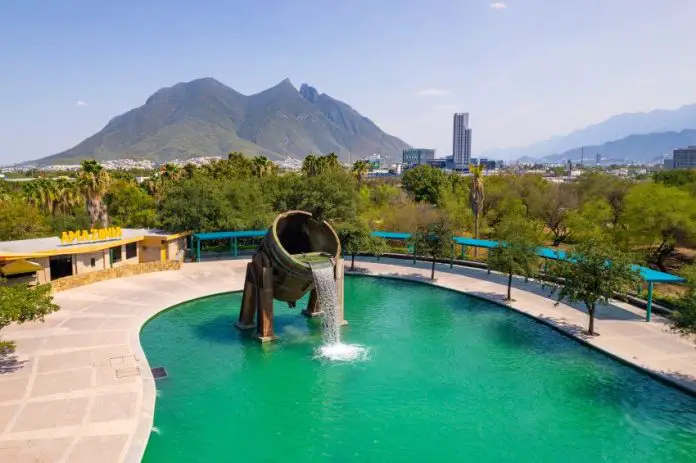
View of Cerro de la Bufa, one of the icons of Monterrey, capital of the northern state of Nuevo León.
View of Cerro de la Bufa, one of the icons of Monterrey, capital of the northern state of Nuevo León. (Yoplita/Wikimedia Commons)

“Throughout Nuevo León, we are promoting tourism that respects the environment, promotes economic development and puts our state on the global map of destinations of excellence,” Martínez said. 

Finally, Martínez noted that events such as congresses, conventions and exhibitions held in Nuevo León have seen exponential growth in the last three years, going from 57 in 2021, to 117 in 2022, 150 in 2023 and just over 160 in 2024.

“The 2022-2027 state development plan focuses on consolidating tourism as one of the main drivers of economic growth for Nuevo León,” Martínez stressed. 

Nuevo León expects 500,000 for FIFA World Cup 2026

Martínez said Nuevo León is ready to welcome tourists who visit the state for the 2026 FIFA World Cup, under the slogan, “We are ready.” The state expects over half a million visitors to the tournament, which will be jointly hosted by the United States, Canada and Mexico.

To “get ready,” the state will provide English lessons to workers in the tourism industry, including waiters, taxi drivers and first-contact personnel. In addition, the state is working to improve coordination with airlines, create green pedestrian corridors, build new shopping malls and hotels and expand the Monterrey International Airport

Martínez said they forecast full hotel occupancy during the upcoming FIFA World Cup. 

With reports from Telediario, and El Financiero

El Tri beats USMNT 2-0 for the first time in 5 years

0
Mexican player disputes a ball with the American opponent.
Mexico beat the US 2-0 in a Concacaf friendly match held in Guadalajara on Tuesday. (Fernando Carranza García/Cuartoscuro)

Raúl Jiménez recorded a goal and added an assist to lead Mexico to a 2-0 win over the United States Men’s National Team (USMNT) in an international soccer friendly at Guadalajara’s Estadio Akron on Tuesday night.

The victory was Mexico’s first over Team USA in more than five years and ended a seven-match unbeaten streak (5-2-0) for the Americans.

Jiménez, a Fulham forward, fired home a free kick from 24 meters to put El Tri, as Mexico’s men’s team is known, ahead in minute 22. It was the 34th goal in a national team jersey for the 33-year-old forward, lifting him into fifth place on Mexico’s all-time scoring list.

Playing with the advantage, Mexico pressured the U.S. team in midfield, surrounding lone forward Josh Sargent and keeping Mauricio Pochettino’s men from generating any threats.

Less than four minutes into the second half, El Tri struck again with Jiménez playing a key role.

Stuck near the sideline in his own end, midfielder Luis Romo found Orbelín Pineda on the other side of midfield with a lovely ball. Pineda trapped the pass, spun and quickly volleyed a diagonal lead pass to Jiménez flashing free down the right channel. 

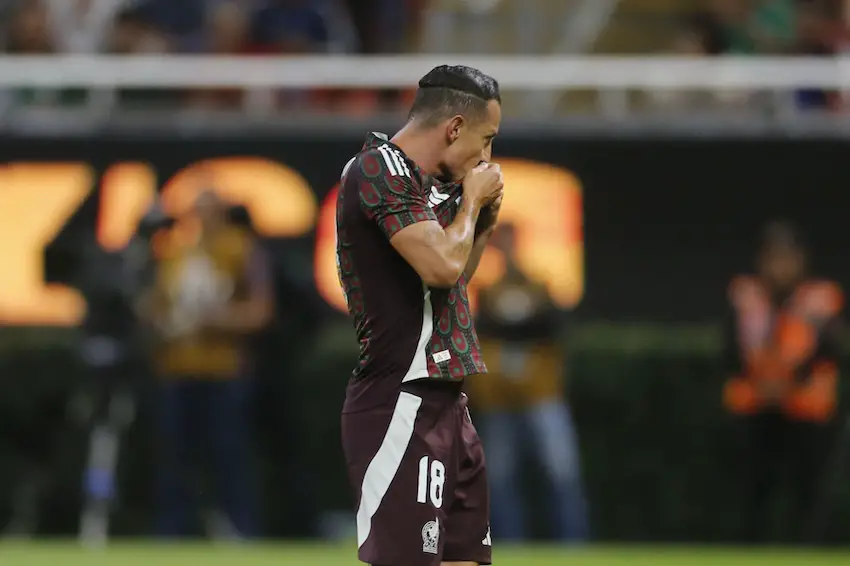
Andrés Guardado says goodbye to the Mexican National Team, this in a friendly match between the Mexico vs. United States teams.
Long-time captain Andrés Guardado said goodbye to the Mexican National Team during Tuesday’s match against the United States. (Fernando Carranza García/Cuartoscuro)

The former América star dribbled into the box, skidding to a halt as defender Tim Ream challenged him and tugged him off the ball. Jiménez recovered, chased Ream and executed a neat sliding scissors tackle, sending the ball to teammate César Huerta near the penalty spot. Huerta coolly sidestepped Miles Robinson and slotted home past sprawling U.S. keeper Matt Turner to make it 2-0.

The two-goal deficit failed to spark a reaction from a beleaguered Team USA playing without seven starters. The Americans didn’t get their first shot on goal until minute 79 and their first shot of any kind — a muffed volley attempt by left-back Kristoffer Lund — came only 15 minutes earlier.

The game served as a tribute match for long-time captain Andrés Guardado who announced his retirement from El Tri. Guardado, 38, started and played 19 minutes before coming off to a standing ovation from the 43,537 fans in attendance, getting hugs from teammates and handshakes from some U.S. players. 

Being a friendly match, however, the loss does little to alter Team USA’s claim to being the top club in the Concacaf region.

Players from both sides now return to club duty for four weeks before the next international window during which time the games will be for real. 

Mexico will face Honduras twice (once at home and once on the road) in a Concacaf Nations League quarterfinal series, while the U.S. team is matched up against Jamaica in the same tournament.

The game served as a tribute match for long-time captain Andrés Guardado who announced his retirement from El Tri. Guardado, 38, started and played 19 minutes before coming off to a standing ovation from the 43,537 fans in attendance, getting hugs from teammates and handshakes from some U.S. players. 

With reports from CNN, Our Esquina, The Washington Post, ESPN and Reuters


Peso depreciates against US dollar for third straight day

2
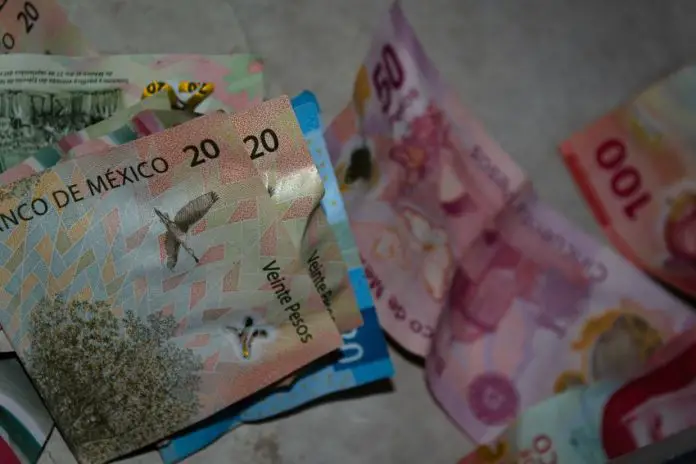
Different Mexican currency bills sitting in a chaotic pile as if thrown on a table
The peso has depreciated by more than 18% since its strongest position this year. (Marco Antonio Casique/Unsplash)

The Mexican peso continued to depreciate against the US dollar on Wednesday morning, losing ground for a third consecutive day to reach an exchange rate of almost 20 pesos to the greenback.

At 5 p.m. Mexico City time, one dollar was trading at 19.91 pesos, according to Bloomberg.

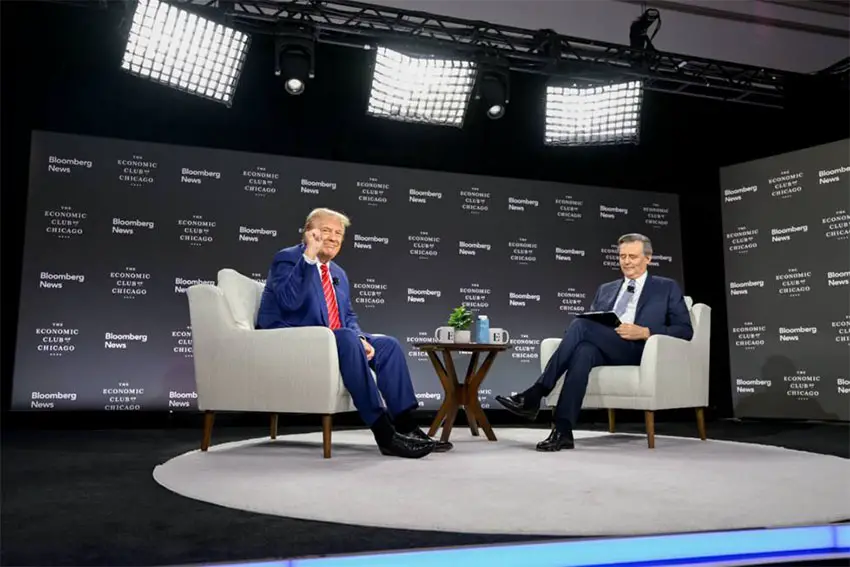
Donald Trump sitting as a guest onstage at an Economic Club of Chicago interview event in October 2024
One factor affecting the peso’s strength is repeated threats by presidential candidate Donald Trump, who has said he he would place extremely high tariffs on Chinese vehicles made in Mexico. (X)

The peso closed at 19.69 to the dollar on Tuesday, according to the Bank of Mexico.

Donald Trump’s tariff threats, a general strengthening of the dollar and a lower growth forecast for the Mexican economy from the International Monetary Fund are among the reasons why the peso has depreciated this week after closing at around 19.30 to the greenback last Friday.

In an interview at the Economic Club of Chicago on Tuesday, former president Trump  repeated his threat to impose hefty tariffs on vehicles imported to the United States from Mexico if he wins the Nov. 5 presidential election in the U.S.

He even cited a figure of 2,000%, although in subsequent remarks he only went as high as 300%.

“I’m going to put the highest tariff in history, meaning I’m going to stop them from ever selling a car into the United States,” said the Republican Party presidential candidate, who also asserted that “the most beautiful word in the dictionary is tariff.”

“… China is building massive auto plants in Mexico. And they’re going to build them, and they’re going to take those cars and sell them into the United States,” he said.

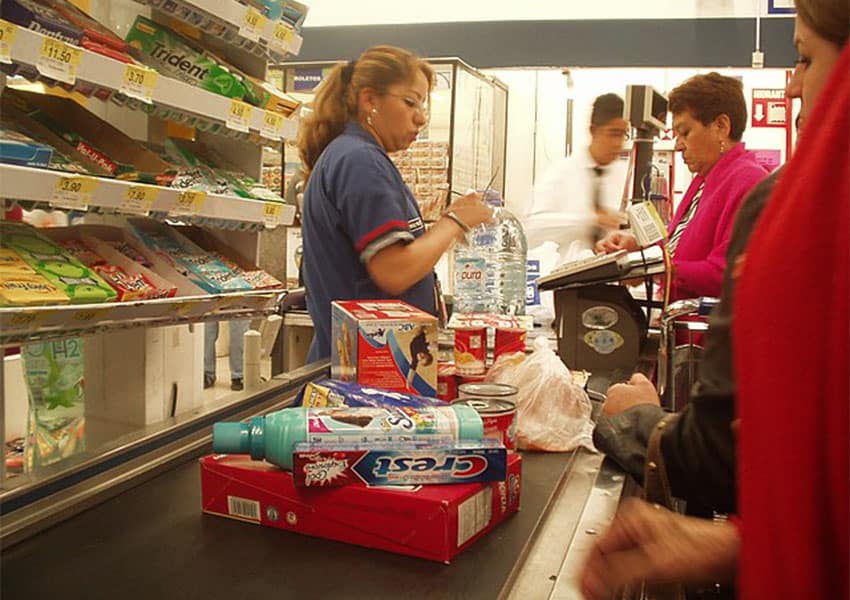
Cashier in Mexico City
The peso’s strongest position in 2024 was in April, when it reached 16.30 pesos to the US dollar, at a time when the consumer price index was also showing downward movement. (Wikimedia Commons)

Foreign exchange news website FX Street reported that the peso “depreciated over 1.60% against the US dollar on Tuesday after Donald Trump threatened to whack prohibitory tariffs on Mexican-made autos entering the US market.”

FX Street reported that the peso also “depreciated in early trading on Wednesday as the US dollar strengthened amid a mixed market mood with falling U.S. Treasury yields.”

The peso has depreciated significantly since the comprehensive victory of President Claudia Sheinbaum and the ruling Morena party at Mexico’s June 2 elections.

A major factor in the currency’s decline in recent months has been concern over the government’s judicial reform, which was approved by a Morena-dominated Congress in September and signed into law by former president Andrés Manuel López Obrador just before he left office.

Since the peso reached its strongest position this year — 16.30 to the dollar in April — the Mexican currency has depreciated by more than 18%.

Last month it depreciated to above 20 to the dollar for the first time since October 2022.

With reports from El Economista, Aristegui Noticias and FX Street 

Military and National Guard implicated in 3 civilian deaths in Nuevo Laredo

0
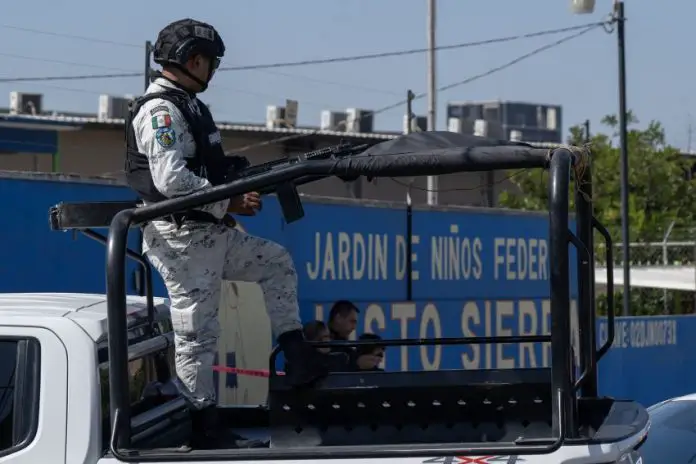
National Guardsman in uniform in a truck bed on patrol through Mexican streets.
National Guardsman on patrol. Both the National Guard and the Mexican army were implicated in civilian killings this past weekend in Nuevo Laredo. (Omar Martínez/Cuartoscuro)

President Claudia Sheinbaum addressed questions Tuesday about accusations that military soldiers and National Guard members were involved in the shooting deaths of three civilians over the weekend — including a nurse and a child — in two incidents in the Mexican border state of Tamaulipas.

According to media reports, all the victims died in the crossfire of two different shootouts in Nuevo Laredo between patrols and suspected members of criminal groups. 

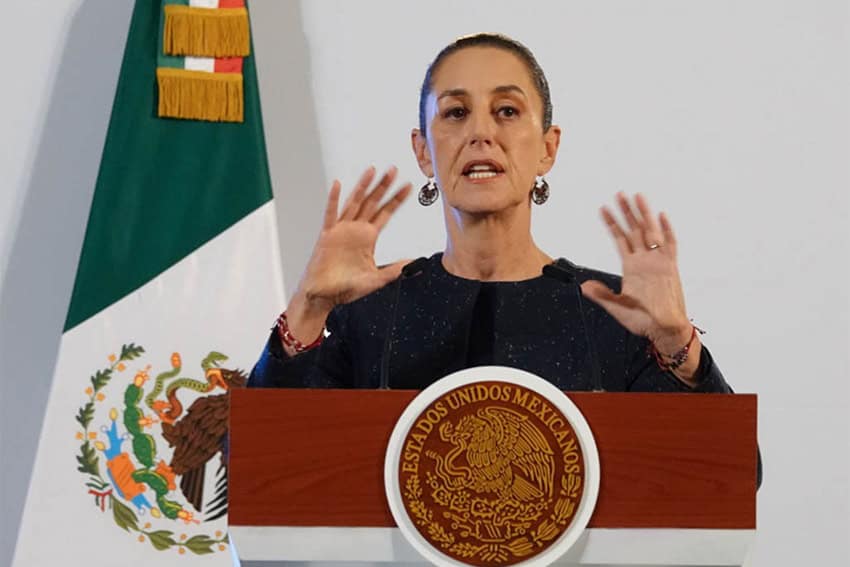
President Claudia Sheinbaum behind a podium at a press conference with her hands raised in front of her shoulders, as if gesturing.
President Sheinbaum confirmed the three deaths in Nuevo Laredo but gave few details, saying that the federal Attorney General’s office had already begun investigating. (Graciela López/Cuartoscuro)

At her Tuesday morning press conference, Sheinbaum confirmed the three civilian deaths, adding that a member of the military was also killed in the incident on Friday in which a nurse was killed.

The other incident, on Saturday, involved the National Guard, Sheinbaum confirmed, and resulted in the deaths of two civilians, one of whom was a young girl. Both cases were under investigation by the federal Attorney General’s Office, she said.

She did not give any details about the third civilian victim. 

Nuevo Laredo, a border city with Laredo, Texas, has been the site in multiple incidents involving civilians killed in encounters with military forces serving as law enforcement. The military and the National Guard are both under the supervision of the Defense Ministry. 

In the Friday incident, a family found itself on a road where the military was pursuing suspects’ vehicles in a car chase after having been fired upon, Sheinbaum said. 

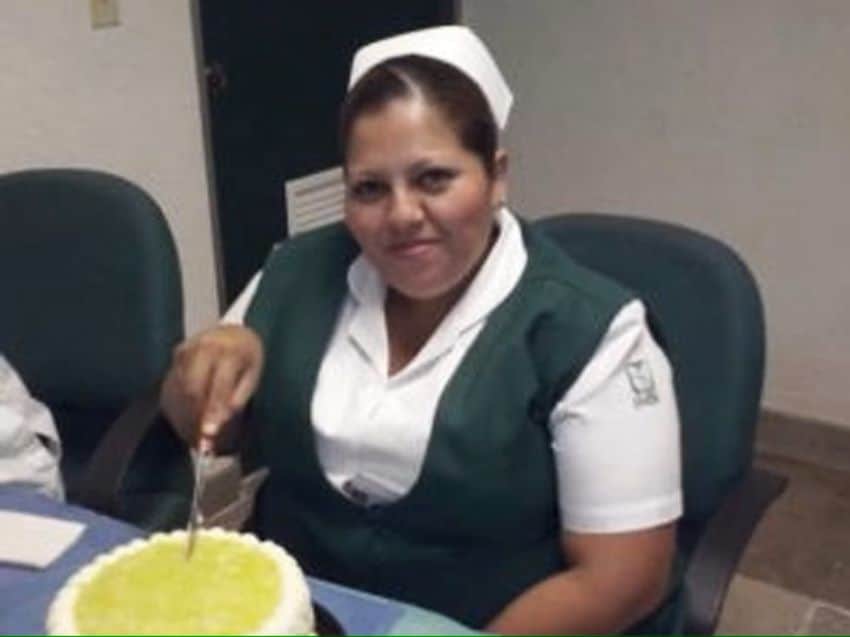
Víctor Carrillo Martínez told local media that his wife, Yuricie Rivera Elizalde, was killed in the crossfire by a bullet to the head. According to reports, Martínez said medical personnel who attended to Rivera, a nurse, told him, “They were large-caliber bullets used by soldiers.”

Woman in an nurse's uniform for Mexico's National Social Security Institute sits in a hospital break room cutting a decorated cake.
Yuricie Rivera Elizalde, a nurse in Nuevo Laredo, was killed in her family’s car on Friday when it ended up in the middle of a shootout between a Mexican army vehicle and one driven by suspected cartel members. (X)

Carillo also told reporters that the soldiers involved in the incident did not stop to help and simply drove on. 

In the Saturday incident, Lidia Galván Reséndezan and her 8-year-old granddaughter were driving to a stationery store when they were caught in the middle of a car chase between National Guard officers and a suspect. The 8-year-old, identified by the Expansión media outlet as Lidia Iris, was shot in the head and died soon after arriving at a hospital.

Galván told reporters that her car got trapped between a military vehicle and an SUV when authorities opened fire. 

The Nuevo Laredo Human Rights Committee (CDHNL), a local NGO, released a statement on Sunday, saying that another civilian had been killed during another car chase in the city involving the military. Sheinbaum did not confirm a third incident, so it isn’t clear if the death referred to by the human rights group was the other death she acknowledged had happened in the Saturday incident with the National Guard.

A history of violence

Nuevo Laredo has suffered repeated violence over the last several years under the presence of the Northeast Cartel, an offshoot of another criminal group, Los Zetas. The government has responded to the violence with regular military and National Guard patrols.

The cartel has a strong presence in Nuevo Laredo and has been accused of killing several police officers across the northern states of Tamaulipas and Nuevo León in recent years. The cartel and other organized crime groups in the northern border regions of Mexico profit from the smuggling to the U.S. of drugs and migrants.

Government response

President Sheinbaum emphasized at her Tuesday press conference that “it is very important to say that Nuevo Laredo is where criminal groups have carried out the most attacks on the army and the National Guard.”

She also said that if any members of the Guard or army were found to have acted badly, they would face consequences.

The Defense Ministry (Sedena) has yet to comment on the incidents. 

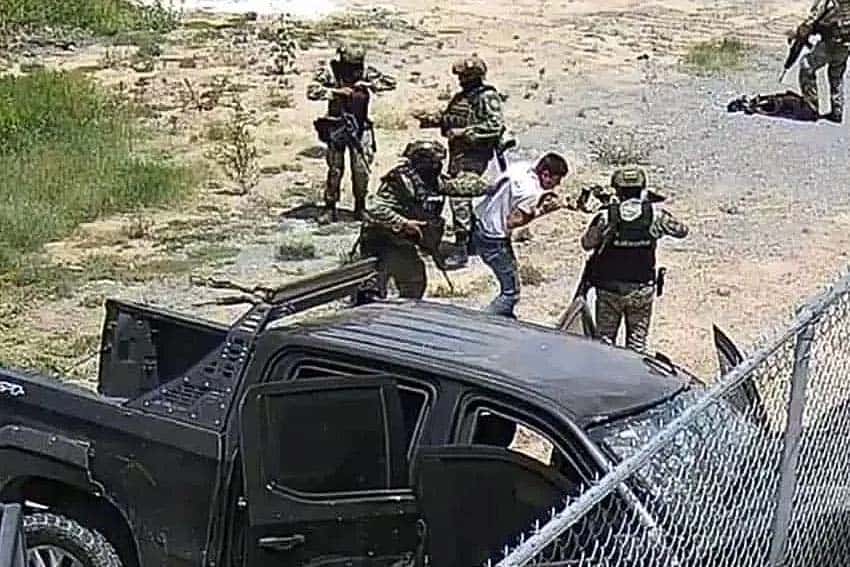
Mexican soldiers in Nuevo Laredo roughing up civilians on surveillance video
The military and the Guard have been implicated in multiple civilian killings in Nuevo Laredo. In 2023, 16 Guardsmen were accused of killing five disarmed suspects (caught on video), and a military patrol killed two civilians driving home from a social event. (Screen capture/File photo)

Multiple accusations of wrongdoing

The military has been implicated in previous killings of civilians, most recently at the beginning of October, six migrants were killed in the southern state of Chiapas, after the Mexican army opened fire on vehicles that were attempting to evade military personnel carrying out patrols.

Sedena released a statement afterward saying that the soldiers claimed they’d heard shots and opened fire on a truck that turned out to be carrying migrants from Egypt, Nepal, Cuba, India, Pakistan and El Salvador. Four of the migrants were found dead and 12 wounded. 

The military and the Guard also have a controversial history, particularly in Nuevo Laredo, where in 2023, a Guard patrol in Nuevo Laredo allegedly killed two civilians in a car for no apparent reason. At the time, CDHNL president Raymundo Ramos claimed that a Guard artilleryman shot at the vehicle 86 times. Also last year, 16 army soldiers were caught on video in Nuevo Laredo shooting five disarmed suspects execution-style.

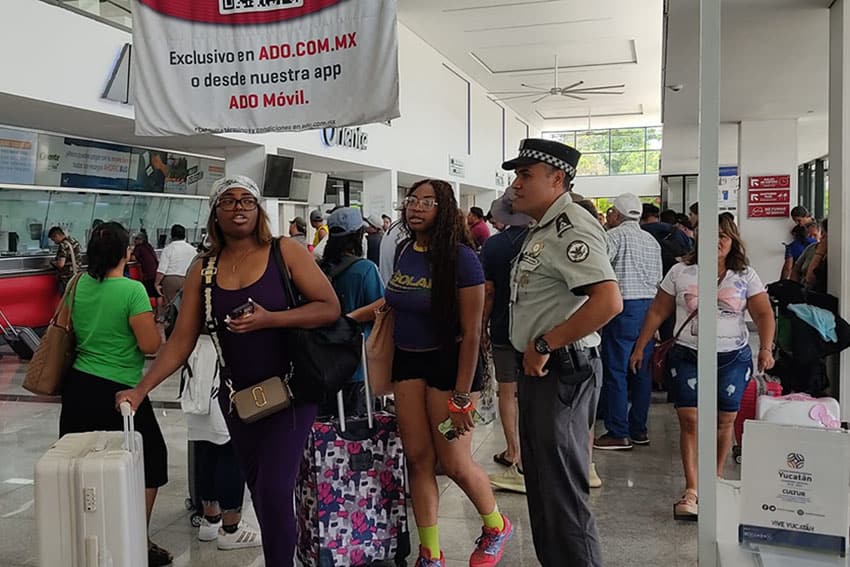
Travelers with suitcases walking through a Yucatan bus station with a National Guardsman watching them
Created in 2019 to replace Mexico’s discredited civilian Federal Police, the National Guard’s existence has been intertwined with the military from early on, but as of September, it officially came under military control. (National Guard/Facebook)

The National Guard: blurring lines between civilian and military

Shortly before leaving office, former President Andrés Manuel López Obrador and his Morena Party succeeded in pushing through a new constitutional reform that put the Guard permanently under Sedena’s control, further blurring the lines between the civilian and military forces in Mexico, as the Guard is Mexico’s federal police force.

Since its creation, the Guard has been used in every state in Mexico to patrol civilian public spaces, including airports and federal highways, but also more local spaces such as bus stations. They also assist state and local law enforcement in responding to more serious crimes, usually involving illicit drug trafficking, people smuggling and fuel theft.

The constitutional reform was widely criticized by those who say it violates Mexico’s constitution and that the military is not adequately trained to do civilian law enforcement. 

With reports from AP News, El Financiero and The Washington Post.

Authorities detain 46, retrieve over 300 firearms during violent September in Sinaloa

0
Security operations in Culiacán due to Sinaloa Cartel infighting
A conflict between rival factions of the Sinaloa Cartel came to a head in September, causing an escalation in murders, disappearances and kidnappings, especially in the area surrounding the state capital of Culiacán. (José Betanzos/Cuartoscuro)

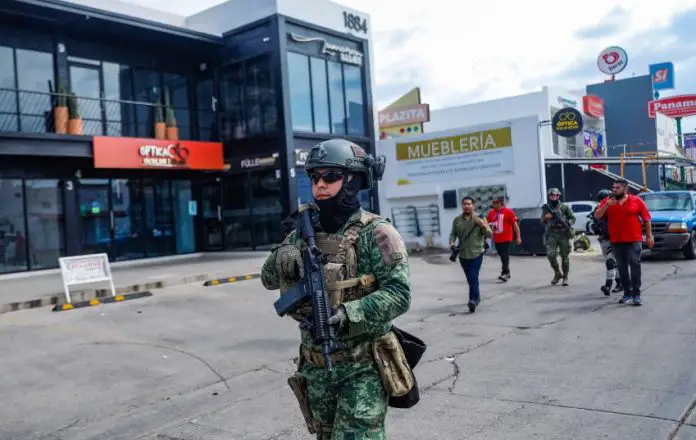
In the 35 days of cartel violence that has befallen Sinaloa, state officials announced that they have detained a total of 46 suspects and retrieved more than 300 firearms. 

There has been public uproar over the weeks of sustained violence in the region, sparked by a feud between factions of the Sinaloa Cartel, whose stronghold and home base is the northwestern Mexican state. 

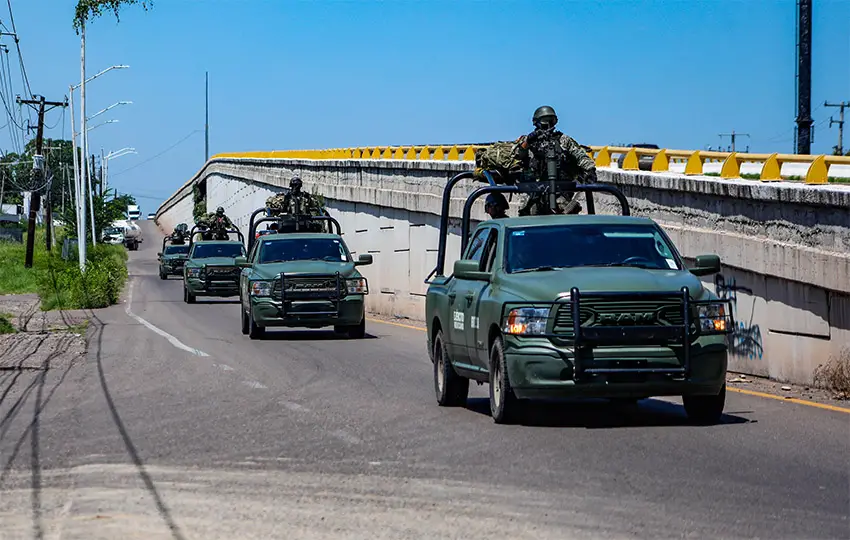
A convoy of military vehicles with armed soldiers perched on top drives down a highway in Sinaloa
More than 125 people have been reported dead in Sinaloa since a resurgence of cartel infighting in late August. (José Betanzos/Cuartoscuro) 

In the same period, police also confiscated 1,709 gun magazines, 95,859 unused cartridges, 55 grenades and 153 vehicles, 35 of which had improvised bulletproof armor, authorities said.

Officials are calling on locals to anonymously report suspicious and criminal activities to help support their investigations. 

According to the newspaper El País, more than 125 people have been reported dead since the cartel infighting started to escalate in late August. On Sept. 29, 300 people joined protests in Sinaloa’s capital of Culiacán to draw attention to the violence, carrying placards and calling out chants for peace. 

Cartel members clone police vehicles 

Sinaloa’s Public Security Minister Gerardo Mérida Sánchez said that during a recent police operation, authorities seized several clonedreplicas of police and emergency vehicles, including eight police motorbikes, two police cars and an ambulance. 

At a press conference on Monday, Governor Rubén Rocha Moya said that following a spate of robberies, authorities planned an operation to prevent future instances of crime affecting local businesses. 

The National Guard has been tasked with patrolling streets and central areas to identify high-risk areas for crime and carry out preventative measures.  

“We aim to act not reactively, but rather prevent crime at its source. With the presence of the [National] Guard, the operation we are designing is focused on deterring and preventing crime,” Rocha said. 

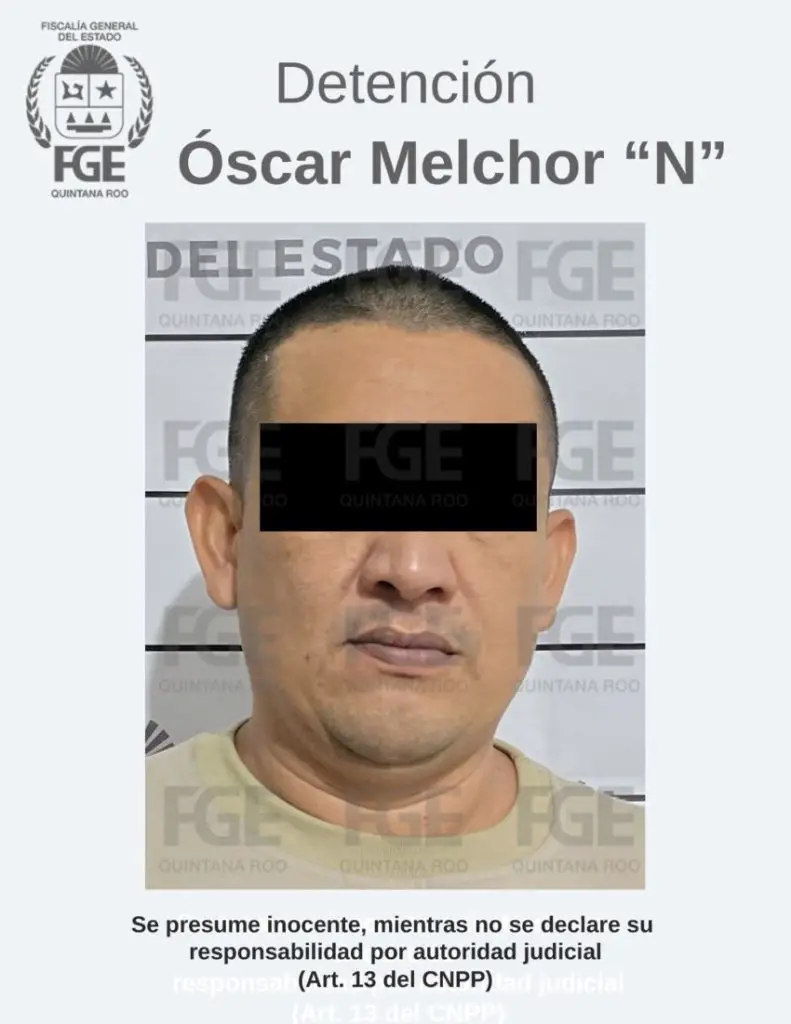
On Oct. 12, alleged Sinaloa Cartel leader Óscar Melchor, known by the alias "El 18," was apprehended in Saltillo
On Oct. 12, alleged Sinaloa Cartel leader Óscar Melchor, known by the alias “El 18,” was apprehended in Saltillo. (FGEQuintana Roo/X)

Cartel leader ‘El 18’ arrested in Coahuila

On Oct. 12, alleged Sinaloa Cartel leader Óscar Melchor, known by the alias “El 18,” was apprehended in Saltillo, the capital of the northeastern state of Coahuila. El 18 faces multiple criminal charges related to his role within the notorious drug trafficking organization.

Law enforcement agents from Quintana Roo, Sinaloa and Coahuila collaborated in his arrest after which he was transported via plane to Quintana Roo, where he will face trial for crimes committed in that state.

Melchor had previously been detained, alongside four others, in 2021 for possession of cannabis and his role in a homicide that took place in Alfredo V. Bonfil, a suburb of Cancún. According to the news agency Infobae, the reasons for his release following his previous arrest are unknown.  

With reports from El Universal, El País, El Economista, Informador and Infobae

Woodside Energy begins operations in Tamaulipas with US $12B investment

0
The Trion oilfield, located 180 km east of Matamoros, is expected to produce 110,000 barrels of crude per day (bpd).
The Trion oilfield, located 180 km east of Matamoros, is expected to produce 110,000 barrels of crude per day (bpd). (Woodside Energy)

Earlier this month, the Australian firm Woodside Energy confirmed an investment of US $11.7 billion in the development of a deepwater oil field off the coast of the northeastern state of Tamaulipas, Mexico. 

The Trion oil field, located 180 km east of Matamoros, is expected to produce 110,000 barrels per day (bpd) of crude and 2.5 million cubic meters of gas a day beginning in 2028.

Australian Ambassador to Mexico, Rachel Moseley, with Woodside Energy CEO Meg O’Neil during a celebratory event in Mexico City.
Australian Ambassador to Mexico, Rachel Moseley, with Woodside Energy CEO Meg O’Neil during a celebratory event in Mexico City. (@AusEmbMex/X)

The ultra-deepwater oil field is a joint venture between Woodside Energy, which holds the 60% operating stake, and the state-owned oil company Pemex, which owns 40%.  

Woodside Energy recently acquired the Houston, Texas-based liquefied natural gas developer Tellurian, including its Gulf Coast LNG export project, for US $1.2 billion including debt.

The project is expected to help bolster Mexico’s energy security as well as support economic development in the region. Matamoros, Tamaulipas, is well-known for its oil and manufacturing industries. The city exported $6.74 billion worth of products to the United States in 2023, the Economy Ministry reported, and is steadily increasing its exports to other parts of the world, including Spain and Canada. 

During a celebratory event in Mexico City for the project, the Australian Ambassador to Mexico, Rachel Moseley, said that the investment demonstrated Woodside’s commitment to Mexico’s energy development. 

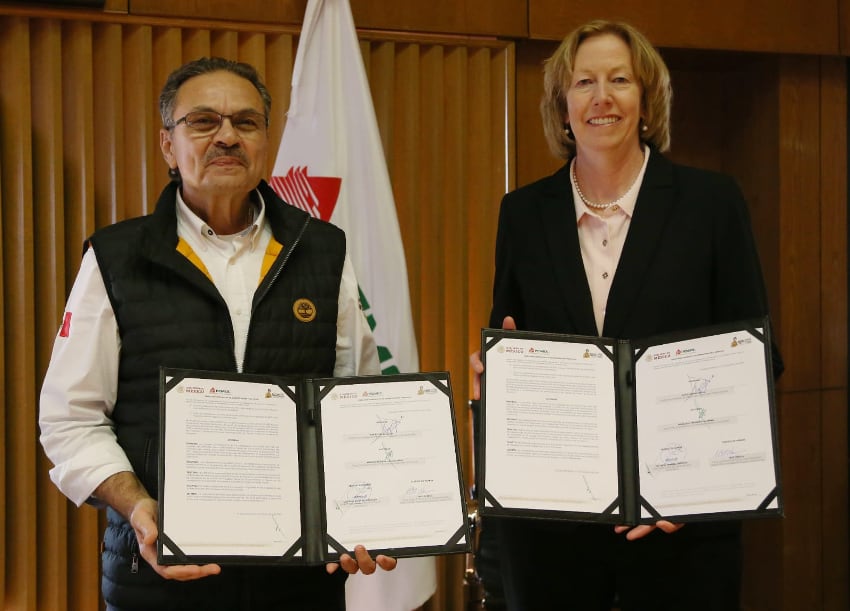
Octavio Romero and Meg O'Neill
Former Pemex director Octavio Romero and Woodside CEO Meg O’Neill announced the joint venture in 2023, estimating Woodside’s investment at $10.43 billion. (Pemex/X)

The CEO of Woodside Energy, Meg O’Neil, expressed her gratitude for the warm welcome to Mexico and emphasized the positive impact she expects the project to have on the country, as well as on local communities. 

Representative for Tamaulipas in Mexico City Alejandro Rábago Hernández said that Woodside’s investment will position the state as a major energy power, support the creation of new high-quality jobs and bolster the local economy. He also expressed hope that the project would support the government’s energy transition efforts.  

Mexico’s President Claudia Sheinbaum recently announced that the government would be introducing a new national energy strategy, which will support an accelerated green transition.

The plan is expected to cap national oil production at 1.8 million bpd,  to support the target of producing 45% of the country’s electricity from renewable energy sources by 2030. Sheinbaum’s will be the first plan at the federal level to focus on a green transformation of the energy sector.  

With reports from Cluster Industrial, Reuters, Wired and Milenio

Celebrate fall with these roasted vegetable Enchiladas Suizas in chile ancho Sauce

1
Enchiladas Suizas
A new take on a Mexican favorite that's perfect for fall evenings. (Azteca)

Sanborns, the place where you can get a coffee, a pair of socks, and a full meal all under one roof, is a Mexico City institution. Founded in 1903, it’s the go-to for everything, from a casual bite to wondering why you’re browsing electronics in a café. Sanborns reminds me of the Cracker Barrel gift shop randomness up north, but they need credit where credit is due.

Enchiladas Suizas, or “Swiss Enchiladas,” were created in the 1950s at the iconic Sanborns café in Mexico City. The dish’s name reflects its Swiss-inspired twist on traditional Mexican enchiladas, a nod to the dairy-heavy Swiss cuisine (for a more traditional take, try our previous recipe).

Traditionally, enchiladas were filled tortillas covered with spicy sauces, typically made from red or green chilies. However, the mad-scientist chefs at Sanborns invented a richer, creamier version. They drew on the European influence brought by Swiss immigrants to Mexico and introduced suizas, a cream-based sauce made from cream, salsa verde, and Monterey Jack cheese, layered over enchiladas filled with chicken.

The dish quickly became popular, offering a comforting, indulgent alternative to the spicier versions of enchiladas. Today, Enchiladas Suizas remain a staple in Mexican cuisine, representing the fusion of European and Mexican flavors that define much of the country’s culinary history. I’d like to share my vegetarian version, with roasted sweet potatoes, onions, carrots, mushrooms. Topped with a creamy verde sauce, shredded pepper jack cheese, baked until the cheese starts to brown, and finished with, you guessed it, more of the cream sauce!

Roasted Vegetable Enchiladas Suizas

Serves: 4-6
Prep time: 25 minutes
Cook time: 45 minutes

Ingredients:

For the Roasted Vegetables:

  • 2 cups mushrooms, sliced
  • 1 large sweet potato, peeled and diced
  • 4 large carrots, peeled and diced
  • 2 tablespoons olive oil
  • 1 teaspoon cumin
  • 1 teaspoon garlic powder
  • Salt and pepper to taste

For the Suizas Sauce:

  • 1 cup mexican cream
  • 1 cup salsa verde (store-bought or homemade)
  • 1 cup shredded pepper jack cheese
  • ¼ cup fresh cilantro, chopped
  • 2 tablespoons lime juice
  • Salt and pepper to taste

For the Enchiladas:

Before preparing your enchiladas, don’t forget to heat the tortillas. (Sergio Contreras/Unsplash)
  • 12 corn tortillas
  • 2 cups shredded cheese (pepper jack, cheddar, or a mix)
  • Fresh cilantro, chopped (for garnish)

Instructions:

1. Roast the Vegetables:

  • Preheat oven to 400°F (200°C).
  • On a baking sheet, toss the mushrooms, sweet potatoes, carrots, and onions with olive oil, cumin, garlic powder, salt, and pepper.
  • Spread the vegetables in a single layer and roast for 30-40 minutes, or until tender and slightly caramelized. Toss halfway through to ensure even roasting.

2. Make the Suizas Sauce:

  • In a medium saucepan, combine the cream, salsa verde, and shredded pepper jack cheese.
  • Cook over medium heat, stirring frequently, until the cheese melts and the sauce becomes creamy and smooth, about 5 minutes.
  • Stir in the cilantro, lime juice, and season with salt and pepper to taste. Keep warm on low heat.

3. Assemble the Enchiladas:

  • Reduce the oven temperature to 350°F (175°C).
  • Warm the tortillas: To make them more pliable, lightly toast them in a dry skillet or wrap them in a damp towel and microwave for 30 seconds.
  • Fill the tortillas: Place a generous spoonful of roasted vegetables in each tortilla, roll them up, and place them seam-side down in a large baking dish.
  • Pour about half of the Suizas sauce over the top of the enchiladas, making sure they’re evenly coated.
  • Sprinkle the shredded cheese over the top.

4. Bake:

  • Bake for 15-25 minutes, or until the cheese is melted and bubbly.

5. Serve:

  • Remove from the oven and drizzle the remaining Suizas sauce over the enchiladas.
  • Plate the enchiladas and serve to your drooling guests.

Stephen Randall has lived in Mexico since 2018 by way of Kentucky, and before that, Germany. He’s an enthusiastic amateur chef who takes inspiration from many different cuisines, with favorites including Mexican and Mediterranean. His recipes can also be found on YouTube.