Home Blog Page 52

What’s on this February in the Riviera Maya and Yucatán

0
Riviera Maya
February, like virtually every other month, is a great time to visit the Riviera Maya. (Dayana Brooke)

Lovebirds, we’ve got some truly unique once-in-a-lifetime Valentine’s Day experiences this month in the Riviera Maya, plus sparkles, sequins and dancing in the street for Carnival. So grab your best garb and feathered headdresses. Or enjoy a quieter creative pursuit like a painting class with an Italian artist. 

And for the rockers, we’ve got a treat: A heavy metal legend is coming to Cancún. 

Tim ‘Ripper’ Owens comes to Cancún

Tim Ripper Owens
Heavy metal fans can enjoy Tim “Ripper” Owens on the Riviera Maya this month. (Facebook)

In February 2026, Tim “Ripper” Owens will return to Mexico for a series of must-see live shows. 

Known as one of the most powerful voices in heavy metal, Owens will deliver a performance celebrating the key moments of his career: his era with Judas Priest, his intense work with Iced Earth, his recent success with KK’s Priest, and highlights from his solo releases.

This is a show entirely dedicated to him — his legacy, his voice and his unstoppable energy. A truly special night for metal fans in Mexico.

Date: Feb. 5 at 1 p.m.

Location: McCarthy’s Cancún

Cost: Free

Movies under the stars

Movies under the stars Riviera Maya
Movies on the big screen with an even bigger backdrop. (Eventbrite)

I love a thrilling adventure with plenty of twists and turns in the storyline to keep me guessing. So, what better way to watch “Now You See Me” than with gourmet popcorn under the stars? Enjoying a magician’s antics in an open-air cinematic experience on a rooftop, all the while reclining on a pillowy lounge, is just the thing for a Saturday movie night. 

Date: Feb. 7 at 7 p.m.

Location: La Veleta, Tulum

Cost: 649 pesos, popcorn included

300 Championship League — Muay Thai

300 Championship League
Muay Thai action comes to the Riviera Maya courtesy of the 300 Championship League. (Eventbrite)

Martial arts and fight fans, this one is for you. Get ready to witness electrifying Muay Thai battles at the 300 Championship League, where legends are born and champions clash live!

Amateur and semiprofessional categories show passion and competitive spirit in showstopping athleticism. Whether you’re a seasoned athlete or a true action enthusiast, this event is designed to deliver intense bouts, maximum excitement and unforgettable moments.

Date: Feb. 7 at 5–11:30 p.m.

Location: Hunab Lifestyle Center, Tulum

Cost: 270 pesos

Carnaval Cozumel 2026

Carnival Cozumel 2026
Who doesn’t love parties and costumes, especially when free? (Facebook)

My favorite event of the year. Grab your dancing shoes, and get ready for the glitz and glamor of Cozumel’s annual Carnival celebration: Sparkling dancers and devilishly good costumes, huge feather headdresses and sequins in the streets. 

Enjoy the weeklong festivities of parades and shows, all free, in various locations around Cozumel. It’s fantastic fun for the whole family. 

Dates: Feb. 11–15 

Location: Cozumel

Cost: free

Painting class with an Italian artist

Painting classes Riviera Maya
Learning painting from an Italian artist is one of the best events on tap this month in the Riviera Maya. (Eventbrite)

This one is right up my alley. An intimate art class in an Italian artist’s private studio — yes, please! Plus, everything is included: the canvas, paints and materials. 

All the while, amazing artist Corinna Carrara will help your creativity flow to allow you to create a unique and meaningful work. The perfect keepsake to take home after being guided step-by-step through the process. 

Date: Feb. 12 at 10 a.m.

Location: Casa Cora, Tulum

Cost: 550 pesos

Luxury cenote cinema experience

Movie in a cenote
If you love movies under the stars, wait until you watch one in a cenote. (Eventbrite)

I can’t think of a more unique and romantic setting for a Valentine’s movie date than this! Champagne, artisan popcorn and a stunning cenote private setting — ooh la la. Now, that’s a movie date! 

Sip champagne and recline in comfy lounges to watch your movie of choice while enoying your own artisanal pizza. Add private shuttle service and a cocktail, and it’s a truly special Valentine’s movie date. 

Date: Feb. 14 at 3 p.m. 

Location: Amares Riviera Maya, 

Cost: 3,189 pesos per person

ZoukMX 2026

ZoukMx
DJs and dance distinguish ZoukMX. (Eventbrite)

Celebrate their 11th year in Mexico. ZoukMX has created a unique experience, making an ultimate beach vacation mixed with a dance festival. Join some of the world’s best DJs as they escape the winter in Playa del Carmen and provide the soundtrack for a month-long zouk dance experience. 

Take classes, get a month of training or just turn up for the Jungle Lagoon festival at the end. Any way you choose to enjoy it, it will be amazing.

Date: Feb. 17 at 10 a.m. Or, if you miss it: February 23 at 12 p.m.

Location: Playa del Carmen

Cost: 250 pesos for the Jungle Lagoon festival. See their website for the month-long training.

5th Mexican Caribbean Gastronomic Festival

food fest Cozumel
The dishes of Quintana Roo are on display at the 5th annual Gastronomic Festival in Cozumel.

Dive into the world of Mexican Caribbean cuisine! From jungle to reef, discover the authentic flavors and dishes of Quintana Roo. 

Every corner of this Caribbean paradise is represented, featuring local products, handicrafts and an extensive cultural program. The  Fifth Mexican Caribbean Gastronomy Festival is one you’ll want to check out.

Dates: Feb. 21-22 from 4–10 p.m.

Location: Downtown San Miguel de Cozumel (ferries from Playa del Carmen to Cozumel every half hour)

Cost: Free

Mexico Correspondent for International Living, Bel is an experienced writer, author, photographer and videographer with 500+ articles published both in print and across digital platforms. Living in the Mexican Caribbean for over 7 years now, she’s in love with Mexico and has no plans to go anywhere anytime soon.

BBC correspondent presses Sheinbaum on violence in Sinaloa: Wednesday’s mañanera recapped

4
CIUDAD DE MÉXICO, 04FEBRERO2026.- Claudia Sheinbaum walks into her daily press conference
Sheinbaum faced several questions about her administration's strategy to reduce violence before she again presented graphics touting a recent decline in homicides. (Mario Jasso/Cuartoscuro)

The security situation in Sinaloa and U.S. President Donald Trump’s assertion that “the cartels are running Mexico” were among the topics President Claudia Sheinbaum discussed at her Wednesday morning press conference.

Here is a recap of the president’s Feb. 4 mañanera.

‘Our policy is not military confrontation’

An international correspondent from the BBC told Sheinbaum that he spent the last week in Sinaloa. He noted that “despite an enormous military presence” in the state, “there is appalling violence every day.”

“Murders, assassinations, terrible mutilations. What’s it going to take for your government to bring that violence under control?” asked Quentin Sommerville.

“The number of homicides has declined,” Sheinbaum responded, although Sinaloa was one of just six Mexican states that recorded more murders last year than in 2024.

“… In recent months, we managed to reduce, maintain, the number of homicides,” she said.

Sheinbaum explained that the high levels of violence in Sinaloa in recent times were  triggered by the “splitting” of a criminal group (the Sinaloa Cartel) after one of its “bosses” (Ismael “El Mayo” Zambada) was arrested in the United States (following his alleged kidnapping by one of the sons of Joaquín “El Chapo” Guzmán).

“That caused an internal battle,” she said, referring to the bloody war between the “Los Chapos” and “Los Mayos” factions of the Sinaloa Cartel.

“What do we do? We seek to avoid an impact on civilians, on the [ordinary] people [of Sinaloa],” Sheinbaum said.

Government deploys 1,600 troops to Sinaloa following attack on legislators

“Our policy is not military confrontation because that was already tried in Mexico, between 2006 and 2012, and what it created was a lot more violence,” she said, referring to the militarized war on drug cartels that was launched by former president Felipe Calderón shortly after he took office in December 2006.

“What we seek is the arrest, within the framework of the law, of [members of] criminal groups,” Sheinbaum said.

“… And at the same time, attend to the causes [of crime], so that young people don’t take an interest in [joining] criminal groups,” she said, noting also that Mexico has asked the United States to do more to stop the southward flow of weapons to cartels.

Sheinbaum also said that the quantity of drugs being produced in Sinaloa has declined because authorities have dismantled a large number of clandestine drug labs in the state.

Sheinbaum: US has respected Mexico’s sovereignty ‘so far’

Asked whether a reduction in the flow of fentanyl to the United States from Mexico will be “enough to stop President Trump taking direct military action against the cartels on Mexican soil,” Sheinbaum pointed out that “so far, there has been respect” of Mexico’s sovereignty by the U.S. government.

“And they’ve seen the results that we’ve had,” said the president, who outlined those results to Trump in a telephone call last month.

“… There will continue to be respect because we are neighboring nations and this mutual respect has to be maintained,” Sheinbaum said.

After her Jan. 12 call with Trump, Sheinbaum said that a U.S. “military action” against cartels in Mexico could be ruled out. Four days earlier, Trump said the United States was going to start “hitting” Mexican cartels on land.

Sheinbaum: ‘It’s false’ that cartels run Mexico

Sommerville said it was clear that Sheinbaum and Trump “have a good personal relationship,” but asked the president whether it was “respectful” for the U.S. president to say “you don’t run this country, the cartels do.”

“It’s false,” Sheinbaum said, reiterating her rejection of a claim Trump has made on several occasions.

“That doesn’t mean that we don’t speak respectfully,” she said.

Sheinbaum noted that the White House, shortly after Trump began his second term, released a statement “related to organized crime in Mexico, in the sense you mention.”

She was referring to a White House “fact sheet” issued on Feb. 1, 2025, that asserts that “the Mexican drug trafficking organizations have an intolerable alliance with the government of Mexico,” and that “the government of Mexico has afforded safe havens for the cartels to engage in the manufacturing and transportation of dangerous narcotics.”

Sheinbaum displayed a Feb. 1, 2025, post to X by the White House that similarly said that Mexican “cartels have an alliance with the government of Mexico.”

Sheinbaum Feb. 4, 2026
Sheinbaum reiterated on Wednesday that the fact that the Trump administration claims that cartels run Mexico “doesn’t mean that we don’t speak respectfully.” (Mario Jasso/Cuartoscuro)

She noted that the White House, on X, provided a “piece of evidence” for its claim in the form of a screenshot of an Associated Press article on the sentencing in the United States of former security minister Genaro García Luna, who, in early 2023, was found guilty of colluding with the Sinaloa Cartel.

“Do you know what the piece of evidence they presented is? García Luna, … the security minister of Felipe Calderón, who today is imprisoned in the United States,” Sheinbaum said.

“They were wrong by how many [years]? Six years of [Enrique] Peña [Nieto], six years of AMLO, … 12 years at least, 13 years,” she said.

While the White House posted a screenshot of the AP article about García Luna to X, it made no mention of the former security minister in the “fact sheet” it released on Feb. 1.

The fact sheet, as noted above, asserts that “Mexican drug trafficking organizations have” — present tense — “an intolerable alliance with the government of Mexico.”

Sheinbaum responded to the claim the same day.

“We categorically reject the libel the White House makes against the government of Mexico,” she wrote on social media on Feb. 1, 2025.

By Mexico News Daily chief staff writer Peter Davies (peter.davies@mexiconewsdaily.com)

Will Sheinbaum’s electoral reform block organized crime from funding Mexico’s political parties?

2
OAXACA DE JUÁREZ, OAXACA, 25ENERO2025.- Decenas de personas acuden a votar en la jornada de Revocación de Mandato a la que se somete la administración del gobernador de Oaxaca, Salomón Jara Cruz. Para este ejercicio se instalaron 2 mil 815 casillas en todo el estado, sin instalación de casillas especiales. El padrón electoral de Oaxaca es de más de 3 millones de votantes.
President Sheinbaum's soon-to-be-made-public electoral reform includes measures to increase oversight of campaign financing, but the opposition warns they will have the opposite effect. (Carolina Jiménez Mariscal/Cuartoscuro)

President Claudia Sheinbaum said Tuesday that her as-yet undisclosed electoral reform proposal will help stamp out the funding of political parties by organized crime groups, which have long injected money into election campaigns in Mexico.

At her morning press conference, Sheinbaum was asked whether the reform proposal she intends to submit to Congress this month will “shield” elections in Mexico from organized crime money.

“Yes,” the president responded, explaining that her reform proposal will seek to enable “more oversight” of campaign funding.

Sheinbaum said her reform proposal will not only seek to reduce the cost of holding elections, but also exert tighter control over how parties use their funds, which, by law, primarily come from the state.

A reporter from the newspaper El Financiero asked the president whether reducing the amount of money used to stage elections and to fund political parties wouldn’t “increase the incentive” for funding from organized crime groups.

“No, no,” Sheinbaum responded.

Asked what other “measures” would need to be taken to stop organized crime groups from funding political parties, the president only replied that her reform proposal will soon be made public.

She said that her goal is to have the reform proposal ready for next week, before assuring reporters that she will send it to Congress this month.

How Sheinbaum plans to reshape Mexico’s elections: Friday’s mañanera recapped

Sheinbaum expressed confidence that the Morena party’s allies, the Labor Party and the Green Party, will support her proposal, ensuring its passage through both houses of Congress.

She said last month her proposal would aim to increase “citizen participation” in various facets of Mexico’s democracy.

“People should express their opinions and participate, that’s democracy,” said Sheinbaum, who also said that her proposal would aim to make it easier for Mexicans abroad, especially those in the United States, to “exercise their right to vote.”

She also asserted that the National Electoral Institute — the authority responsible for organizing elections in Mexico and the nation’s electoral umpire — will not lose its autonomy as a result of the reform, as opposition politicians have claimed.

Narco money in Mexican politics 

Jorge Álvarez Máynez, the national coordinator of the Citizens’ Movement party and a candidate in the 2024 presidential election, wrote on social media last month that “the most serious problem” related to elections in Mexico today is “the illegal and criminal financing of politics.”

“This is where organized crime’s territorial and institutional control over much of the country comes from. That should be the main focus of an [electoral] reform,” he wrote.

In a 2020 academic paper titled “Illegal financing of political campaigns in Mexico,” Luis Carlos Ugalde, president of Mexico’s Federal Electoral Institute between 2003 and 2007, wrote that organized crime is a “recurrent contributor” to political parties “in certain regions of the country.”

“… This kind of financing occurs in certain areas of the country where drug trafficking has a greater presence. It generally occurs at the municipal level and its objective is to control the territory so that criminals can continue to carry out their illicit activities,” he wrote.

In a 2024 article published by the Wilson Center, a Washington D.C.-based think tank, Mexico expert María Calderón identified “the rapidly increasing involvement of criminal groups in election finances through illicit campaign funding” as a major concern in Mexico.

“Criminal groups demand that ‘investments’ in electoral campaigns bestow advantages over competitors or, more clearly, demarcate lines of territorial control. Problems arise when their demands are unmet,” she wrote.

In 2024, ProPublica, Deutsche Welle and Insight Crime all published reports that said that people working for former president Andrés Manuel López Obrador’s unsuccessful 2006 presidential election campaign received between US $2 million and $4 million from drug traffickers affiliated with the Beltrán-Leyva Organization and the Sinaloa Cartel.

López Obrador described the reports as “completely false.”

PAN: Sheinbaum’s electoral reform aims to ‘formalize narco-politics’

Although Sheinbaum’s reform proposal has not yet been publicly disclosed, the National Action Party (PAN) released a statement last month under the title:

“Morena’s electoral reform seeks to formalize narco-politics, the PAN challenges President Sheinbaum to block illegal money.”

The Jan. 25 statement noted that PAN national president Jorge Romero Herrera told a press conference that “reducing public funding [of political parties] and weakening electoral controls without strengthening oversight does not clean up politics, but rather normalizes criminal money in campaigns.”

“When illegal money reaches power, justice comes to a halt. Reducing electoral controls in this context is to formalize organized crime’s interference in campaigns,” Romero said.

Similarly, the consultancy firm Integralia said in a recent report that reducing public funding of political parties could lead to greater “illegal financing” of election campaigns.

Rosario Robles — a cabinet minister in the 2012-18 government of former president Enrique Peña Nieto — also believes that an electoral reform that entails a reduction in spending on elections, including by cutting funding for political parties, will result in more financing from organized crime groups, unless other measures are taken to stamp the scourge out.

“Make elections cheaper? For what? So that organized crime continues financing campaigns?” Robles, who in 2023 was absolved of charges related to a major embezzlement case, said at an event in Acapulco on Wednesday.

“There is already illegal financing … and illicit resources that go into electoral processes,” she said.

“… We cannot normalize organized crime deciding who governs or who dies,” Robles said.

With reports from El Financiero and Quadratín

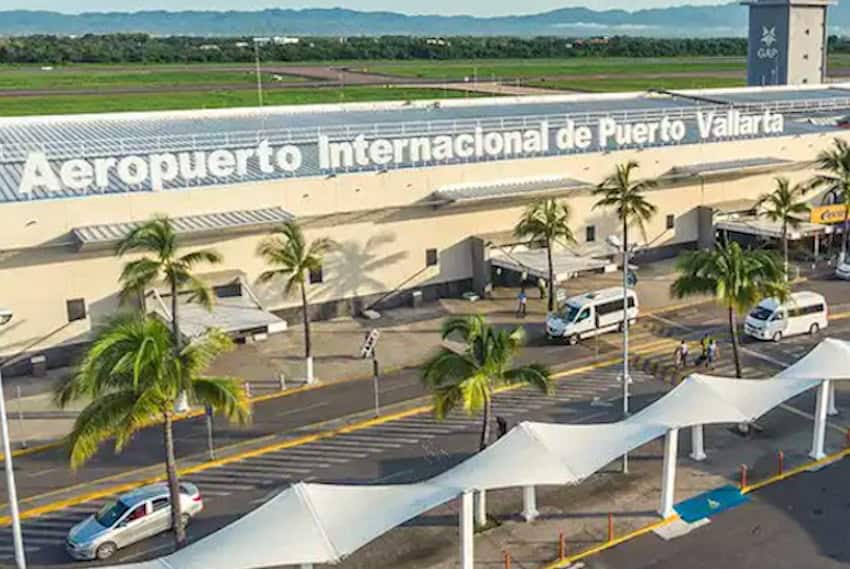
GAP, the airport operator, is expanding its 12 terminals, including Vallarta, Guadalajara, Los Cabos and Tijuana

5
an airport
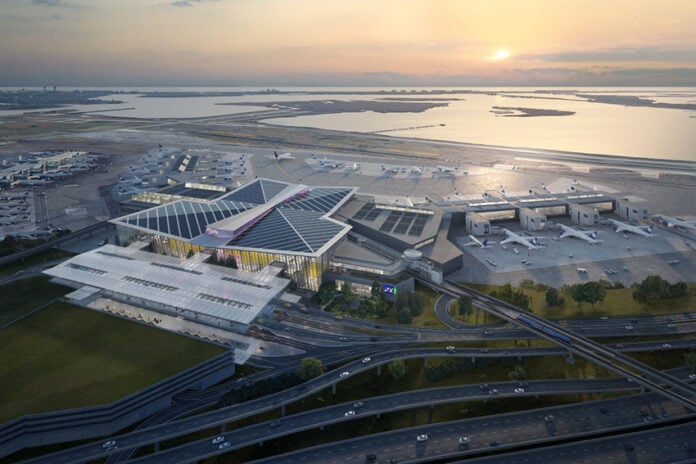
GAP will invest 8 billion pesos ($463 million) in the Los Cabos and La Paz airports in Baja California Sur, GAP’s CEO, Raúl Revuelta, announced in a Tuesday press conference. (GAP)

Mexican airport operator Grupo Aeroportuario del Pacífico (GAP) expects 40% growth by 2030 as it continues a major 52 billion-peso (US $3 billion) expansion and improvement program.

Through its 2025-2030 Master Development Plan (PMD), GAP will be expanding its 12 airport terminals, growing its overall infrastructure by 58%. By the end of 2029, its four largest airports — Puerto Vallarta, Guadalajara, Tijuana and Los Cabos — will have expanded by 134%, 91%, 47% and 37% in square meters, respectively. 

guadalajara airport
Guadalajara International Airport has already been undergoing major reconstruction in preparation for the upcoming World Cup, but those improvements are just the beginning of GAP’s long-term plans for the airport. (Cuartoscuro)

GAP plans to allocate 13 billion ($752 million) of the 52 billion pesos in 2026.

The firm will invest a projected 26 billion pesos ($1.5 billion) in Mexico’s western Guadalajara and Puerto Vallarta airports, 11.4 billion pesos ($659 million) in the U.S. gateway airports of Tijuana and Mexicali, and 8 billion pesos ($463 million) in the Los Cabos and La Paz airports in Baja California Sur, GAP’s CEO, Raúl Revuelta, announced in a Tuesday press conference. 

“We want modern infrastructure that develops connectivity, improves the passenger experience and incorporates new technologies such as facial recognition and license plate reading for ticketless parking,” said Revuelta. 

GAP will equip Tijuana airport with a Category 2 Instrument Landing System in June, allowing aircraft to land safely in low-visibility conditions. Felipe Ángeles International Airport and Toluca International Airport are currently the only Mexican airports with this technology. 

Revuelta expects the investments to grow GAP’s passenger numbers to up to 85 million a year by 2030, across its airports in Mexico and Jamaica, compared to 66 million in 2025. The jump will be mostly driven by increased passenger traffic at Guadalajara airport, particularly during the 2026 FIFA World Cup, as well as the tourism boom in beach destinations.

“We are seeing that the tourism sector is driven by hotel room construction, and that is happening [in] Los Cabos, La Paz and Puerto Vallarta,” Revuelta told the newspaper El Financiero.

While travel demand from the United States has waned due to the Trump administration’s strict immigration policies, Canadian tourism to Mexico has grown over the last year, as Canadians look to alternative North American sun-and-sea destinations. 

“It was an opportunity for the Canadian market to take notice of us more aggressively,” said Revuelta.

That notice was demonstrated recently at the International Tourism Fair (FITUR) in Madrid, Spain, where Baja California Governor Marina del Pilar Avila Olmeda secured the upcoming launch of a new Tijuana-Vancouver air route.

With reports from El Financiero, Reforma, T21 and La Jornada

Contemporary classical composer Gabriela Ortiz leads contingent of Mexican Grammy winners

2
Gabriela Ortiz in 2026
Gabriela Ortiz was born in Mexico City, the daughter of two of the founding members of Los Folkloristas. (Facebook)

Mexican composer Gabriela Ortiz parlayed a lifetime in music into a breakout night at the 68th Grammy Awards — winning one statuette in her own name and sharing two more for a project that has pushed her onto classical music’s global front line.

Ortiz, 61, won the Grammy for best contemporary classical composition for “Dzonot,” a cello concerto inspired by the cenotes of Mexico’s Yucatán Peninsula and written for cellist Alisa Weilerstein and the Los Angeles Philharmonic.

Carín León
Carín León won in the Música Mexicana category for “Palabra De To’s (Seca).” (Carín León/Facebook)

She was part of a strong Mexican showing at the Sunday ceremonies in Los Angeles. Singer-songwriter Natalia Lafourcade won best Latin pop album for “Cancionera,” and Carín León won best música mexicana album for “Palabra De To’s (Seca).”

Ortiz’s “Dzonot” premiered in Los Angeles in 2024 and anchors the album “Gabriela Ortiz: Yanga” which also earned Grammys for best classical compendium and best choral performance. A joyous Ortiz was named as the composer on those two nominations, but the primary winners of those awards were the performers and producers.

“We won three Grammys with Yanga!!!!!!!” Ortiz wrote on Instagram, calling the project “very close to my heart” and adding, “It comes from my roots, from memory, and from a deep belief that music can carry history, dignity, and hope.”

Born in Mexico City to musicians who were founding members of the folk group Los Folkloristas, Ortiz grew up playing charango (a small Andean lute‑like stringed instrument) and guitar.

Natalia Lafourcade
Singer-songwriter Natalia Lafourcade won best Latin pop album for “Cancionera.” (Natalia Lafourcade/Facebook)

As a young adult, she pursued classical piano and composition studies with two prominent Mexican composers: Mario Lavista at the National Conservatory of Music in Mexico City and Federico Ibarra at the National Autonomous University of Mexico (UNAM).

She later studied at the Guildhall School of Music and Drama in London and earned a doctorate from City University of London, building a profile that fuses concert tradition, electronics and multimedia.

She has been a composer-in-residence at Carnegie Hall, and currently is composer-in-residence at the Concertgebouw in Amsterdam, the Philharmonia Orchestra in London and the Palau de la Música Catalana in Barcelona.

Gustavo Dudamel, music and artistic director of the L.A. Philharmonic and one of the world’s best‑known maestros, has called Ortiz “one of the most talented composers in the world.”

Ortiz, who is also a professor of composition at UNAM in Mexico City, has now been recognized for six Grammys.

In 2025, she won the best contemporary classical composition Grammy and shared in two others for “Revolución diamantina,” a large-scale ballet score and the name of a 2024 album with the L.A. Philharmonic and Dudamel — the first full album of her orchestral music.

With reports from El Universal, Excélsior and The Strad

Opinion: Could Mexico make America great again? The bilateral agriculture relationship

0
Aerial shot of 4 apple pickers
Mexico is the number one destination for U.S. agricultural exports, reaching $30.3 billion in 2024, ahead of both China and Canada. (@USDA/X)

Just at the end of last year, in November 2025, U.S. Secretary of Agriculture Brooke Rollins led the largest public-private agricultural delegation the United States has ever sent to Mexico.

Hundreds of American business leaders and government officials traveled to Mexico City to work through challenges and — more importantly — to strengthen and expand agricultural ties between both countries.

Then, just last week, Senator Roger Marshall from Kansas headed another U.S. delegation to Mexico, again focused squarely on agriculture.

And, almost perfectly timed, we’re now just a couple of weeks away from the Super Bowl, an event for which Mexico is expected to export a record-breaking volume of avocados to the United States: more than 280 million pounds (around 127,000 tonnes). How and why the most iconic American sporting event ended up being inseparable from one of the most Mexican dishes — guacamole — is still a mystery to me. If anyone knows the origin story, please enlighten me.

Jokes aside, when cabinet secretaries, senators and avocados are all moving north and south at the same time, it’s usually a sign that something important is happening. And yes, something has been happening for a while now. I’ll briefly share four reasons why Mexico is extraordinarily relevant to the U.S. agricultural industry.

Agricultural diplomacy in Mexico, North American edition, with yours truly. Left: Secretaries Julio Berdegué 🇲🇽 and Brooke Rollins 🇺🇸. Right: Sen. Roger Marshall and the AMCHAM crew.

First and foremost is how much Mexico buys from American farmers. Mexico is the number one destination for U.S. agricultural exports, reaching $30.3 billion in 2024, ahead of both China and Canada. Agricultural trade with Mexico supports more than 325,000 U.S. jobs, from farm fields to processing plants, rail lines and ports, making Mexico one of the most essential pillars of rural employment in America.

Second, and contrary to what many people think, the agricultural sectors of Mexico and the United States are complementary, not competitive. The two countries do not grow the same things, at the same time, or in the same way.

Mexico supplies fruits, vegetables and beer at scale — often when those products are out of season in the U.S. Meanwhile, the United States supplies Mexico with grains, feed, meat, dairy and staples that Mexico structurally imports. Mexico depends on imports for roughly 50% of its corn and about 95% of its soybeans, with the U.S. holding a dominant market share. David Ricardo would be proud: this is textbook comparative advantage in action, where each country specializes where it is strongest, creating regional food security rather than zero-sum competition.

Third, and closely linked to that point, is the stabilizing effect on prices and consumption for everyday Americans. Nearly half of U.S. agricultural imports from Mexico are products that are out of season or not widely grown domestically. Mexico supplies over 50% of U.S. fresh fruit imports and nearly 70% of fresh vegetable imports. This keeps grocery shelves stocked year-round and dampens price volatility, especially during weather shocks.

In agriculture, stability is value. Integrated trade acts as a shock absorber against climate volatility and seasonal scarcity. I won’t dive into climate change here, but droughts, hurricanes and fires speak for themselves, and coordination in this sector is not optional if we want to avoid serious trouble.

Lastly, to keep this short and sweet, is looking ahead. Mexico’s demographics, poverty reduction and (hopefully) sustained economic growth point to a rising market for U.S. farmers and producers. Over the last six years, Mexico has lifted around 13 million people out of poverty, expanding its middle class and purchasing power. Rising incomes drive dietary upgrading: more protein, dairy, processed foods and higher-quality products. At the same time, Mexico’s younger population means demand growth is demographic, not cyclical (don’t forget to read my text on demographics — it’s a good one). Why does this matter? Because a growing, wealthier Mexico means more consistent, long-term demand for U.S. agricultural exports — especially grains, feed, meat and dairy.

Put together, this is a pretty solid set of arguments: Mexico as the number one buyer of U.S. agricultural products; a deeply complementary production system; a stabilizing force for prices and consumption; and clear upside potential in the years ahead. Make no mistake: Mexico is fundamental for U.S. farmers and producers, and therefore for the broader American economy.

That’s all for this week. I appreciate you reading and sharing this piece. Substack keeps congratulating me on the growing number of readers, and that makes my Sunday writing even more worthwhile.

If this is the first time you’ve read me here, this text is part of a series titled “Could Mexico Make America Great Again?” You can find all the texts in my profile or following these links: i) Intro; ii) China; iii) Demographics; iv) Co-production; v) Artificial intelligence; vi) Energy; vii) Autos.

Cheers — and see you next week!

Pedro Casas Alatriste is the Executive Vice President and CEO of the American Chamber of Commerce of Mexico (AmCham). Previously, he has been the Director of Research and Public Policy at the US-Mexico Foundation in Washington, D.C. and the Coordinator of International Affairs at the Business Coordinating Council (CCE). He has also served as a consultant to the Inter-American Development Bank.

Trump’s message celebrating 1847 invasion of Mexico draws defiant response from Sheinbaum

57
Sheinbaum and Trump placed before a historical map of Mexico's territory
Sheinbaum laughed when she was asked about Trump's message, saying, "We're not [like former president] Santa Anna." (Facebook/Cuartoscuro/Wikimedia Commons)

U.S. President Donald Trump has found another way to antagonize Mexicans, releasing a “presidential message” celebrating the 178th anniversary of what he called the United States’ “legendary victory” in the Mexican-American War.

The message was published by the White House on Monday, the 178th anniversary of the signing of the Treaty of Guadalupe Hidalgo, which ended the Mexican-American War, and which required Mexico to cede 55% of its territory to the United States.

Trump’s message stated that the U.S. achieved “a legendary victory that secured the American Southwest, reasserted American sovereignty, and expanded the promise of American independence across our majestic continent.”

It mentioned the United States “superior military strategy,” its “series of victories in the Mexican territories of California and New Mexico” and “a triumphant victory for American sovereignty” when U.S. forces “heroically captured the capital of Mexico City in September of 1847.”

Trump also said that in his second term as president, he has been “guided by our victory on the fields of Mexico 178 years ago.”

“I have spared no effort in defending our southern border against invasion, upholding the rule of law, and protecting our homeland from forces of evil, violence, and destruction,” he wrote.

“My Administration is halting the flow of deadly drugs entering our country through Mexico, ending the invasion of illegal aliens along our southern border, and dismantling narco-terrorist networks all across the Western hemisphere.”

The message was released five months ahead of the 250th anniversary of the United States’ Declaration of Independence, and included “America 250” in its title.

José Díaz Briseño, a U.S. correspondent for the newspaper Reforma, described the message as “unusual,” while Ariel Moutsatsos, the U.S. bureau chief for Televisa’s N+ network, noted that the White House didn’t use to issue such statements.

“Trump’s White House literally describing Mexico as a land of conquest, not as a partner,” Díaz wrote on X on Tuesday.

“Yesterday’s unusual press release celebrating the U.S. invasion of Mexico & the forced annexation of Mexican territory. Whoa,” he wrote above an excerpt from the presidential message.

The publication of the message followed an assertion from Trump last month that the United States would start “hitting” cartels on land in Mexico.

Under Trump, the U.S. is playing a far more assertive role in the Western Hemisphere, as demonstrated by the bold military operation that resulted in the capture of Nicolás Maduro in Venezuela last month.

Trump’s message on the Mexican-American War also asserted that the United States has “stopped a hostile foreign power from controlling the Panama Canal” and affirmed that “we are aggressively pursuing an America First policy of peace through strength and will continue to reassert the Trump Corollary to the Monroe Doctrine to ensure the Hemisphere remains safe, prosperous, and free.”

Trump has spoken on numerous occasions about his willingness to use the U.S. military against cartels in Mexico, six of which were designated as foreign terrorist organizations by the U.S. government last year. Last May, he even made an offer to President Claudia Sheinbaum to send the U.S. army across the border.

Sheinbaum declined the offer and has made it clear that her government will never accept any kind of intervention that would violate Mexico’s sovereignty.

Former Mexican ambassador to US describes Trump’s message as an ‘in your face F… You’

Sheinbaum was asked about Trump’s message at her Tuesday morning press conference.

“You already know what my opinion is. We’re not [like] Santa Anna. We always have to defend [Mexico’s] sovereignty,” she said.

Former president Antonio López de Santa Anna is widely blamed for Mexico’s 19th-century territorial losses, although he was not in office when the Treaty of Guadalupe Hidalgo was signed.  

Apart from Sheinbaum, various other high-profile Mexicans responded to Trump’s message on the Mexican-American War.

“Never, in the recent annals of Mexico-U.S. relations had we seen anything like this,” Arturo Sarukhan, Mexico’s ambassador to the United States from 2006 to 2013, wrote on X.

“This is not only spiking the ball in the end zone; it’s an in your face F… You,” he wrote.

Well-known political analyst and columnist Denise Dresser also took to X to comment on Trump’s Feb. 2 message.

“The next time Tyrians and Trojans, morenistas [Morena party members and supporters] and no morenistas applaud Trump and celebrate when he speaks well of Claudia Sheinbaum, remember what he said yesterday about the United States invasion in the 19th century,” she wrote.

“He still sees Mexico as territory to be conquered, not as a partner. He will continue to look for ways to intervene,” Dresser wrote.

Trump has offended and antagonized Mexicans on numerous previous occasions, including with his infamous 2015 declaration that Mexicans entering the U.S. are “bringing drugs” and “bringing crime” and “they’re rapists.”

But his message on Monday, as The Guardian put it, “touched a historical nerve in Mexico” as the Mexican-American War “has long been a historical sore spot for Mexico.”

Tony Payan, a Mexico expert at Rice University in Houston, told The Guardian that Trump, with his message, “is rubbing Mexico’s nose in what is essentially a very deep wound in Mexico’s history.”

That, Payan said, despite Mexico being “a country that has done nothing but cooperate with U.S. interests on all levels.”

Historians weigh in 

In a report published on Tuesday, the Associated Press wrote that Trump’s statement “makes no mention of the key role slavery played in the [Mexican-American] war and glorifies the wider ‘Manifest Destiny’ period, which resulted in the displacement of hundreds of thousands of Native Americans from their land.”

Alexander Aviña, a professor of Latin American history at Arizona State University, told AP that Trump’s message “underplays the massive amounts of violence that it took to expand” the United States to the Pacific Ocean.

“U.S. political leaders since then have seen this as an ugly aspect of U.S. history, this is a pretty clear instance of U.S. imperialism against its southern neighbor,” he said.

In contrast, “the Trump administration is actually embracing this as a positive in U.S. history and framing it — inaccurately historically — as some sort of defensive measure to prevent Mexico from invading them,” Aviña said.

He also said that the message issued by the White House on Monday seeks “to assert rhetorically that the U.S. is justified in establishing its so-called ‘America First’ policy throughout the Americas.”

Albert Camarillo, a history professor at Stanford University, described Trump’s message as a “distorted, ahistorical, imperialist version” of the Mexican-American War.

“This statement is consistent with so many others that attempt to whitewash and reframe U.S. history and erase generations of historical scholarship,” he told AP.

With reports from The Guardian and AP 

Mexico City’s Art Week 2026 is here: The MND guide to what to see

0
A spacious white gallery room filled with a contemporary installation for Mexico City Art Week, featuring dozens of colorful, patterned inflatable spheres scattered across a polished gray floor. The surrounding white walls are adorned with various geometric and abstract artworks, including blue-toned modular paintings and a large circular spiral piece, illuminated by a grid of bright skylights.
Mexico City's annual Art Week is an annual showcase for innovative contemporary art, anchored by the Zona Maco art fair. It also inspires a packed week of nightlife. (Screen capture)

Mexico City transforms into Latin America’s art epicenter this week, with major fairs, immersive installations and vibrant nightlife to be had across Roma Norte, Polanco and beyond. If you’re a modern art or design lover, check out our guide below to our top picks for Mexico City Art Week 2026. 

Exhibits

A group of three art enthusiasts, all middle-aged, in a gallery setting examines contemporary glass sculptures during Mexico City Art Week 2025, including translucent green and bottle installations displayed on a light wooden shelf against an undecorated beige wall. A middle-aged woman in the foreground points toward the recycled-material art pieces while nearby, another women in her group takes a photo with a smartphone.
Attendees can see nearly 100 exhibits from all over the world, featuring a wide variety of contemporary art styles. (Galo Cañas Rodríguez/Cuartoscuro)

Zona Maco (Feb 4-8, Centro Citibanamex) presents 228 galleries from 26 countries, continuing its two-decade tradition as Latin America’s premier contemporary art fair. Sections include new ZⓈONAMACO FORMA (blending contemporary art and design), Main, Sur, Arte Moderno, Ejes, Diseño, Foto and Libros.

Feria Material Vol. 12 (Feb 5–8, Maravilla Studios, Fresno 315, Atlampa) showcases 78 exhibitors from 21 countries at a renovated industrial venue. Material Monday (Feb 2, 4–9 p.m.) launches the week, with simultaneous gallery openings across the city, offering a dynamic journey through contemporary art from Centro to Tacubaya.

Salón ACME No. 13 (Feb 5–8, Proyectos Públicos, General Prim 30–32, Juárez) is an artist-run platform highlighting emerging creators, with sections that include works from Puebla state artists.

Unique Design X (Feb 5–8, Expo Reforma) is a nomadic collectible design fair showcasing functional art, furniture and decorative objects by international galleries, including Carpenters Workshop Gallery as well as Mexican designers such as Hector Esrawe and Esteban Tamayo.

Algo Más de Lola, presented by Call Me Lola (Jan 30–Feb 9, Casa Basalta, Roma Norte) debuts as Art Week’s immersive newcomer, featuring Mexican artists Sandra Leal and Fernanda Brunet, with sound design by Iris in the Sky. Photographer Spencer Tunick returns to Mexico City — nearly 20 years after his 18,000-person Zócalo shoot — to create his signature intimate portraits with three participants selected from VIP ticket holders.

SACBE (Feb 5, one night only, 5 p. m.–late, San Angel) celebrates music, performance and ritual inspired by Itzpapálotl, the Obsidian Butterfly.

Gallery Highlights: Kurimanzutto, Saenger Galería, OMR, Proyectos Monclova, Patricia Conde, Mascota, Masa, Casa Limantour.

Nightlife

  • Mayan Warrior (Feb 6, starting at 10 p.m., Maravilla Studios) — Featuring: Carlita, Jenia Tarsol, Maga, Satori, Zombie Affair and more. Tickets: ticketfairy.com
  • Poetic Portals by Sonic Jungle (Feb 7, 4 p.m.–12 a.m., Ex-Hacienda San Pablo) —  Featuring: Bedouin, Jan Blomqvist (live), and Chambord. Tickets: ticketfairy.com
  • Giegling (Feb 7, 6 p.m.–6 a.m., Frontón Bucareli) — Featuring: Map.ache, Edward, and Thomas Melchior. Tickets: giegling.net/tickets
  • Zona Maco Artsy Nights (Feb 7, Centro Histórico) — The official closing party of Zona Maco’s 20th anniversary, headlined by BLOND:ISH, with special guest SG Lewis. Tickets: artsynights.net.

Get information on all Mexico City Art Week 2026 events via the OndaMX.art website, or download the ZⓈONAMACO Art Week Map app.

Mexico News Daily

Churrería El Moro opens in Los Angeles, its second outpost in SoCal

3
Exterior of Churrería El Moro in Echo Park, Los Angeles
After Los Angeles, El Moro is looking to expand to other locations in the U.S., potentially Texas and Nevada, to bring the Mexican community the taste of its sugar-coated heritage. (@moro_usa/Instagram)

Churrería El Moro, Mexico City’s most famous churro shop, opened its first store in Los Angeles, California, on Jan. 29. 

The new churrería is located in the Echo Park neighborhood, a busy and trendy area northwest of Downtown L.A. 

The Echo Park outpost is the brand’s second in Southern California, following the success of its location in Costa Mesa, Orange County. 

Set on the corner of Sunset Boulevard and Laveta Terrace, the churreria features a clean, modern look with a creamy white exterior, colorful artwork, outdoor dining and its signature blue neon signage. The venue was designed by notable international Mexican designer and architect Nacho Cadena, founder of Cadena Concept Design.

El Moro, known for its churros and growing selection of hot chocolates, was founded nearly a century ago in Mexico City by Francisco Iriarte, a man who immigrated from Navarra, Spain, in 1933. After noticing there were no churro vendors in the capital, he opened up a churro stall, where he also sold hot chocolate. 

Iriarte named his business “El Moro” in honor of the nickname given to churro vendors at festivals and fairs in Spain.

Since then, the small eatery has grown to become an icon in the capital. 


View this post on Instagram


A post shared by El Moro USA (@elmoro_usa)

The company’s CEO Santiago Iriarte and grandson of the founder, said that opening a branch in Los Angeles was a natural decision, as “it’s the closest to Mexico that will ever be.”

He shared that the positive response to El Moro’s first location in Costa Mesa motivated the brand to open a second branch in California. 

“After that first step in Mercado Gonzalez, we were confident that our brand and experience could be shared by a lot of people in Echo Park as well,” he told Eater magazine.  

Iriarte explained that the choice to open in Echo Park also responded to the large Latino community in the neighborhood, some of whom might be familiar with El Moro from trips to Mexico City. 

After Los Angeles, Iriarte is looking to expand to other locations in the U.S., potentially Texas and Nevada, to bring the Mexican community the taste of their sugar-coated heritage. 

“We’re searching for our core nostalgic customer,” Iriarte said. 

With reports from Eater and Time Out

MND Local: Protesters paralyze Puerto Vallarta after auto accident fatality

2
Puerto Vallarta
Protests over a young woman's death were a major story in Puerto Vallarta in January. (The Villas Group)

Travelers arriving in Puerto Vallarta on Friday, Jan. 30, were met not by open palm-lined roads and highways but by gridlock, uncertainty and long walks under the sun, as the city became the stage for a protest that tested the fragile balance between social justice and economic life in one of Mexico’s most tourism-dependent, service-oriented destinations.

By midday on Friday, traffic arteries connecting the cruise port, hotel zone and international airport were effectively sealed off. Road blockades erected by demonstrators demanding justice for Clarisa Rodríguez halted movement across key corridors, triggering cascading delays that rippled through the city’s transportation network

Clarisa Rodríguez memorial
Social media memorial for Clarisa Rodríguez, whose death in an auto accident in Puerto Vallarta was the inciting incident for protesters. (Facebook)

The blockades continued through Saturday.

Who was Clarisa Rodríguez?

Rodríguez had been seriously injured in a two-vehicle accident in early January, and protesters said those responsible had not been held accountable, alleging that personal relationships with municipal officials had impeded the investigation.

Rodríguez had succumbed to her injuries earlier that week, igniting public outrage and prompting family members and supporters to allege serious failures in the handling of the case.

As the protest unfolded, it became a rallying point for broader concerns over violence, public safety and perceived impunity in the region.

The consequences were immediate and visible: With vehicles unable to move, locals struggled to reach their workplaces, while travelers dragged suitcases along highways and access roads in an effort to reach hotels or avoid missing outbound flights. 

The disruption affected both domestic and international visitors, exposing how quickly Puerto Vallarta’s tourism economy can be destabilized when mobility collapses.

Puerto Vallarta
Puerto Vallarta saw its transportation brought to a standstill by the protests. (Visit Puerto Vallarta)

As hours passed with no resolution, tensions escalated on the streets. Stranded motorists confronted protesters, voicing frustration over missed appointments, lost income and mounting delays. Many questioned why the demonstrations were not directed at government offices, arguing that blocking public roadways placed the burden of protest on uninvolved residents and visitors.

For demonstrators, however, disruption was their goal. Protest leaders stated that conventional appeals had failed and that only actions capable of interrupting daily life could compel authorities to address what they described as entrenched impunity in Rodríguez’s case. They framed the protest not as a response to a single death, but as an expression of deeper systemic failures in justice and public safety.

Rodríguez’s husband makes an announcement

Despite expectations that the protest would end Friday evening, demonstrators remained overnight, maintaining a blockade along Francisco Medina Ascencio Boulevard. Organizers requested an overnight meeting with Mayor Luis Ernesto Munguía, who did not appear.

Protest leaders later attended a City Council session on Saturday morning to seek dialogue, while demonstrators continued the blockade as an act of standing for justice.

Late Saturday, Clarisa Rodríguez’s husband issued a public statement thanking supporters and providing an update on the investigation.

The bereaved expressed sincere gratitude to the general public, family and friends for their support during what he described as an extremely painful time, while also apologizing to those who were inconvenienced by the road closures.

The case is reclassified

Puerto Vallarta
Reclassification of the case has now returned life to normal for most in Puerto Vallarta. (Visit Puerto Vallarta)

He confirmed that the case had been reclassified from assault to homicide, that new hearings had been requested, and that he had been notified of a hearing date. 

Her husband also stated that evidence continued to be submitted, that the alleged perpetrator had been identified and had already appeared before the prosecutor’s office and that there was sufficient evidence to establish guilt.

He asked for understanding regarding his absence from public actions, citing the depth of his personal grief, and emphasized that none of the progress made would have been possible without public support.

Following confirmation of the hearing date of Feb. 6, Rodríguez’s family later asked that the road blockades be lifted. They acknowledged that the protest had raised broader questions about government and police procedures and expressed understanding that some demonstrators might remain in the area to continue highlighting ongoing concerns.

While the protest succeeded in drawing widespread attention to demands for accountability, it also placed renewed scrutiny on how social movements operate within spaces whose global reputation and economic survival depend on stability and uninterrupted access.

The events of Friday and Saturday underscored an unresolved question for Puerto Vallarta and similar destinations worldwide: how to reconcile the urgency of justice with the realities of a city built on constant movement.

Charlotte Smith is a writer and journalist based in Mexico. Her work focuses on travel, politics and community.