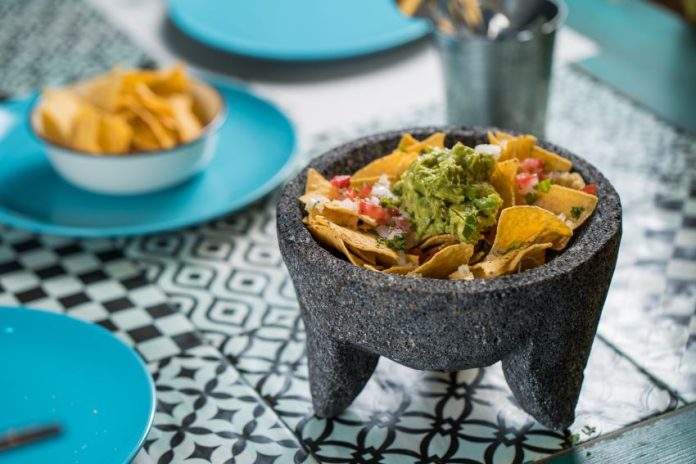
Guacamole is great, but it's even better when it's made and served in a traditional molcajete. (Manu Padilla/Shutterstock)
There’s a unique magic to making guacamole in a molcajete, a type of mortar and pestle made from volcanic rock and used in Mexico since ancient times. The flavor benefits are unmistakable, as the rock’s rough surface brings out the ingredients’ natural oils, creating a richer, more aromatic dish. More than just a kitchen tool, the molcajete is a treasured piece of Mesoamerican heritage.
The mortar and pestle are essential in the cooking of various cultures, each with its own unique techniques. In Indian cuisine, the mortar and pestle are often used in a pounding motion to crush spices and herbs, releasing their intense flavors and oils. This method is crucial for creating flavorful, aromatic masalas and pastes. Similarly, Thai cuisine uses a pounding technique to make vibrant pastes for curries and salads.
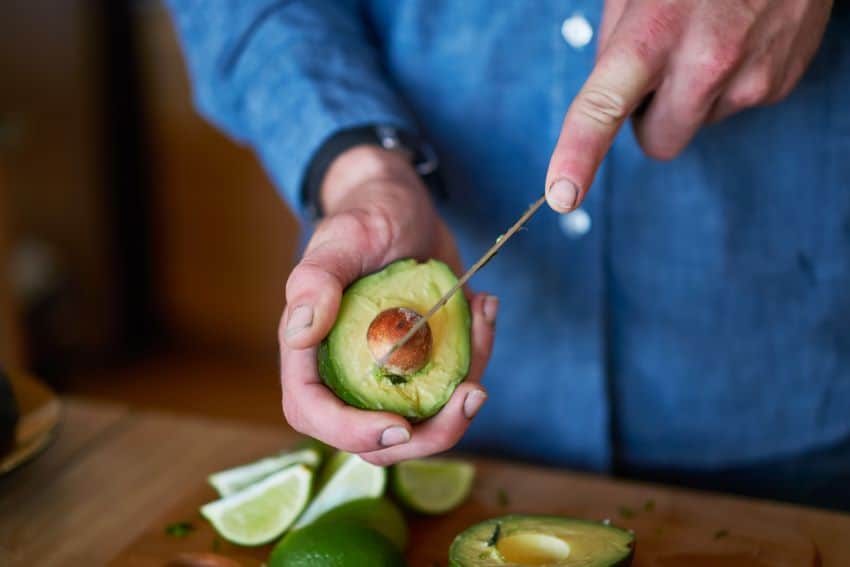
Choosing the perfect avocado is key to good guacamole. (Victoria Valtierra Ruvalcaba/Cuartoscuro)
In contrast, the Mexican technique consists of mashing ingredients with a press and twist motion of the tejolote, or pestle, against the rock surface of the molcajete. The molcajete’s rough texture is perfect for achieving a chunky, rustic texture. While the pounding motion in Indian and Thai cuisines aims to pulverize and blend thoroughly, the Mexican technique focuses on preserving the integrity of each ingredient without overprocessing.
Using a molcajete is a journey into authentic Mexican cuisine, and it’s also a bit of a workout. Mashing the ingredients with the strength of one hand while hugging the molcajete with the other is a sensory experience like no other. Here’s a step-by-step guide for creating an amazing guacamole using a molcajete:
Start by scooping out two avocados into the molcajete. Creamy, ripe avocados are the heart of any good guacamole.
Use the tejolote to mash them into a chunky consistency. Press and twist the tejolote against the avocado, aiming for a smooth texture that is still pleasantly chunky.
On a cutting board chop one tomato, half an onion, and a handful of cilantro. Each adds a burst of nutrients and flavor.
Using a spoon, incorporate all the chopped ingredients into the mashed avocado in the molcajete. Gently mix them together, ensuring even distribution.
Add salt to taste. Salt enhances the natural flavors and brings everything together.
Be careful when opening the avocado; it should be opened in the middle and around the seed. (Joshua Resnick/Shutterstock)
Using the molcajete as the serving bowl to bring your guacamole to the table adds a touch of magic to any meal. You can garnish with lemon wedges, radish slices or cilantro leaves. The rough beauty of the stone, combined with the eye-popping colors of the guacamole, invites everyone to dip into the feast.
Place the molcajete in the center of the table, surrounded by your favorite dippers, like crispy tortilla chips, fresh vegetable sticks or soft tortillas. Serve it alongside grilled meats or as a topping for tacos and nachos. The communal action of dipping and sharing from the molcajete as a group not only enhances the flavors but also brings people together, turning any meal into a celebration.
As your family and friends gather around, dipping and savoring each bite, you’re not just serving guacamole; you’re creating memories and honoring a rich cultural legacy. So the next time you crave guacamole, try making it in a molcajete and savor the magic it brings to your table.
Sandra Gancz Kahan is a Mexican writer and translator based in San Miguel de Allende who specializes in mental health and humanitarian aid. She believes in the power of language to foster compassion and understanding across cultures. She can be reached at: sandragancz@gmail.com
We all know the classic local American Know-It-All: he’s a self-proclaimed expert on Mexico — it’s always a he, isn’t it? He can tell you all about the customs, the holidays, the traditions. He can tell you what most people like and don’t like, think and don’t think. He knows the best spots for tacos and the inner dynamics of the country’s families. His girlfriend’s family, mostly.
And he barely speaks a word of Spanish.
The clueless know-it-all
Now, I’m no one to be criticizing others: I’ve got plenty of my own conceit when it comes to Mexico.
But my goodness, even I know my limits!
“Trust me you guys, this is the best Mexican place in Oaxaca” – This guy. (Genecov Group)
I had a friend here in Mexico for a while who was the exact person I described above. And before I get into it all, let me first state this: he was a very nice man.
He was also very, very clueless. But part of the gift of being a man from the United States is a kind of unending confidence that most of us can only dream of. At least he gave most of his explanations and analyses in English, so he probably wasn’t understandable enough to bother too many Mexicans.
I always wonder about these types, who remind me of the Mexicans I’ve met who claim that English is super easy. They understand it perfectly, they insist; they just have a little trouble speaking it.
But anyway, look, buddy. If you don’t speak the language, I’m not following you around the country, okay?
The actual know-it-all
On the other end of the spectrum, we find people who actually doknow it all, and like to tell you about it. A lot.
“…If you ask the barman for “dos mas cervezas, pinche güey,” he’ll like, think you’re local” – This other guy. (Clem Onojeghuo/Unsplash)
One fellow I know who’s been here for many years consistently speaks to me as if I’m just off the boat. He throws out folkloric phrases, many of them kind of rude. He then translates and explains them, kind of like my meme pieces, only unasked for.
Want a pro tip for all of us know-it-alls out there? Don’t offer your “expertise” unless asked. Definitely don’t assume you’re the most interesting person in the room. And my goodness, don’t explain Mexico to Mexicans.
What do Mexicans say?
Mexicans, for the most part, let this type of person be. As a whole, they tend to not get worked up about things. They let people behave as if they know everything they pretend to know. They might whisper a “qué pendejo” — what an ass — out of earshot later, it’s true. But they seem to be missing that swell of righteous indignation that so naturally comes to Anglos. They don’t let it keep irritating them after the fact.
Besides, Mexicans have their own version of this. It’s usually some variation of “I don’t bother speaking English because I don’t like it.” Related is the phrase “Well, I understand English perfectly, it’s just tiresome to speak.” A relative of my ex-husband gave me an even more preposterous explanation. “I only understand proper, British English,” he said — in Spanish, obviously.
See? We can all be asses, and it’s fine. But that doesn’t mean it’s something we should strive for.
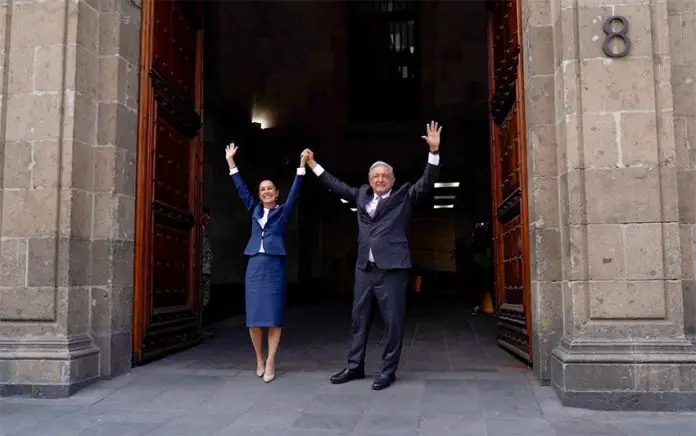
Some analysts attribute the peso's depreciation post-election to Claudia Sheinbaum's support of controversial reforms proposed by President López Obrador. Sheinbaum and AMLO met on Monday to discuss the transition period. (Claudia Sheinbaum/X)
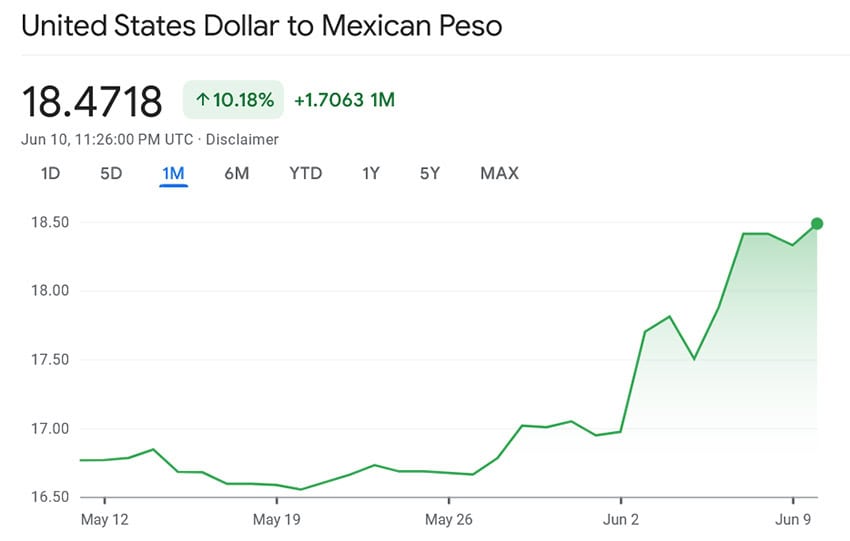
The Mexican peso depreciated to as low as 18.60 to the US dollar on Monday morning before appreciating to nearly 18.20 in the mid-afternoon, as markets continue to feel the aftershocks of Claudia Sheinbaum’s victory in the presidential election.
Bloomberg data shows that the peso fell to 18.60 shortly after 7 a.m. Mexico City time.
According to the Bank of Mexico, the peso fell even further to reach 18.65 to the greenback.
Continuing concern over Mexico’s June 2 election results and a general strengthening of the dollar caused the peso to depreciate.
However, at 3:30 p.m. Monday, the Mexican currency had recouped its earlier losses and was trading at 18.24 to the dollar, according to Bloomberg.
The US dollar has strengthened against the peso since the June 2 elections. (Google Finance)
Final results announced by the National Electoral Institute (INE) on Sunday indicated that Morena and its allies won a two-thirds majority in the Chamber of Deputies, but fell just short of a supermajority in the Senate.
That means that the Morena-led coalition will be just a few votes short of being able to approve a long list of constitutional reform proposals President Andrés Manuel López Obrador sent to Congress in February. The new Congress will commence on Sept. 1.
She added that the proposals generating the most concern are those that would eliminate autonomous government bodies, overhaul Mexico’s judiciary and reform the INE.
President-elect Sheinbaum, who will take office Oct. 1, went to the National Palace on Monday afternoon to discuss the upcoming transition of power with López Obrador. They were expected to discuss the proposed constitutional reforms, which Sheinbaum has said she supports.
CI Banco said in a note that the market was awaiting news of the meeting between the current and future president. López Obrador said Monday morning that he wouldn’t pressure Sheinbaum to rush his package of proposed reforms through Congress.
Another factor that could affect the value of the peso this week is the upcoming U.S. Federal Reserve interest rate announcement. (Cuartoscuro)
Another factor expected to affect the peso this week is the United States Federal Reserve’s interest rate decision on Wednesday. The Fed is widely expected to maintain its federal funds rate at 5.25%-5.5%, but the U.S. central bank will likely give some indication as to when a future cut will come.
The peso has benefited for an extended period from the large gap between the Bank of Mexico’s key interest rate — currently 11% — and that of the Fed.
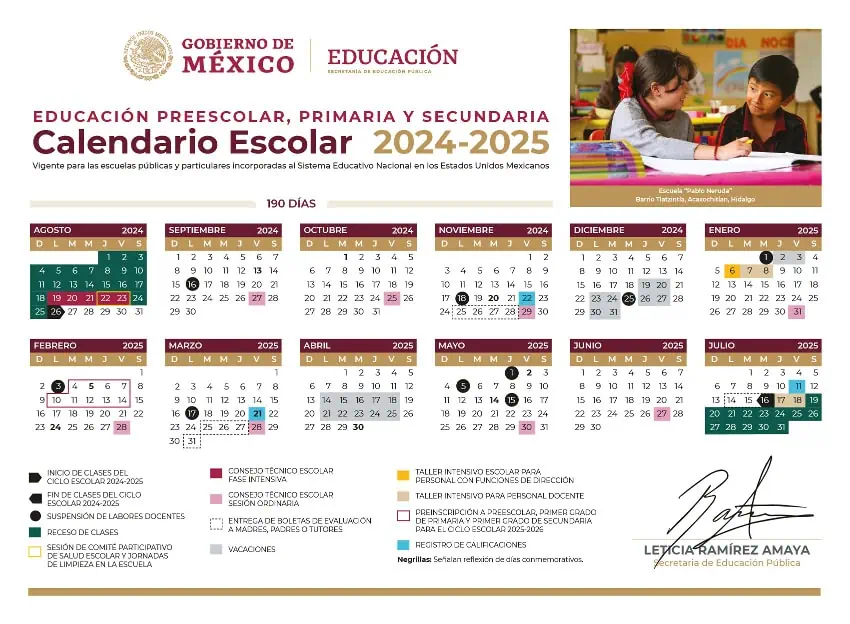
The calendar applies to all public preschools, primary schools and middle schools as well as private schools that are incorporated into Mexico’s National Education System.
The school calendar for 2024-25 was published by the Public Education Ministry on Monday. (SEP)
When does the new school year start?
Mexico’s 2024-25 school year will commence on Monday August 26.
The last day of the current school year is Tuesday July 16, meaning that students returning to preschool, primary school or middle school will have just under six weeks of summer vacation.
When does the 2024-25 school year end?
The last day of school of the upcoming school year is Wednesday July 16, 2025.
When do the end-of-year holidays start and end?
The first day of the vacation period will be Thursday Dec. 19 and the last day will be Wednesday Jan. 8, 2025, meaning that students will have three weeks off school.
Their first day back will be Thursday Jan. 9.
When do the Easter holidays start and end?
Students will have two full weeks off school between Monday April 14 and Friday April 25.
The last school day before the break is Friday April 11. The first day back is Monday April 28.
How many puentes (long weekends) are there?
Students will have a total of 12 long weekends during the 2024-25 school year. Some are the result of public holidays, while others are the product of monthly school meetings, held on the final Friday of most months.
The 12 puentes including two megapuentes (four and five-day weekends) are listed below.
Saturday Sept. 14 to Monday Sept. 16 due to Mexico’s Independence Day (Sept. 16).
Friday Sept. 27 to Sunday Sept. 29 due to school meetings.
Friday Oct. 25 to Sunday Oct. 27 due to school meetings.
Saturday Nov. 16 to Monday Nov. 18 due to Revolution Day (Nov. 20).
Friday Nov. 29 to Sunday Dec. 1 due to school meetings.
Friday January 31 to Monday February 3 due to school meetings and Constitution Day (Feb. 5).
Friday Feb. 28 to Sunday March 2 due to school meetings.
Saturday March 15 to Monday March 17 due to the anniversary of the birth of Benito Juárez (March 21).
Friday March 28 to Sunday March 30 due to school meetings.
Thursday May 1 to Monday May 5 due to International Workers Day (May 1) and commemoration of the Battle of Puebla (May 5).
Friday May 30 to Sunday June 1 due to school meetings.
Friday June 27 to Sunday June 29 due to school meetings.
Students — and teachers — will have another day off on Wednesday May 15, 2025, for Teachers Day.
How many days will students attend school?
Students will have a total of 190 days of classes during the 2024-25 school year, the SEP said.
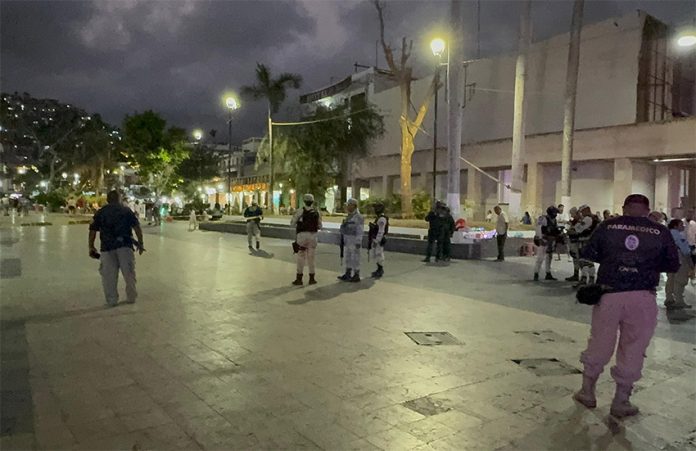
The explosion took place late afternoon Sunday, as families gathered in the square to watch a clown performance. (Cuartoscuro)
The Pacific coast resort city of Acapulco was rocked by an explosion on Sunday afternoon that injured at least nine people. Emergency personnel and security forces rushed to the scene to attend to the injured and collect evidence.
The incident took place in the Plaza Álvarez, the main square in old town Acapulco. Witnesses said they heard two detonations near the small fairgrounds set up opposite the cathedral.
Police and National Guard personnel revised their initial report of four casualties to nine, as they widened their search for victims.
Authorities on Monday confirmed that the number of casualties was nine, but released little information about the status of the victims, including a baby whose condition was not disclosed. One of the wounded, a 23-year-old woman who had suffered first-degree burns on her lower back, was described as in stable condition.
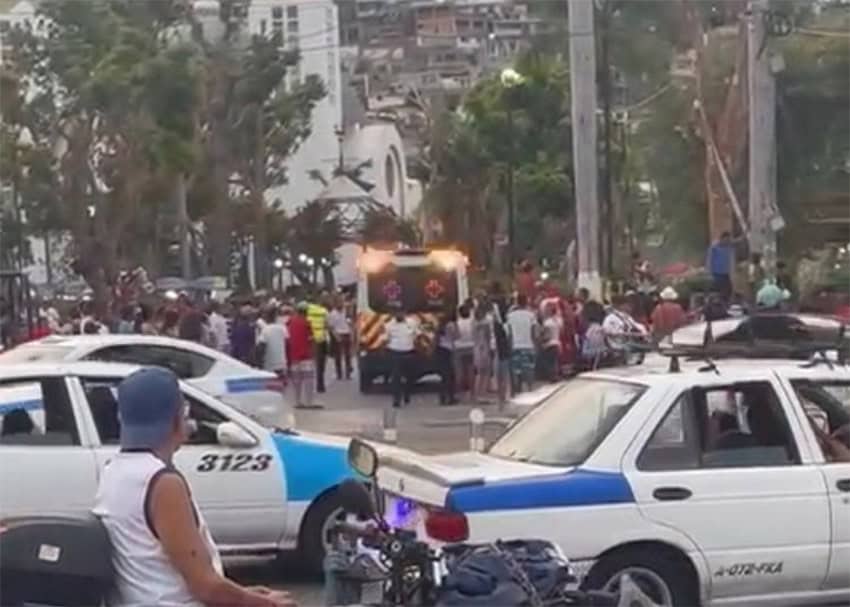
Emergency personnel load an injured person into an ambulance after the explosion in Acapulco’s central square. (Piko Sariñana/X)
The armed forces arrived to help secure the area and participate in the investigation. The Guerrero state government declared an emergency Sunday night as local, state and federal authorities coordinated the response to the explosion. The state government also sought to assure Acapulco residents and tourists in a statement on social media that it was doing everything in its power to guarantee security and resolve the situation.
As of Monday afternoon, the authorities had yet to reveal the cause of the explosion. According to the news site López-Dóriga Digital, local media speculated that the explosion was caused by a Molotov cocktail, echoing fears related to a wave of violence the resort city experienced in May.
The Plaza Álvarez, formerly the Plaza de Armas, sits in the Historic Center of Acapulco on the western end of the city, just off the main tourist strip. The Our Lady of Solitude Cathedral dominates the northern side of the plaza, which features five fountains and a band kiosk.
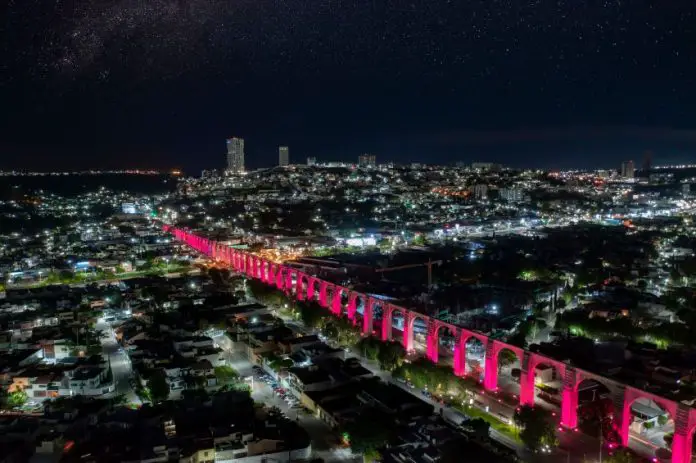
The state of Querétaro will receive the largest amount of the FDI announced from January through May 31. (Aberi Go/Shutterstock)
So far this year, foreign and multinational companies have announced plans to invest more than US $39 billion in Mexico in what is known as foreign direct investment (FDI).
Between Jan. 1 and May 31, private firms announced their intention to invest $39.2 billion in Mexico, according to the Economy Ministry (SE).
The ministry said that there were a total of 127 investment announcements in the first five months of the year. The projects announced are expected to create more than 54,000 new jobs.
Just over half of the total investment — 51% — will come from the United States, Mexico’s largest trade partner and source of FDI. Mexico’s next biggest investors based on announcements made so far this year are Germany (14% of the total) and Argentina (11%).
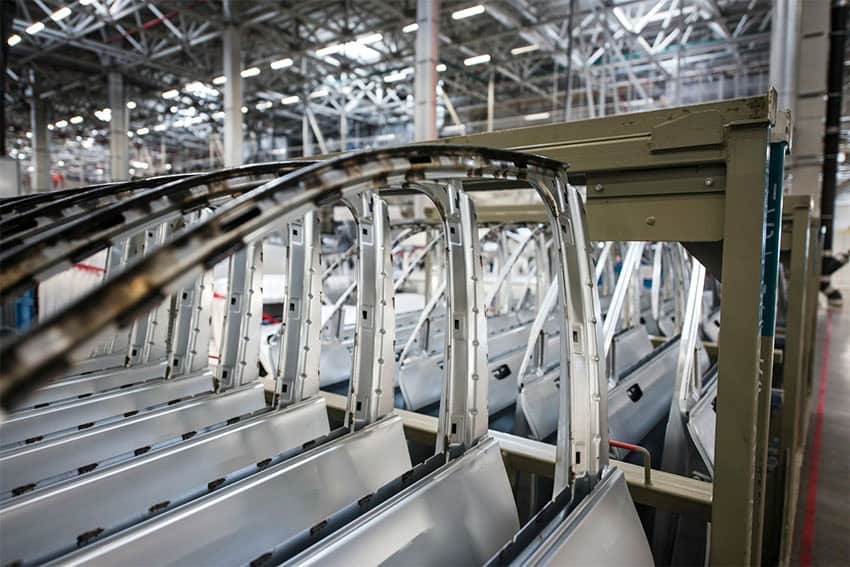
The lion’s share of the money — 56% — will go to the manufacturing sector, while the mass media, commercial and transport sectors will receive 13% each, the SE said.
The majority of the foreign direct investment will go the manufacturing sector, benefiting operations like this Audi plant in San José Chiapa, Puebla. (Carlos Aranda/Unsplash)
The ministry highlighted that 16% of the expected new investment will go to Querétaro, 12% to México state, 9% to Nuevo León and 5% to Coahuila. The other 58% will be divided between Mexico’s 27 other states and Mexico City.
The largest investment announcements in the first five months of 2024 were those made by Coca-Cola bottler and convenience store owner FEMSA ($9.96 billion); Amazon Web Services ($4.96 billion); and DHL Supply Chain ($4 billion).
The SE on Sunday highlighted the three largest investment announcements in the second half of last month.
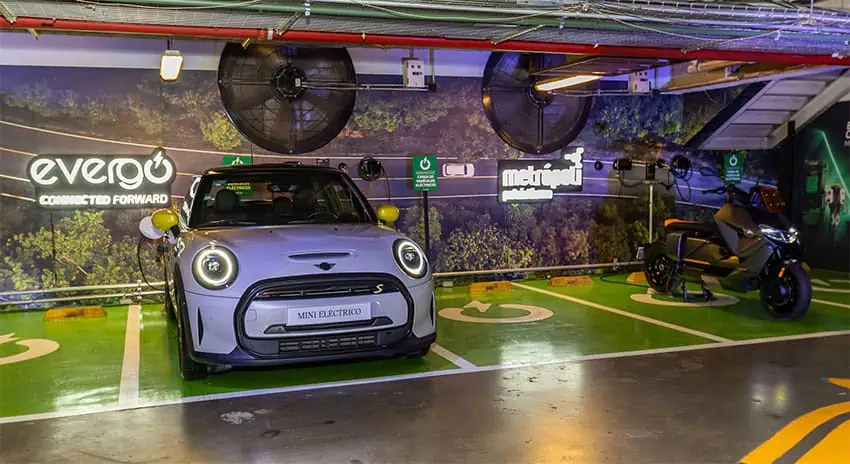
It noted that Evergo, a Dominican Republic-based company that operates charging stations for electric vehicles, intends to invest $200 million in Mexico, while United States contract manufacturer L&T Precision announced a $143 million investment.
The third foreign direct investment announcement mentioned by the SE was the plan by Japanese air conditioner manufacturing company Daikin, which plans to invest $122 million in Mexico.
Evergo, a Dominican electric vehicle charger company, plans to invest US $200 million in Mexico, Economy Ministry officials said.
The FDI announced in the first 5 months of the year is over $3 billion more than the total foreign investment recorded in 2023.
The SE reported last month that foreign investment in Mexico hit a new record high in the first quarter of 2024, with Mexico FDI increasing 9% annually to exceed US $20.3 billion.
But only 3% of the FDI Mexico received in the first three months of the year — around $600 million — was new foreign investment, while 97% was reinvestment of profits by foreign companies and investors that already had a presence in the country.
However, based on the recent announcements made by foreign companies, the “new investment” percentage of Mexico’s FDI should increase significantly in coming years.
Scores of companies — including automakers Tesla and Kia, steelmaker Ternium and energy firms Mexico Pacific Limited and Woodside — made large investment announcements last year.
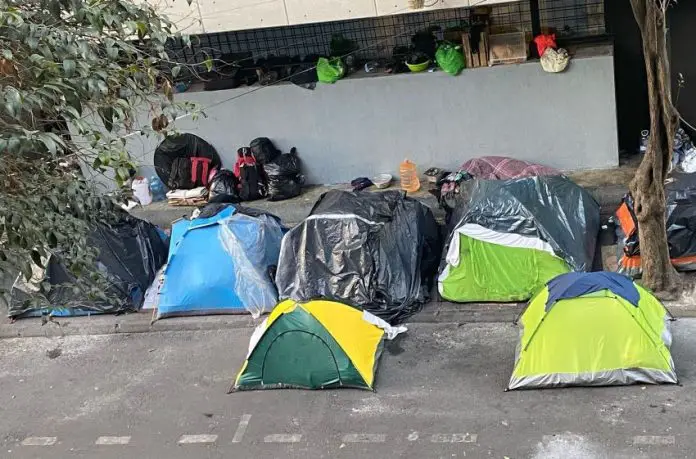
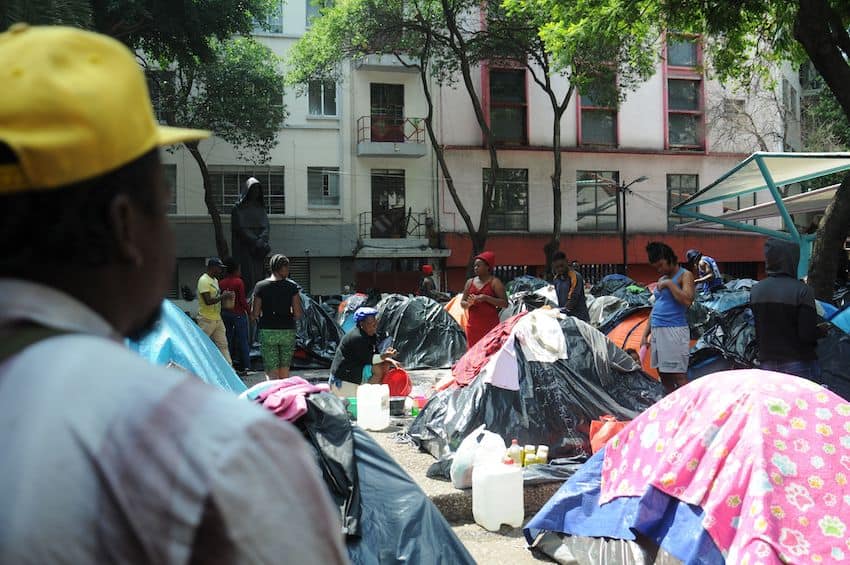
Migration authorities cleared migrants out of the Juárez neighborhood encampment Wednesday night. (La Colonia Juárez/X)
Mexican authorities cleared a migrant encampment in downtown Mexico City last week, removing tents and relocating more than 400 migrants who had been living in Giordano Bruno Plaza.
The operation, carried out by the National Institute of Migration (INM) and the National Guard, aimed to address concerns about the growing number of migrants camping out in the Juárez neighborhood at the city’s center.
Residents in the vibrant, cosmopolitan area had long complained of encampments occupying the largely paved pedestrian zone. Last May, dozens of migrants were evicted from the same plaza, only to return a day later to set up a new camp.
This time, authorities directed the migrants to get on buses heading to states such as Puebla, Morelos, Hidalgo, Aguascalientes and Chiapas, according to destination signs on each bus, although later reports said the first five buses all headed to Chiapas.
President Andrés Manuel López Obrador addressed the migrant situation at his Monday morning press conference, asserting that Mexico is not in crisis.
“There is no overflow of migrants into Mexico that could cause a problem,” López Obrador said.
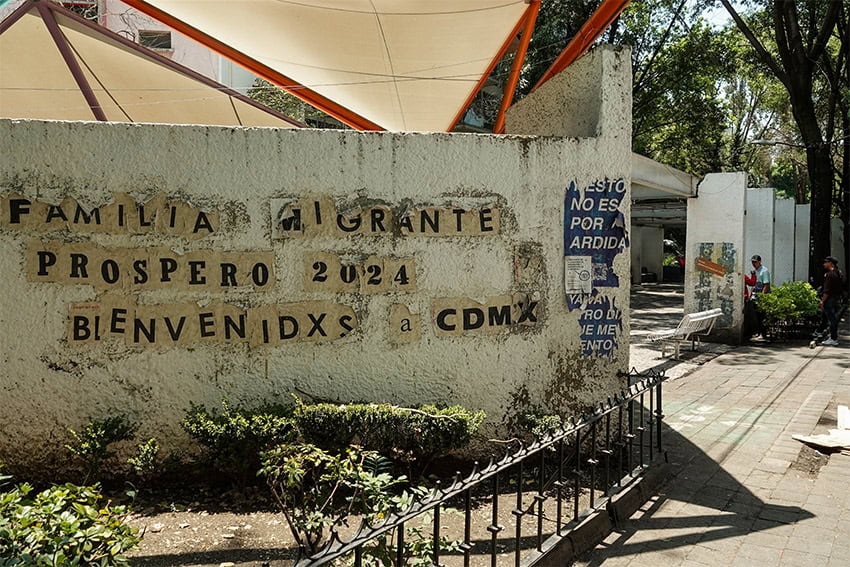
A sign at the cleared-out Giordano Bruno Plaza encampment welcomes migrant families to Mexico City. (Galo Cañas Rodríguez/Cuaroscuro)
He emphasized that deportations have not increased significantly and that many migrants are being integrated into the Mexican economy, citing the example of 35,000 Guatemalans working in Quintana Roo.
The president highlighted Mexico’s efforts to address the root causes of migration and criticized U.S. policies, which he claimed lack serious initiatives to resolve the issue.
“Where we have the most difficulty is with countries with which the United States does not want to seek solutions or agreements,” he said. “I am referring to Cuba, Venezuela, Haiti, Nicaragua and, recently, Guatemala.”
As an example of Mexico’s commitment to tackle the underlying issues driving migration, he discussed a plan to extend the Maya Train into Belize and Guatemala, potentially creating what he said would be 100,000 jobs in those countries.
The removal of the migrant camp involved pulling up tents and tarps, and providing migrants with assistance as they gathered their things. The 432 people in the camp were reportedly from Haiti, Venezuela and Central America, with some homeless Mexicans mixed in; most of the foreigners had documents allowing them to remain in Mexico, and simply agreed to leave.
Many of the migrants had submitted their asylum paperwork and were waiting for responses from the Mexican Commission for Aid to Refugees (COMAR).
Gerardo Talavera, director of the Casa Refugiados program, told the online news outlet Animal Político that the regularization of immigration status is not linked to any one location.
Many migrants hailing from Haiti, Venezuela and Central America had set up camp in the downton Juárez neighborhood while waiting for Mexican authorities to process their migration applications. (Daniel Augosto/Cuartoscuro)
However, he added, for those who had already started the process in Mexico City, “part of their procedure includes not leaving the federal entity, so when they are taken out of here, [they] lose their progress. That is serious.”
Talavera said the operation caused a lot of confusion because many migrants were not given “adequate information.” He said some migrants were forced onto buses without being asked.
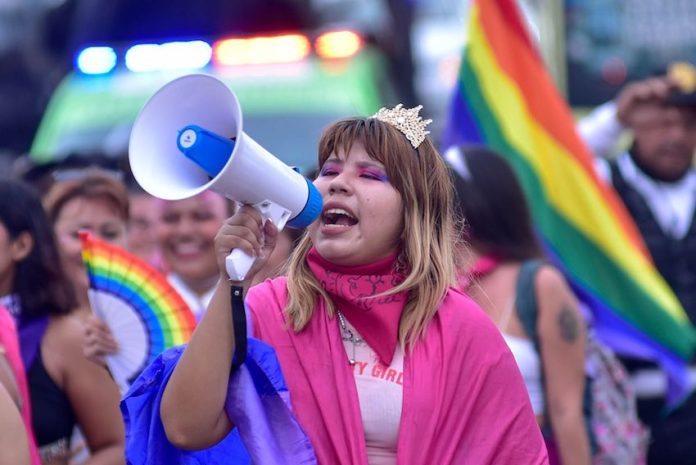
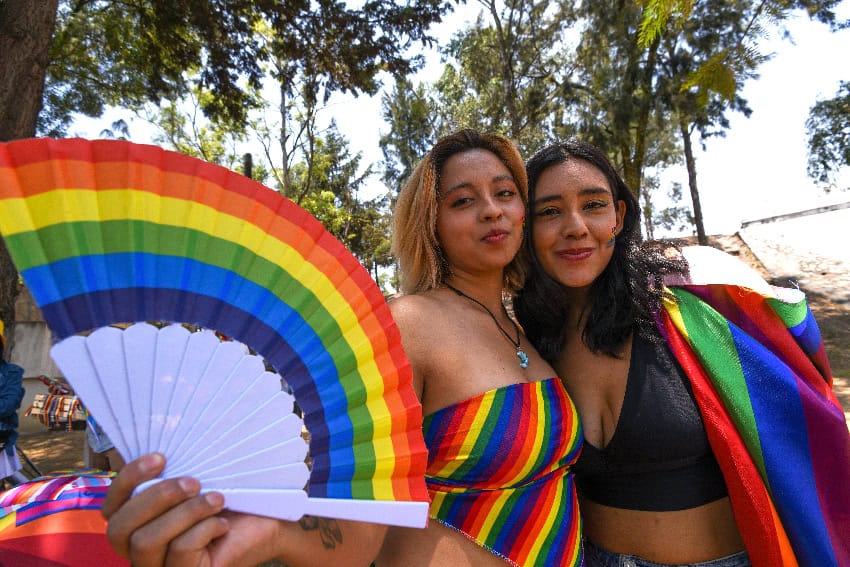
Pride month kicked off last weekend with parades in Monterrey, Acapulco and Guadalajara. (Carlos Carbajal/Cuartoscuro)
Celebrations of LGBTQ+ Pride month are held around the world every June.
To mark the occasion, several cities in Mexico will host an array of public events including pride parades, concerts and other activities. Below you will find some of the events to be held around the country in the coming weeks.
Want to participate in a Pride parade in Mexico this month? We’ve got you covered. (Cuartoscuro)
Playa del Carmen, Quintana Roo
On Saturday, June 15, Playa del Carmen will host its 12th annual pride parade starting from the Poliforum sports complex at 4 p.m. and ending at the 28 de Julio civic square. The parade will close with a free event including special guests and live performances.
The parade will kick off at El Mirador de Los Arcos, continue along Manuel Acuña and Zaragoza streets before arriving at downtown Querétaro, where the parade will conclude at Jardín Guerrero.
With an anticipated attendance of over 80,000 people, the parade will start at 5 p.m. outside the Venustiano Carranza Stadium on Acueducto Street, and end in front of the cathedral on Madero Street.
There will be two stages along the parade: one outside the Venustiano Carranza Stadium, and another one in front of the cathedral. Both stages will feature various artists and live performances, including a live show by the Spanish group Locomía.
Puebla, Puebla
Saturday, June 22, will also see the LGBTQ+ Pride Parade 2024 take place in the city of Puebla. It will start at 3 p.m. at Parque Juárez and finish at the city’s zócalo or main square in downtown Puebla.
This year’s parade will be dedicated to lesbian, gay, bisexual, transgender and transsexual elders.
Tijuana, Baja California
The 29th edition of the Pride Parade Tijuana, which anticipates an attendance of 60,000 people, will take place on Saturday, June 29, at 5 p.m. The massive parade will begin on G Street and end at Second Street with a concert by Mexican singer Paulina Rubio, who will also be the “godmother” of the event.
One of the central themes of the parade will be to raise awareness and push for the eradication of conversion therapies. Even though these controversial therapies are illegal in Mexico, Edgar Edoardo Rodríguez Delgado, head of the Diversity and Inclusion Subdirectorate of Baja California, told the newspaper El Sol de Tijuana that they still happen in the state.
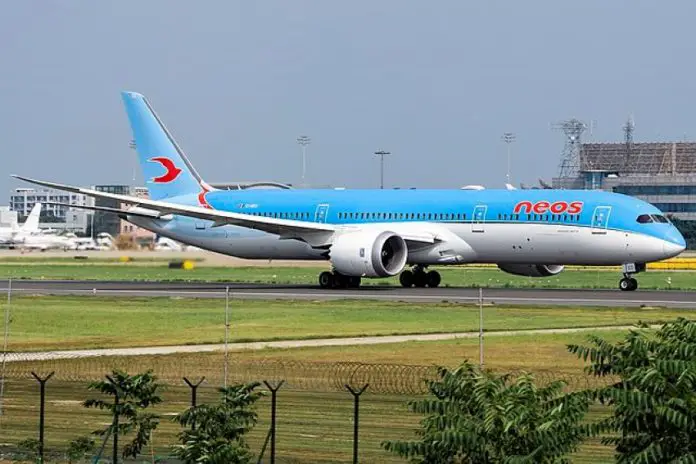
Neos will fly once weekly from Verona to Cancún starting in December. (Wikimedia Commons)
Starting in December, Italy’s Neos airline will operate a non-stop flight between the Italian city of Verona and the Mexican resort city of Cancún.
This will be Neos’s third route to Mexico’s famous beach destination, as the airline already operates two routes to Cancún from Milan-Malpensa and Rome. Founded in 2001, Neos has operational bases in Milan-Malpensa, Verona, Bologna and Rome.
The new Verona-Cancún flight time will be 11 hours and 45 minutes, landing in Terminal 2 of Cancún International Airport. Neos will offer one round-trip route per week, departing on Sundays.
According to Quintana Roo’s Governor Mara Lezama, the flight will start operating the third week of December. Tickets are now available for purchase on the airline’s website.
“In this New Era of Tourism, more and more visitors from around the world will discover the wonders of the Mexican Caribbean,” Lezama said in a statement on X.
Cancún is one of Mexico’s most visited destinations for international travelers. Cancún International Airport rounded out 2023 with a record total of 33.7 million passengers, making it Mexico’s second-busiest airport, after the Mexico City International Airport (AICM).
The state of Quintana Roo, also home to the coveted destinations of Tulum and Playa del Carmen, saw 21 million visitors throughout 2023 – up 8% over 2022.
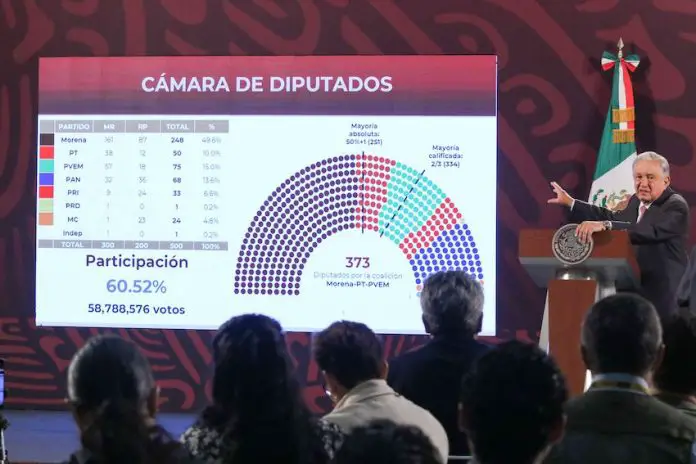
President López Obrador showed the Morena coalition's anticipated congressional seats at the Monday morning press conference, following the publication of final election results. While the allocation of seats will not be confirmed until August, Morena and its allies will have a supermajority in the lower house and will be just shy of one in the upper house. (Moisés Pablo/Cuartoscuro)
Final election results indicate that Mexico’s ruling Morena party and its allies easily won a two-thirds majority in the lower house of Congress, but fell just short of a supermajority in the Senate.
Morena will thus have to seek support from a few opposition senators in order to approve the constitutional reform proposals submitted to Congress by President Andrés Manuel López Obrador in February.
López Obrador has proposed 20 constitutional reforms before the end of his term on Sept. 30, 2024. (Cuartoscuro)
López Obrador, Morena’s founder, will hand over the presidential sash to Claudia Sheinbaum on Oct. 1, exactly one month after the new Congress is sworn in.
Proportional representation seats won’t be officially allocated until August, but June 2 results announced by the National Electoral Institute (INE) on Sunday indicate that Morena and its allies, the Labor Party (PT) and the Green Party (PVEM), won 370 of 500 seats in the Chamber of Deputies and 82 of 128 seats in the Senate, according to the newspaper El Economista.
A two-thirds majority is 334 seats in the Chamber of Deputies and 86 seats in the Senate.
Morena’s national president, Mario Delgado, was slightly more optimistic about the rewards the Morena-PT-PVEM coalition will reap from its strong showing in the elections on the first Sunday in June.
He posted an infographic to social media that showed that the three allied parties will have 372 seats in the Chamber of Deputies and 83 in the Senate.
“Thanks to all of you Plan C is a reality!” Delgado wrote above the image, referencing López Obrador’s much-touted plan to gain sufficient support for his reform proposals by winning supermajorities in Congress.
The Morena party national president, Mario Delgado, showed optimism about Morena’s results in the Senate. (Rogelio Morales/Cuartoscuro.com)
“With a qualified majority in the Chamber of Deputies and a majority in the Senate, we will deepen the transformation in order to continue building a country with wellbeing and shared prosperity,” the Morena national president added.
Delgado has expressed confidence that gaining the support of a few opposition lawmakers to approve constitutional reforms will not be an overly difficult task.
Among López Obrador’s planned reforms are ones to disband several autonomous government agencies, change Mexico’s electoral system, overhaul the pension system, incorporate the National Guard into the military and allow citizens to directly elect Supreme Court justices and other judges.
Critics say that some of the proposals will reduce checks and balances on executive power in Mexico.
Preliminary results indicating that Morena and its allies would have the numbers in Congress to approve the proposals with little or no negotiation with opposition parties caused the Mexican peso and the Mexican Stock Exchange (BMV) to lose significant ground last week.
The BMV has recovered some of its losses, but the peso remains well below its pre-election level. It was trading at just above 18.30 to the US dollar at midday Mexico City time on Monday.
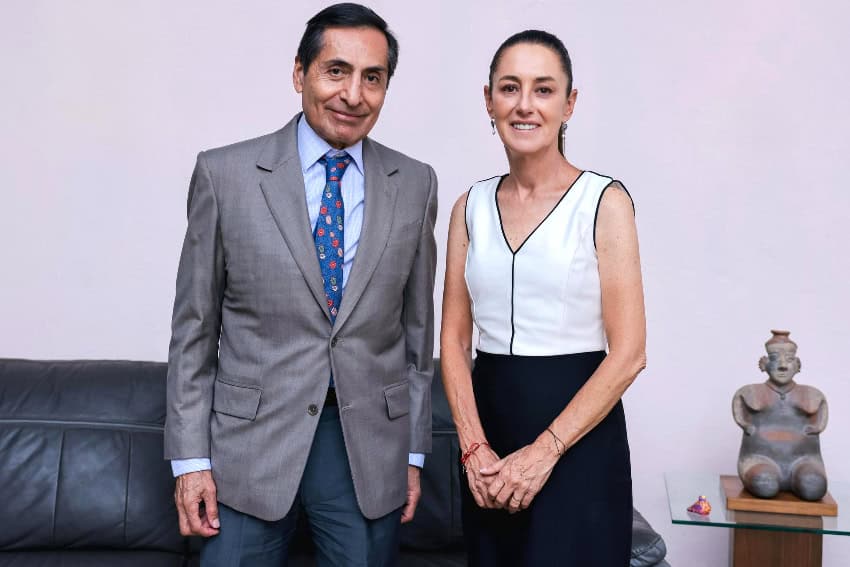
Rogelio Ramírez de la O will stay on as Finance Minister “indefinitely” and has laid out a list of economic commitments endorsed by President-elect Claudia Sheinbaum. (Claudia Sheinbaum/X)
She also said there would be broad dialogue about the reform proposals, but López Obrador appears determined to get at least some of them — especially his proposed judicial reform — approved before his term as president ends.
Political makeup of Mexico’s Chamber of Deputies
As mentioned earlier, proportional representation seats — 200 in the Chamber of Deputies and 32 in the Senate — will not be officially allocated until August. Legal challenges could affect the final allocation of seats in both houses of Congress.
The governing alliance
According to the newspaper El Economista, Morena won 245 seats in the lower house of Congress, the PVEM won 77 and PT won 48. The three parties together would thus have 270 seats.
INE results show that Morena won 40.8% of the vote in the Chamber of Deputies election, the PVEM attracted 8.4% support and the PT received 5.5% of all ballots cast.
The three-party coalition known as Let’s Keep Making History thus won 54.7% of the vote. It will have more than triple the number of seats of the three-party opposition bloc.
The PVEM, which was previously an ally of the Institutional Revolutionary Party (PRI), will be the second biggest party in the Chamber of Deputies after Morena.
The opposition
Once the recently-elected lawmakers assume their positions on Sept. 1, the National Action Party (PAN) will have 68 seats in the lower house of Congress, the PRI will have 33 and the PRD will have three, according to El Economista.
Thus, the three-party alliance made up of the PAN, the PRI and the PRD will have 104 seats.
Strength and Heart for Mexico, as the coalition is called, supported Xóchitl Gálvez in the presidential election. She attracted 27.45% of the vote, well behind Sheinbaum with 59.75%.
INE results show that the PAN won 16.9% of the vote in the Chamber of Deputies election, the PRI attracted 11.1% support and the PRD received 2.4% of all ballots cast.
Thus, Strength and Heart for Mexico won 30.4% of the vote.
The Citizens Movement (MC) party won 10.9% of the vote and will have 25 seats in the lower house, according to El Economista. Its presidential election candidate, Jorge Álvarez Máynez, attracted 10.3% support on June 2.
One of the 500 members of the lower house of Congress is set to be an independent.
Deputies serve three-year terms.
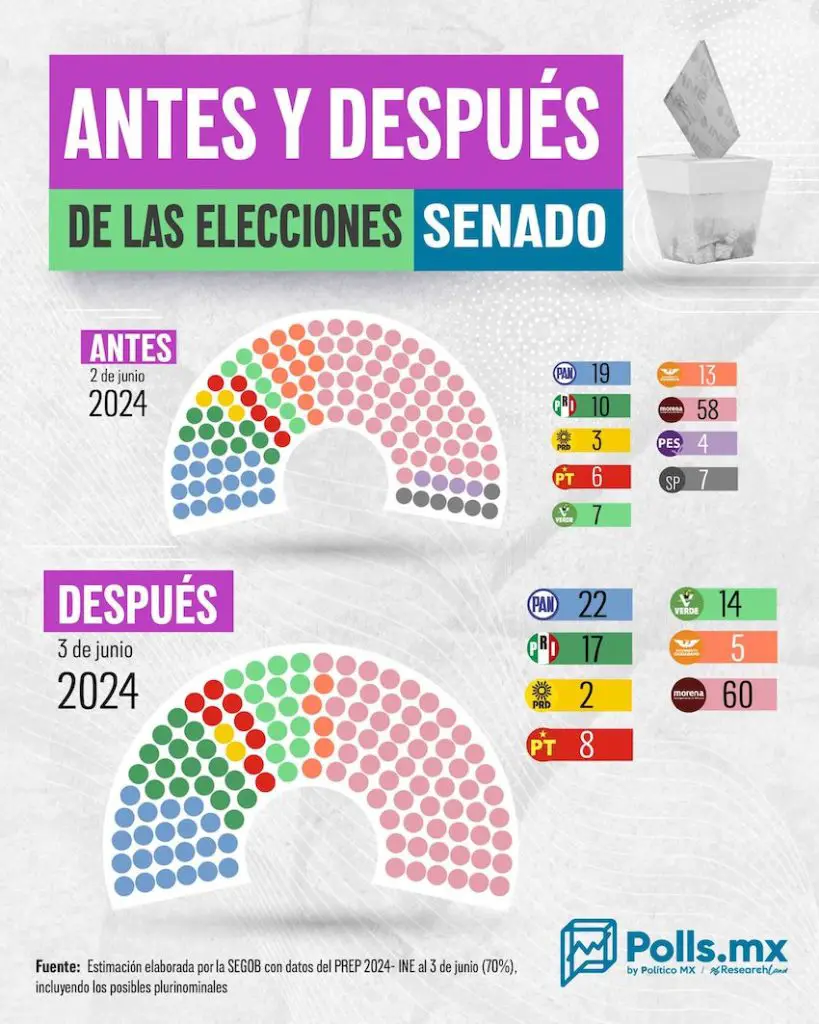
With 82 senators, the Morena-PVEM-PT bloc is just 4 seats shy of a supermajority in the Senate. (polls.mx)
Breakdown of Mexico’s Senate
The governing alliance
According to El Economista, Morena won 60 seats in the Senate, the PVEM won 14 and the PT won eight. The Morena-led coalition will thus have 82 seats in the upper house.
INE results show that Morena attracted 40.8% of the vote, the PVEM had 8.9% support and the PT received 5.5% of all ballots cast.
Thus, the Morena-led coalition won 55.2% of the vote in the Senate election, narrowly beating its result in the Chamber of Deputies election. Despite that, its percentage of seats in the Senate will be lower than in the Chamber of Deputies.
The opposition
According to El Economista, the PAN won 22 seats in the Senate, the PRI won 16 and the PRD won two. That gives the three-party opposition bloc a total of 40 seats in the upper house.
INE results show that the PAN received 16.8% of the vote, the PRI got 10.9% and the PRD attracted 2.3% support. Combined support for the three-party alliance in the Senate election was 30%.
MC attracted 10.9% support in the Senate election and will have six senators as of Sept. 1, according to El Economista.