Home Blog Page 690

Drought continues to affect half of Mexican territory

1
Villa Victoria resevoir in Mexico state
Mexico continues to face extreme drought conditions, despite above-average rainfall in December. (Crisanta Espinosa Aguilar/Cuartoscuro)

Mexico’s above-average rainfall in December didn’t do much to reduce the drought conditions faced in a majority of the country.

According to the latest edition of Mexico’s Drought Monitor, published every two weeks by the National Meteorological Service (SMN), the percentage of the country affected by drought stood at 55% at the end of December. That’s essentially the same as the 54% figure from the end of November, although it’s much better than the 75% figure from the end of September.

Despite the fact more than half of Mexico remains in drought, this figure has improved significantly over the 75% recorded in September. (Conagua)

Mexico measures drought conditions by assigning drought levels of moderate, severe, extreme and exceptional. Two other categories — abnormally dry and no drought — indicate no drought conditions. At the end of December 2022, only 26% of the national territory was affected by one of the four drought levels. However, at the end of December 2023, that figure was just under 55%.

In the last two weeks of 2023, above-average rainfall was observed throughout Mexico — especially in the northwest — due to the emergence of five cold fronts. Despite this, a decrease in drought conditions was observed only in the region where Hidalgo, Puebla and Veracruz share borders.

“These rains were not enough to reduce the effects of the long-term drought,” the Drought Monitor stated. In fact, areas ranked from severe to exceptional “increased in the northwest, the north Pacific, the west and the center of the country.”

According to some analysts, 2023 was the driest year in the Mexican countryside since 1957. The worst-affected states have seen reservoirs run dry, crops fail and cattle die. At the end of 2022, none of Mexico’s 32 federal entities — the 31 states and Mexico City — had any municipalities ranked in the exceptional drought category, and Tamaulipas was the only state with any regions in the extreme drought category.

Mexico’s continued water stress will be felt everywhere, particularly in terms of the agricultural crop yield, which depends on 70% of the national water supply. (Wikimedia Commons)

At the end of 2023, six states contained areas in exceptional drought, and 18 had areas of extreme drought. One of the driest states is Querétaro, which had 15% of its municipalities in exceptional drought, 51% in extreme drought, 22% in severe drought and 12% in moderate drought.

Baja California and Baja California Sur were the only states not affected by any degree of drought at the end of 2023.

With reports from El Economista

Chinese electric vehicle manufacturer to build plant in northern Mexico

0
Chinese manufacturer Solarever has announced it will build its new E-WAN EV in the northern Mexican state of Durango. (Esteban Villegas Villarreal/Facebook)

The Chinese company Solarever Electric Vehicles (SEV) plans to build a new plant in the state of Durango with an investment of 6,800 million pesos (US $397 million), Durango Governor Esteban Villegas announced on Monday.

Construction on the plant will begin in late February or early March and will be completed before the end of the year. The factory is expected to produce 5,000 electric vehicles (EVs) in its first year and 20,000 in its second, with an eventual production capacity of 50,000 vehicles per year.

Durango Governor Esteban Villegas (left) toured China last year to attract investment to his state. The Solarever announcement is the biggest result from that trip so far. (Fomento Económico y Turismo Durango Capital/X)

The factory will generate 1,000 direct jobs in its first stage and will be based in the Durango Logistics and Industrial Center, near the state capital of Durango city. SEV has also committed to bringing new technologies and clean energy products into the state, under a long-term partnership with the government of Durango.

The project is the biggest so far to come out of Villegas’ tour to China last August, which focused on Durango’s potential to develop EV and semiconductor production, in the context of nearshoring.

“Several months ago we went to China, and they said it would take four or five years to bring in a company of this size,” Villegas said. “But the dream had begun to crystallize in August, and by September the ambassador came with a work team, including Solarever.”

“What interested them most was the people and talent of Durango, which has large public and private universities,” the governor added. “The challenge was to get a first company like this to arrive and trigger the arrival of many more; today it’s becoming a reality.”

Solarever also manufactures solar panels for the U.S. market. (Solarever)

After SEV’s announcement, Villegas said that Durango is expecting the arrival of at least 15 additional foreign companies, of Chinese, French and U.S. origin.

Daniel Romo, head of business intelligence at Directorio Automotriz, said: “The SEV plant will start producing with parts shipped from China for final assembly in Mexico, and gradually become less dependent on imports as it builds its local and national sourcing networks. Surely this investment will attract other Chinese commercial partners to the region to supply this manufacturer.”

Initially, SEV will import the necessary parts via Durango’s international airport and rail network, and use this same infrastructure to export vehicles internationally. The company has a presence in the United States, Canada and Colombia, but also plans to supply the growing Mexican EV market.

It will start out producing three models – the E-WAN Cross, the E-TUS sedan and the E-NAT. Subsequently, it plans to unveil a fourth model, designed to be more compact and affordable than the E-WAN Cross, which is currently the cheapest EV available in Mexico.

“At SEV we are committed to developing Mexico’s national electric vehicles, so that the population can acquire their cars, travel comfortably and enjoy clean energy at a low cost,” said SEV president Simon Zhao.

With reports from El Economista and Cluster Industrial

Opinion: Mexico’s elections are important for the US too

4
Earl Anthony Wayne, ambassador (ret)
Earl Anthony Wayne served as U.S. Ambassador to Mexico from 2011-15. (Courtesy)

In a year filled with elections around the world, we should pay close attention to Mexico’s 2024 electoral contests. Mexico’s incumbent president, Andrés Manuel Lopez Obrador or AMLO as he is known, seeks to preserve his legacy by supporting the election of his chosen successor, Claudia Sheinbaum. 

AMLO wants to assure the continuation of Mexico’s “fourth transformation,” as AMLO calls the reform process that he initiated. A determined opposition seeks to reverse many of AMLO’s actions and policies and warns that AMLO seeks to weaken Mexico’s democracy.

The outcomes of Mexico’s elections are very important for the United States. No other country in the world has more impact on the daily lives of Americans than does the U.S.’s southern neighbor. Mexico is the United States’ largest trading partner and production partner. It is also the entry way for massive amounts of deadly, illegal drugs and huge flows of migrants.

Managing these key issues will be debated sharply during both the U.S. and Mexican election campaigns, as will be the strength of democratic practices in both countries. 

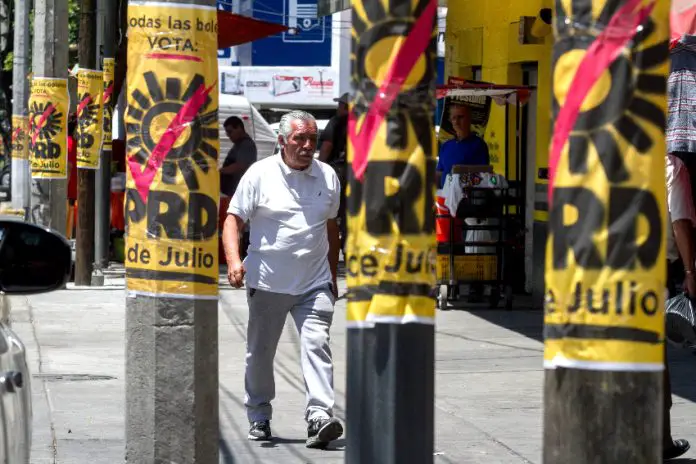
Mexico’s June 2024 elections will be large and complex; 98.6 million Mexicans are eligible to cast their ballots on June 2 for some 20,375 positions at the local, state, and national levels.

Rightly, most attention will be focused on the choice of a new president and the election of an entirely new national congress (500 deputies and 128 senators) in June. Although Mexico’s constitution does not allow incumbent president Lopez Obrador to run again, AMLO remains high in the polls, with approval ratings circling 60%, and he is throwing strong support to his chosen successor, Claudia Sheinbaum. Polls show Sheinbaum with a roughly 20% lead over the candidate of the opposition center-right coalition, Xóchitl Gálvez, at present.

Importantly, AMLO has indicated that if Sheinbaum’s coalition (named “Let’s Continue Making History”) wins a large enough majority in the new Congress, he will recommend constitutional reforms that would have the effect of weakening independent checks and balances in Mexico and centralizing more power in the hands of the president.

AMLO has been very critical of the Supreme Court, the National Electoral Institute and other autonomous institutions that were created over the years as Mexico was building its democracy. However, AMLO has not had the two thirds majority in both houses of Congress needed to approve the constitutional reforms he would like to see. His attempted reforms have sparked very large counter demonstrations and been rebuffed by Mexico’s courts, but he has persisted in his calls for constitutional change.  

During AMLO’s tenure the independent global indexes on democracy and related issues, including corruption and rule of law, have reported deterioration and backsliding in the quality of Mexico’s democracy. The 2023 World Justice Project’s Rule of Law Index, for example, tracks a decline in Mexico’s rule of law score during AMLO’s term and currently ranks Mexico at 116 out of the 142 countries measured. Thus, the outcome of the Mexico’s elections could be very important for the strength of Mexico’s democratic institutions.  

Not surprisingly, many in Mexico see the 2024 elections as a test for maintaining the strength of its democracy — echoing themes being heard in the U.S. election campaign.   

In Mexico, the formal national campaigns have not yet begun, but there has already been a good deal of campaign activity. Currently, AMLO’s candidate, Sheinbaum, and the coalition led by AMLO’s Morena party have a substantial lead over the three party opposition coalition known as “Strength and Heart for Mexico” and their candidate, Gálvez. Many observers believe the gap can be narrowed before the vote in June. The question is how much, for both the presidential vote and to impact the eventual congressional majorities. 

AMLO and his coalition have some clear weak spots on which the opposition will focus. One of the most evident is public unhappiness with the government’s handling of Mexico’s serious and persistent public security problems. In a recent poll by the respected Reforma newspaper, for example, 52% rated AMLO’s handling of organized crime as “bad”, and only 23% gave the president a good rating.

The widespread crime and poorly working justice system brings much violence to Mexican communities (with over 30,000 homicides annually in recent years and nearly 172,000 homicides since AMLO took office). This situation results in over 90% of impunity for most crimes.  

This situation also has severely negative effects for the U.S. It facilitates massive smuggling of deadly drugs, such as fentanyl. The latest data suggests that drug overdose rates in the U.S. hit a new high of some 112,000 in 2023. The seizures of lethal synthetic fentanyl at the U.S.-Mexico border almost doubled from FY 22 to FY 23, and the fentanyl seized between FY 21 and FY 23 rose 241%. U.S.-Mexico anti-crime cooperation has improved recently but remains far less effective than is needed. 

Thus, both Mexicans and Americans have a serious interest in the kind of crime and drug policies that Mexico’s new government will pursue. Several Republican politicians and candidates have already proposed using the U.S. military to go after drug cartels in Mexico, which could easily spark a crisis with a Mexican government seeking to defend its sovereignty.

Given the large flows of migrants crossing Mexico over the last year, the U.S. also has a very important interest in how good and willing a partner a new Mexican government will be in trying to tackle the very challenging cluster of issues involving the hundreds of thousands of migrants trying to enter the U.S. through Mexico. Both governments are struggling with how to manage migration, and polling shows that more Americans see this as a priority. 

Of course, if a Trump administration were to emerge from the U.S. elections, we would likely see a much different and less cooperative U.S. approach to dealing with Mexico on migration as well as drug smuggling.  

Crucially important is that across the same border, U.S.-Mexico trade averages $1.5 million a minute supporting millions of U.S. jobs, and trade has grown significantly since 2020. We cannot forget that despite all the problems Mexico has become the U.S.’s largest trading partner, with some 5 million U.S. jobs supported by that commerce.

U.S.-Mexico relations are so important to both countries that the governments will need to find a way to manage even very serious disagreements. The results of the elections, however, will make a big difference for good or for bad in managing the challenges.

Earl Anthony Wayne is currently teaching as a Distinguished Diplomat in Residence and Professorial Lecturer at American University’s School of International Service. He is a Public Policy Fellow at the Woodrow Wilson Center for International Scholars and Co-Chair of the Advisory Board of its Mexico Institute. Wayne is a former Assistant Secretary of State for Economic and Business Affairs, a former U.S. ambassador to Mexico and to Argentina and a former Deputy Ambassador in Afghanistan.

New wave of COVID-19 infections hits Mexico

2
Woman with a mask outside of a hospital in Mexico City
The increase in infections has led to hospital bed occupancy in some cities, but health authorities say it is not cause for alarm. (Cuartoscuro)

Four years after the start of the global COVID-19 pandemic, Mexico is once again facing a large wave of infections.

There were almost 200,000 active cases across the country on Jan. 11, according to an update from the National Epidemiological Surveillance System (Sinave).

Derived from information provided by more than 20,000 public health care clinics, the Sinave data shows that Mexico City had the highest number of active COVID cases with 21,425 on Jan. 11, followed by Baja California Sur with 15,466.

There were more than 8,000 active cases in Colima, San Luis Potosí, Tabasco and Querétaro, and upwards of 7,000 in Nuevo León.

Quintana Roo, Sonora and Aguascalientes rounded out the top 10 states for active COVID cases. Each of those states had more than 6,000 active cases on Jan. 11.

President Andrés Manuel López Obrador acknowledged on Tuesday that COVID case numbers have recently risen, but asserted that hospitals have not been overwhelmed by people requiring treatment for the disease.

White gloved hands inject a vaccine into someone's arm
Mexico’s population is 78% vaccinated against COVID-19, with 65% considered fully vaccinated with more than one dose. (Shutterstock)

“We have enough [hospital] beds. Yes, there are a lot of respiratory diseases at the moment — the flu and other kinds of illnesses that have to do with the climate, with the season,” he said.

“Fortunately, the situation isn’t critical, all patients are being attended to and there is space in the hospitals,” López Obrador said.

The federal Health Ministry said in a statement on Monday that just 5% of general care hospital beds set aside for COVID patients were occupied on Jan. 13, while only 1% of those with ventilators were in use.

It said that there was “a notable decline” in demand for medical care in comparison with previous COVID-19 waves. The decline, the ministry added, is the result of the national COVID-19 vaccination policy.

“Thanks to national vaccination, hospital occupation and [COVID-related] deaths remain at minimal levels,” the Health Ministry said.

According to The New York Times vaccinations tracker, 78% of the Mexican population has been vaccinated against COVID-19 and 65% are fully vaccinated. Authorities have been offering additional shots to some sectors of the population for the past three months, while doses of the Pfizer vaccine recently went on sale at some Mexican pharmacies.

Meanwhile, government data shows that the occupancy rate for general care COVID beds is 100% at seven hospitals — three in Oaxaca, two in Aguascalientes and one in each of Mexico City and Baja California — while five other hospitals have rates above 80%.

The Health Ministry acknowledged that some hospitals have recorded an increase in occupancy rates, but stressed that “this situation does not represent cause for alarm.”

“It’s the consequence of the change in the number of beds allocated for the care of COVID-19 patients,” it said, adding that hospitals can reconfigure their wards based on need.

COVID-19 took a heavy toll on Mexico in the initial years of the pandemic, with more than 330,000 deaths attributed to the disease.

Mexico’s COVID-19 mortality rate is the 32nd highest in the world, with just under 261 fatalities per 100,000 people, according to 2023 data compiled by John Hopkins University.

With reports from El Universal

Pro take: The US, Mexico and the USMCA in the 2024 elections

4
Canada, U.S. and Mexico flags
The USMCA (US-Mexico-Canada Agreement) free trade pact will be an important topic in this year's elections both north and south of the border. (Depositphotos)

The 2024 presidential elections in the United States and Mexico represent a significant opportunity for regional collaboration, specifically in terms of trade and economic competitiveness.

In 2022, the value of trade between the three North American countries totaled well over US $1.7 trillion, and capital investment exceeded $219 billion. In the first half of 2023, Mexico received more than $30 billion in capital investment from the United States.

The outcomes of the election may constitute a continuation of the existing order or, perhaps, mark a turning point. Within a global dynamic of polarization and geopolitical reconfiguration, both countries will decide which direction to take for the coming years.

This is particularly important in terms of trade policy, specifically in the North American region, as it could substantially define the consolidation of this trading bloc as the most competitive and prosperous in the world for the following decades; or on the contrary, put at risk the commercial and economic stability of the region.

Of particular importance for the new administrations in terms of trade and regional relationships will be the USMCA (United States–Mexico–Canada Agreement), specifically its first review which will take place in July 2026.

The USMCA (formerly known as NAFTA, but renegotiated and implemented in 2020), has generated greater trade and investment certainty among the three countries, in addition to establishing mechanisms to resolve trade and labor disputes. This agreement will be subject to an in-depth review, which will undoubtedly open a complex negotiation process.

A challenge during the review process will be avoiding the contamination of the trade agreement with other issues and challenges that the region is facing. Conditioning concessions and trade agreements to commitments of another nature such as migration or security would generate an atmosphere of tension and incorporate additional factors that would make the negotiations even more complicated, with the danger of derailing the talks and putting at risk a future that today looks promising.

For this reason, it will be essential during the electoral campaigns to avoid narratives that attack and denigrate neighboring countries, but on the contrary, highlight constructive and cooperative proposals to strengthen the region and emphasize the importance of regional trade.

There are three key messages that the candidates should commit to in order to send positive messaging to the private sector. They are:

  1. Upon the start of their respective administrations, begin promoting a meeting of the High-Level Economic Dialogue (HLED), which has been the institutional platform to establish an economic agenda between both countries.
  2. Ensure the active participation of senior officials from both the United States and Mexico in the CEO Dialogue, to continue the work that has been done by the committees there and maintain the conversation with the private sector, so that the economic agenda can be jointly enriched, with special emphasis on the resilience of the supply chain in strategic sectors.
  3. Last but not least, respect the rulings of the USMCA dispute settlement panels that are currently working.

The North American region has a great opportunity to consolidate itself as the most prosperous and competitive economic bloc on the planet. The conditions are in place, but politics could prove to be a substantial challenge.

This article was originally published by The Mexico Institute at the The Wilson Center.

Edgar Guillaumin Ireta holds a law degree from the Universidad Latina de América, and a PHD in Public Policies from Anáhuac University, Likewise, he has specialized studies at Stanford University and Harvard Business School. He has published and participated as a political analyst in various media outlets such as Expansión and CNN.

Mexico records net outflow of foreign capital in government securities since 2018

2
The administration of President López Obrador will be the first to see these levels of capital flight in securities in 20 years. (Banco Base)

President Andrés Manuel López Obrador is set to conclude his six-year term as the first Mexican president in over 20 years to see a net outflow of foreign capital invested in government securities.

Citing data from the Mexican bank Banco Base, the newspaper Reforma reported Monday that a net total of just under 349.86 billion pesos (US $20.7 billion) in investments in government securities was taken out of the country between the commencement of the current federal government on Dec. 1, 2018 and the end of last year.

AMLO
Under President López Obrador, more than US $20 billion has left the country, with some experts blaming uncertainty about the president’s economic policies. (lopezobrador.org.mx)

Reforma described the accumulated capital flight as a “record” for a six-year period of government. During the 2012-18 government led by former president Enrique Peña Nieto, a net total of almost 666 billion pesos in foreign capital flowed into government securities.

Gabriela Siller, director of economic analysis at Banco Base, told Reforma that López Obrador, who will leave office Oct. 1, is on track to be the first president since Ernesto Zedillo (1994-2000) to record a net outflow of foreign money invested in government securities. A total of 68.97 billion pesos left Mexico when Zedillo was in office.

Siller said that the COVID-19 pandemic — which caused the Mexican economy to contract sharply in 2020 — was not the main cause of foreign investors’ withdrawal of money invested in government securities, noting that the capital flight began in early 2019 shortly after López Obrador took office. She concluded that uncertainty about economic policy in Mexico was the reason for the departure of funds early in López Obrador’s six-year term.

Siller also noted that a significant amount of foreign capital left Mexico last May, the month in which the federal government took over three sections of railroad operated by the rail company Ferrosur.

Ferrosur railway facilities occupied by Mexican military
A soldier watches over Ferrosur railway facilities that the government took over last year. The incident is believed to have triggered the departure of a significant amount of foreign capital. (Ángel Hernández/Cuartoscuro)

Citing data from the Bank of Mexico, Reforma said that just under 64.9 billion pesos invested in government securities left the country in May.

“There have been significant actions that generate fear and therefore [foreign investors] leave government securities,” Siller said.

She said that the wide difference between the Bank of Mexico’s benchmark interest rate — currently set at 11.25% — and that of the United States Federal Reserve (5.25%-5.5%) should bring more foreign capital into the country, but in the case of government securities that hasn’t been the case.

“It’s possible in 2024 that we’ll see a moderate inflow of capital [to government securities], but it won’t be enough to offset the net outflow recorded so far,” Siller said.

Claudia Sheinbaum, former mayor of Mexico City and Morena candidate for president in 2024. Siller believes that a Sheinbaum government would reduce the flight of capital from securities. (Cuartoscuro)

A large “wave” of foreign capital inflows is needed for this six-year term of government to end “in positive territory,” she said.

While she cited political uncertainty as a reason for the large exodus of foreign capital, Siller said that “fear” about the López Obrador administration has subsided.

She predicted that the flight of capital from government securities will decline during a government led by Claudia Sheinbaum. The former Mexico City mayor is the presidential candidate for the ruling Morena party and a heavy favorite to win the June 2 election.

At the end of 2023, foreign investors had 1.78 trillion pesos (US $105.4 billion) invested in Mexican government securities, according to the Bank of Mexico. The figure declined around 16% during the first five years of López Obrador’s term.

On a more positive note, foreign direct investment (FDI) has increased in recent years, and reached almost US $33 billion in the first nine months of 2023.

FDI is expected to continue rising in coming years as more and more foreign companies set up operations in Mexico to take advantage of proximity to the United States, affordable labor costs and other factors.

With reports from Reforma 

Got 1 min? Benito the giraffe closer to rescue from Ciudad Juárez park

1
Benito will be making the move from Ciudad Juárez to Puebla, after a court ordered the government to ensure the transfer takes place. (Salvemos a Benito/X)

Benito the giraffe, who has endured harsh living conditions in a city park in Ciudad Juárez, Chihuahua, will soon be on his way to Puebla’s Africam Safari wildlife conservation park, following a court order requiring his mandatory transfer. 

The decision is the result of litigation initiated by the activist group Save Benito, against the Federal Environmental Protection Agency (Profepa) and Ciudad Juárez Central Park.

When he finally arrives in Puebla, Benito will make his new home at the Africam safari park, alongside a whole host of exotic animals. (Africam safari park/Facebook)

Since the 3-year-old giraffe arrived in Ciudad Juárez’s Parque Central in May, 2023, Benito has reportedly endured poor conditions, without shelter from the sun, or cold, rain and snow. 

The judge gave Profepa and Central Park a minimum of 24 hours to report on the transfer, or face a fine of $10,374.00 pesos (US $615).

Earlier on Monday, Save Benito shared on the X social media platform that personnel from Africam Safari had arrived at Central Park to facilitate Benito’s transfer to Puebla, and that Profepa had officially notified Africam Safari of the decision to transfer Benito to its new home.  

“I am very pleased to inform you that I have just had a call with the head of Profepa, Blanca Mendoza, who has confirmed that Puebla will be the new home of Benito the giraffe,” Sergio Salomón, Governor of Puebla, shared on X

“We will be attentive at all times to the well-being of our new friend,” Salomón added. 

It is not yet known when Benito will begin his journey to Puebla.

With reports from El Universal, Aristegui Noticias and Animal Político

6 top-rated eco-friendly Airbnbs in Mexico

0
Casa Biulu is a place known for its stunning natural beauty. (Courtesy)

Travel is an experience that requires planning and decision-making. Recent data shows that one of the top concerns travelers have when choosing destinations is sustainability, according to the Airbnb platform itself.

Another indicator that reinforces this trend of travelers caring about the environment is that some of the highest rated destinations on Airbnb are places with sustainable qualities, many of which are immersed in nature. Mexico is the fifth most biodiverse country in the world after Brazil, Colombia, China and Indonesia, according to the World Wildlife Fund, and has a strong natural appeal. This underscores that sustainability is becoming a key factor in preserving the natural beauty and tourism of the country.

This hotel is located in the heart of the jungle. (Courtesy)

We’ve rounded up some of the top-rated eco-friendly places on Airbnb in Mexico. These accommodations were selected based on criteria such as the use of adobe construction or recycled materials, the presence of solar panels, eco-friendly water and waste treatment systems, and other sustainable qualities. The options highlighted in this article are independently selected examples of sustainable tourism for travelers to make environmentally conscious choices when planning their trips to Mexico.

Mini House in Ensenada

One of the most popular accommodations in Mexico, according to Airbnb data, is a rustic property that also meets sustainability criteria. This eco-friendly place offers a complete eco-experience, with 100% of its energy being autonomous and solar-powered. Located next to a cliff overlooking the beaches of Baja California, this accommodation allows guests to enjoy the sounds of the ocean from its hanging room. As it is a space designed to disconnect and immerse in nature, Wi-Fi is not available.

Terasu Riviera Maya Hotel & Spa

Another highly rated eco-friendly accommodation in Mexico is located in the heart of the jungle, just minutes from the famous Xcaret parks and 18.4 kilometers from the city of Tulum. This eco-friendly retreat offers a simple yet elegant experience with the jungle as the main attraction. Guests can immerse themselves in the tranquility of nature and enjoy the property’s sustainable features, such as eco-responsible water and waste treatment systems.

Ecological Accommodation in Huay-Pix

This hotel uses sustainable resources to avoid causing more damage to the nature. (Courtesy)

This is another one of the highest rated eco-friendly accommodations in Mexico, located near the Milagros Lagoon, known for its stunning turquoise waters. This exclusive property offers 13 rooms with breathtaking views of the lagoon, providing guests with the perfect setting for swimming and kayaking. The property’s pool is made of chukum, a traditional type of stucco made with tree resin, and is powered by water from the lagoon, ensuring a natural and sustainable experience.

See More

Casa Biulú Zipolite

Casa Biulú is located near Zipolite Beach, a place known for its stunning natural beauty. This property offers spectacular views of the beach, with rocks jutting out of the water adding to its charm. The property features photovoltaic panels for sustainable energy production and an infinity saltwater pool. Surrounded by lush vegetation, guests will feel immersed in nature and pets are welcome. The design and decoration of the property showcase the vibrant and authentic Mexican style.

Nuscaa Boutique Treehouse & Spa

A unique treehouse located in the Mayan jungle of Leona Vicario, in the municipality of Puerto Morelos, Quintana Roo. This treehouse offers a luxurious and natural experience with stunning views of the surrounding jungle. Guests will be in close proximity to several cenotes, allowing them to explore the natural wonders of the area. The property’s water management and sanitation system is eco-friendly, ensuring a sustainable stay.

Suite El Muro Majahua

El Muro Majahua is located on a beautiful beach in Guerrero. (Courtesy)

Located on a beautiful beach in Guerrero, this property features a terrace and garden, with a design that combines elements of a palapa and a hut. Guests can enjoy the elegance and privacy of this mini-hotel while experiencing the simplicity and beauty of nature. The property is involved in conservation projects, including the protection of sea turtles, and offers respectful whale watching activities that allow guests to connect with nature.

The pandemic also affected the interest in sustainable destinations in Mexico. Data from 2022, as reported by Forbes Green Economy and Sustainable Development, indicates that there has been a 45% increase in companies seeking certification in sustainable practices due to the growing demand from travelers for these types of destinations.

What other eco-friendly destinations would you add to this list?

Ana Paula de la Torre is a Mexican journalist and collaborator of various media such as Milenio, Animal Político, Vice, Newsweek en Español, Televisa and Mexico News Daily. 

Gruma to invest US $89M in new Yucatán plant

0
Gruma, who produce both Mission brand tortillas and popular Maseca tortilla flour, will invest in a factoryi n the state of Yucatán. (Gruma)

Mission Foods México, a subsidiary of Mexican tortilla maker Gruma, plans to invest US $89 million in a new plant in Hunucmá, Yucatán over the next six to eight years, the company announced on Friday.

At a press conference with Yucatán governor Mauricio Vila, Neder Ernesto Badii González, CEO of Mission Foods México, said that the factory will have the capacity to produce 56,000 tonnes per year of packaged tortillas, tostadas, baked goods and snacks.

Yucatán governor Mauricio Vila (middle), Neder Ernesto Badii González (left), CEO of Mission Foods México. (Secretaría de Fomento Económico y Trabajo Yucatán)

These will be shipped from Puerto Progreso to the southern United States and Caribbean countries such as the Dominican Republic, as well as supplying the Mexican market.

The project is expected to generate 800 direct and 2,000 indirect jobs in Yucatán, of which 55% will go to women. The firm also hopes to use a predominantly local supply chain.

“The important thing is that… formal and well-paid jobs reach the interior of the state, benefiting not only the people of Hunucmá, but also Tetiz, Kinchil, Celestún, and that entire area,” said governor Vila.

Vila noted that British consulting firm Deloitte has named Yucatán as the state with the best business conditions in Mexico, while the Mexican Institute for Competitiveness (IMCO) has called it the most competitive state in the southeast.

Puerto Progreso, Yucatán
Progreso’s large port makes it an ideal site for exports to the United States and Caribbean. (Martín Zetina/Cuartoscuro)

Although nearshoring is most often associated with Mexico’s northern states, located near the U.S. border, Yucatán has benefited from recent investments in infrastructure, including the expansion of Puerto Progreso, and comparatively good security conditions.

Other companies that have announced new factories in Yucatán in recent months include Dutch brewery Heineken, which in September announced plans to build a new beer production plant near Mérida. Breweries are increasingly looking to southern Mexico to set up new projects, due in part to water scarcity problems in the north.

“The best sign that things are working in a state is that local entrepreneurs continue to invest and this is what is happening in Yucatán,” Vila said at Friday’s press conference. “This is an excellent sign that we are on the right track.”

With reports from El Economista and Forbes