Guillermo del Toro took home a Golden Globe for his poignant retelling of the classic children's tale. (Netflix)
Guillermo del Toro is first Latino to win a Golden Globe in the animated feature category
The Golden Globe for best animated film went to Guillermo del Toro’s “Pinocchio” at the award ceremony on Tuesday. This award made history as the first one granted to a Latino in the animated feature category, and the first time the award category went to a streaming company, in this case Netflix.
Accepting the Golden Globe, Guillermo del Toro said that “animation is cinema” and “animation is not a genre for kids, it’s a medium.”
“Pinocchio” is one of Del Toro’s most personal films and as he said in previous interviews, it took him half of his career to produce. It required more than 1,000 days of filming.
The film is a co-production between the United States, Mexico and France. It was co-directed by Mark Gustafson and is based on the 19th century novel by Carlo Collodi but set in the context of World War II (1939-1945).
The movie is also nominated at the Critics’ Choice Awards, set to take place on Sunday.
Netflix premieres “Ruido”, about a mother searching for her missing daughter
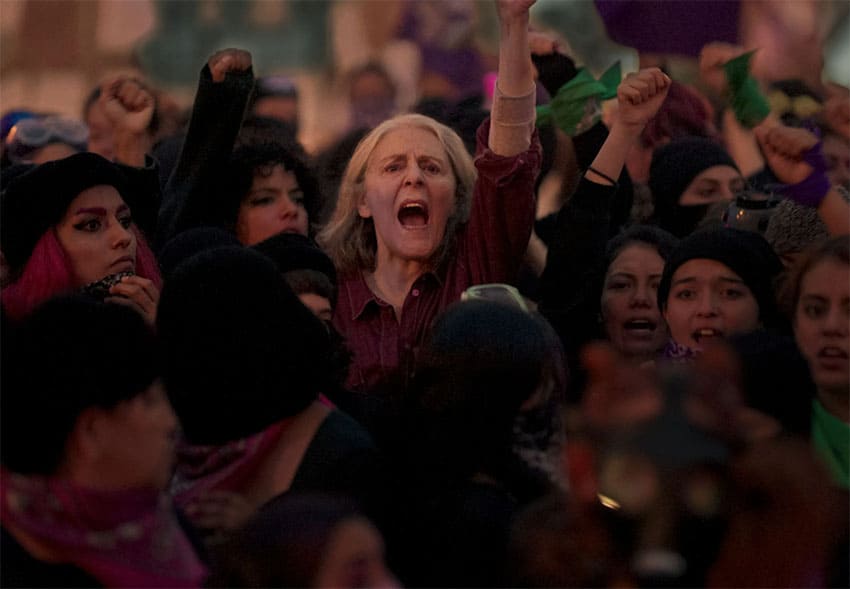
“Ruido” (Noise) is a new film by Mexican director Natalia Beristain, who told The Washington Post she had the idea of making a movie about “that which has no word to name it: the state of pain in which a parent remains when his or her child dies or disappears.”
She said that the first time she had the idea was in 2006 while her mother, actress Julieta Egurrola, played the role of a mother searching for her 10-year-old daughter in the play “Congelados” (Frozen).
“Ruido” highlights the heartbreaking bureaucratic dysfunction faced by the families of the missing. (Netflix)
The film narrates Mexican mother Julia’s search for her daughter (who has been missing for nine months) while delving into the problems faced by the families of the missing in Mexico. The opening scene takes place at the Attorney General Office, when the officers tell Julia that due to a mistake, the tattoo on her daughter’s arm was not registered in her file and thus the body Julia has been called to identify is not her daughter’s.
The film premiered on Netflix on Wednesday.
Top 3 Mexican influencers
Entertainment, travel, makeup, video games and music content creators stood out among Mexico’s most successful content creators of 2022, according to influencer marketing agency Tagger. The agency estimated which influencers had the most real, human accounts following them, excluding bots and other fake accounts.
Originally from the northern city of Mexicali, Baja California, Kimberly Loaiza leads the ranking as the most successful Mexican influencer of 2022. She started her career as a YouTuber and now she is also a singer and a model. On Instagram she has 36.7 million followers. Eight million people follow her on Twitter and she has a whopping 71.6 million followers on TikTok.
With 32.9 million followers on Instagram and 39.8 million followers on YouTube, Luisito Comunica from Puebla came in as the second most successful influencer in México. His channel ranks seventh in the Spanish-speaking world for most subscribers.
YouTuber-turned-model Kimberly Loaiza topped the charts as Mexico’s most-followed influencer. (Facebook / Kimberly Loaiza)
Ranking third is 21-year-old Domelipa, originally from Monterrey, Nuevo León. Her dance moves and beauty advice gained her a following of 2.8 million people on Instagram and close to 63 million people on TikTok. Univision reported she has more likes on her photos than international superstars like Rosalía and Dua Lipa.
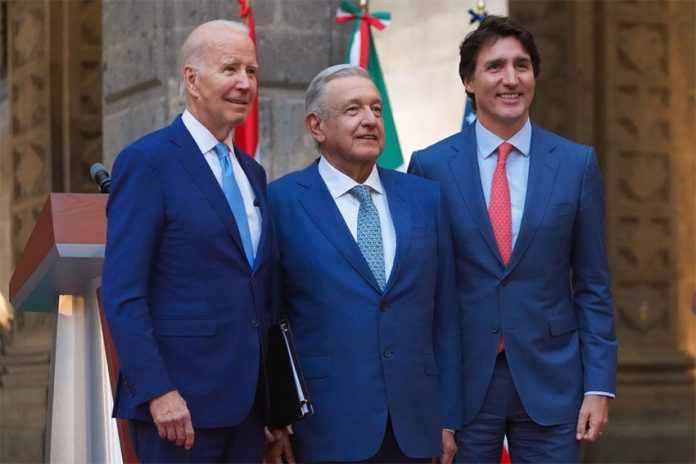
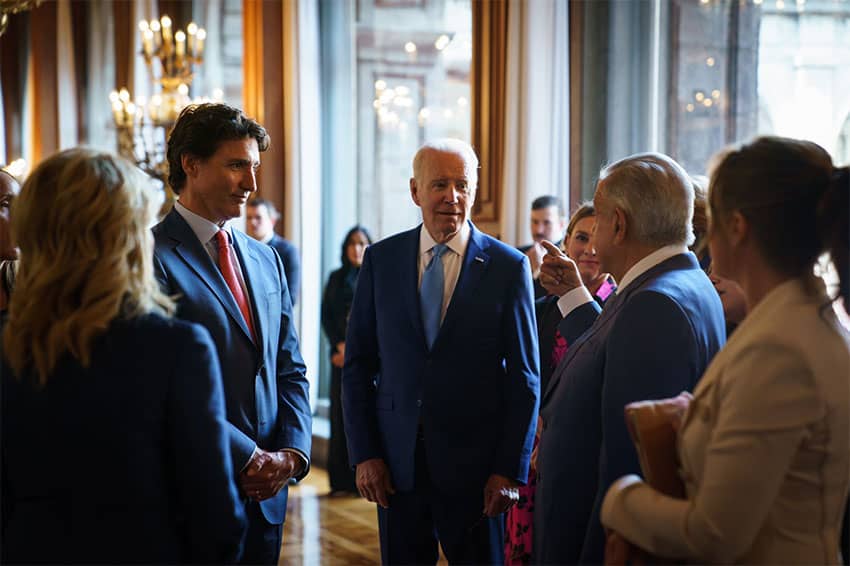
President López Obrador poses with U.S. President Joe Biden and Canadian Prime Minister Justin Trudeau. (LopezObrador.org.mx)
The presidents of Mexico and the United States and the prime minister of Canada made and reaffirmed shared commitments across a range of areas including security and migration during the 10th North American Leaders’ Summit (NALS) in Mexico City on Tuesday.
At a press conference following the trilateral talks, President López Obrador described his meeting with U.S. President Joe Biden and Canadian Prime Minister Justin Trudeau as a “historic event” and offered glowing assessments of both his North American counterparts.
In a joint statement — titled Declaration of North America (DNA) — the governments of the three countries said that the three leaders “are determined to fortify our region’s security, prosperity, sustainability and inclusiveness through commitments across six pillars: 1) diversity, equity, and inclusion; 2) climate change and the environment; 3) competitiveness; 4) migration and development; 5) health; and 6) regional security.”
Among the commitments mentioned in the statement were those to:
Protect civil rights, promote racial justice, expand protections for LGBTQI+ individuals and deliver more equitable outcomes to all.
Take rapid and coordinated measures to tackle the climate crisis and respond to its consequences.
Deepen our regional capacity to attract high quality investment, spur innovation, and strengthen the resilience of our economies.
Forge stronger regional supply chains in order to boost regional competitiveness.
Address the root causes and impacts of irregular migration and forced displacement.
Support countries across the Western Hemisphere to create the conditions to improve quality of life.
Launch an updated North American Plan for Animal and Pandemic Influenza to improve prevention, preparedness, agility, and to provide rapid response to health emergencies in North America.
Focus on strategies to bolster our shared continental security against domestic, regional, and global threats, including cyber threats.
Enhance trilateral work to address the use of precursor chemicals in the production of illegal substances in North America and to disrupt drug trafficking.
“The commitments made during this summit are rooted in a shared vision for a more equitable, just, inclusive, resilient, secure, and prosperous North America and a shared responsibility to achieve more equitable outcomes responsive to the needs and aspirations of our citizens,” the statement said.
The two presidents and prime minister offered their own assessments of the trilateral relationship at a joint press conference at the National Palace.
Flanked by Biden and Trudeau, López Obrador said that the meeting of the three leaders, “as good neighbors in an environment of respect to together seek the well-being of our peoples,” was “a historic event in itself.”
He said that the three countries agreed to strengthen their economic and trade relations and would seek to become more self-sufficient — that is, less reliant on imports, especially those from Asia. To that end, the three countries will establish a joint committee, López Obrador said.
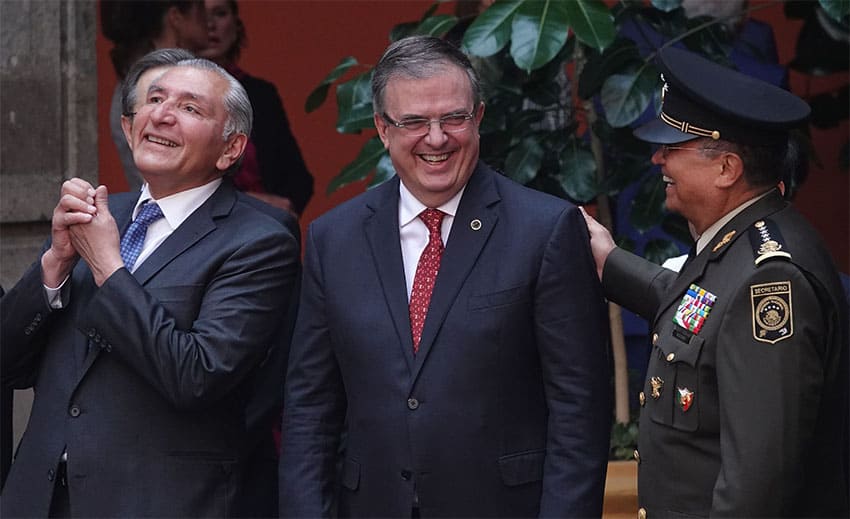
Foreign Minister Marcelo Ebrard, seen here at Tuesday’s reception for the visiting foreign leaders, will represent Mexico on the new trade committee, along with two other officials and a Mexican businessman. (Galo Cañas Rodríguez / Cuartoscuro.com)
The 12-person expert committee — which will include three Mexican cabinet ministers — will “have our complete confidence to motivate, persuade and convince business people, workers and public servants of the three governments about the importance … of joining forces in North America and, moving forward, seeking the union of the entire American continent,” he said.
In opening remarks at bilateral talks with Biden on Monday, López Obrador also advocated greater economic integration of Western Hemisphere nations.
Later in his address on Tuesday, AMLO asserted that the three North American partners must address “the scourge of violence and the migratory phenomenon with a humanitarian focus” and via the provision of “opportunities for well-being.”
“People are good by nature, and it’s the circumstances [they face] that sometimes force some of them to go down a path of anti-social behavior,” he said.
López Obrador thanked Trudeau for his “extraordinary and fraternal” temporary work visa program that has benefited over 25,000 Mexicans, and described the prime minister as “a great ally of Mexico.”
“To President Biden, my sincere gratitude for maintaining a relationship of cooperation with Mexico, a relationship of sincere friendship, of respect for our compatriots who honorably live and work in United States and are not harassed and don’t suffer from raids that unfortunately occurred at other times,” he said.
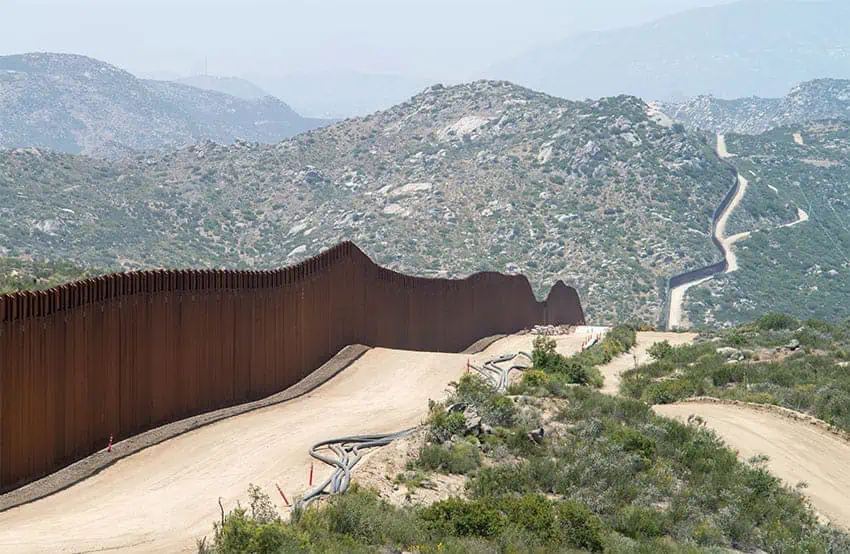
López Obrador thanked Biden for not continuing construction on the symbolism-laden border wall between their two countries. (Greg Bulla / Unsplash)
“We’ve said it before and I repeat it now: You are the first United States president in a long time that hasn’t built even a meter of wall [on the Mexico-U.S. border] and we’re grateful for that, even though the conservatives don’t like it,” López Obrador said.
He also said he asked Biden to urge the U.S. Congress to regularize the migratory status of millions of undocumented Mexicans who have been living and working in the United States, and “contributing to the development of that great nation,” for years.
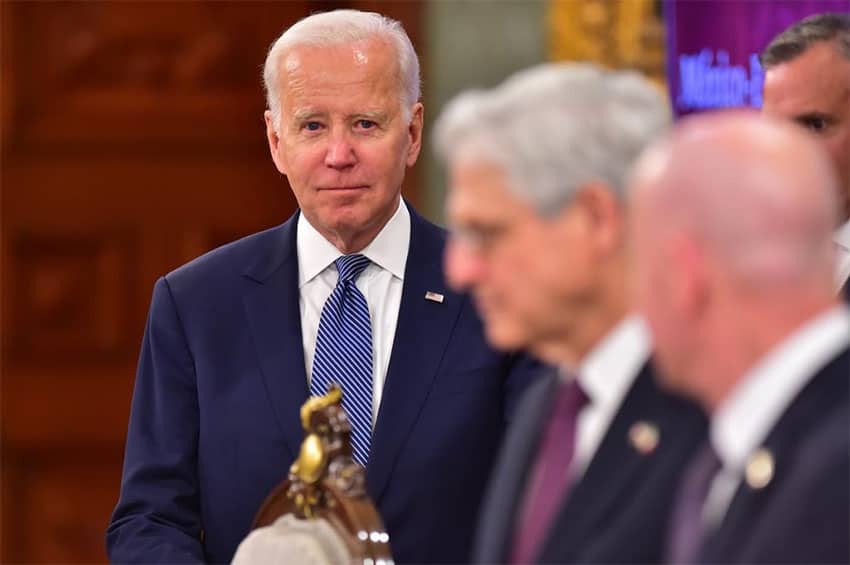
The U.S. president spoke first at the joint news conference, and declared that the United States, Mexican and Canadian leaders are “true partners.”
“We’re working together with mutual respect and a genuine like for one another,” Biden said.
At the top of the trilateral agenda, he said, is “keeping North America the most competitive, prosperous and resilient economic region in the world.”
“… The strength of our economic relationship … not only supports good-paying jobs in all of our countries but generates tremendous growth. Now we’re working … to strengthen our cooperation on supply chains and critical minerals so we can continue to accelerate in our efforts to build the technologies of tomorrow right here in North America,” he said.
Biden emphasized that regional migration challenges were already being addressed via the Los Angeles Declaration on Migration and Protection, signed last year. (Twitter @JustinTrudeau)
Biden, who is facing pressure from U.S. Republicans to do more to combat irregular migration, said that the entire Western Hemisphere “is experiencing unprecedented levels of migration, greater than any time in history,” and noted that a “regional-wide approach to a regional-wide problem” was launched at the 2021 NALS in Washington, D.C.
“The idea grew into the Los Angeles Declaration on Migration and Protection, which 21 countries ultimately adopted at the Summit of the Americas six months ago,” he said.
“And we’re working together especially with our North American partners to fulfill our commitments under that declaration,” Biden continued. “They include the policies I announced last week to expand safe and legal pathways for immigrants from Nicaragua, Cuba and Haiti. … We also want to thank you, Mr. President, for stepping up to receive into Mexico those not following the lawful pathways we’ve made available.”
For his part, Trudeau said that the three North American nations “share deep ties as friends and trading partners,” are home to half a billion people and have an “extraordinarily strong innovation ecosystem” as well as a combined GDP that is larger than that of the European Union.
“As leaders we are all committed to driving economic growth that supports the middle class and those working hard to join it. … People remember what happened just a few years ago when the certainty of this partnership was in question,” he said.
“Investors, businesses, workers and citizens all worried about what would happen. When free trade is at risk, that isn’t good for competition in the global market. Thankfully the belief in free and fair trade won the day, we renegotiated and we got an even better [trade] deal. To put it simply, we are, and always will be, stronger together.”
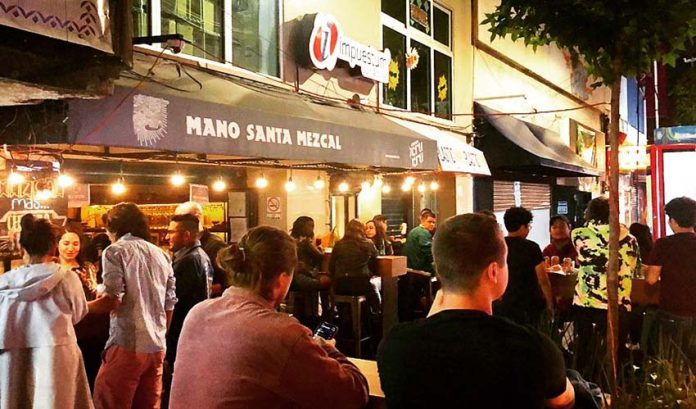
The oft-reported influx of foreigners living in Mexico City neighborhoods like Roma Norte seems obvious at places like Mano Santa, a Mexican-owned mezcal bar that sees foreigners regularly among its clientele. (Mano Santa/Facebook)
Over the past year, there have been articles in many publications (including this one) essentially blaming the presence of foreigners for driving up rents in the Roma and Condesa neighborhoods of Mexico City, pointing to the influx of digital nomads and Airbnb rental units.
In media outlets like the New York Times and Al Jazeera one repeatedly finds a narrative of rich foreigners driving out poor people from homes they’ve been in for decades and/or generations.
But Mexico City is not alone in struggling with the issues of gentrification and the overall lack of space, especially in more desirable neighborhoods. And such narratives don’t take into account that neither the historic center, nor the developments just west of it, Roma, Condesa, Juárez and Polanco, were ever established for the poor or even the middle class.
A former mansion on Zacatecas avenue, dating back to the Roma neighborhood’s elite heyday in the 1920s. It’s now home to the University of Communication. (Photo: Creative Commons)
Mexico City’s historic center was founded by the Spanish colonists, literally on top of Tenochtitlán, as land for the conquerors, with most of the indigenous pushed out. The four aforementioned neighborhoods were established over the past 120 years or so as Mexico’s elite looked to escape the noisy, crowded downtown to places that were more exclusive, modern and fashionable.
All were developments on former haciendas, most of them on some of the vast holdings of the Countess (Condesa) of Miravalle, who is immortalized in the naming of Colonia Condesa.
Roma and Júarez were the earliest, developed in the years before the Mexican Revolution, when both the elite and the government were looking to prove that Mexico could be modern by adopting technologies and styles from Europe.
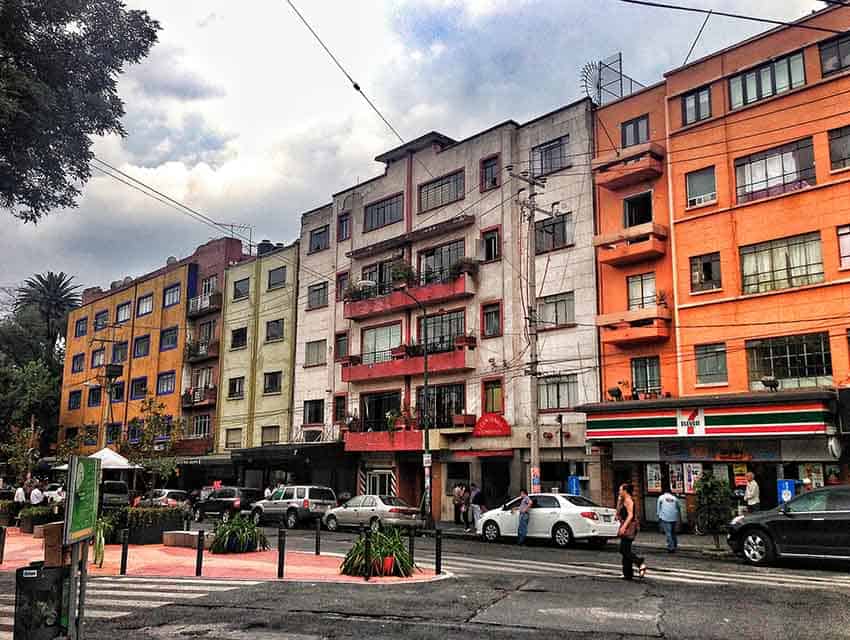
This can be seen in the sumptuous mansions and street layouts, which broke with the strict grid pattern that dominates most of the city today. Roma and Condesa especially are marked by curved and diagonal streets and wide boulevards with tree-filled islands and large parks.
The Mexican Revolution stopped such construction for over a decade, but when it was over, families of the winning factions sought to move to these fancy neighborhoods to show that they had “made it.”
The creation of these neighborhoods started a trek westwards for Mexico City’s elite, which continues to this day, to the edge of the city proper and beyond.
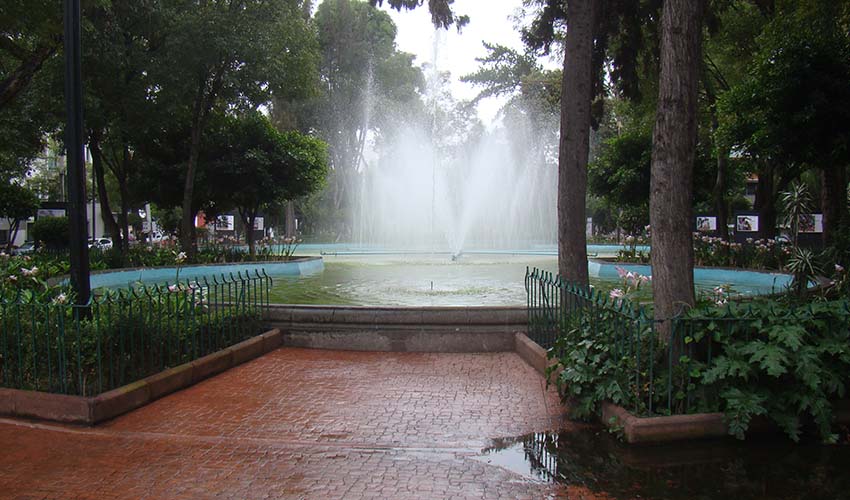
Neighborhoods like Roma, Condesa and Polanco were created for the wealthy, and vestiges of that legacy remain in European-style curved streets and luxury touches like this park. (Photo: Raul21940/Creative Commons)
All of the older neighborhoods have experienced downturns with redevelopment, but some have seen more change than others: Juárez and northern Roma (known as Roma Norte) have seen significant commercial redevelopment. Condesa has managed to keep most of its original residential feel.
Roma overall remains the textbook example of the ups and downs of this west-central section of the city because it has experienced all of the relevant economic, social and geological forces.
Walking around, it is easy to see the original boulevards and parks as well as over 1,500 now historic landmarks bearing witness to the wealth and fashion of the very early 20th century. (Condesa and Polanco were established afterwards, reflecting the Art Deco and later architectural styles.)
In the 1960s and 1970s, the construction of the first Metro subway line, along with major traffic thoroughfares, brought commercial construction — and large numbers of the working class and street vendors, just the thing that rich families had sought to escape in the old historic center.
The major breaking point was the 1985 earthquake, which hit these neighborhoods hard, especially the historic center and Roma. In the aftermath, many owners sold or rented damaged buildings or even abandoned them altogether.
But as memories of the earthquake faded, gentrification began: slowly in some areas, faster in others. There was heavy criticism beginning in the 2000s over the conversion of old mansions into commercial buildings.
Not all buildings in Roma and Condesa are more than 100 years old. More modern buildings came about because the old historic ones degraded beyond repair or were destroyed by earthquakes. (Photo: Keisers)
Residential redevelopment came a little later, as young upper class Mexican professionals were attracted to homes located in neighborhoods with established personalities.
“These structures cannot be duplicated, and they have a premium,” said Andrés Sañudo of the specialty redevelopment company ReUrbano.
So why do foreigners congregate in Roma and Condesa? One basic reason is the uniqueness of the neighborhoods, which have a familiarity to them. The layout of the streets, the quantity of trees and the lack of hustle and bustle of the rest of the city is attractive to those from similar environments outside Mexico.
Roma and Condesa’s ambience also reflects that it has been the home of foreigners for many decades. European and American writers, intellectuals and artists found their way here, first because of the famous Mexican muralism movement, then because of an influx of refugees from the Spanish Civil War and World War II.
Names like Leonora Carrington and Remedios Varo helped give Roma its current artistic and cultural reputation. The influx of foreigners brought in ethnic restaurants, alternative houses of worship and ethnic cultural centers.
Both elements give newly arriving foreigners from North America and Europe the sense that they are in a “safe” area, important given Mexico City’s general reputation. Unsurprisingly, these immigrants, like those the world over, look to live in areas that give them some sense of familiarity.
Leonora Carrington’s former home in Roma is being converted into a museum dedicated to the surrealist artist, whose presence in the neighborhood for several decades helped give Roma its current artistic and cultural reputation. (Photo: UAM/Facebook)
Poland-born Edyta Norejko of ForHouse Realty works in Mexico City and concedes that gentrification causes problems that the city should address, but the gentrification process here is driven by economic factors in Mexico City, one being the return of young affluent Mexicans who are attracted to the neighborhoods for many of the same reasons, and who have eschewed the commuter culture of their parents.
For both Mexicans and foreigners, Roma and Condesa will remain prime real estate for the foreseeable future, and will reflect a mix of both local and international influences.
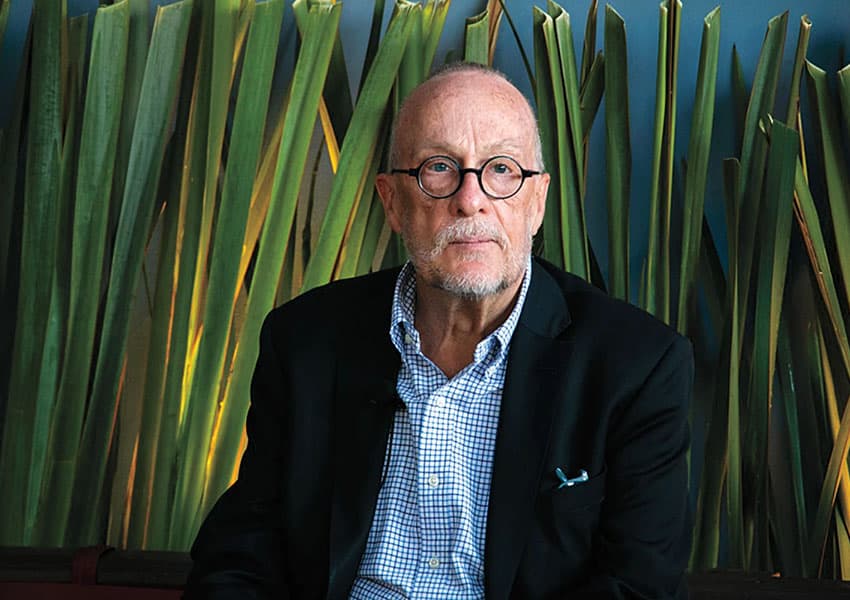
Leigh Thelmadatter arrived in Mexico 18 years ago and fell in love with the land and the culture in particular its handcrafts and art. She is the author of Mexican Cartonería: Paper, Paste and Fiesta (Schiffer 2019). Her culture column appears regularly on Mexico News Daily.
A view of the "Transverberaciones" exhibit by artist Ximena Labra at Ex Teresa Arte Actual museum in CDMX (@Exteresa Twitter)
Chichén Itzá closed as protesters continue to block access
It has been eight days since protesters started blocking road access to Chichén Itzá, Yucatán’s most important archaeological site and the most visited in Mexico.
“We are not against the government or the Maya Train. We are rebelling against the director of Chichén Itzá [Marco Antonio Santos Ramírez] and other members of his team who mistreat us, attack us, destroy our crafts, and prevent us from speaking Mayan,” Xcalacoop commissioner Jeremías Cimé Ciau told EFE news agency.
Xcalacoop is a town in the municipality of Tinum, Yucatán, which has joined the Indigenous communities of Pisté and San Felipe in the blockades. The protesters – whose numbers have reached up to 10,000 according to community leaders – told La Jornada Maya newspaper that no one from the National Institute of Anthropology and History (INAH) or the federal government has come forward to seek a solution to the problem.
Demonstrators include ejidatarios (communal land owners), tourist guides and artisans who have threatened to block more roads leading to the archaeological zone and even to the Maya Train, if authorities do not respond to their demands.
INAH has closed all access to the site, EFE news agency reported.
Replicas of Michelangelo’s David and La Pietà arrive at the Soumaya Museum
A certified replica of Michelangelo’s David has arrived at the Soumaya Museum in Mexico City, announced Arturo Elías Ayub, son-in-law of the museum’s owner Carlos Slim, on Twitter.
“Have you seen the Three Kings’ gift from the Carlos Slim Foundation for Mexican culture?” he posted on Saturday. “It’s just arriving from Italy at the Soumaya Museum.”
Así fue la travesía del “David” para llegar de Florencia a Ciudad de México.
Ven a conocer un mármol monumental en @ElMuseoSoumaya de #PlazaCarso.
The replicas of David and La Pietà were sculpted by Italian artisans in Florence who have a history of working with marble since the 19th century. Ayub added that the works are “flawless” just like Michelangelo’s originals, and were sculpted from the same Carrara marble. There are reportedly 30 full-size replicas of David found around the world.
The Soumaya Museum opened in 1994, housing a collection of European and Latin American art, and is named after Carlos Slim’s late wife, Soumaya Domit. It is open every day from 10:20 a.m. to 6:30 p.m., and entry is free.
“Sculpture and Time” showcases the ancient art of Oceania, America and Africa
An exhibit called “Sculpture and Time” explores the role that sculptural art played in ancient non-western societies at the National Museum of Anthropology and History (MNA), on display from now until Apr. 23.
The MNA collected a total of 106 pieces for the exhibit, 66 from the collections of the Quai Branly-Jacques Chirac Museum in Paris, including statues from Africa and Oceania. The remaining 40 pieces are Mexican: 37 come from the MNA, two from the collection of the Teotihuacán Archaeological Zone, and one from the National Museum of Popular Cultures.
Sculpture and Time exhibit at the National Museum of Anthropology and History (MNA Twitter)
The exhibition is based on the differences between Western European cultures’ sculptural art traditions and that of non-Western societies. In the former, sculpture portrays the individual, while in the latter, it expresses social character and has functions of collective identity.
The exhibit is open Tuesday to Sunday from 9 a.m. to 6 p.m. Entrance is free of charge.
Two new members join the prestigious National College
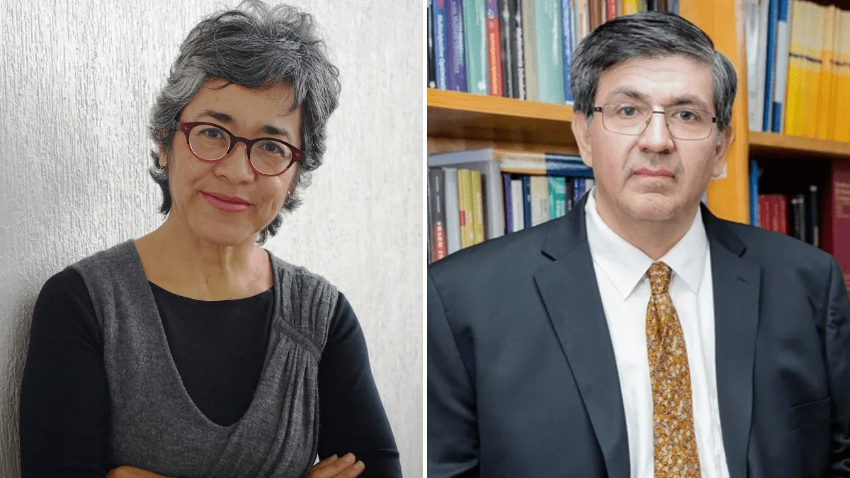
Two new members of the Mexican honorary academy, the Colegio Nacional (National College), were announced on Jan. 9. Writer Cristina Rivera Garza and scientific researcher Carlos Coello Coello join the institution, established in 1943 and composed of renowned scientists, artists and writers.
This brings the total to 35 members of the academy, of whom only eight are women.According to El País newspaper, the public institution is one of the most prestigious in the Spanish-speaking world and is dedicated to dissemination of work in the sciences, arts and humanities.
Author Cristina Rivera Garza and scientist Carlos Coello Coello (Courtesy image)
Chemist Eusebio Juaristi, current president of the college, said that writer Rivera Garza “will play an essential role to promote contemporary literature.”
Rivera Garza’s recent memoir “Liliana’s Invincible Summer” has won numerous accolades and was just released in English. Juaristi noted that researcher Coello Coello “will be able to promote the understanding and development” of artificial intelligence in the country.
The College’s rules mandate that it have up to 40 Mexican members of “recognized prestige and undoubted competence in their specialty.” Artist Diego Rivera, philosopher Luis Villoro and writer Octavio Paz have been members of the institution, along with many other recognized thinkers in Mexico. The positions are held for life.
“Transverberaciones”: visions of Saint Teresa of Ávila exhibit
“Transverberaciones”, from the Latin term transverberatio referring to the mystical experience in which the heart is pierced by a supernatural fire, is the latest exhibit at the Ex Teresa Arte Actual Museum. The show seeks to provide a contemporary visual, sensory and aural interpretation of the spiritual experiences described by Saint Teresa of Ávila, poet and mystic of the 16th century.
This is the first solo exhibit by Mexican artist Ximena Labra, who created the pieces on exhibit for the museum so that they could be in dialogue with the architecture of the former convent.
Labra’s work presents a transformed space, transverberated through an immersive journey, in which Saint Teresa’s poetry materializes in sculptural, digital, pictorial and sound installations.
Ex Teresa Arte Actual is open from 10 a.m. to 6 p.m. from Tuesday to Sunday, and “Transverberaciones” runs through Feb. 12. Entrance is free of charge.
The United States-Mexico Binational Program for the Recovery and Conservation of the California condor, uses zoos and national parks in Mexico and the U.S. to bring back the endangered condor, which once roamed from Canada to Mexico, but now is struggling against extinction. (Photo: CONAMP)
In order to protect the California condor from extinction, Mexico City’s San Juan de Aragón Zoo may soon host this prehistoric bird that once lived with mammoths, mastodons and sabre-tooth tigers.
Mexico City’s Environment Ministry (SEDEMA-CDMX) has proposed that the zoo join the United States-Mexico Binational Program for the Recovery and Conservation of the California condor.
Two zoos in Mexico are already part of the program: the Chapultepec Zoo in Mexico City and the Zacango Ecological Park in the State of México. Since 2007, Mexico City’s zoos have been charged by their charter with the Mexico City government to participate in wildlife conservation efforts.
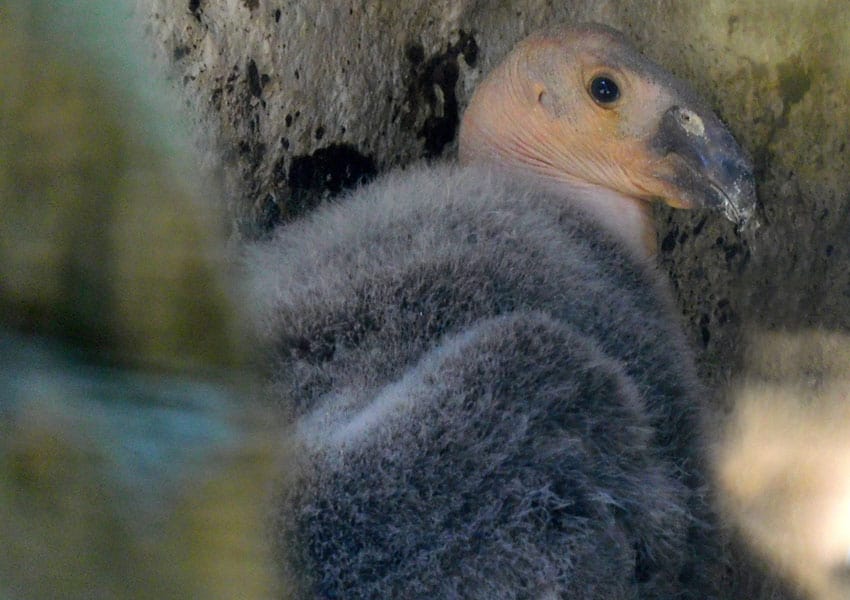
In March of 2022, this California condor chick became the 10th of its species born in captivity at Mexico City’s Chapultepec Zoo. (SEDEMA-CDMX)
The Chapultepec Zoo currently has two pairs of reproductive condors who have bred 11 condor specimens that are now under the program’s protection of the program.
The Zacango Ecological Park is home to three female condors under professional care which currently contribute to environmental education work so that visitors can learn about the species.
SEDEMA’s General Directorate of Zoos and Wildlife Conservation suggested including the San Juan de Aragón Zoo in the program during a recent bilateral meeting in Mexico City of the program’s officials. The purpose of the meeting was to review the progress the program has made.
“Various strategies were discussed in this meeting to support the conservation of the species, which is in serious danger of extinction,” said Fernando Gual Sill, head of the General Directorate of Zoos and Wildlife Conservation for SEDEMA-Mexico City.
One of the fundamental strategies “is the reproduction of the species in Mexican zoos,” he said.
The first major stage of the wildlife conservation project, managed nationally by the National Commission for Natural Protected Areas (CONANP), has consisted of establishing a wild population of California condors in the San Pedro Mártir Sierra National Park in Baja California.
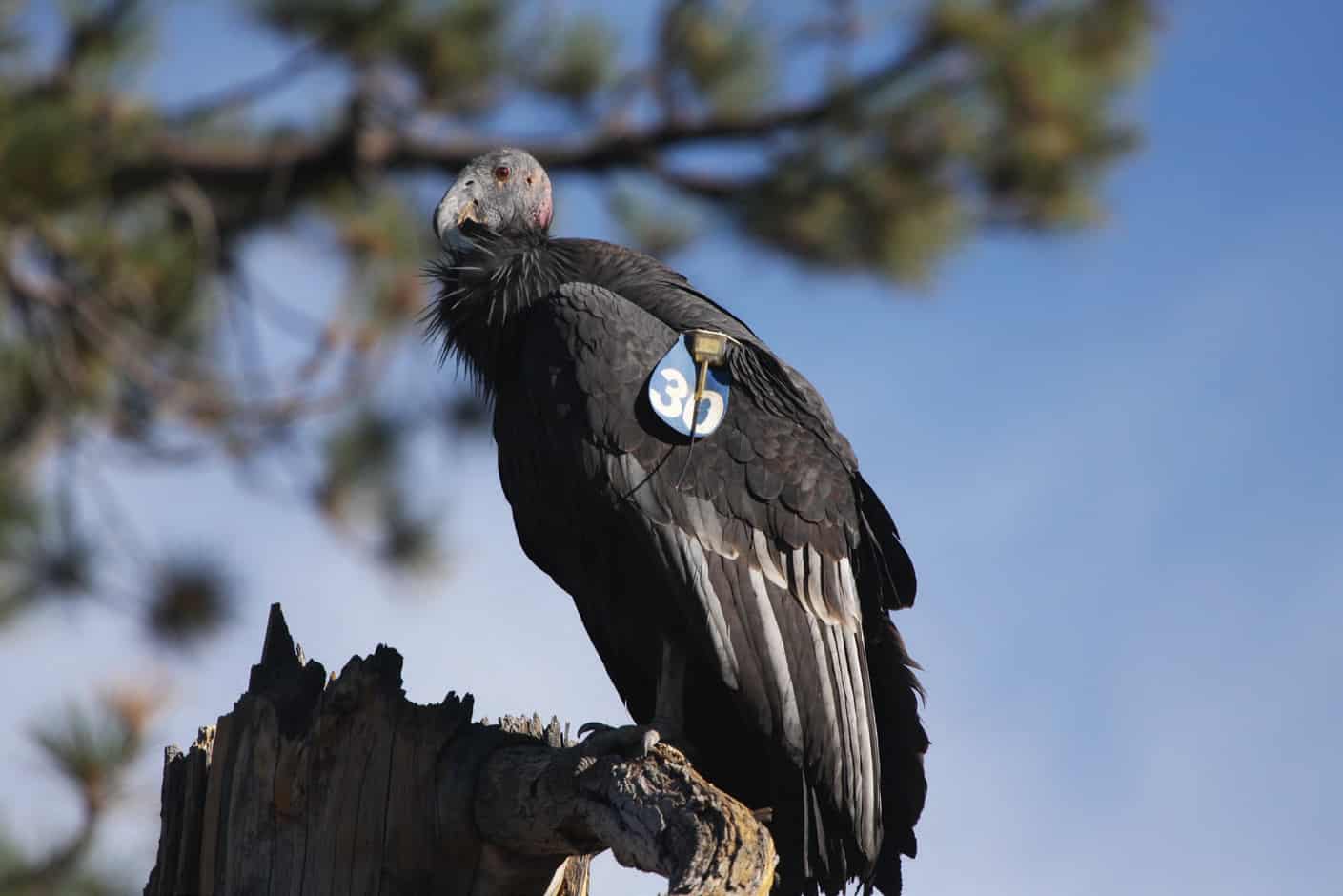
A California condor at the San Pedro Martir Sierra National Park in Baja California, where about 45 of the birds live in the wild. (Photo: CONANP)
One of the program’s goals is to achieve a self-sustaining population of 150 condors in the Baja California wilderness. Birds have been bred in zoos and then released into the wild in the national park, where their recovery progress is tracked. The avian group there is currently made up of approximately 45 birds, including adults, young and offspring, some of which have been born in the wild.
“Thanks to zoos around the world, and specifically zoos in the United States and Mexico, the California Condor has survived and has avoided extinction,” said Gual.
Gual stressed the importance of having other institutions join the program as “collaboration is vital to effectively promote recovery both in the wild and under professional care at zoos.”
Conditions in Mexico City zoos, however, have been questioned by Mexico’s media outlets. The investigative digital media outlet EMEEQUIS reported in December that 1,318 specimens in the capital’s zoos died between 2019 and 2022. Some of that period occurred during the COVID-19 pandemic, when zoos in the capital were closed to the public and their total budget was greatly reduced to 57.3 million, according to EMEEQUIS’ report.
In 2019, Gual himself told the newspaper Reforma that about 100 million pesos was needed for rehabilitation work at San Juan Aragón and the Chapultepec Zoo.
EMEEQUIS also reported in December that since Claudia Sheinbaum has taken office as Mexico City’s mayor, zoos in the capital haven’t had comprehensive maintenance plans and have received “aggressive budget cuts” — from a budget of 212.2 million pesos (US $11.1 million) in 2019 to a budget of 104.1 million (US $5.5 million) in 2022.
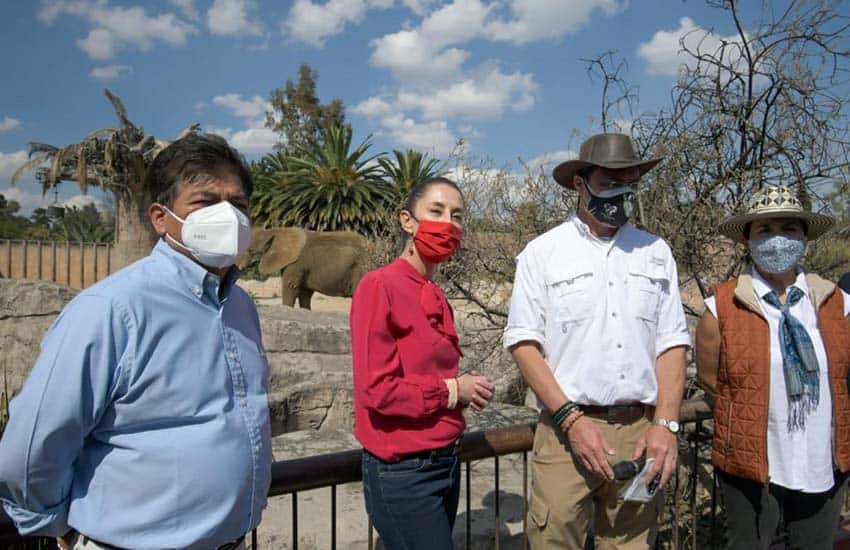
Mexico City Mayor Claudia Sheinbaum tours the San Juan de Aragón Zoo in January 2022 at an event marking the zoo receiving 26.8 million pesos for its rehabilitation. (Claudia Sheinbaum/Twitter)
The San Juan de Aragón Zoo did, however, receive an extra allocation of 26.8 million pesos (US $1.4 million) in January 2022 from Sheinbaum for rehabilitation work.
Soldiers drive past a flipped vehicle in Jesús María, Sinaloa, on Saturday. ( Omar Martínez Noyola / Cuartoscuro.com )
Residents of Jesús María, the town in Sinaloa where cartel leader Ovidio Guzmán was captured last week, protested outside Sinaloa’s Government Palace on Monday, saying that around 140 people have disappeared from their community since Guzmán’s arrest.
An estimated 200 demonstrators arrived at the Government Palace in the state capital of Culiacán in trucks Monday morning, waving placards and shouting slogans. They accused the Mexican army of human rights violations and demanded that the state government address the impact of military presence in their town.
“The children are afraid of seeing soldiers; we don’t want soldiers in the town,” one placard read.
“The government should tell the truth about what the town of Jesús María lived through,” read another.
Protesters broke some of the glass in the doors of the Government Palace, causing the state police to block their access to the building. Sinaloa governor Rubén Rocha Moya agreed to meet with community representatives a few hours later and reportedly promised that he would ask President López Obrador to withdraw military forces from the area.
Jesús María was the epicenter of the operation to capture Guzmán on the morning of Jan. 5, which included a fierce exchange of fire between Mexican military aircraft and gunmen on the ground. Following the operation, Guzmán’s followers terrorized the municipality with armed attacks and blockaded highways around the state for around 12 hours, leaving at least 29 soldiers and cartel members dead.
The army blocked access to Jesús María as searches were conducted, and shut off the town’s electricity, telecommunications and water supply. Although a humanitarian mission was dispatched on Sunday to attend to the community’s needs, residents expressed anger that their town remained occupied by soldiers several days after Guzmán’s capture.
In contrast to the government’s claims that the operation caused no civilian casualties, local people estimate that around 140 people are missing — mostly young men and women between 12 and 35 years of age — and an unspecified number of injuries.
Sinaloa’s Public Security Secretary, Cristóbal Castañeda, confirmed that the state government had received reports of missing people during the humanitarian visit to Jesús María on Sunday, but said the exact number was unknown.
“We don’t really have a number of people not located,” he said. “They are waiting for the complaints to be established; we need to know whom to look for… we know that the Semefo [Forensic Medical Service] has been handing over the bodies of those identified.”
Noah Itech executives pose with Nuevo León Governor Samuel García at an event celebrating the breaking of ground for their company's first manufacturing plant in Mexico. (Gobierno de Nuevo León)
With an investment of US $100 million, the Chinese company Noah Itech started construction on Monday of its first factory in Mexico. It will produce automation equipment and is scheduled to be operational by May.
Located in Santa Catarina in the metropolitan area of Monterrey, Nuevo León, the plant will generate 100 highly specialized jobs close to the location reportedly planned for Tesla’s new vehicle plant, also in Santa Catarina. Tesla is one of Noah Itech’s main clients along with General Motors, Facebook and Google.
Governor Samuel García remarked during the placement of the plant’s first stone that with these investments, Nuevo León’s recent trend of announcing the arrival of a new company every week continues. “These investments arrive [in Nuevo León] because we know how to sell ourselves to the world. They are not going to come here by themselves,” he explained.
During his statement, García added that the municipality of Santa Catarina is part of the Saltillo-Monterrey corridor, which allows a quick exporting process to the United States. With the arrival of Noah Itech’s plant, he said that Nuevo León’s government has committed to improve the peripheral road and the beltway to Laredo, Texas.
The state Minister of Economy Iván Rivas pointed out that investment arrives in the state owing to its infrastructure and its human capital, which is the “best-prepared workforce in the country,” he said. According to the state government, 15,000 engineers and scientists graduate in Nuevo León every year in addition to 20,000 technicians from local universities.
Fang Te Chou, deputy manager of Noah Itech México, said that they chose Nuevo León due to its growth potential owing to its incomparable visionary spirit. “We firmly believe that this land is the right place to carry out our development,” he said.
Nuevo León offers economic and non-economic incentives to promote foreign investment, including helping foreign companies “manage all their municipal and state permits and [they] also offer training,” state Economy Minister Rivas said.
There’s also a tax incentive associated with the payroll tax (ISN), and if they export through the Colombia Bridge (one of four international vehicular bridges located on the United States-Mexico border in the city of Laredo, Texas) there is a stimulus available to offset toll fees, Mexico Industry reported.
Noah Itech provides design, installation and automation support services for the 3C manufacturing industry (computing, communication and consumer electronics) and its high-tech products account for more than 95% of its total sales.
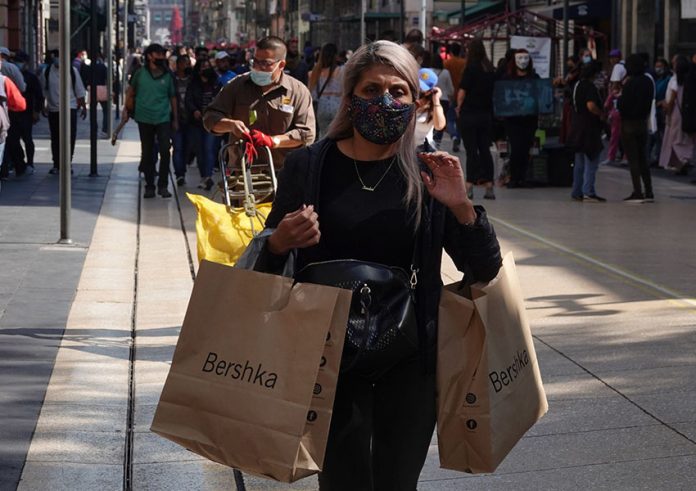
The holidays may have put people in the mood to buy last month, but with headline inflation at its highest year-end level in 22 years, shoppers faced higher prices. (Photo: Galo Cañas Rodríguez/Cuartoscuro)
Annual headline inflation rose slightly in December, reaching its highest year-end level in 22 years, but core inflation cooled after hitting a two-decade high in November.
National statistics agency INEGI reported Monday that the headline inflation rate was 7.82% in December, up from 7.8% the previous month. It is the highest year-end rate since December 2000, when inflation was just below 9%, but almost one point below the 2022 peak of 8.7%, recorded in August and September.
The annual core inflation rate, which strips out some volatile food and energy prices, was 8.35% in December, down from 8.51% in November. Despite the decline, core inflation was at its highest year-end level since December 1999.
Bank of Mexico Deputy Governor Jonathan Heath noted that a decrease in Mexico’s core rate of inflation, for the first time in 26 months, was “good news” but also that the outlook on inflation is still “extremely difficult.” (Photo: Jonathan Heath)
Jonathan Heath, a deputy governor of Mexico’s central bank, noted on Twitter that that the core rate declined for the first time in 26 months. He described the reduction as “good news,” but added that there is still an “extremely difficult” outlook vis-à-vis inflation.
“The 14.14% increase in [the prices of] food commodities is of particular concern,” Heath wrote.
The figure cited by the Bank of México deputy governor takes price increases for processed food, beverages and tobacco into account.
INEGI data also shows that meat prices were 11.5% higher in December than a year earlier, while fruit and vegetables were 7.2% more expensive. Prices for services were 5.2% higher on an annual basis, while those for energy including fuel and electricity rose 3.7%.
The overall headline rate at the end of 2022 was well above the Bank of México’s target rate of 3%, give or take one percentage point, and remained stubbornly high throughout last year despite efforts by the federal government, and the central bank, to tame the scourge.
The government said Friday that it would extend anti-inflation measures for another year, while the Bank of México appears likely to increase its benchmark interest rate after its next monetary policy meeting on Feb. 9.
“We think … [the next rate hike] will be a smaller 25 basis points increase, and that will mark the end of the tightening cycle,” said Jason Tuvey, senior emerging markets economist at Capital Economics, a London-based firm.
López Obrador called for an end to what he described as the neglect of the region by the U.S., and referenced a 20th century aid program by way of comparison.
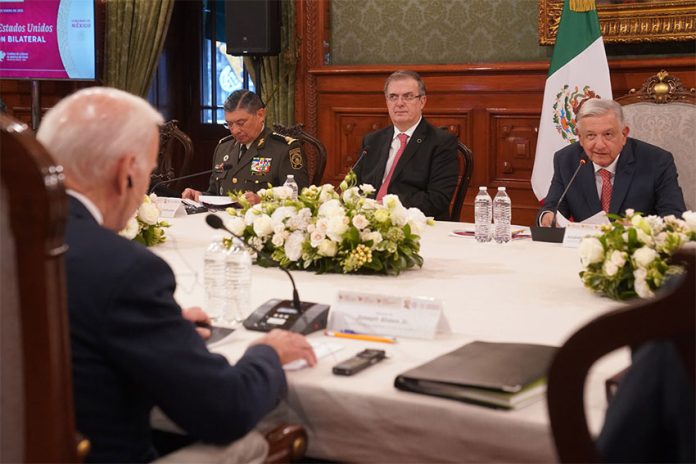
President López Obrador called on United States President Joe Biden to end U.S. “abandonment” and “disdain” toward other countries in the region during frank opening remarks at bilateral talks in Mexico City on Monday.
Speaking after a welcome ceremony for Biden at the National Palace, López Obrador asserted that the United States has done little to aid development in the Americas since the end of the Alliance for Progress, an aid program initiated by former U.S. president John F. Kennedy in 1961.
“I consequently maintain that it’s time to end this neglect, this abandonment, this disdain toward Latin America and the Caribbean, [which is] in contrast to the Good Neighbor policy of that titan of freedom who was president Franklin Delano Roosevelt,” he said.
Earlier in his remarks, López Obrador called Biden a “humanistic and visionary leader” and urged him to lead a “new policy of economic and social integration on our continent.”
He said that the North American free trade agreement, the USMCA, has been a “valuable instrument to strengthen our productive processes” and take advantage of the “great potential” of the region, but expressed misgivings about the level of imports from Asia.
“The arrival of ships full of merchandise from Asia continues growing at our Pacific ports. And the question we’re asking is the following: Couldn’t we produce what we consume in America? Of course we could. It’s a matter of … planning our future development together,” AMLO said.
“… The productive integration we’re proposing must have the support of public and private investment, for the well-being of all the peoples of America without excluding anyone,” he said.
Flanked by high-ranking officials including Foreign Affairs Minister Marcelo Ebrard and Interior Minister Adán Augusto López, the president — who has advocated the economic integration of Western Hemisphere nations on several previous occasions — told Biden he has “the key to open and substantially improve the relations between all the countries of the American continent.”
“I know that it’s a complex and controversial initiative and I’m aware that putting it into practice involves numerous difficulties, but in my judgement there isn’t a better way to guarantee the prosperous, peaceful and fair future that our people … as well as all the people of the continent, and future generations, deserve,” he said.
Biden’s response to President López Obrador’s comments highlighted the funds the U.S. has spent on development projects in the hemisphere in recent decades. (Presidencia de la República)
“The proposal, President Biden, is comprehensive. It involves consolidating ourselves as an [important] economic region in the world, strengthening fraternity in the American continent, respecting our differences and sovereignty and ensuring that no one is left behind,” López Obrador added.
“…There are a lot of us who haven’t stopped dreaming of a fair and fraternal integration of all the people and countries of our continent.”
Making his opening remarks after his Mexican counterpart, Biden retorted that “just in the last 15 years,” the U.S. has “spent billions of dollars in the hemisphere — tens of billions of dollars.”
“And what we have to do, and what we’ve done, is continue to support and build democratic institutions in the hemisphere. One of the things that I was able to do at the G7 was get the G7 to agree that we would have a multi, multi-billion dollar project for infrastructure for the Western Hemisphere, for Latin America, and for Africa,” said the U.S. president, who was also accompanied by a delegation of senior officials.
In a readout published by the White House, the U.S. government said that Monday’s meeting between Biden and López Obrador “builds upon 200 years of bilateral relations between the United States and Mexico, an enduring partnership that reflects our shared values and the cultural and familial bonds between our two countries.”
Bienvenido a su casa, presidente Biden. Usted es nuestro amigo y el pueblo estadounidense también. Juntos podemos impulsar una nueva etapa en las naciones del continente a partir del respeto y la ayuda mutua. Hay condiciones inmejorables para consolidar la integración de América. pic.twitter.com/VggTgYA9gt
On social media, President López Obrador shared a video montage of some of the moments he spent with his U.S. counterpart over the first days of the official visit.
They also “discussed increased cooperation to prosecute drug traffickers and dismantle criminal networks, disrupt the supply of illicit precursor chemicals used to make fentanyl, shut down drug laboratories, and prevent trafficking of drugs, arms, and people across our shared border.”
The meeting came just four days after Ovidio Guzmán, son of convicted drug lord Joaquín “El Chapo” Guzmán, was arrested in Culiacán, Sinaloa.
In addition, Biden and López Obrador “reaffirmed their commitment” to the USMCA, “discussed their shared vision for greater economic integration to increase productive capacity and promote inclusive growth” and “reaffirmed their commitment to implement innovative approaches to address irregular migration.”
Ahead of trilateral talks at the North American Leaders Summit on Tuesday, the two presidents were joined by Trudeau for an official dinner at the National Palace on Monday night. Later in the evening, López Obrador shared a slickly-produced video of his meeting with Biden to his social media accounts.
“Welcome to your home, President Biden,” he wrote above the footage.
“You are our friend and the United States people are as well. Together we can drive a new era for the nations of the continent based on mutual respect and assistance. There are unbeatable conditions to strengthen the economic and social integration of America.”
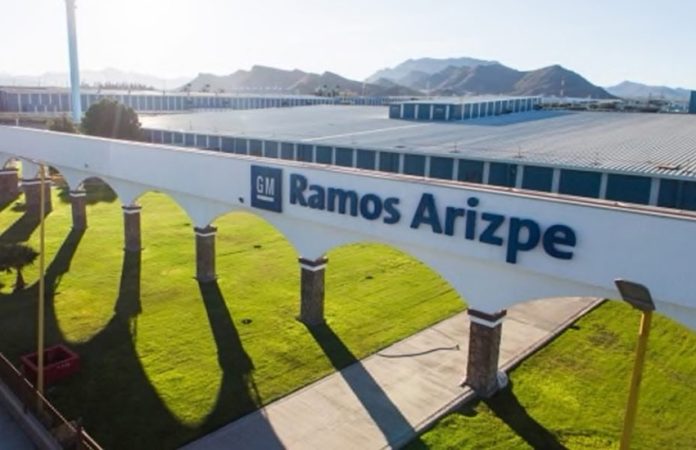
General Motors will only manufacture electric vehicles at Ramos Arizpe plant by 2024. (GM)
Mexican digital startups receive seed funding
Three Mexico-based companies – Welbe, Hero Guest and Kuona – have secured seed funding despite venture capital registering an overall decline in Latin America during 2022.
Founded in 2021 by Brazilians Eduardo Medeiros and Marcus Paiva, Mexico-based Welbe secured a U.S. $4.1 million seed-round led by Volpe Capital and Nazca, with the participation of SVLC, Kortex and GreenRock.
Welbe is a health-tech company that offers a comprehensive occupational medicine and health platform for companies, their employees, and their families. The platform provides complete employee health records and gives access to in-person or virtual medical consultations, as well as laboratory tests.
Hero Guest, a digital academy that trains front-line workers in the restaurant and hospitality industries, also secured funding by closing a U.S. $2.3M pre-Series A round with participating companies Grupo MVS, Variv Capital fund, and Grupo Anderson. After the financial round, the company’s valuation went to U.S. $8.8 million.
“By being trained, the staff has a better performance in their work, more tips are generated, they have a lower turnover and thus have a positive impact on the business, which generates a virtuous circle,” CEO of Hero Guest, Gabriel García, said on Latam List.
Finally, SaaS (software as a service) startup Kuona, which uses machine learning to optimize product prices for retailers, closed a U.S. $6 million seed round led by COMET with the participation of Seaya Cathay, Latam and FEMSA Ventures.
The funds will be used to expand the company into strategic areas in Latin America, Europe and the United States.
GM plant in Mexico will only produce electric vehicles starting in 2024
The General Motors (GM) plant in the northern city of Ramos Arizpe, Coahuila, will only produce electric vehicles (EV) starting in 2024, Economy Secretary Raquel Buenrostro announced.
The company also shared that by the year 2035, they will convert their other two Mexican plants to EV manufacturing.
In April 2021, General Motors announced a one-billion-dollar investment to expand the Ramos Arizpe plant and have it ready to produce EV. The company seeks to make this plant the fifth larger manufacturer of EV within General Motors North America.
The Economy Ministry announced that General Motors has created 4,500 new jobs since President López Obrador took office, at their plants in Ramos Arizpe and San Luis Potosí.
Mexico ranks low in work-life balance according to UN report
“Innovative working time arrangements such as those introduced during the COVID-19 crisis, can bring benefits to economies, companies and workers, including higher productivity and a better work-life balance,” the International Labor Organization (ILO) said. However, Mexico doesn’t seem to be part of the trend.
According to the ILO’s Working Time and Work-Life Balance report, Mexico is part of the group of nations that have a greater labor imbalance including the Philippines, Chile and Venezuela.
Either because there are those who work fewer hours than they need, or because there are people who have longer working hours than those legally mandated, 41.7% of Mexico’s workforce suffers from work-life imbalance, only surpassed by the Philippines (43.2%) and slightly above Chile (40.9%).
The nations with the lowest levels of imbalance among their labor force are Croatia (11.0%), Austria (14.2%) and Hungary (14.2%).
Streaming services closed 2022 with boost in subscribers in Mexico
Disney Plus, HBO Max, Netflix, Vix and other streaming platforms went from 12.8 million users in the third quarter of 2022 to 13.1 million by the end of the year, a jump of 300,000 new subscribers in Mexico, reported consulting firm The Ciu.
According to The Ciu analyst Radamés Camargo, consumption tends to increase in December because a subscription to a streaming platform is a “classic gift”. Moreover, people usually have more time in December to consume content, Ramadés said, which gives “an additional boost to the platforms.” The challenge then, is to retain those users.
With a possible recession ahead and continued inflation, companies like HBO have issued promotions to retain consumers. Advertisement is another strategy for customer retention because the monthly fee is less expensive.
Camargo said that the streaming services must find new options to keep them ahead of their competition, not only in terms of pricing, but in terms of new products.