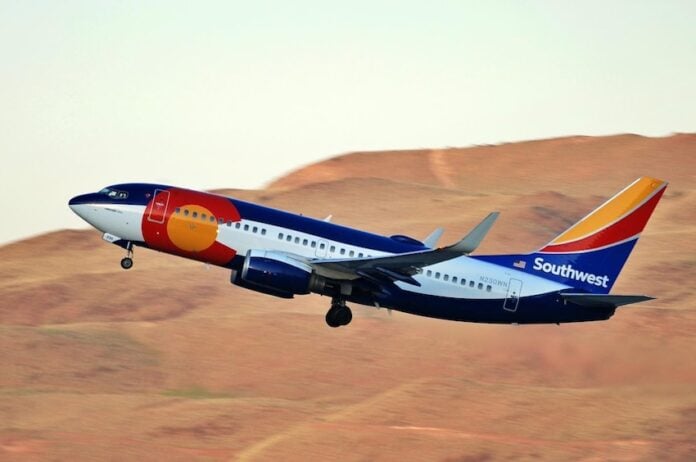
From Las Vegas, the sparkling metropolis in the Nevada desert, to Puerto Vallarta, the resort mecca on the Pacific Coast of Mexico, Southwest Airlines will be offering direct flights beginning next June in time for the World Cup. (Southwest Airlines)
Southwest Airlines has announced a new twice-weekly nonstop flight between Puerto Vallarta and Las Vegas starting June 6 next year.
The route will operate on Saturdays and Sundays on a Boeing 737 aircraft, and will increase capacity by an estimated 1,296 extra seats per month between the sunny destinations.
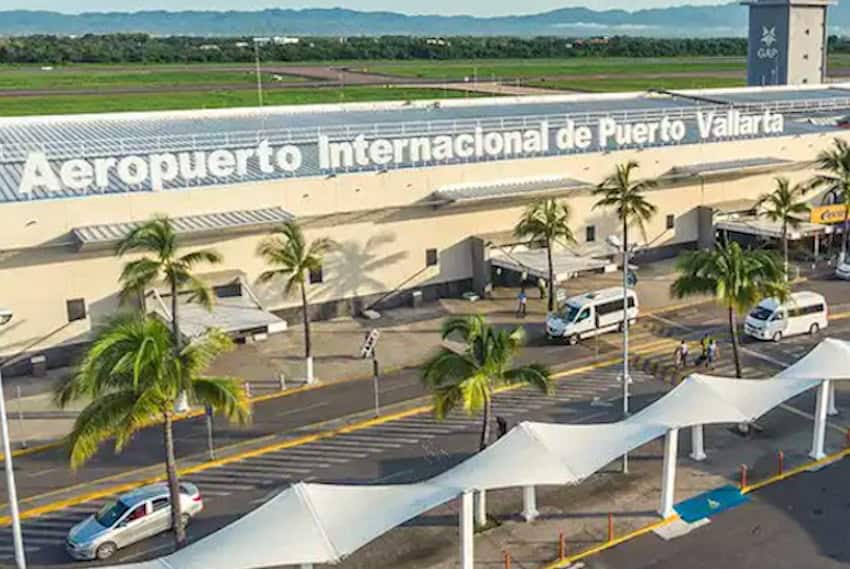
New passengers from Las Vegas arriving at the Puerto Vallarta International Airport next June will see an airport undergoing extensive renovation that will add to its already impressive list of national and international airports served. (@diariovallarta/on X)
The new Las Vegas route adds to Southwest’s existing list of U.S. destinations from Puerto Vallarta, including Denver, Houston, Orange County, Sacramento, Austin, Phoenix and, starting in March 2026, San Diego.
It also reflects the Puerto Vallarta International Airport’s expanding service as it undergoes extensive improvements scheduled for completion in 2027. It currently connects the Jalisco state port and resort city with 54 national and international destinations.
“In designing our summer 2026 schedule, we examined industry trends and identified locations… where we are able to provide customers more choices when they’re booking travel,” Adam Decaire, the senior vice president of network planning and network operations control at Southwest Airlines, said in a statement. “Additionally, we’re boosting service in locations where we’ve always had a strong presence to offer customers even more service than ever before in those cities.”
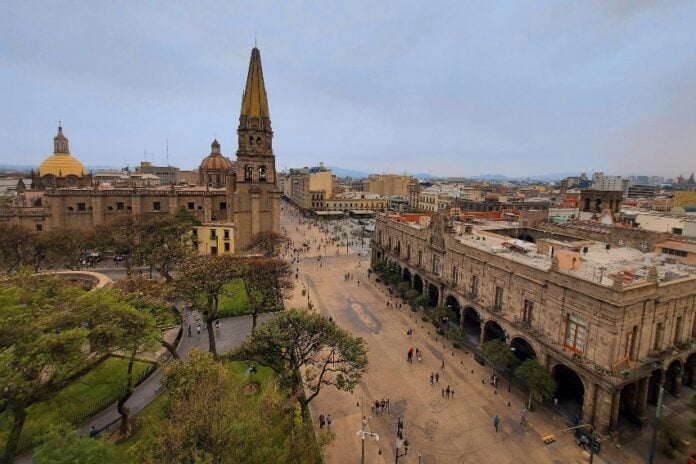
The new route will coincide with the 2026 FIFA World Cup, with some of the matches taking place in the Jalisco state capital of Guadalajara, 295 highway kilometers (180 miles) from Puerto Vallarta. Due to its proximity, Puerto Vallarta offers an alternative for travelers looking to combine attending games with a beach vacation.
As part of Southwest’s expansion plans in Mexico for next year, the airline will also add a new non-stop service between Las Vegas and Cancún on June 6, with further plans to launch new flights between Las Vegas and Los Cabos.
Fátima Bosch was crowned Miss Universe in Thailand on Friday. (Miss Universe)
Fátima Bosch Fernández, 25, has been crowned Miss Universe 2025, becoming the fourth Mexican woman in history to win the coveted title.
The announcement was made on Nov. 21 during a ceremony in Bangkok, Thailand, marking the end of an exceptionally controversial competition that first made headlines after a top pageant official berated Bosch during a livestreamed event for not posting promotional content on her social media.
@missuniverseBecause every step you take leads to something greater, and fighting for your dreams while believing in yourself will always be worth it.♬ original sound – Miss Universe
Weeks after the tense scene went viral, the woman at the center of the controversy is now the 74th Miss Universe.
“I would like to be remembered as someone who changed the stereotype of what a Miss Universe is, and as a real person who gives her all,” Bosch said after receiving the award.
Bosch stood out among 120 contestants from around the world and made her way to the top five. Miss Thailand Praveenar Singh was runner up, followed by Miss Venezuela Stephany Abasali, Miss Philippines Ma Ahtisa Manalo and Miss Cote d’Ivoire Olivia Yace.
But following the viral confrontation with Nawat Itsaragrisil, national director of Miss Universe Thailand, many have speculated online about her victory.
“Some suggest that she gained visibility thanks to the intense confrontations with Nawat. Others speculate about the influence of Raúl Rocha, president of Miss Universe, who is also Mexican,” Thai BBC correspondent Panisa Aemocha said.
Adding to the controversy, two judges resigned on the eve of the final ceremony, one of whom accused organizers of rigging the competition. Still, the Miss Universe organization has praised Bosch on its official social media account, saying that “her grace, strength and radiant spirit won the hearts of the world.”
“Today I reaffirmed that what God has destined for you, neither envy can stop, nor fate can abort, nor can luck change. Long live Christ the King!” Bosch wrote a day after the ceremony on her social media channels.
Fátima Bosch, the pride of Tabasco
Originally from Teapa in the southern state of Tabasco, Bosch comes from a prominent family in the beauty pageant world, with two of her maternal aunts having competed in the Flor de Tabasco pageant in Mexico — the same one that she would later win in 2018.
During her childhood, she faced challenges stemming from dyslexia and ADHD, an experience, she said, that has helped her build resilience. In her speech as Miss Universe, she emphasized the importance of authenticity and self-worth to inspire women of all ages.
In addition to her interest in Miss Universe, Bosch studied fashion design at the Ibero-American University of Mexico City and finished post graduate studies in Italy and the United States.
The new Miss Universe has become a source of pride in her home state of Tabasco, where 7,000 people gathered at Centenario 27 de Febrero Stadium in Villahermosa to watch the final ceremony. Thousands more watched from public squares around the state, where municipal government leaders set up giant screens for members of the public to watch the show.
Fusing traditional Mexican culture with modern artistic sensibilities, Lilmister P has gone from an Iztapalapa street artist to an international design star. (Lilmister P/Instagram)
There isn’t any singular artist or style of art that can capture the sheer magnitude and energy of a city as vibrant as Mexico’s capital. And yet, when it comes to understanding the idiosyncratic beauties of Mexico’s biggest metro region — particularly in its vast, sprawling neighborhoods — local artists can offer a small window through which to begin to explore, if not understand, Mexico City’s unbridled soulfulness and social fabrics.
Lilmister P is one of those artists, a contemporary muralist, designer and “Hypervector” expressionist — a phrase he says captures his sense of dimensionality and depth in whatever he aims to create — from Iztapalapa. Located in the city’s southeastern outskirts, Iztapalapa is among the most populated neighborhoods in Mexico City but is often overlooked by outsiders and lacks the major touristic appeal of Mexico City’s other offerings. Still, it’s home to a rich lineage of artistry, including Fábrica de Artes y Oficios, Centro Cultural Iztapalapa, Sala Quetzalcóatl and Centro Cultural Casa de Las Bombas. These arts and culture centers have long provided Mexico City’s residents with film screenings, dance productions, art workshops, book clubs, pottery classes and more.
That all shaped Lilmister P as an aspiring artist who was born and raised in the borough, where he attended high school and studied graphic design, learning how to screen print and stencil at an early age — techniques he later applied to create clothing, stickers, and painting on canvases. Five years ago, he founded Hechizas, a clothing and lifestyle brand that jokingly plays on Mexican themes of bootleggery found in flea markets as a nod to his Iztapalapa upbringing.
“I like to speak loud and be proud of being born in Iztapalapa,” he says. “Through many years people have seen my area as a dangerous and problematic space in the city. But I like to show the bright side of it, like the Viacrucis. [The annual event] gathers thousands of people from all over the country and also foreigners who come to live the experience [through a dramatic reenactment of religious events in the city’s streets].”
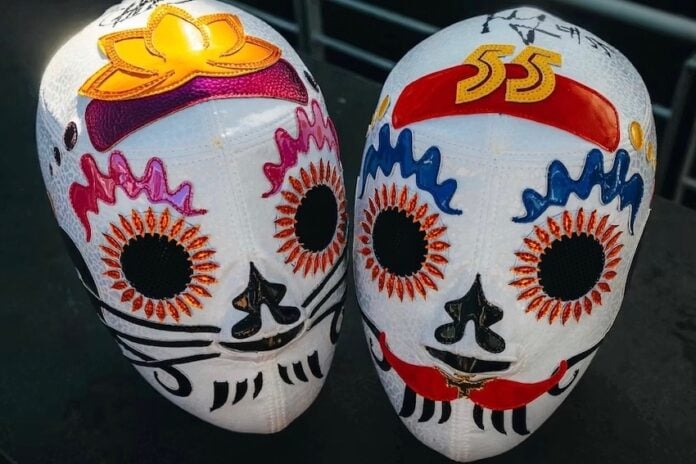
The Chilango artist’s talents have caught the eyes of those beyond just his neighborhood, though, attracting major global brands like UnderArmour, Jordan Brand, Formula 1 and more. When F1 was in town for its annual Grand Prix this past October, Lilmister P was tasked with designing custom lucha libre masks — inspired by the sugar skull tradition of Día de Muertos — for F1 drivers Carlos Sainz and Alexander Albon of Williams Racing. Both drivers personally received the skulls and signed them. Sainz (who is a particularly notable race car driver and whose father, Carlos Sainz Sr., was a famously influential World Rally Championship driver in the 1980s and 90s who was beloved by Spanish-speaking fans worldwide) filmed a video in which he speaks about Lilmister P’s masks and celebrates being in Mexico.
The F1 racing team found Lilmister P’s work online and contacted him about the collaboration. The mask’s details and nuances highlight Lilmister P’s attention to detail, creativity and, Mexican identity. For Sainz, the mask features the driver’s car number, 55, on the forehead, which is a Mexican tradition to honor relatives on sugar skulls; it also contains a mustache made from chilis, since that is Sainz’s nickname. For Albon, Lilmister P prominently stitched lotus flowers, since Albon is from Thailand, where the flower holds significant cultural and religious symbology; the mask also mimics cat whiskers, since Albon is known to be a cat lover.
Lucha masks are certainly a popular trope in Mexican art. But for Lilmister P, they’re more than just a one-off gimmick. A defining element of Lilmister P’s work is his artistic persona, which he signals by constantly wearing a lucha libre mask wherever he goes. In fact, there are no public photos of him without his mask. Having grown up as a lucha libre fan, he references watching both CMLL and AAA (two of Mexico’s largest lucha libre organizations) at his grandparents’ home with his cousins, where he learned to appreciate the superhuman artistry and theatrics of it all.
“I’ve loved lucha libre since I was a kid,” he says. “I’ve never seen a real superhero, like Batman or Superman, but I’ve seen Dos Caras and Tinieblas. Those guys were real. Now, wearing a mask represents my alter ego, a character that only shows up when I wear it. I’m not a luchador, but I respect the mask tradition and I don’t like to make it look funny or anything.”
The masks he wears vary, but they generally use a black fabric as the base, with white and sometimes red adornments that flare up the nose and around the sides of the skull, while incorporating fangs, extra eyes on the head, and other quirks. In his mask, he has traveled around Mexico to regions like Oaxaca and Puebla, where he is regularly commissioned to muralize walls, often done in dedication to the spirit of Mexican culture and customs.
Next up, the designer-slash-muralist is planning to launch a series of clothing items dedicated to the EZLN, or Zapatista Movement, an indigenous rights group which became internationally known in 1994 for nominally declaring war against Mexico’s government and corruption. Lilmister P also plans to paint a mural in Iztapalapa for Viacrucis.
When asked where his work can be found, he responds like a genuine street artist of the people, known for democratizing the accessibility of art for all, no matter what social class one might belong to. And despite his big name partnerships, he remains rooted where he was raised.
“The streets will always be my favorite space to show everything I do.”
Alan Chazaro is the author of “This Is Not a Frank Ocean Cover Album,” “Piñata Theory” and “Notes From the Eastern Span of the Bay Bridge” (Ghost City Press, 2021). He is a graduate of June Jordan’s Poetry for the People program at UC Berkeley and a former Lawrence Ferlinghetti Fellow at the University of San Francisco. His writing can be found in GQ, NPR, The Guardian, L.A. Times and more. Originally from the San Francisco Bay Area, he is currently based in Veracruz.
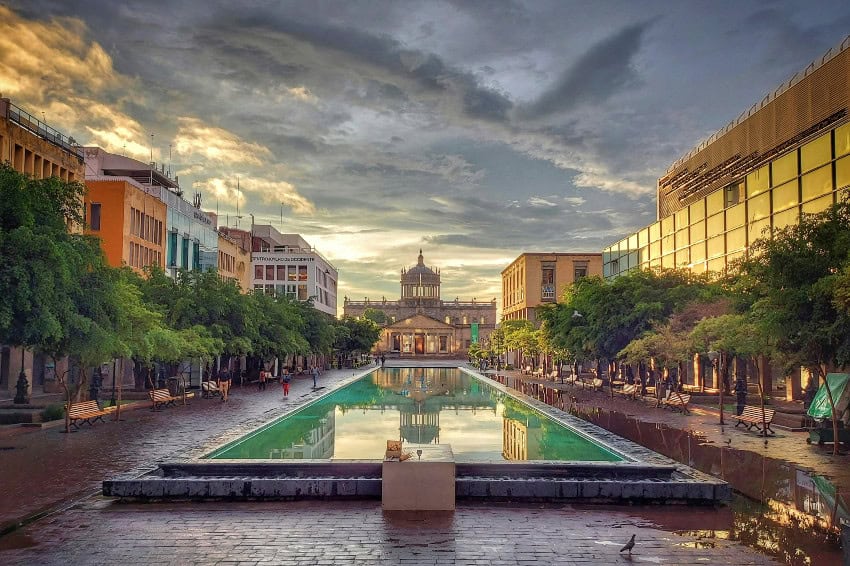
Entrepreneurship runs high in Guadalajara, the capital of Jalisco. (Unsplash/Sergio Rodriguez)
I was having a conversation the other day with a friend from the U.S., and as we shared stories from our families and social circles, we realized just how many people I know who have their own businesses, starting with my own family.
In my family, the vast majority of family members are entrepreneurs. The spirit of building your own business was instilled by my grandfather, who, in turn, followed the example of his father. Even when times have been economically trying, the prevailing mindset has always been “let’s see what else we can sell” instead of “it’s time to find a job.”
The entrepreneurial mindset in Guadalajara
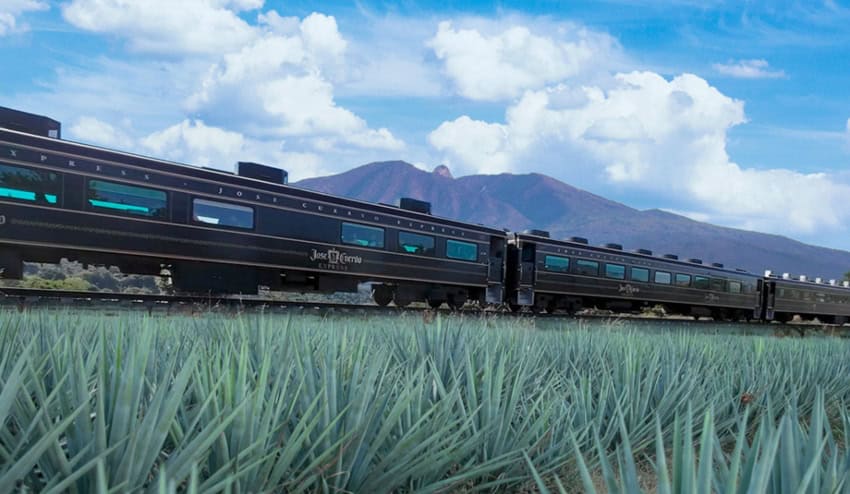
José Cuervo is one of many well-known brands born in the fertile entrepreneurial spirit of Jalisco. (Mundo Cuervo)
This pattern also replicates among my friends. And while many have worked at some point for a company, most of them currently own a business, are married to a business owner or work in their family business.
Whether owners of micro or small to medium or even large companies, I grew up in an environment where employees were the exception rather than the rule. And as it turns out, this is not an isolated fact — data proves that most people in Guadalajara are business owners.
According to a 2023 study by the Employers’ Confederation of the Mexican Republic (Coparmex), 79% of businesses in Jalisco are examples of local entrepreneurship, placing the state among the top three with the most business owners in Mexico.
“Guadalajara’s entrepreneurial spirit is sustained by deeply rooted values: hard work, responsibility, family unity, and the pursuit of personal and collective progress,” Paloma Arámburo,a founding partner at Arámburo Muñoz Abogados and a Deputy Secretary of the Board of Directors at the Guadalajara Chamber of Commerce, told me.
“At the Chamber of Commerce, we have witnessed how this entrepreneurial spirit has been a constant that defines the city’s economic and social identity,” she added.
Historical factors for Guadalajara’s entrepreneurial spirit
According to Arámburo, the historical factors that have contributed to the city’s thriving entrepreneurial scene include its geographic location, which favored trade in the western part of the country.
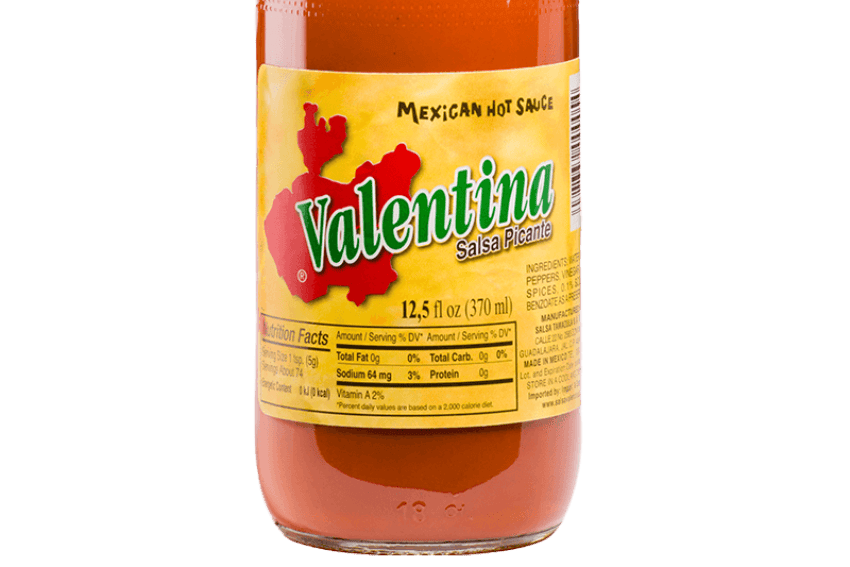
There’s no doubting that family-run Valentina salsa is from Guadalajara, Jalisco. The logo features a map of the state. (Valentina)
“Guadalajara was a strategic point of trade in the western part of the country,” Arámburo explained. “Its geographic location and productive focus generated an economic culture based on proximity, trust and collaboration, elements that fostered the formation and survival of family businesses. Many of them emerged from artisan workshops or small businesses that, over time, became pillars of regional development.”
Looking at the companies that have come out of Jalisco, it’s hard to deny the vibrant entrepreneurial spirit in the city. Many Mexican household brands, renowned both nationwide and abroad, hail from here. Think of Valentina, Tajín, Pelón Pelo Rico, Dulces de la Rosa, José Cuervo, Verde Valle, Omnilife and Pisa Pharmaceuticals, just to name a few.
What’s interesting is that all of these companies are still run as family businesses and have been operational for at least two generations.
Lack of opportunities spurs entrepreneurship
“In Guadalajara, it’s common for several generations to participate in the family business, strengthening not only the company but also a sense of belonging and legacy,” Arámburo said.
While there’s a long tradition of transgenerational family businesses, the city is still seeing new businesses opening up.
Paloma Robles, Attorney at Law specializing in Corporate Governance for Family Businesses, thinks the wave of new businesses is a response to the lack of opportunities, not only in Guadalajara, but across the country.
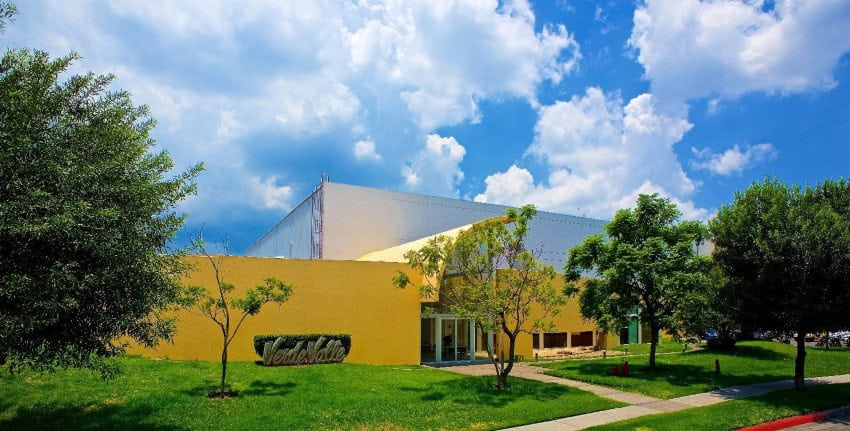
Family-run Verde Valle is headquartered in Zapopan, part of the metropolitan Guadalajara area. (Verde Valle)
“Salaries are bad in Mexico, and for that reason, people feel forced to start their own business,” Robles said.
Looking at the country at large, it would seem Guadalajara’s entrepreneurial spirit is only a reflection of a much broader reality: Mexico’s economy as a whole is largely driven by entrepreneurial families.
According to the book “Succession in the Family Business: Success Stories from TEC de Monterrey and Citibamex” from February 2022, family businesses are estimated to account for 75% of the country’s gross domestic product (GDP) and to provide over 70% of jobs.
“Mexican culture is different in comparison to the United States,” Robles said. “In Mexico, it’s very common for parents to expect their children to manage a family business, whereas in the U.S., children are expected to become independent at 18. So there’s a huge cultural element in that regard,” she added.
What’s striking, however, is that 70% of family businesses in Mexico disappear after the founder’s death, while only 12% survive into the third generation. According to the Mexican Entrepreneurs Association, this is due to poor business management and a lack of financial planning.
New family businesses outnumber dying ones in Mexico
Guadalajara is known as the “Silicon Valley” of Mexico due to its high rates of entrepreneurship. (Unsplash/Sergio Rodriguez)
Still, the entrepreneurial spirit persists, and according to INEGI, the proportion of businesses that were created between 2019 and 2023 increased in comparison with those that went under. For Arámburo, this spirit goes beyond low salaries and responds to a wish to find autonomy and create a fulfilling life on one’s own terms.
“Today, entrepreneurship also responds to a deeper search for autonomy, purpose and personal balance,” she said. “More and more young people are choosing to become entrepreneurs because they want to create projects that reflect their values, generate social or environmental impact, and have greater control over their time and professional development. In a city like Guadalajara — with an innovative, collaborative, and talented ecosystem — this drive finds fertile ground to flourish.”
Gabriela Solis is a Mexican lawyer turned full-time writer. She was born and raised in Guadalajara and covers business, culture, lifestyle and travel for Mexico News Daily. You can follow her lifestyle blog Dunas y Palmeras.
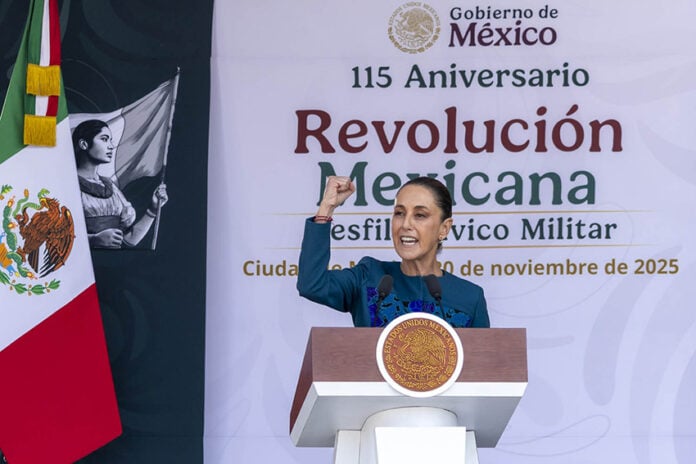
The president railed against "those who cause violence" and hate in a speech during the annual Revolution Day parade on Thursday. (Juan Carlos Buenrotro/Presidencia)
President Claudia Sheinbaum used part of her Revolution Day address on Thursday to send a series of pointed messages to government opponents and critics, less than a week after large protests against her administration took place.
Speaking in Mexico City’s central square, the Zócalo, ahead of the civic-military parade to commemorate the 115th anniversary of the beginning of the Mexican Revolution, Sheinbaum took aim at “discourse that normalizes violence” as the “path” forward.
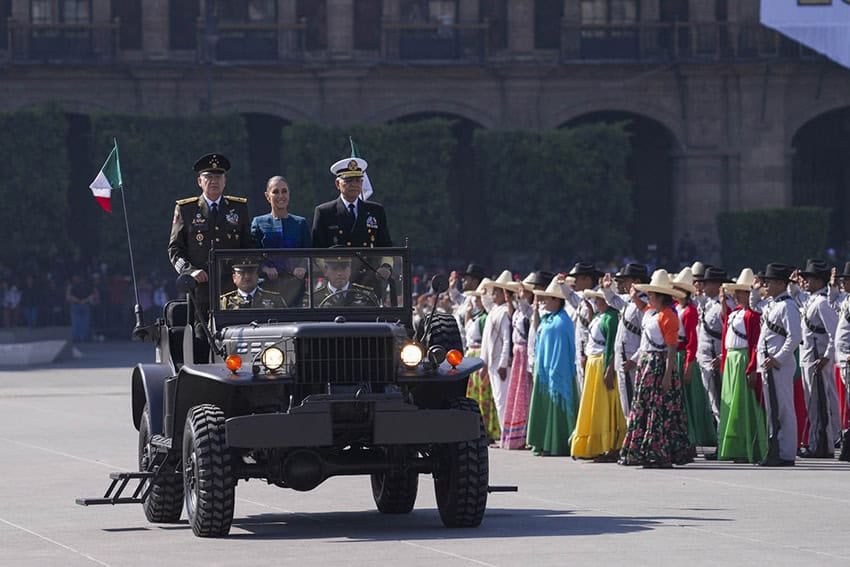
After her speech, the president participated in national Revolution Day parade in Mexico City, along with military leaders. (Hazel Cárdenas/Presidencia)
“Those who call for violence are mistaken,” she said five days after a group of so-called “black bloc” protesters attacked police in the Zócalo at the end of a “Generation Z” march against her administration that attracted more older adults than younger Mexicans.
The president also asserted that various other people are “mistaken,” including those who call for a “foreign intervention” to combat organized crime, those who think “women are weak” and those who believe that the “fourth transformation” political movement she leads is asleep at the wheel.
In addition, those who think that “campaigns of slander and lies” will resonate among the Mexican people and those who think “the people are stupid” are also wrong, Sheinbaum said.
The government has faced criticism from opposition parties, the participants in last Saturday’s protests and others over its anti-crime efforts, even though arrests are up and homicides are down, according to official statistics. It has also faced claims of complicity with organized crime and assertions that it is a “narco-government,” even though it has arrested large numbers of alleged crime group members, seized large quantities of narcotics, dismantled a significant number of clandestine drug labs and sent 55 organized crime figures to the U.S.
‘There is a government that listens, respects and responds to its people’
In the first part of her speech, Sheinbaum recalled the armed uprising against “the dictator Porfirio Diáz” in the early 20th century, and said that the Mexican Revolution was “enshrined in the 1917 Constitution, the most advanced in the world in terms of social justice.”
The same constitution remains in effect today, although it has been significantly modified.
Sheinbaum dedicated another part of her address to praising her own government.
The president said that “four transformations have marked the history of Mexico” — independence from Spain, 19th century liberal reforms known collectively as “La Reforma,” the Mexican Revolution and the “fourth transformation” that she and others say began when former president Andrés Manuel López Obrador took office in late 2018.
Historical figures like Pancho Villa and Emiliano Zapata, represented here, as well as archetypes like peasants and soldiers, feature prominently in Revolution Day parades in Mexico. (Hazel Cárdenas/Presidencia)
“The transformation that began in 2018 is strong because there is honesty, results and love for the people,” Sheinbaum said.
“… Mexico is living a moment that previously seemed impossible. Today power is not used to subjugate, but to serve,” she said.
“There are no longer impositions or privileges; there is constitution, there is democracy and there is a government that listens, respects and responds to its people,” Sheinbaum said.
She also asserted that “today freedoms are not only granted from above,” but “exercised from below, from every neighborhood, from every community.”
“… No one is silenced in Mexico anymore, no one is persecuted for thinking differently and that is an achievement of the people of Mexico,” Sheinbaum claimed.
“Today, government is no longer a space for the few. It’s no longer a club for the privileged. Today it represents everyone — those who study, those who work, the shopkeepers, the young people, the Indigenous people and women, but above all it represents those who have the least, the modest people,” she said.
A much smaller ‘Gen Z’ protest took place in CDMX on Thursday
Less than an hour after Sheinbaum spoke in the Zócalo, a group of protesters embarked on the second “Generation Z” march in six days in Mexico City. While some 17,000 people took part in Saturday’s march from the Angel of Independence monument to the Zócalo, the turnout on Thursday was much lower, with around 200 participants of various ages, according to media reports.
Police officers temporarily stopped the contingent of protesters from entering the historic center of Mexico City to avoid any interruption to the military parade that was taking place, and to prevent any possibility of a confrontation between demonstrators and military personnel. The protesters eventually made it into the downtown area, but police prevented them from entering the Zócalo, where military parade infrastructure, including stands and screens, was being taken down.
The second “Gen Z” protest on Thursday drew roughly 200 participants, many of them slightly older than the march organizers’ target demographic. (Mario Jasso / Cuartoscuro.com)
The march was largely peaceful, although the Milenio newspaper reported that some “presumed protesters” attacked police officers at the intersection of Paseo de la Reforma, the capital’s most famous boulevard, and Juárez Avenue. Scuffles between the alleged protesters and police were filmed and posted to social media.
As was the case on Saturday, some protesters carried the Straw Hat Pirates’ Jolly Roger, a flag that features in the Japanese manga series “One Piece” and which has become closely associated with “Gen Z” protest movements around the world. Others carried Mexican flags and flags that called for “justice for Carlos Manzo.”
The El Universal newspaper reported that the protesters demanded that the federal government establish “a Mexico without narcos.”
One protester, 29-year-old Neptalí Roa, told the EFE news agency that “the repression” during the protest on Saturday — some police officers are accused of committing abuses against protesters — and the closure of a number of metro stations were the reasons why the turnout was low on Thursday.
In stark contrast to the message Sheinbaum conveyed in her speech, Roa claimed that “the government is scared of its people” and doesn’t want to listen to them “because it doesn’t want to face up to reality.”
EFE reported that 16-year-old Ángel Morales — described as one of “the few” young people present in the march — said that he and other protesters want “a change” in Mexico, and evidently not that which Sheinbaum says she and her government are bringing to the country.
“We’re not associated with any [political] party or any association. We just want a better future for us,” he said.
By Mexico News Daily chief staff writer Peter Davies (peter.davies@mexiconewsdaily.com)
Mexico’s outlay on U.S. goods in the period was 0.3% higher than Canada’s expenditure on imports from its southern neighbor. China ranked as the third largest importer of U.S. goods, with an outlay of $73.6 billion between January and August.
The El Economista newspaper reported that Mexico has previously ranked as the top buyer of U.S. goods in “isolated months,” but not over an extended period, as has been the case this year.
“This is the first time in history that Mexico is the largest export market for the United States,” the Business Coordinating Council (CCE), an umbrella organization of Mexican business groups, said in a statement.
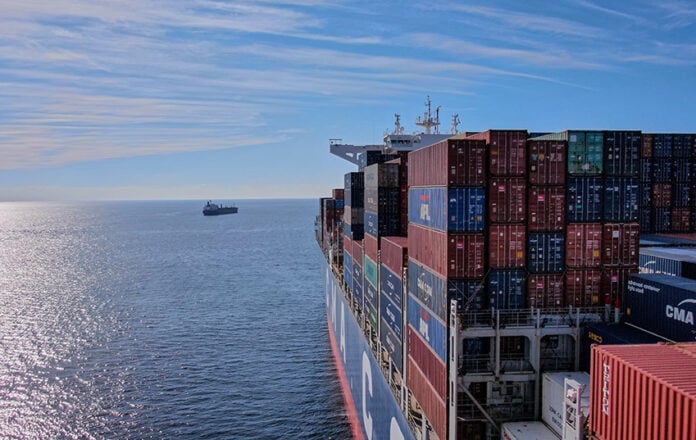
A successful “Buy Canadian” campaign has reduced U.S. exports to Canada, clearing the way for Mexico to become the top buyer of U.S. goods. (Shutterstock)
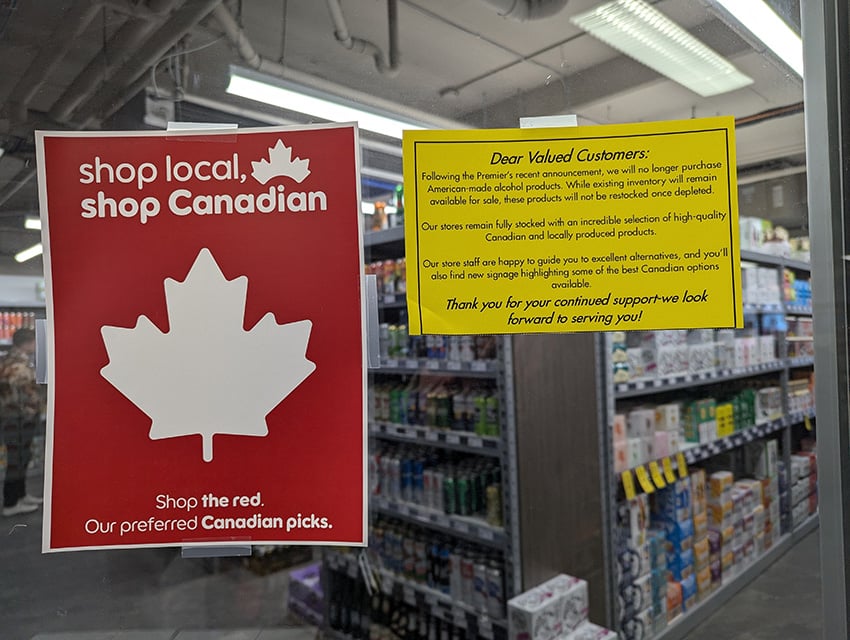
Mexico’s outlay on U.S. goods increased 0.6% annually in the first eight months of the year, while Canada’s expenditure on such products declined 3.9%. A “Buy Canadian” movement emerged in response to tariffs imposed by U.S. President Donald Trump on a range of Canadian goods.
The total value of U.S. exports in the first eight months of the year was $1.43 trillion pesos, meaning that 15.8% of the United States’ export revenue came from goods shipped to Mexico.
According to an infographic based on Census Bureau data that was shared to social media by Mexican Ambassador to the U.S. Esteban Moctezuma, Mexico is the top export market for many U.S. industries, including meat and livestock processing; oil, gas and energy extraction; iron and steel manufacturing; and electrical and electronic equipment.
The CCE noted that Mexico is a large importer of U.S. cereals, electronics, steel and iron products, vehicles, machinery and fuel (including gasoline and natural gas).
México se acaba de convertir en el destino NÚMERO UNO de exportación de 🇺🇸#EUA.
De acuerdo con @uscensusbureau, por primera vez, somos su principal mercado de exportación.
Tan solo en agosto, 🇺🇸#EUA exportó 29 mil millones de dólares en bienes a 🇲🇽#México.
According to the Office of the U.S. Trade Representative (USTR), the United States’ leading exports to Mexico are “electrical machinery, machinery, energy products, vehicles, and plastics, together with over $30 billion [annually] in agricultural products, including corn, pork and pork products, dairy products, and soybeans.”
The CCE said that Mexico is the “main export destination” for 24 U.S. sectors and the “second most important market” for 50 additional ones.
“In total, Mexico occupies the first or second position as a buyer in 75% of U.S. export industries,” the organization said.
The CCE also noted that Mexico was the first or second largest export market for 26 U.S. states in 2024. For Arkansas, Texas, Kansas, Nebraska, New Mexico, Colorado, Arizona, California and Oregon, it ranked No. 1.
Alfonso Muñoz, an economist at the Mexico City consulting firm CMM, told The New York Times that the publication of the data showing that Mexico is now a larger buyer of U.S. goods than Canada marks an “inflection point.”
“There is a very high complementarity between the economies of Mexico and the United States,” he said.
According to the Times, Muñoz also said that “the trend was expected to hold as long as there were no major economic crises or interruptions to the current trade agreement among the United States, Mexico and Canada.”
The USMCA free trade pact, which replaced NAFTA in 2020, is scheduled for review in 2026.
Mexico’s exports to US increase 6%
The latest U.S. Census Bureau data also showed that the United States imported goods from Mexico worth $354.89 billion between January and August, a 6.1% increase compared to the same period of 2024.
Mexico — which sends around 80% of its exports to its northern neighbor — thus retained its position as the the world’s top exporter to the United States, ahead of Canada and China.
According to the USTR, Mexico’s leading exports to the United States are “vehicles, machinery, electrical machinery, and medical devices, together with over $48 billion [annually] in agricultural products, including fresh vegetables, beer, distilled spirits, and fresh fruit.”
In contrast, many Chinese goods are subject to very high tariffs when entering the U.S. Canadian products that don’t comply with the USMCA face a 35% duty when entering the U.S., 10 points higher than that imposed on Mexican goods not covered by the free trade pact.
The value of both Canadian and Chinese exports to the U.S. declined in annual terms in the first eight months of the year.
Mexico and the US are each other’s largest trade partner
Two-way trade between Mexico and the United States was worth $581.3 billion between January and August, a 3.9% increase compared to the same period of 2024.
Mexico had a trade surplus with the U.S. of $128.4 billion in the period.
Two-way trade between the United States and Canada fell 4.5% between January and August to $485.4 billion.
Trade between the U.S. and China also declined, plummeting 21.5% to $292.6 billion. Canada is the United States’ second largest trade partner, while China ranks third.
U.S. Census Bureau data also shows that the United States’ trade with Mexico accounts for around 15.5% of the world’s largest economy’s total trade with all nations globally. That figure underscores the immense significance the North American neighbors are of to each other.
The economies of the two countries have become highly integrated in the three decades since NAFTA took effect. The integration is now so great that Mexico and the United States are said to be part of a “co-production system,” in which they provide essential inputs to each other that allow final goods to be produced in various industries, including the automotive, electronics and aerospace sectors.
Prospects looked promising as the Mexican teenagers celebrated their thrilling upset victory over Argentina at the FIFA Under-17 World Cup in Qatar. But things went south against Portugal, who eliminated 'El Tri.' (FIFA)
One win away from the quarterfinals in the FIFA Under-17 men’s World Cup, the Mexican team saw its run ended in painful fashion: a 5-0 loss to Portugal on Tuesday in Doha, Qatar.
Though the Mexican players departed with some new friendships (details below) the lopsided defeat sparked a slew of negative reactions online, and abruptly ended a campaign that had days earlier shimmered with promise.
Mexico is going back home after getting eliminated from the U-17 World Cup and the Japanese players gave them a special farewell shortly before they left the hotel.
After narrowly advancing with a third-place group finish, Mexico began the knockout rounds with an eye-catching 5-4 victory in penalty kicks over Argentina after the score was tied 2-2 through regulation.
Though there are no world rankings for under-17 teams, the powerful Argentine squad had coasted to a 3-0 record in round-robin play by outscoring its opponents 11-2.
Mexico’s victory over the pre-tournament favorite was viewed as huge, and it also provided two of the tournament’s biggest highlights: Mexican goalkeeper Santiago López saving the opening penalty kick, and then converting the deciding kick himself.
Coached by Carlos Cariño, Mexico impressed many by advancing out of a tough group as one of the best third-place teams and then knocking out the South American giants.
However, it all went up in smoke in the Round of 16 against Portugal.
Mexico fell behind 1-0 on a penalty kick in the 15th minute, and things got worse 20 minutes later when José Navarro, a talented but aggressive defender, was given a red card after a video review for violent conduct — forcing Mexico to play a man down the rest of the match.
Portugal went up 2-0 early in the second half, then added three more goals in a disastrous final 10 minutes for Mexico that included the expulsion of López. The Mexican goalkeeper’s frustration boiled over in the 88th minute when he pushed an opposing player — reducing Mexico to nine men by the final whistle.
The beginning of a beautiful friendship
While memes and satirical commentary swept Mexican social media in response to the loss, another story unfolded beyond the scoreboard.
In a poignant post-match scene, Japan’s under-17 team, tournament companions at the team hotel, bid farewell to Mexico with applause, gifts and handwritten messages.
The friendship between the teams quickly became a talking point worldwide.
“The gesture went viral on social media thanks to a video showing the Japanese and Mexican soccer players exchanging words, gifts and applause,” one report noted. “The farewell became a symbol of respect and cultural unity, showing that youth football is also a space for solidarity and shared learning.”
Many players for Japan — set to play in the quarterfinals against Austria on Friday — spoke warmly of the support received from the Mexican squad.
For Mexico’s players, the exchange allowed them to return home with memories of sportsmanship and camaraderie.
Ryan James Wedding, shown here in photos from last year, is wanted by th FBI for drug trafficking and is thought to be living in Mexico. (U.S. Justice Department)
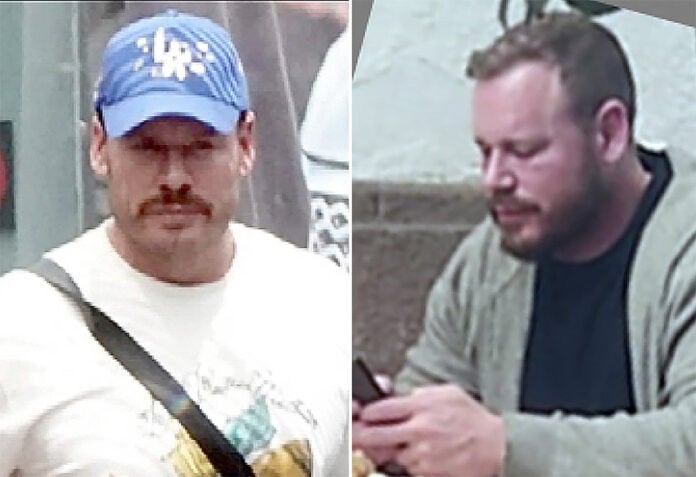
The Mexican government is collaborating with the U.S. Treasury Department in a financial crackdown targeting alleged drug trafficker Ryan James Wedding. A former Canadian Olympic athlete, Wedding is one of the FBI’s Ten Most Wanted Fugitives and is thought to be hiding in Mexico.
Labeled an “extremely violent criminal,” Wedding is wanted for his alleged involvement in an international drug trafficking, money laundering, and murder network targeting federal witnesses.
U.S. Attorney General Pam Bondi said a newly unsealed indictment accuses former Canadian Olympic snowboarder Ryan James Wedding of tracking down and posting photos on a Canadian website called “The Dirty News” of a witness… to facilitate his murder in Medellin Colombia before… pic.twitter.com/uCVupafqO7
“Ryan Wedding controls one of the most prolific and violent drug trafficking organizations in the world and works closely with the Sinaloa Cartel,” said U.S. Attorney General Pamela Bondi. “We will not rest until his name is taken off the FBI’s Top 10 Most Wanted List.”
Additionally, the U.S. raised the reward for Wedding’s capture to US $15 million, with other rewards offered for information leading to the arrests of unknown assassins who murdered a potential witness last January in Medellín, Colombia.
Authorities insist Wedding has issued orders to kill various individuals, including the 2023 murders of two members of a family in Canada in retaliation for a stolen drug shipment.
The former Olympian spent three years in U.S. prisons on cocaine possession charges and was later arrested in Canada on cocaine trafficking charges in 2015, but managed to flee to Mexico.
Since then, he has become “a modern-day iteration of Pablo Escobar,” according to U.S. officials.
“Ryan Wedding and his associates allegedly imported tons of cocaine each year from Colombia through Mexico, and then distributed it on the streets of U.S. communities,” FBI Director Kash Patel said.
The Financial Intelligence Unit (UIF) of Mexico’s Finance Ministry said reports indicate Wedding operates in Canada, the United States, Colombia, Italy and the United Kingdom.
Ryan Wedding was an Olympic snowboarder and represented Canada at the 2002 Winter Olympics. He’s now a transnational drug trafficker for Mexico’s largest drug cartel and he’s on the FBI Ten Most Wanted Fugitives list pic.twitter.com/grRAU3DhjL
“The existence of linked companies, international transfers, asset movements and possible operational links associated with transnational illicit activities has been detected,” the UIF said in a statement.
According to documentation from the OFAC, the investigation revealed the triangulation of funds through shell companies and the coordinated use of corporate structures both in Mexico and abroad to facilitate the movement, concealment, and management of assets.
Among the nine Wedding associates sanctioned are his wife Miryam Andrea Castillo, Édgar Aarón Vázquez and Carmen Yelinet Valoyes.
Castillo was born in the state of Nuevo León and is alleged to be involved in money-laundering operations. Vázquez, believed to be a former Mexican law enforcement officer with ties to senior Mexican law enforcement officials, allegedly provides protection for Wedding within Mexico.
Yaloyes, a Colombian national who reportedly runs a high-end prostitution ring in Mexico, allegedly assisted Wedding with the murder of the witness in Medellín.
Three of the nine companies sanctioned — México VRG Energéticos, Grupo RVG Combustibles and Grupo Ares Imperial — are based in Mexico.
Mexicans report high levels of life satisfaction, with six out of 10 people saying they were happy with the state of their love life — presumably including this couple, seen stealing a kiss on the Mexico City Metro. (Daniel Augusto / Cuartoscuro.com)
61) In 2021, 6 out of 10 people in Mexico said they were satisfied with their love life.
(Source: INEGI, National Survey of Self-Reported Well-being – ENBIARE, 2021)
Life satisfaction across various areas — including relationships — remains high in Mexico, reflecting the value placed on close personal and family ties. Positive affective experiences are a key factor in the country’s global happiness rankings and quality-of-life perceptions.
62) In 2020, Mexico’s population was 126 million; 25 million were children ages 0 to 11.
(Source: INEGI, Population and Housing Census – CPV, 2020)
Children account for a significant share of the country’s demographic structure, shaping priorities in education, health and social services. Mexico’s population is still relatively young, though the proportion of children has slowly declined as overall growth slows and median age rises.
Te mostramos los cambios en la composición por edad de la población en la #RepúblicaMexicana.
— CONAPO – Consejo Nacional de Población (@CONAPO_mx) November 10, 2025
63) Xeric scrubland (matorral xerófilo) is the most common biome in Mexico, characterized by the presence of agaves and cacti. It covers 29.4% of the national territory.
(Source: INEGI, Land Use and Vegetation – USYV, 2021)
These arid-adapted biomes, found mainly in northern and central regions, support unique biodiversity and traditional livelihoods. Despite their ecological and economic value, xeric scrubland is sensitive to overgrazing, development and climate change.
64) In 2024, 1.7 million births were registered in Mexico. Of those, 49.4% were female and 50.6% male.
Birth rates continue to decline, but the sex ratio at birth remains balanced — around 105 boys for every 100 girls. This trend shapes future population dynamics and poses new challenges for education and family policy.
65) Between April and June 2025, the average hourly income earned was 66.2 pesos.
(Source: INEGI, National Survey on Occupation and Employment – ENOE, second quarter 2025)
Average hourly earnings reflect rising wage floors in recent years, but many workers — especially those in informal or service sectors — may still earn less than this figure. Minimum wage changes, inflation pressures and wide sectoral disparities all shape Mexico’s labor income dynamics.
66) In 2022, the main physical impact for female caregivers was fatigue (39.1%). For male caregivers, it was reduced hours of sleep (17.3%).
(Source: INEGI, National Survey for the Care System – ENASIC, 2022)
Caregiving imposes different physical and mental strains on women and men. Women most often report fatigue and exhaustion, while men are more likely to experience sleep loss or disruption. These effects reflect unequal burdens and have further consequences for work, health and social life.
67) In 2024, January was the month with the highest share of registered deaths, accounting for 9.7% of the yearly total.
(Source: INEGI, Registered Death Statistics – EDR, 2024)
Mortality in Mexico shows strong seasonal variation, with more deaths recorded in winter months such as January, often related to respiratory illnesses and chronic conditions. Recognizing this pattern supports better health planning and resource allocation.
68) In 2024, Mexico was home to 1,003 movie theaters.
(Source: INEGI, National Directory of Economic Units – DENUE, 2024)
Mexico’s movie theaters are a central part of urban and regional cultural life, with the number of cinemas recovering after pandemic closures. Though digital platforms continue to grow, cinemas remain as a community gathering place, for film festivals and for local employment.
69) In 2024, Mexican households spent an average of 420 pesos per month on entertainment, such as mobile device applications, video game consoles, board games and more.
(Source: INEGI, National Survey on Household Income and Expenditures – ENIGH, 2024)
Digital entertainment and gaming are a growing share of monthly household budgets, reflecting Mexico’s rapid adoption of mobile and online platforms. Internet access continues to drive consumer shifts, especially among younger, urban populations.
70) In 2023, the societal actors who inspired the most trust were family members, at 87.4%. This proportion increased compared to 2021 (86.7%).
(Source: INEGI, National Survey on Government Quality and Impact – ENCIG, 2021 & 2023)
Family remains the institution Mexicans trust most, even as trust in other individuals and groups (such as media or government) has fluctuated. Strong family ties continue to underpin social life and attitudes toward well-being and security in Mexico.
71) What are the most widely spoken Indigenous languages in Mexico? In 2020, the top contenders were Nahuatl (22.4%), Maya (10.5%), Tseltal (8.0%) and Tsotsil (7.5%).
(Source: INEGI, Population and Housing Census – CPV, 2020)
These four languages alone account for nearly half of all Indigenous language speakers in the country, reflecting Mexico’s rich linguistic diversity. While nearly 7.4 million people speak an Indigenous language, some smaller languages are critically endangered due to social, economic and demographic shifts.
72) In 2024, two out of 10 women in Mexico felt unsafe in their own home.
(Source: INEGI, National Survey of Victimization and Perceptions of Public Security – 2024)
While most insecurity concerns are reported in public spaces, a significant number of women also experience fear or discomfort in private settings. Perceptions of safety are strongly influenced by the threat of violence, which remains much higher for women than men across all surveyed environments.
73) In 2024, diabetes mellitus was the second leading cause of death nationwide, with 112,641 registered fatalities.
(Source: INEGI, Registered Death Statistics – EDR, 2024)
Diabetes remains a major public health challenge in Mexico, consistently ranking just behind heart disease as a cause of mortality. The chronic illness affects millions of adults, especially those over age 40, and leads to high rates of kidney failure, cardiovascular disease and severe complications if not well controlled.
74) Mexico has a total of 4,591 registered insular features including reefs, sandbars, cays, islands, islets and rocky formations.
(Source: INEGI, Coastline Data – LIC, 2015)
These marine and coastal elements are vital for Mexico’s biodiversity, economic activity, and territorial integrity. The country’s insular territory shelters unique ecosystems, supports fisheries and tourism, and is a key focus for environmental conservation and maritime governance.
75) Between April and June 2025, 76.5% of employers and supervisors were men, reflecting labor market inequality.
(Source: INEGI, National Survey on Occupation and Employment – ENOE, second quarter 2025)
Women remain significantly underrepresented among employers and business owners in Mexico’s labor market. This reflects broader gender gaps in workplace authority, entrepreneurship and access to capital, despite rising labor force participation among women over the past decade.
76) In 2023, 52.0% of the population had some form of savings. Of those with savings, 47.1% had less than half of one paycheck set aside.
(Source: INEGI, National Survey on Financial Wellness – ENSAFI, 2023)
Most savers in Mexico maintain very modest reserves — often not enough to cover an emergency or unexpected expense. Financial insecurity and low savings capacity remain widespread, especially among women and lower-income households, underscoring ongoing challenges in economic resilience and planning.
77) In 2020, 4.9% of workers in Mexico used a bicycle as their main means of transport to get to work, while 33.1% traveled by private vehicle.
(Source: INEGI, Population and Housing Census – CPV, 2020)
Private cars remain the dominant commuting mode in most of the country, though bicycle usage is rising in urban centers due to new infrastructure and sustainability policies. Encouraging alternative transportation methods will be key to reducing traffic, air pollution and travel costs.
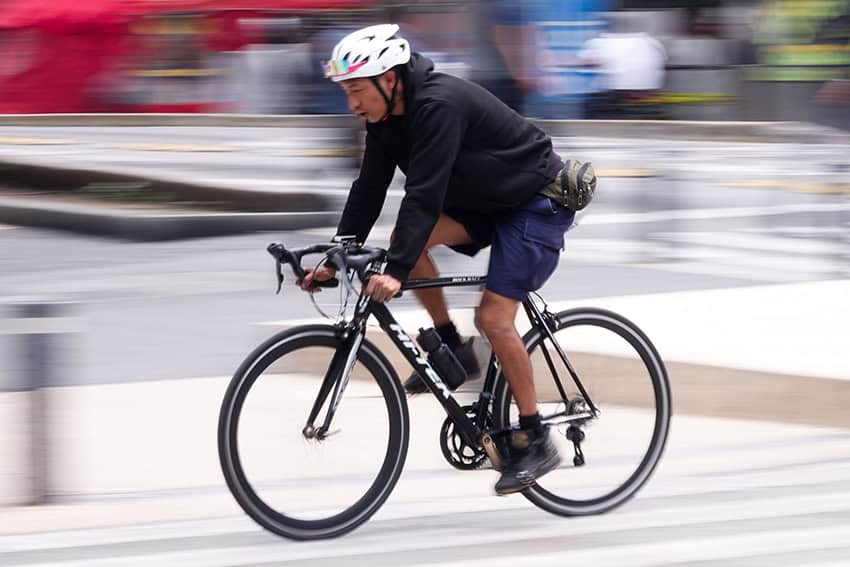
Just under 5% of Mexicans commute by bicycle, while 33% commute by car. (Graciela López / Cuartoscuro.com)
78) In 2022, just over 19 million hectares of agricultural land in Mexico were rainfed fields (those that depend entirely on rainfall for water).
(Source: INEGI, Agricultural Census – CA, 2022)
Approximately three-quarters of all farmland in Mexico is rainfed rather than irrigated, making agriculture highly vulnerable to drought and climate variability. Most of these crops are managed by small producers. Limited irrigation infrastructure is a major development and food security challenge for the country.
79) In 2023, beauty salons, clinics and barbershops ranked as the second most common type of business in the country, with 275,618 establishments.
(Source: INEGI, Economic Census – CE, 2024)
The beauty and personal care industry in Mexico has seen rapid expansion, with thousands of new salons opening each year. This growth reflects changing consumption habits, a growing service sector, and increasing demand for beauty and wellness services across urban and rural areas.
80) A single highway can take you across much of Mexico: The Mexico–Nogales route stretches 2,378 km, connecting the center of the country with the northern border.
(Source: INEGI, National Road Network – RNC, 2024)
The Mexico-Nogales highway (Federal Highway 15) is one of the country’s longest and most important transport corridors. It links Mexico City with Nogales, Sonora, facilitating trade, travel, and economic integration from the capital to the U.S. border.
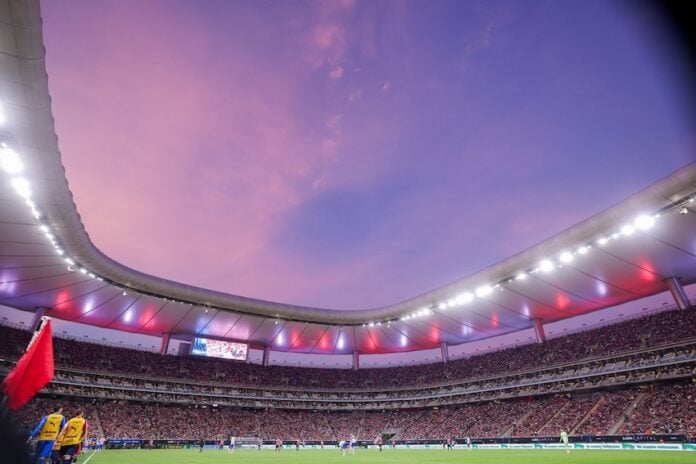
Estadio Akron, Guadalajara's jewel of a soccer venue, will not only be the site of World Cup matches in the summer, but it will also host two World Cup qualifying tournament games in March. (@EstadioAKRON/on X)
Guadalajara and Monterrey will get a head start on next summer’s World Cup excitement when they play host to the FIFA interconfederation playoff series in March.
The playoff will feature six national sides from five soccer confederations battling for two spots in the 48-team World Cup field.
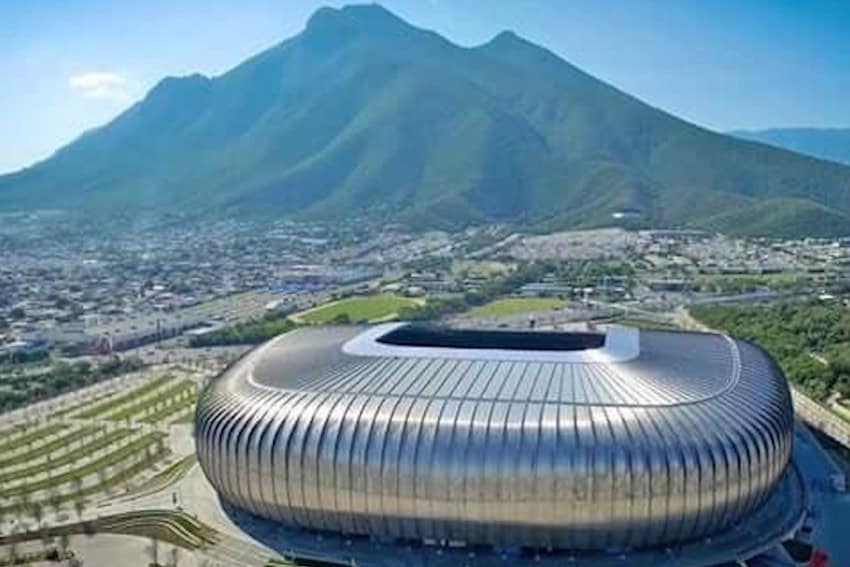
One of the two host venues for the World Cup qualifying tournament in March, Estadio BBVA, in the Guadalupe municipality of the greater Monterrey area, offers soccer fans a view of the noble Cerro de la Silla. (@la_okocha/X)
Guadalajara’s Estadio Akron and Monterrey’s Estadio BBVA will stage the qualification tournament — which will begin on March 23 — with each stadium hosting two matches.
“These iconic stadiums are the perfect stages for what promises to be a thrilling event filled with passion, drama and excitement,” FIFA president Gianni Infantino said.
Forty-two World Cup spots have been filled after qualifying rounds in the six confederations concluded this week. Whereas the European confederation (UEFA) will hold its own World Cup playoff with 16 teams squaring off for four additional berths, the other five confederations will have a chance to secure an extra spot in the interconfederation playoff.
The six nations that will compete in Mexico are Iraq (Asian Football Confederation), Congo (Confederation of African Football), Jamaica (Confederation of North, Central America and Caribbean Association Football, or Concacaf), Suriname (Concacaf), Bolivia (South American Football Confederation) and New Caledonia (Oceania Football Confederation).
As the host confederation, Concacaf was granted an extra team in the playoff.
The match schedule — arranged via a blind draw held Thursday in Zurich — pits New Caledonia vs. Jamaica, with the winner facing Congo (ranked No. 56 in the FIFA World Rankings) for one World Cup spot. The other bracket has Bolivia facing Suriname, with the winner advancing to a meeting with Iraq (ranked No. 58) for the other spot.
It has yet to be decided which games will take place at which of the two sites.
Estadio Akron and Estadio BBVA will each host games at next year’s World Cup. The former will be the site of four group-stage matches, while the latter will play host to three group games and a round-of-32 match.
The third venue for World Cup matches in Mexico — Mexico City’s Estadio Banorte — is undergoing renovations that are expected to be completed in March 2026.
The historically significant stadium — host to the inaugural World Cup matches in 1970 and 1986 when it was still called Estadio Azteca — has been designated to host the inaugural match of the 2026 World Cup. It will celebrate its reopening with a friendly match between the Mexican national team and Cristiano Ronaldo’s Portugal.