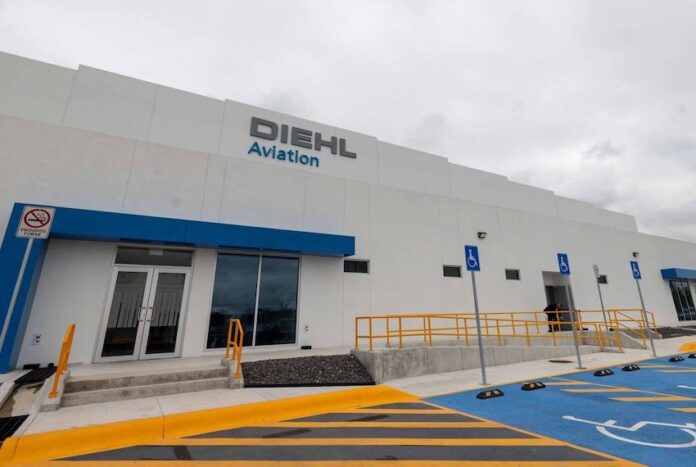
Like many other aeronautical manufacturers, Diehl Aviation was attracted to Querétaro for its time zone compatibility with maor Western Hemisphere markets, its proximity to the United States, and its reputation as a growing hub in the industry. (@gobqro/X)
German aeronautical manufacturer Diehl Aviation has inaugurated a new plant in Querétaro as part of a campaign to strengthen its presence in the Americas.
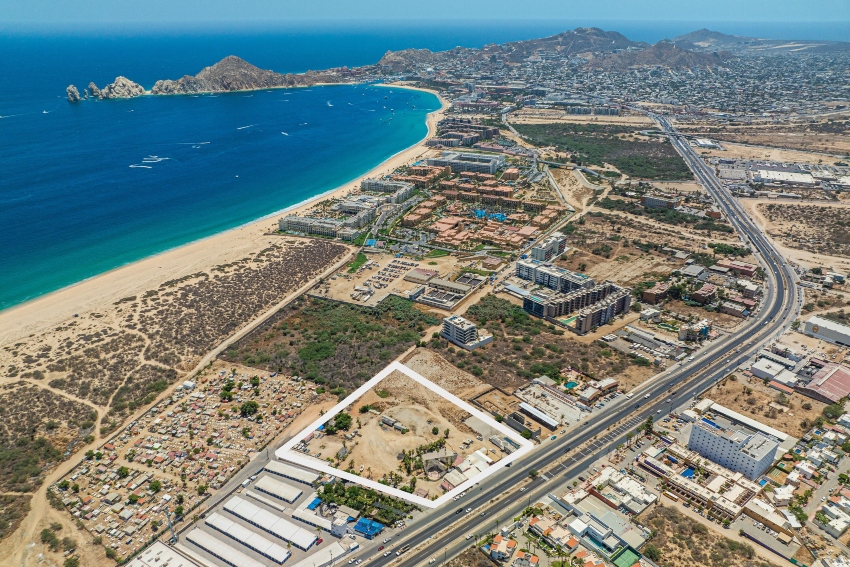
With an investment of 918 million pesos (US $50 million), the plant is located in the PYME Industrial Park outside Querétaro, capital of the central state of the same name, and includes 8,200 square meters of production and office space. A second phase of expansion is in the works, which will add 4,000 to 6,000 square meters.
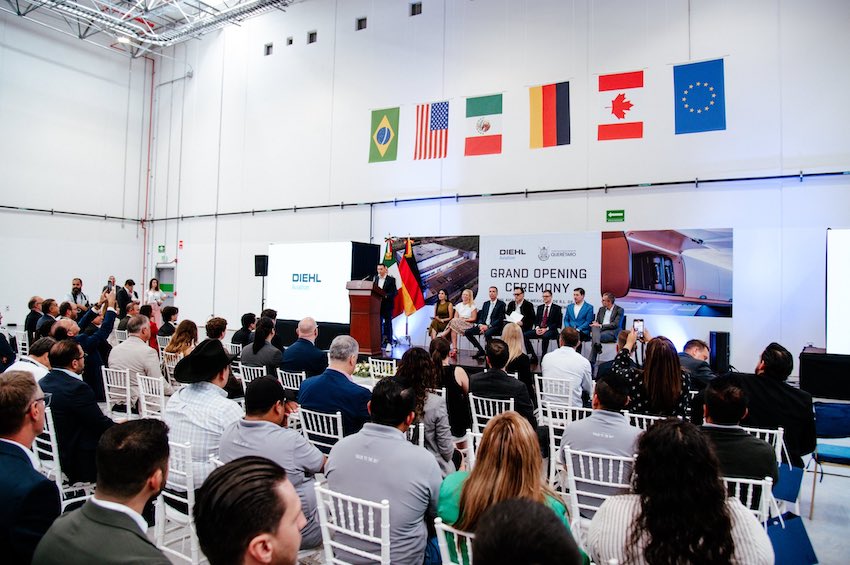
Company executives and state and local officials attended the inaugural ceremonies on Sept. 10 for Diehl Aviation’s new plant in El Marqués, just outside the state capital of Querétaro. (@makugo/X)
While 20 employees are currently on site at the newly inaugurated plant, the company said the workforce would grow to 500 people in the medium term. Production at the plant was expected to begin shortly after last week’s inauguration.
Governor Mauricio Kuri González led the opening ceremony and celebrated the importance of the firm’s arrival to his state. “The fact that a company of this size is with us […] gives us a lot,” he said. “We believe Querétaro is the best place to invest.”
With clients that include Boeing, Airbus and Bombardier, the company focuses on the production of supply systems, lavatories, overhead compartments, and intelligent solutions for aircraft interiors. Some of its offerings are extra-large trunks, oxygen systems, mechanical lifting systems, and digitalized elements designed to improve efficiency, safety, and comfort in aircrafts.
The company said its decision to establish itself in Querétaro responds to the state’s reputation as one of Mexico’s leading aerospace hubs, as well as to such advantages as time-zone alignment with final assembly lines in Brazil, Canada, and the United States, reduced transportation times, and a stronger local supply chain.
“We are not just opening a new location; we are writing the first lines of a new chapter in the history of aviation,” Diehl Aviation CEO Jorg Schuler said. “In Querétaro, we are expanding our global future and strengthening our presence in the United States.”
Diehl’s establishment in Querétaro adds to the more than 250 German companies operating in the state, and further solidifies its relevance in the aerospace industry.
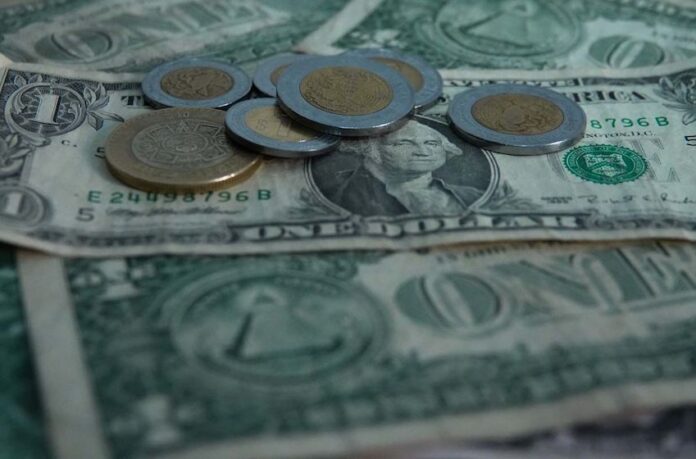
The Mexican peso reached its strongest position against the US dollar in more than a year on Wednesday, appreciating to 18.20 to the greenback before weakening slightly.
The Fed’s cut — its first in 2025 — widens the gap between its interest rate and that of the Bank of Mexico, which is currently set at 7.75%.
The peso generally performs better when the Bank of Mexico’s interest rate is significantly higher than that of the Fed because higher rates in Mexico offer investors greater returns, encouraging foreign capital inflows and increasing demand for the peso.
Peso has now appreciated on 8 consecutive trading days
The Bank of Mexico’s end-of-day USD:MXN exchange rate on Wednesday was 18.32, an appreciation of 0.2% compared to the closing rate on Monday. (Tuesday was a federal holiday in Mexico).
The last time the peso was stronger was on July 23, 2024, when the Bank of Mexico’s closing USD:MXN rate was 18.17.
The appreciation of the peso on Wednesday extended the currency’s winning streak to eight trading days. In that period, the peso went from 18.74 to the dollar to 18.32, an appreciation of 2.3% against the greenback.
In a column published on Wednesday, the editor-in-chief of the newspaper El Financiero, Enrique Quintana, wrote that the peso “is supported by a still-wide interest rate differential compared to the United States, which sustains the ‘carry’ [trade] and attracts flows into local bonds and peso-denominated hedges.”
“A narrative of macroeconomic stability is also at play: strong reserves, prudent management of public debt, and a current account backed by manufacturing exports, remittances, and projects linked to nearshoring. For global capital seeking returns with limited risks, Mexico appears relatively solid,” he wrote.
Quintana also wrote that “as long as doubts linger over Washington’s fiscal policy and the independence of the U.S. central bank, confidence in the dollar will continue to erode.”
“That is the backdrop of the so-called ‘super peso’: more than a triumph for Mexico, it reflects the weakness of the hegemonic currency,” he wrote.
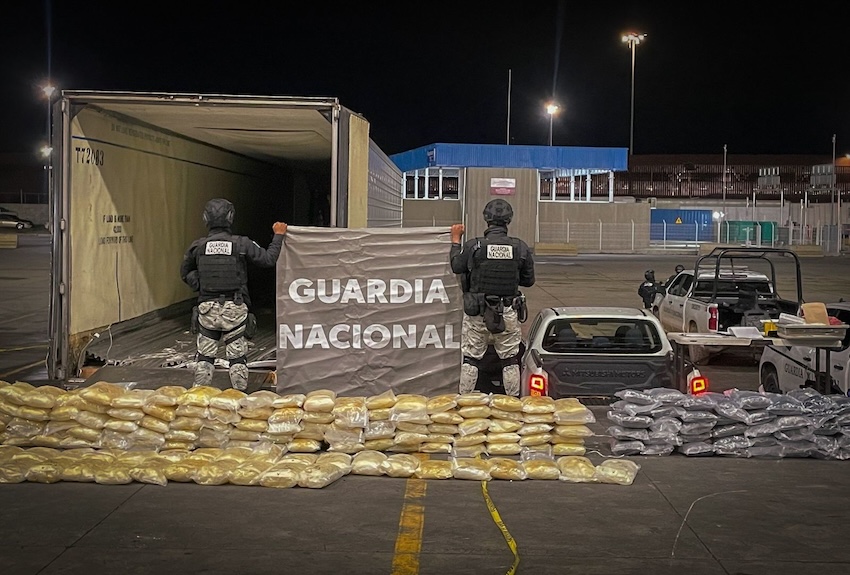
In the document, Trump promised to work cooperatively with Mexico to stop the cartels, but said the U.S. would take unilateral action if necessary.
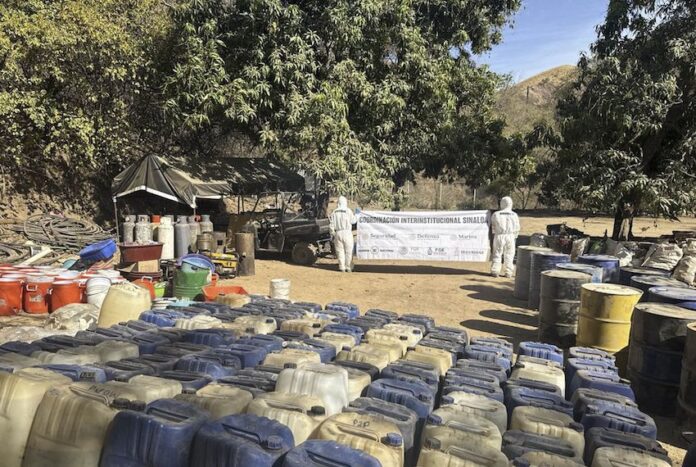
(Semar/Cuartoscuro)
Mexico appears on a formal White House list of drug-producing countries, along with 22 others, all but five in the Americas.
U.S. President Donald Trump submitted the list to Congress on Monday as part of a document called the Presidential Determination on Major Drug Transit or Major Illicit Drug Producing Countries for Fiscal Year 2026. The Determination, presented annually, identifies those countries that are seen to have geographic, commercial or economic factors that allow drugs or precursor chemicals to be transited or produced, “even if a government has engaged in robust and diligent narcotics control and law enforcement measures.”
President Sheinbaum’s agreement to send Mexican troops to the border with the U.S. and the resulting drug confiscations were cited as examples of increased cooperation between Mexico and the United States in the fight against drug cartels. (Cuartoscuro)
Especially relevant to Mexico is the Determination’s emphasis that inclusion on the list “is not necessarily a reflection of its government’s counterdrug efforts or level of cooperation with the United States.” In fact, Trump singled out Mexico for some guarded praise in that respect.
“In Mexico, President Claudia Sheinbaum has increased cooperation to confront the powerful cartels that poison both our countries with drugs and violence,” Trump said in the document, which was written in the first person. The words echoed those of U.S. Secretary of State Marco Rubio, who also noted during his recent visit to Mexico increased cooperation in drug-fighting efforts during the Sheinbaum administration, including sending troops to the border and allowing CIA drones to fly over Mexican territory.
But Trump also said Mexico must do more to tackle the cartels. In the document, he said he expects to see “additional, aggressive efforts by Mexico to hold cartel leaders accountable and disrupt the illicit networks engaged in drug production and trafficking” over the next year.
“The United States will work with Mexico and other countries to target these national security threats cooperatively where we can, and through our own sovereign authorities where necessary,” he wrote, and followed it with a thinly veiled threat: “I will also call on countries where these drugs originate and transit to fulfill their obligations and shut off these supplies – or face serious consequences.”
Countries mentioned in the Determination as having failed to adhere to their obligations under international counternarcotics agreements over the past year are Afghanistan, Bolivia, Burma, Colombia and Venezuela.
The other nations on the list are The Bahamas, Belize, the People’s Republic of China (PRC), Costa Rica, the Dominican Republic, Ecuador, El Salvador, Guatemala, Haiti, Honduras, India, Jamaica, Laos, Nicaragua, Pakistan, Panama and Peru.
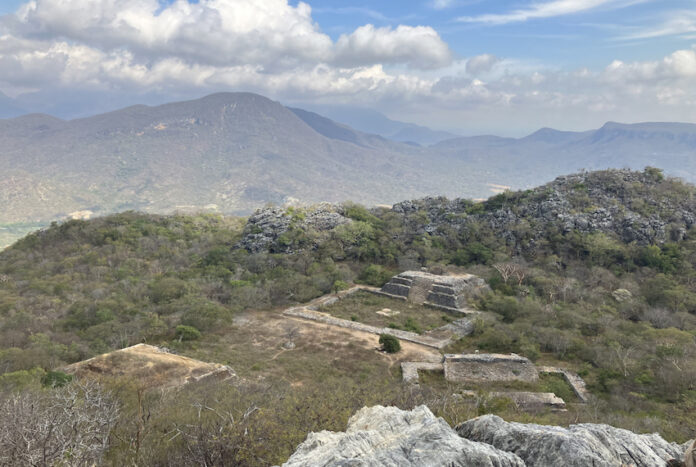
Guiengola has been recognized as a protected archaeological area for its Zapotec remains, but there's a serious movement to make it a nature preserve as well. (McGill University)
A coalition of Mexican biologists and environmentalists is working to transform the Guiengola archaeological zone in Oaxaca into a protected natural reserve, citing the area’s rich fauna and flora as both motivation and evidence for urgent conservation efforts.
Located in the southern part of Oaxaca state on the Isthmus of Tehuantepec — Mexico’s narrowest strip of land between the Pacific Ocean and the Gulf of Mexico — Guiengola is known for its ancient Zapotec ruins and unique landscapes.
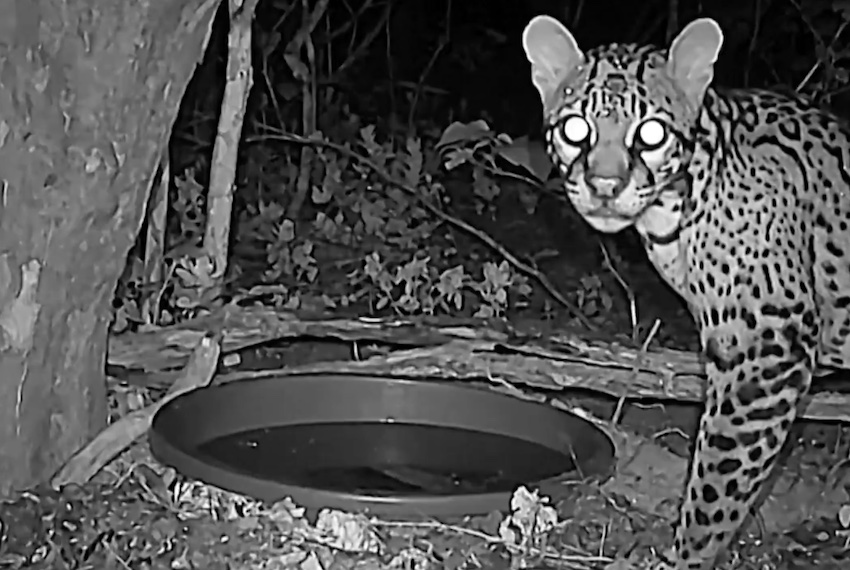
Among the wildlife in the Guiengola region are wildcats, chachalacas and coati. (Screenshot)
In recent weeks, 23-year-old biologist Eduardo Nicolás Michi Bautista has deployed camera traps across more than 300 hectares to document local fauna and promote awareness in nearby communities.
The devices have captured video of coatis, rabbits, squirrels and ocelots, plus a variety of birdlife including owls, doves, chachalacas and magpies.
A coati is a playful, diurnal creature said to look like a cross between a raccoon, a monkey and an anteater; an ocelot is a small- to medium-sized wildcat with a distinct spotted coat; a chachalaca is a social, noisily chattering bird that usually travels in groups of six to 12.
“If this area is declared a protected area, all these species will also be under that protection,” said Michi Bautista, who is affiliated with Benito Juárez Autonomous University of Oaxaca. Press and social media reports do not indicate if he is a student or on staff.
His monitoring initiative aims to spark conservation action and inspire local support for Guiengola.
This push comes amid ongoing legal and civil efforts to safeguard the archaeological zone from threats like urbanization and unauthorized land sales, as well as calls to clarify and strengthen its legal protection.
Archaeologists and explorers have known of the area since the 1800s, but its significance as a major Zapotec city has only recently emerged due to new technology. Before, it was regarded as simply a fortress or defensive outpost.
While activists have appealed to, first, the National Institute of Anthropology and History (INAH), and, then, the nation’s courts to officially decree the site as a cultural and environmental asset, Michi Bautista’s team is focusing on scientific documentation and grassroots partnerships with ecotourism guides.
The tough-to-reach area is about 14 kilometers from Tehuantepec, a municipality of 67,000.
“With a wildlife monitoring project on our enigmatic Guiengola Hill, we will be able to implement actions for its conservation,” the municipality posted on Facebook. “It is a source of pride to have this initiative by young biologist Eduardo Michi Bautista, a Tehuano” (a person from Tehuantepec).
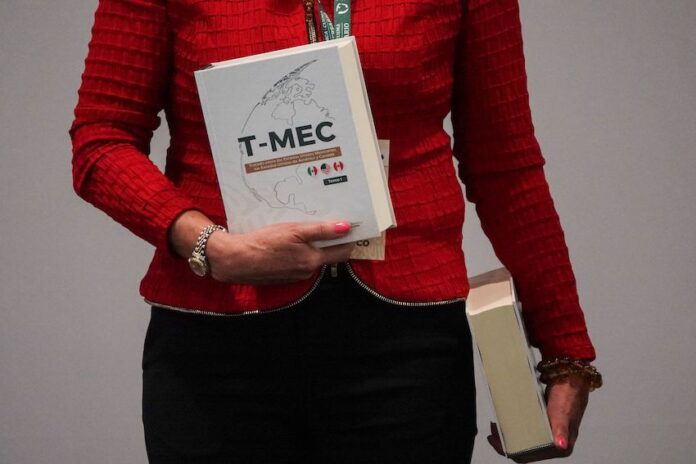
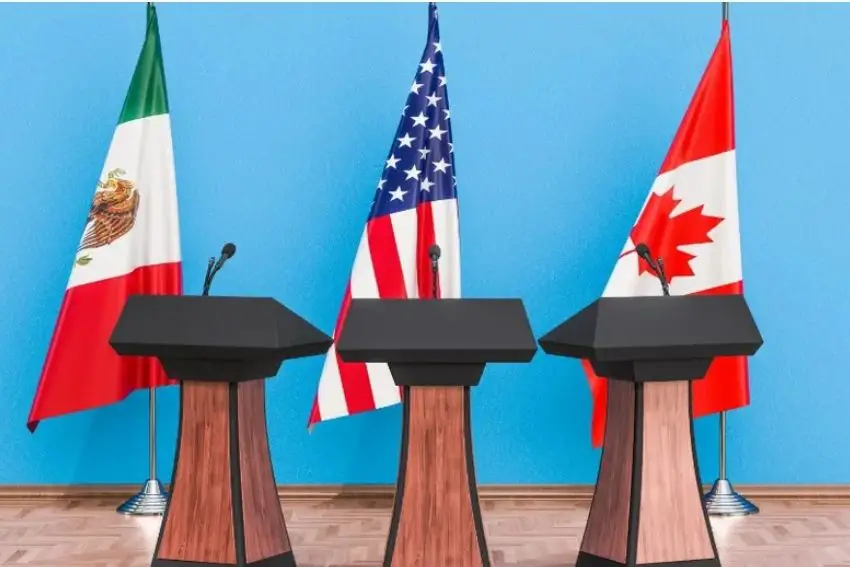
The review of the USMCA (known as T-MEC in Mexico and CUSMA in Canada) is scheduled to formally begin on July 1, 2026 — exactly six years after the pact took effect. (Cuartoscuro)
Want to have your say about the future of trade in North America? Here’s your opportunity.
Mexico and the United States have put out calls for public comment on the USMCA free trade pact ahead of its scheduled review in 2026.
Mexico’s Economy Ministry and the Office of the United States Trade Representative (USTR) published details about their respective public consultation processes on Wednesday.
Mexico opens 60-day window for public comment
In a notice published in the Official Journal of the Federation (DOF), the Mexican government extended an invitation to “interested parties” to “present information, comments and recommendations” with respect to the operation of the USMCA, the three-way free trade pact that superseded NAFTA in 2020.
The invitation is “part of the consultation process” run by the Economy Ministry “in preparation for the joint review” of the USMCA, the notice states.
The Economy Ministry (SE) said in the DOF notice that interested parties have 60 days starting today to present information, comments or recommendations about the USMCA.
There are three different ways to get information, comments or recommendations to the SE.
VIA EMAIL using the following address: consultas.tmec@economia.gob.mx
VIA THE BUZÓN T-MEC (USMCA MAILBOX) WEBSITE: Click here
IN PERSON at the following address:
Calle Pachuca 189, Colonia Condesa, Mexico City.
An SE office is located at that address. Information submitted to the SE in Condesa should be addressed to:
Dirección General comisionada para América del Norte en la Unidad de Negociaciones Comerciales Internacionales de la Subsecretaría de Comercio Exterior.
What kind of information is the SE looking for?
On its Buzón T-MEC website, the SE invites “industrial and service sectors, academics, civil society organizations and citizens in general” to participate in its USMCA consultation process.
The ministry specifically asks for comments relating to:
The general impact of the USMCA on Mexico’s productive sectors.
Challenges and opportunities arising from the implementation of the agreement.
“Specific experiences” related to the trade of goods and services.
Issues related to rules of origin and customs procedures.
Issues related to labor, the environment and small and medium-sized businesses.
Intellectual property, digital trade, and investment.
The SE also requested “any other recommendation” that will help to strengthen Mexico’s position in the joint review of the USMCA.
In a video message published on Tuesday, Economy Minister Marcelo Ebrard described the consultation process as “extremely important.”
He said that the purpose of the consultation is to evaluate the progress made by the USMCA and determine what could be added to the agreement to make it “better” in the future.
45 days to make submissions to the USTR
The Office of the United States Trade Representative (USTR) said in a Federal Register notice on Wednesday that it is “commencing a public consultation process in advance of the joint review of the Agreement between the United States of America, the United Mexican States, and Canada.”
“As directed by Congress, USTR is seeking public comments on the operation of the Agreement, including on the operation of the North American Competitiveness Committee established therein,” the notice said.
On Tuesday, the USTR said in a statement that “the focus for solicited public comments” regarding the USMCA “includes, but is not limited to”:
Any aspect of the operation or implementation of the USMCA.
Any issues of compliance with the agreement.
Recommendations for specific actions that USTR should propose ahead of the joint review.
Factors affecting the investment climate in North America and in the territories of each party, as well as the effectiveness of the USMCA in promoting investment that strengthens U.S. competitiveness, productivity and technological leadership.
Strategies for strengthening North American economic security and competitiveness, including collaborative work under the Competitiveness Committee, and cooperation on issues related to non-market policies and practices of other countries.
The USTR noted that the deadline for submissions is 45 days from the publication of its notice in the Federal Registry.
The USTR has created a Comments Portal that interested parties can use to make submissions until Nov. 3.
The USTR noted that it will also hold a public hearing regarding the USMCA on Nov. 17. Interested persons can request to appear at the hearing via the same Comments Portal.
The USMCA review
The review of the USMCA (known as T-MEC in Mexico and CUSMA in Canada) is scheduled to formally begin on July 1, 2026 — exactly six years after the pact took effect.
Trade between Mexico, the United States and Canada is worth nearly US $2 trillion annually, according to the USTR. (Shutterstock)
The outcome of the USMCA review will shape trade in North America in the coming years.
The trade relationships between the United States and its North American neighbors have been significantly reshaped this year by U.S. President Donald Trump, whose administration has imposed tariffs on certain imports from both Mexico and Canada.
Trade between Mexico, the United States and Canada is worth nearly US $2 trillion annually, according to the USTR.
Despite Trump’s imposition of tariffs on goods including steel, aluminum and cars, the USMCA still gives Mexico preferential access to the lucrative U.S. market. President Claudia Sheinbaum frequently refers to the importance of the three-way pact and Mexico’s desire to maintain it.
Her administration’s plan to impose new tariffs on a wide range of imports from China and other countries with which Mexico doesn’t have trade agreements could help Mexico during the USMCA review as the United States has been pressuring Mexico to impose duties on goods from the East Asian economic powerhouse.
The U.S. president is unhappy that the U.S. runs trade deficits with its two neighbors, and has accused both of not doing enough to stem the flow of narcotics across their borders.
The woman, the myth, the legend. Who really was Frida Kahlo y Calderón, the person behind the icon?
I had already written the second part of my piece on Frida Kahlo. But after reading the feedback I received from part one — and listening to the opinions of friends, family and acquaintances —I felt compelled to reconsider it.
My professors used to warn us to approach studies of movements and artists with caution. Critics and historians, they said, inevitably project their own preferences and phobias onto the page. Kahlo is a perfect example: scholars, writers and the general public have turned her into a mirror, reflecting their own context and visions of life.
Frida Kahlo’s “Self-Portrait in a Velvet Dress” from 1926. (Public Domain)
For many, the first encounter with her work provokes discomfort — sometimes even revulsion — for its raw intimacy. Yet for countless communities, Kahlo has become a powerful emblem, one that propelled her to a level of cultural celebrity few visual artists have ever achieved. “Fridamania” — the cult of personality and commercial obsession surrounding her — was born in the 1980s and thrives to this day.
Frida in her time
During her lifetime, Kahlo was already a notable cultural figure in Mexico. But she was almost always introduced as “the wife of Diego Rivera.”
Rivera was the towering figure of Mexican modern art. Alongside David Alfaro Siqueiros and José Clemente Orozco — Los Tres Grandes — he redefined Mexican national identity through monumental murals that celebrated revolutionary values and Indigenous heritage.
While other movements existed in early 20th-century Mexico, none enjoyed the state sponsorship that muralism did. Its influence remains embedded in Mexican cultural discourse even now, a romanticized vision of pre-Columbian civilization that doubled as one of the most successful cultural propaganda projects of the 20th century.
Kahlo’s contribution was radically different. She turned inward, confronting the private sphere with startling candor: domestic life, pain, miscarriage, infertility, desire, identity. She lived — and loved — with radical openness, defying the social conventions of her time.
After Frida
Diego Rivera, beyond being a gifted painter, was an extraordinary promoter — especially of Kahlo’s work. He frequently called her the greatest Mexican painter of them all. Following her death in 1954, he established a trust that transformed the Casa Azul into a museum, which opened to the public in 1958. This act preserved her possessions and paintings, allowing researchers and admirers to piece together the mythology that now surrounds her.
Made in Mexico: The commodification of Frida Kahlo
Dolores Olmedo, a close friend and patron, became one of the foremost collectors of Rivera’s and Kahlo’s art. Her namesake museum in Mexico City, inaugurated in 1994, further solidified their place in the cultural canon.
By the late 1980s and early 1990s, a generation of artists began revisiting Mexican icons — Zapata,the charro, and Kahlo herself — subverting them into symbols of feminism, queer identity, and cultural resistance. By the century’s end, Kahlo had become a vessel for causes she may never have imagined.
Frida goes global
In 1982, the Whitechapel Gallery in London mounted the first major Kahlo retrospective outside Mexico, pairing her with photographer Tina Modotti. The show sought to challenge the Western-centric canon and give overdue recognition to women artists. The academic and curatorial world, eager to correct historical exclusions, began folding Kahlo into broader conversations about race, gender and global modernism.
A year later, Hayden Herrera published “Frida: A Biography of Frida Kahlo,” a landmark study that cemented Kahlo’s mythos. Though Herrera’s psychoanalytic interpretations at times verge on speculation, the narrative she shaped — Kahlo as wounded, passionate, political, queer martyr — remains dominant in the zeitgeist.
From that moment forward, exhibitions, documentaries, films, and books multiplied, feeding the global appetite for all things Frida from different perspectives. In one decade, Frida became an icon for multiple communities.
Feminist Frida?
Kahlo never called herself a feminist — because feminism, as we understand it, barely existed in her Mexico. Most women were confined to the home, excluded from voting, banking, and public debate. Cultural life was open to them, but their work was treated as “secondary” art.
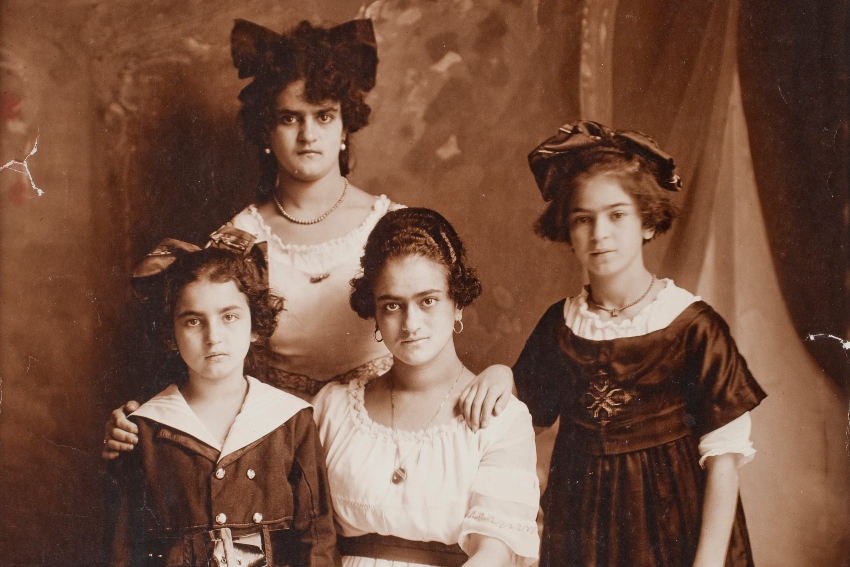
Frida Kahlo (right) in a family portrait from 1916. (Public Domain)
Still, her subject matter has invited feminist readings. While the muralists painted sweeping political epics, Kahlo painted the intimate: the home, the body, the psychic pain of miscarriage, the betrayals of love. In today’s language, she articulated a “female gaze.”
Yet Kahlo did not speak of shattering glass ceilings or fighting for gender parity. Her life remained bound, in many ways, to Diego Rivera’s orbit. She was not an iconoclast in the way modern feminism would define one.
And yet, she opened doors — alongside contemporaries like Modotti, Nahui Ollin, Lola Cueto, Leonora Carrington, Remedios Varo, Adela Siqueiros, Lilia Carrillo, María Izquierdo, Rosario Castellanos and Elena Garro — for women in Mexican culture.
Queer Frida and sexual politics
A professor once told me that Mexico has always had space for homosexuality — so long as it stayed discreet. Novels like “Queer” and “Junky” by William S. Burroughs offer a glimpse into that discreet freedom.
Many authors have psychoanalyzed Kahlo’s sexuality, and suggest that her openness was a reaction to Diego’s infidelities. Yet, her bisexuality is well-documented, predating her marriage to Rivera. After his first infidelity, their relationship evolved into an open marriage. Rivera himself bragged about her affairs with women.
Later scholars, in the 1980s and ’90s, reframed this arrangement as a defiant challenge to patriarchy and heteronormativity. It’s my bold assessment to think that she wasn’t trying to subvert the Mexican machista society, but to be provocative with her husband and lovers. In that artistic context, Kahlo was not necessarily the most transgressive figure of her era — lesser-known Mexican artists like Nahui Olin or Nellie Campobello pushed even further.
A Mexican icon
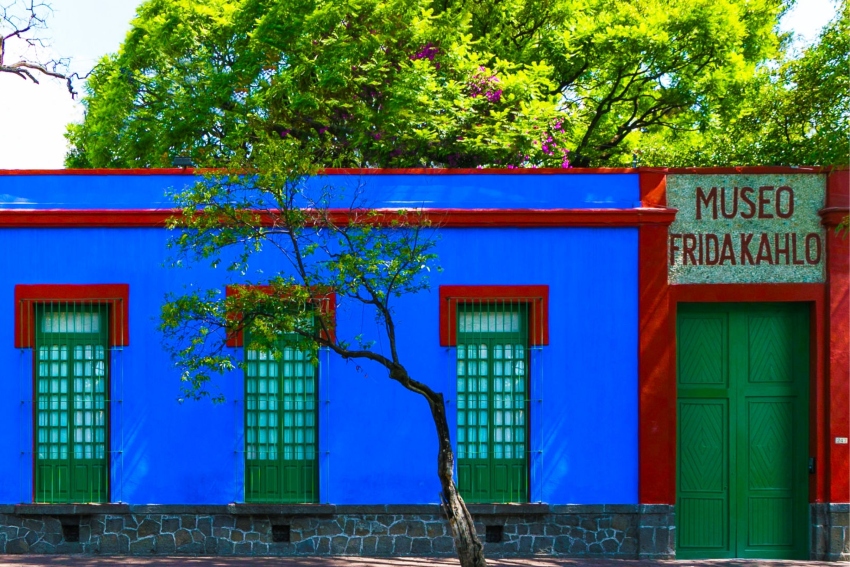
Frida Kahlo is so beloved as a Mexican icon that her former house was turned into a museum. (Museo Frida Kahlo)
Kahlo, like many of her contemporaries, was steeped in European culture even as she came of age during Mexico’s nationalist renaissance. Her signature Tehuana dress was not an act of cultural appropriation but a political one: a declaration of allegiance to Mexico’s Indigenous heritage and rejection of foreign domination.
Through today’s lens, that sort of nationalism can look romanticized — an embrace of Indigenous symbols without grappling with the realities of Indigenous marginalization, but by the 1990s, Kahlo’s image had been reinterpreted: in Mexico, she became a feminist counterweight to the macho charro; abroad, she was fetishized as folkloric, colorful, “authentically Mexican.”
Frida as a pop culture icon
There is no faster way to neutralize a countercultural figure than to turn them into a commodity. Movements and figures that once stood for resistance become popular and fashionable statements. You can now find t-shirts of The Clash, Jean-Michel Basquiat, Janis Joplin, Nirvana and Frida Kahlo sold at low cost, fast fashion outlets like T.J. Maxx and Primark.
Perhaps unexpectedly, it was Madonna who played a pivotal role in Kahlo’s pop-culture ascent. In the 1980s, she is rumored to have paid US $1 million for “Self-Portrait with Monkey,” the first of five Kahlo paintings she would collect.
Madonna introduced Kahlo’s work to designers like Jean Paul Gaultier, whose 1998 collection was inspired by Kahlo’s aesthetics and Marilyn Manson’s pastiche of gothic and glam styles. The iconic outfit he designed for Milla Jovovich in “The Fifth Element” was inspired by “The Broken Column.” Karl Lagerfeld followed suit, styling supermodel Claudia Schiffer as Frida for a Vogue Germany editorial. Patti Smith, Salma Hayek, Coldplay, Gwen Stefani, and Dolce & Gabbana have all drawn inspiration from her image.
The market value of her art
Determining the value of an artwork is a complex, multifactorial process shaped by cultural relevance, rarity, and the opinions of tastemakers — critics, curators, galleries and institutions.
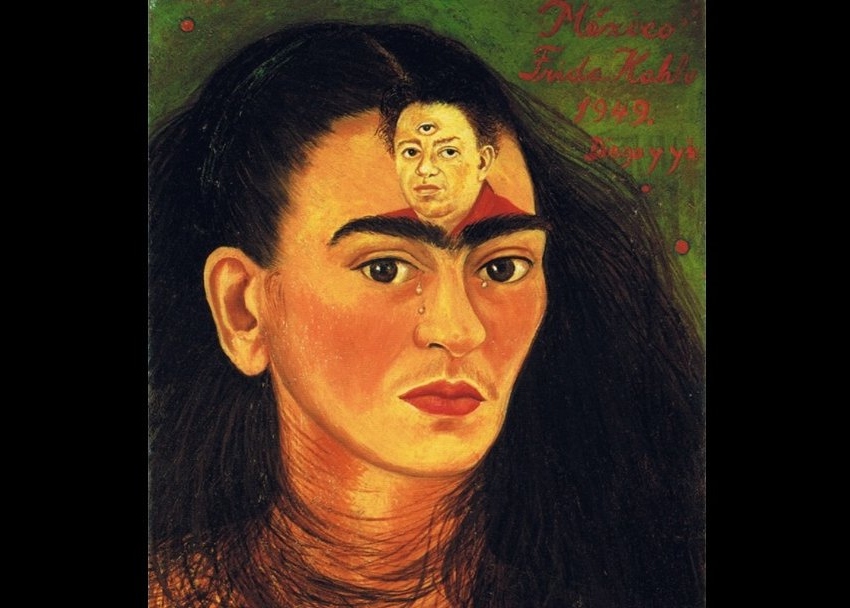
Kahlo’s 1949 painting “Diego y Yo” is the most expensive ever sold by a Latin American artist.
In 1979, a Kahlo painting sold for US $85,000. By 2021, her 1949 “Diego y yo” fetched $34.9 million at auction, making her the most expensive Latin American artist in history. As Fridamania continues to grow, she’ll likely break her own record again.
The Frida Kahlo Corporation
Frida’s image — unibrow, braids, flowers — has been reduced to an aesthetic. Her face now adorns every imaginable product: notebooks, mugs, socks, tequila bottles.
Whether this constitutes cultural trivialization or widespread homage is debatable. What is clear is her global relevance.
In 2005, Venezuelan entrepreneur Carlos Dorado acquired the commercial rights to Kahlo’s name and likeness from her niece, Isolda Pinedo Kahlo, creating the Frida Kahlo Corporation. Any officially licensed product now generates revenue for the company.
The legacy of Frida Kahlo
I often wonder what Kahlo would have made of all this.
In my admittedly subjective imagination, she would have delighted in her ubiquity but recoiled at her own commodification. Her communist sympathies would have resisted the idea of becoming a brand. And yet, she might have embraced the causes — feminism, queer liberation, Indigenous pride — that now rally beneath her image. Just as she once embraced the red flag of communist revolution.
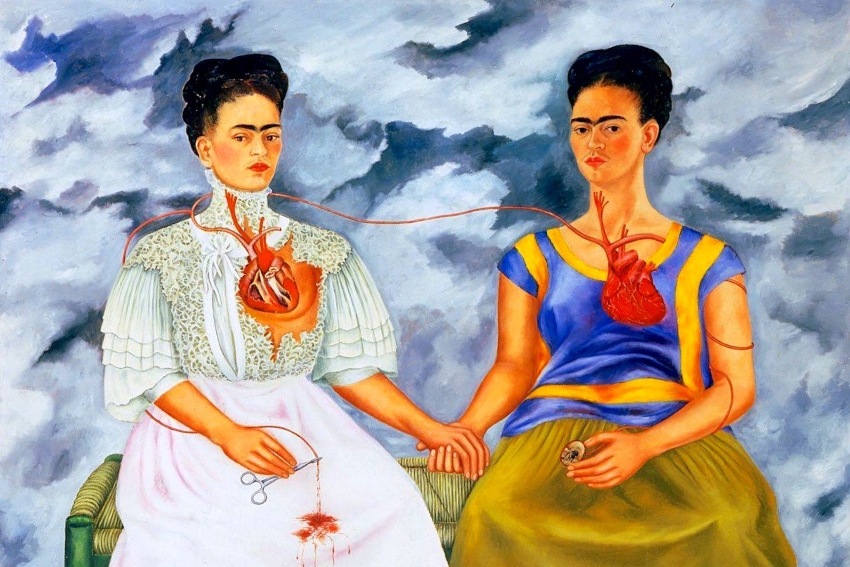
Frida Kahlo meant many things to many people, including herself, as “The Two Fridas” from 1939 illustrates. (Public Domain)
What do you think? What would Frida make of the world’s obsession with her? I’m listening.
María Meléndez is a Mexico City food blogger and influencer.
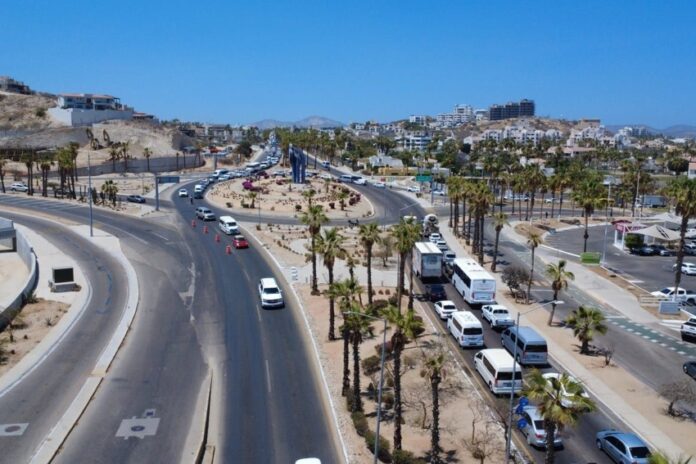
What the Fonatur Roundabout in San José del Cabo looked like before recent construction. (Gobierno de Mexico)
As Los Cabos’ growth continues, both in terms of a rapidly increasing population and an increasing number of annual tourists, the destination is struggling to keep pace with infrastructure improvements to handle the influx. The Fonatur roundabout project, for example, is an ambitious undertaking that should significantly alleviate traffic in one of the municipality’s busiest areas. However, construction isn’t expected to finish before next summer. In the meantime, it’s causing worse traffic difficulties.
More major infrastructure projects are coming. Undoubtedly, they’ll pay dividends in the future. In the meantime, locals can expect more construction-related traffic issues.
Los Cabos International Airport to double its passenger capacity
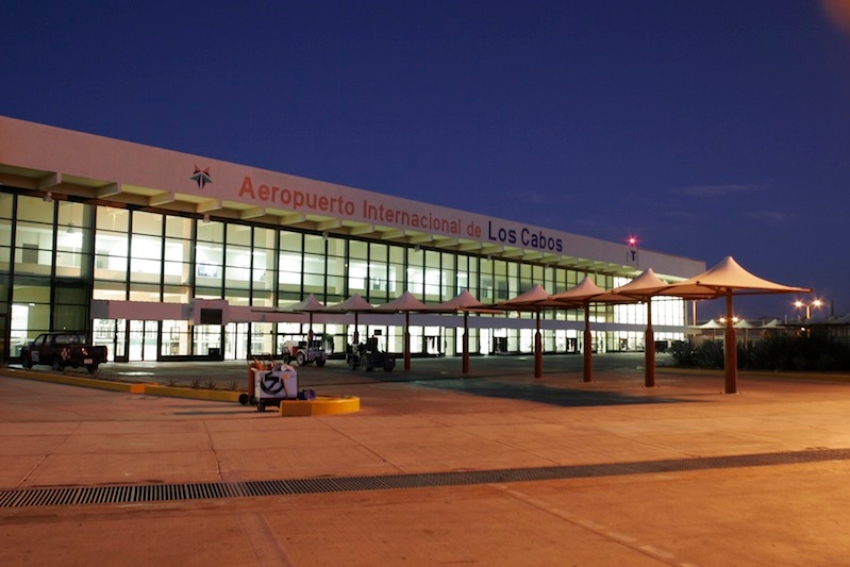
Los Cabos International Airport is undergoing major new additions to help it accommodate an increased number of passenger arrivals. (GAP)
The Los Cabos International Airport has undergone numerous changes since its opening in 1977. But the largest project is yet to come. Over 7.5 million passengers arrived at the airport’s two terminals in 2024, up 40% from the pandemic recovery year of 2021. So to accommodate more growth over the next few years — remember, the Los Cabos Tourism Board just announced sweeping plans for flights to open Central and South American markets — the airport is expanding its operations yet again.
The new project for the airport, operated by Grupo Aeroportuario del Pacifico (GAP), is part of a master development in which 52 billion pesos will be invested in the 12 airports operated by the company in Mexico. The Los Cabos International Airport project will account for 7 billion pesos (US $370 million) of those invested monies, although ironically, the plan calls for expansion through shrinkage. Instead of the two current terminals, only one will be used by 2029, the projected end date for the upgrade.
What’s being added at Terminal 2?
The international terminal, Terminal 2, will be expanded to handle domestic passengers as well, obviating the need for Terminal 1. To accomplish this, three new gates will be added, as will nearly 20 new self-service check-in kiosks. The baggage area will also see a significant expansion (33%), with a dozen more immigration checkpoints to handle expected increases from the nearly four million tourists who visited Los Cabos in 2024. When complete, Terminal 2 will be about 40% larger than it is currently.
“In the long term, the airport’s growth is fully guaranteed so that we can grow alongside our passengers,” GAP Chief Executive Officer Raúl Revuelta told the Gringo Gazette in May. “We will relocate Terminal 1 to Terminal 2, which will be completed and expanded to handle both types of passengers (domestic and international).”
Naturally, the airport runways won’t be the only paved surfaces seeing increasing traffic. Plans are also in the works to ensure roads in and out of the airport can handle the expected growth. This could further exacerbate traffic issues, especially since the Fonatur roundabout project has already increased the travel time needed for passengers to reach the airport. Both projects will be proceeding apace until at least the summer of 2026, that being the expected completion date for the work on the Fonatur underpass upgrade. Of course, there’s no guarantee that it will finish on time. As of late August, it’s 25% complete.
A brief history of roads between Cabo San Lucas and San José del Cabo
The history of roads connecting Cabo San Lucas and San José del Cabo, the two “cape” cities from which Los Cabos gets its name and the municipality’s top destinations, is a century old. That’s how long it has been since the first dirt road between the two was created in 1926. However, the signal pathway since 1970 has been via Federal Highway 1 (the Carretera Transpeninsular route). This transpeninsular highway opened in full in 1973, but the Cabo San Lucas to San José del Cabo link was completed three years earlier. This is the so-called “Scenic Route” highway that provides access to many resorts, as well as the restaurants, supermarkets, hospitals and residential developments now found along the 32-kilometer (20-mile) route.
Federal Highway 1 has connected Cabo San Lucas and San Jose del Cabo since 1970. (Coldwell Banker Riveras Real Estate)
Due to Los Cabos’ growth, a new Airport Toll Road (or Autopista Cabo San Lucas – San José del Cabo) was added in 2015. It’s the only toll road in the state of Baja California Sur. The 38.7-kilometer road significantly cuts drive time between the airport and Cabo San Lucas (17 minutes compared to 40). However, most locals are still using Federal Highway 1, either because of the cost – the toll road can cost as much as 113 pesos (around US $6) — or because of the ample attractions along the more traditional route.
A new road is planned between Cabo San Lucas and San José del Cabo
Statistically speaking, 66% of the 63,000 or so motorists using Federal Highway 1 daily are traveling back and forth between the cape cities, while only 34% are stopping in the coastal corridor. So, to reroute some of those 63,000 — a number that will surely rise given Los Cabos’ rapidly rising population figures — a new solution is needed.
Thus, a plan has been put forward for a third pathway between the two cities. Called the Interurban Axis, agreement was reached for this new thruway in August 2025, following land acquisition from 15 ejidos and private property owners. This was a necessity for the construction on the project to begin.
What is the Interurban Axis?
The Interurban Axis (Eje Interurbano) is the name for the third arterial route connecting Cabo San Lucas to San José del Cabo. It’ll be built between the other two, starting in El Tezal and terminating near the airport toll booth in San José del Cabo. That’s only 20.3 kilometers, so it’ll be significantly shorter than either the 32-kilometer Federal Highway 1 corridor link or the 38.7-kilometer toll road.
The budget is projected to be 5 billion pesos, but before locals start worrying what kind of traffic tie-ups this can cause, it should be noted that not only is there no work being done as yet, but there also isn’t even a projected start date. But now that the land has been acquired, this project could be a go as soon as the budget is approved. For this significant an outlay, federal approval and resources are an absolute must. So stay tuned for more news on this moving forward.
Why is the second desalination plant still not finished?
If you’re one of those locals who sees constant hordes of newcomers moving to Los Cabos and wonders: Wait, we didn’t have enough water before. How is this possibly going to work? Well, you’re not alone. In the state with the least rainfall in Mexico, and in a place like Cabo San Lucas, where a nearly constant parade of water trucks is en route to fill tinacos and cisternas from depleted resources, it’s a very valid question. After all, Los Cabos currently operates from a water deficit of about 600 liters per second.
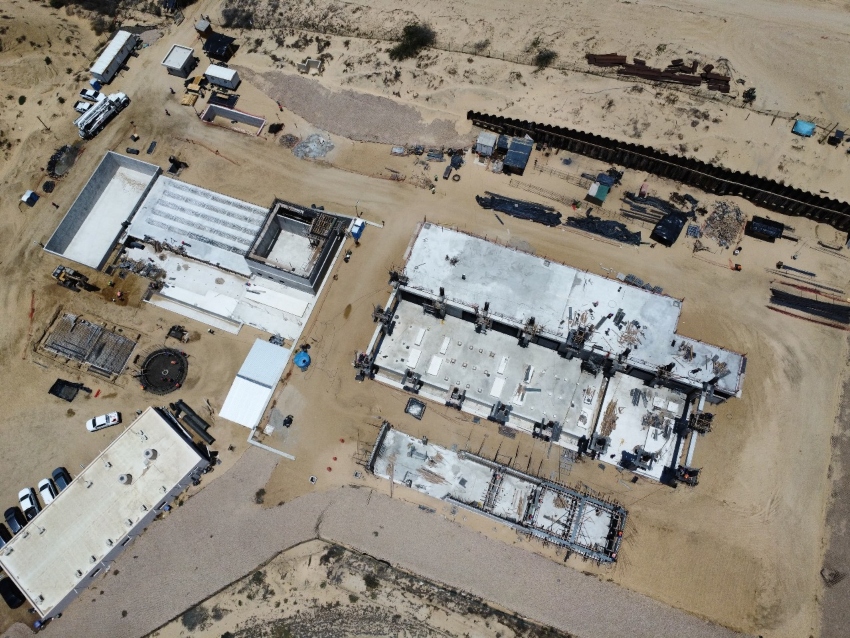
Promised cooperation from President Sheinbaum may be behind the recent uptick in work on the second desalination plant project in Cabo San Lucas. It is expected to be finished in October 2026. (Oomsapas Los Cabos)
Cabo San Lucas is especially hard hit and has seen street protests from the nearly two dozen neighborhoods dealing with water scarcity issues. Desalination plants were supposed to be the solution, and perhaps they will be. After all, it’s projected that the first and second desalination plants will combine for 650 liters per second. Or enough to cover the shortfall. At least until the population doubles again.
Of course, the first desalination plant, built in Cabo San Lucas in 2006, is now only operating at 36% capacity. The second plant, meanwhile, has been plagued by political roadblocks and budgetary shortfalls for nearly a decade. It was first announced in 2016, and as of the latest update, it is still only 41% complete. The good news, relatively speaking, is that as recently as May 2025, it was only 32% complete. So progress does seem to have been ramped up in recent months.
When will the new desal plant be finished?
This can likely be attributed to the personal interest taken by President Claudia Sheinbaum. During her visit to Los Cabos in May, she noted, “We’re going to reach an agreement here with the mayor of Los Cabos to help him with the desalination plants, so they can be installed sooner and there can be access to drinking water, which is so important in Los Cabos.”
So perhaps the October 2026 date of expected completion isn’t, pardon the expression, a pipe dream. The second desalination plant is a public-private partnership between water utility Oomsapas Los Cabos, Spanish company Acciona, and Mexican-owned La Peninsular Compañía Constructora. So far, an estimated 1.145 billion pesos has been invested in the project.
Chris Sands is the Cabo San Lucas local expert for the USA Today travel website 10 Best, writer of Fodor’s Los Cabos travel guidebook and a contributor to numerous websites and publications, including Tasting Table, Marriott Bonvoy Traveler, Forbes Travel Guide, Porthole Cruise, Cabo Living and Mexico News Daily.
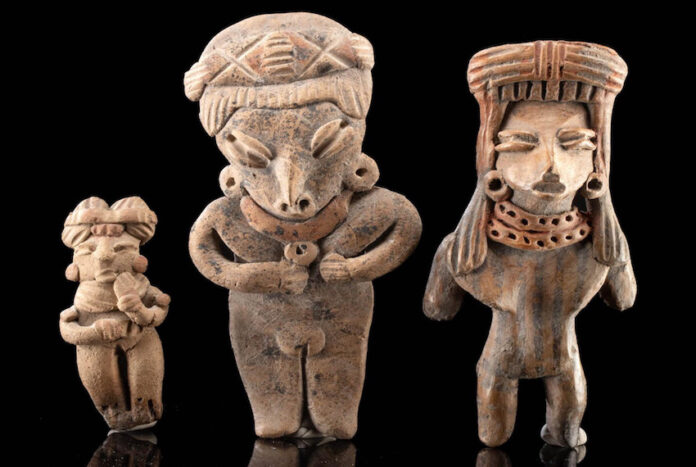
The Artemis Gallery in Colorado is planning on auctioning off on Sept. 18 at least 47 Mexican artifacts that the Culture MInistry considers "inalienable assets" of the Mexican nation. (Artemis Gallery)
Mexico’s Culture Ministry strongly denounced an online auction in the United States of artifacts it considers part of Mexico’s archaeological heritage.
Organized by the Artemis Gallery in Louisville, Colorado, and scheduled for this Thursday, the auction seeks to sell off pieces of pre-Columbian origin and ethnographic significance.
Following an analysis conducted by the National Institute of Anthropology and History (INAH), at least 47 objects on offer are part of the national cultural heritage, protected by the Federal Law on Archaeological, Artistic, and Historical Monuments and Zones. According to this law, they are inalienable assets and property of the nation.
“The pre-Columbian and ethnographic pieces that are intended for sale are vestiges of our ancestral cultures and national history; they constitute a living memory of the Indigenous peoples of Mexico,” Culture Minister Claudia Curiel de Icaza said, describing the planned auction as “an attack on the country’s memory and cultural identity.”
Curiel reported that Mexico has initiated legal action for the U.S. auction house to halt the sale, citing respect for the ethical and cultural values represented by these pieces.
Furthermore, the government is seeking to repatriate the objects to Mexico and combat the illicit trafficking of cultural property in compliance with national legislation and international treaties.
Under the banner #MiPatrimonioNoSeVende (My Heritage Is Not For Sale), the Culture Ministry reiterated its policy of actively defending Mexico’s archaeological, artistic and historical heritage, denouncing that the commercialization of these assets is cultural dispossession that undermines the memory of Indigenous communities.
This case is the latest of recurring attempts by foreign countries to auction Mexican archaeological pieces. In March 2024, the same art gallery auctioned archaeological assets associated with the Maya and Teotihuacán cultures. The items included zoomorphic figurines, vessels made of modeled clay, mirrors inlaid with green stone and fragments of sculptures.
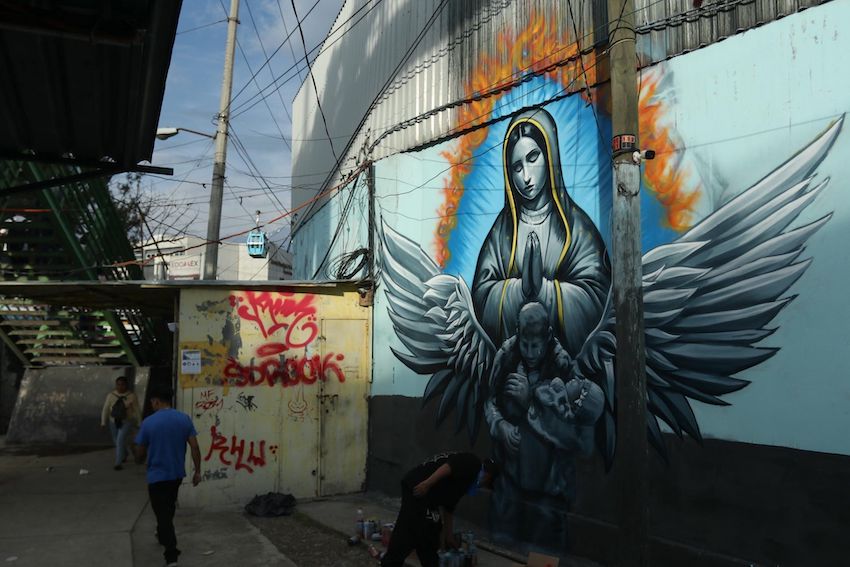
Urban artist Snoke puts the final touches on a mural paying homage to Alicia Matías, painted with the permission of the building's owner and the material and financial help of another street artist, Yonerone.
(Graciela López/Cuartoscuro)
An urban artist known as Snoke has painted a mural honoring the 49-year-old woman who gave her life to protect her granddaughter when a gas tanker exploded last week.
The painting pays tribute to Alicia Matías, who suffered burns on 98% of her body after turning and covering up the 2-year-old girl during the horrific accident that occurred in the Mexico City borough of Iztapalapa on Sept. 10. Alicia died two days later.
People pass by the mural, which is now a permanent fixture in the Santa Martha neighborhood of the Iztapalapa borough, just steps away from the accident site. (Graciela López/Cuartoscuro.com)
The mural — painted alongside a pedestrian bridge just a few meters from the site of the explosion — is dominated by a huge figure of the Virgin of Guadalupe, whose mantle covers Alicia, who is rendered with angel wings and carrying her granddaughter.
“I’m painting her with great affection and respect,” said Snoke, 33, “because I’m depicting a person who performed a very courageous and loving act.”
The artist, who has been street painting since he was 19, thanked the owners of the building who granted permission for the mural and veteran graffiti artist Yonerone who donated the materials and paid for the scaffolding.
Next to the mural, a memorial to the victims — the death toll has risen to 15, but several of the 90 victims remain in critical condition — continues to grow. In addition to flowers and candles, someone wrote in large script “Santa Martha is in mourning.” Santa Martha is the neighborhood where the explosion occurred.
The child was in delicate, but stable condition, on Monday after undergoing surgery at Mexico City’s Centro Médico Nacional Siglo XXI over the weekend. She will receive specialized treatment at Shriners, which is a non-profit pediatric hospital.
The Mexico City and México state governments are providing financial support to victims of the tragedy. The governments are also paying the funeral expenses for those who have died.
Mayor Clara Brugada said some families of victims have received stipends of 20,000 pesos, while others have been given 50,000 pesos. Brugada said the funds are just “initial support” and reparations will eventually be provided by Grupo Tomza, the owner of the tanker.
The digital newspaper Animal Político reported on Tuesday that neither Grupo Tomza nor its insurance companies had been in touch with victims’ families. Initial reports after the accident indicated Tomza did not have insurance, but the company issued a statement claiming it had activated three insurance policies to pay reparations.
Sheinbaum said on Friday that Mark Carney would spend "the whole day" at the National Palace this Thursday, Sept. 18. (@MarkJCarney/X)
Four days after President Claudia Sheinbaum announced that she would meet with the prime minister of Canada in Mexico City this Thursday, Mark Carney himself confirmed his upcoming visit to the Mexican capital.
Carney said on Tuesday that he would be in Mexico City this Thursday and Friday.
The purpose of the trip is to “deepen the Canada-Mexico partnership and reinforce North American prosperity,” according to a statement from the prime minister’s office (PMO).
“In Mexico, Prime Minister Carney will meet with the President of Mexico, Claudia Sheinbaum, to elevate and broaden the bilateral relationship, with a focus on security, infrastructure, investment, energy and trade,” the statement added.
The PMO noted that the meeting between the two leaders will follow their talks at the G7 Summit in Canada in June and visits to Mexico by Foreign Affairs Minister Anita Anand and Finance and National Revenue Minister François-Philippe Champagne in August.
“This visit will further strengthen our relationship and deliver greater prosperity and security for our workers and businesses,” the PMO said.
“Canada’s new government is diversifying and strengthening its trade relationships with reliable partners to create high-paying careers, grow our industries, secure new markets, and build more resilient supply chains,” it said.
Sheinbaum said on Friday that Carney would spend “the whole day” at the National Palace this Thursday.
“We’re going to have several meetings, and we’ll give a joint press conference the same day,” she told reporters.
The president indicated that trade would be a key focus of her discussions with Carney.
“We both have a lot of trade with the United States, but there is also a lot of Mexico–Canada trade, because of the treaty,” Sheinbaum said, referring to the USMCA free trade pact.
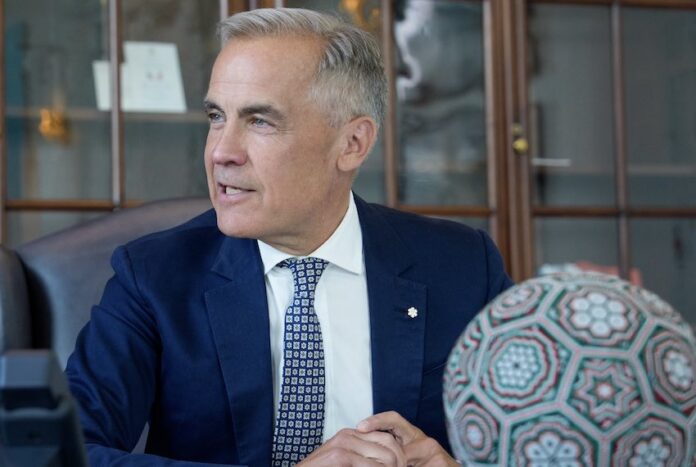
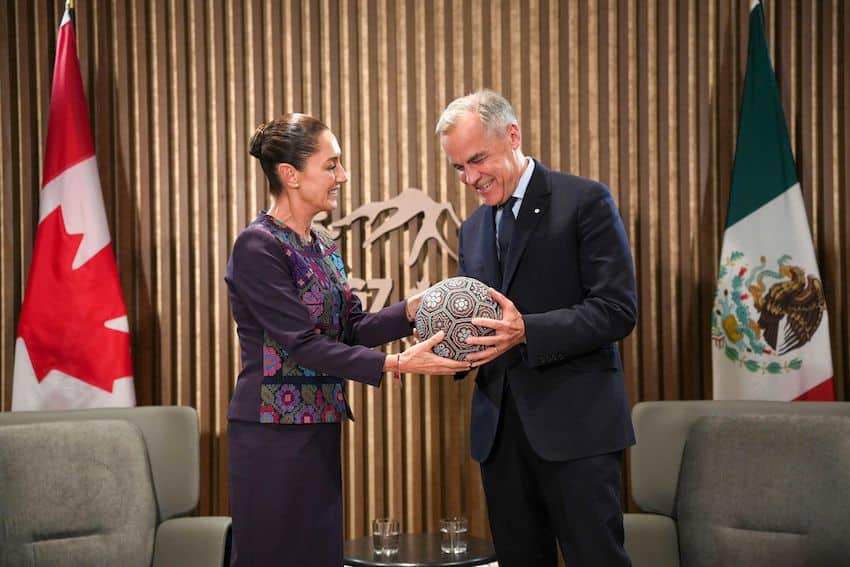
At the G7 in June, Sheinbaum gifted the Canadian prime minister a soccer ball made by members of the Wixárika community in Mexico as a symbol of friendship and unity ahead of the 2026 FIFA World Cup, which will be held in Mexico, the U.S. and Canada. (Presidencia/Cuartoscuro)
Both Mexico and Canada send the majority of their exports to the United States, and the U.S. government has recently slapped new tariffs on goods from both countries. Sheinbaum said in July that she and Carney had agreed to strengthen trade collaboration in light of the United States’ protectionist agenda. The two countries could conceivably support each other during the USMCA review process, which is scheduled for 2026.
United States President Donald Trump is unhappy that the U.S has large trade deficits with both Mexico and Canada, and has used tariffs to pressure the governments of the two countries to do more to stop the flow of narcotics, especially fentanyl, across their borders with the U.S. He has indicated that he wants to “renegotiate” the USMCA, not just review it.
On Friday, Sheinbaum also indicated that Canadian investment in Mexico would be a subject of discussion with Carney.
“There is also a lot of investment from Canadian businesspeople in Mexico. One case is mining, which has its particular features, and, as we have always said, has to comply with all environmental regulations. But there are other investments. There are investments, for example, in natural gas,” she said.
On Tuesday, Carney said that “Canada and Mexico have a strong relationship, built on more than three decades of free trade.”
“In the face of a shifting global landscape, we are focused on elevating our partnerships in trade, commerce, security, and energy. Together, we will build stronger supply chains, create new opportunities for workers, and deliver greater prosperity and certainty for both Canadians and Mexicans,” he said.
The statement released by Carney’s office also included a selection of “quick facts” pertaining to the Canada-Mexico relationship. The PMO noted that:
Canadian trade and investment with Mexico are steadily growing, with nearly [CAD] $56 billion in two-way merchandise trade last year.
Canada and Mexico will co-host the 2026 FIFA World Cup, alongside the United States, from June 11 to July 19, 2026.
In 2024, Canada was Mexico’s fifth-largest merchandise trading partner, while Mexico is currently Canada’s third-largest single-country merchandise trading partner.