The investigation into a Querétaro businessman accused of money laundering came to an end last September when the federal Attorney General’s Office decided not to proceed.
The case involved 2018 presidential candidate Ricardo Anaya, who denied involvement at the time.
He claimed that the Institutional Revolutionary Party was behind the accusation that Manuel Barreiro Castañeda headed an elaborate money laundering ring that benefited Anaya.
The Attorney General’s Office said in February it had opened an investigation into the case after it received a report in October 2017 about the use of funds from illegal sources.
In September, it decided no criminal charges would be filed against Barreiro.
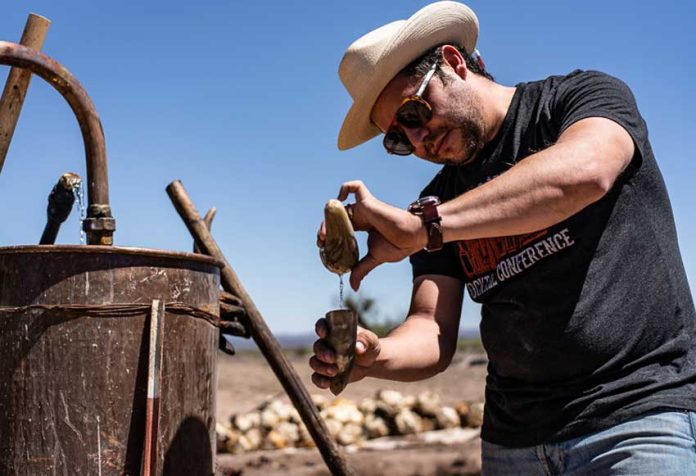
Ricardo Pico uses two horn-shaped vessels to estimate the alcohol content of the sotol he makes at his Chihuahua distillery.
The pickup truck rambles down a long rocky road. On both sides, a barren landscape stretches out as far as the eye can see, punctuated by the occasional yucca tree.
After seemingly forever, I arrive at a small outpost, the aroma of smoked wood thick in the air from pit ovens nearby. The intense desert sun beats down on Ricardo Pico and me as we hop out of the truck at the viñata, or sotol distillery, deep in the Chihuahuan desert.
Pico is the man behind Sotol Clande, one of the latest artisanal brands of sotol to emerge from Mexico. Born from deserts and dry forests of northern Mexico, the spirit brings smooth yet earthy flavours and a fascinating history to the table and bar.
While sotol has been around for more than 300 years, it has long been overshadowed by the more popular Mexican drinks tequila and mezcal. Why? Up until approximately 30 years ago, sotol production was prohibited, and the culture behind it nearly lost.
Today, a small group of enterprises, like Sotol Clande, are reviving sotol’s production and heritage and reintroducing it to the world.
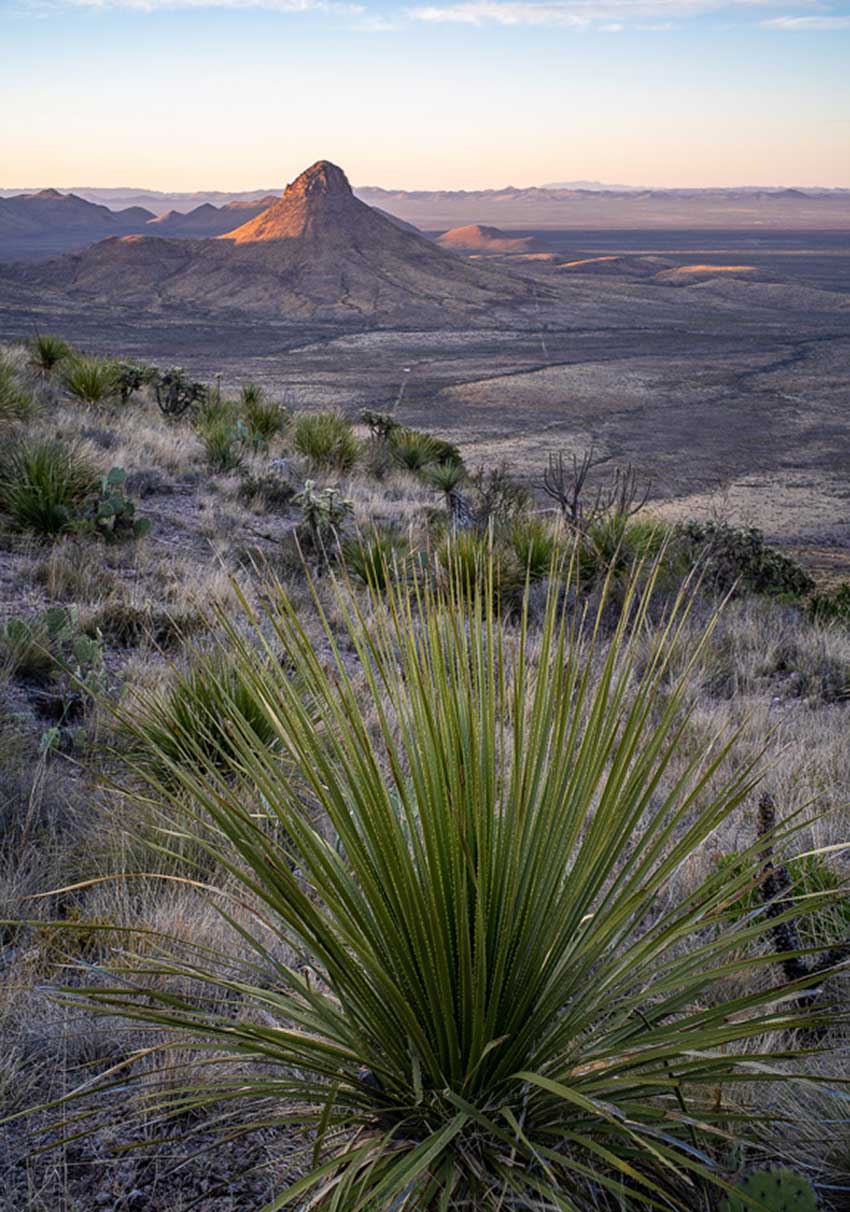
A desert spoon plant, source of sotol, at the top of a ridge overlooking the vast desert.
Sotol was born during Mexico’s colonial era when the Spanish settlers used distillation techniques to get the “spirit” out of plants the indigenous people had already fermented. In the northern dry-lands and sierras of Chihuahua, this included the sotol or desert spoon plant.
Thus, sotol, like tequila and mezcal, embodies the mestizaje (mixing) process that gave birth to almost everything in Mexican culture. But interesting enough, this northern beverage’s fate was considerably marked by Mexico’s northern neighbour.
Sotol’s heyday likely came in the early 1930s when over 300,000 liters per year were made, most of it destined for the United States to quench the thirst of Americans parched by prohibition. Rumor has it that even the legendary gangster Al Capone smuggled sotol from Mexican border areas into the U.S.
The sotol boom didn’t last long as the Mexican government began a crackdown on artisan alcohol producers. At the time, the Mexican elites favoured European liquors such as whisky and brandy, eschewing locally-made beverages for alcohol they perceived as higher class.
Sotol got a reputation as a drink for peasants and drunks, and producers were persecuted, their stills often riddled by bullets. Occasionally they were even thrown in jail.
This persecution took its toll on the industry, and generations of knowledge and tradition were nearly wiped out. Only a few sotoleros, or sotol producers, persisted, moving around the countryside with their copper stills and donkeys, packing up their clandestine mobile operations and moving on when the government closed in.
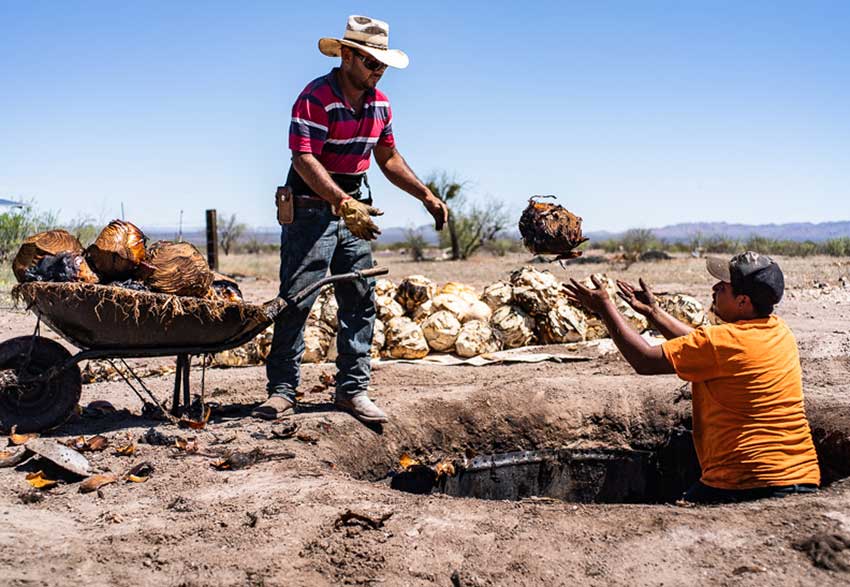
Workers move the roasted desert spoon hearts from the underground pit.
However, with the lifting of prohibition in the early 1990s, sotoleros slowly started coming, quite literally, out of the desert. This has led to a renewed interest in the beverage, with both artisanal and industrial brands resurrecting the spirit and bringing it to the public.
***
“When we first started the Clande project, we wanted to rebuild the story of sotol,” Pico says. That story, forgotten by many urban residents of Chihuahua, lived on through the knowledge of just a handful of producers in rural communities around the state.
Pico estimates there are fewer than 30 sotoleros in all of Chihuahua and fewer than 10 in the neighbouring states of Durango and Coahuila.
These producers traditionally made sotol just for their local communities, where consumers are very knowledgeable about the final product. They can taste subtleties in the production process such as premature harvesting, overcooking, over-fermenting and adulteration with agaves and sugar cane.
The communities, along with the master sotoleros’ knowledge, are vital components in the final product of a well-crafted sotol, argues Faridy Bujaidar Ávila. “It’s very important to highlight that artisanal sotol and industrial sotol are vastly different.”
According to Bujaidar, “[Artisanal producers] can’t adulterate it in any way because they have a direct relationship with their clients. However, when you try some industrial sotols, and you have an educated palate, you notice that they include sugar cane, which totally alters the flavour and greatly lowers the quality of the product.”
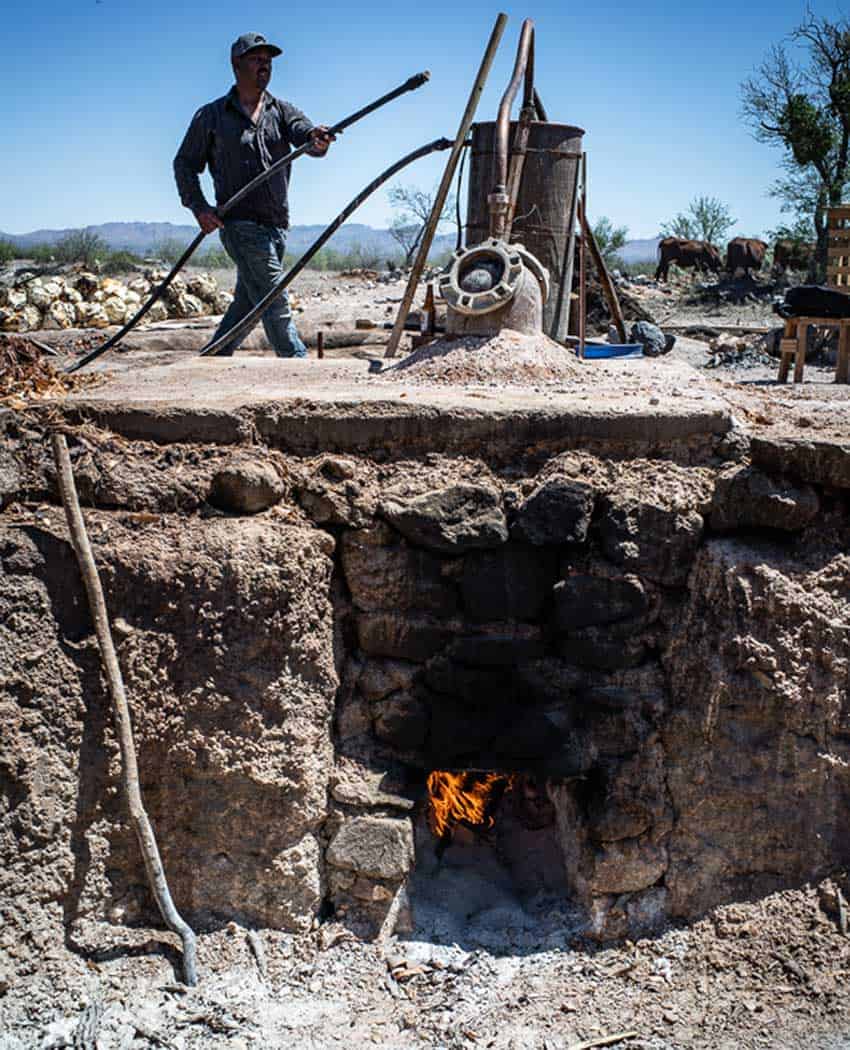
A worker fills the still with water to cool the liquid.
Bujaidar, who holds a masters in anthropology and researched sotol culture, stressed the importance of keeping the traditional methods alive. Although some producers have wanted to replicate the success of the more industrially produced tequilas, she feels that they lack the nuances and cultural richness that artisanally made liquors possess.
“It’s not just about the quality of the final product, but the traditional knowledge of the person who produced it, and of the communities that consume it.”
Pico seems to agree. His brand has a more anthropological vision, relying heavily on the expertise of the sotoleros he works with, most of whom have learned their craft from the generations before them.
***
At the viñata, I come to learn that this region was chosen for the distillery due to the abundance of the sotol plant nearby. We take a quick drive up to a viewpoint overlooking the desert. Off in the distance, mountains loom over the landscape, and to the northeast, the border with Texas. In front of us, hundreds, if not thousands of desert spoon plants are rooted to the ground, growing freely.
Although similar in appearance to an agave plant, the desert spoon is actually a member of the asparagus family. Its mute green leaves contain sharp teeth, which protect it from predators.
To make sotol, the hearts of the desert spoon are separated from the rest of the plant and roasted in an underground wood-fired pit for up to three days before being milled by hand and left to ferment in open-air vats. Following fermentation, the liquid is transferred to stills for distillation.
Pico pulls a small amount of the distilled liquid from a bucket made by master sotolero Don Eduardo Arrieta and his son, Eduardo. Passing the liquid rapidly between two horn-shaped vessels, he watches for how the liquid bubbles, an indication of the alcohol content of the first distillation. By distilling the sotol two or three times, they can achieve the desired alcohol content, usually around 50%.
While the roasting and knowledge of the sotoleros play a significant role in the taste of sotol, perhaps nothing is more important than the environment the plant grew in. “Terroir is very important to sotol,” Pico mentions. “Different experiences the plant has over 15 years, going through droughts, floods and other natural events, gives the final product a lot of its flavour.”
Many sotoleros prefer to produce blancos, as an unaged spirit retains more of the earthiness of the plant than their aged brothers reposados and añejos. Some craft distillers, such as master sotolero Geraldo Ruelas of Oro de Coyame, take their products a step further. Ruelas infuses some of his offerings with everything from almonds and pineapples to marijuana and rattlesnake meat.
I sample some of the varieties at Ruelas’ distillery in Aldama, just outside Chihuahua. Instead of the smokiness of mezcal or the bite of tequila, I find a smooth, easy-drinking liquor, with little alcohol aftertaste despite the 48% alcohol level. Each of the infusions adds a subtle touch of flavor to the sotol without distracting from the earthiness.
Long confined to being discretely sold directly from sotoleros such as Ruelas, sotol is now making its way into the tasting rooms of Chihuahua and cocktail bars around North America as an alternative to tequila and mezcal.
At the same time, the traditions and culture of a region are being renewed, and the story of sotol is being rebuilt.
The federal energy secretary today named the gas station chains which sold the cheapest and most expensive fuel in Mexico last week.
Speaking at President López Obrador’s morning press conference, Rocío Nahle also revealed the states in which the filling stations with the lowest and highest gasoline prices were located.
For regular fuel – known in Mexico as magna – PetroSeven was the cheapest chain between April 6 and 12, with an average price of 18.74 pesos per liter (US $0.99, or $3.76 a gallon).
Arco was the next cheapest, selling magna for 18.91 pesos per liter on average, while Pemex affiliate Rendichicas was third, with a price of 19.18 pesos.
Shell sold the most expensive regular fuel last week, averaging 20.23 pesos per liter, followed by G500 and Full Gas, both of which had an average price of 19.89 pesos.
For premium fuel, PetroSeven was again the cheapest followed by Arco and Gulf, with prices ranging between 20.35 pesos and 20.54 pesos.
Shell also had the most expensive premium fuel last week, averaging 21.61 pesos per liter, followed by Walmart and Oxxo Gas, with prices of 21.24 and 21.2 pesos respectively.
Nahle said the 10 gas stations with the lowest prices for regular fuel were in México state, Tamaulipas, Campeche, Veracruz and Puebla. The lowest price seen was 14.28 pesos per liter, 24% less than PetroSeven’s average.
The 10 filling stations with the highest magna prices were in Nayarit, Durango, Sonora, Michoacán and Chihuahua. The highest price charged for a liter of fuel was 22.99 pesos.
The cheapest premium fuel was found at stations in Tamaulipas, Veracruz, Puebla, Chihuahua and Guerrero (the lowest price seen was 16.56 pesos per liter), while the most expensive premium gasoline was sold in Guanajuato, Sinaloa and Chiapas (the highest price was 23.76 pesos).
López Obrador, who last week said the federal government could go into retail fuel sales if gas station owners don’t charge “fair prices,” reiterated yesterday that some of them are “taking advantage” of their customers.
“We’re ensuring that the [gasoline] price doesn’t increase but the distributors, not all of them, are taking advantage. It’s given to them at 16 pesos and they’re selling it at 19 or 20 pesos. They’re left with a profit margin that is higher than before,” he said.
The government has pledged that fuel prices will not increase beyond the annual inflation rate and last month increased a stimulus scheme for gasoline that is designed to alleviate the burden of the IEPS excise tax.
However, it appears that not all gas stations have passed on the savings to their customers.
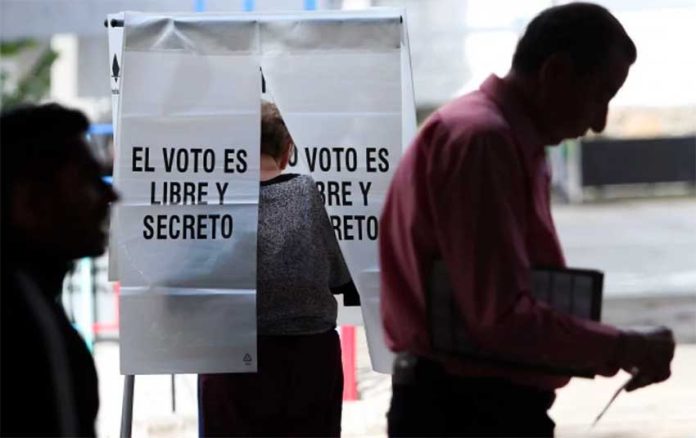
"Voting is free, direct and secret," Sheinbaum reminded the audience, echoing a common Mexican voting slogan. (File photo)
It’s election season in six states, whose citizens are preparing to elect state legislators, mayors and governors on June 2.
The election will mark the first time that deputies and mayors will be able to run for a second term in Durango, Quintana Roo and Tamaulipas.
Voters in Quintana Roo will elect the 25 deputies to the state Congress while in Tamaulipas they will elect 36.
In Aguascalientes, candidates for mayor in municipalities with more than 30,000 inhabitants started today. Campaigns in the smaller municipalities will start on April 30. Voters will be electing a total of 109 municipal representatives, including 11 mayors.
Campaigns in Baja California started on March 30 where voters will elect the governor, five mayors and renew their 25-seat Congress.
In Durango, voters in its 39 municipalities will elect new mayors.
An extraordinary election started on March 31 in Puebla to elect a new governor after the death of Governor Martha Érika Alonso Hidalgo on Christmas Eve last year. Citizens of five municipalities will also be voting for a new mayor.
The National Electoral Institute said campaigns are scheduled to conclude on May 29, and that a total of 14,770 polling booths will be set up on Sunday, June 2.
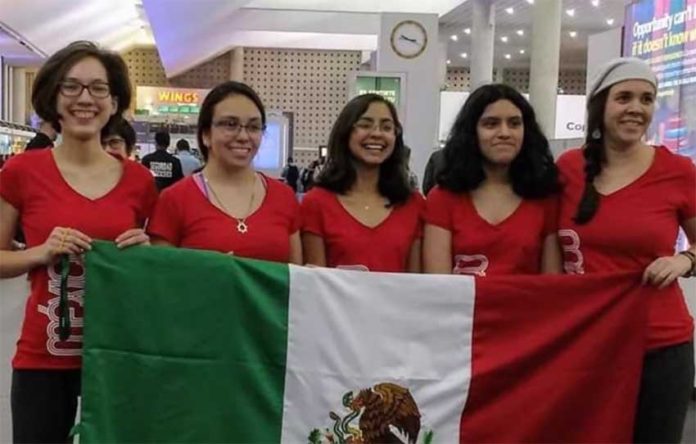
A team of Mexican students took home a gold medal and two silvers in the European Girls’ Mathematical Olympiad (EGMO) in Kiev, Ukraine, on Saturday.
Mexico City native Ana Paula Jiménez, 17, won the gold medal for the team in what was her third year at the competition after winning two silver medals in 2017 and 2018.
Third-time competitor Nuria Sydykova Méndez, also from Mexico City, and newcomer Karla Rebeca Munguía Romero from Sinaloa won two silver medals. First-timer Nathalia del Carmen Jasso Vera won an honorable mention for her performance.
Overall, the Mexican team won 10th place out of a total of 200 girls from 49 countries. According to the Autonomous University of Mexico’s news agency, the win constitutes Mexico’s second gold medal in the history of the competition; the first was won by Jalisco native Olga Medrano in 2016.
Both Jiménez, who is in her second year of studies at a private high school, and Sydykova Méndez, who studies at the National Polytechnic Institute of Mexico, have been a part of the Mexican Math Olympics’ academic program at UNAM’s Institute of Mathematics for several years.
It was Mexico’s fifth year in the competition, which was created in 2014 to encourage interest in mathematics among girls and young women, a field that has traditionally been dominated by men.
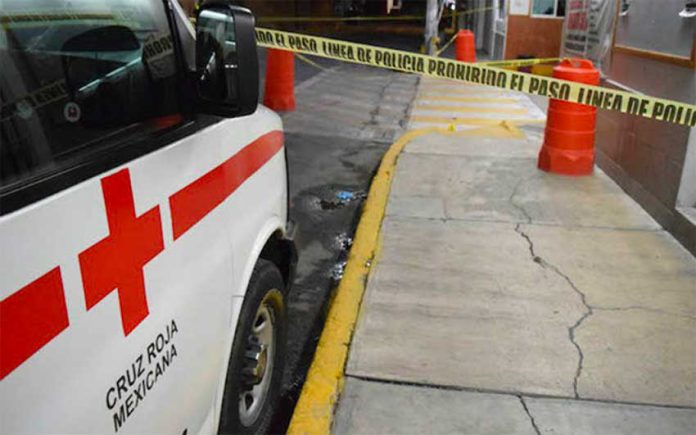
Red Cross volunteers face security risks in Guanajuato.
Nobody is immune from the wave of violence engulfing Salamanca, Guanajuato: Red Cross ambulances will now be accompanied by police on high-risk emergency calls after paramedics were threatened by armed men.
A Red Cross ambulance responded to a call for assistance late Saturday afternoon in the neighborhood of San Roque, where a man had been shot.
On its way to a hospital, the ambulance was halted by a group of men who forced the paramedics at gunpoint to hand over their patient. The whereabouts of the wounded man are unknown, the newspaper El Universal reported.
In light of the incident, the Salamanca Red Cross announced yesterday morning that it was suspending all of its medical services in the city and appealed for people’s understanding.
“All of us who are volunteers in this noble institution believe in its mission . . . but at this time we must take care of our safety. We are also parents, children and siblings,” the organization said in a message posted to social media.
However, after a meeting between the Red Cross and authorities yesterday afternoon, Salamanca Mayor María Beatriz Hernández Cruz announced that the organization would resume its ambulance services immediately and that its other medical services would recommence today.
In a statement, Guanajuato Public Security Secretary Alvar Cabeza de Vaca Appendini said that an agreement had been reached for police to “accompany Red Cross ambulances in high-risk and high-impact call-outs” in Salamanca.
The city is home to one of Mexico’s six oil refineries and borders Villagrán, the municipality where the powerful Santa Rosa de Lima fuel theft cartel is believed to be based.
Last month, 16 people were killed in a night club in the same neighborhood where the man was shot Saturday. Members of the Santa Rosa de Lima Cartel were allegedly behind the attack.
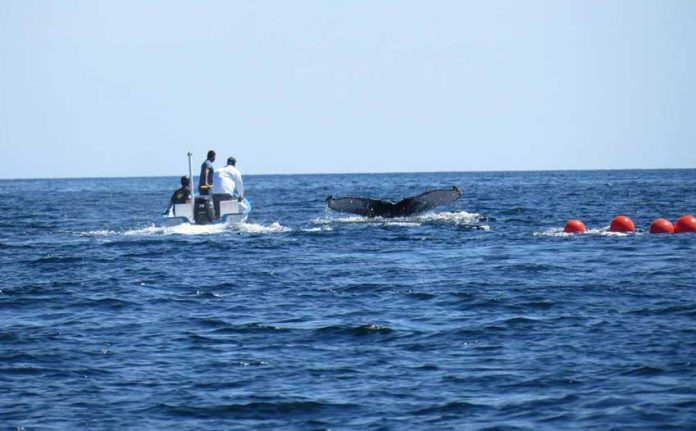
The humpback whale and rescue workers off the Baja California Sur coast.
A humpback whale found tangled in fishing gear off the coast of Loreto, Baja California Sur, was rescued yesterday after its plight was reported on social media.
Staff from the environmental protection agency Profepa and Loreto bay national park freed the animal of fishing buoys and ropes off Nopoló beach.
They said the whale was noticeably lean and was suffering from injuries caused by the gear, which it appeared to have been dragging for some time.
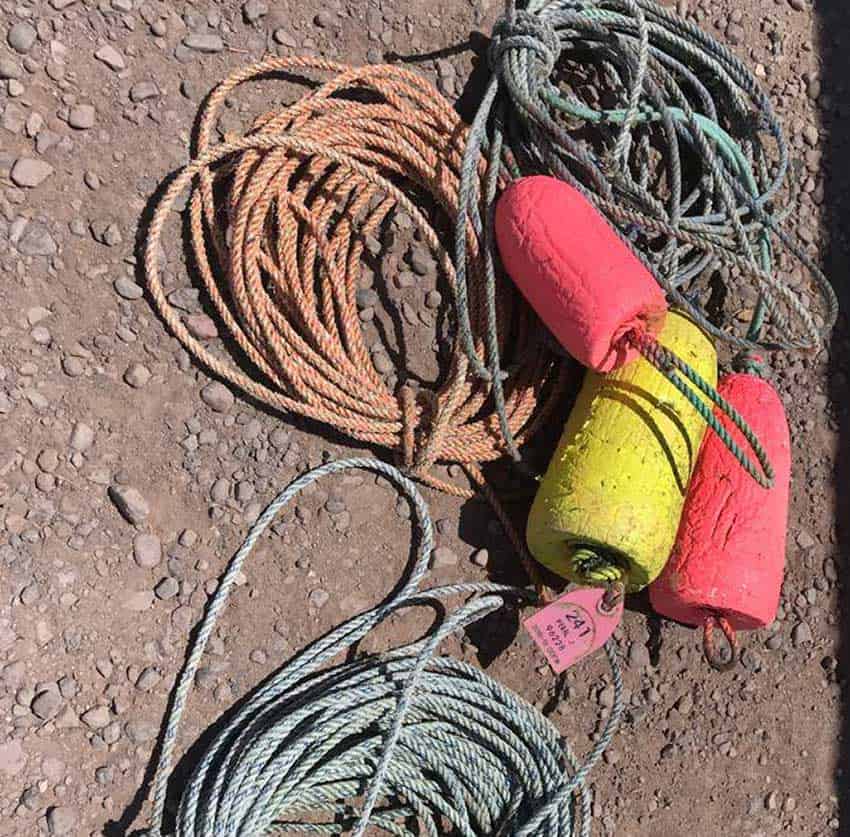
The gear in which the whale became entangled.
It took two hours to untangle the mess and free the animal, park personnel said.
The gear contained a tag bearing the name of the Oregon Department of Fish and Wildlife.
Reports of the successful efforts were posted on the park’s social media page, earning the congratulations of locals and praise for those who reported the incident.
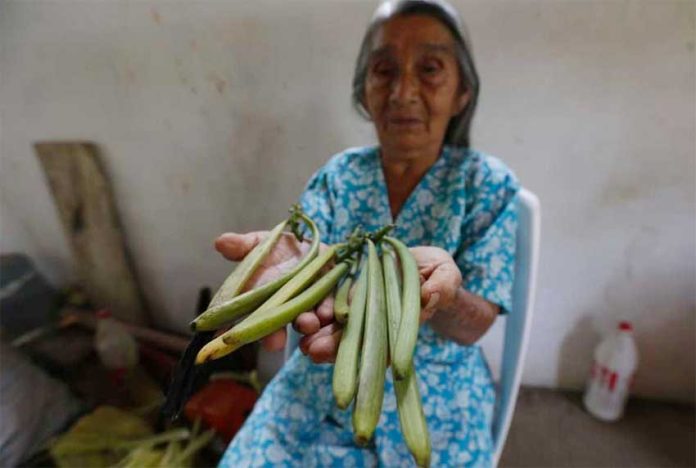
Vanilla is the world’s second most expensive spice after saffron and one of 16 Mexican products that enjoy denomination of origin protection, but its long-term survival in Mexico is at risk.
The product is increasingly being targeted by thieves, driving growers to abandon the crop and grow something else.
Vanilla orchids are grown in several Mexican states including Chiapas, Oaxaca and San Luis Potosí but the epicenter of production is Veracruz and in particular Papantla, a city that has been known as “the vanilla capital” and which once upon a time was dubbed “the city that perfumes the world.”
But the heyday of vanilla production in Papantla and the wider Totonacapan region in the north of Veracruz is over, according to Óscar Ramírez, a vanilla farmer and president of a growers’ association.
“. . . They’re just memories,” he said, referring to Papantla’s erstwhile nicknames. “Vanilla [in Mexico] is sadly in danger of extinction.”
A kilogram of vanilla can yield prices as high as US $700, making the crop an attractive target for thieves for whom there is little deterrent against committing the crime.
In Papantla, a decades-old municipal decree establishes a fine of just 20 pesos (US $1) for stealing it, a penalty Ramírez described as “ridiculous.”
“The law has to be updated,” he said, adding that new, specific laws that set harsher penalties for vanilla theft should be adopted nationwide.
In recent years, a huge number of vanilla growers in the north of Veracruz have given up on cultivating the plant after seeing their hard work come to nothing as a result of theft.
It takes three years on average for producers to get to the stage when the pods on their vanilla orchids are ready for harvest, whereas thieves can profit much more quickly.
“Just imagine, years of work is stolen in minutes,” said Juan Salazar, a vanilla grower in El Ojital, a community near Papantla.
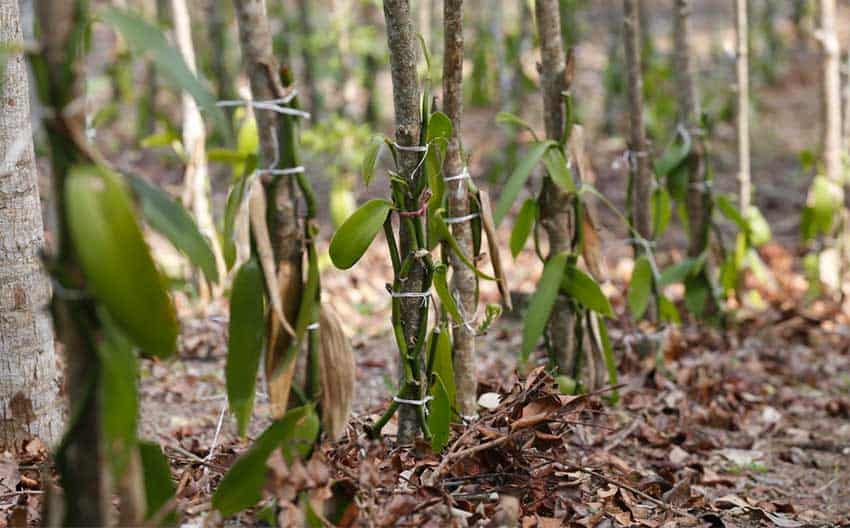
Vanilla orchids: years of work can be stolen in minutes.
The farmer said that vanilla theft usually occurs in October and November just before the harvest, explaining that higher prices for “gourmet” vanilla in recent years – the per-kilo price has tripled – have only encouraged would-be thieves.
Salazar, who grows vanilla on a three-hectare property for customers that include tequila and perfume makers, said that growers last year were forced to take drastic measures to protect their crops.
“To guarantee that they would be able to harvest what they worked for the entire year, they [the growers] stayed at their plots, they made fires and they slept 10 meters away because those who cut [the plants] enter in the early morning,” he said.
“A lot of farmers carry machetes but if a thief has a gun, one puts his life on the line,” Salazar added, explaining that there have been cases in which growers have been killed while defending their plants.
While many producers have decided to get out of the vanilla-growing business altogether, others agree to sell their yield to opportunistic buyers who prey on their fear, Salazar explained.
“They come to purchase the vanilla early, before it completes its nine months of ripening. They pay low prices and the producer sometimes prefers to sell . . . so that their crops aren’t stolen,” he said.
The grower explained that the prices the coyotes pay are sometimes less than half the product’s real value but added that farmers prefer to get “a few pesos” than nothing at all.
In light of the increasing number of thefts, vanilla growers have appealed to authorities to bolster security in the north of the state to protect their industry as well as others, such as tourism.
“Vanilla has to be protected, it’s in danger of extinction and like any other species or animal that is in danger of extinction and for which laws are to protect them, the same must urgently be done with vanilla,” said Ramírez, the growers’ association president.
In addition to theft, climate change, the loss of tropical forests and cheap synthetically-made vanilla imitations also represent a threat to Mexico’s vanilla industry.
While the problems faced by Mexican vanilla and those who continue a tradition of cultivation that dates back to pre-Hispanic times are serious, Ramírez said the situation is not all doom and gloom.
“What nobody has taken away yet is the denomination of origin – Papantla vanilla, the best quality in the world.”
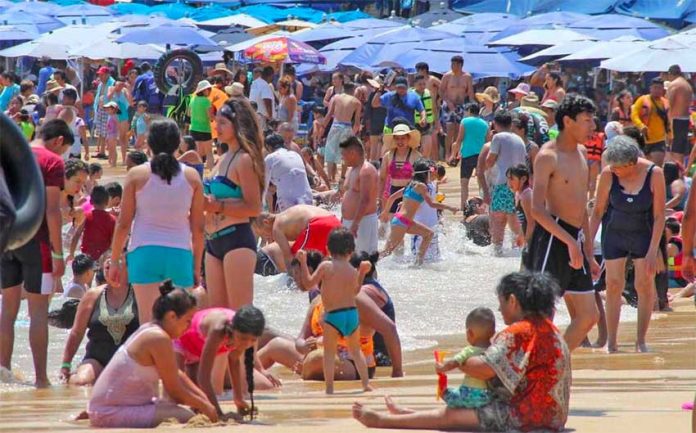
Acapulco has Mexico's second and third dirtiest beaches, but all are deemed safe for swimming.
All of Mexico’s major swimming beaches but one made the grade in water quality testing but that does not mean they’re squeaky clean.
Although the beaches are technically safe, several approached dangerous levels of contamination, according to the health regulatory agency Cofepris.
Of 269 beaches tested in time for the Easter vacation, 268 were declared safe for recreational use, meaning that samples collected contained less than 200 fecal coliforms per 100 milliliters of water.
Sayalita beach in Nayarit was the only one that did not pass the test, but several others came close to failing.
Among them were Playa Suave and Playa Hornos in Acapulco, Guerrero; Puerto Angelito and Playa Principal in Puerto Escondido, Oaxaca; and Playa Norte and Playa Centro on Isla Mujeres, Quintana Roo. All six are highly visited tourist destinations, as well as major hotel and resort areas.
Here is the full list with test results given as the most probable number of fecal coliforms per 100 milliliters.
Playa Suave, Acapulco, Guerrero, 191
Playa Hornos, Acapulco, Guerrero, 183
Playa Puerto Angelito, Puerto Escondido, Oaxaca, 167
Playa Principal, Puerto Escondido, Oaxaca, 158
Playa Antón Lizardo, Veracruz, 157
Golfo de Santa Clara Machorro, San Luis Río Colorado, Sonora, 137
Golfo de Santa Clara Pueblo Palopo, San Luis Río Colorado, Sonora, 124
Playa Santiago, Armería, Colima, 100
Playa Norte, Isla Mujeres, Quintana Roo, 94
Playa Centro, Isla Mujeres, Quintana Roo, 89
The dirtiest beaches by state were:
Baja California Norte: Playa Rosarito, Rosarito, 66
Chiapas: Playa Escolleras, Tapachula, 78
Colima: Playa Santiago, Armería, 100
Guerrero: Playa Suave, Acapulco, 191
Jalisco: Playa Mismaloya, Puerto Vallarta, 51
Oaxaca: Playa Puerto Angelito, Puerto Escondido: 167
Quintana Roo: Playa Norte, Isla Mujeres, 94
Sinaloa: Playa Las Glorias I, Guasave, 69
Sonora: Golfo de Santa Clara Machorro, San Luis Río Colorado, 137
Veracruz: Playa Antón Lizardo, Veracruz, 157
Yucatán: Playa El Cuyo, Reserva de la Biosfera Ría Lagartos, 74
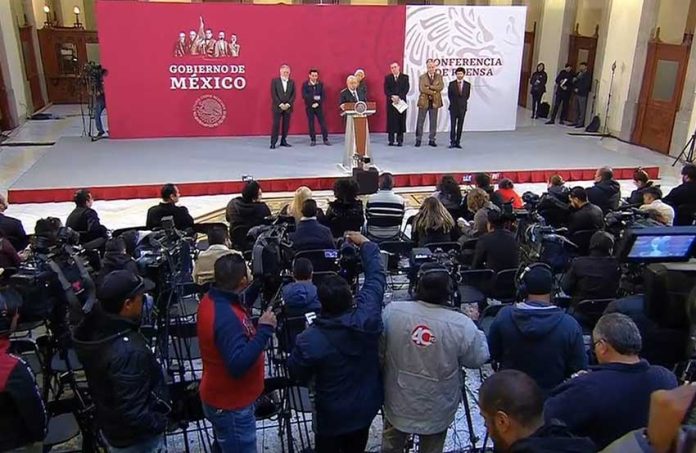
Backed by other government officials, the president speaks at his daily session with the press.
President López Obrador’s weekday press conferences are one of the most popular actions implemented by the federal government, according to a recent poll published by the newspaper El Financiero.
At 7:00am daily, the president steps up to a waiting media throng at the National Palace in Mexico City to answer questions and in the process try to set the day’s political agenda.
But questions challenging the president are not well received, either by López Obrador himself or by many of those who watch, fueling a polarization that some observers find worrying.
Despite the event’s early start, as many as 50,000 people watch the presser on López Obrador’s official YouTube channel, which has almost a million subscribers.
For those watching at home, the journalists who ask the questions are a constant target, especially if they dare to challenge the president.
In the YouTube comments section and elsewhere online, they are accused of being disrespectful, receiving bribes and worse, while female reporters are subjected to gender-based criticism such as being called a “bitch” or a “slut” or shamed for not wearing make-up.
A report by the news agency Bloomberg looked at the case of a female reporter who asked López Obrador whether he was investigating nepotism in his government.
The social media backlash was swift and harsh: within minutes, posts on platforms such as Twitter labeled her a cow, a member of the Gestapo and a “lazy pig” because she didn’t stand up when she addressed the president.
The hate-filled campaign against reporters who are deemed to be out of step with the “fourth transformation” – as the president calls the change he is bringing to Mexico – appears to be widely driven by bots, Bloomberg said.
López Obrador has denied that his administration has anything to do with automated social media accounts that defend him staunchly and shoot down anyone who criticizes the government or expresses a contrarian view.
It is clear, however, that the president doesn’t enjoy being challenged by reporters, even though he frequently holds up freedom of speech and “the right to dissent” as hallmarks of his government.
While United States President Donald Trump speaks of “fake news,” López Obrador dismisses reports with which he doesn’t agree by declaring that they come from the prensa fifi (snobbish, elitist press).
The president has also called journalists and news outlets “puppets,” “hypocrites” and “two-faced.”
This week, he clashed with high-profile United States journalist Jorge Ramos, who questioned him about the government’s homicide statistics and declared that Mexico was on track to record its “bloodiest year” in “modern history.”
López Obrador rejected the claim, stating “we have controlled the situation, according to our data,” although he didn’t cite his source.
Later, security analyst Alejandro Hope wrote on Twitter that “if the president believes in the numbers he presented . . . he is deceiving himself . . . If he does not believe in them, he is trying to deceive us.”
The government’s performance on combatting crime and corruption, the decision to cancel the Mexico City airport project and a wide range of other issues have provoked fierce debate between supporters of López Obrador and those who oppose him, both on social media and beyond.
Rossana Reguillo, a social scientist at ITESO, a university in Guadalajara, said the profound split between the opposing forces is concerning.
“It’s important to see the impact of polarization on the country. It’s making it hard to have a real debate,” she said.
There are also deep concerns about antagonism towards the press – including López Obrador’s – given the very real dangers of working as a journalist in Mexico. At least three reporters have been murdered this year and Mexico is considered one of the most dangerous countries for journalists in the world.
“Unfortunately, what we’re seeing today is that the president is constantly stigmatizing the press,” said Ana Cristina Ruelas, regional director of Article 19, a freedom-of-information advocacy group. “The moment that you stigmatize the press, violence against them could be justified.”
A study by ITESO found that social media attacks on journalists have increased since López Obrador was sworn in in December, and that Twitter accounts run by bots spread his anti-media messages, ensuring that they reach a wide audience.
Asked about the ITESO study at a recent press conference, the president said, “it’s not true that there is a group encouraged by us to defend us against those who question and criticize us” before adding “we do not have bots.”
But whether aggressive online language towards the media – including threats – is endorsed by the government or not, it is still extremely concerning for journalists.
Daniel Blancas, a reporter for La Crónica who was abducted and assaulted after writing about fuel theft, said that he is now more cautious about the online threats and insults he receives, especially after asking a difficult question at a presidential press conference.
He also said that López Obrador should take more care with the language that he uses to criticize the press.
The president “should understand that the press isn’t there to hold his hand and march with him,” Blancas said. “The press is there to stand watch.”