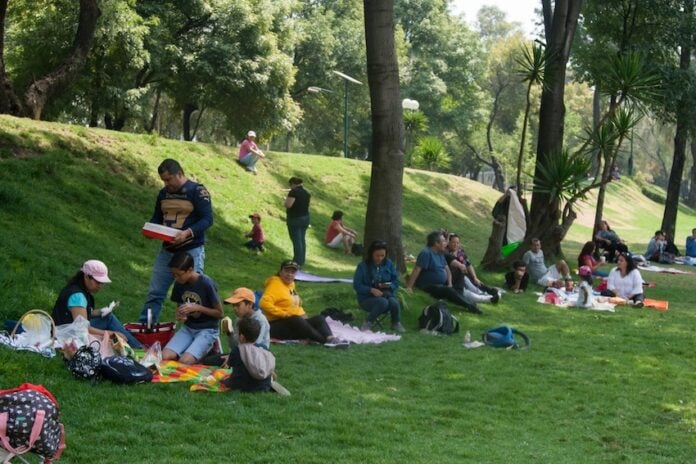
The sun is up, the sky is blue and Mexico City is beautiful! Do not miss these perfect picnic spots throughout the city. (Galo Cañas Rodríguez/Cuartoscuro)
Summers are confusing in Mexico City — although we get thedriest season of the year from April to July, in recent years we’ve also hadheavy rain and sudden winds out of the blue. However, this does not stop us capitalinos from enjoying ourlush green areas, which come alive in the capital’s summer warmth.
While Chapultepec Park is a jewel of the city, it is also very busy almost every day of the year — especially when the weather is great. So where do locals go to beat the heat and unwind in a green space? Here’s Mexico News Daily’s list of the best picnic spots to enjoy this summer season for a well-deserved shot of vitamin D and hours of chatting with friends outdoors.
Jardín Botánico at UNAM
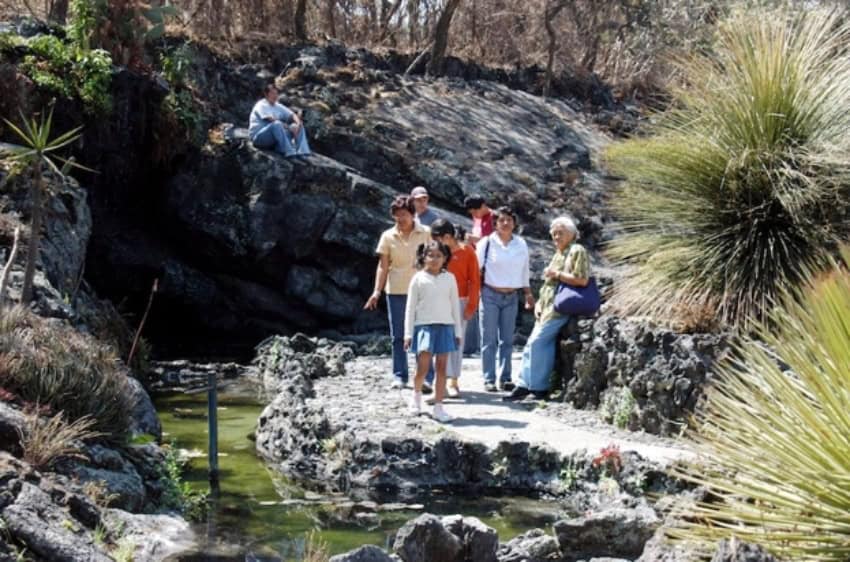
If you were curious to know what the capital was like in pre-Hispanic times, the UNAM Botanical Garden offers a fairly accurate glimpse. (Renato Dávalos/Cuartoscuro)
Operated by UNAM’sBiology Institute (IBUNAM), this protected natural area is home to more than 1,600 plant species native to Mexico City. Jardín Botánico holds a special place in my heart because it was one of the first places my partner took me on a date. So, from experience, I know it’s a beautiful place to enjoy a sunny picnic brunch.
If you’re coming with young children, they’ll love running among the volcanic rock formations and encountering native lizards and various birds. If they’re lucky, they might even spot an osprey (Pandion haliaetus) — and yes, that’s actually pretty exciting. In addition to guided tours with specialists and biologists, you can use the common areas outside the protected zone for an outdoor feast. Watch out, though! An iguana might steal your sandwich.
Where? Tercer Circuito exterior S/N, Ciudad Universitaria (C.U.), Coyoacán.
Cineteca Nacional
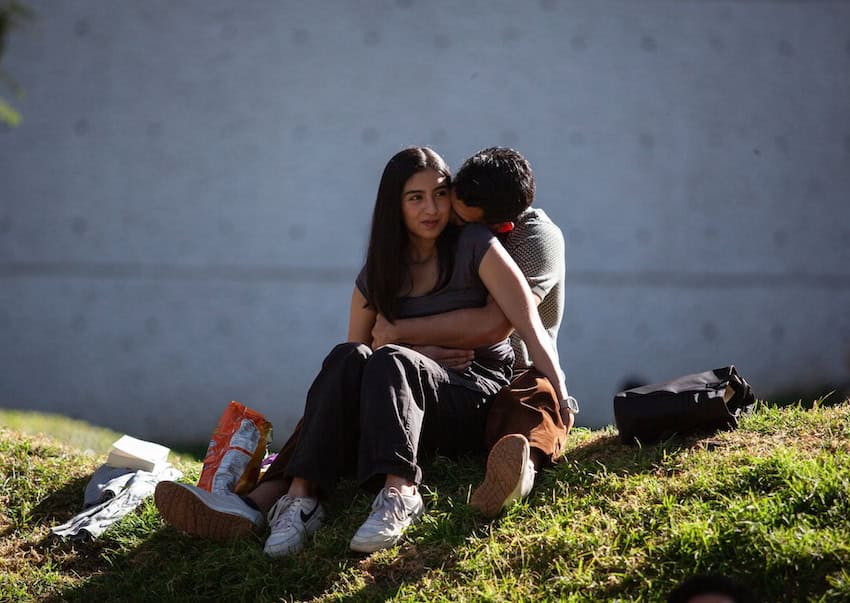
If you’re planning a picnic date with your significant other, you might as well do it the old-fashioned way and head to the Cineteca Nacional’s gardens. (Andrea Murcia/Cuartoscuro)
Cineteca’sOpen Air Forum is the perfect spot for a romantic summer date. While taking advantage of the warm weather, grab some chips from a street vendor in the Historic Center of Coyoacán, add some Valentina hot sauce, and bring your special someone to see a movie. Which one? Anything! They’re sure to be showing something really unusual, like Scandinavian or Kenyan cinema and anything in between.
Besides being free, the Open Air Forum has spacious gardens, with areas adapted for relaxing on the grass. Trust us: no one from Coyoacán’s “alternative scene” could imagine a better spot for a summer picnic in Mexico City.
Where? Av. México-Coyoacán 389, Xoco, Benito Juárez.
La Marquesa
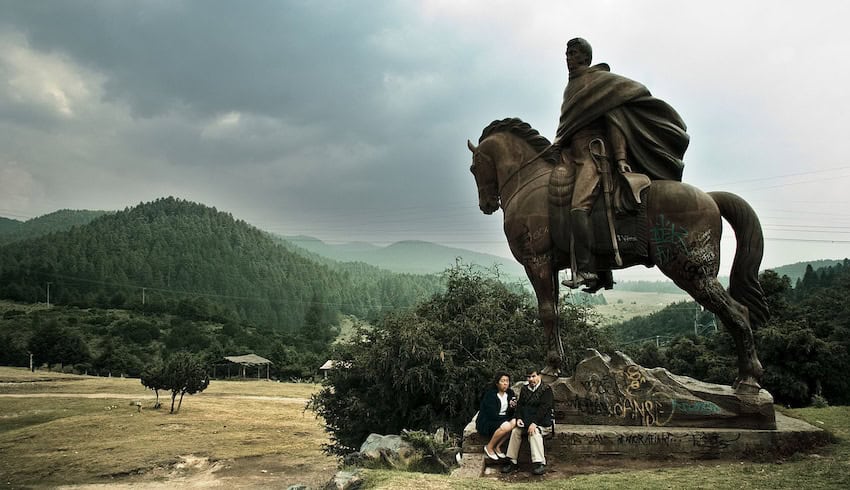
Whether in cabins or in open-air spaces, barbecues in La Marquesa are a summer must every year. (Eneas De Troya/Wikimedia Commons)
If you’re looking for a place to have an outdoor barbecue, La Marquesa is the obvious choice. Located on the border between Mexico City and the State of Mexico, past Santa Fe, this area has benefited from the use of designated forest areas for horseback riding, picnics and even fishing. It’s also famous for its paintball spots.
This national park is so large,notes the Mexico City government, that “it covers most of the territory that divides the valleys of Mexico and Toluca.” In this area, there are cabins where you can spend the night andstargaze. However, if your plan is simply to have a barbecue and return before sunset, this is perhaps one of the most beautiful national parks to visit for a weekend getaway. Watch out for rain, though!
La Marquesa National Park, Toluca de Lerdo, Edomex.
Centro Nacional de las Artes (CENART)
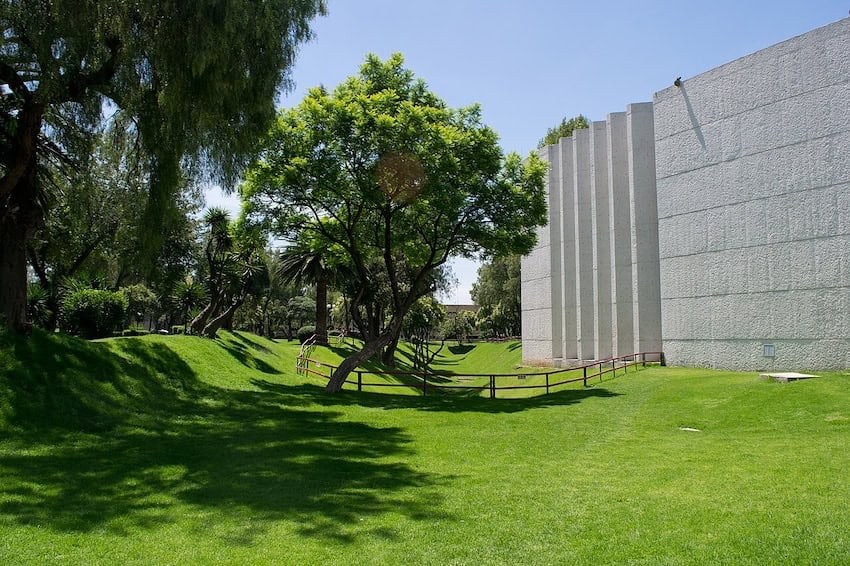
Under the shade of the trees and in the summer warmth, it’s easy to fall asleep in the green areas of CENART. (Public Domain)
Just imagine it: art students leaving class, couples visiting contemporary art exhibitions in free galleries and expansive green spaces filled with grass and leafy trees. Sounds like the perfect spot for a picnic, right? That’s exactly what the gardens of the National Center for the Arts (CENART), south of the city, look like.
Designed by the great Mexican architect Ricardo Legorreta, this labyrinthine space is intended to create a play of light between the geometric shapes of the walls and their vibrant colors. The property spans12 hectares, at least half of which are dedicated to public parks that visitors use to lie on the grass, walk among the trees or leisurely listen to jazz.
Where? CENART. Av. Río Churubusco 79, Country Club Churubusco, Coyoacán.
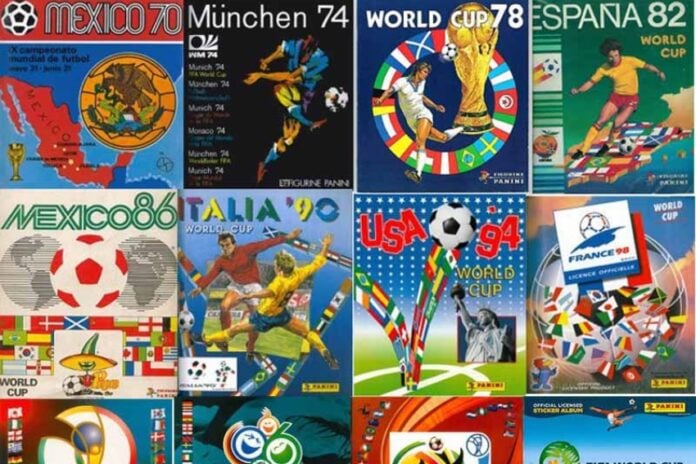
It wouldn't be a World Cup without Panini cards and sticker albums. (Cardz Review)
Modena is a small Italian city of 184,739 inhabitants. It is known for its car industry with Ferrari, Lamborghini and Maserati all having connections to the city, for a university dating to 1175 and for its excellent balsamic vinegar. It is also home to Panini, the makers of the World Cup stickers and trading cards that millions of football fans will be collecting when the tournament kicks off in North America in a few weeks.
These items have a very special link to Mexico, for it was in the 1970 tournament — hosted by Mexico — that they went “international” for the first time.
A future in cards
Panini has been putting out official trading card sets for the World Cup since 1970. (Panini)
The story starts 60 years ago, when the Panini family operated one of the small kiosks that once thrived in Italy, a place to buy newspapers, magazines, postcards and cigarettes. Olga Panini managed the kiosk with help from two of her sons, Benito and Giuseppe.
The boys were entrepreneurs, and they formed a small business of their own that distributed newspapers around the town. The man who took them into cards was Giuseppe. He had the idea of selling pictures of local flowers and plants. There wasn’t much interest, but he sensed that the idea was good; it was only the subject matter that had let him down.
When offered a large number of leftover cards showing Italian soccer players, he bought them all. Poorly printed with faded colors on cheap cards, Giuseppe bundled them up into packets and sold them locally.
This was the early 1960s. The Northern Italian economy was slowly improving, but few people could afford the luxuries we enjoy today. Children longed for toys, and the cards (called figurines in Italy) were cheap enough to build up a large collection. It was not just a case of collecting the stickers; there was the excitement of swapping, completing a team from one club, and showing cards of your favorite player to envious schoolmates.
The cards sold well, and Giuseppe and Benito founded a company to expand the idea. The new firm was called Panini, and the brothers struck a deal with the Italian Football Association and went nationwide with their football cards.
The technology for producing the cards was still primitive. For example, it was vital to mix up the cards so that the young buyers didn’t feel cheated by getting two identical cards in the same pack, and the first way of doing this was to throw thousands of cards into a butter churn and whirl them around. That 1961–1962 collection, with its own special album, sold millions of packets, and the family has never looked back.
The 1970 World Cup in Mexico
By 1970, Panini was ready to move into the global market. Forming a partnership with FIFA, they published their first World Cup sticker album for the 1970 World Cup here in Mexico. It was a gamble. The 1966 tournament had been a dull and often bad-tempered event, saved in part by a dramatic final. There was no reason to presume Mexico would be any better.
Going international also brought considerable new challenges, from multilingual captions to world distribution. Marketing in 1970 was not international in today’s sense, and sales were limited to a few big European countries — West Germany, France, Spain and the U.K. Indeed, the stickers were not even on sale in Mexico!
The designs were of a reasonable quality, and a few of the special cards, such as those showing the national flags, introduced a new idea, a back that peeled away to reveal a sticky surface. There was a 48-page album consisting of 270 players, which meant only 11-14 players were featured per team. Mexico, as the host nation, was given three pages, while the “lesser teams,” such as El Salvador, were squeezed onto just two pages.
Panini leaps onto the world stage
Fourteen Mexican players, plus coach Raúl Cárdenas, appeared in the set, but of these, only seven were included in the World Cup squad when it was named. All the photos appear to have been taken at a training ground, and it seems likely that many players were absent when the photoshoot took place. Of the Mexican players featured in that collection, Ignacio Calderón, Gustavo Peña and Enrique Borja would rank amongst the nation’s all-time greats.
The 1970 World Cup in Mexico City proved the perfect occasion for Panini’s leap onto the world stage. Improved technology allowed the games to be beamed around the world, and more fans than ever watched the action on color television sets. The players joined in the excitement, with Peru and Brazil putting on a great show from the beginning. By the end, even the dull Italians were hitting four goals past Germany. The event captured the world’s imagination, and Panini rode the wave to become a billion-dollar business.
‘A network of soccer spies’
Since then, collecting and trading cards has become part of the World Cup experience. Noted collectors include Italy’s veteran goalkeeper Buffon and musician Ed Sheeran. The players themselves take it very seriously. Several have complained about unflattering pictures, and one team wrote to the designers informing them that the one of their squad was notably ugly, and could they do something about this on his card?
Collectors can put together sets for everything from the FIFA Club World Cup (pictured here) to the 2026 FIFA World Cup. (Panini)
Work starts on the next World Cup the day after the previous final, and Panini has to start printing their millions of cards a few months before the squads are officially announced. This means surprise call-ups might not find a place in the album. However, Panini have been remarkably accurate in their selections. Most famously, they left German striker Mario Gómez out of the 2014 collection, which was considered a mistake until the squad was named without him. This led to a conspiracy theory that Panini had a secret network of soccer spies.
When this year’s album came out in April, it sparked considerable debate in Mexico by including several players who were unlikely to be in the squad either through injury or falling out of favor with coach Javier Aguirre. Most notable was the inclusion of injured goalkeeper, Luis Ángel Malagón.
An expensive hobby
The cards are fun, but are they a good investment? In 2017, a 1970 World Cup Panini sticker album signed by Pelé sold for a record 240,000 pesos. The value of individual cards depends on a combination of condition, rarity and fame. For example, cards from the 1970 collection featuring Alan Ball and Geoff Hurst — men with a World Cup medal from the previous tournament — fetch about 1,500 pesos per card.
Collecting has become more expensive. In 1970, you completed your collection by a combination of buying packets in the shop and swapping doubles on the school playground. Depending on how lucky you were, you could complete the album for around 180 pesos. (About 1,400 pesos today) This year, with 48 teams, the album stretches to 112 pages, and a conservative estimate is that it will cost around 7,600 pesos to complete a collection.
Price is unlikely to put people off, because, as we have said, collecting Panini cards is part of the World Cup experience!
Bob Patemanlived in Mexico for six years. He is a librarian and teacher with a Master’s Degree in History.
Housing prices in Mexico tend to be highest in major cities like Guadalajara, Monterrey and Mexico City. (Sotheby's International Realty)
Recent data from Inmuebles24, one of Mexico’s largest online property marketplaces, offers a snapshot of asking prices in the country’s three upcoming World Cup host cities — Mexico City, Guadalajara and Monterrey. The figures appear straightforward on the surface, but some context makes them more useful.
Based on the data, monthly rents for a 65-square-meter (m²) property average from 18,000 to 25,000 pesos, depending on the city. For a 100 m² property, rents range from 25,000 to 35,000 pesos, with Mexico City and Monterrey at the higher end.
On the sales side, home prices are also expressed per square meter, but without the monthly rental dimension. In Mexico City, home sales average between 47,000 to 54,000 pesos per m², Guadalajara around 56,000 to 60,000 pesos per m², with Monterrey reaching into the 70,000 to 80,000 peso range. In practical terms, that puts a 100 m² property somewhere between roughly 4.7 million and 7.5 million pesos.
Those numbers are the headline, but it’s worth digging a little deeper: Do they reflect what most people are actually paying?
What the data is really showing
Because the source is a listings platform, this data reflects asking prices rather than completed transactions. It shows what sellers and landlords are bringing to market, not necessarily where deals are closing.
That distinction matters. In most markets, some properties transact close to asking, while others sit and over time adjust downward, and ultimately sell or rent for less. Listing data captures the full range of expectations, not the final negotiation.
There is another layer that has an even bigger impact on how these numbers should be read.
When ‘average’ doesn’t mean typical
The report presents “average” prices, but in datasets like this, that usually means a mean average. And a mean can be influenced by a relatively small number of higher-end listings.
Housing prices in places like Mexico City show the mean, although the median would provide a much more accurate gauge. (Anton Lukin/Unsplash)
In cities like Mexico City and Monterrey, a handful of luxury rentals or premium new developments can push the overall average upward. Even if most renters or buyers are operating below those levels, those higher-priced properties still carry equal weight in the calculation.
The result is a number that can feel elevated compared to what many people experience in the market. A median price would often give a clearer picture of what is typical, but that isn’t what’s being shown here.
What kind of properties are included
Although the data refers broadly to “homes,” the pricing strongly suggests that much of it reflects urban apartments. In major cities, newer condominium developments and well-presented listings tend to dominate online platforms, and those properties typically carry higher prices per square meter.
A 100 m² apartment in a desirable neighborhood with modern finishes can reasonably fall into the 5 to 7 million peso range in these cities. That does not mean all properties of that size are priced that way. Older homes, properties outside central areas, or listings that are less aggressively marketed often trade at lower levels and may be underrepresented in this kind of dataset.
The limits of price per square meter
Price per square meter is a useful tool, but it only goes so far.
Smaller properties tend to carry a higher price per meter, while larger homes usually see that number come down. Beyond that, square meter pricing does not account for layout, natural light, finishes or how a property is presented. Two properties with similar size can vary widely in price once those factors are considered.
Home sale prices in Monterrey are even higher on average than in Guadalajara and Mexico City. (Steven Fernández/Unsplash)
That is why averages built on price per square meter can point in the right direction, but don’t always tell the full story.
A more practical way to read the market
Data like this is helpful as a broad indicator. It confirms that pricing in Mexico City, Guadalajara and Monterrey remains strong, particularly in well-located, newer inventory.
At the same time, it should not be taken as a direct reflection of what most people are paying. Markets are more varied than a single average suggests. Inventory has expanded in many areas, pricing is not always consistent, and while some properties move quickly when everything lines up, others take time and require adjustments.
For buyers and renters, the more reliable approach is still to look at comparable properties — what has actually rented or sold in a specific area with similar characteristics. That is where pricing becomes grounded in reality rather than averages.
The bottom line
The data from Inmuebles24 offers a useful snapshot of asking prices in Mexico’s largest urban markets. But because it is based on listings and mean averages, it can be influenced by higher-end properties and may not reflect the most common transaction.
Averages can be useful, but in real estate, they rarely tell the full story.
Glenn Rotton is a real estate agent with eight years of experience in San Miguel de Allende. Originally from Seattle, he has lived in Mexico for twelve years with his husband, Kiang Chong Ovalle, and their dog, Angus. Read more about Glenn here.
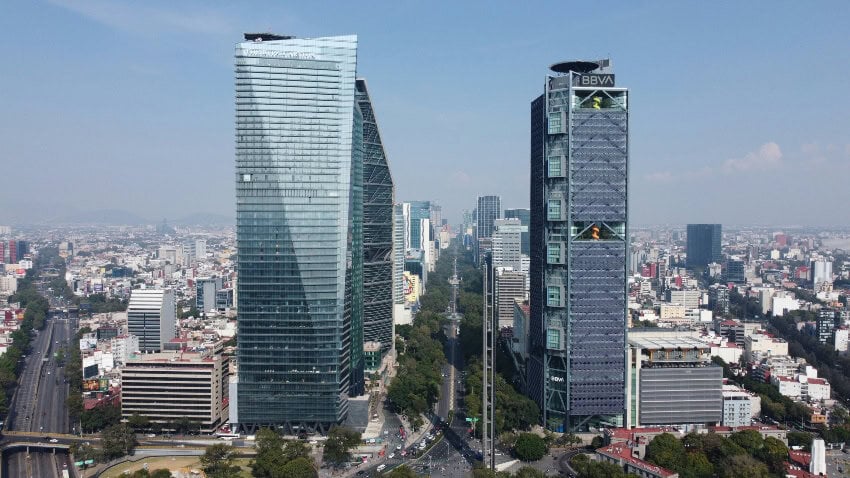
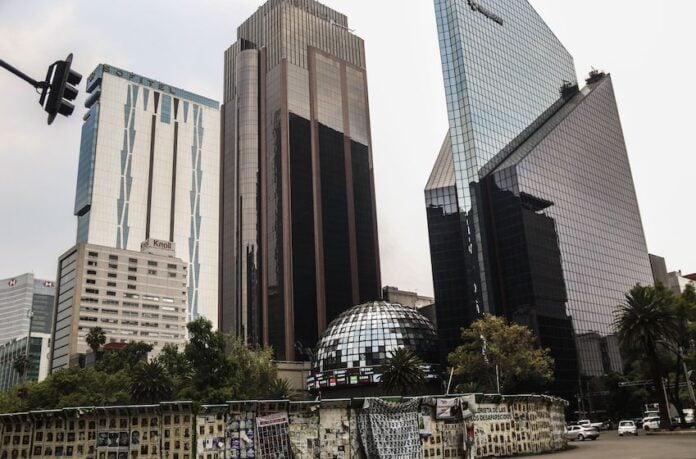
Reforma Avenue in Mexico City on Friday, May 8, 2026. (Victoria Valtierra/Cuartoscuro)
Mexico entered the week of May 4 already reeling from a bombshell: a U.S. federal indictment unsealed the previous week had charged 10 members of the ruling Morena party — including former Sinaloa Governor Rubén Rocha Moya — with drug trafficking and collusion with the Sinaloa Cartel.
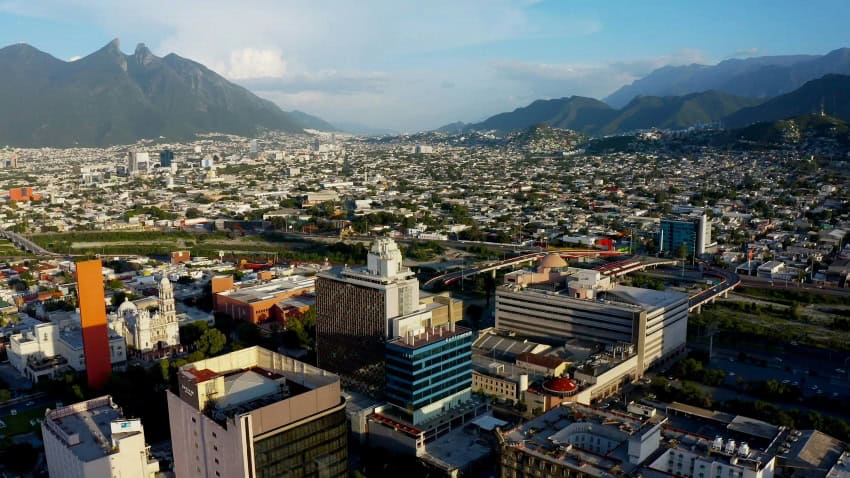
By Monday, several officials — Rocha among them — had stepped down and President Sheinbaum was in damage-control mode. Also making headlines were a 5.6-magnitude earthquake in Oaxaca, and NASA-backed news that Mexico City is sinking at up to 10 inches per year due to the over-extraction of groundwater beneath its ancient lakebed. Adding insult to injury, the mayor of Madrid arrived for a tour of Mexico during which she took the opportunity to defend the Spanish Conquistador Hernán Cortés.
Didn’t have time to catch this week’s top stories? Here’s what happened in Mexico between May 4 and May 8.
Sinaloa crisis deepens: A new governor and more US pressure
The fallout from the U.S. indictment of 10 Mexican officials continued to dominate the political landscape this week. After Governor Rubén Rocha Moya took a voluntary leave of absence, the Sinaloa legislature appointed Yeraldine Bonilla Valverde as interim governor on May 2. Bonilla Valverde, a Rocha ally who had served as the state’s Secretary of Government, was sworn in amid ongoing questions about the depth of alleged cartel ties within Sinaloa’s political establishment. The mayor of Culiacán, also named in the same indictment, likewise stepped aside.
Sheinbaum addressed the case repeatedly throughout the week. At Monday’s mañanera, she reiterated that the superseding indictment is nearly devoid of hard evidence — characterizing a handwritten list purporting to show bribe payments as “a sheet of paper” — and reaffirmed that it is Mexico’s attorney general, not Washington, who will determine whether grounds for arrest exist. She denied having asked Rocha to step aside, saying the decision was his own. Mexico’s Foreign Affairs Ministry sent a diplomatic note to the U.S. Department of Justice requesting substantive proof to support the allegations.
Madrid mayor cuts visit short after reigniting Conquest debate
What was billed as a trade-promotion tour by Madrid Mayor Isabel Díaz Ayuso became one of the week’s defining political dramas. Díaz Ayuso arrived in Mexico on a planned 10-day trip promoting Madrid as “a unique platform” for Mexican trade with Spain — but it was her public defense of the Conquest that ignited a firestorm. The ultra-conservative Díaz Ayuso and President Claudia Sheinbaum are fiercely at odds: Díaz Ayuso has referred to Sheinbaum as “a far-left dictator,” while the Mexican president has called the Madrid leader someone “clinging to visions of empire.” The Sheinbaum administration appeared to ignore her visit altogether.
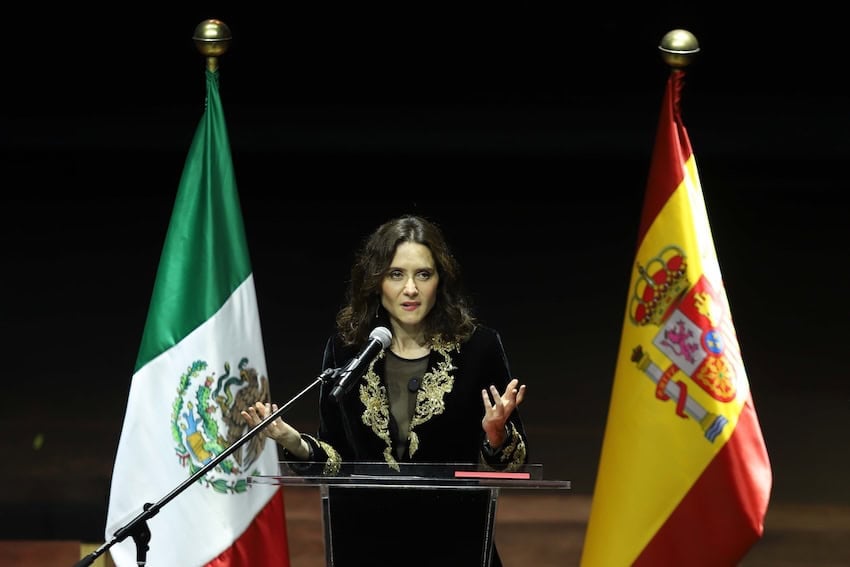
Isabel Díaz Ayuso, mayor of the Spanish capital city of Madrid, speaks during a tribute to Hernán Cortés. (Graciela Lopez/Cuartoscuro)
A tribute to Hernán Cortés was originally planned at Mexico City’s Metropolitan Cathedral, but the Archdiocese withdrew permission, going to great lengths to distance itself from any association with the event. It moved instead to Frontón México, the jai-alai venue where the conservative PAN party was founded in 1939. There, Díaz Ayuso praised the mestizaje that resulted from the Conquest. “Mestizaje is a message of hope and joy,” she said.
“Faced with hate speech that divides us, those of us who see life through these alliances must find ways to speak freely.” Indigenous groups organized protests throughout the week. According to the Spanish newspaper El País, Díaz Ayuso’s visit aimed to boost the conservative opposition in Mexico while consolidating political forces aligned with U.S. President Donald Trump. Her agenda included meetings with executives from Cemex and Alsea and reunions with all four PAN governors — a visit that was particularly sensitive given that the Sheinbaum administration was simultaneously managing U.S. accusations of drug trafficking against Morena officials, which Díaz Ayuso used to reinforce her claim that Mexico is “a narco-state.”
At Wednesday’s mañanera, Sheinbaum called Díaz Ayuso “one of the representatives of the far-right in Spain” and criticized Mexican opposition politicians for hosting her, naming the governor of Aguascalientes and the mayor of Mexico City’s Cuauhtémoc borough as examples. “What does that mean? That they think like her,” Sheinbaum said, attributing to Díaz Ayuso the view that welfare programs are wrong, that Cortés deserves recognition and that “the poor are poor because they don’t work.” The president said the Madrid mayor has the right to visit, “but it’s important to know what she says, who she meets with and who brought her.”
Díaz Ayuso cut her trip short on Friday, with her government accusing the Sheinbaum administration of orchestrating a “boycott” — claiming that Mexican federal authorities had threatened to close the hotel in Quintana Roo where the Platino Awards gala was to be held if Díaz Ayuso attended. The Sheinbaum government denied any such threats. Madrid’s opposition parties used her early return to attack her in Spain’s parliament, calling the trip “sectarian and fanatical,” while her People’s Party (PP) allies argued the objective had been to attract foreign investment.
More charges against Mexican politicians on the way, US AG warns
Acting U.S. Attorney General Todd Blanche gave an interview to NewsNation on Wednesday, saying more charges against Mexican politicians are coming, noting that cooperation from cartel figures already in U.S. custody — many transferred from Mexico over the past year — could yield additional allegations.
“We’ve already indicted multiple government officials out of Mexico — a judge recently as well. And so that’s something that will continue,” he said. He added, however, that the U.S. currently has “a very good relationship with the Mexican government.” Sheinbaum pushed back on the broader framing, demanding reciprocity from Washington on arms trafficking and extradition requests Mexico has filed.
Are US consulates encouraging migration? Mexico says no
A new front opened Friday when the Trump administration announced it is conducting a review of all 53 Mexican consulates in the United States, a move a State Department official said could lead to closures, without providing reasons. U.S. officials have privately suggested that some consular offices may be facilitating irregular migration — a charge Sheinbaum flatly denied at Friday’s press conference, saying Mexico’s consular network exists to protect the rights of Mexican nationals abroad, not to steer migration.
Mexico operates the most extensive consular network in the United States of any foreign government, and the review was widely seen as the latest instrument of pressure from Washington in an increasingly strained bilateral relationship.
Montiel replaced Luisa María Alcalde, who stepped down to become the president’s top legal adviser. In her first speech, Montiel struck a zero-tolerance line on corruption, pledging that no candidate with proven wrongdoing would receive the party’s backing even if they won internal primaries — a pointed signal in the wake of the Sinaloa indictments. The congress was widely read as a bid to stabilize Morena’s image ahead of the 2027 midterm elections.
Education Ministry cuts school year short — then Sheinbaum backtracks
One of the week’s more surprising stories came from the Education Ministry.
Minister Mario Delgado announced Thursday that the national school calendar would end on June 5 rather than July 15 — a 40-day reduction — citing a nationwide heat wave and Mexico’s co-hosting of the 2026 FIFA World Cup. Some 32.6 million students would be affected.
Mexico’s National Union of Parent Associations called the decision “unacceptable,” arguing that education cannot be “sacrificed for a sporting event that will take place in only three of the country’s 2,500 municipalities.” By Friday, Sheinbaum appeared to distance herself from the announcement, telling reporters the proposal “was not yet final” and that children’s school days also had to be taken into account. The episode left parents and schools in limbo as the World Cup countdown continued.
Announced investments top US $20B
Despite the political noise, capital continued to flow toward Mexico this week on several fronts:
Mexico News Daily launched a new data product this week: the MND Peso Index™, a monthly economic indicator that measures whether the Mexican peso is overvalued or undervalued against the U.S. dollar by comparing the prices of 20 goods and services in Mexico’s biggest cities and Dallas, Texas.
The inaugural April 2026 edition found that the peso was modestly overvalued by roughly 3%, with a mean implied exchange rate of 17.85 pesos per dollar against the Banxico spot rate of 17.36 on the same date. Of the 20 items in the basket, half were cheaper in Mexico and half were more expensive — but the items that cost more in Mexico were expensive enough to tip the index into overvaluation territory. The index joins MND’s growing suite of proprietary data products and will be published monthly.
Good news roundup
🌊 President Sheinbaum and Quintana Roo Governor Mara Lezama inaugurated a new bridge in Cancún designed to ease traffic flow in one of the country’s most-visited tourist destinations.
🚗 Car sales in Mexico topped 500,000 units in the January-April period for the first time ever, a 4.8% increase over 2025, with April alone posting the best monthly result since 2013.
The school calendar saga is far from over. Education Minister Mario Delgado spent Friday insisting the June 5 end date was confirmed — even as Sheinbaum told reporters that nothing was final. By evening, he had announced a follow-up meeting with all 32 state education ministers for Monday, May 11, to produce a “definitive proposal.” The PRI has demanded his removal, Citizens’ Movement (MC) is pursuing legal injunctions and some private schools say they will not follow the shortened calendar regardless of what the federal government decides.
On the economic front, Mexico Infrastructure Partners’ $12 billion commitment was welcome news on the heels of the government’s Plan México investment-streamlining initiative, and more announcements are expected as the administration pushes its nearshoring agenda. The diplomatic picture is cloudier: with Todd Blanche warning of further indictments of Mexican officials, the U.S. consulate review still unresolved and trade negotiations ongoing, Sheinbaum faces a busy few weeks managing the bilateral relationship while keeping the domestic political house in order.
Mexico News Daily
This story contains summaries of original Mexico News Daily articles. The summaries were generated by Claude, then revised and fact-checked by a Mexico News Daily staff editor.
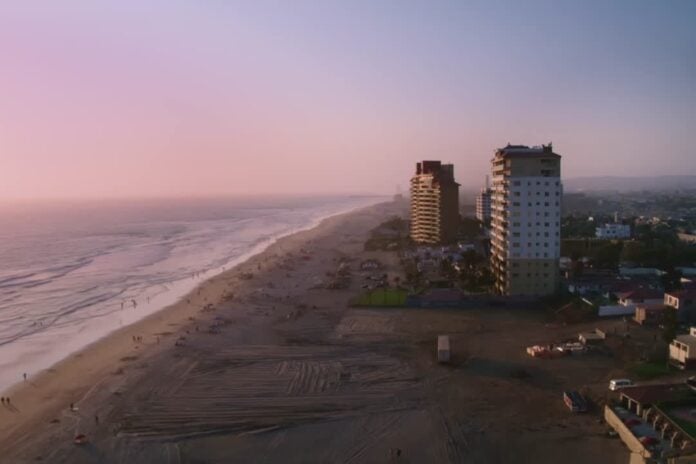
Rosarito Beach is one of many destinations worth visiting in the state of Baja California. (Baja California Travel)
Over 50 million people cross the border between California and Baja California each year. For those heading south, Baja California offers a myriad of things to see and do across multiple locales. So, whether you’re planning a day trip, a weekend jaunt or an extended getaway, here’s an overview of some of the state’s top attractions.
Tijuana Zona Rio Four Corners
You could spend a complete day here enjoying shopping, dining and cultural attractions, and never move your car. Just five minutes from the San Ysidro border crossing, the Zona Río Four Corners are marked by the stylized “M” in the glorieta (roundabout) at the intersection of Tijuana’s Ave. Paseo de los Héroes and Ave. Independencia.
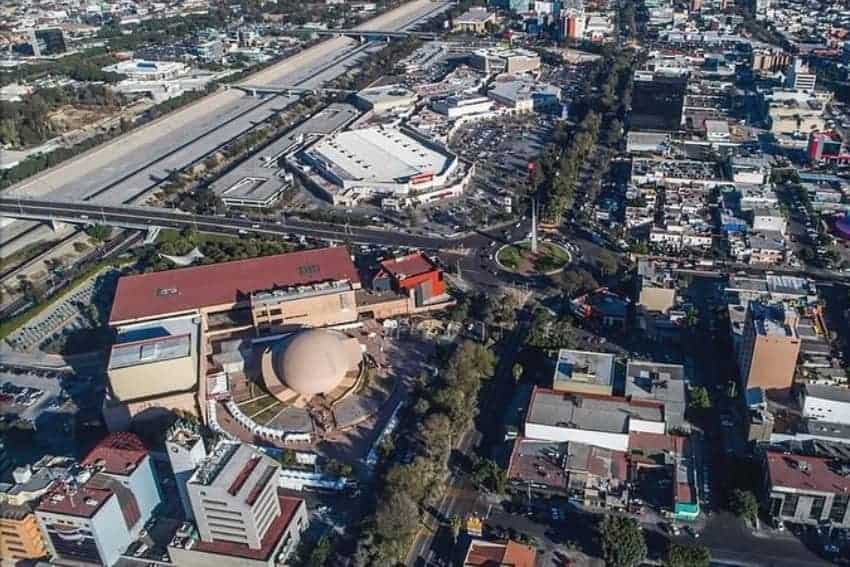
CECUT is the must important museum and entertainment complex in Tijuana, and a must see for visitors. (Instagram)
Corner 1
Start with Centro Cultural Tijuana (CECUT), the most important museum and entertainment complex in Tijuana. With scores of exhibits, CECUT’s Museum of the Californias traces the history of Baja California from prehistoric times until the 1970s. The IMAX Dome theatre shows the best widescreen films from all over the world, and CECUT’s Cineteca Tijuana screens some of the most important international films. The CECUT theatre is the home of the Orchestra of Baja California as well as opera, dance, plays and musical theatre. El Cubo, the fine arts museum, rotates collections from throughout Mexico and the world.
Corner 2
The Mercado Hidalgo, just two blocks from CECUT, is Tijuana’s grand central market. On the way, you pass our region’s fanciest car wash where your ride can be cleaned, polished and detailed — all indoors — while you shop.
Stroll through the stalls overflowing with fresh fruits and vegetables, some of which are rarely seen north of the border. Stop in the market’s stores to shop for kitchen supplies. Dine with the locals at inexpensive restaurants. Buy cheese, nuts and chiles, or a piñata for your next party. Just note that most produce and meats cannot enter the U.S. If you have a question about what you can take home, check the U.S. Customs and Border Protection website.
Corner 3
Plaza Fiesta is a mix of ethnic restaurants, craft breweries and the Plaza del Zapato, a building with nothing but shoe stores. In the next block along the Paseo de los Héroes is La Playa, Tijuana’s best-stocked liquor store. If you are looking for the best selection of tequilas and mezcals, you have found the right place.
Corner 4
Plaza Rio Mall occupies several blocks of shopping temptations. These include the Soriana Hiper Supermarket, one of the city’s largest, Sears (billionaire Carlos Slim owns the Mexican version of the iconic department store), a Gusher super-pharmacy and two movie houses. Catch a film at the Cinepolis or Cinepolis VIP for a fraction of the cost of similar luxury cinema north of the border. The latest American films will be playing in English with Spanish subtitles. Several dozen high-end stores and restaurants complete the offerings.
Tijuana Gastronomy
No North American city has gotten more attention from “foodies” than Tijuana in the past decade. Excellent Italian, Vietnamese, Japanese, Spanish, Korean and Thai restaurants are well represented in the city. However, the Baja California home-grown Baja-Med cuisine is what has taken dining critics from New York to London by storm. Much of this transformation has been led by the Plascencia family, which operates Casa Plascencia, Villa Saverios, Caesar’s, Misión 19 and the original family restaurant chain, Guiseppi’s.
Tecate
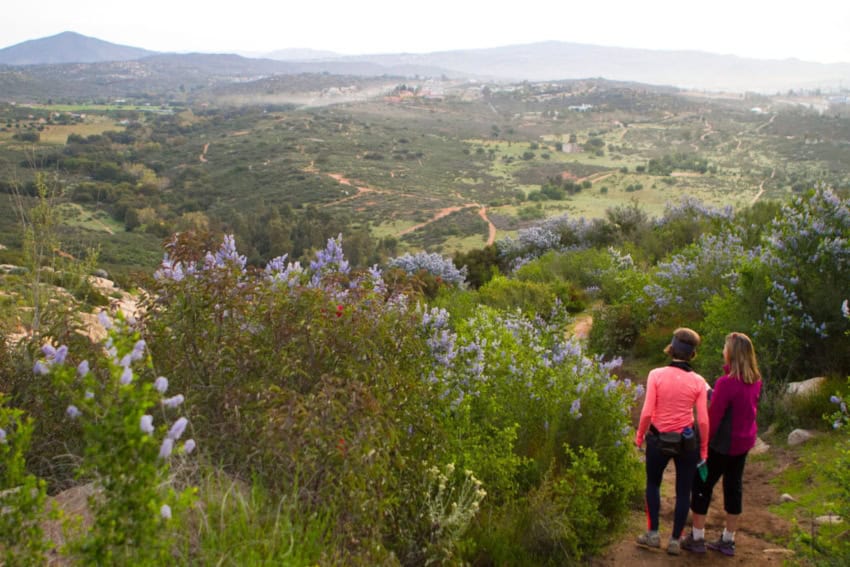
Rancho La Puerta, the famed wellness center in Tecate, stretches over 4,000 acres. (Rancho La Puerta)
Tecate is Tijuana’s quieter eastern neighbor. It is the home of that city’s namesake brewery and tours of the Cerveceria Tecate are available to the public. Quality dining is available at several places in Tecate, including El Lugar de Nos, Amores, Vinoteca and Asao, which is located in the beautiful Hotel Santuario Diegueño. Another hotel favorite is the Hotel Kumiai.
The crown jewel of Tecate is Rancho La Puerta, one of the world’s finest health and fitness spas. Founded in 1940, Rancho La Puerta is the perfect place to escape from the stress and distractions of modern life with energetic fitness options, organic cuisine and a variety of massages, all in a tranquil setting in the shadow of Baja California’s mystical Mt. Kuchumaa. Most guests book a full week, but three- and four-night stays are also available.
Valle de Guadalupe
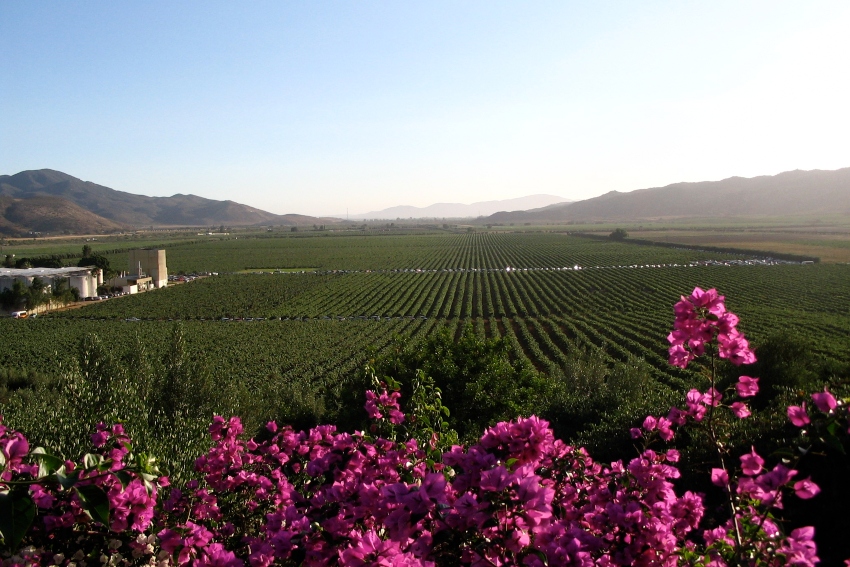
Valle de Guadalupe in Baja California is Mexico’s premier wine-growing region, accounting for over 70% of the nation’s wines. (Wikimedia Commons / Cbojorquez75)
Mexico’s premier wine country runs along Mexico Highway 3 from Ensenada to Tecate, centered on the village of Francisco Zarco. More than 70% of Mexico’s wines are produced here. Often compared to Napa Valley 30 years ago, the Guadalupe Valley is an easy day trip from San Diego.
Wineries of note include LA Cetto, the best-known and largest, and the excellent Monte Xanic, Casa de Piedra and Chateau Camou, whose beautiful tasting rooms offer spectacular views over the valley. The Bibayoff vineyard harkens back to the valley’s many early 20th-century Russian settlements. Most vineyards line Mexico 3, and it’s easy to turn off and visit several in the same day.
Dining options should include Plascencia’s Finca Altozano, Laja, Deckman’s en el Mogar, La Esparanza and Corazón de Tierra.
Rosarito Beach
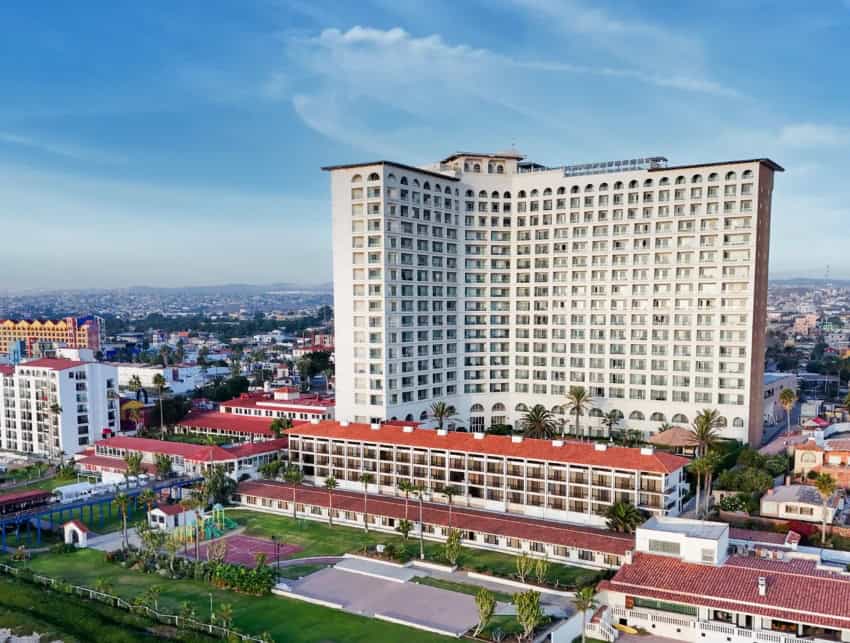
The iconic Rosarito Beach Hotel has been open for over 100 years, and has hosted presidents and movie stars. (Rosarito Beach Hotel)
Tijuana’s southern neighbor, Rosarito, offers one of the best beaches on the coast, anchored by the historic Rosarito Beach Hotel and Spa. The hotel first opened its doors in 1924, and has attracted millions of visitors, including movie stars, presidents and international royalty.
Most of Rosarito Beach’s attractions are located along Benito Juárez Boulevard from the shopping mall in the north to the Arts District in the south. Good restaurants on the strip include El Nido for steaks, La Flor de Michoacán for carnitas.
Further south on Mexico Highway 1 and just past the Baja Film Studios are three Rosarito villages. First is Popotla with its waterfront seafood restaurants serving the catch of the day. Then there is Calafia, where facades of California missions are recreated and the Calafia restaurant offers spectacular coastal views.
Just past Calafia is Puerto Nuevo, famed for its lobster restaurants. The fancier restaurants are by the ocean, but any Mexican will tell you the best one is the simple Puerto Nuevo #1, serving only the iconic lobster with rice and beans. Puerto Nuevo #1 is on the left at the first cross street after entering the village and is noted by the lines of eager diners waiting out front for a luncheon table.
A little further on, the village of La Misión is best known as the place where Mexico 1 turns inland from the toll road toward the Valle de Guadalupe, and the always popular La Fonda hotel and restaurant, with a spectacular beach and ocean view.
Ensenada
Ensenada is Baja California’s largest seaport, and is the gateway to Valle de Guadalupe. (Unsplash/Yitzhak Rodriguez)
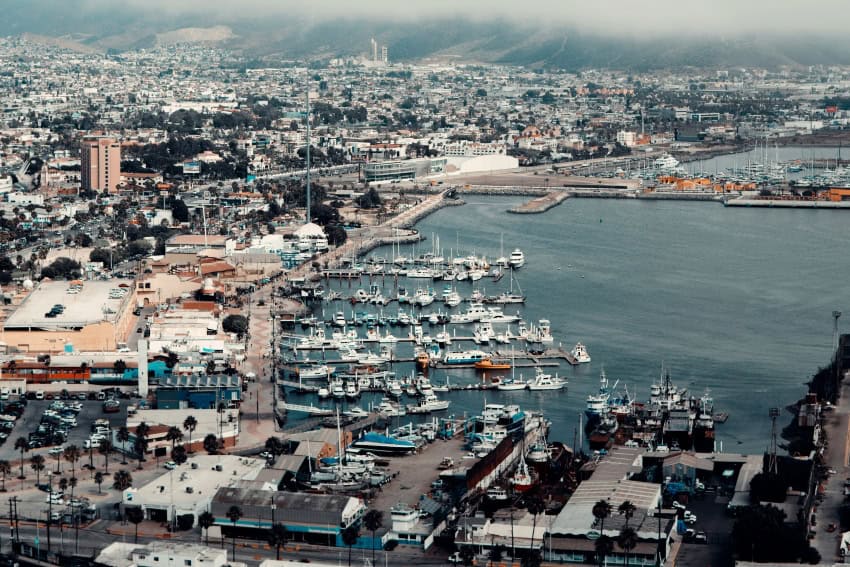
While Ensenada is the closest gateway to the Valle de Guadalupe, it is well worth a visit, too. As Baja California’s largest seaport, Ensenada bustles with cargo liners and cruise ships.
Most cruise passengers head for the shops, restaurants and bars along Ave. Adolfo López Mateos, including El Rey Sol for fine French dining, La Guerrerense for the state’s best tostadas and Hussong’s Cantina, everyone’s favorite bar. Also important is the Caracol Museum and the Riviera Cultural Center, a former casino, with its history museum. To the south is Estero Beach and its famed Estero Beach Hotel, as well as La Bufadora, the largest sea geyser in North America that shoots water 100 feet into the air.
When you go
If you’re driving from the U.S., make sure that your U.S. auto insurance policy covers you. Many policies cover up to 50 miles from the border. However, if you are going to Ensenada or further south, you can buy Mexican insurance via organizations such as the Automobile Club of Southern California and Baja Bound.
Both Mexico and the U.S. require a valid passport to enter or re-enter the country. In addition, Mexico requires that all foreign visitors who are not legal residents have an FMM tourist card. You need to stop at the border and fill out the short visa form. If your stay is seven days or less, there is no charge.
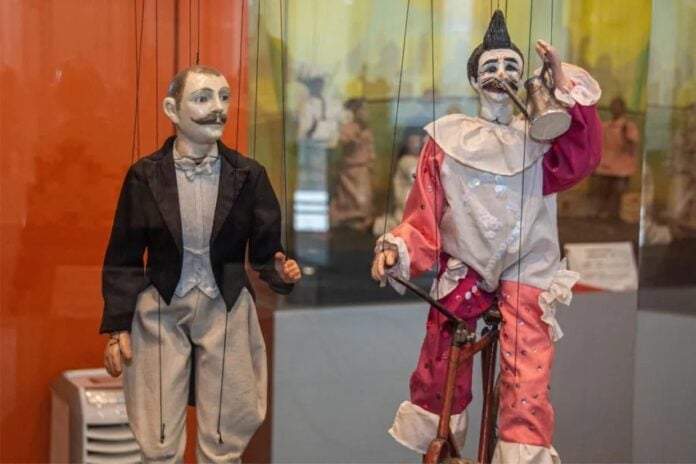
Huamantla, Tlaxcala has been noted for puppetry since the early 19th century and is home to the National Puppet Museum. (Huamantla Pueblo Mágico)
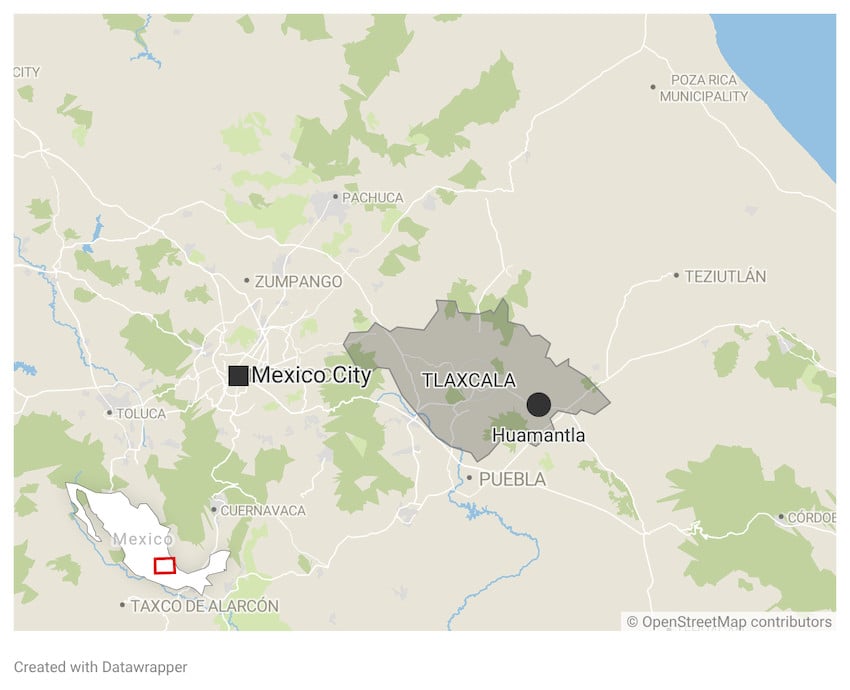
There’s a running joke in Mexico that Tlaxcala — among the least populous states in the nation, bordering the State of Mexico to the east — “no existe.” Or, it doesn’t exist. In 2021, the state’s tourism board cunningly flipped that notion by introducing a new official state motto to humorous fanfare: “Tlaxacala si existe.” That is, Tlaxcala does, in fact, exist on the map and as a travel destination.
Yet, despite the state’s historic capital being less than two hours away from the heart of Mexico City and under one hour from Puebla, it still gets overlooked by Mexico’s masses. Due to its miniature size (it’s literally and geographically the smallest state in all of Mexico), Tlaxcala has only two Pueblos Mágicos. But one of them has a few tricks up its sleeve for intrepid travelers: Huamantla.
The travel attractions of Huamantla
Resting at the base of La Malinche — a towering, inactive volcano that dominates central Mexico’s arid landscape as one of the tallest peaks in the country — Huamantla is a relatively quiet and noticeably slow town on most days. Its biggest annual draws are the Feria de Huamantla in August, featuring the famous “La noche que nadie duerme” (“The Night When Nobody Sleeps”), where streets are covered with intricately designed sawdust carpets, and the “Huamantlada,” a bull-running event akin to Veracruz’s weeks-long Xiquenada. If that isn’t enough to fill up your calendar, there’s also the Carrera de Carcachas (Jalopy Car Race) for good measure. Taking place during the same time as the Feria de Huamantla, it features beat-up vehicles that are taken en masse to nearby dirt roads for a chaotic and frenzied rally-style off-road race.
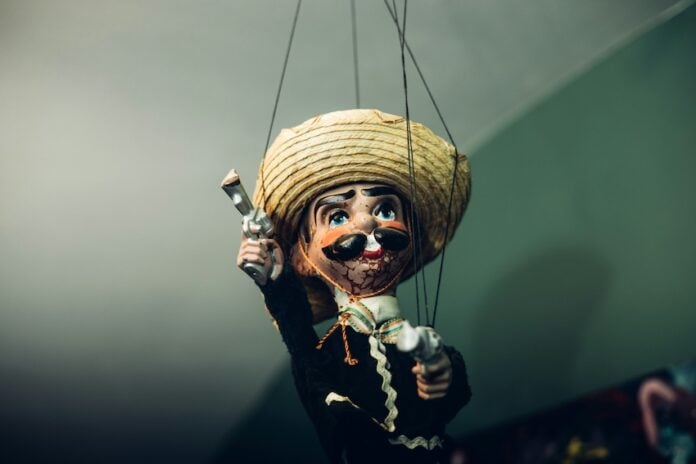
But perhaps most magical, at least for theater aficionados and for families traveling with young ones, is the town’s deep connection to puppetry. Huamantla is home to both the Rosete Aranda International Puppet Festival and Mexico’s National Puppet Museum, the latter of which is located in Parque Juárez, the town’s spacious main square.
The Puppet Festival began in 1983 and showcases an array of local and visiting puppeteers who put on colorfully entertaining shows for all ages. Named after the Rosete Aranda theater company — which was founded in Huamantla by a group of Tlaxcaltecan siblings in 1835, and is credited as being one of Mexico’s forebearers of inventive puppetry — the festival recently celebrated its 40th anniversary. Occurring every year in October for roughly two weeks, last year’s edition included 60 performances delivered by more than 35 domestic and international troupes that travel throughout Tlaxcala during that time to put on shows.
Mexico’s puppetry capital
As the story goes, Huamantla’s skillful craftsmanship and adoration of puppetry began in 1830, when an Italian immigrant named Margarito Aquino arrived and created a makeshift theater inside his home for the provincial audience. The children of Huamantla took on the tradition, using clay heads, local fabrics and strings-and-rods to create their own puppets. Some of those children went on to pursue puppetry as successful careers, traveling around Mexico and the United States and, in their heyday, getting invited by President Benito Juárez to perform at the Presidential Palace in Mexico City. The theater company operated until 1962, but with the rise of television and other forms of entertainment, it finally closed after more than a century. However, some of the 5,000 original puppets in the Rosete Aranda collection are now on display year-round in Huamantla’s National Puppet Museum.
The museum opened to the public in 1991 and boasts puppets from all over the globe (China, Taiwan, Turkey and Indonesia, to name a few). Though creepy at times — imagine being in a silent room, surrounded by an army of lifeless puppets watching your every move — the museum is a worthwhile experience that traces the evolution, styles and characteristics of various forms of puppetry in a free, self-guided tour.
The National Puppet Museum
Highlights include reimagined scenes taken from children’s fairy tales, using elaborately positioned puppets, such as Snow White; surreal, otherworldly puppets like a giant anthropomorphic maguey, a family of mice, a dancing cucharacha and various renditions of Mexicanized devils; miniature replicas of famous Mexicans like Frida Kahlo and Diego Rivera; and an entire section dedicated to Dia de muertos-inspired puppets, all housed in an unlit room with black light paint to mimic the spiritual underworld. Rooster fights, bull rings, a platoon of soldiers marching into battle, a band of mariachis — the museum has it all, in the form of puppets. Upon exiting the museum’s main gallery, you can even take a swing at puppeteering a large, wooden Pinocchio on a small stage.
With over 500 puppet artifacts, the museum — and Huamantla itself — is a living and active relic of Mexican history, and a display of ingenious Mexican imagination, awaiting in the shadows of a dormant volcano. At the center of Mexico’s de facto puppet capital, it’s the museum that steals the show.
Alan Chazaro is the author of “These Spaceships Weren’t Built For Us” (Tia Chucha Press, 2026), “Notes from the Eastern Span of the Bay Bridge” (Ghost City Press, 2021), “Piñata Theory” (Black Lawrence Press, 2020), and “This Is Not a Frank Ocean Cover Album” (Black Lawrence Press, 2019). He is a graduate of June Jordan’s Poetry for the People program at UC Berkeley and was selected as a Lawrence Ferlinghetti Poetry Fellow at the University of San Francisco. His work can be found in NPR, The Guardian, SLAM, GQ, L.A. Times, and more. He is currently based in Veracruz.
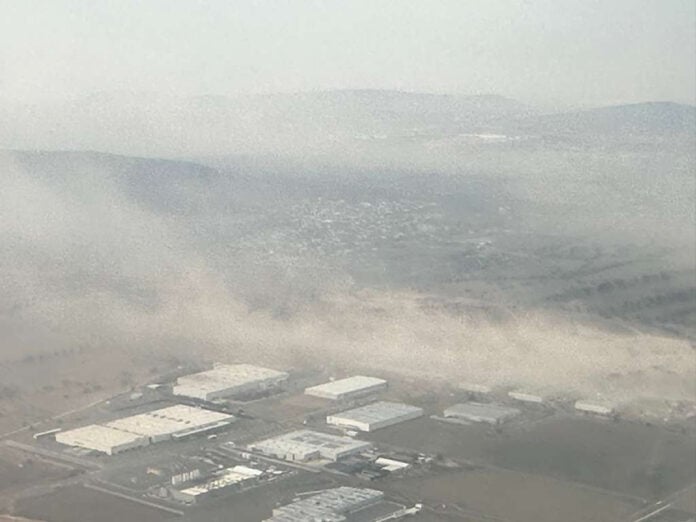
When an unexpected dust storm blew through Querétaro, a quick flight from Monterrey turned into an all-day ordeal. (Travis Bembenek)
Many of us have harrowing flight stories. Mine from earlier this week was one of my scariest ones yet. Having spent too much time in airplanes in my pre-MND life, I have had more than a few experiences on airplanes that have left me shaken up. A last-second aborted flight, scary the first time, barely registers with me anymore. Once, four-plus hours into an 11-hour flight from São Paulo, Brazil, to Chicago and over the Amazon rainforest, the pilots suddenly told us that we had “engine troubles” and needed to return all the way to São Paulo. That was a long four hours, as no one really knew how much of the real story about the airplane issues we were being told. Screaming kids, out of control passengers, vomiting, bad turbulence — I felt like I had pretty much seen, heard and smelled it all.
But my Viva flight from Monterrey, Mexico, to Querétaro earlier this week was a doozy unlike any other. I was coming back home after some great meetings in the northern city. Monterrey is buzzing with activity pre-World Cup and I wanted to check things out firsthand and talk to leaders on the ground there. I will write about all of this in future columns. But quite honestly, I don’t have the headspace to organize my thoughts from the trip just yet as I am still reeling from my return flight experience.
Night had fallen by the time the plane finally landed in Querétaro. (Travis Bembenek)
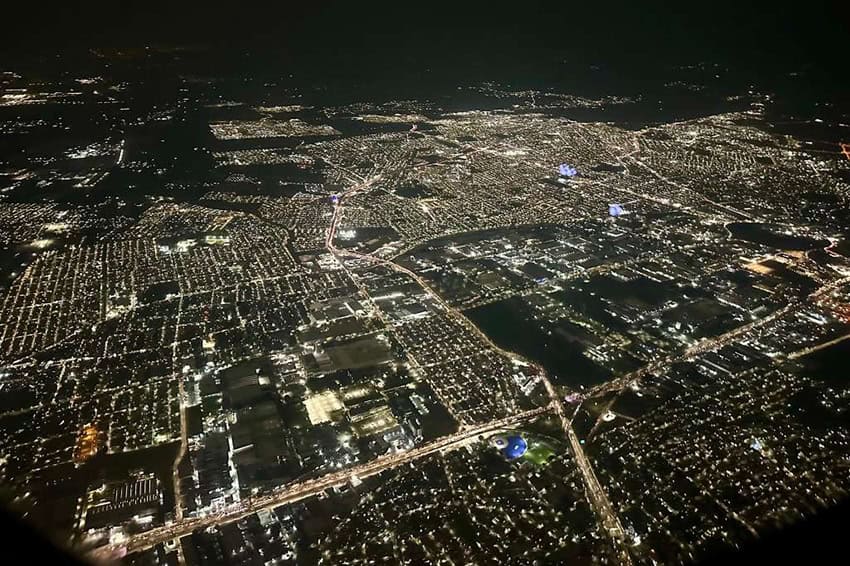
The flight left on time and it looked like we were going to arrive a few minutes early — totally uneventful. But as we began the landing sequence with 20 minutes left, I started to notice a strange color outside of the windows. The sky suddenly started turning dark and visibility was significantly reduced. At first, I couldn’t figure out what it was. Smoke from fires? An approaching storm? And then it hit me: It was a massive dust storm. The wind picked up dramatically and you could see massive clouds of dust kicking up everywhere. Within seconds, the plane began to shake.
As we got closer to the airport, the shaking intensified. The type of shaking that was unpredictable — soft, then suddenly violent, then soft again, then very violent. The plane got quiet as everyone closed their eyes and waited for it to end. I suffer from vertigo, and this type of shaking often gives me a sharp, severe headache — this flight was no exception. As we approached the runway, the plane was shaking and swaying. When we hit about 100 feet of altitude, the pilots suddenly aborted the landing and pulled up.
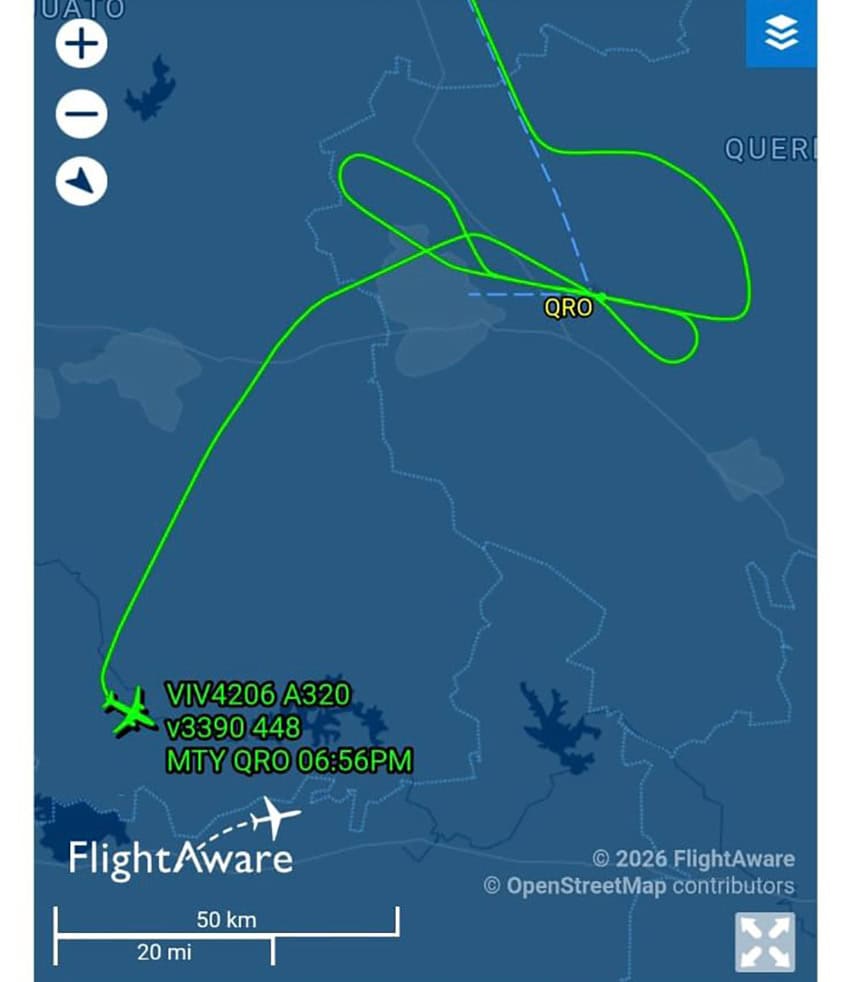
On one hand, it was nice to have the shaking less intense for a few seconds, but people were clearly rattled. After a few minutes, the pilot came on the air and said that strong winds made the landing dangerous. He said we would circle back and try again. The plane continued shaking as we banked and came in for the second attempt at landing. This time, as we neared the runway, the shaking was even more violent. At the last second, the pilots once again aborted the landing.
People were pretty much in freak-out mode by this point. Someone kept hitting the flight attendant call button. A flight attendant on the loudspeaker said that due to the turbulence, they could not get up, but the person should press the button again if it was an emergency. The next second or two felt like an eternity, and then the call button went off again, and again, and again. Someone was clearly not doing well. People very nervously started looking at each other and also at the flight attendants to see what they were going to do.
After conditions prevented a safe landing in Querétaro, the plane diverted to Morelia to wait out the storm. (FlightAware)
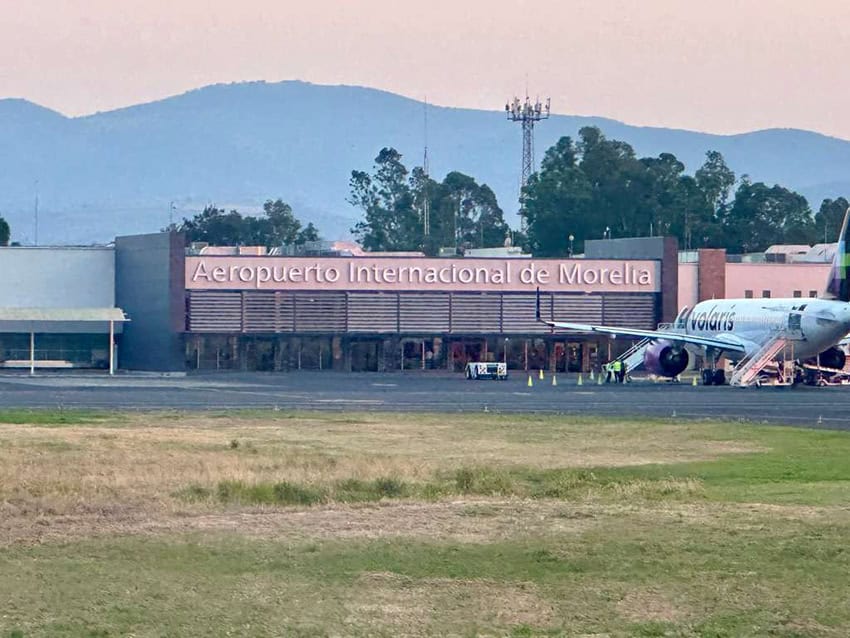
The pilot came on the loudspeaker again and told us that it was currently impossible to land in Querétaro and that instead, we were going to fly to the Morelia airport, in the neighboring state of Michoacán, to wait out the storm from there. Within 20 minutes, we landed there without incident. We waited it out for just over an hour and then did a 23-minute flight back to Querétaro, landing smoothly just over two hours past our original landing time. Everyone clapped and cheered. It was wonderful to finally be at our final destination.
A few observations:
The young flight attendants were world-class. They stayed happy, positive, smiling, and encouraging the entire time. They exuded calm and confidence.
The pilots were equally outstanding. They were calm as they clearly explained in Spanish and English what had happened and what would happen next. While parked in Morelia, they came out of the cockpit, smiling, and chatted with anxious passengers.
The passengers, almost all Mexicans, were calm and well-behaved. We have all seen too many examples lately of passengers becoming impatient or belligerent. Everyone was hot, stressed, tired and anxious, but not one single person lost their cool.
The young couple sitting next to me was awesome. She was born and raised in San Miguel de Allende. He is a Mexican American born in Texas. They were coming to SMA for a few days to spend Mother’s Day with her grandmother — how sweet is that? I don’t talk to people enough on airplanes and need to make an effort to do so more. It’s too easy to just look down at our phones and not talk to anyone, but a flight is a wonderful chance to connect on a human level with a complete stranger. Human connection — that seems to be something we do less and less of these days. I recently wrote about a beautiful flight connection with a man flying to Los Cabos to celebrate his 80th birthday. Click here to read it.
A stopover in Morelia gave the pilot a chance to calm his passengers’ shaken nerves while waiting for weather conditions to improve. (Travis Bembenek)
As I deboarded the plane, I thanked the pilots and the flight attendants, also telling them that they had my utmost respect for the way that they handled the situation. The next morning, I woke up to a text message from the couple seated next to me, telling me that they were inspired by my story of moving to Mexico and buying Mexico News Daily. They said that they had just purchased a subscription and were loving our content. They had told me that their dream is to get back to Mexico at some point. Maybe MND will inspire them?
It’s weird how life sometimes throws us curveballs to see how we react. It feels like we are collectively getting an increasing number of them thrown at us lately, and it’s often scary to think about how we are going to handle it. That said, this particular curveball left me feeling particularly optimistic about us humans — or at least those on that Viva flight from Monterrey to Querétaro.
Travis Bembenek is the CEO ofMexico News Daily and has been living, working or playing in Mexico for nearly 30 years.
Don't be that gringo and aggravate the locals. We asked Mexicans what behavior really upsets them. This is what they told us. (Bruno Guerrero/Unsplash)
We’re all annoying in our own way. There is always a quirk or personality trait that irritates the masses. Oftentimes those traits span an entire nationality.
Avoid getting this look by paying attention to our handy guide. (Alev Takil/Unsplash)
Oh Americans. Known the world over as loud, obnoxious, fashionably-challenged and completely coddled. According to The Times and a 10-year-old article on Business Insider, citizens of the U.S. travel simply to compare everything to the U.S., speak English loud and proud and make little attempt to learn the local culture. Who is more intolerable than us?
I’m happy to say that since moving to Mexico City, I’ve found out that we aren’t the only deplorables. At least here in Mexico. (I’m talking to you Canadians, Brits and Aussies.)
Not to fluff my own feathers, but I have always made a very concerted effort to meld with the local culture as much as possible. Yet, I’m still classified as annoying. Why? I needed answers. So I set out on a very entertaining quest to uncover the most offensive things I, my fellow gringos and selected other nationalities do to roll both the proverbial and physical eyes of our Mexican neighbors.
Through in-depth interviews of six born-and-raised-in-Mexico friends, I found out more than I needed to know about the actions we (often unknowingly) take to offend them.
Here are the top 10, coupled with my personal interpretation of what we’re doing wrong.
Expect English everywhere
Mexico City restaurants are indeed handing out English menus to Mexican patrons, much to their chagrin. It’s a double-edged sword. It’s a testament to the country’s accommodation of outsiders, but it’s also preventing English-speaking expats from immersing themselves in the language and, therefore, learning it.
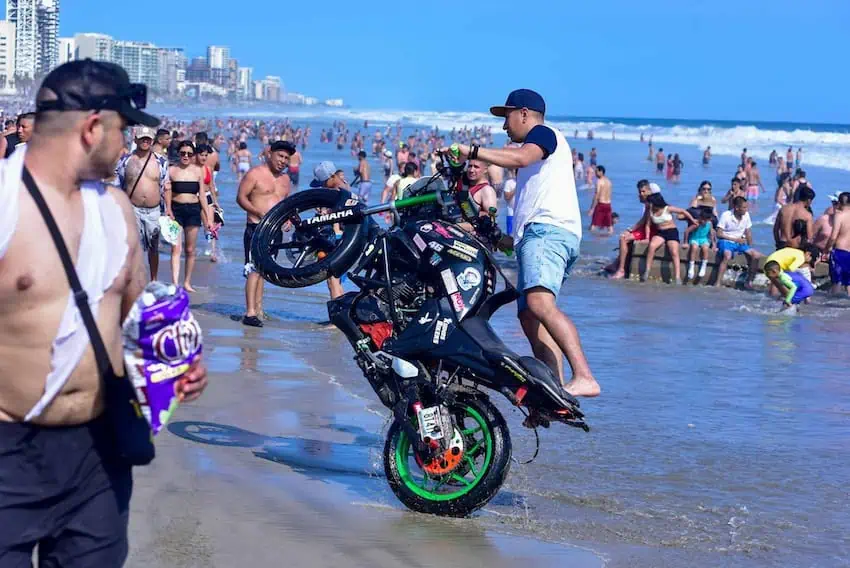
Admittedly, you probably weren’t intending to come to Mexico and do this … but don’t ride your motorbike on a crowded tourist beach. (Carlos Alberto Carbajal/Cuartoscuro)
Refuse to drink filtered water
I understand this from both sides. If you’ve fallen victim to Moctezuma’s rite of passage, just looking at an ice cube will make your stomach turn. However, it likely didn’t come from an ice cube. Dining establishments have no intention of poisoning you or anyone else with tap water. No one drinks it here anyway. Filtered is fine.
Talk about how cheap everything is
This comes up a lot on Mexico News Daily. Even if something is cheap compared to your home country, it’s not cheap compared to Mexico’s average salary. Delight in the money you’re saving, but keep it to yourself.
Guilt payments and over-tipping
If your housekeeper gives you a rate, that’s the rate you should pay. Don’t double it because you think it’s too low. It throws off the pay scale for Mexicans who might not be making the same salary you’re raking in from a San Fran-based tech giant. This also goes for tipping. The standard is 10-15%, so unless the service is spectacular beyond belief, stick with the local customs.
Not eating like a Mexican
This is one of my favorites. I’m not referring to Mexican dishes and I’m sure you’re noshing heavily on tlayudas and mole. This refers to Mexico’s traditional dining schedule. Think about it — gringos eat lunch around 1 p.m. and dinner around 7 p.m. Mexicans eat lunch around 2 p.m. and dinner around 8 p.m. This means that when a Mexican couple shows up for date night at 8:15 p.m., there are no tables available.
Crossing the street like a gringo
The rules here are pretty obvious — pedestrians yield to cars. Yes, it’s opposite to most other countries, but trying to change this societal rule will end up getting you squashed. It’s confusing to drivers and safer for you to follow the rule, so just do it.
Lack of formalities
It’s common in the U.S. to skip conversation openers in the interest of saving time and getting to the point. In many cases, this is a glorious way of doing business, but that’s not how it works here. Especially when interacting with someone for the first time, take 5 minutes to be Mexican and break the ice. A “How was your trip to Acapulco last weekend?” can go a long way.
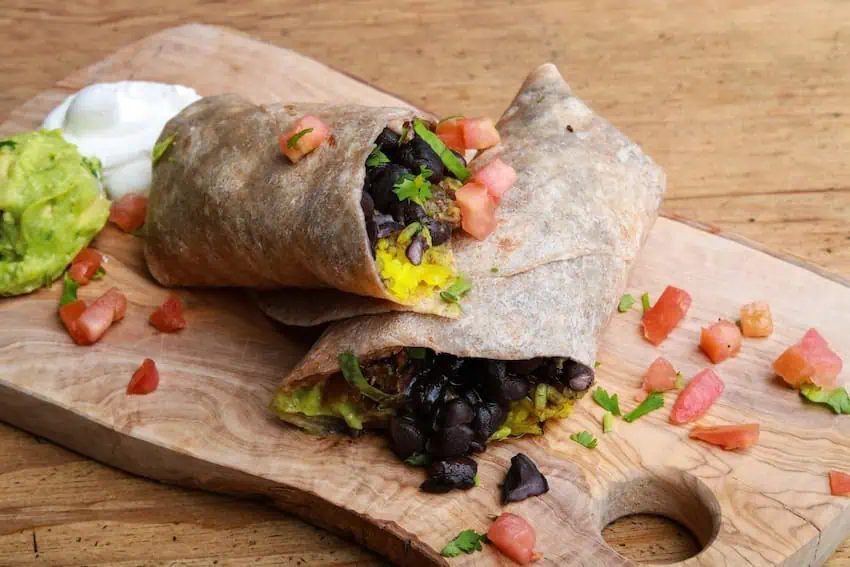
Don’t even think about ordering this. Pretend you’ve never heard of it. (Creative Headline/Unsplash)
Very delicate territory here. There has been a long-held belief that Mexicans look a certain way, work in certain industries and have a certain style. This belief is particularly rampant in the United States. Mexico is a country that is sensitive to class, so a statement like this can be really offensive (especially when coming from an American).
Mexicans don’t eat burritos
This isn’t true everywhere, obviously. The seafood joint up the street from my apartment has a pretty rico seafood burrito on the menu. If you’ve flown into Puerto Vallarta, you’ve probably filled up on a famous smoked marlin burrito at Tacón de Marlin. What is meant by burrito in this case is a lack of research or curiosity about true Mexican culture. Mexico is mole, it’s Tenochtitlán, it’s Quetzalcoatl, it’s Catholicism, it’s copal, it’s mariachi, it’s agave. This country is so rich beyond the edges of a Jack cheese and ground beef burrito from Chipotle. Mexico is simply amazing.
Anything self-deprecating behaviors you want to add? Please let us know, politely, in the comments below.
This article was first published in June 2024.
Bethany Platanella is a travel planner and lifestyle writer based in Mexico City. She lives for the dopamine hit that comes directly after booking a plane ticket, exploring local markets, practicing yoga and munching on fresh tortillas. Sign up to receive her Sunday Love Letters to your inbox, peruse her blog, or follow her on Instagram.