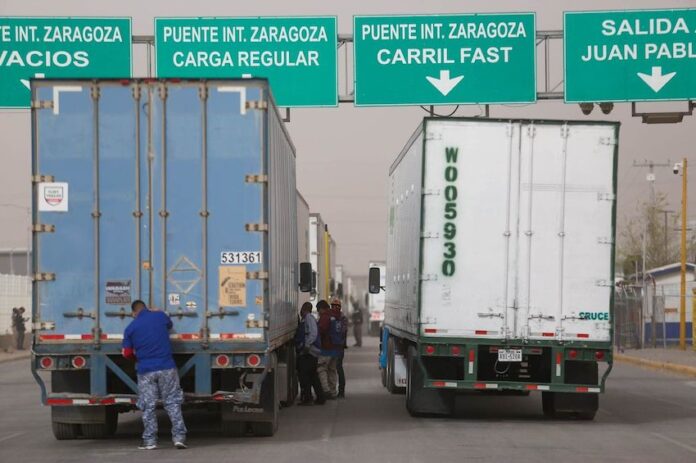
Retail trade and e-trade — with Walmart and Mercado Libre as the big players here — are gaining ground as key shelters for FDI in Mexico. (Daniel Augusto/Cuartoscuro)
U.S. trade policies are reshaping Mexico’s foreign investment profile, temporarily knocking the manufacturing sector off its perch as the country’s most attractive investment.
According to the news magazine Expansión, the commercial sector has displaced manufacturing as the largest target of foreign direct investment (FDI) in Mexico, with 42% of all investment announcements made during the first quarter of the year going to profit-driven stores and businesses.
Citing data from the Economy Ministry (SE), Expansión reported that the 39 investment announcements made during the first quarter of 2025 surpassed a total of US $25.8 billion, but only 24% of that targeted the manufacturing sector, which has been a priority for FDI.
Last year, an SE report described Mexico as “a specialized manufacturing center with a growing need for investment capital to develop the country’s industrial base.”
SE data revealed that during the first quarter of 2024, more than $8.5 billion of the $20.3 billion in FDI (42%) received by Mexico went to the manufacturing sector, primarily in the autoparts industry.
The next most-favored sector in 2024 was financial services (25%), followed by mining (12%), transportation (6%) and trade, which was broken down into wholesale trade (5%) and retail trade (3%).
This year, Expansión reports, uncertainty caused by U.S. tariffs has prompted foreign investors to reconsider the reliability of Mexico as an export platform.
“The uncertainty has impacted long-term decisions, especially for companies with cross-border flows,” Expansión wrote.
In northern Mexico — home to automotive, aerospace, electronics, and heavy metal manufacturing enterprises — executives told Expansión that industrial expansion plans are being paused not due to lack of capital, but because of uncertainty.
The volatile environment has also resulted in higher logistical costs, prompting some multinationals to contemplate relocating their production chains.
This phenomenon has produced a paradox. “The country that appeared to be the principal beneficiary of nearshoring is now facing unexpected obstacles,” Expansión wrote.
Expansión cited a report by Spanish financial services company BBVA indicating that Mexico’s manufacturing remains the most important “structural recipient” of FDI, because of the viability of its products. However, the increase in investment announcements prioritizing the trade sector hints at an important evolution.
Retail trade and e-trade — with Walmart and Mercado Libre as the big players here — are gaining ground as key shelters for FDI in Mexico.
As evidence, first-quarter investment announcements in this sector surpassed $11 billion, nearly double the $6 billion recorded in the first quarter of 2024.
Mexico's share of the United States' $948 billion market for imports in the first three months of the year was 13.8%. (Carlos Sánchez Colunga/Cuartoscuro)
Tariffs couldn’t stop Mexico from recording strong first-quarter growth in its earnings from exports sent to the United States.
Mexico exported goods worth US $131.29 billion to the world’s largest economy in the first quarter, up 9.5% compared to the same period of 2024.
Mexico beat out Canada and China to retain its position as the top exporter to the United States. Canada’s earnings from exports sent to the U.S. increased 7.9% annually in the first quarter to $108.93 billion, while China’s revenue rose 5.1% to $102.65 billion.
Mexico’s share of the United States’ $948 billion market for imports in the first three months of the year was 13.8%.
Mexico, Canada and China all increased their earnings from exports sent to the United States in the first quarter of 2025 despite U.S. President Donald Trump imposing new tariffs on imports from those countries, and many others.
U.S. tariffs on Mexican steel and aluminum, as well as other Mexican goods not covered by the USMCA free trade pact, were in force for most of March, having taken effect on March 12 and March 4, respectively.
Esta estrategia debe reconocer la importancia del tamaño del mercado estadounidense, pero debe construir una base de exportaciones de alta tecnología sustentada en la industria de componentes electrónicos que ya existe en el país. Necesitamos generar más energía, @LuzElena_GE, pic.twitter.com/DugfCSlqZZ
— México, ¿cómo vamos? (@MexicoComoVamos) May 6, 2025
More than 80% of Mexico’s export revenue comes from goods shipped to the United States.
Mexico’s export earnings surge 15.4% in March
Despite the imposition of U.S. tariffs on Mexican steel, aluminum and goods not covered by the USMCA — as well as all Mexican products for a brief period in early March — the value of Mexico’s exports to the United States increased 15.4% annually in March to $47.98 billion.
Mexico’s strong growth in export revenue in March can be partially attributed to the fact that Holy Week fell in March last year, while the week leading up to Easter Sunday was in April in 2025. Consequently, there were more working days in March 2025 than in the same month last year.
Mexico’s growth in revenue from exports shipped to the United States in March was well above the 4.2% annual increase in earnings for Canada, which shipped goods worth $35.66 billion to its southern neighbor in the third month of the year.
In a sign that hefty U.S. tariffs on Chinese goods are hurting China, the value of the east Asian nation’s exports to the United States fell 1.9% annually to $29.38 billion in March.
Mexico’s trade surplus with the United States, a point of frustration for U.S. President Donald Trump, reached $47.25 billion in Q1 2025. (Gage Skidmore/Flickr)
Mexico’s trade surplus with US increased 19% in Q1
The Census Bureau data shows that the United States exported goods worth $84.04 billion to Mexico in the first three months of 2025, a 4.8% increase compared to the first quarter of last year.
Mexico thus had a trade surplus of $47.25 billion with its northern neighbor in the first quarter of 2025. Mexico’s surplus with the U.S. in the first three months of 2024 was $39.68 billion.
Mexico’s surplus thus increased 19.1% in the space of a year.
The U.S. president has cited the United States’ trade deficits with Mexico and Canada as one of the reasons for imposing tariffs on imports from those countries, despite the three nations being signatories to the USMCA and having high levels of integration between their economies.
She said that she and the U.S. president “agreed to keep working” on ways in which the trade imbalance can be reduced by Mexico importing more goods from the United States.
Affordable books from the “25 for 25” collection aim to foster a culture of reading in Latin America.
(Magdalena Montiel/Cuartoscuro)
Mexico’s Fondo de Cultura Económica,or Fund for Economic Culture (FCE), plans to launch a Latin American-wide initiative called “25 for 25,” which will provide 2.5 million books for youths and adults across the region, the organization’s director, Paco Ignacio Taibo, announced on Friday.
The FCE publishing group has produced 98 low-cost titles, totaling 3.1 million copies, priced between 9 and 20 pesos (US 46 cents to $1), or around the value of half a sandwich, to make reading more accessible to Mexicans, Taibo said during President Claudia Sheinbaum’s daily press conference.
Gabriel García Márquez and other LATAM literary giants will gain a new generation of readers under the plan. (Galo Cañas Rodríguez/Cuartoscuro)
“The book is the great vehicle, the transporter of information,” Taibo said. “From 2019 to the present, 21 million books have been produced and 24 million sold” by the FCE.
Taibo said the “25 for 25” collection, which includes 25 book titles, will launch simultaneously by the end of the year across Argentina, Colombia, Cuba, Venezuela, Chile, Paraguay, Honduras, Guatemala and Mexico.
The collection features a wide variety of Latin American literature, including works by Colombian Gabriel García Márquez; Uruguayan writers Mario Benedetti and Eduardo Galeano; the Mexican author Adela Fernández; and poet Piedad Bonnett.
The new project is supported by Cuba’s Casa de las Américas, one of Latin America’s most influential cultural institutions.
The Mexican government and FCE aim to remove the stigma of books as elitist or inaccessible and encourage adolescents to read for pleasure.
The launch of this initiative comes as Mexico and other Latin American countries have scored low on international literacy tests.
In Mexico, one in three third-grade students struggles with reading comprehension. On the PISA (Programme for International Student Assessment) exam, Mexican students ranked 49th internationally in reading, scoring 415 points — well below the OECD average of 487. This places Mexico among the lowest-performing countries globally, with one-third of students at the lowest proficiency levels.
On the same PISA test, many Latin American countries scored even lower than Mexico. Colombia ranked 54, Peru 55, Argentina 58, Guatemala 66 and Paraguay 68. Only Chile did better, in 37th place.
“Books enable critical thinking, create role models of how to live and what to live for, destroy damaged neurons, are the great builders of active thought and the destroyers of racism and machismo,” Taibo said.
While creating the collection with retail prices from 11 to 20 pesos was complicated, FCE’s initiative has been highly successful.
“We discovered that the price of books was a fundamental obstacle to promoting reading, that teenagers, who were struggling to find the money to buy the book they wanted, were unable to afford it,” Taibo explained.
“We managed to lower prices with new printing tools, new distribution networks, and reduced production costs,” he said.
FCE plans to participate in 100 book fairs in Mexico and 103 abroad. It also aims to use other media, including mobile applications and digital tools, to make reading more accessible.
The organization already has an information network, with five television programs and five radio programs available on public media.
“Perhaps the biggest step has been promoting reading in the reading rooms,” Taibo said of FCE’s progress to date. “We started with 3,000 rooms, and now we have 21,118 registered citizen reading rooms in the country.”
The new initiative is expected to be one of the largest publishing efforts to promote reading in Latin America in recent years.
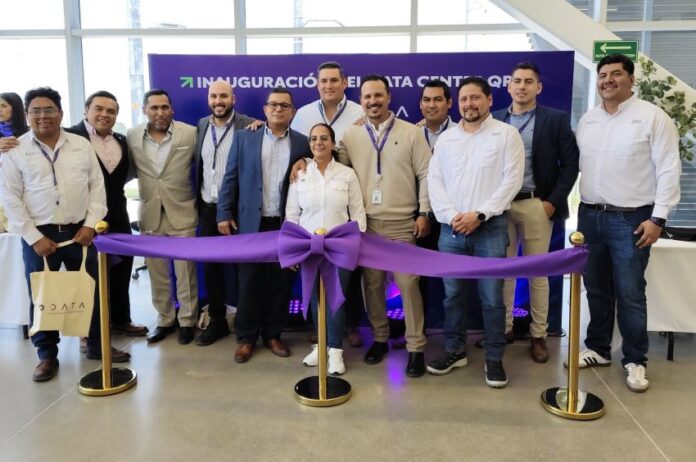
ODATA’s new facility cements Querétaro as a leading hub for data center infrastructure in Mexico. (Raúl Parra/X)
Data center company ODATA has started operations at its US $3 billion campus in the Bajío state of Querétaro.
The company is working out of the first completed facility on its still under construction DC QR03 campus in the PyME Industrial Park, southwest of Querétaro city, the state capital.
— Centro Informativo Querétaro (@CIQueretaro) May 6, 2025
The initial phase of the facility was energized in February, delivering 200 megawatts (MW) to the electrical system and primarily serving cloud services and artificial intelligence customers.
Once fully operational, the new campus will have a total capacity of up to 300 MW of information technology power.
ODATA CEO Ricardo Alário said in a press release that the new facility already has three hyperscale customers, calling it “an essential interconnection hub for Querétaro and Mexico.”
Acknowledging energy availability as a persistent industry challenge, ODATA is moving forward with an expansion that will add an additional 400 MW, one of the largest initiatives of its kind in Mexico, according to trade and investment publication Mexico Now.
Over the weekend, ODATA also unveiled Aligned’s patented Delta Cube cooling system, which is purpose-built for adaptive data centers. Instead of pushing cold air into the data hall, it removes heat in the racks, reducing energy consumption.
The Delta Cube design “accommodates both new data centers and retrofit facilities, improving the efficiency of existing infrastructure.”
ODATA is a subsidiary of Plano, Texas-based Aligned Data Centers, which describes itself as a data center infrastructure technology company offering colocation and build-to-scale data center solutions to cloud, enterprise, and managed service providers.
ODATA opened its first Mexican facility in May 2022 with an investment of US $79 million in the same Querétaro industrial park where its new campus is located. That facility provides data center services, including managed colocation and build-to-suit projects, across Latin America.
The QR03 operation reinforces Querétaro as one of the most important data center infrastructure hubs in the country. The new facility adds to a growing wave of investments in the region by technology giants such as Amazon Web Services, Google and Microsoft.
Querétaro is currently home to 15 data centers with cumulative investments of over US $12 billion since 2009, and state officials reportedly expect to add at least 20 more in the coming years.
Alário said Querétaro’s strategic location allows it to serve both the Mexican and U.S. markets, where there are energy restrictions in certain regions.
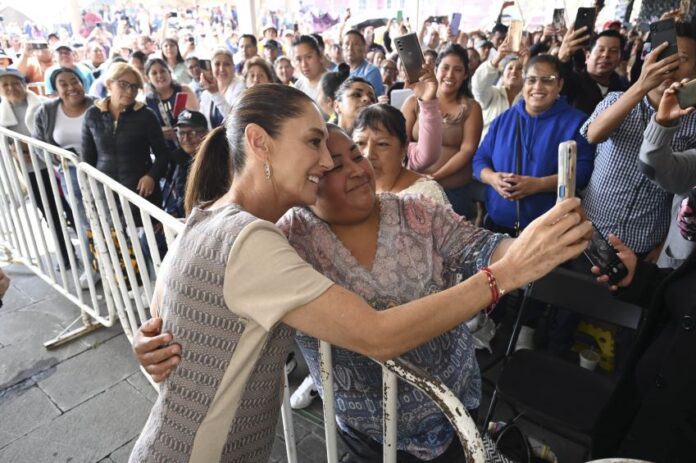
At 81%, the president's approval rating has never been higher. (Presidencia/Cuartoscuro)
Just over seven months into her six-year presidency, President Claudia Sheinbaum remains a very popular leader, according to the results of two polls conducted in April.
The latest El Financiero poll detected an 81% approval rating for Mexico’s first female president, while a much larger survey conducted by the Mitofsky polling company for the newspaper El Economista found a 70.2% approval rating for Sheinbaum.
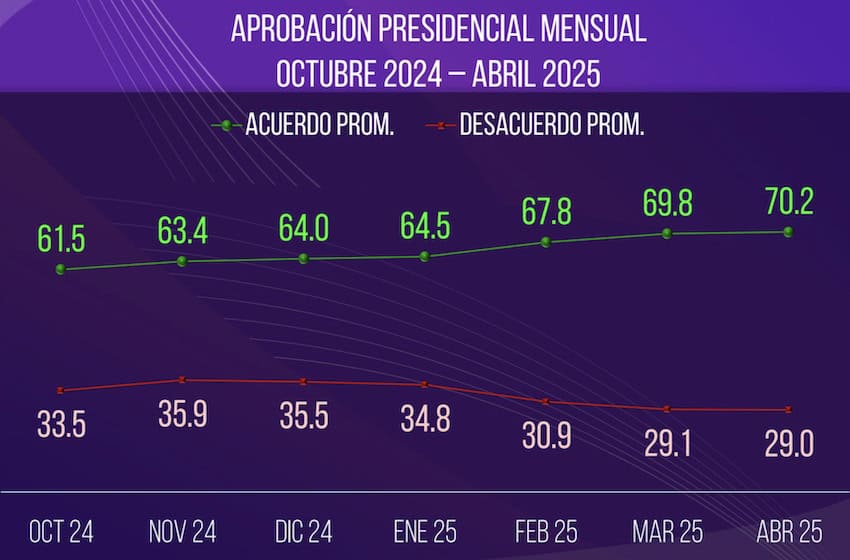
The president’s approval rating has steadily risen over the last seven months, though it may not be as high as 81%, as the El Financiero poll found. (Mitofsky/El Economista)
According to the El Financiero poll results, Sheinbaum’s approval rating declined two percentage points compared to March.
Among respondents to the Mitofsky/El Economista poll, the president’s approval rating has never been higher, increasing 0.4 percentage points in April to go above 70% for the first time since she was sworn in on Oct. 1.
Strong support for Sheinbaum’s plan to ban US government advertising in Mexico
For its poll, El Financiero surveyed 1,100 Mexican adults by telephone, with interviews conducted between April 3-7 and between April 24-28.
Per the newspaper’s poll results, Sheinbaum’s approval rating has been above 80% every month so far this year. It peaked at 85% in February before falling two points in March to 83% and two points again in April to 81%.
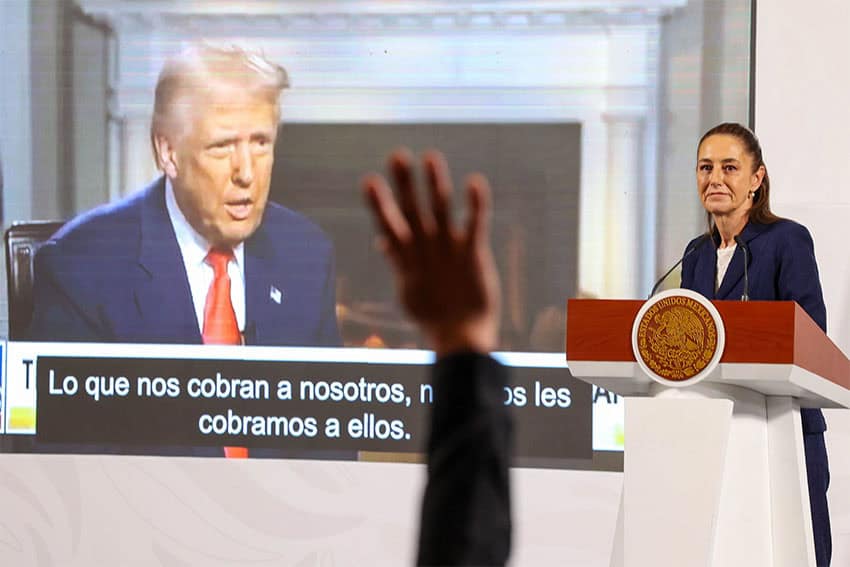
El Financiero also asked poll respondents to assess the Sheinbaum administration’s relationship with United States President Donald Trump, who has imposed tariffs on a range of imports from Mexico and last month accused the Mexican government of being “very afraid” of drug cartels. The percentage of those who expressed the view that the Mexican government is conducting its relationship with Trump “well” or “very well” increased 14 points from March to 50% in April, the highest level since the U.S. president began his second term.
Thirty-seven per cent of respondents expressed the opposite view, down from 46% in March. It was the first time that the percentage of respondents with a negative view of the way in which the Sheinbaum administration is conducting its relationship with Trump was lower than the percentage of those with a positive view.
The percentage of those who expressed the view that the Mexican government is conducting its relationship with Trump “well” or “very well” increased 14 points from March to 50% in April, the highest level since the U.S. president began his second term. (Moisés Pablo Nava/Cuartoscuro)
Forty-five per cent of El Financiero poll respondents said they had seen the United States’ government’s anti-immigration ads that aired in Mexico in April, while 55% said they hadn’t. Almost two-thirds of those polled — 64% — said that Mexico should ban U.S. government “announcements or commercials” in the Mexican media. Only 28% of respondents said they should be allowed.
Among the other findings of El Financiero’s April poll were that a strong majority of people believe that the Sheinbaum administration is doing a good job managing the economy (74%) — which expanded in the first quarter of the year — and providing “social support,” or welfare payments, to citizens (83%).
The Mitofsky/El Economista poll results from the past seven months show that Sheinbaum’s approval rating has increased every month between October and April, rising by a total of 8.7 percentage points in the period. The percentage of respondents who disapprove of the president’s performance has declined 4.5 points in the same period to 29%.
The poll detected the highest level of support for Sheinbaum in Oaxaca, where 82.6% of respondents said they approved of the president’s performance. The southern state is one of Mexico’s poorest, but economic growth has recently accelerated, in part due to government investment in Oaxaca, which has benefited from the Isthmus of Tehuantepec trade corridor project.
The only other state where Sheinbaum’s approval rating exceeded 80% was Quintana Roo, home to tourism destinations such as Cancún and Tulum.
The president’s approval rating was lowest in Sinaloa, which has been plagued by high levels of cartel violence since 2024 due to a fierce battle between rival factions of the Sinaloa Cartel that intensified after the arrest of Ismael “El Mayo” Zambada in the United States last July. Sheinbaum’s approval rating in the northern state in April was just 53.5%.
The second-lowest approval rating for the president was detected in Jalisco, at 57.4%. Sheinbaum’s approval rating was also well below the national average in Mexico City, at 62.2%.
The Mitofsky/El Economista poll also found that the president’s approval rating is higher among women than among men (72% vs 68.2%), and higher among young people aged 18-29 (75.8%) than among those aged 30-49 (69.5%) and 50 and over (66.2%).
Almost six in ten respondents — 57.9% — identified security as their “main concern” in Mexico, well ahead of the proportion of respondents who cited the economy (15.9%) and healthcare (15.1%) as their top concerns.
The special salty edition of Tecate Light is currently available only at the Gulf of Mexico Bar, where the beer company will gauge consumer response. Broader distribution is expected in June. (Bar del Golfo de México/Instagram)
Tecate Light has launched a special edition beer brewed with saltwater from the Gulf of Mexico, celebrating national pride and the richness of local ingredients.
According to Tecate’s parent company, Heineken, the sea salt makes Tecate Light more versatile when pairing with food, and connects with consumers who feel pride in everything Mexican.
Tecate Light | Con Sal del Golfo de México
“With this offering, we are celebrating our roots, connecting authentically with consumers and reinforcing pride in what’s made in Mexico,” VP of Marketing for Heineken Mexico Marta García said.
The new salty beer was officially launched on a floating bar called “Bar Golfo de México”, set atop a catamaran near the coast of Progreso, Yucatán.
Only a select group of press, influencers and content creators were invited to the exclusive launch event last week. However, the catamaran will open to the general public during May and June. To be part of this experience, the event’s organizers suggest keeping an eye on Tecate’s social media channels.
“This edition [of beer] represents a declaration of who we are: authentic, proud and ready to continue evolving alongside our consumers,” Tecate brand director Esteban Velasco said.
According to Heineken, the special salty edition of Tecate Light is currently available only at the Gulf of Mexico Bar, where the beer company will gauge consumer response. Broader distribution is expected in June, when the beer is expected to hit SIX store refrigerators in Monterrey, Mérida and Hermosillo.
Tecate Light was launched by Cervecería Tecate in 1992, becoming the first light beer produced and marketed in Mexico. Since its launch, Tecate Light has experienced sustained growth and is one of the best-selling beers in Mexico.
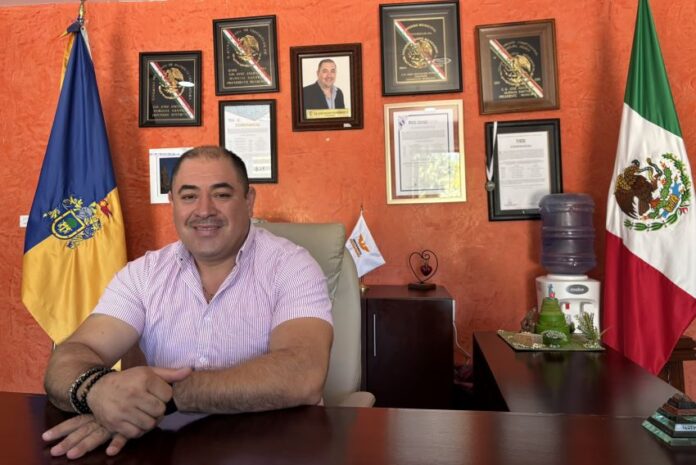
Teuchitlán Mayor José Asunción Murguía was detained by federal agents for allegedly colluding with the Jalisco New Generation Cartel (CJNG). (@AlertaGDL/on X)
Federal prosecutors arrested the mayor of Teuchitlán, Jalisco, on Saturday, accusing him of colluding with the Jalisco New Generation Cartel (CJNG), among other charges.
Teuchitlán, population 9,000, is the site of what had been thought to be a CJNG extermination camp, although the Federal Attorney General’s Office (FGR) cast doubt on that description, saying there is no evidence that cremation occurred at the Izaguirre Ranch.
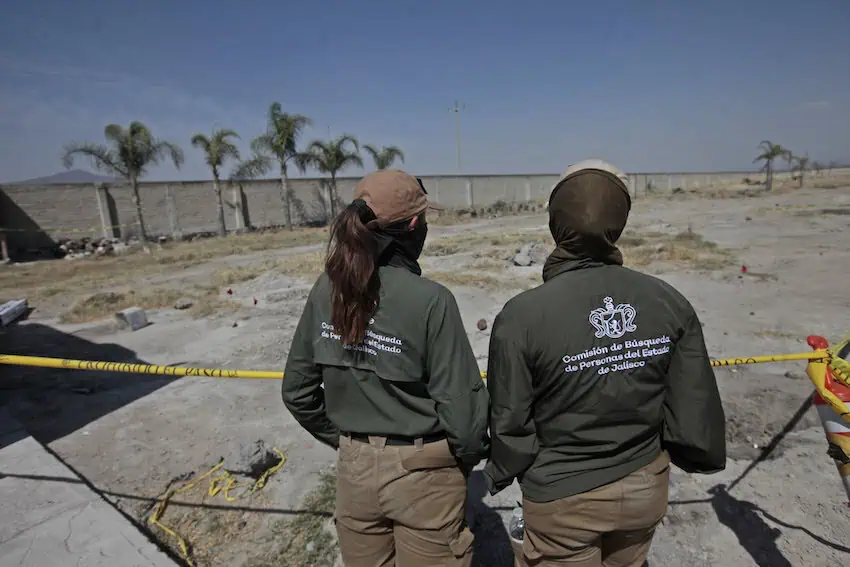
Whether there is sufficient evidence to continue investigating the presence of a crematorium in the Izaguirre Ranch in Teuchitlán is a point of contention between the Federal Prosecutor’s Office and the civil group Guerreros Buscadores, who search for missing persons. (Fernando Carranza García/Cuartoscuro)
José Asunción Murguía was apprehended near his home by federal troops wearing hoods, who stopped his pick-up truck and forced him into a police vehicle. Murguía was taken to FGR headquarters in Guadalajara, the state capital, about 60 kilometers east.
On Sunday, Murguía was transported under heavy guard to the maximum-security Puente Grande Prison. After processing, he appeared before a judge, where he was formally accused of organized crime activities and forced disappearances.
Evidence was presented suggesting Murguía received 70,000 pesos (US $3,560) per month from the CJNG and was seen on multiple occasions at the Izaguirre Ranch. Prosecutors also linked Murguía to José Gregorio Hermida, alias “El Lastra,” a CJNG “recruiter” currently in prison, as well as another top CJNG lieutenant referred to as “El Rojo.”
Murguía declined to make a statement and his lawyers formally asked for a recess to study the evidence. Prosecutors then requested that the proceedings be made private to protect witnesses and victims.
Controversy over ranch investigation
Attorney General Alejandro Gertz doubled down on his statement last week that there was no evidence of cremation pits at the Izaguirre Ranch.
Last Tuesday, Gertz insisted that studies indicated the bones found had not been cremated, reiterating the FGR’s initial conclusion that the Izaguirre Ranch was only a cartel training camp and not an extermination site.
The group appeared to be referring to the murder in April of Guerreros Buscadores activist María del Carmen Morales and her 26-year-old son in Jalisco.
Indira Navarro, the leader of the Guerreros Buscadores, criticized Gertz, saying he does not have the complete case files compiled by state prosecutors who first investigated the case last year.
On March 5, the search collective entered the Izaguirre Ranch, which state authorities had raided in September 2024. There, they reported finding hundreds of shoes, discarded clothing and backpacks, ID cards and human remains.
Gertz’s recent declaration contrasts with an analysis carried out by the Science, Humanities, Technology and Innovation Ministry (Conahcyt), which found high concentrations of ash and smoke activated by hydrocarbons such as gas and tires. Satellite imagery also confirmed the presence of ditches containing remnants of fire, as well as items that appeared to have been burned.
During her May 5 morning press conference, President Sheinbaum said she arranged for Gertz to contact the Guerreros Buscadores after the search collective sent her a letter.
“I instructed [Interior Minister Rosa Icela Rodríguez] to facilitate at the very least a call between the attorney general and the search collective,” she said, adding that Irene Herrerías, head of the FGR’s Human Rights Division, was looped in on the chat.
Sheinbaum said she expected ongoing communication between the FGR and the search collective.
“[The collective] must be allowed to freely present the evidence they found and the FGR should respond to them and hold meetings going forward,” she said.
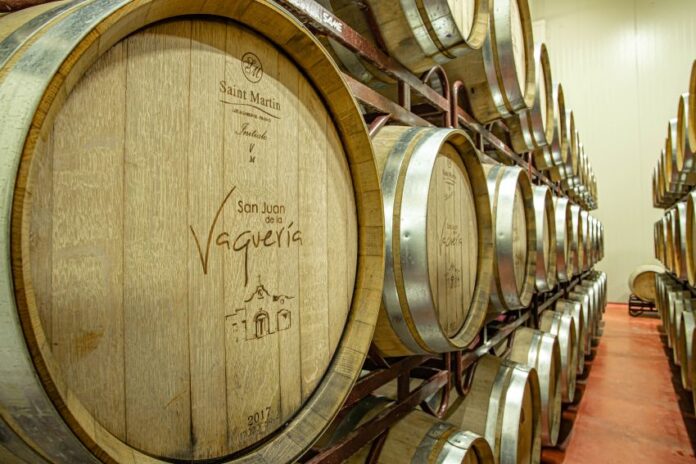
When considering Mexican wines, don't overlook the lesser known wine regions in the state of Coahuila, which has 29 wineries and is expected to gain Protected Geographical Indication status this year. (San Juan de Vaquería Winery)
Although you may know places like Baja California and Guanajuato as Mexican winemaking powerhouses, Coahuila’s winemaking history is stellar. Not only is it getting increasing recognition, it’s also expanding at an impressive rate.
Considered the place where winemaking began in the Americas at the end of the 16th century, Coahuila’s winemaking region is Parras de la Fuente (Vines of the Fountain) — named for the pre-Columbian grapes found growing in the area when the Spanish arrived.
There are more than 20 wineries in the works in Coahuila’s winemaking regions. (Vinos San Juan de la Vaquería)
The Spanish colonists found the grapes unsuitable for wine, but their presence demonstrated that the local environment could support grape-growing and encouraged them to plant Vitis vinifera, wine-producing grapes. Initially, the Spanish grew misión grapes. The adaptation successful, they began testing other varieties.
In more recent years, thanks to technological advances, the improvement in yield and quality in this region has been notable, and today, this region’s production is already recognized worldwide. It currently has nine winemaking areas, a total of 29 operating wineries and more than 20 wineries in the works.
In other words, Coahuila’s wine region is a monster awakening.
While you may not have heard of its wines, Coahuila is the second largest wine producer in Mexico, with more than 100 brands on the market. And it aims to become the country’s leading wine producer under a Vinos de Coahuila (Coahuila Wines) designation, which is awaiting Protected Geographical Indication (PGI) recognition by the European Union later this year.
Coahuila’s southeast
In the southeast, you’ll find Parras and other wine production areas: General Cepeda, Ramos Arizpe, Saltillo and Arteaga. This region is the state’s largest production area, as well as its best-known. The environment is a semi-desert, with little rainfall and extreme day-night temperature differences, ideal conditions for vine development.
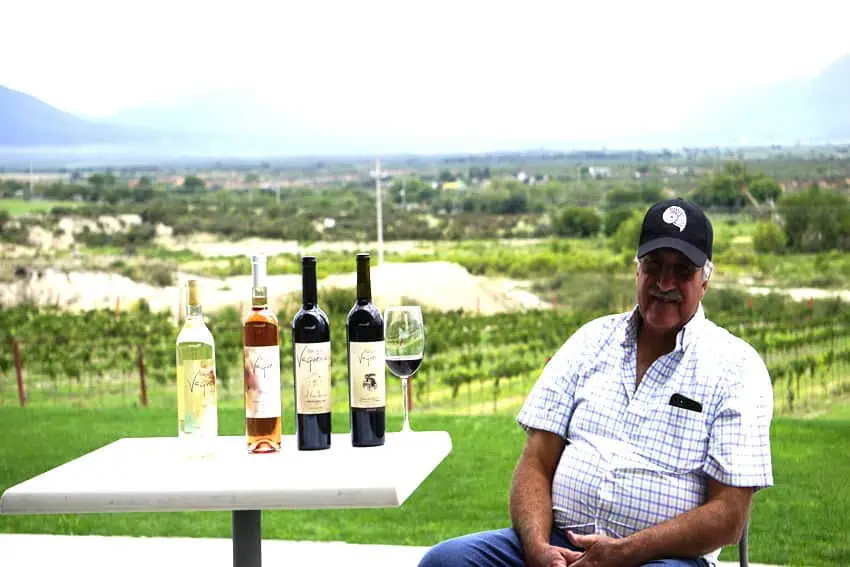
Gerardo Aguirre Flores, who founded San Juan de la Vaquería vineyards and winery just south of Saltillo, brought the vineyard’s first grapevine grafts over from France. The town of San Juan de la Vaquería may be Coahuila’s oldest winemaking site. (San Juan de la Vaquería)
In this region, south of the city of Saltillo, is one of the most prominent wineries, San Juan de la Vaquería, whose high-quality wines left me with the best taste in my mouth this year. With the town of San Juan de la Vaquería dating back to the 16th and early 17th centuries, it’s possibly Coahuila’s oldest wine-producing site.
Its climate is semi-desert, with hot days and cool nights, and the average altitude is 1,800 meters above sea level, ideal for growing grapes.
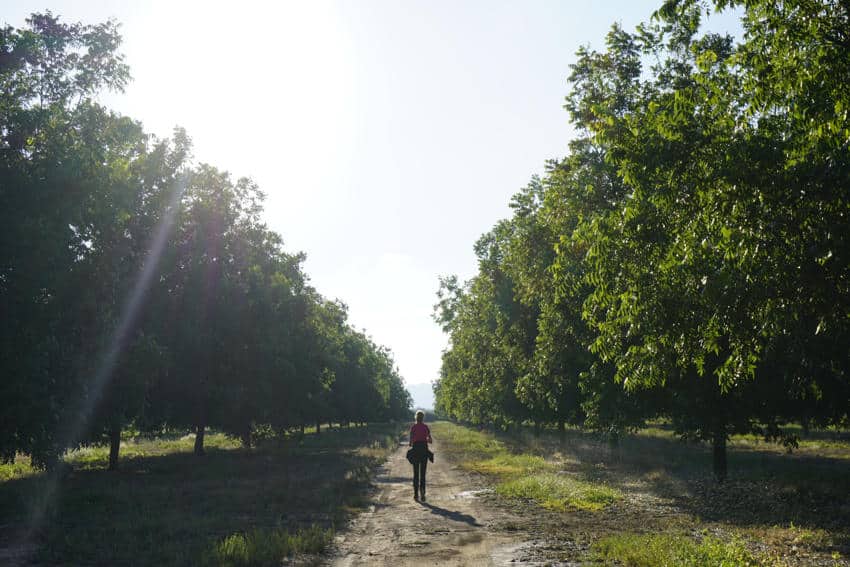
The Aguirre family, owners of the winery, has been here for four generations. In 2008, they began their winemaking adventure, encouraged by Jose Milmo, a well-known regional businessman and former owner of the Casa Madero winery, which we’ll discuss later. The Aguirres have plans to expand their 20-hectare plantings to 40 more hectares and incorporate walnut trees and other crops onto the estate.
The Aguirre patriarch, Gerardo Aguirre Flores, a professional agricultural engineer, brought the family’s first grafts from France. With his family, he established what is now one of the most interesting wineries in the region.
His son, Gerardo Aguirre Lobo, also an engineer, selects their vines from France and has over time increased the winery’s varietals to include Cabernet Sauvignon, Cabernet Franc, Malbec, Merlot, Petit Verdot and Syrah, as well as white varieties such as Verdejo and Chardonnay. Gerardo Jr., the family winery’s third-generation member, is in charge of winemaking.
Meanwhile, Gerardo’s daughter, architect Sofía Elena Aguirre Lobo, handles the business’ marketing side. She also used her architectural knowledge in the winery’s construction, so that its design evokes a nearby fossil site. A place worth visiting.
The reds are powerful yet refined. The family’s blend of Cabernet Sauvignon and Merlot is popularly known here as “the house wine” for having won over local palates, and has received international acclaim as well. It spends 12 months in French and American oak barrels, which softens the natural potency of the young grapes. There are other reds, but this one is iconic.
Their rosé wine, made with Cabernet Sauvignon and Malbec grapes, is very balanced, full-bodied and yet smooth on the palate — fruity and with good acidity. Among the whites, the Verdejo stands out, the only grape variety imported from Spain instead of France.
The cuisine here is equally important. In addition to having chef Ana Carmen, another of the siblings, in the family, San Juan de la Vaquería has sought out expert advice in setting up the winery’s restaurant, which pairs their wines with Mexican dishes and regional cheeses. Coahuila has its own cheese route in and around the General Cepeda region, that has been producing cheese for generations.
The region is also known for its cattle and goat farming. For this reason, the meat of both animals is part of the state’s tradition. A cheese platter of Cotija, enchilado and goat cheeses accompanied by walnuts from their harvest is a must.
Pairings are based on Mexican dishes. Burritos, typical of northern Mexico, are accompanied by the rosé or house wine.
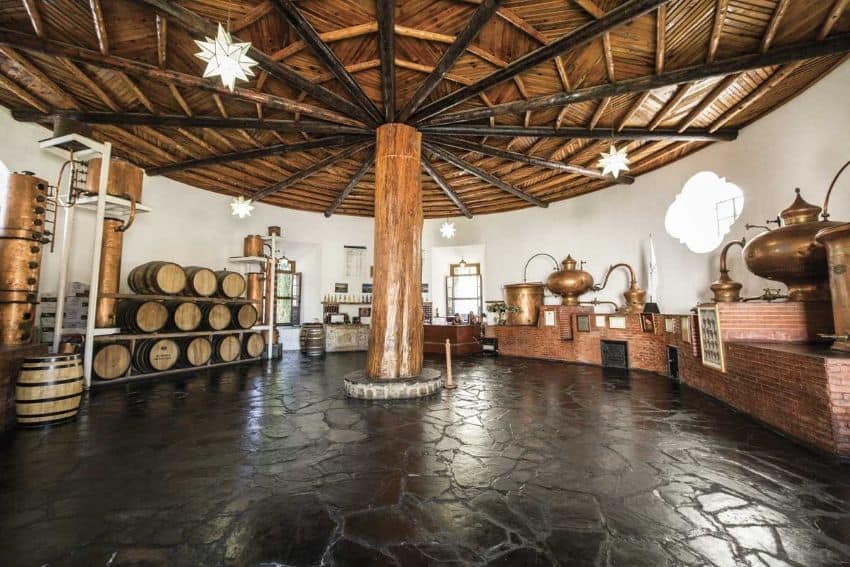
Casa Madero, in Parras de La Fuente, Coahuila, also has accommodations for a wine weekend getaway on the premises. (Government of Parras de la Fuente)
Casa Madero
Casa Madero has been a benchmark for quality, exportable wine for years. It is the oldest winery in the Americas, founded in 1597. Although production onsite has not been continuous throughout history — it produced brandy at one time— its overall staying power has earned it the title of oldest winery on the continent.
Its history is linked to the Madero family, from which came former Mexican president Francisco I. Madero.
The winery offers rooms in the Hacienda de San Lorenzo, a beautiful space with a handful of high-ceilinged, large rooms. Its simple yet traditional decor stands out, with large embroidered looms decorating each room.
Other wineries in the area, like Don Leo, also stand out. Don Leo is notable for its kosher production.
Rivero González, whose wines are synonymous with quality, is an area with wineries producing whites and rosés., But undoubtedly, it’s the reds that stand out, thanks to the vineyards’ average altitude of 2,000 meters above sea level, which contributes to the reds’ rich aromas.
Thanks to Coahuila’s unique archeological features, on this region, you’ll find winery tours combined with paleontological sites featuring dinosaur fossils and fossilized marine life.
The Wine-Dino Route offers visits to Valle Colorado, better known as the Valley of the Dinosaurs, and the Desert Museum, where, in addition to fossils, there are relics from the ancient cultures that inhabited the area. It is truly a unique experience.
Diana Serratos studied at Universidad Nacional Autónoma de México (UNAM) and UNCUYO in Mendoza, Argentina, where she lived for over 15 years. She specializes in wines and beverages, teaching aspiring sommeliers at several universities. She conducts courses, tastings and specialized training.
Living between two countries brings out the best of both worlds — and some unexpected challenges too. (Mexico Dave)
In 2005, when my husband and I bought an old adobe house in Guanajuato’s city center, I assumed we’d retire here as soon as possible. But life got in the way. I relished my consulting and training business, which at that time required being in California in person.
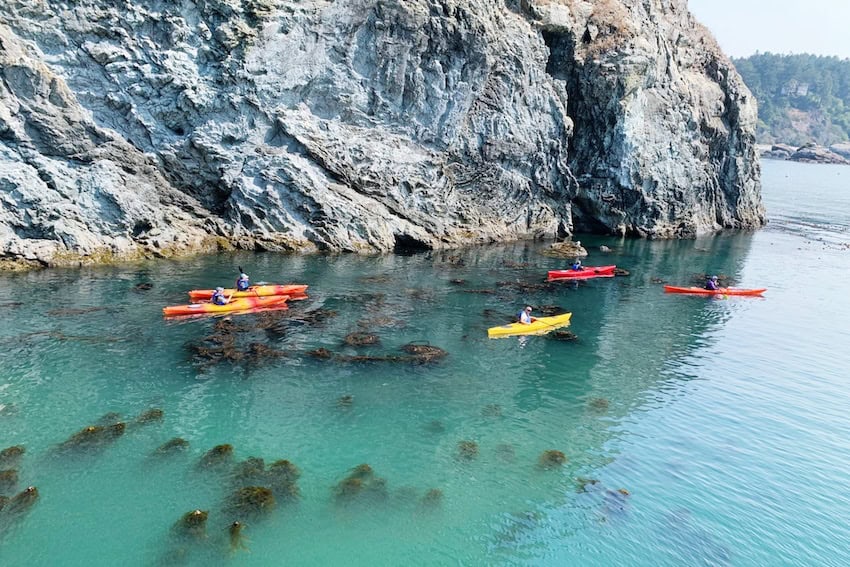
Nor was it just about work. In Eureka, where Barry and I live, the apartment we rent is only a block from a bay, where we explore its eddies, sloughs, pylons and marinas, me on my paddleboard, he on his kayak. Plus, we love the outings we take in our camper van throughout northern California and southern Oregon.
Eureka, California, is a second home. (A Passion and a Passport)
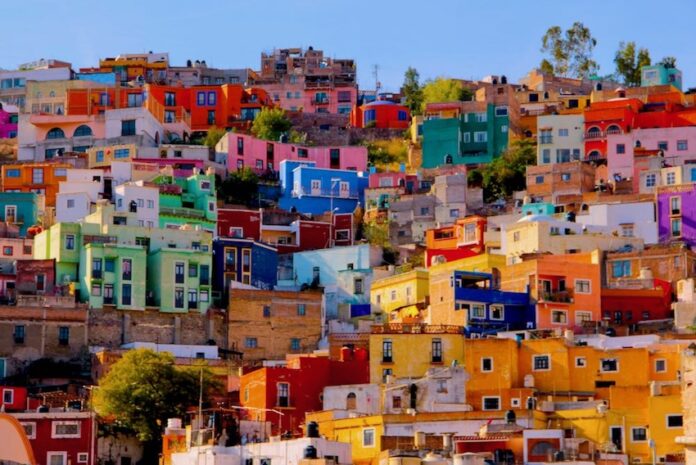
Barry is now 82, and I’m 73. Our lifestyle still works — but for how long? Guanajuato, with its steep callejones, or alleyways, is not really elder-friendly. I figured we weren’t the only people with these questions, so I asked other part-timers how they perceived the pluses and minuses of this lifestyle.
The advantages of two places
Richard and Reggie have lived in their Seattle home for 39 years, and despite the city’s many changes, they love it. But they’re glad to be in Guanajuato during Seattle’s long, dark, wet winters.
“Color, culture, weather, the kindness of people,” says Richard. “I see more kids on the street in a week than I see in a year in Seattle… God forbid they should be on the streets without guardians.”
Meanwhile, in Guanajuato they rent — like Barry and me, owning one home is enough for them — and have a great social circle.
“I choose part-time living in San Miguel [de Allende] because we also love our Northern California home, where our five acres provide us with the outdoor work we love as gardeners. Plus, our son and granddaughter live next door,” says Susan, a retired realtor who spends about five months a year in San Miguel with her husband, Jack.
Susan and Jack, who live part-time in San Miguel de Allende, Guanajuato, haven’t cut the cord with their Northern California home because of connections to family and the opportunity to garden annually. (Valeemb22/CC BY-SA 4.0)
Maureen is a consultant who researches the history of local buildings in Long Beach, where she lives. It’s a job that requires face-to-face interactions and combing through physical archives. But she loves Guanajuato, where she spends four to five months a year. A self-described “alley” person, she enjoys exploring the city’s twisty streets.
For her, the pleasure of Guanajuato is that she can enjoy all the best parts of the city without the pull of responsibility.
“I hike more often, read more often, eat simply and live simply in Guanajuato,” she says.
She could do these things in Long Beach, but she doesn’t.
Diane, from Calgary, Alberta, is the person among these respondents who is the most immersed in Mexican culture. She rents a house in an improbable area, a working-class neighborhood in the city of León, Guanajuato, in the neighborhood where her “wonderful, caring extended Mexican family” lives.
“They adopted me almost 20 years ago,” she says. “I feel thankful that I’ve had the chance to be a part of their lives for all this time.”
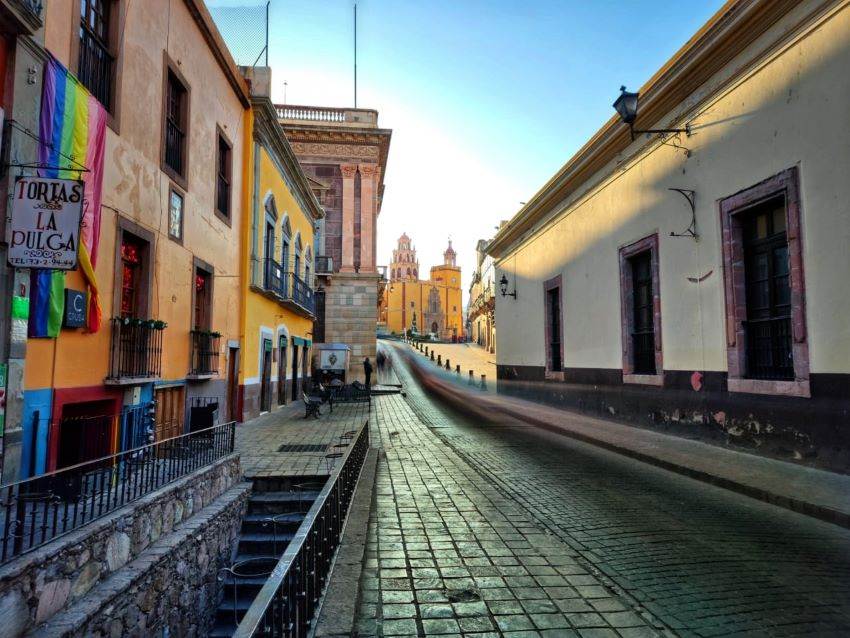
For some, living in Mexico is a way to experience a slower, kinder, sometimes car-free lifestyle that they cherish. (Gobierno de Guanajuato)
“I have the best of both worlds,” says Martine, a part-time Guanajuato resident from Vancouver. ”I love the nature, wildlife, and the ocean in [British Columbia]. But I also love the sun in Mexico because I have SAD [Seasonal Affective Disorder] during the Canadian winters.”
The disadvantages
For people who rent one or both homes when they’re not using them, a big minus is the hassle of putting their personal belongings away whenever they leave.
Such is the case with Spike, a retired audio equipment designer, and his wife, Jacquie. Because they split their time between Bend, Oregon, and Guanajuato, another issue they deal with is the exhausting journey back and forth.
“It takes 12 to 14 hours door to door,” he says. “Plus, we take our cat with us, and she clearly does not enjoy the trips.”
For Martine, cost is an issue.
“It’s expensive to fly back and forth with two dogs all the way to Vancouver and start from scratch every six months,” she says.
Another dilemma is that she’s still taking care of her mom in Quebec, and she’s very close to her daughter in Victoria.
There are disadvantages to splitting one’s life between two places, of course. Some expats who spoke with the writer mentioned the hassles of frequent travel between countries. (Matthew Smith/Unsplash)
Part-time to full-time
A few folks have made the leap from part-time to full-time. Rachel, who moved to Guanajuato from Vancouver, loves not owning a car.
“Daily walking as a lifestyle is freedom, and the over 340 stairs on our street help keep my legs strong and able.”
On the other hand, she misses the ocean, theater and, especially, the long-term friendships.
“There is something irreplaceable about close friendships that have lasted more than three or four decades, she says. “I had no idea I would miss my friends so much.”
Lee, from upstate New York, also misses her friends, along with her children, granddaughter, canoeing on the Hudson and biking in the lovely countryside, but “I don’t miss the cold or the high cost of living.”
She has no regrets.
“I love studying Spanish and am part of a Tai Chi community,” she says.” Lee also appreciates the opportunity to contribute. “For seven-and-a-half years, I edited a literary journal and am the mentor of a wonderful, intelligent college student as well.”
We’re not getting any younger
The colorful streets of Guanajuato are food for the soul, but a challenge for senior legs. (Dan Torres/Unsplash)
Then there’s the question of aging.
Lee chuckles. “I’m 87, so I’m already an elder.”
“We expect we’ll stay in Bend full-time when we start to age out, because it’s a better place to be decrepit in and is better suited for possible eventual mobility issues,” Spike says. “Of the two locales, our place in Bend will be more comfortable when we’re older.”
Jack, Susan’s husband, isn’t so sure about the back-and-forth lifestyle.
“For now, splitting our time is good, but as we inch towards our 80s, what we do will depend upon our health and healthcare.”
He thinks they may move to Mexico full-time to access less expensive elder care, pointing out that there is a good, affordable retirement home near San Miguel.
The U.S. political climate
Several residents mentioned the political climate in the U.S. as a reason to permanently move to Mexico.
Social and political polarization back home also makes some expats glad to have a relatively quiet refuge in Mexico. (Connor Gan/Unsplash)
“We’re leaving our options open,” Jack says. “With the ugly changes in our country, we’re adopting a wait-and-see attitude.”
As for me, I’m not sure I’m any clearer about my decision than I was before. But as Barry says, things are changing so rapidly — technology, politics, demographics, healthcare — that it’s impossible to predict what life will be like even 10 years from now.
For now, Guanajuato is a great place to be active and maintain a healthy lifestyle, and that’s good enough for me.
Louisa Rogers and her husband Barry Evans divide their lives between Guanajuato and Eureka, on California’s North Coast. Louisa writes articles and essays about expat life, Mexico, travel, physical and psychological health, retirement and spirituality. Her recent articles are on her website, https://authory.com/LouisaRogers
During her Monday morning press conference, Sheinbaum reiterated her disinterest in communicating with Trump "through the media" and updated reporters on the 1944 bilateral water treaty. (Andrea Murcia/Cuartoscuro)
At her Monday morning press conference, President Claudia Sheinbaum spoke about her desire to not engage in a public debate with United States President Donald Trump, who leveled a rather serious accusation against his Mexican counterpart on Sunday.
Among other issues, she revealed what she is doing to acquaint herself with the candidates seeking to be elected to judgeships next month, including dozens of people hoping to become Supreme Court justices.
Here is a recap of the president’s May 5 mañanera.
Sheinbaum says she doesn’t want to debate Trump ‘through the media’
A reporter asked Sheinbaum about Trump’s assertion that she is “afraid” of Mexican cartels, a claim the U.S. president made during an in-flight press conference on Sunday after he confirmed he had offered to send the U.S. Army into Mexico.
“There is very good communication with President Trump,” Sheinbaum responded two days after she said she rejected Trump’s offer of U.S. troops.
“In just over three months of his government, we’ve had more than five calls and the communication is good. Sometimes we don’t agree, but we say it in the telephone call, and there has been respect,” she said.
“So I don’t want the communication between President Trump and I, between the United States and Mexico, to be through the media and statements to the media,” Sheinbaum said.
Despite her assertion that she doesn’t want to communicate with Trump “through the media,” Sheinbaum has on other occasions responded to remarks made by Trump and the Trump administration at her morning press conferences, and on social media.
She has brushed off some of the threatening and disparaging remarks Trump has made about Mexico by simply saying that the U.S. president has his own unique “way of communicating.”
On Monday, Sheinbaum said that “everyone has their way of communicating” before telling reporters she doesn’t want “this” to become a “debate through the media with the government of the United States.”
“We have our communication. There are a lot of agreements … and when there are disagreements, they are also expressed through official means and personal communication. So it’s better we leave it at that so there isn’t an issue of debate, through the media,” she said.
Sheinbaum says she is researching judicial election candidates on the internet, like any other Mexican
“Yes,” Sheinbaum responded, prompting the reporter to inquire as to how she is “orienting” herself in order to be able to “choose the different candidates” she will support.
The president said that like “all Mexicans,” she is looking at the profiles of the (thousands) of judicial election candidates on the National Electoral Institute (INE) website, which has a “get to know them system” that INE says has been consulted on more than 4 million occasions since it was activated on March 30.
Sheinbaum, who moved into the National Palace late last year, said that she changed her address with the INE and would be voting “here” in downtown Mexico City on June 1 rather than “there” in San Andrés Totoltepec, a neighborhood in the Tlalpan borough of the capital where she used to live.
Later in the press conference, the president asserted that “the people are happy” that a judicial election will take place, although there are a range of concerns about the popular election of judges, including that the ruling Morena party will attempt to stack the courts with judges sympathetic to their cause and that organized crime groups could effectively install judges by pressuring or coercing citizens to vote for their preferred candidates.
Sheinbaum said that holding judicial elections is “a very democratic way to clean up the judicial power, … to put an end to this nepotism, corruption, and these judges that release criminals from organized crime with impunity.”
Mexico not delivering water to US out of fear of tariffs, Sheinbaum says
“The United States delivers water via the Colorado River and we deliver via the Rio Grande,” she said.
In an April 10 post to social media, Trump said he would “make sure Mexico doesn’t violate our Treaties, and doesn’t hurt our Texas Farmers” by not delivering the water it owes to the United States.
“… We will keep escalating consequences, including TARIFFS and, maybe even SANCTIONS, until Mexico honors the Treaty, and GIVES TEXAS THE WATER THEY ARE OWED!” he wrote.
Mexico has struggled to meet its commitments during this five-year cycle of the treaty due to widespread drought that has been particularly severe in the northern states that border the U.S.