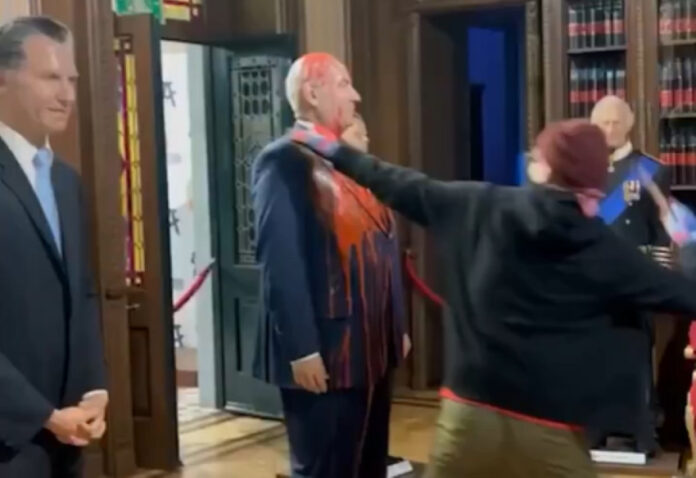
The Israel Embassy in Mexico condemned the attack on the Prime Minister's statue as a "detestable act of violence." (Screen capture/@BTSnewsroom via Instagram)
A masked activist destroyed a statue of Israel’s Prime Minister Benjamin Netanyahu in Mexico City’s Wax Museum on Tuesday night.
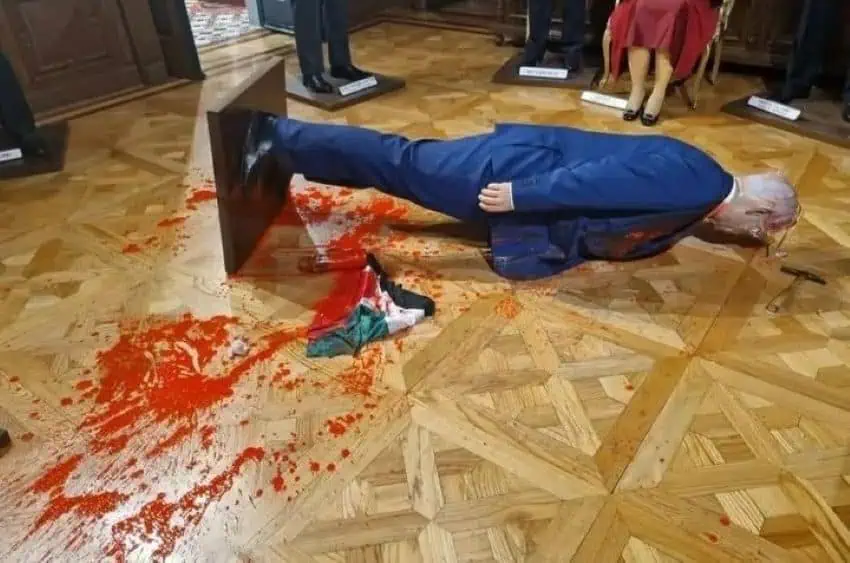
A video posted on Instagram by @BTSnewsroom, an account that posts news about global politics and movements, shows the pro-Palestine activist covering the statue in red paint — emulating blood — before striking its face with a hammer. The man was carrying the Palestinian flag, which he laid at the foot of the statue.
The masked protestor laid the Palestinian flag at the statue’s feet and proceeded to attack it with a hammer. (X)
“With a lot of respect for the Jewish community, [I’m doing this] for Hind Rajab,” the protester said as he vandalized the statue of a “genocidal [State leader].” After making the comments to the camera, the person smashed the sculpture of Netanyahu against the floor.
Hind Rajab was a five-year-old Palestinian girl who was assassinated on Jan. 29, 2024, along with her cousins, aunt and uncle, allegedly by Israel’s Defense Forces. Israel has denied the accusations.
At the end of the video, the perpetrator told the camera: “Long live Palestine. Long live Sudan. Long live Yemen. Long live Puerto Rico. Long live Tigray.”
In a statement, the Israeli Embassy in Mexico condemned the wreckage of the sculpture.
𝑪𝒐𝒏𝒅𝒆𝒏𝒂 𝒂𝒏𝒕𝒆 𝒗𝒂𝒏𝒅𝒂𝒍𝒊𝒔𝒎𝒐 𝒂 𝒆𝒔𝒕𝒂𝒕𝒖𝒂 𝒅𝒆𝒍 𝑷𝒓𝒊𝒎𝒆𝒓 𝑴𝒊𝒏𝒊𝒔𝒕𝒓𝒐
– Existe una puntual diferencia entre activismo y vandalismo
La Embajada de Israel condena enérgicamente el acto de vandalismo perpetrado ayer en el Museo de Cera de la CDMX. pic.twitter.com/Z1GLhXEm4D
“The attack on the statue of Prime Minister Benjamin Netanyahu is a detestable act that sends a dangerous message of violence, intolerance and hatred that goes beyond any legitimate criticism,” the Embassy wrote. It also urged cultural institutions in Mexico to take action to prevent any further “acts of pure violence.”
Neither the Wax Museum nor Mexican authorities have made an official comment on the incident or confirmed whether they will take any action against the aggressor.
The identity of the activist has not yet been revealed, nor has it been confirmed whether he will face legal charges by the museum for the damage caused.
In recent years, museum activism and the use of artworks as a tool of protest have become increasingly common. In October 2022, environmental activists threw mashed potatoes at a Monet painting in Potsdam’s Barberini Museum, and fossil fuel protesters smeared chocolate cake over the wax figure of King Charles III in London.
This is the first known attack on a statue of the Israeli leader.
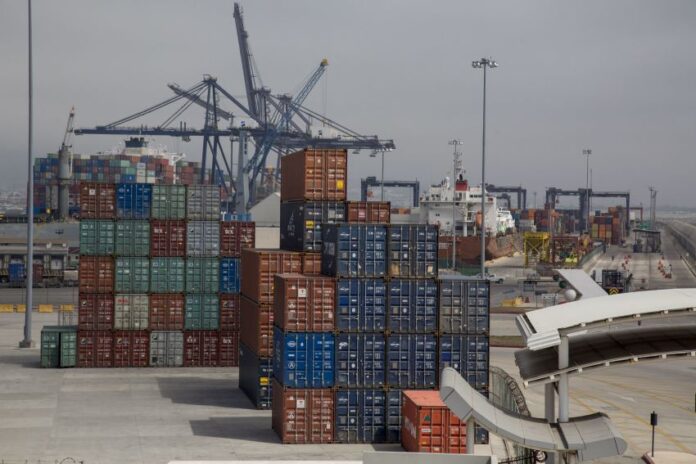
The Port of Ensenada, located in Baja California. It's a mere 110 kilometers by highway to the United States. (Omar Martínez/Cuartoscuro)
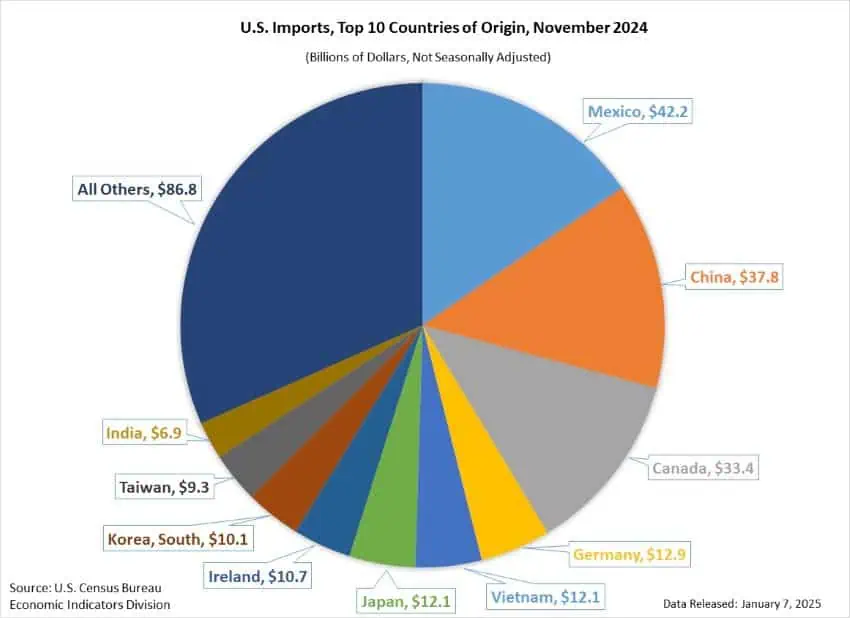
Mexico had a record-high trade surplus with the United States in the first 11 months of 2024, and maintained its position as the top exporter to the world’s largest economy.
Data published by the United States Census Bureau on Tuesday showed that Mexico had a surplus of US $157.2 billion with the U.S. between January and November, a 12.5% increase compared to the $139.69 billion surplus it recorded in the same period of 2023.
Mexico has consistently been the U.S.’s top source of imports over 2024, including in November. (US Census)
The value of Mexico’s exports to its northern neighbor increased 6.4% annually to a new high of $466.62 billion in the first 11 months of last year.
The value of imports from the United States also increased compared to 2023, but by a more modest 3.5% to reach $309.42 billion.
Mexico’s trade surplus with the United States — which has more than doubled in the last seven years — is a major irritant for U.S. President-elect Donald Trump, who will commence his second term on Jan. 20.
Mexico ahead of China and Canada as top exporter to the US
Mexico’s share of the United States’ $2.98 trillion market for exports in the first 11 months of last year was 15.6%. That percentage represented a slight increase compared to the 15.5% share Mexico had in the same period of 2023.
China was the second largest exporter to the United States between January and November, sending goods worth $401.4 billion across the Pacific Ocean to its trade war adversary. China thus had a 13.5% share of the U.S. export market, down from 13.9% in 2023.
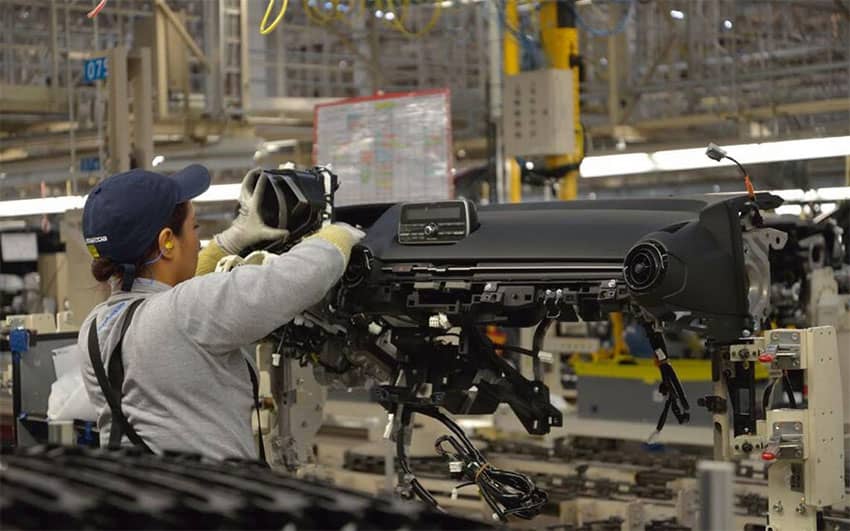
Mexican worker at an automotive factory in Guanajuato. Many of Mexico’s imports are products made by foreign companies in Mexico and sold in the U.S. market. (File photo/Government of Guanajuato)
Canada had a 12.6% share of the market between January and November, exporting goods worth $377.24 billion to its southern neighbor. Canada’s share of the U.S. export market dropped a full point from 13.6% in 2023.
The Census Bureau’s latest trade statistics indicate that final 2024 data will show that Mexico was the world’s top exporter to the United States for a second consecutive year. Mexico surpassed China to take the No. 1 position in 2023.
Mexico and the United States were also each other’s largest trade partners in the first 11 months of last year. Two-way trade increased 5.2% annually to $776.04 billion.
Mexico’s surplus with the US raises Trump’s ire
Trump has long been critical of Mexico’s trade surplus with the United States, and it was a significant factor in his desire to terminate NAFTA, which was replaced by the United States-Mexico-Canada Agreement, or USMCA, during his first term as president.
However, Mexico’s surplus with the United States has only increased in recent years, at least in part due to the trade war between the United States and China that Trump initiated.
The El Economista newspaper reported that Mexico’s surplus increased 146% between 2017 and 2024, whereas it only increased 3.6% between 2010 and 2017. The trade war between the U.S. and China began in early 2018.
“We’re subsidizing Canada to the tune of over $100 billion a year. We’re subsidizing Mexico for almost $300 billion,” he said, significantly exaggerating the United States’ trade deficits with both countries.
“We shouldn’t be — why are we subsidizing these countries? If we’re going to subsidize them, let them become a state. We’re subsidizing Mexico and we’re subsidizing Canada and we’re subsidizing many countries all over the world,” Trump said.
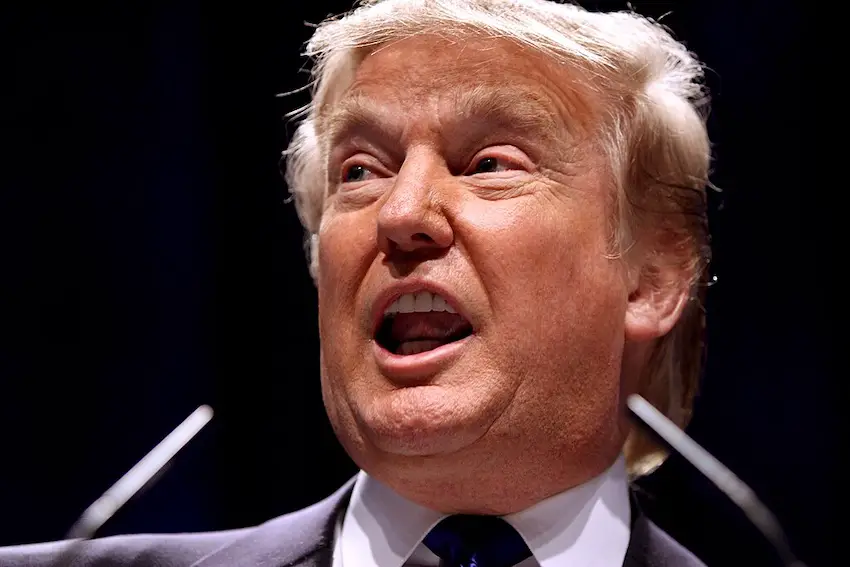
In his trade rhetoric, US President-elect Donald Trump frequently refers erroneously to the U.S.’ trade deficits with other countries like Mexico and Canada as “subsidies.” (Gage Skidmore/Wikimedia Commons – Creative Commons Attribution-Share Alike 2.0)
“All I want to do is I want to have a level, fast, but fair playing field,” he added.
He plans to implement new tariffs or increase existing ones to combat trade imbalances between the United States and its trade partners, although a 25% duty he has pledged to impose on all Mexican exports is, according to Trump himself, aimed at getting Mexico to do more to stop the flow of drugs and migrants to the U.S.
“Many economists and trade experts do not believe that trade deficits hurt the economy, and warn against trying to ‘win’ the trade relationship with particular countries. Others, however, believe that sustained trade deficits are often a problem,” the article said.
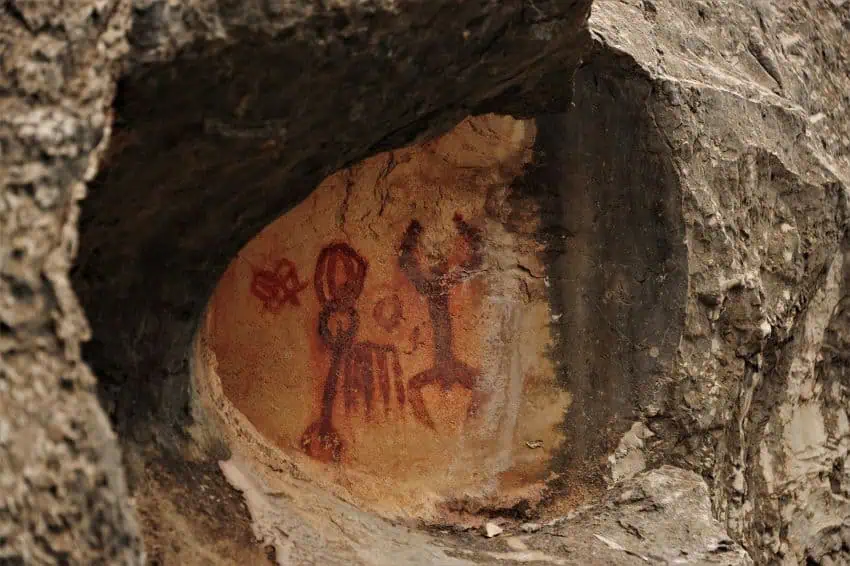
“These acts not only constitute theft but also destroy irreplaceable cultural heritage,” a National Institute of Anthropology and History (INAH) spokesperson said. (Mauricio Marat/Cuartoscuro)
Authorities in the northern state of Coahuila are investigating the theft and destruction of centuries-old cave paintings in Cuatro Ciénegas, a beautiful nature reserve and UNESCO World Heritage site nominee.
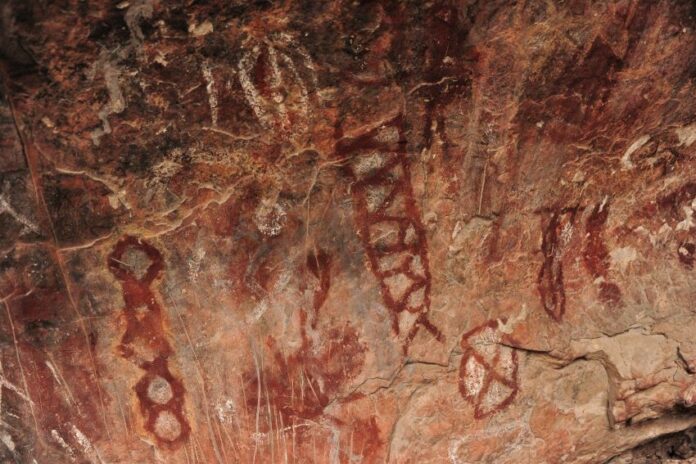
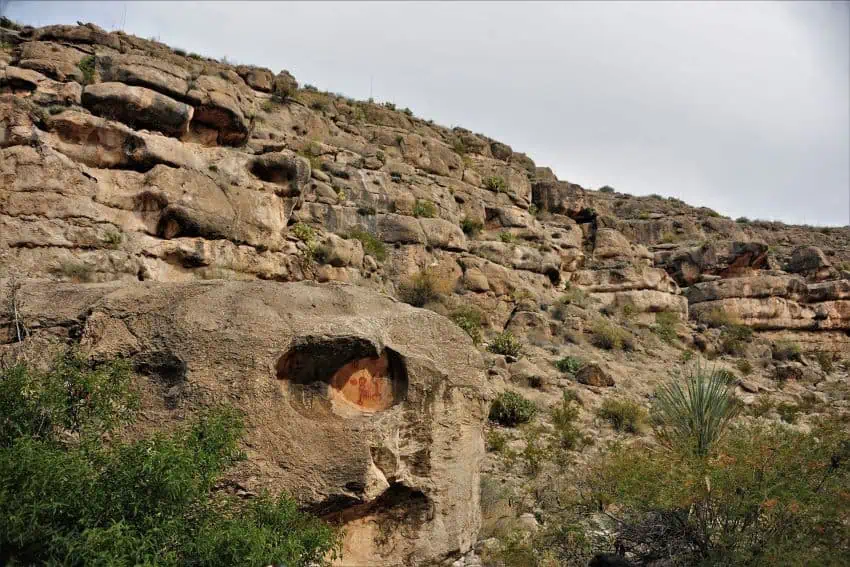
The targeted area, located in Lizard Canyon in the rugged and remote Sierra de Australia mountains, contains rock art believed to be over 400 years old.
Cuatro Ciénegas is one of several invaluable sites in Mexico for understanding pre-Columbian history and the interaction between humans and their environment during the era. (Mauricio Marat/Cuartoscuro)
According to the National Institute of Anthropology and History (INAH), looters used tools such as drills and grinders to remove sections of rock bearing the paintings. First reported Saturday by guides who take visitors to the site, the damage was described as irreversible.
“These acts not only constitute theft but also destroy irreplaceable cultural heritage,” an INAH spokesperson said.
Cuatro Ciénegas (four marshes) is a biosphere reserve known for its historical significance — in addition to its biodiversity and rare natural features, such as uncommon high-desert wetlands and endemic species — so the stolen fragments of painted rock represent a significant loss.
The cave paintings here include intricate depictions created by Indigenous peoples, offering insight into their lives, beliefs and artistic expressions. Experts note that such sites are invaluable for understanding pre-Columbian history and the interaction between humans and their environment during the era.
José Francisco Aguilar Moreno of the INAH Center in Coahuila told Milenio that the looters damaged a surface area of 30 centimeters (12 inches); the full cave painting covers an area six meters long and three meters high, he noted.
Local authorities and INAH called for an investigation by filing a complaint with the federal Attorney General (FGR). No details about suspects or the whereabouts of the stolen fragments were given, but Aguilar said those responsible could face a sentence of up to 10 years in prison.
Cuatro Ciénegas contains many cave paintings from diverse time periods, dating from 2,000 to 500 years ago. (Mauricio Marat/Cuartoscuro)
Officials are calling for enhanced security measures and increased public awareness to prevent similar crimes in the future, but the incident underscores the challenges of protecting immovable heritage sites.
“It is very difficult to take care of these types of spaces because we have more than 4,000 sites throughout Coahuila,” Aguilar said. “Not even the entire state police, the National Guard or the army would be enough to protect them.”
The theft has drawn condemnation from cultural and academic organizations, with activists advocating for stricter penalties for crimes against cultural heritage.
The crime took place on private property, officials said, so investigators will interview locals as the investigation advances.
Coahuila is Mexico’s third-largest state by land area (behind Chihuahua and Sonora) and is a significant region for mining and agriculture.
Despite sweeping the Golden Globes, not everyone is happy with "Emilia Pérez." (Netflix)
I’ll begin with two disclaimers.
First, this review is written by a Mexican writer who worked for several years writing scripts for films, series, TV shows and at a major newspaper. I left this profession when streaming platforms asked me to portray a drug lord as a hero, when TV networks requested that I justify the military’s presence on the streets of Mexico and when my newspaper edited my articles and manipulated figures regarding online campaign expenses for presidential candidates — money that seemed to come from nowhere.
There is controversy around the “Emilia Pérez” movie, which presents drug traffickers as heroes. (Emilia Pérez Film/X)
Second, it’s important to recognize that films and television shows have a powerful influence on how we perceive the world. Audiovisual media professionals carry a significant responsibility to thoughtfully consider both what we portray and how we present it on screen. This is why I was so disappointed to see French director Jaques Audiard’s musical comedy “Emilia Pérez” win best film in the comedy and musical category at the Golden Globes on Sunday.
Why do some Mexicans dislike “EmiliaPérez“ so much?
The problem isn’t that “Emilia Pérez” is a comedy. This isn’t the first time a comedy about drug trafficking has been made. “El Infierno,” directed by Luis Estrada in 2010, is one of the most popular films in Mexico. The character of El Cochiloco, known for his outrageous lines, has become unforgettable to a generation.
This issue isn’t that I think only Mexicans can discuss Mexican issues. “La Civil,” one of the most powerful films regarding the search for mothers and the government’s failure to address cases of forced disappearance was directed by Romanian filmmaker Teodora Mihai. “La Civil” is a deeply moving film, and its impact is heightened by the perspective of an outsider.
Though it’s caught a lot of flack, the issue isn’t even Selena Gomez’s accent. Every non-native speaker faces challenges when learning a new language. While someone like Eiza González, who has an impeccable command of both Spanish and English, could have been a great choice for the role of the drug lord’s spouse, having Selena Gomez in the cast definitely brings a level of star power.
“Emilia Pérez” film seems to celebrate narco culture, which has sparked controversy among the Mexican viewership. (Emilia Pérez Film/X)
Does “Emilia Pérez” celebrate narcos?
Personally — and I think many in Mexico feel the same way — it bothers me deeply when drug traffickers are presented as heroes, as happens in shows like “Narcos,” “El Chapo” and “El Señor de los Cielos.”
Turning the country’s biggest security crisis into a musical where the protagonist is one of the perpetrators of that crisis shows a profound lack of respect. Think about the worst crisis of violence in your country in recent years. Now imagine if a foreign director made a film about one of the perpetrators of that violence attempting to redeem themselves, turning reality on its head and solving the crisis they actually helped create. As if that weren’t enough, imagine if that film were marketed as a musical comedy. For me, that was “Emilia Pérez,” and watching this trivialization was deeply painful.
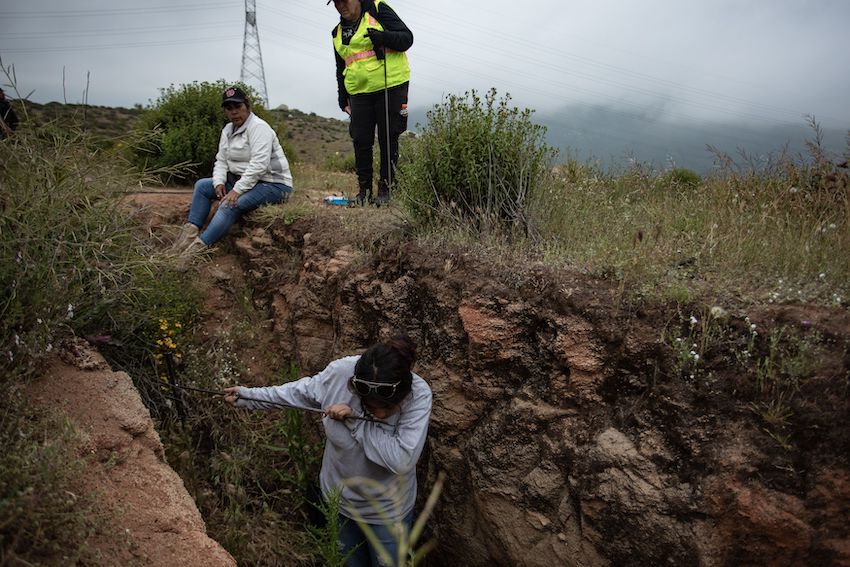
The plot of “Emilia Pérez” involves the title character, a former drug lord, setting up a nonprofit to search for the bodies of victims of forced disappearance. There are 121,290 victims of this crime in Mexico, according to the National Registry of Missing Persons (RNPDNO). The true number is in all likelihood higher, however. Organizations that deal with the forced disappearance crisis have drawn attention to systemic underreporting of the disappeared. In addition to organized crime, state forces are also responsible for this crisis.
Victims of forced disappearance are often uninvolved in criminal activities. Many are ordinary citizens, including businesspeople, journalists, doctors, nurses, lawyers and public officials. Women, children, disabled people, migrants and poor people in general are particularly vulnerable to being forcibly disappeared. Watching “Emilia Pérez,” the reality of this situation was too stark to ignore.
Current initiatives to identify the disappeared are fragmented, and involve many parts of society, including relatives, non-governmental organizations and federal forensic agencies. (Adolfo Vladimir/Cuartoscuro)
What message does this film send?
Director Jacques Audiard explained that he needed a hyper-masculine context to effectively transition into a feminine world. However, could he not have chosen a businessman or politician instead? I believe that a story about the experiences of transgender people could have been just as impactful without relying on the painful cliché of a Mexico that revolves around drug lords.
When crafting a script, it is essential to clearly define protagonists and antagonists. The characters can be as complex as you want, and they should be deeply human, displaying both strengths and flaws. To generate empathy with the audience, you need to appeal to the emotions the characters evoke through their conflicts and actions.
Portraying the leader of a cartel as a redeemed character, as Audiard’s film does, conveys a powerful message. It suggests, perhaps unintentionally, that traffickers are just as human as anyone else, that they simply want to live their lives, that they are parents too, that they can be benefactors and good people.
The recognition of narratives like this by Hollywood sends a troubling message of acceptance towards a narco-culture that many Mexicans are striving to erase from the international imagination. While watching the film, I couldn’t shake the thought that our social crisis is not being taken seriously, and this portrayal almost feels like a humiliating mockery of our reality.
Is there anything good about “Emilia Pérez”?
The cinematography and production design are impeccable, creating an atmosphere that resembles Mexico even though much of the filming took place in a studio in Paris. Additionally, Karla Sofía Gascón and Zoë Saldaña deliver outstanding performances, showcasing their talents as excellent actresses.
Del Toro lives in Los Angeles. Maybe those of us in Mexico upset by “Emilia Pérez” are too close to the conflict. For us, the impunity enjoyed by those responsible for over 300,000 dead and 121,000 missing isn’t material for a comedy.
María Meléndez is a Mexico City food blogger and influencer.
The new Costco branch is being built in the San Isidro neighborhood, located in the eastern part of Guadalajara. (Omar Abascal/Unsplash)
A new Costco store will open this year in Guadalajara, the capital city of the western state of Jalisco.
The company’s communication strategy agency in Mexico, Dextera, confirmed the news to the magazine Players of Life. It will be the third Costco location in the metro Guadalajara area, and the fourth in the state.
The new Costco branch is being built in the San Isidro neighborhood, located east of the city and in front of the University Center for Economic and Administrative Sciences (CUCEA) of the University of Guadalajara.
While there are no further details about the store’s current stage of construction or its intended opening date, testimonies from workers at the site suggest that the store will open in June.
Other Costco locations in Jalisco include one in Zapopan, one in Tlajomulco de Zúñiga — both in the metropolitan area of Guadalajara — and one in Puerto Vallarta.
Woman buys over 800 Roscas de Reyes at Guadalajara Costco for resale
Costco’s bakery products are highly coveted in Mexico, even in places far away from cities with a store.
Aware of the great demand for these products, Ximena Figueroa, a former candidate for Deputy with the Partido Verde Ecologista de México (PVEM), purchased “more than 800” Roscas (Three Kings’ Bread) and successfully resold all of them by Jan. 5, the day before Día de Reyes or Three Kings’ Day.
On Jan. 3, Figueroa shared her business endeavor on social media ahead of the festivity, saying she had bought 800 Roscas de Reyes at a Costco in Guadalajara and that she planned to resell them in the state of Colima, which does not have a Costco location. The bread’s price tag at Costo was 380 pesos. She resold each unit for 550 pesos.
“Guess what? I bought all the Costco Roscas in Guadalajara,” Figueroa wrote in her post. “Manzanillo and Cihuatlán, here we go!”
Her business initiative led to divided opinions from social media users. Some criticized her for depleting the Guadalajara Costco’s stock of Roscas de Reyes, leaving some local residents without them, while others applauded her wit.
After the holiday, Figueroa boasted on Instagram that she successfully sold a total of 950 Costco Roscas de Reyes. It is not clear at which location she bought the remaining 150 Roscas.
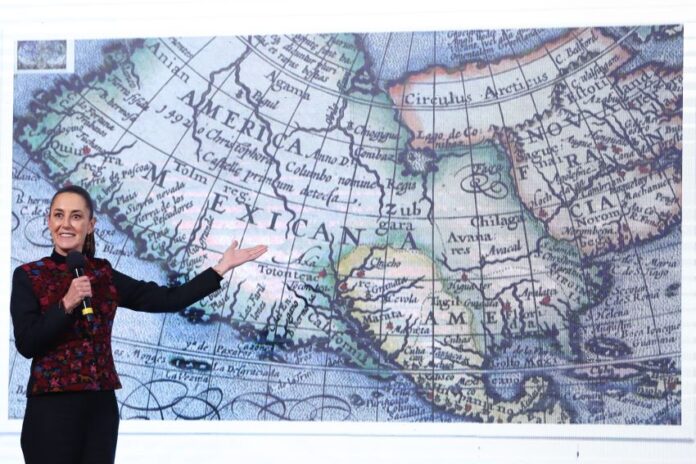
“Why don’t we call [the United States] Mexican America, it sounds nice, right?” Sheinbaum said at her Wednesday morning press conference.
Wowww ‼️ Mexican President Claudia Sheinbaum responds to Trump on his proposal to change the name of the Gulf of Mexico — and points to a 17th century map of greater México.
“We are going to call it América Mexicana. It sounds pretty, no?”
“It does, doesn’t it?” the president added with a smile.
She noted that the Constitution of Apatzingán, which was created during the Mexican War of Independence, referred to territory now known as the United States as Mexican America.
At the time of the document’s creation in 1814, large parts of what is now the southwestern United States were still under Spanish control. Mexico, when it became an independent country in 1821, was much larger than it is today, as its territory included all or part of several modern-day U.S. states.
“The Constitution of Apatzingán was of Mexican America. So we’re going to call it Mexican America,” Sheinbaum said, as she gestured toward an old map showing modern-day United States territory referred to as Mexican America.
“It sounds nice, right?” she said again, riffing on Trump’s declaration that the name “the Gulf of America” has a “beautiful ring to it.”
The name ‘Gulf of Mexico’ is internationally recognized, Sheinbaum says
“Obviously the name ‘Gulf of Mexico’ is recognized by the United Nations,” Sheinbaum told reporters.
She later said that the Gulf of Mexico has been known as such since at least 1607.
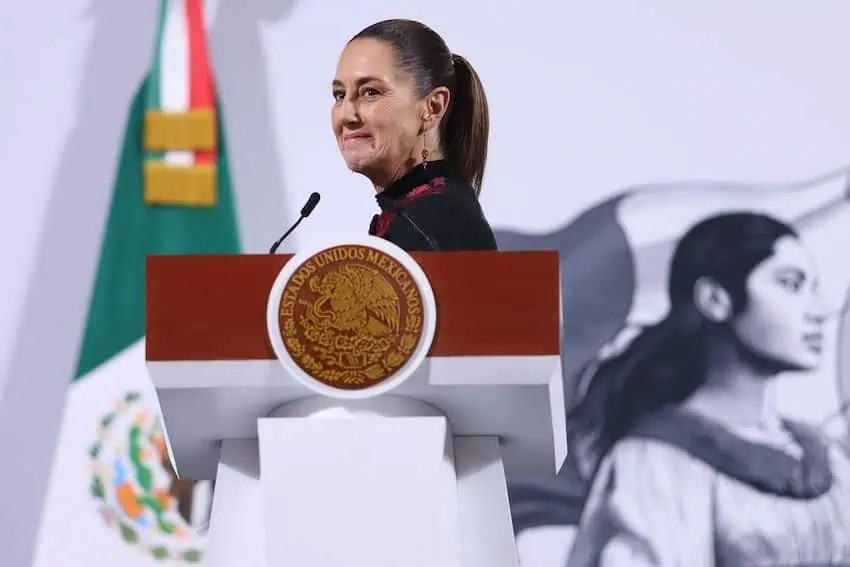
The president appeared to get a kick out of her history presentation during Wednesday’s press conference, evening the score on Trump’s recent territorial claims. (Daniel Augusto/Cuartoscuro)
During a press conference at his Mar-a-Lago resort in Palm Beach, Florida, on Tuesday, Trump said that the Gulf of Mexico is “ours” and asserted that the United States does “most of the work there.”
“… We’re going to be changing the name of the Gulf of Mexico to the Gulf of America, which has a beautiful ring. That covers a lot of territory. The Gulf of America, what a beautiful name, and it’s appropriate, it’s appropriate,” the U.S. president-elect said.
Economy Minister Marcelo Ebrard dismissed the possibility that the name of the body of water could be or would be changed, telling reporters on Monday that the Gulf of Mexico will continue to be called the Gulf of Mexico for at least the next 30 years.
President asserts Trump is misinformed about the power of Mexican cartels
At his Tuesday press conference, Trump also said that Mexico is “essentially run by the cartels.”
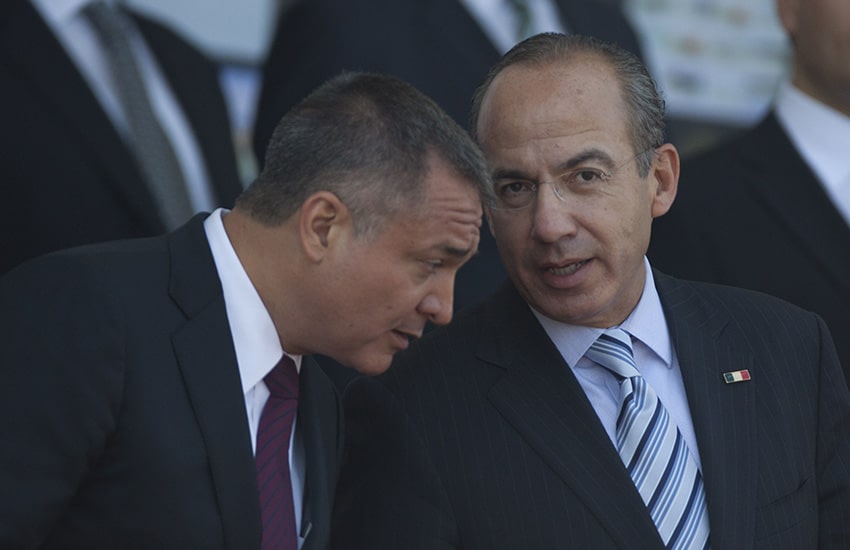
On Wednesday, Sheinbaum claimed that the former and future U.S. president has been “misinformed” about the situation in Mexico, saying that she believed he has been told that former president Felipe Calderón and his erstwhile security minister Genaro García Luna were still governing the country.
Genaro García Luna, left, when he was Mexico’s security minister during the presidency of Felipe Calderón, right. (Cuartoscuro)
Sheinbaum said in October that Calderón “should apologize” for having had a now-convicted and sentenced criminal as his security minister. The ex-president has denied he had any knowledge of García Luna’s illicit activities.
Former president Andrés Manuel López Obrador rejected the assertion.
Will Mexico have a good relationship with the US during Trump’s second term? Sheinbaum believes so
Despite Trump’s threats to impose tariffs on Mexican exports to the United States, and disparaging remarks he has made about Mexico and Mexicans, Sheinbaum has reiterated her belief that Mexico will have a good relationship with the U.S. during the second Trump administration.
“I continue to think there will be good relations with President Trump,” she said Wednesday.
“What do I base [my belief] on? Well, there were good relations with president López Obrador and there has to be a relationship of mutual respect, of collaboration, not of subordination,” Sheinbaum said.
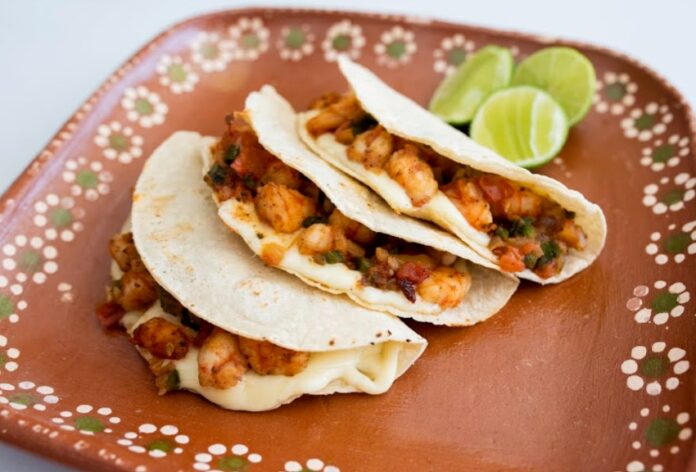
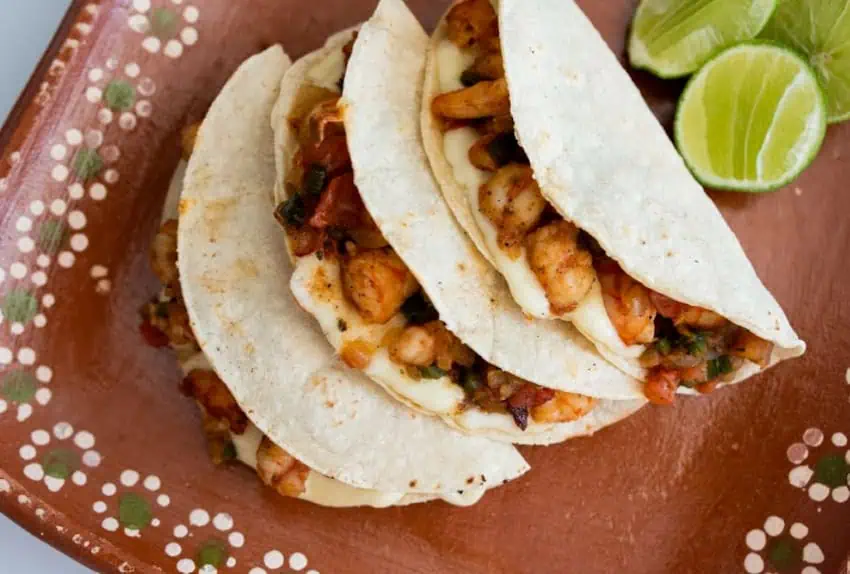
Tacos gobernador are the perfect marriage of two Northwest classics: seafood and cheese. (Centro de Ciencias de Sinaloa)
Legend has it that the taco gobernador was born in a Sinaloa restaurant, created for a visiting governor. Whether that’s true or not, it feels right. This dish is political in a way: like a politician building an unlikely coalition, tacos gobernador takes seafood and cheese, two foods most people don’t dare to combine, and makes something extraordinary.
Shrimp, those marvelous little sea bugs, take center stage. I always laugh when I’m reminded how shrimp and lobster were once considered undesirable low-class foods. They’re nature’s pre-packaged protein bombs, lean and rich in umami. When exposed to heat, their translucent muscle fibers contract, turning opaque and tender. This isn’t just a visual cue: it’s a textural transformation that tells you the shrimp are at their peak and ready to be inhaled.
Whoever thought shrimp was as low-class food has clearly never tried these tacos. (Turismo Sinaloa)
Then comes the cheese. Cheese is glue and magic. It holds things together when life — or tortillas — might fall apart. Oaxaca cheese melts just right; not too fast, not too slow, but like it’s been waiting all its life to drape itself over shrimp and make everything okay.
Poblano chili, smoky and gentle, carries a memory of fire without being obnoxious about it. Jalapeño is for the thrill-seekers. The tomato softens things, a gentle nudge toward sweetness. And there’s the garlic and onion, reliable as clockwork.
The butter is the unsung hero, a fat that carries flavor and ensures the aromatics — garlic and onion — release their full potential. These alliums, when sautéed, undergo caramelization, which adds depth and a subtle sweetness to the mix.
Why does it work? Because it’s honest. It doesn’t pretend to be fancy or profound. It’s just shrimp and cheese and fire and love wrapped in a tortilla. But isn’t that what we’re all looking for? Something simple that makes us feel whole — or full — for a minute? Life is messy and delicious, and sometimes the best thing you can do is fold it in half and take a bite.
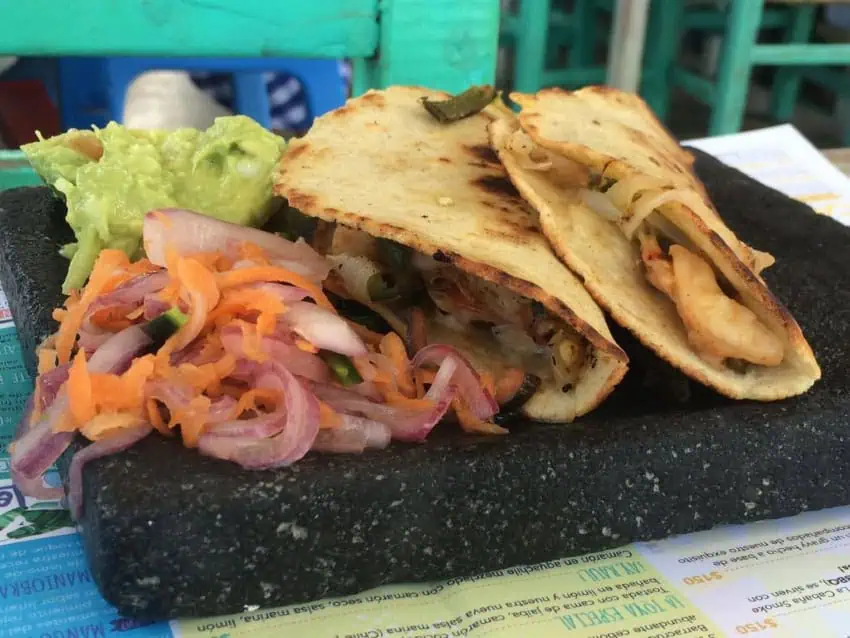
Lemon is a classic Mexican standby and really brings out the zest of the tacos. (Centro de Ciencias de Sinaloa)
Tacos gobernador
Ingredients
For the filling
1 lb (450 g) shrimp, peeled, deveined, and roughly chopped
1 small onion, finely chopped
2 garlic cloves, minced
1 medium tomato, finely chopped
1 poblano pepper, roasted, peeled, and diced
1 jalapeño or serrano pepper, finely chopped (optional, for extra heat)
2 tbsp butter
1 tsp smoked paprika
1 tsp oregano
Salt and pepper, to taste
1 cup shredded Oaxaca or mozzarella cheese
For the tacos
8 corn tortillas
Fresh cilantro, chopped (for garnish)
Lime wedges, for serving
Instructions
Roast the poblano pepper over an open flame or in a hot skillet until the skin is charred. Place it in a covered bowl to steam for 10 minutes. Peel off the charred skin, remove the seeds and dice the flesh.
Heat the butter in a skillet over medium heat. Add the onion and garlic, sautéing until softened and fragrant.
Stir in the tomato and chilis. Cook for about 3-4 minutes until the mixture softens.
Add shrimp, smoked paprika, oregano, salt and pepper. Cook until the shrimp turn pink and are fully cooked, about 3-5 minutes.
Heat a tortilla in a dry skillet over medium heat. Sprinkle a layer of cheese on one half of the tortilla and let it melt slightly.
Spoon a generous portion of the shrimp mixture onto the cheesy side of the tortilla. Fold it over into a taco shape and cook for 1-2 minutes on each side until crispy and golden.
Garnish with fresh cilantro and serve immediately with lime wedges on the side.
Stephen Randall has lived in Mexico since 2018 by way of Kentucky, and before that, Germany. He’s an enthusiastic amateur chef who takes inspiration from many different cuisines, with favorites including Mexican and Mediterranean.
Beyond beauty and culture, what does San Miguel really have to offer an industrial park? (Valeemb22/CC BY-SA 4.0)
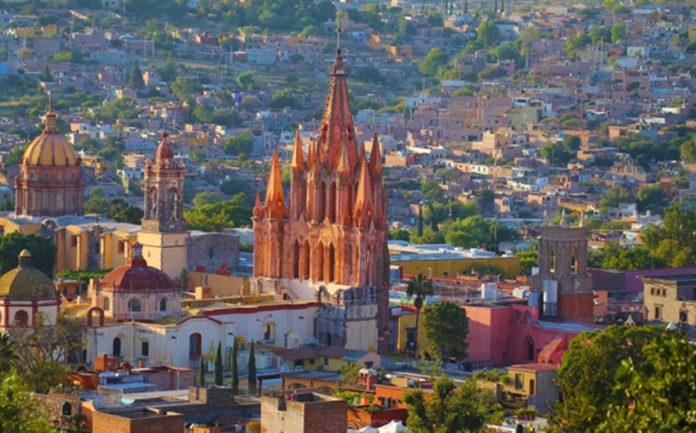
After December’s whirlwind of festivities, you might think San Miguel de Allende would take a breather, but that’s just not our style. In this town, we love going out both for the walk itself, with its charming cobblestone challenges, and the joy of running into friends. After the lively chaos, San Miguel de Allende offers the perfect opportunity to settle down and dive into deep thoughts. Here’s a look at the events that will spark curiosity and fuel meaningful conversations in January!
Heart to Heart Charity Bazaar
(Patronato pro Niños)
Kick off the new year with a shopping spree that gives back! Explore rooms packed with new merchandise at the Heart to Heart Charity Bazaar, benefiting Patronato Pro Niños. Whether you’re looking for clothing, home decor, small appliances or sporting goods, you’ll find incredible deals and hidden treasures. Best of all, every penny raised supports vital medical, dental and psychological care for the children of San Miguel de Allende who need it most.
Date: Jan. 4 from 10 a.m. to 2 p.m. Location: Reforma 75C, Second Floor, Fraccionamiento Ignacio Ramirez Cost: Free entry
A Conversation with Margaret Atwood and Martin Fletcher
(San Miguel Writers’ Conference)
San Miguel de Allende is rolling out the red carpet to honor Margaret Atwood, author of “The Handmaid’s Tale,” with the San Miguel Award for Literary Excellence. This special event, “From Fiction to Reality: Has Our Dystopian Future Arrived?”, features Atwood in conversation with award-winning journalist Martin Fletcher. Together they will explore the intersection of dystopian fiction and our rapidly changing world.
This bilingual evening kicks off with a wine and cheese reception, followed by the award presentation, a dynamic conversation and a Q&A session. Best of all, this event is a fundraiser for the San Miguel Writers’ Conference 20th Anniversary Student Scholarship Program, making it an evening where inspiration meets impact.
Date: Jan 12, 5 – 7 p.m. Location: Foro El Obraje, Calzada de la Presa 50, Centro Cost: Tickets start at US $45
Hilos de Esperanza
(Theme photos/Unsplash)
The 5th edition of Hilos de Esperanza invites you to donate your hair to support girls and women battling cancer. This heartfelt initiative offers an opportunity to provide hope and strength to those facing challenging times. Schedule your haircut appointment in advance via the Rotaract SMA. For us, it’s just hair — for them, it’s hope. Join this meaningful cause!
Date: Saturday, Jan 12, 10 a.m. – 2 p.m. Location: Hotel Quinta Loreto 15 Cost: Free entry
Explore how resilience shapes our world, influences communities, and paves the way for a sustainable future. Held at the stunning Hotel Matilda, this dynamic event features an impressive lineup of speakers, including digital strategist Alejandra Lagunes, visionary artist Angelo Musco, chef Ricardo Muñoz Zurita, hypnotherapist Sasha Carrion, wellness specialist Romina Biamino, global business strategist Diego Jiang and more, and war reporter Anjan Sundaram. The experience will be elevated with captivating performances by Aulladora Banda Lobo and the Indigenous Dancers of SMA. Talks in Spanish and English will be seamlessly accessible via live translation earpieces. VIP tickets include an exclusive gourmet dinner with the speakers at Bovine Restaurant.
Date: Thursday, Jan 16, 12 – 5 p.m. Location: Hotel Matilda, Aldama 53 Cost: Tickets from MX$1,200 to $3,000
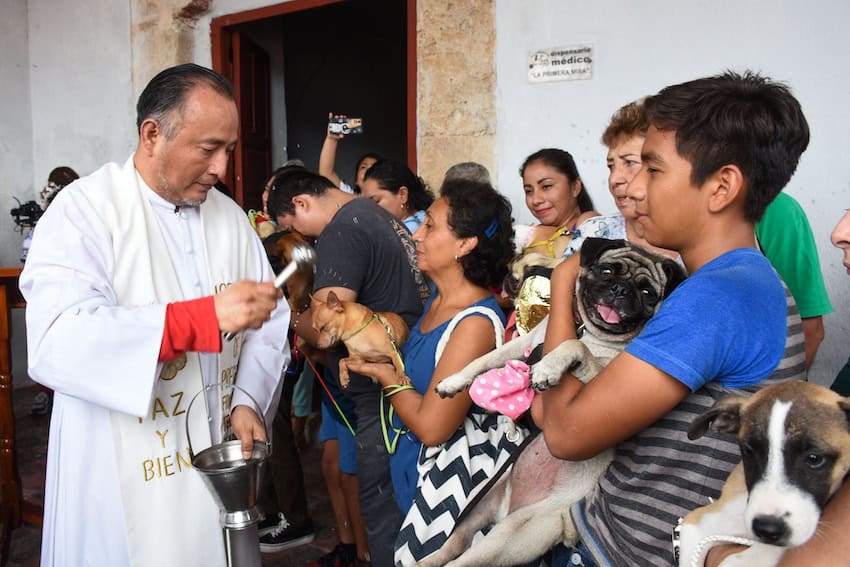
Blessing of Pets
(Michael Balam Chan/Cuartoscuro)
Celebrate the beloved tradition of the Blessing of Pets at the Templo del Oratorio, a practice rooted in the early colonial era and inspired by San Antonio de Abad’s deep reverence for nature. This heartwarming annual event welcomes pets of all kinds — dogs, cats, bunnies, and more — to receive a special blessing. The ceremony begins with a priest reading from Genesis, reflecting on the creation of animals and their vital role in our lives, followed by a prayer of gratitude and the sprinkling of holy water for divine protection.
Date: Saturday, Jan 18 at 5 p.m. Location: Atrio Templo del Oratorio Cost: Free entry
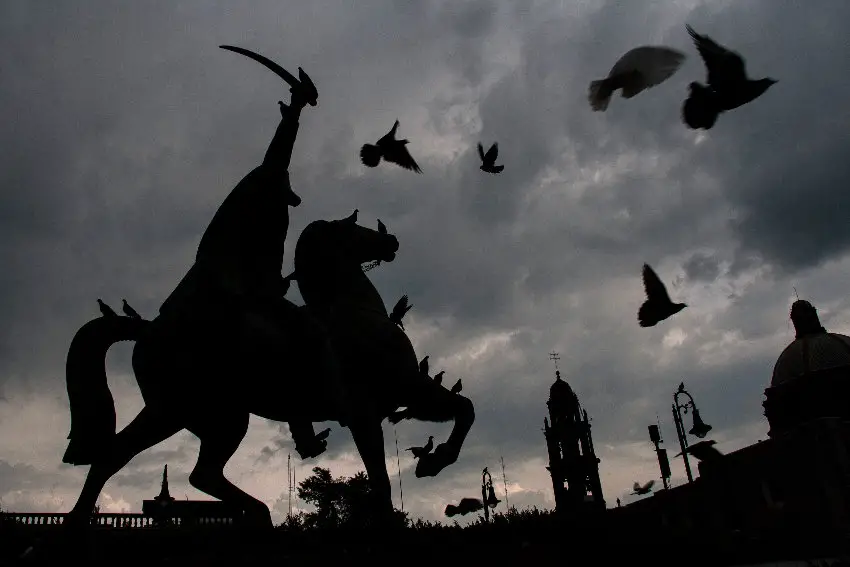
256th Anniversary of Don Ignacio de Allende y Unzaga
(Galo Cañas/Cuartoscuro)
Celebrate the legacy of Generalissimo Ignacio de Allende with a series of events marking his 256th birthday. Born in 1769 in San Miguel el Grande, the city later renamed in his honor, Allende is a key hero in Mexico’s War of Independence. His leadership and ultimate sacrifice symbolize patriotism nationwide. The festivities begin with a civic ceremony at the Jardín at 9:00 a.m., followed by a National Flag presentation at the Municipal Palace at 6:00 p.m., and end with a spectacular fireworks display at 9:00 p.m.
Date: Sunday, Jan 19, 9 a.m. – 9 p.m. Location: Main City Square Cost: Free entry
Class on generative Artificial Intelligence
(Instituto Allende)
Explore the fascinating world of generative AI with Michael Werner, a teacher of computer science for 30 years at Wentworth Institute of Technology. This interactive class dives into cutting-edge AI tools like ChatGPT, Bard, DALL-E and Stable Diffusion. Learn how these technologies are reshaping creativity, from writing essays and composing music to producing professional-looking art, all while raising questions about authenticity, attribution and the future of human creativity.
Through hands-on experimentation and lively discussions, you’ll gain insights into how AI generators work and their implications for art, education, and society. The course encourages students to try out tools on their own and share their experiences in class.
Date: Jan. 21, 23 and 24 from 1-3 p.m. Location: Instituto Allende Cost: 400 pesos
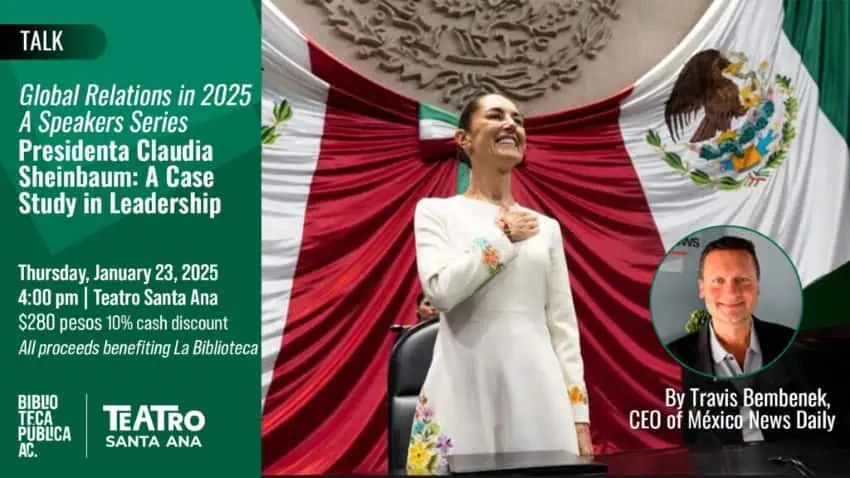
Mexico News Daily’s CEO talks Sheinbaum
(Teatro Santa Ana)
Dive into the complexities of Mexico’s leadership with “Global Relations in 2025: A Speakers Series.” Travis Bembenek, CEO of Mexico News Daily, will lead “Presidenta Claudia Sheinbaum: A Case Study in Leadership,” an insightful discussion at the Teatro Santa Ana on thechallenges and opportunities Mexico’s new president faces. Bembenek will examine critical decisions shaping Mexico’s environmental, economic, social and political landscape. This talk will be presented in English. Tickets are 280 pesos with a 10 percent discount when paying in cash.
Date: Jan. 23, 4 p.m. Location: Teatro Santa Ana. Relox 50A, Biblioteca. Cost: 280 pesos
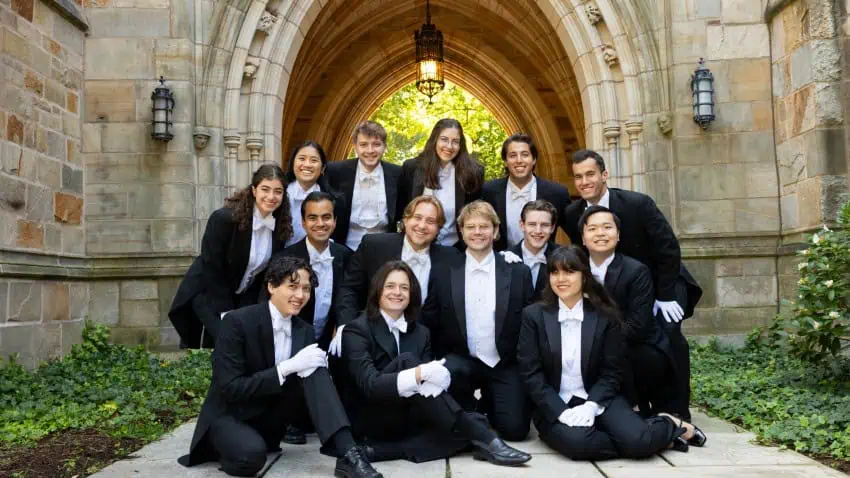
Yale’s Whiffenpoofs at Templo de la Tercera Orden
(Ticketleap)
On a frosty January night more than a century ago, five singers from the Yale Glee Club gathered at Mory’s Temple Bar in New Haven, Connecticut, starting a musical legacy that thrives to this day. Now, the renowned Whiffenpoofs, the world’s oldest collegiate a cappella group, are bringing their timeless charm to San Miguel de Allende.
At 6 p.m., the Whiffs will perform at the Templo de la Tercera Orden, showcasing a dynamic repertoire of timeless classics and modern arrangements spanning various musical genres. This unique concert will also support a meaningful cause: raising funds for Chorale San Miguel’s historic 1875 Johnson and Sons pipe organ. Don’t miss this opportunity to enjoy an extraordinary performance while contributing to the preservation of San Miguel’s musical heritage.
Sandra is a Mexican writer and translator based in San Miguel de Allende who specializes in mental health and humanitarian aid. She believes in the power of language to foster compassion and understanding across cultures. She can be reached at: sandragancz@gmail.com
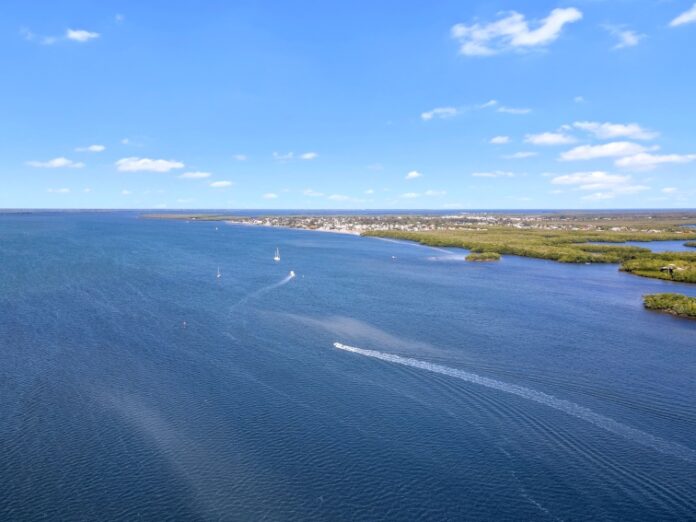
Both the U.S. and Mexico claim territorial waters within the large body of water that is the Gulf of Mexico. (Wirestock Creators/Shutterstock)
United States President-elect Donald Trump said Tuesday that he would rename the Gulf of Mexico the Gulf of America.
Trump, who will commence his second term as U.S. president on Jan. 20, announced his plan to change the name of the ocean basin during rambling remarks at a press conference at his Mar-a-Lago resort in Palm Beach, Florida.
BREAKING NEWS: Trump Says 'Gulf Of Mexico' Name To Be Changed To 'Gulf Of America'
Trump made the remarks about changing the Gulf’s name at a press conference at Mar-a-Lago on Tuesday.
“We have a massive [trade] deficit with Mexico, and we help Mexico a lot; they’re essentially run by the cartels. And can’t let that happen; Mexico’s really in trouble, a lot of trouble; very dangerous place,” he said.
Trump subsequently, in a roundabout way, announced his intention to change the name of the Gulf of Mexico, in which both the United States and Mexico have territorial waters.
“And we’re going to be announcing at a future date, pretty soon we’re going to change because we do most of the work there, and it’s ours, … we’re going to be changing the name of the Gulf of Mexico to the Gulf of America, which has a beautiful ring,” he said.
“That covers a lot of territory. The Gulf of America, what a beautiful name, and it’s appropriate, it’s appropriate,” Trump said.
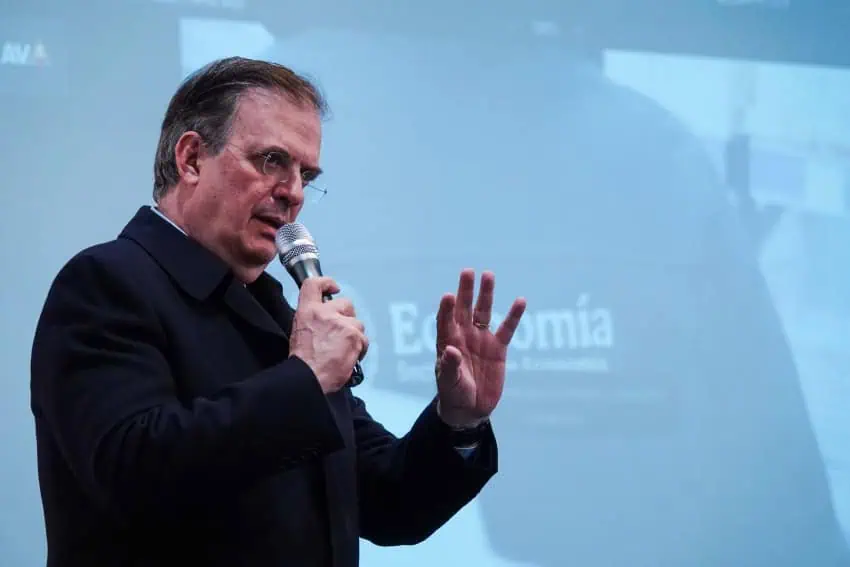
Economic Minister Marcelo Ebrard, attending a conference in Guadalajara Tuesday, asked by Mexican reporters to respond to Trump’s remarks about such a name change, responded briefly but definitively on the matter.
“If we saw each other in 30 years, the Gulf of Mexico will still be called the Gulf of Mexico,” he told reporters.
Economy Minister Marcelo Ebrard, seen here at an event in December, told reporters Tuesday that what was more important was preserving Mexico and the U.S.’s relationship and that “We’re not going to get involved in that debate.” (File photo/Galo Caño Rodríguez/Cuartoscuro)
Can Trump actually change the Gulf’s name?
The Associated Press reported that Trump can “maybe” change the name of the Gulf of Mexico, which borders several U.S. and Mexican states. However, the news agency said that doing so is “not a unilateral decision, and other countries don’t have to go along.”
“The International Hydrographic Organization — of which both the United States and Mexico are members — works to ensure all the world’s seas, oceans and navigable waters are surveyed and charted uniformly, and also names some of them,” AP said.
“There are instances where countries refer to the same body of water or landmark by different names in their own documentation,” it added.
AP also said that it can be easier to make a name change “when a landmark or body of water is within a country’s boundaries.”
Perhaps changing the name of New Mexico to New America would be an easier option for Trump.
And Mexico could perhaps retaliate to any name change made by the 47th U.S. president by renaming the Gulf of California the Gulf of Baja California.
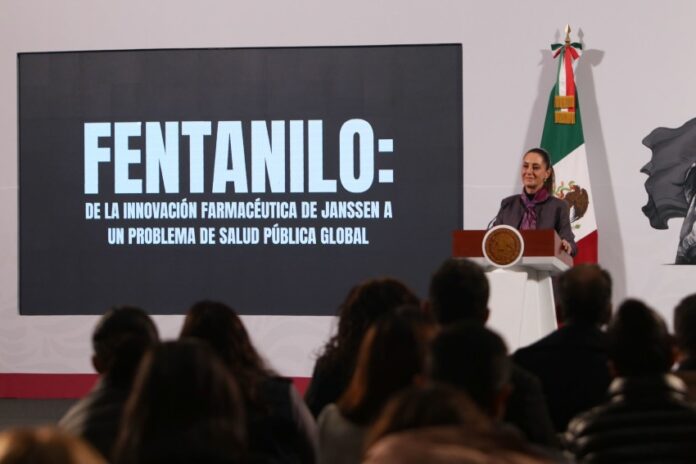
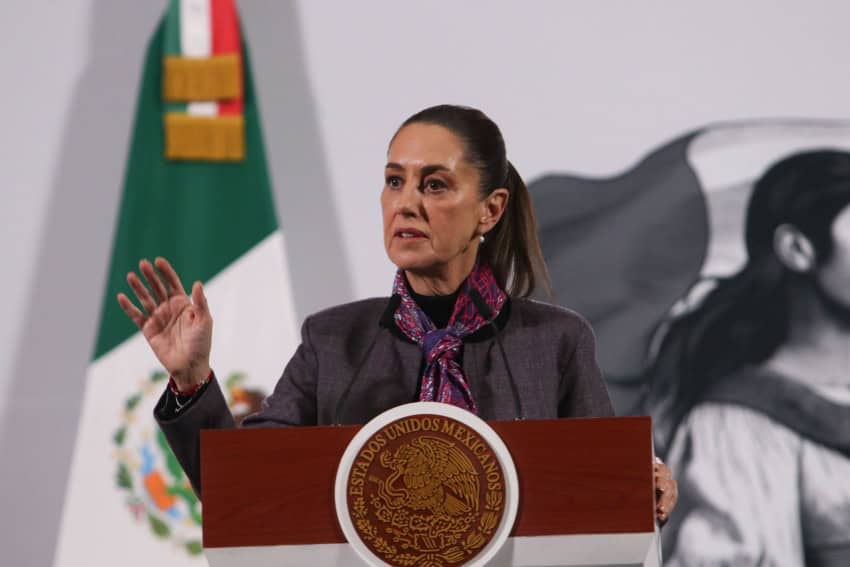
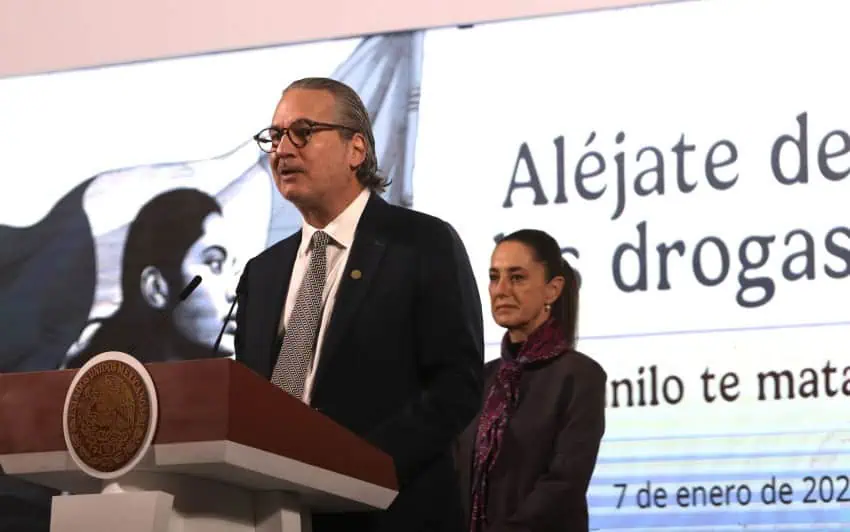
President Claudia Sheinbaum at her Tuesday press conference, stands in front of a projection screen saying, "Fentanyl: from the pharmaceutical innovation of Janssen to a global public health problem." (Gustavo Torres Rubio/Cuartoscuro)
President Claudia Sheinbaum was sworn in as Mexico’s first female president 14 weeks ago today and has held a morning press conference, or mañanera, almost every weekday since then. On Thursday, she will complete her 100th full day as president.
On Tuesday, fentanyl production, the political landscape in Canada and Ken Salazar’s (now-completed) tenure as U.S. ambassador to Mexico were among the topics Sheinbaum spoke about at her mañanera.
Despite her government launching a new anti-fentanyl campaign, Sheinbaum downplayed fentanyl as a public health crisis in Mexico. (Gustavo Torres Rubio/Cuartoscuro)
Sheinbaum: No evidence that ‘the whole process’ of producing fentanyl is completed in Mexico
After federal government officials presented a new anti-fentanyl campaign, Sheinbaum asserted that use of the deadly drug “is not really a problem” in Mexico.
While fentanyl is used in Mexico and there have been deaths linked to the powerful synthetic opioid here, “there is not a crisis like there is in the United States,” she said.
“… We don’t want [the overdose crisis] to reach our country, and that’s why we’re starting this campaign against fentanyl,” Sheinbaum said.
Later in her press conference, the president said that the majority of illicit drug laboratories that have been detected and dismantled in Mexico were producing methamphetamine.
Sheinbaum went on to say that authorities are combating the national distribution of fentanyl as well as the trafficking of the drug into the United States. She cited the recent seizure of more than 500,000 fentanyl pills in Sinaloa as an example of the government’s efforts.
Among the people who spoke about the federal government’s new anti-fentanyl public health initiative was Carlos Azcárraga Andrade, CEO of Grupo Posadas, owner of several hotel brands in Mexico, including Live Aqua and Fiesta Americana. Azcárraga is a member of Sheinbaum’s Communication Advisory Council.
Sheinbaum also said the government is “combatting the illegal production” of fentanyl and other drugs by closely monitoring the chemical precursors that enter the country.
“The possibility of [fentanyl] being made in Mexico or not, and which part [of the drug], is something that is always being investigated in the security cabinet,” she said.
“Up to now, [we have] the fact that precursors arrive, because the majority of the precursors come from Asia,” Sheinbaum said.
“[Evidence] that the whole process [of making fentanyl] is done here in Mexico hasn’t been found,” she said, apparently saying that there is no proof that the precursor chemicals used to make the opioid are manufactured here.
Sheinbaum said that navy officials on Thursday would “explain with more detail” which illicit drugs are made in Mexico and where the precursor chemicals come from.
Her remarks on Tuesday were reminiscent of those made by her predecessor, Andrés Manuel López Obrador, who denied that illicit fentanyl was produced in Mexico, but conceded in 2023 that pills of the powerful opiate are pressed here with ingredients shipped from Asia.
Sheinbaum doesn’t believe a change of government in Canada would affect the USMCA
Poilievre said in November that he would be willing to negotiate a trade deal with the United States that doesn’t include Mexico.
Sheinbaum said she didn’t believe that the election of Poilievre would lead to “something” happening with the USMCA — i.e. the three-way trade pact’s termination.
Conservative Canadian politician Pierre Poilievre is widely seen as the next prime minister of Canada. He was among multiple Canadian politicians who last fall expressed willingness to cut Mexico out of the USMCA free trade zone strike a deal solely with the United States. (File photo/Wikimedia Commons)
“Canada, the United States and Mexico have benefited a lot from the USMCA,” she said.
A federal election will be held in Canada on or before Oct. 20, 2025.
There was a ‘rift’ with outgoing US ambassador, says Sheinbaum
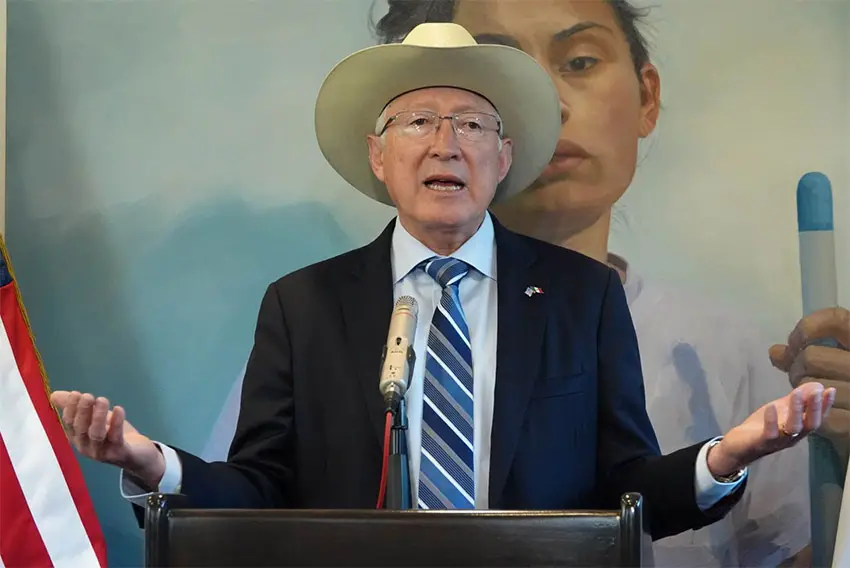
A reporter asked Sheinbaum to “grade” the work in Mexico of Ken Salazar, who completed the final day of his more than three-year term as United States ambassador to Mexico this Tuesday.
“I would say there were disagreements with the ambassador in the final period [of his tenure],” she said.
“It was never clear … what the U.S. involvement was,” she said.
“… Yes there was a rift with the ambassador,” Sheinbaum said before declaring that there was no negative impact on the bilateral relations between Mexico and the United States as a result of the differences with Salazar.
United States President-elect Donald Trump announced in December that former U.S. ambassador to El Salvador Ronald Johnson was his pick for ambassador to Mexico during his second term.
By Mexico News Daily chief staff writer Peter Davies (peter.davies@mexiconewsdaily.com)