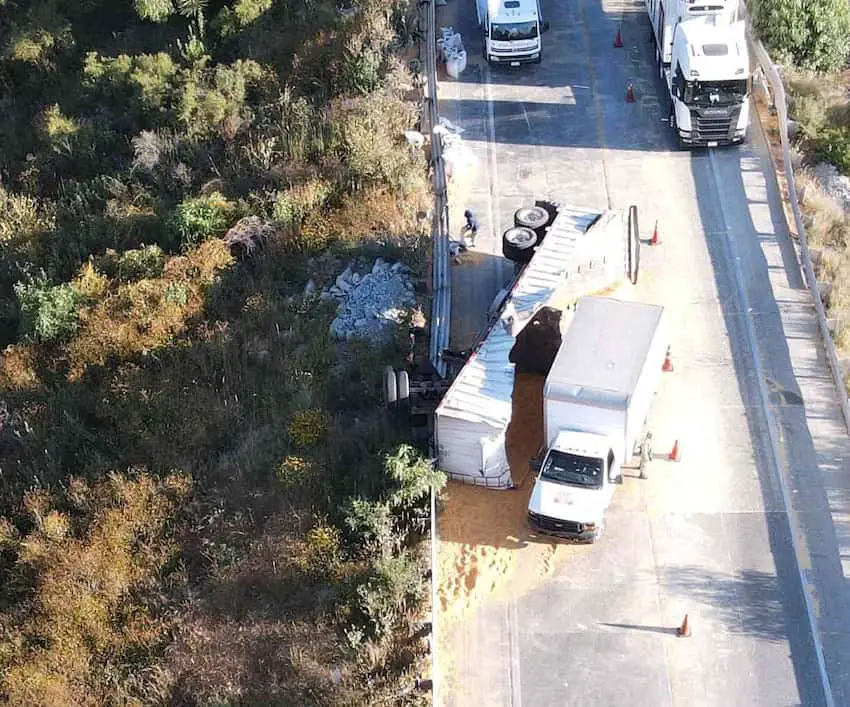
The bus was approaching mile marker 74 on the Zacatecas-Aguascalientes highway when it collided with the back of a trailer carrying corn that had come loose from the tractor truck. (Alfonso Vladimir/Cuartoscuro)
Nineteen people were killed and six others were injured when a bus crashed into a detached semi-trailer on a highway in the central state of Zacatecas, Mexico.
The passenger bus was traveling from the Pacific coast state of Nayarit to the northern border city of Ciudad Juárez when the accident occurred early on Saturday morning.
There were only six survivors of the bus crash, which was caused by a runaway trailer on the Zacatecas-Aguascalientes highway. (ContrapropuestaMX/X)
The bus, operated by Omnibus de México, was approaching mile marker 74 on the Zacatecas-Aguascalientes highway when it collided with the back of a trailer carrying corn that had come loose from the tractor truck.
The bus careened off the highway and rolled down a ravine, as seen in images shared on social media.
First responders and security personnel — including soldiers and members of the National Guard — arrived on the scene and sifted through the wreckage looking for survivors, but the damage to the bus was considerable.
The six injured passengers were being treated at hospitals in the city of Zacatecas on Monday.
🚨 Tragedia en Zacatecas
Autobús cae a barranco tras choque con tractocamión, dejando al momento 24 muertos y varios heridos. Las autoridades trabajan para restablecer el tránsito en la autopista Zacatecas-Aguascalientes. #Zacatecas#Aguascalientespic.twitter.com/h56OvNWUgZ
In a post to social media, Zacatecas Governor David Monreal said he ordered the local Health Ministry, Public Works Ministry and Public Security Ministry to attend to the matter “on a permanent basis.”
Monreal said his administration had established two hotlines to manage information about the injured and the deceased, while also declaring that the state Attorney General’s Office (FGJE) had opened a criminal investigation into the accident.
According to Reuters, the FGJE said it was “carrying out investigations to arrest the driver” of the tractor-trailer.
State authorities reported an initial death toll of 24 on Saturday before revising the final count to 19. By Sunday afternoon, authorities had confirmed the identities of 17 of the 19 victims, according to the newspaper Express Zacatecas, matching the names on the bus’s passenger list. The Zacatecas State Commission for Victims’ Assistance was lending attention to the families of the dead and injured.
Express Zacatecas also reported that experts with the National Guard had confirmed that the wayward tractor-trailer had caused the accident, coinciding with the conclusions of the initial forensics investigation.
Zacatecas authorities are working with officials in neighboring states to identify the driver and the owner of the tractor-trailer involved in the accident.
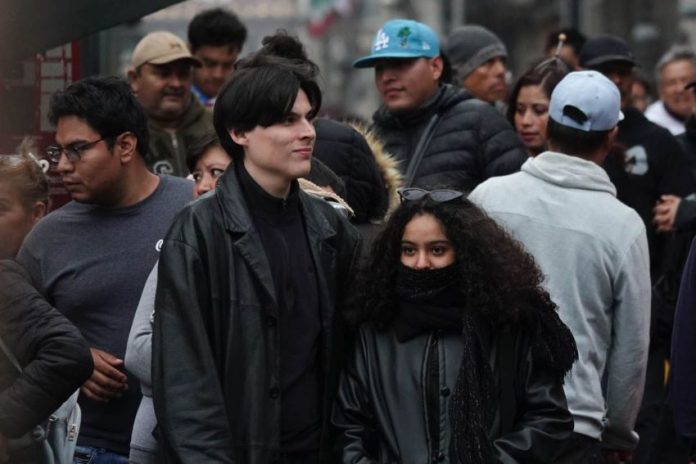
More than half of Mexico’s 32 states will see temperatures drop to between -5 and 5 degrees Celsius this week with the arrival of cold front No. 6. (Graciela López/Cuartoscuro)
More than half of Mexico’s 32 states will see freezing temperatures on Monday and Tuesday as cold front No. 6 enters Mexico from the northwest.
The National Meteorological Service (SMN) warned that residents, particularly of Mexico’s northwest region, can expect significant drops in temperature throughout the week. The weather system will bring powerful wind gusts between 60 to 80 kilometers per hour, kicking up dust storms (known locally as “tolvaneras”) across Baja California, Baja California Sur, Sonora, Chihuahua and Coahuila.
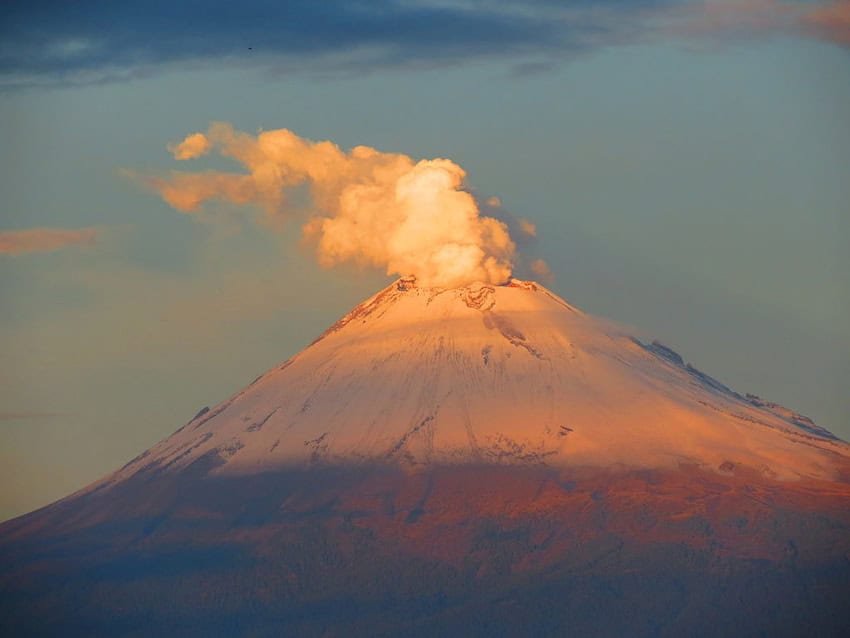
Snow and sleet are possible in high peaks including the Popocatépetl, Iztaccihuatl and Pico de Orizaba volcanoes. (Wikimedia Commons)
Beginning Monday, mountainous areas of Baja California, Chihuahua, Durango, México state, Tlaxcala and Puebla can expect temperatures between -5 and 0 degrees Celsius.
The following states can expect temperatures between 0 and 5 degrees Celsius:
Sonora
Coahuila
Nuevo León
Zacatecas
San Luis Potosi
Aguascalientes
Jalisco
Michoacan
Guanajuato
Queretaro
Hidalgo
Mexico City
Veracruz
Oaxaca
Snow and sleet are also possible in high peaks including the Popocatépetl, Iztaccíhuatl and Pico de Orizaba volcanoes.
Meanwhile, a new tropical wave will approach the coast of Quintana Roo on Thursday, interacting with a low-pressure channel in Mexico’s southeast and Yucatán Peninsula. These conditions will lead to heavy rainfall and thunderstorms in the region.
The SMN has warned that rainfall may lead to reduced visibility, landslides and flooding of rivers and streams. The weather agency urged residents to follow the recommendations of Civil Protection authorities, as strong winds may knock down trees and advertisements.
Se prevé esta mañana, ambiente fresco y bancos de #Niebla en zonas altas que rodean al #ValleDeMéxico.
At least half of the country will see rainfall today. Here’s the forecast:
Heavy to very heavy rainfall (50 to 75 millimeters): Veracruz, Oaxaca, Chiapas, Tabasco and Quintana Roo.
Showers and intervals of heavy rainfall (25 to 50 millimeters): Guerrero, Campeche and Yucatán.
Showers (5 to 25 millimeters): Baja California, Tamaulipas, Hidalgo, Puebla, Tlaxcala, State of Mexico, Mexico City, Morelos and Michoacán.
Temperature forecast by region
Despite the cold front, some regions in Mexico will still experience high temperatures during on Monday. Here is the forecast for today:
Maximum temperatures of 35 to 40 degrees Celsius: Baja California Sur, Sonora, Sinaloa and Nayarit.
Maximum temperatures of 30 to 35 degrees Celsius: Baja California, Chihuahua, Coahuila, Nuevo León, Tamaulipas, San Luis Potosí, Zacatecas, Durango, Jalisco, Colima, Michoacán, Guerrero, Oaxaca, Chiapas, Veracruz, Tabasco, Campeche, Yucatán and Quintana Roo.
“This has been a complicated week. My worst Mexican Grand Prix ever,” Pérez said after the race. (Galo Cañas/Cuartoscuro)
Mexican Formula 1 racer Sergio “Checo” Pérez had a rough weekend in Mexico City.
The Guadalajara native finished dead last among the 17 cars that completed Sunday’s Mexico City Grand Prix, adding to rumors about his future on the Red Bull Racing team.
Pérez’s poor performance at the Mexico City Grand Prix on Sunday saw Red Bull drop to third place in the Constructors Standings. (Galo Cañas/Cuartoscuro)
According to the racing website Planet F1, Pérez blamed brake problems for the poor pace during qualifying, setting him up to start Sunday’s race in 18th place. “This has been a complicated week. My worst Mexican Grand Prix ever,” Pérez said after the race. “I’ve always said my dream is to win in Mexico and I’ll be back to try again next year.”
Though Pérez wants to return to the Hermanos Rodríguez track next year, he might have to find a new team.
Despite the awful qualifying session that saw him start 18th on the grid, Pérez began the race in promising fashion, overcoming a 5-second penalty for a false start before moving into 11th place. Then disaster struck on the 18th lap of the 71-lap race.
As the fast-charging Mexican battled to pass New Zealand rookie Liam Lawson, driving for Red Bull’s sister outfit Racing Bulls, for 10th place, Lawson cut off his attempt to zip by on the inside at Turn 4. Pérez maneuvered around him on the outside of Turn 5, but Lawson made contact with Checo’s car, damaging the bodywork and knocking him out of contention.
Pérez’s poor performance saw Red Bull drop to third place in the Constructors Standings.
Lawson apologizes for inappropriate gesture
After the side-by-side battle on the 18th lap that left Checo’s car damaged, Lawson — tipped to replace Pérez at Red Bull Racing next year — flipped his middle finger at the Mexican as he surged ahead.
Liam Lawson — tipped to replace Pérez at Red Bull Racing next year — flipped his middle finger at Pérez during the race. (Moisés Pablo/Cuartoscuro)
After the race, the Racing Bulls pilot apologized, saying his gesture came in the heat of the moment.
“It wasn’t my intention [to have an incident], but I did try and leave space in Turn 4,” Lawson said. “I would have thought he would leave me space in Turn 5, but obviously not.”
In response, Pérez called Lawson, who finished in 16th place, “an idiot.”
Checo’s future at Red Bull hangs in the balance
Despite finishing third in the 2021 and 2022 Drivers championship, Red Bull boss Christian Horner and team advisor Helmut Marko have been disappointed with Checo’s performance this season. Pérez currently sits in eighth place and his poor form this season is the major reason Red Bull has tumbled in the Constructors Standings.
Last week, Marko said Checo’s position with Red Bull was secure, but Sunday’s result has stirred up the rumor mill once again. Pundit Ralf Schumacher told Planet F1 he believes Red Bull will drop Pérez from the team before the end of the season.
Horner was not so forgiving. “Checo again has had a horrible weekend,” Horner said, according to the news site Motorsport Week. “He knows Formula 1 is a results-based business.”
According to Motorsport Week, Horner would not guarantee that Pérez’s spot on the team was safe.
When it comes to memorable Dia de los Muertos events, Ixtapa-Zihuatanejo is up there with Mexico's best. (All photos by Margaret Reid)
In the town of Zihuatanejo, Dia de Muertos (Day of the Dead) and Halloween have collided. It is one of the most important times of the year for celebrating family and loved ones who have passed on, but it has taken on a new angle as cross-border traditions have mixed together. Time-honoured traditions include cleaning and visiting the gravesites, candlelight vigils and sharing meals, usually the favourite dishes of the person who passed. Pan de Muerto is divided, and music plays a large part in the celebrations throughout the candlelit evening.
In addition to holding onto traditional celebrations, they have expanded and, at times, appear more commercial than I have witnessed over the past 30 years, living at least part-time in Ixtapa-Zihuatanejo. What used to be more about honouring the dead while visiting the graves of loved ones has now included three and four day celebrations, which, although originated in tradition, have become elaborate events. Don’t get me wrong, the gravesite gatherings are certainly prevalent and mostly away from foreign visitors’ eyes, but Dia de Muertos has become more full-blown over the years and the lines between Halloween and the traditional Mexican ceremonies of remembrance have become blurred.
Day of the Dead is usually a quiet, personal celebration of life for most Mexicans. In Zihuatanejo, it’s merging into a Halloween extravaganza of costumery and color.
I have noticed the prevalence of huge numbers of trick-or-treaters that swarm what was once a small village in Zihuatanejo. Seeing these adorable children dressed as little goblins, ghosts, SpongeBobs, and last year’s most popular character, Wednesday Addams, has become the highlight of the year for my friends and me. We park ourselves outside the Barracuda Bar and hand out goodies and take photos — which everyone happily poses for.
The festivities begin with the unveiling of a giant Catrina on October 31 at 6:30 pm at a major landmark in Zihuatanejo known as Plaza Kioto, named after one of Zihuantanejo’s sister cities, Kyoto in Japan.
A short while later, everyone moves to the Cancha Municipal, the location of all of Zihuantanejo’s most memorable activities, located downtown on the shores of Zihuatanejo Bay. Here, they can enjoy an exhibition and taste traditional pan de muerto and other tasty treats from local bakeries and Restaurante Carnivac. Following is a lighted parade of boats in the bay of Zihuatanejo known as the Desfile de la Lanchas Illuminadas.
On November 1, starting at 7:00 pm, there will be a host of activities and celebrations in Zihuatanejo and nearby Ixtapa. In Colonia la Madera, a popular area not far from Centro Zihuatanejo and famous for its many restaurants and boutique hotels, you can dine and dance in the streets a mere few steps from Playa Madera.
Visitors to Ixtapa can see the Catrina Parade through the center of the town.
In Ixtapa, 5 kilometers away, the fun continues with the “Pasarela de Textile — Catrinas de mi tierra” fashion show, which is held in the Commercial Zone of the resort area. There is also an Exhibition de Ofrendos (El Lugar de los Muertos, which means the place of the dead) at several restaurants. The traditional Day of the Dead altars can also be viewed and admired by visiting the many hotels along the main strip.
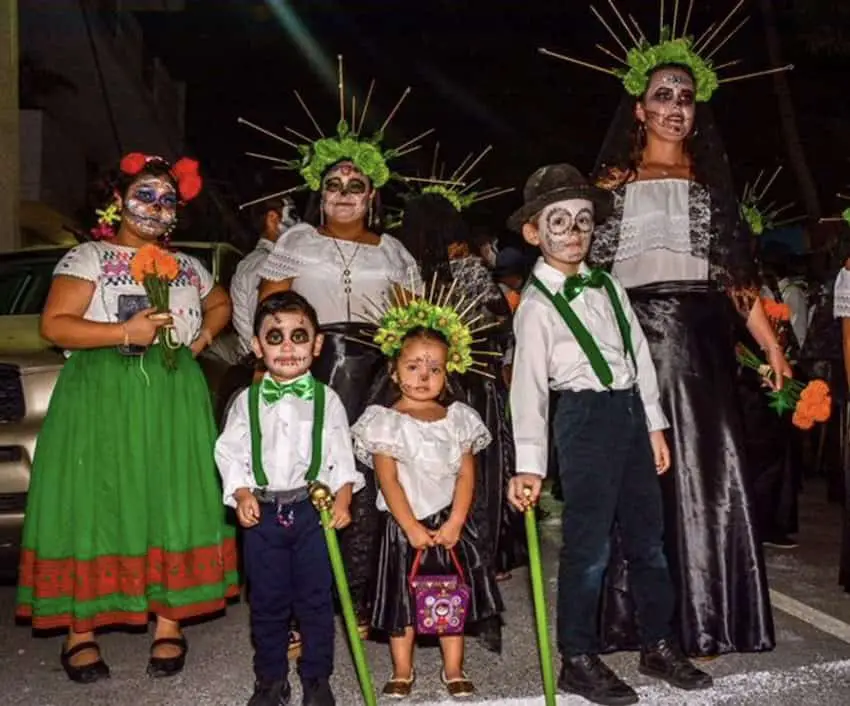
The Parade of the Catrinas on November 2 is an event not to be missed as the costumes are elaborate and breathtaking. It starts at Plaza Kioto at 7:30 pm and winds through the town streets, including the length of Cinco de Mayo to the Cancha Municipal. People line the streets for glimpses of the magical parade and can often take photos with their favourite Catrinas at the end of the line.
On November 3, everything wraps up with the Concurso de Catrinas de Zihuatanejo, another spectacular event as the participants are judged and crowned. Sadly, it’s all over after that, at least for another year, when I have no doubt that plans are already in place to top this year’s festivities.
The writer divides her time between Canada and Zihuatanejo.
There are giant rabbits, world famous rockers and skulls galore, as November in the capital rolls around. (Cirque du Soleil/Facebook)
Day of the Dead parades. Massive music festivals. Art. A haunted boat ride through the canals of Xochimilco. If you’re wondering “What’s on in Mexico City this November?” — the answer is a lot.
In fact, there’s so much on it can feel overwhelming trying to sift through the event websites and scour social media. But fear not, because we’ve compiled 10 of the coolest activities going on next month.
Mictlán
(Mictlán)
The Mexica underworld of Mictlán is the place where souls congregate after their death in from the mortal world. Azul Cielo Circo company presents a Day of the Dead-themed circus performance, where artists will vividly bring to life this magical dimension through acrobatics, juggling, and entertaining stunts. The show will feature stories inspired by Mexican mythology and ancient belief systems.
November 1–3 and 8–9
Location: Ignacio Allende 36, Del Carmen, Coyoacán
Speaking of daring acts, for a limited time only you can see the classic circus show that has captivated audiences for decades. Watch as performers execute gravity-defying stunts and intricate choreography in whimsical costumes. The combination of performing arts and live music is entertaining for all ages, making it a great night out for families, couples, and friends.
Dates: November 7–December 29
Location: Gran Carpa Santa Fe (Vasco de Quiroga 2000, Santa Fe, Álvaro Obregón)
Explore a diverse range of illustrations created by both Mexican and international artists at LAGUNA, a beautiful, open-air venue in Doctores. Visitors will have the chance to meet artists in person while enjoying the vibrant atmosphere and wide-ranging display of contemporary art.
Dates: November 8–10
Location: LAGUNA (Dr. Lucio No. 181, Doctores, Cuauhtémoc)
Sail through the eeriest tales of Mexican folklore onboard a traditional trajinera boat. As you navigate the waterways, mysterious creatures will share spine-chilling legends from local culture, creating an atmosphere filled with suspense and intrigue. After an Instagram-worthy photo stop at an area featuring zone of illuminated skulls, the adventure continues with a visit to the infamous Isla de las Muñecas (Island of the Dolls).
Dates: November 1–2 and 8–9
Location: Embarcadero de Caltongo (Nuevo León 113, Caltongo, Xochimilco)
Cost: Tickets start at 550 pesos for adults and 400 pesos for children under six years old.
*Please note: Tickets can only be purchased on the day of the event. Reservations can be made by phone: 55 4130 5594 and 55 4130 5594.
Eurojazz
(Eurojazz/Instagram)
Celebrate jazz music with this diverse lineup of both international and local artists. Expect a vibrant atmosphere filled with live performances, workshops, and cultural exchanges highlighting jazz’s infinite styles. Not to mention, all performances are free!
Dates: November 10–24
Location: Centro Nacional de las Artes, Av. Río Churubusco 79, Country Club Churubusco, Coyoacán
If you love Mexican design, this art fair is for you. Set in the former presidential residence of Los Pinos, in the middle of Chapultepec Park, artisans from diverse communities across Mexico will showcase their textile creations, from traditional designs to modern interpretations. This annual event is part of a cultural movement initiated by the national Culture Ministry, aimed at promoting the value of artisanal work and the rights of collective ownership.
Dates: November 14 – 17, 2024
Location: Complejo Cultural de Los Pinos, Calz. del Rey S/N, Bosque de Chapultepec I Secc, Miguel Hidalgo
Every pop music lover’s favorite festival is coming up and the lineup is a doozy. Shake your hips to the likes of Shawn Mendes, Green Day, and Toto. The three-day celebration closes out with Paul McCartney alongside Jack White and Empire of the Sun. It’s an eclectic mix that promises an exciting experience for all attendees.
Bethany Platanella is a travel planner and lifestyle writer based in Mexico City. She lives for the dopamine hit that comes directly after booking a plane ticket, exploring local markets, practicing yoga and munching on fresh tortillas. Sign up to receive her Sunday Love Letters to your inbox, peruse her blog, or follow her on Instagram.
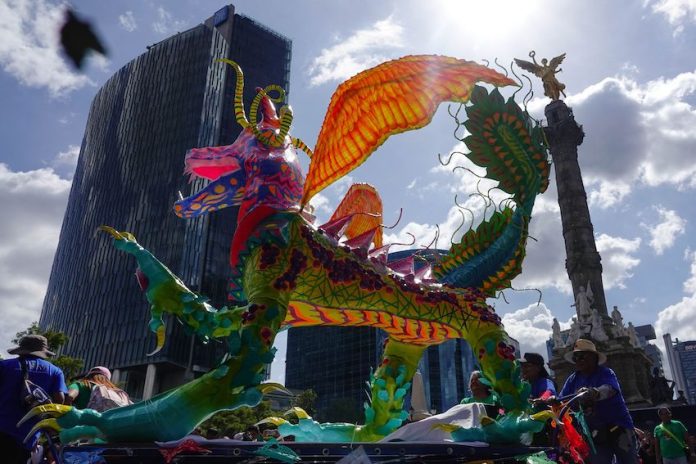
If you missed the parade, the alebrijes will remain on display along the sidewalks of Paseo de la Reforma until Nov. 3, from the Angel of Independence to the Estela de Luz monument.
(Rogelio Morales/Cuartoscuro)
On Oct. 19, Paseo de la Reforma hosted the much-anticipated Alebrijes Parade organized by the Museum of Popular Art (MAP), which saw 185 gigantic alebrijes — artisanal sculptures of fanciful creatures — stroll down Mexico City’s most prominent avenue.
If you missed the parade, the alebrijes will remain on display along the sidewalks of Paseo de la Reforma until Nov. 3, from the Angel of Independence to the Estela de Luz monument.
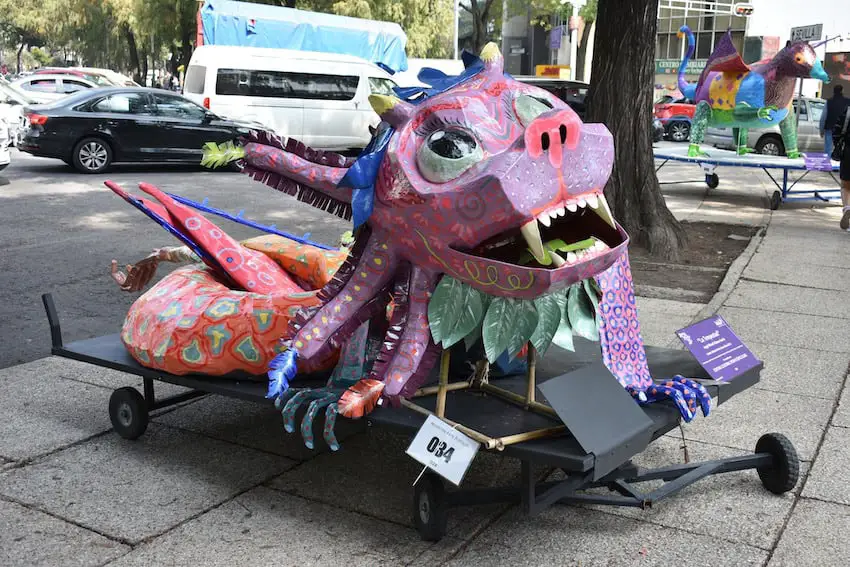
“La Tempestad,” by Angel Misael Velasco García, Centro Cultural Pedro López Elías, Tepoztlán, Morelos. (MAP/Facebook)
The parade
City officials reported that over 630,000 people gathered along Paseo de la Reforma to witness the MAP’s 16th edition of the parade.
The show began at noon on Oct. 19, with nearly 200 gigantic alebrijes journeying through downtown Mexico City. The colorful sculptures were created by experienced master cartoneros and emerging artists from all over Mexico. The states represented in this year’s parade include México state, Mexico City, Guerrero, Guanajuato, Hidalgo, Jalisco, Morelos, San Luis Potosí and Tlaxcala.
The parade also featured regional dances, live music and dance groups.
The MAP hosts an annual award ceremony to recognize the three most impressive alebrijes. This year, the top three winners will receive cash prizes of 70,000 ((US $3,489), 50,000 (US $2,492) and 40,000 pesos (US $1,993), respectively. Furthermore, eleven alebrijes with ‘honorable mentions’ will receive a cash prize of 10,000 pesos (US $498).
What are alebrijes?
Alebrijes are brightly colored Mexican folk art figures, typically made from papier-mâché or cardboard (cartonería). These remarkable figures, which blend features from different animals into fantastical combinations, were born from the imagination of artisan Pedro Linares López.
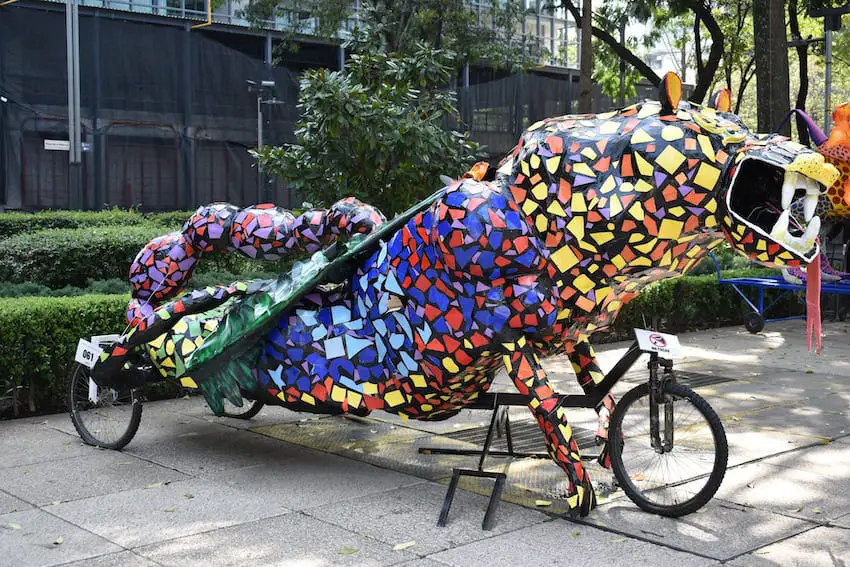
“FERIX” by Abelardo Correa Nava, secondary school No. 161 Tomas Alva Edison, Mexico City. (MAP/Facebook)
The story of alebrijes begins like something out of a fever dream — quite literally. In 1936, Linares fell ill and spent months unconscious. During this time, he was visited by extraordinary visions: a donkey with wings soaring through his dreams, a lion sporting a dog’s head, and a rooster crowned with bull’s horns. Upon recovering, he brought these mysterious creatures — which he named alebrijes — to life using the traditional technique of cartonería.
While Linares had been crafting these magical beings for decades, it wasn’t until 1975 that his work captured global attention. British filmmaker Judith Bronowski created a documentary about his craft, catapulting him to international fame.
Today, alebrijes stand as more than just art pieces. They’ve become a beloved symbol of Mexican creativity and imagination, reflecting the country’s rich biodiversity through their diverse forms.
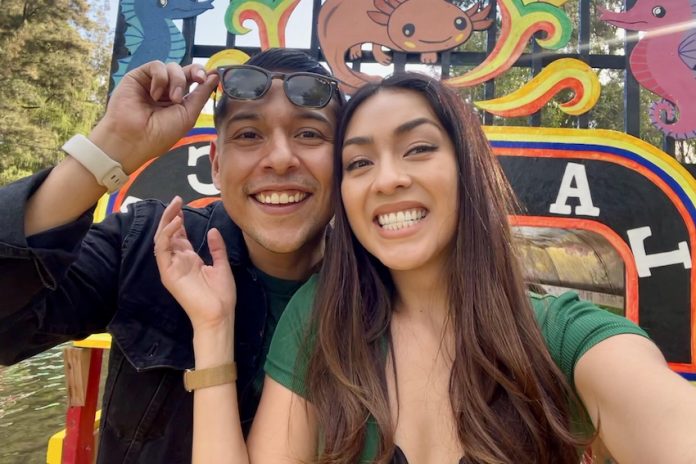
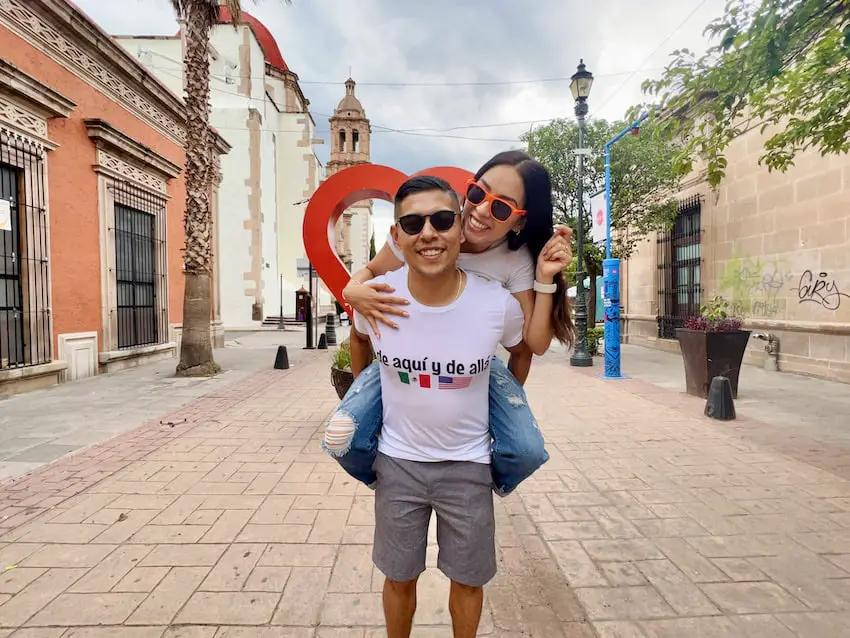
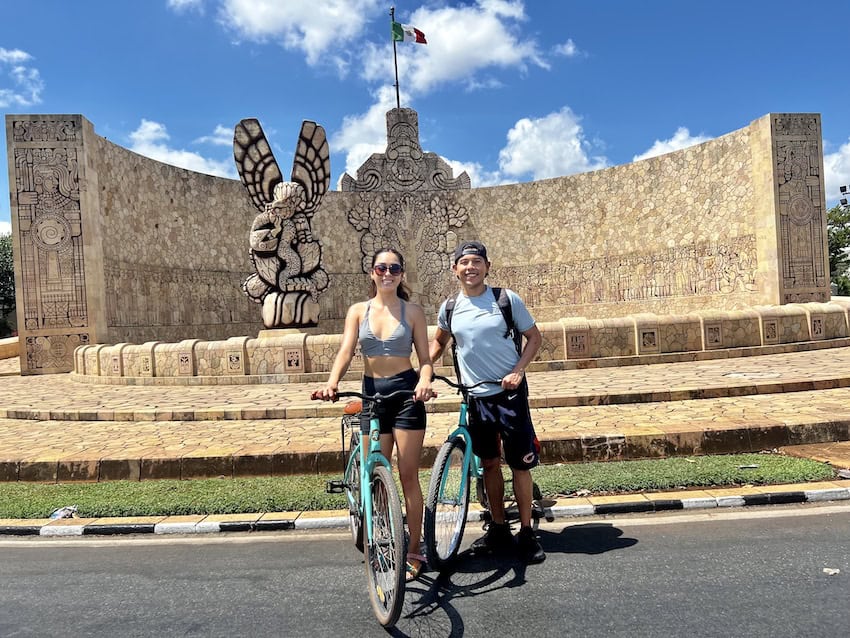
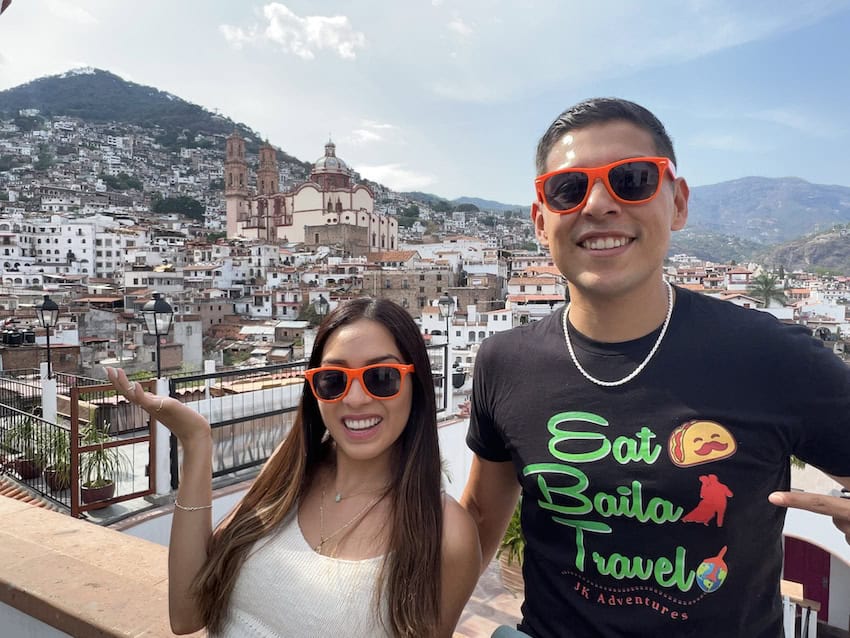
Jenny Frausto-Aguayo and Kevin Frausto moved to Mexico during the pandemic and have found happiness and success by exploring the country. (All photos by Jenny Frausto-Aguayo and Kevin Frausto)
In our series “My American Dream is in Mexico”, we explore the growing phenomenon of Mexican-Americans who were born or raised in the U.S. yet have chosen to pursue their adult dreams in Mexico. Each feature seeks to uncover their motivations, experiences, and the connections they’re rediscovering in the country their parents left long ago in search of a better life and more opportunities. Today, we are profiling Jenny Frausto-Aguayo and Kevin Frausto of the Eat Baila Travel YouTube channel.
The couple have roots in Chicago but are planning to settle in Mexico for the long haul. We discussed their backgrounds, identity, the privilege of being bilingual and bicultural, and their plans for the future.
After leaving Chicago, Jenny and Kevin found Mexico was the perfect platform for social media success.
Age: 30 and 36
Location: Mexico City and Puerto Escondido
Occupation: YouTube Content creators and Project Manager (Kevin)
Roots in Mexico: Zacatecas (Jenny), Veracruz and San Luis Potosí (Kevin)
Why did you move to Mexico?
Jenny: “Early on when we got married we talked about leaving the U.S. and Mexico was always an option but we thought something further afield like Spain or Brazil. In 2018, we visited Playa del Carmen and Mérida and we met foreigners living and thriving in Mexico. When we realized that people who had no heritage or family connection to Mexico were living there, we saw ourselves doing the same thing. We thought, why not us? We already have the cultural connection and the opportunities to thrive are there. Our goal was to move to Mérida in 2020, since it made so much sense — we have the cultural connection and Mexican citizenship. But when the pandemic hit, we postponed until 2021 to keep working and saving up.”
Kevin: “I used to travel to Mexico a lot as a kid — like two or three times a year, our family would drive down there together. But in 2006, when cartel violence escalated, we stopped going altogether. My perception of Mexico changed because of that and because of my mom’s fears. So, when Jenny started talking about moving to Mexico, I thought she was crazy! But when we took that trip in 2018, it helped me see that, while Mexico wasn’t as safe as it had been before 2006, it wasn’t as unsafe as I’d thought either.”
How did your parents react when you told them you were relocating to Mexico?
Kevin and Jenny in Mérida.
J: “They brushed it off. We told them a year in advance, and at first, they thought we were joking or just talking about a dream we’d never actually pursue. When they realized we were serious, the concerns started. They couldn’t understand why we’d want to move to a country they saw as unsafe based on the news they watched. We had many conversations to help them warm up to the idea, explaining that, just like in Chicago, Mexico has both safe and unsafe areas.”
K: “For my mom, it eased her mind that we started in Veracruz with her family, where we stayed for two months to settle in. After that, we traveled nomadically for the rest of 2021 and 2022, spending an extended period in Puerto Escondido.”
What inspired you to start your YouTube channel?
J: “We started our YouTube channel as a way to embrace our Mexican-American identity, and how we navigate that as individuals who are exploring their heritage country. We were looking for a place to live, but at the same time, we wanted to absorb all the history and important figures we didn’t learn about growing up — like La Malinche, Miguel Hidalgo, and others. We also wanted to showcase how beautiful Mexican culture is and share our learning experience with people on our YouTube channel and hope that other Mexican-Americans can feel empowered to embrace their culture as much as we do”.
In what ways have you reconnected with your Mexican roots?
The pair in Taxco, Guerrero.
K: “For me it’s been about figuring out my identity. It’s come full circle. When I was a kid, I traveled to Mexico frequently — both to San Luis and Veracruz, which are very different from each other. The culture I grew up with in Chicago also differed greatly from that of my Mexican peers and American colleagues at school and work. Now it feels complete, and I take pride in identifying as a Mexican from Chicago. Spending so much time in Mexico has taught me so much about my family and myself — insights I probably would never have gained if I hadn’t left Chicago.”
How do Mexicans in Mexico perceive your identity?
J: “It’s very funny. We got the first taste from our family in Veracruz because we speak fluent Spanish and they were shocked. They were like: “You don’t sound like other pochos, who have more broken Spanish.” Their reaction highlighted how we were breaking their preconceived notions of what Mexican-Americans are like. Also, on YouTube, we’ve gotten hate comments from Mexicans saying we’re not really Mexican and also from Americans telling us we’re not American.”
What does the word “pocho” mean to you and have you been called it?
Ni de aquí, ni de allá: Mexican-Americans Talk Identity
J: “It’s a term often used derogatorily. Some people have chosen to embrace it and give it a positive spin, but it still bothers me when others use it to describe me. The word ‘pocho,’ as I understand it, has roots meaning something that is rotten — like a spoiled piece of fruit. It implies that we’re not good enough. We’re not good enough to be Mexican and we’re not good enough to be American either. So they put us in this limbo place that we like to call ‘ni de aquí ni de allá’ (neither from here nor there) but we’ve given it a spin and we like to say ‘de aquí y de allá’ (from here and there), because we belong to both cultures.”
Tell me more about what the phrase ‘de aquí y de allá means to you?
K: After spending so much time in Mexico, we truly feel at home here. The transition was much easier than we expected. At the same time, Chicago will always be home for us too. We feel comfortable in both places. We adopted the phrase because we’ve always felt we belong to both cultures rather than feeling like we don’t belong to either. In Mexico, we’re seen as American while in the U.S., we’re viewed as Mexican. Our constant travel between the two has shown us that both places are our home. We literally have citizenship in both countries, so we can proudly claim both, despite what others may say.”
In what ways has being bilingual and bicultural enriched your experience in Mexico?
J: “We feel like we have superpowers being fluent in two languages and bringing perspectives from both countries, though probably a bit more from the U.S.! We came to Mexico eager to learn and absorb what it has to offer. Mexico has so much to teach us and we aim to take the best from both worlds. That’s what ‘de aquí y de allá’ embodies — it’s a combination of ‘yes, and this.’ We blend the best of both to create the most fulfilling life we can. I believe that’s what our ancestors would have wanted for us: to see us happy and thriving, not struggling for basic needs. If we have the opportunity to live in the country they’ve called home for generations, why wouldn’t we?”
What is next for Jenny & Kevin?
K: “A couple of years ago, we bought land in Puerto Escondido near La Punta and we want to drive our car from Chicago to California then down to Baja and then put the car in a ferry to the coast to then make the trek to Oaxaca. Our goal is to turn the land into a home and possibly start a business, though we’re still brainstorming ideas. We might dive into this project right away or take one last taste of digital nomad life before we settle down to build both a home and a business.”
Are you a U.S.-born or raised child of Mexican immigrants currently living in Mexico? Perhaps your Mexican parents emigrated to another country, and you’ve chosen to return to Mexico? If so, I’d love to hear your story for this series! Please leave your email in the comments, and I’ll reach out.
Rocio is based in Mexico City and is the creator of CDMX iykyk, a newsletter designed to keep expats, digital nomads and the Mexican diaspora in the loop. The weekly dispatches feature top news, cultural highlights, upcoming CDMX events & local recommendations. For your weekly dose of must-know news about Mexico,subscribe here.
Wonders await those willing to traverse the Bay of Banderas in search of some of the region's fantastic marketplaces. Three Hens and a Rooster/Facebook
The Bay of Banderas, with its stunning coastline and vibrant towns spanning Jalisco and Nayarit, offers more than just sandy beaches and those fiery sunsets we all know and love. For those of us who love to explore local culture through food, crafts and unique finds, the bustling markets scattered around this bay are treasure troves just waiting to be discovered. Whether you’re after fresh produce, one-of-a-kind souvenirs, or just a laid-back weekend wander, the markets of the Bay of Banderas have got you covered. Let’s take a stroll through some of the best.
Olas Altas Farmers Market
A vendor serves up fresh paella at Olas Altas. (Oltas Altas Farmers Market/Facebook)
Right in the heart of Puerto Vallarta’s Zona Romántica is the famous Olas Altas Farmers Market. This vibrant market buzzes with energy, offering everything from farm-fresh vegetables and tropical fruits to gourmet chocolates and homemade salsas. A hub for organic and artisan products, Olas Altas feels like a culinary journey through Mexico.
Grab a freshly squeezed juice and check out the live music performances while you shop. Make sure to sample some locally made cheeses or pick up handmade pottery, which makes for a perfect souvenir. If you’re a fan of slow-cooked meats, don’t leave without trying the carnitas, which are tender, flavorful and absolutely worth the trip. The Olas Altas Farmers Market is held every Saturday from 9 a.m. until 2 p.m.
Saturday Market
While the majority of expats and tourists are down at Olas Altas, it’s the locals and those-in-the-know who visit the Saturday Market located in Puerto Vallarta’s Barrio Santa Maria. The cobblestone streets in front of and behind the CFE service center become a maze of pop-up tents and food trucks.
Here you’ll find everything from second-hand clothing to electronics, al pastor tacos and aguas frescas. It’s a great spot for people watching and haggling for great finds. Whether you need a pair of pants or a pair of pliers, you’re going to find it at the Saturday Market.
Three Hens and a Rooster
Three Hens and a Rooster offers everything from natural honey to jewelery. (Three Hens and a Rooster/Facebook)
Get ready to discover one of Puerto Vallarta’s hidden gems: the Three Hens and a Rooster Market. Held every Saturday, starting November 9, this quirky, fun-filled market is a must-visit for anyone who loves unique finds and a lively atmosphere. From handcrafted jewelry to homemade jams and baked goods, every stall bursts with creativity and local flavor. Whether you’re hunting for one-of-a-kind souvenirs, fresh produce or simply want to chat with the friendly vendors, this market offers a little something for everyone. It’s held on the eastern end of Isla Cuale.
Isla Cuale Market
Located on a skinny island in the center of Puerto Vallarta’s Río Cuale, the Isla Cuale Market is the place to go for handicrafts. Surrounded by jungle foliage and the gurgling river, the market feels like an oasis in the city. The best part? The prices are more reasonable than you think and haggling is always an option, so it’s easy to walk away with an armful of goods without breaking the bank.
You’ll find hand-painted Talavera pottery, intricate beadwork and colorful sarapes. You’re also not far from street food stalls and lovely sit-down restaurants. Pro tip: Try to visit on a weekday to avoid the weekend crowds. Fuel up afterwards with a burrito at Burning Burrito or a refreshing drink at Bar La Playa.
La Cruz Market
La Cruz Market offers some of the freshest fish in Jalisco. (TripAdvisor)
Located just north of Puerto Vallarta, the La Cruz Market in La Cruz de Huanacaxtle is a waterfront gem. Open on Sundays, this market brings together locals and visitors for a morning of artisanal shopping with a backdrop of the stunning marina. Expect fresh seafood, homemade baked goods and locally grown produce alongside handmade crafts, jewelry and art.
What sets the La Cruz Market apart is the sheer variety of products available and its picturesque setting. You can grab breakfast at one of the food stalls, pick up a fresh catch for dinner and browse beautiful artisanal products, all while enjoying a scenic ocean view.
Sayulita Farmers Market (Mercado del Pueblo)
The bohemian surf town of Sayulita is famous for its laid-back vibe, and the Sayulita Farmers Market — also known as Mercado del Pueblo — reflects just that. Open every Friday, this market sells a mix of organic produce, artisanal goods and eco-friendly products. You’ll find an array of natural skincare items, handmade clothing and delicious baked goods.
Sayulita’s market focuses on sustainability, so if you’re looking for eco-conscious products or simply want to soak up the town’s boho-chic atmosphere, this is the place to be. Make sure to pick up some locally made honey or chocolate — both are crowd favorites.
Mercado Artesanal San Pancho
The easygoing village of San Francisco, known locally as San Pancho, is home to another delightful market that’s perfect for a relaxing Saturday morning. Mercado San Pancho showcases local artists and vendors, offering handmade jewelry, organic food, natural skincare products and more. If you’re after unique art or beach-inspired home decor, you’re bound to find something special here.
One of the best things about Mercado San Pancho is the community spirit. Many of the vendors are local artisans who are passionate about their crafts. Stop by for some fresh tamales or kombucha, chat with the artists and enjoy live music as you browse.
Meagan Drillinger is a New York native who has spent the past 15 years traveling around and writing about Mexico. While she’s on the road for assignments most of the time, Puerto Vallarta is her home base. Follow her travels on Instagram at @drillinjourneys or through her blog at drillinjourneys.com.
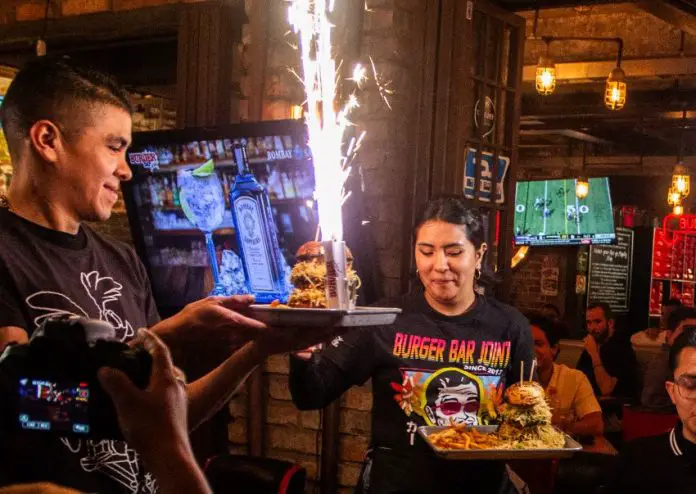
WARNING: This burger can expose you to edible napalm, which is known to the City of Mexico to cause a bad time. (All photos by Jimmy Monack)
Most tourists in Mexico have heard the grisly tales of ritual execution in Mesoamerica in which priests tear out the living hearts of their victims. But this ancient ritual is child’s play compared to the current torture endured by guests at Mexico City’s Burger Bar joint tangling with a more dangerous weapon than a dagger: a hamburger.
With three locations in the capital, Burger Bar Joint has offered fame for twelve years, a certificate and a gift card to any who can finish the fires, beer and Hades-level spicy burger in three minutes or less. According to the manager of the Roma location, Omar López, only a few participants finish each year. And few even come close to the record just north of two minutes. And it is never a gringo. Gringos never win.
Yael gets ready to eat. Luckily he’s Mexican, so he’s in with a fighting chance.
On a chilly Friday night on Avenida Álvaro Obregón, three willing eaters attempted to make history in three minutes. They all failed.
“No pica! No pica!” shouted Hugo Velazquez as he blasted into the first few bites of a burger roughly as tall as a bowling ball. But two minutes in, his eyes looked like those of a man with deep regrets. A few days later, he admitted he was lying and that his stomach at the time was surpassing the volcanic potential of Popocatépetl.
Juan Vidal Chamo was in trouble immediately. Within thirty seconds, tears started to pool in his eyes, and he continued to shake his head as if he had just realized he had married the wrong woman. His life would never be the same.
The odd one was the young Yael de la Sancha, who would not win either but kept the mood light by cracking jokes and silly comments between bites, making it even harder for the others to swallow. The crazy dude was actually having fun! Kids these days.
Only three minutes to scarf it all down, a challenge even without the spice.
The accompanying pageantry of sparklers and a staff-led countdown makes it impossible for someone to back out at the last minute. Once the contest starts, giving up before the three minutes would result in crowd shaming of the highest order.
It makes one wonder about ridiculous contests like this in general. Why do humans do these things? Well, because it is considered a sport. Heck, if poker can be featured on ESPN, why not hot dog eating? In fact, it is.
Around the world, eating contests draw huge crowds. There is a long history dating back to the Roman Empire involving overeating, hence the myth about the vomitorium. One chap in England named Nicholas Wood known as The Great Eater of Kent is rumored to have eaten an entire sheep. A French soldier named Tarrare may or may not have eaten a whole toddler in a single sitting (whether or not you find this achievement impressive is a sort of Rorschach test).
But the kings of gluttony would, quite obviously, be the Americans. Who else would have an official league for such a venture? Professional eaters can travel the circuit of Major League Eating to win prizes by chomping down on tamales in Lewisville, TX, chicken wings in Orchard Park, NY, or glazed donuts in Washington, DC.
Three proud(ish) losers.
If that is not enough, other countries have taken their traditional cuisine and attached a time. Austria has the Schnitzel Challenge. Croatia has the “Nightmare” BBQ Platter Challenge. Singapore hosts the Jumbo Korean Jajangmyeon Bowl Challenge. And, of course, Italy holds the Spaghetti Carbonara Pasta Challenge.
Strangely, Mexico is a bit late to the competitive eating game, considering its proximity to Texas and all things larger than life. Considering cultural events such as lucha libreand a festival dedicated to blowing stuff up, it would seem that this extreme pastime would have been part of the landscape long ago. Perhaps the time is ripe for a whole series of Mexican competitive eating.
After all, how hard would it be to offer prizes for contestants to fill themselves with burritos, camotes, chile en nogada or big-ass bowls of nopal?
Until then, make the loser take a trip to the Burger Bar Joint in any wager you may have won and watch them fail at another ridiculous contest. The looks on people’s faces will make it all worth it.
Jimmy Monack is a teacher, photographer and award-winning writer. He profiles interesting people all around the world as well as writing about and photographing rock concerts. He lives in Mexico City.www.jimmymonack.com
The chicozapote, the tastiest, weirdest named fruit in Mexico. (Gastrolab)
Do you remember the article about tuna in which I mentioned that I struggled to understand how our brave ancestors could look at a tuna and think, “Now that looks incredibly delicious?” Well, chicozapote is one of those fruits that I’ve often thought our ancestors must have been really hungry to try.
Since I started writing for Mexico News Daily, I often think about you and what you might find odd, strange, suspicious, or even impossible to eat or drink. I have a feeling that chicozapote could be one of those fruits.
Chico… what?
Why would an ancient Mexican think eating this is a good idea? (Pixabay)
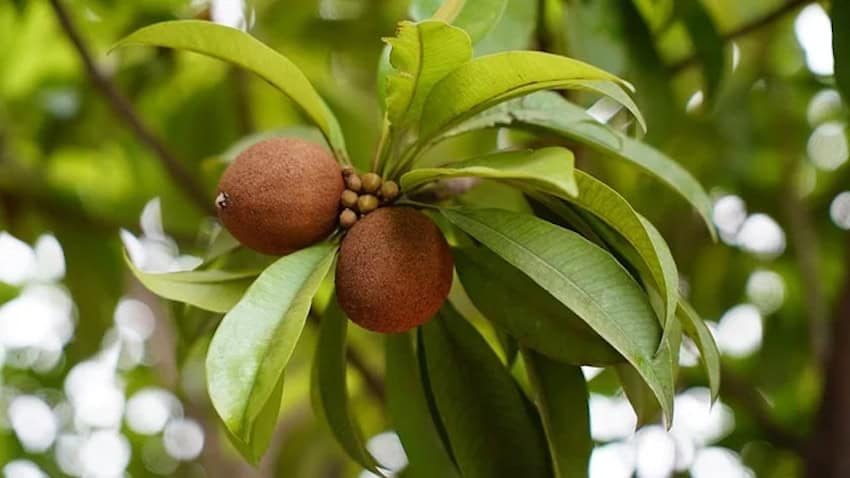
The chicozapote is a fruit native to Mexico and Central America, where it has been cultivated for centuries by Mesoamerican cultures. This fruit grows on a highly useful tree, which not only produces the fruit but also yields a gummy resin. In Nahuatl, this resin is called “tzictli,” meaning gum. The Maya and the Aztecs used this gum to freshen their breath and clean their teeth.
As a fun fact for your next dinner party, Mexican President Antonio López de Santa Anna introduced the gum to Mr. Thomas Adams, who later industrialized it. Interestingly, in some regions, you can still find gum made from the resin of the chicozapote tree. Now, let’s return to the fruit itself.
Chicozapote
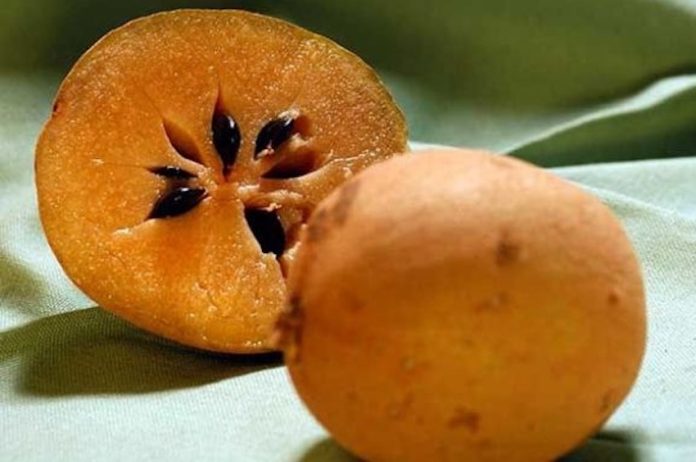
I have a confession to make: throughout my childhood, I missed out on the incredible flavor of chicozapote because I looked at the fruit and thought it would smell bad for weeks. The skin of chicozapote is similar in color and texture to a kiwi, but its pulp is completely different. It can be orange or brown and has a soft, fleshy texture. It also contains easily removable black seeds, which contributed to my initial hesitation.
To my surprise, the flavor of the pulp is delightful; it’s hard to believe that something with brown pulp could be so sweet and flavorful. For those interested in nutritional facts, this little fruit is packed with fiber, vitamin C, and antioxidants, so don’t hesitate to incorporate it into your diet.
What does chicozapote taste like and how do you eat it?
Chicozapote has a very sweet flavor, akin to brown sugar, honey, or caramel. I recommend cutting the fruit in half and scooping out the pulp with a spoon.
How do I know when it’s ready to eat?
If the skin has green or yellowish spots, the fruit is not ripe yet. When the skin turns completely brown, it is ready to eat. Another indication of ripeness is its softness; if it feels soft to the touch, similar to an avocado, then it’s at its peak.
If you find the experience of eating a chicozapote overwhelming, here are some ideas to get you started:
Smoothies and Shakes: The chicozapote’s soft texture makes it an excellent addition to smoothies or shakes. You can combine it with other tropical fruits like mango, pineapple, or orange for a refreshing and energizing breakfast.
Ice Creams and Sorbets: Thanks to its natural sweetness, chicozapote is a wonderful ingredient for making ice creams and sorbets. One of my favorites is chicozapote-orange sorbet (more on that later). The acidity of the orange beautifully balances out the sweetness of the chicozapote, creating a perfect combination.
Traditional Desserts: In some regions of Mexico, chicozapote sweet is a classic treat. The pulp is slowly cooked with sugar and cinnamon until it achieves a thick consistency. This sweet can be enjoyed on its own or served alongside fresh cheeses.
Jams and Preserves: The fruit is slowly cooked with a bit of extra sugar and used as a spread for bread, cookies, or even savory dishes.
Meat Sauces: This is for gourmet enthusiasts. Its sweet, rich flavor pairs beautifully with grilled or smoked meats, adding a caramelized touch to the dishes.
The Recipe that Introduced Me to the Chicozapote Universe: Orange-Chicozapote Sorbet
Chicapozote is just as delicious when it’s turned into a frozen treat. Try it for yourself. (Canva)
Ingredients:
– 2 ripe chicozapotes
– 1 cup of fresh orange juice
– 1 tbs of lemon juice
– 1 cup of water
– Zest from 1 orange (optional, for a more intense flavor)
– Honey (to taste)
Instructions:
Prepare the chicozapotes: Peel the chicozapotes and remove the seeds. Place the pulp in a food processor or blender to create a smooth mixture.
Mix the liquids: In a separate container, combine the orange juice, lemon juice, and water. If you choose to add sugar or honey, stir until fully incorporated.
Combine the mixtures: Add the chicozapote pulp to the juice mixture and stir well until everything is fully combined. For a more intense orange flavor add orange zest.
Freeze: Pour the mixture into a container and let it rest in the freezer for 1-2 hours.
Blend again: After an hour, return the mixture to the food processor or blender to achieve a creamy texture. You can repeat this process as needed until the sorbet is completely frozen and smooth.
Serve: Allow the sorbet to sit out for a few minutes before serving to soften slightly. Serve in chilled glasses and garnish with a bit of orange zest or a fresh orange slice, if desired.
Enjoy your sorbet, and remember: don’t judge a fruit by the color of its pulp!
María Meléndez is a Mexico City food blogger and influencer.