Home Blog Page 424

PhD student ‘accidentally’ discovers lost ancient Maya city in Campeche

1
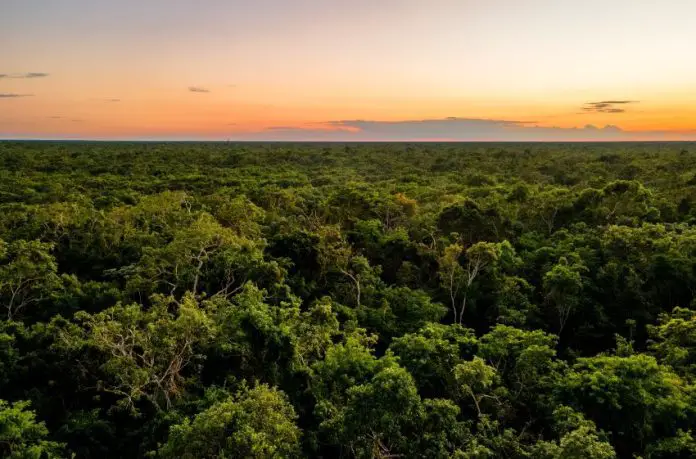
Bird's-eye view of Campeche
The newly-located ancient Maya city, which has been dubbed Valeriana by researchers, is not visible to the naked eye as it is covered by miles of jungle in Campeche. It was discovered using lidar data originally commissioned for other purposes. (MikaelT/Shutterstock)

A team of archeologists has unearthed the existence of a previously unknown ancient Maya city hidden deep within the Yucatán Peninsula jungle, a discovery triggered by a PhD student doing a Google search.  

The ancient city’s discoveries include pyramids, sports fields and causeways connecting districts and amphitheaters in the southeastern state of Campeche. Archeologists have dubbed the complex Valeriana, named after a nearby lagoon. 
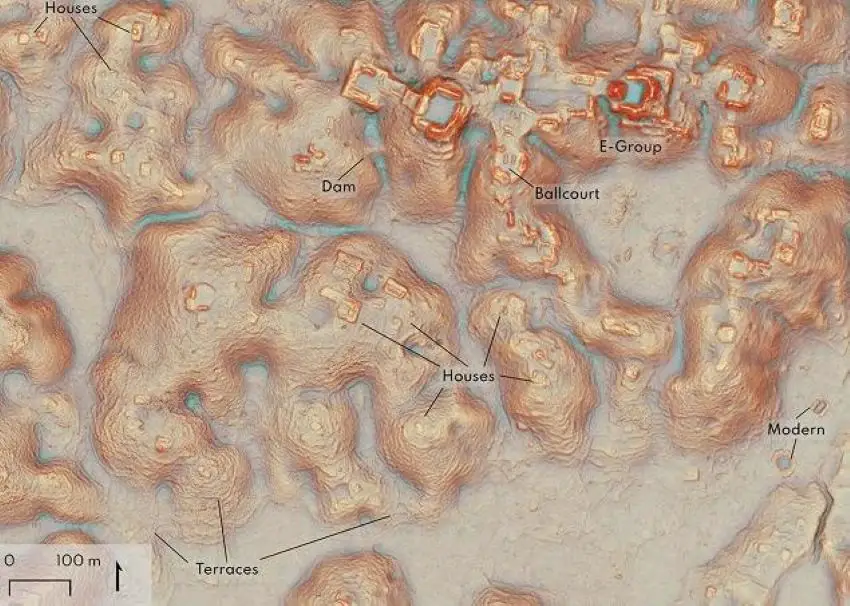
Drawn map showing where structures inside the lost Maya city of Valeriana are believed to exist, including a ballcourt, a dam, and homes
A mapping of ancient Maya structures believed to be within Valeriana’s city limits. (Luke Auld-Thomas, et al./ Antiquity)

“I was on something like page 16 of Google search and found a laser survey done by a Mexican organization for environmental monitoring,” Luke Auld-Thomas, a PhD student and lead researcher of a study about the finding published Tuesday in the British archeological journal Antiquity.

The data Auld-Thomas saw on Google — commissioned in 2013 by The Nature Conservancy México as part of an ecological survey — revealed to him what others had missed: the ruins of a huge ancient city. 

Valeriana is located near the town of Xpujil, located near Campeche’s border with Quintana Roo and populated mostly by modern-day Indigenous Maya. 

“For the longest time, our sample of the Maya civilization was a couple of hundred square kilometers total,” Auld-Thomas told The Guardian newspaper. “That sample was hard won by archaeologists who painstakingly walked over every square meter, hacking away at the vegetation with machetes to see if they were standing on a pile of rocks that might have been someone’s home 1,500 years ago.”

But lidar, which began to be used in Mesoamerican archeological study in the last two decades, has changed the game, allowing researchers to detect ancient structures covered by canopies of vegetation and invisible to the naked eye. In January, researchers using lidar discovered a huge city in Ecuador’s Amazon jungle dating back 2,500 years that is challenging the prevailing belief that Amazonian civilizations in South America lived in nomadic settlements.

Six years ago, some of the same researchers involved in Auld-Thomas’ study used lidar to detect tens of thousands of Maya buildings and pyramids in Guatemala’s Petén region, which supports the surprising idea that millions of people lived there, the Guardian reported.
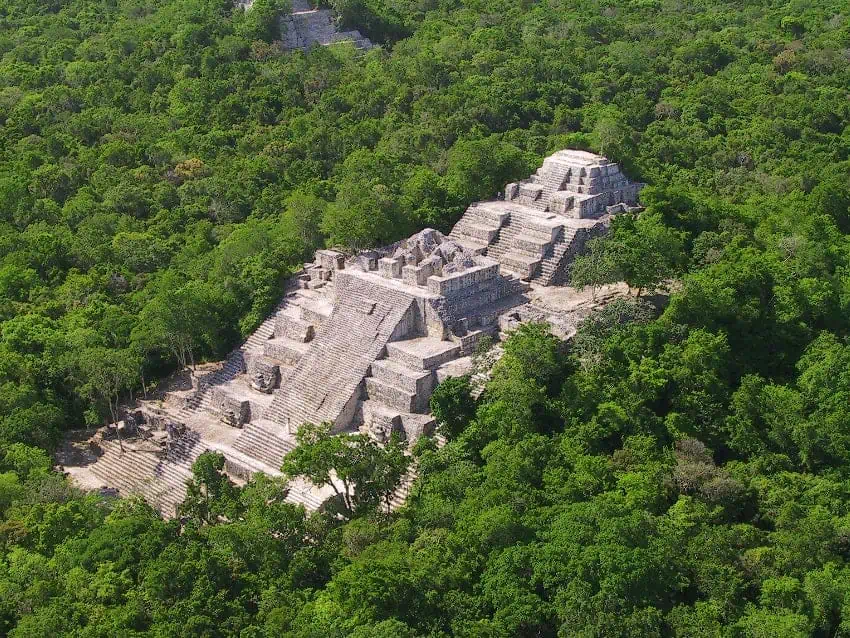
Calakmul
Newly-discovered Valeriana is believed to have rivaled the building density of the neighboring Calakmul, believed to be one of the largest and most important Maya cities ever uncovered. (INAH)

Short for Light Detection and Ranging, lidar uses pulsed lasers to examine the earth’s surface. It can map structures buried under dense vegetation and generate precise 3-D information about the earth’s surface from a plane flying over an area. The technology has unearthed other archeological findings in Mexico, including ancient ceremonial centers and new data about the size of pre-Hispanic settlements

Archeologists have known since the 1940s that the ancient Maya made significant changes to the landscape around Xpujil, mainly in the form of minor settlements and hillside terraces for farming. However, the new research shows Valeriana to have the hallmarks of a Maya political capital, with a density of buildings second only to Calakmul, one of the largest and most powerful Maya cities ever uncovered — a fact determined in 2022 by using lidar.

Auld-Thomas’ study posits that at its peak — from A.D. 750-850 — Valeriana may have been home to 30,000–50,000 people.

Professor Elizabeth Graham from University College London, who was not involved in the research, told the BBC that the new finding supports claims that the Maya in the area lived in complex cities and towns, not in isolated villages.

“The point is that the landscape is definitely settled — that is, settled in the past — and not, as it appears to the naked eye, uninhabited or ‘wild,'” Graham said. 

For Auld-Thomas — who in the study called the east-central area of Campeche where Valeriana was found “a blank spot” for researchers — the new findings show that this part of the Yucatán Peninsula could yet reveal many more undiscovered archeological treasures, he told the Guardian. 

“The government never knew about it; the scientific community never knew about it,” he said. “That really puts an exclamation point behind the statement that, no, we have not found everything, and, yes, there’s a lot more to be discovered.” 

With reports from BBC and The Guardian

Mexico raises trade concerns over US plan to ban Chinese car software

1
A monitor in a Chinese EV
The United States government has concerns about the capacity of Chinese connected cars to collect data and thus compromise national security. (BYD)

The Mexican government has taken a range of concerns about the Biden administration’s proposal to ban certain Chinese software and hardware in connected cars on United States roads to the U.S. Department of Commerce.

The move came just over a month after U.S. President Joe Biden announced what the White House called “strong action to protect America from the national security risks associated with connected vehicle technologies from countries of concern.”

BYD showroom with cars on display and people shopping
Biden’s proposal would effectively ban the import of Chinese brand vehicles [to the U.S.] even if they were assembled in Mexico. (Wikimedia Commons)
In a fact sheet published in late September, the White House noted that the Department of Commerce was “issuing a notice of proposed rulemaking that would, if finalized as proposed, prohibit the sale or import of connected vehicles that incorporate certain technology and the import of particular components themselves from countries of concern, specifically the People’s Republic of China and Russia.”


In a filing with the Department of Commerce on Monday, Mexico’s Economy Ministry (SE) said that the proposed ban on Chinese software and hardware in connected cars on American roads could have a “substantial impact on Mexico’s automotive industry.”

“Economically, it poses potential trade barriers, disruptions to supply chains, increased production costs, and a possible risk of reduced direct and indirect employment,” the SE said.

The Economy Ministry also said that the proposal could violate trade rules as set out in the USMCA and “lead to increased production costs due to the shift in suppliers of auto parts and components within the automotive industry’s pre-planned supply chain.”

The proposed ban on Chinese connected car technology in the U.S. wouldn’t just affect Chinese companies, but any automaker that uses Chinese technology in their vehicles.

Al Jazeera reported that the planned regulation would “force American and other major automakers in years ahead to remove key Chinese software and hardware from vehicles in the U.S.”

Automakers from the U.S. and various other countries have plants in Mexico, and they could soon be joined by Chinese automakers if companies such as BYD follow through on their investment plans.

Reuters reported that the proposal “would effectively ban the import of Chinese brand vehicles [to the U.S.] — even if they were assembled in Mexico.”

The news agency said that automakers and tech groups separately asked the Biden administration on Monday for changes to the proposed ban on key Chinese connected car software and hardware, and for more time before the rule takes effect. One of those groups, the Alliance for Automotive Innovation, represents General Motors, Toyota, Volkswagen and Hyundai, all of which make cars in Mexico.

Polestar, a Swedish automaker that is majority-owned by Chinese company Geely, said that the proposed rule would even ban the sale of the vehicles it makes in South Carolina.

The Department of Commerce is aiming to finalize the proposal by January 20. Prohibitions on connected car software from China and other “countries of concern” are slated to take effect in the 2027 model year. The ban on hardware would take effect in the 2030 model year, or January 2029.

BYD, one of the world’s two largest electric vehicle manufacturers, is the most prominent Chinese automaker with plans to open a plant in Mexico. The company’s Americas CEO, Stella Li, has repeatedly said that the proposed Mexico plant will make electric vehicles solely for the Mexican market and not for export to the U.S. or anywhere else.

Polestar, a Swedish automaker that is majority-owned by Chinese company Geely, said that the proposed rule would even ban the sale of the vehicles it makes in South Carolina.
Polestar, a Swedish automaker that is majority-owned by Chinese company Geely, said that the proposed rule would even ban the sale of the vehicles it makes in South Carolina. (Polestar)

BYD’s general director for Mexico Jorge Vallejo has said that the company is aiming to settle on a location for its proposed plant by the end of the year.

The United States government is determined to protect the U.S. EV industry from comparatively cheap imports and has concerns about the capacity of Chinese connected cars to collect data and thus compromise national security.

“Connected vehicles provide many benefits — from promoting vehicle safety to assisting drivers with navigation — but they also pose new and growing threats,” the White House said last month.

“These technologies include computer systems that control vehicle movement and collect sensitive driver and passenger data as well as cameras and sensors that enable automated driving systems and record detailed information about American infrastructure. Now more than ever, vehicles are directly connected into our country’s digital networks. As the Department of Commerce has found, vehicles’ increasing connectivity creates opportunities to collect and exploit sensitive information,” it said.

Former U.S. president Donald Trump — who initiated a trade war with China in 2018 — is also determined to protect the United States auto industry, pledging to impose hefty tariffs on all vehicles made in Mexico if he wins next week’s presidential election and returns to the White House in January.

With reports from Reuters

‘Narco-tunnel’ discovered during police raid in Xochimilco, Mexico City

1
A police raid in Mexico City
The raids were part of an ongoing operation that began on Oct. 10 to address complaints about an increase in street-level drug sales in the borough. (Crisanta Espinosa Aguilar/Cuartoscuro)

Mexico City police discovered a narco-tunnel while conducting a series of raids in the southern borough of Xochimilco that netted the arrest of 27 people and the confiscation of a large quantity of illegal drugs.

The raids were part of an ongoing operation that began on Oct. 10 to address complaints about an increase in street-level drug sales in the borough, according to the newspaper El Universal.

The discovery of the tunnel was made when Mexico City Public Security Ministry (SSC) officials carried out five simultaneous raids in the borough known for its popular floating gardens, which are a major tourism attraction in Xochimilco.  

In collaboration with officers from the Mexico City Attorney General’s Office, the SSC officials executed five search warrants at six properties. 

The tunnel was found to connect two of the buildings that served as warehouses in the Santa Crucita neighborhood, reported the newspaper Milenio.

The initial discoveries produced by the search warrants led to 17 additional raids in 10 other neighborhoods in Xochimilco, according to El Universal. The last of the raids took place on Oct. 26.

In addition to securing the tunnel, the authorities reported confiscating more than 1,000 “doses” of cocaine, 364 packets of marijuana, three vehicles, an unspecified amount of cash, cell phones and unidentified “items of value.”

The news site Periódico Enfoque reported that several of the 27 suspects arrested had criminal records, with four of them having served time in Mexico City prisons on charges ranging from domestic violence to robbery and breaking and entering. The same source also reported that two of the suspects were members of an unidentified local security force.

Milenio reported that the suspects have been turned over to the Mexico City office of the Public Prosecutor, who will adjudicate the case.

With reports from Milenio, El Universal and Periódico Enfoque

The Met celebrates Mexican printmaking masters in new exhibit

0
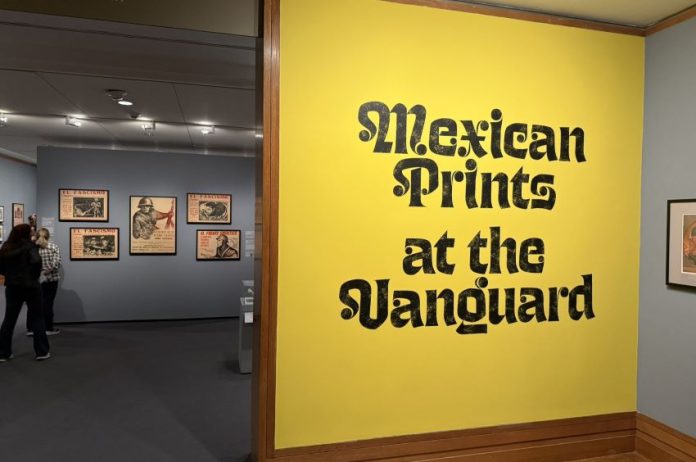
Mexican Prints at the Vanguard is on display now through January 2025 at The Met in New York City.
Mexican Prints at the Vanguard is on display now through January 2025 at The Met in New York City. (Christopher Landau/X)

The Metropolitan Museum of Art (Met) in New York City is showcasing the exhibit Mexican Prints at the Vanguard, an exploration of Mexico’s rich tradition of printmaking, or estampado.

On display through January 2025, the exhibit features over 130 works, including woodcuts, lithographs and screen prints by artists such as José Guadalupe Posada (creator of the “Catrina”), Diego Rivera, José Clemente Orozco and Leopoldo Méndez.

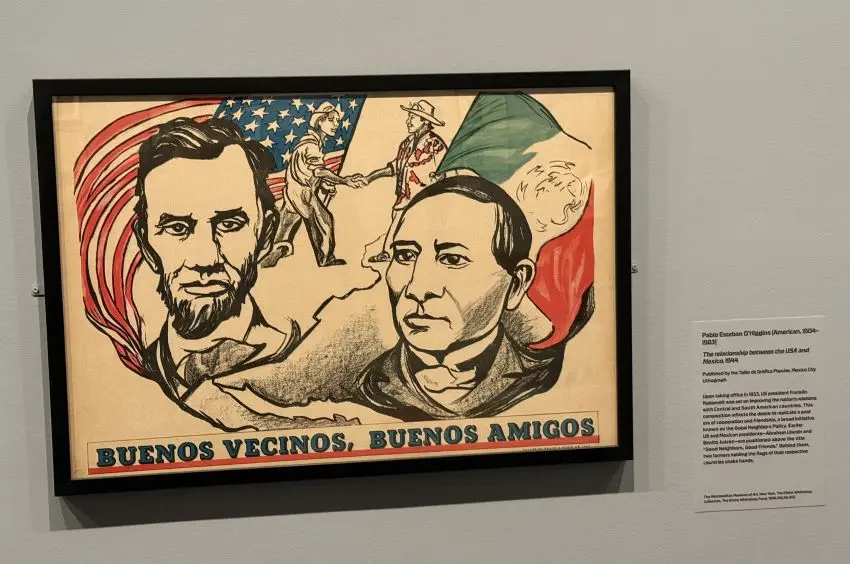
A print from the exhibit featuring U.S. president Abraham Lincoln alongside Mexican president Benito Juárez that says "Good neighbors, good friends."
A print from the exhibit featuring U.S. president Abraham Lincoln alongside Mexican president Benito Juárez that says “Good neighbors, good friends.” (Christopher Landau/X)

“The exhibition explores how prints were central to the artistic identity and practice in Mexico and highlights their effectiveness in addressing social and political issues, a role of the graphic arts that continues today,” The Met said in a press release. 

Most of The Met’s collection of Mexican prints came from the French-born artist Jean Charlot, who spent decades in Mexico. Charlot donated many of his own prints and works by other artists to The Met, and in the mid-1940s acted on behalf of the museum to acquire over 2,000 prints in Mexico. 

The collection reflects The Met’s pioneering recognition of Mexico’s artistic renaissance, well before the movement captured global attention.

Printmaking has been central to Mexican art and culture since the Spanish conquistadors arrived with religious woodcuts in the 1500s. Following the Mexican Revolution (1910–1920), artists turned to printmaking to address social and political unrest, voicing resistance to a range of issues such as the rise of fascism around the world. They also used printmaking to reproduce Mexican murals, announce upcoming art exhibitions and conferences, create prints for the press and document Mexican dress and customs. 

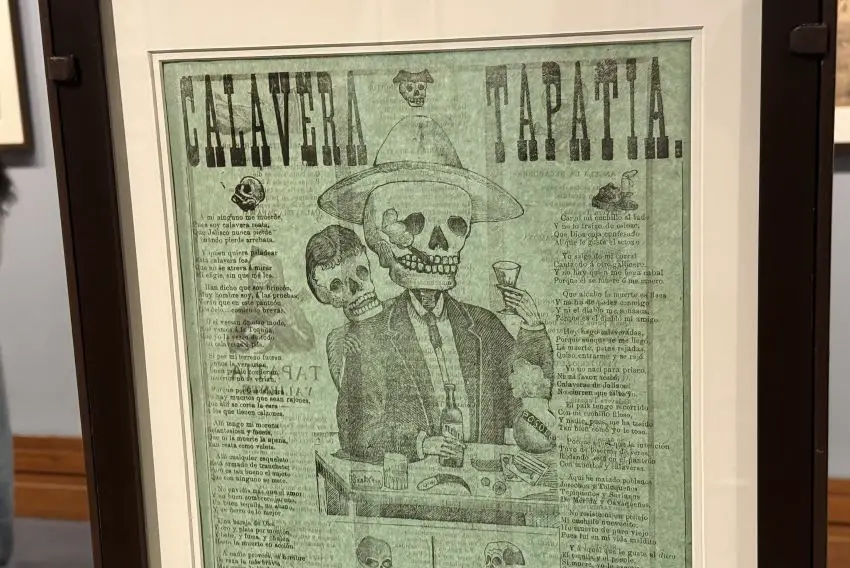
A piece from The Met's Mexican Prints at the Vanguard, an exhibit celebrating the tradition of Mexican printmaking
Mexican Prints at the Vanguard features prints made between the late 19th century, when Posada introduced the Catrina, Mexico’s iconic cartoonish skeleton, and the early 20th century. (Christopher Landau/X)

“This remarkable exhibition evokes the continued resonance of the graphic arts in Mexico and illuminates treasures of The Met collection—many of which have never been exhibited before,” Max Hollein, The Met’s director and Chief Executive Officer said in a statement. 

The prints range from an 18th-century Virgin of Guadalupe on white silk to a number of colorful silk-screens by the Guatemalan-born artist Carlos Mérida that document regional costumes and dances. But the largest share of the exhibition pertains to two main periods — the late 19th century, when Posada introduced the Catrina, Mexico’s iconic cartoonish skeleton, and the early 20th century, when artists like Rivera worked for El Machete, a Communist Party-aligned newspaper.

Mexican Prints at the Vanguard is curated in six chronologically organized sections across three galleries. One is entirely dedicated to Posada, regarded by many as the father of printmaking in Mexico, and his contemporaries.

Printmaking remains a popular and widely practiced art form in Mexico today.

With reports from The New York Times

Government announces US $400M in aid for southwestern states hit by Hurricane John

0
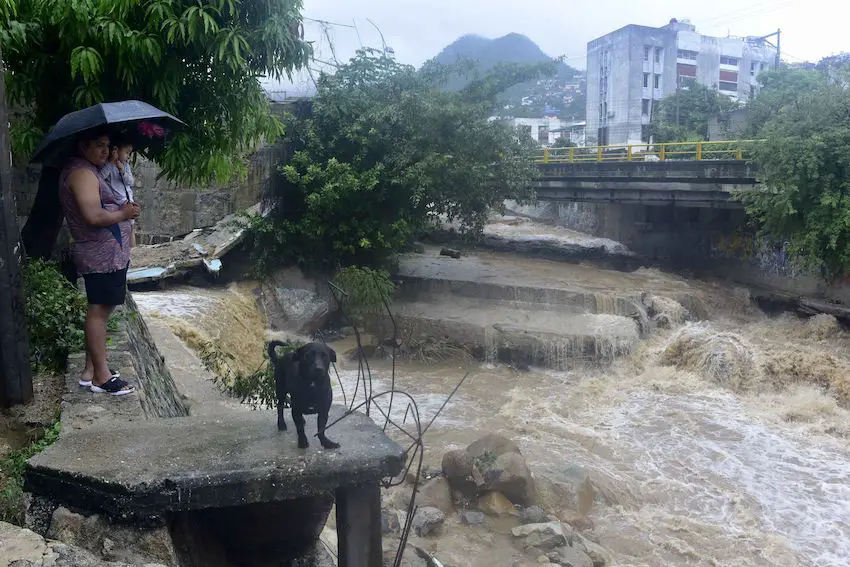
A house destroyed by Hurricane John in Guerrero
John made landfall twice in late September, bringing days of torrential rain to coastal Guerrero. (Carlos Alberto Carbajal/Cuartoscuro)

The federal government has announced over 400 million dollars in reconstruction and rehabilitation funds for homes in Guerrero and Oaxaca that were devastated by the recent passage of Hurricane John.

According to a census by the Welfare Ministry, more than 40,000 homes were damaged by the storm, impacting approximately 153,000 people. 

Acapulco, Guerrero saw nearly one meter of accumulated rainfall from Hurricane John, causing severe flooding around the resort city.
Acapulco, Guerrero saw nearly one meter of accumulated rainfall from Hurricane John, causing severe flooding around the resort city. (Carlos Alberto Carbajal/Cuartoscuro)

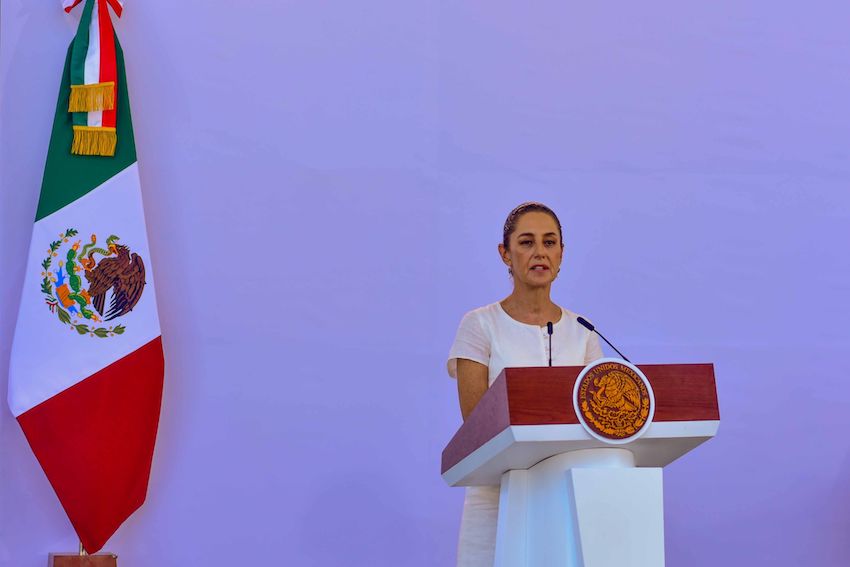
On Oct. 27, President Sheinbaum visited Acapulco, where she declared the state of emergency in Guerrero following Hurricane John concluded. 

“Today we can say that the emergency is over and we are moving on to the next stage. This does not mean that we are done here. There is the clean-up aid, and then, depending on the results of the census, we will give subsequent financial support and even more support for housing,” Sheinbaum said during a press conference

The president reported that 7.7 billion pesos (US $384 million) have been invested in disaster aid throughout 66 municipalities in Guerrero and Oaxaca. Of these resources, 6.7 billion pesos have been destined for Guerrero — with 51 municipalities affected — and 1 billion pesos to Oaxaca, with 15 municipalities damaged by the storm.

Aid of 8,000 pesos (US $400) was given to all homes in these states for clean-up. Additional support will be given to homes with minor or medium damage, which will receive 15,000 pesos (US $747); homeowners with major damages will receive 35,000 pesos (US $1,745); while those homes that suffered total losses will receive 60,000 pesos (US $3,000).

Sheinbaum during a press conference in Acapulco, Guerrero, on Oct. 27
“Today we can say that the emergency is over and we are moving on to the next stage. This does not mean that we are done here,” Sheinbaum said during a press conference in Acapulco, Guerrero, on Oct. 27. (Daniel Augusto/Cuartoscuro)

With an additional investment of 300 million pesos (US $15 million), the National Workers Housing Fund (Infonavit) announced its plans to begin reconstruction activities in the El Coloso and Alta Progreso neighborhoods of Acapulco, both of which suffered severe landslides and flooding due to the impacts of John. This funding is expected to support the rehabilitation of 6,000 housing units.

Infonavit will work with the housing non-profit Fundación Hogares to improve housing complexes and public spaces. The planned improvements include the construction of markets, as well as sports and recreational spaces aimed at boosting social interaction in the neighborhoods. The works are expected to take around one year and a half to complete and will benefit around 24,000 residents.

In Acapulco, Fundación Hogares will replicate the rehabilitation project it carried out in Jojutla in Oaxaca state following the 7.1-magnitude earthquake that struck central Mexico on September 19, 2017.

“Our focus is to use endemic materials for reforestation and replanting of areas, which guarantees that the rehabilitated spaces are sustainable in the long term,” said Madeleine Cortés Cravio, general director of Fundación Hogares.

Cortés Cravio emphasized that one of the lessons learned from recent natural disasters is the need to develop resilient infrastructure that can withstand future climate events.

Hurricane John hit coastal Guerrero as a Category 3 storm on Sept. 24, just one year after Category 5 Hurricane Otis devastated Acapulco, one of Mexico’s main tourist destinations with a population of over one million people.

With reports from BBC, El Economista, El Sur Acapulco, El Sol de Cuernavaca, Forbes and La Jornada

Learn a new skill this fall with these 12 unique workshops in Mexico City

0
A woman at a flower arranging class in Mexico City
Fall is a time for new skills, so why not check out Mexico City's litany of amazing workshops and classes? (Poga)

The winter doldrums seem to be creeping in these days in CDMX. Crisp air, cloudy skies, and the early sunsets are an invitation to hibernate. Before you get too comfortable working in pajamas all day, how about beefing up that to-do list? Not the boring one of pending paperwork and menial chores, but rather a list of fun, unique activities to enjoy in your very own neighborhood. There are no shortage of craft workshops in Mexico City, so why not take the time to pick up a new skill? 

CDMX is an overflowing cauldron of things to do. Within a five block radius, you can unleash your artistic side, learn a new skill, or whip up your own culinary delights. Wake up one Saturday your normal self, and go to sleep that very night as an expert cake decorator. Whatever gets you going, the capital’s got you covered. 

Brunch and paint


View this post on Instagram


A post shared by Blanca Bernal (@blanchbernal)


Whichever of Vainila Bar’s two locations you choose, there’s no doubt you’ll be rewarded with a good time. In between bites of waffles, chilaquiles, and sandwiches and sips of bubble tea and coffee, create something everlasting. Bring a picture of your dog that you can turn into a portrait and hang in your living room. Everything is included in the cost, which includes paints, ceramics, pencils, and canvases.

Locations: Insurgentes Sur 615, Col. Nápoles; Universidad 133, Col. Narvarte

Tufting workshop

Knitting is so last year, as the creative team at Arenera are aware. With temperatures in CDMX dropping faster than a lead balloon, there’s no time like the present to focus your energy on learning the art of tufting. What is tufting, you ask? It’s a textile technique where threads are inserted loosely into a base material to create raised loops for a cushiony texture. Design your own fluffy rug or warm throw in this four-hour workshop that includes all necessary materials, plus a mocktail.

Location: Av. José Martí 118e, Col. Escandón I Secc

Ceramics workshop

Channel your inner Demi Moore (but stay clothed) in a ceramic workshop. Create and paint mugs, vases, dishware, even jewelry in just a few hours. Departamento Barro, located in San Rafael, offers technique and a tipple, like mimosas or coffee. Luaa Estudio in Roma Norte includes beer as part of its popular and highly-rated cerámica y chelas class.

Locations: Departamento Barro: Manuel María Contreras 86-int. 1, Col. San Rafael; Luaa Estudio: Jose Alvarado 30, Col. Roma Norte

Cooking classes

There are so many opportunities to make your own culinary masterpiece, it’s hard to know where to start. Consider the renowned Casa Jacaranda in Juárez or family-run Aura Cocina Mexicana in Roma Norte. Regardless of the company you decide to go with, an authentic Mexican cooking class will teach you far more than technique – you’ll also learn the history, the stories, and the psychology behind Mexican culture through its food.

Want something a little more international? Sobremesa offers French, Asian, and Italian cooking classes while Flor de Loto specializes in online courses of popular vegan dishes.

Locations: Casa Jacaranda – C. Milan 41-int A, Col. Juárez; Aura Cocina Mexicana – Medellín 191A, Col. Roma Norte; Sobremesa – various

Mixology experiences

A woman presenting a mixology class
(Mezcal Mixology)

Craft three mezcal-based cocktails in the dark and moody Salón Rosario, hidden behind a barber shop on Calle Puebla. Start with a quick tasting  and explanation of mezcal’s fundamental ingredients. With an expert bartender, you’ll mix up various flavors to make a personalized cocktail that you can recreate later to wow your friends.

Location: Puebla 71-int 1, Col. Roma Norte

Books and writing

Apart from a bountiful list of writer talks and feminist-leaning discussions, U-Tópicas Bookshop in Coyoacán offers monthly workshops. The themes are wide ranging – beautify a new journal for daily scribbles, create Day of the Dead-inspired collages, read and dissect passages from Latin American authors. Enjoy a coffee from the onsite cafe while you design.

Location: Felipe Carrillo Puerto 60, Col. Coyoacán

Craft your own purse

If your dream is to whip up a leather bag in just three hours, you’re in luck. Distrito Marroquinero will provide you with the patterns, materials, and expert guidance needed to make a purse rivaling Louis Vuitton. Choose from different models, textures and colors, and walk out with the accessory of your dreams.

Location: Celaya 17, Col. Condesa

Decorate a cake

I don’t know about you, but I can’t think of many better ways to spend an afternoon than with coffee, a cookie, and a naked box cake waiting to be decorated. At Ramona Artesanal, each month showcases a new cake-decorating class with a unique theme like vintage, flowers, and holiday-inspired designs.

Location: Quintana Roo 49, Col. Roma Sur 

Flower arranging classes

Every Sunday I go to the local tianguis to stock up on flowers for the week. I come home, throw on some Luis Miguel, and get to snipping and clipping. As I arrange and rearrange the colorful blossoms that lay before me, I make myself a half-hearted promise to switch jobs and dive headfirst into floristry. Sound familiar? Poga, Verbena, and Floristika (online) are here to fulfill that fantasy without the career change. Learn how to make impressive bouquets for any occasion, even if that occasion is simply a joyful Sunday afternoon.

Locations: POGA – 287, Interior POGA, Xicoténcatl, Col. Del Carmen; Verbena Flores – Eje 3 Pte 929, Col del Valle Centro

Salsa lessons


View this post on Instagram


A post shared by Mama Rumba (@mamarumbacdmx)

More Cuban than Mexican, does it really matter when you’re twirling on the dance floor? Conquer those salsa steps like you’ve always wanted, and make some friends while you do. There are a plethora of places to learn salsa and even more places to practice, with or without a minty mojito. Get whisked away to sunny Havana without leaving the boundaries of Mexico City at premier dance clubs like Roma Norte’s Flor del Son and Mama Rumba, or Cuauhtémoc’s Babalu Salón Ríos.

Locations: Flor del Son – Puebla 52, Roma Norte; Mama Rumba – C. Querétaro 230, Roma Norte; Babalu Salón Ríos – C. Río Lerma 218, Col. Cuauhtémoc

Folkloric dance lessons

Speaking of dance, if salsa doesn’t call you but traditional folkloric dancing does, check out the Saturday schedule at Amalia Hernandez’s dance school. No formal training is necessary, just an open mind and the will to move. There are classes for all age groups, and certain levels include the fundamentals of classic dance.

Location: Calle Violeta 31, Col. Guerrero

Textiles and weaving

Knit, crotchet, weave – the workshop schedule is packed at Del Valle’s coveted textile school, Taller Dos Coyotes. There’s simply no limit to the masterpieces you can make, so if you’re in the market for a new, colorful wall hanging or a Macramé stool, this is the place for you. Classes last up to five hours with lunch breaks, so come ready to dive in. For those who want to get their feet wet without a real commitment, sign up for an evening knitting or crochet class every Tuesday and Thursday, respectively.
Location: Calle Lic. Julián Grajales Robles no. 16, Col. Del Valle

Bethany Platanella is a travel planner and lifestyle writer based in Mexico City. She lives for the dopamine hit that comes directly after booking a plane ticket, exploring local markets, practicing yoga and munching on fresh tortillas. Sign up to receive her Sunday Love Letters to your inbox, peruse her blog, or follow her on Instagram.

What’s on in Los Cabos in November?

0
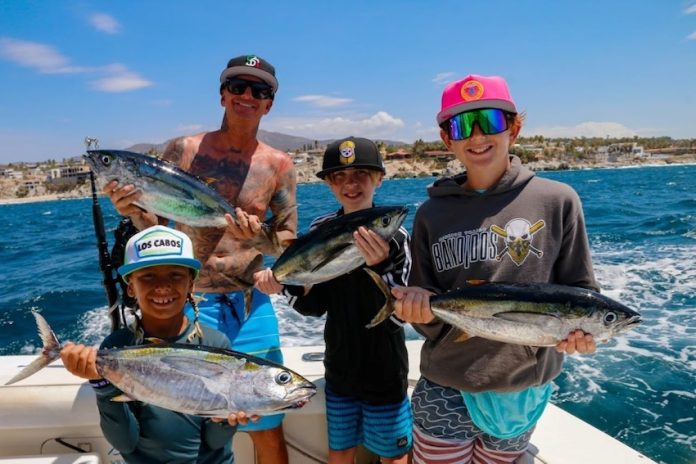
A family out tuna fishing in Cabo San Lucas
Sail, board, fish and golf while taking in the arts on a pleasant stroll. Los Cabos has it all this November! (Fishing Cabo San Lucas)

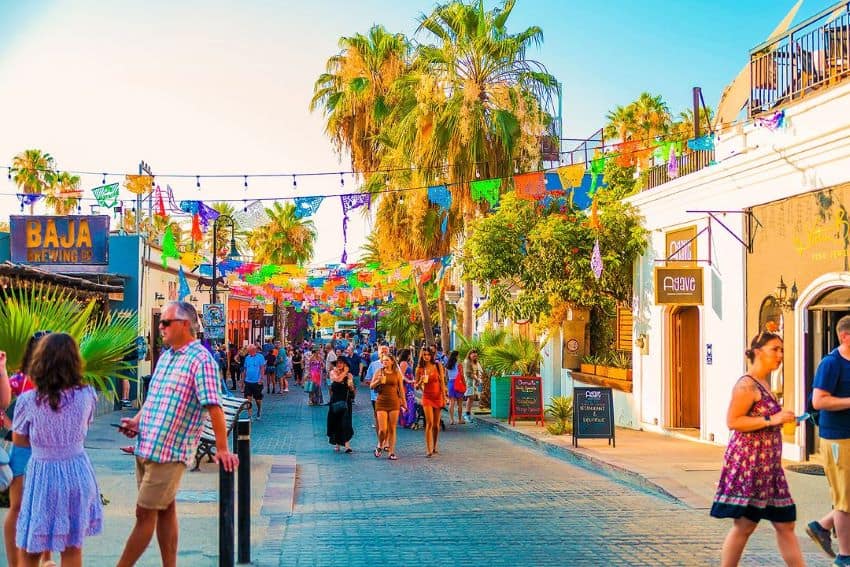
There’s always something happening in Los Cabos in November, from holidays and arts-themed festivals and events to sporting competitions and one-of-a-kind outdoor adventures. The last big-money fishing tournament of the year happens in November, as does Los Cabos’ only PGA-sponsored golf tournament. Meaning, on any given day you can attend events celebrating athletics, cinema, cuisine, painting, sculpture, and yes, the dearly departed. Or enjoy ideal weather conditions for sailing, surfing, and windsports.

Día de Muertos – November 1-2

Dia de los muertos in Los Cabo
(Visit Los Cabos)

Día de Muertos means more in Los Cabos than simply an opportunity for souvenir shops to fill display windows with Catrinas and colorful calaveras. It’s also the de facto kickoff for Art Walk season in San José del Cabo. The high-season weekly event begins annually in November with many gallery owners often showcasing artistically designed ofrendas (altars) during the early part of the month. Day of the Dead is also notable as an inspiration for events at many regional bars, restaurants, and resorts. 

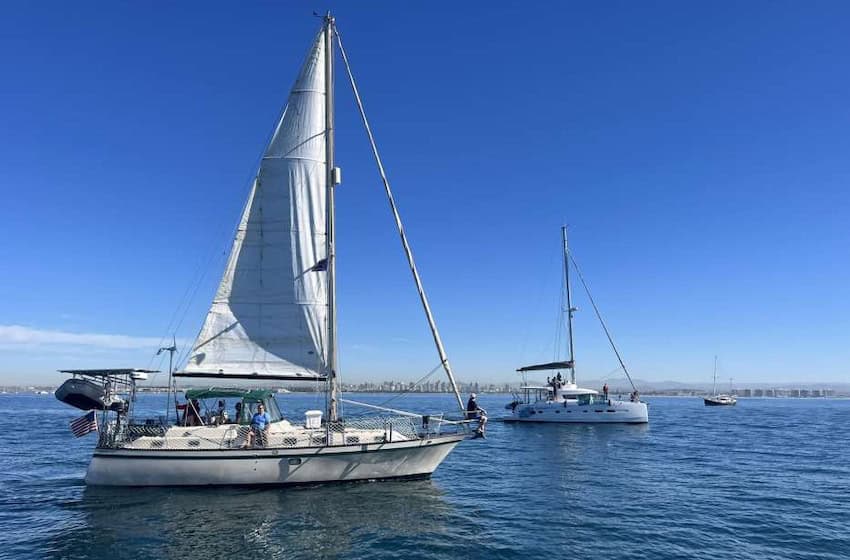
Baja Ha-Ha Cruisers Rally – November 4-16

Baja Ha Ha Cruisers Rally
(Baja Ha Ha Cruisers Rally)

The funniest book ever written about the Baja California peninsula and its colorful residents was the work of a Western Outdoor News columnist and all-around fine writer named Fred Hoctor. The book, called Baja Haha, was published in 1984 and has been something of a cult classic among gringo expats ever since. Sadly, Señor Hoctor is no longer with us. But his title lives on thanks to Baja Ha-Ha, a fun-filled 750-mile cruiser rally from San Diego to Cabo San Lucas that celebrates its 30th anniversary this year. 

Cabo Tuna Jackpot Tournament – November 6-9

Los Cabos Tuna Jackpot
(Los Cabos Tuna Jackpot)

Calendar-wise the last of Los Cabos’ million-dollar-plus fishing tournaments, the Cabo Tuna Jackpot is also noteworthy as the world’s richest tuna-focused competition (the prize pool was US $1.47 million in 2023). It’s got a great motto, too: Fish hard, party harder! Base entry is US $1,000 per team, which seems small enough price to ante up (teams can include up to six anglers, meaning the entry is only $166.66 each) given last year’s winning team, Sneak Attack, held up an over-sized check for $585,775 after bagging a 284-pound yellowfin.

San José del Cabo Art Walk – November 7, 14, 21, 28

(Art Walk San José/Instagram)

The historic Art District in San José del Cabo takes center stage each Thursday evening from 5 pm to 9 pm during high tourist season, November through June, when residents and visitors alike are invited to stroll its cobblestone streets and peruse the many eclectic fine arts galleries. Nearby bars and restaurants (of which there are many of superb quality) also benefit, since the event finishes around dinner time. 

PGA World Wide Technology Championship – November 7-10

(WWT Championship)

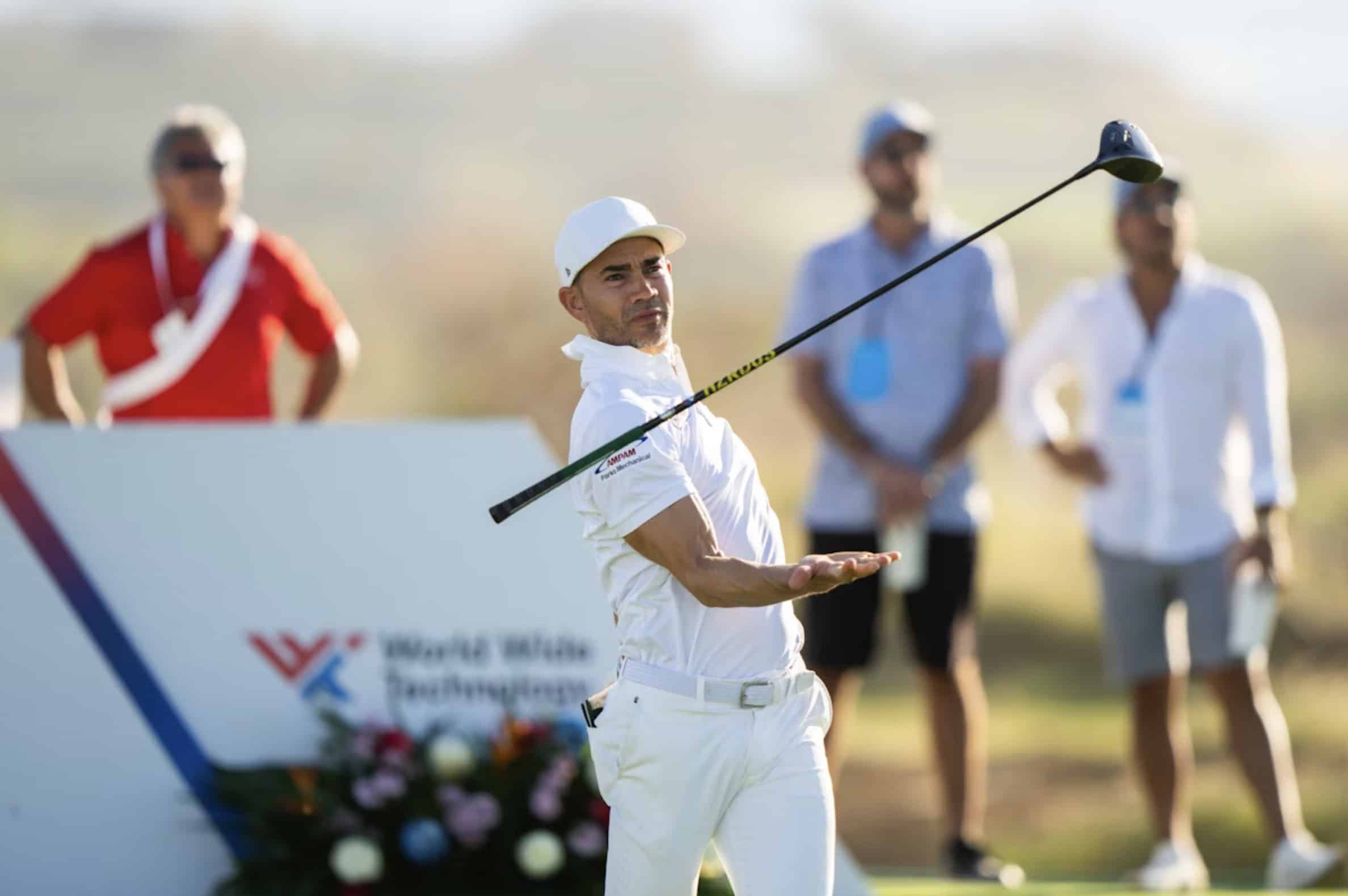
Want to see the world’s best golfers tackle one of Los Cabos’ best golf courses? The Tiger Woods-designed El Cardonal Course at Diamante hosts the area’s only PGA-sponsored event: the World Wide Technology Championship. Last year’s winner, Erik van Roos won dramatically with an eagle on the final hole – and in recent years a who’s who of PGA stars have participated, including major champions Scottie Sheffler, Jon Rahm, Jordan Spieth, and Justin Thomas. Tickets are affordable ($35 to $45 per day), food and drink options are abundant, and free shuttles will run from downtown Cabo San Lucas. 

Swinging for Scholarships Golf Tournament – November 16

Swinging for Scolarships
(Swinging for Scolarships)

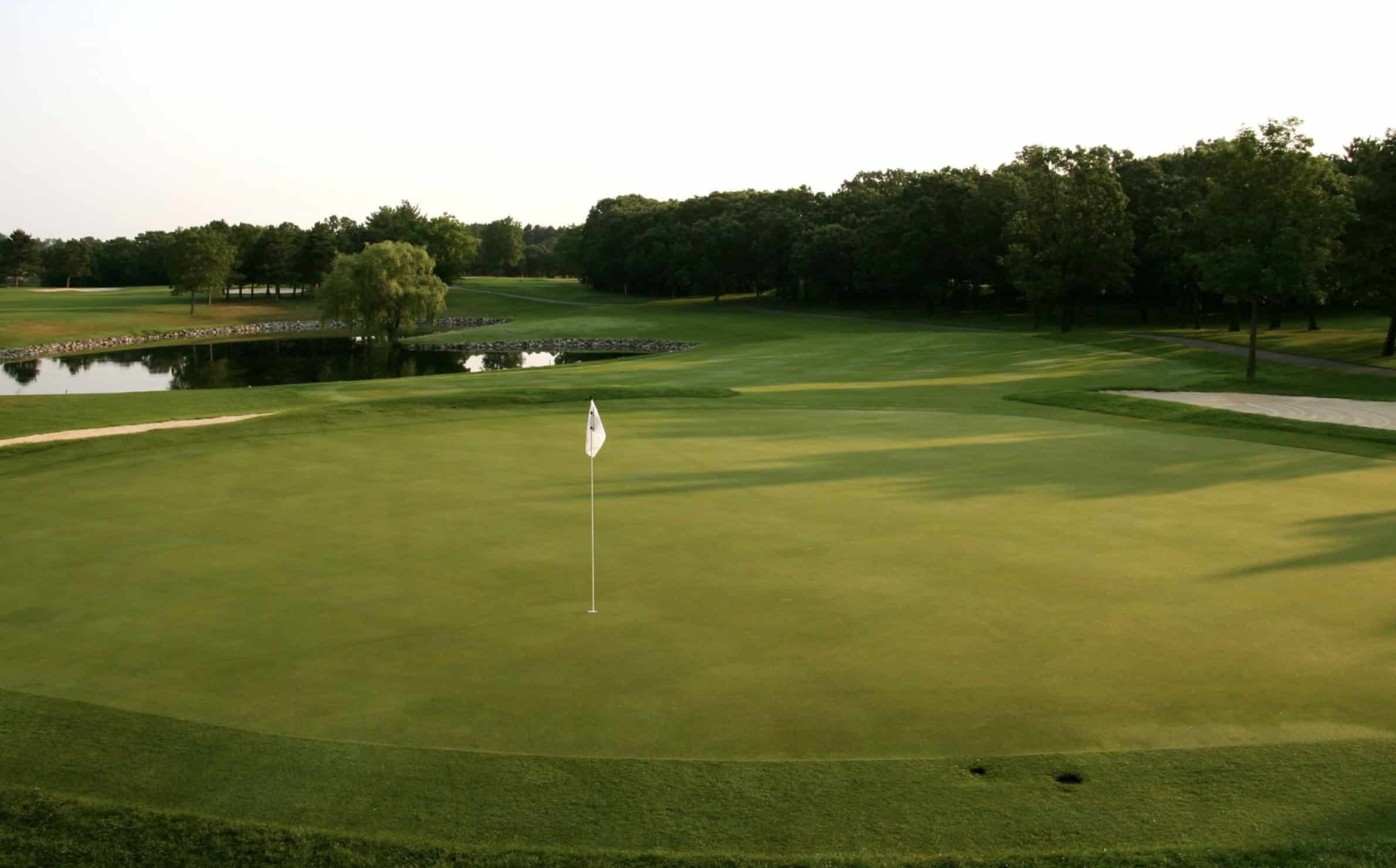
You can’t tee it up at the PGA World Wide Technology Championship. But you can at the fifth iteration of the Swinging for Scholarships Golf Tournament, which helps fund educational opportunities for children of employees at Esperanza, Auberge Resorts Collection. You might win some cool stuff, too. More than $30,000 worth of prizes are up for grabs, along with the opportunity to play the picturesque Tom Weiskop-designed Desert Course at Cabo del Sol. The entry fee is $400, or what you’d pay to play golf at just about any Los Cabos course — without the good cause attached.

Culinary Weekends 2024 at Waldorf Astoria Los Cabos Pedregal – November 21-23

(Waldorf Astoria)

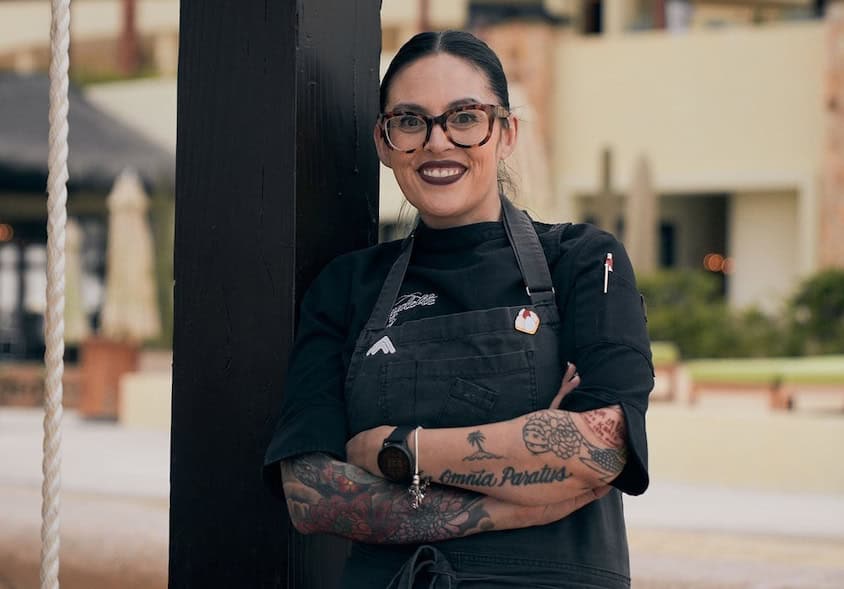
There’s seemingly nothing Los Cabos luxury resorts like more than bringing top chefs from the U.S. and Mexico to prepare world-class cuisine for their guests. That’s certainly the case at Waldorf Astoria Los Cabos Pedregal, which as part of its Festival of Flavors this year has hosted culinary weekends headlined by several great chefs. November’s kitchen star-in-residence is Claudette Zepeda, a former Iron Chef contestant and San Diego-based founder of Chispa Hospitality and acclaimed Mexican-themed restaurants such as El Jardín and VAGA. 

Festival de Cine Todos Santos – November 29-30, December 1

(Todos Santos Cine Festival)

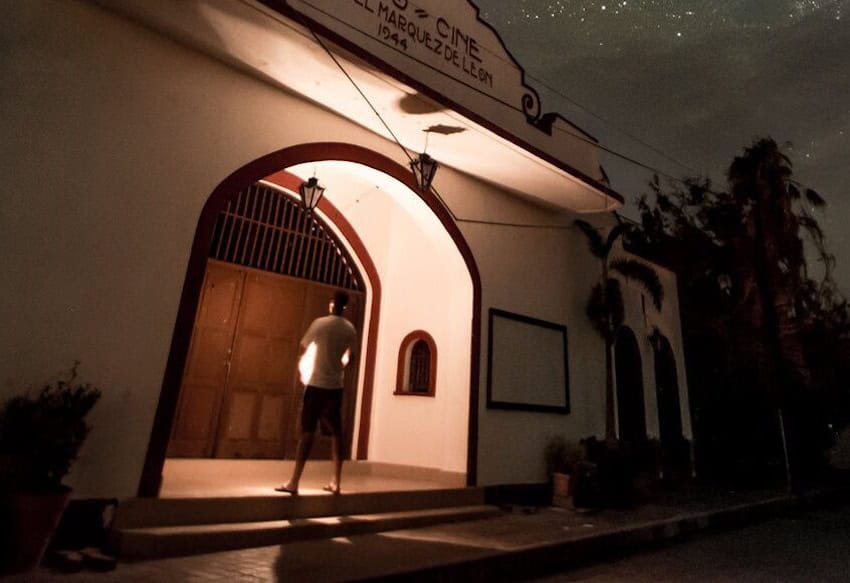
This annual showcase for Mexican and Latin American films was founded in 2004, meaning this year the festival celebrates its 20th anniversary. As always, short films and features will primarily be shown at historic Teatro-Cine Manuel Márquez de León, a landmark 80-year-old movie theater that overlooks the town square in Todos Santos. However, select films will also be screened in Los Cabos and La Paz. No schedule has been released yet, nor have any special guests been announced, although it bears noting that Mexican actors such as Diego Luna and Tenoch Huerta have appeared at past festivals.

Surf Season on the Pacific Coast – November to March

Mexican surfer Alan Cleland
(CONADE)

Summer may be the best time to find great waves off Los Cabos’ Sea of Cortés-facing beaches. But beginning in November the surf scene is centered around Pacific Coast beaches like Cerritos, La Pastora, and San Pedrito. Surfing is indeed good year-round in this part of Los Cabos (La Paz municipality, to be exact). However, conditions are at their peak from November to March, thanks to seasonally bigger and more consistent swells. Several local activities companies offer lessons for those who need to brush up on their wave-riding skills. Or learn some.

Windsports Season in Los Cabos – November to March

Kitesurfing
(Velas Resorts)

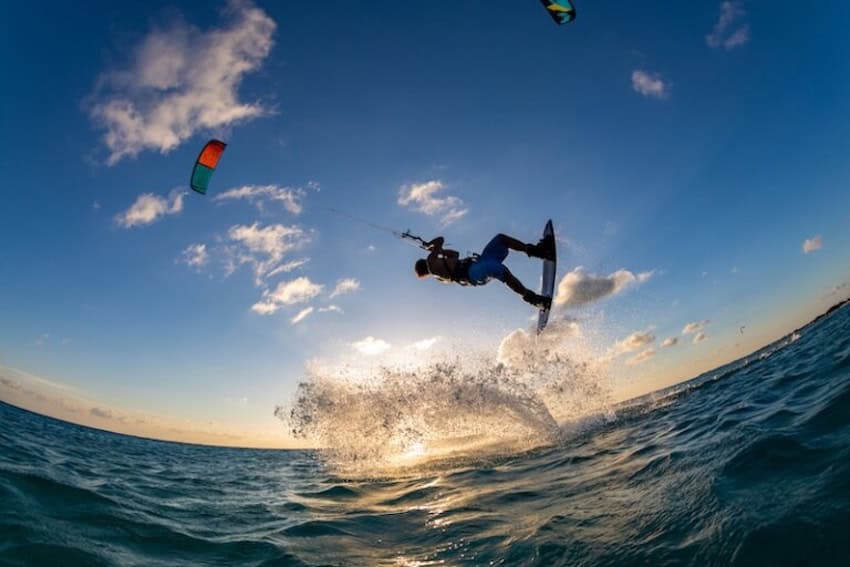
While the Pacific Coast is Los Cabos’ wintertime surf mecca, windsports enthusiasts flock to the East Cape. Why? From November to March each year, strong El Norte winds blow hundreds of miles down the Sea of Cortés, creating optimal wind and kite surfing conditions in small East Cape communities like Los Barriles and La Ventana. The wonderfully named Lord of the Wind Competition may be a thing of the past, but the East Cape is the place to be if you love kiteboarding, kitesurfing, windsurfing, or similar pursuits. Lessons, camps, and special accommodations are available.

Chris Sands is the Cabo San Lucas local expert for the USA Today travel website 10 Best, writer of Fodor’s Los Cabos travel guidebook, and a contributor to numerous websites and publications, including Tasting Table, Marriott Bonvoy Traveler, Forbes Travel Guide, Porthole Cruise, Cabo Living and Mexico News Daily. His specialty is travel-related content and lifestyle features focused on food, wine and golf.

16 injured after vehicle plows into crowd outside Guadalajara Cathedral

0
A car drives through a busy plaza in front of a cathedral, heading toward a crowd of people.
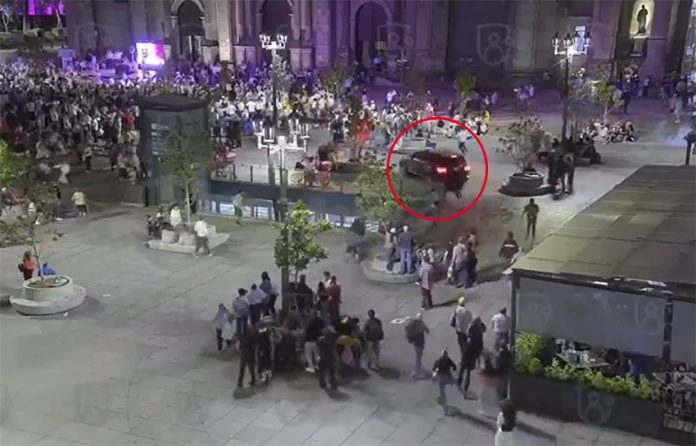
Security footage captured the moment the car plowed into a crowd of protesters in downtown Guadalajara. (Escudo Urbano C5 Jalisco)

Sixteen people were injured on Saturday when a vehicle plowed into a crowd gathered outside the Guadalajara Cathedral in the historic center of the Jalisco capital.

Video footage shows an allegedly stolen SUV ramming into people in front of the cathedral on Saturday night.

Most if not all of the injured were pro-life activists who had just completed a walk through the streets of Guadalajara and were about to start a prayer session.

The Guadalajara government said on social media that police arrested the man “allegedly responsible” for injuring the 16 people, among whom were children. According to Guadalajara Government Secretary Manuel Romo, the man, reportedly aged in his 30s, was under the influence of drugs.

In the video footage, two people are seen chasing the vehicle, one of whom is apparently the owner. A child was in the stolen vehicle as it hit the people gathered outside the cathedral, Romo said Saturday.

The Guadalajara government said that an individual allegedly stole the vehicle near the Corona Market in the center of Guadalajara and ran over the people outside the cathedral as he attempted to escape. He possibly panicked when he became aware that there was a child in the vehicle.

The Guadalajara government said that “thanks to the quick reaction of our police, the alleged thief was arrested … at the scene.”

It added that the officers assisted those injured, who were taken to hospital for treatment.

Guadalajara Mayor Verónica Delgadillo said Sunday that she was certain that the Jalisco Attorney General’s Office would do its job and that “there will be justice in this case.”

The alleged driver of the vehicle was beaten by people outside the cathedral before he was arrested, according to the president of the National Front for the Family, which organized Saturday’s pro-life walk.

“Even though the crowd was hitting him, we protected him until the police [came],” said Jaime Cedillo.

He initially said that he didn’t believe that the driver had planned to run people over.

“We just spoke to the owner of the SUV and everything seems to indicate that it was a theft,” Cedillo said on Saturday.

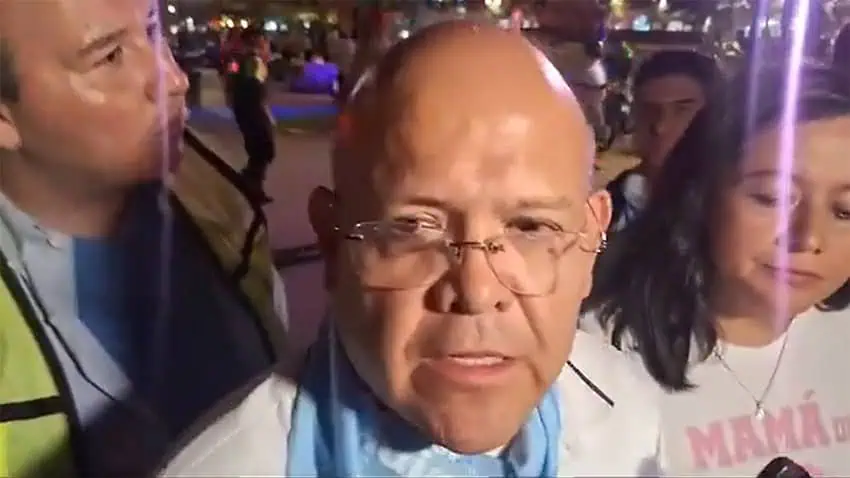
Jaime Cedillo, president of the the National Front for the Family, speaks to a reporter.
Jaime Cedillo, president of the the organization that led Saturday’s pro-life walk, said the incident didn’t appear to be a malicious attack. (Screenshot)

However, on Monday he said that authorities need to thoroughly investigate whether the driver had in fact planned an attack on pro-life activists.

“We ask for transparency and speed in this investigation. We urge authorities to carry out a transparent and diligent investigation. … Citizens deserve clarity and respect, certainty about what happened,” Cedillo said.

“… It’s essential that steps are taken to compensate the victims and all their families for all the physical, emotional and material damage they suffered. Compensation is a matter of justice and respect for those affected here, at the doors of the cathedral,” he added.

Delgadillo said Sunday that three of four people who remained in hospital were expected to be discharged on Monday, while the fourth patient would “remain under observation.”

Some of the injured suffered broken bones, according to reports. A 14-year-old girl was reportedly trapped under one of the SUV’s wheels for a period, and was only freed when citizens were able to lift the vehicle up.

The Guadalajara government expressed its “solidarity” with all those injured and committed to providing them with all the assistance they need.

Mayor Delagadillo said that steps would be taken to “strengthen road safety” in the historic center of Guadalajara.

“… In the coming days we’ll provide more information about the operations to strengthen security in the historic center,” she said.

With reports from El Financiero, Informador, Quadratín, Aristegui Noticias, CC News and Milenio

World Bank: Nearshoring currently accounts for 0.2% of Mexican GDP

4
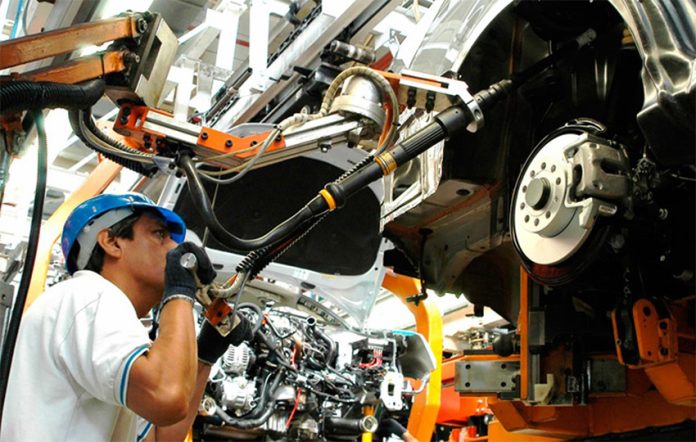
A man works at a car manufacturing plant, representing a decrease in unemployment in Mexico
Companies that recently relocated to Mexico contributed about US $3.58 billion in goods and services in 2023. (Gobierno de México)

Multinational companies that have relocated to Mexico amid the nearshoring trend only generate around 0.2% of the country’s gross domestic product (GDP), according to the World Bank’s top official in Mexico.

Mark Thomas, the World Bank’s country director for Mexico, Colombia and Venezuela, cited the figure in an interview with the El Economista newspaper during last week’s annual meetings of the World Bank and the International Monetary Fund in Washington D.C.

For her part, the Latin America head of S&P Global Ratings, María Consuelo Pérez, pointed out earlier this year that the “new” investment component of the total foreign direct investment ($36 billion) received by Mexico last year accounted for less than 0.3% of Mexico’s GDP.

According to the World Bank, Mexico’s GDP in 2023 was just under US $1.79 trillion.

Therefore, based on the estimate given by Thomas, the annual value of goods produced and services provided by companies that have recently relocated to Mexico is around $3.58 billion.

The World Bank official told El Economista that foreign companies’ impact on the economy is greater at the local level in places such as Monterrey, Nuevo León, as well as the northern border region and certain parts of the Bajío, a region that encompasses all or parts of several states including Querétaro, Guanajuato, Aguascalientes and Jalisco.

A portrait of Mark Thomas, World Bank's country director for Mexico, Colombia and Venezuela
Mark Thomas, World Bank’s country director for Mexico, Colombia and Venezuela, said that northern border states and the Bajío region have benefited more from nearshoring than other parts of the country. (World Bank)

El Economista described those parts of the country as the “big winners” when it comes to the relocation of foreign companies. The new federal government is aiming to spread the benefits of foreign investment more evenly across Mexico via a plan to create 10 “specialized” industrial corridors spanning all 32 federal entities.

Thomas expressed his support for that plan.

To attract more foreign companies to Mexico, the World Bank official said that issues such as water availability, energy supply and the cost of land need to be addressed. Insecurity, government policies and constitutional reforms such as the recently enacted judicial reform are among the other concerns of current and potential investors in Mexico.

Although he outlined some deterrents to foreign investment, Thomas characterized Mexico as the best nearshoring destination in Latin America and the Caribbean.

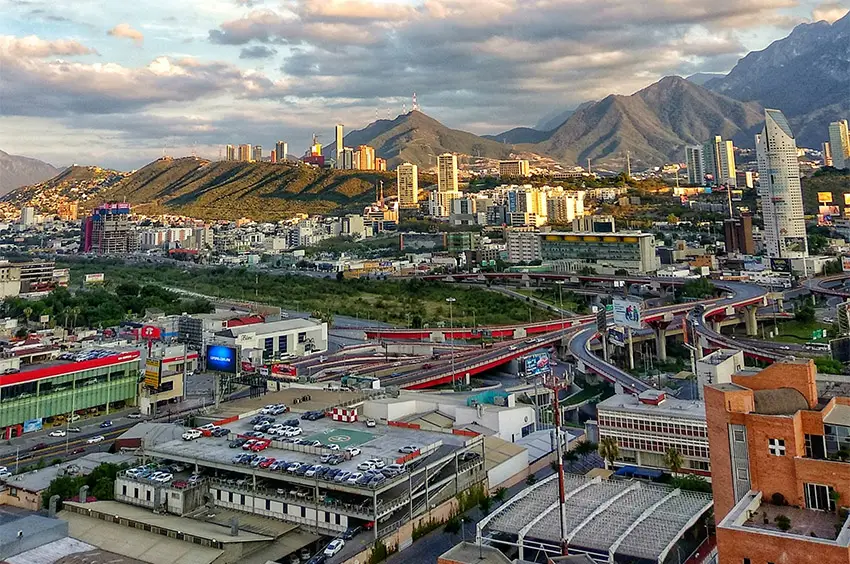
A cityscape of Monterrey, Nuevo León, the end point for a proposed train line connecting to Texas
Monterrey, Nuevo León, has been a top destination for nearshoring-style investment. (David Liceaga/Unsplash)

In addition to its proximity to the United States, Mexico is considered an attractive place to invest by foreign companies because it is party to the USMCA free trade pact and has affordable labor costs, among other reasons.

Thomas said that Mexico’s true competitors for foreign investment are located in Asia, namely the countries of Vietnam, Taiwan and South Korea.

Alicia Bárcena, Mexico’s current environment minister and former foreign affairs minister, warned in late 2023 that Vietnam could position itself as a more attractive option than Mexico for companies that are seeking to relocate, especially from China.

Which companies have recently relocated to Mexico? 

El Economista didn’t quote Thomas as referring to any specific foreign companies or time period when he spoke about nearshoring’s impact on Mexico’s GDP.

Mexico has been a nearshoring destination for decades, but in recent years has become an even more attractive destination for foreign investment for a range of reasons including the ongoing China-United States trade war, which began in 2018, and major disruptions to the global supply chain during the COVID pandemic.

Listed below are some of the foreign companies that have opened new plants or facilities in Mexico since 2019.

A number of major foreign companies, including automakers Tesla (U.S.) and BYD (China), tech company Google (U.S.), and Lingong Machinery Group (China), have announced significant investment plans for Mexico, but their proposed projects have not yet come to fruition.

Companies made investment announcements for Mexico totaling well over $100 billion last year, and more than $48 billion in the first seven months of 2024.

If the majority of the announced projects go ahead — of which there is no certainty — the contribution that foreign companies make to Mexico’s GDP could increase substantially in coming years.

President Claudia Sheinbaum, who is just short of completing one month in office, has sought to reassure companies that their current and future investments in Mexico are safe, and it appears that her government intends to be very proactive in seeking new investment in the country.

With reports from El Economista 

Despite a slow September, exports are on track for a record-breaking year

0
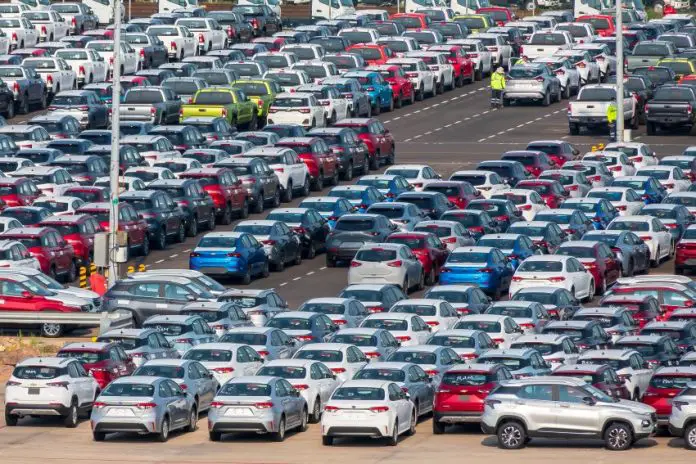
A huge lot full of cars ready for export in Mexico
Automotive exports accounted for almost a third of all export revenue in 2024. (Shutterstock)

Mexico remains on track to have a record-breaking year for export revenue in 2024, despite stagnant earnings in September compared to last year.

Mexican exports were worth US $455.71 billion in the first nine months of the year, according to preliminary data published on Monday, a 3.2% increase compared to the same period of 2023.

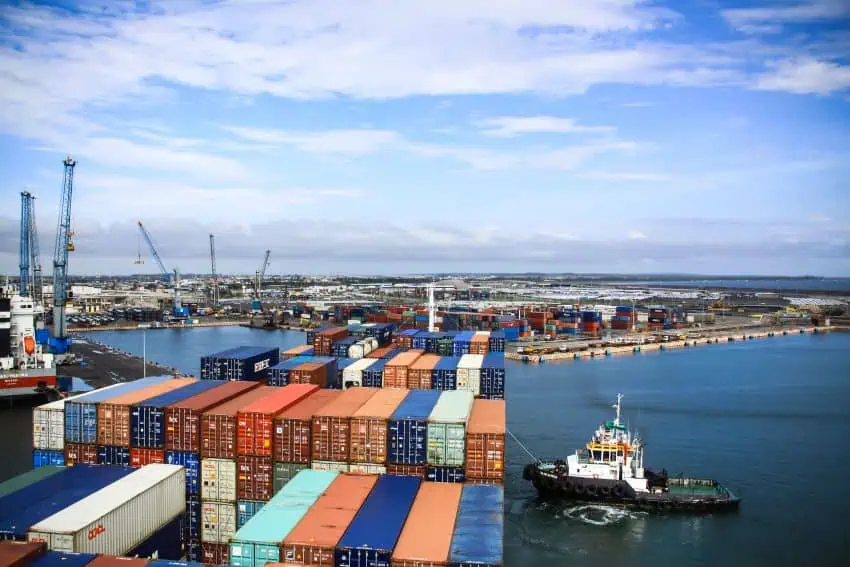
A tanker filled with containers of export goods in Mexico
Mexico exported goods worth US $455.71 billion in the first nine months of the 2024. (Shutterstock)

Export revenue totaled just over $593 billion last year, a record high.

Between January and September of 2024, Mexico earned an average of $50.63 billion in export revenue per month, putting it on track to exceed an annual total of $600 billion for the first time ever.

Mexico’s expenditure on imports also increased in the first nine months of 2024, and at a slightly higher pace than the year-over-year growth in export revenue.

Mexico’s deficit with its trade partners around the word increased 11% in annual terms between January and September to reach just over $11 billion.

Manufacturing sector generated almost 90% of export revenue

INEGI data shows that manufacturing sector exports were worth $408.38 billion in the first nine months of 2024, a 4% increase compared to the same period of last year.

That figure represents 89.6% of Mexico’s total export earnings between January and September.

Mexico exports a wide range of manufactured goods, including vehicles, auto parts, machinery, televisions, computers, medical devices and clothes.

The federal government and others are aiming to further bolster Mexico’s manufacturing sector by attracting foreign companies to nearshore here.

Lumitex manufacturing facility in Celaya
Manufacturing exports from plants like this one in Celaya, Guanajuato, made up nearly 90% of Mexico’s 2024 export revenue. (Together with Entrada Group)

The full sector-by-sector export data for the first nine months of the year is as follows:

  • Automotive exports increased 3.7% to $144.1 billion (31.6% of total revenue).
  • Non-auto sector manufacturing exports increased 4.2% to $264.73 billion (58% of total revenue).
  • Oil exports declined 14.1% to $21.48 billion (4.7% of total).
  • Agricultural exports increased 7.2% to $17.69 billion (3.9% of total).
  • Mining exports increased 8.2% to $7.7 billion (1.7% of total).

A stagnant September  

Mexico’s exports were worth $49.62 billion in September, representing 0.0% growth compared to the same month of last year, INEGI reported.

On a month-over-month basis, export revenue fell just under 1%.

The El Economista newspaper partially attributed the lack of growth to stagnation in the manufacturing sector in the United States, which is easily Mexico’s largest export market.

Revenue from oil exports slumped 44.9% in September compared to the same month last year, while earnings from automotive sector exports declined 7.4% annually.

Alkylation unit at the Olmeca Refinery
A drop in oil exports coupled with a slow manufacturing sector left September export revenue at a similar level to 2023 earnings. (Refinería Olmeca-Dos Bocas/X)

The decline in automotive exports coincided with a 0.5% contraction in secondary sector output in September, as reported by INEGI last week.

Despite the decline in earnings from auto exports, revenue from the manufacturing sector as a whole increased 2.6% compared to September 2023.

As detailed above, the value of oil sector exports fell 14.1% in the first nine months of the year, in part due to Mexico keeping more crude at home as it seeks to reach self-sufficiency for fuel. Lower oil prices in September were another factor in the sharp year-over-year decline in oil revenue last month.

The full sector-by-sector data for exports in September is as follows:

  • Automotive exports declined 7.4% to $15.42 billion (31.1% of total revenue).
  • Non-auto sector manufacturing exports increased 8.7% to $29.83 billion (60.1% of total revenue).
  • Oil exports declined 44.9% to $1.88 billion (3.8% of total).
  • Agricultural exports increased 12.5% to $1.51 billion (3% of total).
  • Mining exports increased 26.4% to $966.8 million (1.9% of total).

Spending on imports increased 3.4% between January and September 

INEGI reported that Mexico spent $466.73 billion on imports in the first nine months of the year, a 3.4% annual increase. Almost 94% of expenditure was on non-oil products, while just over 6% was on oil goods, including gasoline.

The full breakdown is as follows:

  • Imports of intermediate goods increased 2.7% to $352.87 billion (75.6% of total expenditure). Almost 94% of that expenditure was on non-oil intermediate goods.
  • Imports of consumer goods increased 4.4% to $68.05 billion (14.6% of total). Almost 89% of that spending was on non-oil consumer goods.
  • Imports of capital goods (factory machinery, for example) increased 7.2% to $45.79 billion (9.8% of total).

Mexico has a trade surplus with the US, but a global deficit 

The value of Mexico’s exports to the United States far exceeds the value of Mexico’s imports from the world’s largest economy.

However, Mexico recorded an overall trade deficit of $11.01 billion in the first nine months of the year, a 11% increase compared to the same period of 2023.

In September, Mexico’s spending on imports declined 1.8% to $50.2 billion, leaving it with a trade deficit of $578.9 million. That figure represents a 61.4% decline compared to Mexico’s deficit in September 2023.

With reports from El Economista