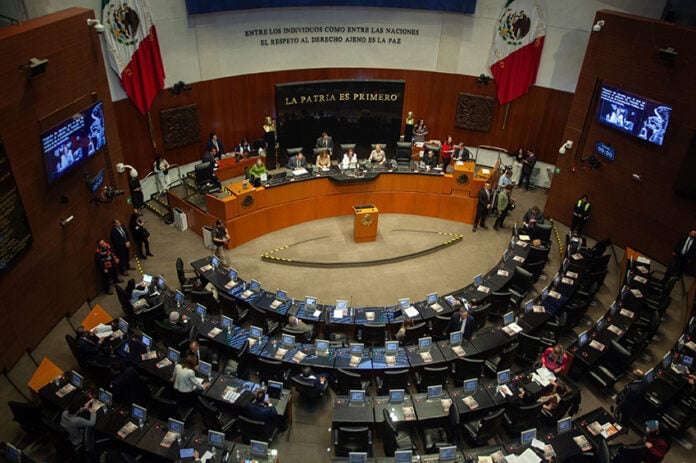
The Mexican Senate in its regular session on April 14. The Senate is currently preparing a bill to regulate the use of artificial intelligence in Mexico. (Andrea Murcia / Cuartoscuro.com)
Artificial intelligence is increasingly ubiquitous, touching nearly every industry and country around the world — and begging the question of how governments can prevent the powerful new technology from being misused. Now, while the United States takes a piecemeal approach to regulation, Mexico is preparing a sweeping federal law to regulate AI, including new regulatory institutions and fines or prison sentences for misuse.
The bill seeks to prevent sexual deepfakes, electoral manipulation and lethal AI-based systems that work without human input.
The current proposal prohibits the creation and dissemination of sexually explicit deepfakes without consent, especially when they involve minors, in which case no authorization, even if explicit, would be valid.
Similarly, it prohibits “the manipulation of images, audio, or video for the purpose of humiliating, harassing, extorting, or perpetrating violence against a woman; the deliberate automation of hate campaigns, defamation, smear campaigns, or gender-based attacks; as well as the design or use of artificial intelligence systems primarily intended to facilitate cyberbullying, harassment, or digital persecution.”
To promote innovation and ensure technical and ethical compliances, the bill proposes a national artificial intelligence strategy, an AI development fund and a federal certification system.
Since it is often unclear online whether content has been manipulated using AI, the bill also seeks to establish basic rules of transparency.
Experts in the field have warned that the bill could affect freedom of speech, political debate and technological innovation due to the vagueness of some concepts such as “cognitive manipulation” and “information risks.”
“Without precise definitions, these terms can be open to broad interpretations by the authorities,” Víctor Ruiz, CEO of the cybersecurity firm SILIKN told Expansión magazine.
Created by the Senate’s specialized committee on AI, the bill has seen participation from all political parties represented in the federal Congress.
Senator Rolando Zapata, who chairs the committee, said that the project is the result of 16 months of work and dialogue sessions that involved 72 specialists from different sectors, including academia, the private sector, representatives of the public sector and human rights organizations.
Zapata argued that the bill “does not censor opinions or criticism” and that it does not penalize political communication made in accordance with the law and democratic principles.
“This project in no way limits or restricts freedom of expression or political debate. It does not censor opinions or criticism, nor does it establish penalties for expressing oneself,” Zapata wrote on his official X account.
After the initial discussion phase, the bill will be presented and debated in the Senate.
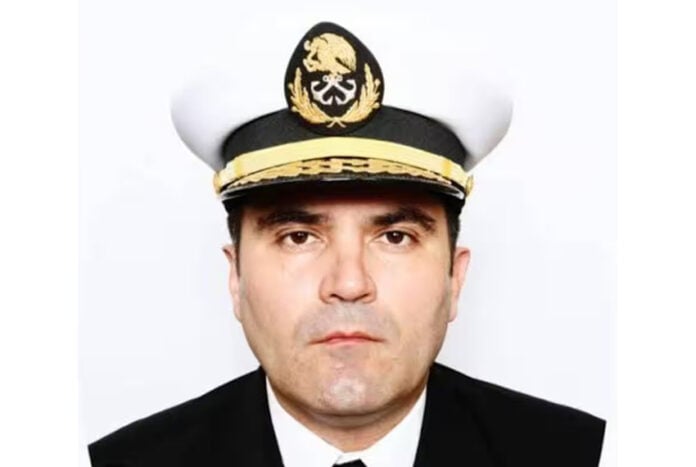
Mexican Navy Rear Admiral Fernando Farías Laguna was arrested Thursday by Argentine security forces while holding a forged Guatemalan passport. He is wanted in Mexico for illicit sales of fuel, which included arranging for 31 ships from the U.S. to enter Mexico with approximately 1.5 million liters of fuel every week. (Social media)
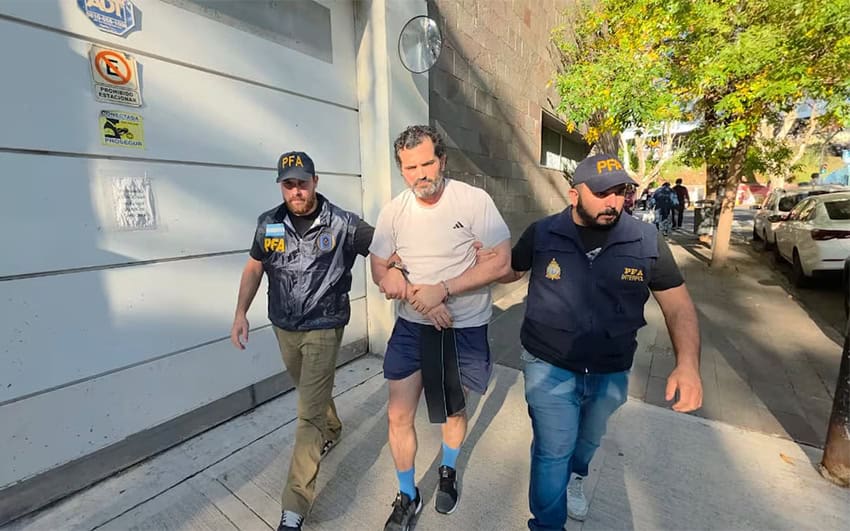
Rear Admiral Fernando Farías Laguna, a Mexican Navy officer and alleged fuel trafficker, was arrested in Buenos Aires on Thursday and faces extradition.
Wanted by Mexican authorities for his role in a scheme to sell stolen fuel, Farias is the nephew of former Navy Minister Admiral José Rafael Ojeda Durán. He was holding a forged Guatemalan passport when apprehended.
Argentine authorities arrested Farías, who is wanted in Mexico on fuel trafficking charges, in Buenos Aires on Thursday. (Fiscalía Argentina)
A fugitive since skipping out on pre-trial hearings last November, Farías was also the subject of an Interpol red notice for organized crime charges, through which he was wanted in 192 countries.
Security Minister Omar García Harfuch attributed the capture to “international information exchange and cooperation mechanisms” that informed a “coordinated operation involving the Naval Intelligence Unit, the Federal Attorney General’s Office and its Organized Crime Unit, Interpol Mexico and the National Intelligence Unit.”
Harfuch also expressed gratitude to Argentine authorities for their collaboration in the operation.
Farías will undergo a recognition hearing to begin extradition proceedings on charges of organized crime and “huachicol fiscal” (falsifying customs documents to introduce fuel and passing it off as another duty-free product, often lubricating oils).
The network, which allegedly involved public officials, private companies and naval personnel, operated in customs offices in Manzanillo, Colima; Lázaro Cárdenas, Michoacán; and Tampico, Tamaulipas, among others.
The March 31, 2025, bust — six months after their uncle’s term ended — exposed a criminal network led by Farías and his brother Vice Admiral Manuel Roberto Farías (in custody since September).
Investigations revealed a scheme that allowed 31 ships from the U.S. to enter Mexico with approximately 1.5 million liters of fuel per week. The authorities believe the network may have smuggled at least 564 million liters of fuel into Mexico since June 2023.
On Sept. 7, 2025, Manuel Roberto Farías was arrested along with 13 other suspects, including three businessmen, five Marines (one retired) and five customs officials.
At the time, Fernando Farías was out of the country and in October he managed to win an injunction against arrest. A month later, however, an appeals court threw out the injunction and Farías had been a fugitive since.
Hours before Fariás’ arrest in Buenos Aires, Harfuch announced the dismantling of the remainder of the “huachicol” network and 14 additional arrests. Combined, the actions constitute the first large-scale corruption case uncovered by the Sheinbaum administration, a case that shook the Navy from within and greatly weakened the narrative of the incorruptibility of Mexico’s armed forces.
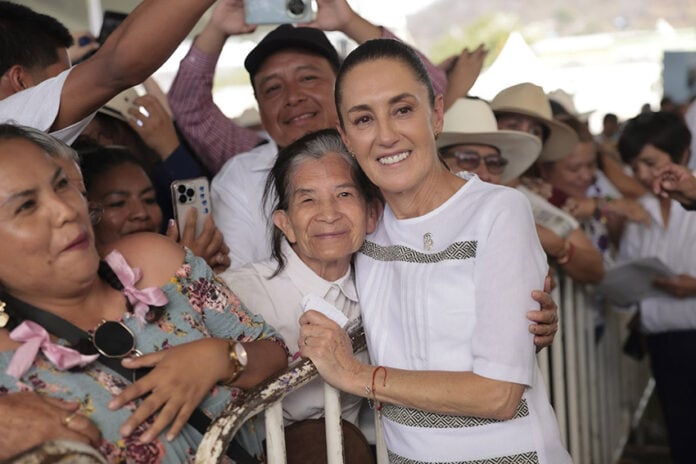
Just over two-thirds of Mexican survey respondents supported President Sheinbaum's in March. (Presidencia)
The latest Mitofsky poll shows that President Claudia Sheinbaum’s approval rating slipped slightly for a sixth consecutive month in March, but more than two-thirds of those surveyed still had a positive opinion of her job performance.
The survey — conducted last month for the newspaper El Economista by interviewing 59,548 Mexicans over the age of 18 with smart mobile devices and internet access — revealed that 68.4% of those polled expressed approval for Sheinbaum. This is down from 69.1% in February and 3.2 points below results from September 2025, her 12th month in office.
Mitofsky noted that March 31 marked the one-quarter mark of Sheinbaum’s term.
Among the challenges Sheinbaum faced in March were the initial rejection of the electoral reform bill she submitted to Congress, rising inflation, a stagnating economy and an oil spill in the Gulf of Mexico, which the government at the time denied was the fault of state oil company Pemex. (Admission of Pemex’s responsibility in the matter finally came on April 16.)
Workers in the informal economy registered the highest approval of the president, Mitofsky found, with 76.4% support, down from 78.7% in February. Housewives and pensioners followed close behind with 75.9% and 72.5% support, respectively.
In contrast, the segment showing the lowest approval rating for Sheinbaum was the business sector, at 56.1%. However, this represents an increase of 4.6 points compared to the meager 51.5% approval they gave her in February.
With regard to issues of concern, the poll revealed that security remains the top priority for 48.2%, followed by economic matters (24.1%) and healthcare (12.3%).
When considering responses by political persuasion, Sheinbaum unsurprisingly received a 96% approval rating from those identifying as members of Morena, her party.
Approval by members of the center-right National Action Party (PAN) sits at 71% (down from 74%), while those linked to the former ruling Institutional Revolutionary Party (PRI)indicated 53% support (down from 57%). Members of the center-left Citizens Movement (MC) party came in at a low 43% approval (down from 45%).
Of those who say they voted for Sheinbaum in 2024, 94% voiced approval, while 34% of those who did not vote for Sheinbaum now support her.
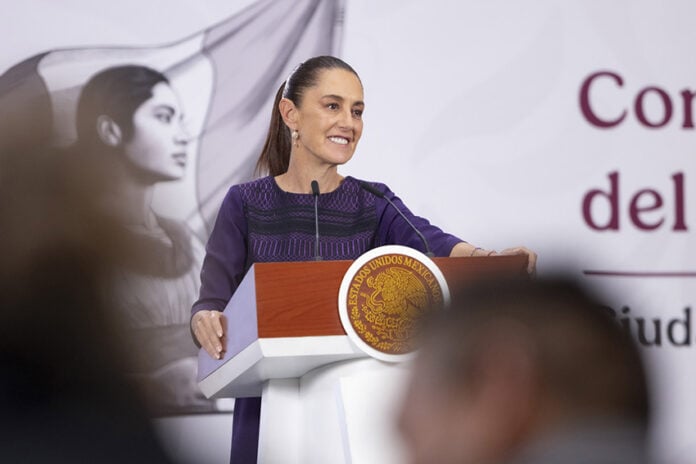
Sheinbaum touched on CIA operations in Chihuahua, responded to the U.S. ambassador's criticism of corruption in Mexico and celebrated the re-opening of the Teotihuacán pyramids after Monday's shooting, at her Friday morning presser. (Gabriel Monroy / Presidencia)
Sheinbaum’s mañanera in 60 seconds
🚨 García Harfuch meets Chihuahua governor over unauthorized CIA drug lab raid: Sheinbaum said Security Minister García Harfuch met with Gov. Maru Campos to request information on last weekend’s drug lab operation, in which CIA officers allegedly participated without federal authorization. Campos agreed to provide details, Sheinbaum said.
🇺🇸 Sheinbaum brushes off U.S. ambassador’s corruption comments: Asked about Ambassador Ron Johnson’s remarks in Sinaloa calling for “certainty, security and an environment free of corruption” for investment to prosper, Sheinbaum laughed before responding that her government is already doing exactly that. She pointedly noted that the U.S. could stand to do the same.
🔺Teotihuacán reopens to large crowds after Monday’s shooting: The archaeological site drew long lines of visitors on Wednesday, two days after a gunman killed a Canadian woman and wounded several others at the Pyramid of the Moon. Sheinbaum said most of the injured have returned to their home countries and those still hospitalized are out of danger.
Why today’s mañanera matters
The most noteworthy item out of today’s mañanera was President Sheinbaum’s revelation that Security Minister Omar García Harfuch essentially read the riot act to Chihuahua Governor Maru Campos at a meeting in Mexico City on Thursday.
It has been a challenging week for the president as she has been forced to respond to allegations that CIA officers participated in a security operation in Chihuahua without the knowledge or consent of her government. Sheinbaum — a staunch defender of Mexican sovereignty and ardent opponent of U.S. interventionism — has accepted that the CIA did indeed participate in a drug lab raid in the northern state.
Also of note at today’s mañanera was Sheinbaum’s blunt response to remarks made by the U.S. ambassador to Mexico. The president also commented on the reopening of the Teotihuacán archaeological site, where an unprecedented armed attack occurred on Monday.
Security minister meets with Chihuahua governor after CIA involvement in drug lab operation
“She agreed to provide the information,” she said.
Sheinbaum said that García Harfuch outlined to the governor “all the principles that have to be followed” and “all the laws that have to be followed in order to collaborate with a foreign government.”
“In this case, this process wasn’t followed,” she said.
“… It was a cordial conversation and it is now up to the governor [to respond],” Sheinbaum said.
On Thursday, Sheinbaum assigned most of the blame for the apparently secret, allegedly illegal security collaboration between Chihuahua and the United States to the Chihuahua government, although she also stressed that U.S. authorities have questions to answer.
Sheinbaum turns the tables on US ambassador
A reporter asked the president her opinion on U.S. Ambassador Ron Johnson’s declaration in Sinaloa on Thursday that the private sector “needs certainty, security and an environment free of corruption” in order for investment in Mexico to “prosper.”
Sheinbaum’s first reaction was to laugh at the reporter’s question.
“Let’s say, that’s what we’re doing,” she subsequently said, asserting that her government is working to provide the conditions needed for investment in Mexico to succeed.
“Them there and us here, because in the United States it is also important that there be a [favorable] environment for companies and investment, free of corruption, with legal certainty. And in Mexico too. That’s it,” Sheinbaum said.
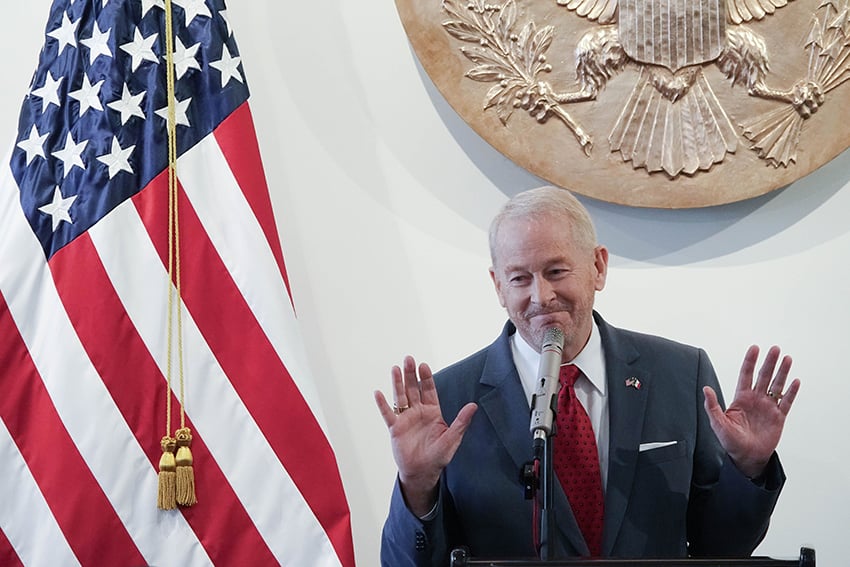
U.S. Ambassador to Mexico Ron Johnson, seen here at a March press event, called for “an environment free from corruption” to boost investment in Mexico. (Camila Ayala Benabib / Cuartoscuro.com)
“There were a lot of visitors, there were lines to get in,” she said.
“People were waiting before the door opened. There are a lot of videos on social media,” Sheinbaum said.
She also said that “a lot” of the people injured at Teotihuacán on Monday “already returned to their countries.”
“They were given support so that they could return. There are still some people in hospital. They are out of danger,” Sheinbaum said.
The gunman — who was allegedly inspired by the 1999 Columbine High School massacre — shot eight people, including the Canadian woman he killed, before committing suicide. Several other people were injured when they fell while escaping the attack, perpetrated on the Pyramid of the Moon at Teotihuacán, a pre-Columbian city located approximately 50 kilometers northeast of downtown Mexico City.
By Mexico News Daily chief staff writer Peter Davies (peter.davies@mexiconewsdaily.com)
Mexico News Daily CEO Travis Bembenek shares his favorite, under-the-radar travel picks to beat the crowds while enjoying the best of Mexico's natural wonders. (Gobierno de Mexico)
I am often asked about my favorite places to travel.
In general, I think a very good destination with fewer tourists is much better to visit than a “great spot” mobbed by people taking selfies.
I might sound a bit dated in saying this, but travel in the social media era baffles me. I am often astonished at people who seem to care more about their selfie than actually looking at and enjoying the place they are visiting. So many times, I’ve seen people spend significant time and energy trying to get the perfect photo (with themselves in it), and then simply move on to the next selfie spot.
In search of the less crowded
I also have noticed over the years, and increasingly so, that many beautiful spots around the globe are getting a lot more crowded than they used to be. It might still be the post-pandemic travel bounce or increased accessibility of travel, but it feels like something more than that. These really photogenic places around the globe are shared on social media so voraciously — of course, with absolutely perfect photos — that they’re now crowded with tourists looking to replicate those photos for their own social media accounts.
Part of what makes Mexico so special to me is that you can still find unbelievable places that are unspoiled, beautiful and uncrowded. Of course, they are getting discovered too and receiving more tourists, but they are still years behind the huge crowds of many other tourist hotspots.
With that in mind, I am sharing here five special places in Mexico for anyone looking for nature, adventure and fewer people. It’s still a good idea to follow some tips to avoid crowds, even in these less-discovered locations.
These destinations most certainly aren’t for everyone – perhaps not for most – as they don’t have the same range of accommodations, they aren’t easy to get to and they might entail some decidedly “unglamorous” moments. My intention here is, of course, not to increase mass tourism to these destinations, but rather inspire the truly adventurous out there to add these locations to their bucket lists.
Huasteca Potosina, San Luis Potosí
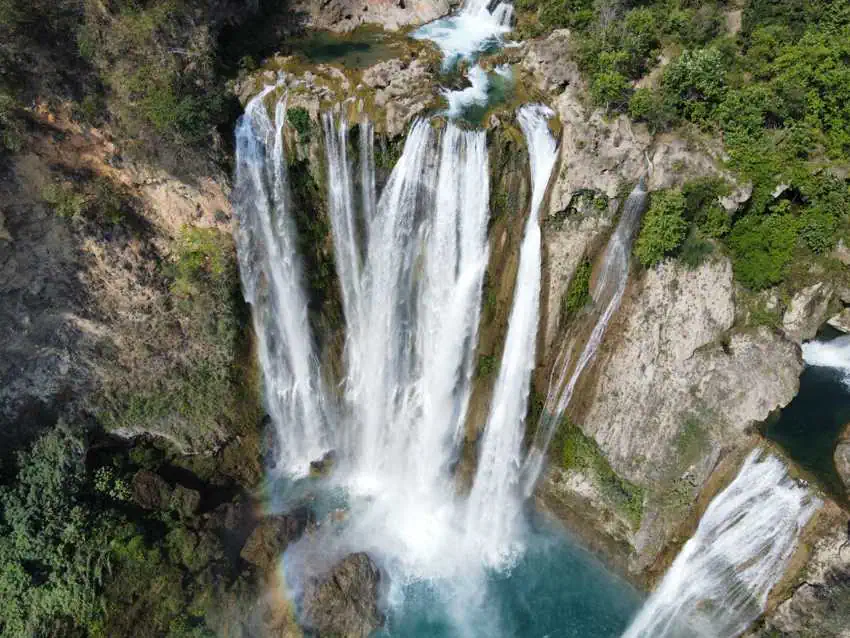
The stunning Minas Viejas waterfall in the Huasteca Potosina area of San Luis Potosí is a highlight that adventure seekers shouldn’t miss. (Nellie Huang)
Never in my life had I stayed in one hotel for seven consecutive nights until we did here. Seven days straight of pure, unspoiled, uncrowded nature.
Waterfalls, thermal pools, stand-up paddleboarding in a jungle river, whitewater rafting, canoeing, ziplining, waterfall jumping, birdwatching, seeing pumas and jaguars in their natural habitat, I could go on and on.
It’s not fancy, it can be swelteringly hot, but this part of Mexico is a guaranteed awesome natural adventure.
Grutas de Tolantongo, Hidalgo
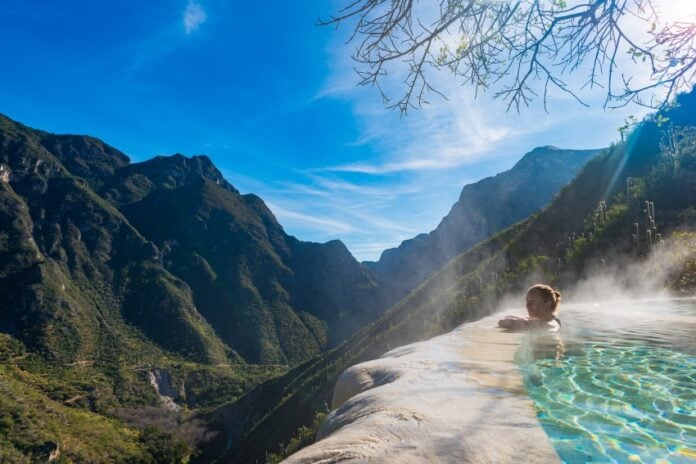
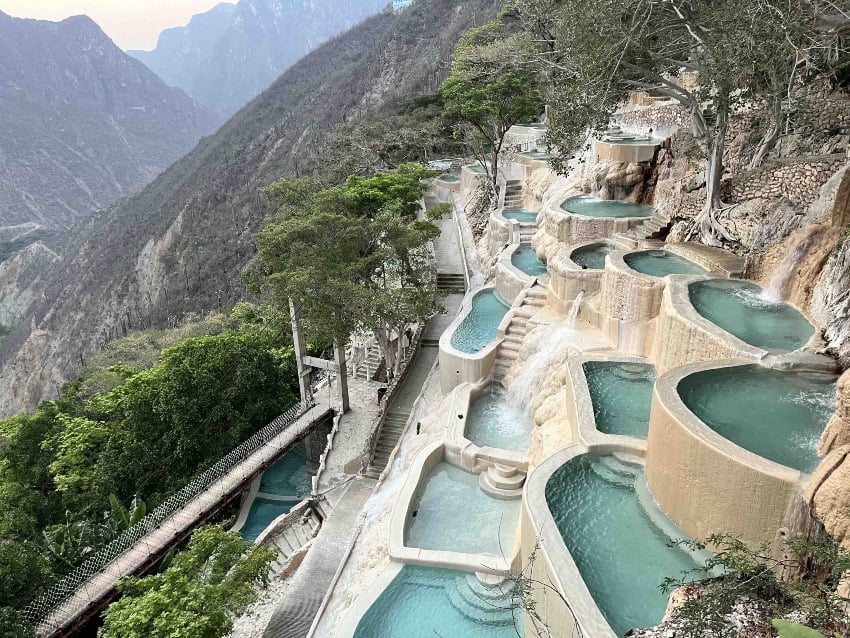
Views of the mountains from hot spring pools in Grutas de Tolantongo, Hidalgo, are epic. (Visit Mexico)
Imagine over 80 natural hot spring pools in the mountains, each with different temperatures, each with an amazing view, each of which can be enjoyed during the day or under the stars.
An underground spring of hot water feeds this incredible cave and river system. The hotels are 2 stars at best, the food is 1 star at best, but the spot is absolutely epic!
Isla Holbox, Quintana Roo
Isla Holbox is one of the best places to visit in Mexico if you’re looking for spectacular scenery with fewer crowds. (Visit Mexico)
A 2-3 hour drive from Cancún, Playa del Carmen or Tulum and then a ferry ride out to the island means Isla Holbox is not easy to get to, but it’s worth the effort.
All vehicles on the island are golf carts or smaller. The island is growing fast, but it still has a pace no longer found in most places on the planet.
Strolling in the crystal-clear water on the sandbar that goes on for miles into the ocean is the main activity. It’s a surreal experience to walk so far out into the ocean in ankle- to-knee-deep water — spotting fish, sting-rays, flamingos and more.
Bacalar, Quintana Roo
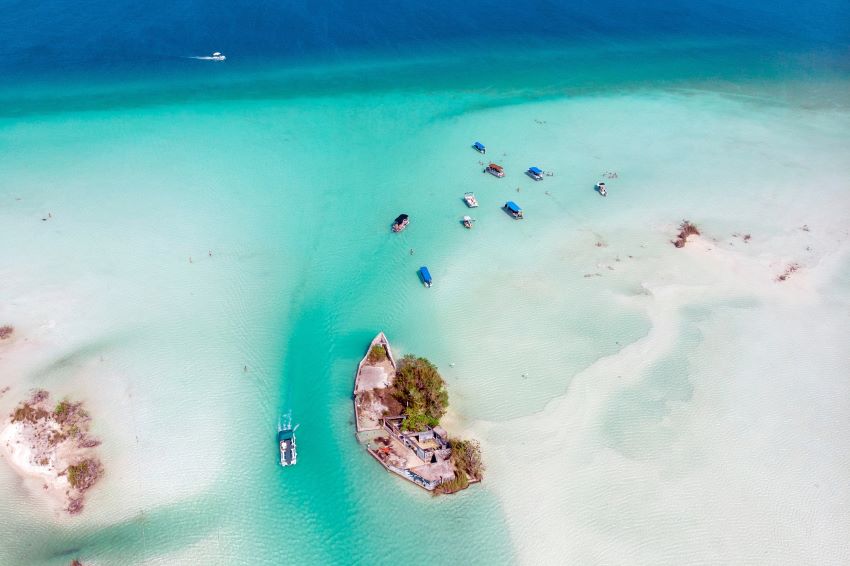
Despite the perfect mix of sun, sea and sand, Bacalar has somehow remained off the radar for many tourists. (Gideon Ikigai/Shutterstock)
Bacalar is actually a large lake that is also known as “the lagoon of 7 colors.”
The water color is stunning, the nature activities amazing, and it’s just now getting discovered. Truly a beautiful and relaxing place to visit.
Puerto Escondido-Mazunte, Oaxaca
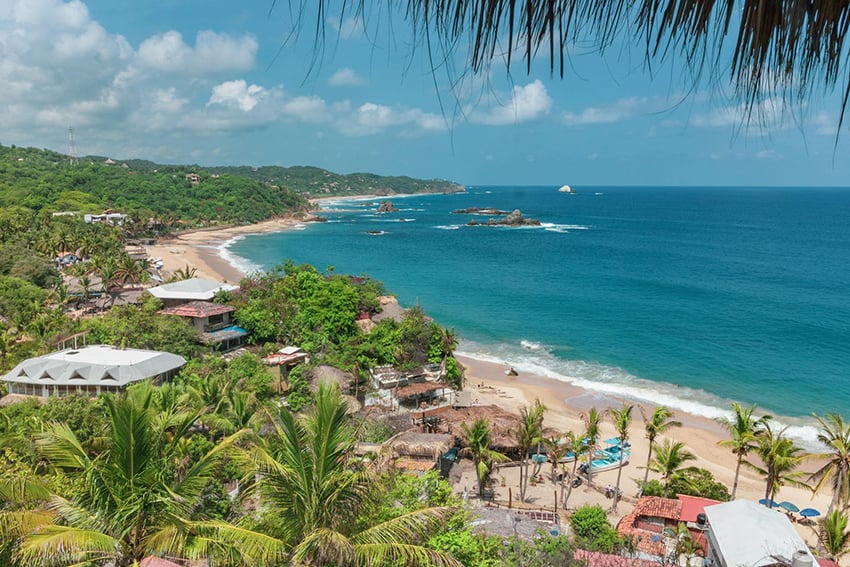
The town of Mazunte, located between Puerto Escondido and Huatulco on the Oaxacan coast, is one of those quiet coastal areas that made Oaxaca’s Costa Chica one of Nat Geo’s favorite spots. (Hersom Alexander / Pexels)
This stretch of about 70 kilometers of coastline is still truly wild and undiscovered compared to many beach areas in Mexico.
On these beaches, I have been within a few meters of pods of whales, seen thousands of dolphins, taken a small river boat next to giant crocodiles, sat next to hundreds of sea turtles laying eggs, kayaked at dawn with thousands of birds, and released baby sea turtles at sunset.
Every one of these wildlife events was truly special and among the top nature experiences I have had in my life. Oaxaca sunsets are stunning, the crashing waves mesmerizing and the beaches are still unspoiled. Throw in the people, the food and the culture, and you have an unbeatable experience.
If you love nature and have a sense of adventure, you can count on enjoying these recommendations. So forget about that selfie, leave the phone in your backpack and get out and explore this amazing country!
Travis Bembenek is the CEO of Mexico News Daily and has been living, working or playing in Mexico for over 27 years.
This article was originally published in May 2024.
Rains of fire and visions of deformed people are among the predictions Moctezuma made before the Spanish invasion in the Americas. (Noticonquista/Instituto de Investigaciones Históricas)
Despite the historical distance that separates us from the Conquest, a hazy aura surrounds Moctezuma Xocoyotzin’s predictions. As the last tlatoali (or emperor) of México-Tenochtitlán, he recorded eight ominous portents before the European invasions in Mesoamerica. Between natural disasters, astronomical phenomena and the appearance of supernatural creatures, it is said he foretold the fall of his imperial capital city.
Given the descriptions of those who survived the conquest, the conquistadors dismissed these events from their Western perspective as blasphemous and contrary to the Christian path. For this reason, they remained unstudied for centuries, relegated to the realm of the unreasonable — and even satanic. In order of appearance, as documented by UNAM’s Institute of Historical Research (IIH), these were the events that baffled the last tlatoani of Mexica:
A fiery ear of corn in the sky
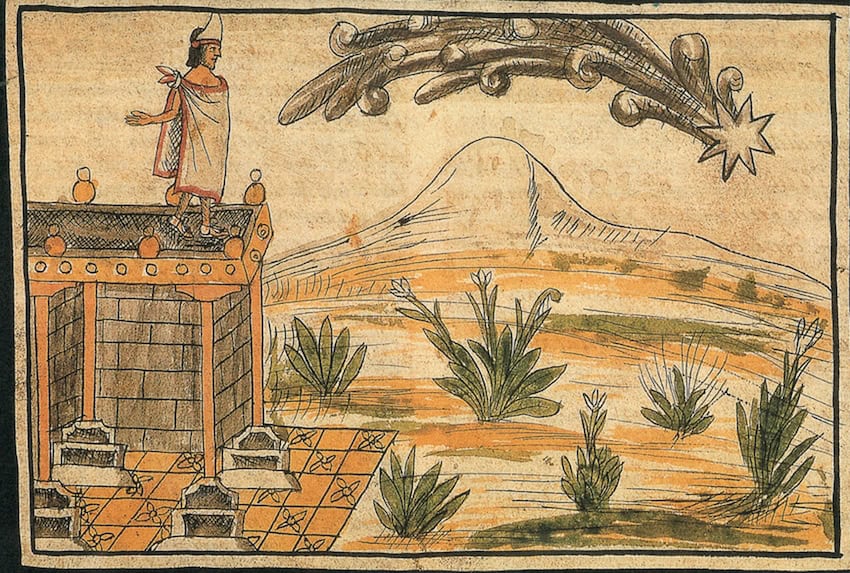
Xocoyotzin translates from Náhuatl as “he who appears angry,” or “the frowning one.” For someone who had terrible visions with every waking day, one can understand where the name came from. (Noticonquista/Instituto de Investigaciones Históricas)
The surviving records of the first ominous omen date back 10 years before the invasion of México-Tenochtitlán, per theIIH. According to descriptions preserved in the surviving codex, “an ear of fire, like a flame, like dawn” flashed across the celestial vault one night, as if “piercing the sky.” It’s worth noting that any record of Moctezuma’s predictions was documented by conquistador and chronicler Bernardino de Sahagún in his “General History of the Things of New Spain“ (1540—1585), following his arrival in the imperial capital.
Destruction of the Temple of Xiuhtecuhtli
In the Mexica worldview, the action of representing events symbolically was often referred to as tetzahuitl. From the tetzahuia, this was the action of being “greatly astonished or horrified.”
Such was the reaction of the Mexica when they witnessed a lightning strike on the temple of Xiuhtecuhtli, known as the “Lord of the Years,” or the god of fire. The temple was instantly destroyed by uncontrollable flames.
Fire at the House of Huitzilopochtli
Bernardino de Sahagún described Moctezuma’s predictions as “signs and omens that appeared before the Spaniards came to these lands or before there was any news of them,” as documented by UNAM’sInstitute of Aesthetic Research. The second disaster was the fire at the House of Huitzilopochtli, the Mexica god of war.
Despite the sacred nature of the space, the fire could not be extinguished. It ignited spontaneously during the night, even though the temple was built of stone. Historical accounts say that the more efforts were made to put out the flames, the more intense they became.
A shower of fiery stars
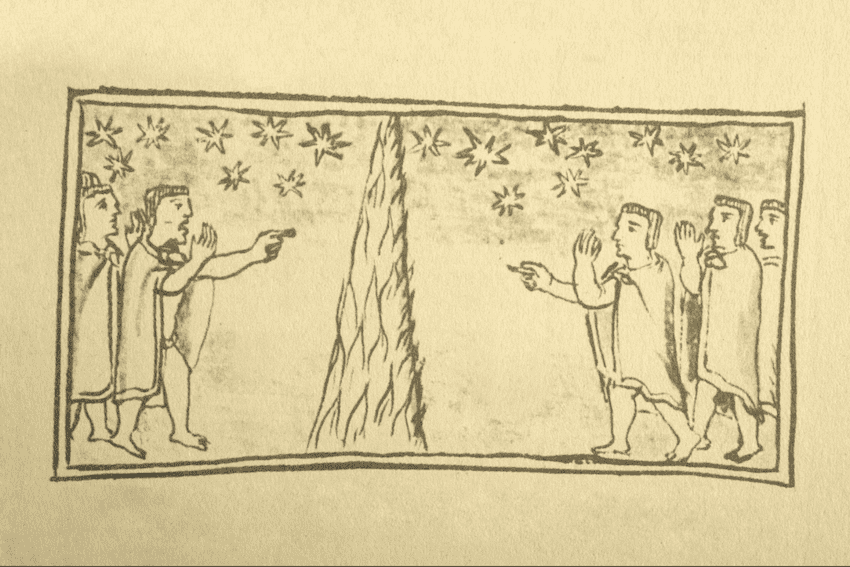
The fourth of Moctezuma’s predictions has been interpreted as anunstoppable meteor shower, seemingly bringing a deluge of fire upon the earth.
Even today, if a temple that inspires great devotion in the population were to catch fire from a lightning strike, people would panic and interpret it as a dire omen. (Noticonquista/Instituto de Investigaciones Históricas)
Amid the chaos, according to surviving descriptions, an immense star sent trails of smoke in its wake. Afterward, a rain of fire descended. What most astonished those who witnessed the catastrophe was that it occurred in broad daylight.
A flood of boiling water
Following the rain of fire, the temperatures of Lake Texcoco rose to the boiling point. As it overflowed, it reached the houses and buildings of ancient México-Tenochtitlán, burning everything in its path. “It reached the beginnings of the houses, and the houses were destroyed and flooded with water. This was due to the lake that is next to us,” noted Bernardino de Sahagún in his chronicles.
The voice of a woman weeping for her children
The cries appeared in the night, among the streets, across the sky, beneath the earth. This was recorded in the codices of the time: “Many times it was heard: a woman was weeping; she went about screaming through the night; she went about giving great cries: ‘My little children, we must go far away!’” Several historians agree that this is the origin of the legend ofLa Llorona.
More contemporary interpretations link this recurring figure in Mesoamerican narratives to Malintzin, the woman Cortés married during the Conquest. There is sufficient evidence that they were not only married but also had children together who later held administrative positions in New Spain. Other interpretations suggest that they could be those women raped by the conquistadors, who were forced to give birth to those unwanted children.
A crane with a star-shaped head
As if guided by a divine force, a flock of birds unearthed a gigantic crane from Lake Texcoco. When it was presented to Moctezuma, the tlatoani marveled because, instead of a face, it had a piece of obsidian embedded in its head.
According to the narratives of the time, interpreted by Sahagún, stars could be seen in the stone, as well as the reflection of anyone who dared to look it in the face. In Mexica mysticism, obsidian was considered the stone of Huitzilopochtli. At that time, it was believed to be the material of the heart of the ancient god of war. If you looked inside it, you could see the contents of your own soul.
Appearance of strange creatures
Moctezuma must have had some terrifying years of unsettled mental health. (Noticonquista/Instituto de Investigaciones Históricas)
The last of Moctezuma’s predictions alludes to the appearance (and sudden disappearance) of two-headed men, hybrids of animals and “monstrous people.” They would appear before the tlatoani and, after looking him directly in the eyes, vanish into thin air, as if they had never been there.
By then, the political leader of México-Tenochtitlán was already under considerable pressure. After seven ominous events, which he identified as portents foretelling a catastrophe, these persecutory hallucinations seemed all too real. Even so, there is no record of what the origin of these visions of deformed specters might have been.
Now based in London, Citlali Fabián, Sony's 2026 Photographer of the Year, grew up in a Zapotec Yalalteca family in Villa Hidalgo Yalálag, in Oaxaca’s Sierra Norte. (Sony World Photography Awards)
Oaxaca native Citlali Fabián was named Photographer of the Year 2026 at the Sony World Photography Awards for a vivid portrait series honoring Indigenous women from her state.
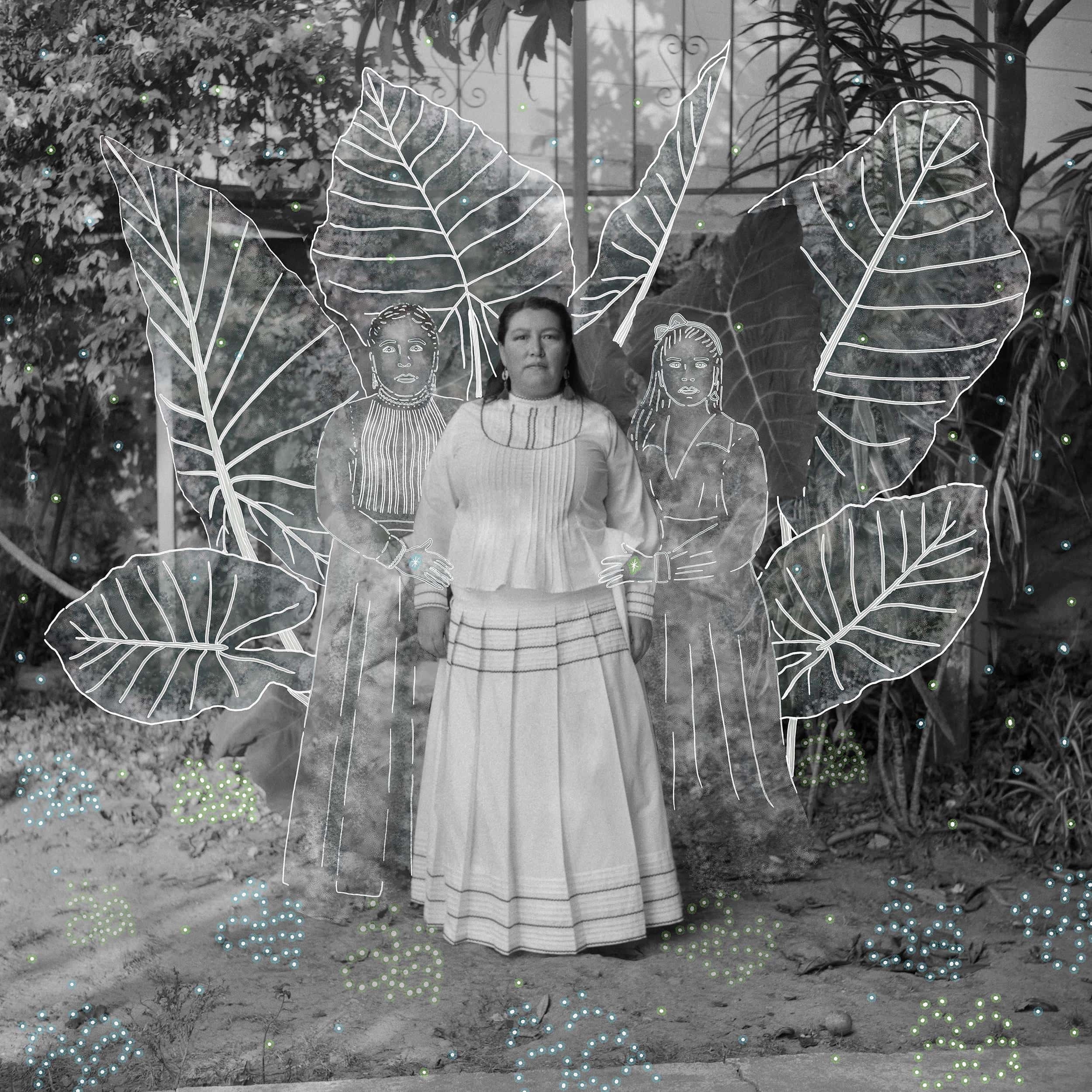
Fabián, 37, a visual artist from a Zapotec Yalalteca community in Oaxaca who now lives in London, won the top professional prize for “Bilha, Stories of My Sisters” — a series that spotlights eight female Indigenous activists and artists by blending portraits with digital illustrations.
This portrait of Yasnaya Elena Aguilar, an Ayuujk linguist, writer and activist who advocates for language diversity, is part of Citlali Fabián’s photographic series “Bilha, Portraits of my Sisters,” which honors Indigenous Oaxaca women who serve as role models. (Citlali Fabián via Sony World Photography Awards)
The images tell the stories of “iconic women from Indigenous communities … whose advocacy work generates meaningful impact across a range of spheres: in law, linguistics, the arts and ecology, among others,” organizers said.
The award was announced last week at a ceremony in London, where the World Photography Organisation unveiled a long list of winners in professional, open, student and youth categories. The gala kicked off an annual exhibition of Sony award winners that will run through May 4 at Somerset House in central London.
Now in its 19th edition, the awards event drew more than 430,000 images from over 200 countries and territories.
Fabián receives US $25,000, Sony digital imaging equipment and a solo showcase at next year’s Sony exhibition. The project also is intended to become a children’s book that presents Indigenous women as community role models.
Fabián’s series also won first place in the creative category, with fellow Mexican Pablo Ramos finishing in second for “The Black Album,” which turns archival images into haunting statements on Mexico’s more than 130,000 missing people.
Iturbide, born in 1942, also received a Sony World Photography Award, a career recognition for Outstanding Contribution to Photography in 2021. Prieto, born in 1976, was shortlisted for a Sony award the same year for “No Border Wall” but didn’t win.
In an official announcement, Fabián said, “It is a massive honor to receive this award for ‘Bilha, Stories of My Sisters,’ a series that is deeply connected to my heart and my people.
“I hope this recognition will help to spread the voice not only about my work, but also about the amazing efforts and work of the women in this project. They are truly inspiring and a force of hope for their communities and beyond.”
Fabián grew up in a Zapotec Yalalteca family in Villa Hidalgo Yalálag, in Oaxaca’s Sierra Norte, where her father ran a film-developing and camera shop, and photography was part of daily life from an early age. She went on to study it at Universidad Veracruzana and later completed an MFA program at Universidad Nacional Autónoma de México (UNAM) in Mexico City.
Recent articles describe her as “currently based in London,” but don’t state when she relocated.
Other Latin American winners include Colombia’s Santiago Mesa (documentary projects category) and Ecuador’s Isadora Romero (environment). American Joel Meyerowitz received a lifetime award for a six-decade career that includes pioneering color street photography and documenting New York’s Ground Zero after the Sept. 11, 2001, attacks.
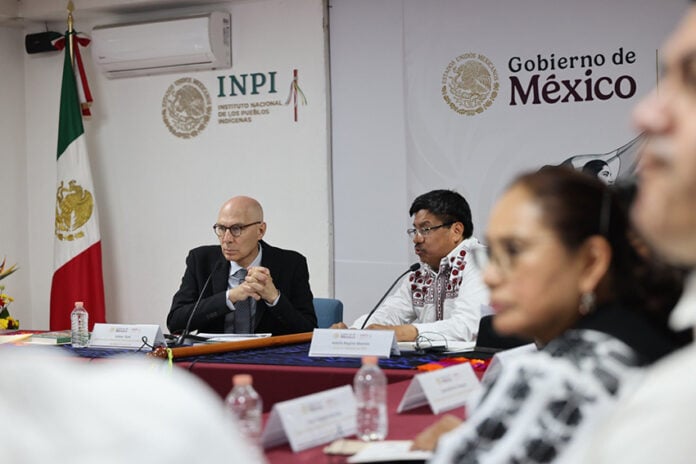
United Nations High Commissioner for Human Rights Volker Türk met with activists, civil society organizations and government organizations during his four-day trip. Pictured: A meeting with Mexico's National Institute of Indigenous Peoples on Monday. (Volker Türk / X)
The United Nations high commissioner for human rights on Wednesday said that “disappearances remain one of the most serious and painful human rights challenges in Mexico” and the Mexican state must strengthen search mechanisms and investigative capacities to “address the crisis.”
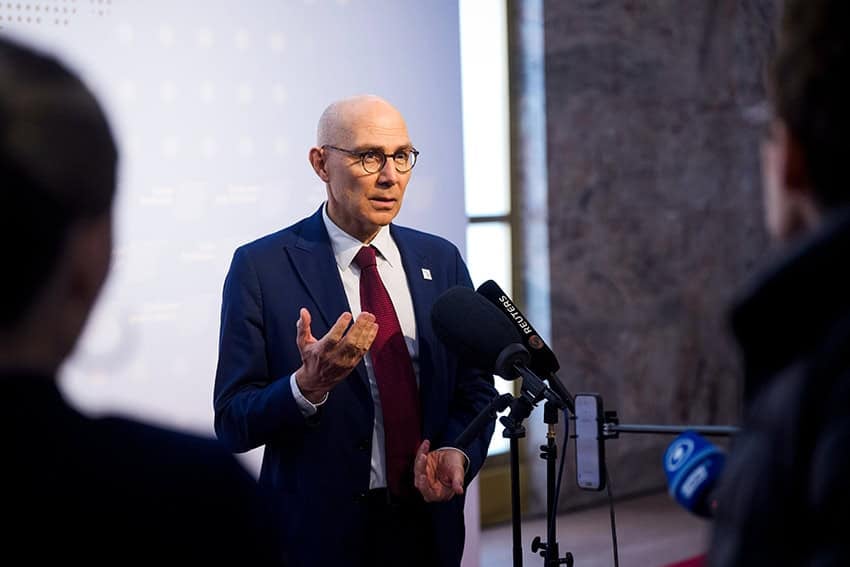
Volker Türk’s remarks came at a press conference in Mexico City at the conclusion of his four-day visit to Mexico, which included meetings with President Claudia Sheinbaum, Interior Minister Rosa Icela Rodríguez, Attorney General Ernestina Godoy, Foreign Affairs Minister Roberto Velasco and Supreme Court Chief Justice Hugo Ortiz.
I’m here in #Mexico on an official visit to meet civil society, authorities, victims of human rights abuses & families of the disappeared, and to discuss human rights challenges at national, regional & global levels. – UN Human Rights Chief @volker_turkpic.twitter.com/mDWZ8gTbtS
Türk’s trip to Mexico came after the U.N. Committee on Enforced Disappearances (CED) published a report earlier this month that asked the U.N. General Assembly to examine the situation of enforced disappearances in the country, concluding that crimes against humanity have been and continue to be committed here. The Mexican government rejected the CED’s report, with Sheinbaum saying that its aim was “essentially to criticize the government of Mexico” rather than present an accurate portrayal of the missing persons problem.
According to the United Nations’ own definition, “an enforced disappearance is considered to be the arrest, detention, abduction or any other form of deprivation of liberty by agents of the State or by persons or groups of persons acting with the authorization, support or acquiescence of the State.”
Sheinbaum asserted earlier this month that enforced disappearances “no longer occur in Mexico.”
Mexico’s disappearances ‘crisis’
In addition to saying that “disappearances” — note the omission of the word “enforced” — “remain one of the most serious and painful human rights challenges in Mexico,” Türk said that such cases “cause unimaginable and prolonged suffering for families.”
“They deeply erode trust between the population and the State, which is responsible for preventing, investigating, prosecuting, and punishing those responsible,” he added.
After noting that he met with the families of disappeared persons in Mexico and expressed his “solidarity and empathy” to him, Türk said that “Mexico has a legal and institutional framework with great potential.”
He noted that Mexico has a General Law on Enforced Disappearance of Persons and a National Search System, but asserted that “it is essential that the State continues to strengthen search mechanisms, forensic identification processes, protection measures, and investigative capacities to address” the missing persons “crisis.”
“The recent adoption of an updated national search protocol represents an important step. Its effective implementation, together with ongoing efforts to strengthen investigative capacities, coordination among institutions, and adequate resources, will be key to achieving meaningful progress in locating the disappeared and combating impunity,” Türk said.
“I recognize the political will to continue strengthening existing institutions,” he said.
“… I have observed a social consensus that disappearances are a tragedy that must be addressed. We need a national commitment that goes beyond political positions or the term of any one government,” Türk said.
“… I conveyed to the Government and all my interlocutors my Office’s readiness to provide technical assistance, support, and follow-up to these efforts.”
Protection of journalists, organized crime and pretrial detention
Türk, an Austrian lawyer who has worked for the U.N. for decades, commented on a range of other topics at his Mexico City press conference. Here is a selection of his most relevant remarks:
On the protection of human rights defenders and journalists, many of whom have been killed in Mexico:
“The Protection Mechanism for Human Rights Defenders and Journalists constitutes a highly relevant model and a reference in the region, particularly due to its governance structure, which actively incorporates civil society. Ensuring timely access for those who need it and strengthening its preventive capacity will enhance its effectiveness. I spoke with the Attorney General of the Republic, and we agreed on the need to increase investigative capacity following attacks against defenders and journalists.”
On insecurity:
“I am fully aware that public security remains one of the most complex challenges facing Mexican society. Organized criminal groups continue to operate in various parts of the country and have a significant impact on the enjoyment of human rights by the population.”
“I recognize … efforts made by the authorities to address violence and strengthen security institutions, within the framework of a complex and decentralized federal system, marked by high levels of corruption and institutional fragility. In this context, it is essential that security strategies continue to move towards strengthening civilian and professional institutions, fully subject to accountability mechanisms.”
“Organized criminal groups continue to operate in various parts of the country and have a significant impact on the enjoyment of human rights by the population,” the UN high commissioner said, while also recognizing official efforts to reduce violence. (Volker Türk / X)
On impunity:
“The issue of impunity has emerged in all my conversations with victims, defenders, and civil society organizations. It is their main demand: an end to impunity, justice for crimes committed, and effective accountability processes that include recognition of the suffering endured, reparation, and guarantees of non-repetition.”
On Mexico’s judicial reform, including the popular election of judges:
“Mexico has undertaken a broad reform of the judicial system that has increased its representativeness. It is essential that the independence of judicial institutions, their integrity, and professional competence be preserved, and that judges have effective safeguards against any undue interference.”
On pretrial detention:
“I am concerned about mandatory pretrial detention due to its impact on the presumption of innocence, personal liberty, and due process. I encourage strengthening judicial oversight, prioritizing alternative measures, and reducing its duration, always ensuring its exceptional nature and a case-by-case assessment.”
On the empowerment of women and ‘the principle of parity’:
“The Ministry of Women is also implementing numerous good practices, as the first ministry exclusively dedicated to mainstreaming gender perspectives across all public policy. Efforts to reach the entire territory, as well as to protect victims and empower all women, were very encouraging.”
“The principle of parity, enshrined in the Constitution and applicable at all levels of government and across all branches of the State, constitutes a significant advance in balancing positions of power and ensuring the full participation of women.”
Sheinbaum touts ‘very good conversation’ with Türk
Although she was highly critical of the CED’s report on disappearances in Mexico, Sheinbaum said she had a positive meeting with Türk.
In a social media post, she noted that she met with the high commissioner for human rights as well as three other U.N. officials on Wednesday.
Recibí a Volker Türk, Alto Comisionado de las Naciones Unidas para los Derechos Humanos; Matthias Behnke, director regional para las Américas de la Oficina del Alto Comisionado; Humberto Henderson, representante en México de la Oficina del Alto Comisionado; y a Allegra Baiocchi,… pic.twitter.com/q9Qv7oek43
— Claudia Sheinbaum Pardo (@Claudiashein) April 23, 2026
“We had a very good conversation and agreed on ways to collaborate. Respect and the promotion of human rights in our country is a common goal,” Sheinbaum wrote.
At her Thursday morning press conference, she said that Mexico had requested collaboration with the U.N. on issues related to Indigenous people, the protection of activists, missing persons and “many other matters related to human rights in Mexico.”
Sheinbaum said that Türk and U.N. representatives in Mexico were willing to “open all these channels of collaboration.”
She stressed that the high commissioner’s visit to Mexico wasn’t solely focused on the issue of disappearances.
“He came to review other issues as well. For example, he went to the National Institute of Indigenous Peoples. He was very surprised about how we carry out consultations with Indigenous people, how we carry out the methodology established by the United Nations,” Sheinbaum said.
She didn’t mention that in 2019, the U.N. found that the consultation on the government’s Maya Train project failed to meet all international human rights standards.
Regarding Türk’s remarks on disappearances in Mexico, Sheinbaum said she agreed with his assessment that the issue is not one of “political debate.”
“It’s an issue of attending to victims and addressing this crime, which, obviously, concerns all of us,” she said.
Sheinbaum has said that “attending to the problem of missing persons” is a “national priority” for her government.
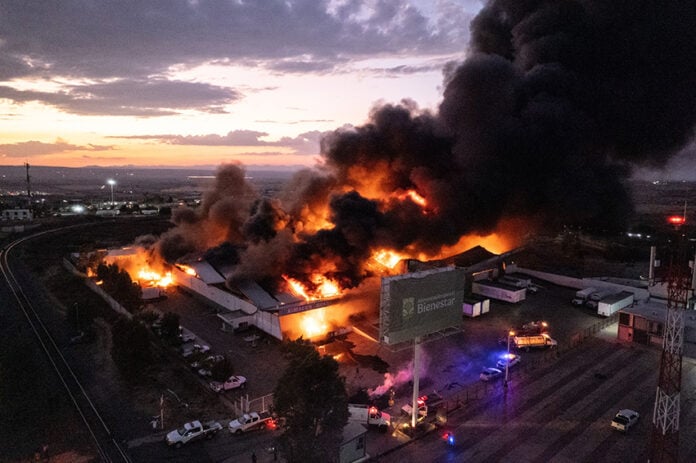
An investigation is underway into whether the fire started by accident or was deliberately set by protesting bean growers gathered outside the warehouse. (Adolfo Vladimir / Cuartoscuro.com)
Federal authorities are blaming protesting bean farmers for a government warehouse fire that destroyed 6 million pesos (US $344,000) worth of food on Tuesday in the state of Zacatecas.
A government welfare warehouse was completely destroyed and an adjacent milk storage warehouse is being inspected for damage.
🧯 🧯 🚒 Un gran incendio se registro en las #bodegas de Alimentación para el #Bienestar (#Segalmex) en #Zacatecas. Se activó durante una protesta de productores de frijol, quienes habían prendido fuego a llantas y gasolina; y el viento lo atizó. Los daños superan los 6 millones… pic.twitter.com/RHzEYxGfaR
Dozens of farmers from across the north-central state had gathered in the state capital to demand that Zacatecas authorities comply with the increased bean quota authorized by the federal government after a March 28 visit by President Claudia Sheinbaum.
The farmers, who have long accused state authorities of corruption, said this week that middlemen, state officials and speculators had filled half of the increased quota, depriving 2,000 small producers of the benefits promised. They demanded a state audit of bean collection centers and submitted a list of 20 people they want investigated.
Agitators among the crowd then began using gasoline drums to set tires on fire around 4 p.m. in an attempt to block access to the warehouse complex until the state government satisfied their demands.
No injuries were reported but the federal government confirmed that the building and produce — primarily groceries used to supply small stores throughout Zacatecas — were lost.
Sheinbaum said the Federal Attorney General’s Office (FGR) has already begun a criminal investigation to determine if the warehouse caught fire accidentally or if the blaze was deliberately set. State authorities are also conducting a criminal investigation.
In a statement, the Agriculture Ministry strongly condemned “these violent acts that affect the poorest segments of the population, damage public property and endanger people’s safety,” while insisting that it “will act firmly and through institutional channels to ensure that these acts do not go unpunished.”
For its part, Alimentación para el Bienestar (Nutrition for Well-being) — a federal government company focused on ensuring food security — blamed “bean producers led by local leaders linked to political actors in the state of Zacatecas” for the blaze. It said it is taking the logistical actions necessary to maintain supply in the subsidized Tiendas Bienestar stores across the state.
President Sheinbaum sought to avoid a conflict with the U.S. on Thursday, saying that that fault for the likely participation of CIA agents in Chihuahua security operations last weekend — a violation of Mexican law — lies with state officials. (Graciela López / Cuartoscuro.com)
On countless occasions, President Claudia Sheinbaum has said that her government cooperates with the Trump administration on security issues, including by exchanging intelligence with U.S. agencies, but will never allow U.S. personnel to participate in law enforcement operations in Mexico as such participation would amount to a violation of Mexican sovereignty.
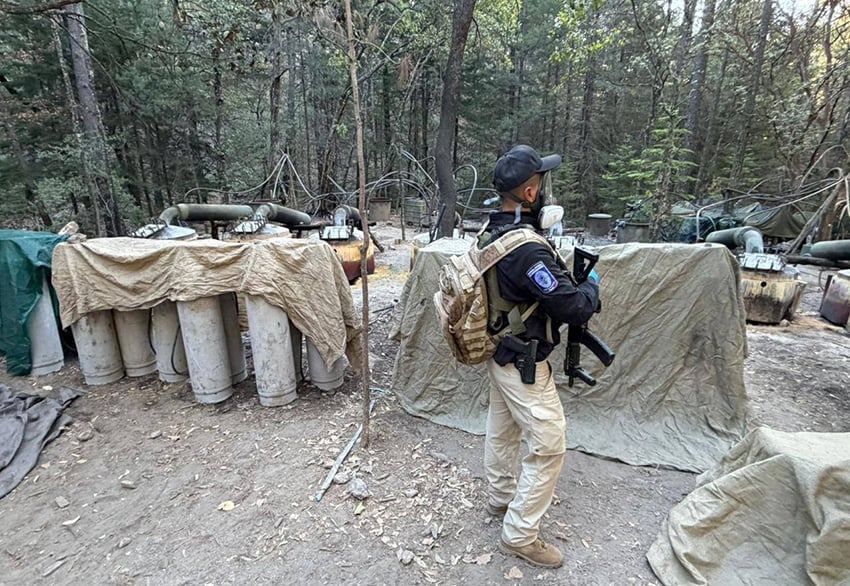
This week, however, she has found herself in the uncomfortable situation of having to accept that officers with the U.S. Central Intelligence Agency (CIA) most likely did participate in a drug lab raid last weekend in the northern state of Chihuahua — without the knowledge or approval of the federal government.
The likely participation of CIA operatives in a drug lab raid in Chihuahua last weekend came to light after a car crash killed four people involved in the operation: two U.S. citizens and two Mexican security officials. (Fiscalía Chihuahua)
According to The Los Angeles Times, the CIA’s participation in the dismantlement of a lab in Chihuahua was not a one-off, raising the serious concern that the government of the northern state — where the opposition National Action Party is in power — and the Trump administration have been acting behind the back of the Mexican government for some time.
On Thursday, Sheinbaum assigned most of the blame for the apparently secret, allegedly illegal security collaboration between Chihuahua and the United States to the Chihuahua government, although she also stressed that U.S. authorities have questions to answer.
Despite her steadfast defense of Mexican sovereignty, the president appears more willing to confront the governor of Chihuahua over the issue than U.S. President Donald Trump, whose administration has the capacity to inflict significant harm on Mexico and the Mexican government, as already evidenced by the imposition of tariffs on various Mexican goods.
LA Times: CIA has participated in at least 3 operations in Chihuahua this year
Citing “sources familiar with the operation,” The Los Angeles Times reported on Wednesday that four CIA agents participated in the raid of a clandestine drug lab in Chihuahua last weekend. Two of those agents were killed early Sunday when the vehicle they were traveling in veered off the road and plunged into a ravine. Two Mexican security officials also died in the accident.
Citing its unnamed sources, The L.A. Times wrote that the raid last weekend was “at least the third time this year that CIA operatives joined authorities in the northern border state of Chihuahua in an operation against a drug target.”
The Times also wrote that “the [CIA] agents in Sunday’s raid were dressed in Chihuahua State Investigative Agency uniforms to blend in with Mexican officials, said people familiar with the operation, who spoke on condition of anonymity to discuss internal matters.”
The newspaper noted that “U.S. agencies, including the CIA, regularly provide intelligence for Mexican police and the military, but participation in law enforcement operations by foreign agents is outlawed by the Mexican Constitution.”
The L.A. Times, again citing its sources, also said that “the involvement of the CIA” in operations in Chihuahua “reflects the Trump administration’s increasing demands for results in the fight against cartels on Mexican soil.”
Sheinbaum takes aim at Chihuahua for allegedly requesting collaboration with US
At her Thursday morning press conference, Sheinbaum rejected a suggestion that the CIA’s involvement in last weekend’s operation in Chihuahua amounted to a “non-conventional” invasion of Mexico by the United States.
“What there was here was an offense of a state authority,” she said, referring to the government of Chihuahua.
“That’s what this is really about,” Sheinbaum said.
#Nacional | México.- El secretario de Seguridad, Gilberto Loya Chávez, respaldó la postura de la presidenta Claudia Sheinbaum, señalando que la coordinación en materia de seguridad entre México y Estados Unidos debe existir, pero sin intervención directa. pic.twitter.com/DAfQ7G0Q1f
— El Canal de las Noticias Digital – CUU (@Canal44CUU) March 10, 2026
She said that either the Chihuahua government or the Chihuahua Attorney General’s Office requested security collaboration with U.S. authorities, citing remarks from officials in the northern border state as evidence.
“The attorney general of the state of Chihuahua has said it. The offense of requesting collaboration [with the U.S.] is theirs,” she said.
“Of course the government of the United States, the ambassador, should have informed federal authorities,” Sheinbaum added.
“But the main failure lies with the state government, which requested this collaboration. And that’s against the Constitution and the National Security Law,” she said.
Sheinbaum said she tried to contact Chihuahua Governor Maru Campos on Wednesday but was unable to reach her. She said that Security Minister Omar García Harfuch would speak with the governor on Thursday.
The president noted that the Senate has summoned Campos and Chihuahua Attorney General César Jáuregui Moreno, and declared that it is “important that they explain under what conditions this collaboration occurred.” Jáuregui has claimed that U.S. personnel didn’t participate in the drug lab operation last weekend, asserting that the apparent CIA officers were in fact “instructors from the U.S. Embassy” who were giving a course on drone operation in Chihuahua.
Sheinbaum said that a claim from Campos that the federal Ministry of National Defense was aware of the involvement of U.S. personnel in an operation in Chihuahua is “false.”
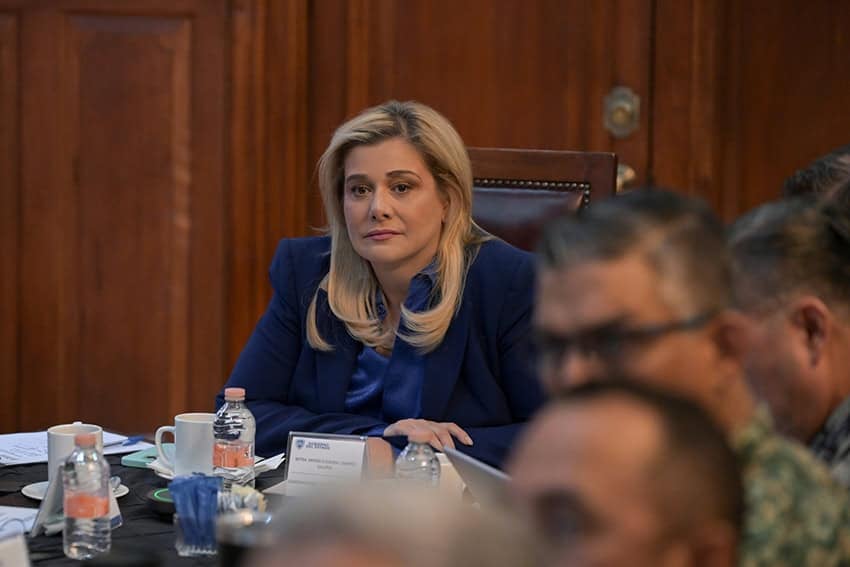
President Sheinbaum was unable to reach Chihuahua Gov. Maru Campos, who along with Chihuahua Attorney General César Jáuregui Moreno has been summoned to testify before the Mexican Senate. (Maru Campos / Facebook)
She said that while the Army participated in the drug lab raid in Chihuahua on the weekend, “that doesn’t mean that the Defense Ministry or the commander of the area or region knew that there was a presence of U.S. citizens in operations or in training.”
Sheinbaum also said she had asked the National Public Security Council to send a statement to the leaders of Mexico’s 32 federal entities reminding them of the applicable laws “for security collaboration with any government in the world and in particular with the U.S. government.”
She has stressed on repeated occasions this week that any security collaboration with a foreign government must be authorized by federal authorities.
On Wednesday morning, Sheinbaum noted, once again, that the Ministry of Foreign Affairs wrote to U.S. Ambassador Ron Johnson to seek information about the United States’ security collaboration with the state of Chihuahua.
Caught between a rock and a hard place
Sheinbaum said on Tuesday that if a Federal Attorney General’s Office investigation confirms there was a joint operation between the United States and Chihuahua, her administration will send a protest note to the U.S. government and request that such collaboration cease.
On Thursday, she said that her administration doesn’t want to “escalate a problem with the U.S. government, but nor can we ignore our Constitution and our laws and compliance with them.”
“That is the work of the president,” Sheinbaum said.
“… Complying with the law is not optional,” she said.
Given that she has been an ardent defender of Mexican sovereignty, and very clear in her view that U.S. participation in security operations in Mexico would be a violation of that sovereignty, Sheinbaum would open herself up to criticism if her government doesn’t respond firmly to the U.S. government’s apparent willingness to violate Mexican laws. However, a central consideration for the president is no doubt a desire to not antagonize — or at least overly anger — Trump and his administration just ahead of the review of the USMCA trade pact.
Asked specifically whether the United States “violation of national sovereignty” and breach of Mexico’s National Security Law would “complicate” the bilateral relationship, Sheinbaum said there is no reason it should. However, she didn’t deny that such violations had occurred.
What the president did say is “we don’t want to create a conflict with the United States.”
If we’re working well, if we’re making progress, what we want is for the [bilateral security] understanding to be complied with,” she said.
Sheinbaum frequently points out that said understanding is based on various principles, including respect for sovereignty and territorial integrity.
On Wednesday, she reiterated her view that “sovereignty is inviolable.”
Conflicting opinions
While Sheinbaum has concluded that U.S. personnel did participate in the drug lab raid in Chihuahua last weekend, García Harfuch, the federal security minister, asserted on Wednesday that U.S. agencies have “never” participated alongside federal forces in a security operation in Mexico.
“We have constant exchange of information with U.S. agencies, including that which you mention [the CIA],” García Harfuch told a reporter at a press conference.
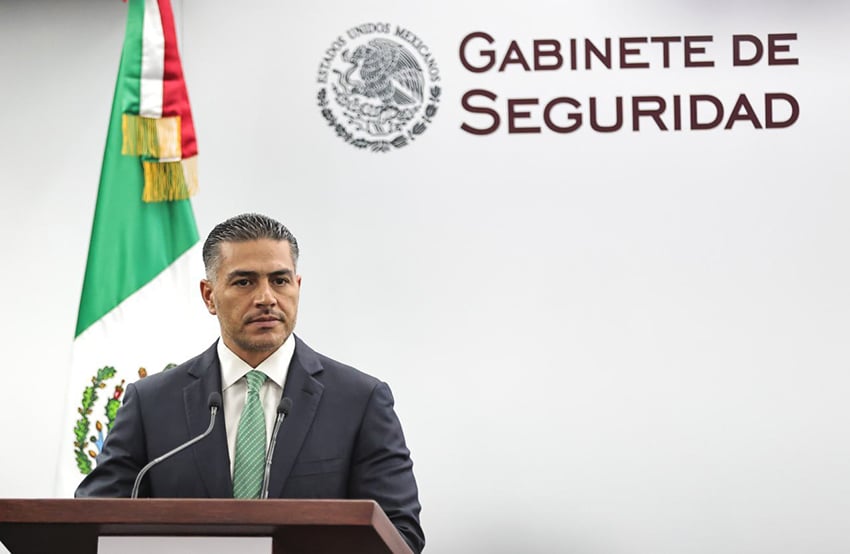
Security Minister Omar García Harfuch insisted as recently as Wednesday that U.S. agencies never participated in the field action of federal security operations. (Mexican Security Cabinet)
“… But it is very important to mention that … while there is there is exchange of information with U.S. agencies, they have never participated in any field action of the federal security cabinet,” he said.
“What we’re aware of is what the Chihuahua attorney general has said, … that [U.S. personnel] hadn’t participated in an operation,” García Harfuch said.
“I understand now that the Ministry of Foreign Affairs has closer communication with the [U.S.] Embassy in order to get more details about what happened,” he added.
Even though CIA officers dressed in Chihuahua State Investigative Agency uniforms allegedly participated in last weekend’s drug lab raid alongside Mexican soldiers, García Harfuch declared that “none” of the operations carried out by federal security forces has had the physical participation of a foreign individual.”
“First of all because the law doesn’t allow it,” he said.
By Mexico News Daily chief staff writer Peter Davies (peter.davies@mexiconewsdaily.com)