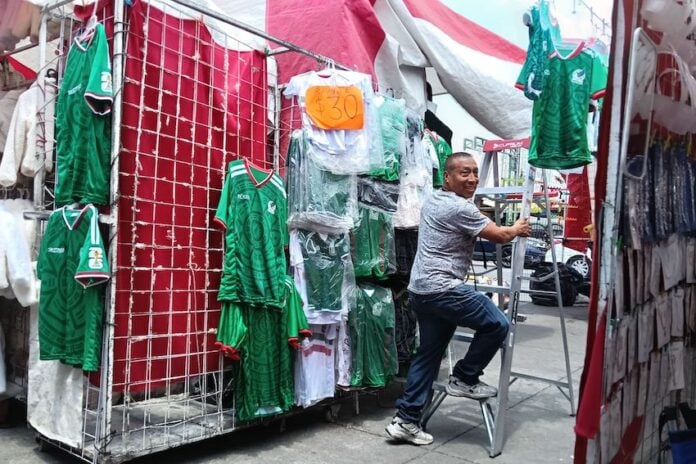
The economic benefits from the World Cup can be direct, indirect or induced, but overall they will total as much as US $2.73 billion or more, according to the global consulting firm Deloitte. (Edgar Negrete Lira/Cuartoscuro.com)
Mexico’s much-anticipated economic windfall from hosting the FIFA 2026 World Cup could be as much as US $2.73 billion in added value across the country, according to a February report from the consulting firm Deloitte.
Such an economic contribution would be the equivalent of around 0.14% of Mexico’s GDP, according to Deloitte Spanish Latin America’s Chief Economist Daniel Zaga. The World Cup is also expected to create 92,700 temporary jobs countrywide, which equates to around 0.19% of Mexico’s total employment.
Restaurants, bars and clubs that can offer patrons World Cup games on TV are indirect recipients of the event´s economic benefits. (Unsplash)
The positive economic effects in Mexico will mostly go to the three World Cup host cities, with Mexico City expected to enjoy an economic boost of $847 million, as well as the generation of 33,280 jobs. Jalisco will get $385 million in revenue and 15,100 jobs, and Nuevo León $350 million and 13,870 jobs.
However, the rest of the country will likely share in the spillover effects, as friends, family and international visitors gather in bars, restaurants and fan fests to watch the sports event, particularly in tourist destinations. The World Cup is expected to have an economic impact of around $668 million in non-host states and support the creation of 31,200 jobs.
In Mexico’s western Jalisco state, where four World Cup matches will be played in Guadalajara, the sports event is expected to add 0.37 percentage points to the state’s projected economic growth for 2026, according to the managing partner of the Guadalajara Cluster at Deloitte Spanish Latin America, Javier Kuan.
The direct economic impact of the World Cup in Jalisco is expected to amount to 4 billion pesos (US $229 million), with an indirect economic impact of 1.6 billion pesos ($91.6 million).
“The direct impact is the direct investment in infrastructure; the indirect impact is that generated by the commercial chain; and the induced impact is that generated through events and investments, both now and in the future,” Kuan said.
Sectors such as food and hospitality, as well as urban mobility, are expected to see the greatest economic return from the event, followed by the retail and entertainment sectors.
The Deloitte report suggests that long-term planning, facilitating the visitor experience around the event and preparing for higher levels of consumer demand could help drive even better economic results for Mexico.
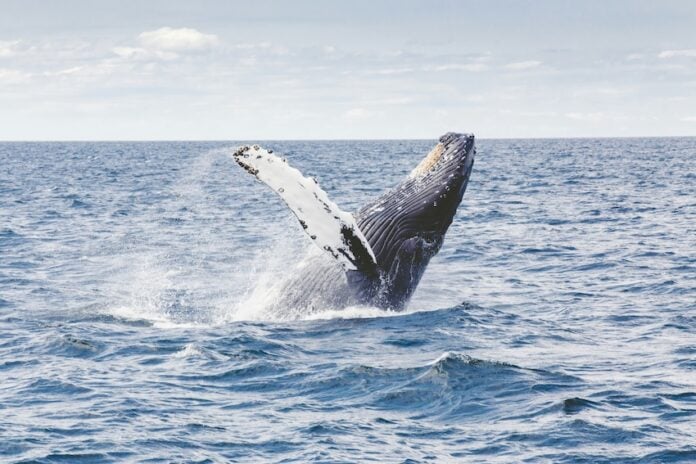
An objective of the whales' legal team is to establish a legal principle, based on the Mexican Constitution. and Mexican law, as well as international treaties, that whales have an inalienable right to a safe and liveable habitat. (Unsplash)
A federal judge in the northern state of Sonora has blocked mega-ship traffic in the Gulf of California tied to a planned liquefied natural gas (LNG) export terminal, giving whales at the center of a novel legal case a major — if temporary — victory.
Collisions with oversized tankers, such as those that would carry LNG across the Gulf of California, are a major cause of whale deaths, according to the whales’ legal staff. (Chris Pagan/Unsplash)
The suit cited Mexico’s General Wildlife Law, the Mexican Constitution and international treaties in seeking to have the area declared a “critical habitat.”
On Tuesday, the judge approved an amparo (a type of constitutional injunction) granting a suspension that blocks tankers over 300 meters long — and linked to the planned Saguaro LNG export terminal at Puerto Libertad, Sonora — from transiting the Gulf of California until a final judgment in the case is issued.
Since the plant hasn’t been built yet and there is no liquefied gas being shipped from it, the ruling — a definitive suspension that replaces a weaker provisional injunction from 2024 — is about halting future Saguaro-related ships, not stopping any current traffic.
“The whales sued and today they are winning,” lawyer Nora Cabrera Velasco proclaimed in the digital news outlet Expansión.
She is the co-founder and director of Nuestro Futuro, a Mexican youth-led environmental and climate-justice organization that has led the lawsuit on behalf of the whales and all marine mammals that inhabit, transit or reproduce in the Gulf of California.
“The number one cause of whale deaths worldwide is collisions with LNG mega-tankers,” marine mammal specialist Omar García said in the digital news outlet Infobae, adding that crews often “don’t even feel” an impact.
The LNG export terminal — planned by the private energy company Mexico Pacific — would receive natural gas piped from the United States to Puerto Libertad, liquefy it and then ship it to Asian markets. The 800-kilometer pipeline would begin in the oil-rich Permian Basin in Texas.
Media coverage has cited the cost of the project, which would be Mexico’s largest LNG terminal, at roughly US $15 billion.
Planning documents indicate it would initially be capable of exporting more than 15 million tonnes of U.S. gas a year to Asia via the gulf, sometimes called the “Aquarium of the World.” The body of water is also known as the Sea of Cortés.
In arguing for the cancellation of the proposed plant, activists, environmental groups and scientists have warned that ship strikes and noise from large vessels are a leading cause of whale deaths and can disrupt communication and migration in a region that hosts dozens of cetacean species.
Though the location and investment amount are unknown, and preliminary operations are still months away, GAC will be the first Chinese automaker to manufacture vehicles in Mexico. (Shutterstock)
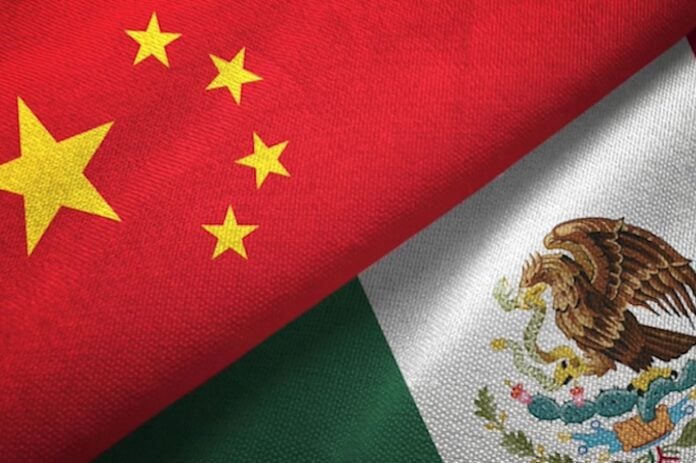
GAC will be the first Chinese automaker to start assembly operations in Mexico, as it seeks to circumvent the 50% tariff on Chinese cars while expanding its global presence.
In announcing its plans to build cars in Mexico, the company failed to reveal where in Mexico the manufacturing will take place, or what the investment amount will be. It did say that operations are expected to begin in the second half of this year with the capability of assembling sedans, pickup trucks, SUVs and crossovers.
GAC showrooms are scattered over far-flung sites in the world as the Chinese automaker continues its expansion program. (GAC)
The production program will be flexible, according to the GAC announcement, meaning it can include combustion engines, electric vehicles and hybrids.
Chinese automobiles are a familiar option in the Mexican market but none are manufactured in the country, although some Chinese manufacturers have expressed interest in doing so, including BYD and Greeley.
Increasing the incentive to assemble in this country, Mexico early this year imposed tariffs ranging from 5% to 50% on 1,463 tariff classifications from countries without free trade agreements, with Chinese cars facing the highest rate of 50%. By producing in Mexican territory, the brand will avoid that 50% tariff and reposition itself within the United States-Mexico-Canada agreement, provided it complies with regional rules of origin, a key factor in the face of stricter audits of Chinese inputs.
“This announcement not only marks the beginning of a new operational phase; it also reinforces a broader growth vision in the region,” GAC said in a statement. “This transaction strengthens the company’s structure in Latin America and lays the foundation for future development of production capabilities, research and commercial expansion.”
The company, which started commercial operations in Mexico in the last quarter of 2024, added that the move aims “to meet the demand of the national market, aligned with a long-term, sustained growth strategy.”
Though it has been mum on potential sites, GAC has presumably considered adding its name to the list of manufacturers interested in taking over the shuttered automotive plants in Morelos and Aguascalientes: the Civac factories by Nissan and Compass by Nissan-Mercedes Benz.
China's exports to the U.S. were worth $40.01 billion in January and February, down 45.4% from the same period of last year. (luzmadelamora/X)
Mexico’s share of the U.S. market for imported goods increased by more than three percentage points in the first two months of 2026, allowing it to consolidate its position as the United States’ top trade partner.
U.S. Census Bureau data shows that Mexico’s exports to the United States were worth US $86.82 billion in January and February, a 4.2% annual increase.
Mexico’s share of the $514.14 billion U.S. market for imports in the first two months of 2026 was 16.9%, up from 13.8% in the same period of 2025. Around 80% of Mexico’s total export revenue comes from goods shipped to the United States.
The United States’ total outlay on imports declined 15% annually to $514.14 billion in January and February.
Mexico’s gain is China and Canada’s loss
The increase Mexico recorded in its exports to the United States in the first two months of the year, and in its share of the U.S. market for imports, stands in contrast to the performance of Canada and China, which are the second and third largest trade partners of the world’s largest economy.
Canada’s exports to the U.S. were worth $57.5 billion in January and February, down 21.5% from the same period of 2025. Canada’s share of the U.S. market for imports declined to 11.2% in early 2026 from 12.1% a year earlier.
China’s exports to the U.S. were worth $40.01 billion in January and February, down 45.4% from the same period of last year. China’s share of the U.S. market for imports declined to 6.6% in the first two months of 2026 from 12.1% a year earlier.
The data indicates that Mexico has benefited from an escalation of the U.S.-China trade war during U.S. President Donald Trump’s second term, as well as increased U.S. protectionism against Canada. Trump has also imposed tariffs on Mexican goods since returning to the White House in January 2025, but overall U.S. protectionism against Canada is even greater.
Despite U.S. tariffs on Mexican products, including vehicles, steel and aluminum, Mexico retains largely favorable trading conditions with the United States thanks to the USMCA free trade pact.
Mexico remains the top US trade partner
U.S. Census Bureau data shows that Mexico imported U.S. goods worth $60.49 billion in January and February, an annual increase of 10.6%. While Mexico’s outlay on U.S. goods increased, its share of the total market for U.S. exports actually decreased, falling to 15.9% from 16.5% a year earlier.
Two-way trade between the United States and Mexico was worth $147.32 billion in January and February, up 6.8% from the same period of 2025. The United States’ trade with all countries around the world declined 4.5% in the period.
The United States’ trade with Mexico in the first two months of 2026 accounted for 16.4% of its total trade with all countries, which came to $895.58 billion.
That percentage — a record high — increased from 14.7% in the same period of last year. Thus Mexico consolidated itself as the United States’ top trading partner, a position it has maintained in recent years.
Two-way trade between the United States and Canada was worth $110.33 billion in January and February, a 14.4% annual decrease.
The United States trade with Canada in the first two months of 2026 accounted for 12.3% of its total trade. That percentage declined from 13.7% in early 2025. The value of the United States’ exports to Canada fell 5% annually to $52.83 billion in January and February.
Two-way trade between the United States and China was worth $56.29 billion in the first two months of 2026, an annual decrease of 39.9%. The El Economista newspaper reported that the amount was the lowest U.S.-China two-way trade figure for the first two months of any year since 2009.
The United States trade with China in January and February accounted for 6.3% of its total trade. That percentage fell from 10% in the first two months of last year. The value of the United States’ exports to China declined 20.1% annually to $16.27 billion in the first two months of 2026.
While the United States’ trade with China decreased significantly in January and February, its trade with Taiwan increased in a major way. U.S.-Taiwan trade was worth $51.81 billion in the first two months of the year, an annual increase of 80.4%. Taiwan was thus the United States’ fourth-largest trade partner in the period. The United States’ imports from Taiwan increased 97% annually to $42.81 billion in the period.
The bottom line
Mexico is clearly benefiting from the United States’ reduction in trade with China, but so too are various Asian countries — and to a greater extent in some cases, as the data for U.S. trade with Taiwan demonstrates. The almost 100% increase in the United States’ outlay on imports from Taiwan reflects both its shift away from trade with China and high demand in the U.S. for Taiwanese goods, especially semiconductors, which are critical inputs for U.S. AI companies.
The United States’ imports from some other Asian countries have also increased amid the U.S.-China trade war. In the first two months of 2026, the U.S. spent $35.32 billion on imports from Vietnam, an annual increase of 41.8%, and $23.05 billion on South Korean goods, up 17.1% from a year earlier.
The publication of the latest U.S. trade data last Thursday came two weeks after Mexican and U.S. officials began formal talks as part of this year’s USMCA review process. One of Trump’s complaints about the United States’ trade relationship with Mexico is that the U.S. has a large trade deficit. On that front, there was some modestly good news for the U.S. president in the latest data. Mexico’s surplus with the U.S. in January and February was $26.33 billion, down 8% from the same period last year.
By Mexico News Daily chief staff writer Peter Davies (peter.davies@mexiconewsdaily.com)
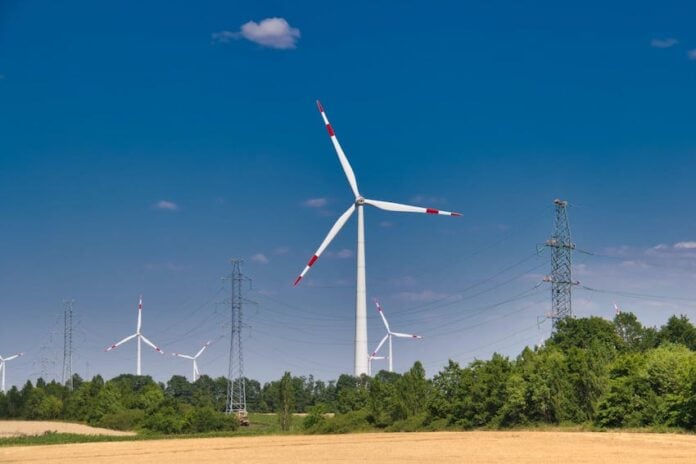
Mexico’s Federal Electricity Commission (CFE) will support the development of the 130-MW EL24 Wind Project in Tamaulipas, following its approval of the final interconnection agreement, Vancouver-based clean energy developer Revolve Renewable Power announced on Tuesday.
The new agreement outlines the technical and commercial terms required for El24 to connect and deliver power to Mexico’s national electricity grid.
Revolve is at the mid to advanced stage on two wind energy projects in Mexico’s northeast: EL24 and the 400-MW Presa Nueva project in Nuevo León, and also has plans to develop the 400-MW Florida Wind and the 330-MW El Mentillo projects in Nuevo León.
Revolve was also granted its first environmental permit by Mexico’s Environment and Natural Resources Ministry (Semarnat), and has received a final generation permit from Mexico’s energy regulator CNE. El24 was one of only five wind projects in Mexico to receive a generation permit from CNE.
“Securing the interconnection agreement de-risks the project significantly, confirms our grid access rights, and puts EL24 firmly on the path to ready-to-build status,” said Revolve’s CEO Myke Clark.
The firm will now work to complete final engineering and turbine optimisation, while also assessing construction financing, strategic partnerships and funding opportunities.
Revolve is developing a 2.8 MW portfolio of distributed-generation solar projects — thought to be worth around US $2.7 million — to be funded by the company. El24 is expected to achieve a ready-to-build status in late 2026 and be operational by 2028.
Mexico’s renewables rebound
Under former Mexican President Andrés Manuel López Obrador, the deployment of renewable energy in Mexico stalled between 2018 and 2024 as the government focused on the nationalization of energy and the development of the country’s oil industry.
However, since President Claudia Sheinbaum took office in October 2024, the government has supported the accelerated deployment of wind farms, solar plants and battery storage.
In October last year, Mexico’s Energy Ministry (Sener) launched a call aimed at attracting around US $7 billion (124.2 billion pesos) in private sector investment in wind and solar farms across the country.
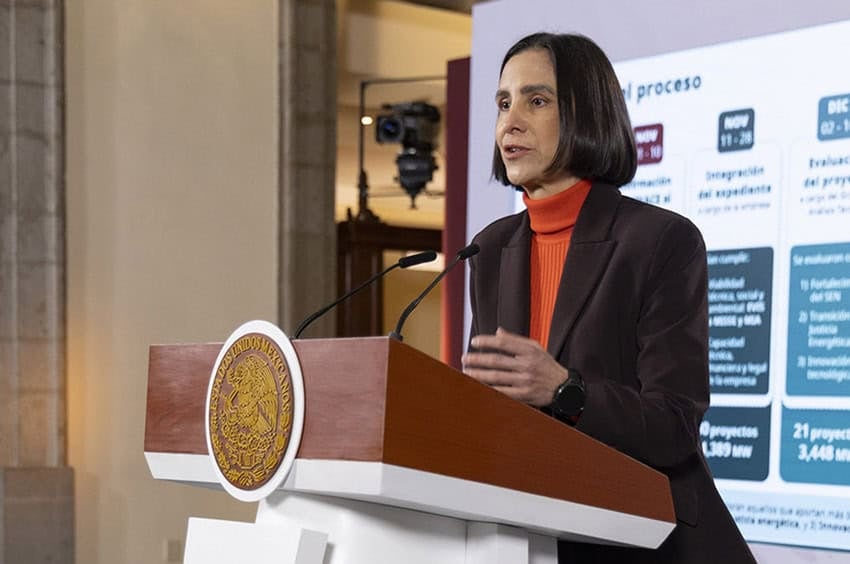
In December 2025, Energy Minister Luz Elena González announced plans for 20 new solar plants and wind farms, two of which are in Tamaulipas. (Juan Carlos Buenrostro / Presidencia)
Two projects were approved in Tamaulipas — El 24 and a 110-MW photovoltaic park based in the city of Altamira, managed by Solarig México.
“With these actions, Tamaulipas is solidifying its position as a national leader in reliable electricity generation,” the Tamaulipas government said in a December press statement.
The Sheinbaum government is delivering on its promises, which “gives everyone greater confidence in the market’s direction,” Revolve’s Executive Chairman Steve Dalton said in a September interview with the newspaper BNamericas.
“I’m more optimistic, as are the other developers I speak with,” Dalton added.
“If we look at the government’s energy plan, its goal is to generate approximately 1 GW per year with private energy. Even with the auction system, before López Obrador, the sector only generated around 1.5 GW. Sheinbaum’s government wants to return to a similar rate to what it had before.”
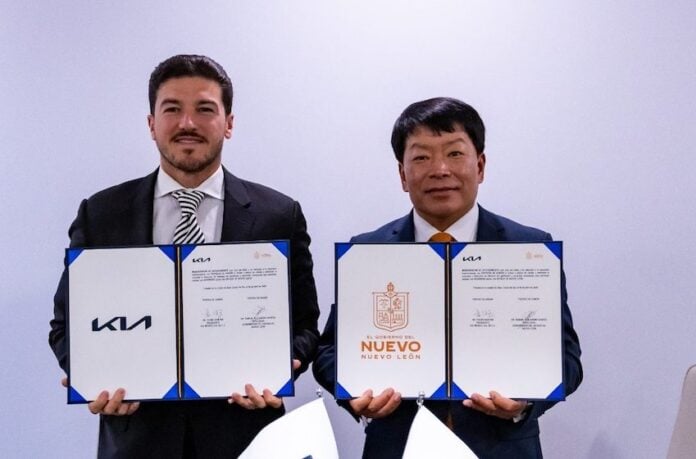
The investment will support new vehicle production lines, a solar park, a water treatment plant and additional sustainability projects. (Gobierno de Nuevo León)
The announcement came during a working visit to South Korea by Nuevo León Governor Samuel García, who met with Young Sam Kim, Executive Director of Kia Mexico. The investment will support new vehicle production lines, a solar park, a water treatment plant and additional sustainability projects.
Kia’s plant in Pesquería has been a cornerstone of its North American manufacturing strategy since it opened in 2016. The new funding would accelerate its pivot toward electric mobility, an area where automakers are under increasing pressure to demonstrate progress.
“Kia has been in Nuevo León for 10 years. If we add up the last 10 years, Kia has invested a total of US $3 billion,” Governor García said in a video message. “Another 600 million will be reflected in very good jobs, and very good cars.”
The investment is projected to generate at least 300 direct jobs in its initial phase, adding to the formal employment base that has made Nuevo León one of Mexico’s most dynamic industrial economies.
LLEGAMOS A COREA CON UN NOTICIÓN: KIA INVERTIRÁ 600 MILLONES DE DÓLARES EN NUEVO LEÓN ESTE AÑO
Arrancamos nuestro primer día de trabajo en Corea del Sur, donde mis compadres de @Kia_Worldwide y sus empresas afiliadas nos confirmaron esta nueva inversión destinada a impulsar… pic.twitter.com/CVTLuMSKoz
The deal reflects a broader push by the García administration to attract high-value foreign investment to the border state. The Kia announcement came on the heels of the governor’s Asia tour, which included meetings with Panasonic, Mitsubishi, Nissan and Yazaki in Japan. The governor also took the opportunity to hype up Monterrey as the best 2026 FIFA World Cup host city.
For Kia, the expansion deepens a relationship with a state that already hosts one of the company’s key North American manufacturing facilities, and signals confidence in Mexico’s long-term role in the global electric vehicle supply chain.
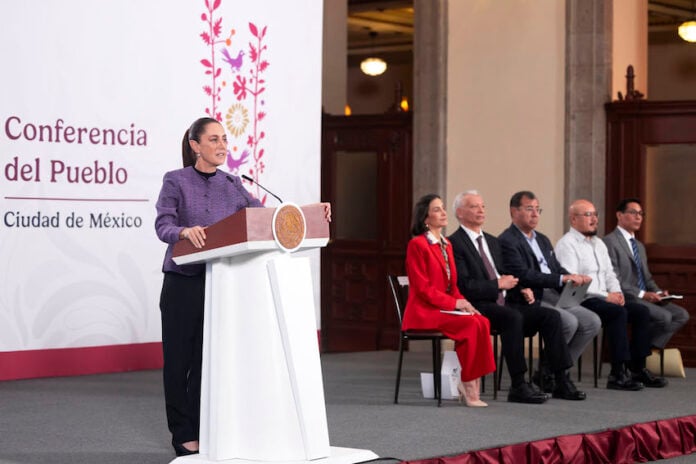
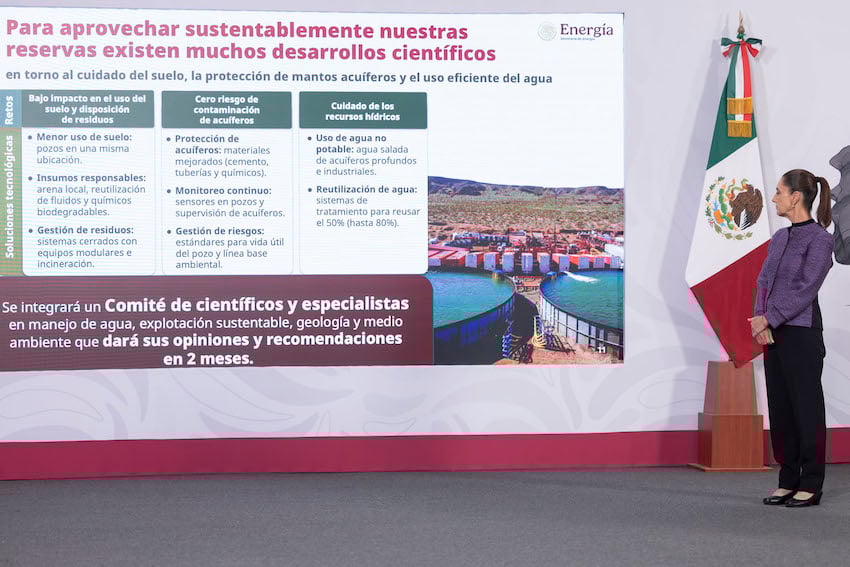
Sheinbaum also spoke on Wednesday about the possibility of "sustainable" fracking in Mexico. (Juan Carlos Buenrostro/Presidencia)
Sheinbaum’s mañanera in 60 seconds
🕊️ Iran-US ceasefire welcomed: Sheinbaum called the two-week ceasefire deal between Washington and Tehran “good for the country,” citing falling oil prices as a direct benefit.
⛏️ Miner found alive: Sheinbaum acknowledged that a second survivor was located 13 days after a tailings dam collapse at Sinaloa’s Santa Fe mine: 42-year-old Francisco Zapata Nájera is alive but still trapped underground. Rescuers are pumping out water and hope to extract him today.
⛽ Sheinbaum eyes sustainable fracking: The president reiterated openness to a “sustainable” form of the gas and oil extraction technique, saying saltwater and organic substances could replace the toxic chemicals traditionally used.
Why today’s mañanera matters
President Claudia Sheinbaum used her opening remarks to comment on the most significant global development of the last 24 hours — the ceasefire deal between the United States and Iran.
Today’s mañanera was also important as Sheinbaum once again spoke about the possibility of “sustainable” fracking taking place in Mexico. The president is determined to make progress toward the goal of making Mexico self-sufficient for energy, although she acknowledged that the reliance on natural gas imports from the United States will continue for the foreseeable future.
Sheinbaum: Iran-US ceasefire is ‘good’ for Mexico
At the start of her mañanera, Sheinbaum acknowledged that the United States and Iran reached a two-week ceasefire deal.
“I think the whole world recognizes these two weeks [of ceasefire] between Iran and the United States that was agreed to yesterday. It’s also good for the country because oil prices have come down,” she said.
“… I think the whole world at this time is seeking peace in Iran and the Middle East and the whole world,” Sheinbaum added.
‘Incredible news’: Sheinbaum celebrates location of trapped miner
Sheinbaum acknowledged that a second miner had been found alive 13 days after a collapse occurred at the Santa Fe silver and gold mine in the Sinaloa municipality of El Rosario. She noted that a deceased miner was also found on Tuesday.
Sheinbaum described the location of the surviving miner — who has not yet been rescued — as “incredible news.”
“He’s still in the mine, but he was found alive,” Sheinbaum said before noting that four miners were trapped when a tailings dam collapsed at the mine on March 25. One of the miners was pulled to safety on March 29, while one other has still not been located.
Sheinbaum noted that divers entered a part of the mine “where there was a lot of water” on Tuesday and succeeded in locating a surviving miner, identified as 42-year-old Francisco Zapata Nájera.
Authorities are now waiting for water to be pumped out of the mine in order to remove the miner, she said, adding that it was hoped that the rescue would occur today.
Sheinbaum reiterates openness to ‘sustainable’ fracking
After expressing her opposition to traditional fracking due to environmental and water use concerns, Sheinbaum reiterated her openness to allowing a “sustainable” form of the gas and oil extraction technique.
“If we’re going to do non-conventional gas exploitation, it has to be done in a sustainable way,” she said, adding that environmental impacts would need to be reduced to the fullest extent possible.
Sheinbaum said that it is now possible to substitute “powerful chemicals” commonly used in fracking with other “substances” that don’t have a negative environmental impact. “Many of them are organic,” she added.
She also said that saltwater, rather than potable water, can be used in a more sustainable form of fracking.
Sheinbaum said that a “committee of scientists” has been formed to assess whether sustainable fracking is feasible in Mexico.
Sheinbaum said that it is now possible to substitute “powerful chemicals” commonly used in fracking with other “substances” that don’t have a negative environmental impact, such as saltwater. (Juan Carlos Buenrostro/Presidencia)
“We’re going to present this committee of scientists next Wednesday,” she said, adding that if they determine that sustainable fracking is indeed feasible, they will explain exactly how it will be done and how much it will cost.
Sheinbaum said that the “sovereignty” of Mexico, “the development of the country” and its “environmental future” will be central considerations in any decision her government makes about fracking. She also said that the commencement of sustainable fracking in Mexico — if approved — would likely take 10 to 15 years.
“Will [Mexico’s] importation of gas end? No, it will be difficult, because we’re importing a lot,” the president said.
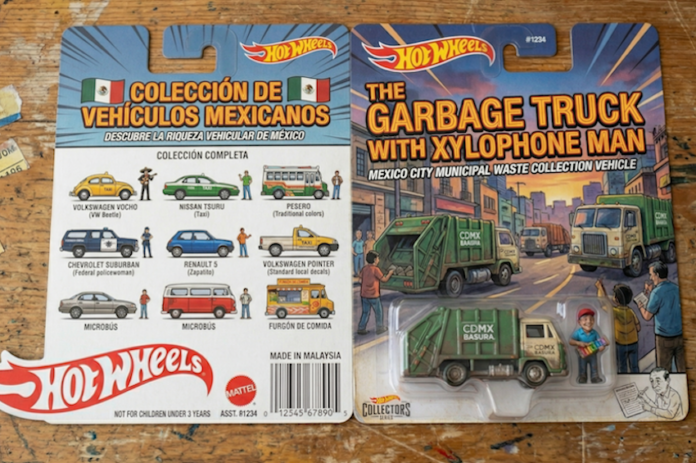
EL SEGUNDO, CALIFORNIA — Mattel confirmed Thursday that its Hot Wheels Mexico Heritage Collection will expand beyond the iconic Nissan Tsuru taxi following the toy’s viral success, announcing a full line of die-cast vehicles described by the company as “a love letter to Mexican automotive culture” and by Mexicans as “finally, yes, obviously, what took you so long.”
The Garbage Truck with Xylophone Man — A 1:64 scale replica of Mexico City’s municipal waste collection vehicle, complete with a miniature figure hanging off the back playing a hand-held xylophone to alert residents. The xylophone does not play. Collectors have already filed complaints. The figure’s expression, frozen in the specific joy of a man who has fully committed to his xylophone-based professional identity, is described in the product notes as “authentic.”
Somehow, the production process for this toy was even less environmentally friendly than the actual microbus it was based on.
The Microbus, Ruta 52 — A heavily customised Volkswagen-style microbus with hand-painted route numbers, a St. Jude Thaddeus figurine glued to the dashboard, fringe along the windshield, and a door that the packaging notes “opens only from the outside, as is traditional.” Comes with four more passengers than the vehicle was designed to hold. The driver figure has one arm out of the window. His expression suggests he has not slept.
The Combi Food Truck — A Volkswagen Type 2 van converted into a taco stand, deployed at 11 p.m. on a residential street with no explanation. Accessories include: a folding table, a gas canister of ambiguous vintage, and a handwritten sign with three items crossed out. The remaining item is available. Limit two per customer.
The Tsuru, Intercity Edition — A companion piece to the original CDMX taxi, this variant features cracked tail lights, a missing wing mirror, 340,000 kilometres on the odometer, and a pine tree air freshener that has been there since 2003. The pine tree is not removable. Mattel said this was intentional.
The full collection will be available exclusively in Mexico. Mattel described it as a celebration of the vehicles that actually move the country. Mexicans described it as “questionable.”
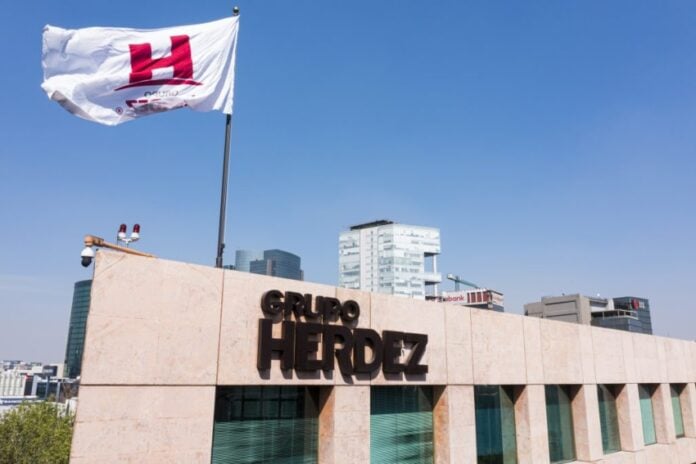
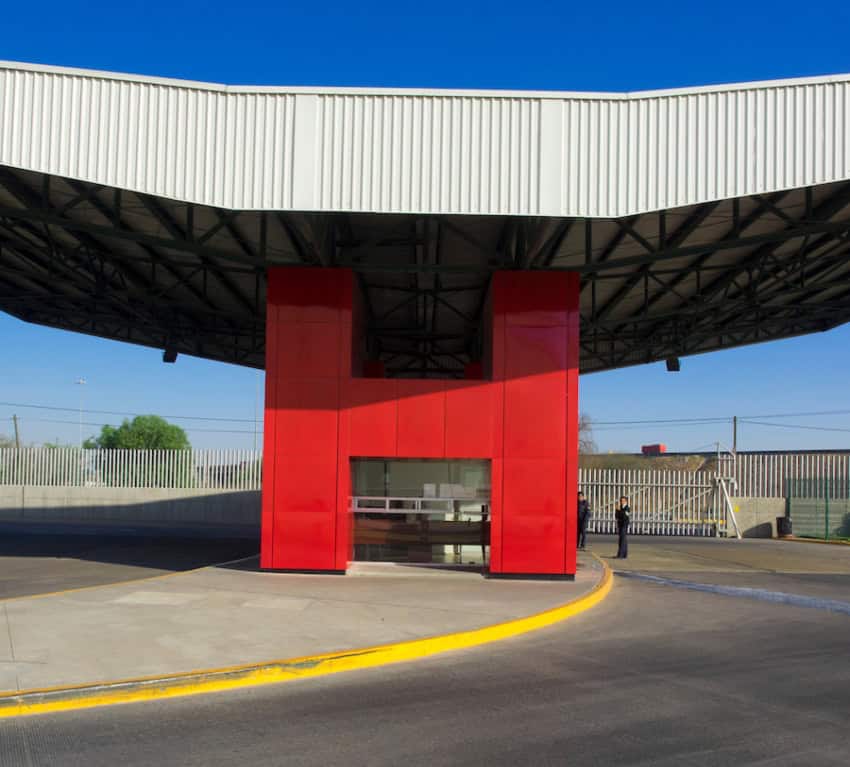
Grupo Herdez, whose brand flag flies proudly over its headquarters in Monterrey, is one of the largest food companies in Mexico. (Grupo Herdez)
Amigos, in Mexican pantries, there are brands whose presence has been passed down
from generation to generation. These labels are not only a guarantee of quality, but also for
many of us, they carry an emotional charge: “this is the mayonnaise we had at my
grandmother’s house,” “this is the honey my mom buys,” “this is the mole that got us
through busy weeknights” and “this is the can of vegetables we’ve always bought.”
Grupo Herdez is a holding company founded in 1914 that today oversees a portfolio of
more than 1,500 products and multiple brands in Mexico and abroad. That
omnipresence in Mexican households is not just a business fact; it’s a cultural trace of
how Mexico has organized, standardized and narrated its way of eating over the last
century.
From trading company to architect of the pantry
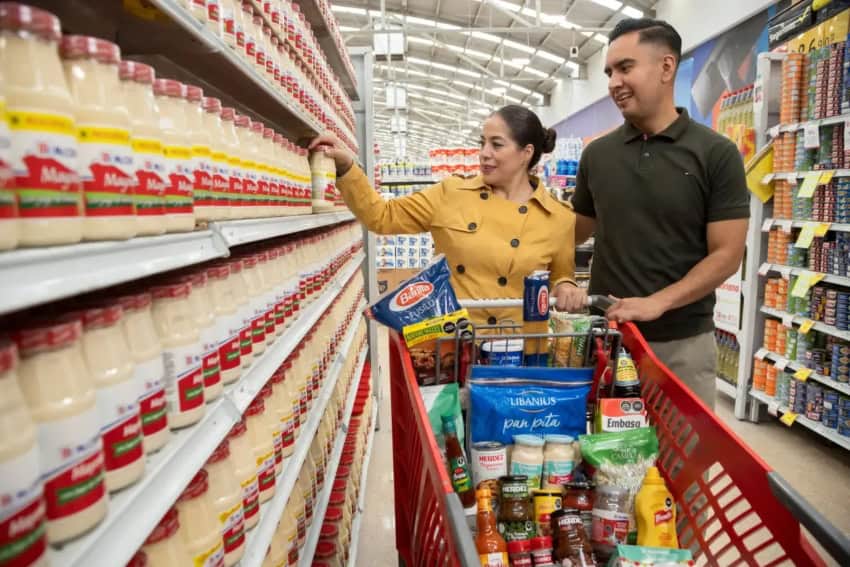
For over 100 years, Grupo Herdez brand foods have been filling the shopping carts of Mexican consumers. (Grupo Herdez)
The story of Grupo Herdez does not begin in the kitchen, but in commerce. In 1914,
Compañía Comercial Herdez was founded in Monterrey, Nuevo León, as a distributor of
toiletries and personal care items, in a country that was only just beginning to urbanize.
In 1929, Don Ignacio Hernández del Castillo joined as sales manager, in charge of
importing products and maintaining relationships with suppliers, and in 1933, he became the owner of the company, marking the start of a more ambitious growth strategy. Marketing was central to that plan: the company understood that, to gain an edge over its competitors, it needed catchy slogans and a reputation grounded in product quality.
In the 1940s and 1950s, his sons Enrique and Ignacio Hernández-Pons joined the
business, taking charge of sales, production and warehousing, and professionalizing
operations in a period of rapid industrialization and domestic market expansion. After
World War II, the Mexican market was also changing, and many products that had
previously been imported now needed to be manufactured on Mexican soil.
In that window of opportunity, the company stopped being just a distributor and began to build its own line of canned foods, in step with the transition from traditional markets to self-service stores and with the rise of an urban middle class that needed more stable, predictable pantry solutions.
Canned modernity: domesticating culinary time
From the mid-20th century onward, Herdez launched lines of canned foods and
preserves — mushrooms, peas, vegetables, tomato purée and seafood — that transformed the relationship between time and cooking. Canning technology ceased to be simply a way to extend shelf life in times of scarcity and became a quiet infrastructure of domestic modernity: it made it possible to have the base for a stew, a soup, or a sauce “ready” without going through all the steps traditional cooking required.
As cities grew and women entered the paid workforce en masse, the time available for
cooking shrank. In this context, the Herdez brand positioned itself as the legitimate shortcut: ready-made sauces, standardized tomato purée, canned vegetables and beans that allowed families to “cook from scratch” without truly starting from scratch.
From its headquarters in Monterrey, whose entrance is seen here, Herdez oversees over 1,500 brands. (VMS Consulting/Wikimedia Commons)
What you open is not just a can, but a cultural agreement: an acceptance that Mexican
cooking can be translated into the language of jars and preserves without entirely losing
its aura of home-cooked food. Herdez helped cement an aesthetic of the neatly ordered
pantry — rows of aligned cans, recognizable labels — that became synonymous with
preparedness, quality, stability and belonging to a certain middle-class modernity.
From the familiar jar to the holding company
Over time, this everyday process evolved into a complex corporate structure. Today,
Grupo Herdez presents itself as one of the leading companies in the processed foods
sector in Mexico, with a diversified portfolio of more than 1,500 products that promise
solutions for consumers’ daily lives. These products span categories such as sauces
and chiles, canned vegetables, jams and honeys, tuna and other proteins, teas, dry
pasta, moles, guacamole, ice cream, snacks and an array of health- and wellness-
oriented items.
The logic of the holding becomes clearer if we read its acquisitions and alliances as a
map of consumption moments. The group participates in McCormick de México
(condiments and mayonnaise), controls emblematic brands such as Doña María
(moles), Búfalo (hot sauces) and Del Fuerte (tomatoes and purées), and has built a
strong presence in ice cream and frozen yogurt through Nutrisa and Helados Nestlé
México. Each of these brands inhabits a different moment in the day: everyday meals,
snacks, sweet cravings, breakfast and quick dinners. More than a simple conglomerate,
Grupo Herdez becomes a corporate map of the Mexican eating day.
Through its alliances and distribution channels, products from the Herdez
portfolio — especially sauces, chiles, guacamole and moles — have gained a foothold in
supermarkets in the United States and other markets, where they serve as emblems of
“authentic Mexican food.” What a consumer in Chicago or Madrid experiences as the
“real” flavor of a Mexican salsa is often the outcome of technical, commercial and
marketing decisions made in product development offices in Mexico. In that sense, the
brand does not just reflect Mexican cuisine: it selects it, edits it and packages it for
circulation around the world.
Herdez as a record of Mexican cuisine
Seen from the perspective of cultural history, Grupo Herdez is an archive of
standardized Mexican cuisine—and the company is fully aware of that role. Each sauce,
each mole, each bottled or canned purée condenses a choice about which flavor will be
treated as the norm in a culinary landscape that is, in reality, deeply diverse and
regional.
Since 1988, Fundación Herdez has operated as the group’s cultural and philanthropic
arm, focusing on the research, preservation and dissemination of Mexican gastronomy.
Through its specialized library, documentary archive and editorial projects, the
foundation rescues historical cookbooks, costumbrista texts and other sources that
help reconstruct how people in Mexico have eaten in different periods. That work of
memory speaks directly to the industrial dimension of the holding: while the company
fixes flavors in jars and cans, the foundation is devoted to preserving the stories,
practices and culinary knowledge that often remain outside the supermarket shelf.
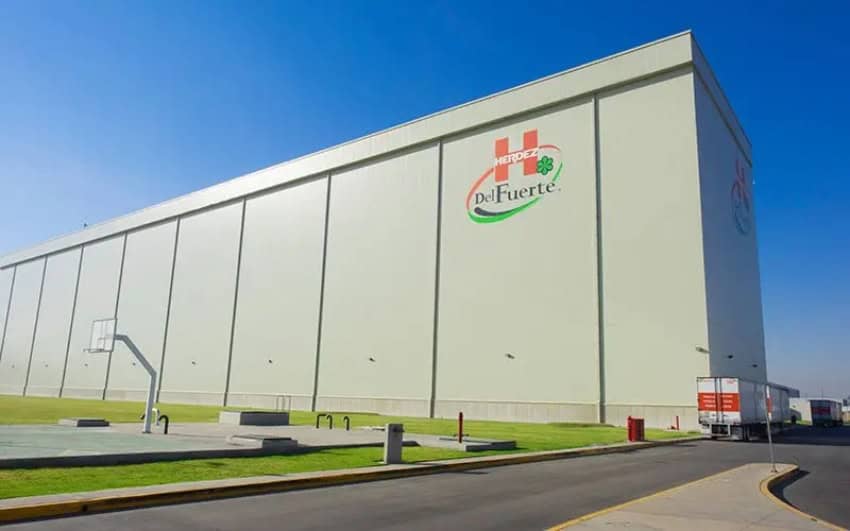
Del Fuerte is one of the largest food brands owned by Grupo Herdez. (Grupo Herdez)
This dual strategy — cultural archive on one side, mass production on the other — shows how far Grupo Herdez goes in trying to position itself not only as a food supplier, but also as an actor in the construction and preservation of Mexico’s gastronomic heritage.
The business behind domestic intimacy
This entire cultural landscape rests on a finely tuned business logic. According to recent
financial reports, Grupo Herdez reached record net sales in 2025, with double-digit
growth compared to previous years and solid profitability margins. The company reports
annual revenues in the tens of billions of pesos, with Earnings Before Interest, Taxes, Depreciation and Amortization (EBITDA) margins around 17% for the 2023–2025 period and a net margin that has been trending upward.
These figures point to a business model that successfully converts domestic familiarity into strong cash flows and shareholder value. The penetration of Grupo Herdez in Mexican households — though it varies by category — is significant in segments such as sauces, canned chiles, tomato purée, canned tuna and moles, where it holds leading market shares.
Layered onto this is a multichannel distribution strategy that includes national supermarket chains, convenience stores, traditional mom-and-pop shops and, in recent years, e-commerce platforms. The diversification of its portfolio responds to very concrete shifts in consumption habits: more meals away from home, smaller families, a greater appetite for ready-to-eat or semi-prepared products and a growing concern with health, wellness and the origin of ingredients.
Sustainability, reputation, and what gets remembered
In recent decades, Grupo Herdez has woven a language of social responsibility and
sustainability into its corporate identity. In its public communications, the group
emphasizes a social responsibility plan built on three pillars — people, community and
planet — that includes food and education support programs, investments in energy
efficiency, recycling efforts, and projects to protect the environments where it operates.
The company has appeared in environmental, social and governance (ESG) rankings,
which helps cement its image as a major economic player and, at the same time, as a
carrier of a certain ideal of responsible Mexican identity.
That narrative coexists with a tension that is hard to ignore: the more successful the
holding’s standardization model becomes — with reproducible flavors, predictable
formats and permanent availability — the more urgent it is to ask about the culinary
diversity that remains outside the jar. As a holding company, Grupo Herdez maintains a
very specific memory of what Mexico has deemed worthy of preserving, reproducing
and exporting as an industrial food product. Its history is at once a mirror of how people
in Mexico eat, a guide to how they might like to eat and an invitation to look again at the
other flavors — less visible on the shelf — that still sustain the richness of Mexican cuisine
beyond the label.
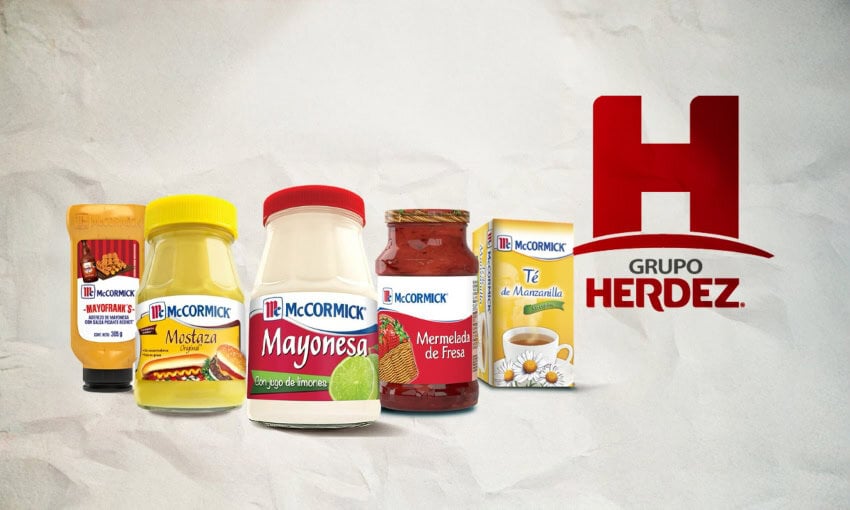
Condiments like these are among the bestsellers in the Herdez portfolio. (Grupo Herdez)
Amigos, what brands live in your pantries and what do they say about your own culinary
history?
Maria Meléndez writes for Mexico News Daily in Mexico City.
Over 52,000 Spring Breakers had a great time in Los Cabos this year; over 60,000 if you count the parents that tagged along. (LVIN)
Spring Break and Semana Santa — the Holy Week before Easter and a traditional family travel period in Mexico — are the one-two punch that marks the peak of high tourist season in Los Cabos. This year, for the third year in a row, hotel occupancy rates hit 90% during Semana Santa. For context, the average occupancy rate during the rest of the year is 70%, and the only other time 90% has ever been reached is during the week between Christmas and New Year’s Day.
So Semana Santa on its own is noteworthy. But following, as it does, hot on the heels of Spring Break, a monthlong period in March during which college students from the U.S. flock to Médano Beach in Cabo San Lucas and other areas of Los Cabos, this period of intense tourist activity provides an annual bellwether, not only for how robust Los Cabos remains as a tourist market, but also how it is being perceived in terms of safety.
Spring Break goes off without a hitch
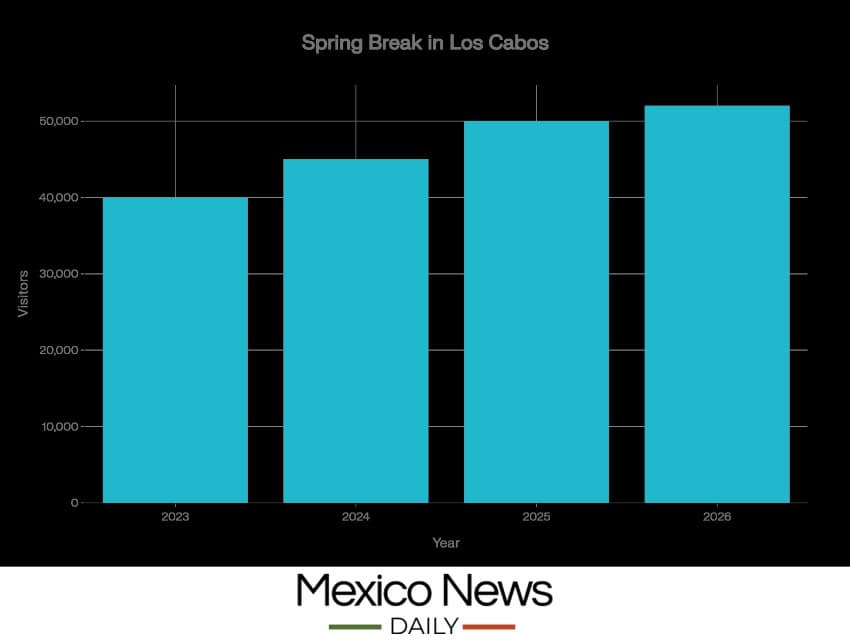
Los Cabos continues to cement its status as one of Mexico’s Spring Break capitals, drawing increasing numbers of students each of the last four years.
As has been noted before, Los Cabos is one of the safest travel destinations on the planet. But this reputation is always tested during Spring Break, not only because of the participants’ age, but also because of the amount of booze they consume and the media attention the event receives. The spotlight on this year’s Spring Break was further enhanced by the February incidents following the death of CJNG cartel leader “El Mencho,” with cards and businesses set on fire in numerous mainland states, including in tourist hotspots Puerto Vallarta and Cancún.
There were no incidents in Los Cabos, as per usual, and the destination was actually expected to benefit from the negative perception attached to Puerto Vallarta, with up to 20,000 Spring Breakers thought to be considering a switch of travel plans from PV to Los Cabos. However, that turned out to be a wildly optimistic surmise. Los Cabos received 52,000 Spring Breakers this March, an enormous number, but only 2,000 more than it had been anticipating all along.
Zero safety concerns
But, importantly for the destination’s reputation, Spring Break went off without a hitch or any safety blemish. Important and also interesting, since as Sudcaliforniano recently reported, over 10,000 parents came along for the party, or about 20% of the college-age kids on Spring Break in Los Cabos this year. This contingent of parents was a new feature and could only have happened in response to safety fears following the aforementioned incidents on the Mexican mainland.
But Los Cabos authorities were up to the task of handling the massive influx — in recent years, Los Cabos has typically received not just large numbers of Spring Break and Semana visitors, but over 350,000 tourists in total in both March and April — and as always, the ability to handle security challenges posed by this level of tourism didn’t happen by accident.
New surveillance cameras are being installed on Playa El Médano and other Los Cabos beaches
Keeping Spring Breakers and Semana Santa travelers safe this year required joint efforts between numerous municipal, state and federal agencies, from Zofemat — the federal agency in charge of Mexico’s coastline — to the Mexican Navy, Los Cabos police, firefighters and rescue teams, the Red Cross, Civil Protection and others.
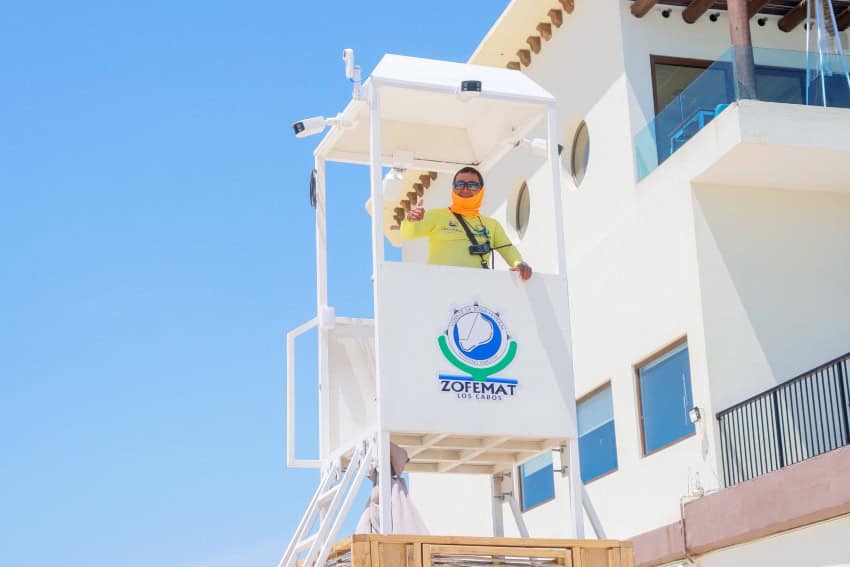
But surveillance cameras were also part of the plan, including a 5 million pesos investment in six new Zofemat lifeguard towers with video surveillance cameras for El Médano and Empacadora Beaches, which frame Cabo San Lucas Bay. The new cameras were specifically installed to protect swimmers during Spring Break and Semana Santa this year, each with a 200-meter range and a 180-degree field of view.
Surveillance cameras are becoming increasingly common on Los Cabos beaches. (Zofemat Los Cabos)
Those are added to the existing surveillance cameras on Médano Beach, which are designed not only to prevent drownings, but also to provide round-the-clock protection against theft, vandalism and unauthorized vendors.
“We are pleased that this is happening here in Médano, but it will also be in Santa María, Palmilla, Chileno, Acapulquito and others,” Zofemat coordinator Rafael Álvarez Munguía told Sudcaliforniano. “All these certified beaches, which are popular with tourists, will now have this video surveillance to monitor the activities of our concession holders and also to aid in coastal control.”
Baja California Sur is the leading state in Mexico for foreign investment in tourism
Safety, natural beauty and other factors contributed to Baja California Sur — home to popular tourist destinations like Los Cabos, La Paz and Loreto — leading all Mexican states in attracting direct foreign investment for tourism in 2025. The statistics for last year were recently reported by SETUE (the state’s Secretaría de Turismo y Economía), and BCS accounted for over 40% of the national total invested, with just over US $1.29 billion.
The U.S. led the way, providing 84% of the money invested, followed by Canada and Spain. But interesting, not only were the U.K. and the Netherlands also investors to the tune of US $28 million combined, but that was less than the amount invested in 2025 by Kazakhstan ($32.5 million). The United Arab Emirates also kicked in $4.4 million.
“This national leadership confirms that Baja California Sur continues to consolidate its position as one of the most attractive tourist destinations for investment in Mexico,” said SETUE head Rosa Maribel Collins Sánchez. “The confidence of international capital strengthens economic growth, generates jobs and contributes to the well-being of families in Baja California Sur.”
Update on the Fonatur roundabout infrastructure project
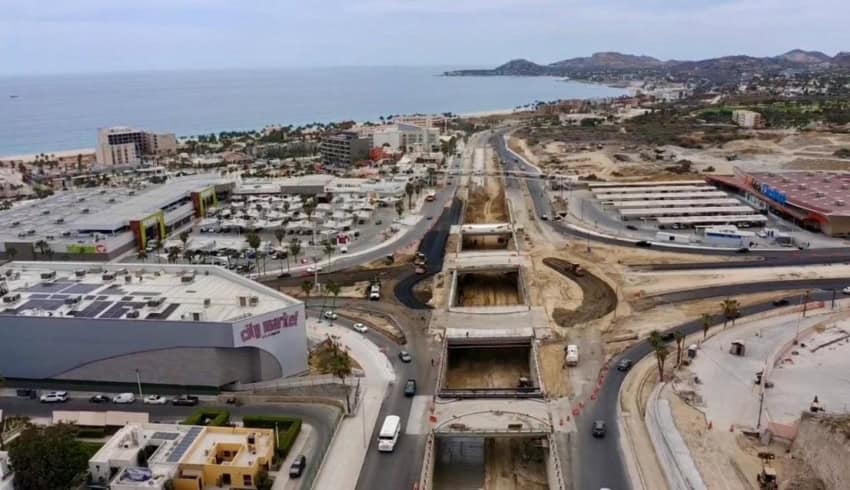
For close to a year now, the massive infrastructure upgrade adding a four-lane underpass to the Fonatur roundabout in San José del Cabo has been affecting traffic. The goal of the 470 million pesos project is, of course, to improve traffic at the busiest traffic node in Los Cabos, traveled by more than 62,000 vehicles daily. But before traffic could be improved, it had to be slowed even further for a year by construction work.
Not only is the Fonatur roundabout underpass project to improve traffic and mobility in Los Cabos nearing completion, but it will be done early. (Ayuntamiento de Los Cabos)
Thankfully, the Fonatur roundabout upgrade, which has been in progress since May 2025, is now nearly 80% complete, according to Roberto Flores Rivera, head of urban development for the Los Cabos municipality. The initial target goal was for the project to be finished by summer 2026, but shockingly, those expectations may be surpassed. In fact, if the current pace continues, work will be done by mid-May.
New design gallery opens in San José del Cabo
The Fonatur roundabout project has certainly affected businesses in San José del Cabo, but it hasn’t kept new ones from opening. One of the most notable to open its doors in 2026 is Diálogo Gallery, a design space that launched on March 5 in the heart of the Gallery District, and features a curated selection of art, furnishings and jewelry. These include pieces from the multidisciplinary design studios Atra Form and Dema Taller in Mexico City, art from Galerie Nordehake and jewelry from Ángel Bimbaro, also from Mexico City.
Chris Sands is a writer and editor for Mexico News Daily, and the former Cabo San Lucas local expert for the USA Today travel website 10 Best and writer of Fodor’s Los Cabos travel guidebook. He has also contributed to numerous other websites and publications, including The San Diego Union-Tribune, Marriott Bonvoy Traveler, Forbes Travel Guide, Porthole Cruise and Travel, and Cabo Living.