Home Blog Page 6

Desire and disability: Netflix México’s ‘Santita’ challenges everything we knew about taboos

2
"Santita" is a new series from Netflix
"Santita" is a new Mexican produced television series from Netflix, and an "unmissable gem," according to our reviewer. (Netflix)

Some series are made for quick consumption and serve as a way to pass the time, while others refuse to let you be the same person once the credits roll. “Santita,” Netflix’s ambitious new Mexican production, definitely belongs to the latter group. Created and written by Luis Cámara and Gabrielle Galanter, and directed by Emmy nominee Rodrigo García Barcha, this seven-episode series challenges our views on autonomy, sexual pleasure and the right of people with disabilities to be masters of their own destiny.

The first thing to know about “Santita” (“Little Saint”) is that its title draws on Latin American irony and idiosyncrasy. It serves as a direct provocation: it sets us up for a martyr, but instead presents us with a hopeless rebel. At the heart of this dramatic comedy is María José Cano (Paulina Dávila), better known as “Santita,” a young woman deeply in love who, after an accident that limits her mobility to a wheelchair, makes the difficult decision to break up with her fiancé, Alejandro (Gael García Bernal), and radically reinvent herself. 

How an accident changes the way Santita navigates her life

Santita | Tráiler oficial | Netflix

Those who spent their youth with Santita remember her as a demure young woman who strictly followed the rules. However, since that incident, she has navigated the world without asking for permission or forgiveness. When we meet her in the present, she works as a gynecologist while leading an intense and irreverent life: she drinks excessively, bets on cockfights, dominates the poker tables and maintains a strained relationship with her family. Far from being a damsel in distress or embodying the stereotype of the helpless victim, María José is a woman in charge who faces her reality with great fortitude and acts with total autonomy. Her true battle, however, is fought in private: as a result of her spinal cord injury, she has been unable to reach orgasm, which has driven her on a daring sexual crusade that sometimes exposes her to high-risk situations. 

Her daily routine is thrown into disarray when her ex-fiancé’s wife walks into her office as a patient. As might be expected, running into each other again isn’t easy. The encounter reopens the wounds of that interrupted wedding and forces them to confront a past riddled with painful memories and repressed resentments. The tension reaches a breaking point when Alejandro, cornered by a medical condition, asks María José for an ethically complex favor that forces her to rethink the limits of love and personal autonomy. 

From media condescension to human complexity

The second thing to know about “Santita” is that this is not a saccharine “overcoming adversity” melodrama or a conventional romance. This Netflix production is a highly exciting and necessary addition to the representation of functional diversity on the small screen. In a media landscape that often relegates this community to limiting stereotypes — such as victims, angelic beings, eternal children or family burdens — the series actively challenges the industry’s sentimentality and biases. By portraying its protagonist in all her human complexity and endowing her with dreams, contradictions and common flaws, the script commits to a respectful and authentic approach.

Sharpened by dark, biting humor, the series successfully breaks down taboos surrounding sexuality and disability and explores, with unusual boldness, the challenges of inhabiting a body with new sensory boundaries. While traditional narratives persist in desexualizing people with limited mobility, the series chooses to bring the camera into the bedroom and film desire from a first-person perspective. In this way, nearly every episode details Santita’s fearless determination to reconnect with her body and with pleasure.

With razor-sharp wit, the screenwriters manage to make María José’s sexual crusade function as a broader social commentary. The series exposes uncomfortable realities ranging from everyday prejudices and a lack of urban accessibility to institutional barriers and the violence that affects this community.

An acting master class

Another pillar of this Mexican dramedy is the magnetism of its cast. In the lead role, Dávila avoids clichés and crafts a provocative anti-heroine who moves effortlessly between chaos, humor, pain and exasperation. There is so much humanity in her performance that it’s impossible not to root for her as we watch her stumble and try again. This on-screen authenticity is the result of close collaboration between the actress and Mexican activist Maryangel García Ramos, whose direct guidance imbued the character with realism.

"Santita" actors Paulina Dávila and Gael García Bernal
Paulina Dávila portrays the title character in “Santita,” with her former fiancé played by acclaimed Mexican actor Gael García Bernal. (IMDb)

For his part, García Bernal brings a poignant fragility to Alejandro, a character caught between the melancholy of the past and an extreme physical urgency. Overall, the honest chemistry between the leads is a true delight and reliably carries the full emotional weight of the story. This dramatic pulse is bolstered by a committed supporting cast: Erik Hayser and Ilse Salas inject the depth and layers of tension that the series demands.

With complete confidence in his actors, director Rodrigo García Barcha avoids rushing the scenes. Instead, he keeps the camera on their faces long enough for the emotional cracks and small joys to come through on screen. This unhurried, introspective approach brings out the best in the cast and ensures that the most devastating moments pack a powerful punch.

A mature artistic statement

“Santita” is much more than just fleeting entertainment; it’s a bold step toward a more mature, courageous and necessary Latin American television. By breaking down taboos surrounding disability, Rodrigo García Barcha and his team deliver an unmissable gem that challenges, entertains and, above all, transforms. If you have a soft spot for those dramatic comedies that leave your heart in your throat, you can’t miss this one. 

The series more than captivates thanks to the magnetic chemistry between its leads, the emotional depth of its moral dilemmas, and its sharp social commentary. Fortunately, the season ends with an open ending that leaves the stage completely set for a sequel. Fingers crossed.

Carolina Alvarado is a Venezuelan journalist and has devoted much of her career to creative writing, university teaching and social work. She has been published in Lady Science, Latina Media, Global Comment, Psiquide, Cinetopic, Get me Giddy and Reader’s Digest, among others.

From our archive: How many stars would you give that baño? A rating guide for Mexican bathrooms

13
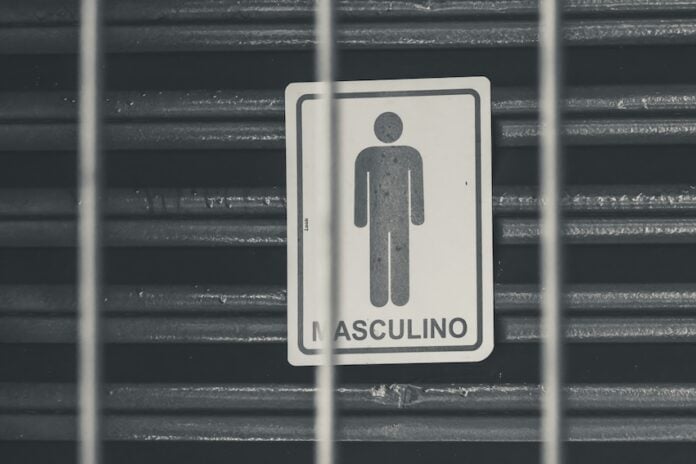
A men's public bathroom sign
Rating Mexico's extremely varied public bathrooms is a science and an artform. Sarah DeVries has it to a tee. (Alberto Lung/Unsplash)

A note from the Editor: With the World Cup fast coming up, tens of thousands of tourists will be experiencing Mexico (and its toilets), most for the first time. To do our best to help these new arrivals, we took a look in our features archive for anything that might help. Here’s what we found: If it’s useful to you, don’t forget to let us know in the comment section!

I took my daughter to a gourmet popcorn store the other night. It’s nice and well-decorated but very small, with just two tiny tables inside. It’s the kind of place where most people order their fancy popcorn to go (our favorite is “Cookie Monster” — it’s blue and has actual cookies and M&M-type candies made to look like googly eyes!), but my daughter couldn’t wait that long. She had to have some of that popcorn right then and there.

My problem was that I needed to pee. Bad. Actually, I often have to pee pretty badly, which means if I’ve gone to an establishment with a bathroom, I’ve probably used it.

Mexican bathrooms and their ratings
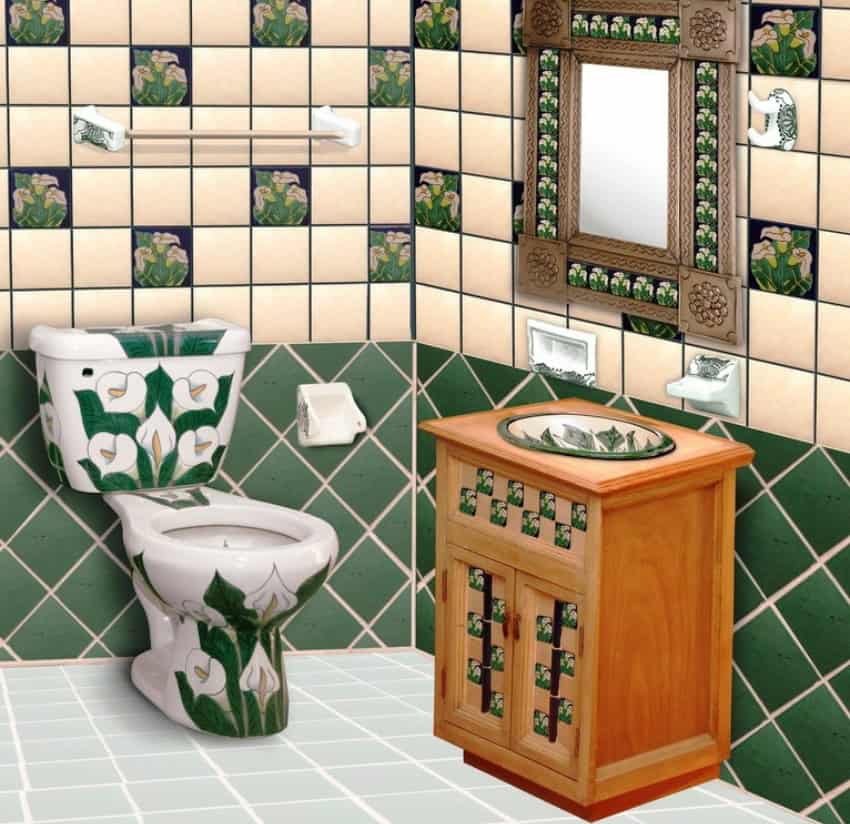
Replace the toilet paper and add some faucets, and this Mexican bathroom is a five-star candidate. (Rústicos Artesanales)

This was hardly a sit-down restaurant, so I don’t think the bathroom was really considered for client use when they moved in. The tiny space was stocked with cleaning supplies, and it was so small that my knees knocked against the sliding door in front of me when I sat down (try getting that image out of your head!).

But I was grateful that they’d let me use it, and for the fact that there was both toilet paper and soap. There were paper towels for hand-drying, too, a bonus! I smiled to myself and remembered an old friend’s silly idea, born of a veritable smorgasbord of bathroom experiences in Mexico: a bathroom star-rating system.

Behold, here it is, my unscientific rating system for Mexican baños has arrived! 

5-star bathrooms

A five-star bathroom has to not only contain everything you might want and need, but it must also be a well-decorated space, without any kind of awkward, misplaced items (like cleaning supplies). It cannot double as an additional space for something else, and it must be spotless. Bonus points for an essential oil diffuser or something similar, and extra bonus points for music that gives you auditory privacy. Climate control gets that bathroom into Heaven.

Other features of a five-star bathroom:

  • The basic necessities: toilet paper, soap, paper towels or an electric dryer.
  • Visually-pleasing, large-enough mirrors (above the sink and full-length).
  • Functioning and easy-to-use locks on the door or stalls.
  • Toilet seats.
  • A place to hang one’s bag or purse.

4-star bathrooms


View this post on Instagram


A post shared by Mexi-Can Vlogs (@mexicanvlogss)

A four-star bathroom is almost as nice and pleasant as a five-star, but might be missing a couple of features: perhaps it’s very nice overall, but lacks toilet seats (I cannot figure out why so many bathrooms lack toilet seats around here). Maybe it’s otherwise lovely, but it has a moldy-looking corner of the ceiling or terrible lighting that makes you look just ghastly in the mirror, or terrible water pressure that means you have to hold the flusher down until all the water’s drained from the bowl. One or two things will need to be noticeably off. 

3-star bathrooms

Three-star bathrooms are those in which the experience of using them starts to become quality entertainment, if you’re looking at it the right way.

It will still have the essentials, like toilet paper, soap and (maybe) paper towels for hand-drying, but plenty of other things could be either comically missing (like a mirror or a toilet paper holder) or comically present (like the establishment’s entire collection of cleaning supplies bunched up in a corner, or an old calendar from a previous century on the wall). A bathroom gets three stars in my book if it doesn’t have a toilet seat or if it’s one of those spaces that’s so tiny you can barely turn around. This would include those kinds of triangle-shaped bathrooms that are underneath stairs, or spaces in which inserting a toilet and sink seemed to have been an afterthought, something done hastily without having first taken measurements.

2-star bathrooms

Two-star bathrooms are those that officially have what you need — usually because you’ve had to pay five pesos to get in — but that are strictly no-frills. Most pay-to-use bathrooms in public parks and similar places count as two stars. Don’t even think about toilet seats this time.

The toilet-paper dispenser will typically be public, meaning you’ll need to either be handed your allotted squares from the person charging to get in out front or “serve yourself” from a large dispenser outside the stalls before going into a stall, which may or may not close and lock all the way. Soap will be available at the sinks, though you might need to scoop it in powder form from a plastic container or squeeze a liquid that smells like grape candy out of a recycled dish detergent dispenser. Paper towels are not usually on the menu (though there’s usually an empty dispenser).

1-star bathrooms

One-star bathrooms are not for the faint of heart. There might be a toilet, but there’s no counting on toilet paper, soap or even a door, for that matter. To get one star, the toilet can only be flushed by pouring a bucket of water into the bowl. 

@anya_taiga please don’t flush toilet paper in Mexico🙏 #mexico101 #rvlifestyle #bajamexico ♬ original sound – Anya🍼Mamochka BLOG

One-star toilets are often found (around here, anyway) on public beaches. There might be a door with a latch, or there might simply be a curtain. If there’s a sink for washing one’s hands, it’s outside of the actual bathroom, and the soap and mirror situation could be dodgy.

I wish you the wisdom to appreciate five-star bathrooms, the grace to accept one-star bathrooms and an absurd enough disposition to, like me, spend your bathroom trips thinking about how many stars you might give the one you’re in.

This article was first published in 2023.

Sarah DeVries is a writer and translator based in Xalapa, Veracruz. She can be reached through her website, sarahedevries.substack.com.

The MND News Quiz of the Week: May 30th

0
News quiz
(Mexico News Daily)

What's been going on in the news this week? Our weekly quiz is here to keep you on top of what’s happening in Mexico.

Get informed, stay smart.

Are you ready?  Let’s see where you rank vs. our expert community!

After an eight-year hiatus, what did China give Mexico access to once again this month?

What was announced this week to have hit a record high amount in Mexico in the first quarter of 2026?

Which country's 2026 World Cup team was granted FIFA permission this week to change its headquarters from Arizona to Tijuana?

On Thursday, Mexico's Congress passed a new law allowing election results to be voided for what reason?

We recently reported on Ciudad Madero, a beach city many residents believe is protected by aliens. In which Mexican state is Ciudad Madero?

Which Mexican archeological site recently got its biggest makeover in 30 years in anticipation of the 2026 FIFA World Cup?

Which Mexican director has become the first film director inducted into Mexico's prestigious intellectual academy, El Colegio Nacional?

An Indigenous woman from Veracruz recently won President Sheinbaum's World Cup opening ceremony ticket by doing what athletic feat?

A Florida court has awarded Mexico $578.5M in damages in connection with the actions of which Mexican high-profile convicted felon?

President Sheinaum caused controversy this week when she called on Mexicans to boycott which Mexican TV network?

Amazon Web Services launches a tech education hub in Querétaro

1
thiig Space
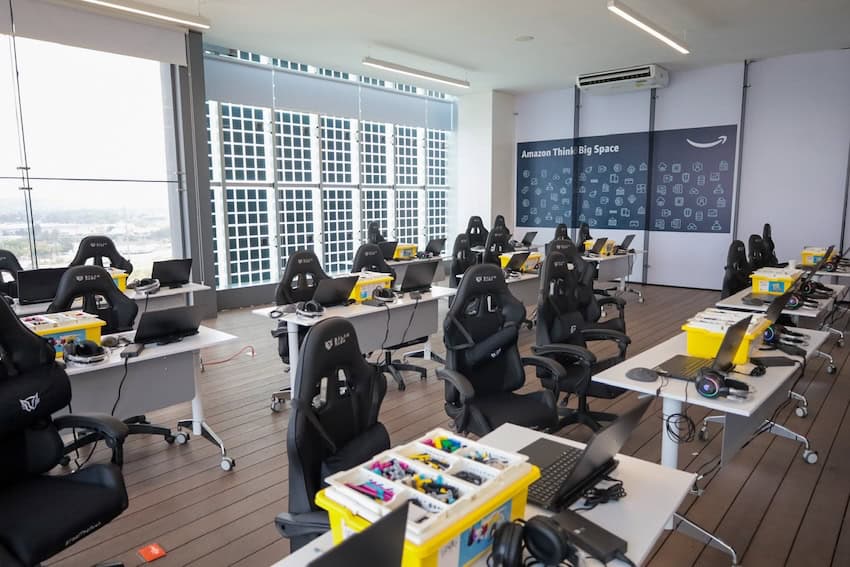
Amazon Web Services' tech training takes place at its new Thnk Big Space in Querétaro, the first one in Latin America. (AWS)

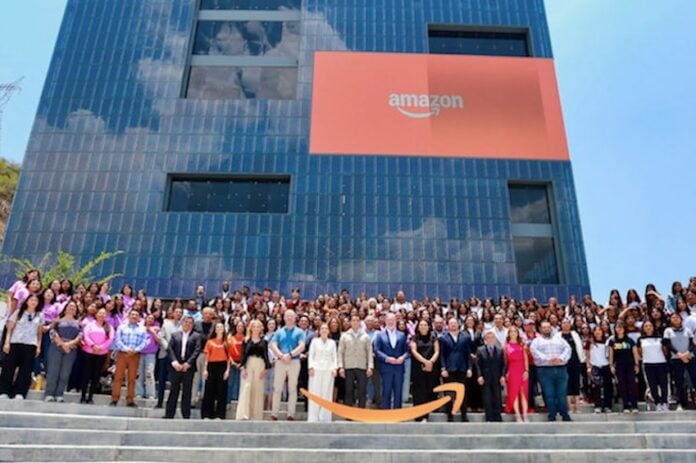
Amazon Web Services (AWS) this week inaugurated its Think Big Space offices in BLOQUE, the tech company’s Center for Innovation and Creative Technology in Querétaro city.

The new facilities are the first space in Latin America designed to promote creativity, innovative thinking and the development of technological skills among students and entrepreneurs.

Think Big Space Querétaro
Amazon’s new Think Big Space is well-equipped for the kind of tech training that will take place in it, for people in high school or mid-career alike. (AWS / Facebook)

In a statement, Amazon said that “closing the digital divide in Latin America does not start with fiber optics or data centers. Instead, it starts with a 16-year-old having access to the right tools.” 

Now, more than 1,200 high school students a year will be able to train free of charge in skills such as cloud computing, robotics and other emerging technologies in this new educational space.

In a social media post, Mayor Felipe Fernando Macías said “the future has arrived in Querétaro,” acknowledging that students will be able to prepare for the careers that will define the next decade.

Speaking at the May 26 inauguration, Macías said the opening of these new facilities also strengthens the state capital’s position as a national and international benchmark.

“We are incubating dreams, projects and opportunities for thousands of young people, but also for all sectors of society who will find the path toward which the world is heading: innovation, technology, automation, digitalization, artificial intelligence and robotics,” he said. 

The new services also include a partnership with the National Autonomous University of Mexico (UNAM). Starting in June, high school students can enroll for free in six 20-hour STEM courses through the BLOQUE website. 

“Those who complete the six modules and 120 hours of face-to-face training will receive an official certificate from UNAM validating their STEM skills and facilitating access to job opportunities in the technology sector,” the Amazon statement says.

Ana Paola Barbosa, AWS director of public policy in Mexico, said that investing in STEM education is an investment in the economic future of Querétaro and Mexico.

“It’s not just about technology, but about empowering the next generation of innovators and leaders who will build the future of their communities,” she said. 

The initial trial run of the Think Big Space in Querétaro took place last year and featured more than 1,000 female students from 10 local high schools who participated in Amazon Girls Tech Day, a global AWS initiative designed to inspire young women to explore careers in technology through hands-on workshops in programming, artificial intelligence, digital design and robotics. 

The opening of the new space adds to the more than US $5 billion investment represented by the company’s data centers in Mexico.

With reports from El Economista and Expansión

Congress passes reform allowing elections to be voided for foreign interference

4
Congress
The foreign interference reform was a last-minute addition to the agenda of the special session that also included the passage of judicial reforms allowing extended terms for recently elected judges, and delaying the next judicial election for a year. (Mario Jasso / Cuartoscuro.com)

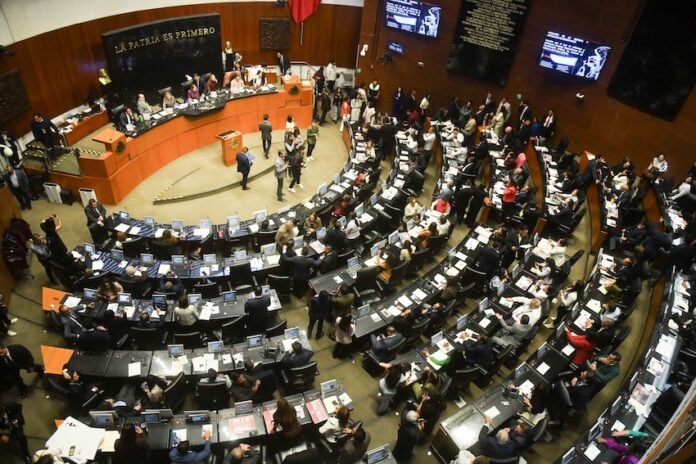
Congress concluded a marathon 32-hour special session after approving a controversial reform allowing the nullification of elections tainted by foreign interference, a surprise addition to the legislative calendar.

The bill, sponsored by Morena Deputy Ricardo Monreal, was heavily amended in an effort to more narrowly define the discretionary powers granted to election authorities.

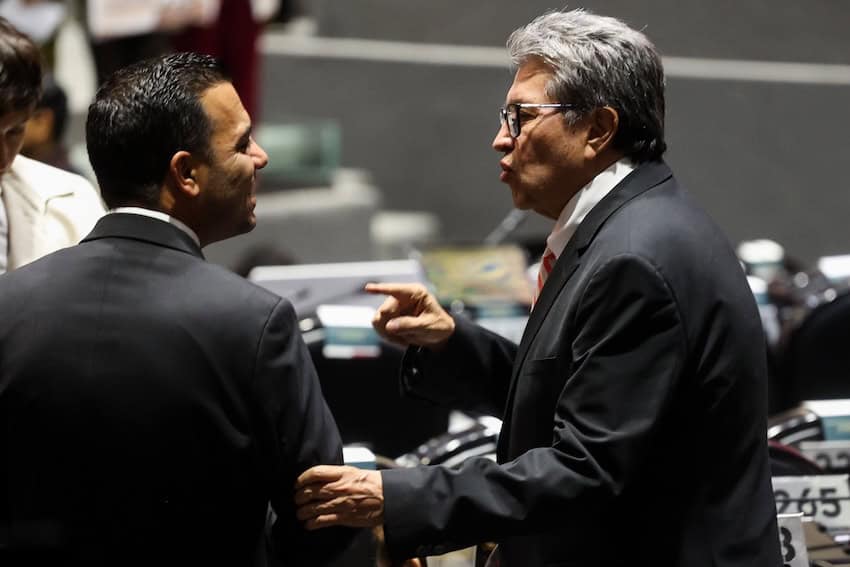
Opposing party coordinators Elias Lixa (PAN) and Ricardo Monreal (Morena) meet and converse on the floor of the Chamber of Deputies. (Galo Cañas / Cuartoscuro.com)

Critics have voiced concern that the reform could make it easier for losers to overturn results.

It eventually passed the Chamber of Deputies 307-128, before winning passage in the Senate on an 85-42 vote. As a constitutional reform, it will next be sent to the states where at least 17 of the 32 state legislatures must vote to approve it.

Earlier, both houses of Congress had approved an equally controversial judicial reform bill that was also not on the original agenda. This reform authorizes the re-election of judges on the Superior Chamber of the Electoral Tribunal — the very court body that would determine the legitimacy of any foreign intervention accusations.

Congress also approved a bill postponing judicial elections from 2027 to 2028 and another reforming the Electoral Law to bar candidates with proven ties to organized crime from competing in elections.

The contentious session in the Chamber of Deputies was marked by voting irregularities, near-brawls, recess requests and accusations of narco-politics displayed on banners placed in the galleries of the San Lázaro Legislative Palace by the opposition.

The last-minute inclusion of the foreign intervention bill caught the deputies by surprise as the various party leaders had not been advised that it would be on the agenda of the special session.

President Claudia Sheinbaum defended the bill earlier this week, warning about the risk of foreign actors interfering in Mexico’s politics through financing, digital campaigns or indirect support for organizations linked to electoral issues.

While the ruling party Morena and its allies said the reform would serve as a measure to safeguard Mexican democracy, opposition lawmakers warned of potentially ambiguous interpretations that could be exploited for political purposes due to the lack of clarity in the definition of what qualified as interference.

Some Morena legislators also voiced objections. Deputy Olga Sánchez Cordero, a former Supreme Court minister, asked that greater specificity be included.

“As a judge, I can assure you that we are facing an open-ended rule that could allow any number of normative assumptions,” stated the Morena party legislator.

The debate led to the inclusion of the definition of foreign interference as “illicit financing, propaganda, the ⁠systematic dissemination of disinformation, digital manipulation and the intervention of foreign governments or agencies.”

The final bill also included “acts ​of political, economic, diplomatic or media pressure intended to influence public opinion.”

Sheinbaum sees risk of foreign interference in Mexican elections: Thursday’s mañanera recapped

Even so, the opposition resisted the reform, arguing that the breadth of the concept of “foreign intervention” could be applied arbitrarily against civil organizations, media outlets or international actors involved in election observation or the financing of social projects.

Debate on the judicial reform bill also prompted some Morenistas to oppose party leadership, with 22 Morena deputies abstaining from voting on the final bill.

Again, Sánchez Cordero was among the naysayers who pointed out that this reform would effectively give judges who were elected to one term via the Judicial Reform enacted in September 2024 seven extra years (one year due to the postponement of the election plus a new six-year term).

Those who took office in 2016 and whose terms were due to end in 2024 could find themselves serving 18 years.

“This violates the Constitution,” said Deputy Alfonso Ramírez Cuéllar, considered a political operative for Sheinbaum in the Chamber of Deputies. “We have always fought against the elites who held perpetual control of the courts; and now we are creating elites of our own who ought not to continue to exist.”

The judicial reform bill eventually passed the Chamber of Deputies 322 to 132, despite the 22 abstentions.

With reports from Reuters, Infobae, La Jornada and Reforma

Tijuana welcomes Iran’s World Cup team as it crosses the border after Trump’s threats

11
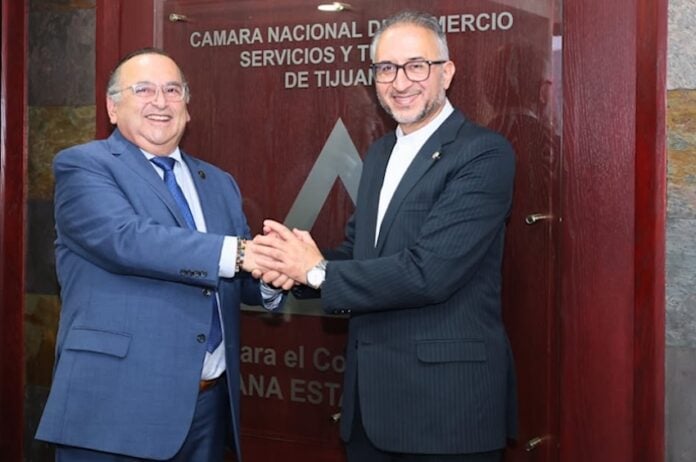
Olivaldo Paz, head of the Tijuana Chamber of Commerce (Conaco), greets Iranian Ambassador to Mexico Albolfazl Pasandideh who is visiting the city where his nation's World Cup team will be staying during its particpation in the tournament. President Sheinbaum praised Tijuana's hospitality, while the ambassador thanked the president for allowing the team to make the move into Mexico. (Conaco Tijuana)

Baja California officials are scrambling to coordinate logistics and security ahead of the arrival of the Iranian soccer team after FIFA this week authorized the Persian nation’s federation to move its World Cup headquarters from Arizona to Tijuana.

The move comes amid the war in the Middle East and security concerns exacerbated by comments made by U.S. President Donald Trump in which he suggested he couldn’t guarantee the players’ safety

Iran will now set up camp at Centro Xoloitzcuintle, the home of Liga MX side Club Tijuana, and is expected to arrive by next weekend.

Albolfazl Pasandideh, Iran’s ambassador to Mexico, publicly thanked President Claudia Sheinbaum on Thursday for accepting the installation of the Iranian camp and praised the hospitality of the border city, located just a few kilometers from San Diego.

“True friends are known in difficult situations,” he said, quoting a Persian proverb.

Sheinbaum said a FIFA representative had asked if Mexico were willing to allow Iran to base its World Cup headquarters in Tijuana after U.S. officials insisted it did not want the Iranian team to be based in the U.S.

“We said ‘yes, no problem, we have no problem with that’,” she said on Monday.

Officials from the Mexican and Baja California governments, along with representatives from Mexican and U.S. security agencies, were working on Friday to coordinate the arrival of “Team Melli,” which means “National Team” in Persian.

Around 300 federal agents will arrive in Baja California to reinforce the security strategy, along with specialized FIFA personnel and a team from the Iranian delegation.

Pasandideh, in Tijuana on Thursday to inspect the facilities the team will be using, said Iran faces uncertainty regarding immigration permits and mobility just two weeks before the start of the tournament.

“We are the only team that truly has not received support,” he said. 

Club Tijuana officials, however, left no doubt that Iran can expect support from the local community, saying it was proud that Iran will have Tijuana as its base camp.

Iran had previously asked permission to have its three group games moved from U.S. stadiums to Mexico, but FIFA refused the request. Team Melli is scheduled to play its first two matches on June 16 and 21 in Los Angeles, while its third match will be played in Seattle on June 26.

With reports from Reuters, EFE and Infobae

Iñárritu becomes first filmmaker to join Mexico’s most prestigious intellectual academy

1
Iñárritu and Leal
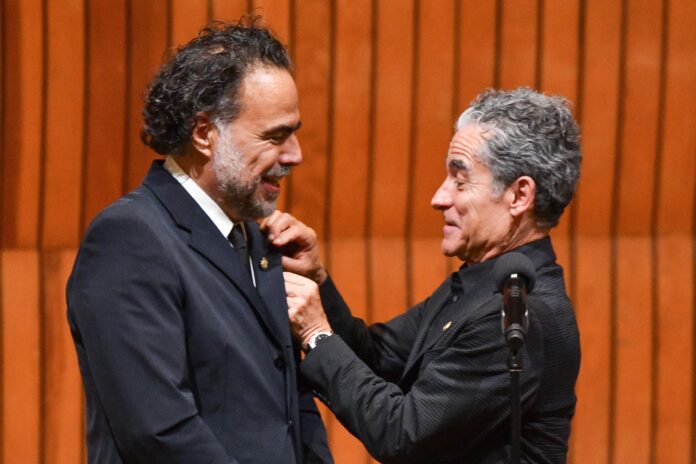
The Oscar-winning Mexican director is officially welcomed to the Colegio Nacional by architect, academic and Colegio president Felipe Leal. (Mario Jasso / Cuartoscuro.com)

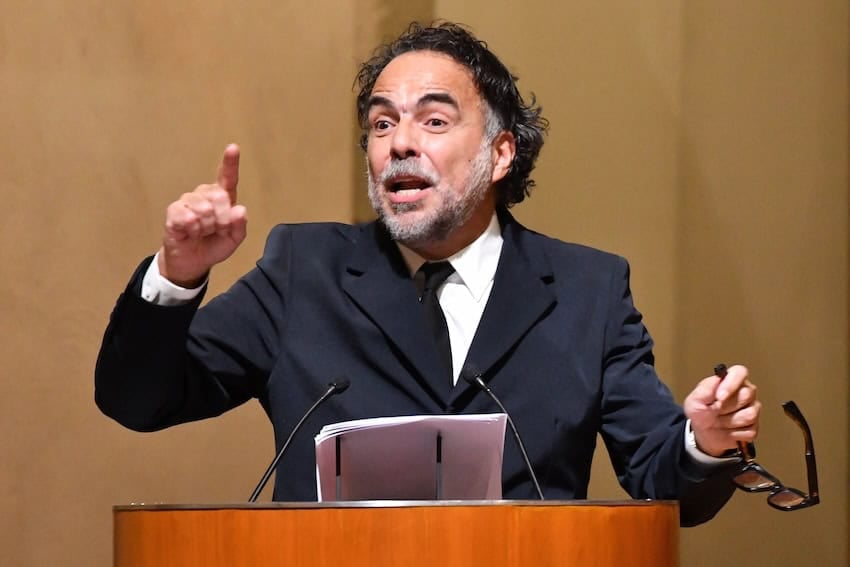
Mexico City native Alejandro González Iñárritu — director of “Amores Perros,” “Birdman,” “The Revenant” and other major works — has become the first filmmaker inducted into El Colegio Nacional, Mexico’s most prestigious intellectual institution.

The honorary academy, created by presidential decree in 1943, is an invitation-only hall of fame that brings together Mexico’s leading scientists, artists and humanists.

Iñ+arritu at his induction ceremony
At his induction ceremony Iñárritu delivered an address titled “The Consensual Hallucination” in which the always outspoken director and screenwriter asserted that Mexico’s cinematic history grew out of its pre-Hispanic worldview and its 20th-century muralist tradition — not just Hollywood techniques.
(Mario Jasso / Cuartoscuro.com)

At a ceremony Tuesday in Mexico City, the institution’s sitting president, Felipe Leal, said Iñárritu’s admission was “a long-awaited achievement for an artistic discipline that has contributed so much to Mexican and universal culture.”

In receiving the honor, the 62-year-old director — the first Mexican ever chosen to preside over the Cannes Film Festival jury — delivered a lecture titled “The Consensual Hallucination.”

Throughout it, he championed the visual power of Mexican culture, asserting that the nation’s cinematic history grew out of its pre-Hispanic worldview and its 20th-century muralist tradition — not just Hollywood techniques.

“Mexico is a visual powerhouse because our culture has always used images as a way to explain the world,” he said.

In a Q&A with the newspaper El País, Iñárritu took aim at how U.S. cinema depicts his country. Mexicans, he said, “grew up with American movies, television, art and music. So I do know that culture. They don’t know a damn thing about us,” he added, criticizing Hollywood’s long use of “sombrero-wearing, drunk, drug-trafficking” caricatures.

Iñárritu (who’s usually referred to by his maternal surname) has won five Academy Awards, including best picture, best director and best original screenplay for “Birdman” in 2015, and best director a year later for “The Revenant” — joining a short list of directors with back-to-back directing Oscars.

His filmography includes “21 Grams,” “Babel,” “Biutiful” and “Bardo: False Chronicle of a Handful of Truths,” a dreamlike epic that blurs the line between Mexico and the United States, memory and reality.

He is often identified as one of the so-called “Three Amigos” along with acclaimed Mexican directors Guillermo del Toro, 61, best known for his Oscar-winning fantasies “Pan’s Labyrinth” and “The Shape of Water,” and Alfonso Cuarón, 64, Oscar-winning director of “Roma” and “Gravity.”

Iñárritu is among 113 people who have received the lifetime honor from El Colegio Nacional since its founding 83 years ago. As of this year, 37 sitting members participate in the institution’s free lectures, concerts and symposia and provide material for published works.

Recent inductees include Pulitzer Prize–winning novelist Cristina Rivera Garza in 2023 and demographer Silvia Giorguli Saucedo last year. 

The roster includes some of Mexico’s best-known figures in the arts and sciences, from muralists Diego Rivera and José Clemente Orozco to Nobel Prize–winning poet Octavio Paz and chemist Mario Molina, who shared the Nobel in 1995 for his work on the ozone layer.

In his remarks at the ceremony, Iñárritu also addressed migration, uprooted identity, Mexico’s culture of brutality and how the nation has “normalized” the crisis of more than 130,000 missing people.

He also warned that technology and artificial intelligence risk severing art from real life, insisting, “Art is not the result, it is the transmission of one human experience to another.”

With reports from El País and UNAM Global

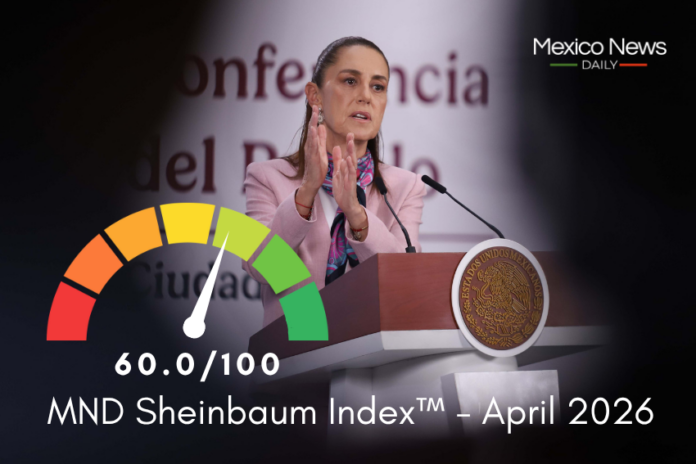
The MND Sheinbaum Index™: Sheinbaum scores 60.0 for April 2026

9
President Sheinbaum and the logo of the Sheinbaum Index™
The Sheinbaum Index™ for April 2026 is 60.0/100. (Mexico News Daily)

THE MND SHEINBAUM INDEX™

Measuring Mexico’s president beyond the polls

MND Intelligence · Second edition

Welcome to the second edition of the MND Sheinbaum Index™, an eight-pillar index designed to give our readers balanced, data-driven insight into the current situation in Mexico across a range of areas.

As we wrote in our inaugural Sheinbaum Index article last month, most of what you hear anecdotally about Claudia Sheinbaum fits into one of two buckets: breathless admiration or reflexive dismissal, often without a lot of evidence or data to support the opinion expressed.

Neither tells you much about how Mexico is actually doing on her watch. The MND Sheinbaum Index™ was built to fill that gap.

In this second edition of the index, the headline number is 60.0, representing a 0.1-point deterioration compared to March. That is not to say that nothing changed. As you will see below, four of the pillar scores improved in April, while four deteriorated. These changes effectively canceled each other out, resulting in only a minimal month-over-month variation to the overall index score.

We obtained the index score for April by applying the MND Sheinbaum Index™ methodology to the raw data we collected across eight pillars.

In the sections below, we remind you how the index works and what the overall index score means, and detail how the data across each of the eight equally-weighted pillars is scored.

We also examine how the MND Sheinbaum Index™ has changed over the past five months and home in on the performance of each of the pillars in April.

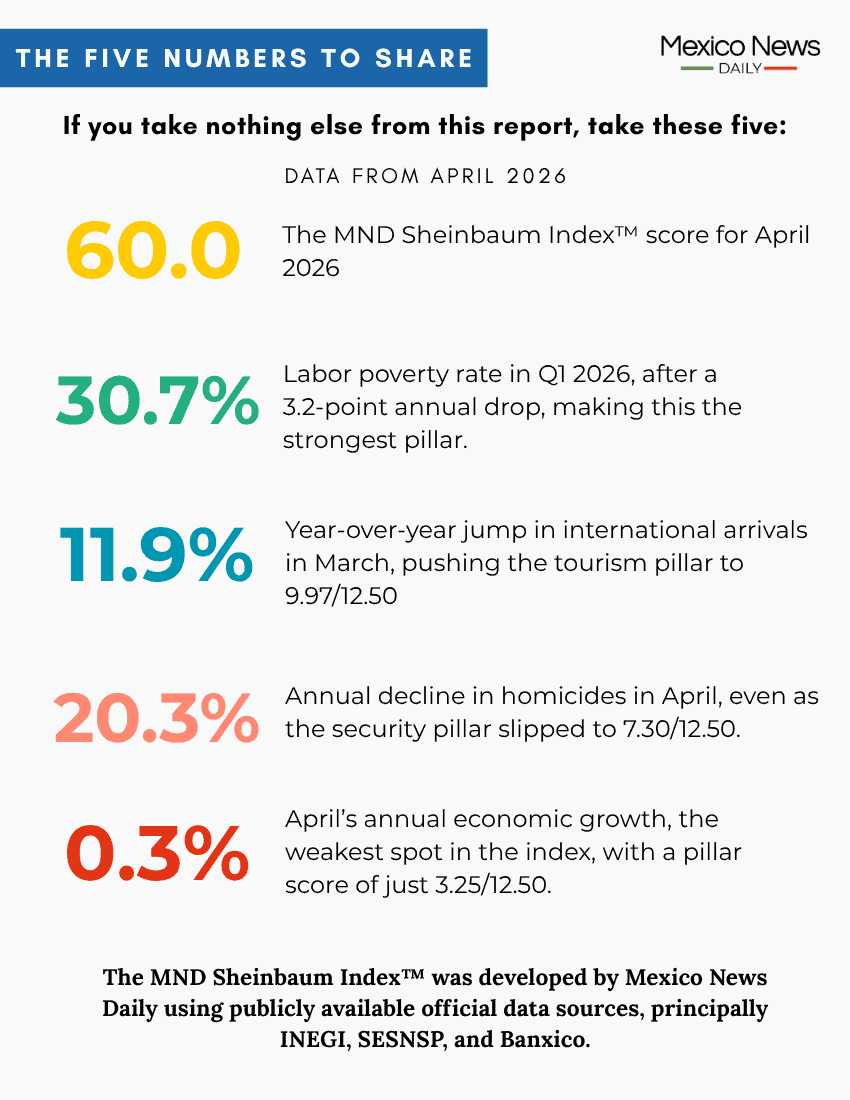
Five top numbers from the MND Sheinbaum Index™ April 2026

How the Index Works

Each month, we use the MND Sheinbaum Index™ methodology to calculate a single score out of 100. The Index has eight equally weighted pillars — each contributing a score of up to 12.5 points to the final composite out of 100. Each pillar score is calculated using raw data, which is mainly sourced from the national statistics agency INEGI.

Here is a short guide to the significance of a Sheinbaum Index score:

  • 85–100: Exceptional — administration performing at a high level across nearly all indicators.
  • 75–84: Excellent — administration performing well across most indicators.
  • 60–75: Room for improvement — meaningful strengths, some areas of concern.
  • 50–60: Mixed — passing marks overall.
  • Below 50: Broad underperformance — more indicators below benchmark than above.

The 8 pillars and how they are scored 

1. Inflation:

In this pillar, we measure how close Mexico’s headline inflation rate is to the Bank of Mexico’s 3% target. On-target scores 100; each percentage point above costs 20 points. For this pillar and all others, the raw score out of 100 is converted to a number out of 12.5, reflecting the actual contribution it makes to the overall MND Sheinbaum Index™ score.

2. Approval rating:

The score for this pillar is derived from the presidential approval ratings yielded by two leading polls, those conducted on a monthly basis by El Financiero and Mitofsky/El Economista. The average of the two approval ratings produces a percentage score, which is then converted into a score out of 12.5.

3. Economic growth:
In this pillar, annual GDP growth is benchmarked at 2%, which scores 60. Each percentage point above adds 20 points to the pillar score; each point below deducts 20. A year-over-year economic contraction scores zero.
4. Security:

This pillar tracks the year-on-year change in the national homicide rate, per the National Public Security System data reported at President Sheinbaum’s morning press conference. A 0% annual change scores 30 — because stagnation on violence is not good enough. A 50% reduction scores 100.

5. Employment:

This pillar is equally weighted between year-on-year changes in unemployment and informality. For both components, a score of 50 is neutral — meaning the indicator is exactly where it was a year ago, neither better nor worse. For unemployment, every 0.1 percentage point improvement or deterioration adds or deducts 5 points. For informality, each full percentage point of improvement adds 20 points, while each point of deterioration deducts 20.

6. Business confidence:

This pillar is equally weighted between INEGI’s monthly business confidence score and the most recently published foreign direct investment growth rate. FDI indicates whether the international business community believes in Mexico’s trajectory; business confidence data reflects domestic private sector sentiment.

The business confidence sub-component anchors at 50 — a neutral INEGI reading scores 50, with each one-point index shift adding or deducting 5 points. FDI anchors lower: zero growth scores only 40, with each 10 percentage points of growth adding 20 points, capped at 100 for growth of 30% or above.

7. Tourism:

This pillar looks at year-on-year growth in international visitor arrivals. Zero growth scores 50, while 20% growth in arrivals hits the 100 ceiling and a 20% reduction reaches the 0 floor. This pillar updates on a one-month lag as INEGI’s tourism data is published approximately six weeks after the conclusion of the reference month.

8. Labor poverty:

This pillar is equally weighted between the share of Mexicans living in households where combined labor income is insufficient to cover a basic monthly food basket per person (the labor poverty rate), and real per capita income growth. INEGI publishes data on these two components on a quarterly basis.

For labor poverty, a score of 50 is given if there is no year-over-year change in the rate. Each percentage point improvement adds 10 points, meaning that a reduction of five percentage points or more gets a score of 100. A score of 0 is given for an annual increase of five percentage points or more in the labor poverty rate.

For real income, each percentage point of annual growth adds four points to the neutral score of 50, benchmarked at 0% year-over-year growth. Therefore, 12.5% growth achieves a score of 100. Any decline in income is penalized, with a 12.5% reduction scoring 0.

* MND acknowledges that President Sheinbaum does not directly control outcomes in all eight pillars. For example, global commodity prices and tariff decisions in Washington can affect Mexico’s inflation and growth rates. The Index measures what is happening in Mexico on Sheinbaum’s watch. 

A note on education and healthcare

Two pillars conspicuously absent from the Index are education and healthcare — not because they don’t matter, but because official data on them is not published monthly, or even quarterly.

The MND Sheinbaum Index over the past 5 months  

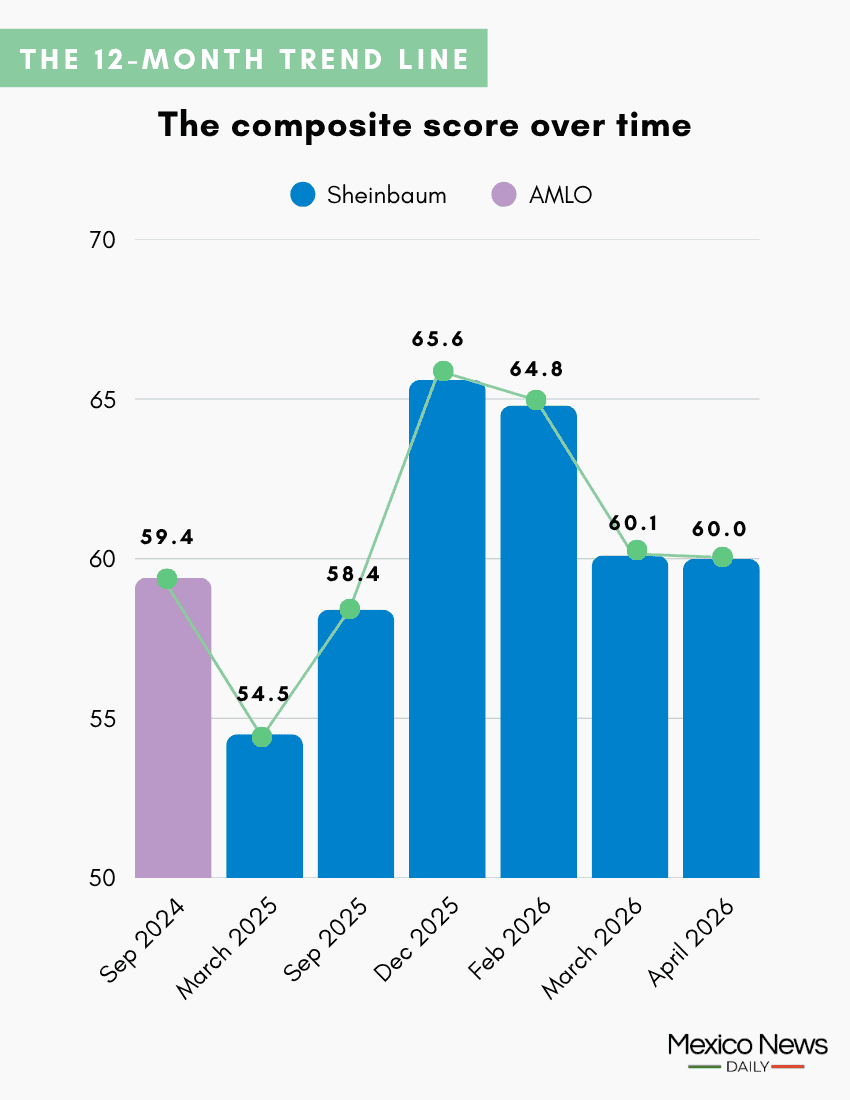
We have now calculated MND Sheinbaum Index™ scores for the first four months of 2026 and the final month of 2025. Over that period, the index score has remained in the 60s, peaking at 65.6 in December and bottoming out at 60.0 in April.

MND Sheinbaum Index™ scores leading up to April 2026

The peak in December was supported by year-over-year economic growth of 2.4%, an annual inflation rate only 0.69 points above the Bank of Mexico’s 3% target and a year-over-year decline in homicides of almost 30%, among other factors.

The two-point month-over-month decline to an index score of 63.7 in January was due to factors such as  a reduction in the annual economic growth rate to +0.5%, a slight increase in inflation and waning business confidence due to deteriorations in both components of that pillar. However, some pillars of the index did improve in January compared to December, including security, due to a 34% year-over-year decline in homicides.

The index score improved slightly in February to reach 64.8. Stronger economic growth (+1.2%), a slightly higher aggregate approval rating for Sheinbaum (70.6%) and a lower year-over-year increase in the informality rate (+0.3 percentage points) contributed to the higher index score.

The nearly 5-point deterioration of the index score to 60.1 in March was due to an increase in the headline inflation rate (4.59%), slower economic growth (0.5%) and a smaller — albeit still significant — decline in homicides (-31.4%), among other factors.

The decline in the index score to 60 in April marks the second deterioration in as many months. We explain what happened in each of the pillars in April below.

MND Sheinbaum Index pillars for April 2026

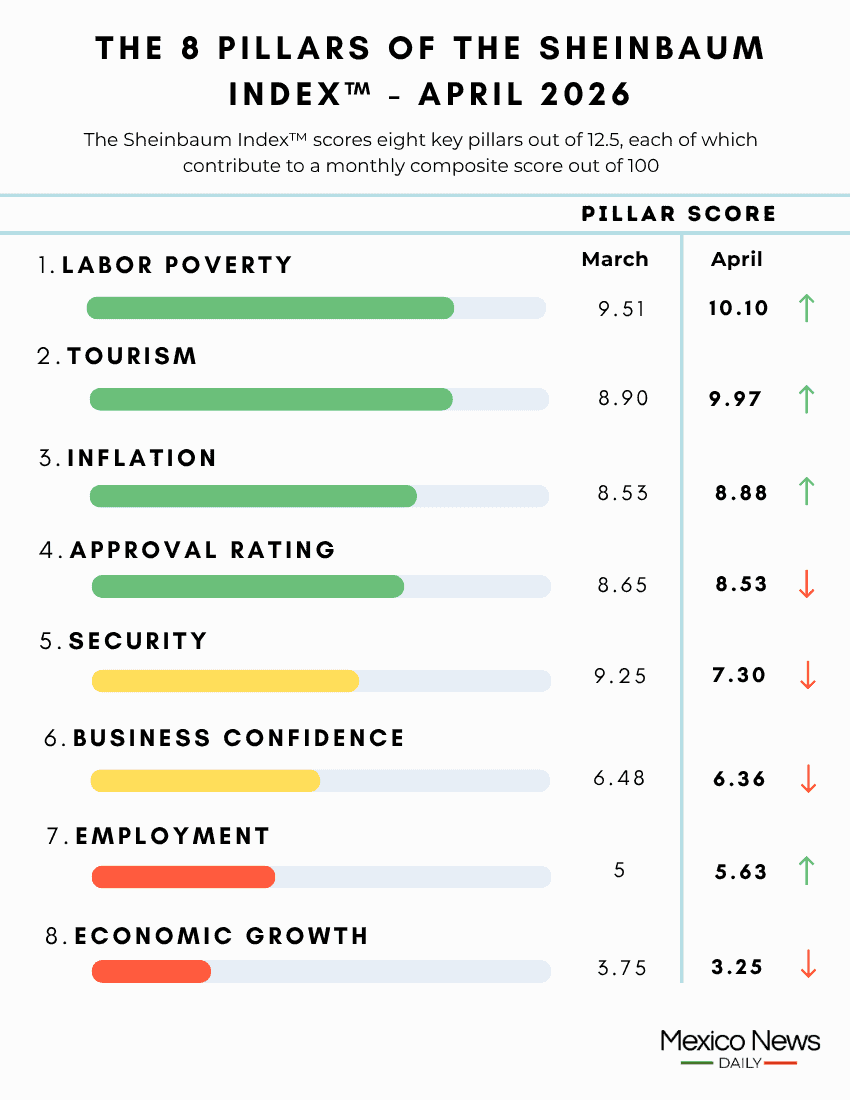
Each pillar is given a stoplight color indicating a strong performance (green), an average performance (yellow) or a poor performance (red). An upward pointing arrow ⬆️ indicates that the pillar score improved compared to March. A downward pointing arrow ⬇️ indicates a deterioration in the pillar score.

A visual summary of MND Sheinbaum Index™ April 2026 pillar scores

🟢 ⬆️ LABOR POVERTY (10.10 out of 12.50)

The labor poverty pillar was once again the top contributor to the overall index score. The score increased from 9.51 in March to 10.10 in April thanks to improvements in both pillar components. The labor poverty rate decreased 3.2 percentage points annually to 30.7% in the first quarter of 2026. Real incomes increased 7.4% year-over-year.

🟢 ⬆️ TOURISM (9.97 out of 12.50 — This pillar has a one-month lag):

International arrivals increased 11.9% in March, up from an 8.5% rise in February. The double-digit increase was particularly notable as it came after widespread violence in Mexico in late February triggered by a Mexican military operation that resulted in the death of Jalisco New Generation Cartel leader Nemesio “El Mencho” Oseguera Cervantes. The tourism pillar score increased from 8.90 in March (based on February data) to 9.97 in April (based on March data).

🟢 ⬆️ INFLATION (8.88 out of 12.50): 

Mexico’s annual headline inflation rate eased from 4.59% in March to 4.45% in April. The inflation pillar score consequently increased to 8.88 from 8.53 a month earlier.

🟢 ⬇️ APPROVAL RATING (8.53 out of 12.50) 

Sheinbaum’s approval rating fell to 68.2% in April from 69.2% a month earlier. At the time of publication, El Economista/Mitofsky had not published poll results for April so we carried over the 68.4% result from March. Per El Financiero, the president’s approval rating fell to 68% in April from 70% in March. The approval rating pillar score fell 0.12 points from 8.65 in March to 8.53 in April.

🟡 ⬇️ SECURITY (7.30 out of 12.50):

The pace of the reduction in homicides slowed for a third consecutive month in April. The year-over-year decline last month was 20.3%, below the 31.4% and 35% reductions reported by the government for March and February, respectively. The security pillar score consequently fell from 9.25 in March to 7.30 in April. A change in the stoplight color from green to yellow reflects that deterioration.

🟡 ⬇️ BUSINESS CONFIDENCE (6.36 out of 12.50) 

Mexico’s business confidence score, as measured by a monthly INEGI survey, fell to 48.2 in April from 48.4 in March. In this second edition of the index, we replace the foreign direct investment result for 2025 (+10.8%) with the result for the first quarter of 2026, which the federal Economy Ministry announced this week. FDI increased 10.4% in Q1 compared to the same period of last year. Due to the slight decreases in both business confidence pillar components, the pillar score fell to 6.36 from 6.48 in March.

🔴 ⬆️ EMPLOYMENT (5.63 out of 12.50)

Mexico’s unemployment rate was 2.5% in April, unchanged from the same month of 2025. The unemployment score improved compared to March, as the jobless rate increased 0.2 points in that month. Mexico’s informality rate — the percentage of all workers who work in the vast informal sector — increased 0.5 points annually to 55.2% in April. The year-over-year growth in the informality rate was unchanged from March. Due to the improvement in the unemployment score, the pillar score increased 0.63 points to 5.63 in April from 5.0 in March.

🔴 ⬇️ ECONOMIC GROWTH (3.25 out of 12.50)

Year-over-year economic growth in April was 0.3%, according to preliminary data from INEGI. That figure represents a 0.2 percentage point slowdown from the growth rate recorded in March. The economic growth pillar score consequently fell from 3.75 in March to an even weaker 3.25 in April.

What to watch

The next MND Sheinbaum Index™ will focus on the month of May.

Here are three things to look out for in the May Index:

  • Inflation: Data for the first half of May indicates that the score for the inflation pillar will continue to improve. INEGI reported last week that the annual headline rate was 4.11% in the first 15 days of May, a significant improvement from the 4.45% reading for April as a whole.
  • Security: It appears likely that the security pillar score will also improve in May. Data presented by the federal government this week showed that homicides were down 31.4% annually so far in May. A similar decline for the month as a whole would represent a significant improvement from the 20.3% decrease in homicides recorded in April.
  • Tourism: While the labor poverty pillar was once again the top contributor to the overall index score in April, the tourism pillar was not far behind. If international arrivals increase 12.3% or more in April (remember this pillar has a one-month lag), tourism could replace labor poverty as the top contributor to the May index. The score for the labor poverty pillar won’t change in the May index as the most recent data will still be that for the first quarter of 2026, which INEGI published this week.

Mexico News Daily 

Sheinbaum reveals the winner of her World Cup ticket: Friday’s mañanera recapped

1
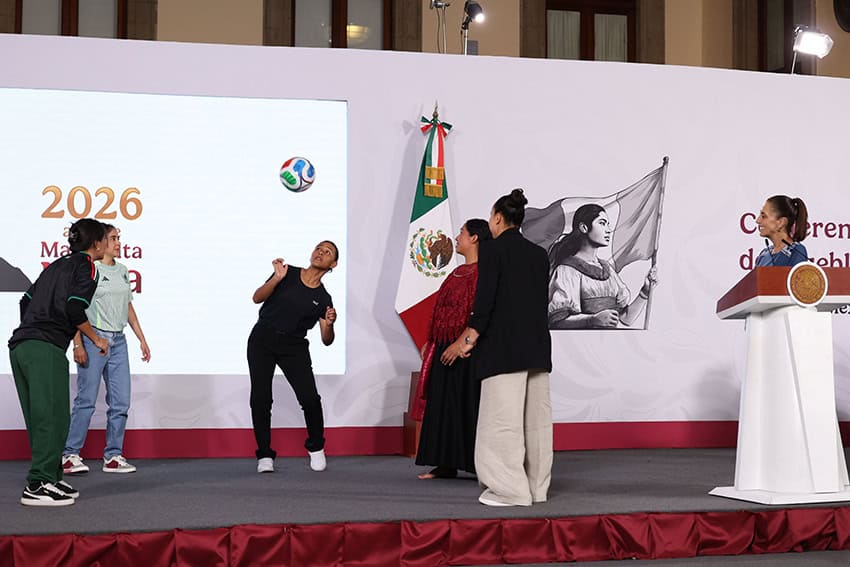
President Sheinbaum poses with juggling contest winner Yolett Cervantes and a giant World Cup ticket
Yolett Cervantes, a 21-year-old Indigenous woman from Veracruz, won the president's soccer juggling competition and with it, a ticket to the World Cup's inaugural match in Mexico City. (Carlos Ramos Mamahua / Presidencia)

Sheinbaum’s mañanera in 60 seconds

  • World Cup ticket goes to Veracruz woman: Yolett Cervantes Cuaquehua, a 21-year-old Indigenous woman from Tlaquilpa, Veracruz, won Sheinbaum’s ticket (No. 00001) to the June 11 opening ceremony and Mexico vs. South Africa match, beating out entrants in a ball-juggling video contest open to women age 16–25.
  • 🎟️ Three additional tickets awarded: Mexico City Mayor Clara Brugada and Tourism Minister Josefina Rodríguez also donated their World Cup tickets as prizes; the other winners of the juggling contest came from Gustavo A. Madero and Iztapalapa in Mexico City, and Puerto Escondido, Oaxaca.
  • 🎤 Winners’ remarks and Sheinbaum’s words: Ticket winner Yolett Cervantes thanked the president for “taking us into account” and called for the continued promotion of women’s football. Sheinbaum described the four winners as “the pride of Mexico,” saying they would represent the entire country at the World Cup. She thanked them for their effort, discipline and passion.
  • 🏟️ Brugada highlights CDMX preparations: The mayor declared that “football has no gender, no owner,” and spoke about World Cup preparations including 18 football festival sites across the capital, a Guinness World Record wave attempt on Paseo de la Reforma on June 6, an upcoming elevated park inauguration and the near-completion of renovations at 20 Metro stations.

Why today’s mañanera matters

Almost three months ago, President Claudia Sheinbaum announced that a soccer ball juggling contest would be held to find a young woman to represent her — and Mexico as a whole — at the opening ceremony and match of the FIFA men’s World Cup, which will take place in Mexico City on June 11. To participate in the contest, young women aged 16 to 25 had to submit a video in which they appear juggling a ball as dexterously as they can.

On Friday morning, the winner of the contest — and Sheinbaum’s No. 00001 ticket for the opening ceremony and Mexico versus South Africa match — was announced.

Juggling contest winners show off their skills during the Friday morning press conference.
Juggling contest winners show off their skills during the Friday morning press conference. (Galo Cañas / Cuartoscuro.com)

Mexico City Mayor Clara Brugada and Tourism Minister Josefina Rodríguez also donated their World Cup tickets as prizes in the contest. Thus, three other “winners” (or runners-up) of the soccer ball juggling competition received tickets to World Cup matches in Mexico City, Guadalajara and Monterrey.

The decision of Sheinbaum and other officials to give away their tickets was a manifestation of the federal government’s assertion that the era of privileges for politicians is over. In this case, the privilege of receiving World Cup tickets — the president got hers from FIFA chief Gianni Infantino last August — was turned into recognition of the skill, hard work and talent of four young Mexican women.

Sheinbaum’s World Cup ticket goes to …

Football referee Katia Itzel García, one of the judges of the soccer ball juggling competition, announced that the winner of Sheinbaum’s ticket was Yolett Cervantes Cuaquehua, a 21-year-old woman from the Gulf coast state of Veracruz.

García said that Cervantes — an Indigenous woman from the municipality of Tlaquilpa — is a “clear example that Mexico has talent in every corner of the country,” and an example of “the cultural diversity that makes us feel proud of being Mexican.”

“Her technique with the ball, her ability to control it, her life story and the passion she conveys to us when we see her show us that our Mexico is great, brave and talented,” she said.

After a hug with Sheinbaum, Cervantes, García and the president posed for a photo, with the No. 00001 ticket on prominent display.

Cervantes to Sheinbaum: ‘Thank you for taking us into account’ 

After showing off their impressive juggling skills, including with bare feet in the case of Cervantes, each of the four contest winners made brief remarks.

“Esteemed President Claudia Sheinbaum Pardo, thank you very much for taking us into account and for [giving me the opportunity] to be at a very important event such as the World Cup,” Cervantes said.

“I admire you and I respect you a lot for being the first woman president of our beautiful country,” she added.

“I don’t think there are words right now to say how I feel. I’m very excited. Thank you for taking us into account. Let’s keep promoting women’s football because all women have their own talents and qualities,” Cervantes said.

The winners of the other World Cup tickets were Karla Itzel Peña Vilchis of Gustavo A. Madero, Mexico City; Briana Ameli Medina Cortés of Iztapalapa, Mexico City; and Daira Yaretzi Díaz García of San Pedro Mixtepec (Puerto Escondido), Oaxaca.

Sheinbaum described the four women as “the pride of Mexico.”

“They’re not going to represent the president or the mayor, they’re going to represent Mexico,” she said.

“… Thank you very much for your effort, for your discipline, for the love of what you do,” Sheinbaum told the contest winners.

Brugada: ‘Football has no gender’

Mayor Brugada began her mañanera remarks with a declaration.

“Football has no gender, no owner,” she said.

“It has no borders, it belongs to the people and girls and women,” Brugada said.

Later in her address, the mayor noted that Mexico City will have 18 “football festival” sites during the World Cup, spaces where people will be able to watch the matches live and take part in cultural and sports activities. An official FIFA Fan Festival site is currently being set up in the Zócalo, Mexico City’s main square.

Brugada invited people to join the attempt to break the Guinness World Record for the largest wave (or Mexican wave). The attempt at setting a new record will take place on Saturday, June 6, on Paseo de la Reforma, the boulevard that leads into Mexico City’s historic center.

Brugada highlighted that a lot of work has gone into preparing the capital to host five World Cup matches, including the opener.

“We’re receiving this World Cup with over 2,000 projects that we’re working on here in the city,” said the mayor, who has faced criticism for the extensive use of the image of ajolotes (axolotls) in the city, and for the beautification of public infrastructure in the capital, such as pedestrian bridges, by painting it purple.

“In the coming days we’re going to have the inauguration of the elevated park,” Brugada said, referring to a park situated above Calzada de Tlalpan — a major north-south route in Mexico City.

She also said that the renovation of 20 Metro stations will be completed in the coming days.

By Mexico News Daily chief staff writer Peter Davies (peter.davies@mexiconewsdaily.com)
From Cancún to Mahahual, sargassum influx puts nearly 50% of Riviera Maya beaches on red alert

0
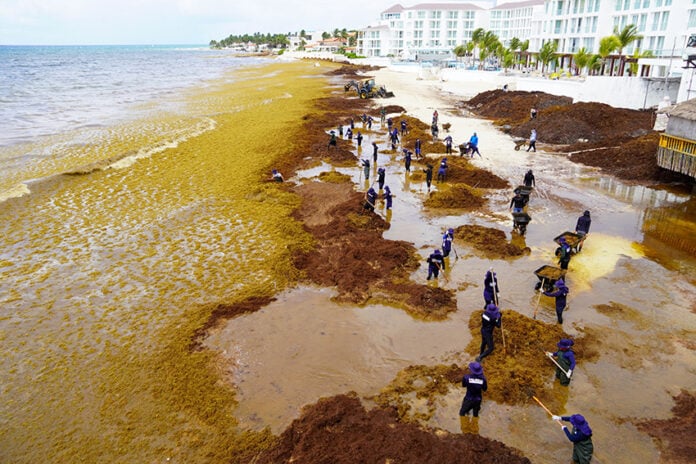
Dozens of sargassum collection workers clean a large Playa del Carmen beach covered in sargassum seaweed
Workers clear sargassum from a beach in the resort town of Playa del Carmen, where cleanup crews struggled to keep up with the volume of seaweed washing ashore this week. (Elizabeth Ruiz / Cuartoscuro.com)

Nearly half of Quintana Roo beaches are currently on red alert due to a massive influx of sargassum seaweed in recent days, making conditions unsuitable for swimming or enjoying the otherwise turquoise waters.

Head of the Sargassum Monitoring Center in Quintana Roo Esteban Amaro reported that substantial amounts of seaweed accumulating offshore triggered the alert in 65 of the 140 beaches monitored in the state.

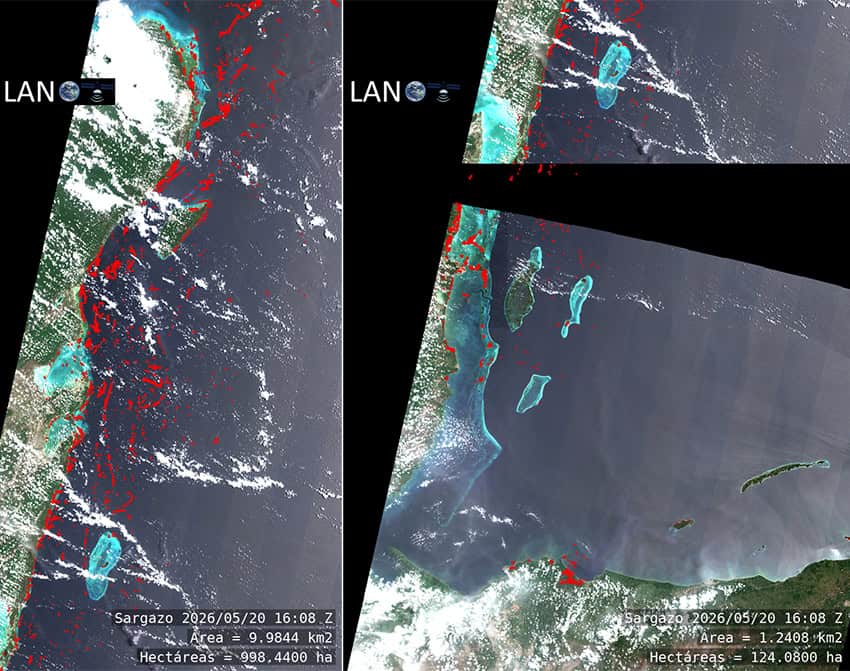
A colorized satellite image from the National Earth Observation Laboratory (LANOT) at UNAM shows sargassum on and near shore in Quintana Roo
A colorized satellite image from the National Earth Observation Laboratory (LANOT) at UNAM shows sargassum on and near shore May 20 in northern Quintana Roo (at left) and the southern part of the state (at right). (LANOT)

“We have observed a significant increase in the amount of sargassum in the first five nautical miles off the coast in the state of Quintana Roo,” he said.

There are 34 beaches on red alert in the northern part of the state, Amaro said, including numerous beaches in Cancún, Playa del Carmen and Tulum. In southern Quintana Roo, there are 31 beaches on red alert, mainly in and near Mahahual, another popular tourist destination.

Forecasts indicate sargassum will continue to increase on the Riviera Maya’s shores. According to monitoring reports, the first week of June will see larger quantities of sargassum wash ashore in both the northern and southern parts of the state, partly due to intensifying strong winds coming from the southeast.

The amount of sargassum has overwhelmed local business owners, who said it has exceeded the capacity of cleaning brigades.

A sargassum collection workers shovels seaweed in Playa del Carmen on Tuesday.
A sargassum collection workers shovels seaweed in Playa del Carmen on Tuesday. (Elizabeth Ruiz / Cuartoscuro.com)

Earlier this month, the Navy announced the deployment of an additional 150 personnel to support the cleaning and containment efforts of the seaweed before it reaches the shores of Quintana Roo. Furthermore, authorities added a new sargassum collection vessel that can collect up to 600 tons daily on the high seas, compared to the 250 tons that were previously collected.

But collection efforts don’t come without risks for workers. A new study conducted by the National Autonomous University of Mexico (UNAM) found that workers who collected sargassum on beaches in Puerto Morelos, Playa del Carmen and Mahahual suffered headaches, rashes, nausea, difficulty breathing and other health issues after exposure to the hydrogen sulfide that is released by the algae as it decomposes. 

With reports from La Jornada  and El Economista