Home Blog Page 844

In my home, the fight against humidity is never-ending

0
Leaf with dew
In tropical areas, the humidity that allows lush, verdant landscapes everywhere also wants to get inside your home's walls. (Photo: Milada Vigerova/Unsplash)

This week, my partner and I decided to spruce up the house and do some deep cleaning in addition to taking down and putting away the Christmas decorations. 

I’m keenly aware that this may sound like an impossibly boring and tedious task to some, but I take great pleasure in beautifying and renewing my physical spaces, especially when others are on board to do it with me. 

As far as I’m concerned, cleaning, organizing and decorating is basically very accessible witchcraft: what a different feel you can give a place!

Those of you who’ve been reading my column for more than a couple years might remember my passion for organization and good design. Indeed, if I could choose a superpower, it would be invisibility — not so I could see everybody naked (meh, I’ve seen us…we’re all kind of equally funny-looking) but to peer inside all the buildings and houses that raise my curiosity, especially here in Mexico where the lack of visible yards and walls that go right up to the sidewalk leave so much to the imagination. 

This summer, we had the fortune of renting what is basically our dream house, in the close-to-downtown neighborhood I’d been fantasizing about living in for a while. The top floor is filled with light from gigantic windows and has those high, wood-beamed ceilings that I think make any place look both cozy and elegant. 

The bedrooms are downstairs — and therefore darker, perfect for sleeping — and there is more storage space than I know what to do with, a rarity in most places I’ve rented. There’s a bodega in the back where we keep our budding beer production and a large yard (also a rarity) that I’m still trying to decide what to do with. 

The place is huge and fancy, with opulence but also with those little detalles that all Mexican homes, at least around where I live, have: mainly, humidity, humidity and more humidity.

In the tropical areas of Mexico (like Veracruz, where I live) this is a never-ending battle. 

In addition to my city just being an overall wet place, everything is built with concrete, which is porous. This means that water seeps through wherever it can and eventually starts battling against whatever paint you’ve got on the inside of your walls. By the time the humidity gets to the inside of the wall, it looks like there’s air bubbling up under the paint. 

If you’re like me and can’t help poking at it, you’ll find that the space underneath might even have a fuzzy,  white substance already. In Spanish, this is called salitre, and it’s basically salt residue that’s a result of the water mixing with the minerals in the concrete. 

While it’s not mold, I can’t imagine that it’s fantastic for people’s health to be trapped inside humid places like this, and I’ve long suspected that when people blame the cold weather for respiratory trouble, it might have more to do with staying inside of cold, humid places with all the doors and windows closed, letting whatever viruses they’ve picked up proliferate. 

I’ve met people who have been diagnosed as “allergic to humidity,” and honestly, I just can’t imagine how they manage in a city like mine, where shoes left in a closet for more than a few months will come out moldy.

Figuring out how to get rid of humidity indoors is something that I’m still exploring. After talking with my buddies at the local Comex paint store, where I spend a hefty portion of my income, I’ve settled on muriatic acid for getting rid of it with a special indoor sealant paint on top. Because the stuff on the outside of those walls is damp soil and not air, that’s as far as I can go, but I’ve got high hopes.

By the way, do not take this as technical advice; these chemicals are dangerous, and you need a step-by-step guide from a professional if you want to try it yourself, and that’s not me.

I also need to figure out how I’m going to “even” the wall after finishing this process but before I repaint — plaster, maybe? But I am nothing if not motivated when it comes to home improvement. In the meantime, I’ve been closely observing the solutions that other people have found. 

Many, quite honestly, simply let it be. Humidity is a fact of life around here, and there are enough other things to worry about. Tile is a popular choice to cover walls and is at least effective at keeping the humidity on the other side. 

Most people simply depend on good old-fashioned ventilation. 

You might have noticed that few houses around here are built to be perfectly sealed: windowpanes are thin and flimsy, and gaps between windows and doors and their corresponding frames are common. And I realized earlier this week while using a pressure washer on the outsides of those big, luxurious windows in my home that even spaces that look sealed are not.

The battle against humidity at my own house continues in the meantime as I try to find the right balance between doing what I can and relaxing about the inevitable, a goal well-worth pursuing in many areas beyond just home improvement.

Note: comments can now be made on my articles via Mexico News Daily’s social media pages (they appear on MND’s Facebook and Instagram pages). And, as always, you can find me through my website or write to me directly at sarah.devries@mexiconewsdaily.com.

Sarah DeVries is a writer and translator based in Xalapa, Veracruz. She can be reached through her website, sdevrieswritingandtranslating.com

San Miguel de Allende attracts more luxury real estate buyers

0
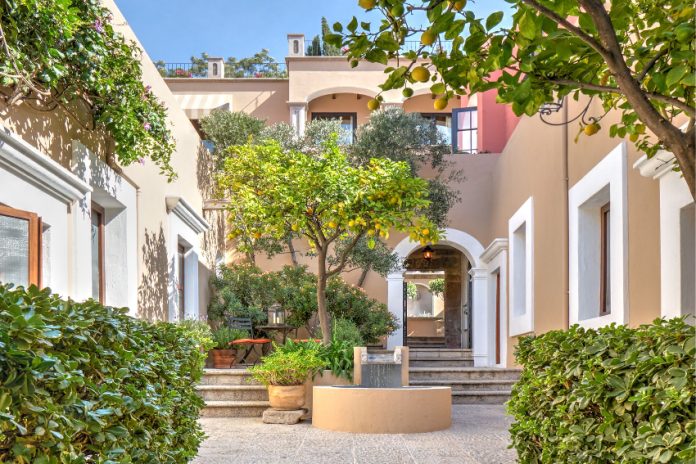
A gentle climate allows for the perks of indoor-outdoor living in San Miguel de Allende. (Photo: CDR San Miguel)

From brand partner | CDR San Miguel | Forbes Global Properties

Mexico is becoming one of the largest second home markets in North America. With tourism firmly back, many holiday-goers are choosing to become homeowners in one of the most desirable Mexican locations: San Miguel de Allende.

Year after year this spirited little town has been highlighted in Travel & Leisure and Condé Nast as the place to visit and relocate. Hollywood a-lister Lily Collins was even spotted strolling along its colorful cobbled streets during the holiday season. This is great news for the country’s real estate market and particularly luxury real estate specialists. 

| CDR San Miguel | Forbes Global Properties has 25 years of experience in luxury real estate in this world-class town. Here they share some of their observations, thoughts, and reflections on the current property market trends in Mexico and why it’s booming. 

Ann Dolan (left), Nancy Howze and Jim Dolan are the co-owners of CDR San Miguel.

So, why are so many people flocking to get a piece of luxury real estate in San Miguel de Allende? The answer is simple: this lively, almost 500 year-old town located at 6,000 feet, has a lot to offer foreign buyers.

If you just take the obvious advantages, like perfect year-round weather surrounded by thermal hot springs, reduced cost of living, a vibrant culture and rich history, 400+ art galleries and award-winning restaurants, for many vacationers, choosing a second home in San Miguel may be a tantalizing prospect. 

In the past, the most common second-home buyers in San Miguel were retirees looking to kick back and relax in the Mexican sun, but these trends are quickly changing.

Photo: CDR San Miguel

San Miguel de Allende is now a growing market for luxury real estate among younger families, entrepreneurs, investors, and digital nomads. And thanks to its ideal geographical location and the abundance of daily flights on offer from the U.S into the two closest airports to San Miguel (Queretaro – 1hr and Leon 1.5hrs), the real estate business has been thriving both during and post-pandemic. 

However, moving to a foreign country, or at the very least buying a second home in Mexico, can feel overwhelming and can frighten some potential buyers off.

“It can be a daunting task to buy and sell real estate in a foreign country, especially with another set of laws and in a different language. Our job is to make the entire process as smooth, comfortable, and as easy as possible by going the extra mile,” says Nancy Howze, co-founder and owner at CDR San Miguel. Nancy refers to the multitude of international clients that walk through their doors on a daily basis when visiting San Miguel de Allende, crowned Best Small City in the World for six years in a row. 

Photo: CDR San Miguel

Constantly going above and beyond, CDR San Miguel is known for welcoming newcomers into the community and being trusted advisors in all things San Miguel.

“It’s not just a sale, it’s a service – a relationship that’s established, a lifestyle that’s introduced, and a community that’s created,” Jim Dolan, co-owner at CDR San Miguel de Allende explains. “We’re helping people achieve their dreams.”

In fact Nancy, Jim and his wife, Ann Dolan, all came to San Miguel over 25 years ago and fell in love with the small hilltop colonial town. They all decided to stay, specializing in local luxury real estate and watching San Miguel grow into the dynamic, culturally rich place it is today. 

So, if you find yourself strolling around this whimsical town and can imagine yourself spending more than just a holiday here, maybe allow curiosity to win you over and start making your dream lifestyle a reality today. 

CDR San Miguel Forbes Global Properties will be continuing to share thoughts and insights here about the incredible luxury properties they have to offer

Ebrard announces North American goal to substitute 25% of Asian imports

0
Foreign Minister Ebrard
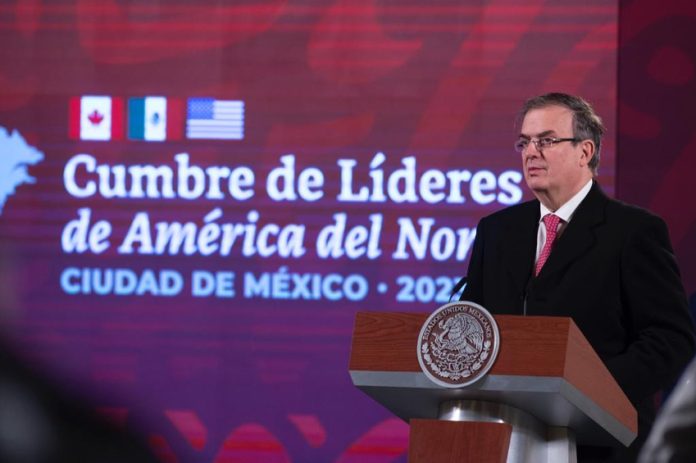
Foreign Minister Marcelo Ebrard at President López Obrador's morning press conference. (Gob MX)

North America aims to substitute 25% of its Asian imports with local production, Foreign Minister Marcelo Ebrard announced at a press conference on Thursday.

The statement came on the heels of the North American Leaders’ Summit (NALS), the trilateral meeting of heads of state that convened in Mexico City this week.

Ebrard explained that substituting Asian imports would move the region more towards self-sufficiency, strengthen regional trade relations and boost economic development.

“It is a huge job we have ahead of us, but with willpower, we can carry it out,” he said. “For Mexico it means multimillion-dollar investments… And this could mean for Mexico more than two [percentage] points of additional growth.”

Shipping cargo
China alone exported US $700 billion to North America in 2021. Rinson Chory/Unsplash

On Tuesday, López Obrador announced the establishment of a 12-person joint committee including four representatives from each country. The committee will work to build the conditions to attract investment in the region, and convince businesses of the benefits of pursuing greater regional integration and self-sufficiency.

Mexico’s imports from China alone were worth approximately US $110 billion dollars in 2021, making the country Mexico’s second-largest import partner after the U.S. Data published by the Bank of México in November indicate Chinese exports to Mexico grew last year, up 28% in the first 8 months of 2022. The United States imported US $550 billion dollars of products from China in 2021, and Canada US $70 billion, for a total of more than US $700 billion across the region.

“[This] means a lot of economic growth for the three countries, especially job creation,” President López Obrador said at the press conference. “And why not produce here what we consume?

The countries have not yet stated a deadline for achieving the ambitious target. Meeting it would require not only huge investments in domestic industrial capacity, but also in resources and infrastructure, such as energy generation.

To this end, Ebrard said that the U.S. and Canada would support Mexico in developing its clean energy output and industrial capacity, particularly in the northern border state of Sonora. The text of the NALS Declaration of North America (DNA) also emphasizes strategies “to forge stronger regional supply chains, as well as promote targeted investment, in key industries of the future such as semiconductors and electric vehicle batteries.”

Ebrard added that progress had also been made in agreeing on protocols for orderly, safe labor mobility between the three countries and regularizing the immigration status of thousands of Mexicans in the U.S.

“It was a very productive and also fraternal meeting, within the framework of the policy of good neighborliness,” AMLO concluded.

With reports from La Jornada, Reuters and El Financiero

Exploring caves, Mexico style

0
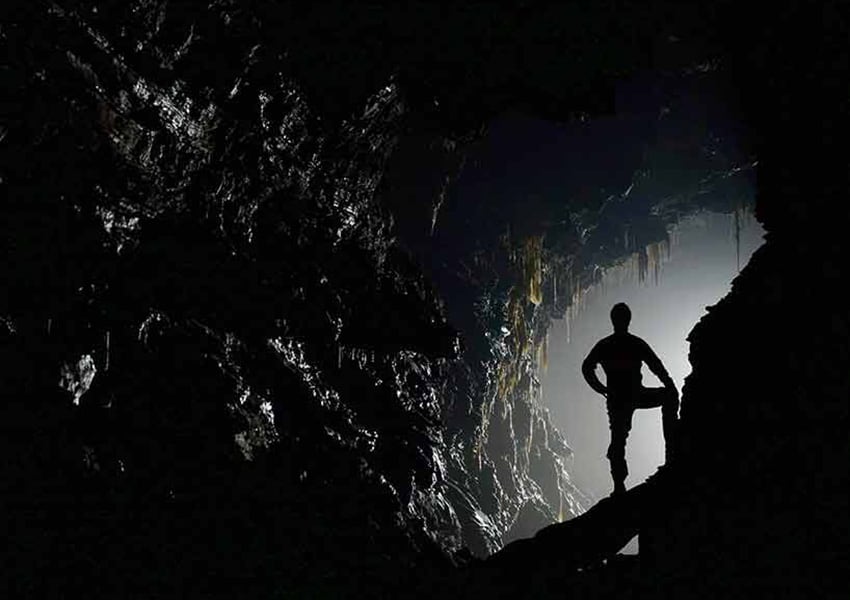
La Cueva de la Luna in Michoacán, Mexico
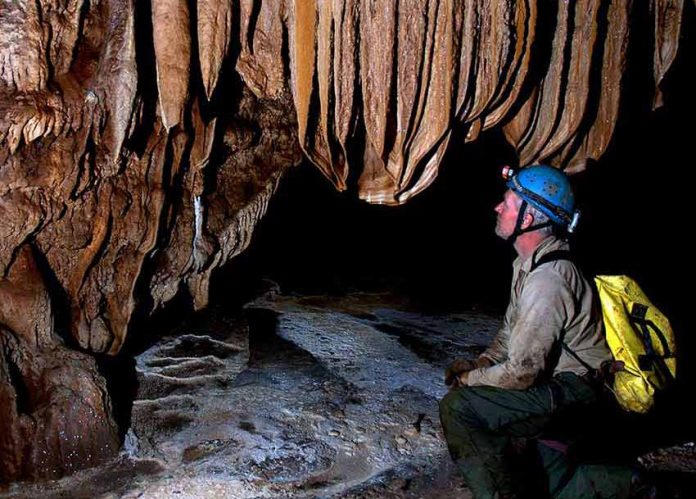
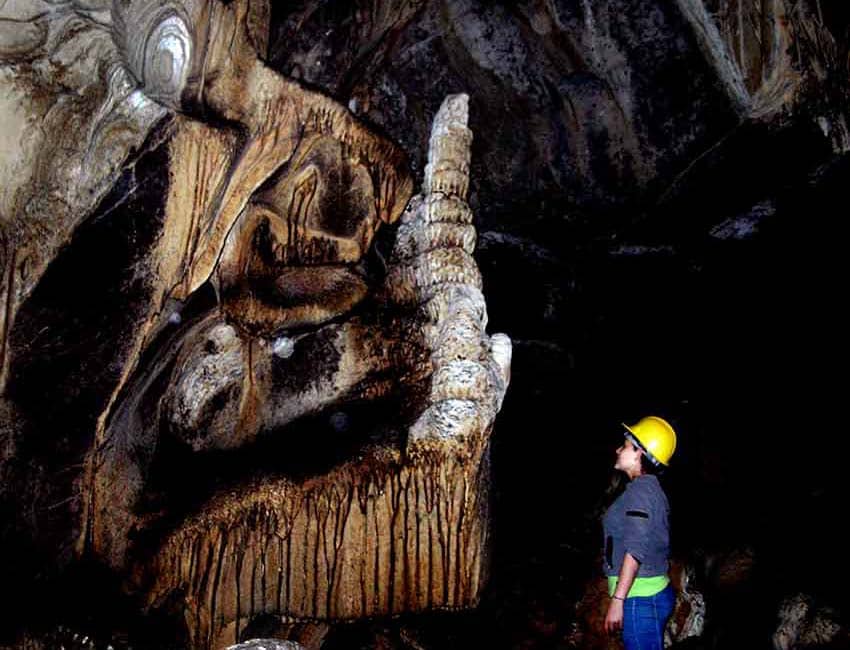
La Cueva de la Luna in Michoacán. Beautiful formations like these are what cavers hope to find at the far end of a hole in the ground.

I have gone hunting for caves all over the world, from Jamaica to Saudi Arabia, but I must admit that in Mexico la exploración de oquedades (the exploration of subterranean holes) has its own special flavor.

We are off to find a cave.

“It’s got to be up ahead, at the base of that hill,” we decide. We walk for 3 km, each of us carrying a heavy rope in addition to backpacks filled with rappelling and ascending gear, at least three lights, lots of batteries, water and, of course, a sturdy helmet.

just outside Jalisco, Mexico’s Altilte Cave
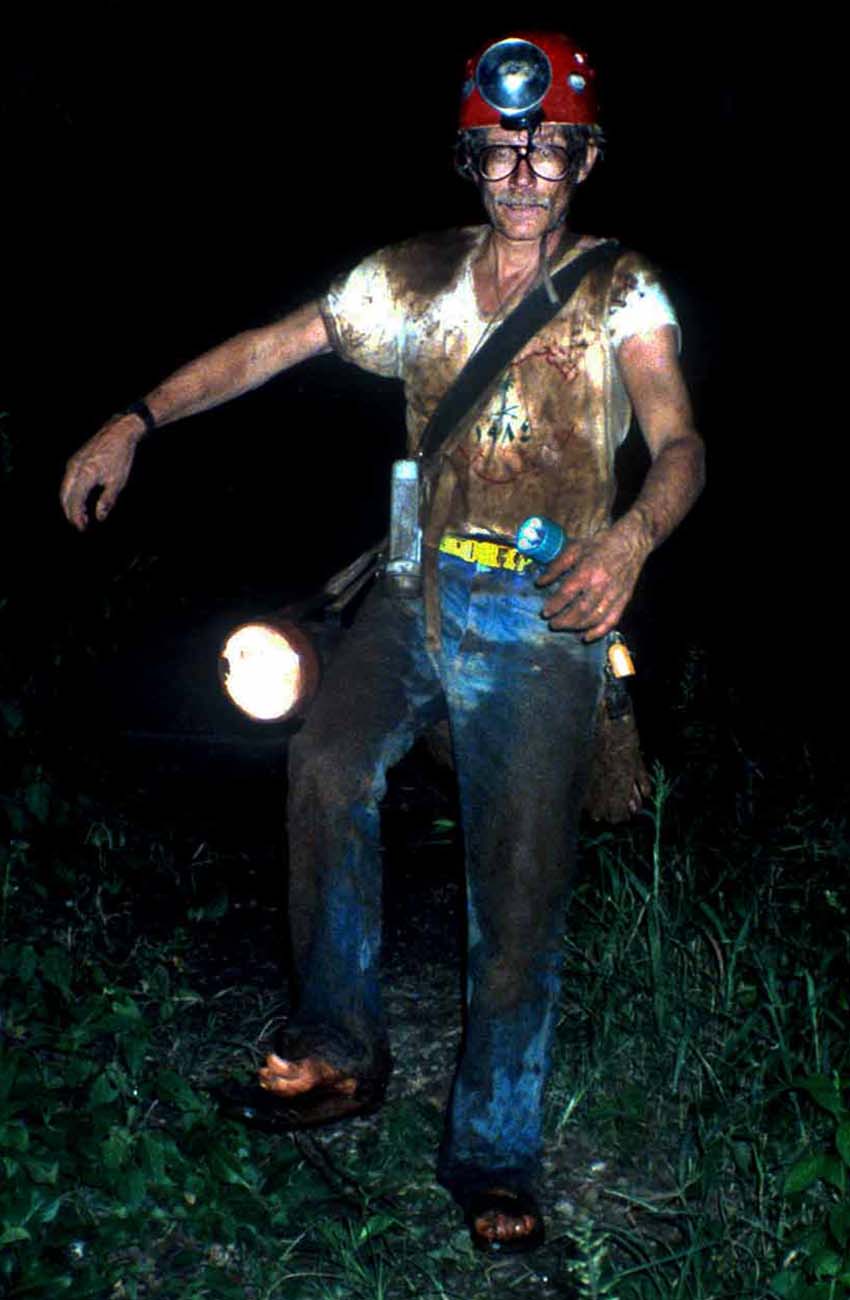
The author is caught stumbling out of Jalisco’s Altilte Cave in Huerta, Jalisco, after a full day of mapping its guano-and-mud-filled passages.

And then we come to a fence. In California, that would be the end of the excursion: “Shucks, private property! Back to the car!”

In Mexico, an alambrado de púas, or barbed wire, fence just poses a problem… Actually, three problems: will I go through it, over it or under it?

Once we’ve passed the fence, who should we run into but the owner of the private property we’ve just invaded.

In some countries, you might be greeted by the blast of a shotgun, but in nearly 40 years of ignoring fences in Mexico, the reaction I’ve had from landowners to the presence of cavers or hikers on their property has inevitably been, “Bienvenidos, amigos!” accompanied by a big smile and an offer to guide us right to the cave we’re looking for.

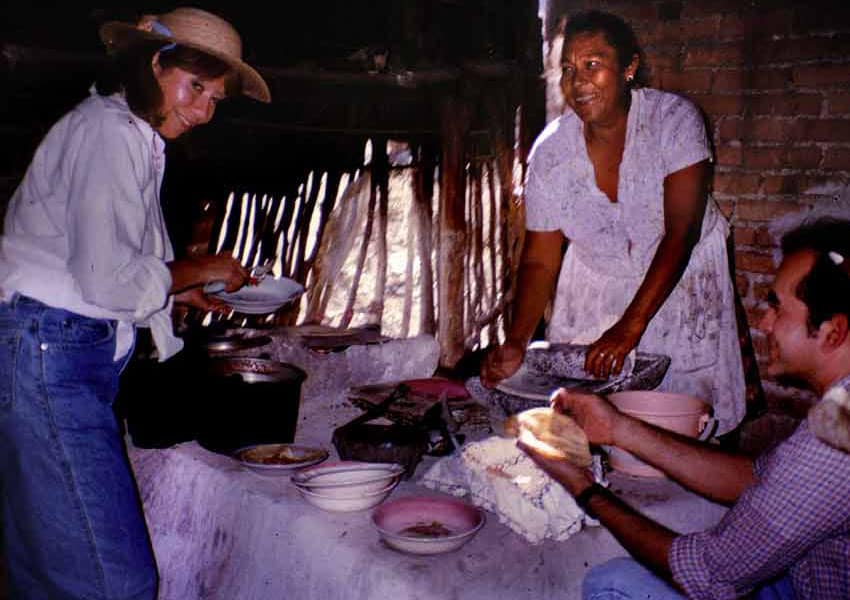
In some cases, this warm welcome has been followed up by a genuine invitation (renewed over and over) to stay for a meal of the most delicious homemade tortillas and frijoles de la olla (slow-simmered beans) imaginable.

The only other place I’ve seen this level of hospitality is among the Bedouins of Arabia.

Cavers head toward the Mázatepec Scoria Volcano near Guadalajara, Mexico
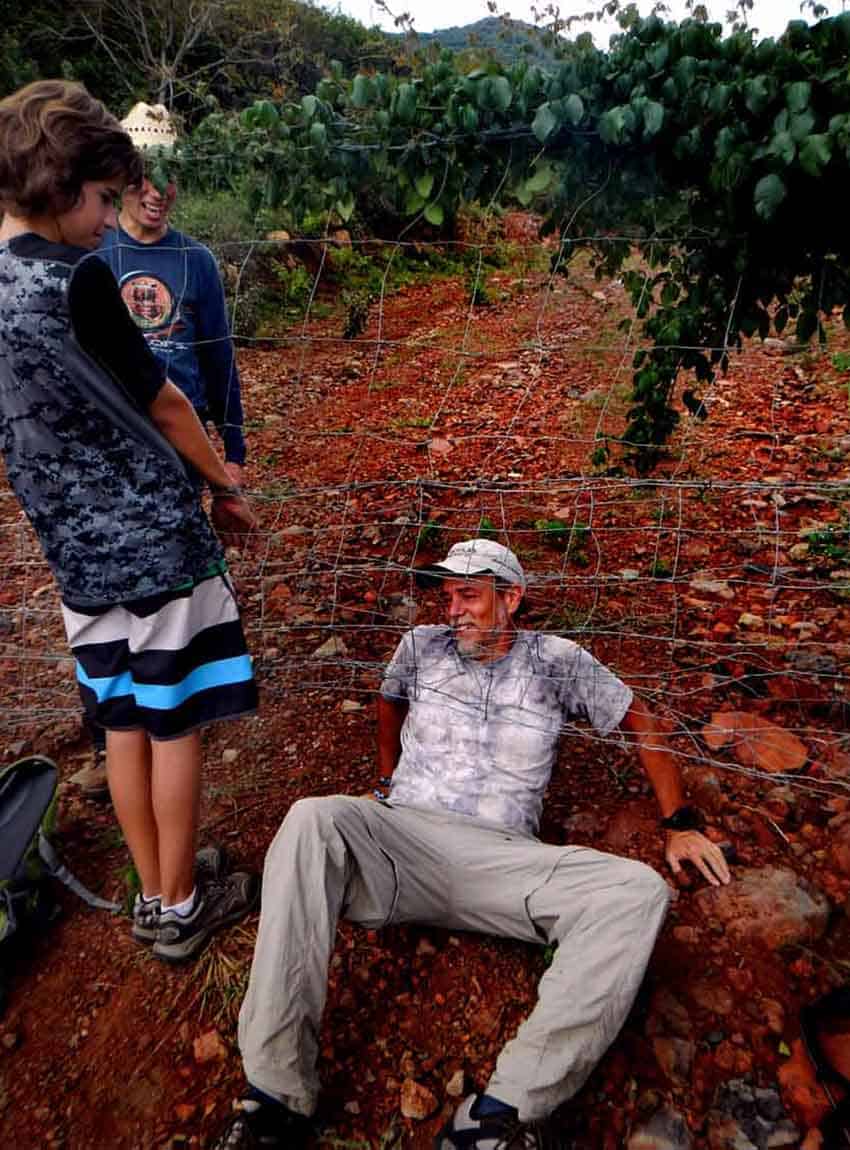
Hikers help one another get past a fence on their way to the Mázatepec Scoria Volcano near Guadalajara.

We arrive at a dark, imposing cave entrance. Inevitably, our guide whispers: “There’s treasure inside this cueva (cave). Long, long ago, a guy went in there and found it and then suddenly, he heard a voice ringing through the cavern: ’TODO O NADA!!!!’ it said, so the poor guy tried to carry all of it out, but tristemente (sadly)…”

Well, this story has been told about nearly every cave and mine in Mexico, and you can read B. Traven’s “The Treasure of the Sierra Madre” to find out what happens in the end to those who are greedy for gold.

As for us cave explorers, the closest we come to treasure is the many holes dug by people looking for it.

Unfortunately, digging a hole in a cave floor produces dust. In Mexican caves, that dust will almost certainly contain spores of Histoplasma capsulatum, a fungus which grows on bat guano. All too frequently, the man who goes looking for treasure ends up getting histoplasmosis instead.

Discovering whether there are caves in a given area is easily accomplished in Mexico by visiting the plaza of a nearby pueblito early in the morning. All you have to do is find an old-timer warming himself on a bench and casually mention the word cueva to him.

This is how we have found most of our caves, all except the elusive Cueva del Bandido (Bandit’s Cave) of Manuel Lozada.

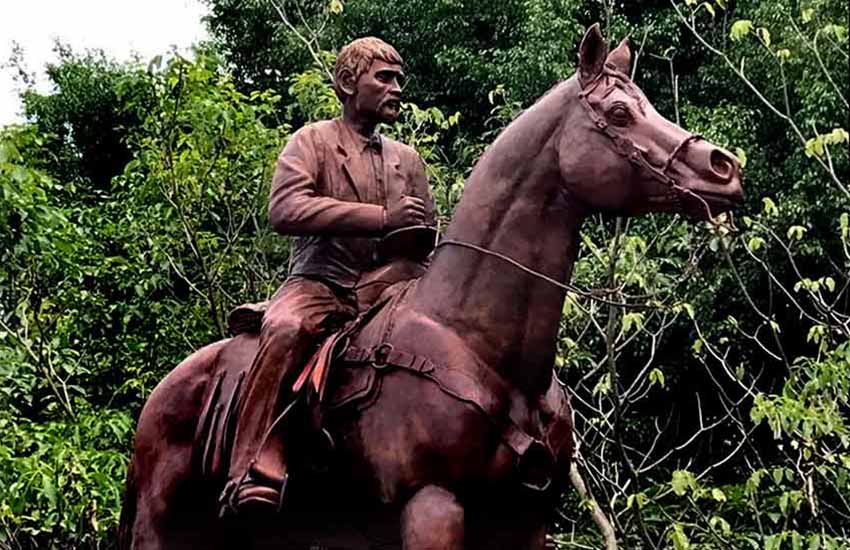
statue of Manuel Lozada in Mexico
A statue of Manuel Lozada, considered the precursor of the agrarian reform movement in Mexico but executed as a bandit in 1873.

I found a reference to this particular cave in a motorist’s guide to Mexico. It claimed that Lozada, hailed as a reformer by many but executed as a bandit in 1873, used to hide his entire army — and all their horses as well — inside a fabulous cave with seven entrances, endless tunnels and a perpetually filled pool of cool drinking water.

This better-than-Disney cave was supposed to be located near the town of San Juan in the state of Nayarit. However, after driving there and interviewing everyone we could find, we came up empty.

There is, however, another San Juan in Nayarit — named San Juan de Abajo — and it’s conveniently located not far from Puerto Vallarta. This one, we figured, would surely lead us to the fabulous, legendary cave.

So, one day in mid-December, my wife Susy, two friends and I drove into dusty, sleepy San Juan de Abajo and walked into a restaurant next to the deserted town square. A woman, busy washing dishes, looked up at us.

“Good afternoon, señora, would you happen to know of a cave anywhere near San Juan?” I asked.

Glancing back towards an open doorway, the woman shouted out of the side of her mouth, still busily scrubbing away, “Oye, Horacio, someone here’s looking for la cueva.”

Mexican woman preparing food for guests
A local landowner prepares handmade tortillas and frijoles de la olla for hikers passing by.

At the words “the cave,” our eyes opened wide. At last we had found it! And obviously we weren’t the first ones to come asking about it.

Jauntily we sauntered into the next room where Horacio and several buddies were deeply engaged in a hard game of dominoes. “Excuse us, please, but we’d appreciate directions to the cave,” I said.

¿La cueva? Sí, caballeros,” he said with a curious glance at Susy. “You’ll find it, oh, seven blocks down, one block past the church.”

Incredible! The entrance to Lozada’s fabled cave was actually inside the town limits!

It was so incredible, in fact, that our friend Jesús ventured to ask… “Hmmm, by the way, how deep is it?”

“Deep?” Bueno, it’s no deeper than right here. Just the same!”

Oaxaca, Mexico’s Sistema Huautla cave system
Deep inside Oaxaca’s Sistema Huautla, the Western Hemisphere’s deepest cave and the longest of the 17 deepest caves in the world. (Photo: PESH)

“You mean we don’t need ropes to get inside?”

“No, señor, you can just walk in,” Horacio replied, giving us another funny look.

“That’s great, a horizontal entrance!” I said. “So what’s inside? Is there a lot of mud? Does it have bats?”

“Look, señor,” replied Horacio, slightly exasperated, “I never heard about any mud or bats in La Cueva… just the girls; that’s all they got!”

Horacio turned back to his dominoes, Susy turned crimson and we bowed out quickly.

Ever since then, we’ve wondered what tales the people of San Juan de Abajo now tell about the kinky preferences of that gringo who traveled such a great distance just to visit a certain local establishment known as La Cueva.

The writer has lived near Guadalajara, Jalisco, since 1985. His most recent book is Outdoors in Western Mexico, Volume Three. More of his writing can be found on his blog.

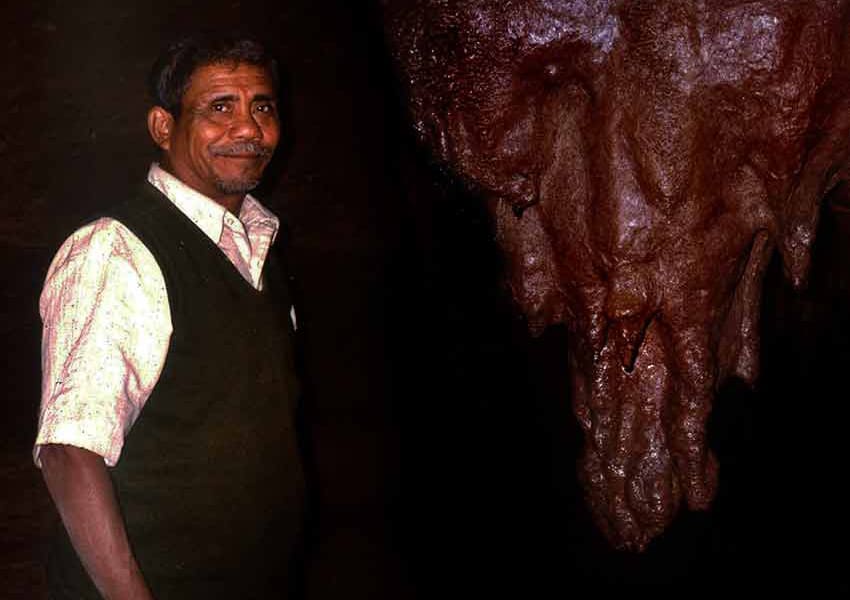
La Cueva de la Palma cave in Jalisco, Mexico
Local landowner Don Rafael gets a guided tour of his own cave, which he had never entered.


La Cueva de la Palma cave in Jalisco, Mexico
La Cueva de la Palma in Jalisco.


tequila bat in Mexico
A Tequila bat in search of night-blooming flowers. (Photo: Filiberto González)

Human Rights Watch raises alarm about militarization in Mexico

0
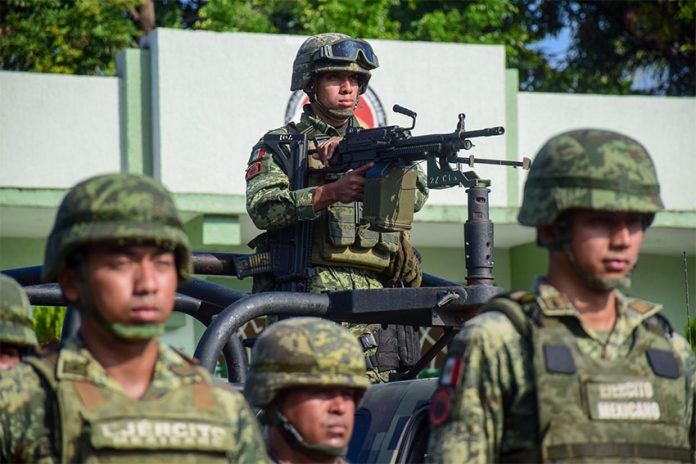
Soldiers in Tapachula, Chiapas
Lawyers of the victim's families have been asked to (Damián Sánchez Jesús / Cuartoscuro.com)

Human Rights Watch has issued a damning 2022 review for Mexico, arguing that President López Obrador’s militarized security policy risks facilitating abuses by security forces while failing to reduce violent crime.

The review notes that homicide rates have reached “historic highs” since AMLO took office in 2018, reaching 28 per 100,000 in 2021 — although this appears to have declined slightly in 2022. As of September, 105,000 people were considered missing, and impunity remains at about 99%.

Furthermore, Mexico is one of the most dangerous countries in the world for journalists and human rights defenders. Fifteen journalists were murdered between January and September 2022 and 12 human rights defenders were killed in the first six months of that year. These abuses are rarely investigated or prosecuted.

Some politicians said the National Guard was not ready to stand alone without domestic military support.
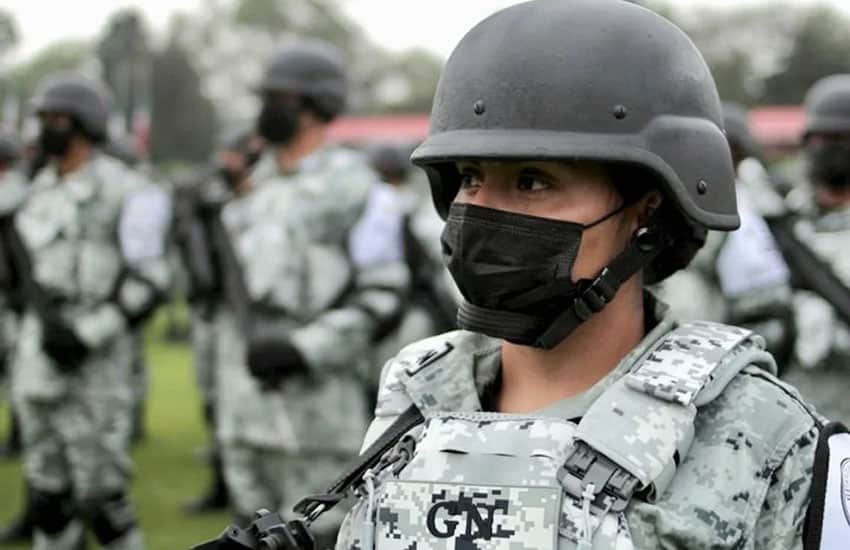
The National Guard was put under control of the military in September. Twitter / Guardia Nacional

Against this backdrop, the report notes that AMLO “has greatly expanded the budget, autonomy, and responsibilities of the armed forces, deploying them for hundreds of tasks traditionally conducted by civilian authorities, such as law enforcement, customs enforcement, controlling irregular immigration, running social programs, and administering public works projects.”

The most significant shift has been the replacement of the Federal Police with the National Guard in 2019. Police functions were formally transferred to the Ministry of Defense in 2022, while an additional reform ensured that soldiers carrying out policing duties are subject to military rather than civilian law.

HRW’s review argues this militarization continues a trend that started with Felipe Calderón’s declaration of “war” on organized crime in 2006 and has historically contributed to human rights abuses. Government data shows that the army killed 5,335 civilians between 2007 and 2022, while studies suggest that torture is regularly used to extract confessions.

Still more alarmingly, the review notes that human rights commission complaints against the Army and the National Guard have increased steadily since 2018. In 2021, 940 such complaints were registered, the highest number in eight years.

The report also flags Mexico’s collaboration with the United States to prevent migrants from traveling through the country, deploying nearly 30,000 troops to enforce immigration controls. This increases the risk of racial profiling at checkpoints and leaves stranded migrants vulnerable to abuse by organized crime.

Meanwhile, Mexico has dragged its feet on climate policy and disability rights, the review argues. However, it shows more progress in gender equality, with a wave of states voting in 2022 to legalize same-sex marriage and increase access to abortion.

With reports from Reforma

Opposition parties confirm alliance for 2024 presidential election

0
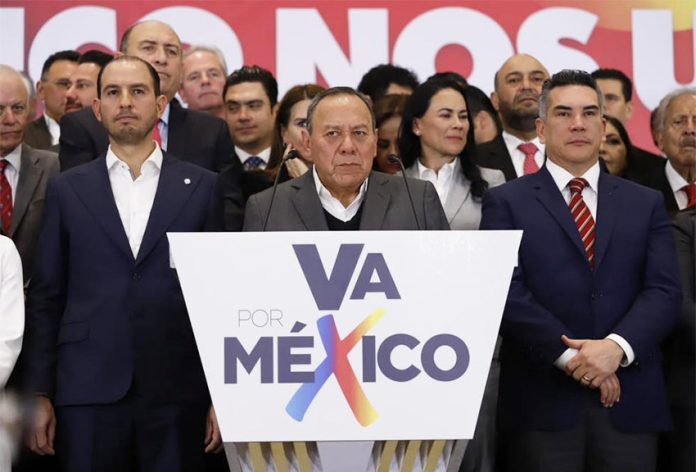
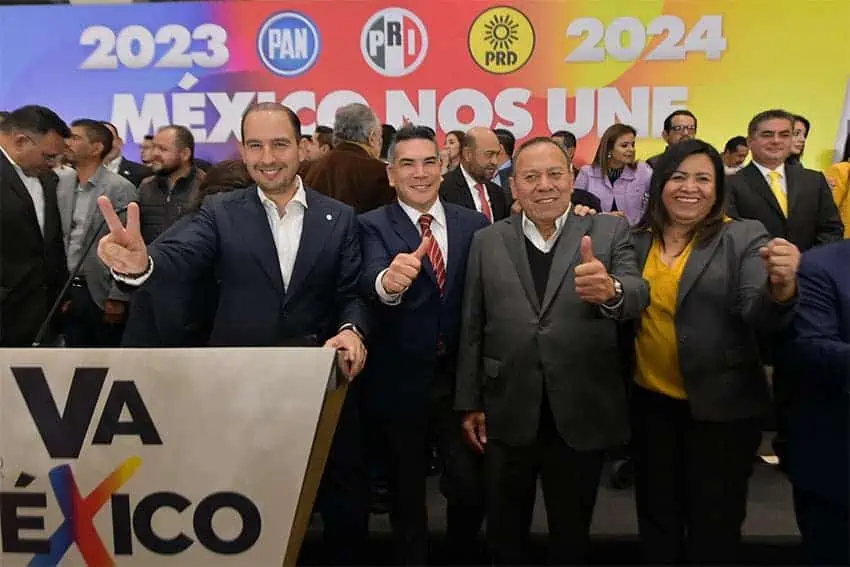
Politicians in suits with frowns and serious expressions stand behind a podium with the Va por México logo.
The coalition remains together, but PRD leader Jesús Zambrano (at center) said his party has been left out of some key candidate decisions. (Facebook / Partido de la Revolución Democrática PRD)

Mexico’s main opposition parties have announced they will field a common candidate at next year’s presidential election.

The Va por México alliance — made up of the National Action Party (PAN), the Institutional Revolutionary Party (PRI) and the Democratic Revolution Party (PRD) — was thought to be on the verge of breaking up in late 2022 after a PRI lawmaker presented a constitutional bill that sought to authorize the use of the military for public security tasks until 2028.

But the coalition survived the saga, and its leaders confirmed Thursday that the three parties will contest the 2024 presidential election, as well as the Mexico City mayoral race, on a joint ticket.

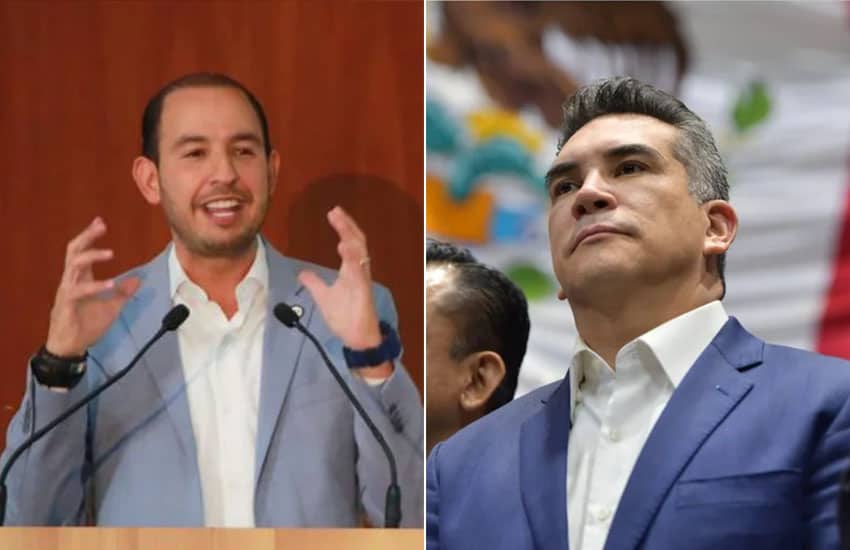
PAN leader Marko Cortés (left) and PRI leader Alejandro Moreno (right).
PAN leader Marko Cortés (left) and PRI leader Alejandro Moreno (right) fell out last fall over the PRI’s support for a constitutional bill allowing the military continuing performing domestic security functions, but their differences appear to have been smoothed over. Twitter

The PAN will be responsible for the selection process to find common candidates for those elections, said Marko Cortés, the party’s national leader. He told a press conference that the process will have “clear rules” and be open to all potential candidates that aspire to represent Va por México at the elections, including members of civil society.

Cortés also said that Va por México was open to having more parties join its alliance. There was speculation that the Citizens Movement party would join the coalition, but its national leader Dante Delgado said last month that wouldn’t be the case.

Cortés and PRD president Jesús Zambrano said last September that their relationship with PRI national president Alejandro Moreno was over because of his support for the militarization bill, but they appeared alongside him at Thursday’s Va por México “relaunch” press conference.

Moreno said that the coalition’s differences had been dealt with, and that it is now a solid opposition force.

However, a new internal rift has appeared. Zambrano said after Thursday’s press conference that the PAN and the PRI reached an agreement about the selection of candidates for next year’s presidential and mayoral elections without the involvement of the PRD. While the PAN will run the selection process to find candidates for those elections, the PRI was given responsibility for choosing Va por México candidates for gubernatorial elections in México state and Coahuila later this year.

The PAN-PRI agreement was struck bilaterally, and “we don’t agree with that,” Zambrano said.

From left, Marko Cortés (PAN), Alejandro Moreno (PRI) and Jesús Zambrano (PRD) give thumbs up to the camera while standing behind a podium with the Va por México logo.
From left, Marko Cortés (PAN), Alejandro Moreno (PRI) and Jesús Zambrano (PRD) represent their respective parties at the joint press conference. (Facebook / PRI Oficial México)

At the joint press conference, the PRD leader proposed the formation of a citizens’ committee to conduct the Va por México candidate selection processes in a transparent way.

“We’re a coalition of three political forces, but a coalition that must have the support of civil society,” he said later on Thursday.

“That’s the only way we will be able to win, if we don’t take that route we’ll be announcing a defeat.”

Mexico City Mayor Claudia Sheinbaum and Foreign Affairs Minister Marcelo Ebrard are seen as the top contenders to secure the ruling Morena party’s candidacy at the 2024 presidential election.

There is far less clarity about who will represent the PAN, PRI and PRD. In that context, President López Obrador offered his own (very) long-list of possible opposition candidates in October, saying that a total of 43 people have either expressed interest in vying for the presidency or have been mentioned as potential contenders.

With reports from Milenio, El Universal and El País

US aviation agency visit to Mexico postponed after domestic system failure

0
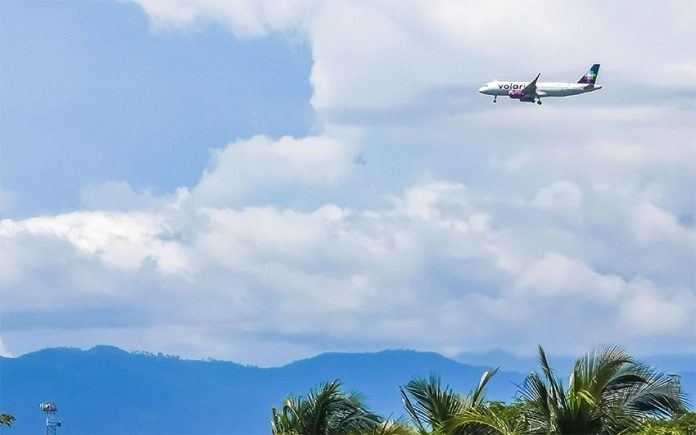
A Volaris airplane flies over palm trees with mountains in the background on a partly cloudy day.
A Volaris airplane flies over Puerto Escondido, Oaxaca. (File photo)

A meeting originally scheduled for Thursday to assess the corrective action plan that could help Mexico regain its Category 1 of aviation safety rating was canceled last-minute by the United States Federal Aviation Administration (FAA).

Billy Noen, acting head of the FAA who was supposed to arrive in Mexico City on Thursday morning, canceled the trip due to an overnight system collapse on Tuesday that left pilots, airlines and airports in the United States without crucial safety information.

“The FAA requested to reschedule the meeting and make the visit to Mexico as soon as possible,” the Mexican aviation agency AFAC said in a statement.

The meeting had been scheduled as part of a plan to recover the coveted Category 1 air safety rating given by the FAA, which was downgraded for Category 2 (the lowest level) in May 2021. At that time, the FAA said that they demoted Mexico because its civil aviation authority didn’t meet the safety standards set by the United Nations International Civil Aviation Organization (ICAO).

Holding a Category 2 rating has prevented Mexican airlines from opening new routes to the U.S., increasing flight frequencies and adding new aircrafts that can enter the country. It also limits Mexican airlines to carry out marketing agreements with U.S. carriers.

According to Minister of Infrastructure, Communications and Transport Jorge Nuño Lara, who made an appearance before Congress in December 2022, a final audit is expected for February after which a decision on whether Mexico can recover Category 1 would be reached. The rating would be then granted by April.

However, it is yet to be seen if the cancellation of Thursday’s meeting would have any repercussions on the action plan or approval timeline.

With reports from Expansión and The New York Times

It’s whale watching time in Mexico; this crew does it responsibly

0
Humpack whale photographed in Mazatlan by Onca Explorations
A humpback whale has a brief look around near Onca Explorations' whale watching boat off the Mazatlán coast. (Photo: Adair Cazares/Onca Explorations)

One of the most thrilling adventures on the Pacific coast of Mexico is whale watching — and thanks to the growth in ecotourism, these days, you can combine your trip with whale conservation education. 

I recently took a whale watching expedition with a group of researchers from the ecotourism company Onca Explorations in Mazatlán. The founder of Onca, Oscar Guzon, is a marine biologist and lead researcher. 

Humpback whales are fascinating to watch, and their behavior is constantly changing.  At a length of 46 to 56 feet and weighing as much as 40 metric tons, these gentle giants are powerful but graceful. Their flamboyant acrobatics make them the entertainment superstars of the whale world.

Humpback whale off the coast of Mazatlan. Onca Explorations
A whale shows off its flukes for researchers before fully re-entering the water. The slapping of the ocean water as it submerges may be a way for it to communicate. (Photo: Adair Cazares/Onca Explorations)

Our expedition wasn’t far from shore when we spotted our first whales frolicking in the water.  We locate them by scanning the horizon for plumes of mist erupting from the surface, which occurs when a whale comes up to breathe.

Mazatlán is one of the breeding grounds for humpbacks along the west coast of Mexico.

“The larger whale is female; the smaller one is male,” Guzon tells me. “Whales are very playful, and this may be part of their mating ritual.”  

We spot two bulls — male whales — rapidly approaching the happy couple from a distance.  They are much larger than the smaller male.

“We may see some head-butting,” Guzon warns, “which the smaller one will certainly lose.”    

The two bulls attempt to insert themselves between the couple. After several attempts, they finally give up as it becomes clear the female is not interested in either of them.

Members of Onca Explorer in Mazatlan, Mexico
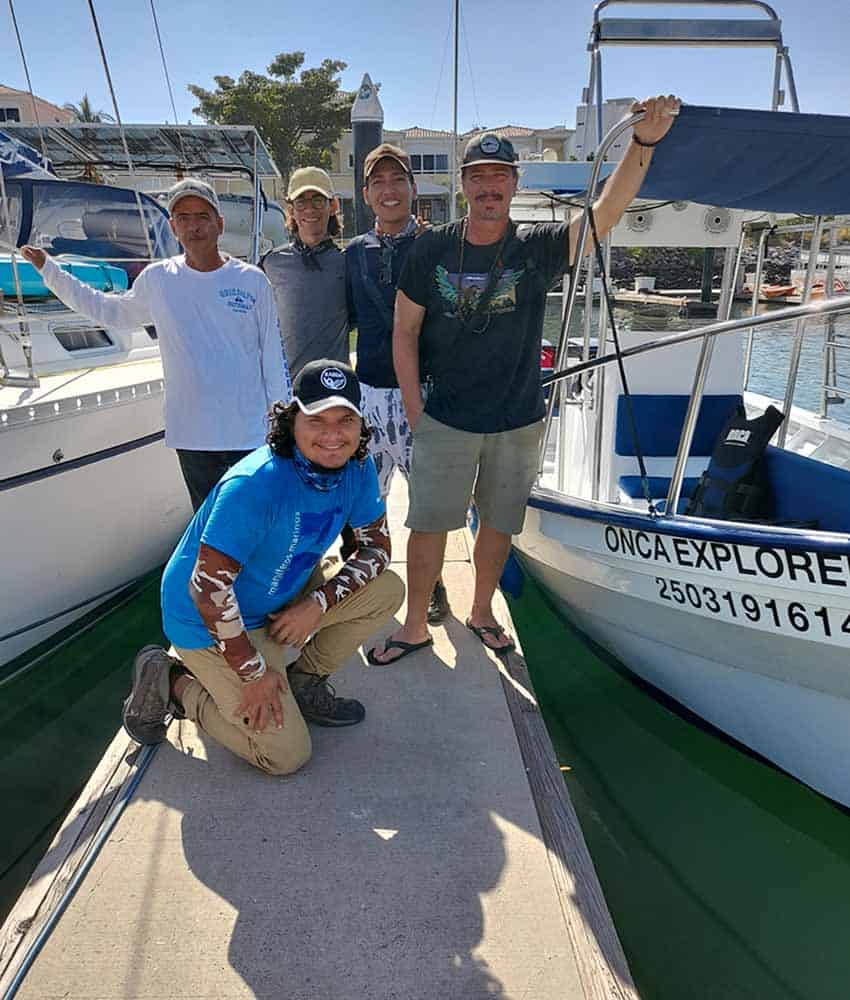
The staff of Onca Explorer. Oscar Guzon is standing on the right. (Photo: Sheryl Losser)

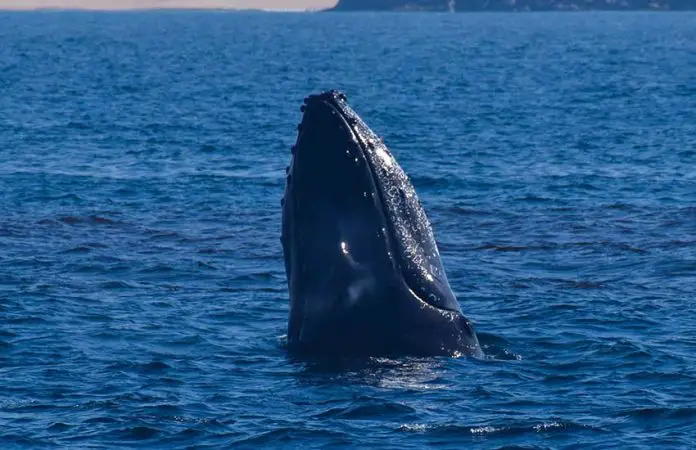
Soon afterward, we are surrounded by whales. The researchers are all busy gathering photographic evidence, using cameras fitted with telescopic lenses. One whale lifts its head vertically out of the water right next to the boat — known as spyhopping — to check out the surroundings.  Guzon assures me there’s no threat.

“It’s just curious,” he says. “Whales are very curious creatures.”  

During a break in the action, he explains to me that the photographic evidence is how they track the whales and monitor their behavior.  

“We are trying to get good photos of the flukes [the right and left sides of the tail],” he says. 

“Flukes have distinctive markings unique to each whale that are used to identify them. No two whales have the same markings,” he explains. “Through a process of capture-recapture with other researchers all along the west coast of Mexico, from Baja to southern Oaxaca, we share information on sightings.”

As we head back to shore, Guzon tells me that they photographed 16 distinct whales.  “It was a very good whale day,” he says with a big smile.  The excitement of the entire crew at seeing and capturing photos of so many whales in one day was infectious. 

Onca Explorations of Mazatlan, Mexico
Sometimes dolphins also make a bonus surprise appearance on Onca Explorations’ whale watching tours. (Photo: Adair Cazares/Onca Explorations)

The researchers then take the photographic evidence they have collected and match it to photos that they and other researchers have compiled in large digital catalogs.  In this way, they can track migratory patterns, frequency of the sightings and other behavioral patterns for each identified whale.  

One of the larger catalogs on the Mexican Pacific coast — the FIBB catalog — has been compiled by Puerto Vallarta’s Ecologia y Conservación de Ballenas (Ecobac) through their Humpback Whale Photoidentification Project.

Ecobac marine biologist Astrid Frisch Jordan tells me that since its inception in 1996, FIBB has grown to include 3,183 photo IDs. 

One of the things that her organization has discovered is that climate change has altered the migratory route and behavioral patterns of some humpbacks.

“Although their primary feeding grounds are off the coast of California, Oregon and Washington state, we are now seeing them feed in Banderas Bay [Puerto Vallarta] and staying longer to feed off the coast of California,” she says. “Now they are feeding wherever they can find food.”

Ironically, whales may play a critical role in efforts to reduce the effects of climate change. One whale can sequester up to 33 tons of carbon dioxide. These marine mammals also ensure a healthy abundance of phytoplankton; the microscopic plant captures CO2 from the atmosphere and produces oxygen.

Oscar Guzon of Onca Explorations in Mazatlan
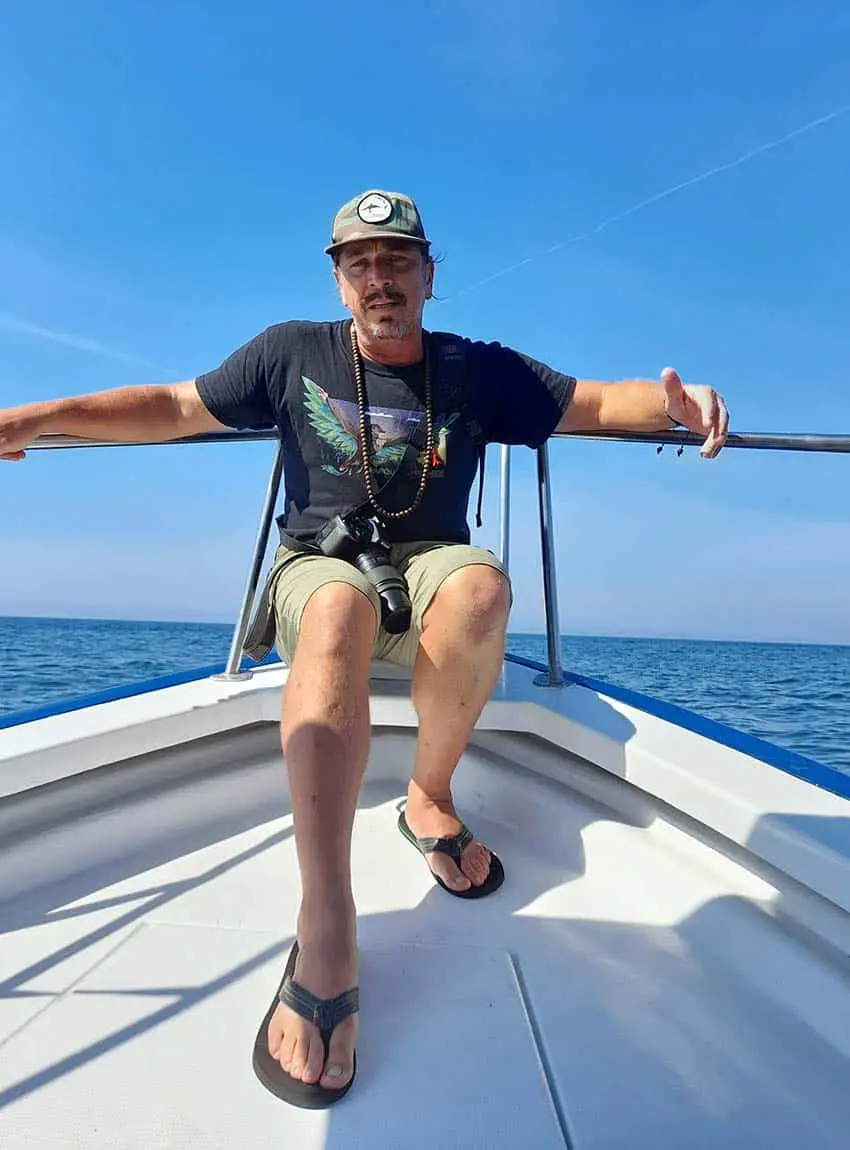
During whale watching tours, Guzon and his crew also photograph the whales they spot to document them for marine mammal researchers from Baja California to Oaxaca. (Photo: Sheryl Losser)

The good news is that the humpback whale population is growing. During the 20th century, their numbers dropped almost 90%. But when the International Whaling Commission banned commercial humpback whaling in 1986, the population soared.  

But these animals still face threats today — mostly man-made.  

“Entanglement in nets, Jet Skis, boat collisions, noise pollution, throwing single-use plastic products into the ocean and in any way impeding their natural movement threatens their survival,” Frisch told me.

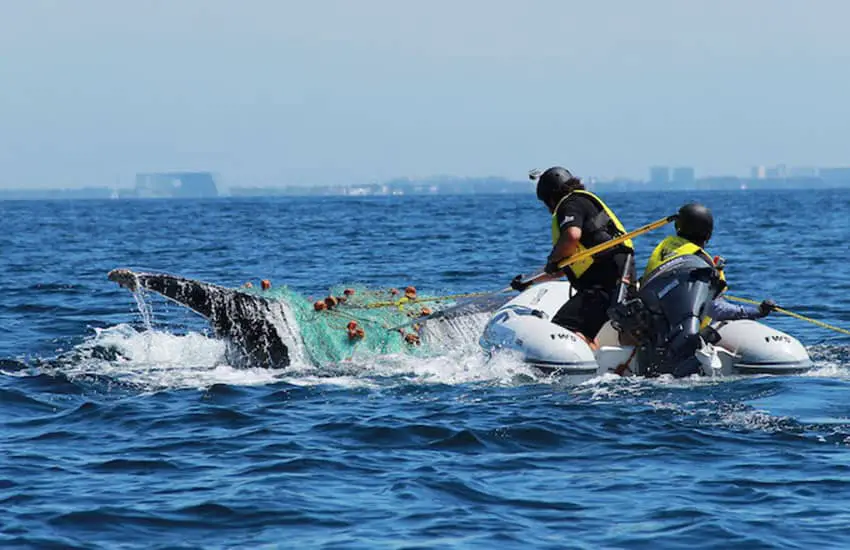
As coordinator of RABEN (The Attention Network for Entangled Whales), Frisch works with other inter-institutional teams trained to rescue whales entangled in fishing gear.  She also works with Ecotours de Mexico and promotes ecotourism as one way to educate the public on humpbacks and conservation efforts.  

Mexico’s Ministry of the Environment and Natural Resources (Semarnat) issued mandatory whale watching regulations in 2010, but “Many people aren’t aware of the regulations or don’t pay attention to them,” Frisch says.  

The regulations are very detailed, including what activities are prohibited, distance at which whales can be observed, maximum boat speed allowable and the number of boats that can observe a group of whales at one time.

RABEN organization saving a whale trapped in fishing net
Members of the group RABEN saving a whale entangled in a fishing net. (Photo: Courtesy)

Semarnat also provides training and certification annually for whale watching companies which can be revoked if a company doesn’t follow the regulations.

Ecobac lists three basic commonsense rules for whale watching:

  • Cause the least possible impact on the whales
  • Be patient
  • Watch whales only with boats or companies with Semarnat certification

Frisch emphasizes the third rule as a way to be certain the tour leaders have received training and are properly following whale safety regulations.

  • To book a whale-watching expedition or explore other activities provided by Onca Explorations in Mazatlán, visit their website. In Puerto Vallarta, to find out about whale watching and other nature encounters with Ecotours de Mexico, visit their website.

Sheryl Losser is a former public relations executive and professional researcher.  She spent 45 years in national politics in the United States. She moved to Mazatlán in 2021 and works part-time doing freelance research and writing.

AMLO, Trudeau hammer out ambitious Mexico-Canada ‘action plan’

0
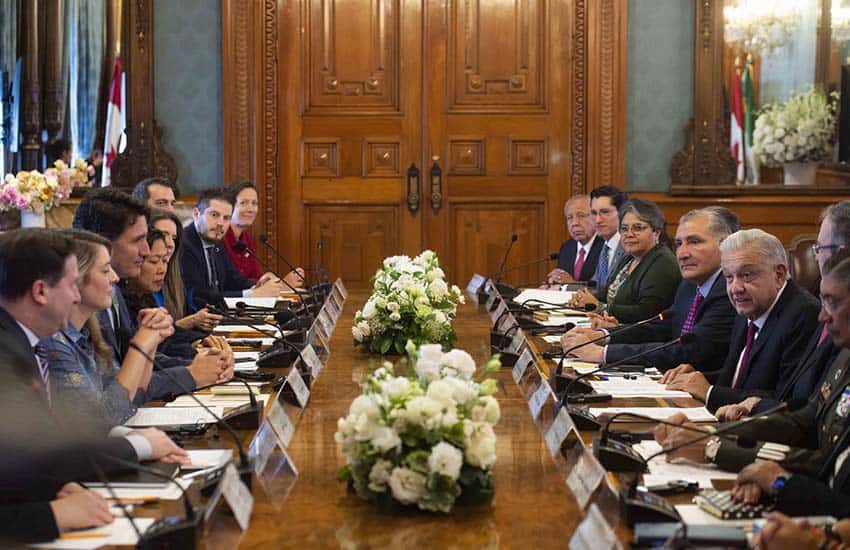
North American Leaders' Summit 2023
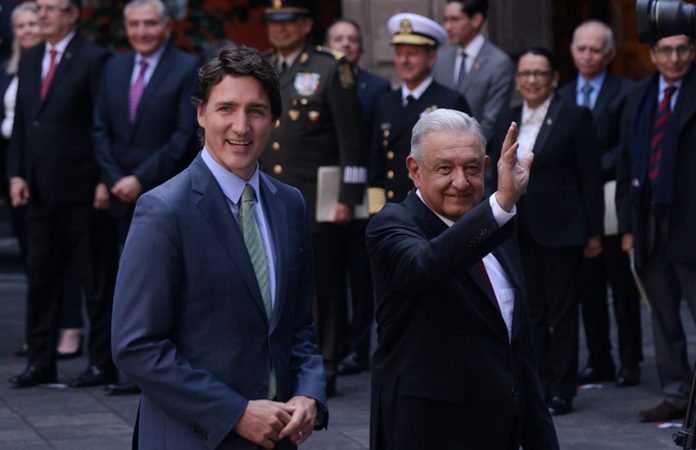
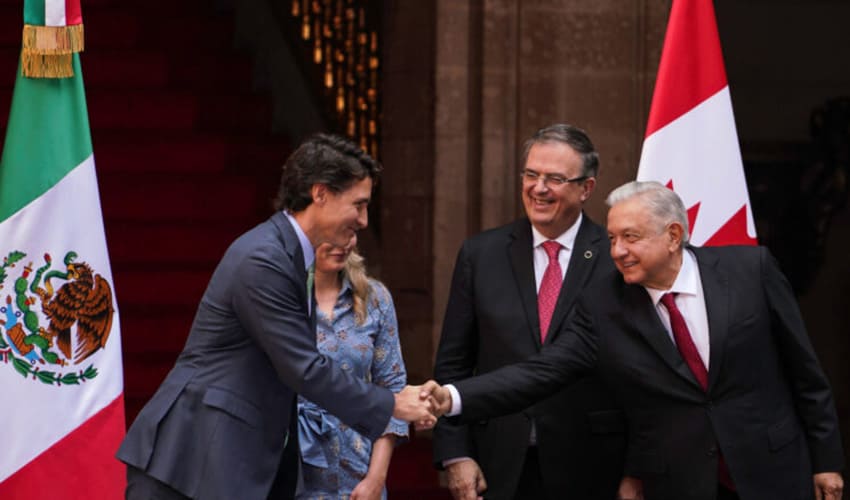
President López Obrador and Prime Minister Trudeau met to discuss strengthening ties between their countries after the North American Leaders' Summit. (Photo: Cuartoscuro)

The governments of Mexico and Canada announced the creation of a joint “action plan” following a meeting between President López Obrador and Canadian Prime Minister Justin Trudeau in Mexico City on Wednesday.

The bilateral talks came after the trilateral North American Leaders’ Summit on Tuesday and López Obrador’s bilateral meeting with United States President Joe Biden on Monday.

In a joint statement, the Mexican and Canadian governments said that López Obrador and Trudeau “have committed themselves to renew a relationship that draws on the diverse strengths of all citizens, putting their well-being and interests at the centre of our bilateral cooperation.”

North American Leaders Summit 2022 meeting between AMLO and Justin Trudeau
In their joint statement, AMLO and Trudeau said they were focused on problem solving between their nations, including resolving trade issues related to Canadian firms operating in Mexico. They also pledged to advance a progressive agenda to improve the lives of indigenous people and women. (Photo: Cuartoscuro)

Their commitment “recognizes a shared vision to build more prosperous, sustainable, safe, and equitable societies for all as well as to contribute to the integrity and competitiveness of the North American region,” the statement said.

“The creation of the Canada-Mexico Action Plan establishes a strengthened partnership built on 9 pillars that outlines our citizens’ priorities and the initiatives that will advance them.”

The plan focuses on reconciliation with Indigenous peoples; gender equality and women’s empowerment; trade and investment; anti-racism; youth engagement; peace and security; tourism, migration and human mobility; environment and climate change; and cooperation in the face of future health crises.

The joint statement didn’t mention the ongoing dispute between Mexico and Canada (and the United States) over Mexico’s nationalistic energy policies, but López Obrador acknowledged that he had spoken to Trudeau about the issue, which the countries are seeking to resolve through dialogue.

“We’ve addressed economic issues related to investment of Canadian companies in Mexico, mining companies, important companies like TransCanada, which is investing to build a gas pipeline in the Gulf of Mexico. … We’ve also spoken about companies that are operating in the energy sector,” he said during public remarks at the bilateral meeting.

“We’re seeking to resolve problems, differences that naturally arise when dealing with these economic and trade relations. … Obviously there are some issues to deal with. I made the commitment to Prime Minister Trudeau to meet with [Canadian] companies that might have outstanding issues [or] disagree with the posture of our government. We are always open to dialogue,” López Obrador said.

AMLO and Justin Trudeau at North American Leaders' Summit in Mexico 2023
In addition to signing the nine-point memorandum of understanding between their countries, Trudeau and Lopez Obrador also shepherded the signing of a memorandum of understanding between Mexico’s National Institute for Indigenous Peoples and its Canadian counterpart, Crown-Indigenous Relations and Northern Affairs Canada. (Photo: Cuartoscuro)

Trudeau subsequently told reporters that AMLO “was very open to meeting with different businesses, to working with our ministers and our civil servants to make sure the [energy] issues are resolved.”

In his public remarks, López Obrador also noted that he had spoken to the leader of Canada about a program in that country that has allowed Mexicans to work there while on temporary visas. AMLO said Tuesday that the program had benefited over 25,000 Mexicans.

Among the initiatives and commitments outlined in the statement on the Canada-Mexico Action Plan was a memorandum of understanding to modernize cooperation on indigenous issues.

The statement detailed a range of other bilateral commitments and initiatives, including that:

  • López Obrador and Trudeau are looking to organize a joint high-level summit on Reconciliation with Indigenous Peoples.
  • Canada and Mexico will continue to champion gender equality, and women and girls’ empowerment in regional and international forums.
  • Canada and Mexico maintain their commitment to work on inclusive trade and investment in building a sustainable economic recovery that places people, creation of good middle-class jobs, and well-being and quality of life of citizens at the center.
  • The two leaders will use the FIFA World Cup in 2026 as a key opportunity to support FIFA’s efforts to uphold human rights.
  • Canada agreed to provide technical assistance to help build Mexico’s forensics capacity. (The Mexican government conceded in late 2021 that the country was facing a “forensic crisis.” )
  • Both countries will work together to strengthen asylum and protection systems in Central America and Mexico.
  • Canada and Mexico will advance nature-based solutions to address climate change.

López Obrador said Wednesday that the Mexico-Canada relationship had been further strengthened as a result of the bilateral meeting.

“We’re neighbors, friends and we’re working together. And you will always be welcome in Mexico,” he told a delegation led by the Canadian prime minister.

For his part, Trudeau described Canada and Mexico as “progressive countries that put … equality, justice, opportunity for all, jobs for the middle class, and for people working hard to join it, protection of the environment, support for indigenous peoples, at the center of our vision for each of our countries.”

The meeting between the Mexican and Canadian leaders brought to an end three days of bilateral and trilateral talks in Mexico City. The next North American Leaders Summit – colloquially referred to as the “Three Amigos” summit – will be held in Canada in 2024.

Mexico News Daily 

Protesters reopen access to Chichén Itzá after 10 days of roadblocks

0
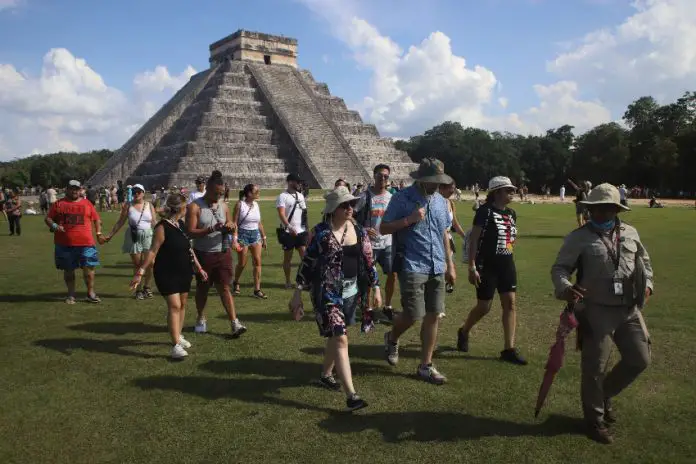
A guide leads tourists around Chichén Itzá, which received 2.5 million visitors in 2022. (Martín Zetina / Cuartoscuro.com)

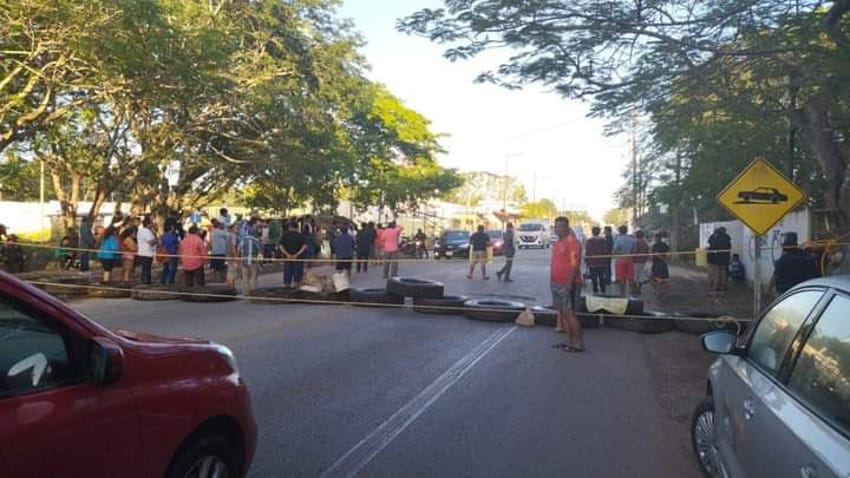
After what government officials deemed successful negotiations with leaders, protesters lifted a roadblock Wednesday that had prevented many tourists from reaching the Chichén Itzá archaeological site for 10 days.

The National Institute of Anthropology and History (INAH) issued a statement saying the portion of Highway 180 in Yucatán that leads from Mérida to Mexico’s most-visited archaeological site had been reopened after “necessary agreements and commitments” were achieved at a meeting between the two sides.

However, the groups of ejidatarios, merchants, artisans and activists warned that if their demands are not met in short order, they will resume their protest operations “with more force.” 

Video showing protesters removing their blockades on Thursday

The highway to the ancient Maya site had been blocked at two checkpoints.

Though it wasn’t easy to get to, and though officials had begun urging tourists to visit smaller archaeological sites in the area, the Chichén Itzá site had remained open since the Jan. 2 start of the roadblock and protests, which had as many as 10,000 participants, community leaders said.

As recently as Monday, those leaders were saying that no one from INAH or the federal government had come forward to seek a solution.

That all changed “thanks to the efforts made by the national representation of the Ministry of the Interior,” said Arturo Chab Cárdenas, director of the INAH Yucatán Center. 

“The government of Mexico has complied with many requests for clarifications from the communities,” he said.

The talks were held at the Municipal Palace in Kaua, Yucatán, a few days after vendors filed a complaint with the Human Rights Commission of Yucatán to air their grievances, which they characterize as violations of their rights as Indigenous peoples. 

Road blocks in Yucatán
Protesters began blocking road access to the site on Jan. 2. (@PedroKanche Twitter)

Members of the Xcalakoop, Pisté and San Felipe communities — which are adjacent to the Chichén Itzá property — said they took to the streets after years of government officials not listening to their claims that INAH has been preventing them from setting up shop near the site’s major structures: the main pyramid, known as El Castillo, and by the popular Temple of Kukulcán. 

Tour guides claim they aren’t given customers unless they hand over a percentage of their earnings. 

Other protesters included farmers whose property abuts the archaeological zone. They want financial compensation due to not being allowed to plant crops. Others claim that those working on site, many who don’t speak Spanish, are prohibited from speaking Mayan.

Protesters are calling for the removal of INAH’s Chichén Itzá site director Marco Antonio Santos Ramírez. However, the agreement reached on Wednesday does not include the removal of Santos, who has blamed the protests on interest groups allegedly trying to “seize us as a political flag” for their own benefit. 

The newspaper La Jornada Maya reported that a memorandum of understanding signed by Andrés Peraza, representative in Yucatán of the federal government, and the leaders of the protesters agrees to provide a solution to the demands of the protesters within a week.  The signed document includes a list of those demands, including Santos’ dismissal. Representatives of the protesters also asked INAH “not to mess with the artisans” and to treat them with dignity.

The problems at Chichén Itzá are not new, said Eduardo Paniagua, national president of the Mexican Association of Travel Agencies. 

“It’s a problem that’s been going on for many years, and it began when many vendors began to enter the archaeological zone, which is against the law,” he said.

A few years ago, he told La Jornada Maya, when he took a group of Japanese tourists to Chichén Itzá, “they ran into these vendors who yelled at them and did everything to attract their attention; and if they failed to make a sale, they insulted them.”

He said tourists often have more fun visiting other places and that if Chichén Itzá officials don’t get the message soon, travel agents will start promoting visits to nearby archaeological destinations such as Mayapán, Tulum and Cobá.

With reports from La Jornada and Diario de Yucatán