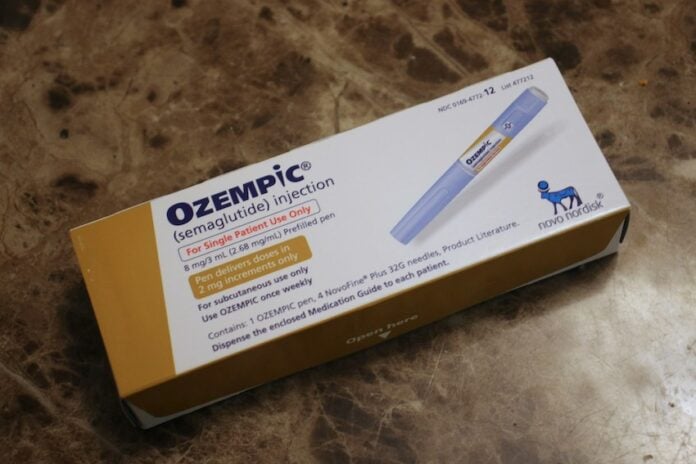
Ozempic is a injectable medication used to treat type 2 diabetes and, under medical supervision, for weight management in cases of overweight and obesity. (Unsplash)
Mexico’s federal health regulator Cofepris has issued a health alert warning consumers about counterfeit versions of Ozempic, the popular weight-loss and diabetes drug, circulating in the country.
The alert concerns falsified Ozempic 0.25 mg-0.5 mg/dosis (semaglutide), an injectable solution in a pre-filled pen, and was triggered by a technical-documentary analysis submitted by the drug’s importer, Novo Nordisk México.
The counterfeit batch carries lot number PP5K617 with an expiration date of August 2026. Its main identifying anomaly is that the pre-filled pen differs from Novo Nordisk’s genuine Flextouch device.
Cofepris warned that consuming this product poses a public health risk because its origin, raw materials, manufacturing conditions, storage and transport are all unknown. There is also a possibility the medication may be contaminated, adulterated or altered, which could cause adverse reactions or unintended effects in patients.
This is the second such alert issued by the regulator in under two months, reflecting growing concern over irregular products reaching the national market as demand for the weight-loss drug continues to surge.
Cofepris reminded the public that Ozempic requires a prescription and that its use without medical supervision carries additional risks.
Authorities are asking anyone who has purchased the flagged lot to stop using it immediately and seek medical attention. Pharmacies and distributors have been instructed to immediately immobilize any stock from the identified lot. Members of the public with information about where it is being sold are urged to report it to Cofepris.
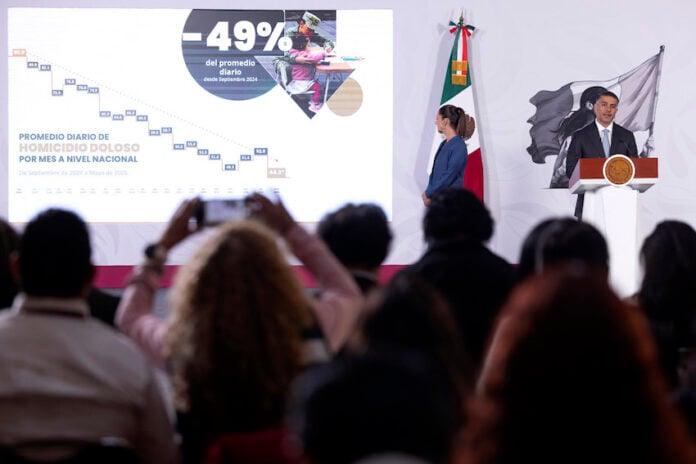
According to Mexico's Security Ministry, there have been an average of 44.3 homicides per day so far in May 2026, a reduction of 49% compared to an average of 86.9 murders per day in September 2024. (Juan Carlos Ramos Mamahua/Presidencia)
Sheinbaum’s mañanera in 60 seconds
🔫 Homicides down 49% since AMLO’s final month: Security Minister Omar García Harfuch reported that daily homicides have averaged 44.3 so far in May, down 49% from the 86.9 daily average in September 2024. He attributed the decline to a strengthened 120,000-member National Guard and improved intelligence practices.
🚔 54,297 arrested for high-impact crimes: Nearly 54,300 people have been arrested for high-impact crimes, including murder, kidnapping, and extortion since October 2024, with García Harfuch saying each arrest means one fewer criminal committing crimes on the street.
👮 85 current and former officials detained since October 2024: García Harfuch said federal forces have detained 85 current and former officials from all political parties since taking office, including seven sitting mayors, as part of the government’s commitment to “zero impunity.”
💊 2,382 drug labs dismantled, nearly 29,000 firearms seized: García Harfuch reported that authorities have dismantled 2,382 clandestine drug labs and seized 402.8 tonnes of drugs and 28,739 firearms since the government took office, with 78% of the confiscated weapons traced to the United States.
🕵️ CIA officers expelled after unauthorized Chihuahua raid: Sheinbaum confirmed that two CIA officers who allegedly participated in an April drug lab raid without Mexican authorization have left the country after her government formally requested their withdrawal.
🇲🇽🇺🇸 USMCA trade talks open in Mexico City: A first bilateral negotiating round begins Thursday, led on the U.S. side by Deputy Trade Representative Jeff Goettman after USTR Jamieson Greer was called to a Trump cabinet meeting.
Why today’s mañanera matters
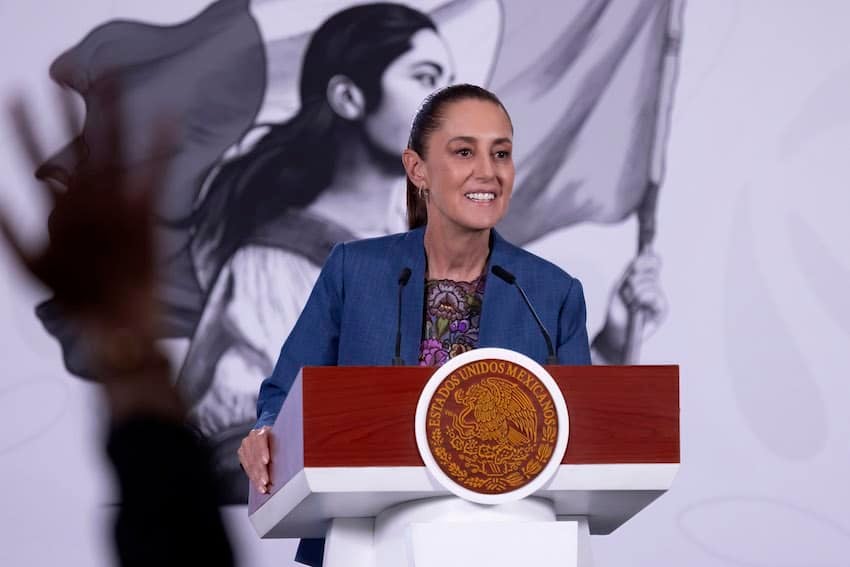
A range of important issues were discussed at President Claudia Sheinbaum’s Wednesday morning press conference, including several related to security.
Security Minister Omar García Harfuch provided a security update, during which he highlighted a significant reduction in homicides and provided the latest data on arrests.
According to the federal government, average daily homicides have declined in 14 of the first 20 months of Sheinbaum’s presidency. (Juan Carlos Ramos Mamahua/Presidencia)
Also of note at today’s mañanera was Sheinbaum’s declaration that the USMCA-focused trade talks between Mexico and the United States that will take place in Mexico City this week will be “very good.”
Government touts 49% decline in homicides
At the start of the press conference, Sheinbaum told reporters that homicides are down 49% this month compared to September 2024, the final month of Andrés Manuel López Obrador’s presidency.
Security Minister García Harfuch subsequently presented data that showed there have been an average of 44.3 homicides per day so far in May, a reduction of 49% compared to an average of 86.9 murders per day in September 2024. The data he presented showed a 31.4% decline in homicides this month compared to May 2025.
García Harfuch said that the 49% decline compared to September 2024 is the product of “several factors,” including the strengthening of the National Guard, which now has 120,000 members.
García Harfuch also told reporters that “close to 54,300 people” — 54,297 to be precise — have been arrested for allegedly committing high-impact crimes since the government took office. Such crimes include murder, kidnapping and extortion.
The arrests, García Harfuch said, reduce the number of criminals “on the street” and “increase peace.”
“… It’s more than 50,000 people who cease committing crimes on the street and no longer affect families,” he said.
Among other remarks, García Harfuch highlighted that 92 “priority target” prisoners “from all the cartels and all the factions of criminal groups” were sent to the United States in three transfers between February 2025 and January 2026.
The transfers contribute to “the strengthening of the rule of law and the strategic coordination [with the United States], always with respect for national sovereignty,” he said.
García Harfuch said that many of the transferred prisoners continued to commit crimes while incarcerated in Mexico.
85 officials detained since government took office
García Harfuch also reported that federal forces have detained 85 current and former officials since the government took office in October 2024. He said that number includes seven sitting mayors, including one detained in Morelos last week.
The arrest of officials is part of the commitment to “zero impunity,” García Harfuch said.
When there is proof that a current or former official has committed a crime, he or she will be “investigated and arrested” no matter what political party he or she belongs to, he said.
García Harfuch said that the 85 officials detained during the current administration are from “all” of Mexico’s political parties.
More than 400 tonnes of drugs and over 28,000 firearms seized
García Harfuch also reported that the Mexican military has dismantled 2,382 clandestine drug laboratories during the current administration. They were used for the production of synthetic drugs, such as methamphetamine, he said.
“These actions carried out by the Mexican Army and the Navy Ministry represent a significant blow to criminal structures,” García Harfuch said, explaining that the dismantlement of drug labs reduces criminal groups’ capacity to manufacture narcotics and results in large economic losses for them.
He also reported that authorities have seized 402.8 tonnes of drugs, including large quantities of fentanyl, since October 2024.
The drug seizures, García Harfuch said, prevent “millions of doses” from reaching the streets, “interrupt national and international drug trafficking routes” and result in large economic losses for criminal groups.
He told reporters that authorities have seized “almost 30,000 firearms” since the government took office, “78% of which come from the United States.” The security minister presented data that showed that the exact number of guns confiscated since Oct. 1, 2024, was 28,739.
He said that the seizure of guns reduces organized crime groups’ “lethal capacity,” including their capacity to confront authorities and “dispute territories” with rival organizations.
“Every one of the weapons [seized] means fewer shots fired and fewer injuries on the streets,” García Harfuch said.
Sheinbaum: CIA agents who allegedly participated in drug lab raid in Chihuahua have left the country
Sheinbaum said that her government sent a “note” to the U.S. Embassy in Mexico requesting that the two CIA officers leave the country. She said that the CIA personnel subsequently “withdrew” from the country. Sheinbaum said that the two officers didn’t have accreditation from the Mexican government that allowed them to conduct “intelligence work” in Mexico.
Although the Federal Attorney General’s Office has not yet concluded an investigation into the alleged participation of the CIA personnel in the drug lab raid, Sheinbaum has accepted that they did indeed take part.
She has said that the Mexican government didn’t authorize or have knowledge of their participation in the raid, and therefore, the Mexican Constitution and the National Security Law were violated. Sheinbaum has directed most of the blame for the CIA’s participation to authorities in Chihuahua, which is governed by the National Action Party (PAN), Mexico’s main opposition party.
Sheinbaum said that the bilateral dialogue will be “very good.”
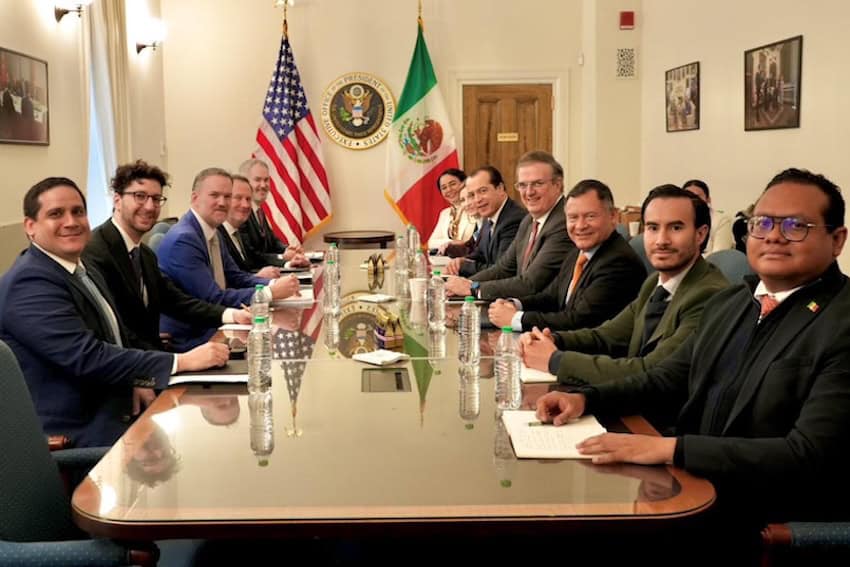
Economy Minister Marcelo Ebrard and USTR Jamieson Greer with their respective teams during the initial bilateral USMCA talks in Washington in late April. (Marcelo Ebrard/on X)
She said that Economy Ministry officials, including Economy Minister Marcelo Ebrard, and Mexico’s soon-to-be ambassador to the United States, Roberto Lazzeri, would participate in the talks.
She noted that U.S. Trade Representative Jamieson Greer is not part of the U.S. delegation arriving in Mexico today.
Sheinbaum said that Greer called Ebrard to advise him that he couldn’t travel to Mexico as he had been called to a cabinet meeting with U.S. President Donald Trump. She said it was not yet clear whether Greer would come to Mexico to join this week’s talks, but highlighted that he would have a virtual meeting with Ebrard.
The Office of the United States Trade Representative said in a statement on Wednesday that “on May 28-29, Deputy United States Trade Representative Ambassador Jeff Goettman will lead a U.S. delegation to Mexico City for the first bilateral negotiating round with Mexico, which will feature negotiations on economic security and rules of origin for key industrial goods.”
Second and third negotiating rounds are scheduled for June and July. One key aim for Mexico is to negotiate the elimination, or at least the reduction, of various U.S. tariffs on Mexican exports, including duties on vehicles, steel and aluminum.
By Mexico News Daily chief staff writer Peter Davies (peter.davies@mexiconewsdaily.com)
The iconic shotgun start that begins each fishing tournament day for Bisbee’s East Cape Offshore in Los Cabos. (Costa Palmas)
Bounded by the Pacific Ocean on one side and the Gulf of California on the other, the Baja California peninsula has traditionally been a major source of commercial fishing, producing nearly half of all seafood harvested in Mexico as recently as a decade ago.
Since the dawn of the age of tourism in the 1950s, however, many peninsular destinations have increasingly focused on sport fishing, and its competitive offshoot: fishing tournaments. Bisbee’s Black and Blue in Cabo San Lucas is the most famous of these — not only because it was one of the first notable examples, dating to 1982, but because of its enormous prize pools, which by 2022, set a record in excess of US $11 million.
That tournament takes place annually in October, but the fishing season properly begins during the summer months, with an array of tournaments — from big-money competitions to single-day events that give away cars to anglers who catch the biggest fish — held around the peninsula, from Tijuana to Los Cabos. Here’s a look at some of the most notable for summer 2026:
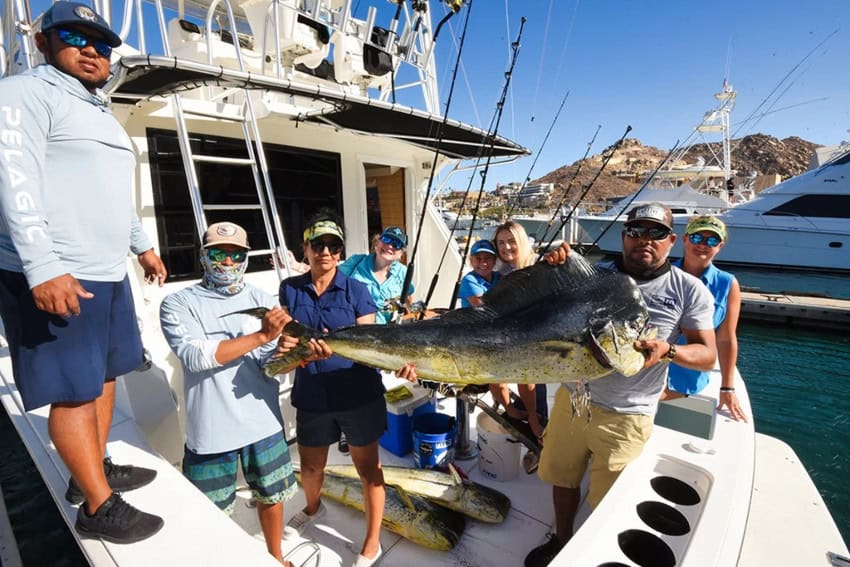
Dorado (pictured above) is one of the species for which anglers earn points at the Cabo Triple Crown of Fishing. (Pelagic Tournaments)
The Pelagic-sponsored Cabo Triple Crown of Fishing annually kicks off fishing season in Los Cabos, with teams accruing points for reeling in not only billfish like marlin, sailfish and spearfish, but also gamefish species such as tuna, dorado and wahoo. Bisbee’s East Cape Offshore, the first of Bisbee’s annual trio of fishing events in the municipality, beginning in late July, is the most lucrative summer event on the peninsula, with a prize pool of over US $1.5 million. However, the Cabo Triple Crown of Fishing’s purse — US $300,000 in 2025 — is certainly respectable and draws a very competitive field of anglers.
Dates: June 11-14
Location: Cabo San Lucas
Cost: US $3,000 base entry per team; US $31,000 all-in for jackpots and challenges
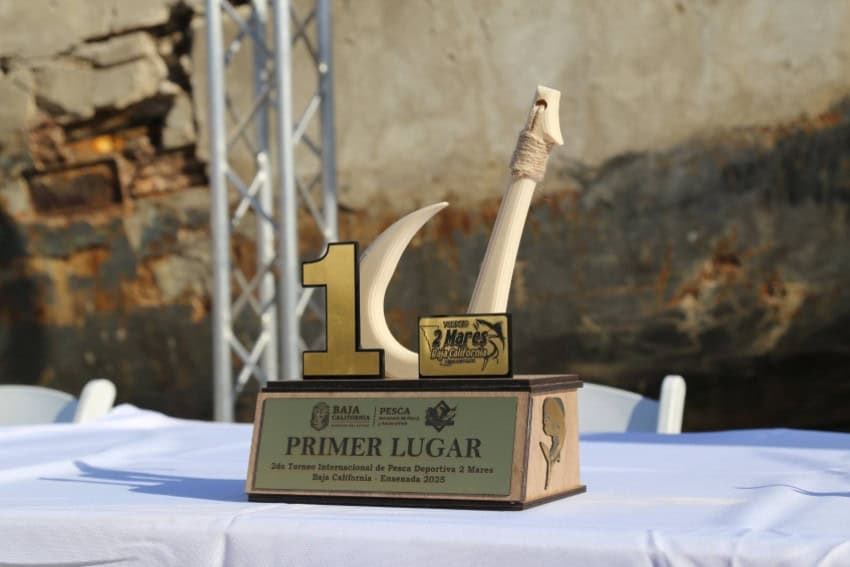
First place in the annual 2 Mares tournament goes to the top regional team in Baja California. (Facebook)
The state-sponsored Torneo 2 Mares premiered in 2024, under the aegis of Baja California’s Secretaría de Pesca y Acuacultura (Sepesca), with the goal being not only to showcase the bounty of both the Pacific Ocean and Gulf of California (or Sea of Cortés), but also to highlight the talents of regional fishermen, women and children. The host sites rotate, with this year’s two tournaments to be held in San Felipe and San Quintín, and boast a combined prize pool of one million pesos.
Dates: June 12-13
Location: San Felipe, Baja California
Cost: 6,000 pesos per team; jackpots up to 15,000 pesos
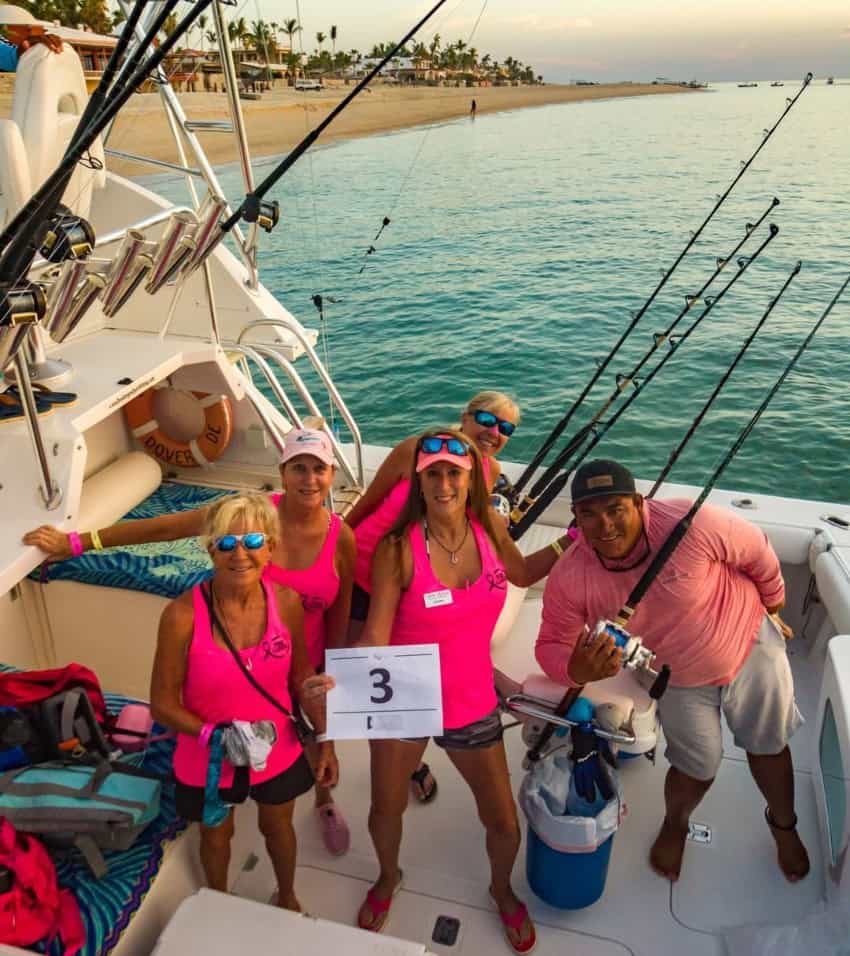
Women compete for six-figure peso prize pools in this annual tournament, held this year in Ensenada. (Reinas del Mar Baja California)
Since 2023, Sepesca has also sponsored this women’s and girls-only tournament designed to identify the “Queens of the Sea.” As with the 2 Mares tournaments, teams earn points for catching what are listed as “surface” and “bottom” species, which, in the former category, include yellowtail, bonito and corvina, and in the latter encompass cabrilla, whitefish, calico bass and more. Winners are thus those with the most versatile skill set across different rods, line weights and lures.
Catch the biggest dorado at this tournament and you drive home in a brand new truck. (Van Wormer Resorts)
Although summer East Cape fishing tournament havens Los Barriles and Buenavista are only a few kilometers distant from one another, the former falls within the boundaries of La Paz municipality, while the latter is in Los Cabos. Not that it matters to the quality of fishing or the prize pools, since the combined cash and prizes in this single-day event, for example, top half a million dollars. The big prize is the brand new Toyota Hilux pickup truck, which goes to whoever catches the largest dorado, a delicious gamefish better known in other parts of the continent as dolphinfish or mahi mahi.
Date: July 18
Location: Los Barriles, East Cape, La Paz municipality
Cost: US $800 base entry; jackpots up to US $2,000
Baja California Sur has its own ladies’ only event, held annually in Los Barriles. (Van Wormer Resorts/Instagram)
These days, the traditional “fishing widow” is increasingly a “fishing widower,” given there are now dedicated ladies’ only fishing tournaments in both Baja California and Baja California Sur. The southern version is held annually in Los Barriles at what’s the town’s best hotel and its best sport fishing operation: the Hotel Palmas de Cortez. The largest tuna and dorado reeled in determine the winners at this one-day team tournament (July 24 is set aside for registration and check-ins, with fishing on July 25).
Date: July 24-25
Location: Hotel Palmas de Cortez, Los Barriles, East Cape, La Paz
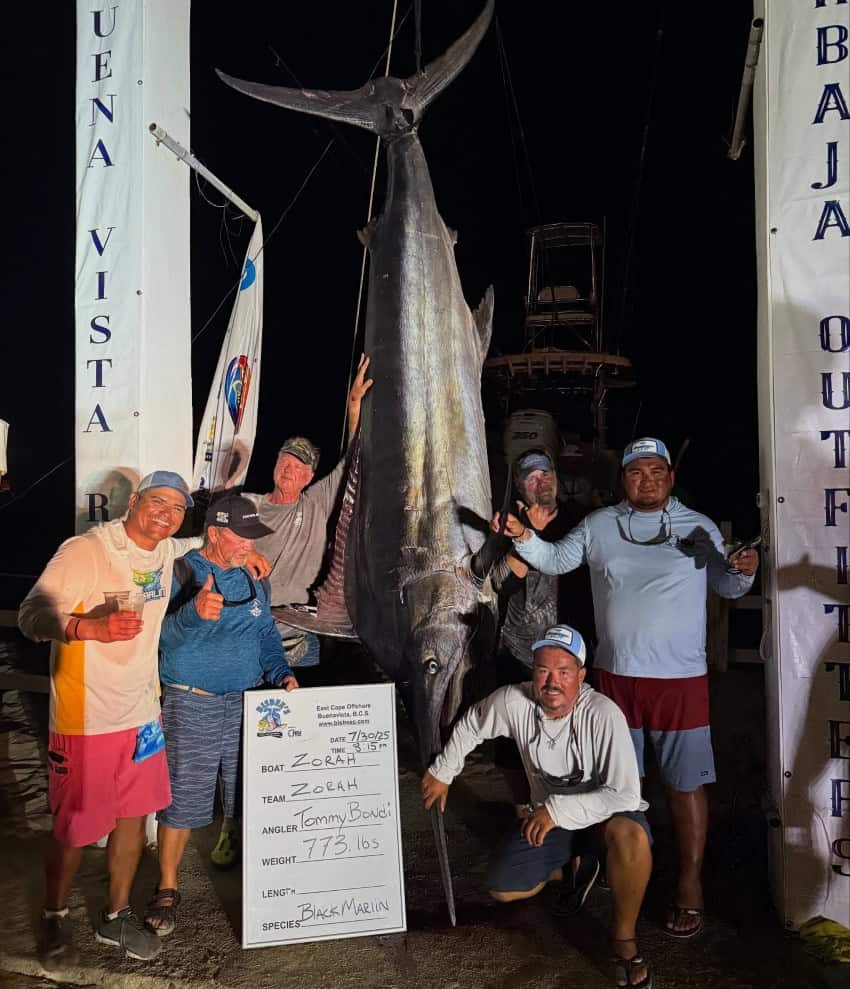
This monster 773-pound marlin didn’t make it to the scales on time in 2025, but will go down in tournament history nonetheless. (Bisbee’s Offshore Fishing Tournaments)
Last year, prize pools at Bisbee’s East Cape Offshore, or ECO, were US $1.52 million. So, although four annual tournaments in Los Cabos top the million mark in purses, this is the only one to take place during the summer months. Gamefish are awarded here, but blue and black marlin traditionally earn the most points and lead to the biggest over-sized checks at the tourney’s end.
Last year’s biggest check, for instance, was handed out to Team Reel’n and Deal’n for US $559,780 for a 404-pound black marlin, although Team Zorah actually boated what would have been an ECO record 773-pound black marlin. But the hours-long fight to reel in the massive fish prevented them from making it to the scales on time.
Dates: July 28-Aug. 1
Location: Buena Vista Beach Resort, Buenavista, East Cape, Los Cabos
Stage two of the 2026 2 Mares tournament takes place in San Quintín this August. (Torneo 2 Mares Baja California)
The second event of this year’s 2 Mares tournament will be held in San Quintín, a town of under 5,000 residents located about 200 kilometers south of Ensenada. Although the rules are the same as the previous competition, the fish caught will vary since this one’s on the Pacific side, while the June tournament in San Felipe was on the Sea of Cortés.
Dates: August 21-22
Location: San Quintín, Baja California
Cost: 6,000 pesos per team; jackpots up to 15,000 pesos
Tuna are a prime catch in this annual shoot-out event, which promises hundreds of thousands in cash and prizes to the winner. (Van Wormer Resorts/Instagram)
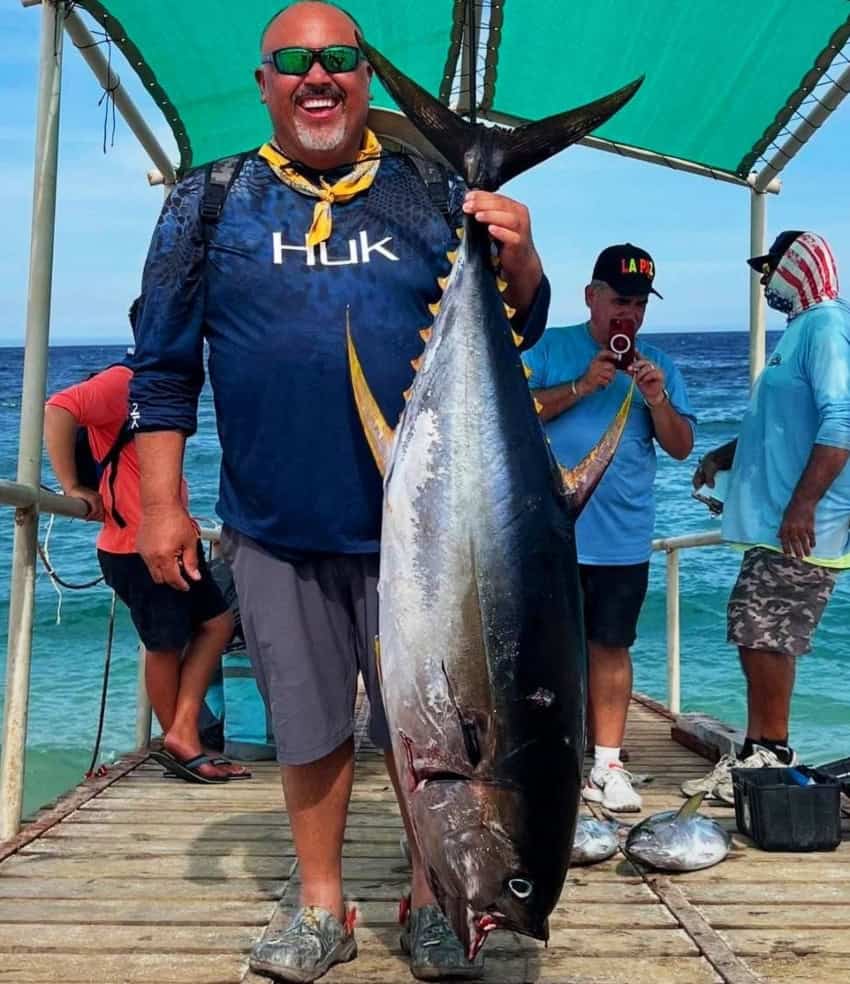
Like the Dorado Shoot Out in Los Barriles, the annual Tuna and Wahoo Shoot Out is a one-day team event. Not much information has been released on the 2026 tournament as yet, other than the expected cash and prize pool (listed at US $250,000), so stay tuned for updates, since a brand-new car or truck is traditionally among the prizes. Last year’s winning team, for example, drove away in a fully loaded 4×4 Volkswagen Amarok pickup truck.
Date: Sept. 19
Location: Los Barriles, East Cape, La Paz
Cost: US $600 per team; jackpots up to US $2,000
Chris Sands is a writer and editor for Mexico News Daily, and the former Cabo San Lucas local expert for the USA Today travel website 10 Best and writer of Fodor’s Los Cabos travel guidebook. He has also contributed to numerous other websites and publications, including The San Diego Union-Tribune, Marriott Bonvoy Traveler, Forbes Travel Guide, Porthole Cruise and Travel, and Cabo Living.
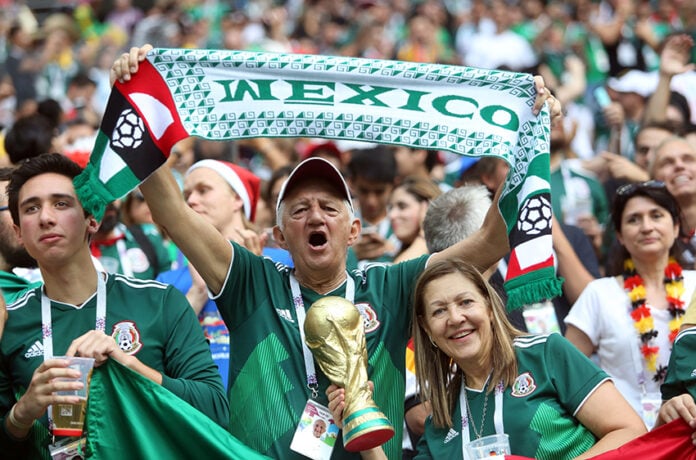
While 62% of adult Mexicans — including Gen Xers and Baby Boomers — have a lot or some interest as fans, only 24% of 20-something Gen Zers say they are keen to follow El Tri. (Shutterstock)
With World Cup opening day matches set to kick off in Mexico City and Guadalajara on June 11, a new study warns that young Mexicans may not be glued to every minute of the action.
The Mexican Internet Association, working with Offerwise of the Norstat group, found that 58% of Mexican adult internet users surveyed have a lot or some interest in following the tournament, with enthusiasm peaking among Generation X at 61%.
Young people are more apt to watch the games on their cell phones or on an app on another device, with some only watching highlight summaries rather than the entire game. (Unsplash)
But 24% of respondents report little interest and 18% say they have none.
Zero interest is even higher among younger adults: 21% of Gen Z respondents and 20% of millennials say they have no interest in following the 2026 World Cup at all.
In general, Gen Xers are now in their late 40s and 50s, millennials are roughly 30 to early 40s, and members of Gen Z (for this survey) are 18-year-olds through 20-somethings.
Though the survey spotlights those three generations, it is based on 1,200 interviews of 18-and-older men and women — including baby boomers — across all socioeconomic levels in urban Mexico.
The survey finds that enthusiasm for El Tri, the Mexican national team, is strongest among Gen X, where roughly seven in 10 respondents express high or moderate interest. However, only 24% of the Gen Z respondents say they are keen to follow El Tri.
Overall, 62% of respondents say they have a lot or some interest in following the national team.
“The challenge lies in connecting with younger generations, who experience football more through digital means than through traditional formats,” said Magda Orta, business director at Offerwise.
The study underscores how the sports viewing experience is shifting.
Free-to-air TV remains the top choice, with 50% planning to watch there, but social networks are close behind at 43%, ahead of streaming internet platforms (36%) and pay TV (32%).
More than a quarter of users say they will constantly use their phone or another high-tech device during matches, rising to 30% among millennials, mostly to check social media, chat, order food, or scroll memes and stats.
Mexico’s trend sits within a broader global shake-up in fandom.
A Global Fan Study by audience-insights firm GWI, based on data from over 50 markets, finds 74% of sports fans now use social media to watch or follow sports and 61% consume highlights and clips.
Among Gen Z, 72% use social platforms for following sports and often jump across five or more apps a day.
In Mexico, one example of this shift is Layvtime, a digital platform on YouTube and social media that turns key plays and moments into the main event instead of the full 90 minutes.
Launched last year by ex‑El Tri defender Miguel Layún, it also streams selected Liga MX matches and other events free. Its younger, social‑media‑savvy crew breaks down key plays with casual, meme‑driven analysis — closer to a creator stream than to old-school TV play‑by‑play.
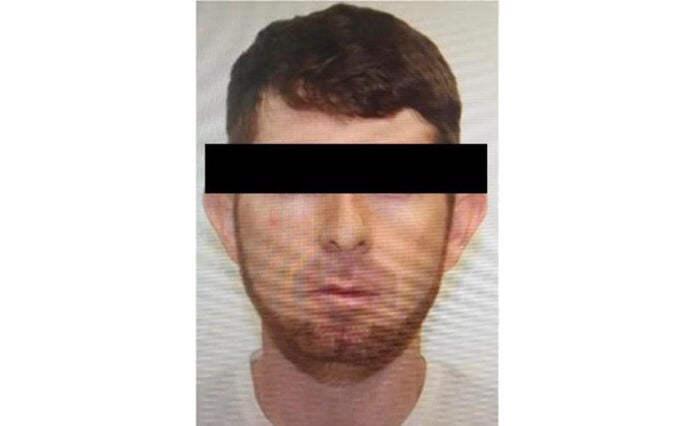
Isaí "El Chinacate" Martínez Cepeda, an alleged operative for the Sinaloa Cartel, could face extradition to the United States after being arrested near the U.S. border this week. (Omar García Harfuch / X)
Security Minister Omar García Harfuch announced on Tuesday that a nephew of convicted drug lord Joaquín “El Chapo” Guzmán Loera had been arrested in the northern border city of Nogales, Sonora.
Derivado de trabajos de inteligencia militar central de @Defensamx1 y en coordinación con @FGRMexico, a través de la Agencia de Investigación Criminal, @GN_MEXICO_ e instituciones del @GabSeguridadMX, se realizaron dos acciones relevantes contra estructuras criminales.
He said that the suspect — identified in media reports as Isaí Martínez Cepeda, aka “El Chinacate” — is subject to an extradition order.
The Security Ministry (SSPC) said in a statement that the suspect is “identified as a logistics operator for a criminal group,” reportedly the Sinaloa Cartel, which Guzmán Loera formerly led. Martínez reportedly works for the Chapitos faction of the cartel, which is led by sons of Guzmán Loera.
The SSPC said that Martínez was in charge of “the production and distribution of synthetic drugs to the United States and Costa Rica.”
He is reportedly accused of trafficking a shipment of some 10,000 fentanyl pills to the U.S. last year.
The SSPC said that the suspect was detained at a property in the Casa Blanca neighborhood of Nogales. It said he was subject to an arrest warrant for the purpose of extradition to face organized crime and drug trafficking charges, presumably in the United States. The SSPC said that two firearms and cartridges were seized from Martínez when he was detained.
While Martínez Cepeda was described as a “nephew” of “El Chapo”, his two surnames indicate that neither his father or his mother is a sibling of Guzmán Loera. It is possible that he is the son of a cousin of Guzmán Loera, but referred to as the drug lord’s “nephew,” a common usage of the word in Spanish.
According to media reports, Martínez Cepeda’s brother is Enoc Martínez Cepeda, a man known as “El Vocho” (a colloquial name for a VW bug) who is also allegedly affiliated with the Sinaloa Cartel.
The media outlet Latinus reported that Isaí Martínez was previously arrested in Culiacán, Sinaloa, in June 2008 when he was 25. Therefore, he would now be in his early 40s.
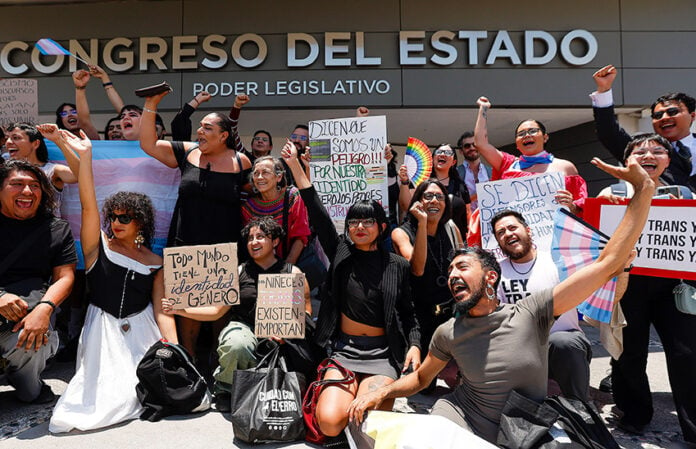
Activists celebrate the passage of Querétaro's Gender Identity Law in late April. (César Gómez / Cuartoscuro.com)
Querétaro’s state governor Mauricio Kuri González announced on Monday that he was vetoing a law that would allow individuals to change their legal gender in Mexico’s Civil Registry, after the law was approved by the state Congress on April 30.
“This law, promoted by the radical left, allows girls and boys… to change their sex on their birth certificate according to their self-perception,” said Kuri, who represents the conservative National Action Party (PAN).
La protección de las niñas y los niños de #Querétaro es una alta prioridad de mi gobierno.
Somos ejemplo nacional en el cumplimiento de esa responsabilidad y lo seguiremos siendo: les informo a las y los queretanos que estoy vetando, conforme a mis facultades constitucionales,… pic.twitter.com/VKv2WkHoV8
Kuri said the reform “goes against the values, education and integrity of Querétaro families … It is an ideological issue that they want to impose on our society.”
Pro-life groups linked to PAN and various religious organizations took to the streets to protest reforms related to gender identity and safe abortion on May 16. While the protest’s organizers said the march was not political, several state government officials attended.
LGBT+ Pride and Dignity March organizers responded to news of the veto in a press release on Monday.
“Mauricio Kuri’s remarks regarding the Gender Identity Law are irresponsible and profoundly regressive,” the release stated. “If the governor is going to make the serious decision to restrict rights, he should do so openly and with verifiable arguments.”
They added that “denying recognition of gender identity protects no one; it only increases violence, exclusion, and institutional abandonment … We will not accept that human rights be subjected to personal prejudices or political calculations.”
Meanwhile, the center-left Morena party representative, Andrea Tovar, told the newspaper La Jornada that she believes that the law’s content has been misrepresented and that the dissemination of incorrect information is worrisome.
“The reality is that this is a law that includes these rights for adults,” Tovar explained. “That is how it was voted on and how it was drafted.”
Tovar added, “We need to continue fighting until dignity becomes the norm.”
The proposed reform, a joint effort between the Querétaro Human Rights Ombudsman’s Office and opposition legislators, would establish an administrative procedure at the Civil Registry for adults to be permitted to change their gender identity in the state, according to Tovar.
To date, 24 Mexican states have already adopted similar reforms.
Separately on Monday, the Supreme Court of Justice of the Nation ruled that parents or guardians subjecting a minor to sexual orientation conversion therapy may be sent to prison.
This was in response to an article in the Guanajuato State Penal Code that allowed for the imposition of a fine and psychotherapeutic treatment rather than prison time, which came into effect in December.
The alleged criminals established a roadblock by setting vehicles and cargo trucks on fire, obstructing the Colima-Manzanillo highway.
(Screen capture from private citizen's video)
An operation by the Colima State Attorney General’s Office (FGEC) on Monday left two suspected criminals dead and two police officers wounded, one seriously.
State officials said that a U.S. citizen wanted for homicide in the United States was detained by Mexican agents as part of the operation. The authorities also seized a homemade armored vehicle, as well as several rifles, handguns, grenades and drugs.
REPORTAN NARCOBLOQUEOS EN TECOMÁN; CHOCA TREN CONTRA TRÁILER INCENDIADO
Al menos dos narcobloqueos se registraron la tarde de este lunes en el municipio de Tecomán, Colima.
En la autopista Manzanillo-Colima, a la altura de la colonia Bayardo y la gasolinera El Llano, se… pic.twitter.com/579WRYrzpH
The FGEC deployment was said to be in response to a 911 call, while the digital publication Aristegui Noticias reported that the agents were targeting a suspected safe house linked to the Jalisco New Generation Cartel (CJNG). Colima borders the state of Jalisco.
According to local media outlets, the initial confrontation occurred in the community of Caleras when armed men in a vehicle fired upon the FGEC agents, who repelled the attack. In the initial confrontation, the two law enforcement officers were injured and one of the suspects was killed.
To avoid capture, the criminals established a roadblock by setting vehicles and cargo trucks on fire, obstructing the Colima-Manzanillo highway. Subsequently, the violence spread to other areas of the state.
The shootout triggered national security alarms, prompting the Navy Ministry, the Defense Ministry, the National Guard and State Police to mobilize in support of the FGEC officers.
Members of these federal agencies engaged in clashes with suspected criminals across the state.
Shortly after the original confrontation, the suspects blocked traffic at access points to the city of Tecomán, setting tractor-trailers on fire, with several incidents captured in videos that circulated on social media Monday afternoon.
One of the videos shows a freight train slowly colliding with a tractor-trailer that had been placed across the tracks. The train did not derail and no injuries were reported.
As a result of the violence, Colima Governor Indira Vizcaíno ordered schools in four of the state’s 10 municipalities to conduct remote classes on Tuesday, since security operations are ongoing.
In a press release issued late Monday night, state authorities said FGEC agents were carrying out investigative tasks in the municipality of Tecomán when they were fired upon by armed men in a vehicle.
The authorities added that most of the blockades were cleared and the vehicle fires — including along the Guadalajara-Colima and Manzanillo-Colima highways — were extinguished. Although the highways were cleared for traffic shortly after midnight, some roadblocks remained in Tecomán and Armería.
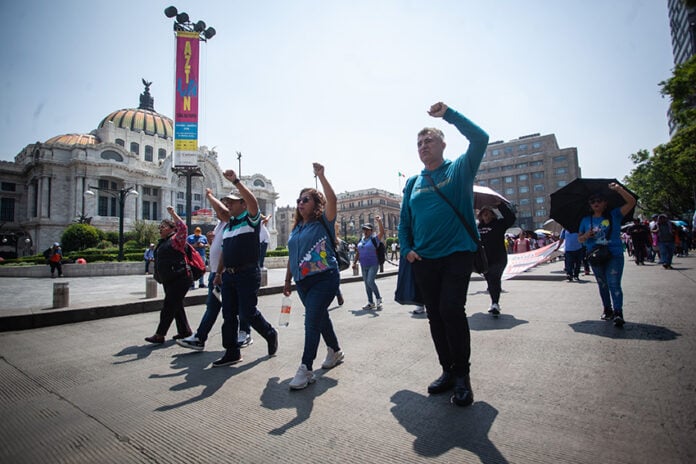
Members of the CNTE teachers union march past Mexico City's Palacio de Bellas Artes on Tuesday. (Andrea Murcia / Cuartoscuro.com)
Riot police on Monday blocked protesting Oaxacan teachers from entering Mexico City’s main square, the Zócalo, where a FIFA World Cup Fan Festival site is being prepared. The clash signals tense weeks ahead, as more teachers prepare to join protests in the capital.
Teachers affiliated with the Oaxaca-based Section 22 of the CNTE teachers union tried to reach the square to set up a protest camp but were unable to get past riot police. They said that the police used tear gas to repel them and claimed that they were pushed and hit by officers.
Fuerzas de seguridad usan extintores para dispersar a la CNTE en el Centro Histórico
La policía frena el avance sobre 5 de Mayo rumbo a la plancha del Zócalo capitalinopic.twitter.com/9ubEiFIZpT
— Manuel Lopez San Martin (@MLopezSanMartin) May 25, 2026
The Ministry of Public Education (SEP) and the Ministry of the Interior (SEGOB) said in a joint statement on Tuesday that Section 22 CNTE representatives had been advised that it was too dangerous for them to gather in the Zócalo due to the work taking place there.
More teachers affiliated with the CNTE — a union known for combative tactics — are expected to arrive in Mexico City in coming days to join a large protest on June 1 that may coincide with the commencement of a national strike. The teachers are not happy with an offer of a 9% pay increase and are calling for the repeal of the 2019 education reform as well as the 2007 ISSSTE (State Workers’ Social Security Institute) Law, which changed their pension system and will leave them — they say — considerably worse off in retirement.
Section 22 teachers marched from the Angel of Independence monument on Paseo de la Reforma to the historic center of Mexico City on Monday morning. When they got to Cinco de Mayo Avenue, a Mexico City government deputy minister, Juan José García Ochoa, reportedly told them that they couldn’t enter the Zócalo due to the work taking place to prepare the site as a FIFA Fan Festival, where World Cup matches will be shown live on large screens. “The official argued that it was an issue of civil protection,” the La Jornada newspaper reported.
“They repressed us, they hit us, they pushed us,” Francisca Pérez, a teacher from Oaxaca, told the EFE news agency.
While teachers have set up camps in streets near the Zócalo, Pérez said they will try to reach the square again.
She noted that President Claudia Sheinbaum, before she took office, pledged to repeal the 2007 ISSSTE law. However, that has not happened. As president, Sheinbaum has said there are insufficient resources to return to the previous pension system.
Pérez complained that foreign music groups, such as Korean boy band BTS, have been welcomed to the National Palace by Sheinbaum. However, teachers have been ignored by authorities, she said, although federal officials were scheduled to meet with CNTE representatives on Tuesday.
🔴Maestros de la #CNTE mantienen el bloqueo en El Caballito y Segob hasta que termine la reunión funcionarios de la dependencia.
Public Education Ministry and Interior Ministry respond
In their statement, SEP and SEGOB said that they have been speaking to Section 22 CNTE representatives since last weekend in order to “guarantee conditions of safety, attention in cases of emergency and the protection of their colleagues” during protests in Mexico City, which are set to continue in coming days.
The two ministries also said that Mexico City government officials “carried out an inspection” of the Zócalo with Section 22 CNTE representatives so the union personnel could “verify” that screens and “metallic structures” were being installed ahead of the start of the World Cup on June 11.
They said that on the recommendation of Civil Protection authorities, the union representatives were told that carrying out activities with large groups of people in the Zócalo would create a “situation of risk.”
Consequently, “various alternative places” of protest were suggested to them, SEP and SEGOB said.
The two ministries also said that a meeting between federal officials and CNTE representatives would take place at the Interior Ministry at midday Tuesday in order to “continue the construction of agreements through a respectful and direct exchange.” They said that Interior Minister Rosa Icela Rodríguez, Education Minister Mario Delgado and ISSSTE chief Martí Batres would participate in the meeting.
“The Mexican government reiterates that institutional channels remain open to address … [teachers’] concerns, always within a framework of respect, legality, and the pursuit of consensus,” SEP and SEGOB said.
“Finally, we call for a focus on non-confrontation, dialogue, and institutional channels as mechanisms for making progress in addressing the demands of the national teaching community, for the benefit of the educational community and society as a whole.”
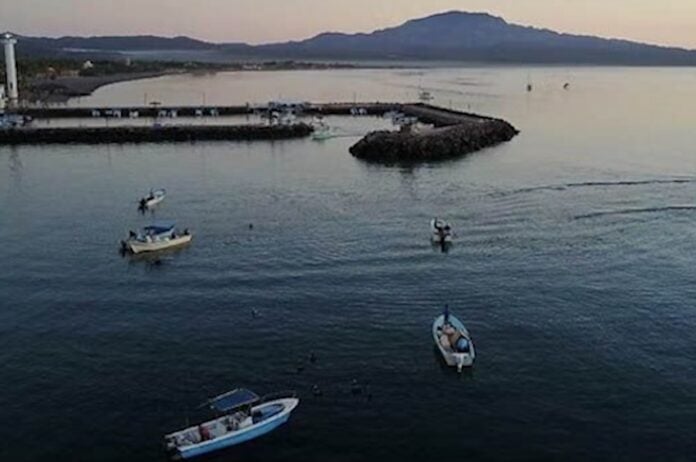
Before President Sheinbaum's new decree this week, the future of the Pueblo Mágico of Loreto's port would have moved fishing boats and other small craft aside in favor of freighters and cruise ships.
(Semar / Cuartoscuro.com)
Responding to weeks-long protests against a federal decree to turn the Baja California Sur port of Loreto into a deep-water harbor, President Claudia Sheinbaum on Monday issued a new order guaranteeing the protection of the flora and fauna of the Loreto Bay National Park.
The new presidential decree not only revokes the original decree, but also orders the creation of a Working Group comprising federal officials, as well as activists and academics who have demanded the protection of this area.
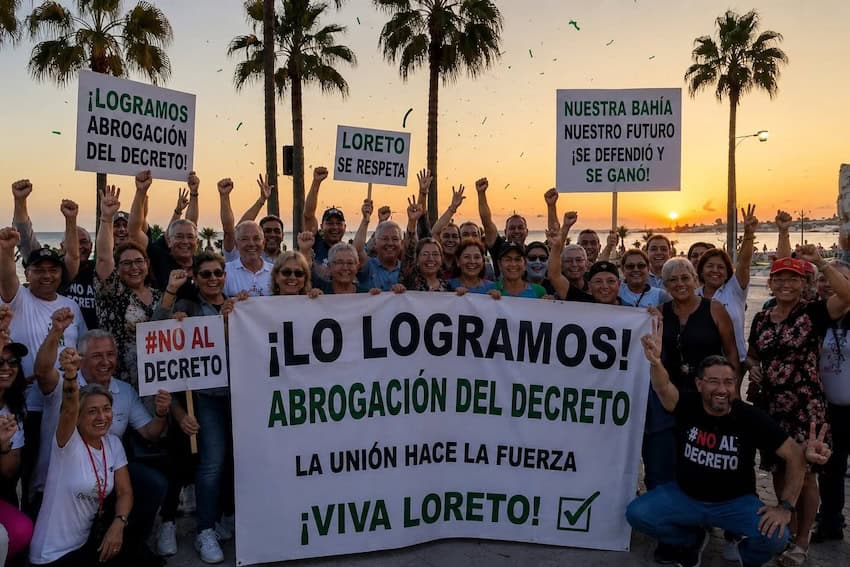
At sunset Monday, activists celebrated their victory after the president reversed a previous order that would have resulted in enormous expansion of Loreto’s modest harbor. (Unión Loreto BCS)
Sheinbaum issued the original decree — reclassifying Loreto as a deep-sea cabotage port, thereby opening it to large-scale maritime traffic, including cruise ships — on April 10. Residents and activists immediately began protesting the decision, calling on the president to revoke the decree.
This decree overlooked the fact that the port is located within the Loreto Bay National Park, a federally protected Natural Area. As a signatory to the UNESCO World Heritage Convention, Mexico is legally obligated to ensure the protection, conservation and integrity of the park. The protests gained enough traction among the public that Baja California Sur Governor Víctor Manuel Castro agreed to sign onto a change.org petition and formally ask Sheinbaum to revoke the decree.
The new decree indicates official recognition that the Loreto Bay National Park constitutes an ecologically critical area. It acknowledges that the park harbors a diversity of terrestrial and marine ecosystems, numerous species of flora and fauna, endemic species and species subject to protection.
The waters and islands are home to marine and terrestrial mammals, including the blue whale, humpback whale, sperm whales, dolphins, California sea lion and the fishing bat, considered to be of ecological, environmental and touristic importance to the region.
Article 2 of the new decree calls for the creation of a Working Group within the next 10 days which will be authorized “to update the Management Program of the Protected Natural Area (the Loreto Bay National Park) and address administrative regulations in matters of navigation in the Port of Loreto.”
It also establishes that an official from the Interior Ministry will chair the Working Group, joined by officials from the Navy Ministry, the Environment Ministry, the Tourism Ministry and the National Commission of Natural Protected Areas.
The officials will be joined by “an agent from the state port administrative service who will serve as teechnical secretary, as well as five citizens from the academic, professional, social, scientific and cultural fields recognized for their trajectory in the defense of the Loreto Bay National Park.”
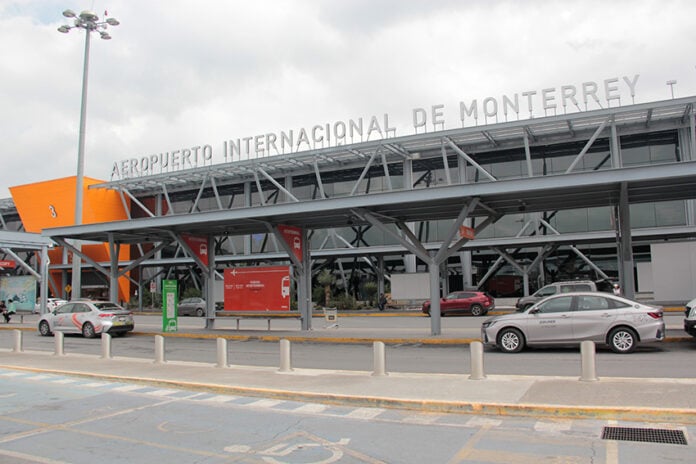
Monterrey International Airport is in for a major remodel, with plans to combine two terminals into one. (Shutterstock)
Nuevo León Governor Samuel García announced a new US $400 million investment for Monterrey International Airport (MTY), to merge and modernize the A and C terminals of the airport.
The announcement came during the final leg of García’s business trip in Europe, during which he announced that the funds would be provided by Vinci Airports, the main shareholder of North Central Airport Group (OMA), MTY’s airport operator.
The remodel aims to create a world-class terminal with automated immigration services, cutting-edge technology and improved access.
According to García, these upgrades would be visible as soon as next month, during the World Cup.
“Today we are announcing another US $400 million [investment] to have a world-class terminal, which is what Monterrey will have in the future,” García said from Paris.
“This investment will be noticeable during the World Cup because we will have automatic migration services,” García said.
The move adds to the US $400 million Vinci Airports invested in 2024 following its strategic acquisition of OMA, bringing its total recent investments to US $800 million.
In a statement, Nuevo León’s government said this project responds to the economic and industrial growth of the state, driven by nearshoring and the influx of foreign investment, which has increased the demand for air connectivity for passengers and cargo.
Indeed, according to official figures from the Economy Ministry, Nuevo León is the second-largest state in Mexico in terms of foreign direct investment (FDI), just after Mexico City. Moreover, between 2022 and 2025, the northern state received US $ 14.95 billion in FDI, accounting for 9.5% of the total amount that Mexico received.
Nuevo León’s government noted that the airport’s expansion strengthens the state’s position as one of Latin America’s leading logistics, industrial, and business hubs, representing “a vote of confidence” by Vinci Airports in the state’s economic stability and strategic potential.
MTY’s newly-announced investment adds to the various airport renovations currently being carried out in Mexico, specifically in the World Cup host cities.
These airports are expected to receive a large influx of tourists during the month-long tournament, as the country will host 13 matches across its three host cities.
In Mexico City, authorities are in a race against time to complete a thorough renovation ahead of the tournament’s inaugural match on June 11, while Guadalajara International Airport (GDL) has seen ongoing renovations since the end of 2024 with the aim of adding additional capacity and upgrading infrastructure.