Home Blog Page 100

Why has Qatar dedicated 2026 to celebrating Mexico?

3
Why is an Arab nation on the other side of the world celebrating the best of Mexico? Gaby Solís went to investigate. (Mike Bravo/Unsplash)

It was an extraordinarily cold and windy night in Doha — 6 degrees Celsius, yet the atmosphere was warm and lively at the 2026 Qatar International Food Festival (QIFF), where over 200 local and international vendors gathered to showcase cuisines from all over the world. 

Among all these vendors, three stalls proudly represented Mexican food, offering staples like tacos, guacamole, salsas and churros. But taking center stage was Mexican chef Lupita Vidal, who closed the 2026 QIFF with a masterclass on Mexican cuisine.
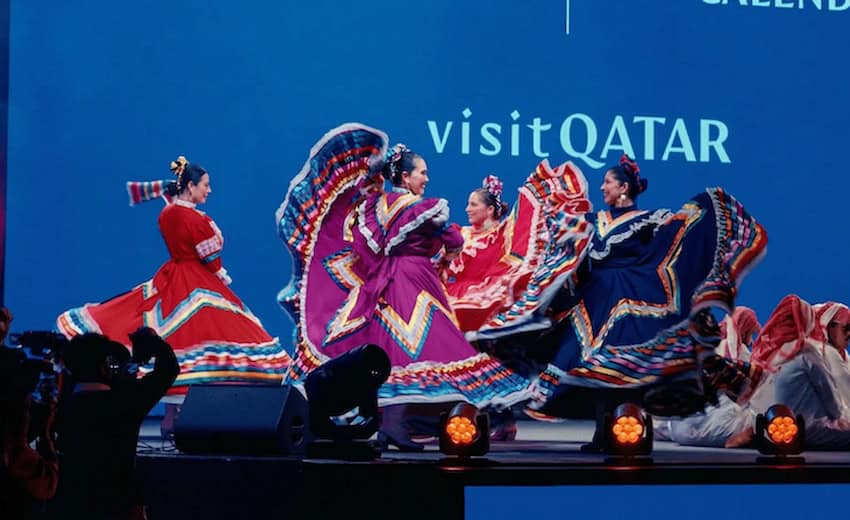
Mexican dancers
Mexican culture (and food) is the flavor of the year in Qatar, as part of a series of international exchanges. (QIFF)

A yearlong cultural exchange 

The event was part of a year-long international cultural exchange program led by the government of Qatar, dubbed the Years of Culture program (YoC). 

The initiative seeks to foster cultural dialogue and collaboration between nations with the aim of building lasting partnerships between Qatar and countries worldwide. Qatar’s partner countries this year are Mexico and Canada — who, like Qatar in 2022 — will be hosting the 2026 FIFA World Cup.

“The programmes seek to establish Mexico as a central partner in a sustained cultural collaboration that places creativity, knowledge exchange, and people-to-people connection at its core,” YoC said in a statement last week announcing the program in Mexico.

During the year-long initiative, Qatar will host influential personalities from Mexico’s culinary and creative arts scenes to introduce Qataris to Mexican culture. Meanwhile, cultural events in Mexico will introduce Qatar’s culture to audiences across the country.

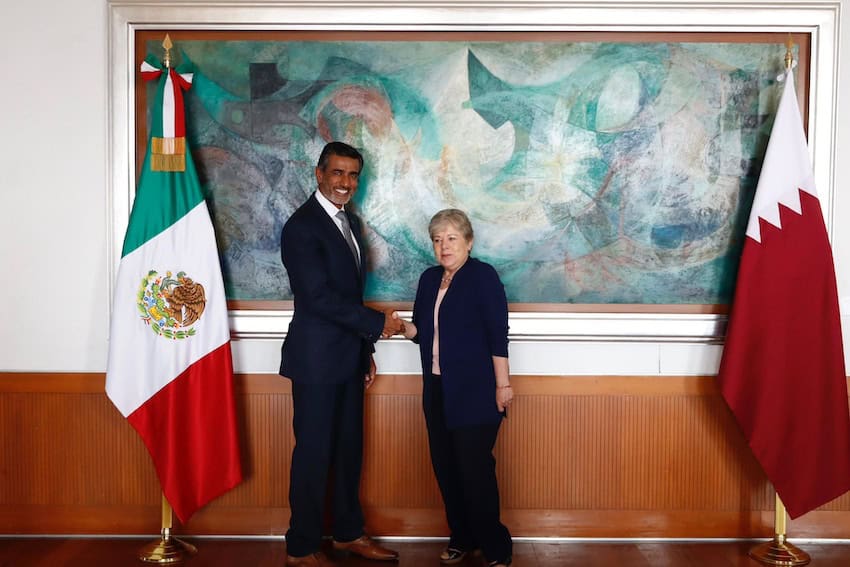
Mohammed Al Kuwari, Qatar’s former ambassador to Mexico and the YoC advisor on Latin America, described the program as a long-term cultural investment.  

Mohammed Al Kuwari meets then-Foreign Affairs Minister Alicia Barcenas during his time as Qatari ambassador to Mexico. (MOFA)

“Years of Culture is about building relationships that endure,” said Al Kuwari, noting that the program seeks to “form partnerships that extend well beyond the year itself.” 

YoC was born in 2012 — an initiative to build global understanding of the Arab world in the decade-long lead-up to the FIFA World Cup that would take place in Qatar in 2022. This year’s chosen partners echo the program’s initial purpose with a year-round calendar of tailored programs that showcase the unique nature of each participating country.

Which activities are planned for the 2026 YoC? 

The YoC program works around four pillars, including cultural heritage, creative industries, social and economic development and innovation. Landmark events in both countries will represent film, arts, sports, education, gastronomy and social development. 

The calendar of events kicked off with the QIFF in Qatar’s capital and Vidal’s participation, as she represented Mexican food through the flavors of her home state of Tabasco. There were also retail stands featuring Mexican products. 

The next event was Design in Dialogue, a Qatar-Mexico residency which culminated in a public exhibition at the creative hub G56 during Design Week Mexico (Feb. 4-8), before traveling to the Design Doha Biennial between Apr. 16 and June 30. The initiative brings together designers, artisans, and materials to explore heritage crafts through contemporary practice.
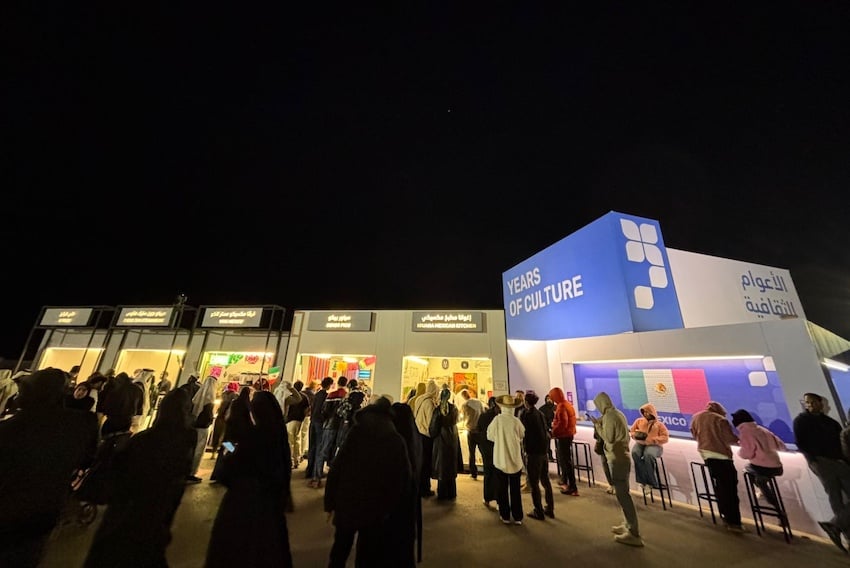
The QIFF, in the Qatari capital of Doha. (Gaby Solís)

“We have been building partnerships in Mexico for several years, and we are excited to see these relationships take shape during Mexico Design Week — a pivotal moment in Mexico’s cultural calendar — with projects that will continue to resonate in Qatar and beyond,” Fahad Al Obaidly, acting director of the Design Doha Biennial, said.  

Art exhibitions across Qatar will also spotlight Mexican artists and designers, including a newly commissioned exhibition by Fernando Laposse at the Museum of Islamic Art in Doha. The program also includes commissions to Mexican artists for large-scale, key public sites in Qatar. 

Finally, Mal Lawal, a biennial exhibition that invites private collectors to display highlights from their collections at the National Museum of Qatar, will bring together Qatari and Mexican collections to explore clothing and textiles as living cultural archives. 

QIFF served as a glimpse of how the initiative will ultimately unfold – in smaller, personal interactions between people from different countries and backgrounds. Perhaps a Mexican artist discovering the warmth of Qatari hospitality, or a Qatari finding joy in mariachi music may spark curiosity and appreciation between cultures. 

Everyday exchanges like these may well be the most lasting legacy of a year-long program dedicated to culture.

Gabriela Solis is a Mexican lawyer turned full-time writer. She was born and raised in Guadalajara and covers business, culture, lifestyle and travel for Mexico News Daily. 
MND Local Guadalajara: Airport expansion, demolition of historic mansions and a noise crackdown

3
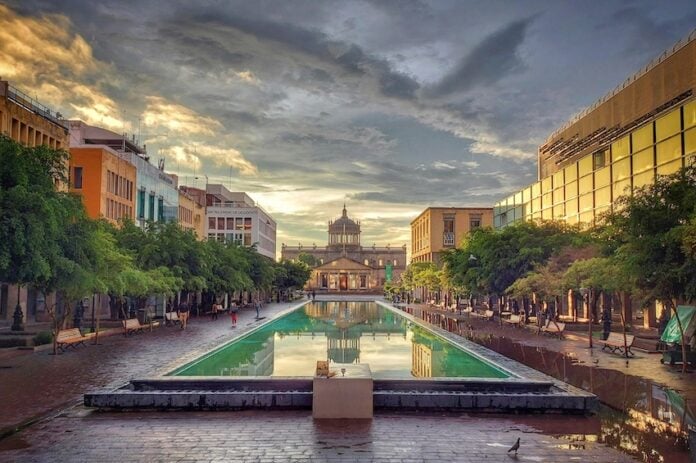
Construction and demolition are the theme of our latest Guadalajara news roundup, as Jalisco's crown jewel undergoes some changes. (Sergio Rodríguez/Unsplash)

Guadalajara is undergoing some intense transformation in 2026, thanks to major investments in the city’s international airport ahead of the World Cup and the demolition of architectural gems in the city’s historic Colonia Americana. Read all the details about the changes coming for tapatíos, plus the latest on a noise crackdown in the city’s popular nightlife areas.

GDL Airport to boost capacity to 40M passengers

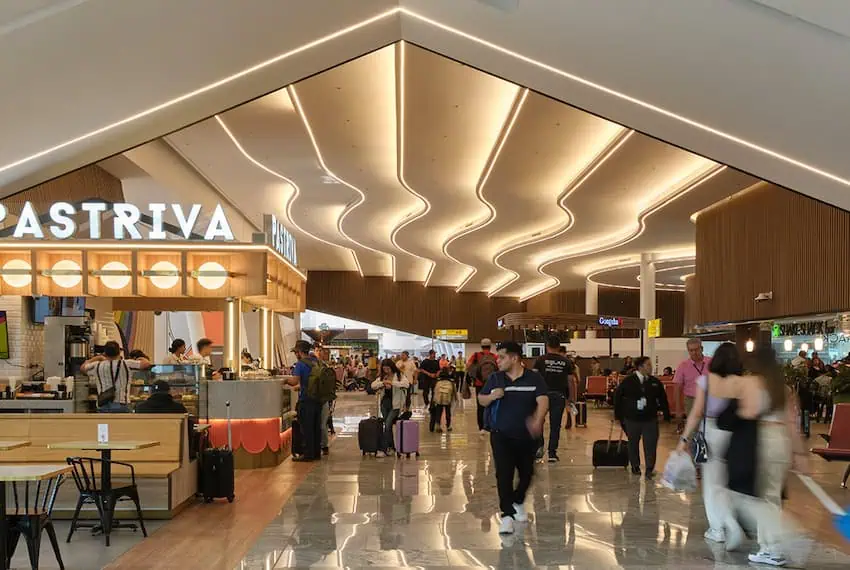
Guadalajara International Airport
(Aeropuerto Internacional de Guadalajara/Facebook)

In early February, Mexican Pacific Airport Group (GAP) announced a historic investment of 52 billion pesos (approximately USD $3.0 billion) for modernization of the airports it oversees in western Mexico, as part of its five-year capital program.

Guadalajara’s Miguel Hidalgo y Costilla International Airport is set to receive a significant share of these new funds, with investments totaling $22.4 billion pesos (US $1.3 billion).

GAP’s infrastructure strategy for Guadalajara includes the construction of a second terminal, which will add another 87,000 square meters of capacity to the existing airport footprint; the acquisition of adjacent land to support future expansion; and the buildout of a third runway.

Terminal 2 is on track to be completed later this year, with full operation by 2027. It is expected to boost Guadalajara airport’s capacity to 40 million passengers per year.

Another key area of focus in GAP’s capital plan is addressing the chronic bottlenecks passengers face when attempting to access or depart the Guadalajara airport grounds, due to the single point of entrance and egress via the Carretera Chapala, a road perennially choked with commercial trucks, private cars and taxi traffic. 

The airport group’s plan involves adding a second point of entry for cars, a new dedicated access point for mass transit and the separation of arrival and departure traffic flows via a two-level road structure into and out of the new terminal. All told, the project is slated to add 17 kilometers of new roads to the airport’s grounds.

In 2025, Guadalajara’s airport received nearly 18.7 million passengers. Visitor volume is expected to rise further this year due to an anticipated surge in air arrivals for the four World Cup games to be played in the city this June. 

To ensure that the airport operates smoothly during this time of peak demand, GAP will be making additional investments in Guadalajara airport security, personnel and operational protocols to complement the infrastructure improvements.

The demolition of Guadalajara’s architectural gems 

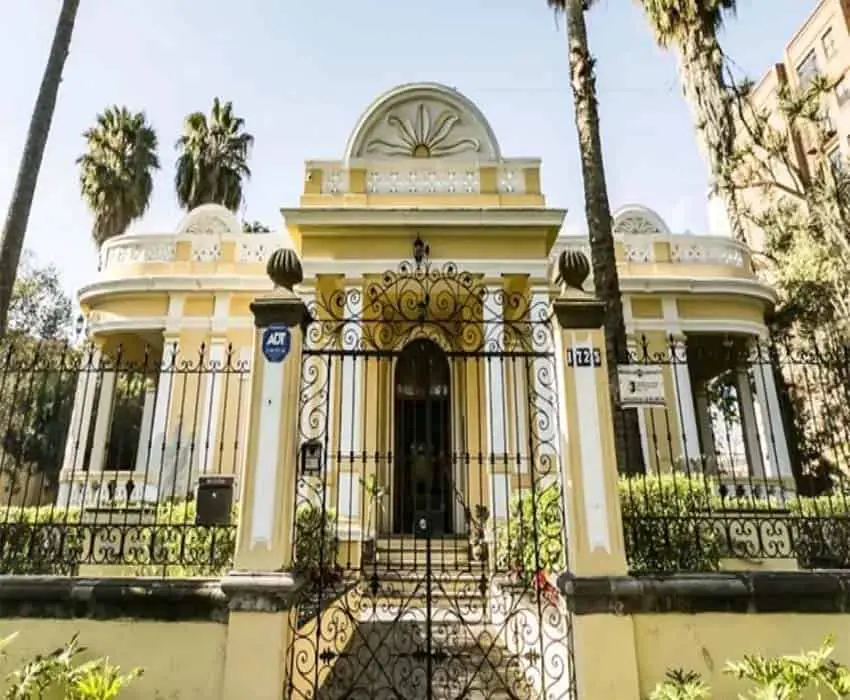
Yellow and white Renaissance revival house with columns, three turrets an arched door, a wrought-iron gate in front and a wrap-around verandah
(X)

Colonia Americana in the Guadalajara Centro is recognized worldwide for its early 20th-century mansions, cultural riches, charming tree-lined streets and cosmopolitan vibe. It’s an enticing combination that attracts hip young locals, expats and tourists alike.  

Despite the neighborhood’s widespread appeal, its emblematic mansions are under increasing threat from local developers. In the past year, numerous buildings — including several with recognized architectural value — have been demolished or altered without permission.

Why is this happening? 

The historic properties stand on valuable land viewed as ideal for new higher-density buildings, in a city that has seen housing rents escalate rapidly in recent years.

One notorious case involves a property located at 180 Francisco Javier Gamboa Street. Last August, the Guadalajara City Council intervened to halt illicit construction activities for the sixth time, following repeated violations of building permits. That same month, another property with significant artistic value was destroyed without warning on José Guadalupe Montenegro Street.

Ximena López Nakashima, director of cultural heritage for the Jalisco government, noted that while her agency receives citizen complaints about protected buildings being damaged or destroyed, it lacks the authority and personnel to directly halt construction. Instead, it must coordinate a response with the city government, and that typically costs valuable time.

The situation feels even more dire when you discover that Avenida La Paz (which spans some of the most stunning blocks in the neighborhood) houses roughly 40 properties of artistic value, including several designed by Luis Barragán, the only Mexican architect to win the Pritzker Prize.

Despite the ongoing assault on the city’s artistic heritage, not all interventions on historic properties are denied. In fact, there are multiple avenues for developers to legally build new projects in Colonia Americana. 

In 2024, the Ministry of Culture issued 185 permits for interventions on properties in the Colonia Americana neighborhood. Last year, the number rose to 210 permits, 49 of which were for demolition.

A common practice that’s often greenlit by local authorities involves the restoration of a historic building while adding a modern new structure to the property. These projects often become residential buildings or hotels, according to López. 

One recent example is a property located in Avenida La Paz and Progreso, also designed by Barragán. While these builds fundamentally change the property’s character, they’re viewed as preferable to letting historic buildings sit abandoned or fall into disrepair.

City closes more bars and restaurants in popular expat neighborhoods for excessive noise

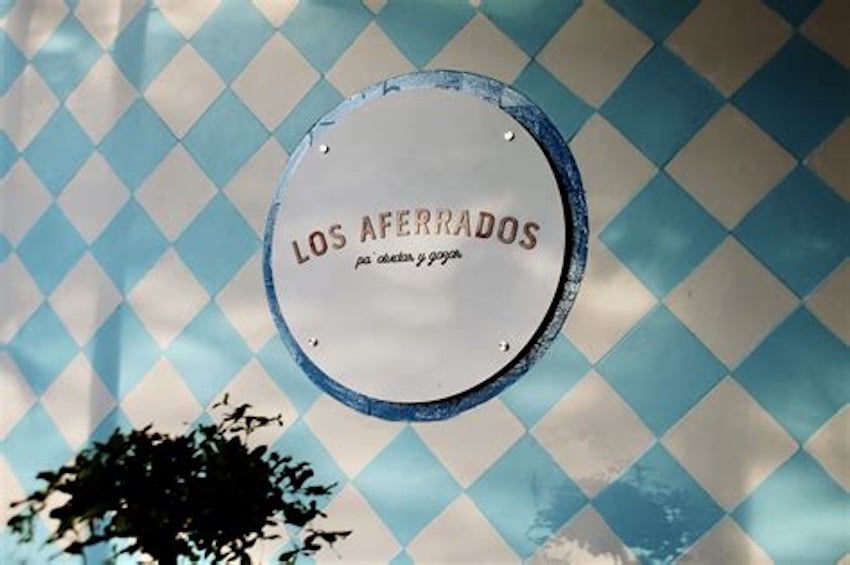
(Los Afferados/Facebook)

Colonia Americana and Providencia may get a little quieter in 2026, following the municipal government’s decision to crack down on excessive noise at a handful of bars and restaurants in these two popular urban neighborhoods.

In early January, the Los Aferrados restaurant, located at López Cotilla 1905B, was closed after registering 71 decibels, well above the legal maximum of 65 decibels. Several days later, the (In)Oportuno bar, at Pedro Moreno 1164, was closed after measuring 69 decibels during an inspection.

With these recent actions, the total number of businesses sanctioned since December 2025 has risen to six. Late last year, Casa Clover Lawn, Bar Plo, Galería Aguafuerte and Bar Rey Gallo were also closed by authorities due to excessive noise.

City officials reiterated their commitment to addressing citizen complaints and performing regular inspections to ensure that restaurants, bars and entertainment venues in heavily residential areas comply with municipal noise limits. 

After discovering that life in Mexico was a lot more fun than working in corporate America, Dawn Stoner moved to Guadalajara in 2022, where she lives with her husband, two cats and Tapatío rescue dog. Her blog livewellmexico.com helps expats live their best life south of the border.

Sheinbaum tells women ‘there is no limit’ to their ambitions: Monday’s mañanera recapped

1
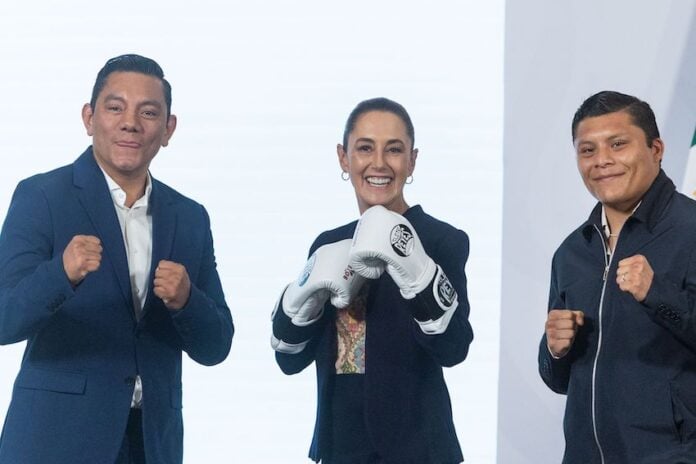
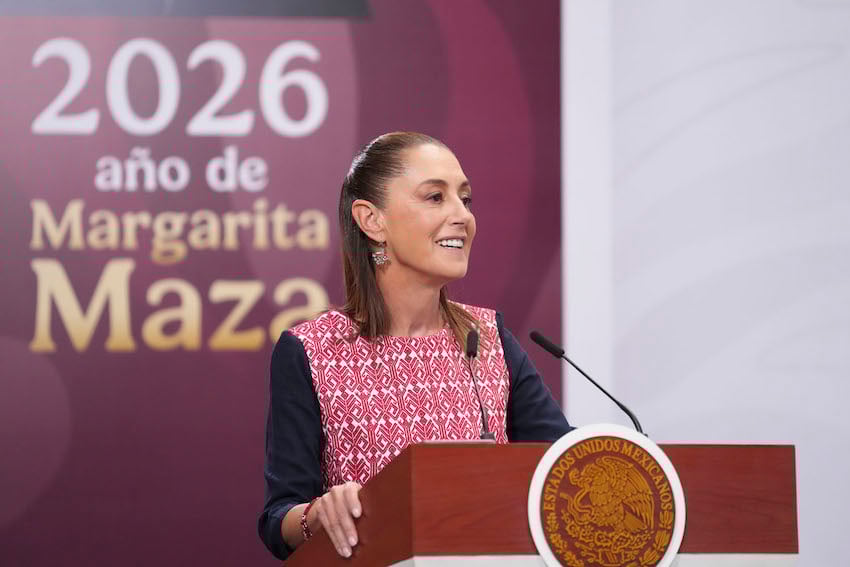
Sheinbaum poses with professional boxers Cristian Mijares and Isaac Jonathan Cruz González "El Pitbull" during her Feb. 16 press conference
Sheinbaum poses with professional boxers Cristian Mijares and Isaac Jonathan Cruz González "El Pitbull" during her Feb. 16 press conference. (Moisés Pablo/Cuartoscuro)

World Boxing Council President Mauricio Sulaimán and various professional boxers attended President Claudia Sheinbaum’s Monday morning press conference to help promote the federal government’s “Boxing for Peace” initiative.

Sheinbaum, Mexico’s first female president, subsequently took the opportunity to repeat a message she has conveyed before — that girls and women can aspire to be whatever they want to be.

Among other remarks, she acknowledged the OECD’s latest data on unemployment and expressed discontent with the United Kingdom’s decision to grant political asylum to the ex-wife of an incarcerated former governor of Veracruz.

Sheinbaum reiterates ‘there is no limit’ to women’s ambitions  

After professional female boxers encouraged women and girls to give boxing a try, Sheinbaum highlighted that while women love their families and their children, they also have the “right” to pursue their own “growth and development.”

“… Women can be whatever we want to be,” she said.

“… Women can be presidents, governors, mayors, firefighters, police officers, soldiers, reporters, journalists, teachers, doctors [and] engineers,” Sheinbaum said.

“There is no limit,” she added.

Sheinbaum recalled that she saw something on social media that conveyed the message, “the worst thing is to have your dreams taken away.”

“Saying ‘you can’t be this’ is also discrimination,” she said.

“And sometimes it even comes from the family,” Sheinbaum said before providing examples of the kind of things some Mexican fathers (and mothers) might say to their daughters:

  • “How are you going to study engineering, sweetie?! That’s for men.”
  • “How are you going to be a mechanic?! That’s for men.”
  • “How are you going to be a soldier, sweetie?! That’s for men.”
  • “How are you going to be a journalist? You’ll be running around all over the place! That’s for men.”
  • “How are you going to be a fighter? How are you going to be a boxer?” 

Sheinbaum expressed her repudiation of such thinking before declaring, once again, that “women can be whatever we want to be.”

Sheinbaum: Low unemployment rate is a source of pride

Later in the press conference, a reporter told the president that Mexico has the second-lowest unemployment rate among the 38 member countries of the Organization for Economic Co-Operation and Development (OECD)

In fact, in December 2025, Mexico had the lowest unemployment rate among OECD countries, according to an OECD report published last Thursday.

Both Mexico and Japan had unemployment rates of 2.6% in the final month of last year, the OECD reported.

Sheinbaum said that Mexico’s low unemployment rate is “a source of pride for everyone.”

She quipped that the OECD unemployment data would be good to show to “those who say ‘the transformation doesn’t get results'” — transformation being shorthand for the Morena party-led political movement, known as the “fourth transformation,” or 4T.

Sheinbaum didn’t mention that over half of Mexico’s workforce is employed in the country’s vast informal sector.

Sheinbaum not happy with UK’s decision to grant asylum to Karime Macías 

A reporter asked Sheinbaum whether her administration would “protest” the decision of the U.K. government to grant political asylum to Karime Macías, ex-wife of former Veracruz governor Javier Duarte (2010-16), who is serving a prison sentence for money laundering and links to organized crime.

Jailed ex-governor, wife divorce after charges of fraud, embezzlement

Macías, who was arrested in London in 2019 but released on bail a short time later, is wanted in Mexico in connection with her alleged involvement in an embezzlement scheme while she headed up the DIF family services agency in Veracruz. Her obtainment of political asylum in the United Kingdom, where she has now lived for around nine years, allows her to avoid extradition to Mexico.

Sheinbaum said that her government hasn’t been officially notified of the asylum decision, but declared that “we’re not in favor” of it, and “we’re going to react” to it — i.e., complain about it via diplomatic channels.

By Mexico News Daily chief staff writer Peter Davies (peter.davies@mexiconewsdaily.com)

International tourism to Mexico grew 6.1% in 2025

0
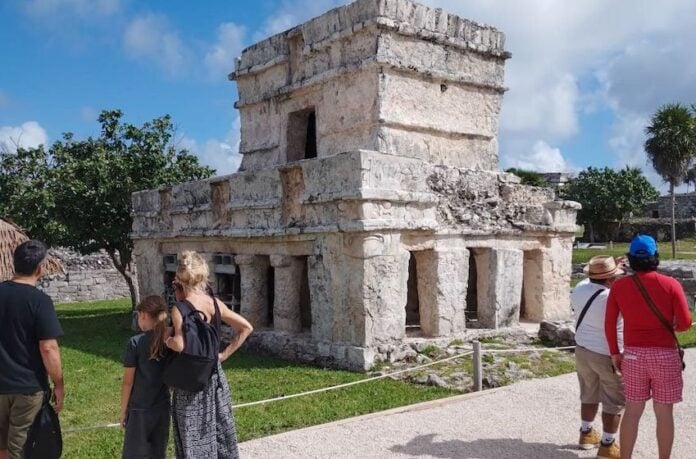
tourists observing ruins in Mexico
In contrast, average spending per tourist across all categories of travelers fell 7.7% compared to December 2024, reaching US $659.37 from $714.75. (Elizabeth Ruiz/Cuartoscuro)

Mexico received 47.8 million international tourists in 2025 — up from 45 million in 2024 — marking a historic year for an industry that contributes approximately 8% of total GDP. 

According to the National Institute of Statistics and Geography (INEGI), the largest increase in tourists occurred among those arriving by land, rising by 15.6% to 4.5 million. The number of tourists arriving by air declined 1.3%.

Day-trippers — visitors who did not stay overnight — also increased. Their total reached over 50.4 million, a 21.9% year-over-year increase. Of these, 38.9 million entered via land borders and 11.4 million via cruise ships.

In economic terms, revenue from international tourism rose by 4.9% to US $31.7 billion; however, average international tourist expenditure fell by 1.2% to $663.69.

The tourism-related economy, which INEGI calls tourism gross domestic product (GDP), grew 0.6% annually in the third quarter of 2025, driven in particular by a 1.8% increase in the price of goods.

Foreign income from visitors arriving by land grew by around 14.1%, while income from air travelers increased by about 3.3%, confirming the greater dynamism of Mexico’s land corridors. Those arriving by air spent an average of $1,221.36 in Mexico, while those arriving by land averaged $328.45.

As is typical during holidays, the month of December 2025 saw more than 5.21 million foreign tourists, marking a year-on-year increase of 9%, according to INEGI. Likewise, December saw total spending by international tourists rise by 0.5% to $3.441 billion compared to the same month of 2024.  

In contrast, average spending per tourist across all categories of travelers fell 7.7% compared to December 2024, reaching $659.37 from $714.75.

Mexico is currently the sixth most visited country in the world, behind France, Spain, the United States, Turkey and Italy. According to a study conducted by Google and the international professional services network Deloitte, it is on track to break into the top five by 2040.

With reports from Forbes

Authorities seize 100+ tank trucks, 82,000 liters of stolen fuel in Veracruz bust

2
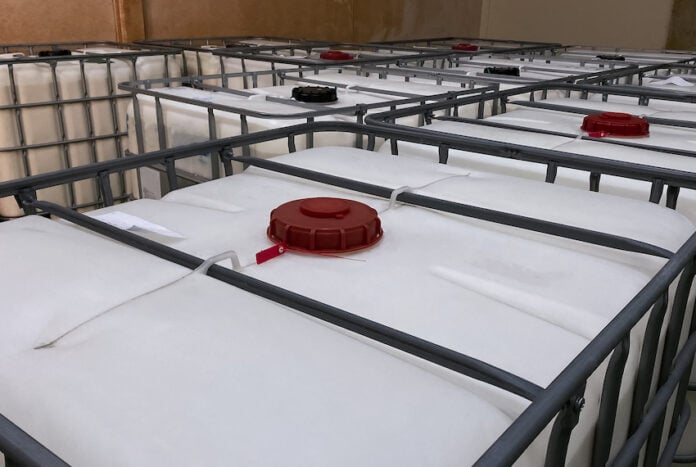
Low light view. Many large white tanks chemical packaging inside of the factory.
During the bust, 149 vehicles, 25 containers, 17 storage tanks and 82,200 liters of hydrocarbons were seized or secured. (Shutterstock)

Federal authorities have dealt a major blow to an illicit fuel scheme in Veracruz, seizing more than 100 tank trucks as well as over 82,000 liters of petroleum products.

The Federal Attorney General’s Office (FGR) announced the bust in a statement last Thursday, reporting that 149 vehicles, 25 containers, 17 storage tanks and 82,200 liters of hydrocarbons were seized or secured at four properties in Minatitlán, home to Mexico’s oldest oil refinery. No arrests were reported.

The FGR said that it had begun an investigation into “the probable commission of the crime of illegal possession of hydrocarbons.”

It noted that the FGR, the army, the National Guard and state police were involved in the operations that resulted in the seizure of the vehicles, containers, tanks and fuel.

In a headline, the newspaper El Universal described the Veracruz bust as the dismantling of a “megarred de huachicoleo” (mega huachicol, or fuel theft, network).

The 4 raids 

Authorities seized 52,200 liters of fuel at the first property they raided, according to the FGR. At the same property, they seized 66 vehicles, including 36 tank trucks, as well as fuel containers and storage tanks.

At the second property, authorities seized 66 additional vehicles, including 59 tank trucks, as well as fuel storage tanks.

Fifteen vehicles, including 10 tank trucks, as well as fuel storage tanks, were seized at the third property that was raided in Minatitlán, located in southern Veracruz inland from the Gulf coast port city of Coatzacoalcos.

At the fourth property, authorities seized 30,000 liters of fuel as well as containers, tanks and two vehicles.

Minatitlán is home to the Lázaro Cárdenas Refinery, which was founded in 1906, making it the oldest of Pemex’s seven refineries in Mexico.

Various petrochemical complexes also operate in southern Veracruz. As is the case in various states of Mexico, fuel theft — including via the perforation of Pemex pipelines — is a problem in Veracruz.

Earlier this month, the FGR reported that 4,060 liters of fuel were seized in raids of two properties in Veracruz, one located in the municipality of Moloacán, which borders Minatitlán, and the other in Tuxpan, in the north of the Gulf coast state.

With reports from El Universal and El Financiero

Sheinbaum, joined by Salma Hayek, unveils tax incentive to boost film industry

1
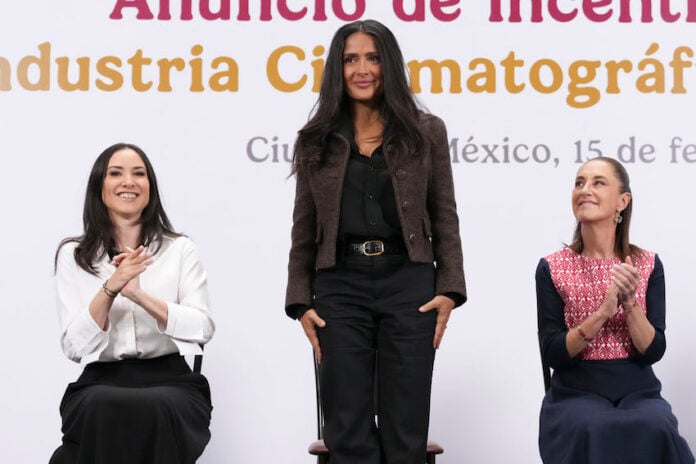
Salma Hayek with Culture Minister Claudia Curiel de Icaza and President Claudia Sheinbaum
"Mexican cinema was neglected for a long time," Hayek said during her participation in the announcement. "Perhaps what we've been lacking is this president," the actress said, evidently in support of Sheinbaum. (Hazel Cárdenas/Presidencia)

President Sheinbaum announced a new tax incentive to boost film production in Mexico, with actress Salma Hayek joining her at the event to celebrate what she called a “historic opportunity” for the country’s cinema industry.

The program offers a credit against income tax (ISR) equivalent to 30% of expenditures made in Mexico, with a limit of 40 million pesos (US $2.3 million) per project.

"Quizá lo que no teníamos era esta presidenta": Salma Hayek al celebrar incentivos al cine mexicano

Hayek, one of Mexico’s most famous actresses, praised the initiative during the announcement, noting that the film industry has grown despite little to no support from previous governments.

“I think Mexican cinema was neglected for a long time, and thanks to Mexican talent that never gave up, we haven’t just survived, but we’ve grown despite the complete lack of support,” Hayek told reporters.

“I want to tell you that I believe no one can compete with us. With this support, we are unparalleled. There is no country in the world, none, that has our diversity. Perhaps what we have been lacking is this president,” she said, gesturing toward Sheinbaum. 

Sheinbaum explained that the initiative aims to boost Mexican cinema, particularly independent productions, while diversifying content, promoting works in Indigenous languages and ensuring more transparent use of resources.

“This incentive program includes a government commission that aims to support the development of productions that otherwise wouldn’t have the opportunity to exist,” Sheinbaum said.

She added that the incentive will be available for international productions as long as they employ Mexican talent, “so that an international production doesn’t just arrive with everything and leave, but rather develops all the talent we have in Mexico.”

The incentive requires that at least 70% of supplies — including services, talent and spending — are of Mexican origin, in an effort to curb international productions bringing everything to shoot in Mexico and then leaving. (Hazel Cárdenas/Presidencia)

To qualify, at least 70% of supplies, including services, talent and spending, must be of Mexican origin, ensuring benefits remain with Mexican companies. 

Eligible projects include:

  • Feature-length fiction or animated films and series with a verifiable minimum expenditure of 40 million pesos (US$ 2.3 million);
  • Feature-length documentaries and series with a minimum expenditure of 20 million pesos (US$ 1.2 million); and
  • Some animation, visual effects or post-production processes with a minimum expenditure of 5 million pesos (US$ 290,000) per process.

The incentive will be available to Mexican citizens, foreigners with permanent residence in the country and foreigners without permanent residence who carry out production through a Mexican resident.

The program also establishes an archiving policy to document, preserve, restore, digitize and disseminate Mexico’s audiovisual heritage collection.

With reports from CNN

Million-dollar upgrades underway for Mexico’s museums, archaeological zones before World Cup

1
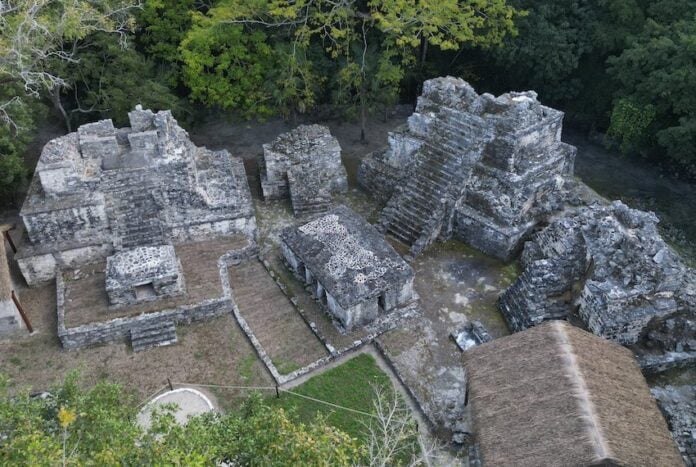
The archaeological zone of Muyil in Quintana Roo recently reopened to the public as part of a beautification program aimed at improving the tourist experience at Maya heritage sites.
The archaeological zone of Muyil in Quintana Roo recently reopened to the public as part of a beautification program aimed at improving the tourist experience at Maya heritage sites. (Sectur)

Mexico’s top cultural authorities are racing to ready dozens of landmarks before the 2026 FIFA World Cup, with renovations to be carried out at 12 museums and 46 archaeological sites.

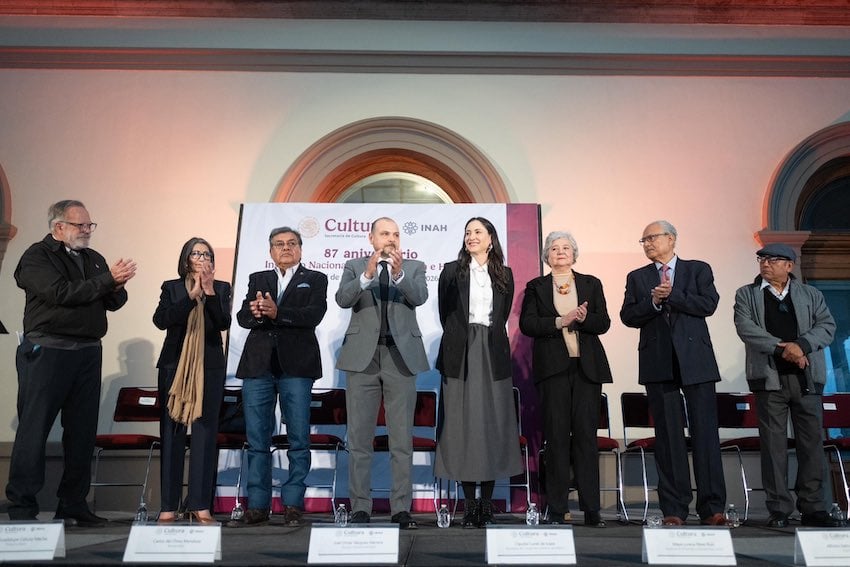
The National Institute of Anthropology and History (INAH) is undertaking the refurbishments as part of a nationwide effort to present “the living culture of Mexico” to the world, Culture Minister Claudia Curiel de Icaza said recently during INAH’s 87th anniversary celebration at Chapultepec Castle in Mexico City.

In Mexico City, Culture Minister Claudia Curiel de Icaza on a stage at an event celebrating
On Feb. 3, Culture Minister Claudia Curiel de Icaza (center) confirmed upgrades to two Mexico City museums with additional infrastructure investments planned for the Teotihuacán archaeological complex just outside of the metropolis. (@cultura_mx/X)

The 58 targeted sites are expected to draw millions of visitors during and around the 2026 men’s World Cup, scheduled for June 11 to July 19 in Mexico, the United States and Canada.

“We are focused on preservation, but at the same time providing functional conditions and better infrastructure for all tourists and visitors,” Curiel de Icaza said, announcing upgrades to the National Museum of Anthropology and Templo Mayor in Mexico City, and “all the tourist structures in the Maya world.”

The Templo Mayor archaeological zone contains remnants from the ancient metropolis of Tenochtitlán, the flourishing Aztec (Mexica) capital from the 1300s to 1500s on an island in Lake Texcoco where present-day Mexico City stands.

Teotihuacán, another one of Mesoamerica’s major pre-Hispanic cities, will be a centerpiece of the effort, with improvements to roads, services and signage in the next three months, along with training for the workers “who will attend to visitors and tourists from all over the world,” she said. The archeological site is about 50 kilometers northeast of present-day Mexico City.

México state officials told the newspaper La Jornada that discussions are underway to reopen the climb to the Pyramid of the Sun at Teotihuacán and revive nighttime light-and-sound shows in time for the 13 World Cup games in Mexico (five in Mexico City, four in Guadalajara and four in Monterrey).

After 5 years, tourists can once again climb Teotihuacán’s Pyramid of the Moon

INAH director Joel Omar Vázquez Herrera said the government has allocated 200 million pesos (US $11.7 million) for the projects, underscoring the pressure on aging infrastructure.

Last year, more than 11.5 million people visited INAH’s network of 165 museums, and about 10.5 million visited its 194 archaeological sites, for a total of slightly more than 22 million visitors, INAH said.

The agency also noted that the National Museum of Anthropology stood out, exceeding 5 million visitors in 2025.

With reports from El Sol de MéxicoCulturamexicana.org and La Jornada

In Bloomberg report, business sector bashes Mexico’s new judiciary, calling it erratic and biased

16
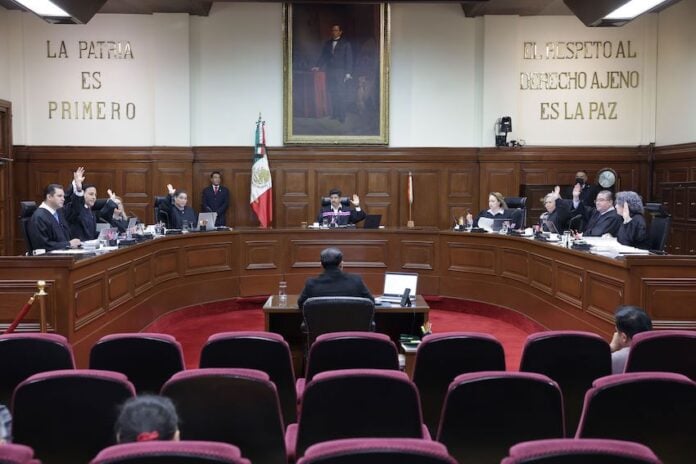
Mexico's Supreme Court
All of the nine people elected as justices on June 1 are affiliated with, seen as sympathetic to, or were at least tacitly supported by the ruling Morena party. (SCJN/Cuartoscuro)

Mexico held its first-ever judicial elections last June, with citizens electing almost 900 judges, magistrates and Supreme Court justices who assumed their duties on Sept. 1.

President Claudia Sheinbaum asserted that the elections — the product of a 2024 judicial reform — were necessary to rid Mexico’s judiciary of corruption, nepotism and other ills.

But just over five months after the new judges were sworn in, Mexico’s court system is “in disarray,” and companies operating in the country are “increasingly steering clear” of it, Bloomberg News reported last Thursday.

The “in disarray” description, Bloomberg said, came from a dozen current and former judicial employees as well as business leaders.

The news agency’s Feb. 12 report depicts a court system plagued by backlogs and populated by inexperienced judges.

It refers to concerns about bias and incompetence in the new judiciary, and considers the impact of the status quo on investment at a time when Mexico is seeking to attract more foreign capital within the context of Plan México, an ambitious economic initiative that aims to make Mexico the world’s 10th largest economy by 2030.

‘Inexperienced judges, erratic rulings’ and ‘a newly politicized system’

Bloomberg reported that “companies operating in Mexico are increasingly steering clear of the courts, opting instead for arbitration or mediation as legal uncertainty clouds the country following a sweeping overhaul of the judiciary.”

“Others are rethinking investment plans altogether, wary of inexperienced judges, erratic rulings and what many see as a newly politicized system,” wrote the news agency, which didn’t mention any companies by name.

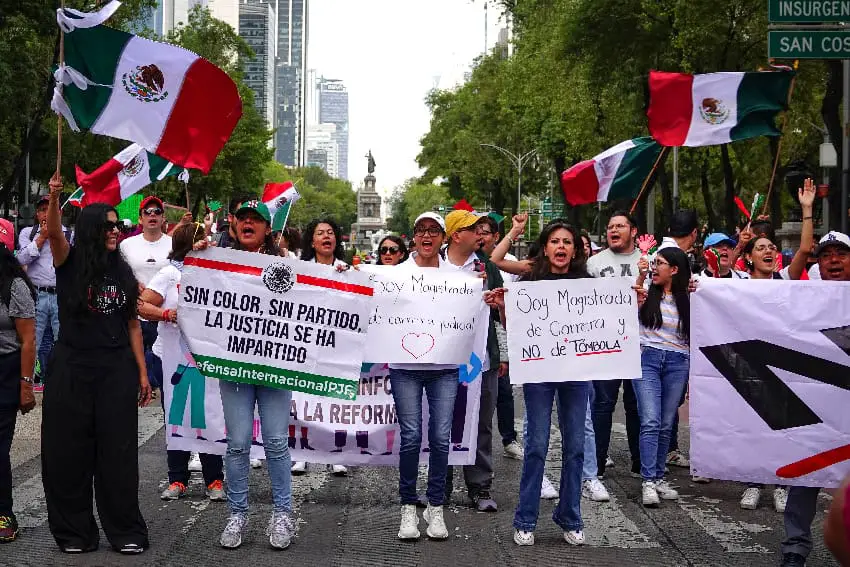
People march down a wide avenue in Mexico City, holding Mexican flags and handwritten signs
The Morena party’s reform of Mexico’s judicial system elicited multiple large-scale protests last year, often led by judicial branch employees. (Rogelio Morales/Cuartoscuro)

Bloomberg also reported that “decisions marred by glaring errors or perceived bias are discouraging companies from filing lawsuits, while some investments are being delayed or shelved amid doubts about whether contracts will be enforced.”

Longstanding concerns about the politicization of the judiciary due to the election of many judges seen as sympathetic to the ruling Morena party were heightened by an El Universal investigation that found that the “new” Supreme Court (SCJN) has handed down at least six rulings in favor of reforms and decrees promoted by former President Andrés Manuel López Obrador (AMLO).

Published last month, the El Universal report said there hadn’t been any SCJN ruling against reforms or decrees sponsored by AMLO or Morena lawmakers.

“Is that democracy? I don’t think so,” Javier Laynez, a former Supreme Court justice who resigned ahead of the controversial judicial elections, told Bloomberg.

“Is that an independent power? I don’t think so either,” he said.

Laynez: Businessmen are ‘extremely worried’

Bloomberg reported that “the growing unease over the courts” adds to Mexico’s challenges to attract investment. Insecurity, infrastructure bottlenecks, tariffs and trade uncertainty ahead of the USMCA review are already actual or potential hindrances to investment.

Laynez said that “businessmen don’t speak openly about” concerns related to legal instability as a result of the judicial reform, but added:

“Those I talk to are extremely worried. The reform weighs heavily on investor sentiment.”

Foreign direct investment in Mexico hit a record high last year, but other forms of investment have declined.

“The highly controversial reform of the judiciary and the perception of less independence in its rulings seem to have scared off investment, which is reflected in the decline in gross fixed investment,” Gerardo Trejo Veytia, vice president of sustainability at the Mexican Employers Federation (Coparmex), told Bloomberg.

The news agency reported that “Coparmex says investment levels are now as low as those seen during the pandemic.”

Empty room of office cubicles
The Center for Economic Studies of the Private Sector (CEESP) also cited the judicial reform as a hindrance to formal job creation in a January 2026 report. (Unsplash)

Bloomberg also noted that “a central bank survey of economists found that ‘lack of rule of law’ rose from third to second place between 2023 and 2025 among the main obstacles to doing business in Mexico, trailing only crime.”

Before she took office in October 2024, Sheinbaum said that investors had “nothing to worry about” with regard to the judicial reform. She has consistently defended the reform put forward by her predecessor and political mentor, and described last year’s judicial elections as a “complete success,” even though turnout was just 13%.

In late 2024, Sheinbaum said that Mexico was “perhaps” the most democratic country in the world given that it would hold judicial elections in 2025.

Asked last month whether she saw “any bias” toward Morena in Mexico’s Supreme Court, the president said that the SCJN itself would have to respond, before pointing to the openness of its decision-making.

Learning to be a judge on Zoom

Bloomberg reported that courts across Mexico “are struggling with resignations, backlogs and rulings that legal experts describe as deeply flawed, as inexperienced judges grapple with complex cases.”

Citing reporting from Expansión, Bloomberg noted that at least nine newly elected judges have resigned, most without giving a reason for their decisions.

“Those who have stayed are often scrambling to learn the basics,” the news agency wrote.

Alejandra Ramos, an experienced former judge who failed to win a position at last year’s judicial elections, has stepped in to try and fill the void in knowledge via the teaching of the aforesaid basics to newly-elected judges over Zoom, the videoconferencing platform.

Most of the judges-cum-students to whom she delivered “lectures fit for a second-semester law school course,” according to Bloomberg, were “complete novices” when they logged on for Zoom classes late last year, said Ramos.

María Emilia Molina, a former federal judge, is not at all impressed with the new judiciary.

“The rulings are now horrendous, the legal grounds no longer exist,” she told Bloomberg.

“There are judges who don’t understand anything about the cases and end up asking the lawyers to reach an agreement,” Molina said, highlighting that some of the judges used to be primary school teachers or political activists — albeit ones with law degrees.

The problem of inexperienced and incompetent judges is not likely to disappear even if the current crop of new judges manages to get up to speed, over Zoom or by other means, as a second round of judicial elections is scheduled for 2027.

SCJN defends the judiciary 

In a statement to Bloomberg News, the SCJN said that “the assertion that there is a widespread lack of experience” within the judiciary “does not correspond to institutional reality.”

“The judiciary has evaluation and control mechanisms in place to ensure that those who exercise judicial functions do so with responsibility and professionalism,” added Mexico’s top court, which is led by Chief Justice Hugo Aguilar Ortíz.

The SCJN also told Bloomberg that it has “worked to strengthen legal certainty and ensure strict compliance with the constitutional and legal framework.”

According to Bloomberg, the court added that it “has promoted ‘unprecedented dialogue’ with business chambers to hear their concerns, with the aim of providing certainty for the development of the economy.”

Deputy Olga Sánchez Cordero, a Morena lawmaker and former Supreme Court justice who served as interior minister during AMLO’s presidency, told Bloomberg that extensive training is taking place to make sure new judges can perform their duties competently.

“A lot of training is needed. They’re studying hard,” said Sánchez, who served as a SCJN justice between 1995 and 2015.

She also said that “it will take time for the judicial reform to mature and produce results across the board.”

With reports from Bloomberg

10,000 couples tied the knot in collective weddings held on Valentine’s Day

0
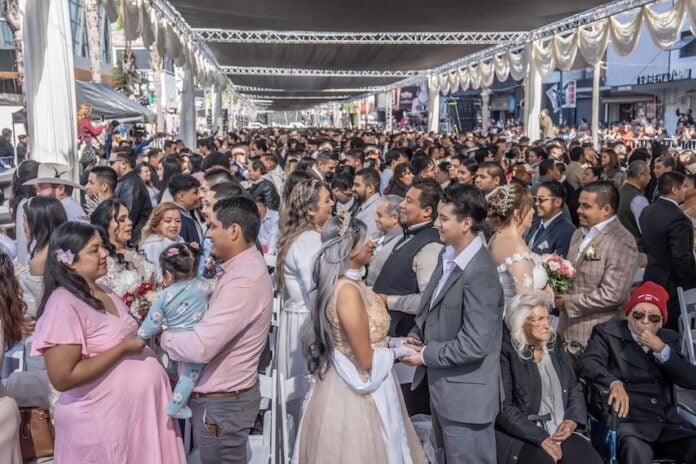
Nearly 2,000 couples got married in one of many "bodas colectivas" held throughout Mexico on Saturday, or Valentine's Day.
Nearly 2,000 couples collectively got married in Tijuana at one of many "bodas colectivas" held throughout Mexico in celebration of Valentine's Day. (Omar Martínez/Cuartoscuro)

Approximately 10,000 couples got hitched on Saturday during collective wedding ceremonies in states across Mexico.

The states of Nuevo León and Mexico City led the way with 2,500+ and 2,378 partners tying the knot in their respective Valentine’s Day events.

Nuevo León Governor Samuel García and his wife Mariana Rodríguez witnessed the union of more than 2,500 couples in a ceremony held at the Nuevo León Gymnasium in the state capital of Monterrey.

During a brief speech, García emphasized the importance of marriage as “a life project based on companionship, respect, and commitment,” and affirmed that the state’s growth is a reflection of the daily efforts of its families.

In Mexico City, Mayor Clara Brugada told those assembled in the National Auditorium that her government supports those who “decide to build a life as a couple based on equality, respect and autonomy.”

“Today, 2,378 couples decided to unite their lives in this collective marriage … This government, like you, believes in the value of publicly declaring your love,” she said. “We believe in a loving city of rights.”


View this post on Instagram


A post shared by Clara Brugada (@clara_brugada_m)

Elsewhere, 1,900 couples tied the knot in the state of Baja California, nearly 1,000 “exchanged vows” in México state and more than 500 got hitched in the state of Jalisco. Major cities in Oaxaca, Quintana Roo and elsewhere also took part, ratifying between 50 and 400 marriage certificates stamped Feb. 13 and 14.

Popularity of ‘collective weddings’ in Mexico

Only civil marriages are recognized by the government in Mexico, but the process can be time-consuming (filing of identification documents and providing up to four witnesses) and expensive.

Some estimates suggest that more than 50% of couples living together in Mexico do not have documented marriages. The national statistics agency INEGI reported last year that there are 5.4 marriages per 1,000 adult residents nationwide, while in Mexico City, there are only 3.4 marriages per 1,000 adult residents.

Collective weddings are organized by individual state and municipal Civil Registry offices to address this issue by providing a free official civil procedure and formally regularizing marriages. Additionally, a regularized marriage is beneficial for a couple’s children, allowing both parents to secure access to government services.

These events take place throughout the year. For instance, the state of Chihuahua will host a mass wedding on Feb. 19, the state of Coahuila will do the same on Feb. 27 and the state of Aguascalientes will celebrate a collective wedding ceremony on March 27.

Typically, participating couples are required to submit all official documents (e.g., birth certificates, proof of local address, legal ID) and register ahead of time.

Although there is no documented “first” collective wedding celebration in Mexico, such events have grown in popularity over the last 20 years, particularly as a way to provide free and legal certainty to spouses.

With reports from Excelsior, Reporte Indigo, Punto Norte, La Crónica de Jalisco, El Universal and El Heraldo de México

Pausing and nature: Hilda Palafox in New York

0
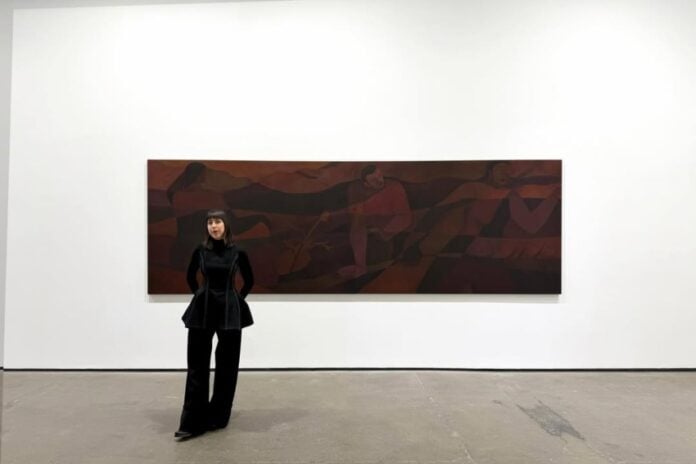
Hilda Palafox
Hilda Palafox in front of one of her paintings at the Sean Kelly Gallery in New York City. (Instagram)

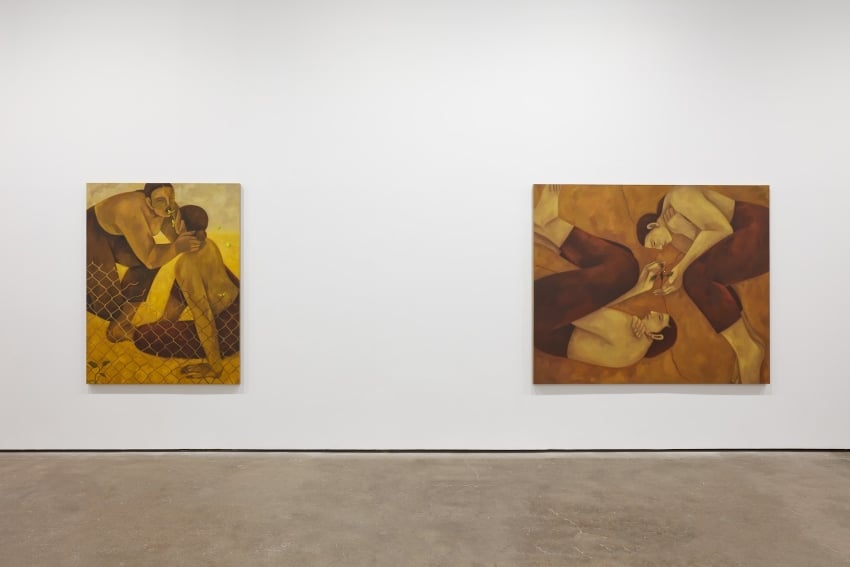
There is a sense of community, warmth, mystery and ritualism — a feeling of being embraced by the earth, flowers and volcanoes that invites contemplation of nature. All these elements come together in the first solo exhibition of Mexican artist Hilda Palafox at the Sean Kelly Gallery in New York, running until Feb. 21, 2026. The exposition features a series of paintings and cantera stone sculptures that evoke nature and the ancient whispers of knowledge linked to the earth and its secrets. Palafox has chosen the Spanish title “De Tierra y Susurros,” which translates to “Of Earth and Whispers.”

“This body of work was born as a visual anthology of the earth: a collection of stories that speak to the earth, its memory and what whispers to us from within,” she shares. This series of warm-toned paintings guides us into a state of contemplation and connection with nature.

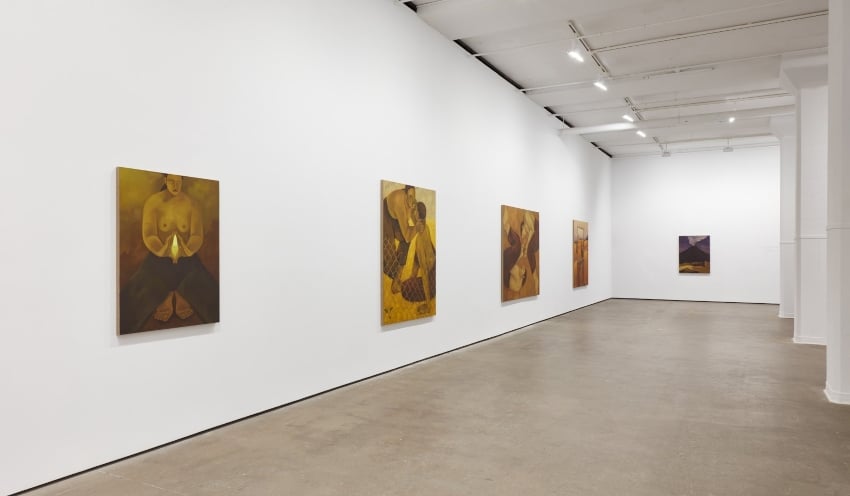
Hilda Palafox paintings
These paintings in the ‘De Tierra y Susurros’ exhibit depict fire, femininity and nature. (Jason Wyche/Courtesy Sean Kelly, New York)

“I wanted the exhibition to remain within a warm color palette, which is almost monochromatic at times and directly linked to the earth as a primordial element. I was interested in discussing the natural world in terms of its absence and what remains. For me, these tones represent a violated territory that holds memories while still offering the possibility of transformation.” 

For Palafox, it is essential to address the connection between human beings and nature, which she believes has become invisible, particularly regarding women. “In the context of the environmental crisis and the exhaustion of extractive models, revisiting this relationship is a way of recovering displaced knowledge, memories and practices of care.” 

The importance of pausing

There are rhythms and natural cycles. The pace of the real world creates a sense of urgency, leading to constant consumption and anxiety. This is why we need to reconnect with our essence: “Pausing, listening, and paying attention becomes an almost political act, a form of resistance,” she reflects. 

“De Tierra y Susurros” invites us to reconnect with what truly matters and opens a space for reflection on the urgent issues that need to be addressed. The exhibition includes paintings and sculptures that evoke the traditions of Latin America and their link to nature.

“I did not start from a specific legend or tradition, but some of the images engage with the beliefs, symbols and artifacts of Latin American cosmogony. I have always found these to be deeply beautiful and meaningful: rather than making direct references, these elements serve as visual echoes that permeate the work,” Palafox notes.

Nature and resilience 

When we think about it, nature and resilience are deeply interconnected, as is evolution. Every living thing on this planet plays a role in preserving life through symbiosis and the deep connections among all living things. “These works are based on the idea that we are not separate from nature, but part of it,” she says.

Hilda Palafox paintings
Warm colors that evoke the essence of the earth are characteristic of Palafox’s paintings at the Sean Kelly Gallery in New York.(Jason Wyche/Courtesy Sean Kelly, New York)

“I view resilience as a force that runs through both humans and the natural world. It is not an attribute exclusive to women, but rather a shared capacity that manifests wherever rupture, wear, and tear or violence occur. For me, the cracks in the earth, in concrete, or in a landscape fragmented by human hands become places of possibility — points where something insists on staying alive.”

Palafox is often associated with Mexican muralists due to the large-scale figures in her work. She acknowledges their influence, having grown up in Mexico City, where powerful public art significantly impacted her perspective: “The environment was filled with murals, sculptures and images that were present even in my schoolbooks during childhood. I draw certain formal elements from that experience, such as the use of symbolism and monumentality.”

Furthermore, she is interested in bringing all these influences into the contemporary world from a female perspective, exploring themes ranging from the personal to the collective. In “De Tierra y Susurros,” she certainly succeeds in guiding us toward a state of contemplation and wonder as we engage with the universe of traditions, magic and nature.

Ana Paula de la Torre is a Mexican journalist and collaborator for various outlets, including Milenio, Animal Político, Vice, Newsweek en Español, Televisa and Mexico News Daily.