Home Blog Page 116

MND Local: November news in Puerto Vallarta

0
Puerto Vallarta
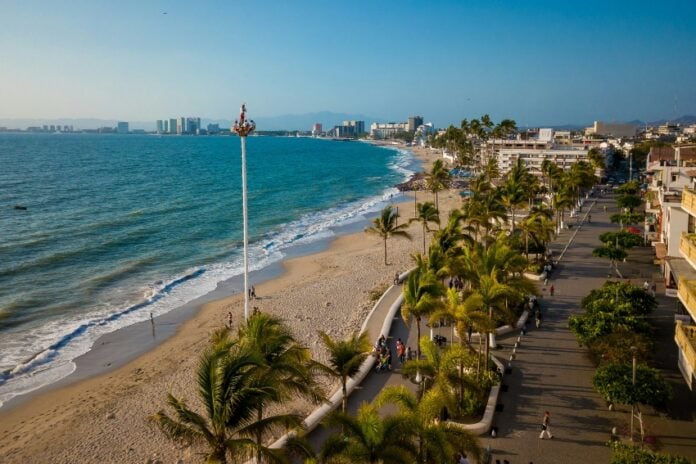
There's plenty of news to report in Puerto Vallarta this November. (Unsplash/Miguel Naranjo)

Puerto Vallarta continues to strengthen its position as one of Mexico’s leading destinations, with new developments and community initiatives shaping the city’s growth ahead of the 2026 tourism season.

Federal court ruling may clear the way for Uber pickups at Puerto Vallarta Airport

A federal court has granted Uber a definitive injunction that allows its drivers to operate inside federally regulated airport zones across Mexico while a broader constitutional case proceeds. 
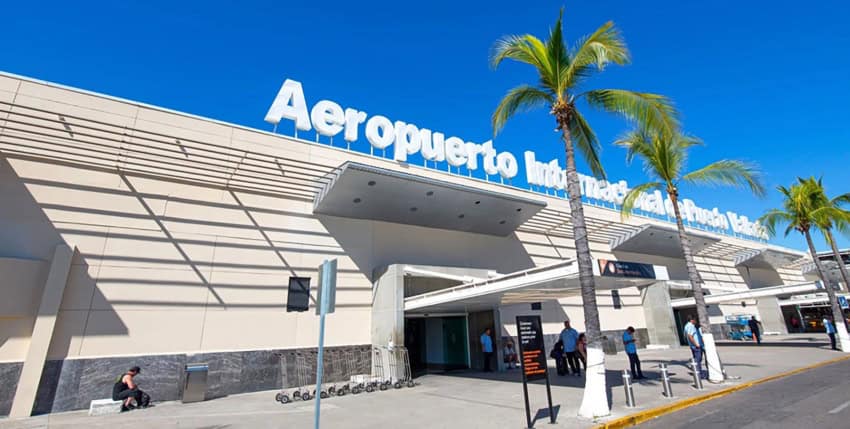
Puerto Vallarta Airport
Can Uber pick you up at Puerto Vallarta Airport? That depends on who you ask. (Puerto Vallarta Airport)

The decision, issued October 27 by District Judge Adriana Judith Uribe Vidal, prevents authorities from detaining or fining drivers who are completing app-based trips at more than 70 terminals nationwide.

In Jalisco, Governor Pablo Lemus Navarro confirmed that the state will honor the ruling, authorizing pickups and drop-offs at Guadalajara and Puerto Vallarta airports. However, local reports indicate that the National Guard has yet to receive formal notification of the injunction, leading Uber drivers in Puerto Vallarta to delay their operations inside the airport zone to avoid possible detentions. 

The governor has called for a “piso parejo,” or a level playing field, between ride-hailing platforms and airport taxi concessions.

At Puerto Vallarta’s Gustavo Díaz Ordaz International Airport, the ruling could soon end years of restrictions that forced travelers to meet Uber drivers outside terminal grounds. However, the federal government is currently claiming that the judge’s decision does not address Uber’s right to operate in Mexico’s airports.

In an October 29 press release, Mexico’s federal transport authority (SICT) clarified that the measure requires the National Guard to “follow the Federal Roads, Bridges, and Motor Transport Law, and the corresponding applicable regulations, preventing them from being arbitrary and discriminatory” but does not replace the existing permitting system and thus does not allow Uber to operate in airports, since the company does not have a federal permit to do so. 

No Supreme Court ruling issued

Despite what some Mexican social media channels and local media reports have reported since the federal judge’s ruling, the Mexican Supreme Court has not recently weighed in on the debate.

cell phone with Uber
A new ruling from a district judge should allow Uber drivers to operate at more than 70 airport terminals across Mexico, but some potential roadblocks remain. (Shutterstock)

As the holiday season approaches, authorities are working to coordinate curbside access and signage to ensure smooth service for passengers.

City advances on Agua Azul ecological park plans

Puerto Vallarta is moving forward with plans to develop Agua Azul Park, a new ecological and recreational area designed to promote environmental conservation and community use. The project aims to transform an abandoned natural space into a sustainable park featuring hiking trails and outdoor gathering areas, while maintaining the site’s ecological balance.

The initiative is part of Mayor Luis Munguía González’s broader strategy to expand green spaces throughout the city. PV’s Manager of Territory and Sustainable City, Vincent O’Halloran Lepe, recently led a coordination meeting with representatives from academic, cultural and private sectors to refine the park’s design and purpose. 

Attendees included Dr. Alberto Reyes from the Jalisco Higher Technological Institute, Óscar Morán from the Office of Cultural Projects (OPC) and Luis Salazar and Eduardo Tapia from the Banderas Bay Project.

Officials say that collaboration among the government, civil society and private sector is a key to ensuring the park reflects community needs and environmental goals. The proposed design emphasizes eco-friendly recreation, such as hiking and nature observation, as tools for education and preservation. 

Once complete, Agua Azul Park is expected to become a model for sustainable urban development and a new gathering place for residents and visitors.

TAFER Hotels expands its PV portfolio in 2026
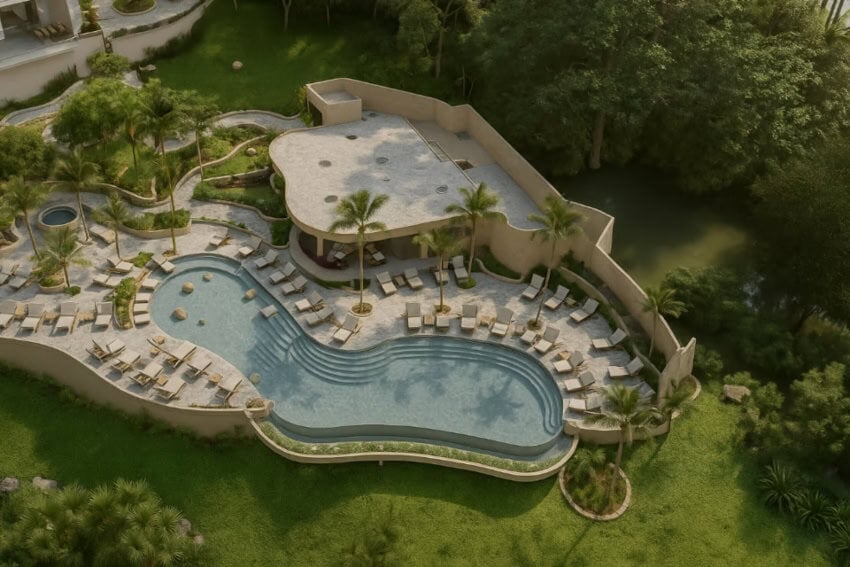
Garza Blanca Puerto Vallarta
A new Garza Blanca Sanctuary Tower will offer more pampering pool options for travelers to the destination in 2026. (TAFER Hotels and Resorts)

TAFER Hotels & Resorts has announced the upcoming opening of Garza Blanca Sanctuary Tower, a new addition to its Garza Blanca Preserve Resort & Spa complex in Puerto Vallarta. 

The first tower is scheduled to open in early 2026, with a second Sanctuary tower set to debut later next year.

The 20-story development will feature 118 oceanfront suites overlooking Banderas Bay, featuring private balconies and Jacuzzis. Accommodations will include family-friendly and adults-only options, with designs ranging from themed suites to luxury penthouses.

Guests will have access to the neighboring Garza Blanca Preserve’s amenities, including multiple pools, Jacuzzis, a white-sand beach, TierraLuna Gardens, a fitness center and a Kids’ Club. The culinary offerings will feature eight restaurants and two bars, including new Mediterranean and Japanese concepts, plus an adults-only rooftop lounge.

The project expands TAFER’s presence in Puerto Vallarta, where it already operates several properties under brands such as Garza Blanca Resort & Spa, Hotel Mousai and Villa del Palmar. Reservations for Garza Blanca Sanctuary are expected to open this month.

Meagan Drillinger is a New York native who has spent the past 15 years traveling around and writing about Mexico. While she’s on the road for assignments most of the time, Puerto Vallarta is her home base. Follow her travels on Instagram at @drillinjourneys or through her blog at drillinjourneys.com.
‘Last time the US came to Mexico, they took half the territory,’ Sheinbaum warns: Tuesday’s mañanera recapped

14
Sheinbaum Nov. 18, 2025
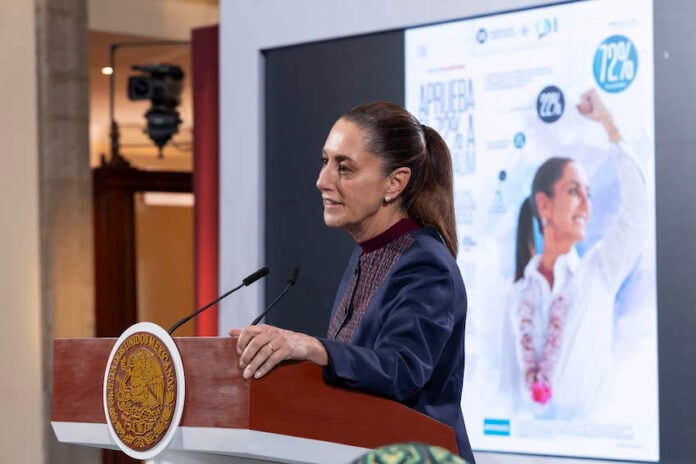
"The last time the United States came to Mexico with an intervention, they took half the territory. So, it's not that we don't want support, we do. But not with foreign troops, that's something else," the president said. (Juan Carlos Buenrostro/Presidencia)

At her Tuesday morning press conference, President Claudia Sheinbaum responded to U.S. President Donald Trump’s latest threats of intervention in Mexico, as well as new travel advice for Mexico that was issued by the Canadian government.

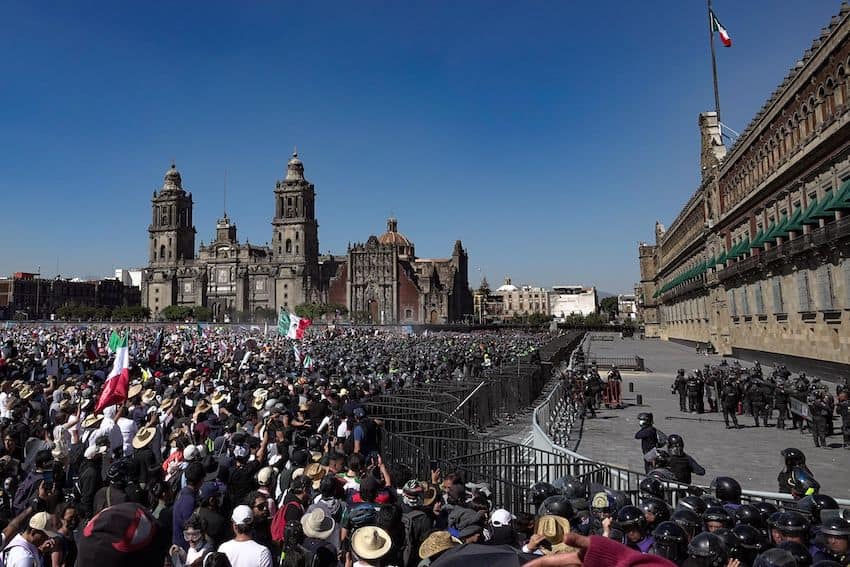
Among other issues, Sheinbaum spoke about the people who remain in custody after being detained in Mexico City’s central square on Saturday for allegedly attacking police at the end of a large anti-government protest march.

Here is a recap of the president’s Nov. 18 mañanera.

Sheinbaum says — once again — that US intervention in Mexico ‘won’t happen’

Asked about Trump’s comment on Monday that launching “strikes in Mexico to stop drugs” would be “OK” with him, Sheinbaum once again declared that a U.S. military intervention in Mexico “won’t happen.”

“… I’ve said it many times,” the president noted.

“In the conversations I’ve had with President Trump, over the phone, he has … said: ‘We offer you a United States military intervention in Mexico — whatever you need to combat criminal groups.’ But I have told him every time that we can collaborate, that they can help us with any information they have, but that we operate within our own territory, and we do not accept intervention from any foreign government,” Sheinbaum said.

“I’ve told him this over the phone, and we’ve also said it to the State Department, to Marco Rubio. And they’ve understood; in fact, the agreement we have with them is one of collaboration and coordination,” she said.

Sheinbaum stressed that “respect for sovereignty” and “respect for territorial integrity” are among “the first points” of a “joint statement on security cooperation” issued in early September.

She also said that the U.S. government has acknowledged in a statement that it won’t intervene in Mexico unless her administration requests such assistance.

“And we’re not going to ask for it because we don’t want interventions from any foreign government,” Sheinbaum said.

“There is collaboration and there is coordination, but there is not subordination, nor can we allow an intervention. … The last time the United States came to Mexico with an intervention, they took half the territory. So, it’s not that we don’t want support, we do. But not with foreign troops, that’s something else,” she said.

Sheinbaum says that Revolution Day military parade will go ahead in CDMX, despite new ‘Gen Z’ march 

Sheinbaum said that the annual Revolution Day military parade will take place in Mexico City this Thursday, even though a new “Generation Z” protest march is planned for the same day in the capital.

The first “Gen Z” march in the capital last Saturday turned violent, with some protesters attacking police officers in the Zócalo, Mexico City’s main square.

Sheinbaum declared that the Revolution Day parade “will take place on Nov. 20, as it always does.”

“… We have to have respect for what the Mexican Army represents,” she said.

gen z protest in Mexico City's central square
A total of 17,000 people participated in the Nov.15 march, according to the Mexico City government, but some media reports indicated that the turnout was significantly larger. (Rogelio Morales/Cuartoscuro)

When a reporter suggested that there could be a clash between protesters and military personnel participating in the parade, the president dismissed such a possibility, before modifying her language and saying, “we don’t think” anything will happen.

According to a post on Sunday by the Generación Z México account on the X social media site, a protest march from the Angel of Independence Monument to the Zócalo will take place for the second time in less than a week this Thursday, starting at 11 a.m.

The same account promoted the anti-government marches against insecurity that took place last Saturday in Mexico City and other cities across the country.

Most of the participants were not members of Generation Z — people born between 1997 and 2012 — and before the protest took place, Sheinbaum accused opposition parties of infiltrating the Gen Z movement.

The president denounced the violence in the Zócalo that marred Saturday’s protest in Mexico City and left 100 police officers and 20 other people with injuries.

According to a post on Tuesday by the Generación Z México account, a protest will also be held at the National Autonomous University of Mexico (UNAM) in Mexico City at 9 a.m. Thursday.

“We invite you to participate in our protest at UNAM,” reads a digital flyer. “For our people, for Generation Z.”

Sheinbaum: ‘There has to be evidence for any accusation’

A reporter noted that there is a lot of “commotion” on social media about protesters who were arrested at the end of the demonstration in Mexico City last Saturday. At least three of those people face charges of attempted murder, while 15 others face other charges, including assault of police officers.

Asked about those in custody, Sheinbaum said “there has to be evidence for any accusation” against them.

“The Mexico City Attorney General’s Office is handling the cases, and obviously, for any investigation file that is opened, there has to be evidence of the accusations,” she said.

“Yesterday we saw very disturbing images,” Sheinbaum said, referring to photos and video footage she presented of acts of violence being committed against police officers.

“The Attorney General’s Office has to show that the people who are detained really participated in an illegal act,” she added.

Sheinbaum responds to Canada’s new Mexico travel advice 

A reporter noted that the Canadian government has issued updated travel advice for Mexico, advising Canadian citizens to “avoid non-essential travel” to 14 states, with certain exceptions in each state.

Those states are Chiapas, Chihuahua, Colima, Guanajuato, Guerrero, Jalisco, Morelos, Michoacán, Nayarit, Nuevo León, Sinaloa, Sonora, Tamaulipas and Zacatecas.

Asked whether her government was aware of the new travel advice, Sheinbaum first noted that “a lot” of Canadian tourists come to Mexico. Tourism Minister Josefina Rodríguez promptly noted that Canadian tourist numbers are up 11% this year.

Tourism from Canada jumps 11.8% amid US boycott

Sheinbaum said that her government would ask the Canadian Embassy in Mexico about the Canadian government’s new travel advice, which warns against travel to some of Mexico’s most violent states.

The president subsequently declared that official advisories against travel to certain parts of Mexico are not very effective, “because Americans, Canadians [and] Europeans continue arriving to the southeast, to the center, to the entire country.”

International tourist numbers increased 6.4% annually in the first nine months of the year to reach 34.7 million. The total number of “international visitors” — including cruise ship passengers and day trippers from the countries that border Mexico — increased 13.9% to reach 71 million between January and September.

Mexico’s top source country for tourists is the United States, which advises U.S. citizens not to travel to six Mexican states (Colima, Guerrero, Michoacán, Sinaloa, Tamaulipas and Guerrero) and to “reconsider travel” to seven others.

By Mexico News Daily chief staff writer Peter Davies (peter.davies@mexiconewsdaily.com)

1,500 Oxxos in Jalisco will serve as safe spaces for threatened women

3
Oxxo sign
There are more than 1,500 Oxxo convenience stores in the state of Jalisco, and all of them now serve as safe points, meaning any woman who finds herself at risk can simply enter and receive protection and help from authorities. (Oxxo)

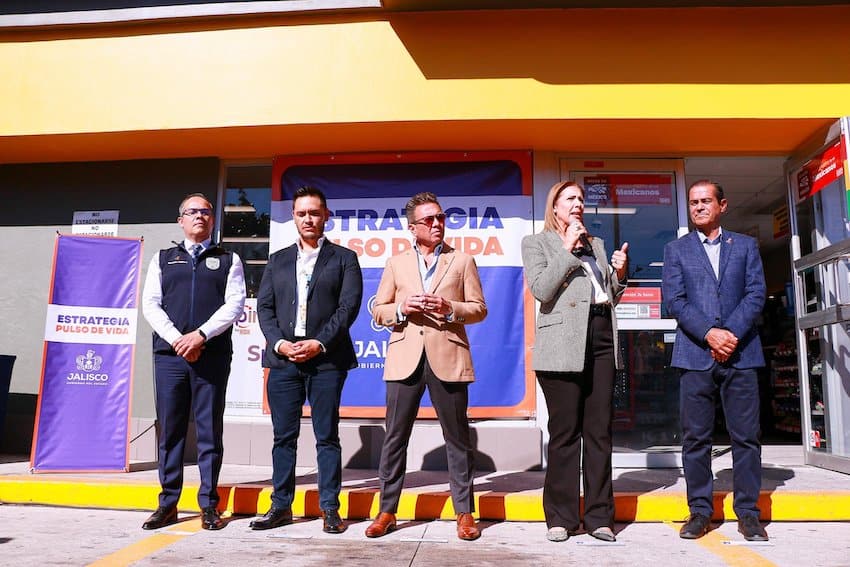
More than 1,500 Oxxo convenience stores in Jalisco are now Safe Points for women at risk, as part of an initiative to provide safe spaces for women who feel threatened by gender violence.

This collaboration between Oxxo and Jalisco’s government is part of a broader nationwide program dubbed “Pulso de Vida” (Pulse of Life), which seeks zero tolerance for violence against women.

Gov. Pablo Lemus (center) stands outside a Jalisco Oxxo, one of 1,500 safe spaces in the Pulse of Life program designed to give women at risk protection. (@PabloLemusN/X)

“I’m very pleased to announce to all women in Jalisco the new agreement that we have signed with Oxxo,” Governor Pablo Lemus said in a video posted on his social media channels. “Starting today [Nov. 13], 1,500 Oxxo stores in the 125 municipalities of Jalisco will be Pulse of Life zones, meaning that if a woman feels at risk or is facing violence, she can be safeguarded at an Oxxo store.” 

In the video, Lemus explained that each branch will have an emergency button connected to the C5 Escudo Jalisco command center, allowing staff members — who have been previously trained in the matter — to directly alert authorities for an immediate response. 

Lemus said the measure is “innovative nationwide” and emphasized that Oxxo’s extensive presence in Jalisco guarantees effective support and protection coverage.

“Women need to know that if they find themselves in a dangerous situation anywhere in the state of Jalisco, they can seek help at any Oxxo convenience store,” he said. “They can enter the store, approach the staff and say: ‘I am in a risky situation. Please help me.’”

Lemus acknowledged that, despite previous efforts such as the Pulses of Life and Purple Points programs, existing protection mechanisms are insufficient to cover the vast expanse of the city and state. Therefore, integrating the Oxxo convenience store chain into the security network is seen as a crucial measure to fill these gaps and offer a safe haven in virtually any part of Jalisco.

Other states, including Coahuila and Aguascalientes, run a similar collaboration program with Oxxo.

“With its extensive network of branches, Oxxo can act as a pillar in the prevention and care of gender violence, providing a quick and effective response,” Oxxo said in a press release. 

Oxxo is part of the FEMSA group, which is also the owner of Coca-Cola’s largest bottling plant in the world. With more than 45 years in the market, the company holds a 70% market share of Mexico’s convenience store industry.

Mexico News Daily

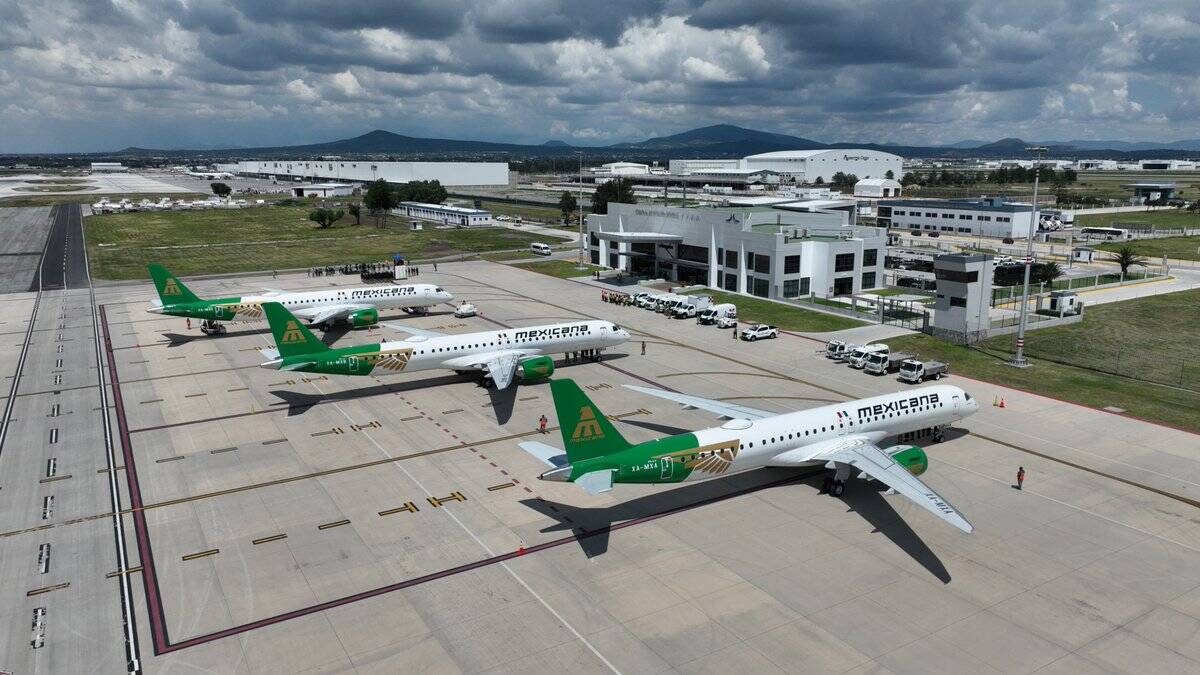
Responding to sanctions, Mexico cedes slots to US airlines at AICM

0
AICM
Mexico's president did not disclose the exact number of airport slots transferred to U.S. airlines, saying only that the measures are based on competitiveness criteria. (Andrea Murcia/Cuartoscuro)

In response to U.S. Department of Transportation sanctions against Mexico’s aviation sector, Mexican airlines ceded some time slots at Mexico City International Airport (AICM) to U.S. carriers.

“Several weeks ago, there was a redistribution in slots in which Mexican airlines gave up their spots to U.S. airlines, taking competitiveness into account,” President Claudia Sheinbaum said in her Monday morning press conference, adding that the Mexican airlines cooperated fully.

aaircraft at AIFA
The binational spat began in 2023 when Mexico moved some U.S. flights from the established AICM airport to the newer AIFA airport (shown here) for space reasons, leading to punitive sanctions by the U.S. Mexico seems to be walking that back, but President Sheinbaum emphasized that she will remind U.S. authorities that the Mexico City metropolitan area has two principal airports and she will make sure their use is integrated. (@Claudiashein/X)

Sheinbaum also sent a negotiating team to Washington to hold talks with the Transportation Department (DOT) in hopes of having the punitive measures lifted.

“We hope to make clear to U.S. officials that [greater Mexico City] has two principal airports and it is my government’s responsibility to make sure that they operate as an integrated system,” she said, claiming that DOT representatives appeared receptive to the notion.

The conflict over the allocation of flights and routes came to a head in October when DOT revoked approval for 13 routes operated by Mexican airlines to the U.S. from Felipe Ángeles International Airport (AIFA) and AICM. 

DOT’s actions were in response to the previous Mexican administration’s decision to reduce foreign slots at AICM — impacting U.S. carriers like United, Delta and American — and pushing U.S. cargo operators like FedEx and UPS to the new AIFA.

Then-President Andrés Manuel López Obrador announced the slot cuts and cargo flight move in 2022, citing oversaturation at the centrally located AICM, which is presently undergoing renovations ahead of next year’s FIFA World Cup.

The U.S. also canceled combined cargo and passenger services from AIFA and, in September, DOT ordered the termination of the Delta-Aeroméxico joint venture. Last week, a U.S. appeals court temporarily halted the order dissolving the Delta-Aeroméxico partnership.

Sheinbaum did not disclose the exact number of airport slots transferred to U.S. airlines, saying only that the measures are based on competitiveness criteria. She spoke of implementing a digital flight distribution system next year, insisting that U.S. and other international airlines were already on board.

The president also told reporters that she met personally with cargo carriers to address their concerns, which include a demand for new customs procedures as cargo companies must pay to ship imported goods by land from AIFA to AICM since the former does not have a customs office.

“They raised other issues that need addressing,” Sheinbaum said, “and we’re going to support them in this process … talks will continue with the understanding that we can reach an agreement.”

With reports from Reuters, Airline Geeks, El Universal and El Economista

99 facts you need to know about Mexico: 21-40

0
a girl looks at shelves in a book store
Out of the 2,427 bookstores registered nationwide in 2024, Mexico City had the highest number with 544, while Campeche had the fewest, with just 14. (Mario Jasso/Cuartoscuro)

In honor of World Statistics Day on Oct. 20, Mexico’s national statistics agency INEGI published a small book presenting the 99 facts you need to know about Mexico.

All week, we will be sharing the book’s contents translated into English.

Here is part 2! Read facts 1-20 here.

21) Mexico has a territorial area of 1,960,646.7 square kilometers. The largest state is Chihuahua, covering 247,412.6 km², while the smallest is Mexico City, with 1,494.3 km².

(Source: INEGI, Geo-statistical Framework – MG, 2020)

Mexico is the 14th-largest country in the world and its capital, Mexico City, is similar in surface area to Rome and London.

22) Out of the 2,427 bookstores registered nationwide in 2024, Mexico City had the highest number with 544, while Campeche had the fewest, with just 14.

(Source: National Directory of Economic Units, 2024)

Bookstores remain unevenly distributed in Mexico, mostly concentrated in the capital and larger urban centers. Access to books and reading materials still varies by region, reflecting differences in cultural infrastructure and local economies.

23) In 2024, 43.9% of households in Mexico had a computer. In 2015, this proportion was 44.9%.

(Source: INEGI, National Survey on Availability and Use of Information Technologies in Households – ENDUTIH, 2015 and 2024)

Computer ownership in Mexican homes has remained almost unchanged for decades. Smartphones have become the main device for connectivity, making access to computers a lesser priority in rural areas.

24) In 2024, 7.6 million households with children in Mexico faced difficulties accessing enough food in quantity or quality, mainly due to a lack of money or resources.

(Source: INEGI, National Survey on Household Income and Expenditures – ENIGH, 2024)

Food insecurity especially affects families with children, highlighting the impact of poverty on nutrition and daily life. Access to healthy foods still varies widely depending on income, region and social support.

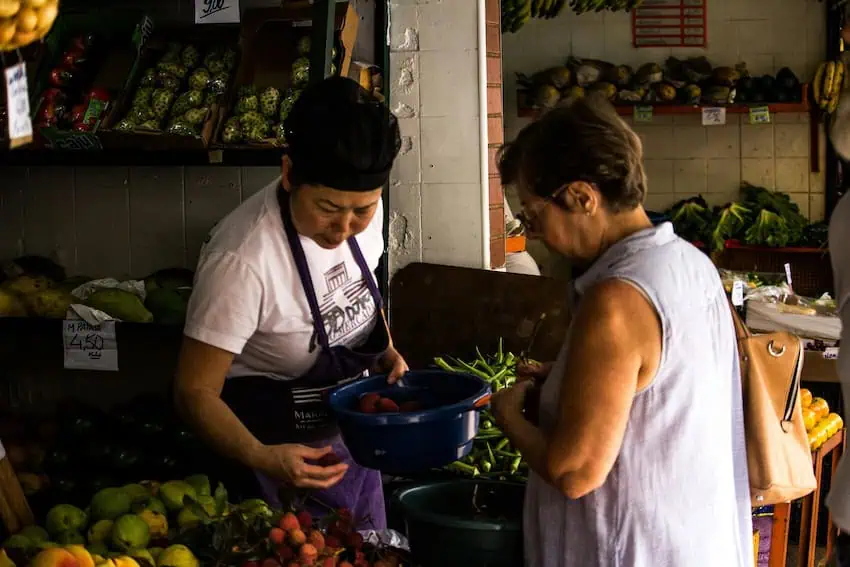
25) A head of household is considered the person recognized as such by the other members of the home. In 2023, only 3 out of every 10 households nationwide were headed by a woman.

(Source: INEGI, National Survey on Demographic Dynamics, 2023)

The proportion of female-headed households in Mexico has grown, now accounting for about a third of all homes. Many of these women are also the main breadwinners and caregivers, reflecting both evolving family structures and persistent gender gaps in support and income.

Two women look at groceries at a public market
Only 3 out of every 10 households nationwide are headed by a woman. (Mauricio Mascaro/Pexels)

26) In 2024, Mexican households ate corn tortillas and cereals every day of the week.

(Source: INEGI, National Survey on Household Income and Expenditures – ENIGH, 2024)

Tortillas remain a staple food, but their consumption has dropped slightly due to inflation and shifting eating habits. Cereals such as bread and pasta also form an essential part of daily meals throughout the country.

27) Mexico’s highest elevation is Citlaltépetl or Pico de Orizaba, an active volcano that rises 5,636 meters above sea level.

(Source: INEGI, Digital Elevation Models – MDE, 2024)

Located on the border between Veracruz and Puebla, Pico de Orizaba is the highest mountain in Mexico and among the tallest in North America. Its icy summit is a destination for climbers and a symbol of natural diversity in the region.

28) In 2021, 908,000 people in Mexico identified as gender diverse.

(Source: INEGI, National Survey on Sexual and Gender Diversity – ENDISEG, 2021)

This group represents about 0.9% of the population aged 15 and over, including transgender, transsexual, non-binary and other non-normative gender identities. Younger generations are the most likely to openly identify with diverse gender categories, reflecting ongoing changes in social recognition and rights.

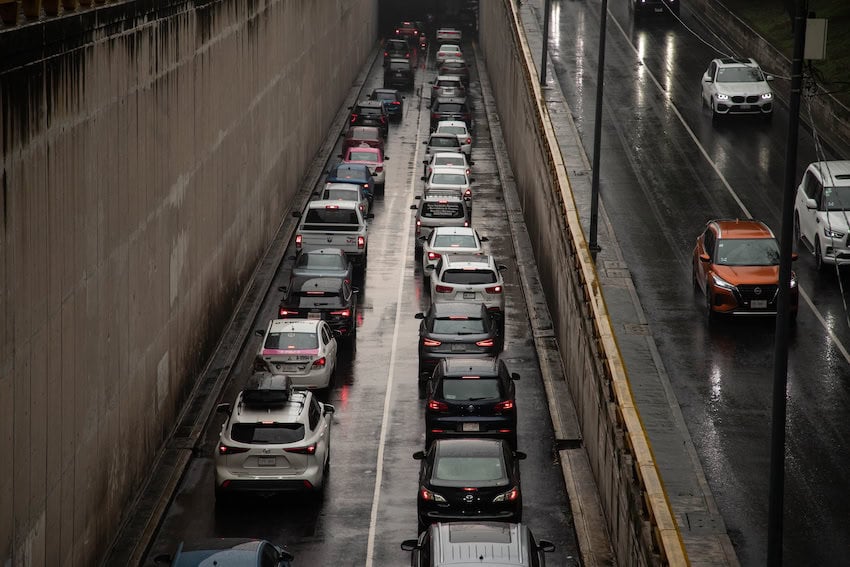
29) How long is your commute to work? In 2020, 61.0% of employed people in Mexico took less than 30 minutes to reach their workplace.

(Source: INEGI, Population and Housing Census – CPV, 2020)

Most workers have relatively short commutes, but there are still large regional differences. In Mexico City, travel times can be two hours or more.

Mexico City, Mexico June 17 2025. Traffic on roads in the western part of Mexico City.
The tendency for traffic flow to come to a standstill for uncomfortable periods of time has helped Mexico City “earn” the title of the world’s most congested city. (Shutterstock)

30) Between April and June 2025, of the 59.4 million employed people in Mexico, 1.2 million held positions of management, coordination or leadership — and 40.4% were women.

(Source: INEGI, National Survey on Occupation and Employment – ENOE, second quarter 2025)

More women are taking up leadership roles, but they are still underrepresented in senior positions. Promoting gender equality remains essential to closing gaps in workplace power and advancing opportunities across sectors.

31) In 2023, nearly one million people living in Mexico were born abroad.

(Source: INEGI, National Survey on Demographic Dynamics – ENADID, 2023)

Most foreign-born residents come from the United States, Central and South America, and Europe. Migration patterns are driven by work, family, study, and, in some cases, humanitarian reasons.

32) Between March 2015 and March 2020, 6.9 million people in Mexico moved to a different municipality or state — an amount equal to twice the population of Guerrero.

(Source: INEGI, Population and Housing Census – CPV, 2020)

Internal migration is driven by factors like employment, family needs, education and increasingly, security concerns.

33) In 2024, heart disease was the most common cause of death in Mexico, with 192,563 recorded deaths.

(Source: INEGI, Statistics on Registered Deaths – EDR, 2024)

Other leading causes were diabetes and malignant tumors. The high rate of heart disease is linked to aging, lifestyle and chronic health risks, and highlights the importance of medical care and prevention.

34) In 2022, 8 out of 10 people in Mexico believed that family members are responsible for caring for older adults.

(Source: INEGI, National Survey for the Care System – ENASIC, 2022)

Family caregiving remains the norm in Mexican society, with most care for elderly people provided by relatives — especially women. However, there is growing public debate on the need to expand public support systems as the population ages.

35) Between April and June 2025, 2.3 million people worked in paid domestic roles in Mexico. This includes tasks such as cleaning, cooking and/or caregiving.

(Source: INEGI, National Survey on Occupation and Employment – ENOE, second quarter 2025)

Domestic work is a major source of employment, especially for women and in urban areas. Despite contributing significantly to household well-being, domestic workers often face precarious conditions and limited labor rights.

36) Between 2016 and 2024, Michoacán was the state with the largest increase in average monthly household income, with a rise of 34.4%.

(Source: INEGI, National Survey on Household Income and Expenditures – ENIGH, 2016 and 2024)

Despite the improvement, income levels in Michoacán remain below the national average, underlining continued regional disparities.

37) Between 2001 and 2024, the proportion of Mexican households with internet access increased nearly twelvefold — from 6.2 to 73.6%.

(Sources: INEGI. Availability and Use of Information Technologies in Households Module – MODUTIH, 2001; National Survey on Availability and Use of Information Technologies in Households – ENDUTIH, 2024)

Widespread adoption of internet access reflects rapid technological change across the country. Despite progress, significant gaps remain by region and income, and mobile access now accounts for most connections.

38) A warm, humid climate is characterized by high temperatures and abundant rainfall. Tabasco is the state with the highest proportion of its territory under this climate type, at 95.5%.

(Sources: INEGI. Climate – CLIM, 2020; Geo-statistical Framework – MG, 2024)

This climate favors lush vegetation and extensive wetlands, making Tabasco one of the rainiest states in Mexico. The region’s weather patterns shape its agriculture, biodiversity and traditional ways of life.

What makes this Tabasco city a real estate hotspot?

39) A trámite is any procedure carried out by individuals or organizations with a government institution. In 2023, 81.7% of people in urban areas completed a trámite or requested a public service.

(Source: INEGI, National Survey on Government Quality and Impact – ENCIG, 2023)

Most procedures involve payments, obtaining documents or notary services. While access to digital transactions is growing, many still encounter barriers and prefer in-person visits.

40) Did you know that half of the population (53.7%) who self-identified as LGBTQ+ in Mexico was between 15 and 24 years old in 2021?

(Source: INEGI, National Survey on Sexual and Gender Diversity – ENDISEG, 2021)

Young people are the most likely to openly disclose their LGBTQ+ identity, marking significant generational change in visibility and acceptance.

Mexico News Daily

5 killed in arson attack on Puebla night club

0
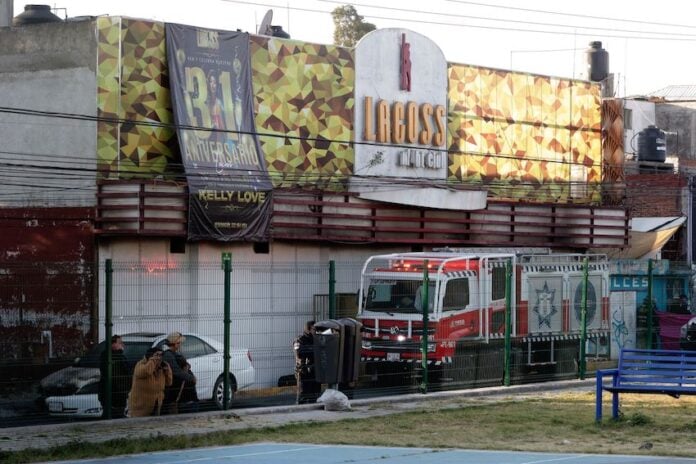
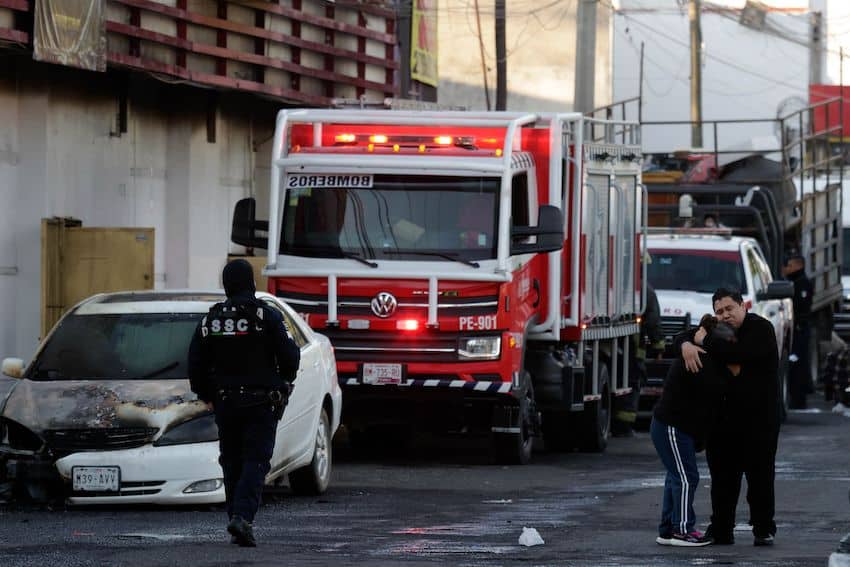
exterior of the bar Lacoss
According to the newspaper El Sol de Puebla, witnesses told police that the alleged culprits were four armed men who arrived at the club on motorbikes and were carrying bottles of gasoline. (Mireya Novo/Cuartoscuro)

Five people were killed in an arson attack on a strip club in Puebla city early Tuesday.

The victims were reportedly two female dancers and three male waiters.

Fire truck outside of Bar La Coss
The Puebla Attorney General’s Office said investigations were ongoing to determine the motive of the events. (Mireya Novo/Cuartoscuro)

According to local media, armed men set the Lacoss Night Club on fire in the early hours of Tuesday morning. They also reportedly set alight a vehicle parked outside the “table dance” venue, located in Popular Coatepec, a neighborhood in the south of Puebla city.

The Puebla state government said in a statement that preliminary reports indicated that the five victims died of carbon monoxide poisoning.

The government said that firefighters “immediately” responded to a report of a fire at an establishment in the Popular Coatepec neighborhood. It said that nine people were rescued and “immediately” assisted by paramedics.

The Puebla government said that firefighters worked to extinguish the blaze in the establishment, and a fire in a white Toyota. It said that the Puebla Attorney General’s Office was conducting investigations at the scene and working to determine the motive “of these events.”

According to El Sol de Puebla, the arson attack occurred at around 3:30 a.m. Tuesday.

The newspaper reported that witnesses told police that the alleged culprits were four armed men who arrived at the club on motorbikes and were carrying bottles of gasoline.

El Sol de Puebla reported that the employees of the club were about to leave when the arson attack occurred. It also reported that the aggressors fired their weapons to intimidate the workers, “who returned to the bar to hide.”

After setting the club and vehicle on fire, the aggressors fled the scene and residents called 911, El Sol de Puebla reported.

Arson attacks on bars in Mexico have occurred previously, including in San Luis Río Colorado, Sonora, in 2023 and in Coatzacoalcos, Veracruz, in 2019. A total of 37 people were killed in those two attacks.

El Heraldo de San Luis Potosí reported that the attack in Puebla city on Tuesday morning may have been related to extortion or a “settling of scores” between criminal groups.

With reports from El Sol de Puebla, López-Dóriga Digital, El Universal and Milenio

Trump reacts to Mexico City protest, says military strikes to stop drugs are ‘OK with me’

9
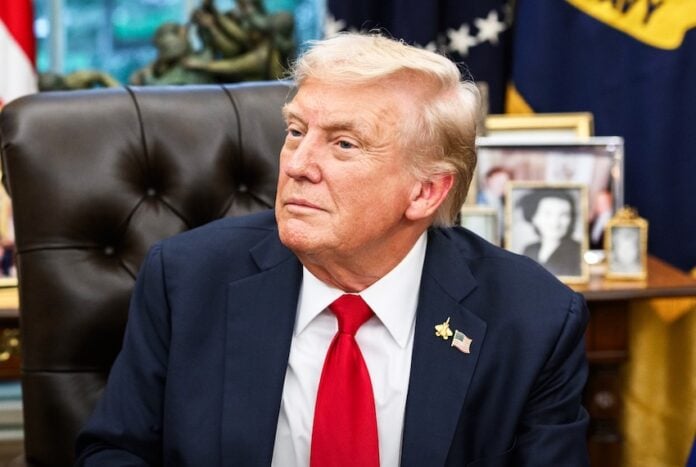
Trump
"So let me just put it this way: I am not happy with Mexico," Trump said on Monday. (X)

U.S. President Donald Trump said Monday that he would be willing to launch military strikes against cartel targets in Mexico, just days after Secretary of State Marco Rubio declared that the U.S. wouldn’t be undertaking any unilateral actions in Mexico.

“Would I launch strikes in Mexico to stop drugs? It’s OK with me,” Trump told reporters in the Oval Office.

“Whatever we have to do to stop drugs. … Look, I looked at Mexico City over the weekend; there’s some big problems over there,” the president said.

He was referring to the violence in Mexico City’s central square, the Zócalo, at the conclusion of a large protest march against insecurity on Saturday.

Asked whether he would only launch strikes on targets in Mexico “with Mexico’s permission,” Trump responded:

“I wouldn’t answer that question. I’ve been speaking to Mexico; they know how I stand. We’re losing hundreds of thousands of people to drugs. So now we’ve stopped the waterways, but we know every route, we know the addresses of every drug lord. We know their address, we know their front door, we know everything about every one of them, they’re killing our people. That’s like a war. Would I do it? I’d be proud to. I’d probably go into Congress and say ‘hey,’ and you know what? The Democrats and the Republicans would both agree.”

The president went on to say that “much” of the narcotics that enter the U.S. “come through Mexico.”

“So let me just put it this way: I am not happy with Mexico,” said Trump, whose administration continues to collect fentanyl trafficking-related tariffs it imposed earlier this year on imports from Mexico that don’t comply with the USMCA free trade pact.

The U.S. president’s remarks came four days after Rubio said that the U.S. would not be sending military forces to Mexico or undertaking any unilateral actions in the fight against drug trafficking.

US Secretary of State Rubio rules out unilateral military action in Mexico

“The United States will give support to Mexico against drug cartels only if the Mexican government makes a request,” he said. “We can provide them all the help they want, but obviously if they don’t want us to intervene, we’re not going to take unilateral decisions and … send American forces into Mexico.”

President Claudia Sheinbaum has repeatedly ruled out the possibility of the U.S. military taking action against Mexican cartels on Mexican soil, even though the U.S. government has designated six of them, including the Sinaloa Cartel and the Jalisco New Generation Cartel, as foreign terrorist organizations.

She said in August that a U.S. bomb attack against Mexican cartels “won’t happen,” and reiterated that view on Tuesday.

Earlier this month, NBC News reported that the Trump administration had begun planning a “potential mission” on Mexican soil that would target Mexico’s notorious drug cartels, including with drone strikes.

Asked about that report on Nov. 4, Sheinbaum said that a U.S. operation against cartels inside Mexico “won’t happen.”

She noted that she has rejected offers from Trump to send U.S. troops into Mexico.

I’ve always said, ‘Thank you, President Trump, but no. Mexico is a free, independent and sovereign country,'” she said.

“… So it’s been made clear that we don’t agree with any process of interference or interventionism. … We collaborate and we coordinate, but we’re a sovereign country,” Sheinbaum said.

‘There’s almost no drugs coming in through our waterways’

During his remarks in the Oval Office on Monday, Trump declared that “there’s almost no drugs” entering the United States via the country’s “waterways.”

The U.S. Department of War, at the direction of President Trump, carried out on Monday three lethal kinetic strikes on four vessels in the eastern Pacific Ocean.
The U.S. Department of War, at the direction of President Trump, has carried out at least 21 strikes on boats that have killed 83 people. (Pete Hegseth/X)

“Isn’t it down like 85%?” he asked, to which Homeland Security Secretary Kristi Noem responded, “It is, sir.”

“… We have almost no drugs coming into our country by the sea, … and you know why, I mean it’s pretty obvious,” Trump said, referring to the lethal strikes the U.S. military has recently carried out against alleged drug boats in international waters, including off Mexico’s southern Pacific coast.

“Would I do that on the land? … I would absolutely. Look, every boat we knock out we save 25,000 American lives,” he said, without providing any evidence for his claim.

“Not to mention the destruction of families. … So when we knock out a boat and save 25,000 lives, that’s great. Now, do I feel the same way about the [land] corridors that they use? We know every one of them. We have every one of those corridors under major surveillance,” said Trump, whose administration has flown drones over Mexico to spy on cartels.

“We have nobody coming in through our southern border, but we know exactly how they get there, how they get the drugs here — fentanyl, cocaine. Colombia has cocaine factories where they make cocaine. Would I knock out those factories? I would be proud to do it personally. I didn’t say I’m doing it, but I would be proud to do it because we’re going to save millions of lives by doing it,” he said.

By Mexico News Daily chief staff writer Peter Davies (peter.davies@mexiconewsdaily.com)

6 Mexican cheeses recognized at the 2025 World Cheese Awards

4
Finca Las Luciérnagas's Andante cheese is made using sheep’s milk from a producer with certified animal welfare practices.
Finca Las Luciérnagas's Andante cheese is made using sheep’s milk from a producer with certified animal welfare practices. (Finca Las Luciérnagas)

Mexico won six medals at the 2025 World Cheese Awards, held in Bern, Switzerland, from Nov. 13 to 15, with its quesos ranking among the top out of over 5,244 cheeses from 46 countries. 

Producers brought cheeses from all over the world, navigating long plane rides and complex import legislation processes to participate in the awards. 

Despite competing against countries with a longstanding tradition in cheesemaking and well-established production structures, Mexico won six awards, five of them for cheese dairies in Jalisco and one for Querétaro.  

Mexico was not the only up-and-coming cheesemaker to win awards, with cheeses from Japan, Slovakia and the United States among the finalists. 

However, a Swiss 18-month-aged Gruyère AOP from the Vorderfultigen mountain cheese dairy was hailed as the best cheese in the world this year, thanks to its crystalline texture and “brothy, umami” flavor. 

The assessment of the cheeses was conducted by 265 judges in 110 teams, with a final round judged by a Super Jury composed of specialists from 14 countries. Just 14 cheeses advanced to the final stage. 

During the event, cheeses were stripped of any identifying features and divided across 110 rows of tables to be blind tasted by two- or three-person judging teams. Judges were asked to assess the cheese based on appearance, smell, taste, texture and the feeling it gives in the mouth. 

The Mexican cheeses that placed among the top were: 

Gold Medal – Best Latin American Cheese: Finca Las Luciérnagas Andante from Huimilpan, Querétaro. Made using sheep’s milk from a producer with certified animal welfare practices. 

Silver Medal – La Providencia Mozzarella from San Miguel El Alto, Jalisco. A take on the Italian classic, made with pasteurized whole milk. 

Silver Medal – Quesos Navarro Cheddar from Tepatitlán de Morelos, Jalisco. A cheddar made from fresh, pasteurized cow’s milk that the judges said could compete in any international market.  

Silver Medal – Quesos Navarro Panela. A traditional Mexican fresh cheese, traditionally cured in whey. 

Bronze Medal – Quesos Navarro Queso Fresco. Another traditional Mexican cheese, with Spanish roots.  

Bronze Medal – Quesos Navarro Queso Menonita. A creamy cheese originating from Mennonite communities in the north of Mexico.   

The 2026 cheese awards will take place in Córdoba, in Spain’s Andalusia region, where Mexico will have the chance to come back even stronger.

With reports from El Economista and CNN

I scored a free tour of Chapultepec Castle, and you can too!

0
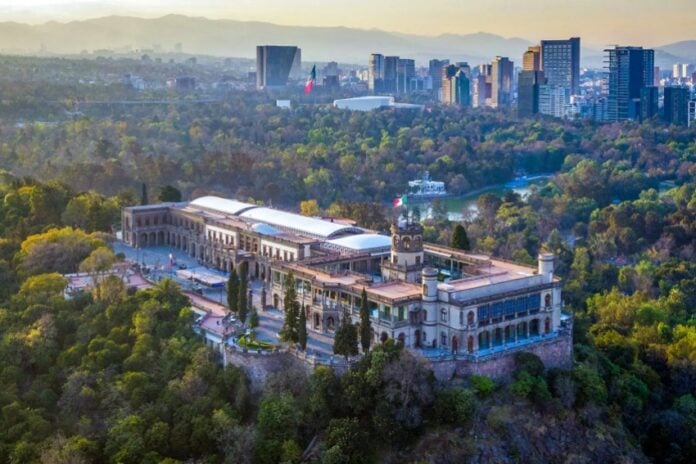
Chapultepec Castle
Chapultepec Castle is a must-visit attraction in Mexico City. (Wikimedia Commons/Sisgeo)

I took a Sunday stroll. To a castle on a hill, inside a forest, in the heart of Mexico City. Chapultepec Castle was the first thing friends said I should visit while in CDMX. Boy, was I glad I did. 

Because, since I am a permanent resident of Mexico, I got in for free! On Sundays, it’s free for Mexicans and legal residents, so that was a delightful surprise. Another great perk of living here — and, I must say, weirdly validating. Like a giant hug of acceptance, it was a nice feeling to skip the line, just walk on through and start the climb.

Chapultepec national history museum, mexico city
The National History Museum, housed inside Chapultepec Castle, is also well worth a visit. (INAH)

Don’t worry. The walk isn’t that bad. Lovely scenery, a few little animal friends and a nice 20-minute stroll along a flat, then elevated paved carriageway.

Chapultepec Castle has a long, varied history dating back to the Mexica (Aztecs), whose structure there was destroyed by the Spanish. They later built the present palace as a home for the colonial viceroy. Later still, it became home to Mexico’s short-lived Emperor Maximilian I and his wife, Carlota, and then for presidents, including Porfirio Díaz.

It also housed a military academy. Mexico’s famed boy soliders, the Niños Heroes, died defending the castle. Today, the National History Museum is located there, and it features murals by some of Mexico’s artistic giants, including José Clemente Orozco and David Alfaro Siqueiros.

The walk up to the castle

Overhanging trees provide shade while red-bellied gray squirrels scurry about, their fluffy tails and cheerful chirps delighting me as much as the children rushing over to see them. 

Abundant ferns and moss covered the rock wall on one side while treetops filled the other, dropping away to reveal a great view of the city the higher you climb. Every fitness level can walk up, but there are benches on which you can sit and rest, if need be — or just enjoy the incredible view! 

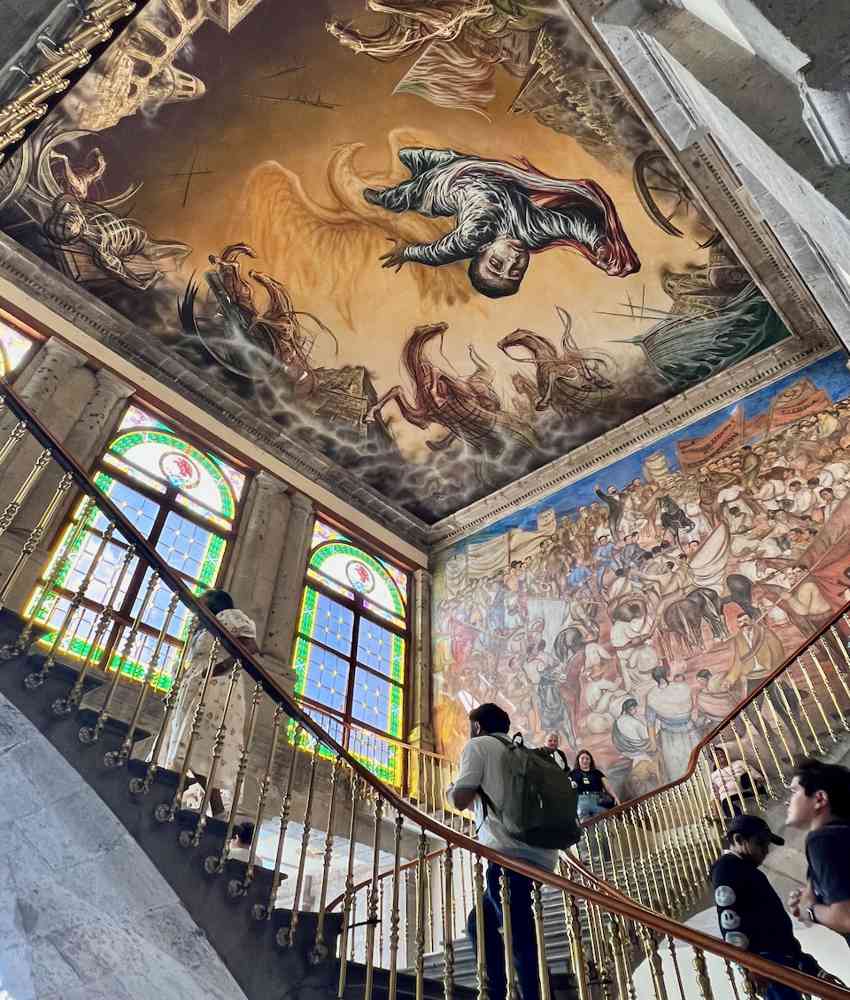
A wide, ornate stone staircase inside Chapultepec Castle shows visitors climbing the stairs, surrounded by a dramatic ceiling fresco depicting the conquest of Mexico by the Spanish, as well as mural on the wall beside the stairs.
Chapultepec Castle is a feast for the eyes. (Bel Woodhouse)

If you get thirsty, a water fountain sits about halfway up the climb.

Touring the castle

It was nice to wander around inside the castle, appreciating Chapultepec’s stunning old coaches, exquisite chandeliers in each room, unique branching staircases and frescoed ceilings.

It was a surprisingly peaceful experience, despite the hundreds of tourists. Most people seemed to take it slow, appreciating Chapultepec’s stunning old coaches, exquisite chandeliers in each room, unique branching staircases and frescoed ceilings. In the upper level, I must have spent a good 10 minutes admiring the stained-glass wall that ran outside the bedrooms. What a breathtaking piece of architecture and intricate craftsmanship! 

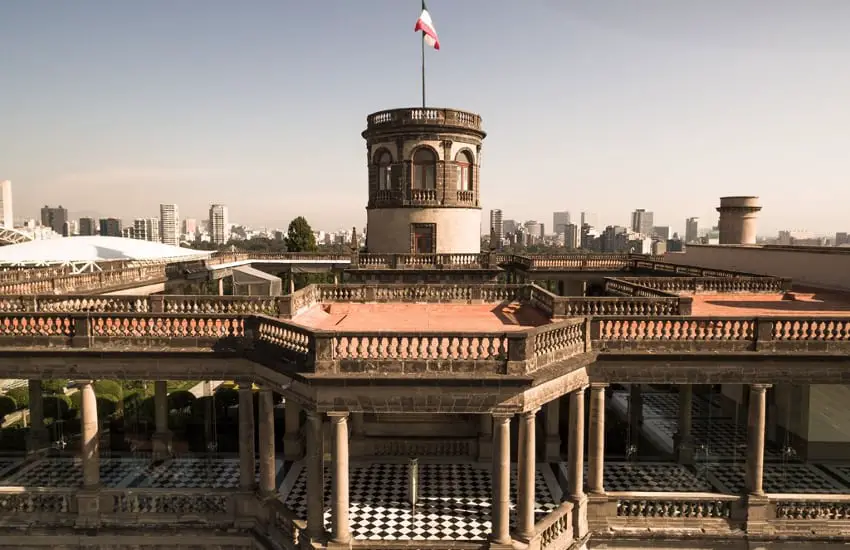
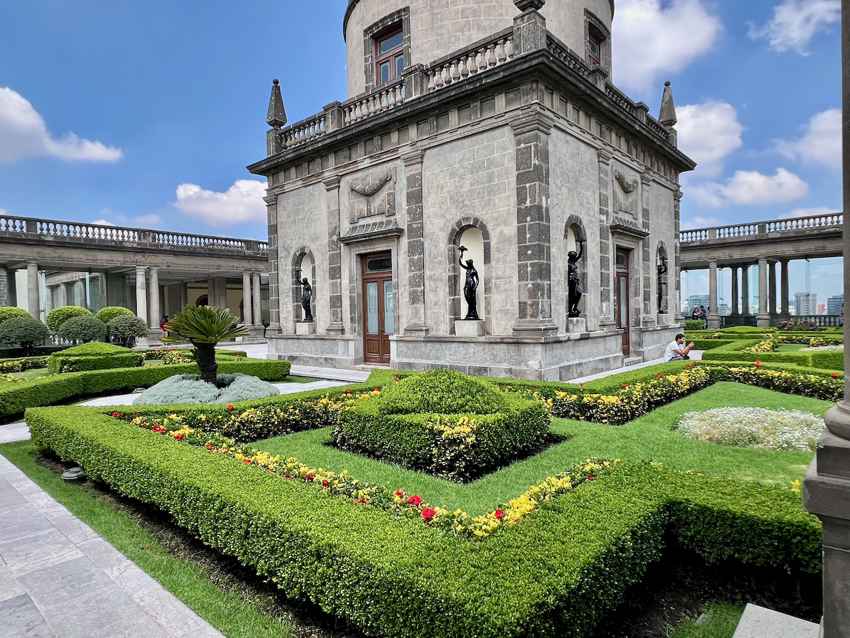
The castle holds many beautiful rooms full of beautiful things. But my favorite was the rooftop maze garden. The immaculately manicured hedges full of azaleas in bloom were gorgeous, and there I made a friend: a little figeater beetle that buzzed down to land and rest on my chest for a while.

The ladies around me stepped away, sharing uneasy smiles or grimacing. But I liked my little beetle friend. A lovely shade of deep jade green, she flew off again once she rested to roll around in the azalea blossoms once more. Well, I assume she did because her face was covered in pollen and they were the largest flowers around. But there were lots of other fabulous flowers all around the castle.

The beautifully manicured gardens on the rooftop maze of Chapultepec Castle, featuring symmetrical boxwood hedges, flower beds and a small cantera-brick building in the baroque style in the photo's center. The building is decorated with statues.
Chapultepec Castle’s rooftop maze garden, where you can wander the decorative gardens, take in the city skyline and make friends with stunning pollinators. (Bel Woodhouse)

My next adventure in the maze garden was chasing the most exquisite butterfly I’ve ever seen in the wild, a two-tailed swallowtail. She was stunning and, honestly, the highlight of my day. And surrounding a water feature in the gardens was a stunning array of gazanias. I’ve never seen its flowers in such vibrant colors. Walking back down, I discovered an edible nightshade — creeping false holly — which I found fascinating.

So be sure to take your time when walking up and back down from the castle. Although the castle is lovely — and is the main attraction — there is a whole world of beautiful flora and fauna surrounding it. 

Best of all, this castle inside a forest, inside a huge city, was free! What a lovely way to spend my Sunday exploring Mexico City.  

Mexico Correspondent for International Living, Bel is an experienced writer, author, photographer and videographer with 500+ articles published both in print and across digital platforms. Living in the Mexican Caribbean for over 7 years now, she’s in love with Mexico and has no plans to go anywhere anytime soon.