The 49ers will be the home team vs. the Minnesota Vikings on Nov. 22 at Estadio Azteca. (Facebook)
The NFL on Thursday confirmed that San Francisco will “host” a game in Mexico City this season, the third time the five-time Super Bowl champions will play at Banorte Stadium, better known as Estadio Azteca.
The Red and Gold will face the Minnesota Vikings in a Week 11 Sunday Night Football clash, with kick-off scheduled for 7:20 p.m. local time on Nov. 22.
The game may be six months away, but the NFL’s announcement that pro football will return to Mexico has generated excitement already, especially since the 49ers, one of the favorite teams among the Mexican fan base, will be playing. (NFL Mexico)
“We are thrilled to welcome the San Francisco 49ers back to Mexico City for the 2026 NFL game in Mexico,” NFL México General Manager Arturo Olive said. “We look forward to [the NFL] returning to a country that plays such an important role in the growth of our sport … and reaffirming our deep and long‑standing connection with fans across [Mexico].”
League officials said Mexico is home to the NFL’s largest fanbase outside the United States and the upcoming game is part of the league’s new three-year commitment to host regular season games in Mexico.
The Niners took part in the first-ever regular-season NFL game played outside of the United States on Oct. 5, 2005 (losing 31-14 to the Arizona Cardinals), then defeated the Cards 38-10 on Nov. 21, 2022. Both games were played in Estadio Azteca.
This will be the sixth regular-season NFL game played at Mexico City’s historic stadium which will play host to the inaugural World Cup match on June 11, but the first NFL contest since the 49ers’ victory four years ago.
Estadio Azteca has recently begun hosting sporting events again after a nearly two-year restoration project ahead of the World Cup during which “The Colossus of Santa Úrsula” will host five matches.
Since the 2022 game in Mexico, the NFL has visited the United Kingdom, Germany, Brazil, Ireland and Spain, as it has aggressively expanded its international footprint. This year, the league will play its first regular season games in Australia and France, while staging nine games across seven countries on four continents during the 2026 season.
The return of the 49ers — one of the most popular teams among Mexico football fans along with the Dallas Cowboys, Pittsburgh Steelers and Kansas City Chiefs — is not unexpected. The NFL had announced in February that The Gold Rush would be playing a home game in Mexico.
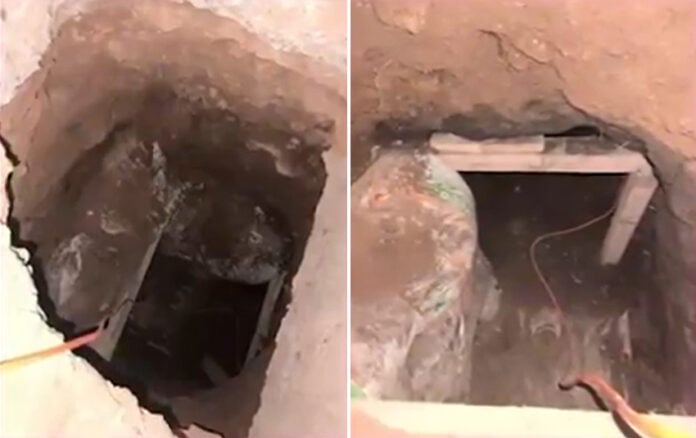
Police found the tunnels thanks to a tip from a local resident who heard construction noises coming from underground. (SSP Hidalgo)
State police in Hidalgo arrested six men this week as they were digging a tunnel in an attempt to reach underground Pemex pipelines to steal fuel, authorities said.
The men were detained in the Loma Bonita neighborhood of state capital Pachuca on Monday.
La rápida atención a un reporte ciudadano permitió a la Policía Estatal frenar el robo de hidrocarburo directamente de ductos de Pemex en #Pachuca.
En la acción fue frustrada la excavación de un pozo, además del aseguramiento en flagrancia de seis personas y una camioneta.
— Seguridad Pública de Hidalgo (@SSP_Hidalgo) May 12, 2026
The Hidalgo Security Ministry said that a quick response to a citizen’s report allowed state police to “stop the theft of fuel directly from Pemex pipelines in Pachuca.”
The citizen who reported the alleged crime and other people in the area reportedly heard sounds emanating from underground, alerting them to the construction of a tunnel.
In addition to arresting six men, police also seized a pickup truck in Loma Bonita, located about eight kilometers northwest of downtown Pachuca. Police reportedly found tools for digging and the perforation of pipelines in the vehicle.
The tunnel the men were digging was located on a private commercial property. The tunnel was reportedly located two meters underground and was eight meters long. It was close to reaching underground pipelines, according to reports.
In a separate operation in the municipality of Epazoyucan, Hidalgo, on Monday, state police seized eight vehicles transporting 4,710 liters of stolen fuel, the state government said. Two men were arrested and an illegal pipeline tap was discovered in the community of El Mercillero.
A second fuel theft tunnel was located in Pachuca
The subterranean passageway in Loma Bonita wasn’t the only fuel theft tunnel discovered in Pachuca this week.
The Federal Attorney General’s Office (FGR) announced on Wednesday that its personnel, Pemex workers, state police and Civil Protection employees had located a nine-meter-long tunnel running next to a Pemex pipeline in the Hidalgo capital.
The tunnel was found on a property located on the Santa Julia Ejido (communal land) in Pachuca, the FGR said in a statement. The FGR had obtained a warrant to search the property. Authorities found a range of tools in the tunnel that could have facilitated the theft of fuel from the underground pipeline. No arrests were reported.
According to municipal data, a total of 79 illegal taps on fuel pipelines were detected last year in Pachuca, a city located about 90 kilometers northeast of central Mexico City. Only 40 municipalities across Mexico recorded a higher number of pipeline perforations in 2025.
Thieves commonly perforate Pemex pipelines to steal fuel such as gasoline and diesel, a practice that can be extremely dangerous. Numerous perforated pipelines have exploded in Mexico. A pipeline explosion in Tlahuelilpan, Hidalgo, in 2019 claimed more than 130 lives.
In 2025, Pemex recorded losses of almost 23.5 billion pesos (US $1.36 billion) due to fuel theft, a 14.4% increase compared to the previous year.
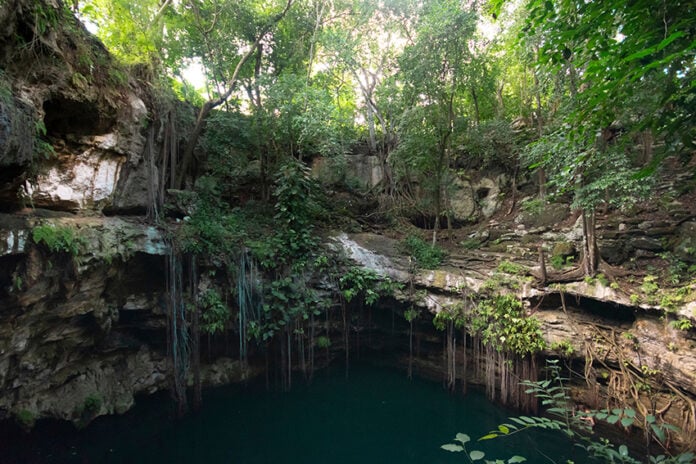
The Herencia Maya project aims to provide permanent conservation funding for Yucatán's mangroves, jungles and cenotes — the sinkholes that act as portal's to the Yucatán Peninsula's vast underground river system. (WWF)
The Yucatán state government has teamed up with the World Wildlife Fund and an international alliance of institutions to amass funding of more than US $20 million to protect its jungles, mangroves and underground water systems.
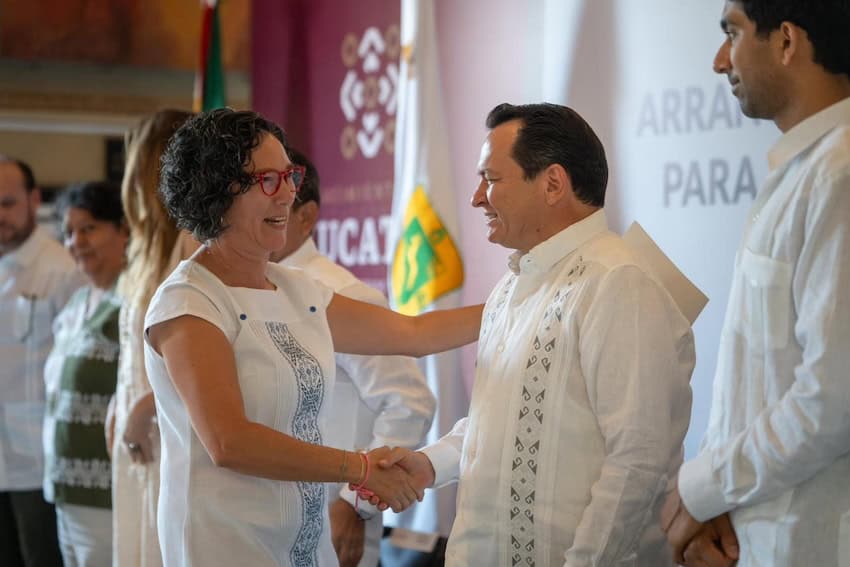
Governor Joaquín Díaz Mena on Wednesday launched the Herencia Maya (Maya Heritage) project, saying it will guarantee long-term financial resources for the conservation of 11 protected state nature reserves.
The historic project — combining the resources of government, NGOs and private donors —aims to help protect more than 581,000 hectares of natural areas across the state.
For example, Governor Díaz Mena said Herencia Maya will guarantee financing — through an investment of more than US $12 million over the next five years — to care for and preserve 52,000 hectares of mangroves along 273 kilometers of coastline.
The project will allow for the development of marine species and curb environmental degradation and deforestation, while also restoring mangroves and water flows, much of which has been degraded by the construction of roads and housing developments.
“The most important thing is the human impact, especially environmentally, that this represents,” Díaz Mena said. “More than 114,000 people live in these protected natural areas and more than 1.3 million people benefit from our ecosystems and the conservation of water.”
The preservation of coastal lagoons also protects the population against hurricanes.
Standing alongside the governor, WWF México director María José Villanueva, said the Herencia Maya program falls under the aegis of the Enduring Earth Initiative, part of the WWF’s Project Finance for Permanence (PFP) program.
Villanueva described Herencia Maya as “a long-term strategy in a region that is home to 55% of Mexico’s mangroves and one of the most extensive underground river systems in the world.”
An initial fund of US $5.5 million is already available for areas identified as critical, and the state government will contribute an equivalent amount.
Nine state natural reserves will benefit from the fund: Dzilam; El Palmar; Ciénagas y Manglares de la Costa Norte; Puuc; Anillo de Cenotes; Kabah; Lagunas de Yalahau; Ich Kool Balamtún; and San Juan Bautista Tabi and Anexa Sacnicté.
María José Villanueva, Mexico director of the World Wildlife Fund, and Yucatán Gov. Joaquín Díaz Mena have joined forces to help fund a project near and dear to both of them — the protection of the state’s natural resources. (WWF/Facebook)
Additionally, the Cuxtal Ecological Reserve, managed by the Mérida City Council, and the private El Zapotal reserve will receive financing.
The PFP initiatives are designed for the long term, the WWF says, and seek to transform people’s ability to conserve and steward nature according to their own visions and values.
Once a project gets the green light, funds are released to governments and communities over the life of the project as key milestones are achieved. As such, results ensure reliable funding and donors know funds will only be spent if the goals they support are achieved.
The project is described as the first of its kind worldwide, as it incorporates subnational financing through public resources and private donations.
Among the participating institutions are: Bepensa, The Coca-Cola Foundation, Enduring Earth, Marshall Field, the Global Environment Facility, HP Inc., Margaret A. Cargill Philanthropies, Natural Spaces and Sustainable Development and The Nature Conservancy.
The federal Environment Ministry and the National Commission of Natural Protected Areas are also part of the alliance.
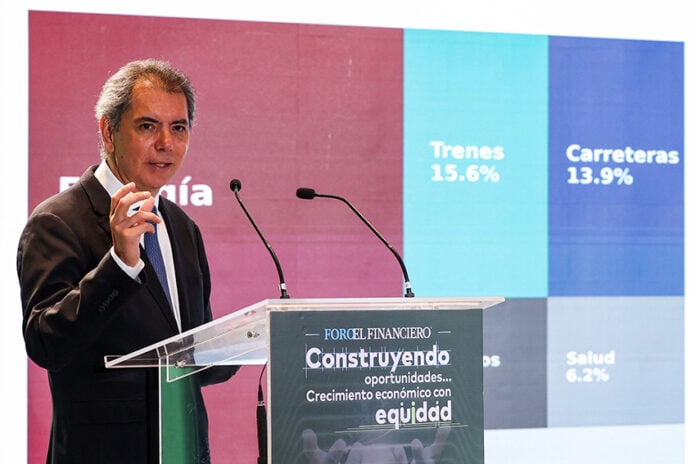
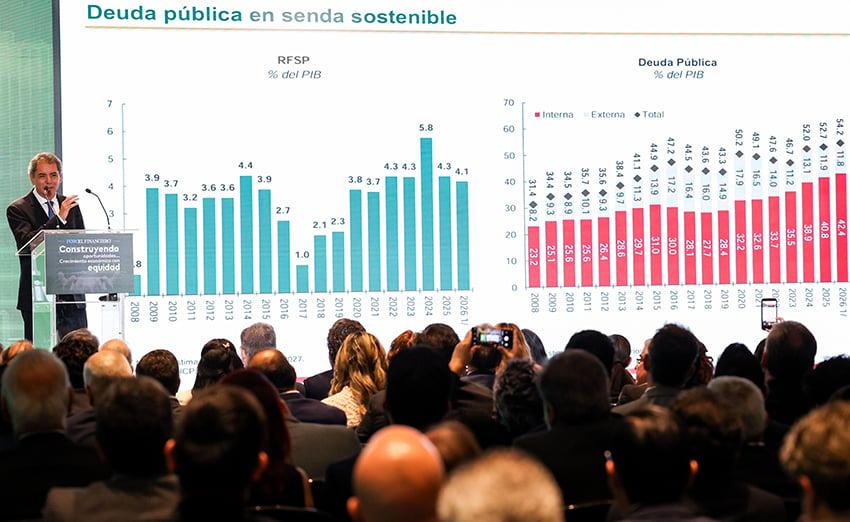
After the rating agency S&P downgraded Mexico's credit rating outlook, Finance Minister Édgar Amador sought to reassure investors at a forum hosted by the newspaper El Financiero on Wednesday. (Galo Cañas / Cuartoscuro)
The Ministry of Finance and Public Credit (SHCP) is confident that Mexico can recover its “stable” long-term ratings outlook from S&P Global Ratings, which this week downgraded its outlook for the country to “negative.”
Finance Minister Édgar Amador Zamora said as much on Wednesday during his participation in a forum organized by the El Financiero newspaper that convened both public officials and representatives of the private sector.
La estrategia financiera del gobierno mexicano para 2026: Plan México, Programa de Infraestructura. https://t.co/HqbkW7069s
Amador expressed confidence that a range of actions to be taken this year, including measures to ensure an additional reduction of Mexico’s Public Sector Financial Requirements (RFSP), will allow Mexico to recover its stable outlook with S&P. Recovering a stable outlook is important because it would reassure international investors that Mexico’s debt burden is no longer on a worsening path, reducing the risk of full downgrades to its credit ratings, which would have a negative impact on investment.
Amador’s remarks on Wednesday came after S&P announced on Tuesday that it had “revised its outlook on the long-term ratings on Mexico to negative from stable,” a move the rating agency said reflected “the risk of very slow fiscal consolidation largely due to low economic growth resulting in a faster-than-expected buildup in government debt levels and higher interest burden.”
Although it changed its outlook, S&P affirmed the ‘BBB’ long-term foreign currency and ‘BBB+’ long-term local currency sovereign credit ratings for Mexico. Both ratings are investment grade.
S&P said that in the next 24 months it could “downgrade Mexico if it fails to reduce its fiscal deficits in a timely manner that stabilizes and contains the government’s debt, interest burden and contingent liabilities.”
In the same time period, S&P said it could revise its outlook for Mexico to stable “if effective policy implementation translates into meaningful fiscal consolidation, helping to stabilize debt levels and the government’s interest burden.”
SHCP aims to reduce public debt to 4.1% of GDP
During a speech titled “The Mexican government’s 2026 financial strategy,” Amador said that the SHCP anticipates that Mexico’s Public Sector Financial Requirements (RFSP) will decline to 4.1% of GDP from 4.3% in 2025 (excluding support for state oil company Pemex).
RFSP takes into account the financing needs of the federal government and federal public sector entities (excluding Pemex in the percentages cited by the finance minister on Wednesday).
Amador highlighted that Mexico’s RFSP declined 1.5 points last year to reach 4.3% of GDP.
“Few economies achieved what we achieved last year,” he said.
Amador said that such a large decline in RFSP as a percentage of Mexico’s GDP hadn’t occurred “in decades.”
“This demonstrates the solid commitment of the federal government to having sustainable finances in the long term,” he said.
Finance Minister Édgar Amador addressed Mexico’s public debt burden at the El Financiero Forum on Wednesday, following the news that S&P had downgraded the country’s credit rating outlook. (Galo Cañas / Cuartoscuro.com)
Amador anticipates economy will bounce back from Q1 contraction
Amador also spoke about the outlook for growth in Mexico, which S&P rightfully acknowledged has been “low.”
Amador said he was confident that the economy would resume a path of growth in the quarters following Q1. Similarly, President Claudia Sheinbaum asserted on Thursday that public and private investment will have a significant impact on economic activity in the second half of 2026. She vowed to prove S&P wrong.
The SHCP is forecasting that the Mexican economy will grow in the range of 1.8%-2.8% this year, a prediction higher than those of most other organizations including the Bank of Mexico and the International Monetary Fund. Amador said on Monday that he and his government colleagues were “convinced” that the Mexican economy would recover strongly from the first-quarter contraction.
“There will be a very significant revitalization of the country’s economy,” he said, adding that public sector, private sector and “mixed” (public-private) investment will drive the recovery.
“… Mexico is ready to grow, to grow in a sustained way,” Amador said.
“[For] every peso invested in infrastructure, a multiple of each peso will become GDP,” he said.
In February, the federal government unveiled a mixed public-private investment plan, committing 5.6 trillion pesos (US $325.2 billion) toward spurring major infrastructure and development projects over the next four years across eight sectors: energy, railways, highways, ports, healthcare, water, education and airports.
SHCP highlights strengths of Mexican economy
In a statement acknowledging that S&P had revised its outlook on Mexico’s long-term ratings to negative, the Finance Ministry said that at the conclusion of the first quarter of 2026, “Mexico maintained solid macroeconomic conditions, even amid a complex external environment.”
The SHCP said that the Mexican economy “has a resilient labor market [with] an unemployment rate of 2.6% and real increases in work income.”
“Similarly, the [USD:MXN] exchange rate and inflation remain stable, while the Mexican government continues to implement measures to mitigate price increases for certain products affected by the geopolitical environment and adverse weather conditions,” the ministry said.
Among other favorable outcomes, SHCP highlighted that the budget deficit, at 207 billion pesos (US $12 billion) at the end of the first quarter, was 172 billion pesos lower than forecast.
The Finance Ministry also highlighted that Mexico has investment-grade ratings “with the eight agencies that assess its sovereign debt.”
Those investment-grade ratings, the SHCP said, are a “reflection of the confidence in the responsible management of economic policy and the sustainability of public finances.”
Expected heat stresses during this summer's World Cup is causing organizers and local authorities to focus on safety. (Getty Images)
It’s no surprise Mexico is hot in the summer. Anyone who’s spent even a few hours outdoors knows the intensity of the sun, the way the heat settles into the concrete and radiates back upward, and how quickly a casual afternoon can become physically draining. What may catch foreign visitors off guard during the 2026 World Cup, however, isn’t just the heat itself, but how seriously it’s being taken behind the scenes.
Concerns about high temperatures aren’t theoretical. A 2025 climate risk report by Football for the Future, Common Goal and Jupiter Intelligence found that 10 of the 16 host cities across North America face a “very high risk” of extreme heat stress during the tournament. Separate academic research has gone even further, suggesting that as many as 14 venues could experience conditions considered dangerous for prolonged physical activity.
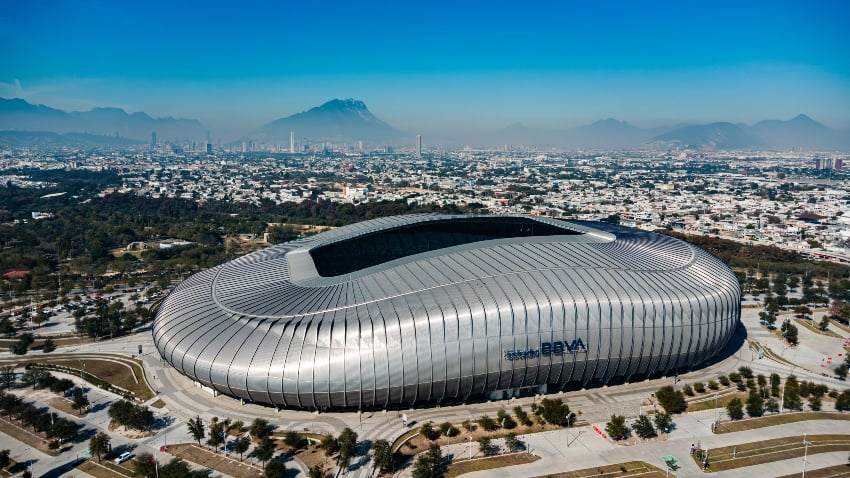
Late afternoon matches could be a staple in World Cup host cities like Guadalajara and Monterrey (whose Estadio BBVA is pictured here), where the summer heat can be unforgiving. Arne Müseler/Wikimedia Commons)
That reality has pushed organizers, including FIFA and local authorities in Mexico, toward a more pragmatic approach. It’s one of adaptation rather than avoidance.
Scheduling to avoid extreme heat
One of the most significant, and least visible, changes lies in match scheduling. While final kickoff times remain subject to global broadcast demands, there’s increasing pressure to avoid the most punishing hours of the day. Midday matches, once a staple of World Cups, are now under growing scrutiny in hotter climates.
The issue has already surfaced in recent tournaments, where matches played in temperatures above 30 degrees Celsius prompted concern from players and coaching staff. FIFPRO, the global players’ union, has been particularly vocal.
“We need a better balance between commercial interests and the health and safety of players,” said Alexander Bielefeld, the organization’s director of policy and strategic relations, as discussions around extreme heat intensified ahead of 2026.
That message appears to be shaping planning decisions. Evening and late-afternoon matches are expected to play a larger role, particularly in Monterrey and Guadalajara, where summer heat can be especially unforgiving.
Even in central Mexico, where temperatures may look milder on paper, the intensity of the sun at altitude creates a different kind of strain. And it’s one that visitors often underestimate until they experience it firsthand.
How stadiums are being transformed to mitigate heat
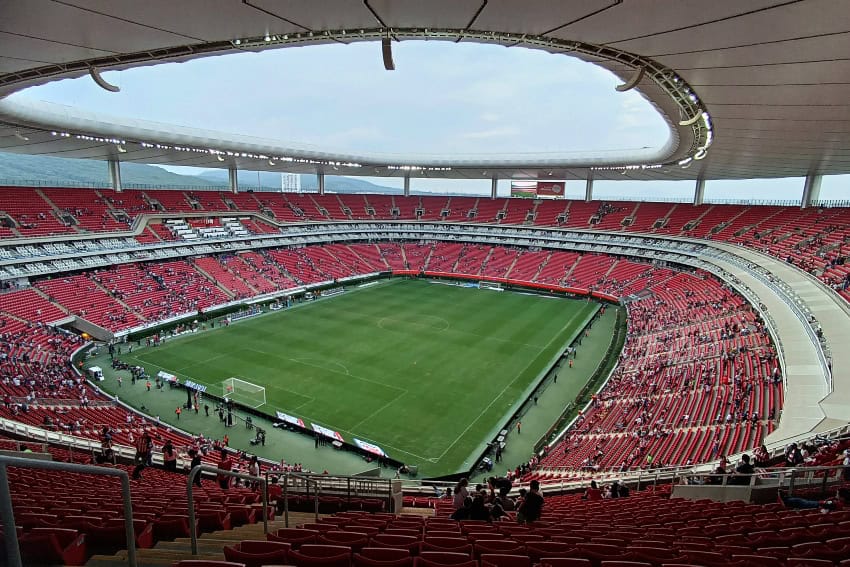
It’s impossible to completely mitigate against heat in open-air venues like Guadalajara’s Estadio Akron. However, improving airflow and shady areas helps. (Alejan98/Wikimedia Commons)
Inside stadiums, the response is more subtle but no less important. Mexico’s World Cup venues aren’t being transformed into fully enclosed, climate-controlled arenas. Instead, renovations have focused on improving airflow, expanding shaded areas where structurally possible, and modernizing interior spaces to provide relief from the sun.
In older stadiums, these changes are part of broader upgrades that were already overdue. Wider concourses, improved circulation, and updated facilities all help reduce heat buildup, particularly in crowded conditions.
The aim isn’t to eliminate discomfort entirely, as that would be unrealistic in an open-air venue. But it is to reduce the cumulative effects of hours spent exposed to heat, whether seated in the stands or moving through the stadium. Equally important is what’s happening behind the scenes, as heat isn’t just a question of comfort; it’s a matter of health.
The importance of hydration and water access
For spectators, that preparation is expected to extend to something that may seem basic on the surface, but whose importance shouldn’t be underestimated: access to water. While specific policies vary by venue, organizers are under growing pressure to ensure that hydration is readily available inside stadiums, whether through expanded concessions, refill points or designated hydration stations.
It’s a simple measure, but in high temperatures, access can make the difference between a manageable day and a dangerous one. FIFA has confirmed that all matches at the 2026 tournament will include mandatory three-minute hydration breaks in each half, a measure introduced specifically in response to rising temperatures and growing concern over player welfare.
The decision reflects lessons learned from recent competitions, where extreme weather forced organizers to adapt in real time. It also signals a broader shift toward treating heat as a constant factor rather than an occasional disruption.
The World Cup is expected to provide long days for fans, who must deal with transportation time, sun, heat and, in the case of adults, alcohol. In Mexico, elevation can also be a factor. (Fermin Rodriguez Penelas/Unsplash)
Some proposals go further still. FIFPRO has suggested extending halftime and increasing the number of cooling breaks in particularly high-risk conditions, arguing that traditional measures may no longer be sufficient.
The underlying concern is straightforward. As global temperatures rise, so too does the risk of heat-related illness in elite sport.
The cumulative effects of heat, alcohol and elevation
For fans, the risks are different but no less real. A World Cup day rarely begins and ends with the match itself. It includes hours spent traveling, waiting, exploring and celebrating. Often in direct sunlight. Add alcohol, long periods on foot and densely packed crowds, and dehydration can set in faster than many expect.
In Mexico City, altitude adds another layer of complexity altogether. At more than 2,200 meters above sea level, the thinner air accelerates fluid loss and fatigue. Visitors may feel fine upon arrival, only to find themselves suddenly exhausted, lightheaded or short of breath later in the day. It’s a combination of heat, sun and altitude that can catch even the most seasoned of travelers off guard.
This is where public guidance becomes essential. Authorities are expected to lean heavily on awareness campaigns, encouraging visitors to drink more water than usual, wear sun protection and take breaks in shaded or indoor spaces. These are simple measures, but in the context of a large-scale event, they can make a meaningful difference.
Managing environments outside stadiums
Beyond the stadiums, cities are also adapting to the broader reality of hosting millions of fans. Mexico City plans to host 18 free fan festivals across different boroughs, spreading crowds across multiple locations and reducing pressure on any single site.
Mexico City has announced it is hosting 18 fan festival sites for the duration of the World Cup, which should help to disperse crowds at least somewhat. (@ClaraBrugadaM/Facebook)
These spaces are designed not just as viewing areas, but as managed environments where shade, water access and room to move are built into the experience. The approach reflects a wider understanding that the World Cup isn’t confined to the pitch.
For many visitors, the hours before and after a match, spent navigating the city or gathering in public spaces, are where heat-related risks are most likely to emerge.
The broader challenge is one of scale. The 2026 tournament will be the largest in World Cup history, with 48 teams and more than 100 matches spread across three countries. That expansion increases the likelihood that some games, and many fan experiences, will take place in difficult conditions.
And yet, despite the warnings, there’s little appetite for dramatic solutions such as moving the tournament to a different season. Instead, the focus remains on incremental changes like smarter scheduling, targeted infrastructure improvements and clearer communication with fans.
Staying smart while enjoying the experience
In many ways, it’s a distinctly Mexican approach. Practical, adaptive and grounded in the understanding that the environment isn’t something to be controlled, but managed.
For visitors, that means meeting organizers halfway. Hydration, sun protection and pacing will matter just as much as any official measure. So will an awareness that the climate, beautiful and energizing as it is, demands a certain level of respect.
Because while it may be no surprise that Mexico is hot, experiencing that heat in the middle of a World Cup, while surrounded by tens of thousands of fans under an unforgiving sun, is something else entirely.
Charlotte Smith is a writer and journalist based in Mexico. Her work focuses on travel, politics, and community. You can follow along with her travel stories at www.salsaandserendipity.com.
The Yucatán's majestic convent route traces the history of conquest and tradition in Mexico's most magical state. (Yucatán Travel)
Yucatán state is a rare place where two great civilizations meet — and you can feel both of them in a single day. History lovers will be in their element here, whether they’re drawn to the mysteries of the ancient Maya or the grandeur of Spanish colonial ambition. Sure, you’ve heard of Chichén Itzá — and the crowds that come with it. But just south of Mérida, a quieter and equally rewarding route awaits.
The Maya had already been thriving in this region for more than a millennium before the Spanish arrived in the early 16th century. The archaeological sites they left behind are a testament to a remarkably advanced civilization. Then the colonizers came, and with them came stone churches and convents that still stand today, many built directly on top of sacred Maya ground. That layered history is exactly what makes the Convent Route so compelling.
Think of it as Yucatán’s back road — a journey through small towns, crumbling facades and living culture that most visitors simply drive past on their way to the big-ticket sites.
What is the Convent Route?
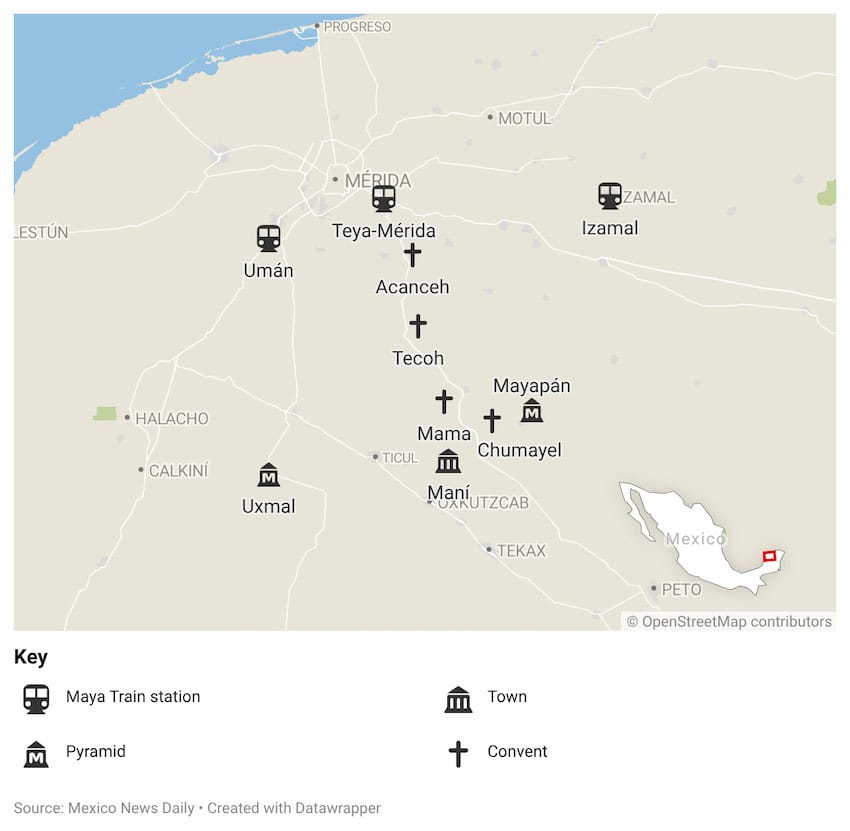
This circuit takes you through several towns with colonial churches, convents and even ancient Maya sites. A popular option is to travel from Mérida to Maní, which is doable in a day. Some definitions of the Convent Route include the yellow city of Izamal and other towns, but you might need more time to cover all that ground.
We’ve put together this guide to help you visit some of the main attractions on or near the Convent Route. It’s best to use your own transport and start your day early. With the opening of the Maya Train, there are also several nearby stations that travelers can use to get as close as possible before hiring a car.
Acancéh
A colorful detail in Our Lady of the Nativity, a church in Acancéh on the Convent Route. (Cultura Yucatán)
Acancéh sits about 25 kilometers from Mérida via highways 180 and 184, and it packs a surprising amount of history into one modest town square. The Maya were here as far back as 700 B.C., and the evidence is impossible to miss — a pyramid rises right in the center of town, its walls lined with magnificent stucco masks believed to depict the sun god Kinich Ahau. Buy your ticket from the INAH post across the road, then climb the stairs for a close look at those weathered faces.
While you’re there, ask the INAH official to unlock the Palace of Stuccos on Calle 18. Inside, a remarkable 13-meter stucco frieze stretches across the wall, filled with anthropomorphic figures that have survived centuries remarkably intact.
Just across from the pyramid, a brightly painted 16th-century church dedicated to Our Lady of the Nativity makes for a worthy stop — a vivid reminder of how thoroughly the Spanish built their world on top of the Maya one. The convent and church of Our Lady of Guadalupe are close by as well.
If time allows, the cenotes around Cuzamá and Homún are only 25 to 30 minutes away. That said, they deserve an unhurried visit of their own — plan a separate trip so you can linger and soak in their beauty without one eye on the clock.
Tecoh
Hacienda Sotuta de Peón, an old colonial plantation, is worth a visit. (yucatan.travel)
From Acancéh, head south about 10 kilometers to Tecoh, where the church of Our Lady of the Assumption is worth a brief stop. Look closely at its base — like so many colonial churches in this region, it appears to have been built directly atop an ancient Maya pyramid. Step inside to see the altar, which makes the detour worthwhile on its own.
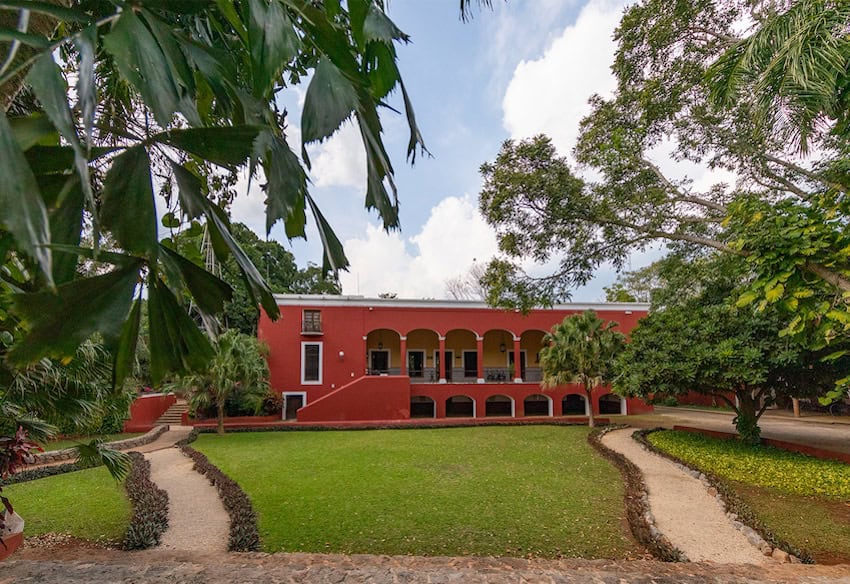
Just under 20 minutes away, Hacienda Sotuta de Peón offers a window into the region’s once-booming henequen industry — the so-called “green gold” that made Yucatán fabulously wealthy in the late 19th and early 20th centuries. The tours run a few hours, so consider saving this for a separate day if you’re pushing through to Maní. The hacienda also has accommodation and a cenote, making it a fine base if you want to slow down and settle in.
Telchaquillo and Mayapán
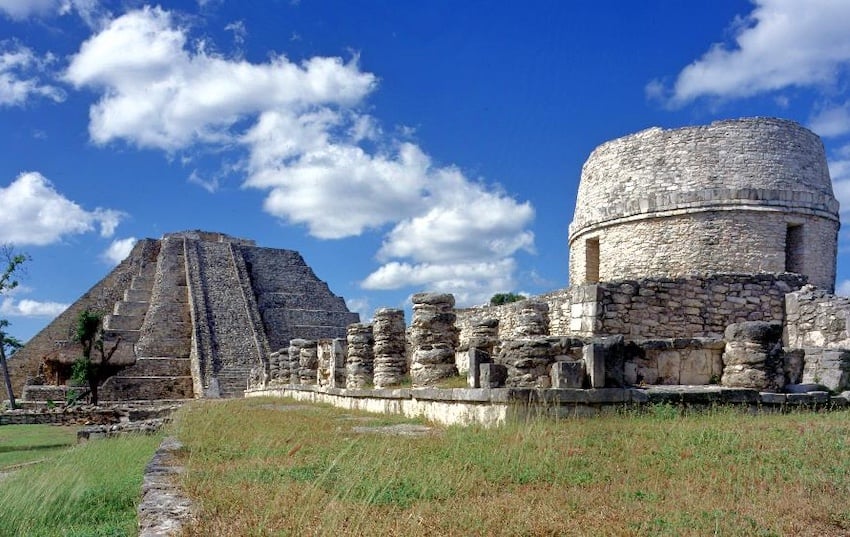
The ancient city of Mayapán. (yucatan.com.mx)
About 13 kilometers from Tecoh via Highway 184, the small town of Telchaquillo has a church and a nearby cenote worth a quick look if you’re not pressed for time. Otherwise, keep going — five minutes down the road is the archaeological site of Mayapán, and it’s one of the highlights of the route.
First settled around 300 B.C., Mayapán rose to regional dominance between the 13th and 15th centuries. Today it sees a fraction of the visitors that flock to Chichén Itzá, and that’s precisely its charm. Come early to beat the afternoon heat, then take your time wandering the grounds. The main pyramid — the 18-meter Castle of Kukulcán — is a solid climb, but the views from the top make it more than worth the effort. The site has been closed to tourists since 2024 as ongoing disputes continue over land ownership — but hopefully 2026 will be the year that this magical site reopens.
The surrounding area has several cenotes. Noh Mozon, hidden in the wilderness about 10 kilometers from Telchaquillo, is a gem, but rough roads mean you’ll burn close to an hour getting there and back. Save it for another day when you can give it the time it deserves.
Tekit, Mama, Chumayel and Teabo
Tekit is a welcoming travel stop along the Convent Route, famous for its guayabera shirts, as well as its picturesque church. (Tekit.gob)
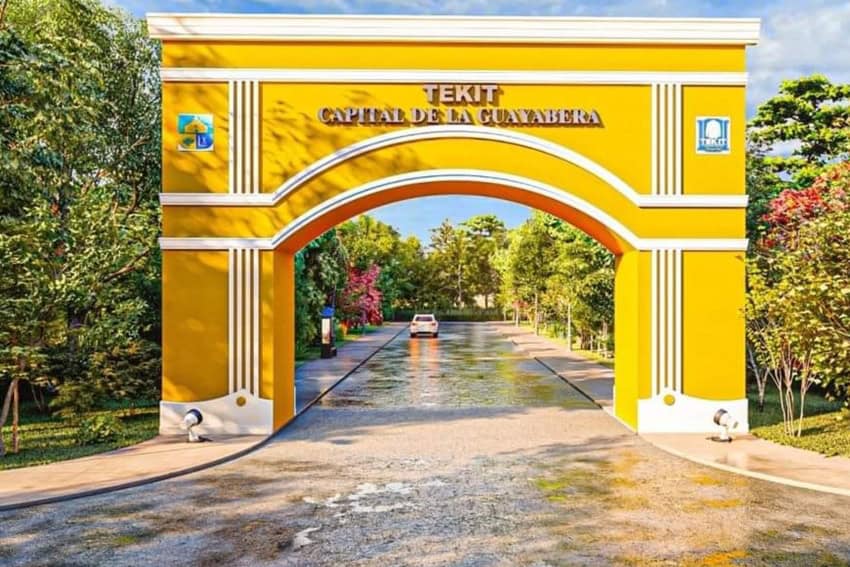
About 18 kilometers down Highway 184 lies Tekit, the self-proclaimed guayabera capital of Yucatán. If your energy holds, it’s a fine place to browse for one of these classic pleated shirts — a genuinely useful souvenir. The town’s 16th-century church dedicated to Saint Anthony of Padua is beautiful and worth a look while you’re there.
From Tekit, continue to Mama — a town whose name, locals will tell you, is simply the Yucatec Maya word for “no” said twice. (“Ma” means no. So: no-no. The name has stuck.) The Church of the Ascension here is a standout, crowned with an unusual bell-shaped dome. A former Franciscan convent and a chapel round out the town’s modest but rewarding historic center.
If you want to squeeze in a couple more stops before the finale, head to Chumayel, about nine kilometers from Mama. This is where the famous Chilam Balam of Chumayel originated — one of several handwritten Maya manuscripts, named for the towns where they were kept, that preserve ancient knowledge of rituals, medicine and astronomy. The town also has a 16th-century church, the Temple of the Immaculate Conception. Less than 10 minutes further, Teabo has its own handsome former convent and parish worth a brief stop.
Maní
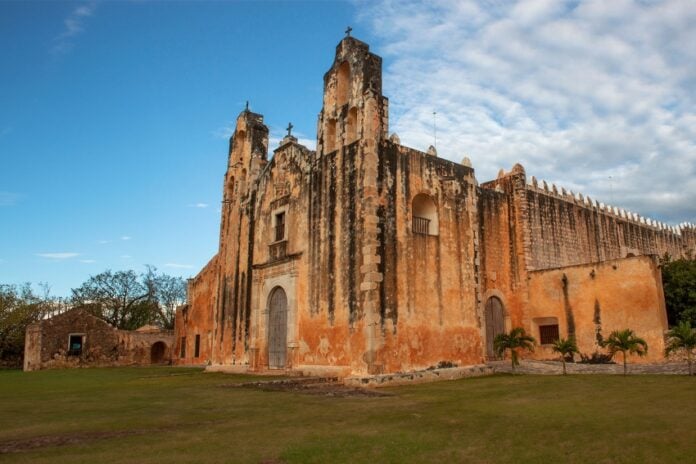
Maní is a perfect end to your trip. (Pueblos Mágicos)
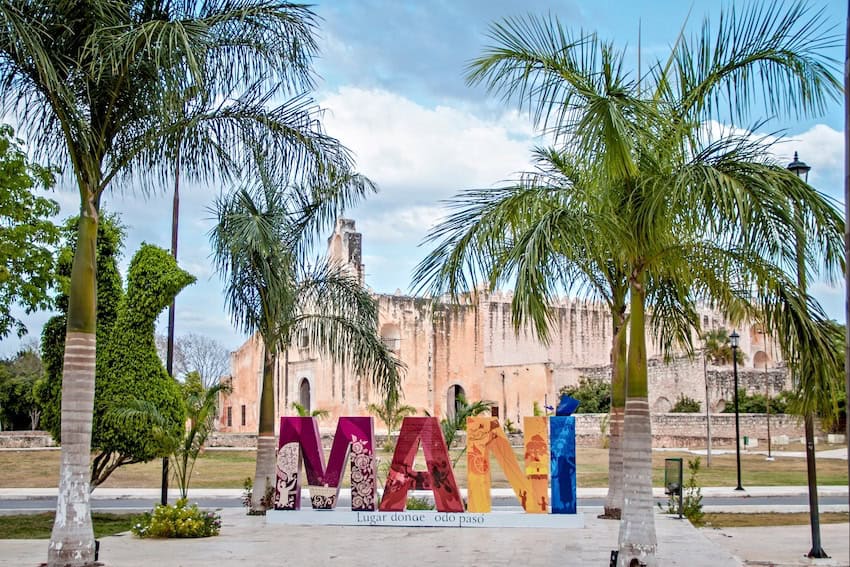
Maní earns its Pueblo Mágico designation with colorful buildings, a lively market and a pace that invites you to slow down. But this cheerful town carries a heavy past. In 1562, a tribunal of the Spanish Inquisition led by Franciscan friar Diego de Landa burned dozens of irreplaceable Maya codices here in what became known as the auto-da-fé of Maní — an act of cultural destruction whose full weight is still felt today.
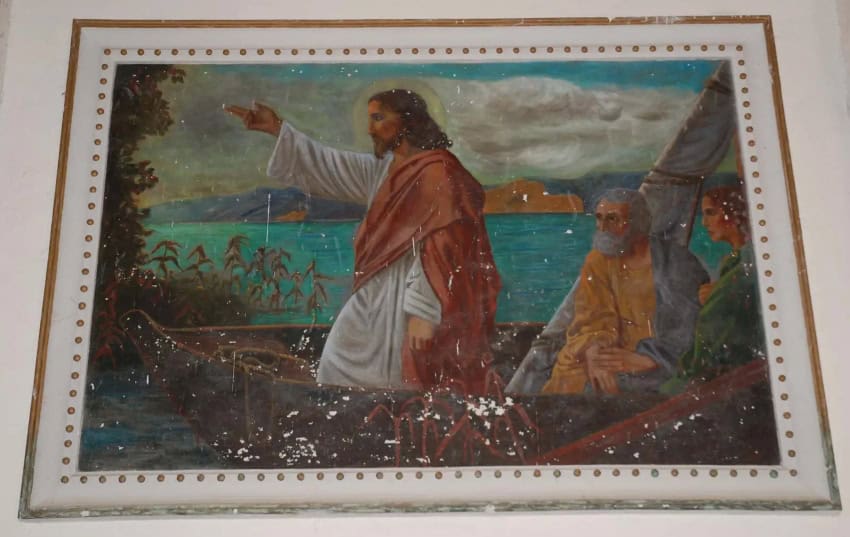
The former convent of San Miguel Arcángel anchors the main square, its large atrium and open chapel giving way to an interior with surviving altarpieces and fragments of old murals. Take your time here. Then wander the plaza and market, where vendors sell honey products, clothing and local crafts. Maní is also a center of Melipona beekeeping — the ancient practice of raising stingless Maya bees — and a visit to a meliponario such as U Naajil Yuum K’iin or Meliponario Lool-Há is a memorable detour.
End your day with a late lunch or early dinner. Maní is famous for Poc Chuc — pork marinated in citrus and grilled over an open flame — and El Príncipe Tutul Xiu is the place to try it.
Before heading back to Mérida, note that Maní also connects to the Ruta Puuc, a string of lesser-known Maya archaeological sites that makes for a rewarding day trip in its own right.
This article was first published in 2024. It has been updated for 2026.
Thilini Wijesinhe, a financial professional turned writer and entrepreneur, moved to Mexico in 2019 from Australia. She writes from Mérida, Yucatán. Her website can be found at thilini.me.
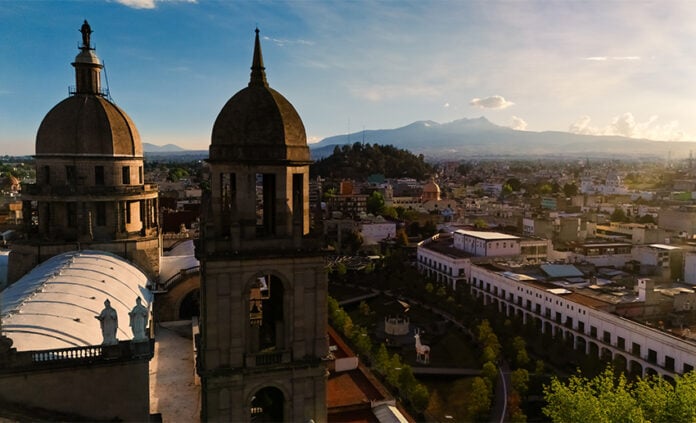
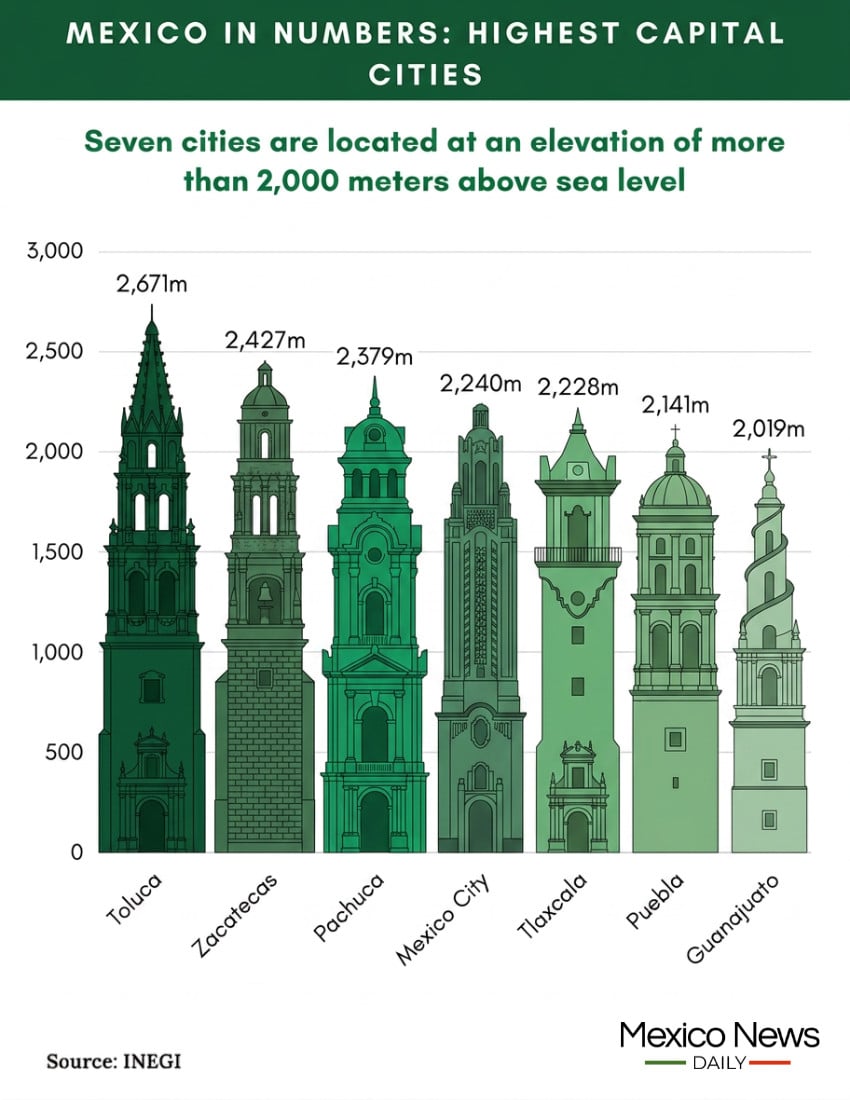
Mexico’s highest capital is Toluca, the capital of México state, located at 2,671 meters above sea level.
Zacatecas, the capital of the northern state of the same name, ranks second. It is located at an elevation of 2,427 meters above sea level.
Mexico’s third-highest capital is Pachuca, Hidalgo, located at 2,379 meters above sea level.
Mexico City is Mexico’s fourth-highest capital. It is located at 2,240 meters above sea level.
Tlaxcala, the capital of the state of the same name, ranks fifth. It is situated at 2,228 meters above sea level.
Mexico’s sixth-highest capital is Puebla in the state of Puebla. It is located at 2,141 meters above sea level.
Guanajuato, the capital of the state of the same name, ranks seventh. It is situated at 2,019 meters above sea level.
In case you were wondering, Mexico’s lowest elevation capital city is Mexicali, Baja California. Although the border city is not near anywhere near the sea, it is located at sea level (0 meters).
Olinia Project Coordinator Roberto Capuano Tripp shared news of the advances at Wednesday's presidential press conference. (Juan Carlos Buenrostro /Presidencia)
A prototype of Olinia, the low-cost Mexican electric mini-car project promoted by the Mexican government, is now complete and will debut June 7 ahead of the 2026 FIFA World Cup.
Roberto Capuano Tripp, the director of the Olinia project, shared a first glimpse of the electric car prototype at President Claudia Sheinbaum’s Wednesday morning press conference. The Mexican government plans to begin producing the car in 2027.
Resultados que transforman. Les presento el prototipo del minivehículo mexicano, Olinia. pic.twitter.com/xmuL6skRhj
— Claudia Sheinbaum Pardo (@Claudiashein) May 13, 2026
“Olinia is a technological project, an industrial project, and above all, a project for the people,” Capuano said. “A project from Mexico for the world.”
About Olinia
Reminiscent of a small European electric vehicle, Olinia features compact proportions and a tall, boxy body to maximize interior space. It is designed for ease of maneuverability on narrow streets and short trips.
“The goal is to have our own brand, an accessible vehicle for the Mexican population that is cheaper, electric, does not pollute, and allows us to travel through any town on the narrow streets of our country,” President Claudia Sheinbaum said, adding that another prototype designed for cargo transport will be revealed in July.
Operating at a maximum speed of 50 kilometers per hour, Olinia will be suitable for driving in residential areas and city centers, adapting to the various streets of Mexico. Capuano said that even though the car is compact, it is comfortable and spacious.
Capuano said it will cost less to operate than a motorcycle. The car’s motor will have an estimated lifespan of eight years and it will be charged using a standard household outlet.
“We wanted to find a solution that works for the people,” Capuano said.
Where is Olinia being built?
Olinia prototypes are being manufactured in Puebla at a facility provided by the Instituto Tecnológico Nacional de México (TecNM). However, the site for its industrial manufacturing has not yet been determined.
Mexico aims to produce 20,000 units per year in the first phase, starting in 2027, before increasing production to 50,000 vehicles per year over the following four years.
There's 'no rush' as the July 1 USMCA renewal deadline approaches, President Sheinbaum said Thursday. Analysts suggest the free trade deal is unlikely to be renewed by that date. (Juan Carlos Buenrostro / Presidencia)
Sheinbaum’s mañanera in 60 seconds
🇲🇽🇺🇸🇨🇦 USMCA talks: “no rush”: Sheinbaum said Mexico is making progress ahead of a bilateral negotiating round starting in 11 days and sees no urgency around the July 1 target date for a renewal decision. Mexico will push to reduce or eliminate U.S. tariffs on products such as steel, aluminum and vehicles.
✒️Signing of Mexico-EU trade deal set for May 22: EU representatives will travel to Mexico City next week to sign a new trade agreement. Sheinbaum said it poses no risk to the USMCA and will open new export opportunities for Mexican producers.
📉 Sheinbaum pushes back on S&P: Two days after Standard & Poor’s revised Mexico’s long-term outlook to negative, the president vowed to prove the agency wrong, arguing that public and private investment will drive a stronger second half of 2026 after an economic contraction in Q1.
Why today’s mañanera matters
At her Thursday morning press conference, President Sheinbaum spoke about two important trade agreements: the USMCA and the new Mexico-European Union pact that is expected to be signed in Mexico City on Friday, May 22.
While Sheinbaum said that the new deal with the EU will benefit Mexican exporters, she made it clear — without explicitly spelling it out — that the USMCA is the predominant pact for Mexico.
In that context, Sheinbaum’s remark at today’s mañanera that there is “no rush” to conclude the USMCA review process was significant. The president is apparently unconcerned that July 1 — the date by which Mexico, the U.S. and Canada are “supposed” to reach an agreement on whether to renew the USMCA for an additional 16 years or not — is less than seven weeks away. She is confident that the pact will be renewed, whenever that might be, and Mexican negotiators — headed up by Economy Minister Marcelo Ebrard — will be seeking the best possible deal for Mexico.
The Center for Strategic and International Studies said in a March 27 article that a “clean, early extension by July 1 now appears unlikely.”
Last week, Washington and Mexico City formally launched the United States-Mexico-Canada Agreement (USMCA) review process. With the deadline to extend the agreement coming in July, @CSISAmericas outlined six economic scenarios for the future.
As part of the review process, Mexico and the United States will be seeking various concessions from each other. Sheinbaum said this morning that Mexico will be pushing for a reduction — or ideally the elimination — of U.S. tariffs on a range of Mexican goods.
‘No rush’ in USMCA negotiations, says Sheinbaum
Sheinbaum told reporters that Mexico is “making progress” in negotiations ahead of the formal review of the USMCA free trade pact.
“There is no rush,” she said 11 days before the commencement of a USMCA negotiating round between Mexico and the United States.
Sheinbaum reiterated that Mexico wants current U.S. tariffs on Mexican products, including steel, aluminum and vehicles, to be reduced.
She also said there is already “a lot of communication” between Mexico, the United States and Canada on trade issues.
As part of the USMCA review, the three North American countries have to decide whether to extend the USMCA for an additional 16 years — i.e. until 2042. Even if they don’t reach an agreement to do so, the three-way trade pact cannot expire before 2036.
The new pact, she said, “doesn’t place the trade agreement with the United States at risk in any of its facets.”
Sheinbaum also said that the new agreement with the EU will create “a lot of possibilities” for the export of Mexican products.
Sheinbaum vows to prove S&P wrong
Two days after Standard & Poor’s revised its outlook on the long-term ratings on Mexico from stable to negative, Sheinbaum pledged to prove the rating agency wrong.
“[Regarding] this rating agency that put out a negative outlook, we’re going to turn things around so that it realizes it made a mistake,” she said.
Her remark appeared to be mainly a rejection of S&P’s forecast that the Mexican economy will grow just 1% this year. Sheinbaum said that Mexico is “developing a strong economy” and asserted that public and private investment will have a significant impact on economic activity in the second half of 2026.
U.S. voters give Mexico a net favorability score of just +6. Yet the real story is more hopeful: tourism, trade, and cultural exchange are quietly gaining ground while the sharpest fears are softening. (Graphs courtesy of the author)
Perceptions are very important. Imagine you have a very good and nice neighbor. Nonetheless, for whatever reason, you believe he is bad and ill-intentioned. I’m sure you wouldn’t be so keen to engage proactively with him. If we were to go outside and ask Americans what they think of their neighboring Mexico, the net answer would be something like a polite but lukewarm “eh, good.” I say this because we actually went out and asked.
AmCham, the U.S.-Mexico Foundation and AMPIP, led by Echelon Insights, have been polling US voters’ attitudes towards Mexico for more than a year. Results are significantly important. Let’s go over some key figures.
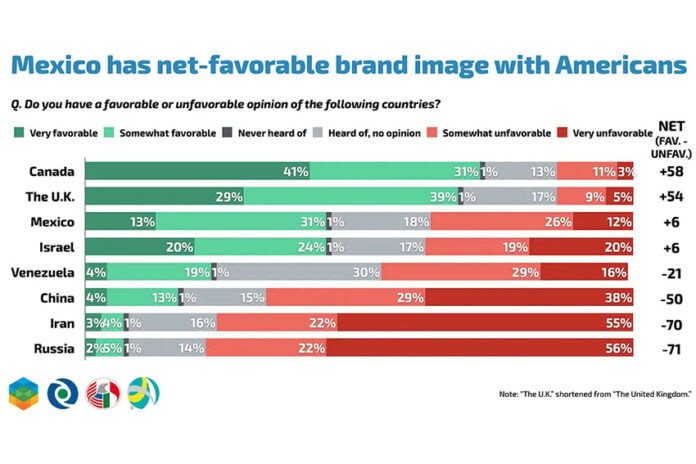
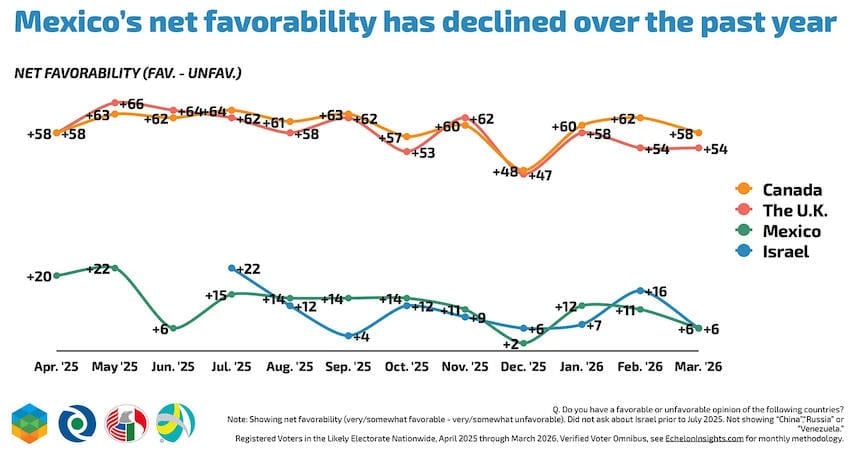
U.S voters give Mexico a net favorability of just +6 — better than China or Russia, miles behind Canada’s +58, same score as Israel and down from +20 just a year ago. The partisan gap is stark: Democrats see Mexico as a solid +47 “good neighbor,” independents +17, but Republicans sit at -23.
Overall, 40% call Mexico a good neighbor, while 28% say it’s a bad neighbor. That modest, slightly slipping score is the quiet battleground for everything this Regional Utopia series is about, particularly on the undecided bunch. As my friend and mastermind behind this polling, Enrique Perret, said: “The 18% of people without an opinion are the ones to convince that Mexico is a good neighbor.” We all need to work on that!
Thirteen percent of voters have a “very favorable” opinion of Mexico, 31% somewhat favorable, 1% have never heard of it (really?), 18% have heard of it but have no opinion. Then, 26% have a “somewhat unfavorable” opinion and last, a 12% have very unfavorable views on Mexico.
Positive notes going up, negatives going down
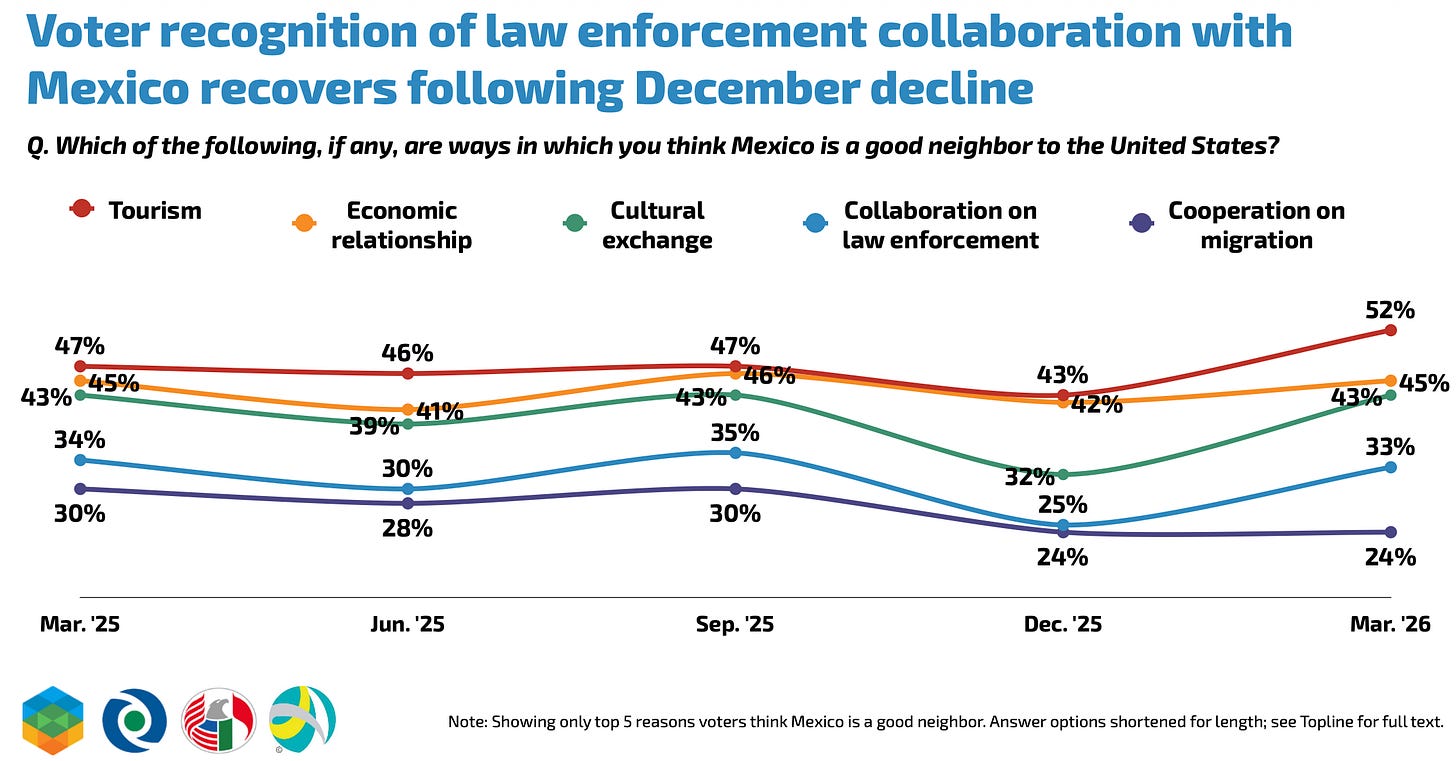
Even though the overall score has gone down, the bright spots are quietly getting stronger. When people view Mexico positively, they credit the things that hit closest to home: tourism between the two countries (now at 52%, up from 47% a year ago), the economic relationship that benefits the U.S. (holding steady at 45%) and cultural exchange (back to 43% after a December dip). Among those who already see Mexico as a good neighbor, those three factors land at a rock-solid 69-70%. In other words, the feel-good reasons for liking Mexico aren’t just holding — they’re gaining ground.
It is interesting to note the sharp comeback of “collaboration on law enforcement” after a 25% by the end of last year, gaining 8 pps to reach 33% favorability.
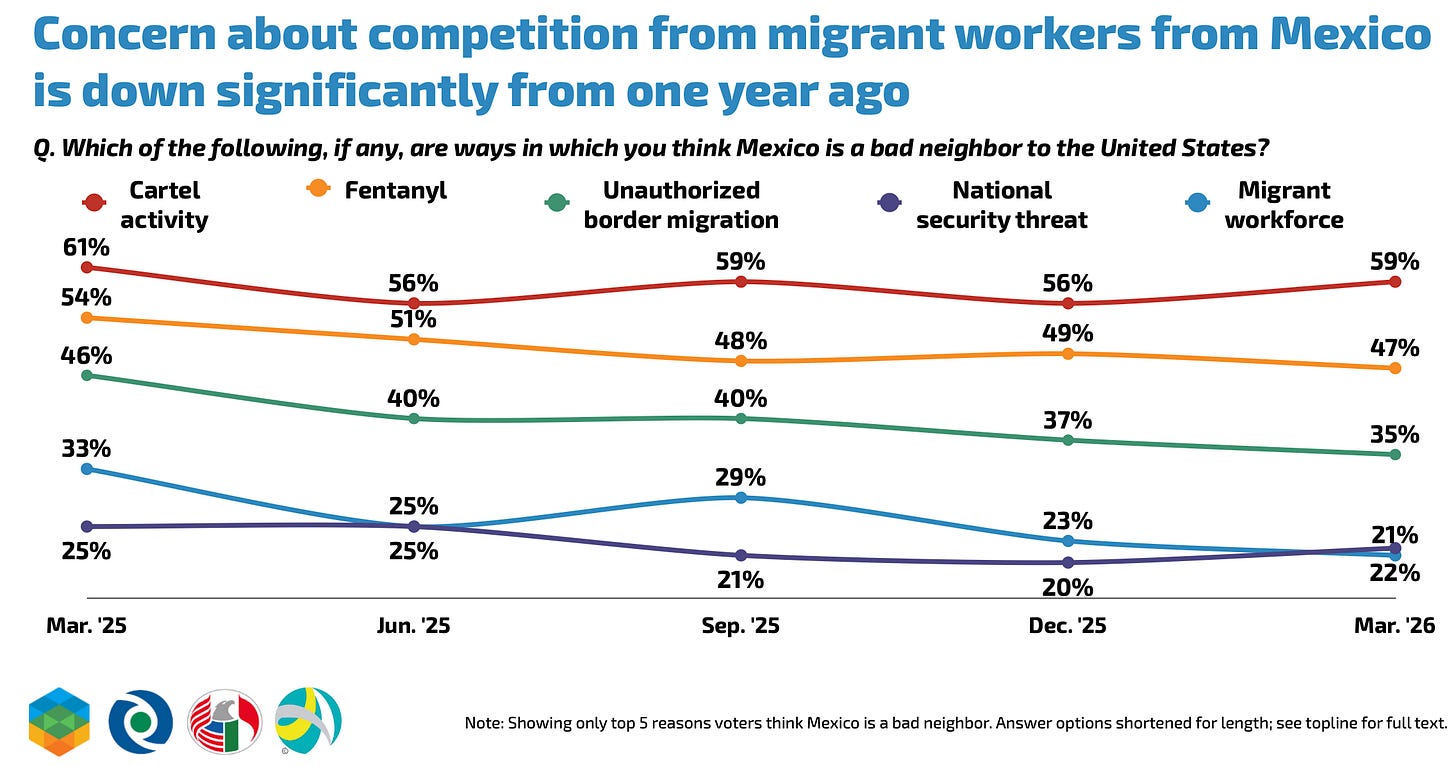
Even better still, the concerns are still real, but the sharpest edges are softening. Cartel activity remains the top “bad neighbor” complaint at 59% (stable over the past year), with fentanyl at 47% (down from 54%). Unauthorized migration is also trending down, from 46% to 35% and the worry about Mexican migrant workers “competing unfairly” has dropped sharply from 33% last year to just 21% now. Voters are increasingly separating the real, persistent problems from blanket narratives. This is truly remarkable: results matter!
There’s an interesting contradiction happening: while the overall favorability score has slipped a bit, the day-to-day trends that matter most to people — both the positives they credit and the specific negatives they fear — are moving in the right direction.
Migration is an interesting case. The border is apparently under control. Therefore, negative perceptions of it went down from 46% to 35%. Results matter, and they are noticed!
Trade, tariffs and USMCA
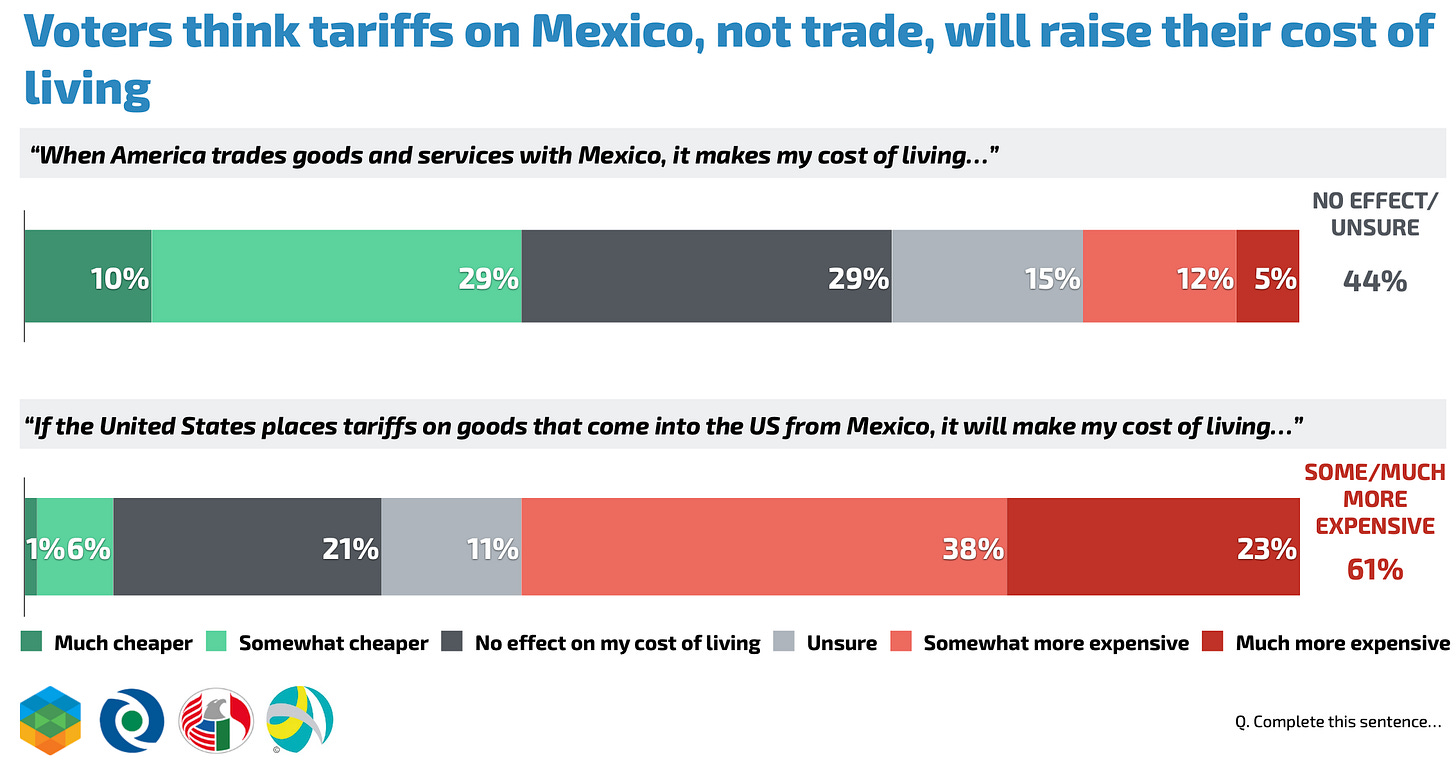
When asked whether trade with Mexico affects their cost of living, 39% say it makes things cheaper and only 17% say it makes things more expensive. Flip to tariffs on Mexican goods, however, and 61% expect higher grocery and electronics bills. Even Republicans have softened: the share worrying about cost-of-living pain from tariffs fell from 56% to 41% in the past year. People instinctively get that integration lowers prices and tariffs raise them. The economic argument is quite clear for most!
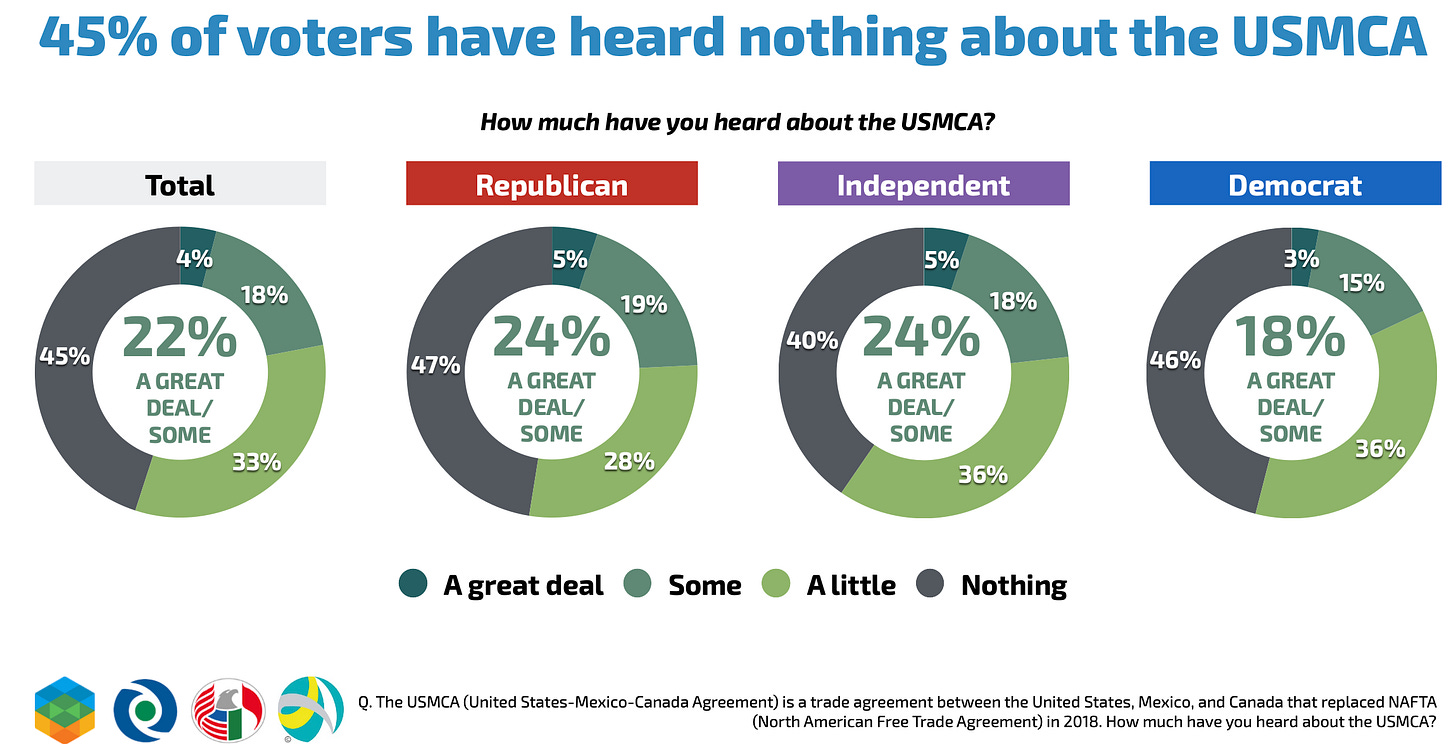
Yet, when it comes to the USMCA, awareness remains the weak link. This is the result that blows my mind the most: 8 out of 10 voters have heard nothing or just a little about the USMCA. Nearly half are unsure whether it should be extended this year. Yet when you ask what would make a “fair deal,” the answers cross party lines: lower prices on everyday goods (49-53%), American farmers selling more into Mexico and Canada (48-51%) and keeping supply chains in North America. Voters aren’t anti-trade; they’re pro-results that they can feel at the checkout line.
Final thoughts
These perceptions aren’t fluffy PR — they’re policy oxygen.
A negative brand score makes it easier for bad-neighbor rhetoric to stick during the 2026 USMCA review. It fuels tariff talk even when voters know, in their gut, that tariffs hit their own wallets.
Remember that policy does not always follow logical or economic rationality; it also follows politics. Politics is led by voters, voter sentiment and preferences. Going back to my initial example, you most likely prefer to work with the neighbor you like, rather than the one you think is not a good one.
The good news? We don’t need to invent affection — we need to amplify what’s already working and knock down the security fears that dominate the negative column. Independents are already moving in the right direction on the “good neighbor” question. Tourism, economic ties and cultural exchange are the three things voters already credit Mexico for when they like us. The World Cup is about to hand us the biggest shared ritual in a generation.
So we work on it on several fronts at once:
First, keep doubling down on the feel-good stuff: tourism flows, cultural exchange and turning every World Cup goal into a North American story.
Second, make the economic case relentless — lower grocery bills, American farmers selling more south of the border, supply chains that keep jobs and prices stable on both sides.
Third, deliver and visibly communicate concrete results on the security front (which, by the way, is yielding better results than ever in our history): joint cartel takedowns, fentanyl interdictions and migration management that voters can see.
Fourth, use the USMCA review itself as the communications moment: frame extension not as technocratic maintenance but as the practical enabler for reindustrialization, a mechanism to bring jobs back, making our neighborhood safer and also, as a way to keep prices down.
Mexico’s brand isn’t broken; it’s just under-marketed.
The data, the events and the mutual self-interest are all there. We must work on perceptions and PR as hard as we work on making USMCA work or any other policy initiative.
Thanks for reading!
Pedro Casas Alatriste is the Executive Vice President and CEO of the American Chamber of Commerce of Mexico (AmCham). Previously, he has been the Director of Research and Public Policy at the US-Mexico Foundation in Washington, D.C. and the Coordinator of International Affairs at the Business Coordinating Council (CCE). He has also served as a consultant to the Inter-American Development Bank. Follow his Substack here.