Home Blog Page 26

Court ruling cancels dozens of mining concessions in Wirikuta — but key sites remain under threat

2
Mexico's Indigenous Wixárika people have been fighting mining concessions in Wirikuta for 15 years, and despite a partial legal victory, the battle goes on. (INAH)

A recent federal court ruling ordering the cancellation of dozens of mining concessions in Wirikuta — one of the most sacred territories of the Wixárika people — marks a significant legal milestone after 15 years of struggle. But Indigenous authorities say the decision falls short, leaving key parts of the territory still vulnerable to mining.

The Consejo Regional Wixárika has now filed an appeal, seeking the cancellation of all remaining concessions and full protection of the sacred landscape.
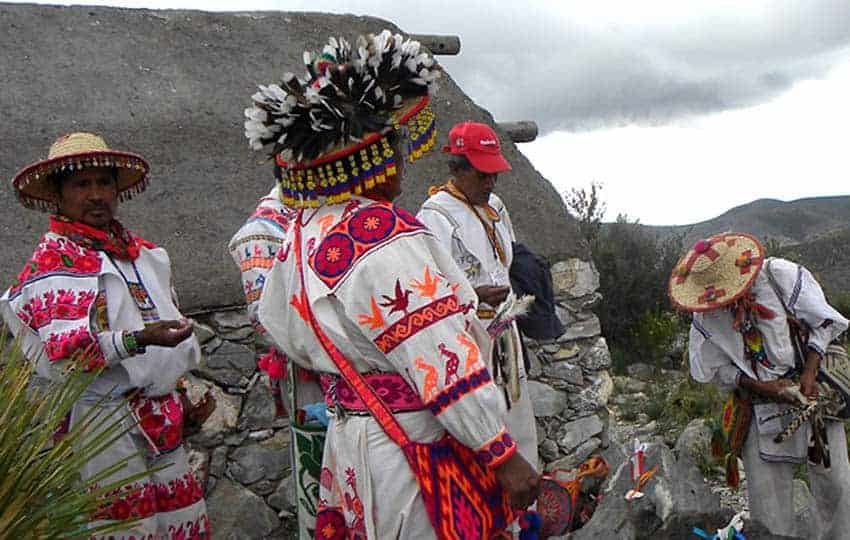
A recent legal ruling cancelled 44 mining concessions in Wirikuta, the sacred land of the Wixárika people. But 34 more remain in force, and are considered an existential threat. (Gobierno de México)

Mining concessions in Wirikuta

The ruling stems from a long-running legal battle over mining concessions in Wirikuta, culminating in a March decision by the Fourth District Court in San Luis Potosí in the amparo case filed by Wixárika communities in 2011. The court ordered the cancellation of 44 mining concessions located within the boundaries of the state-designated protected natural area, recognized the Wixárika people’s right to self-determination and their “indissoluble” relationship with the territory, and established requirements for prior consultation in future projects.

However, the ruling left intact more than 30 concessions — 20 of them linked to the Canadian transnational First Majestic Silver — a key omission that prompted the Consejo Regional Wixárika to file an appeal.

The decision comes less than a year after Wirikuta and the Wixárika pilgrimage route were inscribed as a UNESCO World Heritage Site, a designation that renewed calls by Indigenous authorities to cancel all mining concessions across the territory.

For Wixárika leaders, the stakes are existential.

“They (Wirikuta lands) are very important to us, and we cannot allow them to be destroyed. Because if they are destroyed … the Wixárika people will vanish,” said Maurilio Ramírez Aguilar, coordinator of the Consejo, in a recent interview.

A sacred geography

Wirikuta, located in the high desert of San Luis Potosí, is not simply a place, but part of a living spiritual system rooted in pilgrimage, ceremony and ancestral knowledge.

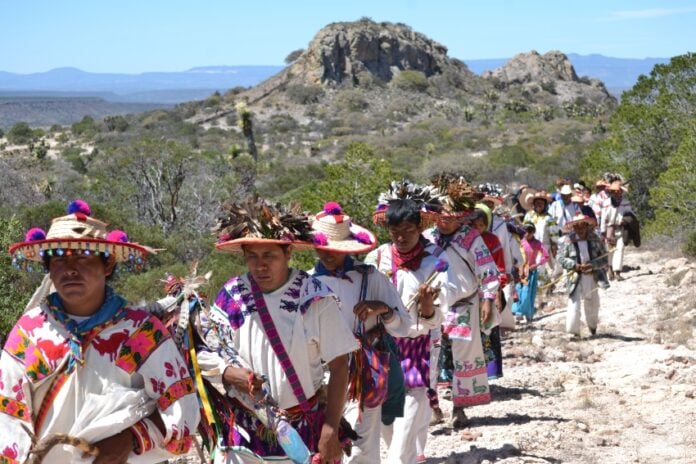
“These are sacred places where the deities have remained … and it is for this reason that the Wixárika people … prepare every year to go to Wirikuta on pilgrimage,” Ramírez Aguilar explained. “They go on foot, leaving behind offerings … candles, arrows, Eyes of God … and wherever there is water … they gather it to bring back that holy water.”

These journeys, carried out across generations, sustain not only cultural traditions but what Wixárika authorities describe as a broader balance between human life and the natural world.

A partial victory after 15 years

The court decision follows more than 15 years of legal and community resistance to mining projects in Wirikuta, including concessions linked to First Majestic Silver.

“There were around 78 mining concessions … and so the Wixárika people decided to file a lawsuit against the Mexican State, demanding their cancellation,” said Sofía Aukwe Mijarez, communications coordinator for the council.

While the ruling cancels more than 40 concessions, it falls short of that demand.

“Our defense has already spanned 15 years … and it is only after 15 years that we are finally obtaining a resolution … and one that is not entirely favorable,” she said.

The legal gap: what remains
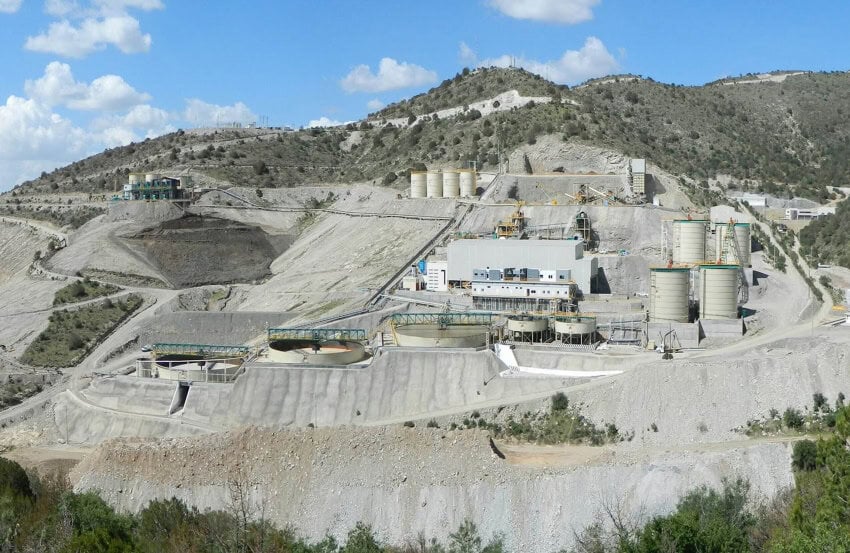
First Majestic Silver mine in Mexico
Many of the remaining concessions are linked to the Canadian transnational mining company First Majestic Silver. (First Majestic Silver)

At the heart of the appeal is a key limitation in the court’s decision: it applies primarily to concessions located within the officially designated protected natural area.

“Only those located within the protected natural area are being canceled … but Wirikuta is so much more,” Mijarez said.

She noted that areas outside that boundary — including buffer zones and culturally significant sites — remain exposed.

“The 20 pending mining concessions belong to the company First Majestic Silver Corp … and they have not been canceled, which is the primary concern,” she added.

The case also extends beyond a single company.

“We are not fighting against just one. There are more than 17 different mining companies. These are major interests,” she said.

Environmental risks in a fragile ecosystem

Wirikuta lies within the Chihuahuan Desert, one of the most biodiverse desert ecosystems in the world — and one that Wixárika leaders say is highly vulnerable to mining.

“Mining uses a tremendous amount of water … if it were to be carried out, the aquifers would dry up. It is going to contaminate the water, the air, the plants and the animals,” Mijarez said.

But as geographer Tunuari Chávez argues, the deeper conflict in Wirikuta is not only about mining itself, but about a fundamental mismatch between how the law defines territory and how water actually exists.

In his analysis, the most critical dimension of Wirikuta is largely invisible: the groundwater system that sustains life across the region. “Water is not a resource: it is a condition of existence, the basis of dignity,” he wrote.

Water is a condition of existence

That system does not follow the boundaries used in legal rulings. The aquifer that feeds the springs of the Sierra de Catorce — including sacred sites — functions as a connected, underground network shaped by geology, flow and recharge.

Yet the recent court decision evaluates impacts based on surface boundaries, distinguishing between concessions inside and outside a protected area. For Chávez, that approach misses the core risk.
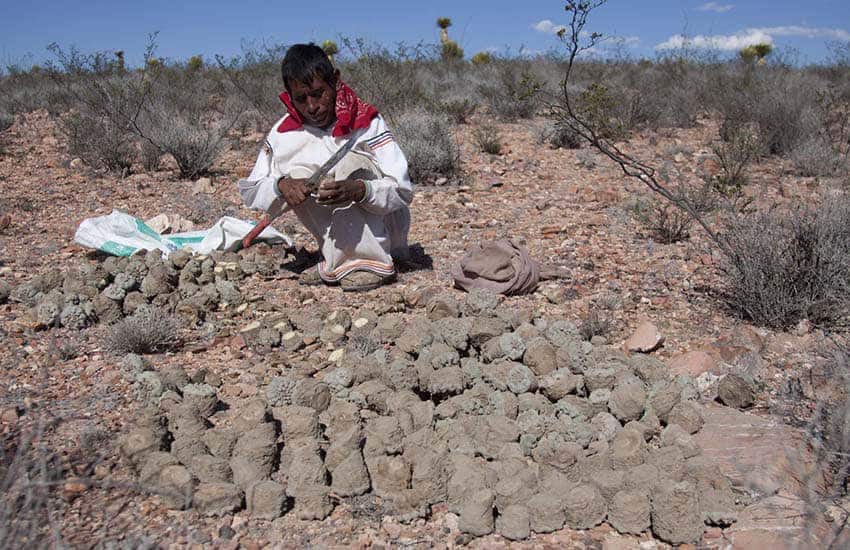
Wixarika collecting peyote at Wirikuta in San Luis Potosi, Mexico
A member of the Indigenous people known as the Wikárika visits the sacred site of Wirikuta in San Luis Potosí to harvest peyote, used in rituals and in daily life. The site’s groundwater is threatened by mining interests. (Iván Stephens/Cuartoscuro)

“Groundwater does not respect polygons … an intervention outside a protected area can alter the system that sustains it,” he wrote.

The concern is not theoretical. Mining operations in the region would likely require pumping groundwater from the same level at which the aquifer forms, potentially lowering water tables and affecting springs that sustain both local communities and ceremonial practices.

In an already overexploited system with limited recharge, such impacts could be long-lasting or irreversible.

Beyond land: a question of rights

Although the Wixárika communities are some 500 kilometers to the west of Wirikuta, leaders emphasize that their claim is rooted in ancestral and cultural rights.

“Although we do not live there, we have an ancestral right to that territory — our ancestors have made pilgrimages there since time immemorial, and it is where our culture has been sustained.”

The court ruling includes provisions for consultation with Indigenous communities going forward — a step authorities acknowledge, but one that raises further questions about implementation.

“Mexico does have the laws — very good ones on paper — but in practice, that is where we are struggling,” she said.

Development without destruction

Wixárika leaders say the conflict is not simply about rejecting mining, but about proposing alternatives.

“It is time to demand decent work — work for which such a beautiful ecosystem does not have to pay the price, which does not have to be destroyed in order (for us) to live with dignity,” Mijarez said.

Ramírez Aguilar said proposals for sustainable development have been repeatedly raised with federal authorities, with limited response.

“We have proposed sustainable development projects, but the government has not addressed them,” he said. “We do see that there is a great need … but we have not been granted them.”

A broader crisis in Wixárika territory

The legal battle is unfolding amid a growing security crisis in Wixárika territories, where residents have reported the presence of armed groups linked to the Cártel Jalisco Nueva Generación operating from multiple camps, threatening traditional authorities and generating what community members describe as a climate of fear without a decisive state response.
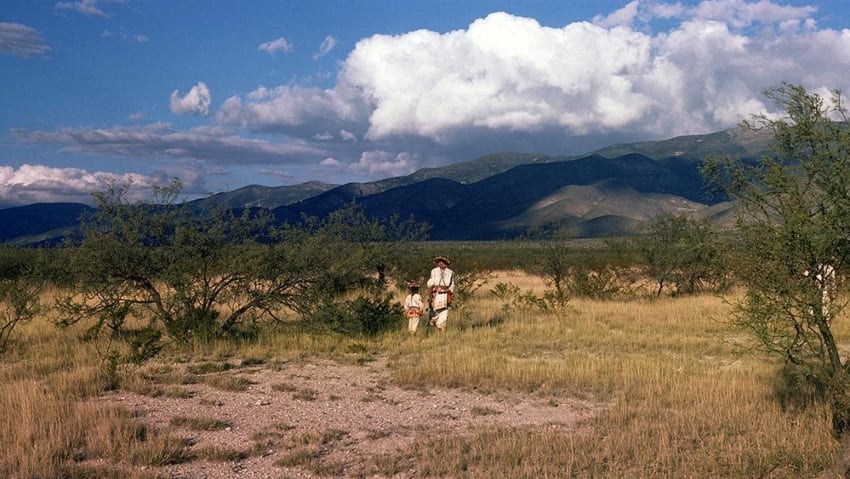
Wixárika people in Wirikuta
In addition to mining interests, the Wixárika are also being threatened by the Jalisco New Generation Cartel. (Wixárika Research Center)

“There has been a great deal of violence in the Sierra, in Wixárika communities,” said Mijarez. “And as a people, we demand security, we demand justice, because this is a human right — it is the State’s obligation to provide us with security. It is not only about defending the territory, but also about the lives of the people who inhabit these territories.”

Leaders say these conditions add urgency to their demands for protection — both for sacred lands and for the communities that defend them.

“And yes, we have suffered human losses — compañeros have been killed, kidnapped, tortured — all as a result of defending the territory,” said Mijarez.

Tracy L. Barnett is a Guadalajara-based freelance writer and the founder of The Esperanza Project.
With US $64M in April, digital bank Revolut has invested $167M in Mexico in less than half a year

0
Revolut logo signboard on modern office building in Vilnius, Lithuania on May 30, 2021. Revolut is financial technology company that offers banking services
Founded in 2015 in London as an app for travelers, Revolut now operates as a digital bank in 40 countries, including in Mexico since January of this year. (Shutterstock)

The digital bank Revolut invested 1.12 billion Mexican pesos (US $64.47 million) in its Mexico operations last month, bringing its total investment in Mexico since launching full operations in January to US $167 million, the company announced Tuesday.

Revolut, founded in 2015 in London as an app for travelers, now operates as a digital bank in 40 countries. It offers free remittances from and to the United States and other countries, a service popular among Mexican consumers. 

Revolut ad at airport
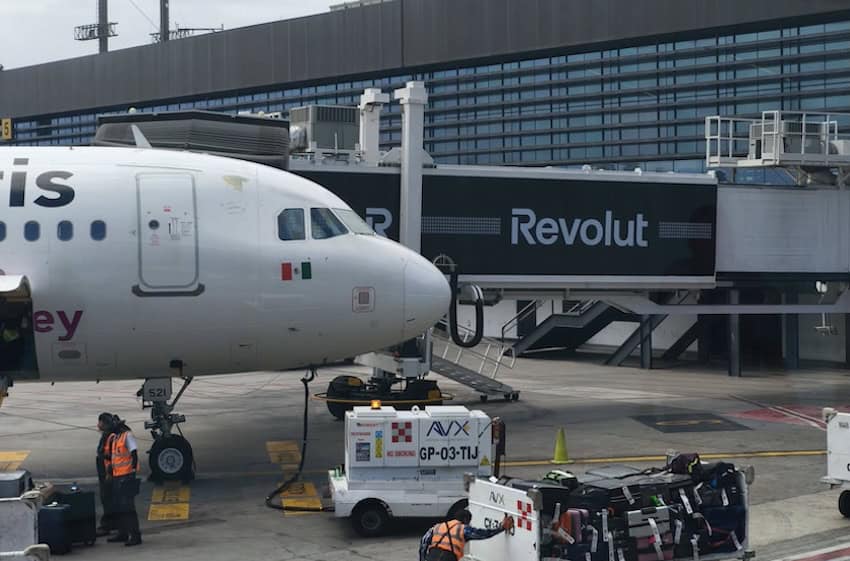
Revolut’s expenditures in Mexico include advertising in some creative spaces. (Revolut Mexico/Facebook)

The company’s total assets increased by 275% in the first quarter of 2026, with deposits totaling 3.753 billion pesos ($218 million), just nine weeks after its public launch. More than 290,000 customers were registered on its Mexico app by the end of March. 

“The response from Mexicans has exceeded our expectations,” Revolut Mexico CEO Juan Guerra said. “Clearly, there is a strong appetite for a banking app that offers everything in one place: attractive returns, a credit card, instant transfers within and outside of Mexico, investments and much more.”

Revolut posted a quarterly net loss of 153 million pesos, which aligns with its initial operating phase and expansion strategy in Mexico. 

The company reported a coverage ratio that stood at 1.531% in terms of liquidity, which is above the regulatory minimum and marks an increase compared to the previous quarter. Meanwhile, its capitalization ratio reached 141.6%.

Virtually all (99.98%) of Revolut’s loans are classified as Stage 1, which means they are “low risk.” The loan portfolio in this category rose by 44 million pesos (US $2.6 million), with more than 12,000 active credit card customers at the end of March.

In the announcement, the firm emphasized the strong environment of competition between traditional banks and digital finance platforms in Mexico, both of which are vying for users and resources.

Digital banks have become more popular among consumers in recent years thanks to the enhanced accessibility to financial services that they offer, as well as the wide range of products, including credit cards, interest-bearing accounts and debit cards. Other digital banks currently operating in Mexico include Hey, Openbank and Plata. 

With reports from Reuters and El Universal

Mexico is a world leader in running popularity, with 1 in 4 participating

3
CDMX half marathon
Mexico's slate of major marathons in the capital and other urban areas attracts tens of thousands of runners. But it's the everyday casual runners — a quarter of the population, according to a recent survey — that make Mexico a world leader in running popularity. (Cuartoscuro)

Mexico isn’t known as a country of runners, but perhaps it should be.

A recent survey from Statista Consumer Insights 2025 places Mexico as a global leader in running popularity with 24% of respondents stating that they at least occasionally go for a run or jog.

Rarámuri running
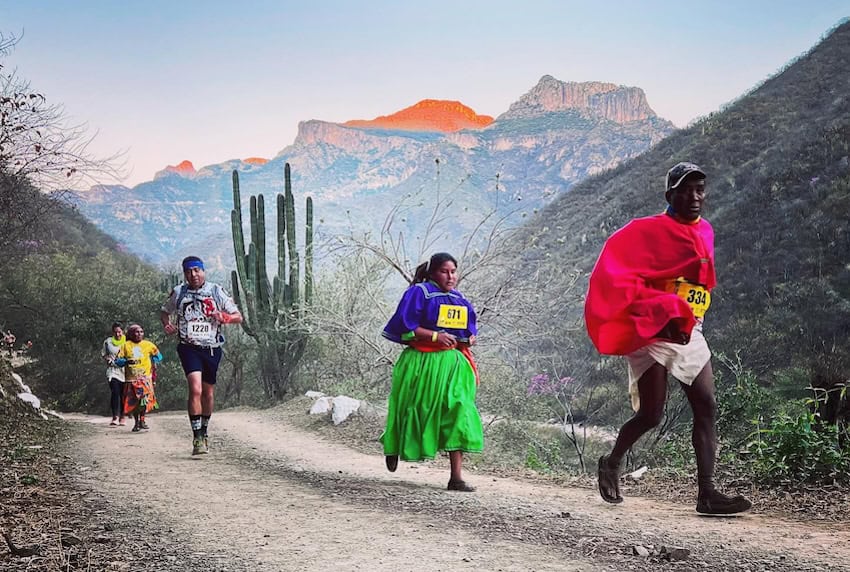
Any discussion of running’s popularity in Mexico must include the Rarámuri people of the Tarahumara Mountains in Chihuahua, for whom running is a way of life. (Ultra Caballo Blanco/Facebook)

The poll asked Mexicans about their favorite sports activities, and running came in at the very top. Surfing, more associated with Mexico among a certain segment of the U.S. population, ended up at the other end of the ranking, right down there with flying kites.  

Globally, Mexico topped such countries as China and Spain, both with 19% of respondents saying they occasionally go for a run, followed by Brazil (18%) and Germany (17%). 

The United States (8%) and Japan (6%) reported the lowest levels, indicating that economic development does not influence the popularity of running.  

One segment of the Mexican population that enjoys fame as runners is the Indigenous Tarahumara people, who run long distances regularly with minimal foot protection. Their name in their own language, Rarámurí, means “people who run.”

Running is one of the most accessible physical activities, as it requires neither specialized facilities nor large investments, making it an accessible option for broad segments of the population. 

Furthermore, in urban settings, it is a practical way to incorporate exercise into a daily routine.

Mexico’s high level of running popularity becomes more impressive when taking into account the findings of an earlier poll. In 2024, Statista revealed that 43% of Mexican respondents occasionally ran or jogged. 

Mexico’s lead in running also reveals its potential as a strategic market for sporting brands specializing in running gear and clothing. 

Dozens of marathons, half-marathons and other races are organized across Mexico each year. From thematic holiday races to traditional marathons, some of the most popular races each year include the Mexico City Marathon, the Mexico City Half Marathon, and the marathons of Monterrey, Guadalajara, Cancún, Baja California and Mazatlán.

With reports from El Economista, Abitu and Crónica

Mexico has ‘enormous opportunities’ but a productivity crisis, say experts at BBVA meeting

7
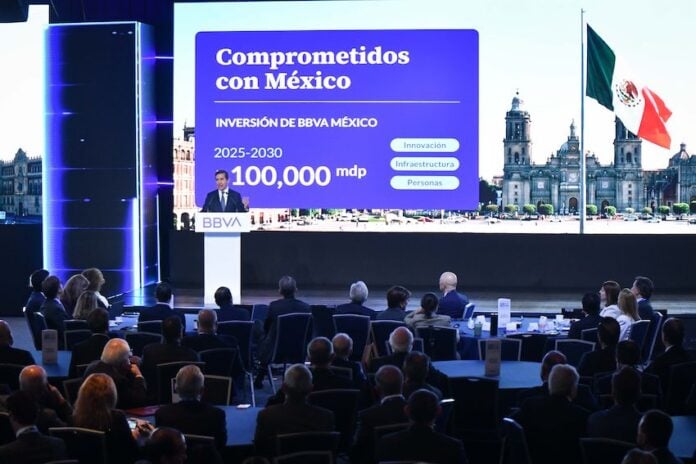
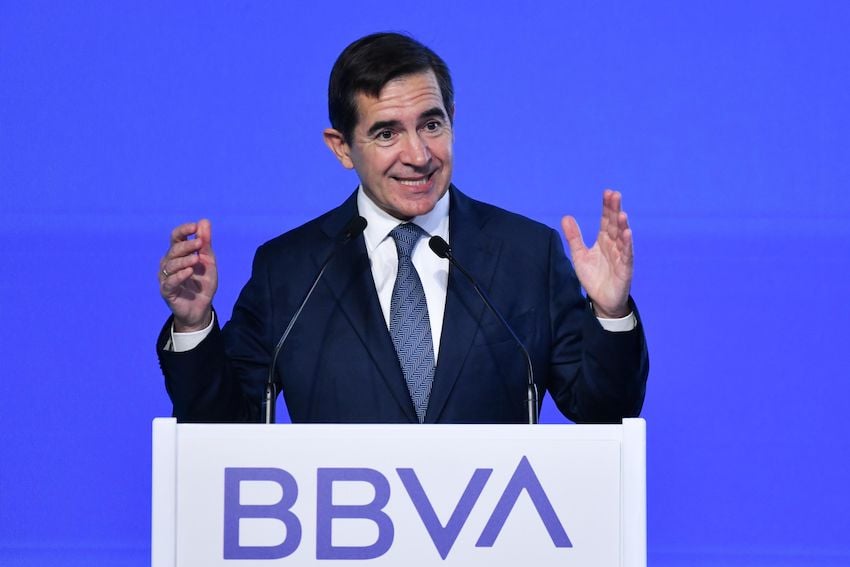
Carlos Torres Vila, president of BBVA Group, kicks off BBVA México's National Meeting of Regional Advisors in Mexico City on Tuesday.
Carlos Torres Vila, chairman of the Spanish bank BBVA, kicks off BBVA México's National Meeting of Regional Advisors in Mexico City on Tuesday. (Mario Jasso/Cuartoscuro)

Productivity in Mexico is lower now than it was 25 years ago, according to economist Santiago Levy, who asserted on Tuesday that the lack of productivity growth is the main reason why the Mexican economy hasn’t grown at a faster pace.

Levy, a non-resident senior fellow with the Global Economy and Development Program at Brookings Institution, a Washington, D.C.-based think tank, made his remarks at BBVA México’s National Meeting of Regional Advisors in Mexico City.

At the same event, Carlos Torres Vila, the chairman of BBVA, a multinational Spanish bank, declared that Mexico is in a favorable position to attract high levels of investment — despite the low productivity levels.

The BBVA meeting was held five days after the national statistics agency INEGI published preliminary data showing that the Mexican economy contracted 0.8% in the first quarter of 2026 compared to the previous three-month period. Annual growth in the period was just 0.2%.

In 2025, the Mexican economy grew just 0.8%, even as foreign direct investment and exports hit record highs and international tourist numbers increased more than 6%.

Levy: Productivity decline is the ‘tragedy of Mexico’

During his address at the BBVA event, Levy said that “in 25 years,” Mexico “hasn’t managed to increase its productivity.”

Santiago Levy
Santiago Levy described the decline in productivity as “the tragedy of Mexico.” (Mario Jasso/Cuartoscuro)

In fact, he added, productivity in Mexico today is lower than it was 25 years ago.

That assessment is largely supported by official data. BBVA said last October that “total factor productivity in Mexico has been negative for more than 30 years, subtracting an average of 0.5 percentage points from growth.”

“Economic growth has relied mainly on the accumulation of capital and materials, rather than on efficiency, innovation, or technological progress,” the bank added.

In Mexico City on Tuesday, Levy — a former vice president of the Inter-American Development Bank and ex-federal official who led the Mexican Social Security Institute between 2000 and 2005 — described the decline in productivity as “the tragedy of Mexico.”

Low productivity, he argued, is the main reason why the Mexican economy hasn’t expanded more quickly during times of macroeconomic stability supported by free trade agreements — including NAFTA and the USMCA — and the modernization of export sectors. Annual growth in Mexico was below 1% last year and below 2% in 2024, but the economy did expand more than 3% in 2023 and 2022.

Levy asserted that while some companies in Mexico — especially export-oriented ones that benefit from the USMCA — are very productive, many others have low levels of productivity. He said that most of those in the latter category are informal businesses, meaning that they don’t pay taxes and don’t provide benefits to their employees.

Mexico has a vast informal sector that employs more than 50% of Mexican workers. The informality rate increased 0.5 percentage points in the 12 months to March to reach 54.8%.

Citing his own calculations, Levy said that one peso invested in a formal sector company makes a 39% higher contribution to GDP than a peso invested in an informal business. If all the money invested in informal businesses over the past two decades had been invested in formal companies, productivity levels in Mexico today would be 27% higher, he asserted.

In addition, per capita income would be 17% higher, the economist said.

Levy pointed out that the proportion of formal sector workers has only declined five percentage points in the past two decades, and said that the number of informal businesses has grown in the same period.

According to BBVA, productivity in the United States “is driven by intangibles — software, R&D and highly skilled human capital — while in Mexico only 13.8% of workers have higher education, limiting productivity and perpetuating informality.”

“Overcoming this trap requires greater public and private investment, modern infrastructure, quality education, and a strategy that embraces innovation, digitalization, and artificial intelligence as engines of development,” the bank said.

Levy called for the construction of a national consensus in favor of gradual reforms to labor, tax and social protection policies, arguing that Mexico cannot achieve inclusive growth without tackling the divide between formal and informal workers.

Torres Vila: A time of ‘enormous opportunities’ 

In his opening address, Torres Vila declared that, “We live in a time of profound transformation” and “uncertainty,” but also a time of “enormous opportunities.”

Carlos Torres Vila
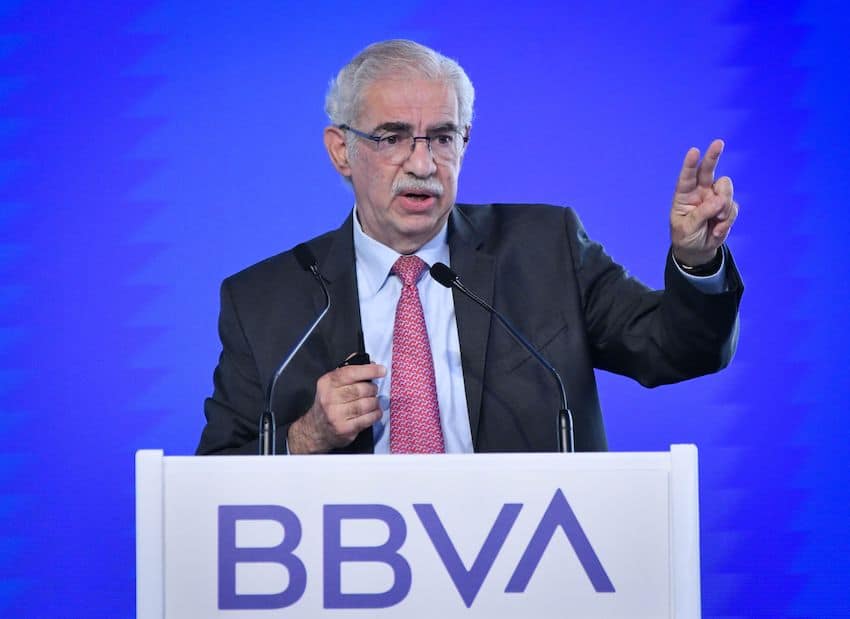
Torres Vila emphasized that Mexico has the potential to “strengthen its productive base.” (Mario Jasso/Cuartoscuro)

Mexico, he said, “has the conditions to attract investment, strengthen its productive base, further integrate into global value chains, and boost its growth potential.”

Torres Vila highlighted that more than 80% of Mexican exports enter the U.S. tariff-free, and said that Mexico has highly competitive labor costs. He also said that Mexico’s proximity to and economic integration with the United States, its industrial capacity, its macroeconomic stability and its talent are all significant advantages.

“All of this puts Mexico in a privileged position to harness the opportunities stemming from nearshoring and the restructuring of global value chains,” Torres Vila said.

He acknowledged the federal government’s efforts to attract investment via Plan México, the ambitious economic initiative whose goals include making Mexico the 10th largest economy in the world by 2030. Torres Vila noted that the plan also seeks to strengthen the domestic market, lift wages for workers and support sustainable and inclusive growth.

Among other remarks, the bank executive stressed that Mexico needs investment in infrastructure, innovation and technology in order to realize its potential. He asserted that “BBVA has the scale, technology, talent and commitment to help turn that potential into reality.”

“… We believe in Mexico, in its industrial capacity, in its talent, in its integration with North America, in its companies, in its potential and we want to continue being the bank that accompanies this growth,” Torres Vila said.

With reports from EFE and La Jornada 

Why did the Huasteca Potosina’s picturesque Tamul Waterfall dry up?

0
Tamul Waterfall dried up
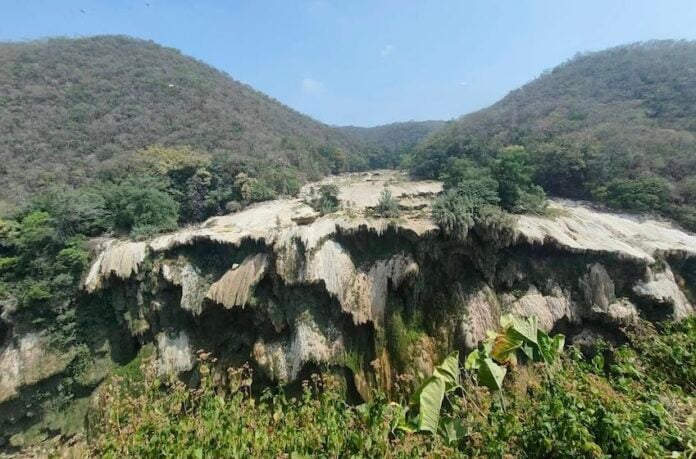
Despite authorities' best efforts to get the river that feeds the falls to reach the site, visitors over the holiday weekend saw mostly bare rock where heavy ribbons of water once plummeted. (Facebook)

Cascada de Tamul (Tamul Waterfall), one of the most visited tourist sites in the Huasteca Potosina region of east-central Mexico, has run practically dry amid extreme heat and disputed water use.

The situation has alarmed tour operators, government officials and nearby communities in San Luis Potosí and neighboring states.

Cascada de Tanul
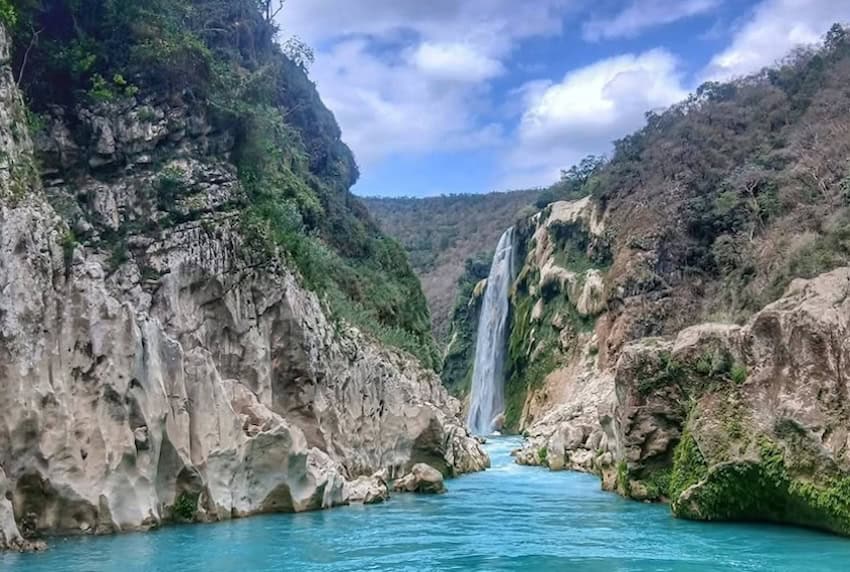
In its full glory, as seen here, the Tamul Waterfall is one of the region’s most important tourist attractions, and a source of wonder and awe for all who see it. (Huasteca Potosina/Facebook)

An impressive 105-meter (344-foot) waterfall located atop Santa María Canyon, Cascada de Tamul is one of the state’s top natural attractions and a pillar of the region’s ecotourism industry.

According to reports in the Mexican media, images shared on social media show large sections of exposed rock where visitors are used to seeing several thick ribbons of water pouring over the cliff.

Authorities and business leaders say the crisis worsened in April despite emergency steps implemented on April 5 to halt the extraction of water from the Gallinas River upstream of the falls.

Not long after that temporary halt ended, members of the Gallinas River Basin Committee, led by the National Water Commission (Conagua), agreed to a total suspension of extraction for irrigation. It began on April 27 in an effort to restore the river’s flow before the May 1 Labor Day holiday weekend in Mexico.

Hotelier and committee member Carlos Solares called the decision “unprecedented” and noted that Mexico’s National Water Law “stipulates that no river should be allowed to dry up and that all activities must be suspended.”

However, he also expressed disappointment and confusion about why the cascading waters did not return over the three-day holiday weekend. Rather than reaching the falls location, the river’s flow was absorbed into the rocky riverbed about a kilometer upstream, he said.

“On other occasions, when the agricultural suspension begins, the flow is recovered,” he lamented.

San Luis Potosí Gov. Ricardo Gallardo Cardona said floodgates had been closed in irrigation areas and warned that he would seek sanctions against farmers who may have taken more water than permitted.

“We are going to put pressure on the farmers to let the water flow,” he said.

In addition to the irrigation issues, there has been a heat wave in the Huasteca region, with temperatures climbing above 40 degrees Celsius (about 104 Fahrenheit) on multiple days. 

These high temperatures plus a moderate drought in the region are contributing to the river drying up rather than recovering.

Tourism operators say visitor numbers and the destination’s image have suffered, with ripple effects as far as Tamaulipas.

But tourists are arriving even after being warned there is no picturesque waterfall, drawn by river trips, stellar hikes and the gorgeous landscape. Hotel occupancy was still good over the three-day weekend, according to local tourism officials.

With reports from La Jornada, Potosí Noticias and El Universal

MND Local: The May Cultural Festival in Guadalajara, plus a new Architecture Walk

0
May Cultural Festival in Guadalajara
Guadalajara is alive with art, music and dance this month, thanks to the Festival Cultural de Mayo. (Festival Cultural de Mayo)

For those with the stamina to endure Guadalajara’s brutal seasonal heat, there can be rich rewards, starting with a blockbuster lineup for this year’s May Cultural Festival. A new Architecture Walk is also being unveiled in downtown Guadalajara, while trouble is brewing for a beloved animal shelter in Zapopan. 

The May Cultural Festival returns with an exciting lineup 

This month, Guadalajara offers an incredible array of cultural activities to suit a variety of tastes and budgets, thanks to the 2026 Festival Cultural de Mayo, which brings locals and visitors dozens of events spread out over three weeks that showcase modern dance, classical music, immersive art exhibitions, circuses and more. 

360 AllStars bring a high-energy circus-like atmosphere of music, artistry and spectacle to Guadalajara this month. (Matt Loncar/360 AllStars)

Featuring more than 400 artists from Mexico, Canada, Europe, Australia and beyond, performances will be held at 20 different venues around town, with many taking place at the iconic Teatro Degollado. Headlining shows include concerts by the Mariachi Women of Tecalitlán and by the New York-based Grammy-winning Attacca Quartet in the Guadalajara Cathedral, plus a dance performance by the Marie Chouinard Dance Company of Quebec.

Also highly anticipated are the 360 AllStars, who are making their Mexican debut at the festival. This spectacle, created by Australia-based Onyx Productions, is a reimagined, high-energy circus that combines music, artistry and athleticism inspired by urban street culture. The 360 All-Stars have sold out previous runs on Broadway, at the Sydney Opera House and in Edinburgh, Scotland. 

See the full program of events here, or visit the festival’s Instagram account for additional information.

Dates: May 7-29

Location: Events will take place at various locations around Guadalajara, with most in or near the historic center.

Cost: Some events are free. Paid event prices start at around 150 pesos.

Architectural Walk is inaugurated alongside Parque de la Revolución

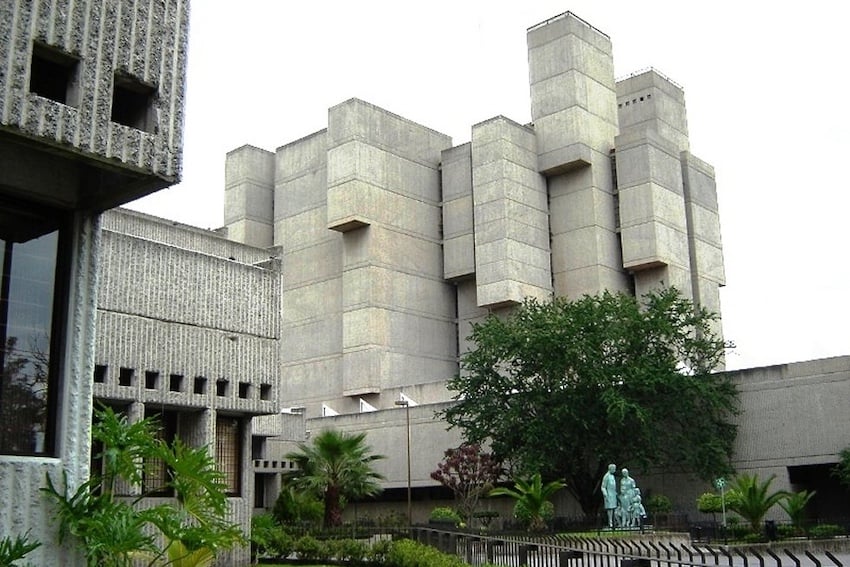
Guadalajara’s Alejandro Zohn was a master of brutalism. (Edplp)

In conjunction with the unveiling of major renovations to Parque de la Revolución (popularly known as Parque Rojo) last month, Guadalajara city officials also announced the creation of a new Architecture Walk on Marcos Castellanos Street.

Along the western side of Parque Rojo, Marcos Castellanos spans only three blocks and is bound by Avenida Juárez to the south and José María Morelos to the north. But within this short stretch sit several of the city’s most historically significant architectural landmarks.

At the south end is the handsome Barragán House, built in 1934 by the Pritzker Prize-winning architect Luis Barragán Morfín. Although the building has undergone several modifications over the years, it’s notable for a departure from the curved lines and rounded corners that characterized Barragán’s earlier work.

Additional works heading north along this walk include the Molina House, designed by architect Ignacio Díaz Morales, the Rogelio Rubio House, designed by Rafael Urzúa Arias and the brutalist, multi-use Alejandro Zohn Building. 

In launching the Architecture Walk, the city didn’t just rescue these historic gems from the dirt and graffiti that have plagued them in recent years. It also aims to position this area as an open-air museum for visitors, complementing the renewed Parque Rojo, which itself was designed by Luis Barragán and his brother, engineer Juan José Barragán Morfín, back in 1935.  

Zapopan city officials disrupt operations at a beloved local animal shelter

The shelter, food and care provided to 240 dogs by Refugio Buenos Chicos is being imperiled by local authorities in Zapopan. (Refugio Buenos Chicos)

After stories began circulating a few weeks ago about a real-life Cruella de Vil in the State of Mexico, it was a cause for alarm to hear that Zapopan’s municipal government has been making life very difficult lately for one of the city’s only reputable dog shelters. Despite having operated amicably in the area for years, Refugio Buenos Chicos (RBC) now faces an uncertain future.

According to Telediario, the Zapopan city council issued an inspection order for the closure of the RBC animal shelter, which would put the homeless dogs living there at imminent risk. The municipal administration initiated this process after receiving an anonymous complaint via social media alleging repeated burning of materials, a charge the shelter’s director, Fabiola Ávila, vehemently denies. 

Refugio Buenos Chicos has been operating in the area for at least 15 years and currently provides 240 dogs with shelter, food and veterinary care. According to the shelter’s lawyers, the facility submitted a formal application to the city for an operating license back in January 2026, but the application has yet to receive a response. 

Subsequently, local authorities have used the shelter’s lack of legal authorization as a cudgel to threaten it with closure, despite their own culpability for this situation. While there are still no definitive plans to close Refugio Buenos Chicos, city inspectors have moved to restrict access to the facility, preventing veterinarians from attending sick animals there.

Meanwhile, the shelter’s legal team is preparing its response to prevent permanent closure and avoid leaving hundreds of dogs homeless. Their primary objective now is to compel the city to expedite the issuance of an operating license.

MND Writer Dawn Stoner is reporting from Guadalajara.

The MND Peso Index™: Is the Mexican peso over or undervalued against the US dollar?

53
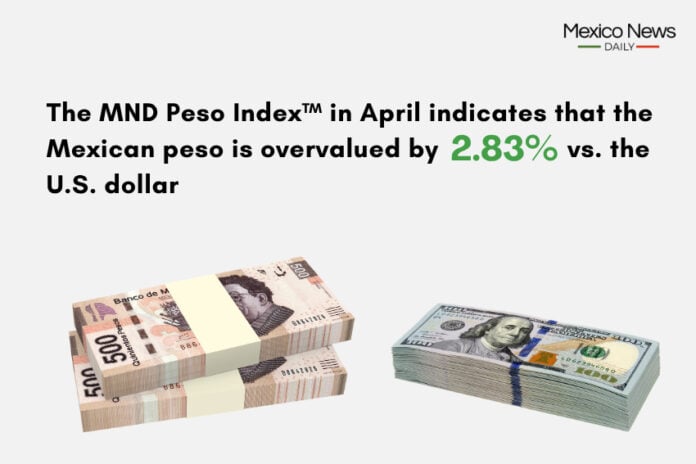
Our headline finding for April 2026 suggests that the peso was overvalued by just under 3% against the dollar. (Mexico News Daily)

THE MND PESO INDEX™

Tracking the exchange rate people actually experience

MND Intelligence · Inaugural edition

Welcome to the inaugural edition of the MND Peso Index™, the latest addition to the MND Intelligence™ suite of data products from Mexico News Daily. The MND Peso Index™ joins the already-published inaugural editions of the MND Sheinbaum Index™ and the MND Expat Safety Perceptions Index™.

Each month, the MND Peso Index™ measures whether the Mexican peso is overvalued or undervalued against the US dollar by comparing the prices of 20 goods and services in Mexico and Dallas, Texas. Our headline finding for April 2026 suggests that the peso was overvalued by just under 3% against the dollar.

Read on for the full MND Peso Index™ methodology, rationale and findings.

What is the MND Peso Index™?

The MND Peso Index™ is a monthly economic indicator developed by Mexico News Daily that measures whether the Mexican peso is overvalued or undervalued against the US dollar. It does this by comparing the Mexican and U.S. prices of 20 goods and services — from a Big Mac to a Costco membership to a seasonal item that will change every month. The Mexican prices are collected across several cities in Mexico, including Mexico City, Guadalajara, Monterrey and León. The U.S. prices are from Dallas, Texas. They are collected online on the same date each month.

We chose Dallas as our U.S. benchmark because cities on the coasts — such as New York, Los Angeles and San Francisco — tend to have significantly higher prices than the rest of the country. Dallas, by contrast, offers a more representative snapshot of everyday pricing in the United States.

Think of the MND Peso Index™ as a real-world purchasing power check: are the same products accurately priced on both sides of the border?

Why did we develop the MND Peso Index™?

The Mexican peso is one of the world’s most traded currencies, yet its exchange rate against the US dollar does not always move in line with what economic theory would predict. Interest rates, inflation differentials and other standard indicators sometimes point in one direction — while the peso moves in another.

The MND Peso Index™ takes a different approach. Rather than relying on financial market signals, it looks at what real people actually pay for real products in Mexico and the United States — and asks a simple question: does the current USD:MXN exchange rate make sense?

The answer gives readers a ground-level sense of where the exchange rate “should be,” based on actual purchasing power rather than traditional currency-movement indicators.

That said, the USD:MXN exchange rate is influenced by a wide range of factors — capital flows, political risk, U.S. Federal Reserve policy, oil prices and investor sentiment, among others. An MND Peso Index™ result showing that the Mexican peso is 10% overvalued or undervalued, for example, does not mean the peso is necessarily set to appreciate or depreciate.

What it does tell us is whether a basket of everyday goods and services costs more or less in Mexico in dollar terms than in Dallas — and that is a meaningful data point worth tracking every month.

How does the MND Peso Index™ work?

For each of the 20 items, the Mexico price in pesos is divided by the Dallas price in dollars. The result is called an implied exchange rate — the rate at which that particular item would cost exactly the same in both cities.

For example, if a product costs 180 pesos in Mexico and US $10 in Dallas, its implied exchange rate is 18.00. That means at 18 pesos to the dollar, the price is identical in both cities.

Each of the 20 items produces its own implied rate. The simple average of all 20 is called the MND Peso Rate. The MND Peso Rate in April was 17.85. That figure is then compared to the official Bank of Mexico (Banxico) exchange rate on the date prices were collected.

If the MND Peso Rate is higher than the Banxico rate, prices in Mexico are higher on average, relative to Dallas, than the official exchange rate would suggest — meaning the peso is overvalued. If the MND Peso Rate is lower than the Banxico rate, prices in Mexico City are lower on average relative to Dallas — meaning the peso is undervalued.

What did the MND Peso Index™ tell us in April?

In April 2026, the MND Peso Index™ implies that the current exchange rate slightly overvalues the Mexican peso.

The Mexican and Dallas prices were collected on April 23, 2026. The mean implied exchange rate across all 20 items — the MND Peso Rate — came in at 17.85 pesos per dollar, compared to the Banxico spot rate of 17.36 on the same date.

The gap between those two figures indicates that the peso was modestly overvalued on April 23.

What’s cheaper and more expensive in Mexico?

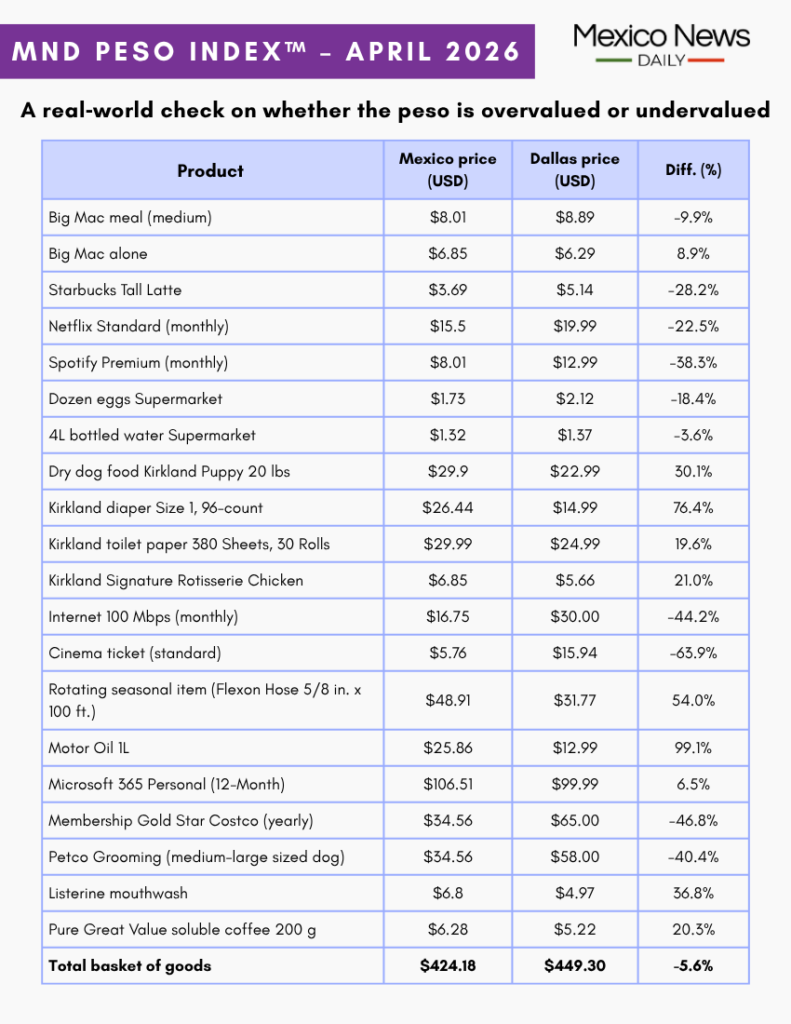
Of the 20 items in the April basket, 10 were cheaper in Mexico than in Dallas and 10 were more expensive — an equal split. While the basket split evenly, the items that were more expensive in Mexico were pricier by a wide enough margin to push the index to a 2.83% overvaluation of the peso.

The full breakdown is in the table below.

(Mexico News Daily)

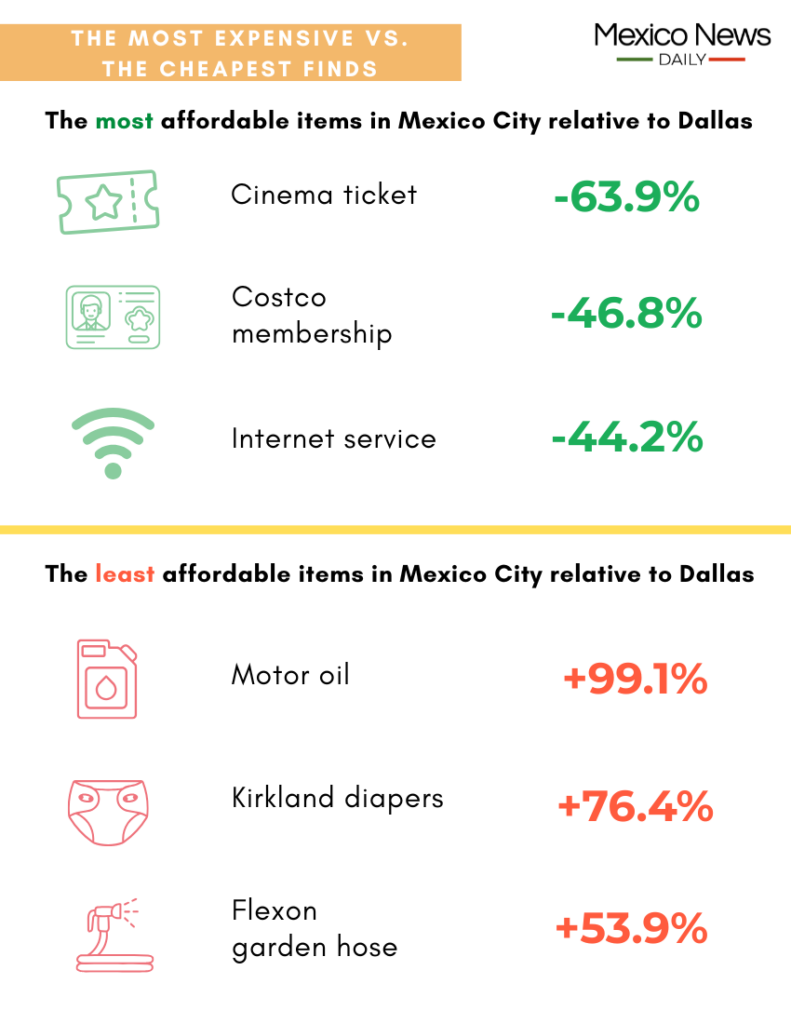
The most affordable items in Mexico relative to Dallas were in services and memberships. The cinema ticket was the cheapest item (-63.9%) relative to Dallas, followed by the Costco Gold Star membership (-46.8%) and internet service (-44.2%) — reflecting Mexico’s comparatively low cost of domestic services. Petco grooming (-40.4%) and Spotify Premium (-38.4%) also came in significantly cheaper in Mexico.

On the other side, branded consumer goods carried the steepest premiums. Castrol motor oil (+99.1%), Kirkland diapers (+76.4%), and the Flexon garden hose (+53.9%) — the seasonal item for April — were the three most expensive items in Mexico relative to Dallas. Listerine mouthwash (+36.8%) and Kirkland dog food (+30.0%) also stood out as notably pricier.

The full basket cost 7,363.83 pesos (US $424.18) in Mexico compared to $449.30 in Dallas — about 5.6% cheaper overall in Mexico. However, this headline figure can be misleading as simple totals are heavily influenced by a handful of high-priced items, which can skew the comparison.

The MND Peso Index™ avoids this distortion by giving each item equal weight. Rather than asking “how much does everything cost in total?”, it asks “at what exchange rate would each item cost the same?” — and then averages those answers. That is why the index shows a 2.83% peso overvaluation even though the raw basket is cheaper in Mexico.

The MND Peso Index™ is not a cost-of-living index: it is a currency valuation tool, designed to measure where the peso should be, not what it costs to live in Mexico.

(Mexico News Daily)

* Price sources: Mexico prices were collected from the websites and apps of Walmart México, Costco México, AutoZone México, Telmex, Cinépolis, Petco México, and the Mexican outlets of McDonald’s, Starbucks, Netflix, Spotify and Microsoft. Dallas prices were collected from their U.S. equivalents. The Banxico Fix rate of 17.36 published on April 23, 2026 was used as the official exchange rate reference.

Mexico News Daily 

Mexico Infrastructure Partners announces plan to invest US $12B across key sectors

1
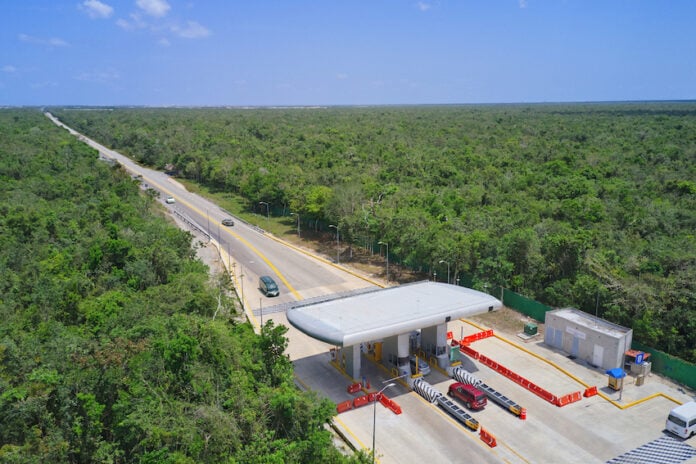
The Mayab Highway connecting Mérida and Playa del Carmen
Mexico Infrastructure Partners has an extensive portfolio of highway investments in Mexico, including the Mayab Highway connecting Mérida and Playa del Carmen. (MIP)

Mexican investment management company Mexico Infrastructure Partners (MIP Real Assets) is seeking to invest more than US $12 billion in various projects in Mexico, including renewable energy and highway projects.

The Bloomberg news agency reported the plan on Tuesday and MIP Real Assets subsequently confirmed its proposed investment on LinkedIn.

Bloomberg reported that MIP Real Assets is “working to raise money, including about $6 billion in equity and $6 billion in debt, for its five-year pipeline of projects.”

It said that the company is “lining up investments from major institutional investors, sovereign wealth funds and Mexico’s pension funds.”

MIP Real Assets confirmed on LinkedIn that it is planning to invest more than $12 billion in renewable energy, highways, digital infrastructure and midstream (oil and gas) projects.

“At MIP Real Assets, we are deeply committed to Mexico’s long-term development through high-quality investments in energy and infrastructure,” the company said.

Bloomberg reported that around $8 billion of the firm’s planned investment would go to renewable energy projects. It said that some $2.5 billion would go to highway projects, $1 billion to midstream opportunities and $500 million to digital infrastructure.

Bloomberg described the planned investment as “one of the most ambitious private-sector programs yet” in Mexico as “President Claudia Sheinbaum pushes for more development.”

The publication of Bloomberg’s report came the same day that the federal government announced a package of measures within the Plan México framework to unlock and accelerate investments, especially large and strategic ones.

The government is eager to attract investment across a range of sectors, including energy, but rules that favor state-owned companies such as Pemex and the Federal Electricity Commission (CFE) discourage rather than encourage private and foreign participation.

Earlier this year, the Office of the United States Trade Representative strongly criticized Mexico’s energy sector framework, raising a range of concerns that it says disadvantage U.S. energy companies.

MIP: ‘We have the projects, we have the partners and we have the capital’

On its website, Mexico Infrastructure Partners describes itself as a “leading independent energy and infrastructure investment manager in Latin America,” and says it owns and operates “$6.6B+ in equity AUM [assets under management] across 37 assets in power, transport, digital, logistics, water and social platforms.”

The company helped structure the Mexican government’s $6 billion 2023 purchase of 13 power plants from Spanish energy company Iberdrola.

Regarding MIP’s plans for the next five years, Guillermo Fonseca, a partner at the firm, said in a statement on Tuesday that, “We have the projects, we have the partners and we have the capital.”

Bloomberg noted that the company “has already committed more than $1 billion to a deal to acquire a highway from conglomerate Grupo México and the purchase of a stake in two wind farms from Spain’s Acciona Energia and a U.S. portfolio.”

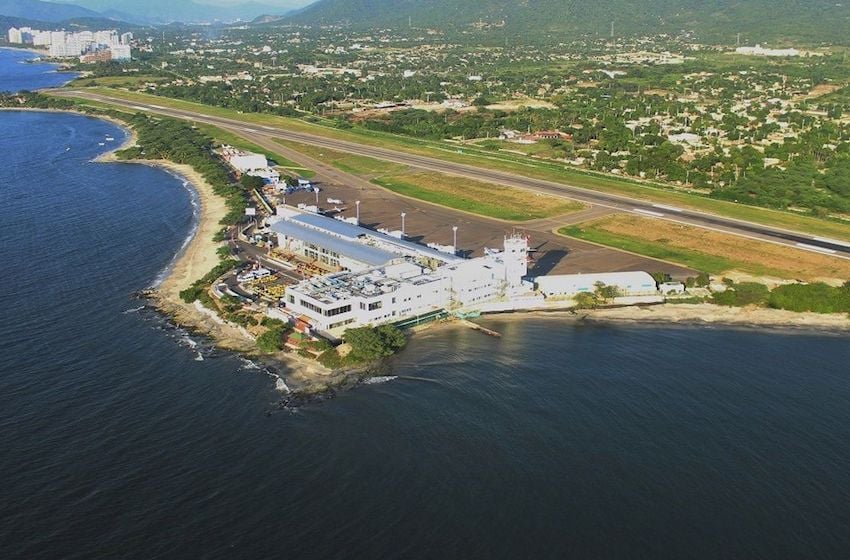
Simón Bolívar International Airport
MIP also operates in Colombia (seen here is the Simón Bolívar International Airport) and Peru. (MIP)

Bloomberg also reported that “MIP said it will invest in new power generation projects” with the CFE, which has a guaranteed 54% share of the national electricity market.

“Renewable energy projects will include new wind and solar installations as well as the purchase of operating assets from developers,” Bloomberg wrote.

“Highway investments will add around 500 kilometers (310 miles) of new construction and 200 kilometers of acquisitions in the Bajío region and the Mexico City-León corridor,” it added.

Bloomberg cited MIP — a Mexico City-based firm — as saying that “more announcements will be made in the coming months.”

With reports from Bloomberg

El Jalapeño: Los Cabos celebrates the opening of its 10,000th pharmacy 

1
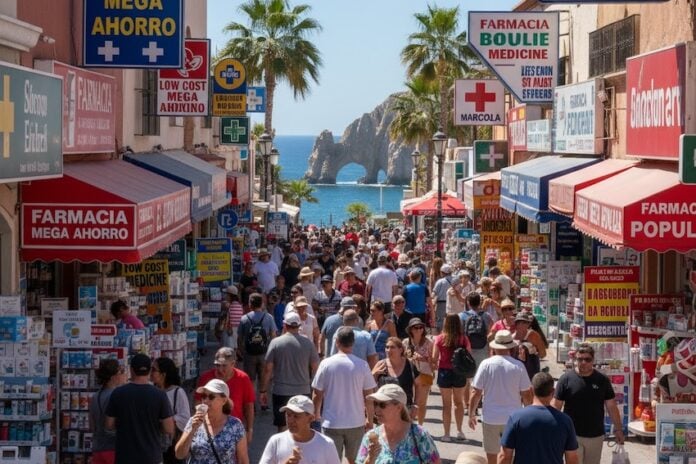
There's definitely room here for a few more pharmacies, if you really squint. (This image generated by AI)

All stories in El Jalapeño are satire and not real news.

LOS CABOS — “Ya abrimos” reads the sign over the entrance to Farmacia Alberto, which recently opened on a downtown block of Blvd. Lázaro Cárdenas in Cabo San Lucas. 

It’s the 10,000th pharmacy to open in Los Cabos — all but one in the last 25 years — and the 7,843rd in Cabo San Lucas, a fact being celebrated by locals as a sign of a strong business economy.

PDC Pharmacu
This one, of course, is different from the other 9,999 pharmacies in town. (Farmacias de Mexico)

But Alberto “Beto” González González, the owner of the new Farmacia Alberto, isn’t worried in the slightest, even though there are six competing pharmacies on his block alone. 

“We have all the things tourists need, like Viagra and Cialis and condoms and sunscreen,” he said, “and none of the things they don’t: like actual medications for common ailments or illnesses.”

He seemed disappointed when assembled reporters didn’t want to buy anything, but was sanguine about his immediate prospects, given the three cruise ships scheduled to arrive later that day.

An unnamed city official, when asked whether this uniformity of options was perhaps becoming a bit ridiculous, simply smiled and shrugged before asking if residents would rather have more knockoff jewelry stores and “amigo massage” parlors.

The latter, named for the “Hey amigo, want a massage?” pitch given by mostly female employees, is currently the second most popular business establishment in Los Cabos, with 3,652 of them at last count. Grocery stores, of which there was also only one 25 years ago, now rank third at 896.

El Jalapeño is a satirical news outlet. Nothing in this article should be treated as real news or legitimate information. Check out our Jalapeño archive here!

Got an idea for a Jalapeño article? Email us with your suggestions!

Sheinbaum criticizes opposition for meeting with ‘far-right’ Madrid mayor: Wednesday’s mañanera recapped

5
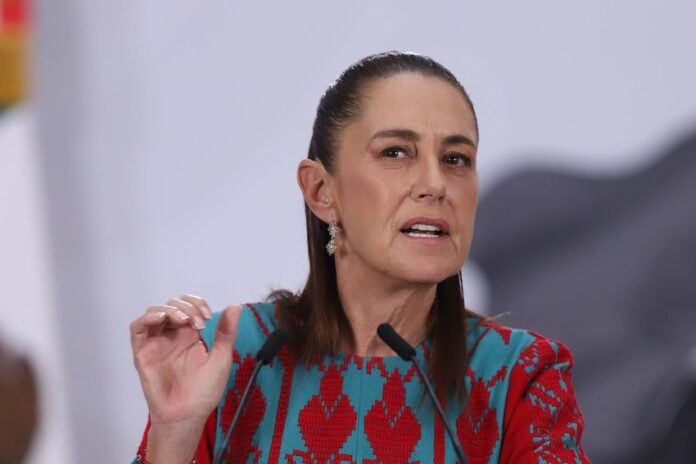
Claudia Sheinbaum making a critical face
President Sheinbaum and Díaz Ayuso do not have plans to meet while the Spanish mayor visits Mexico. (Graciela López/Cuartoscuro)

Sheinbaum’s mañanera in 60 seconds

  • 🇪🇸 Madrid mayor’s Mexico visit: Sheinbaum criticized opposition politicians for meeting with Isabel Díaz Ayuso, calling her a “far-right” representative and accusing the opposition of sharing her views, including opposition to welfare programs and a favorable stance toward the Spanish Conquest.
  • 🏛️ Rocha’s leave was his own call: Sheinbaum denied having asked Sinaloa Gov. Rubén Rocha Moya to step aside, saying the governor — who is accused of colluding with the Sinaloa Cartel — chose to take leave voluntarily to avoid affecting Sinaloa and the 4T movement. She confirmed she will meet with interim Governor Yeraldine Bonilla Valverde, but no date has been set.
  • ⚖️ Rocha case: Mexico demands proof: The Foreign Affairs Ministry sent a diplomatic note to the U.S. Department of Justice on Tuesday requesting hard evidence to support drug trafficking allegations against Rocha and nine other officials. Sheinbaum maintains that the published U.S. indictment lacks sufficient proof for arrest or extradition.

Why today’s mañanera matters

At her Wednesday morning press conference, President Sheinbaum commented on two of the most topical issues in Mexico: the visit of the Mayor of Madrid and the drug trafficking accusations against Sinaloa Governor Rubén Rocha Moya, who is currently on leave.

Sheinbaum seized on the opportunity to criticize Mexican opposition politicians for meeting with Isabel Díaz Ayuso, who represents and leads the conservative People’s Party of the Community of Madrid. She also emphasized the ideological differences between the political movement she leads — the “fourth transformation” or 4T — and the Mexican opposition.

With regard to the case against Rocha — a political ally of the president — Sheinbaum reiterated her view that the U.S. allegations are not supported by hard proof in the superseding indictment published online last week. She continues to steadfastly defend the 4T movement, which includes the ruling Morena party, and Mexican sovereignty, declaring that it is up to Mexican authorities to determine whether there is sufficient evidence to arrest Rocha and nine other Mexicans accused in the same indictment.

Sheinbaum comments on Madrid mayor’s visit to Mexico 

After asking reporters what the first name of the mayor of Madrid is, Sheinbaum declared that Díaz Ayuso — who is currently visiting Mexico — is “one of the representatives of the far-right in Spain.”

“What statements has she made, for example?” the president asked before highlighting remarks the Madrid mayor made about Mexico’s welfare programs.

“[She has said] ‘How are they going to give money to the people?” Sheinbaum said.

“What other statements has she made? ‘We have to acknowledge Hernán Cortés. How is it possible that Hernán Cortés isn’t recognized  — these Indians needed to be civilized,'” she said, purporting to paraphrase Díaz Ayuso.

Sheinbaum said that the Madrid mayor “has the right to come to Mexico,” but added: “That doesn’t mean there is no debate about what she says.”

“We don’t close the door to anyone. She has the right to be here, but it’s important to know what she says, who she meets with and who brought her [to Mexico],” she said.

“… [Mexican] mayors and governors from the opposition are showing off photos with her. What does that mean? That they think like her,” Sheinbaum said, referring to political leaders such as Governor Teré Jimenez of Aguascalientes and Alessandra Rojo de la Vega, mayor of the Mexico City borough of Cuauhtémoc.

“In other words, [they support] the recognition of Hernán Cortés, [they think] that there shouldn’t be welfare programs, that the poor are poor because they don’t work,” she said.

“That’s the view [they have], the view of conservatism here,” Sheinbaum said.

Madrid mayor’s pro-Conquest rhetoric sours her visit to Mexico for many

The president asserted that Mexican opposition politicians brought Díaz Ayuso to Mexico as their “guest” in order “to promote what she thinks.”

“And they think that this is the best thing for Mexico. It’s a national project [they’re proposing] — that there aren’t welfare programs, that we recognize Hernán Cortés, among other things,” Sheinbaum said.

“… There is another national project that at least 70% of Mexicans support,” the president said, referring to the “fourth transformation” (4T) political project she leads.

Sheinbaum: Rocha made his own decision to take leave as governor 

Sheinbaum indicated that she would meet with the interim Governor of Sinaloa, Yeraldine Bonilla Valverde, who was sworn in last Saturday after Rubén Rocha Moya stepped down temporarily while the Federal Attorney General’s Office investigates U.S. prosecutors’ allegations that he colluded with the Sinaloa Cartel in a drug trafficking conspiracy.

“We haven’t agreed on a time, but of course we have to continue helping the people of Sinaloa and the interim governor that the [state] Congress appointed,” she said.

Sheinbaum rejected the suggestion that she asked Rocha to step down, stressing that the governor made his own decision to take leave.

She acknowledged Rocha’s stated rationale for his decision.

“He said, ‘I’m requesting leave while the investigation continues because I don’t want to affect the people of Sinaloa or the [4T] movement to which I belong,” Sheinbaum said.

“It’s a decision he took,” she said before noting that the mayor of Culiacán — who U.S. prosecutors also accuse of drug trafficking — also took leave.

“… It’s a matter for them, it’s not a matter for the president,” Sheinbaum said.

SRE sends diplomatic note to US seeking ‘proof’ in Rocha case 

Sheinbaum reiterated that Mexican authorities have asked the U.S. Department of Justice to provide “proof” that Rocha and nine other Sinaloa-based current and former officials engaged in drug trafficking in collusion with the Sinaloa Cartel. The president last week endorsed the view of the Federal Attorney General’s Office and the Ministry of Foreign Affairs (SRE) that there is a lack of hard proof to detain Rocha and the other suspects for the purpose of extradition to the U.S.

On Wednesday morning, she said that view is “perfectly rational.”

“Give us proof because there is no proof,” remarked Sheinabaum, who has said that without proof Mexican authorities cannot arrest or extradite the 10 suspects.

She said that the SRE on Tuesday sent a diplomatic note to the United States to request that the U.S. Attorney’s Office in the Southern District of New York provide proof to Mexico to support the accusations against Rocha and the other nine defendants.

“What proof do they have? Because what they published is a document of what someone said, with a page … with a handwritten note that says Juanito — 30,000 pesos,” Sheinbaum said, referring to the U.S. indictment.

“That’s how it is,” she said.

“This is public. So what do we say as a government — proof,” Sheinbaum said.

By Mexico News Daily chief staff writer Peter Davies (peter.davies@mexiconewsdaily.com)