Home Blog Page 300

The right Puerto Vallarta bar for every personality

2
A barman makes cocktails in a green-lit bar, one of puerta vallarta bars best spots.
Party animal, suave cocktail lover or sun-seeking lounge lizard? There's Puerto Vallarta bar for you.(El Colibrí/Instagram)

Puerto Vallarta, the sun-drenched gem of Mexico’s Pacific coast, has long been a haven for free spirits, beach bums, bon vivants and cocktail connoisseurs. But with so many watering holes dotting the Malecón, Zona Romántica and beyond, how are you supposed to know where you should wet your whistle?

Fear not, thirsty traveler. Whether you’re a laid-back beer sipper or a feather boa-wearing firecracker, there’s a bar in Puerto Vallarta with your name on it. Here’s your guide to the right Puerto Vallarta bar for every personality.

For the social surfer: El Solar

If your perfect evening involves kicking off the flip-flops, letting your sunburn cool in the sea breeze and sipping something casual while digging your toes in the sand, welcome to your spirit bar. El Solar is where laid-back meets epic sunsets and just a touch of fancy. DJs spin, the cocktails are shockingly well-crafted for a beach bar and the sunsets are electric. Order a watermelon mezcalita and toast to the good life — barefoot, of course.

For the fancy but un cocktail snob: The Tasting Room

You read Difford’s Guide and you once corrected a bartender on their stirred-not-shaken technique. We see you. And we raise you The Tasting Room, a sleek, intimate cocktail den in the heart of Cinco de Diciembre. With small-batch spirits and bartenders who take their craft seriously, this is where the cocktail elite gather.

For the stylish introvert: El Colibrí

It’s giving “Parisian speakeasy meets Mexican jungle.” With its low tables and banquette seating, moody lighting and twinkling garden courtyard, El Colibrí feels like a secret, even when it’s buzzing. Perfect for quiet flirts, intimate conversations and sipping a sexy cocktail— looking at you Sierra Sour with Raicilla, hibiscus wine and fig. The drinks are botanical, the vibe is mysterious and no one will force you to dance. Unless you want to.

For the after-hours dance fiend: Doberman Bar


View this post on Instagram


A post shared by Doberman Pv (@doberman_bar_pv)

If your night doesn’t really begin until midnight and you’re always chasing the next beat, Doberman Bar is your nocturnal playground. This moody, divey-but-not-dirty gem in Cinco de Diciembre is where red lights glow, the industrial vibes hit just right and the music pulses into the early morning. It’s got a loyal local following, a refreshingly unpretentious crowd and an after-3 a.m. closing time — perfect for dancing ‘til the sweat dries. Just bring your stamina and a decent sense of direction for the inevitable 4 a.m. taco run.

For the neighborhood gossip: Bar La Playa


View this post on Instagram


A post shared by Bar La Playa (@barlaplaya_pv)

 Located just off the Malecón, Bar La Playa is where you go when you want good drinks and better people-watching. The bartenders? Friendly and fabulous. The regulars? A rotating cast of locals, foreign residents and tourists with stories you’ll be repeating at brunch. It’s casual but clever, with cold beer, strong margaritas and a street-front perch that’s basically a front-row seat to Vallarta’s ongoing parade of characters.

For the chill night owl: El Soñador


View this post on Instagram


A post shared by El Soñador Bar (@elsonadorbar)

Part dive bar, part secret loft lounge, El Soñador is the kind of place you wander into at 11 p.m. and end up staying ’til last call. Downstairs, it’s all big open windows, a well-worn pool table and casual street views that make for prime people-watching between turns. Upstairs? A cozy, moody loft with dim lighting, friendly bartenders and a come-as-you-are crowd that prefers conversation over chaos. It’s like a sports bar for people who hate sports bars — no blaring TVs, no rowdy bros, just laid-back energy and the comforting clack of billiard balls. Perfect for low-key nights that still feel like something’s happening.

For the life of the party: Mr. Flamingo


View this post on Instagram


A post shared by Mr. Flamingo PV (@mrflamingopv)

Let’s not pretend. You came to dance on the tables, flirt shamelessly and lose your voice before midnight. Mr. Flamingo is where inhibitions go to die and 90s throwbacks go to live their best life. Located at a buzzing corner of the Zona Romantica, this open-air bar is all glitter, sweat and joy. Order a bucket of beers, make 10 new friends and don’t ask what time it is as you start dancing in the street. No one here knows—or cares.

For the posh poolsider: Mantamar Beach Club


View this post on Instagram


A post shared by Mantamar Beach Club (@mantamarbc)

Are you the type who plans your swimsuit and your cocktail? You, darling, belong at Mantamar. This upscale beach club is a whole vibe — think infinity pools, shirtless DJs, rainbow floaties and rosé all day. It’s where PV’s beautiful people gather to tan strategically, sip passionfruit margaritas and pretend they’re not watching you back. Come early, stay late and don’t forget your waterproof phone case. There will be selfies.

For the sassy sweet tooth: Blondies Cocktail & Slush Bar


View this post on Instagram


A post shared by Blondies PV (@blondiespvbar)

Equal parts cheeky and chill, Blondies is your go-to for frozen drinks with a wink. This slushie bar serves icy concoctions like “The platinum Blondie” or “The strawberry Blondie.” There’s a street-facing window if you want to slurp and stroll, but the second story is where the magic happens. It gives tropical ’90s comic book nostalgia. Come thirsty and in the mood to chat.

Final sip

Puerto Vallarta may be a small city, but its bar scene is big on personality. Whether you’re sipping mezcal in the sand, shaking it at 2 a.m. or debating the nuances of vermouth on a rooftop, this town has a pour — and a place — for everyone.

Now go forth, find your bar twin and drink responsibly. Or at least fabulously.

Meagan Drillinger is a New York native who has spent the past 15 years traveling around and writing about Mexico. While she’s on the road for assignments most of the time, Puerto Vallarta is her home base. Follow her travels on Instagram at @drillinjourneys or through her blog at drillinjourneys.com

Fishing Tournaments in Los Cabos in 2025

0
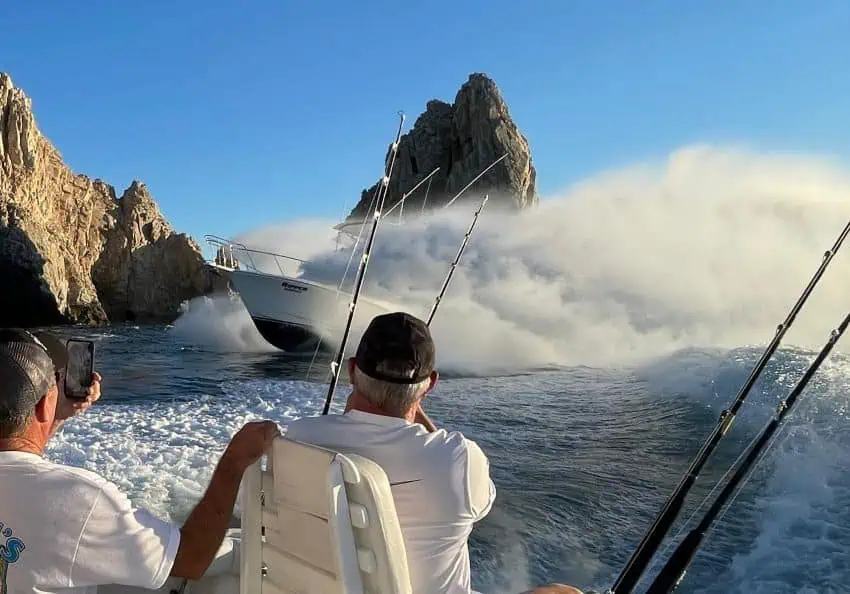
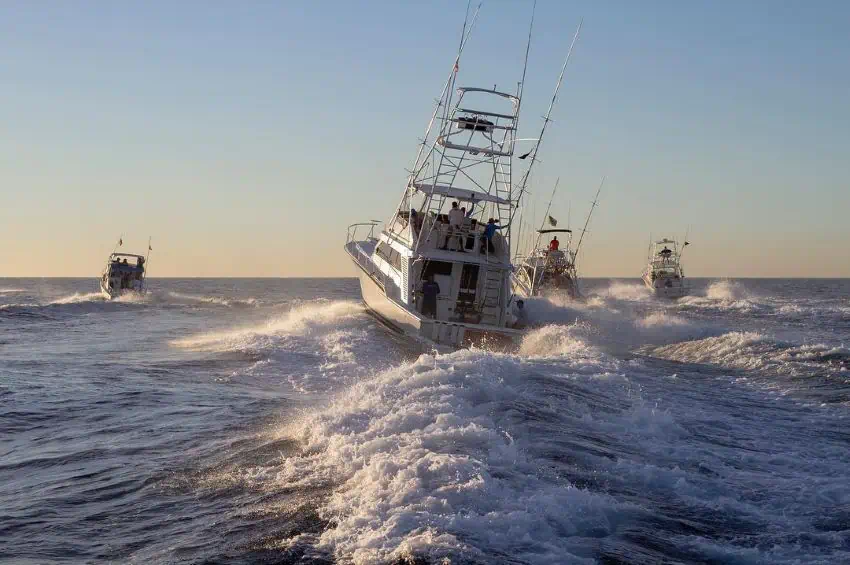
The start of the 2024 Bisbee’s Black and Blue in Cabo San Lucas
It's fishing season in Los Cabos and that means big, big prizes can be won. (bigrocktournament/Instagram)

Los Cabos isn’t the only place where fishermen and women can haul in catches worth millions of dollars. The title “world’s richest fishing tournament” is traditionally given to Bisbee’s Black and Blue, Los Cabos’ biggest event for over 40 years. However, the White Marlin Open in Ocean City, Maryland is competitive with similar purses. Where no other destination comes close to Los Cabos is the number of tournaments with million-dollar-plus prizes: there will be at least four this year.

It is worth noting that almost all local big-money tournaments are held in Cabo San Lucas, except for Bisbee’s East Cape Offshore, which is based in Buena Vista. For those interested in participating or at least keeping up with the action, here’s the tournament schedule for 2025.

Pelagic Triple Crown of Fishing Tournament 

(Pelagic Gear/Instagram)

Water sports apparel giant Pelagic returns to host this annual season kick-off, after the event was canceled in 2024. It’s a two-day team fishing competition (six anglers per team maximum) that targets billfish like black, blue, and striped marlin; and game fish such as tuna, wahoo, and dorado. Base entry is US $4,000 per team, with $93,000 across the board for all jackpots and challenges; the highest figure ever for this event. The purse exceeded $400,000 in 2023 and should easily top half a million this year. 

  • Dates: June 19 – 22
  • Location: Cabo San Lucas 
  • Cost: $4,000 base entry per team, $93,000 across the board

East Cape Dorado Shootout 

(Van Wormer/Instagram)

This is one of the largest regional fishing tournaments, with an average turnout of 130 teams each year. What makes it so popular? In previous years, the opportunity to catch the largest dorado (aka mahi mahi or dolphinfish) during the one-day tournament and win a brand new, fully-loaded 4×4 Volkswagen Amarok. Whether that’s the case this year has not yet been announced, but cash and prizes above half a million dollars — a record for this event — are expected. Usually, over US $50,000 worth of items are also raffled off at the post-tournament awards ceremony.

  • Dates: July 19
  • Location: Los Barriles, East Cape
  • Cost: Last year’s entry was US $700 per team. TBA for 2025.

Ladies Only Fishing Tournament at Palmas de Cortez

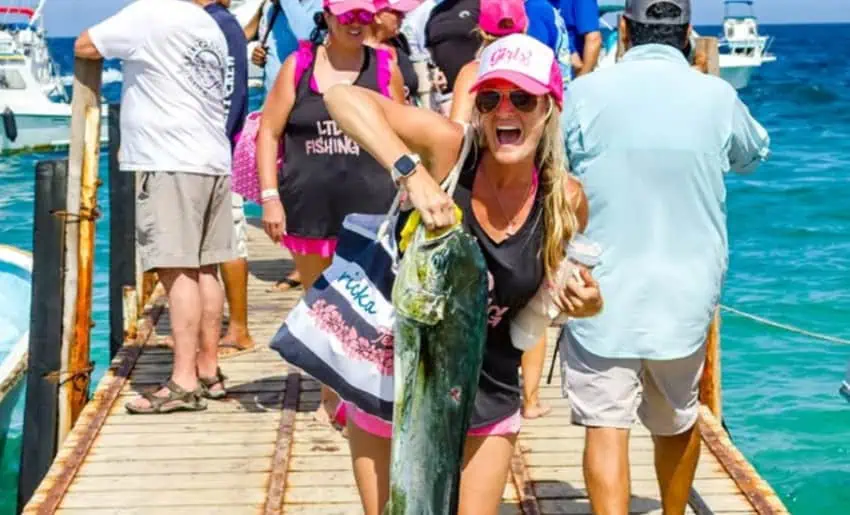
There are no fishing widows at the Ladies Only Fishing Tournament in Los Barriles—only fishing widowers. (Palmas de Cortez)

The name is accurate. Only women can compete in this annual East Cape fishing tournament (although captains and crew may be men). Information other than the date has not yet been released for 2025. However, since its inception in 2019, this tournament has been a popular summer feature. Points are traditionally given based on the type of fish caught: 200 points for catch-and-release billfish, 100 for tuna, dorado, wahoo, roosterfish (also catch-and-release), amberjack, and crevalle jack.

  • Dates: July 26
  • Location: Los Barriles, East Cape
  • Cost: Last year’s entry was US $300 per team. TBA for 2025.

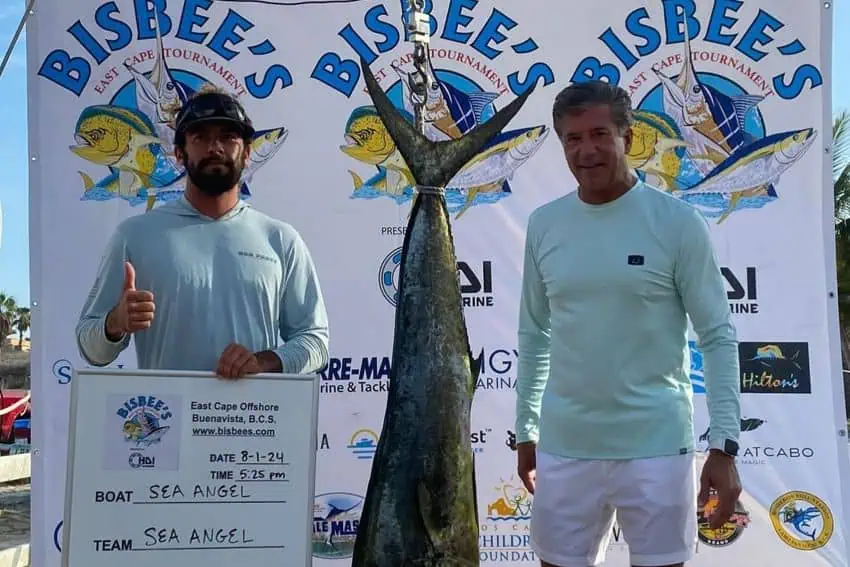
Bisbee’s East Cape Offshore

This 634-pound black marlin clinched first place in the 2024 Bisbee’s Black & Blue. (Bisbee’s Tournaments and busybee_k91/Instagram)

The first of this year’s major money events — last year, 80 teams competed for $1,675,000 — and the first of Bisbee’s trio of tournaments in 2025. Black and blue marlin are prioritized, earning more release points (300) than billfish like striped marlin, sailfish, and spearfish (25). The teams with the top three qualifying marlin (300 pounds minimum) also take home most of the prize money, although tuna and dorado categories are also awarded. Each Bisbee’s series tournament has an Early Bird Drawing and the winner gets free entry into the following year’s tournament. The deadline for this year’s Early Bird entry is June 1.

  • Dates: July 29 – August 2
  • Location: Buena Vista, East Cape
  • Cost: $1,500 base entry per team, $36,000 across the board

Los Cabos Billfish Tournament

(Los Cabos Billfish Tournament/Facebook)

The next fishing tournament to crack the million-dollar mark in Los Cabos could soon be this one. After all, the purse exceeded US $767,000 in 2024. The LCBT is the first of three signature October tournaments, which combined last year exceeded $10 million in purses. It’s also one of the busiest in terms of catch totals. For example, fishing was so outstanding during this tournament in 2023 that a record 583 striped marlins were caught and released by the 42 competing teams. Billfish like blue marlin, black marlin,  sailfish, and spearfish are also targeted, as are gamefish like tuna, wahoo, and dorado.

  • Dates: October 8 – 12
  • Location: Cabo San Lucas
  • Cost: US $5,000 base entry per team, with additional challenges and jackpots 

Bisbee’s Los Cabos Offshore

(Bisbee’s/Facebook)

Commonly known as “Little Bisbee’s,” to differentiate it from the “Big Bisbee’s” (that being the Black & Blue marlin fishing tournament that also takes place each October), the LCO is considered more charity-focused. Of course, the payouts are still enormous: US $2.7 million in 2024. But charity is also highlighted. Last year, over 11,000 pounds of fish were donated to Hope for Los Cabos, providing upwards of 47,000 meals to local families in need. The Early Bird deadline is August 1 for the LCO and Black & Blue.

  • Dates: October 13 – 18
  • Location: Cabo San Lucas
  • Cost: US $1,500 base entry per team, $36,000 across the board

Bisbee’s Black & Blue

(Bisbee’s/Facebook)

Often referred to as “the world’s richest fishing tournament” or the “Super Bowl of fishing”, this is the biggest event of the year in Los Cabos … and the most legendary event in fishing. Founded in 1981, the 2022 purse of US $11,651,300 remains the benchmark, with $9 million and $7 million on the line in 2023 and 2024, respectively. Marlin must exceed 300 pounds to qualify and boats may not venture more than 50 miles from Cabo San Lucas. A 993-pound blue marlin is the largest fish ever caught in the tournament.

  • Dates: October 20 – 25
  • Location: Cabo San Lucas
  • Cost: US $5,000 base entry per team, $84,500 across the board

WON Los Cabos Tuna Jackpot

(Los Cabos Tuna Jackpot/Facebook)

The world’s most lucrative tuna tournament has offered over one million in purses yearly since 2019. Last year’s haul was US $1.3 million, setting the bar high for 2025 — although whether anyone can top the tournament record tuna, a 383-pounder bagged in 2009, remains to be seen. Teams are capped at six anglers. However, the LCTJ also caps boat limits at 11, with up to three crew members and two observers permitted.

  • Dates: November 5 – 8
  • Location: Cabo San Lucas
  • Cost: US $1,000 base entry per team, jackpots and challenges available

Chris Sands is the Cabo San Lucas local expert for the USA Today travel website 10 Best, writer of Fodor’s Los Cabos travel guidebook and a contributor to numerous websites and publications, including Tasting Table, Marriott Bonvoy Traveler, Forbes Travel Guide, Porthole Cruise, Cabo Living and Mexico News Daily. His specialty is travel-related content and lifestyle features focused on food, wine and golf.

Mexican movies you need to watch: La Ley de Herodes

7
(Netflix)

Before we dive into one of Mexico’s best films when it comes to social commentary, I’d like touch on some diverging self-concepts between my home and host countries.

One of the many differences between the United States and Mexico in terms of culture is the willingness — or not — to criticize our own country harshly. Mexico sees its government as a reflection of themselves writ large. The U.S. tends to sees its government as a force outside of themselves. Both are criticized by its own citizens, but Mexico doesn’t pretend like its government is some outside entity with wildly different behaviors and values than the rest of the population. There’s no talk here of the “deep state,” for example. The secrets are pretty much out in the open.

corruption in Mexico
(Shutterstock)

I’m not just talking about a particular political party here, or even the government alone. I’m talking about the entire culture of the country. Mexicans have a habit of getting philosophical about themselves as a whole in ways that their neighbors to the north tend not to. I don’t know how many times I’ve heard some variation of this conversation:

But oh, we’re such hypocrites, aren’t we? We say we want a country free of cheating and corruption, but we all lie and behave corruptly in small ways. So what do we expect? We complain about our corrupt government, but tell me, who among us would refuse a chance to get ahead ourselves by cheating? Very few.”

To this, most people in the room fall quiet and nod silently. Perhaps they’re thinking of the time they copied a schoolmate’s homework. Or maybe of another time when they had “a connection” fix their paperwork for them through an “alternate route.”

Ask someone directly if they’ve personally ever done something they shouldn’t have, though, and you’ll see some vigorous head-shaking. This kind of reflection is collective, not personal. Where Americans look for someone specific to blame, Mexicans will argue that the problem is baked in from the start. So who’s really to blame?

Contrast this to the U.S., where many people are quite willing to take personal responsibility for their mistakes. Try to argue that the problem is the system, though, and you won’t get much head nodding. Many might suffer under capitalism, for example, but failure to thrive under it is inevitably seen as the individual’s, not the system’s, fault.

So Mexicans condemn themselves collectively, Americans individually.

La Ley de Herodes [Trailer original]

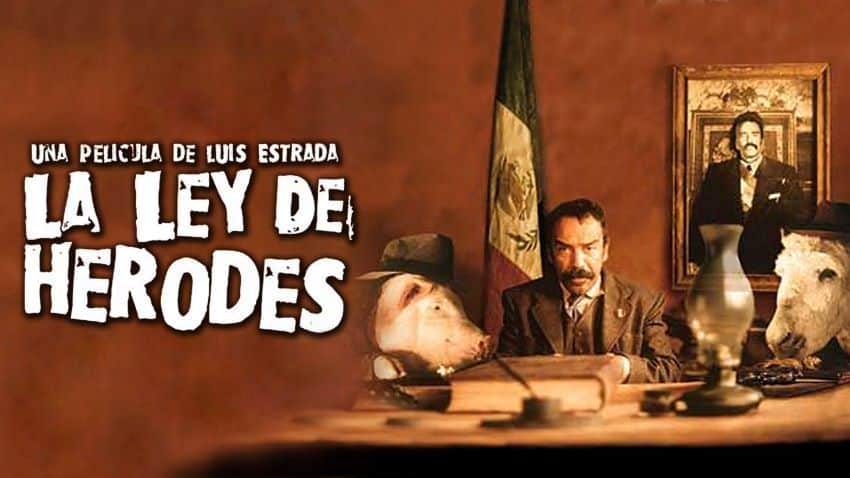
One of Mexico’s best filmmakers, Luis Estrada, is a master at showing how well-intentioned individuals can get sucked into “the system” and come out rotten on the other end of it. His movieLa Ley de Herodes” — released in the U.S. as “Herod’s Law” — is a reflection of this cultural willingness to take a long, hard look at the surrounding circumstances’ influence on the individual.

In my opinion, Estrada is Mexico’s foremost master of social commentary through dark comedy. His films are often described as tragicomedies. They’re funny, but cynically so. In a country where it’s not always the safest move to do so, he’s relentlessly criticized the parties in power. In this movie, it’s the PRI.

“La Ley de Herodes” is a 1999 film that chronicles the path of a low-ranking PRI member in 1949 Mexico. The PRI, or Institutional Revolutionary Party, you’ll remember, ruled Mexico from the period following the Revolution until Vicente Fox of the National Action Party (PAN) became president in the year 2000. During the time in which the film is set, its rule was absolute.

After a corrupt mayor is run out of the town of San Pedro de los Saguaros and killed by its inhabitants, party leaders must choose a successor. They look for someone earnest, easy and a little dim-witted. Finally, they settle on Juan Vargas, a junkyard supervisor played by Damián Alcázar. The party bosses reason they’ll just need someone who will last three or four months.

Vargas is excited that it’s finally “his turn,” and moves to the tiny community full of enthusiasm. San Pedro, of course, is new to him. He’s not from there; in fact, he’s never been to it before.

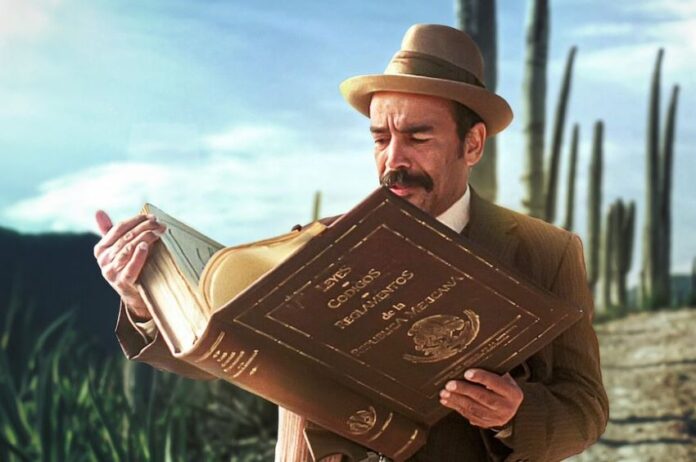
Much to his disappointment, Vargas soon discovers that the job is not at all easy to do. First, the municipality’s money is gone. Second, no one in the town seems to respect him. When he returns to the state capital to ask for more funds since they were “pre-stolen,” he’s given a gun and a copy of the Mexican Constitution.

(Prime Video)

And this is where he learns the lesson that’s always seemed so endemic in the culture:

“El que no transa no avanza” — He who doesn’t cheat doesn’t get ahead.

Vargas uses both of the tools given to him to collect “taxes” — bribes — and stay on top of things in his little kingdom. We watch hopelessly as he devolves from earnest hero ready to do a good job into corrupt politician without a single saving grace.

This is a defining feature of Estrada films. There are no real “good guys,” only “flawed guys” with mostly good intentions. Sometimes. There is no sense of “the noble poor” who are just as humanly flawed as the rest of us; nobody in his films is morally righteous. And those who come close are never the ones with any actual power.

If you want to take a deep dive into how Mexicans conceive of the corrupting forces of power, then this is a good place to start. You’ll find that most Mexicans know the film well; after you watch it, get ready for some good conversations.

What is Herod’s Law, by the way? Either you screw them or they screw you. You know, like the Biblical Herod who ordered the massacre of all male infants under 2 near Bethlehem, causing a pregnant Mary, Mexico’s favorite Biblical figure to flee?

Put a different way, sometimes you “have” to do unsavory things to survive — or keep your power, at least.

Yikes.

Sarah DeVries is a writer and translator based in Xalapa, Veracruz. She can be reached through her website, sarahedevries.substack.com.

Taste of Mexico: Nieves

4
Several different flavors of ice cream in cones
(Brooke Lark/Unsplash)

We often forget that before we arrived in this world, there were lives, stories, cultures, traditions and gastronomy. We forget that the craving for something fresh in the heat of summer is as old as human history itself. We forget that the joy of eating ice cream is something people have shared across time and continents.

The snows of Popocatépetl and Iztaccíhuatl

(Mexico Desconocido)

Today, if we’re craving ice cream, we can go to an Oxxo or our favorite ice cream shop at any hour and pick our favorite flavor. In pre-Columbian times, eating sorbet was a luxury.

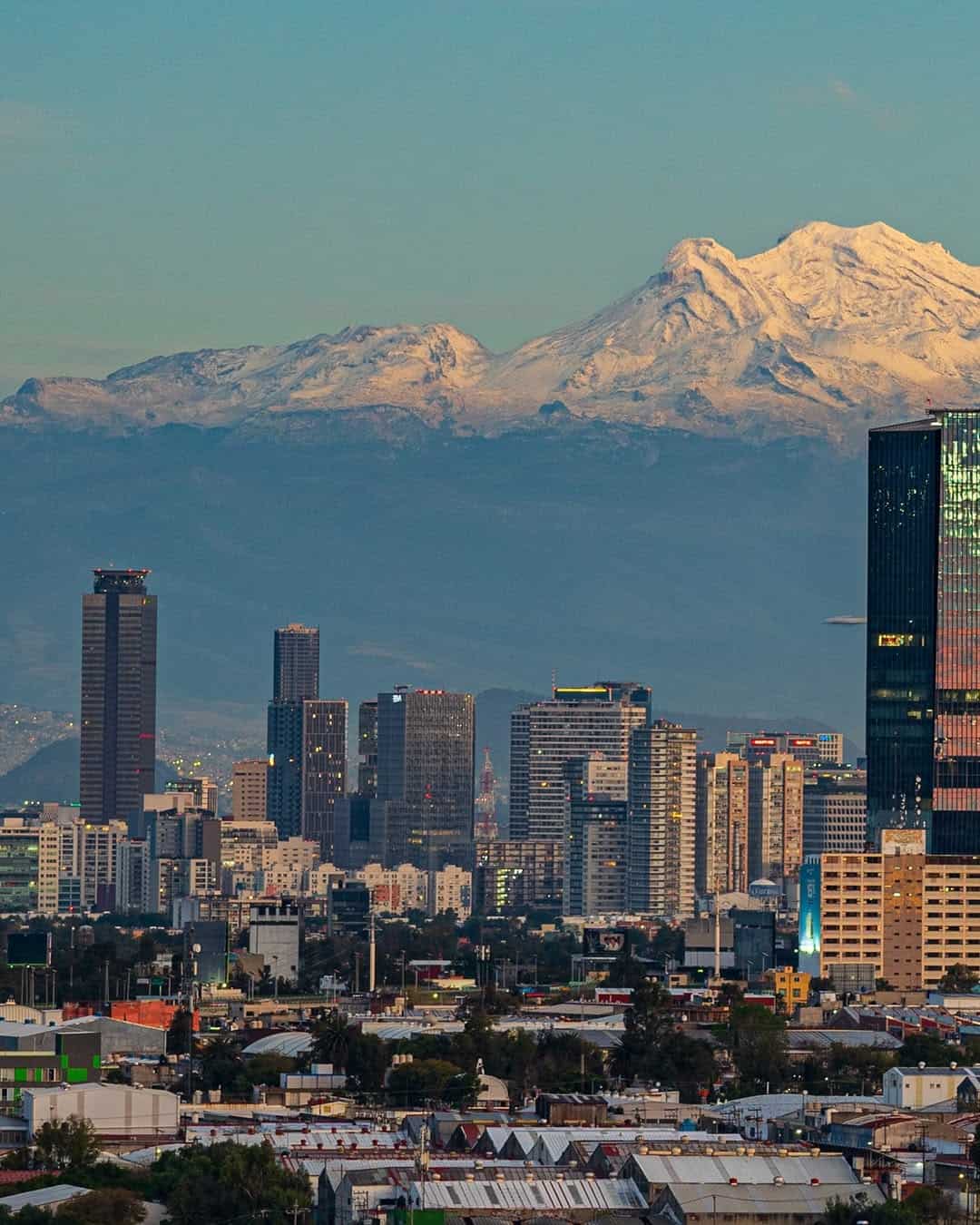
First, it’s important to know that there was a god of ice: Iztlacoliuhqui. He was associated with natural disasters, specifically frost and freezing temperatures. The Mexicas (Aztecs) would extract ice from the Popocatépetl and Iztaccíhuatl volcanoes. The tamemes — porters and runners trained since childhood to carry out deliveries across the land at high speed who you can think of as the FedEx of the era — made two-day journeys from Tenochtitlán to the base of the Popocatépetl and Iztaccíhuatl in modern-day Puebla. They collect blocks of ice, wrapping them in ixtle and animal hides to preserve them. Then, they would run back with the heavy blocks on the back to Tenochtitlán.

Once there, the ice was carefully unwrapped and dried, crushed into small pieces and sweetened with prickly pear, honey or agave syrup and sometimes even mixed with fruits like zapote, cherimoya, tejocote, mamey and capulín. It was placed in clay vessels and sold at the Tlatelolco market, where Mexica priests and nobles might buy it for up to 20 cacao beans— a fortune. The snow was consumed in ceremonies meant to prolong the rainy season and delay frost, though I like to imagine that sometimes they simply enjoyed it for pleasure.

Milk plus snow equals ice cream

1529 is a year that should be marked in Mexico’s history. A Spanish friar had the idea to tell Indigenous people — who already mastered the recipes and techniques of making snow — that if they added a little milk and some fruit, they would get ice cream.

By 1620, when the Spanish authorities created a “snow monopoly” to control ice extraction and trade, Mexico’s first commercial ice cream maker emerged: Leonardo Leanos. However, Leonardo’s ice creams were reserved for the elite and nobility of colonial society.

Ice cream for everyone

Thanks to the introduction of the Italian garrafa method in the 17th century, production costs dropped, and ice cream started flooding town squares.

The technique used two containers: a metal one inside a wooden one. The metal container, holding the ice cream mixture, was surrounded by a layer of salted ice and rotated constantly to maintain the texture. This method is still used in many places in Mexico today.

I don’t recall seeing lasagna-flavored ice cream, Iberian ham ice cream, or escargot ice cream anywhere else in the world, though I wouldn’t be surprised if they exist. However, in Mexico, ice cream flavors have always been quite exotic.

I once found an 1800s convent cookbook from Puebla with floral ice creams like lavender, orange blossom, and rose petals. There were also ice creams made with aromatic herbs like rosemary, spearmint, and dill. The most interesting find? Honey ice cream—perhaps the nuns knew that honey snow was once reserved for Mexica priests and nobles.

Ice cream
Mexico has got creative with ice cream flavors, as you might expect from a country with such a rich culinary history. (Michael Fousert/Unsplash)

Since 1872, Puebla has had chile en nogada ice cream. Oaxaca offers mole-flavored ice cream, and in Jalisco, you can find tequila with sangrita sorbet.

With warmer days ahead, I suggest we all embrace our inner nobility and make honey ice cream. And as we enjoy it, let’s ask Iztlacoliuhqui for plenty of rain but zero floods this year.

Helado de miel

Ingredients

250 ml milk (can be almond or coconut milk)
200 g honey
1 tsp of ice cream stabilizer (cornstarch, gelatin, xanthan gum, agar-agar, casein, guar gum)
Nuts for garnish (optional)


View this post on Instagram


A post shared by Mexico News Daily (@mexiconewsdaily)

Instructions

1. Mix the milk and honey: In a bowl, combine the milk and honey. Stir until the honey is completely dissolved.
2. Add the stabilizer (optional): If you want a smoother texture, add the stabilizer and mix well.
3. Chill and freeze: Pour the mixture into a freezer-safe container and refrigerate for at least 30 minutes. Then, freeze for 2-3 hours, stirring every 30 minutes to prevent ice crystals.
4. Serve: Once frozen, garnish with fresh fruit if desired and enjoy.

Like me, tell your family that you should consider “investing” in an ice cream maker to keep this ancestral tradition alive. Wink, wink.

Or simply support artisanal ice cream makers this season. Grab a cone, find a nice park, and enjoy the dolce far niente— Mexican style.

María Meléndez is a Mexico City food blogger and influencer.

The Mexico power players you need to know: A perspective from our CEO

16
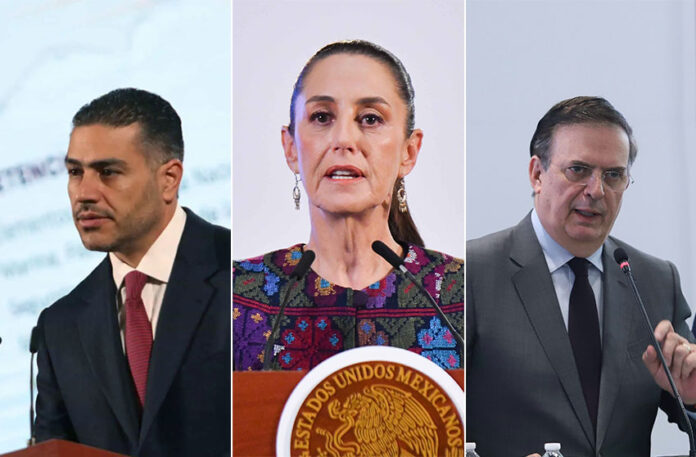
Photos of Mexican leaders: Security Minister García Harfuch, President Sheinbaum and Economy Secretary Ebrard
A new Mexico News Daily series profiles key figures to watch in Mexico. (Cuartoscuro/Mexico News Daily)

The team at MND is constantly discussing and debating what level of detail we think our readers would like to know with respect to Mexican political leaders and political issues in general in the country. Our original thinking was that many people already living or having interest in Mexico probably have had enough of politics in their home countries and as a result would have little interest in whats going on politically in Mexico. I remember once telling the team “no political coverage other than the president, and even that coverage should be very limited.”

That being said, our thinking has evolved in the past year as the political landscape in Mexico and the world have changed. There were in fact three key events that led to a step change in our readers’ level of interest. The first was during the 2024 Mexican presidential election. Once the field of candidates was narrowed down to two women, Xóchitl Gálvez and Claudia Sheinbaum, our readers increasingly wanted to learn more about each of them.

The second key event was when Sheinbaum won the election and assumed the presidency in October of last year. Our readers took increased interest in our daily mañanera press conference summary of what Sheinbaum and her team were talking about and focusing on. The third event was when Trump won the election in the United States and began talking about very specific actions that he would take against Mexico on everything from deportations and cartels to the border and tariffs.

We think that there is an increasing recognition on both sides of the border that our challenges cannot be solved — and our opportunities cannot be realized — without close cooperation between the two countries. Can the U.S. really become less reliant on China without Mexico’s help? Can Mexico solve the drug/cartel problems without help from the U.S.? Can the U.S. stop immigrants at the southern border without Mexico’s help? Can either country fully realize its potential without the help of the other? We strongly believe that the answer is increasingly: NO.

In response to this, we now dedicate several articles a day to the political and economic discussion and debate between Mexico and the United States. Every weekday, we have a brief, easy-to-read summary of what President Sheinbaum and her administration are focused on. In addition, on many days we have a summary of what President Trump has said about Mexico and how Sheinbaum is responding to it. Whether or not we like the increasingly accelerated and ever-changing news cycle, it is a reality and we are committed to helping you understand the latest developments and impacts.

As a direct result of this increased interest that we are seeing from our readers, we are now expanding our coverage to include additional reporting on other key players beyond President Sheinbaum that we think our readers need to know about.

We are very cognizant of the fatigue and anxiety that many people have from the hyper-accelerated news cycle over the past few months and our intention is obviously not to add to that. However, there are some important and influential people shaping news and events in Mexico that we want to share with you. The team at MND promises to be very clear on why these people are important and why they are relevant to you.

You will see that we are adding new team members as well as introducing new formats. Just in the past few weeks, María Meléndez, an experienced journalist and video content producer based right in the heart of Mexico City, has taken on a new project at MND. María has her finger on the economic and political pulse of the country, and she’s now leading a team that has produced four different article/short video reports on key leaders in Mexico, including but not limited to Sheinbaum.

The first was on Marcelo Ebrard, the Mexican Minister of Economy and point person for Mexico on the tariff negotiations. Maria gives us some background on Ebrard, his experience, and his strategy in the negotiations. You can see the article and video here.

The second topic was in light of World Women’s Day and the terrible issue of femicides in Mexico. Many women in the country have high hopes for change, but feel like the president has not done enough. María digs into what President Sheinbaum already has done and has planned to do to tackle this tragic problem in the country.

Is Mexico’s first female president protecting women?

The third was a profile of Ronald Johnson, President Trump’s pick for US Ambassador to Mexico. Johnson is an unconventional pick with unique experience that will likely result in a different focus as ambassador than his predecessors. Maria explains how and why to us and based on his background, helps us understand what to expect from the new ambassador.

The fourth and most recent profile was of Omar Garcia Harfuch, Mexico’s new Secretary of Security and Civilian Protection. Garcia Harfuch has the exceptionally difficult job of trying to improve the country’s security situation. He has been trained by both the CIA and DEA and actually was the victim of an assassination attempt. His role is increasingly in the spotlight given recent comments from the United States. Maria gives us his background and describes the challenges he faces.

Who is Mexico’s Security Minister and why does he matter?

Each week we will be bringing you a new leader profile or timely topic to learn about. We hope you enjoy this expanded coverage and we welcome your feedback. The team at Mexico News Daily is committed to being your front row seat to Mexico…..thank you for trusting in our team and supporting what we do.

Travis Bembenek is the CEO of Mexico News Daily and has been living, working or playing in Mexico for nearly 30 years.

Protecting Mexico-US auto sector integration: Friday’s mañanera recapped

3
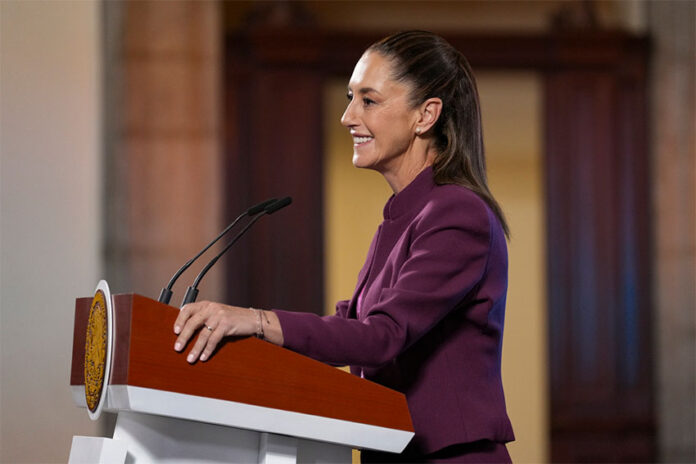
Mexico President Claudia Sheinbaum at the podium at her Friday morning press conference
The threat that tariffs pose to the integrated manufacturing economies of Mexico and the U.S. was a top theme of Friday's press conference. (Presidencia)

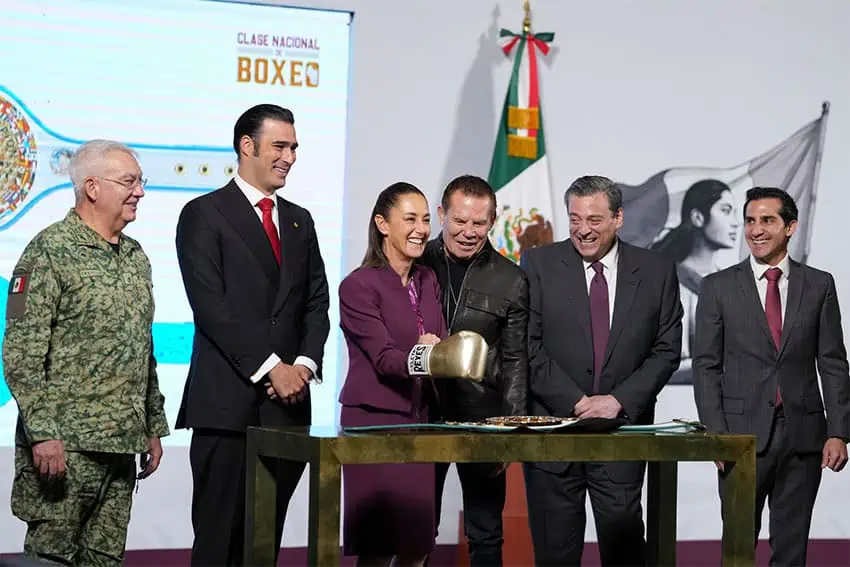
Mexican boxing legend Julio César Chávez and World Boxing Council president Mauricio Sulaimán Saldivar attended President Claudia Sheinbaum’s Friday morning press conference to promote the “National Boxing Class” that will take place in public squares across the country on Sunday, April 6.

Sheinbaum said she didn’t yet know whether she would don some gloves herself, but a reporter nevertheless quipped “watch out Bukele,” a reference to a nascent feud with the president of El Salvador.

President Claudia Sheinbaum and retired boxer Julio César Chávez hold a boxing glove while standing on a stage surrounded by government officials
President Sheinbaum donned a golden glove to promote next week’s nation-wide boxing class. (Presidencia)

During her Q&A session with reporters, the president spoke about United States President Donald Trump’s latest tariff announcement, the importance of the USMCA free trade pact — which is currently under attack by Trump — and the federal government’s growing tax revenue.

‘Any tariff’ affects Mexico-US auto sector integration 

Two days after Trump announced a 25% tariff on imports of vehicles and auto parts, Sheinbaum emphasized the high level of integration between the auto industries in Mexico and the United States.

“Mexico is the country with the most integration with the United States in the automotive industry,” she said.

She noted that auto parts frequently pass back and forth across the border during the vehicle manufacturing process.

“It’s integration that has been going on for decades,” Sheinbaum added.

“Obviously any tariff affects that integration and both economies. It affects the United States and Mexico,” she said.

“So of course we don’t agree with this unilateral tariff decision,” Sheinbaum said.

The USMCA is the ‘tool’ that allows North America to compete with China 

Sheinbaum told reporters that her government is seeking to strengthen the USMCA free trade pact, even as Trump seemingly adopts more protectionist “America first” positions by the day.

“The United States-Mexico-Canada Agreement is the tool that allows … North America to compete with other regions of the world, particularly China, which is also a large manufacturer of cars,” she said.

“What we have always said is that we don’t compete among ourselves, we complement each other to strengthen the economies of the three countries,” Sheinbaum said.

A automated care production line inside a factory
The president said the USMCA free trade deal allows North America to compete with China in car manufacturing. (BYD)

She said that her government, in talks with its United States counterpart, is seeking to avoid an adverse impact on Mexico-U.S. auto sector integration in order to “protect jobs in Mexico and jobs in the United States.”

“That’s always been our argument,” Sheinbaum said.

Economy Minister Marcelo Ebrard said Thursday that the government would seek “preferential treatment” for Mexico, even as Trump appears determined to change what he sees as an unfair status quo in the United States’ trade relationships with most, if not all, of its trading partners.

As Mexico News Daily reported, and Ebrard emphasized at the president’s Thursday morning press conference, U.S. content in vehicles assembled in Mexico (and Canada) will be exempt from the 25% duty, lowering the effective tariff on vehicles made in Mexico.

Mexico thus has already been afforded some “preferential treatment” — that is if (and it’s a big if) the United States’ violation of the USMCA — an agreement Trump personally signed — can be ignored.

US automakers will be most affected by tariff, Sheinbaum says 

Sheinbaum said that Trump’s auto tariff will affect Mexico more than any other country due to its high levels of integration with the United States in the production of vehicles.

She added that United States automakers with a presence in Mexico, such as General Motors and Ford, will bear the brunt of the auto sector protectionism.

Ford manufacturing plant entrance in Irapuato, an example of Mexico-US auto sector integration
U.S carmakers that manufacture in Mexico — like Ford and General Motors — will be hardest hit by the tariffs, Sheinbaum said. (X)

While Mexico continues to seek a deal with the United States to return to free trade conditions, Sheinbaum reiterated that she is preparing a “comprehensive response” to U.S. tariffs, which are already in effect for Mexican steel and aluminum and goods not covered by the USMCA.

She has said she will unveil that response on April 3, the day after the United States intends to impose reciprocal tariffs on the goods it imports from its trading partners around the world.

Tax collection ‘going very well’

A reporter asked the president whether the United States “unilateral decision” to impose tariffs on imports from Mexico would affect her government’s economic objectives and infrastructure investment plants.

“Not at all. The economy of Mexico is very strong,” Sheinbaum responded.

She told reporters that she looks at government revenue data every day and that tax collection is currently 6% higher than it was a year ago “in real terms.”

“I thank the people because they’re paying their taxes,” Sheinbaum said.

“… The truth is tax collection is going very well,” she said.

“And, well, we’re building seven more hospitals, the railroads, highways, water projects, housing, and that helps the economy a lot,” Sheinbaum said.

By Mexico News Daily chief staff writer Peter Davies (peter.davies@mexiconewsdaily.com)

China vs. USA, embassy edition: Diplomats go head-to-head over e-commerce apps in Mexico

3
A phone showing the logo of Shein, the Chinese e-commerce app. Wood background
As Mexico navigates trade tension between the U.S. and China, a microcosm of the dispute played out on social media. (App Shunter/Unsplash)

Mexico has found itself in the middle of a trade war — of words — after the U.S. and Chinese embassies in Mexico squared off on social media over criticism of Chinese e-commerce apps like Shein and Temu.

On Thursday, the U.S. Embassy in Mexico published a video urging users in Mexico to delete Chinese cell phone apps, citing data security risks and other concerns. 

The video singled out Shein, Temu, AliBaba and AliExpress, claiming that these websites not only jeopardize personal data but that the Chinese retailers negatively impact Mexican industry.

In the video, businessman Andrés Díaz Bedolla said these Chinese apps face class-action suits in the U.S. over data theft.

Díaz Bedolla, founder of Yumari — a platform that seeks to connect Latin American companies with global value chains — claimed that these retailers are willing to lose up to US $30 on each sale to undercut the local competition.

“If you have these apps on your phone, it is time to eliminate them,” said Díaz Bedolla, a graduate of the U.S. State Department’s Young Leaders of the Americas program.

“We simply should not be doing this if what we want in the end is economic growth and development for our country,” he said.

Shortly thereafter, the Chinese Embassy in Mexico responded with a social media post of its own, calling on the U.S. “to eliminate your lies.”

In the message published on X, China said that U.S. “hegemonic practices” including reciprocal tariffs, fentanyl tariffs and automobile tariffs are destroying Mexico’s industry and damaging Mexico’s sovereign interests.

On Jan. 1, Mexico implemented a tax on products imported via e-commerce sites and international courier companies. As Mexico doesn’t have a trade agreement with China, companies such as Temu and Shein were slapped with 19% tariffs.

AliExpress, Shein and Temu responded by offering discounts and temporary subsidies on products shipped to Mexico.

In mid-December, Mexico imposed a 35% duty on imports of finished textile products.

This tariff was imposed exclusively on products imported from countries without a free trade agreement with Mexico and is mainly designed to protect Mexican producers from cheap Chinese clothing. This tax directly affected Shein, Temu and AliExpress.

Upon announcing these tariffs, Mexican President Claudia Sheinbaum alleged that digital apps were indeed contributing to the closure of companies in Mexico. She cited government data showing an 8% decline in textile production in 2024 and 20,000 job losses.

Some entrepreneurs also purchased in bulk from the e-commerce companies in order to resell the imported products in Mexico. To curb the practice, the government imposed restrictions on the number of monthly deliveries permitted.

With reports from El Financiero, El Universal and SDP Noticias

Michigan couple arrested in Cancún for alleged fraud in timeshare dispute

11
A line of pool chairs at Moon Palace in Cancún, a property belonging to Palace Resorts, the timeshare company involved in the fraud dispute
Palace Resorts, the company involved in the dispute, owns all-inclusive resorts like Moon Palace Cancun, seen here. (Cameron Wears CC BY-NC 2.0)

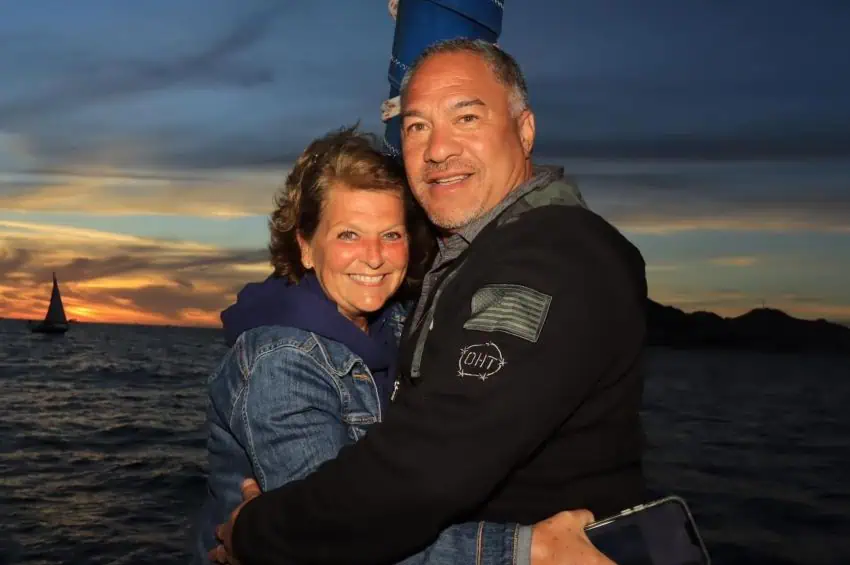
A married couple from rural Michigan has been imprisoned in Cancún for more than three weeks after being accused of committing fraud against Palace Resorts, a Mexican-based timeshare and hospitality company.

Paul and Christy Akeo were detained March 4 upon arrival at the Cancún International Airport, marking the beginning of an ordeal that has reportedly landed them in a maximum-security prison and sent their family into panic.

A middle-aged couple embraces in a photo taken at sunset in front of the ocean in Cancún
A family photo of the Christy and Paul Akeo. (Courtesy of Lindsey Hull)

This week, children of the couple spoke out, declaring the accusations to be false and calling on the U.S. government to intervene.

“The urgency is beyond important because we have no idea what is happening to them at any time,” said Lindsey Hull, Christy’s daughter, noting that the couple is being held without bail and being denied communication with family.

“Their lives are in danger,” she added. “Their health is declining. We need to get these people home.”

Paul is a 58-year-old Navy veteran employed as an engineer with the Michigan state police and Christy, 60, is grandmother and small business owner, according to their U.S.-based attorney, John Manly.

They are being “held captive in a hell hole of a Mexican maximum-security prison,” Manly said in a statement to CNN.

The Akeos — who live in Spring Arbor, an unincorporated community about halfway between Ann Arbor and Kalamazoo — traveled to Cancún on March 4 expecting a carefree vacation, Manly and their children said, only to be stopped by authorities soon after their plane landed.

In a statement, reportedly issued two weeks later, prosecutors in the state of Quintana Roo allege that the couple in 2022 canceled 13 credit card payments to a hotel chain totaling more than $116,500. Though prosecutors didn’t offer further evidence, they said the activity constitutes fraud.

According to Manly, the case stems from a 2021 timeshare agreement that the Akeos signed with Palace Elite, a subsidiary of The Palace Company, which is headquartered in Mérida, Yucatán. One of its brands is Palace Resorts, known for luxury all-inclusive properties in Mexico and Jamaica.

Manly said the company failed to provide the services promised in the agreement, and as a result, the couple disputed the charges with their credit card company, American Express.

Christy Akeo also shared their experiences on social media.

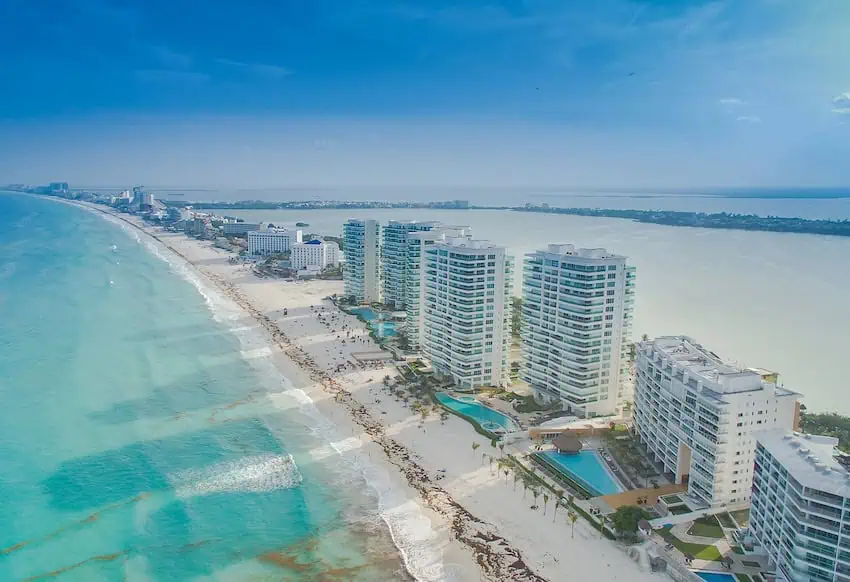
An aerial view of Cancún
Timeshares are common in resort destinations like Cancún, but often have hidden provisions or fees. (Wikimedia)

According to a statement from The Palace Company, a criminal complaint was filed after the couple “fraudulently disputed legitimate credit card charges and publicly encouraged others to do the same.”

The company noted that “Interpol validated the case” and that a court-approved arrest warrant was issued “following failed attempts to serve notice.”

Hull insisted that her family received no notices and said that, although her mom did sound off in a Facebook group of confused and angry Palace customers, she is baffled as to why that might have contributed to the arrest.

“What happened,” Manly said in a report on WLNS, a radio station in Lansing, Michigan, “was they got lured into this timeshare, and initially it was some reasonable amount a month, and then — according to what we’ve been told — they took away their benefits and essentially made them increase their monthly contribution to $6,200 a month.”

“The idea that they’re sitting in a maximum-security prison over a timeshare dispute is, at best, unacceptable,” Hull added.

Manly said the company was, in fact, the party that breached the contract, notably the part that allowed the Akeos to sell weeks of their timeshare. But when they attempted to do that, he said, “Palace just began to cancel the reservations.”

A man identified as the couple’s son, Michael Lemke, told WLNS that a judge gave Palace Resorts six months to gather evidence. He’s concerned this could mean that the Akeos might be detained in Mexico for a while.

“The situation is incredibly unfortunate over something that is a contract dispute that … seemed like it was done and over with,” Lemke said.

U.S. Congressman Tom Barrett has pledged to assist the family by working with the White House and State Department to quickly resolve the situation.

“I have assured them that my team and I are acting immediately and doing everything we can to help,” Barrett said.

With reports from Diario de Yucatán, CNN and WLNS Radio

Amid deepening drought, Mexico works to reduce agricultural water waste

5
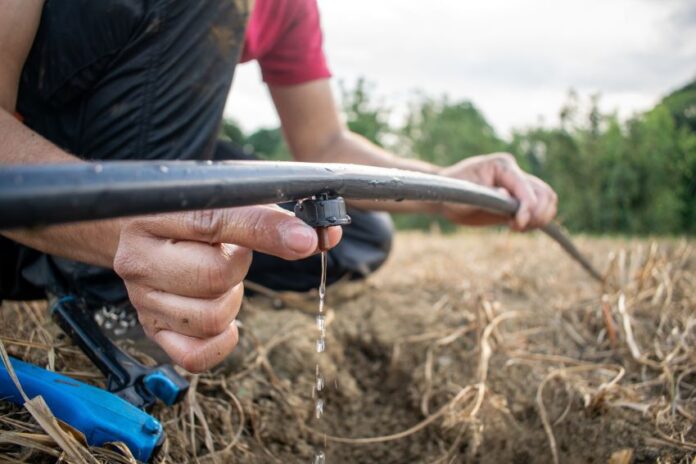
A close-up shot shows a person adjusting an irrigation line in a field to reduce agricultural water waste
Agriculture is both the biggest user of water in Mexico, and one of the first sectors to suffer when water is scarce. (Shutterstock)

As drought deepens in Mexico, the National Water Commission on Thursday presented a plan that officials hope will save 2.8 billion cubic meters of water across the country.

Water commission (Conagua) officials on Thursday said the updated National Irrigation Modernization Program aims to upgrade systems that will affect 200,000 hectares of irrigable land in Mexico, reducing agricultural water waste.

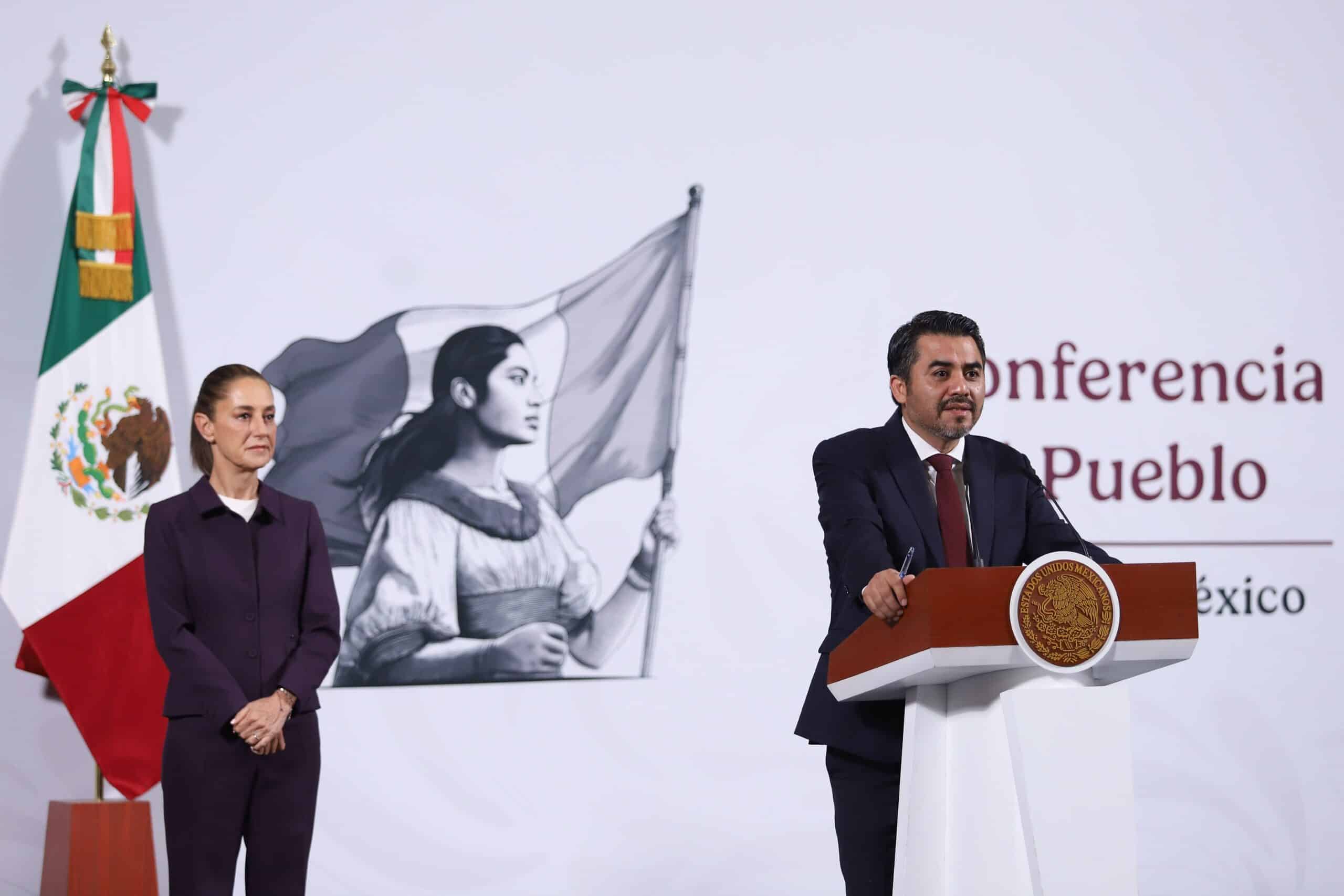
Efraín Morales, director of Conagua speaking at conference with President Sheinbaum
Efraín Morales, director of Conagua, shared the plan to upgrade Mexico’s agricultural water infrastructure at the president’s Thursday morning press conference. (Daniel Augusto/Cuartoscuro)

During her morning press conference, President Claudia Sheinbaum said her administration plans to invest 51.8 billion pesos (US $2.5 billion) during her six-year term to modernize the nation’s irrigation systems. She said the system overhaul will increase productivity.

“[The hydro-agriculture sector] will see greater production with less water,” she said, “freeing up 2.8 billion cubic meters [of water] … for human consumption.”

Hydro-agriculture is akin to small-scale irrigated agriculture, in contrast to hydraulic agriculture which is large-scale farming which involves the use of fluid power to operate machinery, control implements, and perform various tasks on the farm.

Sheinbaum said the transition is not as simple as installing new technology and watching it work. The system overhaul requires a comprehensive organizational plan at the individual farm level and at the federal irrigation district level.

The government hopes more efficient hydro-agriculture will resolve the perennial shortage of water for human consumption, a problem that resulted in chatter about a potential “Day Zero” in Mexico City last year. 

Calling the program unprecedented, Efraín Morales, director of the water commission (Conagua), said it is of utmost importance because 76% of the nation’s water is utilized in agriculture. 

“The modernization program is not just about resolving existing problems,” Morales said, referring to aging canals and leaky irrigation infrastructure. “The president has instructed us to look for alternatives that allow for more efficient use of water in productive processes as well as in matters of social consumption.”

Morales reiterated Sheinbaum’s goal of producing more food with less water so as to increase drinking water availability. He added that some of the recovered water would be used to recharge the nation’s aquifers.

Streams of water spraying over farmland with young green, leafy plants from irrigation pipes.
Mexico is addressing water scarcity by promoting modern, more efficient irrigation systems to reduce agricultural water waste. (Government of Mexico)

He said the long-term goal is to find and implement solutions that will make Mexico’s countryside sustainable.

By the end of this year, Conagua hopes to repair or replace 315 kilometers of irrigation canals, potentially reducing water use by 25%, Morales said. Another 43 kilometers of canals will be replaced with pipes, protecting the water from evaporation and reducing water loss by 40%.

The program will also pay for modern floodgates — both mechanized and manual — to make distribution and storage more efficient. Telemetry systems will also be installed in some locations to measure water usage and distribution.

Beyond simply repairing canals to prevent leaks, the program focuses on teaching responsible water use. Among the activities Conagua is emphasizing is working with farmers to avoid over-irrigating their fields

Conagua will also even out farmlands, with plans to level 10,500 hectares this year alone. This process will allow for more uniform irrigation while limiting puddling and run-off.

The program will also work to install aspersion and microaspersion irrigation systems to better control the amount of water and delivery timing.

Aarón Mastache, assistant director of Conagua’s hydro-agriculture infrastructure division, explained that the program will primarily focus on 13 of Mexico’s 86 irrigation districts. These targeted districts are located near urban centers that are experiencing water shortfalls, he said.

So far 10 irrigation districts — in Sinaloa, Morelos, Aguascalientes, Tamaulipas, Guanajuanto, Coahuila and Durango — have signed up for the program. Two of the remaining districts, both in Chihuahua, are expected to climb aboard next week. Officials in the last district, in Baja California, are negotiating the conditions of its inclusion.

Mastache explained that the program budget will come from three sources: the majority of funds will come from the federal government, but state governments and farmers will also contribute, though he did not specify percentages.

With reports from El Universal and Infobae

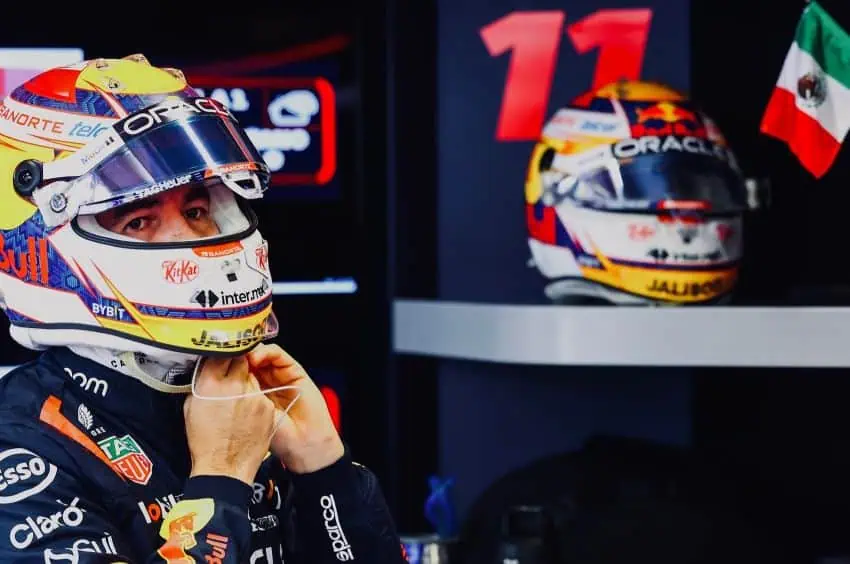
After getting the boot from Red Bull, Checo Pérez could return to Formula 1 with Cadillac

3
Checo Pérez walks down a hallway after returning from a race, wearing his Red Bull Formula 1 uniform
Mexican driver Checo Pérez is looking to get back in the game. (Sergio Pérez/Facebook)

Sergio “Checo” Pérez’s absence from Formula 1 circuits might be a short one as the Mexican driver is reportedly negotiating a return to the track with debutante F1 team Cadillac, who are set to enter the sport in 2026.

Mexico’s most successful racer, Checo appears to be on the verge of making a dramatic return to Formula 1 — considered the pinnacle of motorsports — just one season after his acrimonious exit from Red Bull Racing, which would see him getting behind the wheel again with the fresh new project.

A black Formula 1 racing car on a black background next to a Cadillac logo
Cadillac will become the 11th team in Formula 1 starting next year. (Cadillac)

General Motors’ luxury brand Cadillac is set to enter Formula 1 in 2026 as the 11th team on the grid, in partnership with Andretti Global. Fox Sports reported this week that Checo — a six-time Grand Prix race winner — has been discussing the prospect of signing with Cadillac.

Mario Andretti, former F1 champion and the advisor on Cadillac’s board of directors, declined to comment on rumors that the team was in final talks with Checo: “There are more drivers available than teams at the moment,” he told Fox Sports. “Ten teams seems a lot, but … from our standpoint, I think the play at the beginning would be to have one experienced driver — nationality doesn’t matter — and then a young American talent.”

Cadillac first made public its interest in joining F1 in January 2023. Andretti, who operates a number of successful teams in other motorsport categories, including Indycar and Formula E, launched a failed bid with GM as engine partner.

The bid was rejected after resistance from established teams. Then Dan Towriss replaced Michael Andretti (Mario’s son and former McLaren driver, who had a brief and troubled career in F1) at the top of the Cadillac project and a renewed bid was met with approval in late 2024.

Checo Pérez puts on his helmet before a Formula 1 race
Pérez, 35, has driven for four different F1 teams in his career. (Sergio Pérez/Facebook)

Formal approval was granted to Cadillac on March 7, after the team paid an entry fee of US $450 million, to be be split among the other 10 teams as compensation for the dilution of prize money.

With 14 years of experience in F1, Checo certainly has the résumé to serve as the experienced driver Cadillac is seeking to help guide the project through its infancy.

The 35-year-old Pérez has driven for four different F1 teams, getting his start with Sauber in 2011. Checo claimed his first podium in his second season, then spent one year with McLaren before moving on to Force India ahead of the 2013 season. After scoring his first win with the rebadged team at the 2020 Sakhir Grand Prix, he was promoted to the second seat at Red Bull Racing, finishing second in the 2023 Championship. Despite the promising start, Checo gradually fell away from championship contention and as a result, his contract was terminated early at the end of the 2024 season.

Amid speculation that his career might be over, Checo is now looking at a chance to reboot his F1 career.

F1 blog TheJudge13.com points out that as the face of the nascent project, Checo would be under extra pressure. As the team’s lead driver, Pérez’s role could include on-track duties, as well as a significant role in shaping car development and engineering feedback while also mentoring teammates.

With reports from Fox Sports, GP Fans, TheJudge13.com and Newsweek