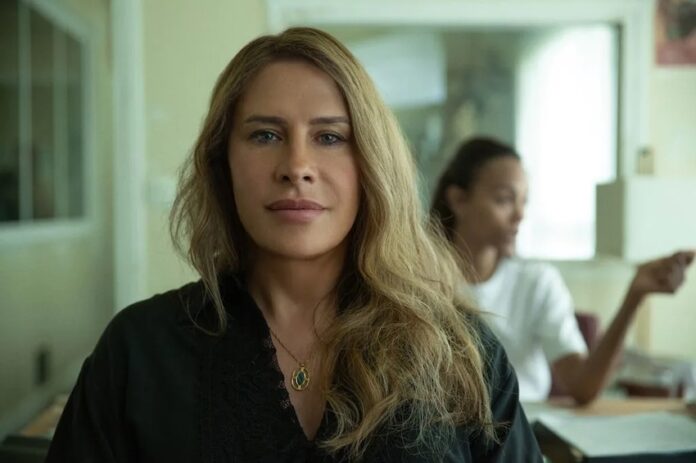
Karla Sofía Gascón as the title character of "Emilia Pérez." (Pathé)
A new Golden Globe-winning musical comedy, Emilia Pérez, is sparking debate, raising questions about the role of art in depicting sensitive and potentially offensive subjects. The film has garnered praise for its technical achievements, including cinematography and acting. However, some viewers find the film’s premise and portrayal of certain characters to be problematic.
The controversy stems from concerns about the film’s handling of real-world issues and whether it trivializes a serious crisis. Critics argue that the film’s comedic approach is insensitive and sends the wrong message. This debate highlights the importance of considering diverse perspectives and the ethical implications of creative choices when tackling complex social issues.
MND Deep Dive: Is Emilia Pérez offensive?
Join our subscriber-exclusive podcast as we discuss whether Emilia Pérez is a subversive and masterful take on the humanitarian crisis facing Mexico, or whether the show is a tired recycling of lazy tropes, presented in the most disrespectful manner possible.
This podcast was produced using AI tools. All information collected and discussed in this episode was investigated, written and edited by human journalists. Compiled from a Mexico News Daily article by María Meléndez. Edited by Chris Havler-Barrett. Podcast produced by Chris Havler-Barrett.
Xalapa is Mexican coffee country and it shows in the city's cafe scene. (Alan Chazaro)
In case you haven’t heard, Xalapa — the Athenian, if not underappreciated capital of Veracruz — is a coffee lover’s paradise. Here, a calm pace of living invites plenty of cafe sessions around a bustling historic center saturated with sprawling parks. Importantly, the region’s tropical, mountainous climate is ideal for coffee bean cultivation.
Nowhere else in Mexico will you find such a heavy concentration of Veracruz’s caffeine offerings in so many varieties as you will in this lush university town. With a gorgeous view of both Cofre de Perote and the Pico de Orizaba, you’ll enjoy every drip of locally-grown, freshly brewed beverage with a vista.
From tradition to trendy, there’s a cafe in Xalapa that’s perfect for you. (Alan Chazaro)
Not much further east, in the much-larger port city of Veracruz, you’ll find legendary mainstays like El Gran Café de la Parroquia: a coffee lover’s haven that epitomizes the hot-weather region’s love for black coffee with milk. Indeed, Jarocho-style coffee has been popularized over the decades, extending out to other states that have attempted to recreate the Veracruzan flavors.
Though Xalapa’s legacy cafes — La Parroquia, Bola de Oro, La Estancia de los Tecajetes and Don Justo, to name a few — are certainly worth visiting for their charm and traditionalism, there is a notable wave of younger coffee upstarts who are making their mark here right now. I’ve gone to many and taken my notes to round up my absolute favorites. Here’s why Xalapa might just be the nation’s pound-for-pound coffee champ.
This is where you’ll find your favorite barista’s favorite barista hanging out. At Pera, coffee is both a science and an art. The coffees here impress with their purity of flavor and delicate preparation — the proper water amounts get weighed, the temperatures get carefully checked and the exact blends of chemistry evoke a sense of reverence with each sip.
Stroll up to the open bar or take a seat in one of Pera’s small, street-facing rooms with a view of the busy Historic Center. Their Xalapeños Ilustres is a must-try; a fizzy, caffeinated drink with a tonic base, shot of espresso and housemade agua de jamaica extract. For the purists, the flat white is most emblematic of Veracruz’s bygone cafe traditions, with a heavenly blend of concentrated black coffee and velvety white milk.
Fauna Café y Jardín
(Fauna)
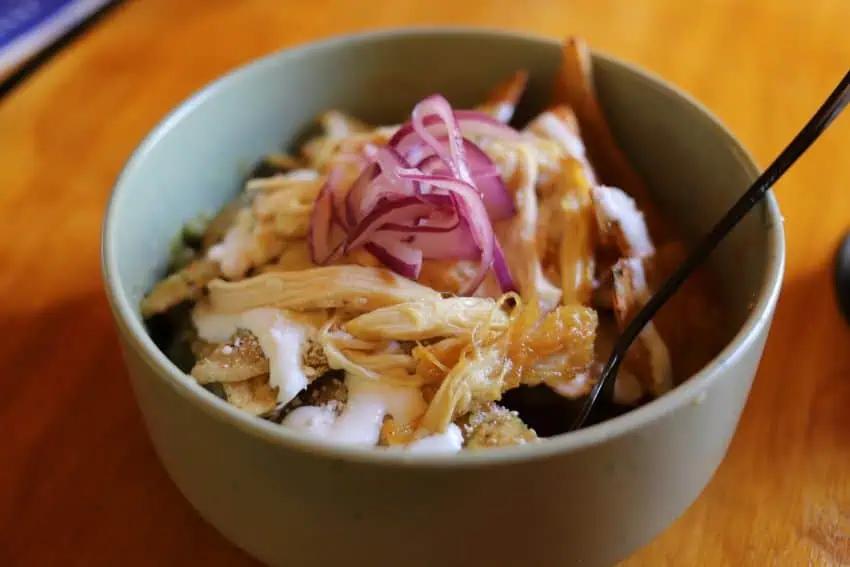
The quirky art and effortlessly chill vibes — in conjunction with a large, verdant back patio — highlight this recently-opened cafe. The food options are also extensive, particularly for breakfast, which, gloriously, is served all day. The menu includes Mexican favorites but is highlighted by contemporary takes on Veracruzan staples like panuchos veracruzanos, molotes de plátanos, panela-stuffed nopal huaraches and pumpkin-flower omelettes.
In lieu of a traditional Americano or espresso, which just about anywhere in Xalapa serves extremely well, try Fauna’s Origami V60 drip — a coffee filter popularized by 2024’s World Brewers Cup champion, Jia Ning Du-san — or a rompope-spiked latte frio. If you’re looking for a lighter, juicier blend, opt for a frutos rojos cold brew, an iced coffee chilled for 48 hours then infused with strawberries and raspberries. The more you sip, the more the mashed berries at the bottom of your glass begin to pronounce themselves, until you reach the soaked berries bottom, which surprisingly maintain every bit of their sugary punch to balance any bitterness.
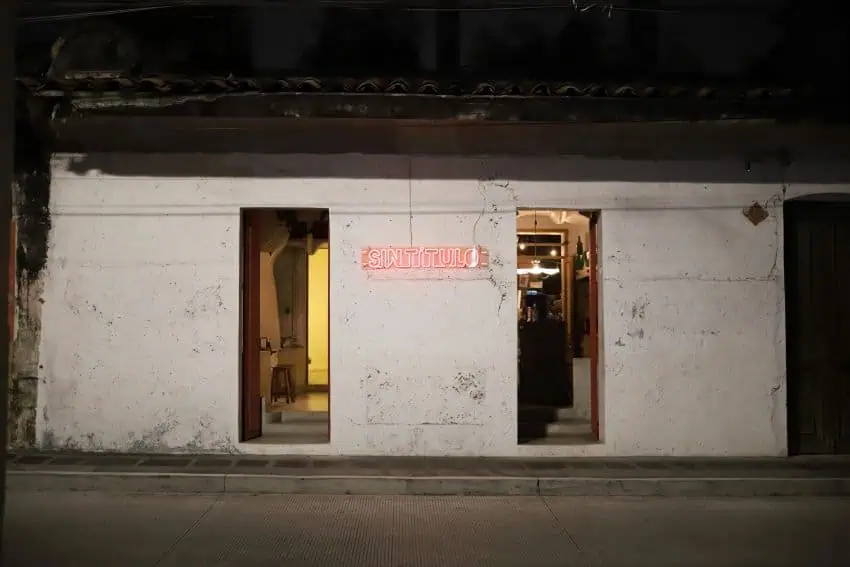
Sin Título
(Sin Título)
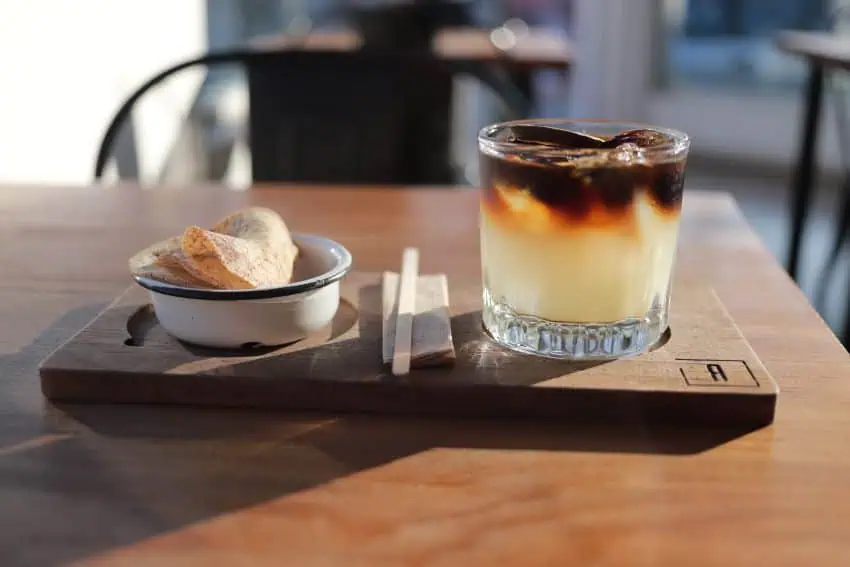
Bright red neon signage flashing across the restored walls of this 15th-century building will alert you that you have, indeed, reached Sin Título. The small and simple — if not minimal — cafe and art gallery along Belisario Domínguez is just around the bend from the city’s beautiful lakeside neighborhood. In addition to high-quality coffee beans, I go here for a refreshing splash of cold ginger brew or chilled zarzaparrilla mixed with mineral water. For an added delight, toss in a hefty freshly baked chocolate chip and walnut cookie, or housemade hummus if you’re in search of the savory.
In past lives, the space was a home and an arts center. It’s often filled with students and intellectuals from the nearby university’s music and theater program — a common thread throughout Xalapa’s cafes, since the state’s largest campus attracts a diverse student population from around the country. The building is beautifully constructed from stone, brick and cement, with a small library nook overhead, often stocked with an array of local, independently-published zines for sale.
As with many of the cafes located in Xalapa, Casa Elo has a vernal flair and leans towards the photogenically trendy. Currently, it’s the hot spot for weekend brunch in the city, with young families and cool students congregating inside its historic, mansion-like space to enjoy caffeinated brews — and at later hours, cocktails, served until midnight. This is the place to go for a nice sit-down breakfast, with a healthy variety of omelettes, breakfast burritos and toasts. A solid beverage rotation features matcha, fresh juices, kombucha and more, with standouts like their cafe de olla and their signature latte de mazapán, a liquified play on the famously crumbly Mexican candy.
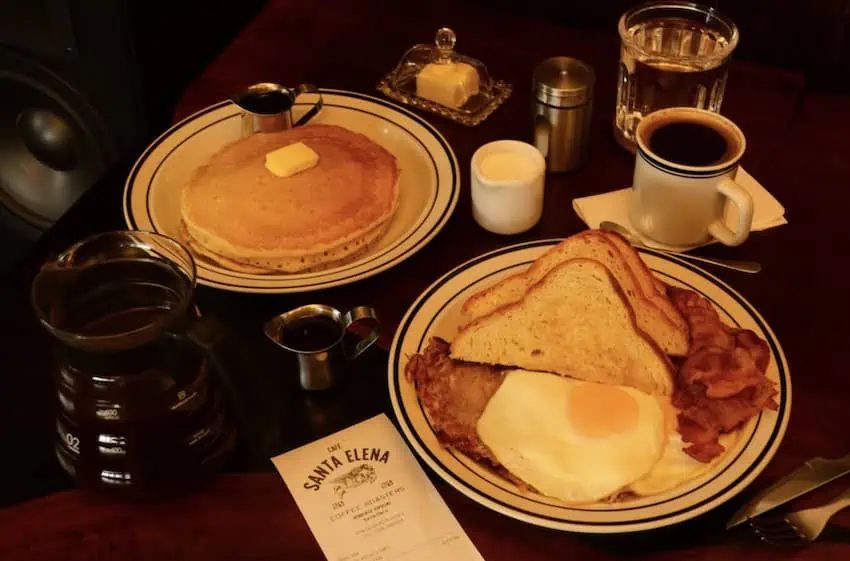
Santa Elena Coffee Roasters
(Santa Elena/Instagram)
On the edge of Xalapa’s upscale Animas neighborhood, Santa Elena awaits. Inspired by the third wave coffee movement in Japan, which emphasizes specialty coffees and direct trade with farmers for sustainability, the shop has a hip youthfulness and funky aesthetic.
Priding themselves on their locally grown and sourced beans, Santa Elena roasts everything in-house. Plus, they offer cups on the spot, or bags to go. From their tostado clásico to their Coatepec Honey and Cafe Lavado de San Pablo, as well as my personal preference, their Volcanic Roast, you won’t be disappointed. In their spare time, they offer education on Veracruz’s bean cultivation and are passionate advocates for informing consumers on how the local coffee ecosystem functions. Extra points for the retro Super Nintendo available to play in their comfortable lounge.
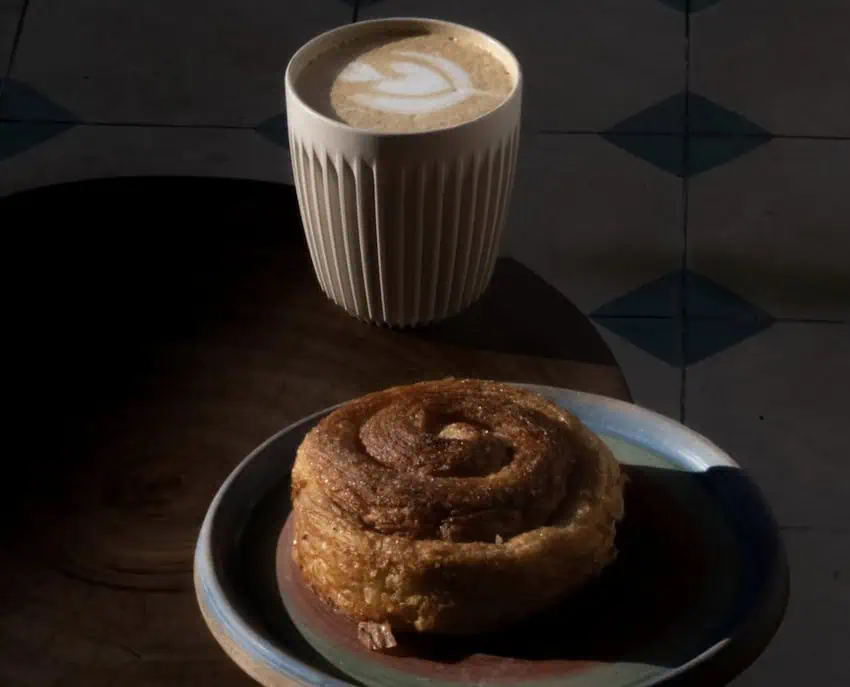
With two locations, Emilia has become one of my go-to spots for coffee and pastries alike. Though the cafe’s ethos is largely driven by modern design elements, Emilia maintains a hint of an Old-World, Parisian haunt. The downtown location offers a small, street facing to-go window, where city dwellers can order, pay and take off without ever stepping foot inside the often-crowded — albeit miniature — cafe. The menu is no frills and made for the purists and traditionalists, making it an ideal place to grab a smooth Americano or espresso, and perhaps a lemon-zested cinnamon roll to begin your day in the City of Flowers.
Reformanda
(Reformanda)
In 2016, Reformanda’s flagship cafe opened near beautiful Parque Juarez — effectively Xalapa’s Zócalo — as a noteworthy newcomer. Since then, they’ve expanded to Murillo Vidal with a flat-iron style corner shop on the opposite end of downtown. The co-founder, Jared Orrico, is Q Arabica Grader-certified, the highest international recognition for a coffee taster. He regularly speaks on podcasts about coffee in Veracruz while also providing classes for Xalapeño javaphiles.
Reformanda has a constantly rotating seasonal menu, which adds to the attraction. But the stars of the show at “R” are the drinks: a guajillo-chile infused cold brew; a housemade rice horchata infused with cinnamon and cold brew; an organic orange juice infused with orange peels, orange bitters and cold brew known as the cold brew Old Fashioned and holiday specials like the apple latte for a taste of New Year.
Dos Gardenias
(Dos Gardenias)
In a city as saturated with exquisite coffee as Xalapa, you sometimes have to look for spots that offer something different and unique. That’s where Dos Gardenias, a recently opened vinyl record shop that serves locally-sourced coffee, provides a fresh outlet. Run by a group of 20-somethings, the spot is located inside an opulent, hacienda-like compound complete with its own garden, micro farm, guitar repair workshop and, of course, multi-room cafe overlooking the cobblestoned avenue below. The breakfast dishes are worthwhile and extremely affordable, and the coffee is as good as you’ll encounter anywhere. Ask the barista to toss on their favorite vinyl of choice, or dig through their diverse collection and put on something yourself to start off your day.
Oropéndola Barra de Café
(Oropéndola/Instagram)
Oropéndola, hidden in one of the city’s oldest alleys, deserves an entire spread inside a modern architecture and design magazine. Its precise mixture of glass, stone, bricks, polished concrete and wood are a cosmopolitan wonder.
Known for their excellent brunches and dinners, the drinks are no slouches, either. Ask for the home-brewed kombucha by the bottle if you’re in the mood for an effervescent boost, or go with a classic coffee pour, which contains all the desired notes of honey, red berries and chocolate. If you’re lucky, you’ll snag a limited balcony seat overlooking Oropéndola’s enclosed stone patio, while huddled among the rooftops clustering the tight alley below It’s also just a staircase away from the city’s most beloved, oldest church, the Iglesia de San José. Get a carajillo while you’re there — the famed espresso cocktail made with Licor 43 — and enjoy an evening with nothing to lose.
Alan Chazaro is the author of “This Is Not a Frank Ocean Cover Album,” “Piñata Theory” and “Notes From the Eastern Span of the Bay Bridge” (Ghost City Press, 2021). He is a graduate of June Jordan’s Poetry for the People program at UC Berkeley and a former Lawrence Ferlinghetti Fellow at the University of San Francisco. His writing can be found in GQ, NPR, The Guardian, L.A. Times and more. Originally from the San Francisco Bay Area, he is currently based in Veracruz.
Away from the crowds in Puerto Vallarta, here's a digest of the best destinations nearby to visit this year. (Kevin Noble/Unsplash)
Puerto Vallarta has its selling points — hundreds of them, frankly. But with so much to see, do and love, comes a considerable drawback — tourists by the millions. Puerto Vallarta welcomed nearly 3 million international visitors between January and September 2024, according to the Puerto Vallarta Tourism Board. That’s a nearly 4 percent increase compared to the same period last year. Puerto Vallarta is one of the world’s great tourist destinations, and rightly so.
As someone who’s called this sun-soaked corner of Mexico home for years, let me tell you that Puerto Vallarta is electric. Between the buzzing beach bars and the dizzying array of restaurants, it’s a city that thrives on energy. It is also exceedingly crowded, and that can be a bummer if you’re coming to town for a relaxing beach getaway.
Puerto Vallarta can get crowded — especially during the holidays. Why not try some new destinations nearby? (Taly Torres/Unsplash)
If you’re craving something more tranquil, don’t worry — you don’t have to venture too far. Whether you’re heading north or south, the contrast is striking. So, what’s your vibe? Are you looking for charming small towns with plenty of comforts or untamed nature and off-the-grid adventure?
Heading North: Riviera Nayarit’s coastal charms
A yoga class with an ocean view? Yes, please! (Pina Messina/Unsplash)
If boutique hotels, oceanfront yoga classes and sipping craft cocktails while browsing funky local boutiques sounds like your ideal getaway, then Riviera Nayarit has your name written all over it. Just a quick drive north of Puerto Vallarta, this stretch of coastline is a haven of small beach towns, each with its own unique flair. It’s perfect for those who want to relax but still have modern conveniences at arm’s reach.
Sayulita: Bohemian bliss
Sorry, Los Cabos! Sayulita is every surfer’s sweetheart. (Vladeta Jericevic/Pexels)
This little town is the darling of Riviera Nayarit, and for good reason. It’s colorful, bohemian and endlessly photogenic. If you’ve ever dreamed of spending your days surfing, sipping fresh coconut water and browsing artisanal markets, Sayulita is where you need to be. It’s got boutique hotels for every budget, restaurants that cater to all tastes (yes, even vegan), and a lively energy that’s downright contagious. Fair warning, though: it’s no longer the best-kept secret it used to be. Weekends can get busy, especially in high season, but if you’re okay with sharing the magic, Sayulita delivers.
San Pancho: Sayulita’s quieter cousin
San Francisco, locally referred to as San Pancho, is just as picturesque and charming as Sayulita. (Visit Nayarit)
If Sayulita feels a bit too buzzy, head 10 minutes north to San Pancho, or San Francisco if we’re being formal. This is where I go when I need to slow down. San Pancho is all about charm and community. You’ll find a handful of boutique hotels, cozy cafes serving up killer coffee and a beach that stretches forever. It’s the kind of place where you can lose track of time — whether you’re strolling the art galleries, chatting with locals, or just soaking up the sun. It’s quieter, more intimate and perfect if you’re craving a slower pace.
Further North: Unspoiled beauty
‘Chacala’ translates from Nahuatl to “where there are shrimp”, and remains a virgin beach in the Nayarit Riviera. (Fairness And Accuracy For All/Wikimedia Commons)
Now, if you really want to get away from it all, keep heading north. The further you go, the more untouched it gets. Towns like Lo de Marcos, Chacala and San Blas feel like they’re a world apart. You won’t find big resorts or fancy restaurants here, but that’s kind of the point. These spots are all about pristine beaches, a slower pace and reconnecting with nature. If you’re okay with fewer services and a more rugged vibe, this is where you’ll find pure serenity.
Going South: Nature’s playground
Now, for my fellow adventurers, let’s talk about heading south. This part of the coast is raw, wild and utterly captivating. It’s for those who don’t mind working a little harder for their paradise – where getting there is half the adventure. The further south you go, the more remote it gets, but the reward? A connection to nature that feels completely unfiltered.
Boca de Tomatlán: Gateway to adventure
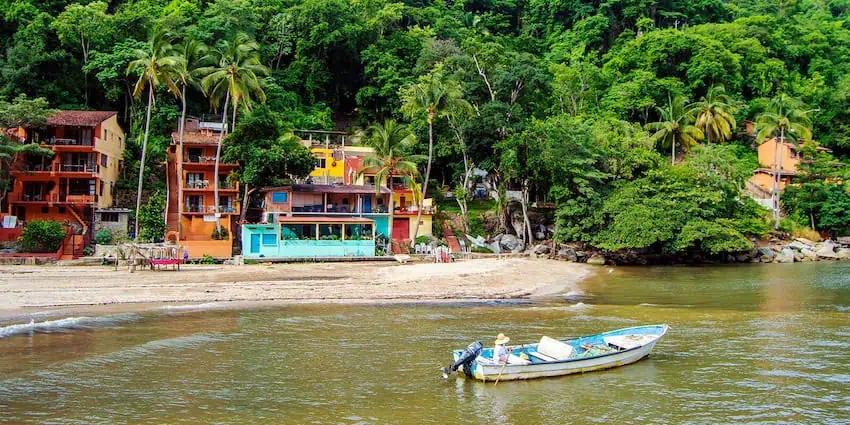
Nestled in a small bay about 20 minutes by road south of Puerto Vallarta, Boca de Tomotlán is the departure point for water taxis to other paradisiacal beaches like Las Ánimas, Playa Caballo, Quimixto and Yelapa. (Visit Puerto Vallarta)
About 30 minutes south of Puerto Vallarta, Boca de Tomatlán is where the adventure really begins. This little fishing village is like a portal to hidden treasures. From here, you can hop on a water taxi to reach secluded beaches like Las Animas, Quimixto and Yelapa. These spots are only accessible by boat or on foot, which only adds to the adventure of getting there. Boca itself is unassuming, though it has gotten busier over the years, with fresh seafood shacks and locals going about their day. It’s the perfect jumping-off point for your southern escapade.
Yelapa: A slice of Paradise
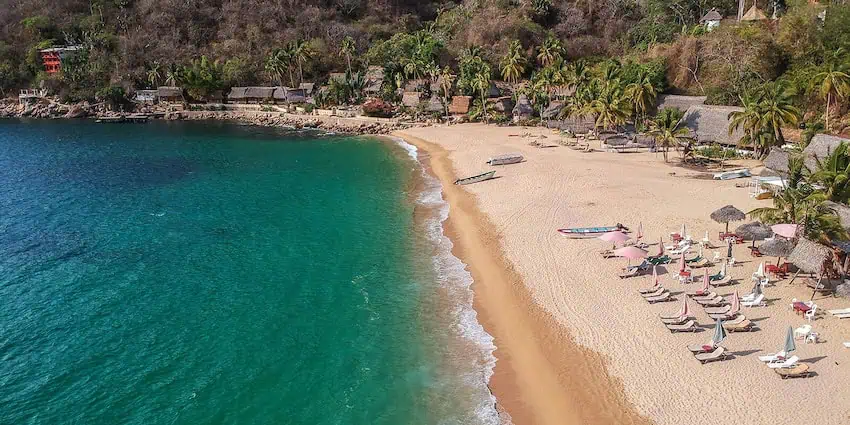
Yelapa Beach is bathed by emerald waters with gentle waves, suitable for swimming, snorkeling and fishing. (Visit Puerto Vallarta)
Yelapa, along the Cabo Corrientes, is one of those places that sticks with you long after you leave. Nestled in a quiet cove, it’s only accessible by boat, and honestly, that’s part of the magic. There are no cars here, and it feels like time moves slower. Spend your days hiking to waterfalls, lounging on the beach, or indulging in a slice of the town’s famous homemade pie (trust me, it’s worth the hype). Yelapa isn’t about luxury in the traditional sense, but it’s got a rustic charm that’s impossible to resist.
Beyond Yelapa: The wild coastline
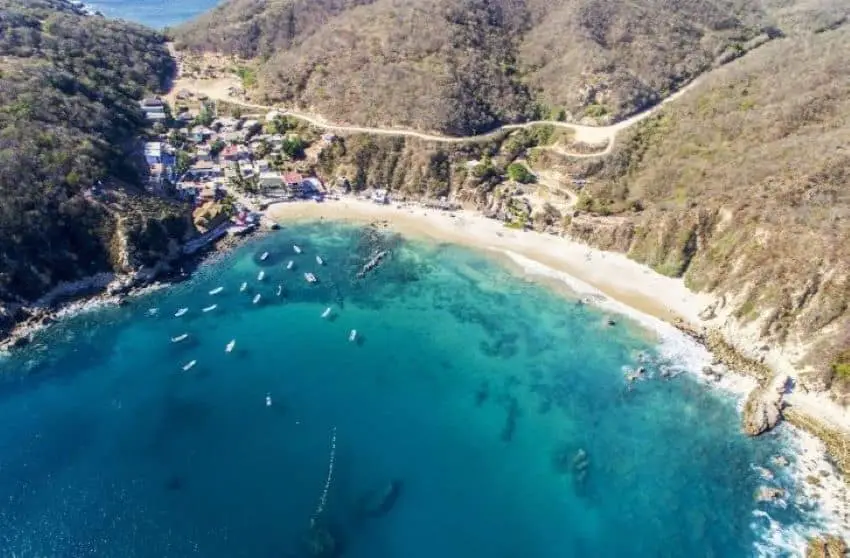
For the truly adventurous, the coastline beyond Yelapa is where things get wild. Think deserted beaches, rugged cliffs and eco-lodges where you’re more likely to see stars than streetlights. Mayto and Tehuamixtle are two of my favorite spots. They’re remote, yes, and the drive to get there is no joke, but once you arrive, it’s nothing short of magical. This is the kind of place where mornings start with the sound of waves and nights end under a blanket of stars. It’s raw, unpolished and absolutely unforgettable.
Costalegre, Barra de Navidad and beyond
For anyone within driving distance, the fiercely wild Costalegre makes a perfect weekend escape.(Costalegre.com)
Further south, you’ll find the Costalegre with its miles of uninterrupted beaches, and Barra de Navidad, a charming town with a laid-back vibe. It’s the perfect spot to soak up local culture, with its cobblestone streets, colorful markets and welcoming community. The lagoon here is great for birdwatching or taking a tranquil boat ride. And if you’re up for more exploring, the nearby beaches of Melaque and La Manzanilla offer even more opportunities to kick back and relax.
Choosing your path
So, what’s it going to be? If you’re drawn to charming small towns with plenty of conveniences, head north. Riviera Nayarit offers that perfect blend of relaxation and modern comforts. But if you’re craving adventure, solitude and a deeper connection to nature, the South is where you need to go. Either way, you’re in for something special. This stretch of Mexico’s Pacific coast has a way of working its magic, no matter which direction you choose. And who knows? You might just find yourself falling in love with both.
Meagan Drillinger is a New York native who has spent the past 15 years traveling around and writing about Mexico. While she’s on the road for assignments most of the time, Puerto Vallarta is her home base. Follow her travels on Instagram at @drillinjourneys or through her blog at drillinjourneys.com
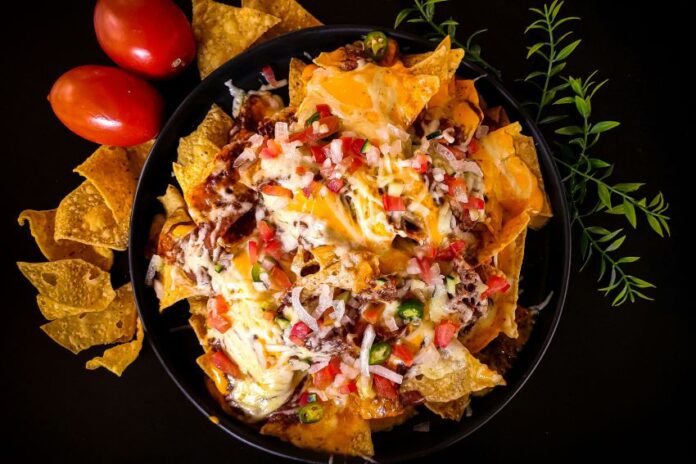
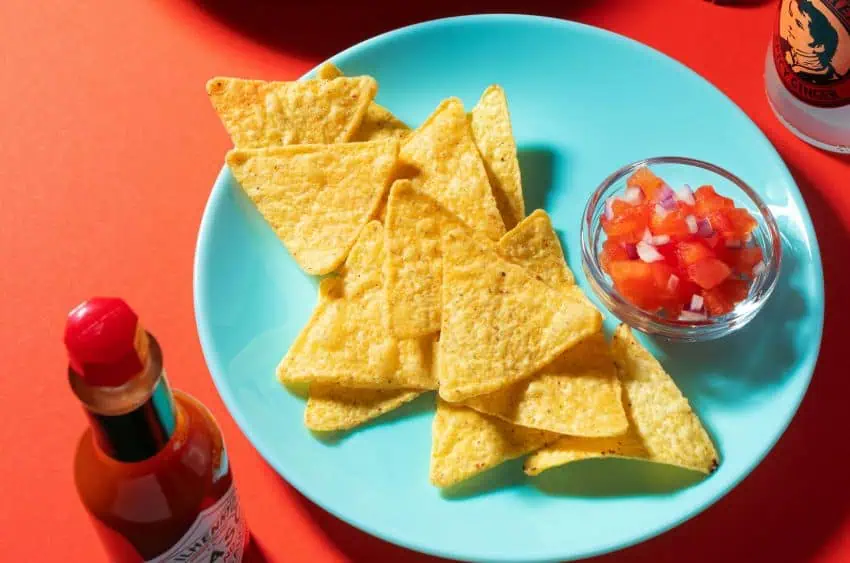
Is there any snack food more popular worldwide than nachos, Coahuila's perfect, ad-hoc culinary treasure? (Coffeefy Workafe/Unsplash)
Many similarities exist in the history of two iconic Mexican dishes, the Caesar salad and nachos. In both cases, the restaurants where they were created were situated near the U.S. border. In both cases, the restaurateurs were scrambling for ingredients and whipped something up to please visitors from across the border. Both dishes are 100 percent Mexican, but in desiring to appeal to foreign tastes, their creators imbued them with a global appeal and each is now served worldwide.
How nachos came to be
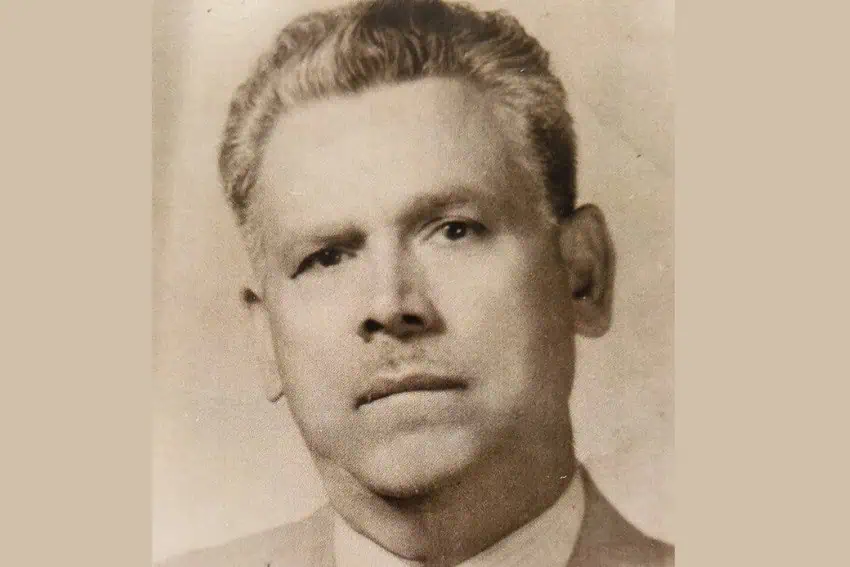
Nachos were created in Piedras Negras in 1943 by someone named — inevitably — Ignacio. Ignacio Anaya García, in this case, was maître d’ at Club Victoria, and one night during World War II he needed something to appeal to the wives of soldiers who were stationed across the border at Eagle Pass, Texas. Unfortunately, the cook wasn’t in the kitchen.
Ignacio Anaya García, the many who invented nachos, as the name might suggest. (Wikimedia Commons)
Anaya’s solution was an elegant one: he layered totopos (tortilla chips), Colby cheese and pickled jalapeños on a platter and popped them in the oven long enough for the cheese to melt: nachos were born. Colby cheese is perhaps a surprising element today, but it wouldn’t have been so to those living in Eagle Pass or Piedras Negras in 1943.
“In Piedras, we used to say that Colby cheese was ‘aid cheese,’” Adalberto Peña de los Santos, director of the Festival International del Nacho, told The New York Times in 2020. “It was one of the ingredients that the U.S. government gave out” during the war and which found its way across the border via the black market.
Nachos were popular from the start, and soon the “Nacho Special” was added to the menu at Club Victoria. Eventually, Anaya started his own restaurant named — you guessed it — Nacho’s.
The Festival International del Nacho
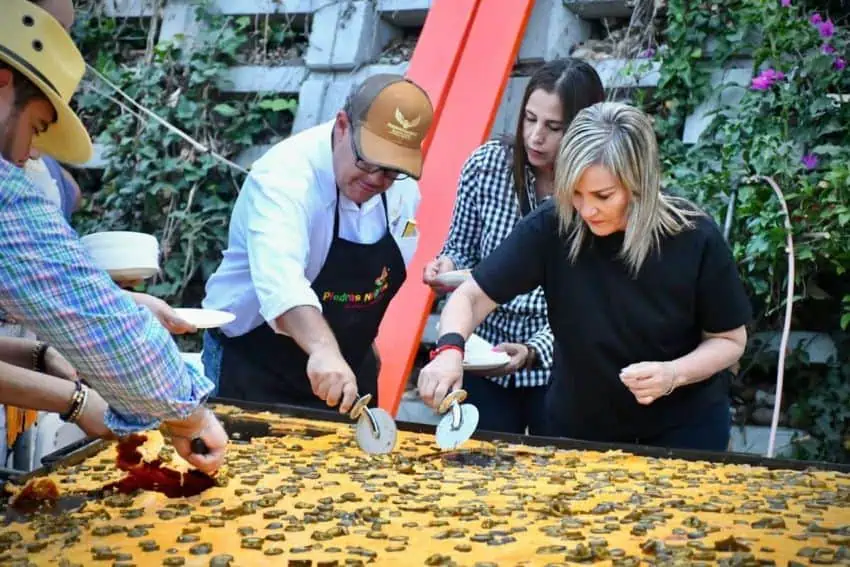
Preparing the world’s largest nacho during the Festival del Nacho in Piedras Negras, Coahuila. (La Rancherita del Aire)
Coahuila, like neighboring Chihuahua and other northern states, is part of Mexico’s cattle country, and beef dishes such as carne asada and discada are popular throughout this region.
However, nachos belong to Coahuila in a way these other dishes don’t, although all are celebrated with festivals. For instance, the carne asada festival is held in Sabinas while the discada festival takes place in the Pueblo Mágico of General Cepeda, with both scheduled annually in March.
Neither of these events draws nearly as many visitors as the 25,000 who show up each October for the Festival del Nacho in Piedras Negras, which held its 29th edition in 2024. This annual showcase of the state’s signature food item features livestock exhibitions, the crowning of a Señorita Turismo, and culinary competitions that range from attempts to make the world’s smallest nachos to the world’s largest. A contest by spectators to consume the greatest quantity of jalapeños is also judged.
It is sometimes but not always celebrated contemporaneously with the International Day of the Nacho on Oct. 21, observed annually since 1995.
Are nachos Tex-Mex or just Mexican?
Coahuila historically owns this dish, but can the U.S. stake a claim too? (Olga Kozanchenko/Unsplash)
It’s an interesting question as there’s no question that nachos were born in Mexico and are a Mexican food dish. However, as chef and author Adán Medrano notes, Tex-Mex is really Coahiltecan cuisine, meaning the food culture that arose in and around San Antonio south down into the northern part of Coahuila, but with origins that predate either Texas or Mexico. Piedras Negras definitely falls within the boundaries where these regional food traditions arose.
A more conventional definition of Tex-Mex is that it combines influences from Texan and Mexican culinary traditions. Whether Wisconsin-made Colby cheese fits into either category is another question entirely, but because it was introduced into regional cuisine during the Second World War the answer seems to be at least a tentative yes.
My own feeling is that nachos are one of the rare foods that fits easily into both Mexican and Tex-Mex culinary cultures and that the dish’s ability to transcend easy categories is one of the secrets to its worldwide success.
The U.S. monstrosity: concession nachos
Many food companies and restaurants in the U.S. have for generations been doing their best to ruin authentic Mexican food. But the quest to transform real ingredients and delicious flavors into something repugnant and unrecognizable reached its zenith with the invention of “concession nachos.”
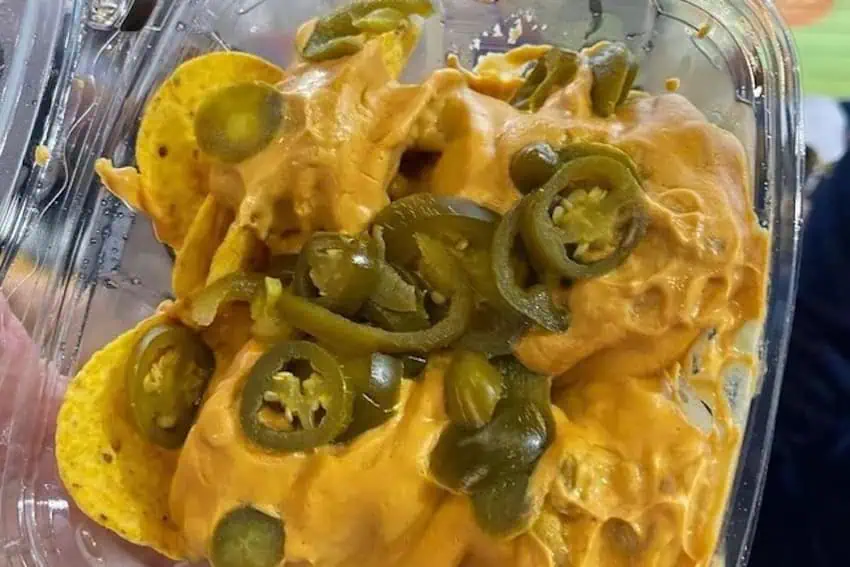
This alone is justification for tariffs against the United States. (Reddit)
The blame for this monstrosity rests with a Texas businessman named Frank Liberto. Nacho Anaya had passed away by the time Liberto started serving concession nachos at Arlington Stadium, home of Major League Baseball’s Texas Rangers, in 1976. So he wasn’t forced to see his beloved Colby replaced with emulsified cheese so processed that refrigeration is unnecessary and can be pumped straight from a dispenser.
Two years later, in 1978, concession nachos debuted at the Dallas Cowboys stadium and were touted during a Monday Night Football broadcast by Howard Cosell. Before long, they were served at virtually every other sporting venue in the country. Needless to say, however, these aren’t real nachos but a twisted perversion of the original.
Coahuila and the birth of Mexican wine
No discussion of Coahuilan cuisine can exclude the state’s wines. Nachos and wine may not seem like a natural pairing, and they’re not. Beer is a better accompaniment to Nacho Anaya’s creation. But wine is a perfect pairing for Coahuilan beef and has a very long history in the state, dating back to the 16th century and the establishment of a mission at Valle de Parras.
In 1597, thanks to a grant to Don Lorenzo García from King Felipe II of Spain, vineyards were planted at Hacienda San Lorenzo to produce wine and brandy in Valle de Parras in the southern part of Coahuila, 140 miles west of Monterrey. Later renamed Casa Madero, this winery, whose grapes are irrigated by natural springs between the desert and the Sierra Madre Occidental, has been in continuous operation for 427 years, making it not only the oldest in Mexico but in the Americas.
Chris Sands is the Cabo San Lucas local expert for the USA Today travel website 10 Best, writer of Fodor’s Los Cabos travel guidebook and a contributor to numerous websites and publications, including Tasting Table, Marriott Bonvoy Traveler, Forbes Travel Guide, Porthole Cruise, Cabo Living and Mexico News Daily. His specialty is travel-related content and lifestyle features focused on food, wine and golf.
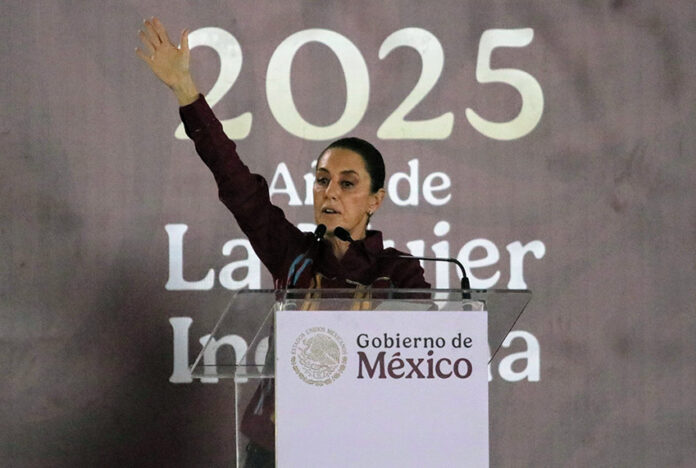
2025 is already off to a tricky start for Mexico. Here's a preview of some of the challenges that need to be faced this year. (Presidencia/Cuartoscuro)
Join our subscriber-exclusive podcast as our weekly discussion takes a look at the potential challenges facing Mexico in 2025 and how President Claudia Sheinbaum — and the country might react.
This year is shaping up to be an interesting year for Mexico, with a new president and the return of former President Trump to the White House. The team discuss Mexico News Daily CEO Travis Bembenek’s predictions on a wide array of topics including the Mexican economy, the drug cartels, Chinese investments, green energy projects, and tourism.Will his predictions prove to be true, and what lies in store for Mexico over the course of the next 12 months?
MND Perspectives: The economic problems facing Mexico
What are your predictions for Mexico in 2025? Let’s discuss.
This podcast was produced using AI tools. All information collected and discussed in this episode was investigated, written and edited by human journalists. Compiled from a Mexico News Daily article by Travis Bembenek. Edited by Rose Eglhoff. Podcast produced by Chris Havler-Barrett.
In recent years, Mexico has become the most popular destination for expat U.S. veterans living or traveling abroad, with tens of thousands now residing in Mexico full-time.
On Dec. 16, 2024, Congressman Nick Lalota (NY-1) introduced H.R. 10430, the Veterans Foreign Medical Coverage Equality and Modernization Act of 2024, onto the floor of the United States House of Representatives.
If enacted, this landmark legislation would drastically improve healthcare access for tens of thousands of expatriate U.S. military veterans who live or travel abroad, particularly in Mexico, which now boasts the largest population of expat (non-active duty) U.S. military veterans worldwide.
A critical need for change
The VA Foreign Medical Program (FMP) is often the primary healthcare option for expat U.S. military veterans living or traveling abroad who are not fully retired and therefore ineligible for Tricare. However, unlike Tricare, the FMP program only covers treatments for service-connected disabilities.
This leaves the 17,000 disabled veterans living abroad who are rated 100% Permanent & Total (P&T) without coverage for non-service connected conditions. As a result, these veterans are on the hook for a broken leg, COVID-19 testing & treatment or even a life-saving treatment for a heart attack while abroad. This limitation is in stark contrast to the VA’s CHAMPVA program, which currently provides comprehensive healthcare coverage both in the U.S. and abroad to the dependent spouses, children and caregivers of disabled veterans rated 100% P&T.
The proposed legislation seeks to amend Section 1724 of Title 38 of the U.S. Code to expand FMP’s coverage abroad for these veterans. This change would ensure that veterans rated as 100% P&T receive care for all healthcare needs abroad, regardless of whether the condition is service-connected.
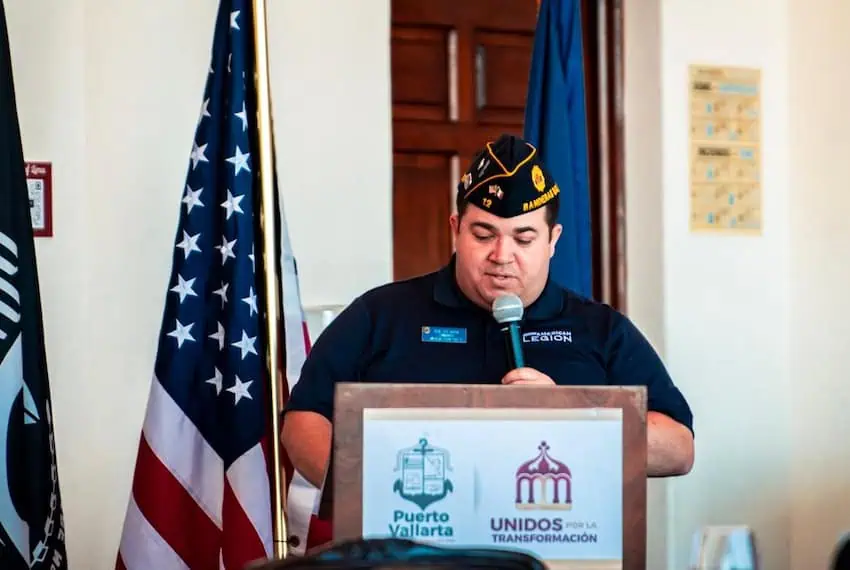
Jesse Cole Rivera, Commander of American Legion Post 12 in Puerto Vallarta, Jalisco, first brought the FMP program to Congressman Lalota’s attention in the summer of 2023. “Disabled veterans rated 100% Permanent & Total who rely on the VA Foreign Medical Program while living or traveling abroad deserve to get coverage that is at least comparable to that of their dependents who have access to the CHAMPVA program abroad,” said Rivera.
Jesse Cole Rivera, Commander, American Legion Post 12 Banderas Bay, at an event in Puerto Vallarta, Jalisco.
Modernizing the system
In addition to expanding coverage for disabled veterans rated 100% P&T, the VFMCE Act proposes modernizing the FMP’s payment and processing systems, which will benefit an additional 54,000 disabled veterans living abroad who also rely on the program, in addition to the 17,000 disabled veterans living abroad who are rated 100% P&T.
Under the legislation, all veterans and the healthcare providers treating them would benefit from the implementation of direct deposit payments and digital submission of claims, significantly reducing reimbursement times for veterans and healthcare providers abroad.
“The VFMCE Act will be a game-changer for veterans living abroad,” said Dr. Christina Boover-Lawrence of Lawrence Speech & Hearing, which operates speech & audiology clinics that treat veterans in the U.S. and Puerto Vallarta area. “By reducing reimbursement times for foreign providers, we create a system where more providers abroad are willing to treat veterans who rely on the FMP program. This increased access to care will improve patient outcomes and save lives by ensuring veterans receive timely and quality medical attention wherever they are in the world.”
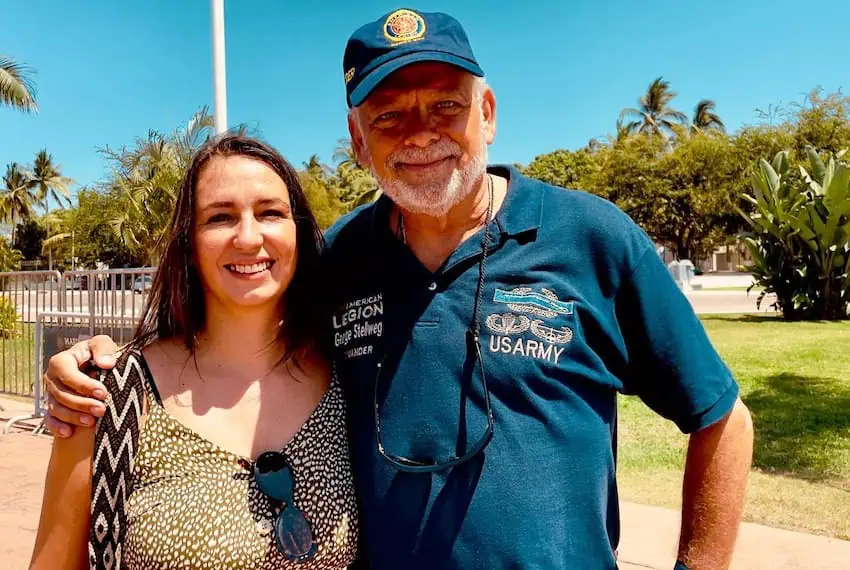
George Stellweg, Commander of American Legion Post 2 in Mexico City, agreed: “Modernizing the Foreign Medical Program’s payment and processing systems isn’t just about convenience—it’s about creating a transparent and efficient system that works for veterans.”
George Stellweg, Commander, American Legion Post 2 Mexico City, attending a U.S. Coast Guard cutter tour in Puerto Vallarta, Mexico, with his wife.
These upgrades are also expected to save U.S. taxpayers US $12-20 million annually, which will significantly offset the costs associated with the proposed coverage expansion.
Veterans in Mexico: A growing population
In recent years, Mexico has become the most popular destination for expat U.S. veterans living or traveling abroad, with tens of thousands now residing in Mexico full-time. Many are drawn by the low cost of living, proximity to the U.S., cultural similarities and access to quality and affordable healthcare in many of Mexico’s larger cities.
Cities like Puerto Vallarta and Lake Chapala attract a lot of veterans but tend to be more popular among veterans of different generations. Younger, post-9/11 era veterans — very often raising dual citizen families in Mexico — prefer Puerto Vallarta, while older, retired Vietnam-era veterans tend to favor Lake Chapala.
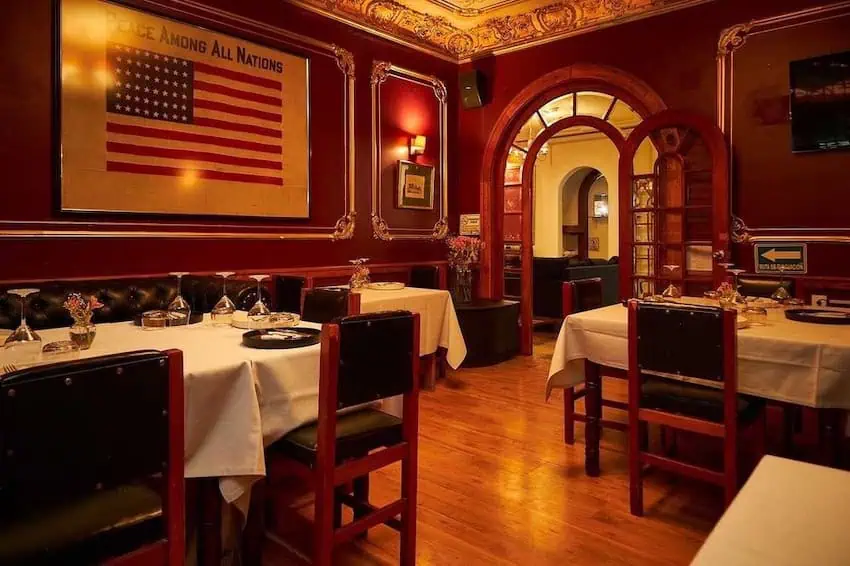
Mexico City’s Condesa neighborhood, which boasts one of the oldest American Legion posts in the world — first chartered in 1920 — also remains a popular destination among expat U.S. veterans due to the post’s on-site restaurant, bar and bookstore.
Jasper’s Restaurant, home of American Legion Post 2 Mexico City in Condesa, Mexico City.
Legion advocacy and community service in Mexico
American Legion posts in Mexico have been instrumental in advocating for the passage of H.R. 10430. These posts, in cities like Puerto Vallarta, Mexico City and Lake Chapala, provide not only community support but also a powerful voice for veterans abroad.
Randall Butler, a past commander of American Legion Post 7 in Lake Chapala and current Vice Commander of the Department of Latin America, expressed optimism about the bill’s prospects: “The [American Legion’s] Department of Latin America, Department of California and Department of France all look forward to seeing this bill get through the House and Senate in the 119th Congress and signed into law by President Trump.”
American Legion posts in Mexico are also deeply engaged in their local communities, often running toy drives, organizing blood drives and renovating local parks, clinics and libraries. Overall, the Legion’s work in Mexico reflects both its dedication to assisting fellow veterans and to serving others, regardless of nationality, in the local communities they now call home.
A path forward
H.R. 10430 represents a vital step toward equity for expat U.S. military veterans living abroad. By expanding coverage and modernizing payment systems, the bill promises to ensure that veterans rated as 100% P&T can access comprehensive healthcare no matter where they reside. With strong support from veterans and healthcare advocates in the U.S. and abroad, and with endorsements from large influential non-profit organizations in the U.S. like the League of Latin American Citizens (LULAC), the bill is poised to quickly make its way through the 119th Congress and deliver long-overdue justice to those who have sacrificed so much for their country.
As Commander Rivera succinctly stated, “This bill just makes sense.”
Disclaimer: The statements expressed above, by representatives of American Legion Post 12 Banderas Bay, American Legion Post 2 Mexico City and the American Legion’s Department of Latin America, should not be interpreted as statements made by or expressing the views of the American Legion’s National Executive Committee (NEC).
Low projected GDP growth is one of the most serious issues facing Mexico as Sheinbaum leads the country into a new year. (Margarito Pérez Retana/Cuartoscuro)
I have been optimistic about Claudia Sheinbaum as the new president. I think she has the personality, intellect and experience to be an strong leader. As I mentioned in a recent column “Claudia Sheinbaum, a case study,” she has an exceptionally difficult task to manage the initiatives begun under fromer President López Obrador, contend with a confrontational President-elect Trump, and work with Canada despite its current leadership situation. I have been more than willing to give her the benefit of the doubt so far in her presidency and recent polling with the Mexican population shows that her popularity is higher than ever.
I could go on at length about many of the important initiatives and decisions she has already made. Sheinbaum has managed the Trump and Trudeau relationships well thus far. She has taken a firm and necessary stance in several areas against China. She’s prioritized increasing minimum wage to keep up with inflation. And I like that she has started a pension program for elderly women regardless of if they worked in or out of the home. All great first steps. But this past week has brought a number of flashing red light warning signals on the economic front that concern me. I worry that the economic issues risk becoming much bigger problems if Sheinbaum doesn’t quickly take them head-on. The honeymoon is now over.
Sheinbaum has started off strong in her relationships with Canadian PM Trudeau and U.S. President-elect Trump, Travis Bembenek writes. (Cuartoscuro)
The first issue is Mexico’s gross domestic product (GDP) forecast for 2025. Both the World Bank and the United Nations predict Mexico’s GDP will grow 1.5% or less this year. (The United States GDP is projected to grow 2.5%.) Cepal, the Economic Commission for Latin America and the Caribbean, predicts Mexico’s GDP to be at only 1.2% this year. To put that in perspective, every single country in the region except for Cuba and Haiti are expected to have higher GDP growth than Mexico this year. Think about that for a moment, Mexico — which is hitting record highs of foreign direct investment, record highs of exports, a record share of U.S. imports, record tourist receipts and visitors and record remittances from Mexicans living abroad — is expected to have GDP growth this year similar to two of the slowest-growing economies on the planet.
Experts point to uncertainty from the Trump administration on the possibility of tariffs against Mexico, potential deportations, and concerns around the U.S. taking action against Mexican cartels as reasons for the low projections. All are valid concerns, but every country has their economic headwinds and yet are able to grow faster than 1%!
The second economic red light came with the terrible job creation numbers recently reported for 2024. The Mexican economy nationwide created only 214,000 jobs in the entire year — the worst since 2003 in a non-crisis year. In addition, the number of layoffs in December was the highest in three decades! Businesses clearly are not confident enough to hire right now and many are even reducing headcount.
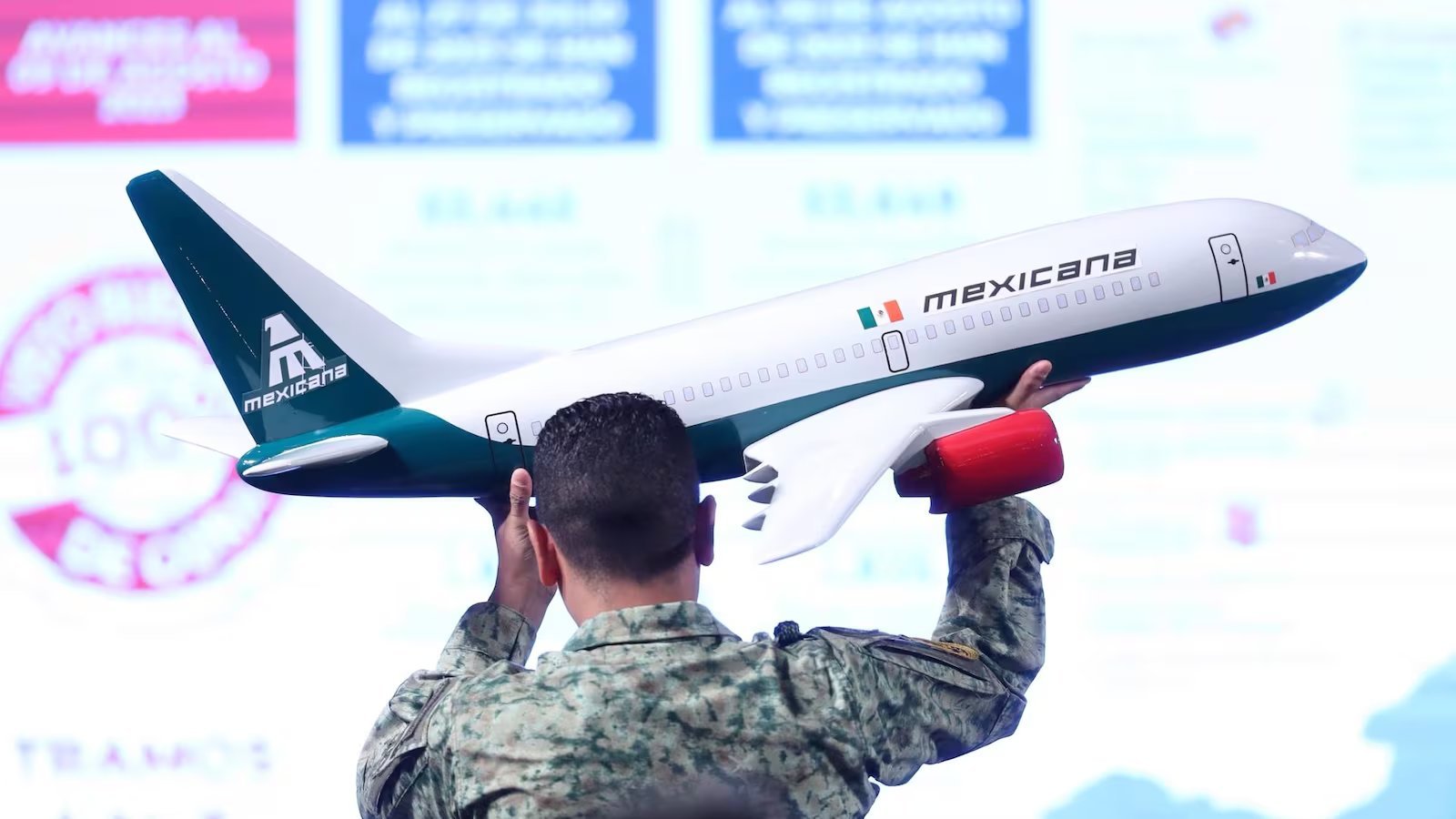
Another economic red light came with the very sudden announcement this past weekend that Mexicana, the once-bankrupt airline resuscitated by AMLO, cut nearly 50% of its flights without warning after less than a year in business. It was a reminder of how absurd of an idea this was from the very beginning — a military-run, government-owned airline using leased airplanes in a very competitive market.
The military-run airline Mexicana’s decision to cut many of its routes could be an omen of a tough year ahead for the economy. (Senado de México via X)
In business it’s important to always ask, “What problem is my product or service looking to solve?” and clearly that question was never asked with Mexicana. Mexico already has three very agile, competitive, customer-focused, fast-growing national airlines in Aeroméxico, Volaris and Viva Aerobus. All three airlines have been rapidly adding capacity — new airplanes and new routes — in response to record customer demand. State-run airlines — outside of a few in the Middle East or China — have tended to not be competitive with private sector airlines. Then again, Cuba has a state-run airline…
Yet another red light came at the beginning of the week with the announcement from Sheinbaum that Mexico’s first electric car, the Olinia, would debut in time for the 2026 World Cup. The project is partly government funded, and has the potential to be the poster child of poor government policy. Mexico has a thriving, world-class auto sector with the top companies from around the world already producing in Mexico or planning to soon. Several companies have announced billion-dollar investments in electric car production in Mexico in just the past year. Why on Earth would the Mexican government think that it can take on the likes of Tesla, BYD and others in electric vehicles?
We all want clean, affordable electric vehicles — but to think that a government-funded manufacturing startup is the best way to get there is pure lunacy. It shows a lack of seriousness of the administration and a complete lack of understanding and appreciation of how the free market works. I cannot help but fear that the Olinia will be the next Saturday Night Live skit as a follow up to “The Adobe.”
The previously mentioned economic red lights, along with many others, are manifesting themselves as they often do, with a rapidly devaluing Mexican peso. In many ways, as I have discussed in previous articles, a weaker peso can in fact be quite good for the Mexican economy. But the speed at which the recent devaluation has occurred, and the sheer amount of the devaluation (25% and counting) is a clear sign that investors are quickly losing faith in the economic agenda of this new administration.
I would never contend that President Sheinbaum has an easy job, or that there are quick fixes, or that she wasn’t dealt a difficult hand by her predecessor. But there are some tangible things she can do in the short term to demonstrate that she is serious about getting the economy growing at the 3-5% rate that it can and should be growing at. One could argue that Mexicana and Olinia are not significant in terms of economic impact, but I think the bigger concern is that it shows a lack of focus of the administration on things that are far more important — like job creation and GDP growth! So here are a few ideas:
Very publicly acknowledge that 1% GDP growth is NOT acceptable and getting to 3-5% is a top priority.
Make the politically hard (but financially very easy) decision of shutting down Mexicana airlines to send a strong signal.
Do not get distracted with Olinia, but rather focus on supporting the automotive private sector with what they need to invest and grow in the country.
Find ways to fast track investment from the private sector in the energy industry — especially green energy. The world is quickly realizing that the combination of data centers, AI and EVs means increased energy capacity is an urgent priority. Countries that get this right will accelerate, those that don’t will fall behind.
Go on a very visible “listening tour” with top business leaders in the country. Secretary of Economy Marcelo Ebrard has been visibly doing this, but Sheinbaum has not made it clear that its a priority for her. Mexico has been attracting significant reinvestment foreign direct investment dollars, but new investment has been concerningly low. The administration needs to understand clearly what is needed to accelerate investments and take some tangible steps to work on those needs, ASAP.
Get the Morena-majority Congress under control and focused on issues that directly impact economic growth.
Balance the populist messages (many of which are good) with “Mexico is open for business and investment” messages. Populism without economic growth is a recipe for disaster.
A concern voiced by many was that Sheinbaum would end up staying in the shadow of AMLO and focusing on populist issues at the expense of economic growth. Mexico, despite all of its potential, continues to have a perception problem, appearing (to many investors) unable to get out of its own way and seize its economic opportunities. It is critical for President Sheinbaum to demonstrate otherwise quickly before the business and investment community loses its faith in the new administration.
Travis Bembenek is the CEO ofMexico News Daily and has been living, working or playing in Mexico for nearly 30 years.
Luxury living, pool included, is available in this residence at Las Ventanas al Paraíso. (Pacaso)
Resorts and real estate are the economic drivers in Los Cabos. For the former, the focus has increasingly been on luxury. Room rates have risen steadily in recent years as numerous high-profile hospitality brands have opened upscale resorts in the area. For the latter, luxury hasn’t necessarily been the trend. Yes, multi-million dollar ocean-view homes continue to be sold. However, the market has also seen more condo developments offering primary or secondary residences at lower prices.
How the Los Cabos real estate market is changing in 2025
A cooperative ownership share is available for this residence at Palmilla in Los Cabos. (Pacaso)
One of the more interesting new developments on the real estate side for 2025 and beyond is an attempt to make the luxury market more accessible in Los Cabos. Of course, what companies like Pacaso are doing — selling fractional shares in luxury properties — doesn’t just appeal to those who couldn’t otherwise afford a beachfront home or hilltop villa with world-class golf access.
As The Hollywood Reporter noted in an article profiling co-ownership marketplace Pacaso in 2024, celebrities and others with substantial wealth are also increasingly interested in fractional real estate ownership… at least regarding secondary or vacation homes where they may spend only a few weeks or a few months each year.
“Fractional ownership happens more often than you’d think would make sense with the uber-wealthy,” Josh Altman, realtor and star of the real estate reality series “Million Dollar Listing” pointed out in the piece. “It’s a money play. Maybe one of them didn’t want to drop US $108 million, even though they could any Tuesday of the year and not even care. It’s a way to make your money go further.”
Whether it’s celebrities, pro athletes or those who simply can’t afford to be the sole owner of a multi-million dollar vacation, the Pacaso model does seem to be gaining traction— and in exactly the kind of destinations one would suppose.
Fraction ownership is available at The Break, a residential building with spectacular terrace views in Los Cabos. (Ancana)
Los Cabos is among the top three most sought-after co-ownership destinations in North America
Pacaso, a relatively new real estate service that was the brainchild of former Zillow executives, reports that its top three most-searched-for markets for co-ownership opportunities are in the Lake Tahoe area, Vail and Los Cabos.
The enhanced interest in Los Cabos among worldwide real estate offerings that include properties in Paris, London and New York City may seem surprising. But its mostly year-round appeal — locals take their vacations in August and September for a reason — and lifestyle amenities like world-class golf, food and drink and abundant beaches have clearly caught the attention of those in the market for secondary homes.
The population of Cabo San Lucas alone more than tripled between 2010 and 2020. There are many reasons for this demographic explosion, including the need for a workforce to staff the many new luxury resort openings. However, a look at the real estate numbers through the first three quarters of 2024 — just under 1,000 new homes and condos moved with sale prices totaling 1.13 billion dollars — is ample evidence of how attractive Los Cabos is to home buyers right now.
What does co-ownership of a luxury property look like?
Elegant design for living at Villa Topaz, on Los Cabos’ East Cape. (Pacaso)
Ocean views and vantages are the gold standard in Los Cabos property, and not surprisingly, the number one factor sought out by prospective buyers. According to the latest statistics from Pacaso, the average annual stay in Los Cabos homes is 27 days per owner, with 90% occupancy, compared to 11% for traditionally owned vacation homes. One-eighth ownership is standard.
It’s a great way to enjoy a luxury asset you wouldn’t have been able to afford otherwise, but there are downsides. Pacaso’s fee —10 to 15% of the home value for putting the ownership group together and facilitating the sale — is one. Limited control is another. There is the potential for disagreements among owners regarding maintenance and improvements, especially if fellow owners aren’t family members or friends — or even if they are. Amenities will see greater use too, due to almost continuous occupancy. Of course, the cost of anything that needs to be replaced will be split.
Given the specialized niche as compared to more conventional real estate offerings, shares may be harder to sell than a wholly-owned home. However, owners are currently averaging a 14.7% profit upon selling.
Part of owning a Pacaso is having the flexibility to resell your home, the agency says. (Pacaso)
The upside is that the field of companies offering these kinds of cooperatively owned properties is growing, which means Pacaso is no longer the only option. Ancana and Lifestyle Asset Group now offer luxury fractionals in Mexico, although limited listings are available in Los Cabos, at least as of January 2025. Other companies, like Ember or Luxury Shares, specialize in similar services but have not yet expanded offerings from the U.S. to include Mexico.
Not everyone loves the model. The city of Sonoma, California, banned Pacaso’s business model. However, this kind of blowback seems unlikely in Los Cabos, where selling real estate, by any method, is a kind of secular religion.
What kind of co-ownership opportunities are available in Los Cabos and how much do they cost?
Pacaso is currently showcasing 23 listings in the Los Cabos area, all on the one-eighth ownership model. Shares are selling for as low as US $146,000 for the three-bedroom, two-and-a-half-bath Villa Topaz on the East Cape, and as high as $822,000 for a five-bedroom, five-bath luxury home in Palmilla or $869,000 for three-bedroom, three-and-a-half-bath residences at Las Ventanas al Paraíso, two sought-after locations in the Tourist Corridor that connect the cape cities.
Listings from Ancana and Lifestyle Asset Group are competitive on both the low and high end. Ancana has one listing in Los Cabos, a one-eighth ownership stake comprising six weeks of residence annually at The Break for US $227,500. The Break, located just outside San José del Cabo, features ocean views from its nine-residence building.
Lifestyle Asset Group, meanwhile, has sold its lone current Los Cabos listing, a three-bedroom, two-bath condo at Cascadas in Pedregal. The purchase price was advertised as US $825,000 for at least eight weeks of residence per year, with $9,000 in expenses estimated annually.
Chris Sands is the Cabo San Lucas local expert for the USA Today travel website 10 Best, writer of Fodor’s Los Cabos travel guidebook and a contributor to numerous websites and publications, including Tasting Table, Marriott Bonvoy Traveler, Forbes Travel Guide, Porthole Cruise, Cabo Living and Mexico News Daily. His specialty is travel-related content and lifestyle features focused on food, wine and golf.
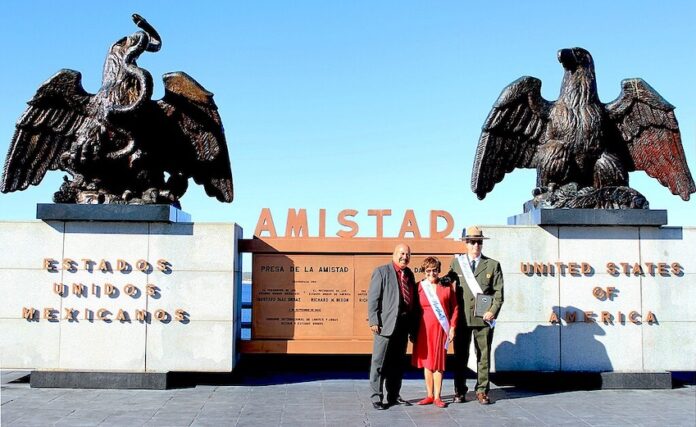
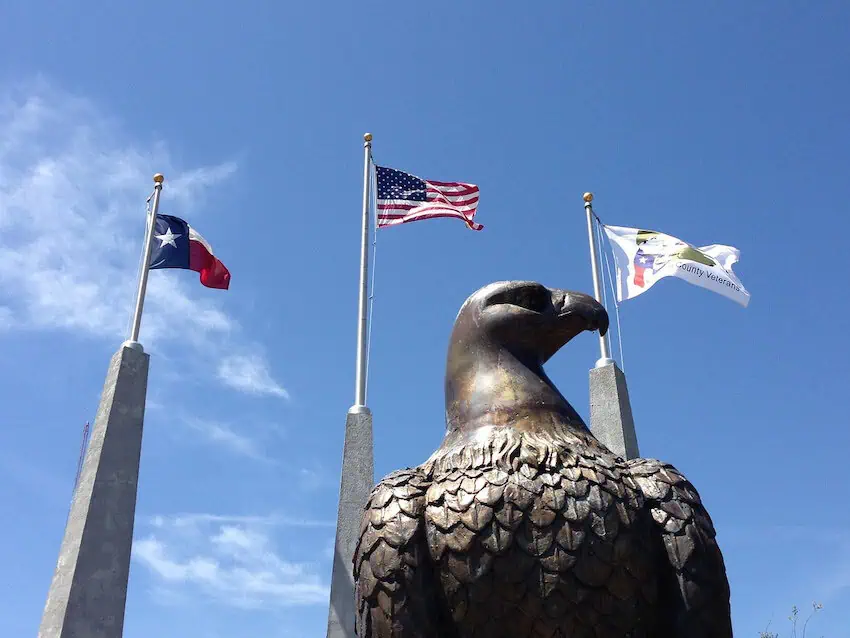
Texas has a governor who is going to greater-than-ever extremes, and Mexico has a "hands-on" new president. What will become of their relationship this year? (NPS Photo/Wikimedia Commons)
Ah, Texas and Mexico. So close, and really, not all that different.
When other foreigners find out I’m from Texas — especially if they’re from a markedly liberal state or Canada — they pause. “Oh, so, did you bring your guns with you?”
Is it necessary to clarify that the gun-carrying thing is a stereotype? For both sides? (Brett Sayles/Pexels)
I’m pretty sure many of them start wondering right then and there if we can even be friends; they smile, but hesitantly. “Uh-oh, I hope she’s not a nut job.”
We Texans have a reputation. Our crazy government officials, mostly there through some Texas-sized gerrymandering and low voter turnout, certainly don’t help.Have you seen Districts 28, 15 and 34? They’re a real doozy.
But despite that, we’re friendly. Really, even the politically crazy ones, which, yes, I know is in the eye of the beholder. In fact, I routinely call Texans “the Mexicans of the U.S.”
Why? We are both unique in our friendliness and generally gregarious nature. We try to be hospitable and generous, though you wouldn’t know it with Governor Abbot’s border craziness. And we’re both proud of our Mexican food?
Friendly, family-oriented and kind of crazy, people from both Texas and Mexico have a lot in common. (Mario Amé/Pexels)
We also both produce people who are just a little crazy, in a kind of scary but mostly fun way.
In many ways, Texas and Mexico grew up together. Texas was Mexico, of course, until a bunch of American ruffians rode in and claimed it for themselves. It’sa part of Texas history I’m not proud of: playing dumb regarding Mexico’s abolitionist laws with the full intention of occupying its “backwoods” so they could get rich by way of slave labor. Honestly, it’s amazing Mexicans will even talk to Texans after Santa Ana was forced to sell.
But they do, because what choice is there? We’re right next to each other, and many of them stayed in Texas afterward, anyway. The border moved, but they stayed in place. Especially unfairly, some of them fought on the Texas side, but got labeled as “the enemy” anyway.
What will become of the Mexico-Texas relationship as we enter 2025 together?
I’m hoping to travel to the Texas border when I visit home in a couple of weeks. I’ve never been, believe it or not, but I have several connections in the area. And while the areas on both sides of the border might be demographically similar, I’m told that they look like different worlds. Mexico looks like, well, Mexico, while the US cities on the other side look like all the other U.S. cities.
The main reason for this is design. Mexican cities kept their traditional looks and urban setups. On the Texas side, communities “modernized” into what they are today. While sprawl and zoning are the name of the game in Texas, cities on the Mexican side have remained compact.
There’s also the question of language. I have heard some strange Spanish in Texas. Y’all ever heard someone say “wátchala”? It took me a while to realize they were saying, “watch her.” Cute, right? But I’ve also been rebuffed when I’ve tried to speak Spanish myself as someone who is clearly not Latino. “What, you don’t think I can speak English?”
Some of the most vehemently “anti-immigrant” people I’ve met in Texas are clearly Latino and have accents. (Pixabay)
I’ve found it’s best not to assume anything, and lead with English no matter what language you hear someone speaking. Also wise is to refrain from sounding like a know-it-all about Mexican culture and history.
So I push aside my desire to show off my Spanish now, and only pull it out if it’s really necessary. From my friends along the border, however, I’ve heard that Spanish is the primary language. Schools are bilingual, as are most businesses and government offices.
Is “the valley” the easy-going U.S. bilingual paradise I’ve always envisioned?
Much to my surprise, friends who live there told me that they were shocked to realize how many of their friends and neighbors voted for Trump. They liked his bravado, his open machismo. Indeed,Republicans in the U.S. gained mightily among Latinos in this last election, a traditionally Democratic group. Perhaps they found his irreverence attractive, too.
As we fight in the United States about immigration and the border, this is worth thinking about. It’s also worth noting that similar demographics do not directly translate to allies. Some of the most vehemently “anti-immigrant” people I’ve met in Texas are clearly Latino and have accents. I mean, I get it, I guess. I also make a show of being on the side of my hosts.
Still, my home state does seem a little crazier than usual lately. Mexico, on the other hand, seems like it’s being led by many level-headed people.
So what will become of us as we enter this new world together? We have a new U.S. president who believes he has a mandate to “ship out” uninvited immigrants and set tariffs galore. Texas has a governor who is going to greater-than-ever extremes to stop people who are quite similar to many native Texans from coming in. And in Mexico, we have a new president with a decidedly different style who must “make it work” no matter what.
Will our shared love of tortillas and norteña music be enough to keep us together?
The magic of Mexican street food extends beyond even the borders of the country. Look beyond traditional fillings to find something new and inspiring. (Canva)
I was born and raised in Mexico City, a place where the streets are alive with intense aromas, snack stands and street vendors offering a variety of treats. From the classic corn on the cob with chili and lime to more elaborate dishes like tacos de canasta and freshly made tlacoyos, there’s something for everyone. From a young age, I learned that every dish tells a story. Mexican cuisine is a rich mosaic of our pre-Columbian heritage and colonial influences — an ongoing blend that has been reinvented from generation to generation.
I’m currently on vacation in Los Angeles, and I can’t help but notice how daily life here mirrors the vibrant food culture of my hometown. On every corner, there are food trucks or stands selling tacos al pastor, carnitas and suadero, along with street vendors offering churros and freshly cut fruit. Seeing those chunks of watermelon, mango and cucumber sprinkled with chili powder, lime and salt instantly brings back memories of visiting Chapultepec Park or strolling around Parque España in La Condesa, where I could always find someone selling fruit. I’m also reminded of those Sundays when my family would take me to see “el Pecas,” my fruit vendor, who would prepare a cup of watermelon for me with just a little chili, and a generous amount of salt and lime.
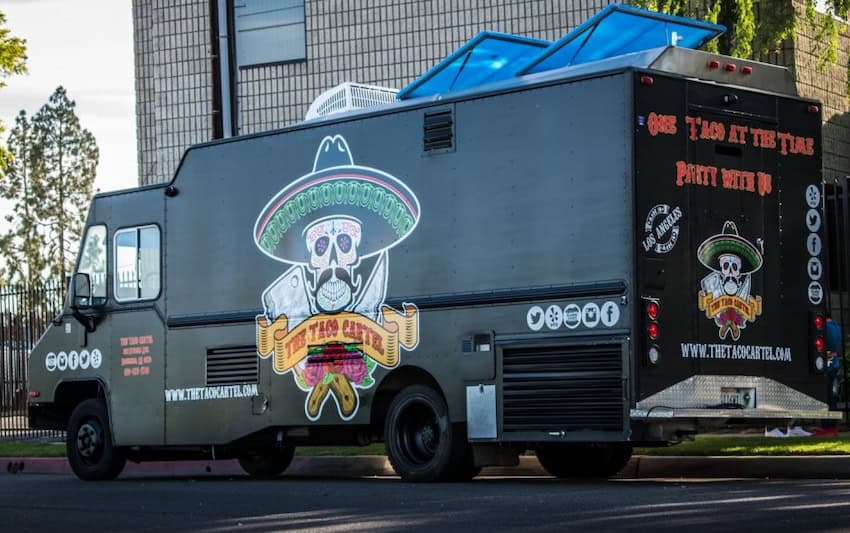
Los Angeles’ food trucks are a reminder of street food vendors in the streets of every major town in Mexico. (Food Truck Connector)
Street food stalls have been a part of Mexico’s culture since pre-Columbian times. In markets like Tlatelolco, the Mexica were already selling fresh produce and ready-to-eat meals. Observing the diverse crowd in Los Angeles enjoying tacos, quesadillas, and fruit with chili demonstrates how this age-old practice has continued from Mesoamerica to the streets of California. It’s fascinating to hear people effortlessly switch between English and Spanish while discussing taco preparation; if it weren’t for the constant shifts in language, I could easily believe I was in a neighborhood in Mexico City.
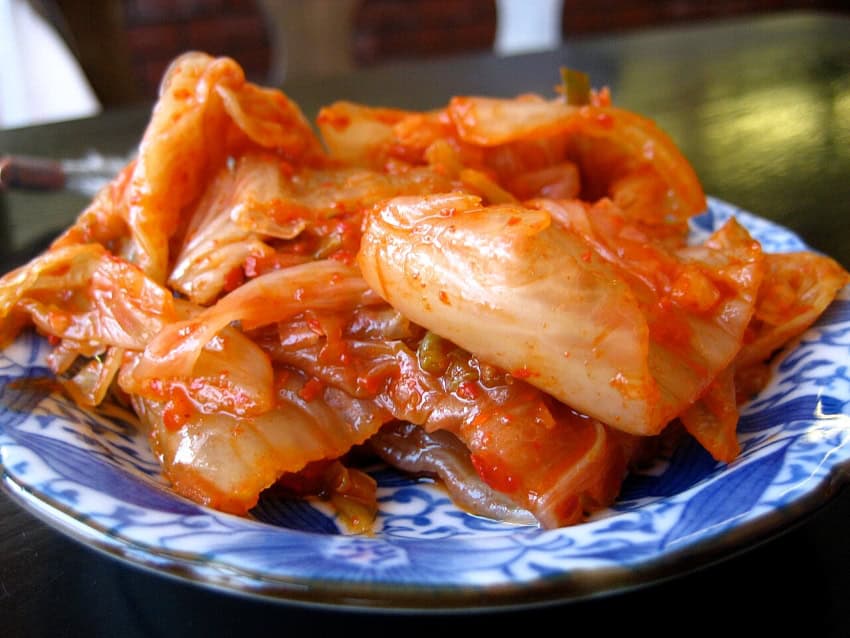
During my visit, I was most surprised by the fusion of Mexican cuisine with Korean barbecue. When I first saw the words “taco” and “kimchi” side by side on the menu, I felt a mix of excitement and mild hesitation. Mexico is known for turning just about anything into a taco — whether it’s spaghetti, sushi, or even sweet treats like Nutella. In a playful act of irreverence, we sometimes called them “crepes,” but let’s keep that from our French friends!
So, I decided to take the plunge and order a bulgogi taco with kimchi. To my surprise, the combination of the fermented spiciness of the kimchi and the soft texture of the corn tortilla created a new flavor that still felt familiar. The spicy hint reminded me of the chilis we often use in Mexico, making the integration of the Korean ingredients feel almost natural.
This experience reaffirms my belief that cuisine is a universal language that connects cultures, customs and memories. Every fusion dish tells a story of encounters between communities, open dialogue and spontaneous adaptations that happen when people from different backgrounds share the same space. Personally, I have deep respect for the history embedded in each recipe, and I am also excited to see how these ancestral methods can be transformed into something new while retaining their essence.
The fermented heat of kimchi pairs perfectly with Mexican cuisine. (Jeremy Keith/CC 2.0)
To those who feel uncertain when faced with unfamiliar ingredients on a menu, I encourage you to take the leap and try them! While there are indeed challenging ingredients and dishes, I always remember what my mother used to say: “How do you know you don’t like it if you haven’t tried it?”
Even Mexicans can find it daunting to sample things like crickets or particularly spicy dishes for the first time. We also recognize that our stomachs might need time to adjust to new flavors when in foreign countries. However, every bite offers a glimpse into the history of the place, the culture and the person who prepared it, and you don’t want to miss out on that.
As we move into this new year, I want to challenge us to continue blending our heritage, creating new fusions, and telling stories through food. Within each flavor lies a piece of our past and our present.
So, as I continue exploring the museums and restaurants in L.A., I wish you a remarkable 2025 full of beautiful and exciting experiences, flavors and memories!
María Meléndez is a Mexico City food blogger and influencer.