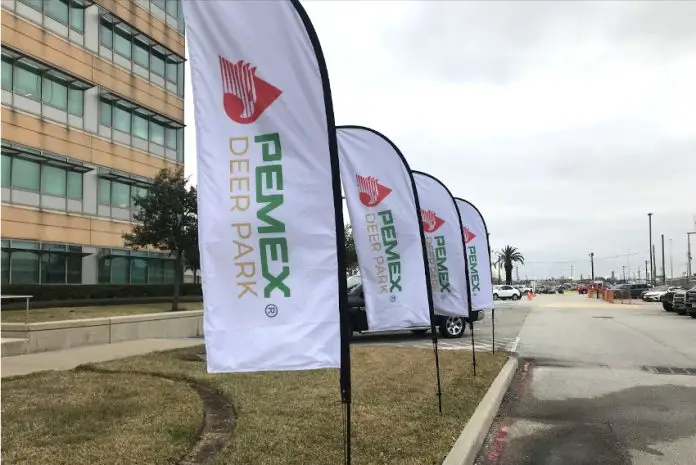
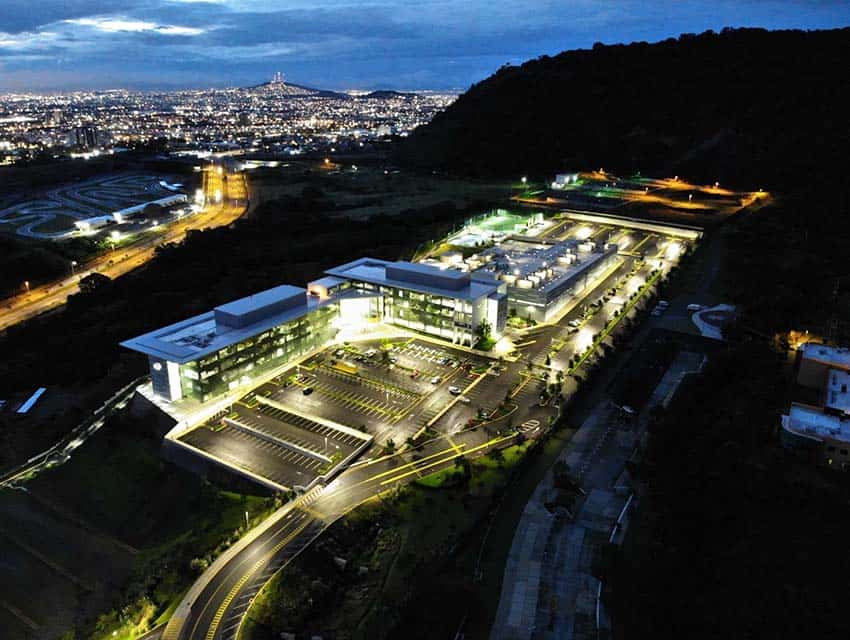
The refinery in Deer Park, Texas was acquired by Pemex in 2021. (Cuartoscuro)
A gas leak at Pemex’s refinery in Texas claimed the lives of two workers and hospitalized 13 more, the state oil company’s CEO said Friday.
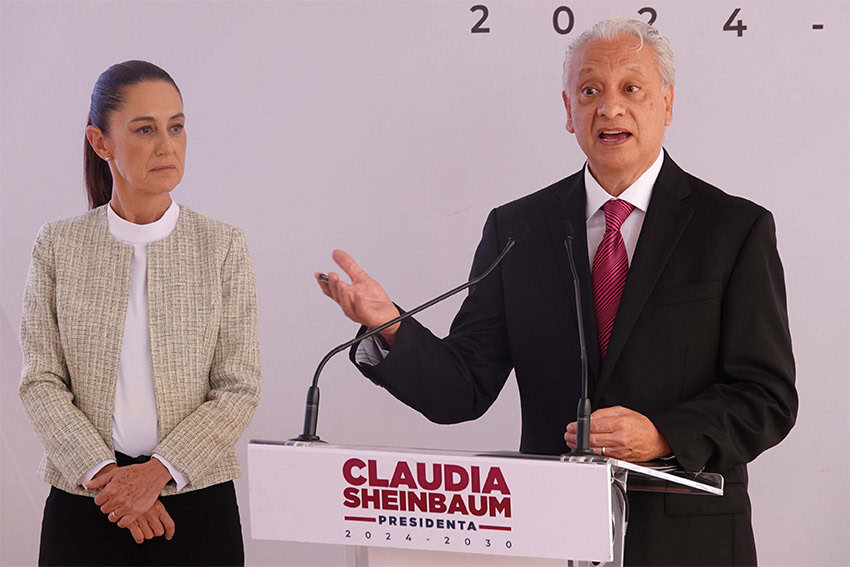
Víctor Rodríguez Padilla, the newly appointed Pemex boss, told President Claudia Sheinbaum’s press conference that a hydrogen sulfide leak occurred Thursday at the Deer Park refinery near Houston.
Víctor Rodríguez Padilla is the newly appointed CEO of Pemex. (Graciela López Herrera/Cuartoscuro)
“It’s completely harmful to [human] health,” he said, noting that a total of 35 people — excluding the deceased — were affected.
“It is extremely flammable and highly toxic,” the agency says on its website, noting that the gas is used in a number of industries including oil refining and mining.
Rodríguez told reporters that the hospitalized refinery workers are in “good health,” but will remain under medical care for 24 hours as a precaution.
Emergency services on the scene after the leak was reported at the Deer Park refinery. (Screen capture/KHOU News)
The Pemex CEO said that the bodies of the two deceased workers couldn’t be recovered until Friday morning because the part of the refinery where they died remained contaminated “for some hours.”
“After the gas dissipated we were able to go into the area. … Those who died aren’t Pemex workers,” he said, explaining that they worked for a maintenance company that provides an “external service” to the refinery.
Pemex said in a statement on Thursday that the gas leak occurred at 4:40 p.m. on Thursday in one of the refinery’s processing units.
“Emergency protocols were immediately activated,” the state company said, adding that local authorities were notified of the leak.
The City of Deer Park issued a shelter in place order to residents at 7 p.m. Thursday that was lifted at 9:30 p.m.
“The lift was issued due to air monitoring reports from Harris County Pollution Control … that have revealed no hazardous pollutants within the community,” the City of Deer Park said in a press release.
Rodríguez said that investigations are being carried out to determine the cause of the hydrogen sulfide leak.
The refinery was acquired by Pemex in 2021 and is the company’s only refinery located outside of Mexico. (Pemex Deer Park/Facebook)
“We can’t speculate about the reasons for what happened,” he said.
Rodríguez said that the refinery was only operating at a minimal capacity after Thursday’s accident, but indicated that it was expected to ramp up production soon.
Accidents at Pemex’s refineries in Mexico are fairly common. Just last month, two workers died and another suffered burns in an explosion and fire at the company’s refinery in Salina Cruz, Oaxaca.
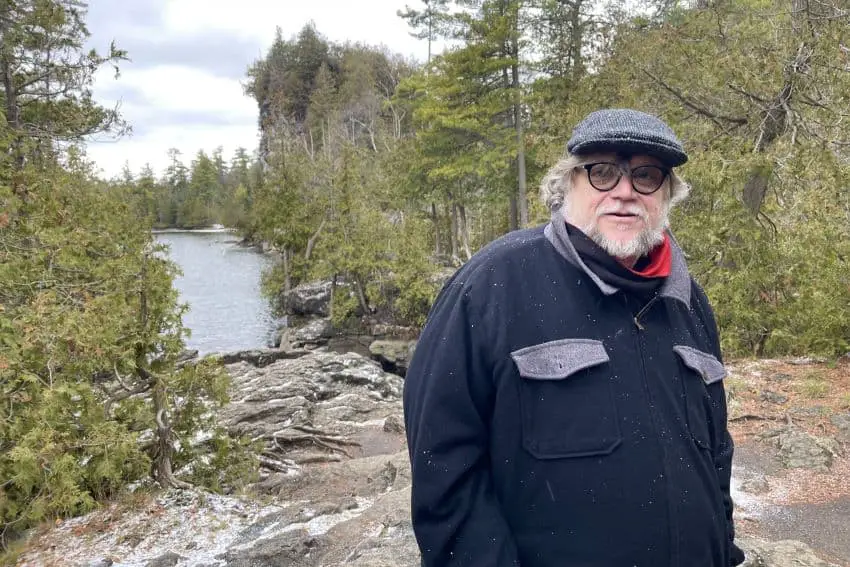
While shooting his upcoming move "Frankenstein," Guillermo del Toro, the Mexican auteur discovered a cold and windswept paradise quite unlike his own. (RealGDT/X)
Filmmaker Guillermo del Toro, celebrated as one of Mexico’s “Three Amigos” alongside directors Alfonso Cuarón and Alejandro Iñárritu, spent his summer in Scotland filming his long-awaited adaptation of “Frankenstein.” Although del Toro has “no direct blood ties” to the country, he took to social media platform X to express feeling a “deep connection” to Scotland’s gloomy glens and gothic nature.
Posting selfies in graveyards and second-hand bookshops in “Embra” — as he nicknamed Edinburgh, the country’s capital — what most captured my imagination was del Toro’s stream of posts about a haunted hotel room in my birthplace of Aberdeenshire.
From left to right: Alejandro González Iñárritu, Alfonso Cuarón, Guillermo del Toro and Emmanuel Lubezki (RealGDT/X)
Guillermo takes Scotland
Del Toro, who claims he “always stays in the most haunted room,” revealed that despite “high hopes”, he has never yet encountered anything supernatural. This time, however, the 19th-century castle where he was staying — already abandoned by one producer for its “oppressive vibe” — seemed promising.
Whilst del Toro fed his monster-loving audience with promises of discovering the “something’” lurking in the room, locals focused on catching a glimpse of “Frankenstein”’s star-studded cast, including Jacob Elordi, Oscar Isaac and the appropriately named Mia Goth. Trish, the manager of the local Post Office, became a minor social media sensation in her own right after demanding to see the sultry actor Charles Dance, saying: “I’ve asked for him to be sent here immediately!”
In the hypothetical Venn diagram comparing Mexico and Scotland, it seems right that a healthy slice of the crossover should be reserved for Guillermo del Toro’s Netflix adaptation of “Frankenstein.” While Mary Shelley’s iconic novel is set largely in Switzerland, its themes of resurrection and hubris feel at home in Scotland, where science and the macabre have long gone hand-in-hand.
Ancestral callings may also be at play in this merging of influences: del Toro hinted that his sudden passion for Gaelic life could stem from Irish lineage on his mother’s side, and between two cultures that share important ‘threshold’ festivals — Mexico’s Día de los Muertos and Samhain, the Celtic precursor to Halloween — there’s fertile ground for the tale of a creature pacing the liminal space between this life and the next.
Del Toro is the Oscar-winning director behind films like “Pan’s Labyrinth,” “The Shape of Water” and “Pinocchio.”
Del Toro, who has described himself as a “death groupie” and spent over a decade trying to get this project off the ground, called “Frankenstein”a film he would “kill to make. The high priest of the ostracized, his supernatural societal rejects often remain as deeply human, as their ‘real’ counterparts.
In “Pan’s Labyrinth,” eleven-year-old Ofelia escapes the brutal reality of 1930s Francoist Spain through a sprawling kingdom under her house. In “The Shape of Water,” mute janitor Elisa Esposito begins a romance with an amphibious creature imprisoned by the U.S. government in a Cold War-era Baltimore laboratory.
Set against Mussolini’s interwar Italy, the idols we revere are brought down to scale in “Pinocchio”as del Toro pushes the point that we should be ourselves to be recognized as valid for who we are. At one point the ostracized puppet, looking up at an effigy of Christ in a church, asks “He’s made of wood too. Why do they like him and not me?”.
In del Toro’s uncanny modern-day worlds, overshadowed by authoritarian rule, the Other leaks into and swamps long-held rationale and institutional beliefs. His villains are often those who worship at the altar of man-made power structures, such as “The Shape of Water”’s Strickland, a square-jawed everyman who drives a Cadillac, or the Franco loyalists in “The Devil’s Backbone,” who are more concerned with finding a stash of gold hidden on the grounds of their orphanage rather than the ghost of a boy haunting the premises.
The Frankenstein crew hard at work.
Victor Frankenstein, a scientist blinded by ego, constructs a creature who, like many of del Toro’s antiheroes, exists outside society’s understanding of what a real person should be. Del Toro views imperfection as “one of the most beautiful things,” and is said by his friend Alfonso Cuaron to bring his beloved characters close to the afterlife as a way of “bringing them peace”.
For a filmmaker brought up under the sweltering sun of Guadalajara, del Toro has a chilled Celtic sensibility that, in “Frankenstein,” might fuse Mexico and Scotland’s twinned links with the afterlife. Like Victor Frankenstein, the director is a master of soaking up ideas from the undergrowth and breathing new life into them, resurrecting and reconstructing the outsider to be a distorted but no less realistic reflection of ourselves.
Bettine is from the Highlands of Scotland and now lives in Mexico City, working in film development at The Lift, Mexico’s leading independent audiovisual production company.
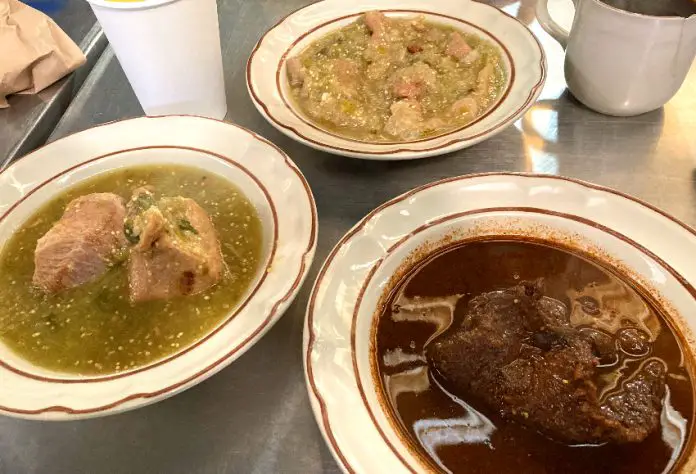
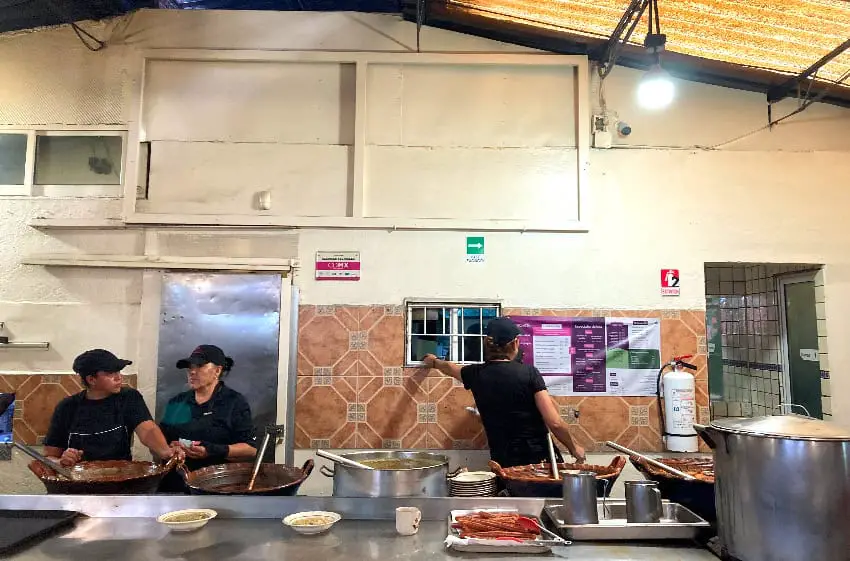
MND writer Peter Davies samples Fonda Margarita's tried-and-true take on the Mexican fonda, a humble mom-and-pop eatery offering traditional Mexican dishes. (photos by Peter Davies)
I’m a big fan of Anthony Bourdain, so if I get a chance to eat somewhere he ate and/or drank I’ll take it.
I’ve ticked off a few of those places in Mexico City: Los Cocuyos, a hole-in-the-wall taco joint in the historic center; Cantina La Mascota, a downtown drinking (and eating) den; El Huequito, famous for its tacos al pastor.
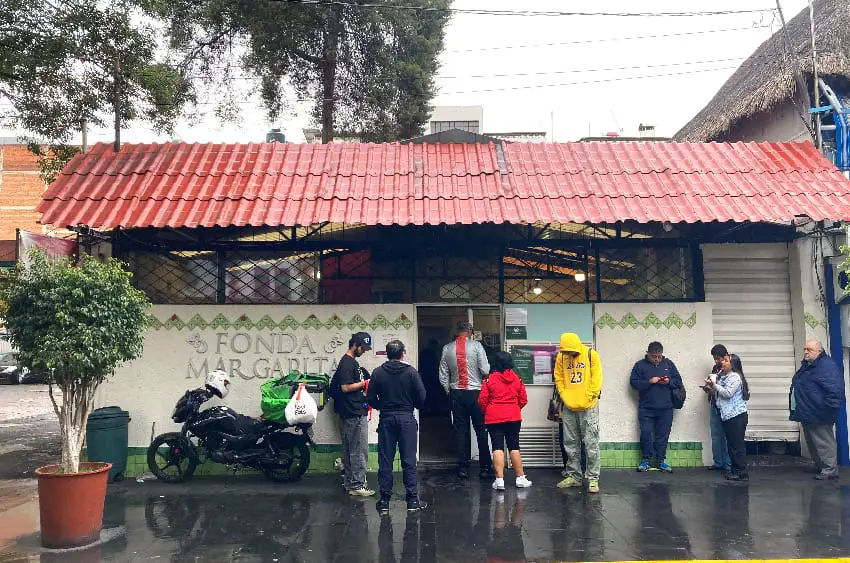
Fonda Margarita, located in Mexico City’s Del Valle neighborhood, has been feeding generations of satisfied residents. One taste and you’ll know why.
I recently returned to another of Bourdain’s CDMX haunts: Fonda Margarita, a humble but beloved old-school breakfast-only diner in the Del Valle neighborhood that opens — and closes — early.
My niece, who was visiting from Australia; my wife, a Mexico City native; and I arrived fairly early on a weekday morning, but the place was already packed — a good sign for any eating establishment.
While we waited, we scanned the menu, and we had more or less decided what we’d order by the time we took our seats on a communal table between a pair of men in suits and two casually dressed chilangos.
As two elderly gents strummed their guitars and sang from one corner of the fonda, a waiter appeared to take our order.
Soon enough, we had in front of us the following to share: cerdo en salsa verde (pork in green sauce); bistec en salsa pasilla (beef in pasilla chile sauce); chicharrón en salsa verde (pork rinds in green sauce); frijoles con huevo (beans with egg); tortillas, of course; café de olla (coffee sweetened with unrefined cane sugar and spiced with cinammon); and jugo de naranja (orange juice).
The meat dishes — served straight from giant earthenware pots called cazuelas — were all great. Tender meat, a good amount of heat in the salsas — this is homestyle Mexican cooking done extremely well. Make your taco, take a bite and enjoy the bliss.
It pays to arrive early at Fonda Margarita, or you might find a line out the door.
There are also daily specials — carnero (mutton) en salsa verde and manitas de cerdo en jitomate (pigs’ feet in a tomato-based sauce) on Thursdays, for example.
For the less adventurous, there are egg dishes every day, chicken breasts, beef ribs and the classic and hearty Mexican breakfast that is chilaquiles. Yes, most of this is not light breakfast food.
Still, after savoring everything we initially ordered, we found room for a churro each, edging our satisfaction up an additional notch.
“I cannot explain that,” responds Martín, one of Bourdain’s two Mexican dining companions and a regular at Fonda Margarita since childhood.
“Probably that it’s normal, ordinary Mexican food that your mother [makes],” Martín concludes.
If you don’t have a Mexican mother, or grandmother, to cook for you (or even if you do), and if you’re in Mexico City, I’d certainly recommend sitting down to breakfast at Fonda Margarita.
Maybe skip dinner the night before.
By Mexico News Daily chief staff writer Peter Davies (peter.davies@mexiconewsdaily.com)
* Fonda Margarita is located at Adolfo Prieto 1364 B, Colonia Tlacoquemécatl Del Valle. See the location on Google Maps here. The closest metro station is Hospital 20 de Noviembre, a 12-minute walk away, according to Google Maps.
Fonda Margarita opens at 6:30 a.m. Tuesday to Sunday and closes at midday. You can check the full menu (in Spanish, with prices) here.
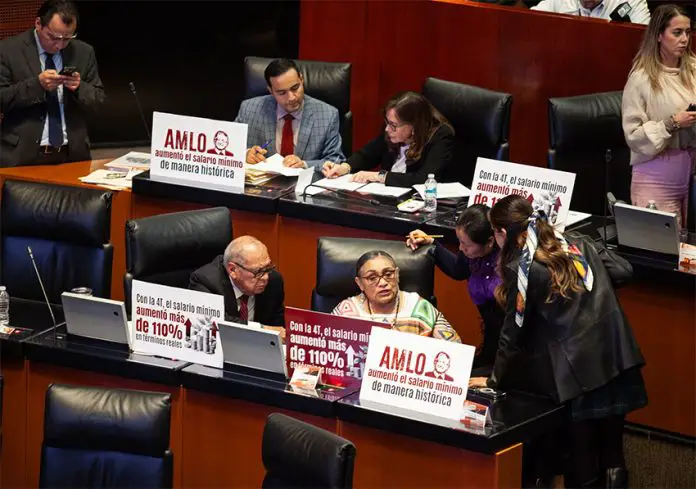
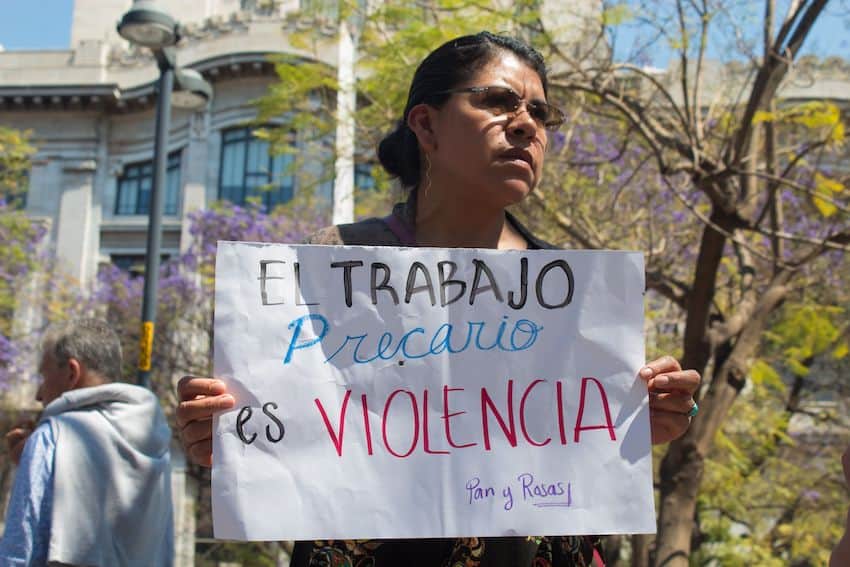
Senators approved the constitutional reform on Wednesday, with some supporters displaying signs touting the minimum wage increases made under former President López Obrador. (Andrea Murcia Monsivais/Cuartoscuro)
The Senate on Wednesday approved a constitutional reform bill aimed at ensuring that annual increases to Mexico’s minimum wage are higher than the prevailing inflation rate.
The Chamber of Deputies approved the proposal last month. To be signed into law, the bill must be ratified by at least 17 of Mexico’s 32 state legislatures, a requirement that will easily be met.
The bill also establishes that the salaries earned by teachers, police officers, members of the National Guard and armed forces, as well as doctors and nurses cannot be below the average wage of workers registered with the Mexican Social Security Institute.
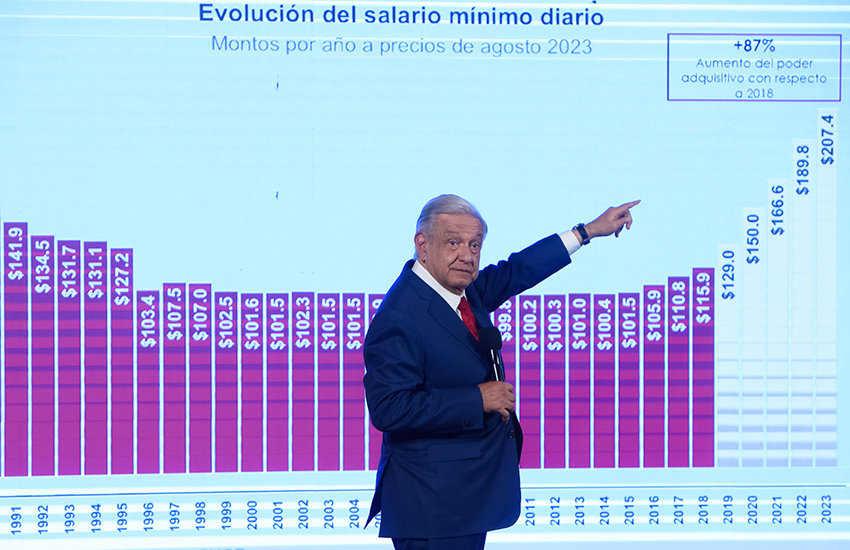
That will ensure that the aforementioned workers earn at least 16,777 pesos (US $862) per month. Some workers, including teachers and police officers, will receive significant raises after the bill is promulgated.
The minimum wage nearly tripled during the administration led by former President López Obrador. (lopezobrador.org.mx)
President Claudia Sheinbaum said last week that she would like to see annual increases of around 12% during her period in government. Increases are set by the National Minimum Wage Commission after consultation with employers and unions.
Morena party Senator Óscar Cantón Zetina said Wednesday that it was a “historic” day for the nation’s workers because their wages “will no longer fall victim to inflation.”
Workers’ wages previously lost their purchasing power because they were affected by “pernicious inflation,” he said.
According to the national statistics agency INEGI, around 40% of Mexico’s workforce earns the minimum wage or less. Many Mexicans work in the country’s vast informal sector, which doesn’t guarantee the minimum or provide any benefits to workers.
While opposition senators supported the bill, some said that additional reforms are required to support workers who aren’t even guaranteed the minimum, namely those who work in the informal sector.
Some legislators noted that many Mexicans work in the informal sector and will not benefit from minimum wage increases. (Magdalena Montiel/Cuartoscuro)
Institutional Revolutionary Party Senator Claudia Anaya noted that informal sector workers don’t have access to employment benefits either, and declared that the Congress should do something to help them as well.
Morena and its allies have a supermajority in the Chamber of Deputies and a virtual supermajority in the Senate, putting them in a strong position to approve a raft of constitutional reform proposals López Obrador sent to Congress in early 2024.
The ex-president promulgated the judicial reform and the GN reform before he left office last week.
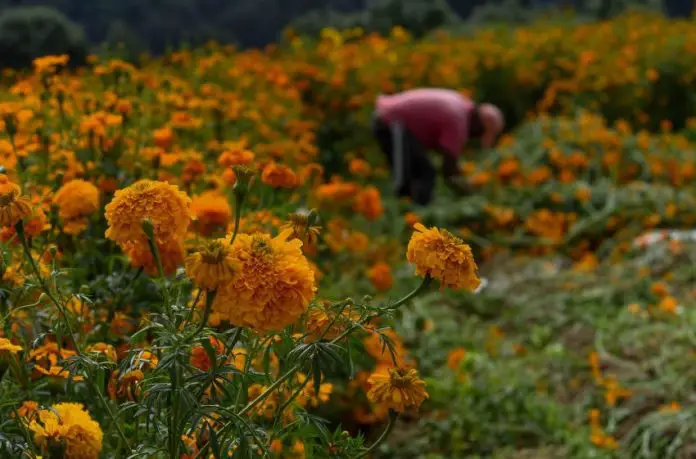
In the Mexico City borough of Xochimilco, which has many cempasúchil farmers, recent intense rains left 80% of crops temporarily under water. (Crisanta Espinosa Aguilar/Cuartoscuro)
The yellow-orange cempasúchil, or marigold flower, that adorns Day of the Dead altars in Mexico could be in short supply this year as heavy rains have flooded fields and greenhouses in various growing regions, including the Xochimilco borough in Mexico City.
Growers in Xochimilco say they could lose up to 50% of their cempasúchil crop after intense rains left about 80% of their flowers under water. One grower told the newspaper El Universal that he’d lost 20,000 of his 25,000 plants.
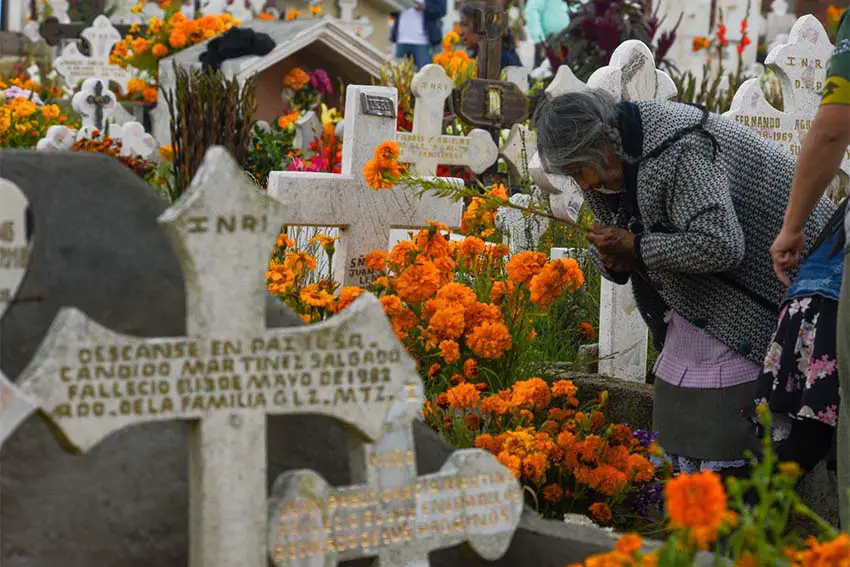
The crop damage couldn’t come at a worse time, just as Mexico is gearing up for Day of the Dead celebrations. The Mexican marigold is a must-have adornment at family gravesites and altars. (Crisanta Espinosa Aguilar/Cuartoscuro)
El Universal reported that the total cash value of the lost cempasúchil crop — the primary income for many families in Xochimilco — comes to about 500,000 pesos (approximately US $25,600).
The Mexico City growers were not the only ones hard-hit by heavy rains. According to newspaper El Financiero, the states of Guerrero, Michoacán, Oaxaca and Puebla have also seen damage to their cempasúchil crops.
This will mean higher prices for the flowers this season.
Last year, the flowers cost approximately 4 or 5 pesos each, but this year consumers might have to pay up to 7 pesos per flower, according to Cuauhtémoc Rivera, a representative of the National Small Business Alliance (ANPEC) who spoke to El Financiero.
The weather agency Meteored warned of the impact of climate change on the flower crop back in June just as cempasúchil planting season was getting underway.
“Variations in temperature and precipitation patterns could alter cultivation cycles and affect the quality of the flowers,” Meteored reported, warning that climate change could endanger the profitability of cempasúchil production and gradually reduce suitable areas for cultivation.
The weather agency Meteored issued a warning in June that climate change was likely to harm this year’s cempasúchil crop, and could continue to be an annual problem. (Screen capture)
Mexico is one of the world’s primary producers of the flower, known taxonomically as tagetes erecta with Puebla, Guerrero, Jalisco, Michoacán, Morelos and Oaxaca among the top growing states.
Last year, growers in Mexico dedicated about 2,448 hectares to cempasúchil cultivation, a portion of which is exported to the United States and Europe.
Farmers in Mexico have been taking steps to address the challenges presented by climate change, Meteored said by adapting new, more resilient cultivation techniques and working to create more resistant varieties.
Still, some farmers have been forced to sell off parcels of land, as they face increases in costs of production and labor.
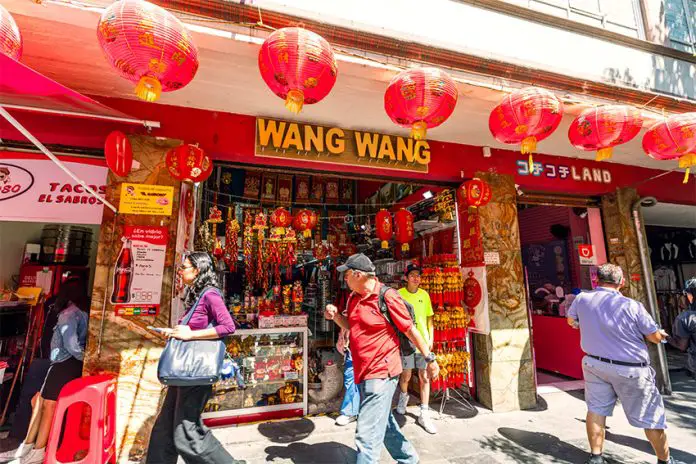
During the early months of the Sheinbaum administration, federal authorities have raided stores selling counterfeit and illegally imported Chinese goods. (Shutterstock)
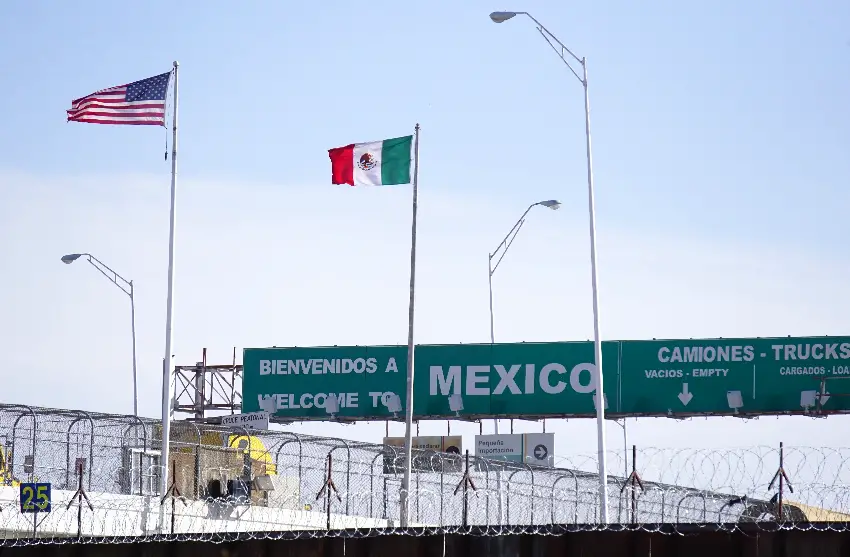
The path to the United States goes through Mexico for a growing number of Chinese citizens.
United States Customs and Border Protection (CBP) agents encountered 35,093 Chinese citizens at the U.S.-Mexico border between October 1, 2023 — when the current U.S. fiscal year began — and July 2024.
An article published in the migration-focused digital magazine of Mexico’s Interior Ministry (Segob) highlighted that the figure represents an increase of more than 1,600% compared to the 1,970 Chinese citizens detected crossing the U.S.-Mexico border in fiscal year 2022.
In fiscal year 2023, the number of CBP encounters at the U.S. southern border with Chinese citizens increased 1,121% to 24,048, before increasing 46% in the current fiscal year (excluding data for August and September).
Mexican data on Chinese migrants who entered Mexico irregularly also shows an increase of over 1,000% between 2022 and 2023. Between 2019 and 2023, the increase was a whopping 42,367%.
The article published in Segob’s magazine said that the objective of most Chinese people who enter Mexico without going through official immigration channels — mainly via the country’s border with Guatemala — is to get to the United States.
Many irregular Chinese migrants enter Mexico on their way to the U.S. (Shutterstock)
An article published by the Wilson Center in March said that many Chinese who arrive at the United States southern border “claim political asylum, citing fears of President Xi Jinping’s authoritarian rule and the experience of draconian zero-COVID policies.”
“Many also express skepticism of the Chinese economy and fears of eventually being cast into poverty,” it added.
The article in the Segob magazine, written by Juan Bermúdez Lobera and María de los Ángeles Calderón San Martín, also noted that the number of irregular migrants in Mexico from other Asian countries, including India, Nepal, Bangladesh and Afghanistan, increased significantly between 2022 and 2023, although not to the extent that Chinese migration increased.
Mexico’s Chinese-born population has surged this century
Regular Chinese migration to Mexico has also increased significantly in recent years.
Federal government data shows that 5,070 Chinese citizens received temporary or permanent resident status in Mexico last year.
That figure represents an increase of 101% compared to the 2,517 residency cards issued to Chinese people in 2022.
According to an estimate in the article in Segob’s magazine, 5,872 residency cards will be issued to Chinese citizens this year. That would represent a 16% increase compared to 2023.
Segob estimates that close to 5,900 Chinese citizens will receive Mexican residency this year. (Shutterstock)
So far this year, the only countries whose citizens have been issued more temporary residence permits than Chinese people are the United States and Colombia.
The aforementioned article attributed the increase in Chinese residents in Mexico to growing trade and investment ties between China and Mexico as well as cultural and family reasons. Mexico is benefiting — and hopes to benefit a lot more — from the relocation of companies from China as part of the nearshoring trend.
In 2000, just 1,847 Chinese-born people were legal residents of Mexico, according to the census conducted that year. By the time the 2020 census was carried out, that number had risen 471% to 10,547. Close to 40% of that number were living in Mexico City.
Based on data pertaining to the issuance of residency cards between 2021 and 2024, the number of Chinese residents in Mexico is now around double the 2020 number.
In their article, Bermúdez and Calderón highlighted that there are more Chinese people living in Mexico than citizens of any other Asian country.
A search for freedom and opportunity
The Associated Press reported last month that many Chinese immigrants to Mexico “have hopes to start businesses, … taking advantage of Mexico’s proximity to the U.S.”
Others work for Chinese multinational companies that have a growing presence here.
AP also said that “others are leaving China in search of greater freedoms.”
One such person is 50-year-old Tan, who came to Mexico City from the Chinese province of Guangdong this year and found work at a Sam’s Club store.
In China, he said he could feel “the political regression, the retreat of freedom and democracy.”
“The implications of that truly make people feel twisted and sick. So, life is very painful,” Tan told AP.
In Mexico City, “what caught his attention … were the the protests that often pack the city’s main avenues,” the Associated Press reported. “Proof, he said, that the freedom of expression he longs for exists in this country.”
* Mexico News Daily regularly reports on growing ties between Mexico and China, with a particular emphasis on trade and investment. Here are some of our previous articles.
Royal Caribbean promised that its investment in Mahahual, Quintana Roo, will bring a total of 3,000 jobs to the area, between construction and long-term operations positions. (Mara Lezama/X)
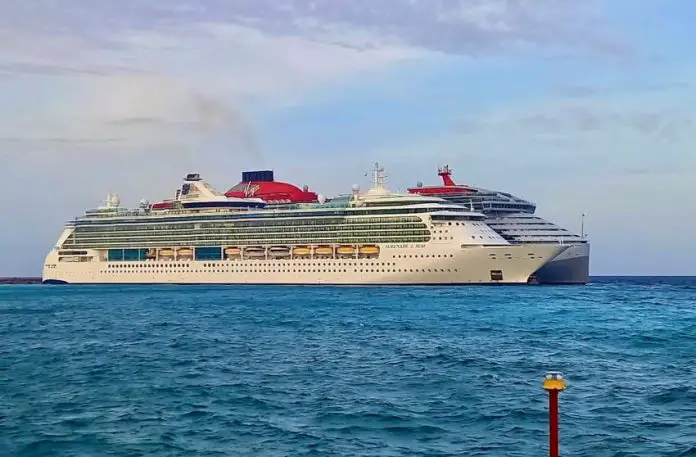
Royal Caribbean announced it will invest over US $600 million to bring its Perfect Day concept for its cruise ship guests to the port of Mahahual, in southern Quintana Roo.
Dubbed Perfect Day Mexico, the project will involve an expansion of Mahahual’s port dock and the construction of amenities exclusive to Royal Caribbean guests who disembark in Mahahual for the day. The amenities will range from slides, international restaurants, infinity pools, beaches, and adults-only areas.
Among Mahahual’s attractions is the Mahuahual Reef, the world’s second largest barrier reef and part of the Mesoamerican Reef system. (Elizabeth Ruiz/Cuartoscuro)
The experience will be similar to that at Royal Caribbean’s Perfect Day CocoCay site, which the company already operates on a private, uninhabited island in the Bahamas.
“We are very excited that Royal Caribbean has decided to invest in Mahahual, a land of opportunity and hard-working people,” Quintana Roo Governor Mara Lezama said during the announcement ceremony in the state. “I am sure that guests will be marveled by the beauties that southern Quintana Roo has to offer, but, most importantly, the kindness of our people.”
According to official data, Mahahual received the second highest number of cruise ship tourists in Mexico in the first quarter of the year, after Cozumel. The former saw 207 cruise ship arrivals and 844,087 tourists while the latter saw 520 cruise ships and 1.81 million passengers.
One of the cruise ships that arrived in Mahahual this year was the Icon of the Seas — recently named the world’s biggest cruise ship — and also owned by Royal Caribbean.
Perfect Day Mexico will join the Royal Beach Club Cozumel, set to begin operations in 2026. The company said in a statement that Perfect Day Mexico “will be a hallmark of Royal Caribbean vacations,” introducing new adventures in the western Caribbean.
“With travelers prioritizing unique experiences and destinations driving their booking decisions, we’re excited to expand our Perfect Day Collection by creating Perfect Day Mexico to super serve guests who want to explore the Western Caribbean,” said Jason Liberty, CEO of the Royal Caribbean Group.
Quintana Roo Gov. Mara Lezama, sixth from left, announced the Mahahual investment with Michael Bayley, CEO of Royal Caribbean International, center, on Tuesday. (Mara Lezama/X)
With a daily capacity of 21,000 guests, the region is expected to grow from 2.6 million visitors in the first year, to over 5 million by 2033. Plans also include linking the site to the Maya Train route and cultural attractions.
To ensure the project’s positive social impact, Quintana Roo’s Agency for Strategic Projects, as well as the University of Quintana Roo, will collaborate on the project. Royal Caribbean has promised environmentally sustainable facilities, including a dedicated water treatment plant and a reverse-osmosis system to provide a self-sustaining drinking water supply.
Jay Schneider, head of product innovation for Royal Caribbean International, said the entire complex will create 3,000 jobs, of which at least 1,000 will be in the construction phase. The rest will be jobs tied to the complex’s operation.
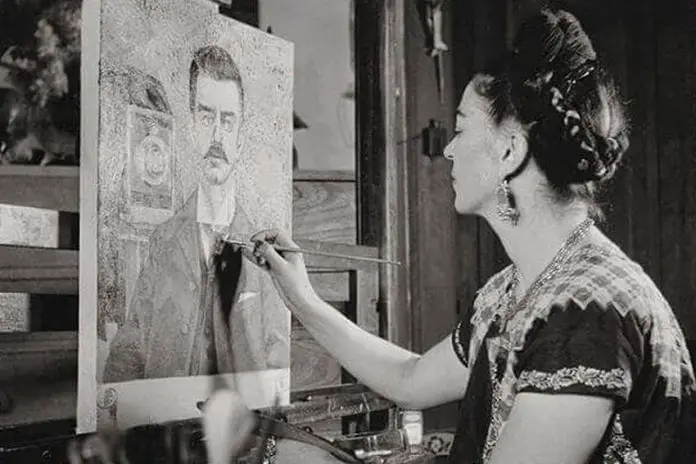
A new study out of Barcelona posits that Mexican artist Frida Kahlo, who suffered from severe chronic pain much of her life, was a victim of the rare condition known as Cauda Equina Syndrome. (fridakahlo.org)
Researchers at the Guttmann Institute in Barcelona have posthumously diagnosed the medical condition that Mexican artist and icon Frida Kahlo suffered from, a rare neurological condition called Cauda Equina Syndrome(CES), which the researchers say was caused by traumatic injury.
“The diagnosis of cauda equina syndrome, particularly in historical patients like Kahlo, can shed light on their experiences and the effects on their lives,” said Dr. Hatice Kumru, a neurologist at the Guttmann Institute and lead author of the study, which was published in the Journal of Neurology in September.
Researchers at the Guttmann Institute in Barcelona, Spain, believe the severe injuries she suffered in a bus accident at age 18 caused the syndrome, also known as CES. (Institut Guttman)
Kahlo is regarded as one of the most significant artists of the 20th century, and in 2021, one of her paintings sold for US $34.88 million at auction, a record at the time for any Latin American artist. Her experience of illness and suffering was a pervasive theme in her often autobiographical works of art.
When Kahlo (1907–1954) was six years old, she was diagnosed with polio, which left her with permanent damage — her right leg was shorter and weaker than her left.
When she was 18, she survived a severe bus accident that left her disabled — a long metal rod tore through her midsection when her bus slammed into a trolley car. She suffered multiple fractures in her pelvis, ribs, shoulders and spine.
Due to the accident, she endured chronic pain and fragile health for the rest of her life. Her injuries and paralysis at times left her confined to bed, and she often wore an orthopedic corset.
Medical documents from that time speculated Kahlo’s pain was the result of fractures, immobilization, postpolio syndrome or spina bifida. But this new research suggests a more specific cause behind her symptoms.
CES is a syndrome caused by an injury to the nerve roots in the lower part of the spinal cord.The cauda equina nerves communicate with the legs and bladder, and CES can cause back pain, weakness and incontinence. If not properly treated, it can lead to permanent damage, including paralysis.
Despite eight surgeries after her accident, Kahlo was bedridden at various times in her life and often wore an orthopedic corset, the latter of which may have worsened her condition, according to the study. (fridakahlo.org)
Kahlo’s medical documents show she suffered severe back pain, fatigue and genital discomfort. Between 1946 and 1950, she underwent eight surgeries, but her chronic pain persisted. She was also unable to bear children, which was a recurring theme in her paintings.
Kahlo’s personal physician, Dr. Leo Eloesser, documented her ongoing symptoms, including diminished sensitivity in the lower part of her body and worsening pain in her right leg. According to the researchers, this loss of feeling, coupled with the intense neuropathic pain she endured, matches the pattern of symptoms associated with CES.
The Guttmann Institute also concluded that Kahlo’s use of orthopedic corsets may have worsened her condition, as they can lead to muscle atrophy by impairing movement.
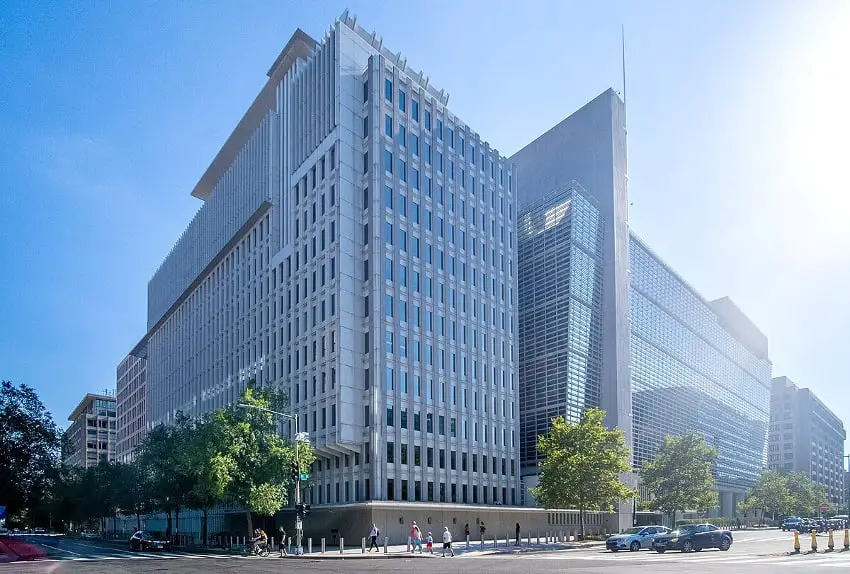
The World Bank is predicting an economic slowdown in Mexico, bringing its GDP growth forecast down from 2.3% to 1.7% for 2024. (Cuartoscuro)
The World Bank has lowered its economic growth forecasts for Mexico for this year and the next two, citing uncertainty for investors among the reasons for its more pessimistic outlook.
The Washington D.C.-based financial institution is now predicting that the Mexican economy will grow 1.7% this year, 0.6 percentage points lower than its 2.3% forecast in June.
The World Bank published its updated Latin America and Caribbean report on Wednesday. (Wikimedia Commons)
The World Bank anticipates GDP in Mexico will increase 1.5% in 2025, 0.6 points lower than its previous 2.1% forecast.
It also cut its forecast for 2026, lowering it to 1.6% from 2%.
If the projections come true, economic growth in Mexico will slow for a third consecutive year in 2024 and a fourth consecutive year in 2025.
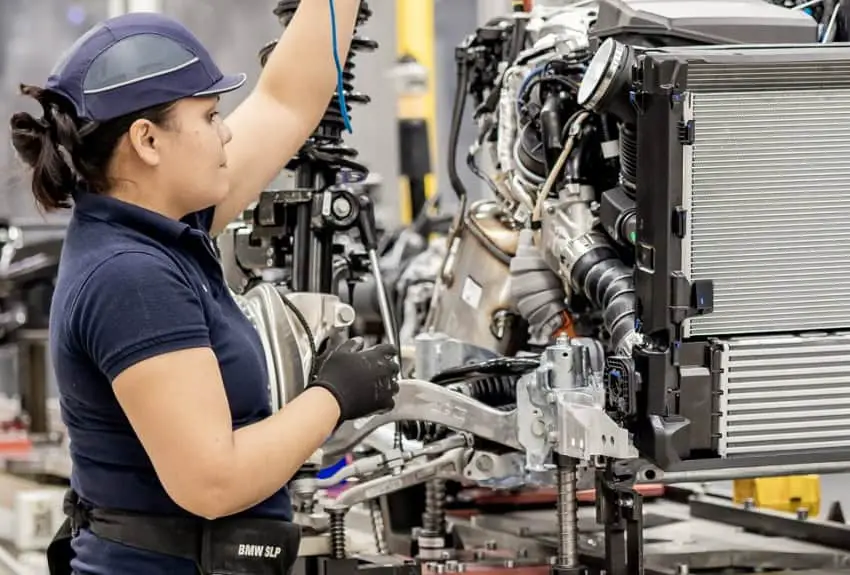
Mexico’s economy will slow for a third consecutive year in 2024 if the World Bank’s projections are correct, after experiencing strong post-pandemic growth in 2021 and 2022. (BMW SLP)
The Mexican economy grew 6% in 2021 as it bounced back from a sharp pandemic-induced contraction in 2020. Growth moderated to 3.7% in 2022 before declining to 3.2% last year.
Why did the World Bank cut its growth forecasts for Mexico?
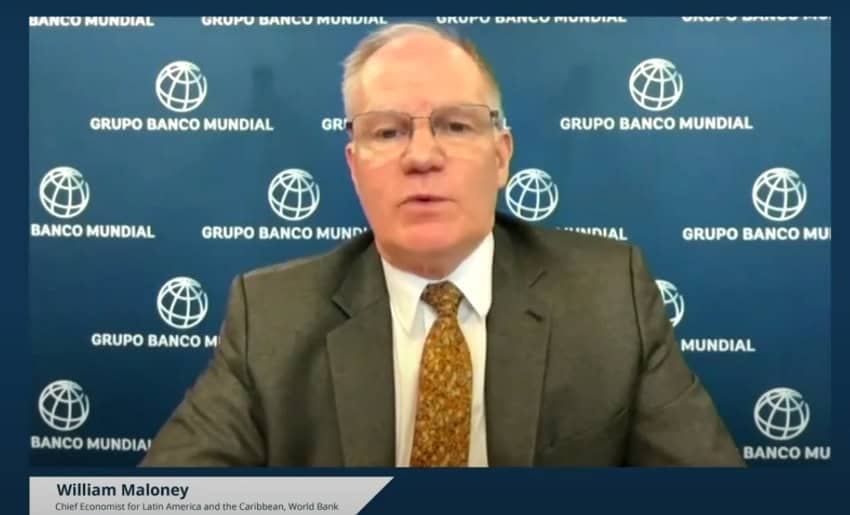
William Maloney, World Bank Chief Economist for Latin America and the Caribbean, told a virtual press conference that high interest rates in Mexico, a weaker Mexican peso and uncertainty for investors were all factors in the lower growth forecasts.
The Bank of Mexico has cut its benchmark interest rate on three occasions this year, but it remains high at 10.50%.
William Maloney stressed the need for Mexico to address investor concerns about instability. (Screen capture)
The Mexican peso has weakened considerably since the June 2 elections, in large part due to concerns over the federal government’s judicial reform, which was signed into law by former president Andrés Manuel López Obrador two weeks before he left office.
The Wall Street Journal reported last month that foreign companies were holding back approximately US $35 billion in investment in Mexico due to uncertainty related to the judicial reform and the upcoming United States election. There are concerns that respect for the rule of law in Mexico will suffer as the result of the direct election of judges by citizens.
Maloney on Tuesday stressed the need for Mexico to create stability for investors by respecting the “rules of the game” for investment in the country.
He acknowledged that Mexico has made progress in combating poverty — including by increasing the minimum wage — but highlighted that more needs to be done. Maloney also said that advances in infrastructure (including water and energy infrastructure), innovation and education are crucial to Mexico’s future success.
In addition, the World Bank economist said that Mexico is well positioned to benefit from nearshoring, but added that the country needs to do more to attract foreign investment.
What does the World Bank report say about Mexico?
Entitled “Taxing Wealth for Equity and Growth,” the World Bank’s latest Latin America and Caribbean report also includes updated growth forecasts for other countries in the region, and the region as a whole.
The World Bank report says that Mexico has increased both private and public investment, led by large government infrastructure projects like the Maya Train. (Cuartoscuro)
The World Bank is forecasting that the regional economy will grow 1.9% this year and 2.6% in 2025.
Early in the 98-page report, the World Bank acknowledges that Mexico has “increased its level of private investment, by taking advantage of opportunities for nearshoring and friendshoring, and public investment, especially on infrastructure projects.”
Later in the report, the bank says that “Mexico’s policy of increasing the minimum wage from the previously low level” — it almost tripled during López Obrador’s presidency — “appears to have had some positive effects on earnings, and reducing poverty.”
“Yet, the economic literature and the region’s experience clearly suggests that there are limits to this strategy. The initial positive effects in Mexico may be related to the fact that minimum wages started off at very low levels relative to median or average wages, and further increases may have important employment trade-offs to consider,” it adds.
Toward the end of the report, the World Bank highlights that Mexico has the second highest number of billionaires among Latin America countries after Brazil. Mexico’s richest person is Carlos Slim, who, according to Forbes, is the 20th wealthiest person in the world.
“While rich,” Latin America’s billionaires are “modest” by global standards, according to the World Bank, which highlights that “the combined wealth of the top ten billionaires worldwide — nine of whom reside in the United States — totals an astounding [US] $1.7 trillion, nearly equal to Brazil’s GDP, and almost triple that of Argentina.”
He also said that Mexico has “great opportunities to produce more,” before asserting at the end of July that replacing just one-tenth of Chinese imports with products made in North America would significantly boost economic growth in Mexico and the United States.
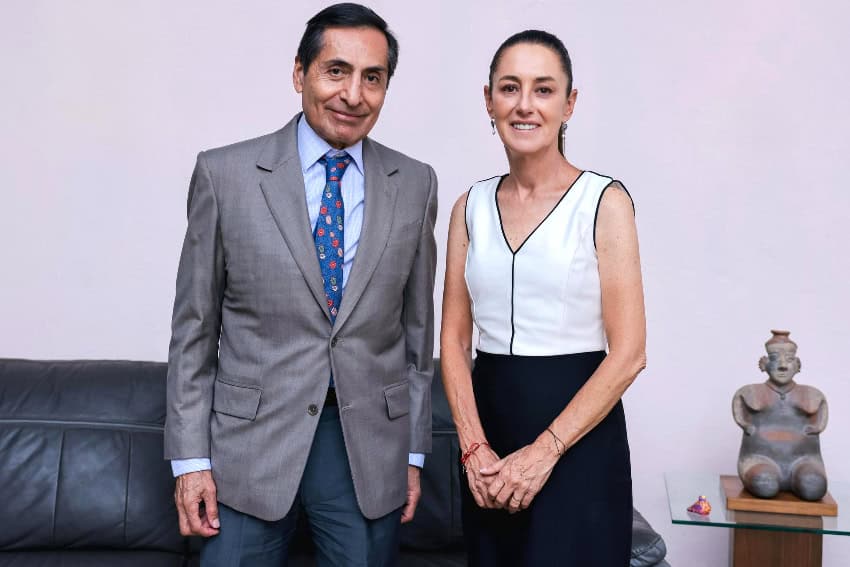
Rogelio Ramírez de la O has continued as Finance Minister in President Claudia Sheinbaum’s administration. (Claudia Sheinbaum/X)
Now, as Mexico seeks to reduce dependence on Chinese imports, the new federal government “is asking some of the world’s biggest manufacturers and tech firms operating in the country to identify Chinese products and parts that could be made locally,” according to The Wall Street Journal (WSJ).
The Journal spoke with Mexico’s Deputy Economy Minister for Foreign Trade Luis Rosendo Gutiérrez Romano, and included his remarks in an article published on Tuesday under the headline “Mexico wants to curb Chinese imports with help from U.S. companies.”
Gutiérrez, whose appointment was announced last week, told the WSJ that the administration led by President Claudia Sheinbaum wants U.S. automakers and semiconductor manufacturers, as well as large aerospace and electronics companies, to substitute some goods and components made in China, Malaysia, Vietnam and Taiwan.
“We want to focus on supporting our domestic supply chains,” he said.
The semiconductor industry, which is today dominated by Asian countries, is a key area of manufacturing that Mexico is working to develop. (Intel Guadalajara)
The federal official told the Journal that talks with foreign companies to date have been informal.
The newspaper reported that “one person familiar with the government’s plan said that some companies haven’t agreed to any specific goal around import substitution and that discussions are part of the Economy Ministry’s aspirations to strengthen domestic supply chains in key sectors such as the semiconductors industry.”
The WSJ noted that the Mexican consulting company Empra said in a note to investors that the proposed measures will be focused primarily on China, a country with a huge manufacturing sector that produces goods well in excess of what can be sold locally.
China’s exports to Mexico — among which are raw materials, capital goods, consumer products and cars — have surged over the past decade. A significant portion of the Chinese imports go to U.S. companies in Mexico, including ones that operate in the automotive, semiconductor and aerospace industries.
BYD is a Chinese EV maker with plans to build a manufacturing plant in Mexico. (Shutterstock)
Citing Mexican government data, the WSJ said that China’s exports to Mexico now account for 20% of the country’s total imports. Some experts doubt that Mexico has the capacity to replace a significant portion of those imports.
“Bilateral trade and cooperation between Mexico and China have brought tangible benefits to the people of both countries,” the Chinese Foreign said in a statement to the WSJ.
“… Both sides should create favorable conditions for normal economic and trade interactions, as well as jointly maintain the stability of the global supply chain.”
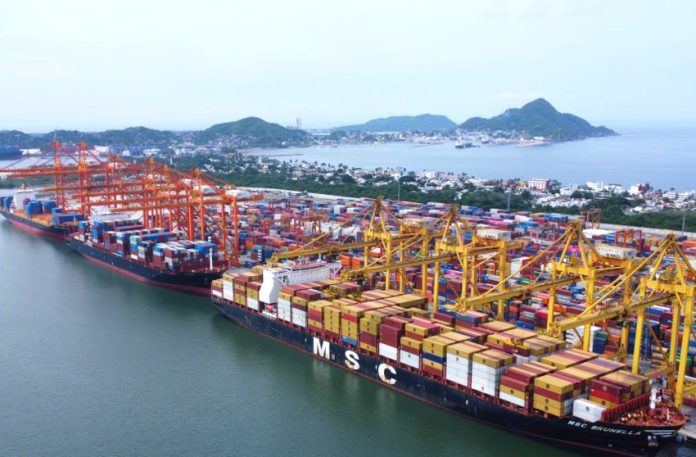
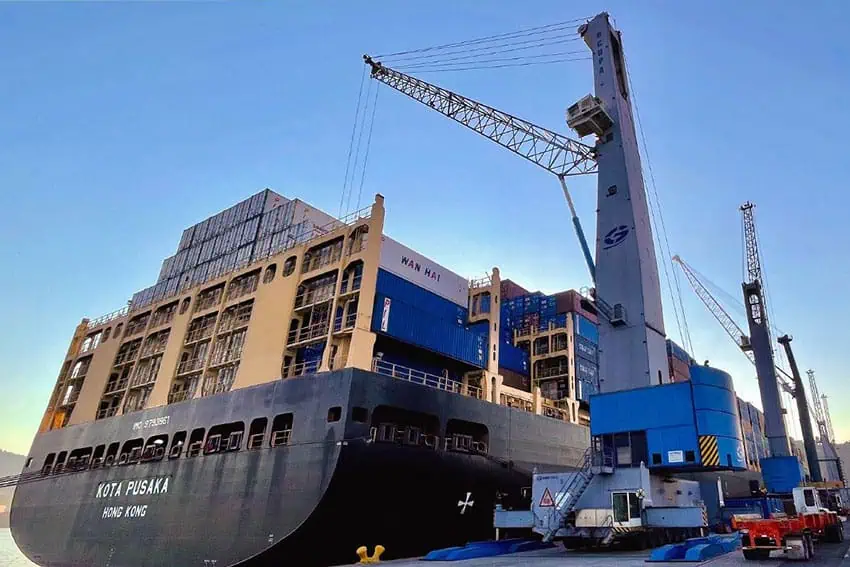
A Hong Kong ship waits to unload Asian goods in Mexico. (SSA México)
Mexico’s trade relation with China could be a key focus of the USMCA review, which is scheduled to take place in 2026.
There are concerns that Chinese companies are using Mexico as a “backdoor” to the United States — i.e. establishing a presence here in order to ship products tariff-free to the U.S.
But Gutiérrez denied that is the case, telling the WSJ that “Mexico isn’t a springboard from Asia to the U.S.”
Mexico will ‘mobilize’ in favor of North America in the China-US trade war, says Ebrard
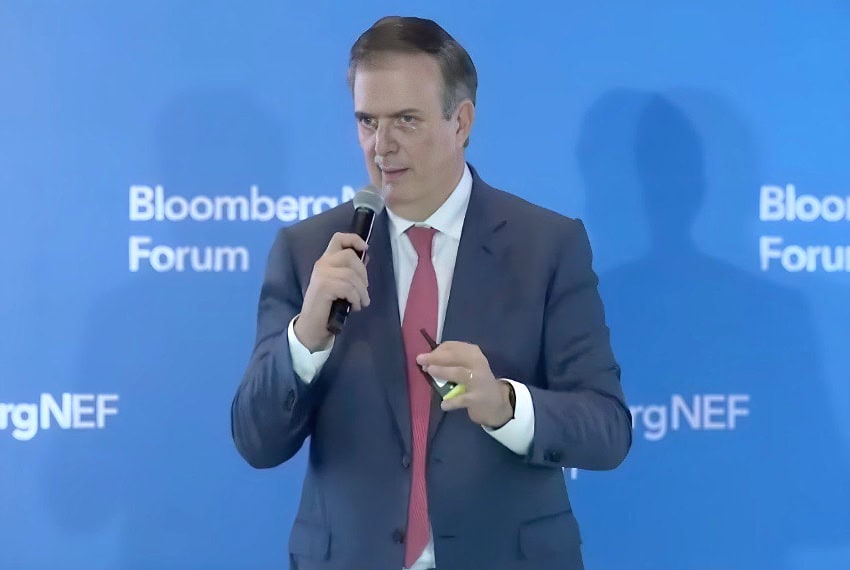
At a Bloomberg summit in Monterrey on Tuesday, Economy Minister Marcelo Ebrard acknowledged that there is a “dispute between China and the United States” and said that it is “stronger now than it was a few years ago.”
“And we now have a plan for a route to follow,” he said.
“What will be the main idea, the main design of that route? To mobilize all legitimate interests in favor of North America,” said Ebrard, who was foreign affairs minister for 4 1/2 years during the 2018-24 presidency of Andrés Manuel López Obrador.
Economy Minister Ebrard spoke on Tuesday about how Mexico will look to reduce imports and strengthen North American supply chains. (Marcelo Ebrard/X)
He also said that the federal government is looking at “how we can reduce all the imports we have, that is, to increase domestic content in any way we can.”
Ebrard said that Mexican content in the country’s manufacturing exports is currently less than 20%. He said that the government will work with individual companies as part of a strategy to encourage suppliers and parts producers to relocate to Mexico.
“Our mission is not just to increase our market share, but to increase what is produced in Mexico,” he said.
Mexico’s former ambassador to China, Jorge Guajardo, told Mexico News Daily in July that the most pressing and important task for Ebrard as economy minister would be to impose higher tariffs on Chinese imports to protect Mexican industry.
No new tariffs have been announced yet, but the federal government does appear determined to reduce Chinese imports — and is doubling down on its commitment to North America, a region from which Mexico derives the bulk of its export revenue.
Prior to her election as Mexico’s first female president, Sheinbaum noted that Mexico and the U.S. are “economically integrated” whereas “there is no free trade agreement with China.”
“… The relationship with China exists and it has to continue existing, but the agreement with the U.S. has to be maintained and strengthened as well,” she said of the USMCA free trade pact, which also includes Canada.