Home Blog Page 54

MND Local: Los Cabos’ popularity, a new boutique hotel and a resort and retail brand sleepwear collaboration

0
Cabo San Lucas coastline
Whether by airplane or cruise ship, a lot of people visited Los Cabos in 2025. (Paulina Vazquez/Unsplash)

The annual figures for 2025 released by Grupo Aeroportuario del Pacifico (GAP), which operates not only Los Cabos International Airport but 11 others in Mexico and two in Jamaica, should not be confused with official tourism numbers. 

People fly into Los Cabos for several reasons. One of which is that they or family members live here — the 2020 population was 351,000 and it has doubtless climbed since — and another is business. That said, these figures are a strong indicator of tourism, since the vast majority of international visitors, and many domestic travelers, fly in for that very reason. 

GAP reports 2025 airport traffic numbers, including a slight rise for Los Cabos

Los Cabos airport figures
Los Cabos International Airport isn’t as busy as those in Guadalajara and Tijuana, but it did see a lot of traffic in 2025. (GAP)

In 2025, over 7.5 million passengers were welcomed at Los Cabos International Airport; 7,529,900, to be exact, an increase of only 0.6% over 2024. This mild growth was also seen in domestic passengers, which rose slightly by 0.4% to 2,841,600 in 2025. International passengers, a stronger harbinger of tourism strength, rose by 0.7%, to 4,688,300. That means for the year, international passengers accounted for 62% of airport traffic, domestic passengers for 38%.

Los Cabos International Airport was the third busiest among GAP airports in 2025, behind those in Guadalajara and Tijuana, which saw over 18 million and 12 million terminal passengers, respectively. Overall, it was the sixth busiest in Mexico, trailing also airports in Mexico City, Cancún and Monterrey.

It should be noted that cruise ship passengers are rarely included in tourism numbers, simply because they seldom stay overnight. Still, through November 2025, Cabo San Lucas had received over 900,000 cruise ship visitors, already a record number, and significantly more than the 625,000 plus who visited during the same period in 2024.

Which is to say that Los Cabos’ popularity may have stabilized from the explosive growth seen earlier this decade following the recovery from pandemic years of 2020-2021, but it’s still robust.

Kadún opens in Cabo San Lucas

Los Cabos hotels and resorts have been built at such a brisk pace in recent years that scarcely has one opened that another appears right on its heels. The Park Hyatt Cabo del Sol, for example, premiered on Dec. 15, 2025, but remained the newest hotel in Los Cabos for only a few weeks before an even newer property opened its doors.

That was Kadún, a 110-room boutique hotel that officially began welcoming guests in early January. Operated by the Macías family-owned hospitality group Mexico Grand Hotels, whose local collection of properties includes Marina Fiesta and Hacienda Encantada, Kadún offers several attractions to travelers, among them its convenient downtown Cabo San Lucas location— a short walk from Médano Beach and the Cabo San Lucas Marina — and its trendy rooftop swimming pool.

Boutique hotel Kadún in Cabo San Lucas
Boutique hotel Kadún in Cabo San Lucas is the newest hotel to open in Los Cabos. (Mexico Grand Hotels)

It’s also notable for its full embrace of local culture and cuisine. “With Kadún, our goal was to create a hotel that doesn’t just exist in Cabo, but truly belongs to Cabo,” said Gabriel Ibarra Macías, head of marketing and sales for Mexico Grand Hotels. “Everything from the design to the programming was crafted to honor the traditions, artistry and natural beauty of Baja California Sur. We wanted Kadún to feel like a gateway into the authentic spirit of the region.”

In short, it’s a nice addition to the Cabo San Lucas hotel scene, bringing the total number of rooms in the Land’s End city to over 9,600. But, of course, Kadún will remain the newest for only a short time.

Viceroy collaborates with sleepwear brand Petite Plume on new collection

San José del Cabo, meanwhile, has only about one-third as many hotel rooms (3,306) as Cabo San Lucas, but among these are some of the most sophisticated and luxurious in Los Cabos. 

Viceroy Los Cabos, in San José del Cabo’s Zona Hotelera, is among the most visually striking of these upscale resorts — the reason it was chosen as a location for director Alejandro Iñárritu’s 2022 film, “Bardo.” After making its mark in hospitality and cinema, the resort is now being recognized for its fashion, thanks to a new collaboration with sleepwear brand Petite Plume. 

The limited-edition Discovery Stripe Collection, which includes mulberry silk pajamas and eye masks for women, is currently available to be worn by guests at Viceroy Los Cabos, and may be purchased online or in the onsite gift shops. The pajamas make a nice gift for Valentine’s Day, and represent not just the luxurious spirit of Viceroy Los Cabos, but also its location. The stripe colors in the PJs are a nod to select properties under the Viceroy Hotels and Resorts banner, with the rust colored stripes inspired by the Baja desert.

The collaboration, it should be noted, also represents Viceroy’s commitment to making every aspect of a stay at its resorts a special experience … including sleep. “At Viceroy, rest is a ritual,” affirms a recent press release. “It is woven into every experience we create. This collaboration with Petite Plume allowed us to give form to that philosophy — presenting beautifully made keepsakes that reflect our sense of discovery and the joy of slow, intentional moments.”

selection of the Discovery Stripe Collection of sleepwear available to guests at Viceroy Los Cabos
A selection of the Discovery Stripe Collection of sleepwear is available to guests at Viceroy Los Cabos. (Viceroy Hotels & Resorts)

This is not the first fashion collaboration for Viceroy Los Cabos, which boasted a summer beachwear collab with Onia just last year. Nor is Viceroy the only luxury resort in Los Cabos to dip its toes in the fashion waters. One&Only Palmilla pioneered the trend in 2016 via its partnership with big-wave surfing legend Laird Hamilton on curated apparel for guests. Other Los Cabos luxury resorts have since followed with their own fashion collabs, including Four Seasons Resort and Residences Los Cabos at Costa Palmas with Caralarga, and Las Ventanas al Paraíso with Nick Fouquet, Mi Golondrina and Weezie.

Chris Sands is the former Cabo San Lucas local expert for the USA Today travel website 10 Best and writer of Fodor’s Los Cabos travel guidebook. He’s also a contributor to numerous websites and publications, including Tasting Table, Marriott Bonvoy Traveler, Forbes Travel Guide, Porthole Cruise, Cabo Living and Mexico News Daily.

Tamales, an invitation from Trump and a new train: Monday’s mañanera recapped

0
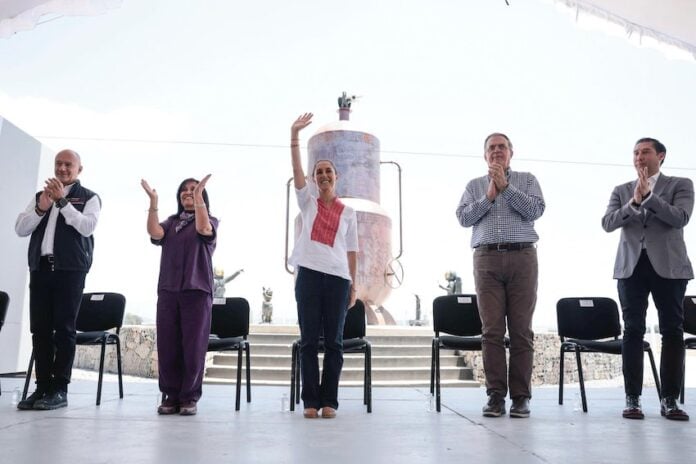
As today was Día de la Candelaria, the president enjoyed a traditional breakfast of tamales from the newly operational Observatorio light-rail train station.
As today was Día de la Candelaria, the president enjoyed a traditional breakfast of tamales from the newly operational Vasco de Quiroga light-rail train station. (@ClaraBrugadaM/X)

President Claudia Sheinbaum held her Monday morning press conference at Cineteca Nacional Chapultepec, a new state-owned cinema complex in the fourth section of Mexico City’s Chapultepec Park.

“Today is a very good day because we’re finally inaugurating the entire route of the Toluca-Mexico City train,” she said at the beginning of the mañanera.

“We’re inaugurating [the] Santa Fe-Observatorio [section],” Sheinbaum said.

(Read Mexico News Daily’s story on the inauguration here.)

During her engagement with reporters, Sheinbaum responded to questions on a range of topics, including Senator Adán Augusto López Hernández’s decision to step down as the leader of the Morena party in the Senate and U.S. President Donald Trump’s invitation to Mexico to join the Board of Peace, a new U.S.-led intergovernmental organization.

Sheinbaum acknowledges López Hernández’s decision to step down as Morena’s leader in the Senate 

Sheinbaum told reporters that López Hernández informed Interior Minister Rosa Icela Rodríguez of his decision to step down as Morena’s Senate leader a few days ago.

adán
Morena Senator Adán Augusto López Hernández said on Sunday that he will stay on as a senator but will no longer lead Morena in the Senate. (Mario Jasso/Cuartoscuro)

“We found out that he was going to join Morena’s territorial work,” she said, referring to López Hernández’s intention to participate in the ruling party’s grassroots efforts to garner additional support ahead of the 2027 elections.

López Hernández said on Sunday that he will stay on as a senator but will no longer lead Morena in the Senate. The senator has faced accusations related to the alleged criminal activity of the man who served as his security minister when he was governor of Tabasco between 2019 and 2021.

But Sheinbaum indicated that López Hernández wasn’t pressured to step down as Morena’s Senate leader, saying his decision to resign from the position was his alone.

“And he will always help [Morena],” she added.

López Hernández left the governorship of Tabasco in 2021 to become federal interior minister during the presidency of Andrés Manuel López Obrador, who founded Morena. He resigned from that position in 2023 to take part in the contest to become Morena’s candidate in the 2024 presidential election. His reputation has been significantly tarnished by accusations that he has links to La Barredora, a crime group his former security minister, Hernán Bermúdez Requena, is accused of heading up.

Asked whether she was considering offering López Hernández an ambassadorship — a subject of speculation in recent weeks — Sheinbaum said that was not the case.

Sheinbaum: SRE will respond this week to Trump’s invitation to join Board of Peace 

Six days after Sheinbaum revealed that Trump had invited Mexico to join the Board of Peace, the president was asked whether she responded to the invitation during her call with the U.S. president last Thursday or whether the Mexican government had made a decision one way or the other.

“We didn’t speak about that in the telephone call,” Sheinbaum said, adding that the Ministry of Foreign Affairs will respond to Trump’s invitation this week.

The Trump administration launched the Board of Peace at the World Economic Forum in Davos, Switzerland, last month, and issued invitations for 60 countries to join the board, The Hill reported.

Around 20 countries promptly accepted Trump’s invitation and became founding members of the Board of Peace, while several others expressed their intent to join the board.

At least a dozen countries, including the United Kingdom, France and Germany, declined Trump’s invitation to join the board, while more than 20 didn’t publicly respond to the invitation.

Sheinbaum during mañanera on Feb. 2, 2026
President Sheinbaum was expected to make a decision about joining Trump’s new Board of Peace last week. (Presidencia)

CNN reported that “the board, indefinitely chaired by Trump, was originally conceived as a limited body tasked with overseeing the reconstruction of the Gaza Strip, which was devastated by Israel’s two-year war.”

“However, its purpose has since expanded to tackle conflicts the world over, and the charter draft, which was sent along with the invitations to join, does not even reference Gaza,” CNN said.

An update for Mexican fans of Korean boy band BTS 

Sheinbaum revealed that she received a response to the letter she sent to South Korean President Lee Jae Myung requesting his assistance in a quest to have the wildly popular Korean boy band BTS play additional shows in Mexico.

Her plea to the Korean president came after tickets for three BTS concerts scheduled for Mexico City in May sold out in less than 40 minutes last month.

On Monday, Sheinbaum said she was told by Lee that authorities in South Korea have contacted the promoter of BTS,  a seven-member K-pop boy band formed in 2013.

“We hope it’s good news,” she said.

“… The president of Korea replied [saying] ‘thank you very much for the interest of Mexicans in this music group,’ [saying] that he very much appreciates the letter and that contact with the … [promotion] company of BTS was already made,” Sheinbaum said.

She added that Lee told her that he expects BTS’s promoter to contact the Mexican government “soon.”

By Mexico News Daily chief staff writer Peter Davies (peter.davies@mexiconewsdaily.com)

Mexican farmers will teach Indigenous methods at German organic fair

0
cacao
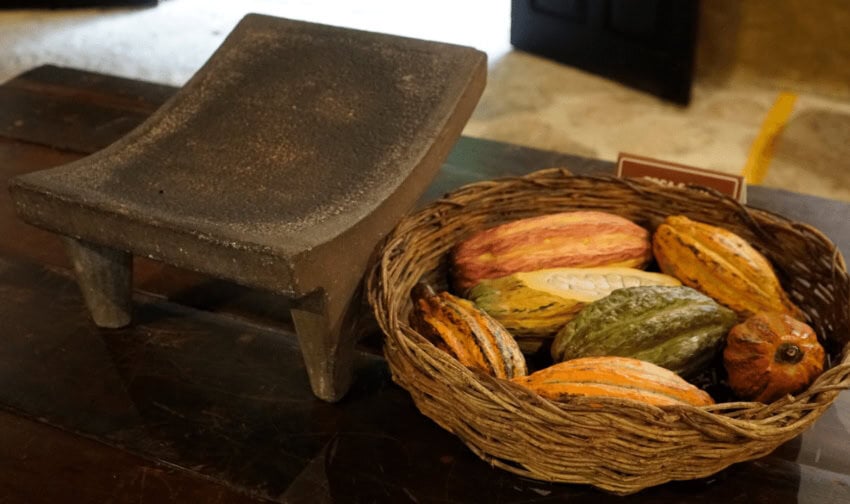
About half of the delegation will be presenting coffee, cacao and Persian limes, all grown with organic farming processes that support sustainable production. (@Claudiashein/X)

Mexico will send 19 farmers from the national “Sembrando Vida” (Sowing Life) program to the organic products trade fair BIOFACH 2026, which will run from Feb. 10 to 13 in Nuremberg, Germany.

According to a government press release, the farmers will represent the Amuzgo, Mam, Ódami, Totonac, Tzotzil, Yokot’an, Zapotec and other Indigenous communities at the fair, coming from the states of Chiapas, Chihuahua, Guerrero, Oaxaca, Tabasco and Veracruz. 

Nine of the farmers will be presenting coffee, cacao and Persian limes, all grown with organic farming processes that support sustainable production.

The other farmers attending will promote Mexican agriculture through networking activities aimed at knowledge exchange and increased visibility of community work.

BIOFACH is internationally recognized as one of the leading platforms for the marketing and promotion of organic food. The annual trade fair brings together producers, buyers, certifiers and specialists from various countries.

Three farmers from Mexico’s Sembrando Vida program are also expected to take part in Fruit Logistica 2026, one of the world’s most important events for the trade of fresh fruit and agri-food products, to be held on Feb. 3-6.

The seeds of the ‘Sembrando Vida’ program

Launched in 2018, Sembrando Vida addresses both food security and reforestation by helping rural farmers produce food sustainably on 2.5-hectare plots while planting trees.

Participants must prove land ownership and residence in a socially marginalized municipality to join the program. Once enrolled, they receive 6,450 pesos monthly (about US $370) plus seeds, plants, tools and other supplies to apply agroforestry techniques in the cultivation of crops. Beneficiaries join Farmer Learning Communities (CACs) where they develop collective production projects and receive technical training at community nurseries, biofactories and training centers.

To date, the program covers more than 1.1 million hectares across 24 Mexican states and has planted 1.1 billion trees, capturing an estimated 30 million metric tons of CO2 annually. In a 2024 speech, President Sheinbaum said the program supports 439,000 disadvantaged families in Mexico and 40,000 in Guatemala, Honduras and El Salvador with an annual budget of US $1.7 billion.

With reports from Milenio

With AI’s help, Mexico’s disappeared are telling their stories to the rest of us

0
activists for disappeared
Mexico's National Registry of Missing and Disappeared Persons lists 128,059 people as missing as of March 2025. And that number continues to rise despite shifting security strategies. (Colectivo Luz de Esperanza/Facebook)

Turning to artificial intelligence to keep Mexico’s more than 125,000 missing people from being forgotten, a collective in the state of Jalisco has been crafting “living” videos of the missing that talk to the public.

In the state with the highest number of missing persons, the Luz de Esperanza Collective creates Fichas Vivas de Búsqueda, or Living Search Cards — short AI-generated videos that animate photos and recreate the voices of the disappeared for social media.

The clips circulate online, seeking to cut through the noise and force viewers to confront a national human rights crisis.

Using image, facial animation and speech synthesis tools, families script what their relatives would say and work with technologists to produce videos that resemble digital search posters — with a “photo” of the missing person actually “speaking.”

In one 110-second video, the photo of the missing person declares, “I am Carlos Maximiliano Romera Meza. I was 18 years old when I disappeared, and I want to tell you my story.”

In another, an image of Yordi Alejandro Cárdenas Flores says he was 21 when four armed men in a van, allegedly linked to the state prosecutor, intercepted him in San Pedro Tlaquepaque in 2022.

The project has been going since 2023, but a recent study published in Inter Disciplina, a journal of the National Autonomous University of Mexico (UNAM), put fresh attention on the videos in showing how AI has become a tool for searching mothers.

The study noted that “live search cards” not only communicate that someone is missing, but also reactivate social bonds for the missing person’s loved ones and offer a “narrative of hope.”

Disappearances in Mexico continue to rise despite shifting security strategies.

The National Registry of Missing and Disappeared Persons lists 128,059 people as missing as of March 2025. More than 90% of cases have been recorded since 2006, and over 60,000 since 2019, with young men and teenage girls the most affected.

Jalisco alone has more than 15,300 disappeared, nearly 7,000 of them men ages 15 to 34.

As the Luz de Esperanza Collective points out on its website, “Although official government figures reflect one reality, organizations and communities estimate that they could be up to four times higher.”

It also adds that “most disappearances go unreported due to fear, threats, or lack of knowledge of the process.”

The Living Search Cards project hasn’t been easy. For starters, the families, many of them mothers with little formal tech training, need to learn AI tools or secure outside help.

Moreover, the collective and others have reported repercussions of becoming more visible, such as increased surveillance by local authorities, whom they say monitor their organizing and sometimes try to intimidate or disrupt them.

They also say they are more prone to digital extortion — when scammers scour posts for names, photos and case details and then demand money in exchange for “release” or “proof” that a loved one is alive.

With reports from Wired, N+, El Diario NTR, and Zona Docs

Now running: El Insurgente train linking Toluca with Mexico City in 45 minutes

2
“Every minute recovered from lost mobility time is a minute returned to people’s lives,” Mayor of Mexico City Clara Brugada said at the inauguration. “It is more than an infrastructure project; it is a tool for territorial justice.” (@ClaraBrugadaM/X)

The long-awaited interurban train linking Toluca, the capital of México state, with western Mexico City is now fully operational.

The railway’s final section connecting the Mexico City neighborhood of Santa Fe with the Observatorio transportation hub was inaugurated by President Claudia Sheinbaum on Monday. 

Before the ribbon-cutting ceremony at the Vasco de Quiroga station midway between the Santa Fe and Observatorio stations, Sheinbaum lauded the 141 billion-peso investment (US $8.1 billion).

“It is not only a train that travels from Toluca to Mexico City, but it is also a completely different vision of recovering public space and integrating working-class neighborhoods into a world-class transportation system,” she said.

Sheinbaum explained that the project included preserving one of the few remaining springs in the capital by using a cable-stayed bridge, as well as the transformation of a government-owned property in a section of the Chapultepec Forest from a military arms factory into a cultural center and national film archive.

Mexico City Mayor Clara Brugada said that not only does the new train line help establish a continuous public transportation route from Chalco in southeastern Mexico City to Toluca, it also breaks down historical barriers between the west and east of the metropolitan area.

A trip from Toluca to Observatorio — where commuters can transfer to Line 1 of the Mexico City Metro system — can now be made in roughly 45 minutes for 90 pesos (US $5).

“Every minute recovered from lost mobility time is a minute returned to people’s lives,” Brugada said. “It is more than an infrastructure project; it is a tool for territorial justice.”

Observatorio station photographed from above
The completed line features four stations in México state and three within Mexico City proper: Zinacantepec (about 10 kilometers west of Toluca), downtown Toluca, Metepec, Lerma, Santa Fe, Vasco de Quiroga and Observatorio. (José Luis Conde/Presidencia)

The completed line features seven stations: Zinacantepec (about 10 kilometers west of Toluca), downtown Toluca, Metepec, Lerma, Santa Fe, Vasco de Quiroga and Observatorio — with 48.4 kilometers of elevated viaduct, 4.9 kilometers of viaduct and 4.9 kilometers of twin tunnels.

The 58-kilometer-long rail line known as El Insurgente was announced in 2013 and construction began late the following year with completion projected for 2018. Cost overruns and other complications prompted the government to cancel the engineering contract in 2022 and hire a new construction firm. The final price tag of the project was more than four times the initial US $1.67 billion estimate.

With reports from Obras por Expansión, Infobae, Debate and El Universal

Search for kidnapped Sinaloa mine workers intensifies

5
For the second time in recent days, the federal government has sent a military force to Sinaloa state, this time to intensify the seach for 10 mine workers who were kidnapped on January 24. The first time was in response to the attempted assassination of two state legislators. The Sinaloa Cartel is thought to be involved in both crimes. (@Defensamx1/X)

The search for 10 kidnapped mine workers who disappeared last month in the Concordia mountains in the northern state of Sinaloa has intensified considerably. 

In a social media post, Sinaloa Governor Rubén Rocha said President Claudia Sheinbaum and Defense Minister General Ricardo Trevilla have ordered that the search-and-rescue operation be significantly reinforced.

“The deployment adds 1,190 people: 800 Army personnel, 270 Special Forces, 100 National Guardsmen and 20 ministerial agents, in addition to three armed helicopters and two T6C-Texan aircraft,” he wrote on Saturday.

The 10 employees of Vizsla Silver, a Canadian mining company, went missing on Jan. 23 from a housing development near the mine’s La Concordia project located about 50 miles northeast of the Pacific Coast resort city of Mazatlán.

A 911 call was placed to the authorities on Jan. 24 and Vizla Silver released a statement confirming the kidnapping on Jan 28.

Vizsla Silver also announced the temporary suspension of activities at the mine and its surroundings after the disappearance of the 10 men — engineers, geologists and security personnel — at least eight of whom are Mexican nationals.

The state prosecutor’s office has offered no public statements except to say that a case file has been opened and an investigation is underway.

Relatives of the missing men have denounced the lack of information from the authorities.

Canadian mining company confirms mass kidnapping of employees in Concordia, Sinaloa

“They just tell us they haven’t heard anything, that they haven’t received any reports,” said María Salazar, the wife of missing geologist Ignacio Aurelio Salazar. “It’s been [more than a week] and we don’t know anything about our relatives; we are very worried.”

Details of last month’s kidnapping are sparse. One version reported by the media indicates that the group was kidnapped by an armed commando.

“The version they provided is that they were in their rest area at 7:30 in the morning, getting ready to go to work [when they were taken],” Salazar told journalist Ciro Gómez Leyva. 

The newspaper El País reported that the criminal group likely responsible for the kidnapping is part of a cell linked to Los Chapitos, a faction of the Sinaloa cartel loyal to the sons of Joaquín “El Chapo” Guzmán. 

Residents of La Concordia told El País that this cell has been waging a violent campaign for more than two months in the Sierra Sur region, displacing more than 100 families since September 2024 when Los Chapitos and Los Mayitos — a rival Sinaloa Cartel faction — began warring.

With reports from El País, El Universal, La Jornada and El Financiero

2 close relatives of Mexico’s education minister murdered in Colima

0
Education Minister for Mexico Mario Delgado
The education minister expressed "deep dismay, indignation and sadness" over the deaths of his aunt and cousin, who he wrote were "brutally murdered at their home." (Andrea Murcia/Cuartoscuro)

An aunt and cousin of federal Education Minister Mario Delgado were murdered on Saturday morning in the city of Colima, capital of the small Pacific coast state of Colima.

Later on Saturday, three people who allegedly participated in the double homicide were shot dead by police, state authorities said.

The victims of the double homicide were identified as María Eugenia Delgado Guizar, 72, and her daughter, Sheila María Eugenia Amezcua Delgado, 49.

The former was Mario Delgado’s aunt, the sister of his father, while the latter was the education minister’s cousin.

The Colima Attorney General’s Office (FGE) and the Colima government issued a statement that said the murder of the two women occurred at around 4:30 a.m. Saturday in Placetas Estadio, a neighborhood in Colima city.

Armed men reportedly broke into the women’s home and killed the mother and daughter.

The statement said that state police attended the crime scene and subsequently began an investigation into the double homicide. It said the investigation was being carried out under “the femicide protocol and the principles of gender perspective.”

(Funeraria Magaña)

No possible motive for the crime was mentioned in the statement issued by the FGE and other state authorities.

The statement said that with the support of Colima authorities and federal agencies “with a presence in the state,” and thanks to “tracking” carried out by the Colima C5 command center, the “vehicle used in the crime” and “some of the people who participated” in the murder were identified.

Authorities subsequently located the vehicle, a light blue Chevrolet Groove, outside an address in the municipality of Villa de Álvarez, which adjoins the municipality of Colima.

Police were met with gunfire when they approached the address, according to the official statement. They returned fire and “three aggressors” were killed, the statement said.

One police officer was shot, but was described as being “out of danger.”

Those killed by police were described in the statement as “alleged criminals who are presumed to have participated” in the double homicide in the Placetas Estadio neighborhood of Colima city.

The statement said that police found weapons inside the home in Villa de Álvarez as well as various pieces of evidence that matched information obtained from the “analysis of videos of those [allegedly] responsible” for the murder of the two women. Among those pieces of evidence, the statement said, were clothes worn by the alleged perpetrators and a sledgehammer, which the aggressors presumably used to break into the Colima city home.

Colima, which has a population of around 730,000, had the highest per capita homicide rate among Mexico’s 32 federal entities in 2025. According to official data compiled by the crime statistics website elcri.men, Colima recorded 625 homicides last year, which equated to 81.5 murders per 100,000 people.

The municipality of Colima had the 14th highest per capita homicide rate in the country last year, according to elcri.men. Mexico has more than 2,400 municipalities.

Education minister expresses ‘deep dismay’ over the murder of his aunt and cousin 

Mario Delgado, a former president of the Morena party and an ex-federal deputy, acknowledged the murder of his aunt and cousin in a social media post on Saturday night.

In the post, the education minister expressed “deep dismay, indignation and sadness” over the deaths of his aunt and cousin, who he wrote were “brutally murdered at their home.”

“Throughout my entire childhood, my aunt Queña, as we affectionately called her, made my birthday cake. That’s how she made a living, working hard, selling delicious cakes and food from Colima as only she knew how to prepare. She is now with my grandparents and my father, her beloved brother,” wrote Delgado, a native of Colima city.

“[I send a] hug with a lot of affection and solidarity to my uncles, aunts, cousins, nephews and nieces, and especially to my cousin Alex. We’re certain that the case will be solved and justice will be served. RIP,” he wrote.

With reports from El Financiero, AFP and López-Dóriga Digital 

Families claim Mexico violated law in transfer of cartel suspects to US

5
Prisoner transfer
The Sheinbaum administration has sent 92 high-impact criminals to the United States. (Cortesía SSPC/Cuartoscuro)

Relatives of drug cartel suspects have accused Mexico of breaking the law after authorities transferred nearly 100 alleged criminals to the United States, circumventing the formal extradition process established by treaty between the two nations.

At a Jan. 26 press conference, lawyers for the accused claimed that their clients were denied due process because they were sent to the U.S. without an extradition order, leaving them with virtually no legal means in Mexico to challenge their transfer. Some family members have described this as a kind of “banishment” or exile.

“Mexico is currently facing significant pressure from the United States regarding security and cooperation,” said Yarey Sánchez Lagunas, the lawyer for two individuals who were extradited to the U.S. last year. “This compels us to ask, with all seriousness and responsibility, whether these types of decisions are being used to demonstrate political gains, even at the expense of due process.”

Since February 2025, Mexico has sent 92 people linked to organized crime to face trial in the U.S. — the most recent prison transfer having occurred just two weeks ago. 

Mexico sends 37 alleged criminals to US in third major prisoner transfer

Analysts have described the transfers as an offering by Mexican authorities to counter growing threats of military intervention against cartels from the Trump administration.

The transfers are central to a legal debate that has intensified following January’s extraditions, which included Juan Pedro Saldívar Farías, a regional leader of the Zetas cartel who faces charges of drug and weapons trafficking. His partner, Vanesa Guzmán, filed a criminal complaint against high-ranking Mexican government officials, particularly Mexico’s Security Minister Omar García Harfuch, who has spearheaded a heavy offensive against the cartels.

In her complaint filed Monday with the Attorney General’s Office, Guzmán accused García Harfuch and other security officials of “treason.”  

The Mexican government has said that the extraditions were legal and carried out for national security reasons. The United States asserts that the detainees were wanted for crimes in the U.S. and many of them had outstanding extradition requests.

Mexico’s former attorney general Alejandro Gertz Manero — who led the first handover of cartel figures — said that such a decision was not based on the extradition law.  

“Remember that this is not an extradition law being applied. This is a national security request justified by the U.S. based on the criminal conduct of these individuals in that country, which coincides with the procedures and our knowledge of the evidence of their conduct,” he stated.

Indeed, the U.S. Attorney General’s Office has said that the first handover of criminal leaders by Mexico was in accordance with Executive Order 14157, by which five Mexican cartels were declared terrorist organizations. 

Mike Vigil, former head of international operations for the DEA, downplayed the complaints and praised U.S. authorities for “speeding up” a legal process that often gets bogged down for years as lawyers file appeal after appeal in an attempt to slow law enforcement.

With reports from The Associated Press and El País

Sheinbaum promises continued humanitarian aid for Cuba — just not oil

19
Claudia Sheinbaum at a podium
Mexico's oil supplies to Cuba — provided both through Pemex contracts and as humanitarian aid — came into conflict with the Trump administration last week, prompting the state oil company to suspend a scheduled shipment. (Presidencia/Cuartoscuro)

President Claudia Sheinbaum on Sunday denied that she had spoken to U.S. President Donald Trump about cutting off Mexico’s oil shipments to Cuba, and announced that her government is preparing a consignment of food and other non-oil supplies for the Caribbean island nation.

Sheinbaum’s remarks in Guaymas, Sonora, came after Trump asserted on Saturday that he had told the Mexican president not to send oil to Cuba.

While speaking to reporters on Air Force One, Trump was asked what his response was to Sheinbaum’s claim on Friday that the United States’ application of tariffs on countries that supply oil to Cuba could trigger a humanitarian crisis in the island nation.

“Well, it doesn’t have to be a humanitarian crisis. I think they would probably come to us and want to make a deal,” said the U.S. president, who on Thursday issued an executive order paving the way for the United States to impose tariffs on imports from countries that supply oil to Cuba.

“So Cuba would be free again. They’ll come to us, they’ll make a deal. But Cuba, really, they’ve got a problem. … They have no money, they have no oil. … They lived off Venezuela money and oil, and none of that’s coming now. And then the president of Mexico, President Sheinbaum, was very good. I said, ‘Look, we don’t want you sending oil there,’ and she’s not sending oil there,” Trump said.

Indeed, Mexico’s state oil company, Pemex, canceled plans to send a shipment of crude to Cuba this month. However, Sheinbaum asserted that Pemex’s decision was not influenced by pressure from the United States, which is pressing for regime change on the communist-run Caribbean island.

Sheinbaum asserts she has never spoken to Trump about oil shipments to Cuba 

Speaking at an event in Guaymas at which she announced a plan to expand the port in the city, Sheinbaum declared that “we never spoke with President Trump about the issue of oil with Cuba.”

The Mexican and U.S. presidents spoke by telephone on Thursday morning, just hours before Trump issued an executive order announcing the United States’ intention to impose tariffs on goods from countries that supply oil to Cuba.

After the call, Sheinbaum said that “the issue of Cuba” wasn’t discussed in her 40-minute call with the U.S. president.

On Sunday, she said that she hasn’t discussed Cuba and Mexico’s oil shipments to the country in any of the numerous telephone conversations she has had with Trump.

“When the issue was discussed was in the conversation that the Minister of Foreign Affairs [Juan Ramón de la Fuente] had with Secretary [of State] Marco Rubio [in January],” Sheinbaum said.

“… We are exploring all diplomatic avenues to be able to send fuel to the Cuban people, because this isn’t a matter between governments, but rather a matter of support to prevent a humanitarian crisis in Cuba,” she added.

“And in the meantime, we’re going to send food and other important aid to the island,” Sheinbaum said.

She said on Friday that she didn’t want to risk additional tariffs being imposed on Mexican goods, but stressed that “there are other ways to support” the people of Cuba apart from with oil, and declared that Mexico “will always show solidarity” with the island nation.

In 2025, Mexico became the top oil supplier to Cuba, an energy-strapped country that has long relied on imports to meet demand for petroleum products.

Mexican Navy to send humanitarian aid to Cuba

Sheinbaum said that the federal government, “this week,” is preparing to send a shipment of humanitarian aid to Cuba.

“It’s aid that the Ministry of the Navy will provide, of food and other products,” she said.

“… We’re already doing all the work to be able to send … humanitarian aid that the people of Cuba need,” Sheinbaum said, explaining that the shipment would be made up of “essential supplies,” excluding oil.

She said that the supply of oil is a “fundamental” form of humanitarian aid for Cuba, but while Mexico can’t send crude to the island without running the risk of having additional tariffs imposed on its exports to the United States, “we’re going to send other products that are indispensable for the Cuban people.”

Mexico has supplied oil to Cuba both through Pemex contracts and as humanitarian aid.

Sheinbaum told reporters on Friday that Mexico has only sent a minimal amount of oil to Cuba, although the exact quantities shipped to the Communist-run island in recent times are disputed.

With reports from La Jornada and Reforma 

Mazatlán carnival expected to generate 1.2 billion pesos in economic impact

0
A group, dressed as royalty, celebrating Mazatlán's carnival
Mazatlán's carnival dates back to 1898. (carnavalmazatlan.com)

Mexico’s Tourism Ministry projects that Mazatlán’s 2026 carnival will attract more than 1.26 million attendees and generate an estimated economic impact of 1.2 billion pesos (US $69 million), according to officials who presented the event’s details at the ministry’s Punto México space in Mexico City.

The 128th edition of one of Mexico’s most important carnivals, scheduled for Feb. 12-17, will celebrate the tambora — a traditional two-headed bass drum — as its central theme, honoring the instrument’s cultural significance in Sinaloa.

press conference Mazatlán carnival
The event, which runs from Feb. 12-17 in Mazatlán, Sinaloa, kicked off with a press conference led by Sinaloa Tourism Minister Mireya Sosa Osuna, Mazatlán Mayor Estrella Palacios Domínguez and Deputy Tourism Minister Nathalie Desplas Puel. (Tourism Ministry)

Deputy Tourism Minister Nathalie Desplas Puel said the carnival aligns with President Claudia Sheinbaum’s vision of promoting development with wellbeing and shared prosperity.

“The Mazatlán carnival raises its voice to tell the world that its history remains alive, that its music continues to set the pace and that its people continue celebrating with joy, unity and dignity,” Desplas said at Thursday’s presentation alongside Sinaloa Tourism Minister Mireya Sosa Osuna and Mazatlán Mayor Estrella Palacios Domínguez.

State officials estimate hotel occupancy will reach 87%, with approximately 92,000 tourists expected to contribute more than 1.1 billion pesos to the local economy. The event will benefit service providers, merchants, creative sectors and the cultural industry.

A special security operation involving 3,000 personnel from municipal, state and federal authorities will ensure safety during the festivities.

The carnival’s program includes coronations for the King of Joy (Feb. 12), the Queen of the Floral Games (Feb. 13), the Carnival Queen (Feb. 14) and the Children’s Queen (Feb. 16), as well as the traditional Naval Combat (Feb. 14) and carnival parades (Feb. 15 and 17).

Musical performances will feature Edén Muñoz, Yuridia and Belinda, with a special tribute to Germán Lizárraga accompanied by the Sinaloa Symphony Orchestra.

“We want to highlight our tambora music to all of Mexico and the world,” Palacios said. “We are very proud because these are our roots, and we want this year’s parade, cultural events and floats to bear the stamp of what makes us unique in Mazatlán.”

Mexico News Daily