Home Blog Page 55

A brief history of Cuba-Mexico relations

2
Andrés Manuel López Obrador welcomes Cuban President Miguel Díaz-Canel Bermúdez
Andrés Manuel López Obrador welcomes Cuban President Miguel Díaz-Canel Bermúdez on a state visit in 2023. (Gobierno de Mexico)

The Cuba-Mexico relationship is one born in a shared colonial past and bolstered and fractured in the heat of Cold War tensions. Like any Latin American nation, or rather any nation at all, their expressions and enactments of statehood have not been unmarked by U.S. influence and pose the question of whether and how Trumpian politics shape their future fraternity. 

With Mexico’s relationship with Cuba under increasing scrutiny from their neighbours north of the border, we take a look at the relationship between two of Latin America’s oldest nations.

Early historical foundations: The colonial era to the early 20th Century

Cuba and Mexico share a Spanish imperial legacy. While Mexico gained independence from Spain in 1821, Cuba remained under Spanish colonial rule until 1898.

Scene from the Mexican War of Independence
Mexico and Cuba were Spanish colonies until the Mexican War of Independence (pictured here) and the Spanish-American War, respectively. (José Díaz del Castillo/Wikimedia Commons)

In light of Spain’s refusal to recognize the Treaty of Córdoba and thus Mexican independence, Mexico was wary of Cuba’s potential threat to sovereignty. Still under Spanish control, it offered a launchpad for a Spanish attempt to retake Mexico. The Mexican minister of foreign affairs alleged that “Mexico without Cuba (was) a prisoner of the Gulf of Mexico” and advocated taking Cuba under Mexican control.

Indeed, Spanish forces stationed in Cuba threatened Mexico’s maritime security. After more than a decade of conflict, Spain recognized Mexico’s independence in 1836 with the Santa María–Calatrava Treaty.

Though the Spanish-American War signaled the end of an era of Spanish colonialism, Cuba continued to see its sovereignty constrained by the U.S. under the Platt Amendment following the formal recognition of the Republic. It was only 30 years later, when the two countries signed the 1934 Treaty of Relations, that Washington’s legal right of intervention was abolished.

Interwar and pre-revolutionary connections (1920s–1950s)

Over the course of the oppressive dictatorship of Gerardo Machado (1925–1933), Cuba experienced a significant anti-regime movement that paved the way for the revolution of 1933. Such radicalization of society wasn’t without its links to Mexico.

One such example is the assassination of Julio Antonio Mella in Mexico City in 1929, the Marxist revolutionary and fierce opposer of Machado, whom he called “Tropical Mussolini.” While there is ongoing debate around who orchestrated his murder, it was supposedly under an agreement between the Cuban and Mexican governments.

Cuba’s early intellectual rebels, such as the Grupo Minorista, were already looking to Mexico for inspiration around nationalism and anti-authoritarianism, and Mella’s death further fueled the anti-Machado movement. While a lack of political unification amongst the factions caused hundreds to flee to Mexico, Cuban rebel networks propagated just across the Yucatán Channel.

Cuban President Gerardo Machado
Cuban President Gerardo Machado, seen here with U.S. President Calvin Coolidge in 1925, came under increasing pressure from homegrown dissent after the assassination of Julio Antonio Mella in Mexico City in 1929. (Public Domain).

The late 1930s saw the two countries play into each other’s national populist motives through acts of performative diplomacy as a tool of state formation. Mexico’s 1938 Brigada Mexicana, an official delegation of artists, soldiers and cultural performers, and Batista’s 1939 return visit with a Cuban military mission used parades, ceremonies and nationalist speeches to exhibit mutual support for each country’s reform programs and to bolster domestic legitimacy.

Declassified CIA documents allege that the meeting of Castro and López Portillo in May 1979 was strategically timed to “mute expected dissatisfaction from the left” around Mexico’s recent Cabinet reshuffle.

Mexico and the Cuban Revolution

Diplomacy and geography meant that Mexico was logistically bound up in the Cuban Revolution of the 1950s. In 1923, the countries set up embassies in one another’s capitals. Mexico became a primary destination for Cubans fleeing persecution in the years of unrest following independence, which in turn established a long-lasting and binding Mexican diaspora.

Most prominent of these figures were the revolutionaries Che Guevara and brothers Raúl and Fidel Castro. In Mexico City, after their initial defeat in Santiago de Cuba in 1952 and subsequent imprisonment of the Castros, the exiles plotted and trained for the “26th of July Movement” and eventual overthrow of the deeply corrupt Batista regime in 1959.

Mexico offered a uniquely permissive environment, complete with safe houses, sympathetic political figures like Lázaro Cárdenas, and access to weapons and training, that made it far more supportive than other countries where Batista still held influence.

The Cold War and pragmatic solidarity

Mexico and Cuba outwardly maintained a positive bilateral relationship during the Cold War. Mexican diplomacy with Cuba has been characterized by three key stages: isolationist tactics (1946–1970), a more assertive foreign policy (1970s–1980s), and pragmatic diplomacy (1980s–2000s).

Fidel Castro and Ernesto "Che" Guevara statue
Fidel Castro and Ernesto “Che” Guevara lived in Mexico City before leaving to launch the Cuban Revolution, as this statue attests. (Gobierno de la CDMX)

Between 1946 and 1970, Mexico held an inward-looking foreign policy characterised by import-substitution economics and a stable Institutional Revolutionary Party (PRI). A noninterventionist approach during the Cuban Revolution meant Mexico defended the island’s right to choose its system. Castro evidently acknowledged this by not supporting any active leftist revolutionary groups in Mexico, despite doing so in other countries in the 1960s and 1970s. Internally, however, Mexico experienced political polarization regarding communism in Cuba.

Mexican autonomy from the U.S. grew in the early 1970s through economic diversification and increased oil wealth. The U.S. had imposed higher tariffs on inputs, with no exemptions for its southern neighbour, leading Mexico to branch out into the burgeoning international economic arena. Under Presidents Echeverría and López Portillo, Mexico adopted a more decisive foreign policy, celebrating ideological pluralism and Third World leadership as part of a wider diversification strategy. A pro-Cuba position in Mexico appealed to the left and aided the PRI’s internal legitimization, encouraging a strong bilateral relationship with Cuba that endured until the mid-1980s.

The U.S. in the shadows

Soviet support for Cuban independence and the events of the Cuban Missile Crisis meant Mexico’s staunch alliance with Cuba in those primary decades could be seen as laudably defiant of what then-President Adolfo López Mateos termed “American pressure.”

Examples include hosting Osvaldo Dorticós for a state visit in 1960 and the Mexican government’s protest of the U.S. Bay of Pigs invasion the following year. Most notably, Mexico continually opposed the Organization of American States (OAS) sanctions against Cuba.

Of course, Mexico needed to tread carefully regarding its global perception. However, the reality was one of a more under-the-table compliance with the U.S. Mexico’s adherence to the Estrada Doctrine and its OAS vote allowed it to publicly defend its sovereign right to maintain relations with Cuba. But privately, it showed that it would ultimately align with Washington when necessary.

In fact, in a released phone call between President Lyndon Johnson and Secretary of State Dean Rusk, the two agreed that Mexico’s refusal to break relations with Cuba actually served U.S. interests: the stability of the dominant PRI in “independent” Mexico dampened a possible spread of communism. In any case, the U.S. already had measures in place to prevent Cuban influence, including the creation of the Central American Defense Council.

President Díaz Ordaz of Mexico assured U.S. President Lyndon Johnson that he would back him when the chips were down. (Public Domain)

The unity of the authoritative, one-party system was needed to appease leftist factions, which the U.S. was sympathetic to, and allowed them to overlook the corrupt Cuban-Mexican illicit trading. And with a Mexican Embassy in Havana, the U.S. secured a steady flow of intelligence on Castro’s military posture, Soviet activities, internal dissent and even suspicious ship movements.

That same year of the OAS vote, Mexican President Díaz Ordaz promised U.S. President Johnson that “the United States could be absolutely sure that when the chips were really down, Mexico would be unequivocally by its side.”

Whether this is viewed as a carefully negotiated Mexican strategy to preserve national diplomatic leverage or a clear case of U.S. puppeteering doesn’t change the fact that both parties benefited from this clandestine relationship.

After the Cold War (mid-1980s–2000s)

After oil prices collapsed in the 1980s and 1990s, Mexico had to climb out of a series of economic crashes. The establishment of a free-market economy and the ratification of NAFTA, a transition to democracy, and the adoption of a human-rights-focused foreign policy from the late 1980s onwards in Mexico marked a political shift towards the U.S. and the unravelling of relations with Cuba. Moreover, the National Action Party(PAN) candidate Vicente Fox’s election win in 2000 marked the end of the PRI’s 71-year rule.

Critically, the global geopolitical stage saw the solidification of U.S.-dominated unipolarity at the end of the Cold War. Cuban authoritarianism was no longer permissible and foreign policy goals shifted, as did the mutual benefits of the Cuban-Mexican affair. In 2002 and 2004, President Fox briefed Mexican delegates to vote in favor of the U.N. resolution to criticize Cuba’s human rights situation, inciting calls of hypocrisy and distrust from Castro.

Contemporary dynamics and a new American order (2010s–2020s)

Fraternal relations between the countries have been slowly recovering. In 2012 to 2013, President Calderón and his Secretary of Foreign Affairs, José Antonio Meade, visited Havana to reopen cooperation on trade, tourism, migration and cultural affairs after a more hostile spell during the Fox administration. The following year, Cuba and Mexico signed a new agreement on economic cooperation in a bid to strengthen the bilateral relationship.

Oil tanker
With U.S. pressure mounting, Mexico has recently paused oil shipments to Cuba. (Ángel Hernández/Cuartoscuro)

Presidents López Obrador and Díaz-Canel continued state visits and the delivery of humanitarian aid to Cuba in the face of U.S. embargoes in 2021. Díaz-Canel also attended Sheinbaum’s inauguration in 2024.

Most recently, Mexico has overtaken Venezuela as Cuba’s primary oil supplier, owing to a drop in the latter’s exports. Cuba’s reliance on oil imports could potentially see further relations with Mexico established in the face of Trump’s recent and reckless intervention, but every government in Latin America will be keeping a close eye on how things progress.

Far removed from Roosevelt’s Good Neighbour Policy of the 1930s, Trump’s approach to U.S. rule thrives on economic retribution, territorial expansion, diplomatic reversal and military threat. As the statehood and sovereignty of Latin American nations seem to be jeopardized under the “America First” narrative, the evolution of a Cuban-Mexican partnership will reveal how both states navigate a changing regional order marked by new forms of geopolitical and economic neocolonialism.

Millie Deere is a freelance journalist.

MND Local: Fun things to do in Guadalajara in February

0
Guadalajara
Ever wonder why so many people visit Guadalajara? February is a good month to find out. (Visit Mexico)

February is a great time to be in Guadalajara, whether you live there or are just visiting. Here are several reasons why.

Via RecreActiva Nocturna

La Vía RecreActiva Nocturna
La Vía RecreActiva Nocturna is a fun way to enjoy Guadalajara. (Facebook)

Looking for a fun way to get more exercise in the new year? Whether you prefer to pedal, skate or walk, you can enjoy La Vía RecreActiva Nocturna every first Saturday of the month at night, in a safe, automobile-free environment.

For those who’ve long enjoyed the more family-oriented daytime RecreActiva rides (held every Sunday from 8 a.m. to 2 p.m.), a livelier, adult atmosphere prevails at Via RecreActiva Nocturna.

Last month’s edition was a rollicking affair featuring live music in the shadows of the illuminated Arcos de Guadalajara at the route’s west end. DJ sets and dancing drew an even bigger crowd alongside the MUSA museum. Local artists kept the young crowd energized deep into the evening.

And when you’ve had enough exercise, the lively cafes, bars and restaurants of Colonia Americana beckon to help you replenish those lost calories, guilt-free.

When: The first Saturday of every month, from 7-11 p.m. The next event takes place on Feb. 7.

Where: Along Avenida Vallarta between La Minerva roundabout and Parque Revolución (Rojo), as well as Paseo Alcalde.

Cost: Always Free.

Moscow State Ballet performs the classic ‘Swan Lake’

Swan Lake in Guadalajara
Swan Lake is returning to Guadalajara in February, courtesy of the Moscow State Ballet. (Teatro Diana)

Hailed for its elegant, precise and emotional performances, the legendary Moscow State Ballet (MSB) arrives in Guadalajara for several shows in late February.

Considered the epitome of classical ballets, “Swan Lake” is a story of love, betrayal and the triumph of good over evil. Full of romance and beauty, this masterpiece of Russian classical dance has enchanted audiences for over a century.

Beyond their precise and technical performances, the MSB is known for its lavish stage sets and stunningly detailed costumes, making it a “must-see” for fans of traditional ballet.

In addition to Guadalajara, the MSB plans make stops in nine additional Mexican cities this winter, including Queretaro, Puebla and Morelia.

When: Feb. 27 at 8:30 p.m., Feb. 28 at 7 p.m.

Where: Teatro Diana, Av. 16 de Septiembre 710, Mexicaltzingo, Guadalajara

Cost: Tickets available from Ticketmaster starting at $483.75 person, not including fees.  

Dance to modern synth pop with Nation of Language 

Nation of Language
Nation of Language brings its transportive synth pop back to Guadalajara. (TicketNow)

Brooklyn-based Nation of Language has developed a passionate, multi-generational fan following since releasing its first record back in 2020, with its infectious, synth-pop reminiscent of New Order from the 1980s. So I was thrilled to see that the band is heading to Guadalajara next month, headlining the first tour in Mexico in support of their fourth studio album, “Dance Called Memory,” released last September.

Lead singer and composer Ian Richard Devaney is the band’s creative force, delivering dreamy vocals and catchy, danceable pop with a sound that seemingly emerged from a different era. “Inept Apollo” is a track you may find yourself streaming on repeat. 

In addition to Guadalajara, the band also plans to make stops in Monterrey and Mexico City.

When: Feb. 17 at 8:30 p.m.

Where: C3 Rooftop. Avenida Vallarta 1488, Colonia Americana

Cost: Tickets available from TicketNow for 650 pesos, not including service fees, or directly from the C3 box office during operating hours. 

Tino Sehgal presents his first exhibit in Mexico at MAZ 

Berlin-based Tino Sehgal’s artwork will be exhibited at the Museum of Contemporary Art Zapopan in February. (MAZ)

Tucked into the heart of Zapopan’s historic center sits MAZ (Museum of Contemporary Art Zapopan), a cultural space dedicated to a series of rotating exhibitions. This month at MAZ kicks off the first solo exhibition by Berlin-based Tino Sehgal in Mexico. 

Sehgal’s international acclaim stems from a radical practice that shifts artistic production from the creation of objects to human interaction. He constructs installations that engage voice, body movement, behavior and language, bringing visitors into the work as active participants.

Launching on Jan. 29 is a new Sehgal work conceived for the Andador 20 de Noviembre pedestrian throughfare in front of the museum. Previous iterations of Sehgal’s work have been presented at the Tate Modern in London and the Palais de Tokyo in Paris, as well as numerous other public spaces in Europe.

When: The Sehgal exhibition runs until March 1, 2026. MAZ is open Tues-Sun, 10-6 p.m. 

Where: Prol. 20 de Noviembre 166, Centro Histórico, Zapopan

Cost: MAZ is always free to visit. 

New Orleans jazz in Zapopan

The Jazz Room Zapopan
Zapopan is hosting traditional New Orleans-style jazz this month. (Fever)

Located in an elegant and intimate bar, the Jazz Room offers true music aficionados a sophisticated night of fun in Zapopan this February and March.

Journey back in time to 1920s New Orleans, a time when sophisticates donned their finest threads for a night out on the town and indulged in alcohol with abandon, quite unlike today’s teetotaling youth.

The program features a well-curated selection of jazz standards by Louis Armstrong, Irving Mills, Spencer Williams, and other notable composers, performed by a diverse mix of talented local and visiting musicians. Guests can expect plenty of improvisation, as befitting this free-spirited genre.

When: Feb. 1 and March 7

Where: Escénik Teatro Bar, Av. Central Guillermo González Camarena 375, Puerta del Valle, Zapopan

Cost: Tickets available from FeverUp beginning at 400 pesos, not including service fees. No one under the age of 18 is admitted.

After discovering that life in Mexico was a lot more fun than working in corporate America, Dawn Stoner moved to Guadalajara in 2022, where she lives with her husband, two cats and Tapatío rescue dog. Her blog livewellmexico.com helps expats live their best life south of the border.

The MND News Quiz of the Week: February 1st

2
News quiz
(Mexico News Daily)

What's been going on in the news this week? Our weekly quiz is here to keep you on top of what’s happening in Mexico.

Get informed, stay smart.

Are you ready?  Let’s see where you rank vs. our expert community!

Under pressure from the United States, Pemex canceled its scheduled oil shipment to which nation?

Which Mexican state recently increased its tourist tax to fund environmental protection?

More Mexicans are visiting which Asian nation in record numbers, according to that country's government?

Which Mexican director made headlines this week in Park City, Utah, by singing with mariachis at a pre-Sundance party given by Netflix?

Which U.S. agency did the Wall Street Journal report was in Mexico to arrest Canadian suspect Ryan Wedding despite a foreign agent ban?

Which major retailer in Mexico is using the popular online game Fortnite to recruit new software developers?

Which service did ridesharing giant Uber recently reintroduce to parts of CDMX in advance of the FIFA World Cup 2026 ?

To whom did President Sheinbaum write a letter this week, asking that K-pop band BTS come to Mexico more frequently?

Which Mexican cabinet official has been in Washington D.C. this week to begin USMCA trade agreement talks?

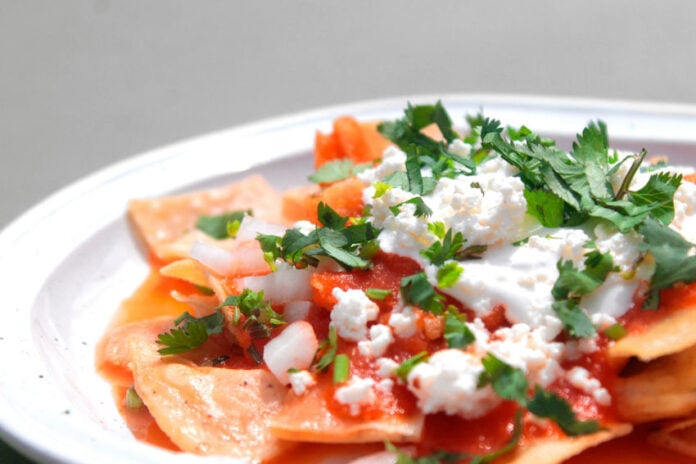
INEGI and the nation's restaurant industry predict Mexicans will consume 40 million servings of which traditional dish this coming Monday?

El Jalapeño: Monitoring Greenland events, Mexico offers to buy back Texas

6
Make Texas Mexico Again.

All stories in El Jalapeño are satire and not real news.

MEXICO CITY — Citing U.S. President Donald Trump’s attempts to purchase Greenland as “a groundbreaking precedent in international real estate law,” top Mexican legal experts announced Monday that they are reviewing the move as the basis for a new plan to legally reclaim Texas.

“Trump opened the door when he insisted sovereign territory could just be bought if you want it badly enough,” said Dr. Carla Jiménez, constitutional law professor at the Universidad Nacional Autónoma de México. “We simply wish to expand on his theories — albeit in the opposite direction and with a much better food scene.”

Not to be outdone by the White House, the Presidential Palace released their own penguin-related shenanigans.

Sources within the Peña Nieto Institute for Advanced Territorial Law confirmed the research has already led to lively debate over whether to annex Austin first for its live music or Houston for its “rich petrochemical opportunities and really good tacos.”

U.S. officials have not issued a formal response, though several Texas residents were reportedly open to negotiation. “Depends if they’ll honor our Costco memberships,” said Plano accountant Brad Miller.

At press time, Canada had ordered a full review of the findings to determine whether “this new buy-a-country thing” might help them finally secure Hawaii.

Check out our Jalapeño archive here.

Got an idea for a Jalapeño article? Email us with your suggestions!

A history of the Maya: The Early Classic period

1
Temple of the Cormorants in Dzibanché
The Temple of the Cormorants in Dzibanché, built during the 5th century A.D. (Patytc/Wikimedia Commons)

As part of an exploration into Mexico’s long and rich history, Mexico News Daily has teamed up with one of the country’s top Maya experts to examine the ancient world that flourished across Mesoamerica.

In our first installment, we talked about the beginnings of Mayan culture during the Preclassic period in what is now Mexico and further south into modern entities like Guatemala, Belize, Honduras and El Salvador. That early era culminated in the rise of the ancient city we call today El Mirador, the great metropolis of the Preclassic period, located in the Petén area of modern-day Guatemala.

Temple of the Masks in Uaxactún
The Temple of the Masks in Uaxactún was built in the Late Preclassic as the city was beginning to rise to prominence. (Clemens Schmillen/Wikimedia Commons)

However, all great things come to an end, and so it did for El Mirador, when around A.D.150, the city suffered a major sociopolitical crisis, theorized to have been driven at least in part by increased building activity, which meant increased deforestation to fuel the wood-fired kilns that helped the Maya make stucco for their buildings. 

This widespread deforestation had inevitable environmental consequences and was likely a key factor in El Mirador’s decline, as was likely competition from newer cities that had already begun to emerge. 

Transition from the Late Preclassic

By the Late Preclassic period (approximately 450 B.C. to A.D. 250), many political entities had begun to emerge in the southern Maya Lowlands, cities that were growing in both construction and population, notably through the building of astronomical commemoration groups and large triadic pyramidal structures. 

These entities were developing large-scale hydraulic engineering, as well as communication routes, so these cities were interacting with each other and trading materials. Archaeological findings of luxury goods that had to have traveled long distances to be placed in their burial offerings not only point to increased interaction between these centers but also an increase in class differentiation within cities, as well as a high degree of sociopolitical control led by power groups. 

Archeologists have also found that the production of stelae, altars and ceramics increased during this period, signaling innovations in the standardization of production, something which would have required specialized labor.

The Early Classic period (A.D. 250–550)

As Maya civilizations left the Preclassic period and moved into the Early Classic period, we see huge advancements: The building of stelae increased exponentially, and these monuments featured new iconographic and calligraphic styles, suggesting advancements in writing and astronomical knowledge — skills previously adapted from other Mesoamerican peoples.

Mundo Perdido (Lost World) Pyramid in Tikal
The Mundo Perdido (Lost World) Pyramid in Tikal was built during the Maya Early Classic period. (Simon Burchell/Wikimedia Commons)

New settlements emerged, led by power groups who needed to legitimize their position. This likely drove the increase in hieroglyphic narratives and the complexity of a worldview where the ajaw (rulers) established divine dynastic lines linked to ancient or mythical times. 

During this time, cities such as Uaxactún, Tikal, Naranjo, Caracol, Naachtun and Dzibanché rose to prominence. Each ruling family asserted its importance through the “emblem glyph,” a specific hieroglyphic compound used to distinguish their lineage.

Evidence of defensive constructions, such as walls and moats, also increased toward the end of the Late Preclassic. Recent research using LiDAR technology has helped study these defenses in cities like Tintal, El Mirador and Holmul. 

This friction likely arose from the struggle to control natural resources, sharpening the social changes that followed a crisis around A.D. 150.

An unexpected arrival in Tikal changes Mayan history forever

Stelae in the Guatemalan Petén point to escalating regional conflicts, particularly between the neighboring cities of Uaxactún and Tikal, located just 25 kilometers apart. Following decades of warfare in the fourth century, Tikal achieved regional supremacy when King Chak Took’ Ihch’aak defeated Tz’akbu Usiij of Uaxactún, an event recorded on Tikal’s Stela 39.

However, the political landscape shifted dramatically on Jan. 16, in A.D. 378. 

Stella in Tikal
Stela in Tikal depicting Yax Nuun Ayiin, a ruler imposed by the Teotihuacans in an episode that forever changed the history of the Mayas. (H. Grobe/Wikimedia Commons)

Monuments at Tikal and Uaxactún record the arrival of foreigners from the distant metropolis of Teotihuacán (located northwest of modern-day Mexico City). Known in academic literature as “The Entry” (La Entrada), this group was led by figures named Sihyaj K’ahk’ and K’inich Mo’.

According to Stela 31 in Tikal, the Teotihuacans then imposed a new ruler, Yax Nuun Ayiin, who was the son of a high-ranking Teotihuacán citizen named Jatz’o’m Kuy. This event fundamentally changed the Maya’s history, introducing Teotihuacán artistic symbols, deities and power structures that Maya rulers later used to legitimize their authority.

The rise of the serpent dynasty

By A.D. 500, population growth and warfare intensified across the region. In the modern-day state of Quintana Roo, the settlement of Dzibanché rose to power as the capital of the Kanu’l dynasty (the “Place where Snakes Abound”), identified by the Snake Head emblem glyph. Hieroglyphic stairs in Dzibanché’s “Captives Building” depict bound men, likely the result of territorial expansion campaigns.

The Kanu’l dynasty eventually engaged in a massive conflict against Tikal, involving multiple regions. While Caracol was initially subordinate to Tikal, in A.D. 562, the Kanu’l of Dzibanché supported Caracol in a war against Tikal. 

The Kanu’l coalition was victorious, establishing a vast network of alliances with cities like Naranjo — in modern-day Guatemala —  and Caracol, in modern-day Belize. This victory triggered Tikal’s decline and marked the beginning of the Late Classic period, an era when the institution of divine supreme leaders, i.e., “sacred lords,” would reach its peak.

Pablo Mumary holds a doctorate in Mesoamerican studies from UNAM and currently works at the Center for Maya Studies at IIFL-UNAM as a full-time associate researcher. He specializes in the study of the lordships of the Maya Lowlands of the Classic period.

Not just chiles: ‘Very Mexican’ ingredients to have on hand for cooking

2
Several traditional salsas with their ingredients.
Several typical Mexican salsas and their ingredients. (Deposit Photos)

Contrary to popular belief (though we’re not saying it’s entirely wrong), being more Mexican in the kitchen is not just about using spicy sauces and adding chiles to everything. 

Being intentionally Mexican in the kitchen involves understanding the complexity and diversity of flavors and freshness that underscore Mexican cooking. It also involves a certain attitude and a lot of love.

Abuelita recipe book
If you want to learn to cook “very Mexican,” take an abuelita’s advice. (Monica Belot)

Since I grew up with Russian-Ukrainian babushkas and not a Mexican abuela (grandmother), I set out to fill my traditional Mexican cooking knowledge gaps by going straight to the source — Mexican grandmas. The elderly in Mexican culture are carriers of the essence of the country’s heritage, rituals and traditions — and that very much includes at the table and in the kitchen.

I started with a book I snagged from a used bookstore called “Las Recetas de Abuelita Linda” (Dear Grandma’s Recipes) by television host Verónica Zumalacárregui, who assembled the stories, cooking secrets and signature recipes of dozens of abuelitas from around Mexico. These fabulous women reveal the roots of regional Mexican cooking, with some delightful twists (like animal cracker crumbs in a chicken mole dish from Puebla or beer in the beans from Sonora). 

Regional identity

Mexican cuisine fragments into dozens of distinct regional identities, each with its own pantry, its own techniques and its own stories. To cook Mexican food authentically means first understanding that there is no single “Mexican cuisine”: There are many, and they speak different dialects.

But certain ingredients appeared again and again in my research, forming something like a shared vocabulary across these regional variations. What follows is less a shopping list than a map of Mexican cooking’s foundational terrain — the pantry essentials that will allow you to cook with genuine Mexican flavor.

Corn in all its forms

Unsurprisingly, nearly everything starts with corn. Tortillas de maíz are nonnegotiable in most of Mexico, though tortillas de harina dominate the northern states. But corn’s presence extends far beyond the tortilla. Stock your pantry with maíz pozolero for soups, harina de maíz for making masa (the dough used to make tortillas) from scratch, and hojas de maíz (corn husks) for wrapping tamales or presenting certain dishes. Corn plays multiple roles on the kitchen stage.

The chile archive

If you’re serious about cooking Mexican food, you need to build a chile collection. This is where most home cooks go wrong, thinking that one or two types will suffice. They won’t.

There’s something captivating about these little devils that grow in a wide range of colors, sizes and pungency. (El Mono Español/Wikimedia Commons)

Start with the essentials: Guajillos provide the backbone for red salsas with their tannic, berry-like notes. Chiles de árbol bring pure, clean heat. Anchos (dried poblanos) offer sweet, almost raisin-like depth. Chiles pasilla add earthiness to moles. You’ll need fresh serranos for everyday salsas, jalapeños for pickling and stuffing, and poblanos for dishes like rajas and chiles rellenos.

As you advance, add habaneros for Yucatecan dishes, chipotles (smoked jalapeños) for adobos, plus mirasol, chilacates, chiltepin and, if you can find them, Yucatecan xcatic peppers. Each brings not just heat but a distinct flavor profile, from smoky to sweet, fruity to bitter. The abuelas treat chiles as individuals with personalities, not interchangeable units of spice, and you should too.

Fresh vegetables

White or red onions, and occasionally cebolla de rabo (scallions) appear in nearly every recipe. Tomatoes and tomatillos (both red and green varieties) form the base of countless salsas. Cherry tomatoes are typically not a part of traditional Mexican cooking.

Nopales (cactus paddles) might seem intimidating, but they’re worth learning to handle. Rábanos (radishes) are essential, not only as a garnish but for their peppery crunch and vibrant color. Calabaza (zucchini) is a nourishing part of many dishes, while ajo (garlic) appears constantly, often roasted whole. Meanwhile, squash blossoms (flores de calabaza) are a versatile delicacy used in quesadillas, soups or stuffed with a mild, soft cheese and fried.

The fresh-herb trinity

Stock up on cilantro as a primary ingredient, and use it generously. Epazote (a fragrant herb) is nonnegotiable for authentic bean dishes. It has a pungent flavor that might seem off-putting at first, but mixed into popular plates like beans, it rounds out the dish.

Beyond these basics, regional variations matter: Hojas de chilpilin for Chiapan tamales, pitiona (verbena) for Oaxacan dishes, avocado leaves for certain bean preparations and moles. These aren’t always easy to find, but when you’re cooking a specific regional dish, they’re what make it authentic.

Dried spices and aromatics

Mexican spices bring piquancy and flavor to any dish. (Calum Lewis/Unsplash)

I was surprised to see the number of times oregano was mentioned in traditional recipes. I had associated the spice more with Italian cuisine. Yet Mexican oregano is not Mediterranean oregano. It’s more citrusy, more resinous and essential to pozole and to another Mexican dish, birria. 

Build your spice cabinet with the following: cumin (comino), mejorana (marjoram), laurel (bay leaves), tomillo (thyme), whole canela (Mexican cinnamon) sticks and clavo (cloves). But here’s the critical part: freshness matters intensely. Many recipes specify pimienta recién molida (recently ground pepper) because the difference between fresh-ground and pre-ground is the difference between a dish that sings and one that whispers.

Legumes and staples

Frijoles (beans) are a versatile dish, whether flavored with epazote, enriched with manteca or simmered with avocado leaves. Stock both pinto beans and frijoles negros (black beans), depending on what region’s cooking you’re exploring. Meanwhile, arroz rojo (requiring medium-grain white rice, tomato and patience) is often featured as more just than a side dish.

Fats and flavor bases

Manteca de cerdo (pork lard) is a staple in authentic Mexican cooking. Its flavor coats the mouth in a way that carries spices more effectively, giving dishes like refried beans their buttery taste.

Achiote defines Yucatecan cooking. Keep semillas de achiote (annatto seeds) for making your own paste, or buy prepared pasta de achiote and recado rojo y blanco (red and white seasoning pastes). These turn chicken or pork an orangey-red and give off an earthy, slightly peppery flavor.

Mole paste in different flavors can be purchased in blocks from your local market and edited with your preferred flavors. And be sure to stock various salsas: My favorite is a crunchy salsa macha with its chiles and nuts.

Fruits, nuts, and sweeteners

Limes in a Mexican supermarket
Limes are a ubiquitous element in Mexican food and its preparation. (ProtoplasmaKid/Wikimedia Commons)

Limones (limes) appear at nearly every meal. Aguacate (avocado) is a daily staple as well.

The supporting players in savory dishes can be surprising: pasas (raisins) add sweetness and texture. Cacahuates (peanuts) provide body and richness. Plátano macho (plantains) appears in coastal and southern cooking, adding starchy sweetness.

For sweetening, use piloncillo (cone-shaped blocks of unrefined cane sugar). And keep good Mexican chocolate (Ibarra or Abuelita brands work well) on hand for chocolate caliente or moles, where it adds depth and silky body.

The Attitude: What recipes can’t teach

What you also need is a certain playfulness in the kitchen. Many of the abuelitas had a special secret ingredient added — singing and dancing in the kitchen. While Mexican cooking asks that you pay attention to smell, to taste, to touch and to the appearance, it’s not rigid. The abuelitas cooked with playfulness, with improvisation and with confidence born from repetition.

Being Mexican in the kitchen means understanding that recipes are guides, not laws. It means knowing when a dish needs more lime, more salt, more heat. It means tasting your salsa and deciding it needs another minute on the comal (griddle) or another clove of garlic or a pinch more cumin. It means cooking with generosity: making more than you need because someone might stop by, and because food is meant to be shared.

Monica Belot is a writer, researcher, strategist and adjunct professor at Parsons School of Design in New York City, where she teaches in the Strategic Design & Management Program. Splitting her time between NYC and Mexico City, where she resides with her naughty silver labrador puppy Atlas, Monica writes about topics spanning everything from the human experience to travel and design research. Follow her varied scribbles on Medium at medium.com/@monicabelot.

MND Tutor | Tamales

1

Welcome to MND Tutor! This interactive learning tool is designed to help you improve your Spanish by exploring real news articles from Mexico News Daily. Instead of just memorizing vocabulary lists or grammar rules, you’ll dive into authentic stories about Mexican culture, current events, and daily

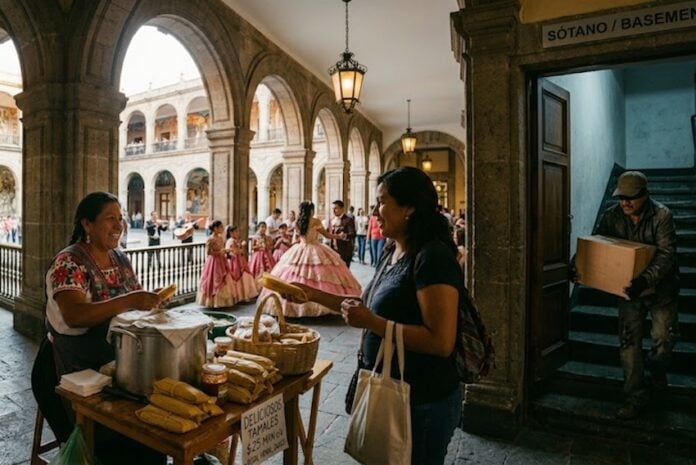
Mexicans are expected to spend 1.2 billion pesos on some 40 million tamales and atole for Día de la Candelaria on Feb. 2, mainly from small vendors. The tradition obliges those who found the baby Jesus in the Rosca de Reyes to provide tamales, sustaining strong, nationwide demand.

As you explore this fascinating tradition, take the opportunity to learn some Spanish in today’s lesson. If you would like to read the original article, click here.


Let us know how you did!

Mexico’s week in review: Sheinbaum’s sovereignty narrative faces its toughest test yet

4
The president, flanked by the governor of Baja California and Mexico's navy minister, looks out at the newly inaugurated Maritime Traffic Control Center in Ensenada. (Gabriel Monroy/Presidencia)

How much sovereignty does Mexico really have? That question hung over the week of Jan. 26-30 as the United States exercised increasing authority within Mexico and weaponized tariffs to reshape Mexican foreign policy beyond its borders.

The week began with President Claudia Sheinbaum insisting alleged drug trafficker Ryan Wedding had simply turned himself in at the U.S. Embassy last week — contradicted by a Wall Street Journal bombshell revealing FBI agents handcuffed the suspect in what one official called a “zero-margin, high-risk operation” on Mexican territory. By week’s end, Trump issued an executive order threatening tariffs on any country supplying oil to Cuba, putting Mexico’s solidarity with the island in direct conflict with its need to maintain trade relations with its northern neighbor.

Between these episodes of American pressure, Sheinbaum grappled with a debilitated security narrative and the news of lackluster GDP growth in 2025.

Didn’t have time to follow this week’s top stories? Here’s what you missed.

Ryan Wedding arrest controversy deepens

The circumstances surrounding the Jan. 22 arrest of alleged drug trafficker Ryan Wedding dominated headlines throughout the week. Wedding, a 44-year-old former Olympic snowboarder wanted on U.S. drug trafficking and murder charges, was apprehended under circumstances that remain murky.

President Sheinbaum has consistently maintained that Wedding turned himself in at the U.S. Embassy in Mexico City, even as Wedding’s lawyer disputed the surrender narrative, telling reporters on Monday that “any spin that the government of Mexico is putting on this that he surrendered is inaccurate.” On Wednesday, a Wall Street Journal exclusive published Wednesday painted a different picture, citing U.S. and Mexican officials who described FBI Hostage Rescue Team involvement in an operation that Mexican law explicitly forbids.

FBI Director Kash Patel, who was in Mexico City during the arrest, called it a “zero-margin, high-risk operation” executed by FBI teams “alongside our Mexican partners.” The Journal reported the FBI’s involvement was intended to remain secret, as Mexican law prohibits foreign agents from participating in law enforcement operations on Mexican soil.

At her Thursday press conference, Sheinbaum insisted the WSJ report supported her version of events, even though the article clearly suggests U.S. intervention in Wedding’s arrest.

WSJ: FBI involved in Canadian trafficker’s arrest in Mexico despite ban on foreign agents

The controversy raises broader questions about U.S.-Mexico cooperation on security matters at a time when the Trump administration has threatened unilateral strikes against cartels in Mexico. On multiple occasions throughout the week, the president reiterated that Mexico will never “accept joint operations with the United States, or with federal, state or municipal forces of the United States, in our territory.”

However, according to the WSJ, the FBI is now mapping out more targets across Mexico for potential joint operations, suggesting this may be the first of many such incidents.

Is security in Mexico improving?

While the Sheinbaum administration has touted a 30% decline in homicides in 2025 as evidence of improved security, a comprehensive analysis of crime statistics this week revealed a troubling picture that calls the government’s claims into question.

The report examined evidence that state authorities may be systematically misclassifying murders as lesser crimes. The number of intentional homicide victims allegedly declined 11% over six years, while victims of culpable homicide and “other crimes against life and integrity” increased 11% and 103%, respectively.

More concerning, disappearances surged 16% during Sheinbaum’s first year compared to López Obrador’s final year. A total of 14,765 people who disappeared between October 2024 and September 2025 remained unaccounted for. When homicides and disappearances are combined, the total declined only 5% compared to the AMLO administration’s average — far less impressive than the promoted 30% homicide reduction.

Security experts suggested that disappearing people allows organized crime to “create terror” and “hide lethal violence” because without a body there’s no crime — a situation that is “politically profitable” for all involved.

The week brought fresh evidence of Mexico’s security challenges. In Salamanca, Guanajuato, gunmen massacred 11 people at a soccer field, while in Sinaloa, two state legislators were hospitalized after an assassination attempt in Culiacán. Most troubling was news from Concordia, Sinaloa, where Canadian mining company Vizsla Silver confirmed a mass kidnapping of employees, with victims still missing and work suspended indefinitely.

Despite government claims of improved security, a new report showed that feelings of insecurity among Mexicans have risen even as official crime statistics have fallen — suggesting a disconnect between lived reality and government narratives.

Pemex pauses scheduled oil shipment to Cuba

Cuba was a second front from which Mexico’s position between principle and pragmatism came into sharp relief this week.

On Jan. 23, Reuters reported the Sheinbaum administration was reviewing whether to continue shipments to the island amid mounting U.S. pressure, citing three senior government sources who expressed “growing fear that the United States could take unilateral action on our territory.”

Monday brought news that Pemex had canceled a scheduled January shipment. At her Tuesday press conference, Sheinbaum didn’t deny the cancellation but emphasized oil shipments are a “sovereign decision” made by Mexico and Pemex. When pressed on whether shipments would resume, she simply said: “In any case, we will inform you.”

The pressure escalated throughout the week. Trump declared on social media that “THERE WILL BE NO MORE OIL OR MONEY GOING TO CUBA – ZERO!” while Politico reported the administration was weighing a total blockade. Mexican officials observed at least three U.S. Navy drones conducting flights over the Bay of Campeche since December, following routes taken by tankers carrying Mexican fuel to Cuba — the same surveillance aircraft spotted off Venezuela’s coast before U.S. military intervention there.

When Sheinbaum spoke with Trump by phone Thursday, she indicated Cuba wasn’t discussed during the 40-minute conversation focused on border security, drug trafficking and trade.

President Sheinbaum speaks on the phone
President Sheinbaum had a phone call with U.S. President Trump on Thursday morning, but Mexico’s support of Cuba was reportedly not a topic. (Claudia Sheinbaum/X)

But the next day, Trump issued an executive order declaring a “national emergency” over Cuba and establishing a tariff system under which additional duties may be imposed on imports from countries that provide oil to Cuba. The order, as the Associated Press noted, “would primarily put pressure on Mexico.”

At her Friday press conference in Tijuana, Sheinbaum delivered a prepared four-point response: reaffirming Mexico’s commitment to sovereignty, warning tariffs could trigger a humanitarian crisis affecting Cuban hospitals and food supply, instructing the foreign minister to contact the State Department for clarification and pledging Mexico “will seek different options to help, in a humanitarian way, the people of Cuba.”

She stressed her government needs to understand “the reach” of Trump’s order because “we don’t want to put our country at risk in terms of tariffs.” She noted there are “other ways to support” Cuba beyond oil, and even suggested the United States itself could send oil to the island. “Our interest is that there is not a serious situation for the Cuban people,” she said, while acknowledging Mexico’s need to avoid additional tariffs.

Mexico finishes 2025 with 0.7% GDP growth

Amid controversies and geopolitical tensions, Mexico’s economy delivered the welcome news of record export performance that prevented a recession after the economy shrunk 0.3% in third quarter.

Mexico’s exports surged to $664.8 billion in 2025, a 7.6% increase representing the strongest growth since 2022. More importantly, the strong finish created Mexico’s first trade surplus since 2020 — a modest $771 million that nonetheless contrasts sharply with 2024’s $18.5 billion deficit.

The December surge was particularly impressive, with exports climbing 17.2% compared to the previous year. This performance helped push GDP growth to 0.7% for the year, keeping Mexico out of recession despite what a Bank of America chief economist called “an environment of uncertainty and new tariffs.”

Carlos Capistrán Carmona, chief economist for Mexico and Canada at Bank of America (BofA), told Forbes magazine that exports will once again be Mexico’s economic engine in 2026, forecasting growth above 5%.

Light news and cultural highlights

Not all the news in Mexico this week was dominated by controversy.

Looking ahead

The week’s events highlighted complex challenges facing the Sheinbaum administration. The Ryan Wedding controversy exposed tensions over U.S.-Mexico security cooperation ahead of USMCA review negotiations. Questions about crime statistics threaten the president’s security narrative, while export success provides economic leverage but may not offset broader growth challenges.

The message from Washington was unmistakable: Mexico’s decisions — on law enforcement, on trade partners, on foreign policy — are subject to American approval.

The Cuba decision will test Mexico’s ability to maintain foreign policy independence while managing an aggressive U.S. administration that has threatened military strikes. Sheinbaum faces a delicate balancing act between principle and pragmatism.

Looking for last week’s round-up?

Mexico News Daily


This story contains summaries of original Mexico News Daily articles. The summaries were generated by Claude, then revised and fact-checked by a Mexico News Daily staff editor.

From San Miguel to Wall Street: A ‘Confidently Wrong’ conversation about raising kids in Mexico

1
Ann Dolan, Travis Bembenek and George Reavis on a video call
From childhood in Mexico to college in the U.S., Ann Dolan shares her experience raising kids in San Miguel de Allende with podcast hosts Travis Bembenek and George Reavis. (Shutterstock)

Oftentimes, when one talks to parents who are considering moving to Mexico with kids, the focus of the conversation is on potential negatives. What if they don’t like it? What if they don’t learn Spanish? What if they don’t fit in? What if they fall behind their U.S. counterparts? What if they don’t have the same sports? What if they can’t get into a good college? Rarely is the conversation framed around the potential positives or benefits of growing up in another country and culture. I think this largely contributes to the persistence of “confidently wrong” perceptions about raising kids in Mexico.

In today’s episode, we interview someone who quickly puts to rest many of those questions. Ann Dolan and her family provide an exceptional case study that we can all learn from. Ann and her husband Jim moved to Mexico at a young age, and years before having kids. When they ultimately decided to have kids, they chose to have them in Mexico and to continue living in San Miguel de Allende.

When it came time to decide on elementary school, they stayed in Mexico. The same for middle school. All three of their kids grew up bicultural and bilingual and are now all at college in the U.S. Their oldest, who is graduating this spring, already has a job on Wall Street in New York City.

How could all of this have happened for a family living in little San Miguel de Allende? Listen to Ann share the experiences of having, raising and educating kids in Mexico. This episode is guaranteed to leave you informed and inspired!

Check it out on our YouTube channel here, or listen on Spotify.

Confidently wrong about raising kids in Mexico: From San Miguel to Wall Street - Episode 2

Travis Bembenek is the CEO of Mexico News Daily and has been living, working or playing in Mexico for nearly 30 years.

The last days of Ángela Peralta, the ‘Mexican Nightingale’

6
Ángela Peralta
Ángela Peralta was the greatest opera singer ever born in Mexico, a prodigy who by the age of 17 had already performed to acclaim in Milan’s La Scala opera house. (Public Domain)

In August 1883, fresh off a stunning performance in the title role of the opera “Maria di Rohan” in La Paz, Ángela Peralta, the opera singer known as the “Mexican Nightingale,” arrived in Mazatlán to a reception fit for a queen. Crowds of admirers holding flowers and handkerchiefs overhead thronged the pier where her ship had docked, as the celebrated soprano was greeted by the city council and serenaded by a band playing the national anthem.

Peralta, according to popular legend, was wearing a dark coat and a small hat and sang a brief rendition of “La Paloma.” When she made her way down to the carriage assigned to her, her most passionate admirers unyoked the horses so that they might convey her in the carriage aloft, followed by the rest of the crowd, to her arranged lodgings at the Hotel Iturbide, next door to the Teatro Rubio, where she was scheduled to perform in the coming days.

Peralta
Peralta, at the peak of her powers as an artist in the role of Lucía de Lammermoor, was renowned for the rare emotional expressiveness of her voice and its exceptional clarity. (Public Domain)

Little did the Nightingale know, as her carriage was carried on broad shoulders through the streets of Mazatlán, that eight days later she would be married for the second time, and that eight days later she would be dead at the age of 38.

The yellow plague

Before virologist Max Theiler discovered a vaccine for yellow fever while working at the Rockefeller Foundation laboratories in New York City during the 1930s — an achievement for which he would later receive a Nobel Prize — the infectious viral disease had likely killed millions. It still kills tens of thousands of the unvaccinated each year, mainly in Africa and South America.

No, it’s not contagious. Like malaria or dengue, yellow fever is transmitted into the bloodstream via a mosquito bite. But unlike the other two, it can be particularly devastating due to its ability to cause rapid organ failure and death. In the 19th century, yellow fever was rightly feared, not only for its potentially fatal consequences but also for the extremely painful symptoms that accompanied the disease. 

There are three phases: incubation, acute and toxic. During the initial “silent” phase of yellow fever, lasting three to six days, there is often no obvious sign of infection, as the virus spreads in the bloodstream, causing headaches and body aches that can be mistaken for the flu. However, once the acute phase sets in, so too does a high fever, along with symptoms such as dizziness and confusion. Worse yet is the so-called “coup de barre,” an excruciating pain in the back and legs that feels as if the afflicted is being beaten with a stick. 

Only 15% of those infected are destined for the severe version. But they are first deceived by a brief period of remission before the tragic reality sinks in. Then, a week to 10 days after being bitten, yellow fever’s most famous symptoms arrive. These are jaundice, a yellowing of the skin and eyes, and “black vomit” as acids from the eroding stomach lining turn blood from red to black.

The outbreak that would ensue in 1883, killing not only Peralta but 2,500 people — an astonishing 16% of Mazatlán’s residents at the time — was already present when she and her company arrived aboard the steamship Newbern from Baja California Sur. According to local reports, yellow fever was brought from Panama aboard two ships, the San Juan and the San Blas, which were allowed to dock without being quarantined. These ships already had dozens of infected passengers aboard, who were then bitten by Aedes aegypti mosquitoes in Mazatlán, which passed the virus on to the local population.

Early days in Mazatlán

Hotel Iturbide
The Hotel Iturbide in Mazatlán, where Peralta and her opera company were lodged. (Public Domain)

Peralta and her company had arrived at the worst possible time. Although there had been several outbreaks of yellow fever in Mexico during the 19th century in the cities of at Altamira, Tampico, Tuxpan and Veracruz, none had occurred on the Pacific coast. This was the first, and the conditions then present in Mazatlán were ripe for it. The rainy season, which had just ended, had left pools of stagnant water, and this, combined with the heat and humidity of August, fueled the mosquito population that would spread the disease.

By the time Peralta and her company arrived on Aug. 22, dozens of deaths had already been reported in Mazatlán. It’s quite possible many of the company were bitten by infected mosquitoes before they even arrived at the Hotel Iturbide — perhaps even before they disembarked from the ship. When the first rehearsal was held two days later, Friday, Aug. 24, at the Teatro Rubio, the company’s musical director, Pedro Chávez Aparicio, was already feeling ill. So Peralta stepped in to direct the rehearsal, singing several arias to get a feel for the acoustics of the venue. 

Over the weekend, she would begin to feel the first symptoms. By the following Monday, Chávez had died, and Peralta was confined to her hotel room at the hotel, in the throes of the disease that would eventually kill her. 

The flight of ‘La Ruiseñora Mexicana’

Despite Peralta’s rather florid name, María de los Ángeles Manuela Tranquilina Cirila Efrena Peralta, she had been born into a Mexico City family of modest means. Her talents, however, were soon apparent. By the age of eight, she had already been enrolled in the National Conservatory of Music. That same year, she met internationally renowned opera singer Henrietta Sontag, who was then visiting Mexico. Peralta was able to imitate her so perfectly that Sontag predicted that with European training, she would become one of the world’s best opera singers. 

Her voice, heard for the first time publicly when she performed at the Gran Teatro Nacional at age 15 in the role of Leonora in Verdi’s “Il Trovatore,” was a rare soprano absoluta. With this versatile instrument, she was able to perform coloratura roles that required vocal acrobatics like trills and arpeggios while sustaining very high notes with flawless technical skill. But Peralta could also sing with immense power. Comparisons to songbirds, from goldfinches to nightingales, soon followed.

At 17, she performed the lead in Donizetti’s “Lucia di Lammermoor” at La Scala opera house in Milan, bringing down the house and receiving 23 curtain calls. One of Donizetti’s sons, in attendance, lamented that his father had not lived to see her perform. Francesco Lamperti, with whom she studied in Milan, declared her “angelic by voice and by name.” She went on to appear in all the other great opera houses in Europe, from Naples and Rome in Italy and Barcelona and Madrid in Spain, to Paris and St. Petersburg. She conquered the U.S., too, performing in New York City.

Painting of Peralta
Painting of Peralta in performance as Aida, circa 1877. (Colección Museo Nacional de Historia)

But already, the “black star” that Peralta felt was following her had begun to show itself. Her first husband — first cousin Eugenio Castera, whom she married in Madrid — had already begun to show signs of mental illness during the first year of their marriage. By 1876, he had been committed to an institution in Paris, where he died the same year.

Peralta returned to Mexico, where a decade earlier she had performed for Emperor Maximilian and Carlota. This visit promised to be every bit the same success when she opened to acclaim, performing “Aida” at the Gran Teatro Nacional in 1877. But when it became common knowledge that she was now in an unmarried relationship with her lawyer and manager, Julián Montiel y Duarte, the capital’s public, electrified by the gossip, turned against her. Her opera performances were increasingly met with hecklers, and by the end of the 1870s, she had vowed never again to perform in Mexico City. 

This was the reason for her tours of the “provinces” of Mexico, like the fateful one that brought her to Mazatlán in 1883.

Final days in Mazatlán

On the morning of Aug. 30, eight days after she’d arrived in Mazatlán, by which point she was on her deathbed, Peralta legalized her relationship to Julián Montiel y Duarte by marrying him in room 10 of the Hotel Iturbide. Her signature does not appear on the marriage certificate, though, and it is speculated that she was dead before her vows had been uttered, and that her head had to be manipulated so that she could nod her “I do.”

The Nightingale would sing no more. So devastated was Mazatlán by the yellow fever outbreak that claimed Peralta’s life that only a few members from the company went to the cemetery to see her buried, and not a single note was sung at her gravesite. Of the 38 people who had accompanied her to Mazatlán, 34 fell ill, and at least 14 died. Montiel y Duarte survived, but spent the last 19 years of his life disputing claims that he had married Peralta for whatever was left of her estate.

Her legacy would prove more enduring. In 1937 — the same year Theiler discovered the cure for yellow fever — Peralta’s remains were disinterred from Mazatlán and removed to the Rotonda de las Personas Ilustres in the Panteón de Dolores in Mexico City. She was the first woman ever to receive this honor. The Teatro Rubio in Mazatlán, meanwhile, built in 1874 and where Peralta had rehearsed before her death, was renamed for her and received a significant restoration in 1992. Today, it remains a magnificent showplace for the next generation of talented Mexican singers and performers. 

Teatro Ángela Peralta in Mazatlán
The Teatro Ángela Peralta in Mazatlán is the restored theater where she was once meant to perform. (Gobierno de Mexico)

Of course, there will never be another “Mexican Nightingale.”

Chris Sands is the former Cabo San Lucas local expert for the USA Today travel website 10 Best and writer of Fodor’s Los Cabos travel guidebook. He’s also a contributor to numerous websites and publications, including Tasting Table, Marriott Bonvoy Traveler, Forbes Travel Guide, Porthole Cruise, Cabo Living and Mexico News Daily.