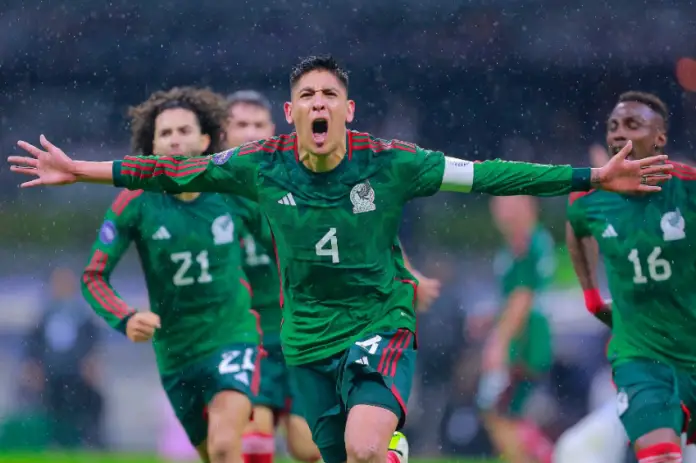
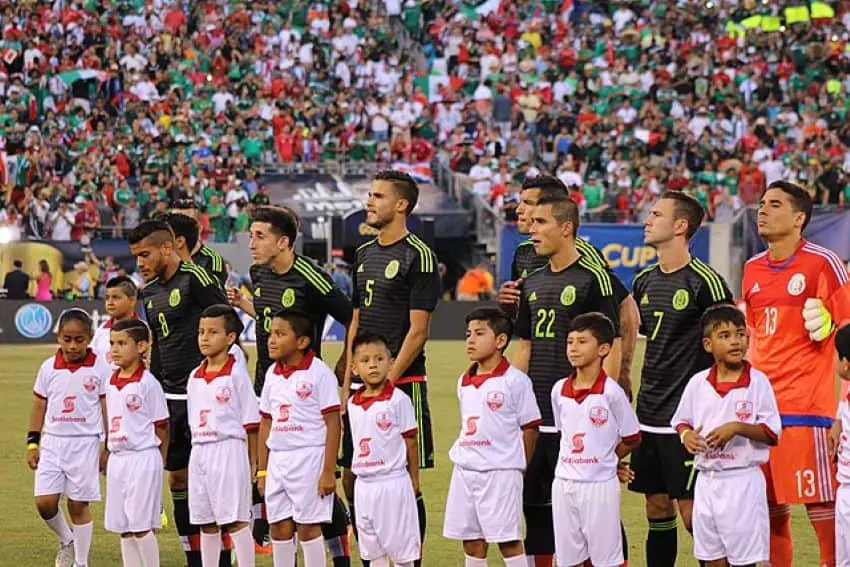
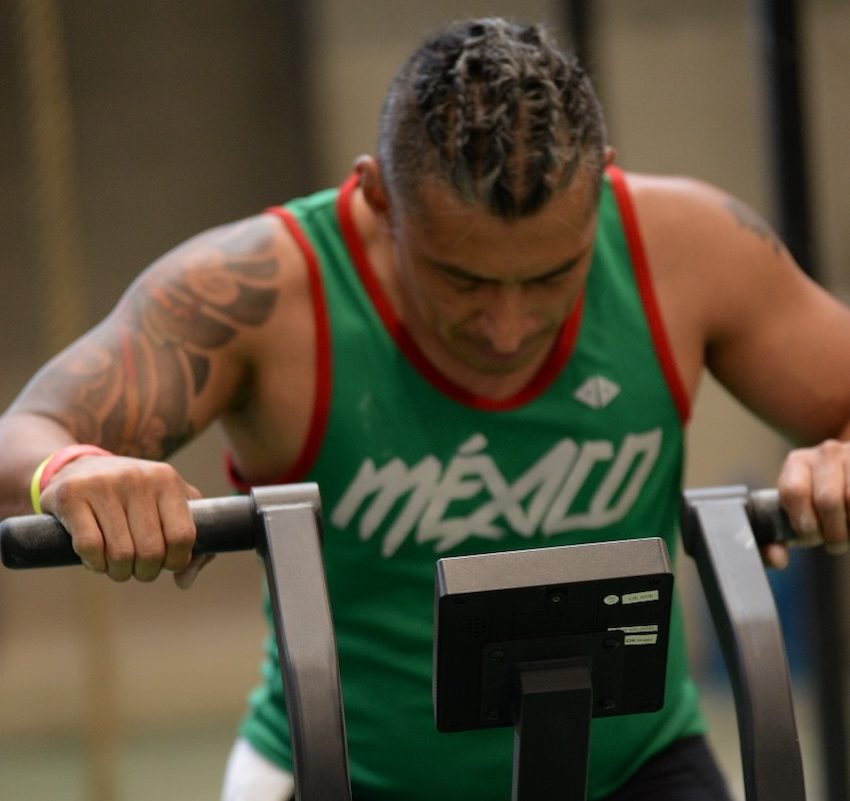
How will "El Tri" do at the Copa America? Ian Ostroff rates the Mexico national team's chances of glory in the United States. (Goaltickets)
In Mexico, soccer is a religion. If the national team is participating in a major tournament, the entire country pauses whatever they’re doing to watch.
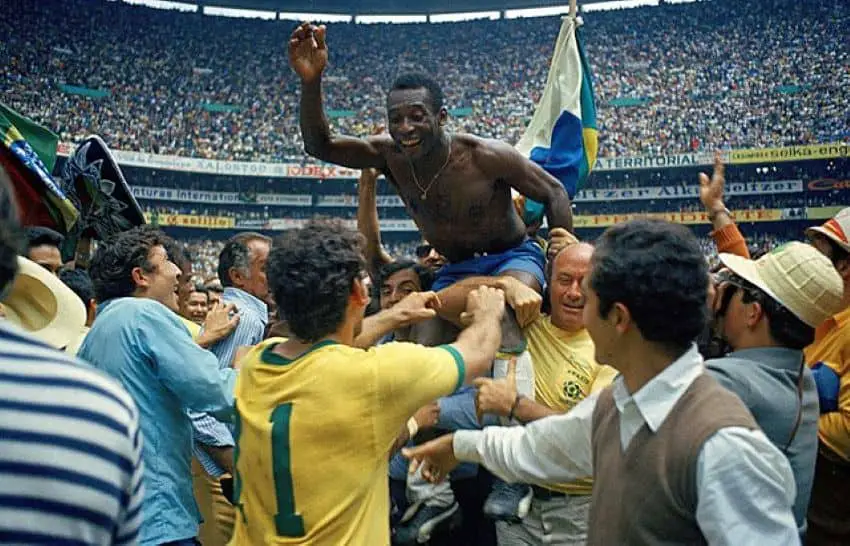
After hosting the World Cup in 1970 and advancing to the quarter-finals for the first time in its history, Mexico established itself as a respected football country on a global stage. It was the first World Cup televised in color, which ended with Pelé winning his last trophy for Brazil, who was carried from Mexico’s famous Azteca Stadium.
Brazil’s Pele – considered by many to be the greatest player of all time, won his final World Cup at Mexico City’s Estadio Azteca. (Wikimedia Commons)
Mexico’s reputation continued to grow, becoming a powerhouse in the North American CONCACAF region and consistently qualifying for World Cups. The country also hosted another tournament in 1986, best remembered for the audacious piece of cheating that was Diego Maradonna’s infamous “Hand of God.” Mexico’s second quarter-final appearance was a highlight for home fans.
But with Mexico’s solidified football reputation came invitations to participate in other tournaments, like South America’s prestigious Copa América.
Although it’s been eight years since Mexico last participated in this competition, performing well at the Copa América this summer could be the boost El Tri needs leading into the 2026 World Cup.
Mexico’s history in the Copa América
Since 1993, Mexico has been regularly invited to participate in the Copa América. In that time, they’ve gone head-to-head with some of the best players in history, including Lionel Messi, Neymar, Ronaldinho, and Diego Forlán.
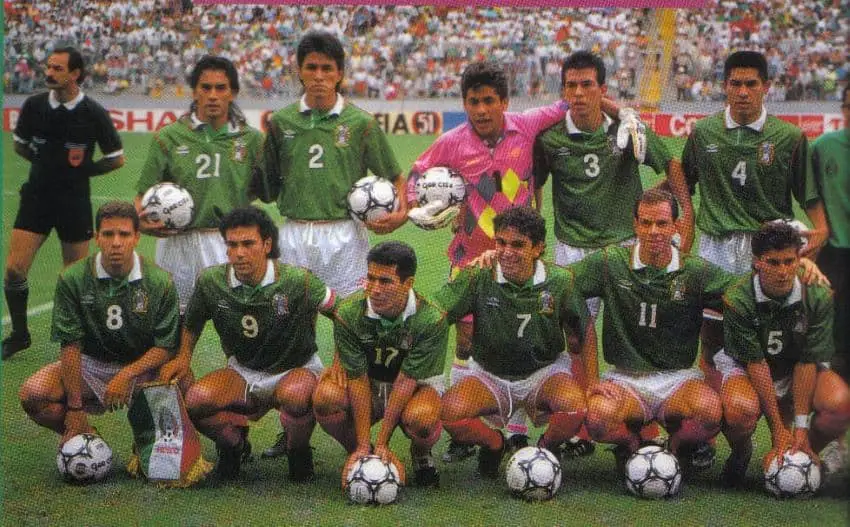
Mexico’s second-placed Copa America squad in 1993. (David Patiño/X)
But Mexico held its own. They even made the finals against Argentina in their first ever Copa América appearance. El Tri collected another second-place result in 2001, and a handful of third-place finishes in 1997, 1999, and 2007.
The 1990s and early 2000s were a notable era in Mexican football. It featured legendary players like Luis Hernández, Cuauhtémoc Blanco, Hugo Sánchez, and Rafa Marquez. Naturally, playing against stellar football nations like Argentina, Brazil, and Uruguay, helped Mexico climb the world rankings.
Six months prior to competing in the 1993 Copa América, FIFA ranked El Tri as the 25th-best team. However, by May 2006, Mexico reached an impressive 4th place ranking going into that summer’s World Cup. They were even positioned ahead of European powerhouses Italy, France, and Germany.
Notable Mexican players and teams
After Mexico’s success in the 1990s and early 2000s came what many consider Mexico’s golden generation. With star players like Carlos Vela, Giovani dos Santos, Javier “Chicharito” Hernández, and Guillermo Ochoa, El Tri maintained its reputation as a top 15 footballing nation.
Mexico enjoyed some memorable moments, including a handful of Gold Cup trophies and consistent round-of-16 finishes at the World Cup. The squad even won an Olympic gold medal at London 2012. Several players from Mexico’s golden generation also played at major European clubs like Real Madrid, Barcelona, Tottenham Hotspur, Arsenal, and Manchester United.
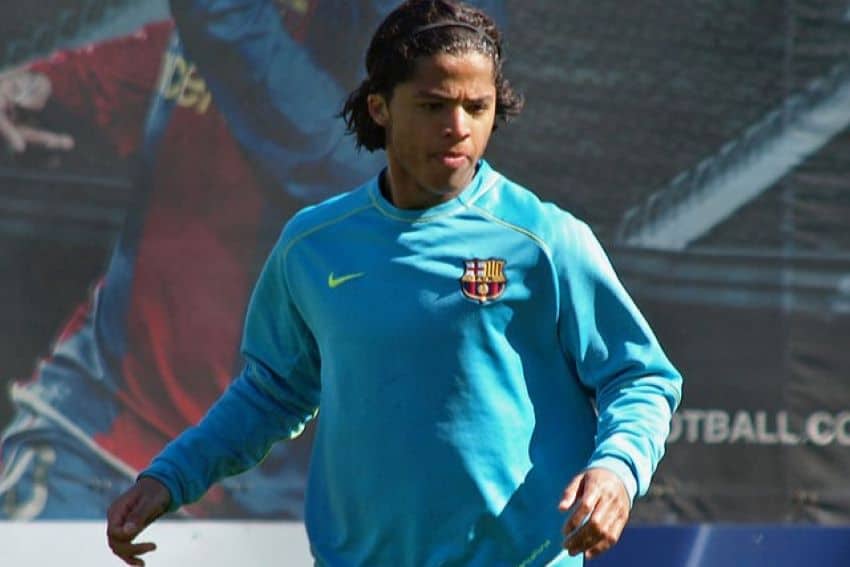
Giovanni Dos Santos enjoyed a career that saw him play in the English Premier League and alongside Lionel Messi at Barcelona. (Wikimedia Commons)
Despite the great talent Mexico had they have failed to advance to the semi-finals of the Copa America since 2007.
With that in mind, Mexico sent the strongest possible team to the 2016 Copa America. Though they made the quarter-finals, they were eliminated 7-0 by Chile. It is still regarded as their worst major tournament defeat in history.
What has happened since Mexico last entered the Copa América?
For those who follow Mexican soccer, it’s evident El Tri has underperformed lately.
Mexico did have one shining moment in the 2018 World Cup when they defeated reigning champions Germany 1-0 in the group stage of that tournament. Success has since been thin on the ground, however.
While Mexico was once a force to be reckoned with, the last decade has seen the team tumble down the world rankings. (Wikimedia Commons)
With the U.S. and Canada catching up to Mexico in the last twenty years, they’re no longer the kings of CONCACAF. Mexico hasn’t beaten the United States since 2019 — something inconceivable for Mexican fans just ten years ago.
Eliminated in the group stage of the 2022 World Cup for the first time since 1986, Mexico are struggling. But the country has young talent that could turn things around in the coming years with young stars like Edson Álvarez, Jorge Sanchez, and Luis Chavez.
Rising stars like Santiago Giménez, bring more hope to Mexican fans. Giménez scored the last-minute goal to win Mexico the 2023 Gold Cup, and is having a great season for club Feyenoord in the Netherlands. There are also rumors he might sign for either Tottenham Hotspurs or AC Milan.
West Ham’s Edson Álvarez is part of a new golden generation of Mexican footballers playing in Europe. (Edson Álvarez/X)
Hopefully, Mexico’s new golden generation will mature this decade. A strong team going into this year’s Copa America would be a great step forward.
Predictions for the 2024 Copa América
Mexico has been drawn in Group B in this year’s Copa América, where they’ll face Ecuador, Venezuela, and dark horses Jamaica in a round-robin stage. If El Tri finish second in their group, they could face Lionel Messi and Argentina in the quarter-finals.
With the Copa América kicking off this June, Mexico is in with a fair chance of securing first place. Jimmy Lozano, Mexico’s current team manager, just announced his final squad for the tournament — leaving out Hirving Lozano, Raul Jiménez, and Guillermo Ochoa to make room for younger players. It indicates that Mexico is serious about performing well and is willing to take risks to give new talent opportunities to grow on a major tournament stage.
If the team can top Group B, they will avoid a potentially tricky meeting with Argentina in the next round. But with countries like the United States, Brazil, Colombia, and Uruguay also in the tournament, we’ll see how Mexico rises to the challenge.
Ian Ostroff is an indie author, journalist, and copywriter from Montreal, Canada. You can find his work in various outlets, including Map Happy and The Suburban. When he’s not writing, you can find Ian at the gym, a café, or anywhere within Mexico visiting family and friends.
The heat wave that suffocated Mexico for most of May will subside by Tuesday, May 14. (Moisés Pablo/Cuartoscuro)
Mexico’s second heat wave of the year, which brought extremely high temperatures across the country, officially ends today according to the National Meteorological Service (SMN).
But don’t get too excited, as Mexico will still experience dry and hot weather, except for a few fortunate states that will see rainfall throughout the week.
Starting Monday afternoon, regions of Chiapas can expect heavy rain (50 to 75 mm), while México state, Hidalgo, Oaxaca, Puebla and Veracruz may see scattered showers.
Campeche, Mexico City, Coahuila, Guanajuato, Morelos, Querétaro, Quintana Roo, San Luis Potosí, Tabasco and Tlaxcala will see isolated rainfall between Monday afternoon and Tuesday, and again on Thursday.
Between Monday and Tuesday, all coastal states along both the Gulf of Mexico and the Pacific Ocean will continue to experience high temperatures. These regions are expected to see minimums of 35 degrees Celsius to 40 degrees Celsius and maximum temperatures of 41 Celsius to 47 Celsius.
Tlaxcala, Puebla, Hidalgo, México state, Querétaro and Mexico City will see temperatures between 28 degrees Celsius to 38 degrees Celsius.
Temperatures ranging between 30 degrees Celsius to 40 degrees Celsius are expected in northern Mexico as these conditions are typical of May.
The states that will be most affected by the heat are Tamaulipas, San Luis Potosí, Veracruz, Oaxaca, Tabasco, Campeche, Chiapas, Yucatán and Guerrero. In these nine states, the thermometer is expected to reach temperatures as high as 48 degrees Celsius.
When will the first tropical cyclone of the season begin?
The first tropical cyclone of the season may develop in the Pacific early this week. Earlier this month, the national weather agency had announced the Northeast Pacific hurricane season would begin on May 15, and in the Atlantic on June 1.
Some forecasts anticipate a large amount of humidity moving from the Valley of Mexico to the Pacific coast. However, it is not yet clear if the cyclone is approaching or moving away from mainland Mexico. Weather forecasters are still monitoring its evolution, so be sure to follow the NOAA and Conagua websites for updates.
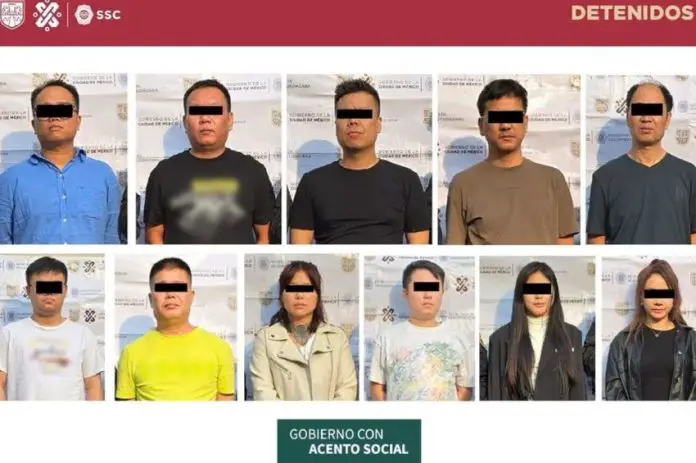
The arrests were made early on Saturday and over 800 doses of "apparent drugs" were also seized. (SSC)
Mexico City authorities have announced that 11 Chinese nationals were arrested at a property in the center of the capital that apparently operated as both a drug den and a clandestine nightclub and brothel.
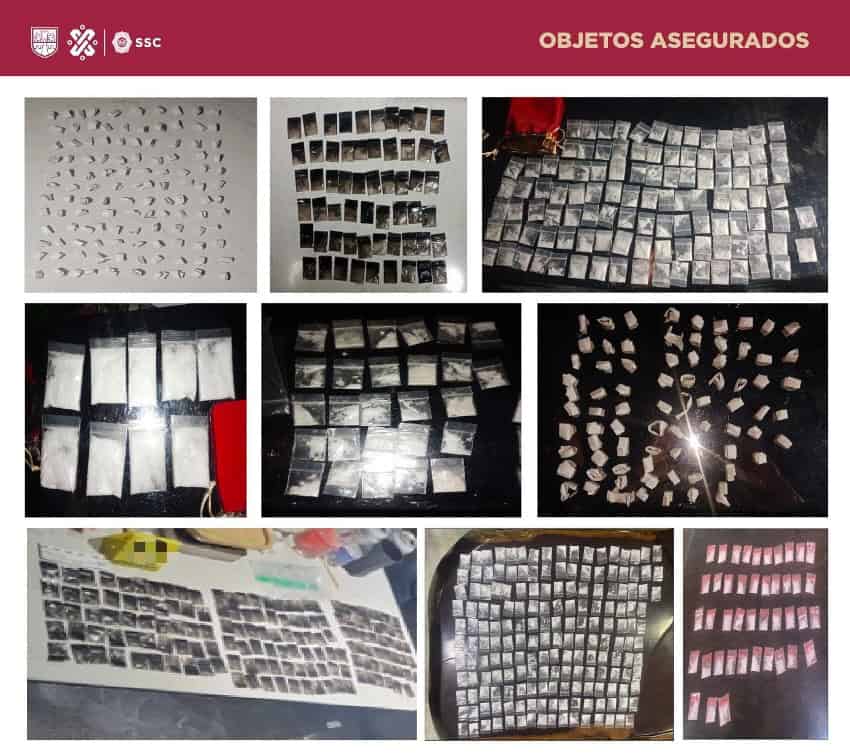
The Ministry of Citizens Security (SSC) said in a statement on Saturday that police detained eight men and three women and seized over “800 doses of apparent drugs” during a raid on the property. The Chinese nationals were turned over to the Mexico City Attorney General’s Office.
He shared an image of the 11 people detained as well as photos of the confiscated drugs and the interior of the building that was raided.
The raid, which was carried out in the early hours of Saturday morning, came after authorities received reports that illicit drugs were “possibly” being sold at the property and that it was being used for “purposes of sexual exploitation,” the SSC said.
The ministry said that police found “private rooms where services for the purpose of sexual exploitation were possibly carried out.”
The police reported confiscating over 800 doses of drugs including cocaine and crystal meth at the establishment. (Pablo Vázquez Camacho/X)
It said that officers also found “seven laboratory tests, which apparently were demanded of women” who worked as prostitutes, presumably to ensure that they didn’t have any sexually transmitted diseases.
The SSC said that police seized 810 doses of “apparent cocaine” and 10 doses of “possible crystal meth” in the building, four floors of which were shut down.
The Reforma newspaper reported that a “clandestine nightclub” was operating on the top four stories of a building on San Jerónimo street, located less than a kilometer from Mexico City’s central square, the Zócalo.
The property had a sign in Chinese on its facade that read “Sky and Land Club” and the Chinese operators of the apparent nightspot only admitted Chinese clientele, Reforma said. The news website Infobae described the club as a clandestine casino where Chinese nationals gambled.
“These kinds of establishments are usually linked to criminal activities like money laundering, tax evasion and even criminal organizations,” Infobae said.
Chinese groups are “becoming more involved in drug trafficking and money laundering in Mexico,” according to the introduction to a 2022 interview between Latin America analyst Nathaniel Parish Flannery and Brookings Institution senior fellow Vanda Felbab-Brown.
Precursor chemicals used to manufacture synthetic drugs such as fentanyl and methamphetamine in Mexico enter the country from China at Pacific coast ports, according to Mexican and U.S. authorities.
Staying in shape is important for both our physical and mental health. (Francisco Zárate)
One of the reasons for this predicted rise is the ever-growing cost of healthcare in the United States, Mexico’s neighbor. With healthcare and wellness practices available in Mexico on equal footing with what U.S. residents can get at home — but for a fraction of the cost and often without a wait — more people from the U.S. have been looking southward for their healthcare and wellness needs. According to the 2023 Global Wellness Economy Monitor, Mexico is among the top 20 countries in the world in the wellness industry, ranking No. 15.
Wellness coaching is a wide-ranging field. According to the National Academy of Sports Medicine, “the skills of wellness coaches are focused in the established areas of nutrition, sleep, exercise and restorative practices, as well as emotional health, stress management, psychological recovery and mindset.”
Professionals in this field touch upon mental health, fitness, beauty, tourism, personal care, physical activity and training, traditional medicine and supplements and more. With this in mind, here are some of the best wellness coaches in Mexico who are not only specialists in their fields but can help you find a sense of health and well-being:
Functional medicine is closely linked to lifestyle, illness prevention and leading a joyful life. Mexico News Daily recentlyinterviewed Dr. Alexander Krouham, a thought leader and influencer in functional medicine.
Krouham switched from conventional medicine to functional medicine because he found that the conventional approach was not effectively helping his patients with chronic diseases.
“Experts believe that 80% of today’s health problems are due to chronic degenerative diseases. And 80% of chronic degenerative diseases are lifestyle related,” he says. With thousands of followers and collaborations with well-known journalists, he has gained incredible reach, resonating with many individuals through his views, values, and medical methods.
As a psychotherapist specializing in posttraumatic stress disorder and resilience, Graber also draws from her own traumatic abduction experience.
She is an excellent communicator, with her podcasts and media contributions offering valuable insights linked to emotional intelligence, resilience and trauma treatment, the search for a life project, etc. Her empathy, charisma, and clarity can transform listeners’ complex emotional patterns into compassionate self-understanding. If setting boundaries is a challenge for you, Graber teaches how to do this in a humorous and engaging way.
Nathaly Marcus is an expert in epigenetics and longevity. She blends biology, nutrition, and well-being in a fun and engaging manner. Whether through her own content or as a guest on other platforms, she shares the wonders and miracles of the mind and body. As one of the most popular Mexican wellness coaches online, her nutrition tips and tricks are well worth checking out.
Marco Antonio Karam, better known as Tony, is the founder of Casa Tibet de México. He has postgraduate qualifications in Buddhist psychology and philosophy from several universities in the United States, Asia and Europe. Karam is a fellow of the U.K.’s prestigious 21st Century Trust and a member of the Network for Western Buddhist Teachers under the guidance of the Dalai Lama. Furthermore, Tony is recognized for promoting Tibetan culture and Buddhism in the Spanish-speaking world. His reflections, conversations, and events offer perspectives and tools for appreciating life from within.
Also known as Dr. Mau, Gonzaléz is a specialist in internal, emergency, and obesity medicine. Recognized as an influencer in medicine by media outlets like Newsweek in Spanish, he combines medical practice with educating the public about modern medicine through social media. Dr. Mau’s engaging content covers common products, myths, and good practices, offering valuable insights into the body and health.
Specializing in high-intensity interval training (HIIT) and functional training, Alejandra collaborates with a network of professionals to create digital content with various specialized training programs, including pilates, yoga, cycling, barre, and more. Her comprehensive approach to fitness, nutrition, and wellness has led to the success of her method, earning her invitations to take part in events including TED Talks.
How to identify professional wellness coaches
One of the most important factors to consider is professionalism. In today’s world, there is an abundance of information available, making it a challenge to discern reliable sources. Many influencers with large followings promote various topics without proper preparation, and having a large following does not necessarily equate to credibility.
It is essential to review the individual’s CV, qualifications, and professional background. While social media can offer entertaining content on topics with scientific value, it is crucial to conduct thorough research to ensure that you are selecting trustworthy options.
Are there any other Mexican wellness coaches that you would recommend?
Ana Paula de la Torre is a Mexican journalist and collaborator for various outlets including Milenio, Animal Político, Vice, Newsweek en Español, Televisa and Mexico News Daily.
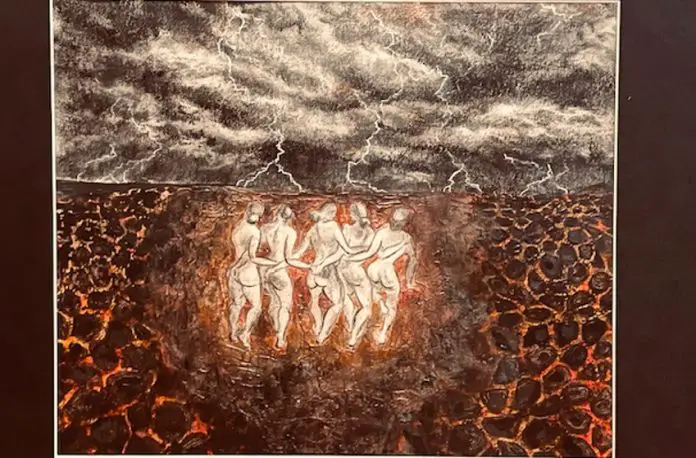
Raindance by Tamanna Bembenek/Charcoal with acrylic on paper
Growing up in India, I was surrounded by all kinds of traditions. Most of them had a religious or a social context but as a kid, I didn’t understand or care about any of that. Traditions meant celebrations, and celebrations meant homemade Indian sweets, family friends visiting us for long hours and getting a lot of play time with cousins.
I adored my cousins, they were all younger than I am so I could be the ring leader. I particularly loved carrying my little cousin sisters on my back. During those days, our home was filled with laughter, noise and joy — my dad was pretty strict about noise but my aunts would help overrule that. My grandmother would often lead us around what to do in terms of rituals or offerings, but I was more interested in eating the sweets that were a part of the offering. I would quickly learn that there was no way around disobeying my grandmother.
My favorite Indian holiday was Diwali, now known around the world as the “festival of lights.” Diwali meant a week of festivities where I would get to exhibit my artistic skills with Rangoli — patterns created on the floor with flower petals, limestone paint and other organic paint colors. Diwali symbolizes the spiritual victory of light over darkness or goodness over evil. Like many other Indian traditions, Diwali is not about consumption, it is about exchange and offerings. The festival of Diwali itself, like every other Indian festival, has religious roots but to me it has always felt like a cultural celebration.
What I remember the most is that there was a lot of joy in our surroundings. No matter what income level people of all faiths from every city and town in the country celebrated Diwali in some form. As a kid, that feeling was very grounding because it symbolized togetherness with my family and our friends. As I grew up, Indian traditions also rooted me spiritually. I find it very calming how in countries like India, their fabulously rich and ancient history is passed on from generation to generation.
Living in Mexico, I often go down that memory lane from my childhood in India. Mexico too has such a rich, ancient history. Most Mexicans are Catholic, but I am often corrected by young Mexicans who clarify that today, for them, the traditions in the country are more about being a faith-based person, than being Catholic. In Mexico, in cities and towns across the country, it is common to see locals celebrating various ancient Indigenous traditions and rituals.
No matter how small the town is, there is always at least one church, and a few homemade altars to the Virgin of Guadalupe. I love sitting on a bench outside a church on a religious holiday, or wandering around watching the town get prepared for the traditional processions. There is something very special about a community coming together to celebrate their faith. From young to old, people take the time out of their daily routine and responsibilities and celebrate something bigger, something higher than themselves.
Holidays here incorporate similar elements to my childhood memories: food, color, flowers, laughter, exchange and offerings, family and friends. Even as a mere observer, I feel a part of the celebrations and they make me feel part of something bigger than myself. In Mexico, I find myself reconnecting with the energy that traditions carry. Around big Mexican holidays, I like visiting beautiful churches, absorbing the peaceful energy and paying my respect to the faith of the people around me.
I love listening to the hymns and prayers and while I don’t understand the words, I find them very calming. For me, it is not about the religious institution, it is about the physical and mental space it provides me to reconnect with myself. A feeling of transcendence, a place where I can pray to the higher powers of the universe. It is grounding.
As humans, we are wired to strive for social connections. We are more connected than ever today via social media platforms or chats and yet we have an epidemic of mental health issues in many parts of the globe.
In the United States, I wonder what role a decreasing focus on traditions and gatherings plays in this. It didn’t happen overnight, but it does seem to be a contributing factor. A number of books that I have read on longevity and happiness point to the importance of social and communal connections. Not surprisingly, none of them are online connections but rather in-person, and often are around creative pursuits and sharing the fruits of labor.
Traditions enforce such connections by pulling a family, a society, a community, a town together around celebrations. They help foster a set of societal values, pay homage to the cultural heritage and also help us to lean on each other during tumultuous times. While I write this, I wonder how we can bring this back into our lives, regardless of where we live.
I leave you with a heartwarming story of a Mexican friend, Claudia. When I saw her today, she looked tired. She explained how she had been celebrating a family tradition of everyone getting together on May 1 (Labor Day). Her entire extended family had gotten together at a nearby hot springs, and she animatedly explained how each family member brought their favorite food to share and how the party of over forty people ate, swam, talked, danced and sang for hours. Claudia is now 52 years old, yet has been doing this since she was a kid — she grew up that way.
Her advice to me was: “Keep your life simple, figure out what brings you joy. For me, it is gatherings around food and family. We are not immune to family issues but we stay together because we are happier when we are together.”
My takeaway is this: start small and keep it simple. It can be your extended family, your chosen family, your faith-based family, your communal family, it doesn’t matter. The point is to spend time creating, participating in, and celebrating traditions — both new and old.
If it leaves you feeling grounded, you are on the right path.
Tamanna Bembenek was born in India, studied and worked in the U.S. and lives in Mexico with her husband, Travis. They are the co-owners of Mexico News Daily.
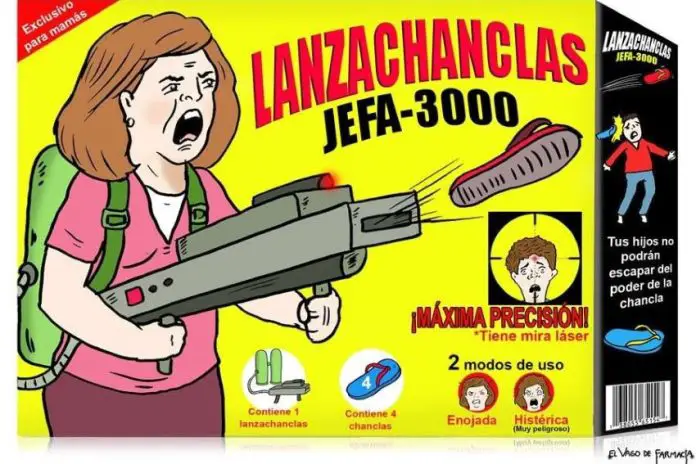
Popular culture paints Mexican mothers as sandal-launching tyrants who rule with an iron first. This isn't true, but there are some significant differences between parenting styles in Mexico and elsewhere. (El vago de Farmacia/Instagram)
Having lived here for over two decades now — and becoming a mother myself during that time – the institution of Mexican motherhood is something I’ve had a chance to observe up close, as well as participate in on a social, emotional, and visceral level.
I’ve seen the roots of some of our most famous stereotypes (beware the flying chancla!) and the realities of what it really means to raise a child here (spoiler alert: guilt and paralyzing fear are universal mom feelings).
The Virgen de Guadalupe is the standard to which all Mexican mothers are (unfairly) held. (Wikimedia)
Many people, even those who don’t live in Mexico, will be familiar with Mexico’s patron saint and most popular archetype of the perfect mom: la Virgen de Guadalupe. She is selfless. She is doting. She will sacrifice anything for her children, who are her greatest loves (Joseph who?).
The idea of “traditional” Mexican motherhood is rooted in the reverence of the characteristics exemplified by la virgen, and women were long expected (and sometimes still, unrealistically expected) to wait on their children hand and foot, who, by the way, could do no wrong.
Well, the male children, anyway. The girls would typically be put to work learning the arts of homemaking, cooking, and childcare, the assumption being that they needed to be trained to serve their future husbands and children.
Another prominent characteristic of Mexican motherhood is one that I’m still occasionally caught off guard by: children are treated as very young children for a long, long time. You might have noticed manifestations of this in the form of male children as old as nine going into the women’s bathroom with their mothers in public places, for example, or hearing mothers say things like “I’ve got to get home to bathe my children” (who are quite a bit older than five).
Mexican mothers can sometimes be quite involved in the lives of their children, long past the age that parents in the U.S. might have granted them some degree of autonomy. (Guia Infantil)
But things are changing: Mexico’s economy, just like most other economies in the world, rarely provides for salaries large enough to provide for the needs of an entire family these days; increasingly, households require two working parents in order to make ends meet. Unfortunately for mothers’ nerves, the expectations of what it means to be a “good mother” haven’t changed all that much despite this shift.
This means that many of those perfect mother ideals simply cannot be met, though there are plenty who try: most all of my close mother friends struggle mightily to provide home-cooked meals — the only kind of food you give your kids if you truly love them around here, it would seem — and to sit with them to help with homework.
This economic reality has also given way to a new archetype: the mamá luchona (“struggling mom” — typically used sarcastically) often characterized as a young mother who leaves her children with her own parents or whoever else is willing to raise them while she goes out to work, study, party and date (I’m sure you can guess which of those activities mothers are accused of the most).
And now with the exploding popularity of social media like TikTok and Instagram, we all get to see another stereotype of Mexican motherhood: that of the constantly screaming mother who runs a tight ship but cares nothing for her children’s emotional well-being.
“La Chancla” has become a popular internet meme, but is not an entirely fair stereotype. (Reddit)
Her children act respectfully because they are afraid of her, sure that they’ll be in for a chanclazo (basically, getting a flip-flop thrown at them, or just being hit with it more directly) should they do or say the wrong thing.
The videos on this subject are meant to be comical, and they are. The subtext seems to say, “We Mexicans aren’t emotionally coddled as children like our neighbors to the north; the rules don’t change because we have feelings about them.”
I will say this: when you’re busy working as well as being a mother, it’s tough to keep your kids in line, and yelling often ensues. I’ll admit that I’ve noticed this within my own circle of friends (and, occasionally, myself), most of my mom friends, even if they do everything for their children, really let their kids have it (verbally — I have yet to witness a flying flip-flop) when they mess up.
I’ve heard some of them talk to their children in ways I wouldn’t dream of talking to mine, and can’t help but wonder if it will be something they are talking about on a therapist’s couch in 15 years. But I also see them going above and beyond for their children in ways that I do not, providing for some striking contrasts among our various sensibilities.
In the end, all stereotypes come from somewhere, from the chancla-throwing, hot-tempered Mexican mother to the coddling, feelings-first “gringa” mother whose children can get away with just about anything if they manage to convince her that it’s imperative to their mental health. But the realities of motherhood are always so much more nuanced than they appear, and there’s one thing we all have in common with la virgen: a fierce love for our children and a willingness to do just about anything for them.
So in the wake of Mother’s Day, just remember: we really are all doing our best.
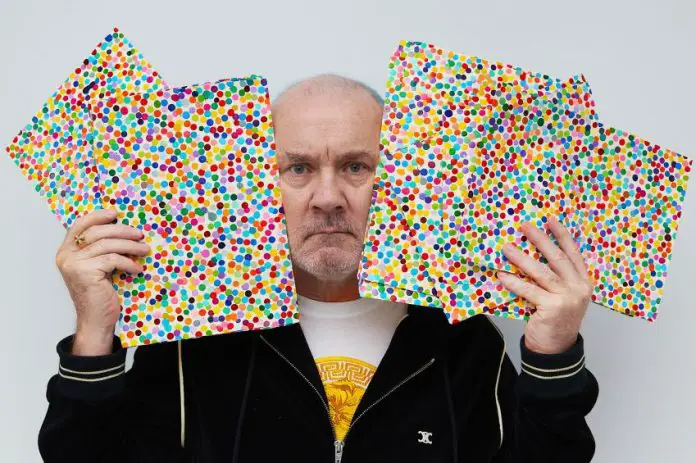
Damien Hirst is one of the most divisive, yet exciting artists to come out of the U.K. (Damien Hirst/X)
Mexican poet and academic Cesar A. Cruz once famously declared that “Art should comfort the disturbed and disturb the comfortable,” and nowhere is this ethos more apparent than in the works of Damien Hirst, the enfant terrible of the contemporary art world.
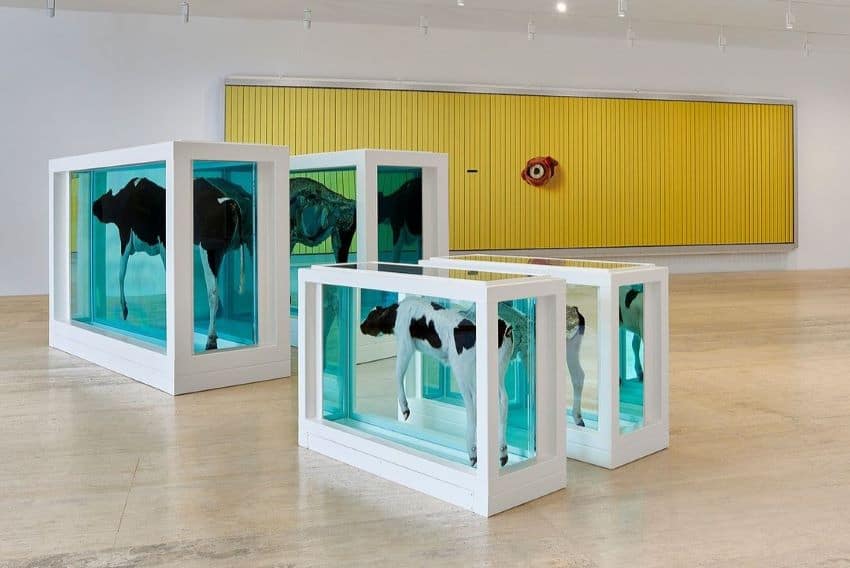
Until August 25, a collection of the British artist’s work is on display at the Museo Jumex in Mexico City — the first time Hirst has ever shown at the museum. A multi-floor retrospective, To Live Forever (For a While) showcases many of the themes and key works that have characterized Hirst’s polarizing career since 1986, among them a display of animals suspended in formaldehyde solution and a diamond-encrusted platinum skull — one of the most expensive works of art ever made.
To Live Forever (For a While) will allow Mexican crowds to see many of Hirst’s most famed works. (Museo Jumex/Instagram)
The exhibition is intended to be a journey through the range of human experience, but it’s a show that will also leave you mulling over the definition of art, ethics and commercialism. Is it art? Is it not? No matter what you’ve heard about Hirst, for the intellectually curious, the exhibition is worth checking out — if only to shake up your sensibilities and formulate your take on the artist.
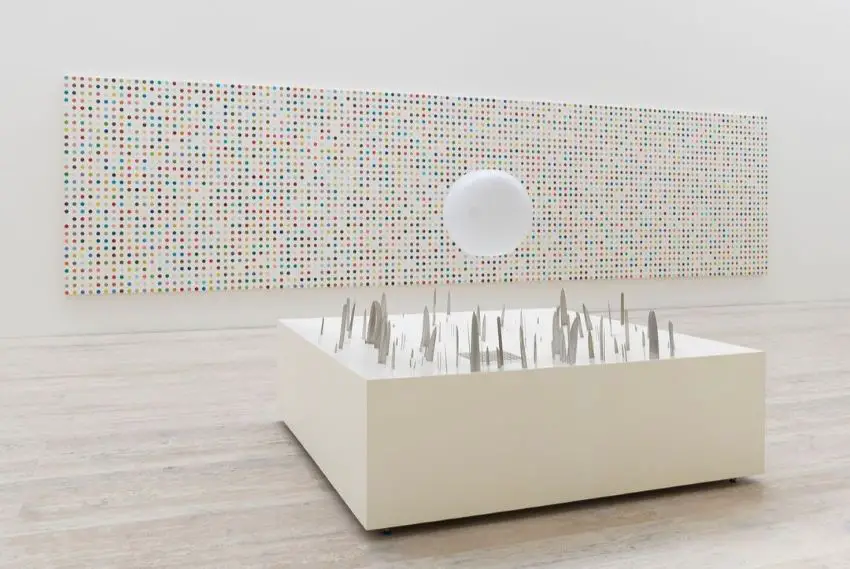
Hirst’s works are instantly recognizable, characterized by skulls and skeleton sculptures encased in precious metals alongside cross sections of cleanly halved creatures both real and fabricated. Stainless steel cabinets filled with jars of preserved animal remains, medical paraphernalia and butterfly mosaics serve as a canvas for his exploration of themes like death, decay and rebirth. Yet despite the visceral nature of his subject matter — preserved carcasses, animal organs, scalpels and pills — Hirst’s clean, almost clinical, approach steers his pieces away from the grotesque and towards a realm best described as artistic cataloging. In some ways, his work evokes Marcel Duchamp in its use of existing objects placed in elevated settings to provoke debate on the nature of art.
Hirst was catapulted to fame in 1991 with “The Physical Impossibility of Death in the Mind of Someone Living, ” a 14-foot-long tiger shark suspended in formaldehyde. The now iconic work captivated audiences worldwide and formed the centerpiece of Hirst’s “Natural History” series, encompassing various creatures such as fish, cattle, birds and sheep displayed in formaldehyde tanks. Several of these trademark specimens are on view at the Jumex museum. Hirst’s early and increasing fascination with death and preservation can be traced back through a mixed-media timeline of his career laid out on the first floor of the museum. In one photo, a young Hirst poses with an actual severed human head in a university lab.
Known as something of a jack of all trades in the public space, Hirst challenges traditional notions of an artist, transitioning between roles as an artist, curator, gallerist, museum director and entrepreneur. Some have said his approach democratizes art by bringing it to the masses in public spaces, upscale hotels and trendy eateries. Others have scoffed at what they see as his commercialization of art.
Is Hirst a subversive master or a sellout? The debate rages on, and you can now decide for yourself. (Museo Jumex/Instagram)
Nevertheless, Hirst’s ability to transform “controversy into currency and fame into cultural capital” highlights his legacy as a unique figure in the realm of contemporary art. Embracing a diverse array of mediums beyond painting and sculpture, Hirst’s experimentation challenges convention and leverages modern hype with ventures like the launch of his own NFT currency.
At the entrance of the Museo Jumex stands Hirst’s take on the Virgin Mother, a monumental three-story sculpture of a pregnant woman, skin peeled back to expose her organs and the developing child in her womb. Once you pass this awe-inspiring sculpture, the exhibition journey begins on the bottom floor of the museum and subsequently directs visitors to the fourth floor via elevator, where they work their way downwards through each floor of the installation.
Hirst once stated that you must “kill things in order to look at them.” Whether you agree or not, the Jumex exhibition forces you to confront it firsthand. On the uppermost floor, we encounter versions of Hirst’s iconic sharks, alongside his renowned spot paintings. Here, Hirst’s fascination with taxidermy takes center stage, a theme that persists as you descend to the floor below.
While some may find these displays unsettling, there’s an undeniable fascination in witnessing the lab-like cross-sections of creatures halved — after all, when else will you get to closely observe the intact innards of a real shark, or a cow? Artnet once estimated that approximately 913,450 animals have been sacrificed for Hirst’s art. But before you cry “PETA,” know that this number includes hundreds of thousands of insects, some of them comprising his beautiful butterfly mosaic works symbolizing the resurrection of Christ, also on display at Jumex.
Darkness and light – both literal and metaphorical – characterize much of what Hirst produces, with accusations of animal cruelty alongside commercial success. (Museo Jumex/Instagram)
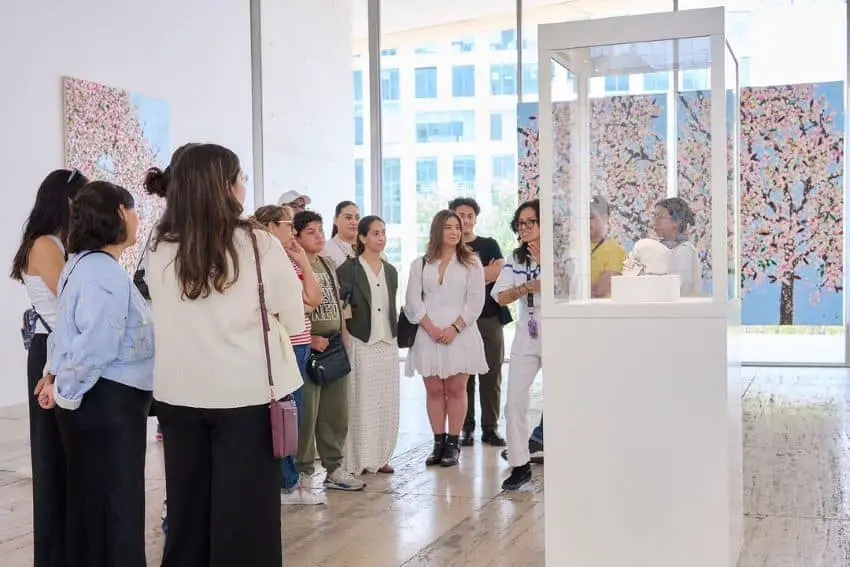
As you conclude your journey on the first floor, there is a decidedly airier and brighter shift in the atmosphere, in part due to the sun streaming through the floor-to-ceiling windows, but also due to Hirst’s paintings of vibrant, spring-like cherry blossoms. These works have a popular, kitschy aspect. In the center of the room, under the protective casing, is his $201 million diamond-encrusted platinum skull. Titled “For the Love of God,”, this is one of the most expensive works of art ever produced, made with 8,601 flawless diamonds, including a pear-shaped pink diamond in the forehead. According to Hirst, when he explained his plan for this piece to his mother, her reaction was, “For the love of God, what are you going to do next?”
It is fitting that Hirst’s skeletal work is being shown in Mexico, as the platinum skull was modeled on Mexica mosaic skulls in the collection of the British Museum. Given Hirst’s preoccupation with death, it is also no surprise that Mexico’s Day of the Dead has proven particularly inspiring to him. Hirst has a special connection with Mexico: he owns a house here and his work often incorporates Mexican cultural elements such as skulls, skeletons and catrinas.
Some might argue that Damien’s work lacks sophistication or complexity due to its overt exploration of somewhat obvious themes. The exhibition lays bare the most fundamental aspects of human existence in ways that are sometimes disturbing but always carefully curated. As we peer into a canvas holding a heap of black flies encased in resin, an onlooker states to his friend, “I don’t know why I’m so attracted to it. I hate it, but I love it.” And I can’t help but agree. Love it or hate it, To Live Forever (For a While) demands you confront Hirst’s art and form your own opinion.
Monica Belot is a writer, researcher, strategist and adjunct professor at Parsons School of Design in New York City, where she teaches in the Strategic Design & Management Program. Splitting her time between NYC and Mexico City, where she resides with her naughty silver labrador puppy Atlas, Monica writes about topics spanning everything from the human experience to travel and design research. Follow her varied scribbles on Medium at https://medium.com/@monicabelot.
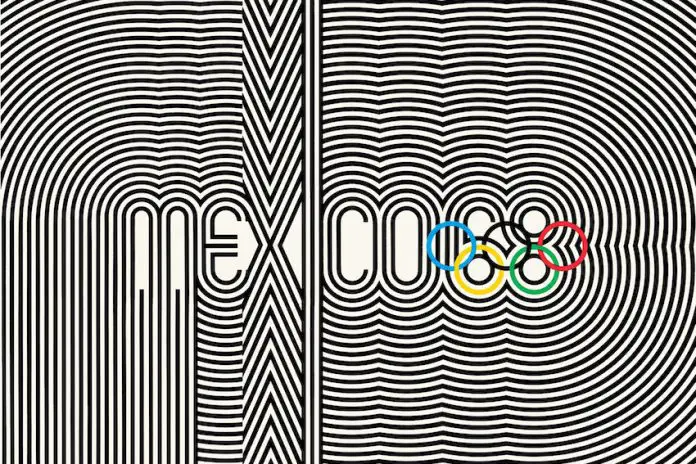
The logo of the 1968 Olympics in Mexico City is a design icon. The story of how it was create d is no less exciting. (IOC)
Mexico City became the first Latin American nation to host the Olympic games in 1968. The story of the games has become the stuff of legend, propelling Mexico onto the world stage, although the games are now perhaps more remembered for civil rights protests and the Tlatelolco massacre. What cannot be denied, however, is the power of the 1968 Mexico City Olympics logo, which continues to be a titan of mid-century design.
The 1964 Olympics were staged in Tokyo, a city determined to demonstrate that a modern, efficient society had risen from the ashes of the Second World War. It was also a chance for Japan to advertise an economic miracle that was growing in momentum while going largely unnoticed by the rest of the world.
One problem for the Tokyo games was that Japanese — the national language of only one country, with its own writing system — would make navigating the city a nightmare. But there was an answer. Japan had just staged The World Design Conference and its young artistic community was buzzing over the potential of visual communication. Under the direction of Masaru Katsumie, the Olympics design team came up with a set of symbols anyone could understand: follow the figure balancing on a beam for gymnastics, follow the hand with a finger bandaged for the first aid room, and so on.
Mexico became the first Latin American country to host the Olympics in 1968, at the Olympic Stadium in Coyoacán. (Sergio V. Rodriguez/Wikimedia)
The story that Mexico adopted a similar scheme because the country still had high levels of illiteracy is probably inaccurate. Back in 1968, the games were never expected to attract the illiterate poor. It was simply that the Japanese experiment with symbols had been so successful that future Olympics could hardly not adopt the idea.
The task of designing the new symbols cannot be separated from the total branding of the games, and supervising all this work fell to the architect Pedro Ramírez Vázquez. Fresh off completing his masterpiece, the National Museum of Anthropology, Vázquez already had a vision for the games. He saw a Mexico that was emerging as a modern nation, while proud of its rich ancient past. A nation about to join the First World, while championing the Third. There was, as he would say in interviews, no place for sombrero-clad figures sleeping under a cactus.
Putting the design team together
As the Tokyo Olympics closed, Ramírez Vázquez started to put together the core of his team. The 1964 World’s Fair in New York, where Ramírez Vázquez had worked on the Mexican Pavilion, would have a considerable influence on recruitment. The artist Eduardo Terrazas would be recruited from that team. It was also in New York that Vázquez was introduced to a young Latvian-born American named Beatrice Trueblood. Trueblood came to Mexico to design the official book of the newly-opened Museum of Anthropology and stayed on for the Olympics, where she would be in charge of publications. Lance Wyman was also at the New York Expo, working on the graphics for the Chrysler Pavilion, although he does not appear to have met the Mexican contingent.
Wyman was making a living, but there was a difference between making a living and making a reputation. With the Mexicans recruiting people for the Olympics, Wyman approached Peter Murdoch, an English designer making his name in New York, to see if they might collaborate on some designs.
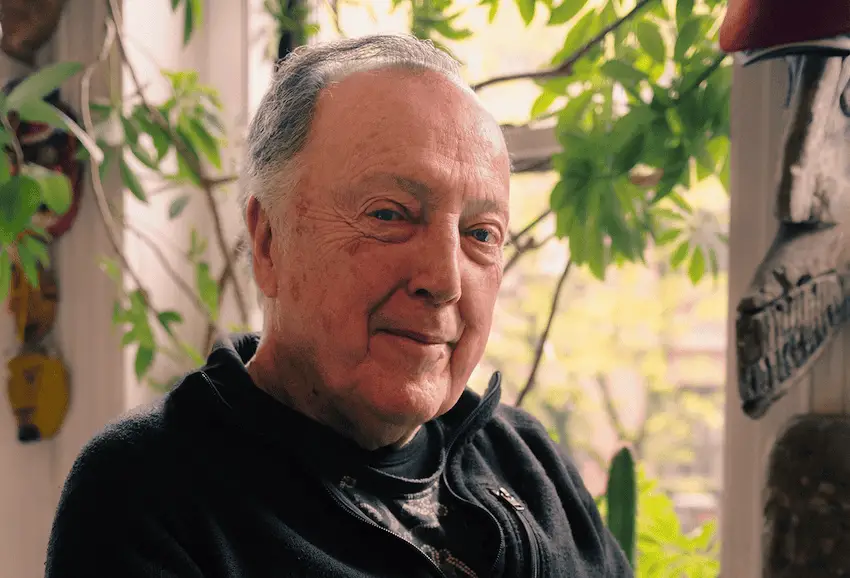
Lance Wyman, the man often credited with the design work for the 1968s Olympics and Mexico City’s metro. (Lance Wyman)
The two men came down to Mexico to try their luck — according to legend with one-way tickets, as that was all they could afford. Wyman and Murdoch spent much of the first week wandering the halls of the Museum of Anthropology, trying to understand a little more about this country they were to portray. It was probably not lost on them that the magnificent building had been designed by the man they would be trying to impress.
Wyman was struck by the link between pre-Hispanic art and modern optical art that had recently taken New York by storm. The optical movement had been inspired by Julian Stanczak and his 1964 exhibition Optical Paintings. The use of lines, colors and optical illusions to trick the eye would become central to the Olympic designs.
Who designed Mexico ‘68?
It was in the cramped offices on Avenida de Las Fuentes in Jardines del Pedregal, that the Olympic logo — and from there, the classic Mexico ‘68 posters — took shape. The importance of this work cannot be overestimated, for it lay at the center of everything that would follow. The letters were expanded to form a brand-new typeface and the op-art theme was adopted in everything from the uniforms of the guides to the nation’s postage stamps.
There is some debate about who should take credit for the logo. It is generally credited to Wyman and Eduardo Terrazas, but Beatrice Trueblood has argued it was a team effort, with Ramírez Vázquez also playing a key role. The museographer Alfonso Soto Soria, who worked on the Museum of Anthropology, even suggested that Wixárika (Huichol) artisans from Jalisco had an influence.
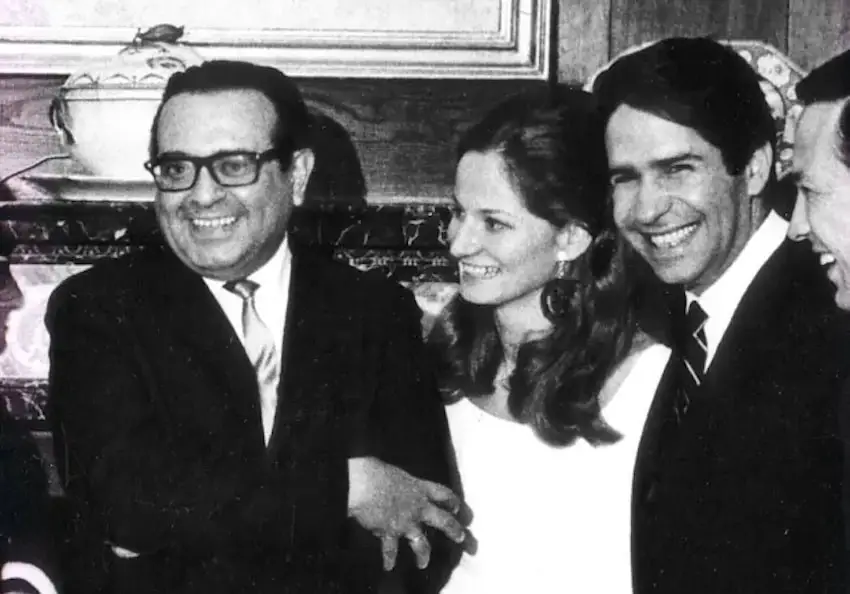
From left to right: Pedro Ramírez Vázquez, Beatrice Trueblood and Eduardo Terrazas, three key members of the 1968 design team. (Coolhunter)
We will probably never be able to give a definitive answer, simply because everybody there at the time has come away with a different memory. Looking at all the accounts, it seems possible that it was the Wyman-Murdoch team who brought in the op-art element. Ramírez Vázquez was always doodling and sharing his ideas and he seems to have come up with the idea of incorporating the Olympic rings into the year ’68.
While it is unlikely that any Wixárika artists played an active part in the design work, it remains possible that their art had influenced Ramírez Vázquez. Wyman might well have left before the poster was finished and it was probably Eduardo Terrazas who completed the design. Who then designed this classic work? Most accurately it might be described as a team effort from an original idea from Wyman.
A change in command
Away from the sheltered world of the design team, the games were running into problems. On winning the bid the Invitation Committee had been replaced by the Organizing Committee for the Games, but no ´president had been elected to oversee the numerous and expanding number of committees. Powerful men with big egos were controlling their own empires within the growing web of the Olympic Committees.
In 1964, the country staged nationwide elections, and the charismatic President Adolfo López Mateos, who had been looking increasingly unwell, stepped down. The Institutional Revolutionary Party (PRI) retained power under a new man, President Gustavo Díaz Ordaz.
Díaz Ordaz solved the problem of finding a head for the Olympic Committee by giving the position to López Mateos himself. On the surface, this seemed like an excellent move: López Mateos was widely respected and was passionate about the Olympics he had done so much to bring to Mexico. However, the former president’s health was more fragile than people realized, and he did not have the energy for the job. In July 1966, declining health forced López Mateos to resign from his position as head of the Olympic Organization Committee; to some surprise, Ramírez Vázquez was invited to step into the role.
Ramírez Vázquez takes the reins
With Ramírez Vázquez in overall charge, the nature of the games changed. A successful Olympics would not come from unlimited spending: the event would be toned down. It was Rome in 1960, rather than Tokyo in 1964, that was now the model. This placed even more importance on the design team, for while Mexico could not build grand new stadiums, they could line the approach with op-art flooring; they could have the games’ logos flutter from flagpoles all along the connecting highways. The branding of the games would be used to tie the city into an event in a way that had never previously been attempted. In 1968 however, the Mexico City Olympics would belong to the capital itself.
With Ramírez Vázquez taking on grander tasks, the responsibility for overseeing the branding of the games fell to Eduardo Terrazas as director of the Urban Design Program, and Beatrice Trueblood as director of publications. Their team had expanded to around 250 people, but time was rushing by and the list of requirements — tickets, guide uniforms, posters, souvenirs, medals, Olympic torches — seemed to be growing rather than diminishing.
At least the signs by which would guide the thousands of journalists, visitors, and athletes were ready. Whereas the Tokyo symbols had, wherever possible, centered on a figure, Mexico went for a more abstract idea. Drawing from the glyphic systems of pre-Hispanic art, they would concentrate on ‘the tool’. A bike was easy enough to represent cycling. Volleyball and water polo need more guidance, the water polo ball being placed over waves, the volleyball above a net. Some sports did not lend themselves to this: swimming, for example, was represented by a human arm coming out of the water. It was an original approach and it worked.
Tlatelolco and the end of the work
The events of Tlatelolco (Marcel·lí Perelló/Wikimedia)
With the world’s press about to fly in, the government stepped up its repression of the student protests that had been going on all year. Working late hours in their isolated office, the team heard rumors of the killing of protesters in Tlatelolco. It was a chilling shock, particularly for men and women who had been branding the event under the slogan “Everything is Possible in Peace.” For the design teams, there might have been some satisfaction when their work was adopted as a symbol by the protesters. One poster, for example, was printed with riot police replacing the runners.
Ten days after the massacre spectators packed out the renovated and renamed Olympic Stadium; the games were underway. By now Wyman had withdrawn, (or possibly, was about to withdraw, sources are unclear), from the Olympic project as much of his work — those sports symbols, the Olympic alphabet, an edition of the Olympic stamps — was completed. However, he stayed in the country to work on the signs for the new Mexico City metro. While the Olympic designs brought near-universal praise, the subway icons had their critics. It is one thing to design a picture to represent basketball or a restaurant. Finding a design that will make someone think, “This is Coyoacán, I should get off the train” was a more difficult challenge.
While the subway symbols are clever, they are not always an obvious guide to where you are. Mexicans might understand the linguistic link between Chapultepec and grasshoppers, so the insect symbol is a good clue. Other signs were less obvious. Most famously, the symbol for Talisman is a mammoth, which probably confuses everybody who has not heard the story of mammoth fossils being found at the station during excavations. There were also criticisms that the font was not easy to read, putting pressure on travelers having to quickly decide if they were leaving the train.
The legacy of the Mexico City games
It has been argued that the work for the 1968 Olympics laid the foundation for the modern art of iconography — a straight line from Olmecs to the symbols we use daily on our mobile phones. That is probably a little generous, as it ignores the Tokyo contribution and the influence of the iconic German designs of 1972. Yet Mexico had used branding to tie the games to the city and the country on a scale that had never been seen before, but which would be copied by every other major international event that followed. In the sheer beauty of many of their designs, they set a standard for others to aim for.
Bob Pateman is a Mexico-based historian, librarian and a life term hasher. He is editor of On On Magazine, the international history magazine of hashing.
Get the latest on the governors' races in eight Mexican states, in part one of our series covering Chiapas, Guanajuato, Jalisco and Morelos. (Margarito Pérez Retana/Cuartoscuro)
While the main focus of the upcoming elections is the presidential contest between Claudia Sheinbaum, Xóchitl Gálvez and Jorge Álvarez Máynez, Mexicans will in fact elect around 20,000 federal, state and municipal representatives on June 2.
In eight states, citizens will elect new governors to serve six-year terms that will conclude in 2030.
Two alliances are backing candidates in most of Mexico’s gubernatorial elections, while the Citizens Movement (MC) party is also fielding candidates.
One alliance is Sigamos Haciendo Historia (Let’s Keep Making History), made up of the Morena party, the Labor Party (PT) and the Ecological Green Party of Mexico (PVEM).
The other is Fuerza y Corazón por México (Strength and Heart for Mexico), made up of the National Action Party (PAN), the Institutional Revolutionary Party (PRI) and the Democratic Revolution Party (PRD).
Of the eight states where citizens will elect new governors this year, Morena — the party founded by President Andrés Manuel López Obrador — currently governs five, the PAN is in office in two and MC holds one.
Voters go to the polls on June 2, 2024 to choose not only a new president but new leaders in many other government positions. (Mario Jasso/Cuartoscuro.com)
Here’s a guide to the gubernatorial races in four of the eight states where new governors will be elected on June 2.
A guide to the contests in the four other states will be published on Mexico News Daily soon.
Chiapas
Population: 5.5 million.
Capital: Tuxtla Gutiérrez
Current governor: Rutlio Escandón (Morena)
Three candidates are vying to become the next governor of Chiapas, Mexico’s southernmost and poorest state.
The state has recently been plagued by security problems, especially in areas near the border with Guatemala, where various crime groups including the Sinaloa Cartel and the Jalisco New Generation Cartel have a presence.
Eduardo Ramírez Aguilar (Morena-PT-PVEM)
Ramírez took leave as a federal senator to contest the gubernatorial election in Chiapas. He has previously served as a federal deputy, general secretary of the Chiapas state government and mayor of Comitán de Domínguez, where he was born in 1977.
🌐📱(Social media monitor): On his X account, the gubernatorial aspirant nicknamed “El Jaguar Negro (The Black Jaguar) has demonstrated ample support for the Morena candidates contesting other elections, including Claudia Sheinbaum.
With Sheinbaum as president, Chiapas will begin “a new era,” Ramírez said in one recent post.
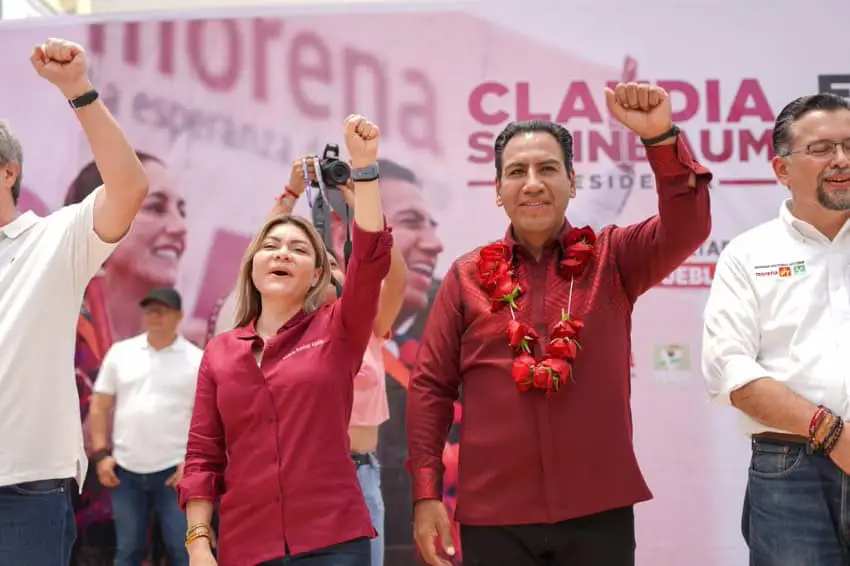
Eduardo Ramírez Aguilar (right) at a campaign rally on May 1. (Eduardo Ramírez/X)
In a post on X last month he said:
“I aspire to be governor, but I don’t want to be a governor who subjugates the people of Chiapas. I want to be a governor who walks side by side with the people of Chiapas, who holds up the dream of Chiapas, who feels the needs of the people of Chiapas.”
Olga Luz Espinosa Morales (PAN-PRI-PRD)
A former federal deputy for the PRD, Espinosa is aiming to become the first female governor of Chiapas. The 47-year-old candidate completed a law degree at the Autonomous University of Chiapas and has master’s degrees in education management and crime science.
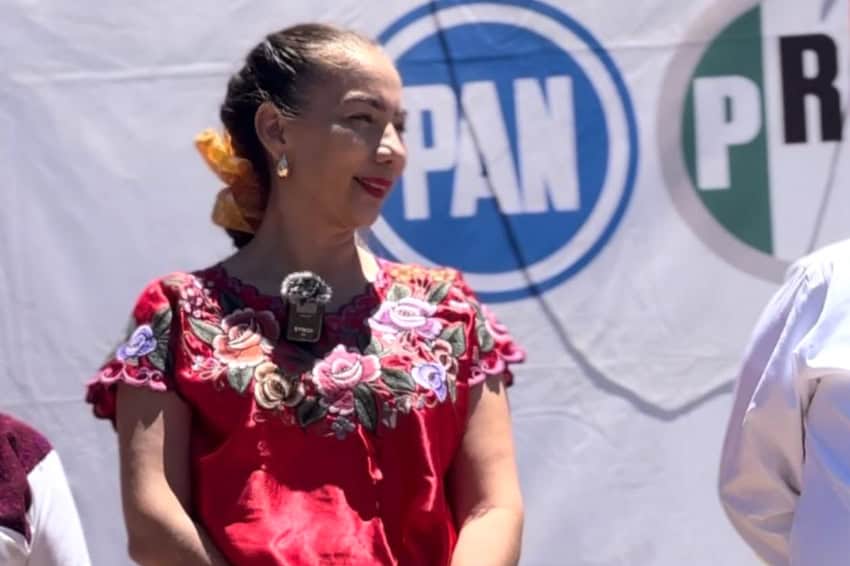
The PAN-PRI-PRD candidate Olga Luz Espinosa at a rally. She is aspiring to become the state’s first female governor. (Olga Luz Espinosa/X)
🌐📱: On her X account, Espinosa declared on Wednesday that “it’s time to return security and tranquility to the state, to support young people by promoting sport and to land resources to improve educational infrastructure so that students can receive a quality education.”
In a post on Tuesday, she said “it’s the time for women and we’re moving forward with strength and heart for Chiapas.”
Karla Irazema Muñoz (Citizens Movement)
The third candidate in the Chiapas gubernatorial contest is a former secretary general of the Mexican Society of Producers of Maguey for Pulque and Mezcal.
Candidate Karla Irazema Muñoz with other MC officials. (Karla Irazema Muñoz/FB)
Muñoz also served as president of a citizens’ group called Nueva Esperanza de Paz y Prosperidad para Chiapas (New Hope for Peace and Prosperity for Chiapas). She has a degree in nursing.
🌐📱: In a recent post to her Facebook page, Muñoz asserted that “the south of our country” has been abandoned “for several six-year terms of government.”
In the same post, she said that a government she leads would build “new highway networks” to connect states in southern Mexico, provide support for the farming sector, offer scholarships to athletes and guarantee “quality education” for all children and “young people” in Chiapas.
Who’s going to win?
Polls show that Eduardo Ramírez has a commanding lead over his two rivals. Barring a major upset, he will win on June 2 and Morena will govern Chiapas for another six years.
Voters in Chiapas will also elect 40 state lawmakers and officials including mayors in 123 municipalities.
Guanajuato
Population: 6.2 million.
Capital: Guanajuato
Current governor: Diego Sinhué Rodríguez Vallejo (National Action Party)
Three female candidates are competing to become the next governor of Guanajuato.
Muñoz was a high ranking official in the current Guanajuato state government, serving as government secretary and minister for social and human development. The 40-year-old was previously a state deputy. A native of León, Muñoz has also worked as a lawyer.
Libia García (left) with the PAN-PRI-PRD presidential candidate Xóchitl Gálvez at a rally. (Libia Dennise/X)
🌐📱: “You are going to have a governor close to the causes of the people, who is ready to work for Guanajuato, who will demonstrate what it means to put one’s heart into every action,” says an ad posted to the candidate’s X account.
Muñoz has been campaigning heavily on the PAN’s health care record in Guanajuato.
“In Guanajuato we have the best health care system and we’re going to keep it that way,” she said in a post to X this week.
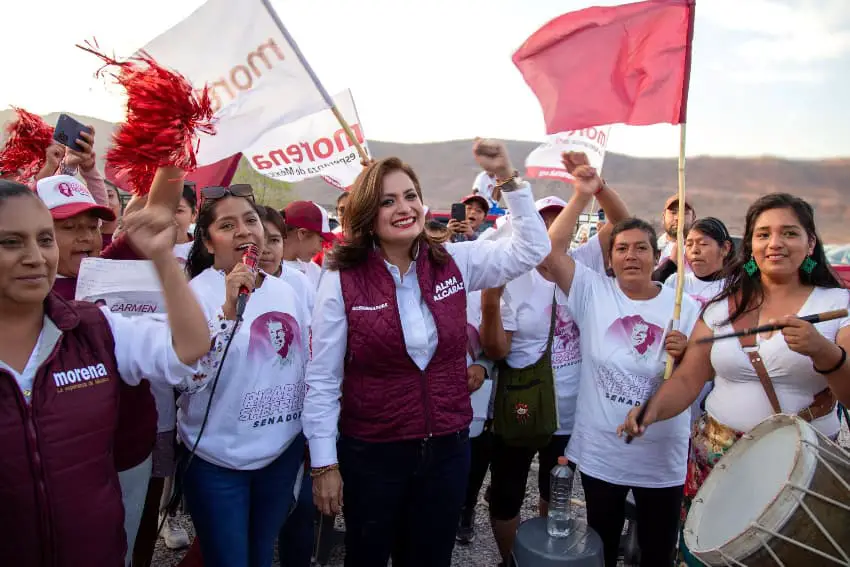
Alma Alcaraz Hernández (Morena-PT-PVEM)
Alcaraz has served as a federal deputy, and as a state deputy in Guanajuato and Sinaloa, where she grew up. She was affiliated with the PAN for almost two decades before joining Morena in 2015 and going on to become the leader of the party in Guanajuato. She has an accounting degree.
Alma Alcaraz used to be a member of the PAN party, before joining Morena in 2015. (Alma Alcaraz/X)
🌐📱: In a post to her X account on Sunday, Alcaraz wrote:
“With a massive vote on June 2 for Dr. Claudia Sheinbaum and all of Morena, Guanajuato will go from rivalry with the federal government to common results.
From insecurity and inequality to shared prosperity. #Let’sGoGuanajuato! You now have the future in your hands.”
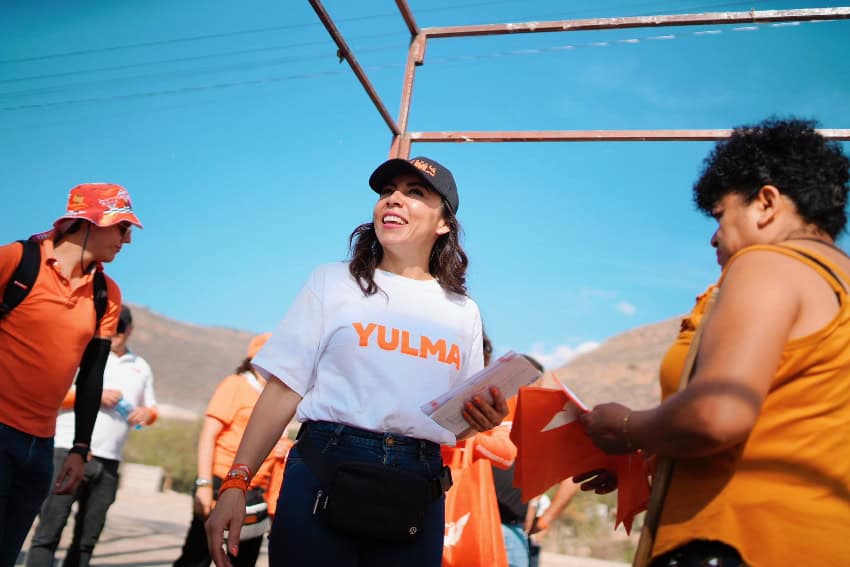
Yulma Rocha Aguilar (Citizens Movement)
A recent addition to the Citizens Movement party’s ranks, Rocha has served as a federal deputy for the PRI. She took leave as a state lawmaker to contest the gubernatorial election. A native of Irapuato, Rocha served as a municipal councilor in that city. She has a degree in public administration.
🌐📱: “Guanajuato doesn’t end in the industrial corridor,” she wrote in a post to her X account this week.
“WE NEED to focus on a COMPLETE strategy for municipalities of the northeastern region like San José Iturbide,” Rocha added.
Yulma Rocha is originally from Irapuato and is running on the Citizens Movement ticket. (Yulma Rocha/X)
“I’m going to take charge of making Guanajuato a SAFE state for women,” the candidate said in another post.
Who’s going to win?
Libia García is ahead of the polls, but Alma Alcaraz isn’t too far behind. Guanajuato has been a PAN stronghold for around three decades (former PAN president Vicente Fox was governor in the late 1990s) and the party will most likely remain in power for the next six years.
Voters in Guanajuato will also elect 36 state state deputies and officials including mayors in all 46 municipalities.
Jalisco
Population: 8.3 million.
Capital: Guadalajara
Current governor: Enrique Alfaro Ramírez (Citizens Movement)
The gubernatorial election in Jalisco is another three-person contest.
Jalisco is Mexico’s second most populous state (after México state) and home to the country’s second city, Guadalajara.
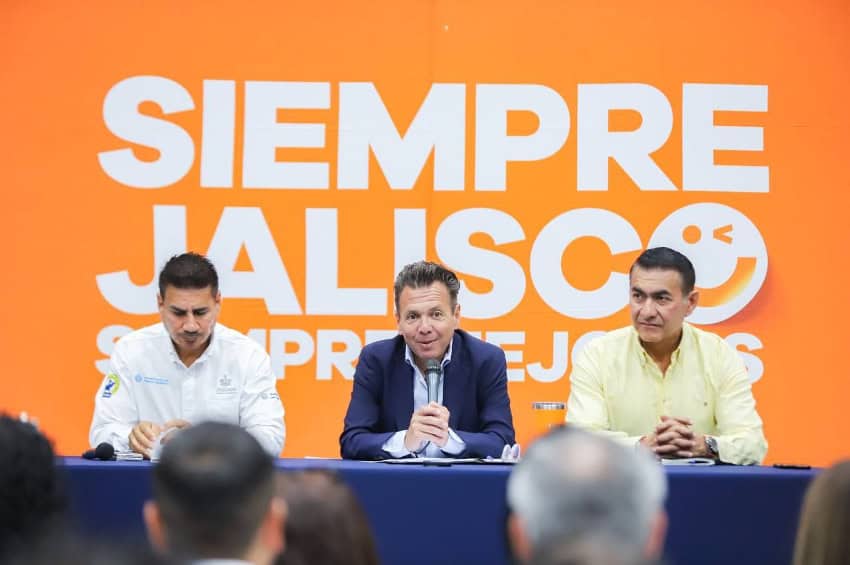
Like Governor Alfaro did before him, Lemus is aiming to use the mayorship of Guadalajara as a springboard to the governorship of Jalisco. The 54-year-old Guadalajara native served as mayor of the Jalisco capital from October 2021 to October 2023. Lemus also served as president of the Jalisco branch of the Mexican Employers Federation, and has also worked as a radio presenter.
🌐📱: Lemus has frequently used his X account to share poll results that show he is on track to win the June 2 gubernatorial election in Jalisco.
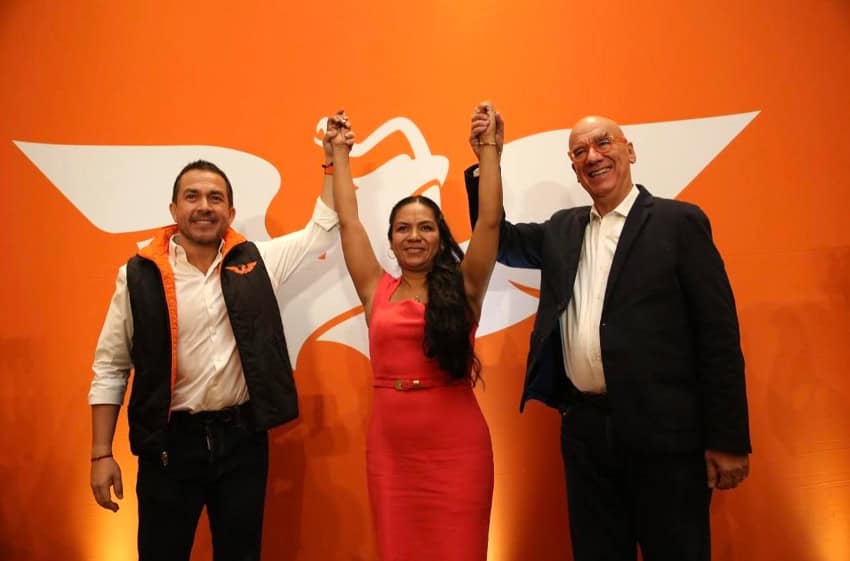
Pablos Lemus (center) was previously the mayor of Guadalajara from 2021 to 2023. (Pablo Lemus/X)
“Jalisco is and will continue being orange [MC’s political color] because the jaliscienses know what is best for our state and trust our team and project,” he wrote on X on Thursday above an image showing that he has a nine-point lead over the Morena candidate, according to a recent newspaper poll.
Earlier this week, Lemus sought to portray himself as a champion of women.
“I’ve always felt profound respect and admiration for women. … We’ll continue working side by side to provide them the support and opportunities they deserve,” he wrote on X.
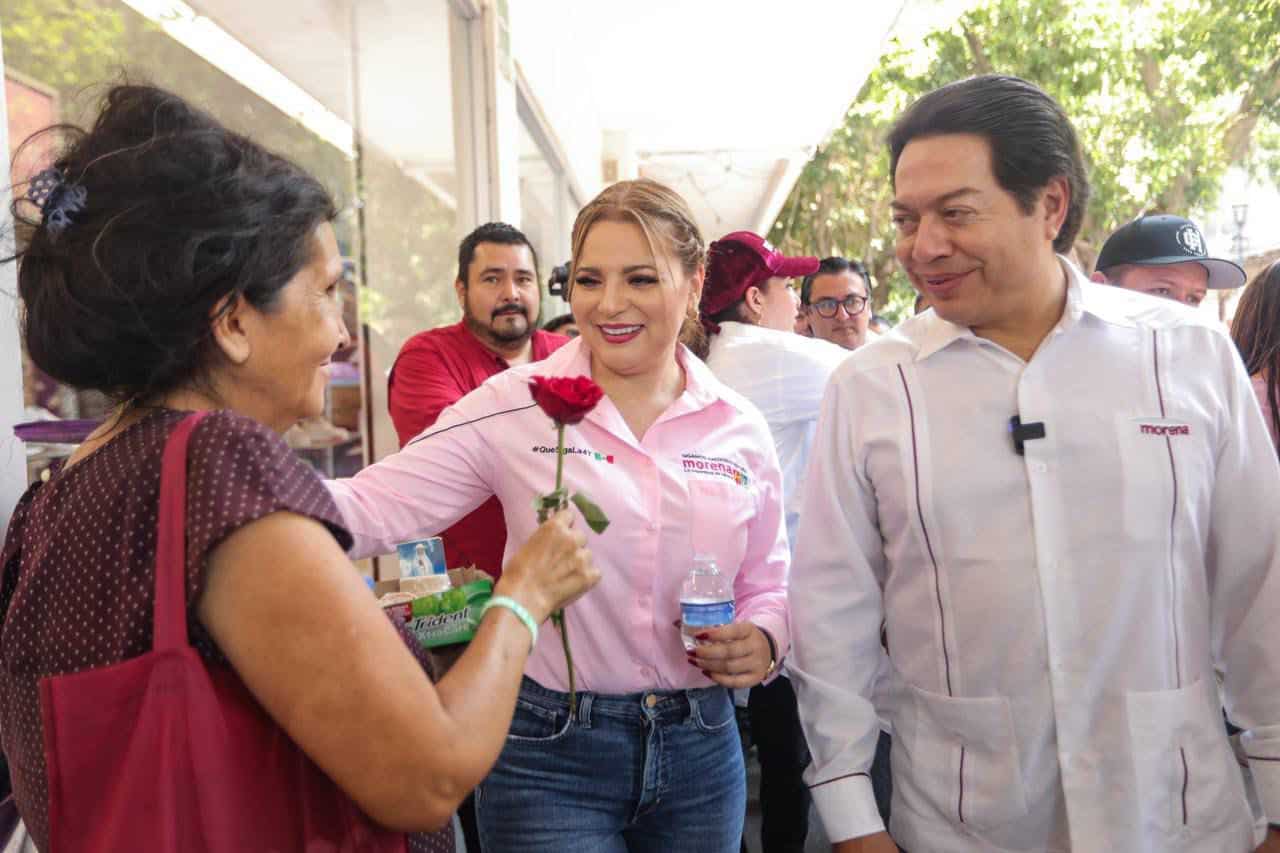
Claudia Delgadillo González (Morena-PT-PVEM)
Delgadillo has served as a state and federal deputy, and as a councilor in the municipal government of Guadalajara. She was affiliated with the PRI before joining Morena. The tapatía, or Guadalajara native, completed a law degree at the University of Guadalajara and has worked as a law professor.
🌐📱: “What we want for Jalisco is wellbeing for everyone,” Delgadillo wrote on her X account on Thursday.
“With education, health and security. The #TrueChange is about to arrive!” she added.
The candidate for Morena in Jalisco, Claudia Delgadillo (center), is seen here with Morena party president Mario Delgado. (Claudia Delgadillo/X)
On Wednesday, Delgadillo claimed to be ahead of the other two gubernatorial candidates “in all the serious polls.”
The result of one poll she posted showed she was narrowly leading Lemus.
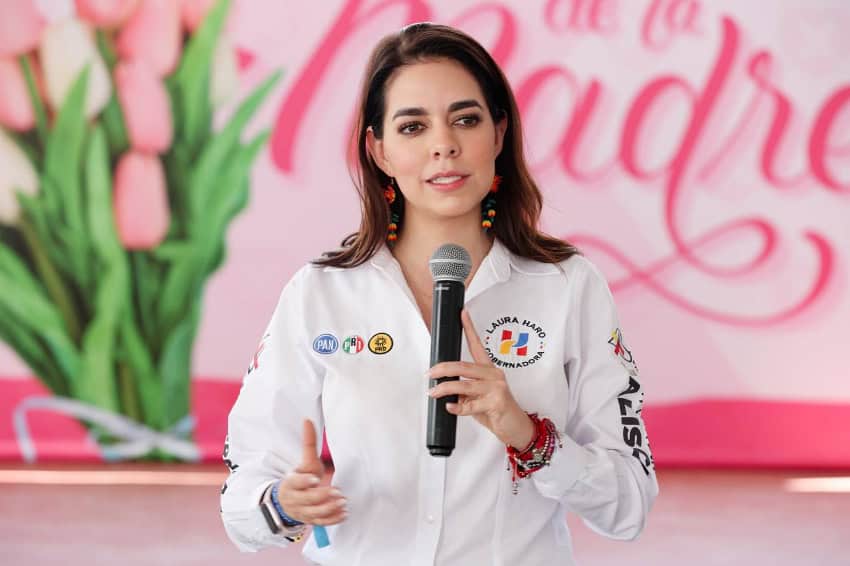
Laura Haro Ramírez (PAN-PRI-PRD)
Haro took leave as a federal deputy to contest the gubernatorial election in Jalisco for the PAN-PRI-PRD alliance. The 36-year-old has a law degree and served as a councilor in the municipality of Zapopan. She worked as an official in the PRI national executive committee before entering federal Congress in 2021.
Haro has said she will bring a government of “solutions, not promises.” (Laura Haro/X)
🌐📱: On Wednesday, Haro took to her X account to launch an attack on current political leaders in Jalisco.
“In Jalisco, our leaders suffer from an illness that alters their perception of reality and makes them think that everything is ‘well and good.’ Nothing could be further from the truth that we live every day in our state. The good thing is that [the current leaders] are on their way out and they’re going to take their frivolity far away from our people,” she wrote.
In another post, Haro said that a government she leads will be one “of solutions, not promises.”
“I have the will and the conviction to give Jalisco the leader it deserves,” she added.
Who’s going to win?
The gubernatorial election in Jalisco looks set to be a close race between Lemus and Delgadillo, but the former will most likely prevail.
Voters in Jalisco will also elect 38 state deputies and officials including mayors in the state’s 125 municipalities.
Morelos
Population: 2 million
Capital: Cuernavaca
Current governor: Cuauhtémoc Blanco (Morena) – currently on leave as he campaigns for a seat in the lower house of Congress.
Three women are aiming to succeed former soccer star Cuauhtémoc Blanco as governor of Morelos, a small state located to the immediate south of Mexico City. Like many of Mexico’s states, Morelos has had its fair share of security problems. Despite its small population, it was the country’s eighth most violent state last year in terms of total homicides.
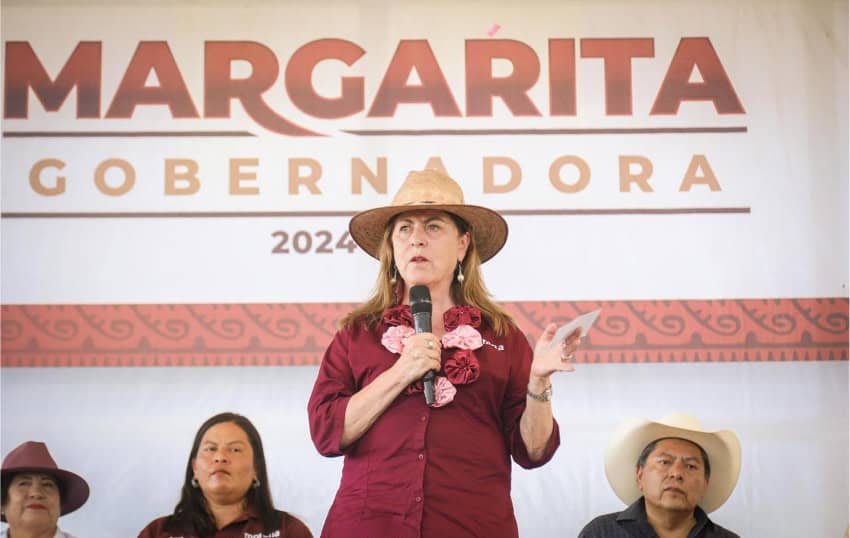
Margarita González Saravia (Morena-PT-PVEM)
Morena’s candidate served as minister of tourism and culture for two years in the Morelos government led by Blanco before taking up the position of general director of Mexico’s National Lottery. She has been involved in a number of leftist political groups over the years and was previously affiliated with the PRD.
Margarita González is the Morena candidate for governor in Morelos. (Margarita González/X)
🌐📱: In a campaign ad posted to her X account, González says that a government she leads will implement a program to “attract investment in all sectors.”
In the same ad, she also pledges to establish an “Institute of the Entrepreneur” to “help young people create their own companies.”
“We’re going to strengthen the farming sector, technological development and tourism,” González adds.
Lucía Meza Guzmán (PAN-PRI-PRD)
Meza was elected to the federal Senate on a Morena ticket in 2018, but she quit that party in late 2023 after she wasn’t included in its selection process to find a candidate for the Morelos gubernatorial election. She subsequently joined the PRI and was selected as the candidate for the coalition of which it is part. Meza has also served as a state and federal deputy. She has degrees in public administration and law, and a master’s in public security and public policy.
🌐📱: “In my government, the active participation of civil society will be fundamental to together build a better Morelos,” Meza said in a post to her X account earlier this week.
Lucia Meza was a member of the Morena party until 2023. (Lucia Meza/X)
In another post, she said that a government she leads would create industrial parks that run on clean energy.
“We’ll work hand in hand with industry in Morelos to boost the use of clean technologies,” Meza said.
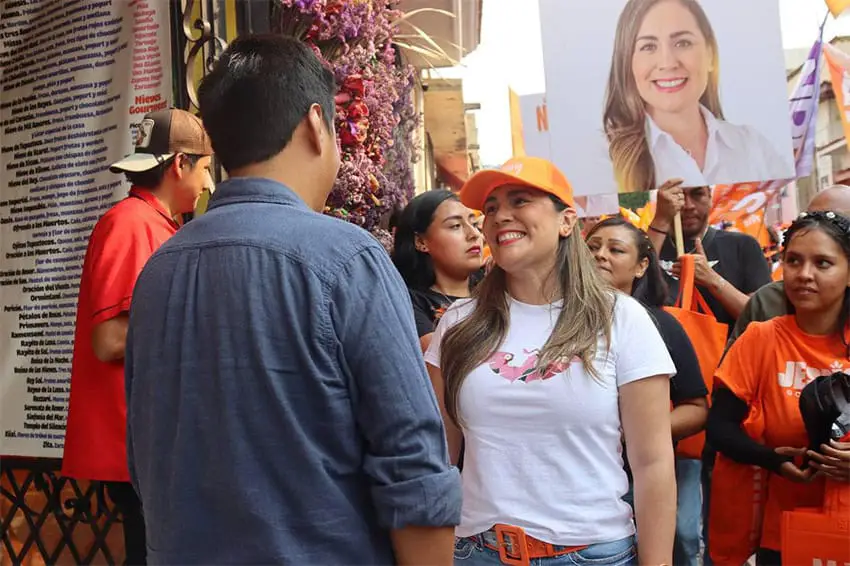
Jessica Ortega de la Cruz (Citizens Movement)
Ortega has served as a federal and state deputy and held a number of administrative roles within Citizens Movement. The 45-year-old native of the Morelos municipality of Jiutepec has been a member of MC for over 25 years. She has undergraduate and master’s degrees in law.
Jessica Ortega talks to a supporter at an April campaign event in Tepotzlán, Morelos. (Jessica Ortega/Facebook)
🌐📱: “Living with fear is not living,” Ortega said in a post to her X account this week.
“Morelos deserves to leave behind the insecurity crisis that the failed strategies of bad governments have caused. In Citizens Movement, we have a plan to end insecurity and to live free without fear,” she wrote.
In another X post, Ortega said that a government she leads would build new water infrastructure and develop a comprehensive transport plan for the entire state of Morelos.
Who’s going to win?
Polls indicate that the gubernatorial election in Morelos will be a tight contest between González and Meza. The Morena candidate has 48% support while the PAN-PRI-PRD aspirant has 43% support, according to this week’s update to the “poll of polls” published on the Polls.mx website. González’s advantage over Meza has recently narrowed, but at this stage it appears likely that she will win the June 2 election, allowing Morena to continue governing in Morelos.
Voters in Morelos will also elect 20 state deputies and officials including mayors in 33 municipalities.
* Another key contest on June 2 is the Mexico City mayoral election. Read about the candidates contesting that election here, and check out what the polls indicate here.
All of Mexico News Daily’s 2024 elections coverage, including numerous articles on the presidential election, can be found here.
By Mexico News Daily chief staff writer Peter Davies (peter.davies@mexiconewsdaily.com)
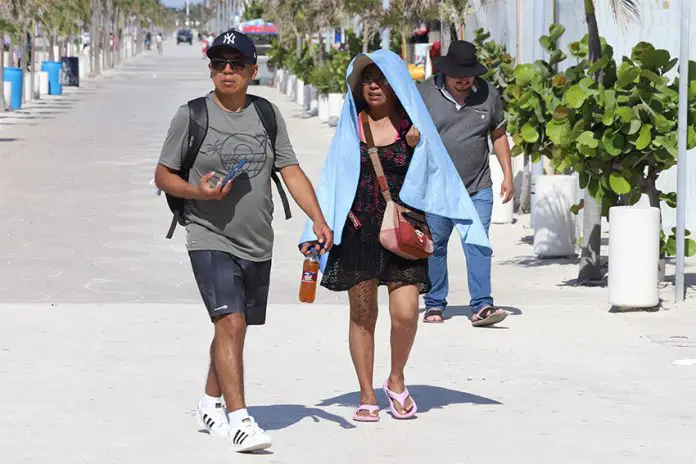
Tourists in Puerto Progreso, Yucatán may have gotten more than they bargained for, as city registered temperatures of nearly 45 C. (Martín Zetina/Cuartoscuro)
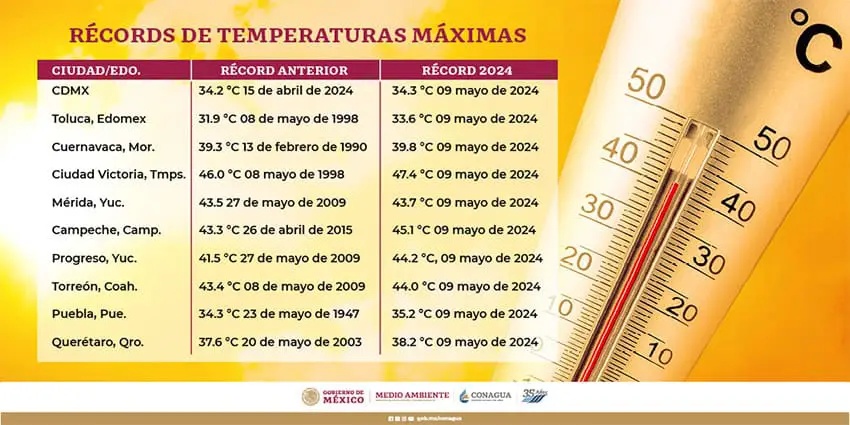
Mexico City, Mérida and Puebla were among 10 Mexican cities where record high temperatures were recorded on Thursday, according to the federal government.
Germán Martínez Santoyo, director of the National Water Commission (Conagua), posted a government infographic to the X social media platform that showed that the current heat wave has broken temperature records in Mexico City, Toluca, Cuernavaca, Ciudad Victoria, Mérida, Campeche, Progreso, Torreón, Puebla and Querétaro.
A Conagua infographic shows the 10 cities that saw record high temperatures on Thursday. (Germ{an Santoyo/X)
The middle column shows the date of the previous high, while the column on the right shows Thursday’s new record on Thursday.
Points of note:
The previous record high in Mexico City stood for less than a month.
The previous record in Puebla stood for more than three-quarters of a century.
The previous record in Cuernavaca stood for more than three decades.
Ciudad Victoria, the capital of Tamaulipas, was the hottest city in Mexico on Thursday, ahead of Matlapa, San Luis Potosí.
The new temperature record in the Gulf of Mexico port city of Progreso is almost three degrees higher than the previous record.
The Reforma newspaper reported that 16% of Mexico’s automatic meteorological stations recorded temperatures above 40 C (104 F) on Thursday.
On Wednesday, a station in Gallinas, San Luis Potosí recorded the hottest temperature in the country. The mercury soared to an infernal 49.6 C in that community.
How hot has it been where you live? Let us know in the comments.