The 'cloud seeder' that SEDENA intends to use to break the drought in Mexico City. (Cuartoscuro)
Defense Minister Luis Cresencio Sandoval has announced a plan to “seed” clouds in an attempt to break the drought in Mexico City.
The Ministry of National Defence (Sedena) will work with the National Water Commission (Conagua) to carry out the chemical process, which involves discharging an acetone solution containing supercooled silver iodide into clouds to produce rain.
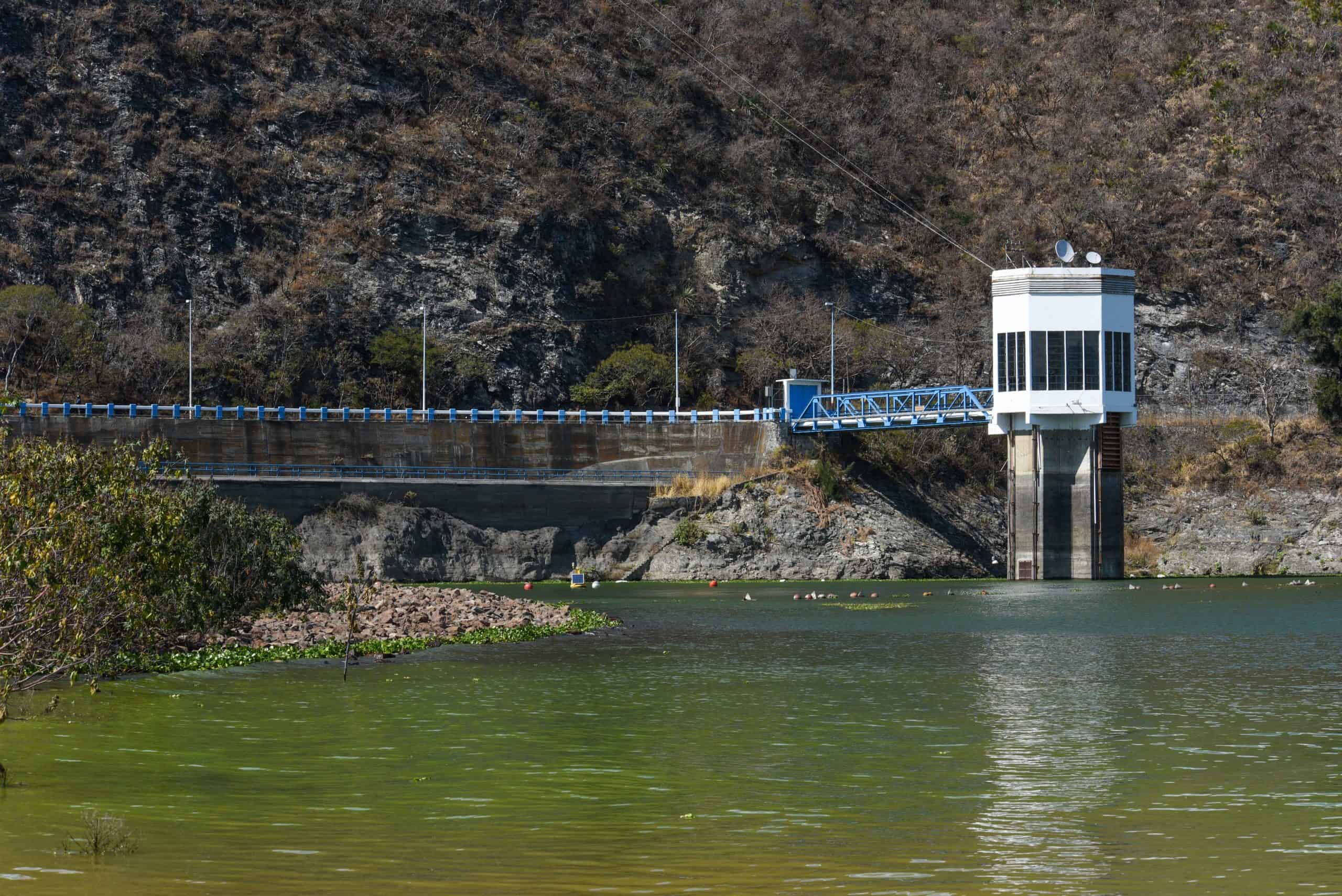
The Cutzamala dam system that supplies Mexico City has dropped to below 50% capacity. (Crisanta Espinosa Aguilar/Cuartoscuro)
“Considering that we have a plane with all the equipment to seed clouds … we checked with Conagua to see whether we could support [them] with the plane in the area where they needed to be able to make it rain,” Sandoval said.
He explained the plane normally works in northern Mexico and is now in Baja California but could be brought to Mexico City to tackle the capital’s current water crisis.
“The conditions in the Cutzamala area are very good because there is humidity, there is cloudiness,” Sandoval said.
Sedena’s announcement came after Mexico City Mayor Claudia Sheinbaum said that water pressure in the Valley of Mexico would be reduced in March, April and May due to low water levels in the reservoirs that supply the capital.
According to Conagua, the Cutzamala reservoir system is currently at only 47.6% of storage capacity — thelowest level recorded in its history. Rain is desperately needed in order to refill the dams that keep the water flowing to Mexico City.
The cloud seeding process works by discharging supercooled silver iodide into certain types of rain clouds. This causes water particles in the cloud to bunch together until they are heavy enough to fall. It can only work on existing clouds and cannot create more water in the sky.
Mexico first used this process to control a forest fire in Coahuila and Nuevo León in April 2021.
It has since been employed to induce rains in the drought-stricken states of Baja California, Sinaloa, Sonora, Chihuahua, Durango and Zacatecas, but has never yet been used near the capital.
Mexico has facedincreasingly serious droughts over the last decade. Annual rainfall has fallen from 10,000 cubic meters in 1960 to 4,000 since 2012, and the World Resources Institute now ranks the country 24th for water stress. Theproblem is worsened by poor water management systems and misuse of water extraction rights.
Twelve million Mexicans currently do not have access to clean drinking water, and the Water Advisory Council (CCA) nonprofit has warned the issue is likely to cause social and economic conflicts over the coming years.
AMPI is confident that their new app will provide security to buyers, and reinvigorate the Mexican real estate market after Covid-19.
(@ampinacional/Twitter)
The Mexican Association of Real Estate Professionals (AMPI) has launched its new nationwide “VALORes AMPI” marketing platform to support and reactivate the real estate market in Mexico.
The platform seeks to prevent fraud, provide transparency and optimize real estate operations.
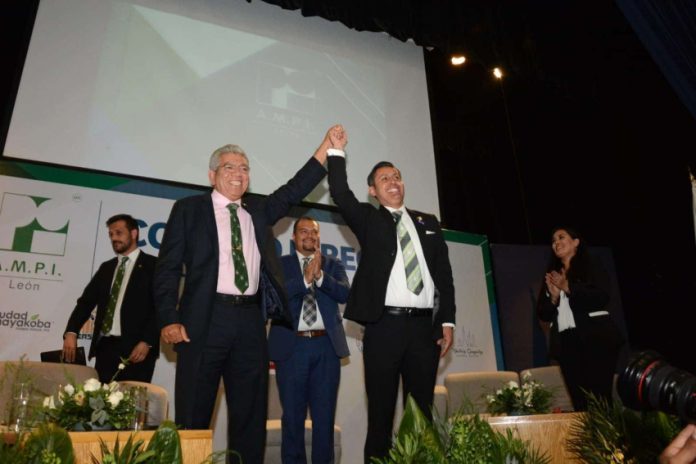
AMPI’s 2023 conference in Mazatlán is expecting more than 1,500 in attendance. (@ampinacional/Twitter)
“The market has been updating rapidly, particularly in the technological area. For this reason, we started strengthening platforms last year to provide our members with better services that [will] help streamline sales operations,” AMPI president Ignacio Lacunza told the real estate industry publication Inmobiliare.
Lacunza explained that every property must pass legal and tax checks before it can be uploaded.
On launch day, the platform listed 700 properties, and aims to reach 120,000 units in the short to medium term, he added.
The platform currently has 6,000 members, which Lacunza is sure will increase as the platform becomes more successful.
Lacunza also said AMPI is committed to the revival of Mexico’s post-Covid-19 economy through a new program called the AMPI Ambassadors of Real Estate Investment. The program aims to provide publicity and support for the real estate sectors of individual states and cities, in part by making the public aware of financial incentives to property ownership offered by municipal and state governments.
The association now operates in Morelos, Sinaloa, Guanajuato, Baja California, Baja California Sur and Tamaulipas and is aiming to operate internationally as well.
“We will start with the United States and Brazil, mainly because they are the associations with which we have collaboration agreements with,” Lacunza explained.
In October, AMPI will hold its 52nd national congress in Mazatlán, Sinaloa. More than 1,500 real estate agents, developers, and investors are expected to attend to discuss current challenges and opportunities in the real estate market.
Putting yourselves in the restaurant employees' shoes can mean the difference between being a customer they go out of their way to please and one they dread coming through the door. (Depositphotos)
Some of you aren’t going to like what you’re about to read, and I’m sorry about that.
We’re going to discuss restaurant etiquette: yours, not the owner’s, waiter’s or anybody else’s.
After 35 years of writing about food and restaurants, cooking and eating, I’ve observed countless hours of restaurant behavior from both sides.
Besides basically eating for a living, I’ve worked in kitchens and waited tables, run “front of house” and managed, harvested and sold produce at farmers’ markets. I’ve had quite a bit of time “behind the scenes” with owners and chefs, waitstaff, cooks and prep staff.
So here’s the thing: If you really want to be a member of your adopted community in Mexico (or anywhere else for that matter) trust me when I say the tips below are an important part of that integration.
Those restaurant servers are somebody’s sons and daughters; tip like they were your own. (Depositphotos)
Should/Shouldn’t. This is a biggie, and that’s why it’s No. 1: Don’t tell the owner what they “should” or “shouldn’t” do. Just don’t. Whether it’s what they “should” serve on the side, how the menu or hours or décor “should” be changed or umpteen other things that you know better than they do, hold your tongue unless asked.
Show Them the Money. Tip as though the server is your son or daughter working their way through school. Especially in Mexico — where the minimum wage per day for an 8–10 hour-shift is $207 pesos (that’s about US $10.82, $14.49 CAD) – tips are their livelihood. And those propinas are split with everyone working that shift; not only the waiters, bartenders and hostesses, but all the backstage folks you don’t see: cooks, dishwashers, maybe a night watchman or cleaning lady too. Be generous. You can afford it. What’s normal here? 10% is basic, 15% for good service and 20% because you can.
The Language Thing. We understand that you want to practice your Spanish, and that’s admirable. However, chances are your accent, pronunciation and/or vocabulary aren’t perfect. So if your server doesn’t quite understand what you’re saying the first time, please, please just say it in English.
This is a restaurant, not a language school, and the majority of waiters in towns with expat populations or lots of tourists have been hired partly because they can speak and understand English – much better than most of us speak Spanish. Case in point: When we say sin azucar incorrectly, it’s often unintelligible – a mumbled sound – to a native Spanish speaker. Then, when we’re furious our limonada is too sweet, we blame it on “bad service” instead of “bad Spanish” – which is the real problem.
My Way. On a special diet? Suffer from food allergies? Want your meal made special – different than what’s on the menu? Expect to wait a little longer and, quite possibly, for there to be a mistake. Why? Because in a busy kitchen, it’s easy for a cook to forget and make a standard whatever-it-is. Whether you send it back or eat it anyway, try to be gracious; it won’t kill you. And if it will, what are you doing going out to eat? See #1 again.
Loose Fingers. It used to be that publishing an opinion or critique of a theater production, movie or restaurant was reserved for, well, professionals. With social media, though, anyone can post anything, anywhere. Having a bad day? Think your meal wasn’t as perfect as it coulda/shoulda been? Don’t head for your computer; instead, ask for the owner or manager and politely explain your issue. Nine times out of 10 they’ll be happy to remedy the situation on the spot without you having to trumpet your dissatisfaction to the world at large. Your casual critique of your less-than-perfect soup posted on TripAdvisor or a local Facebook page can cause a restaurant to suffer hugely — and needlessly.
Patience is a Virtue. Don’t like to wait for your meal? Simple solution — don’t go at busy times. One more thing: just because you have a reservation for, say, 7 p.m. on a Saturday night, does not guarantee you quick service. Look around you: is every table full? Maybe that big group of 15 showed up without a reservation and the kitchen is in a tizzy. Order a drink and relax. Still can’t accept this? Wondering why the owner doesn’t plan better, have more staff, etc.? Go back and read No. 1 again.
Groups and Parties. Going out with a group of four or more? Special occasion? Call ahead. Make a reservation. Show up on time. Please. Have a few more or less people than you said you would? Alert your server and be appreciative of them accommodating your needs. (See No. 2.) Going to the theater afterward or have a tight schedule? Order simple entrées, no appetizers and don’t ask for separate checks.
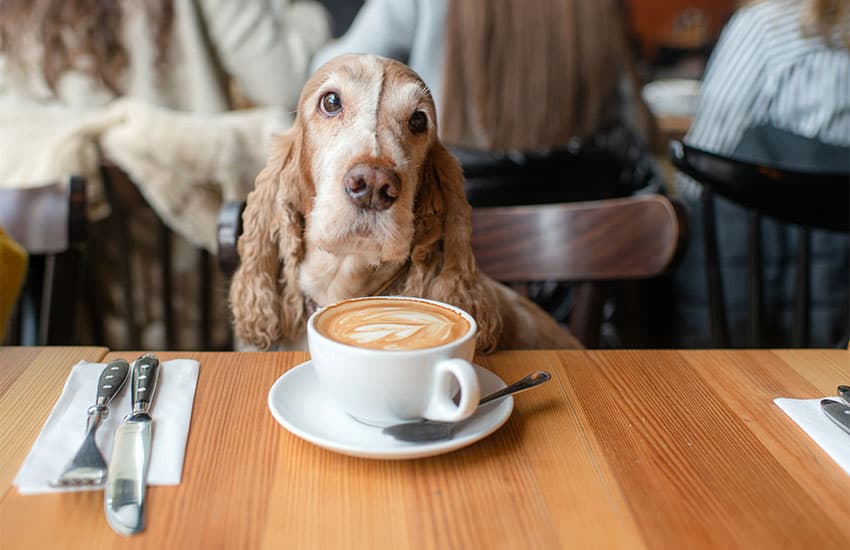
Dogs. Why, why, why do you think it’s OK to bring your pet to a restaurant here, something you would never do in Canada or the U.S. or wherever else you’re from? It’s not cute when they sit on the chairs, not charming when they lick your plate clean, not OK when they bark and whine and tangle themselves up with the table/other customers/ your waiter’s legs. Back home, dogs in restaurants are very much the exception. Here too, so don’t try to tell the restaurant owner it should be the rule. (Benevolente82/Shutterstock)
Hard as it is to believe, not everyone likes dogs — and they don’t belong in restaurants. If your dog can’t stay home for an hour while you go out to eat, that’s what you should be addressing – instead of trying to explain to the restaurant owner why he “should” allow dogs (especially yours) in his establishment. (See No. 1.) Have an actual professionally trained service animal? None of this applies to you.
Water. In Mexico, everyone pays for purified drinking water. Everyone, everywhere. Restaurants too. And for a small business trying to make ends meet in a challenging economy, the extra five or 10 garrafones of water every few days can really add up. Why do they bring you a bottle instead of just a glass? Because it’s easier, because they want to, because some picky gringos in the past complained about non-purified water-in-the-glass. The real question is, why do you have a problem with this?
Last Call. It’s 11 p.m., you finished eating an hour ago and are hanging out with your friends, swishing the last sip of a now-warm cerveza in your glass. By now, you’re on a first-name basis with your waiter, and he’s laughing at all your jokes. Out of the corner of your eye you see them starting to stack chairs. Please leave now. Say good night and go home. Crawl down to the next open bar. The people who have just been serving you have been working for eight or more hours and have a long bus ride ahead and a family waiting at home. The restaurant is closed. End of story.
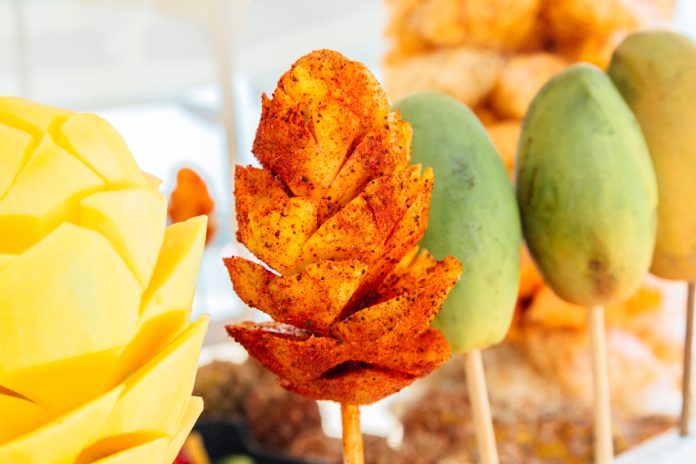
Mango season stretches from February to August in Mexico and the fruit is enjoyed with spicy chile sold by fruit vendors across the country. (Shutterstock)
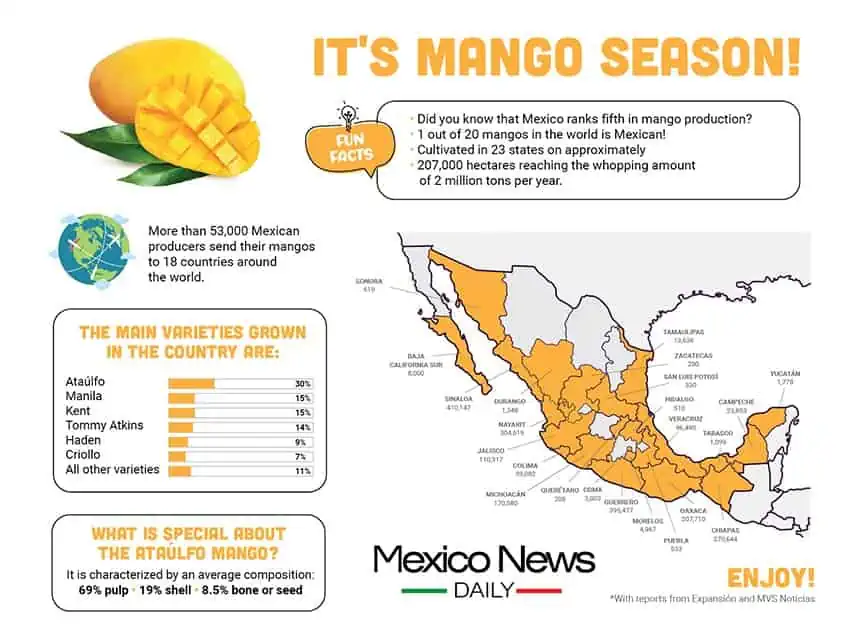
Did you know that Mexico ranks fifth in the global production of mangos? That means that one out of twenty mangos in the world is Mexican!
According to the Ministry of Agriculture and Rural Development (Sader), there are 14 different breeds of mango – called “cultivars” – grown by Mexican farmers. Mango season runs from February to August.
Everything you wanted to know about Mexican mangos. (Mexico News Daily)
Can you guess why the Ataúlfo is the most popular cultivar of mango in Mexico?
Because it’s Mexican, of course!
A brief history of the Ataúlfo
Grown in the southern state of Chiapas, the Ataúlfo mango was created on the property of mango grower Ataúlfo Morales Gordillo by agricultural engineer Héctor Cano Flores, during the 1950s. Since then, the Ataúlfo mango has ranked as one of the world’s favorite mangos, along with the Alphonso, which is regarded as “the king of mangos.”
The Ataúlfo mango cultivar was granted a denomination of origin in 2002. (Depositphotos)
In 2002, Morales Gordillo obtained the denomination of origin which designates the geographic area in which a fruit or other agricultural product is grown. This means that no other mango can be regarded as Ataúlfo except for those grown in the designated region of Chiapas.
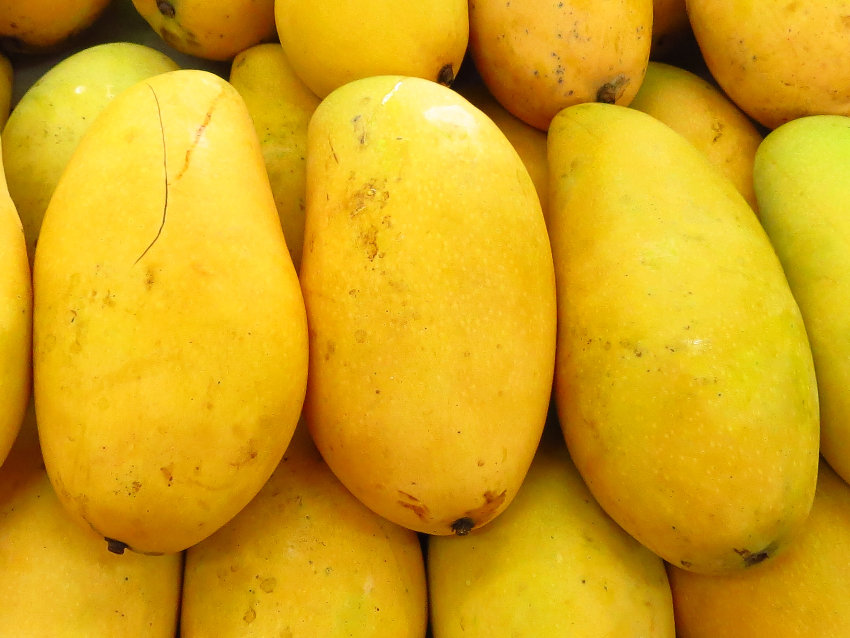
And what is so special about the Ataúlfo mango? It stands out from other mangos because of its yellow color and its hook shape at the end. It has a less fibrous texture than other types of mangos and its skin is soft with a velvety touch.
Thanks to its honey-sweet flavor, the Ataúlfo mango is also known as “Honey Mango” in the United States.
To try the Ataúlfo a la Mexicana, just cut it into slices and add chile powder, salt and lime! For more mango recipes, try this mango cheesecake or these fresh and tropical dishes.
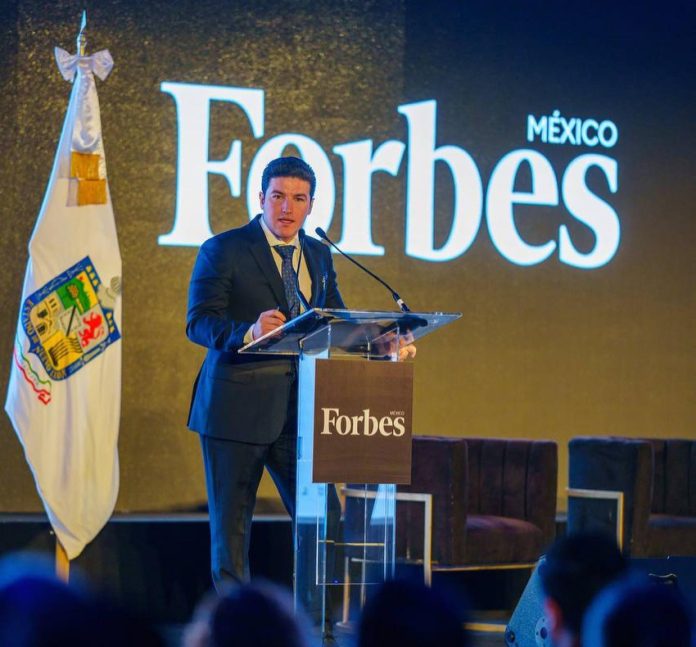
Nuevo León governor Samuel García believes that Mexico could see 10% annual growth in response to nearshoring trend. (@Samuel_GarciaS/Twitter)
The nearshoring phenomenon could spur annual economic growth of up to 10% in Mexico, Nuevo León Governor Samuel García said Wednesday.
Speaking at the Forbes Economy and Business Forum in Monterrey, García predicted an economic boom due to the relocation to Mexico of foreign companies seeking to take advantage of proximity to the United States, the North American free trade pact and affordable labor costs.
Nuevo Leon is receiving record foreign direct investment, driven by manufacturers relocating operations from Asia to be closer to the United States. (@samuelgarcias/Twitter)
While there are “circumstances of crisis and risk” around the world, “the planets are aligning for our country,” the Citizens Movement (MC) party governor said.
Government, the private sector and the community as a whole need to realize that such opportunities only come around every 50 or 100 years, said García, who announced late last year that he was interested in representing MC at next year’s presidential election.
If Mexico takes advantage of the opportunity, economic growth “at levels never before seen” can be achieved, he said before citing potential GDP expansion of 8-10% per year.
“Making the dream reality will depend on us and Nuevo León will play its part,” García said.
Tesla rendering of the announced gigafactory to be built in Nuevo León. (@Tesla Twitter)
“Amazing things are happening in Nuevo León at the moment and I’m sure that this is just the beginning of a great economic boom for Nuevo León and of course for Mexico,” he said.
The Texas-based electric vehicle manufacturer Tesla announced earlier this month that it would build a gigafactory just outside Monterrey, the capital of the economic powerhouse state.
García said Wednesday that “2022 was a good year,” with some US $4 billion in foreign direct investment flowing into the northern border state. He predicted that the figure this year will be $12-13 billion, asserting that foreign investors are “lining up” to invest in Nuevo León.
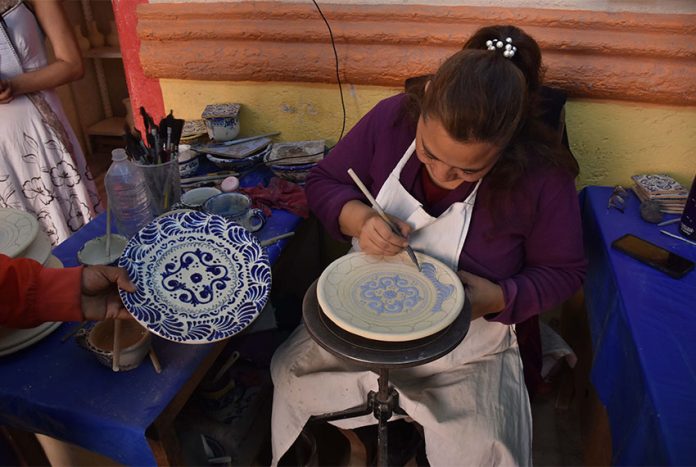
María Reina has been painting Talavera Poblana pieces for about a year. "Knowledge is important in this work, but... they have to have ethics and enjoy what they make,” says Armando Pérez, director general of Grupo Armando, one of only nine business approved to make authentic Talavera Poblana. (Photos by Joseph Sorrentino)
Did you know that a single piece of Talavera pottery is the product of thousands of years of development and experimentation involving many civilizations?
“In one piece of Talavera, we are going to see signs of Asian, Arab, European and traditional Mexican cultures,” said explained Armando Pérez Domínguez, the Director General of Grupo Armando and the retail store Talavera Armando. “That is what is beautiful about an artistic piece: the styles and all these influences, the participation of so many continents [through] so many centuries.”
“The Mexican input is the workmanship of different pieces, different shapes and designs, many of which are distinct here,” he said.
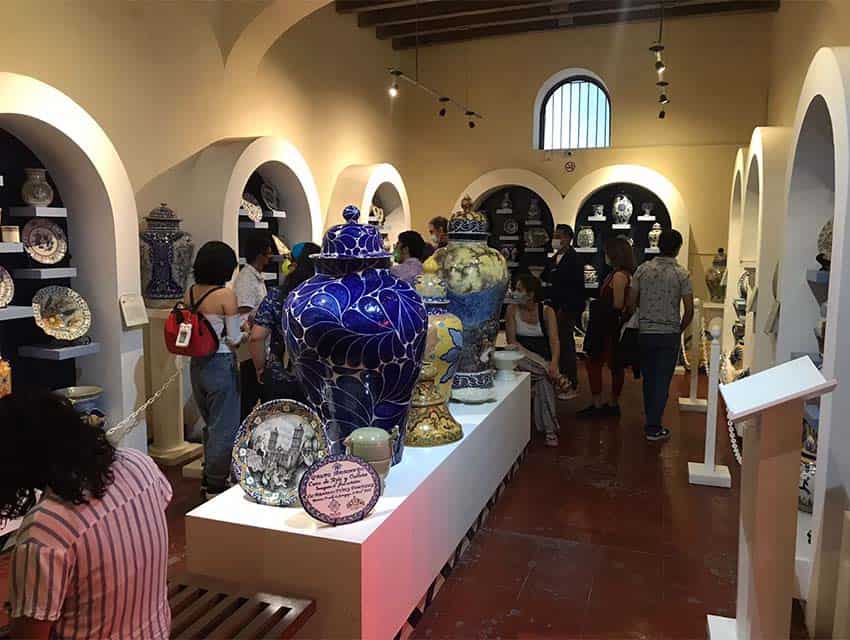
You can learn the history behind the making of Talavera pottery at the Museo de Talavera in Puebla city. The museum opened four years ago.
“The idea was to have something different,” said continued Pérez, “to show people the historical processes.”
The name Talavera comes from Talavera de la Reina in Spain, a town famous for its pottery.
Gómez hitting a dried piece of Talavera Poblana to produce the bell-like sound.
The techniques for making Talavera pottery — which in Mexico is known as Talavera Poblana to distinguish it from Talavera made in Spain — were brought to Mexico from Spain just a few years after the conquest.
Puebla city was founded in 1531, and soon afterward came churches and monasteries — and a demand for tiles to decorate them. The area that would become the state of Puebla proved to be a perfect place for making the tiles.
“Here, historically, Franciscans and Dominicans arrived, and they discovered that Puebla has two types of clay, white and black,” said José Luis Gómez, who served as my guide during my visit. “These two are the soul of Talavera, and these two clays can only be found in Puebla, Atlixco, Tecali and Cholula.”
“The white is sandy, and it gives strength to the piece so it can withstand high heat,” Gómez added. “The dark clay gives it body and volume. They brought artisans from Spain to teach the artisans here, and that is why Puebla is famous for Talavera.”
As Pérez pointed out, 450 years after they were made, the tiles on cathedrals and other buildings in Puebla can still be admired.
The museum’s first room outlines the history of Talavera pottery, whose roots can be traced back to Mesopotamia, where the lead-glazing technique that’s still used today was invented around 2,000 B.C. Later, Chinese, Islamic and European cultures — all of which have a long history of ceramic-making — perfected glazing and other techniques for making pottery while adding new designs and colors to their ceramics.
Visitors at the museum. (Facebook)
“Blue is from the Babylonian culture,” said Gómez. “The Arabs incorporated green from copper, the Italians orange and yellow.”
The next two rooms in the museum show how artisans transform an undistinguished piece of clay.
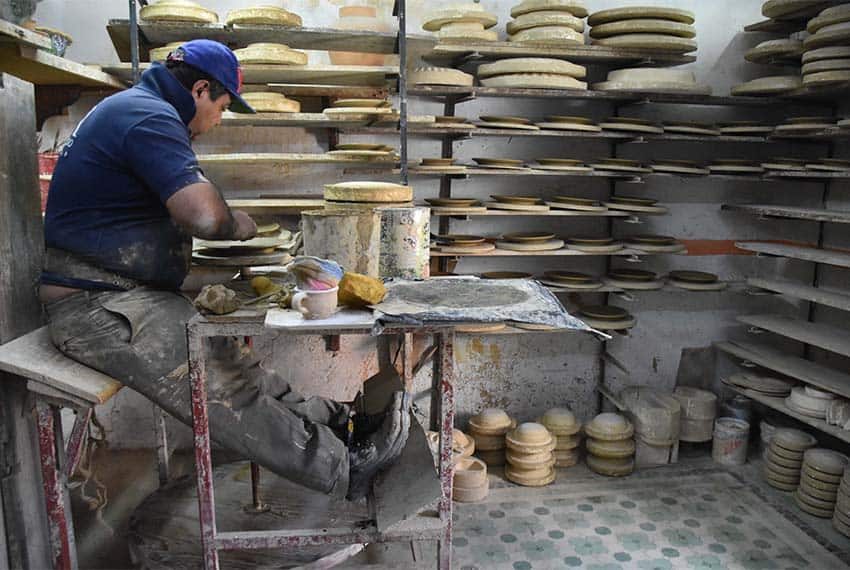
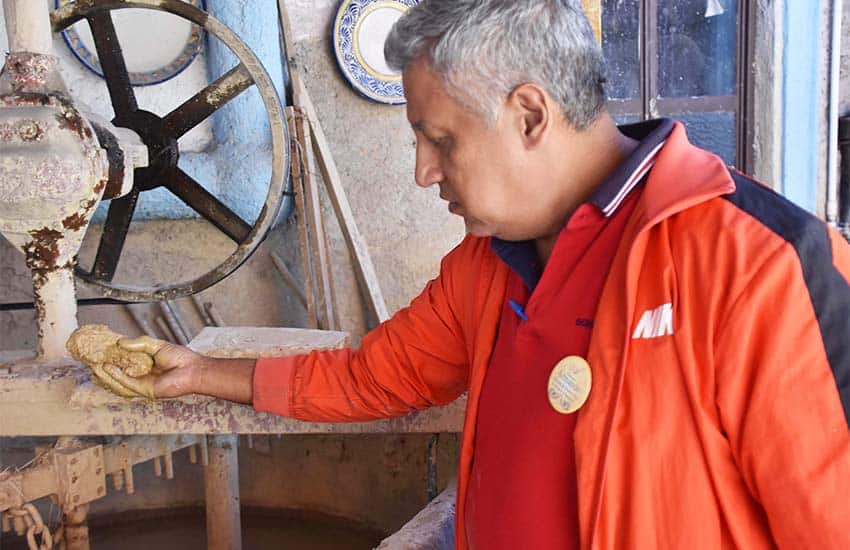
The first step is the mixing of the two types of clays, which are then washed and filtered to remove larger particles. The piece is then shaped by a tornero on a potter’s wheel and then dried for several days. After that, the piece is fired at 850 C (1,560 F).
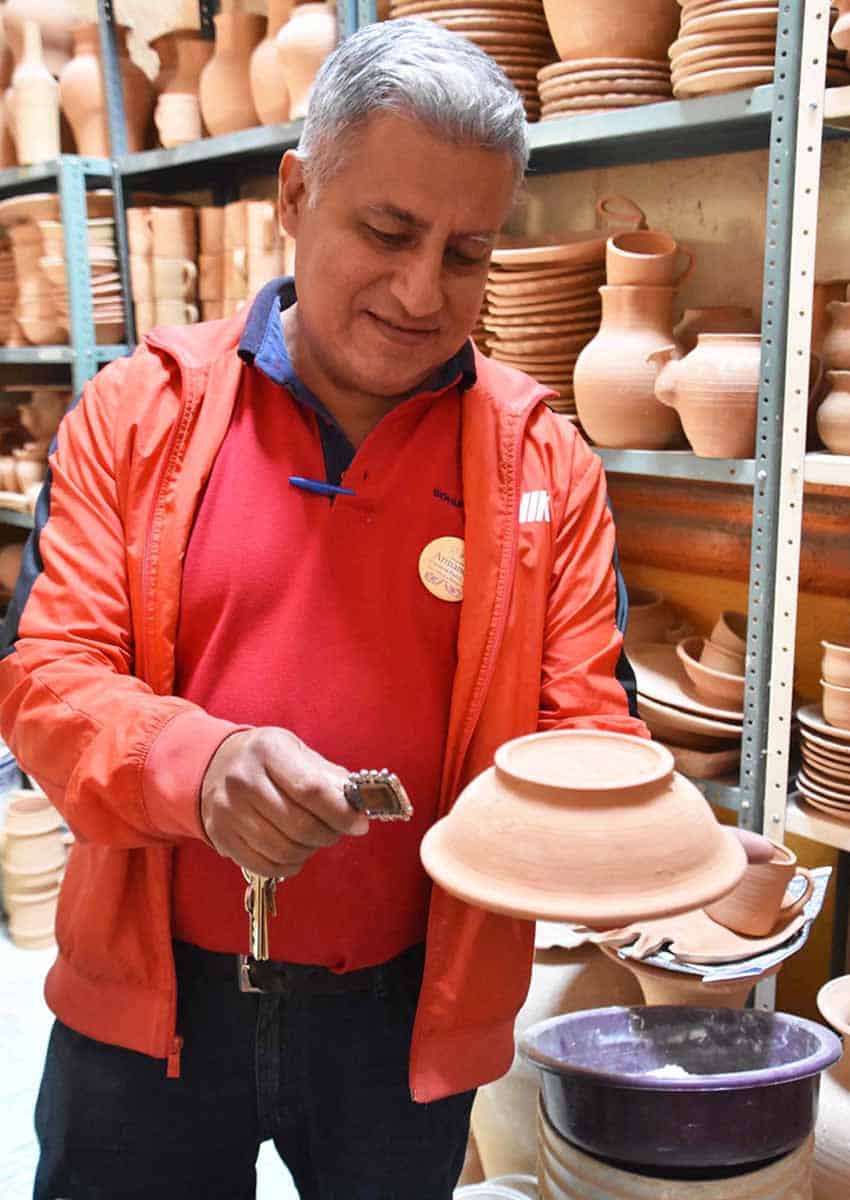
Gómez took a piece of dried pottery from a shelf, gently striking it with a key. It made a clear sound, like a small bell ringing.
After the first firing, the piece is painted and then fired a second time to harden the glaze. Start to finish, the entire process can take three to six months.
Talavera Armando also offers tours of its workshop, where it’s possible to watch artisans — 15 torneros (who shape the clay into its intended form), painters and esmaltadores (glazers) — working on their craft.
Tornero Alberto Fuentes shapes the clay into its intended form.
“These are people committed to their work,” said Pérez. “Our employees are special people [who] profess their love of art. Knowledge is important in this work, but one also has to have a personal value, a moral value; they have to have ethics and enjoy what they make.”
While many stores and stands in Mexico will sell you inexpensive pottery that looks like Talavera, real Talavera Poblana only comes from nine businesses in the state.
“Each have their own style, but [use] the same techniques,” Pérez said.
The businesses are certified by the Consejo Regulador de la Talavera(Talavera Regulatory Council). The council inspects each businesses’ manufacturing process twice a year and pieces are subjected to 16 laboratory tests. All pieces must be made by hand using only the special clays found in four places in Mexico, and painted using only six approved colors: blue, yellow, black, green, orange and mauve.
You’ll know an authentic Talavera Poblana piece because the bottom contains the manufacturer’s logo and location and the artist’s initials. In 2019, UNESCO named Talavera Poblano to its list of the Intangible Cultural Heritage of Humanity.
The nine certified companies must follow fairly strict guidelines, but Pérez noted that there’s still room for innovation. “We continue respecting the old,” he said, “but we are growing and evolving. That is, we have new designs, new creations and images, contemporary designs that do not lose their essence.”
Gomez holds a mix of clays being washed. Only clay from four locations in Puebla can be used to make Talavera Poblana artesanías.
After a tour of the museum and workshops, relax in the Belcanto Cafeteria, adjacent to the museum. It not only offers food but on some evenings, live music — rock, flamenco and opera and more. It’s best to check their Facebook page for information.
“Currently, we are developing a house of art and culture that includes the Talavera museum, a cafeteria, and exhibition rooms,” Pérez said. “We will give courses for people who want to know about the old ways of making Talavera.”
Talavera Poblana costs considerably more than the knock-offs that are sold in places catering to tourists. But once you learn about the history and craftsmanship that goes into every piece, you’ll realize it’s worth the price.
The museum is located at 6 Norte 406, Centro Histórico, in Puebla city and is open from 9 a.m. to 7 p.m. every day. The entrance fee is 80 pesos (about US $4).
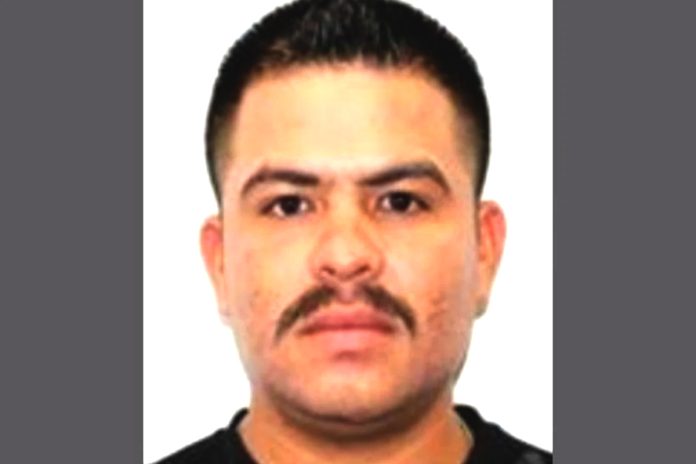
José Noriel "El Chueco" Portillo is said by authorities to have been a regional boss for an offshoot of the Sinaloa Cartel. He had been in hiding since he allegedly killed four people in Chihuahua, including two Jesuit priests in the Sierra Tarahumara. (Fiscalía Chihuahua)
Forensic testing has confirmed that a body found in Sinaloa is that of a man accused of killing two priests, a tour guide and another man last June in Chihuahua, as well as a United States citizen in 2018.
President López Obrador delivered the news Thursday morning, announcing that authorities had established that the body belonged to José Noriel “El Chueco” Portillo Gil, a presumed leader of a Sinaloa Cartel-affiliated criminal cell called Gente Nueva (New People).
President Lopez Obrador announced Thursday morning that authorities had discovered Portillo’s body in the small Sinaloa town. (Rogelio Morales Ponce/Cuartoscuro)
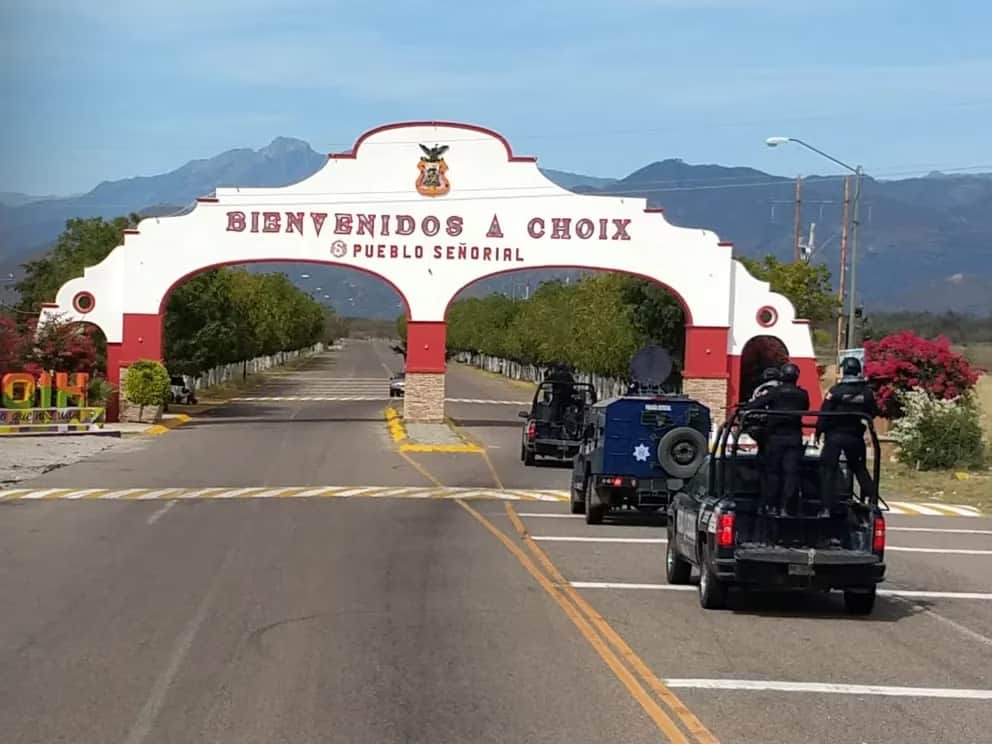
Portillo’s body was found Tuesday in Choix, a municipality in northeastern Sinaloa that borders Chihuahua and Sonora. He had been on the run since the murders of the priests in a church — a crime perpetrated at the tail-end of a one-man rampage precipitated by an argument after a baseball game, according to a version of events presented by former Chihuahua Attorney General Roberto Fierro Duarte.
The state’s current attorney general, César Jáuregui Moreno, said Wednesday that a sister of Portillo had identified her brother’s body, but he stressed that authorities were waiting for the results of forensic testing in Sinaloa for confirmation that it was in fact him.
Portillo was found in the municipality of Choix, which has seen major violence between cartels and cartels and police. Authorities say it is controlled by the Sinaloa Cartel. (SSP Sinaloa)
The body had a gunshot wound to the head, and 16 spent bullet casings were found in the area, Jáuregui said. Authorities believe Portillo may have been killed late last week by local residents who dumped his body in the location where it was found.
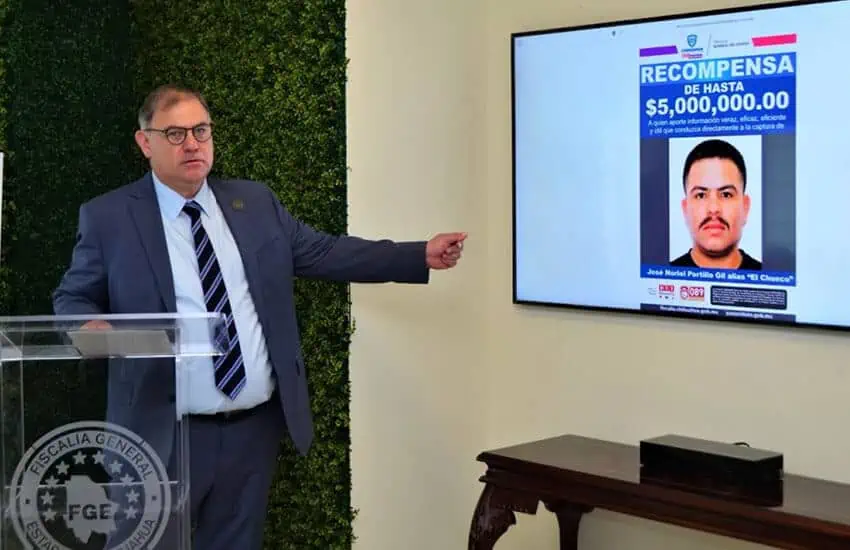
The Chihuahua Attorney General’s Office had offered a 5-million-peso (about US $270,000) reward for information leading to his capture, while Chihuahua Governor Maru Campos pledged that justice would be served.
The murders of the priests caused “deep anger, indignation and pain” and “shook us to the very core,” Campos said last June.
“We’re not going to allow acts like this. To the Jesuits and all Chihuahua residents I say: you have the state government and the federal government [to protect you]. You have the force of the state that will protect you against those who disrupt our peace and take away the most precious thing we have, which is life.”
In a statement posted to its website on Wednesday, the Jesuits’ association, the Society of Jesus in Mexico, said it “regretted the death of the person whose body was found by Sinaloa authorities, as we regret all lives cut short by the violence that reigns in the country.”
“We reject the dissemination of images… [showing] the discovery,” the association said, adding that if the body is confirmed to be that of “the person implicated in the homicide of the Jesuit priests,” the discovery can in no way be considered “a triumph of justice or a solution to the structural violence problem in the Sierra Tarahumara,” a region named after the indigenous people who live there.
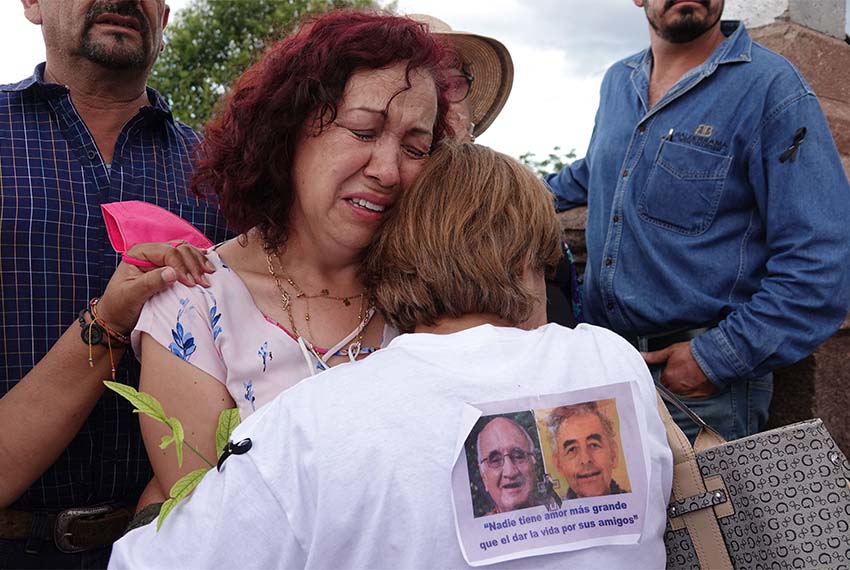
The Chihuahua priests Portillo was accused of killing were beloved in their diocese of the Sierra Tarahumara. (Graciela Lopez Herrera/Cuartoscuro)
“On the contrary, the absence of a legal process in accordance with the law in relation to the homicides would imply a failure of the Mexican state to comply with its basic duties and [would] confirm that authorities don’t have territorial control in the region,” the association said.
The murder of the priests sparked outrage in Mexico, and even triggered a response from Pope Francis.
“I express my pain and consternation due to the murder in Mexico … of two Jesuit priests and a layman. So many murders in Mexico!” the pope said in a post on his official Twitter account last June.
Mexico’s Roman Catholic Multimedia Center said after the murders that seven priests had been killed since López Obrador took office in December 2018. At least two dozen were murdered during the 2012–18 term of the government led by former president Enrique Peña Nieto.
According to a Milenio newspaper report published last July, Chihuahua authorities established that Urique municipal police were complicit with Portillo’s criminal activities. That complicity appeared to have been facilitated by El Chueco’s uncle, who was the municipal police director in Cerocahui, the Urique town where the murders occurred last June.
In late July, Chihuahua authorities said that Portillo controlled the beer market in some Sierra Tarahumara communities. State Security Minister Gilberto Loya told Milenio that “clandestine” beer sales helped finance El Chueco’s criminal group, while then attorney general Fierro said his monopolization of that market in some towns was indicative of the criminal power he had.
Roberto Javier Fierro Duarte briefs reporters in 2022 on the search for Portillo after he went into hiding. Authorities were offering up to 5 million pesos for information leading to his capture.
On Wednesday, President López Obrador said that Portillo and his criminal activities were “tolerated” by authorities in Urique, whose municipal seat is at the bottom of a canyon that is part of the Barrancas del Cobre, a popular tourism destination known in English as the Copper Canyon.
“He was even a promoter of a baseball team. The local authorities … knew [about his criminal activities] but didn’t do anything. That’s the truth,” the president said, adding that Portillo had a criminal network in the entire region.
Thirty-two people linked to Portillo’s criminal group have been arrested, he told reporters.
“… We’ve acted responsibly .. and the Ministry of Defense … has been working [in the Tarahumara Sierra] permanently,” he said.
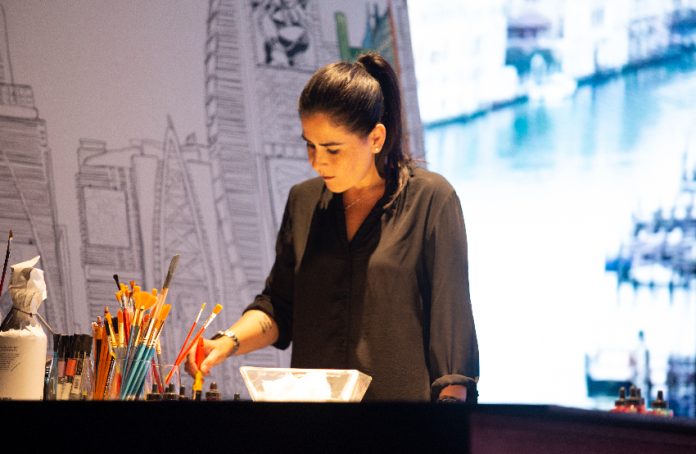
Karla de Lara is a celebrated Mexican artist who has exhibited in 350 individual shows in more than 38 countries around the world. (Courtesy)
Karla de Lara has been called the “mother of hyperrealist pop art”: a woman who is redefining Mexican art and strengthening US-Mexico relations as the official artist of the Bicentennial.
With over 350 individual exhibitions in more than 38 countries worldwide, including Art Basel and Art Miami,Karla de Lara has gained a reputation as a restless soul who never stops creating. Her attention to light, atmosphere, plasticity, abstract forms, and architecture enriches her paintings, which often depict cityscapes as magical colorings and reinterpretations of her own immersion, giving them a soul.
Karla de Lara (Courtesy)
In this interview she gives insights into her artistry, family roots and her inspiring path to becoming one of Mexico’s most celebrated contemporary artists.
You were recently chosen as the official artist of the U.S.- Mexico Bicentennial. How does your artwork promote solidarity and cooperation between the two countries?
I was honored when the Mexican government and then the U.S. representatives asked me to be the artist for their bicentennial celebration. It’s been fascinating learning about the relationship between Mexico and the United States. As a neighboring country, we have many Mexican citizens who have become U.S. citizens, creating bi-cultural families. However, some third-generation Americans don’t feel connected to Mexico, many of them don’t even speak Spanish. So, they’re in between two cultures, not truly identifying with either.
To help with this issue, I’ve been working on creating a sense of harmony between the two countries and helping them navigate this new identity. It’s not exactly a new nationality, but a mix between the two. It’s similar to when the Spanish conquered Mexico. It wasn’t the Mexico we know now. It started with the native peoples from different cultures such as the Aztecs, Mayans, and Olmecs and they mixed with the Spanish to create this new breed: Mexicans. We’re neither native nor Spanish and it’s this fusion that made the Mexican nation.
Karla de Lara’s “Aliento Primogenio” or “Primal Spirit” painting (Diplomacia Cultural MX)
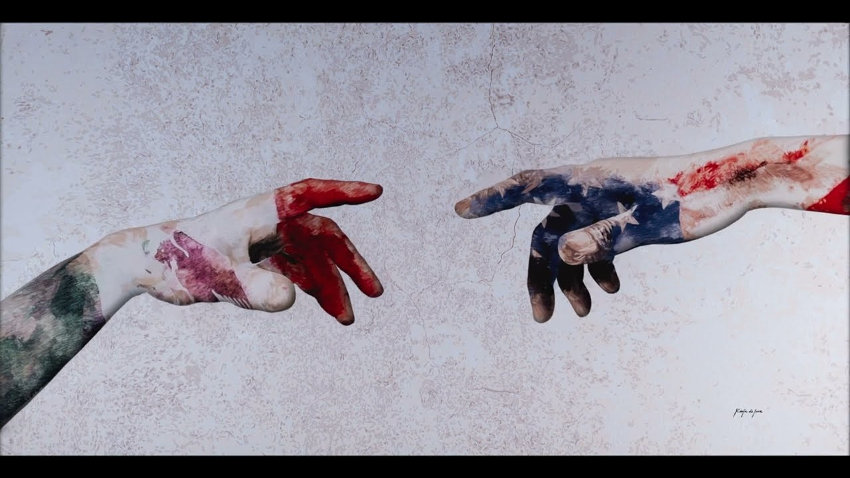
When I began working on the artwork for the U.S.-Mexico Bicentennial, I found inspiration in Michelangelo’s “The Creation of Adam.” Specifically, I was struck by the representation of the first minute of humanity, and I wanted to translate that idea into the first minute of the bicentennial – the start of the relationship between our two countries.
That’s why I decided to tattoo the Mexican and American flag on the arms of two hands, symbolizing a connection between the two nations. To take it a step further, Juan Carlos and his team created apowerful NFT where the hands touch, forming the universal symbol of respect, love, and peace.
In many countries around the world, this symbol is associated with a message of unity and togetherness, which is exactly what we wanted to convey through our artwork. As neighbors and allies, it’s important that we are open to helping each other. When we work together, we can achieve great things and foster a positive relationship between our two nations.
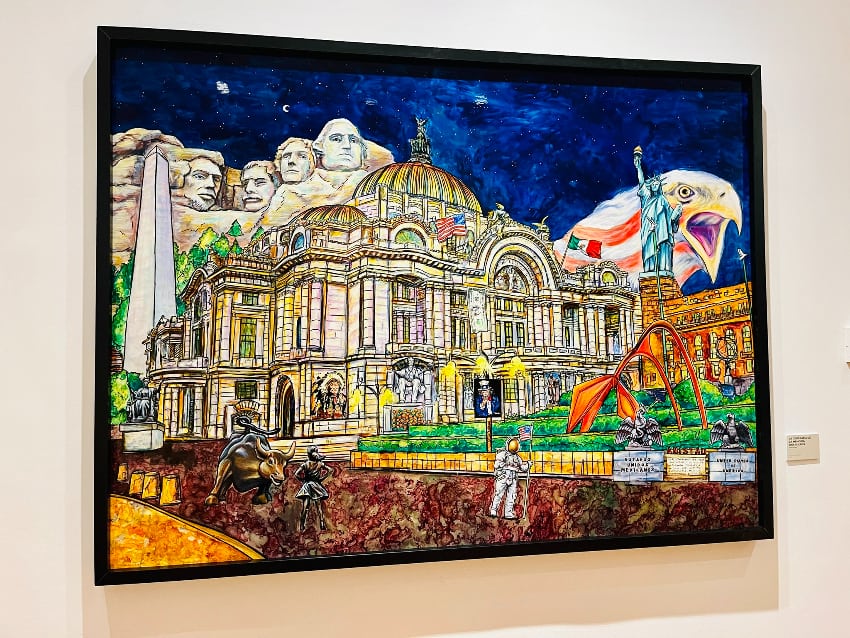
I’ve also created several important pieces of art that showcase the blending of our cultures. For example, I painted Times Square with many Mexican symbols, and I painted one of Mexico’s most iconic buildings, the Palacio de Bellas Artes, with a backdrop of Mount Rushmore and an American bald eagle. These pieces of art are meant to communicate the mutual respect and connection between the two countries.
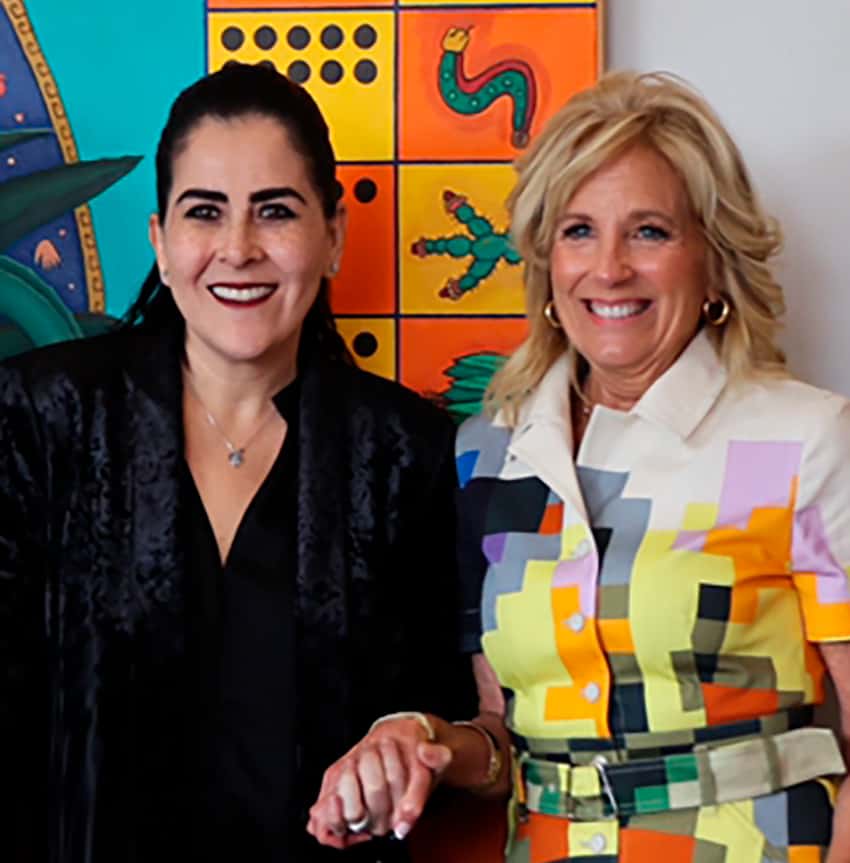
Karla de Lara (left) with U.S. First Lady Jill Biden. (Courtesy)
You gave your first masterclass at the Belmond Sierra Nevada Hotel in San Miguel de Allende recently. How does it feel to teach your art to others?
I really enjoy it! They’re all very talented and it’s amazing to see how quickly they learn. But since this is my first time teaching a class it’s a bit challenging. I never really wanted to do it before because I have my own unique technique that I developed over time without any strict rules. But I realized that I could share some of my ideas with others and help them develop their own artistic style and unique cultural interpretation using the same technique.
Teaching is a learning process for me too, as my technique is always evolving and improving. I’m excited to see what my students will create and how I can continue to develop my own skills through this experience.
What advice would you give to up and coming artists?
First of all, make sure that this is really what you want to do. It’s not just a hobby or a fleeting passion, but a long-term career that requires dedication and hard work. I know it can be tough, and sometimes it feels like you’re not making progress, but don’t give up
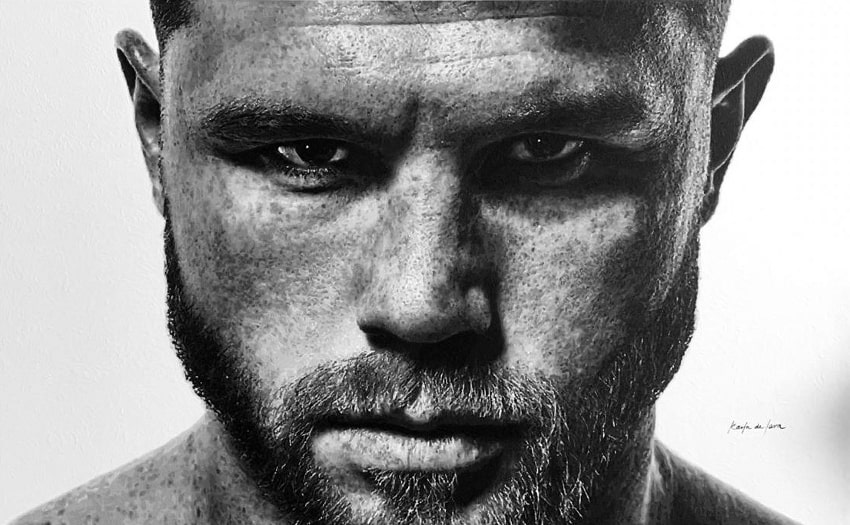
Mexican boxer Canelo Álvarez painted by Karla de Lara. (Courtesy)
Keep working at it, and over time you’ll see your creations take shape. Remember that success is not just about talent, but also about discipline and perseverance.
Have you always been artistic, even from a young age?
Yes, painting has been a part of my life for as long as I can remember. I started when I was just four years old, and from there, my parents always encouraged me to explore my creative side. I took advantage of every class available to me, which allowed me to learn a variety of techniques.
When it came time to decide on a career path, I chose to study graphic design in college, followed by industrial design. However, even though I loved these fields, I never really saw myself as an artist. It wasn’t until later in life that I realized how much painting meant to me. Perhaps this was because I never had any artists in my family, and I didn’t know anyone who pursued art as a profession.
Your works have been exhibited in hundreds of galleries and museums around the world. How has this exposure to other cultures and countries affected your career as an artist?
I’ve always been an adventurer at heart, so after college, I decided to travel around Europe for several months. I fell in love with the beautiful city of Florence; a friend of mine was living there and suggested that I stay and find something to study. At first, I thought it was a crazy idea. I mean, what could I possibly study in a foreign country where I didn’t even speak the language? But the idea stuck with me, and I found out that Florence University was offering scholarships to foreigners. I couldn’t believe my luck when I saw that one of the courses on offer was plastic arts. It felt like a sign that this was meant to be.
Karla de Lara’s work at Two Countries, Two Centuries (MexCultureDC Twitter)
I decided to take a chance and apply for the scholarship. I was nervous about the test, I was accepted to study there for three years. It was absolutely amazing. I took art history classes in the museum and lived and breathed art during my time in Florence. It was an incredibly inspiring experience that helped shape my passion for art and my appreciation for other cultures.
When you moved back to Mexico, is that when you decided to dedicate your life to your art?
Not entirely. Actually, when I returned to Mexico, I went back to doing the same thing as before. I had a design studio and a publicity agency, which was also making films. Around that time I met my husband, Juan Carlos, who also had a publicity agency and we started a family.
But after running my own design and publicity business for some time, I started to feel a bit burnt out. I was spending most of my time selling instead of designing, and I craved more time to be creative. That’s when I turned to my husband and asked him if he would support me if I pursued painting full-time. He fully backed my decision, which gave me the confidence to take a leap into the unknown.
What was the transition like from corporate work to full-time artist?
It was tough! At the beginning of my career as a full-time artist and a client of Juan Carlos’ agency, he advised me to develop a very personal and unique style that people could recognize immediately, just like other successful artists in our industry. But I found it challenging to repeat myself over and over again and put myself in a box that limited my curiosity for experimentation.Although Juan Carlos meant well, it made me crazy and I felt like I was losing my creative freedom.
Colombian singer Maluma painted by Karla de Lara. (Courtesy)
So, I decided to take a different path and started exploring my own expression. I felt that I needed to do things that enriched my creative side and allowed me to be more experimental. I told Juan Carlos this, and with time, people started recognizing my style even though I might have produced two completely opposite pieces of art. I realized that being true to myself was the best way to develop my art and that I could still be recognizable without limiting my creativity.
What was it like when your full-time art career started to take off?
It was a difficult road, and there were moments when I wasn’t sure if I could keep going. My career was becoming really demanding, and at one point, Juan Carlos had to choose between continuing to work with his agency or representing me. It was a tough decision, especially since we already had a small son and wouldn’t receive a regular income if he chose to support me.
The first couple of years were really trying, and there were times when we thought about giving up. We couldn’t afford to pay our son’s tuition fees, we had to sell our cars and we were months behind on rent. There were even times when Juan Carlos asked if it was time to quit. But I knew I couldn’t give up, not after all we’d been through. So, I asked him to have faith and give me one more year, and within that year, we started to see the light. It wasn’t easy, but it was all worth it.
Can you share your experiences as a female artist in a male-dominated industry and how you have navigated any challenges or resistance?
As a woman artist, I can say that at times it’s been harder to gain recognition and respect for my work. We live in a society that’s still rooted in gender inequality, and that often means that our voices are drowned out or overlooked. But things are changing, and I’m glad to see more and more women artists getting the recognition they deserve.
I’ve been lucky to have the support of my partner, Juan Carlos, who’s always been open-minded and supportive of my career. I’ve never had to choose between my family and my passion for art. It’s important to remember that we’re all in this together, and by supporting each other and speaking out, we can create a world where women’s voices are heard and celebrated.
How do you feel about your children following in your footsteps in the art world?
I’m proud of them.Maybe it’s in their blood, or maybe they were inspired by watching me paint when they were growing up. My oldest son is already pursuing a career in the art world, and I couldn’t be more thrilled for him. My youngest has also had a few exhibitions, and while I’m not sure if they’ll ultimately pursue a career in the arts, my partner Juan Carlos and I believe that it’s important to support our children’s talents and give them the space, encouragement, and freedom to grow.
As parents, it’s our job to help our children find their passions and pursue their dreams, whatever they may be but also know that nothing is given to you, you must work hard to get it. We always remind our kids of the hardships we have faced in pursuit of our passion.
Can you give us some clues about what’s next? You’ve recently been working on some NFT’s. How do you balance the use of technology and physical creation?
Yes, the world is moving towards digital art, and I believe it’s important for us to keep up with the trends. But, I also strongly feel that the value of physical art and creating with my hands will never diminish. In fact, I think it will become even more valuable in a world where everything can be replicated digitally.
This summer, Karla de Lara’s bicentennial commemorative paintings will be exhibited at the White House at the direct invitation of the First Lady of the United States, Jill Biden. She’ll also be touring in China and Dubai later this year.
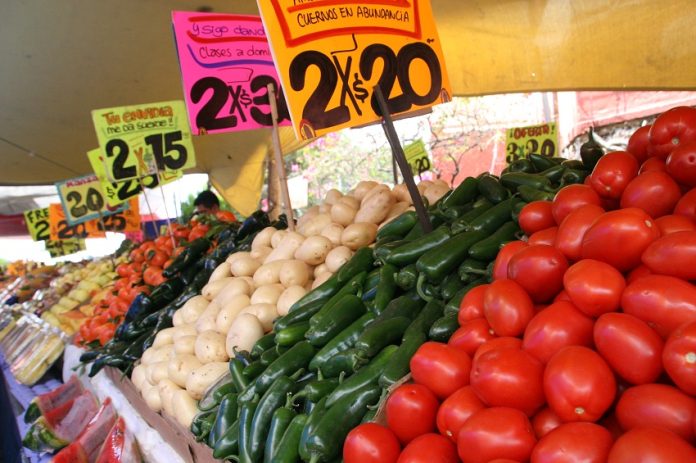
The inflation rate for agricultural products in the first half of March, including for fruit, vegetables and meat, was 8.1%. (thelastcarmusai/Wikimedia)
Inflation declined more than economists expected in the first half of March, but still remains well above the central bank’s target rate.
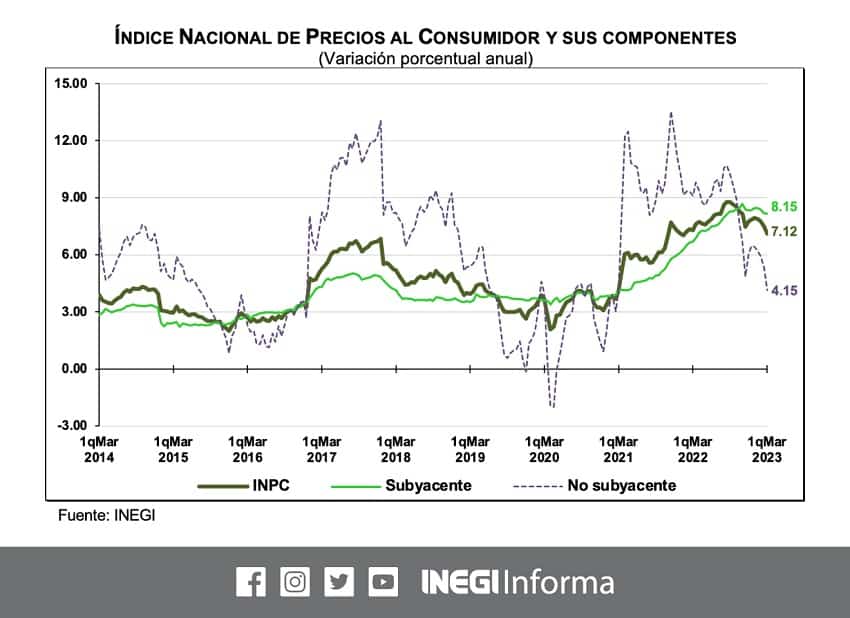
The National Institute of Statistics and Geography (INEGI) reported Thursday that the annual headline inflation rate in the first half of the month was 7.12%, down from7.62% in February.
Inflation dropped to 7.12%, the National Institute of Statistics and Geography reported on Thursday.
The rate is the lowest since the second half of January 2022, and 0.14 percentage points below the median estimate of economists surveyed by Reuters.
Inflation has now declined during four consecutive fortnights, but the headline rate remains more than double the Bank of Mexico’s (Banxico) target rate of 3%, give or take one percentage point.
INEGI reported that the core inflation rate, which does not include some volatile food and energy prices, was 8.15% in the first half of March, down from 8.29% in February.
The publication of the data comes a week before central bank board members meet to discuss monetary policy. The bank’s benchmark interest rate is currentlyset at a record high of 11% after a 50-basis-point hike in February.
Inflation has now declined during four consecutive fortnights. (Wikimedia Commons / Estef93)
Most analysts expect Banxico will lift its key rate by 25 basis points next Thursday, which would mirror the interest rate increase announced by the United States Federal Reserve this week and increase the accumulated hikes during the current tightening cycle to 725 basis points.
“The data is good, but we cannot declare victory against inflation yet because the trends that worried Banxico the most, related to core inflation, are still there,” said Pamela Díaz Loubet, an economist specializing in Mexico at the French bank BNP Paribas.
“The … [data] doesn’t change our view that Banxico will hike 25 basis points in its next decision,” she said.
Janneth Quiroz Zamora, chief economist at the Monex financial group, said that the latest inflation data “supports the idea that the hiking cycle in Mexico is near an end.”
The Bank of Mexico, whose board members will meet next week to discuss monetary policy, has stated that it expects headline inflation to converge to its target of 3% in the last quarter of 2024. (Wikimedia Commons / Alfonso21)
“It does make it seem likely this will be the last increase,” she said before noting that “there’s still a red flag related to the inflation of services, which could lead to an additional increase in May.”
INEGI data shows that services were 5.68% more expensive in the first half of March than they had been a year earlier. That figure is the highest inflation rate for services since the second half of February 2003, the newspaper El Financiero reported.
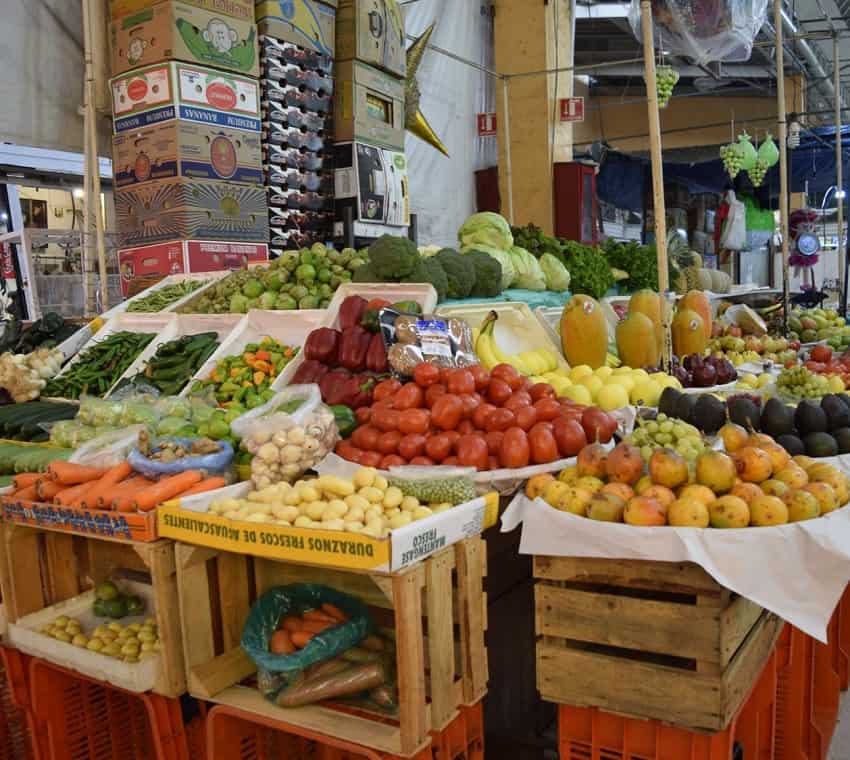
The inflation rate for processed food, beverages and tobacco was 13.2%, while that for agricultural products, including fruit, vegetables and meat, was 8.1%.
Energy prices, including those for fuel and electricity, were 1.05% higher compared to the same period a year earlier.
Banxico said last month that it expects inflation to converge to its target in the final quarter of 2024 but noted that the projection is subject to a range of risks, including “pressures on energy prices or on agricultural and livestock product prices” and “exchange rate depreciation.”
The majority of weapons confiscated by authorities in Mexico have been traced back to sales in the U.S. (Shutterstock)
An appeal filed by Mexico’s Foreign Ministry (SRE) challenging the dismissal of its lawsuit against U.S. gun manufacturers has received numerous declarations of support.
The SRE submitted the appeal on March 14, challenging the dismissal of the case by the District Court of Boston in October 2022, in which the judge cited U.S. law that protects gun manufacturers from lawsuits when their products are used for their intended purpose.
The smuggling of guns such as these, seized in Nogales, Arizona is common — and Mexico wants manufacturers to take responsibility. (@CBPPortDirNOG/Twitter)
By March 22 — the deadline for proponents of the appeal to submit supporting amicus curiae (friend of the court) briefs — nine briefs had been filed in support of Mexico’s case.
The SRE saidin a statement that the briefs’ purpose was “to state to the judges the relevance of the case; highlight the positive impact that a responsible arms trade would have on the United States, Mexico, and the world; as well as make a statement on the applicable law.”
It went on to list actors who had filed briefs, including:
A former U.S. Customs and Border Protection commissioner and U.S. police chiefs, who reported that U.S.-made weapons trafficked to Mexico have caused a security crisis on both sides of the border and fueled the current fentanyl epidemic.
Prosecutors from 17 U.S. states, who questioned the U.S. law granting immunity to the gun industry, as well as 24 U.S. district attorneys, who said that trafficked weapons harm their communities by facilitating drug flows to the U.S.
Five Caribbean countries (Antigua and Barbuda, Bahamas, Belize, Jamaica and Trinidad and Tobago), who said that U.S. weapons fuel violence and crime across the region.
International law specialists, who argued that immunity laws should not apply in this case, as well as Mexican jurists who argued that the principle of access to justice means the Mexican government’s lawsuit should be allowed to proceed.
Activists and victims of armed violence from both sides of the border, who argued that a responsible weapons trade is essential to stop the deaths of innocent people.
The Mexican government first filed the lawsuit in August 2021, demanding US $10 billion in damages from United States weapons manufacturers “who due to their carelessness and negligence, actively facilitate their weapons being trafficked to Mexican territory.”
After the Boston court ruled that gun companies were protected by the U.S. Protection of Lawful Commerce in Arms Act (PLCAA), Mexico deepened its legal arguments, saying that U.S. immunity laws should not apply to criminal damages in Mexican territory.
On Oct. 10, 2022, the Mexican government filed a second lawsuit in Tucson, against gun stores near the Mexico-U.S. border that it believes have traded negligently. On Oct. 26, Mexico requested to appeal the Boston court ruling, then requested an advisory opinion from the Inter-American Court of Human Rights on Nov. 11.
In the briefs submitted this week, numerous U.S. prosecutors backed Mexico’s viewpoint, saying the PLCAA only protects gun manufacturers in the case of misuse by third parties, not in the case of its own misconduct.
“It does not eliminate all forms of accountability for gun manufacturers,” the brief said.
The brief from U.S. law enforcement officials made similar arguments.
“U.S. (armament) producers have long been aware that their practices put weapons in the hands of traffickers who trade them across the border to Mexican cartels.”
A coalition of Mexican human rights groups and researchers who contributed briefs to the court stressed the “deadly” consequences of trafficked U.S. weapons, pointing out that gun homicides increased by 570% in Mexico from 1997 to 2017.