While Mexicans have been assured that gasoline prices won't rise with the new year, Pemex, the state-owned oil company, is having a hard time meeting its production and export goals. (Moisés Pablo/Cuartoscuro)
Two weeks after a disappointing joint-venture contract auction, state oil company Pemex reported poor November results, with crude oil exports threatening 25-year lows.
Pemex reported production of 1.624 million barrels per day (bpd) in November, a drop of 1.9% compared to the same month last year (1.656 million bpd).
Pemex’s production of 1.6 million barrels per day in November was nearly 2% lower than the same month last year, and below the government’s target production, as it has been all year. (Pemex)
Including private trading partners such as Harbour Energy, average production in November was 1.641 million bpd, down from 1.673 million bpd produced a year ago. This also translates to a 1.9% downturn.
The oil company has yet to meet the federal government’s target of producing an average of 1.8 million bpd. The November figure, excluding trading partners, is 176,000 barrels below the target.
Oil export revenues are also slumping, on track to close the year at levels not seen in the last 25 years, the newspaper El Financiero reported. Company revenues hit US $925.4 million in November, a 50% drop compared to the same month in 2024.
This marks the third time this year oil export revenues failed to reach US $1 billion, the others being June (US $862 million) and August (US $954 million).
Pemex accumulated US $12.337 billion in “external sales” through the first 11 months of the year, a figure roughly comparable with the average income recorded at the beginning of this century.
Between 2000 and 2002, Pemex earned between US $13 and US $14 billion annually from crude oil exports, registering a historical high of US $49.4 billion in 2011, when the price of a barrel of oil exceeded US $101.
The volume of crude oil exports in November was 539,000 bpd, down 43% compared to the 951,000 barrels per day reported in November 2024.
Intelligence and forecasting company Industrial Info Resources reported earlier this month that Pemex’s oil production “has been declining for over two decades,” driven by “the natural decline of mature oil fields and lower investment in upstream operations.”
Average production for the year through November reached 1.616 million bbd, down 7.8% from the first 11 months of 2024 when Pemex averaged 1.754 million bbd.
Earlier this month, however, it failed to attract major companies during a joint-venture contract auction.
According to an exclusive report by Reuters news agency, Pemex awarded just five of the 11 new contracts it hoped to ink before the end of the year. The so-called “mixed contracts” are the first of their kind in Mexico.
Pemex’s partners in these five contracts are primarily local companies, Reuters said, and Pemex would have stakes of between 40% and 85%.
Reuters said the production added by the ventures is unlikely to reverse Mexico’s declining crude oil output.
Mexico has seen an average increase of 504,795 tourists during the winter holiday season over the past five years, according to the Tourism Ministry. (@SECTUR_mx/X)
Mexico is expecting nearly 5 million tourists for the 2025-2026 year-end holidays, primarily between Dec. 20 and Jan. 11, according to Tourism Minister Josefina Rodríguez Zamora.
This increase represents a growth of just over 5% compared to the previous end-of-year season, underscoring the strength of Mexico’s tourism industry.
“The end-of-year season is key for the sector: it mobilizes millions of people, strengthens the local economy and consolidates tourism as a vital engine of well-being for Mexican families,” Rodríguez said.
At the national level, the average hotel occupancy rate is expected to reach 56.6%, with some destinations expected to exceed 80%. Cancún, Riviera Maya, Los Cabos and Puerto Vallarta are some of the destinations with the highest occupancy rates and visitor numbers.
The 4.9 million tourists cap off a year of strong performance for the sector: Between January and October, Mexico welcomed 16 million international arrivals by air, according to official figures.
La Navidad se vivió con magia en estos Pueblos Mágicos, donde las tradiciones, las luces y la calidez de su gente llenaron cada rincón de alegría. En México, la Navidad se celebra compartiendo cultura y unión. ✨🎄#VisitMexico#PueblosMágicos#NavidadEnMéxicopic.twitter.com/53qlVZk3Io
Rodríguez added that over the past three years, Mexico has seen an average increase of 504,795 tourists during the winter holiday season.
“These percentages represent much more than just numbers,” she said. “They are a clear demonstration of how tourism drives shared prosperity, bringing opportunities to communities, small businesses and workers throughout the country.”
This sustained growth also aligns with projections from a recent study by Google and the international professional services network Deloitte, which estimates that Mexico is on track to become one of the world’s top five most-visited destinations. According to the study, international arrivals are expected to rise from 45 million in 2019 to 90 million by 2040.
In April, Acapulco will also host the 50th Tianguis Turístico (Tourism Fair), the country’s largest platform for promotion and business in the tourism sector, and one of the most significant of its kind in the Americas.
That momentum will continue through November, when Guadalajara, Jalisco, hosts the first edition of ITB Americas — inspired by ITB Berlin — a key event for professionals in the events and conferences industry.
Health Minister David Kershenobich stands next to a graph indicating a jump in the number of aspiring medical residents in Mexico during his presentation at the mañanera on Tuesday. (Daniel Augusto/Cuartoscuro)
Mexico’s Health Minister David Kershenobich presented the national “Donating is Transcending” campaign, aimed at encouraging organ donation and reducing waiting times for patients, at the daily presidential press conference on Tuesday.
The campaign encourages people to “say yes to organ donation,” with the slogan: “For a Mexico without waiting lists. Get informed, decide and tell your family.”
On National Organ and Tissue Donation and Transplantation Day in September, Mexico’s National Transplant Center (CENATRA) issued a call to strengthen the country’s donation culture, emphasizing that the waiting list exceeded 19,000 patients.
The General Health Law’s framework for organ donation stipulates that the final decision must be taken by the deceased’s family, regardless of whether the person wished to donate their organs, which is one of the main barriers to donation in Mexico.
Previous steps have been taken to improve the donation process in Mexican hospitals. Starting in 2011, hospitals accredited for transplants were assigned a donation coordinator to identify potential donors, ensure the viability of organs and tissues, communicate with families and coordinate logistics with the National Transplant Registry.
However, coverage and training for this role across Mexico remain uneven, which has restricted the expansion of transplant activities, according to CENATRA.
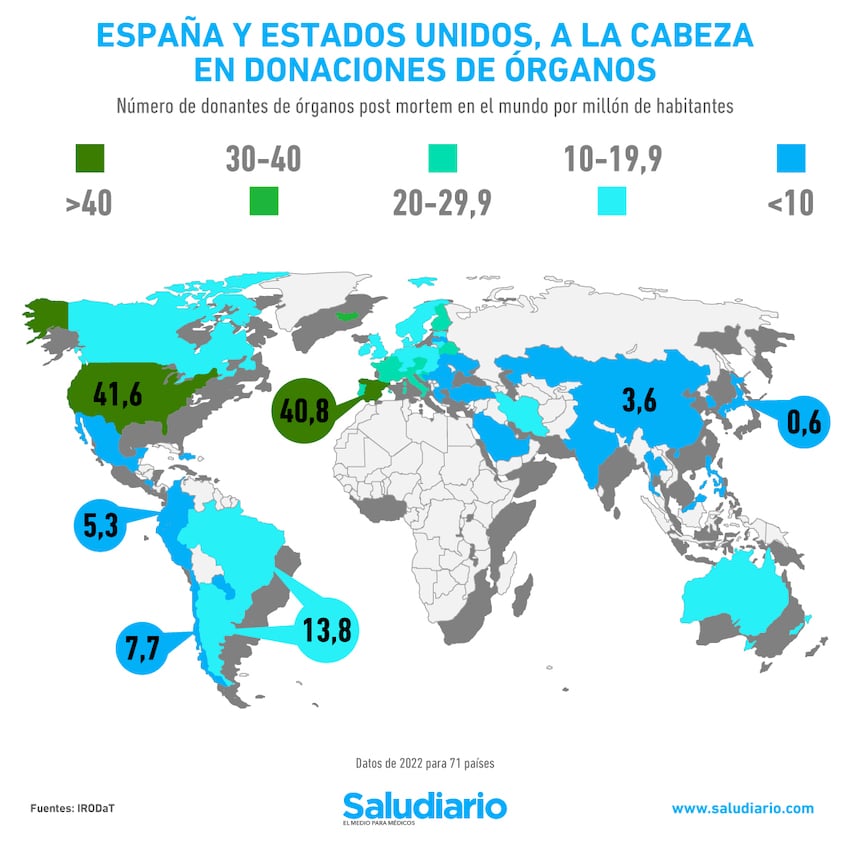
A chart based on 2022 data on the number of organ donations per million inhabitants shows that the practice is not widespread in Latin America, leading to long waiting lists. (Incort)
On the other hand, Spain, which today has the highest per capita organ donation rate in the world, is an active partner in the development of Latin America’s organ donation network. In 2023, the Ibero-American Council on Donation and Transplantation (RCIDT) reported a 14% regional increase in donations with respect to 2022.
Mexico’s health institutions have performed 14,347 transplants in the last five years, with a survival rate of 93.5% for living donors and 84.2% for deceased donors, according to Kershenobich.
In the last 12 months, there have been 2,783 kidney transplants; 245 liver transplants; 46 heart transplants, including four dual transplants (heart and kidney); and 10 lung transplants.
Mexico is also making progress with pancreas transplants, which is helping to strengthen the country’s reputation in the transplant field.
“One donor can save the lives of up to eight people,” emphasized Kershenobich.
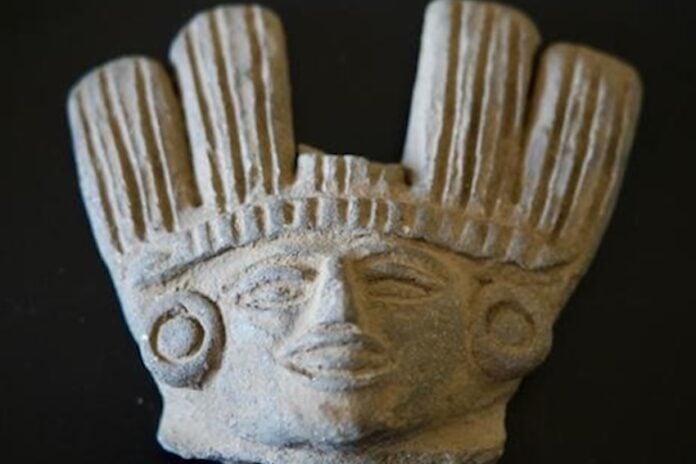
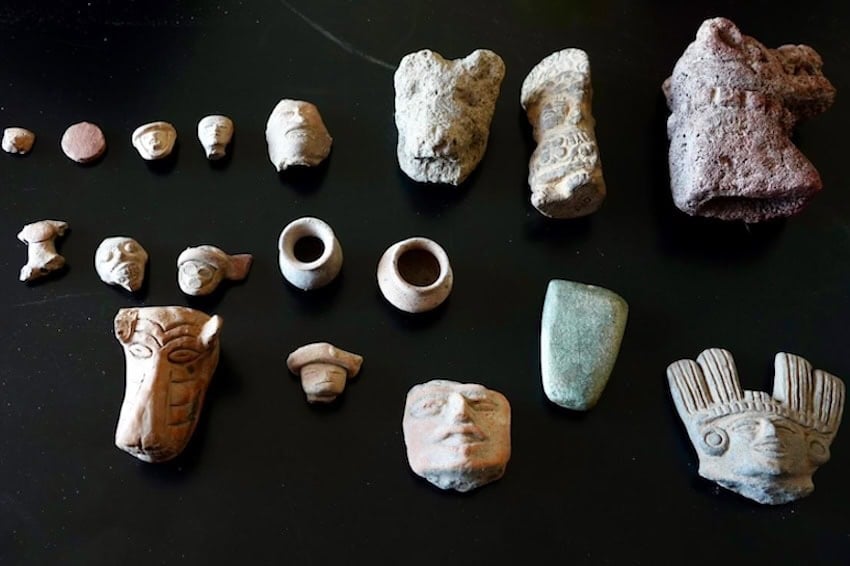
The 2,000-plus artifacts recovered from abroad include 52 from U.S. residents, who on their own contacted Mexican diplomatic offices to hand over pieces in their possession. (SRE)
Some 2,158 cultural objects of archaeological, historical, artistic and documentary value have returned to Mexico from abroad in the first full year of Claudia Sheinbaum’s presidency, according to a statement from the Foreign Relations Ministry (SRE).
The SRE said the recovery was made through a strong collaborative effort. Most of the artifacts were voluntarily handed over by private individuals to diplomatic and consular authorities in Canada, Denmark, the United States, France, Italy and the Netherlands.
The recovery was led by the Foreign Relations Ministry, which in turn is handing over the pieces to the National Institute of Anthropology and History (INAH) and the General Archive of the Nation (AGN). (SRE)
For example, earlier in December, the SRE reported that 52 pieces were recently recovered from U.S. residents in Sacramento, San Francisco and New York who contacted Mexican Embassies on their own initiative to hand over the artifacts.
So far this year, the Legal Consulting Office of the SRE has formally delivered 1,843 objects to the National Institute of Anthropology and History (INAH) and the General Archive of the Nation (AGN), which are responsible for their protection and safekeeping.
This recovery effort forms part of Mexico’s ongoing policy against illicit trafficking of cultural property and towards the protection of national heritage, a strategy that gained momentum during the administration of former President Andrés Manuel López Obrador.
Between 2018 and 2024, López Obrador’s government repatriated a total of 14,048 archaeological artifacts considered part of the country’s national heritage. Many of these pieces had been removed from the country decades earlier and later surfaced in private collections or on the international art market.
President Sheinbaum has built on these efforts. The SRE said her government “reiterates its commitment to preserving the cultural identity of Mexicans, and to continue with inter-institutional work and international cooperation to combat the illicit trafficking of heritage assets and return them to their places of origin.”
Mexican authorities have said that the repatriation of cultural objects not only restores physical pieces of history, but also reinforces the recognition of Mexico’s cultural roots, its cultural identity, and its commitment to preserving collective memory for future generations.
Grecia Quiroz, Carlos Manzo's widow and successor as mayor of Uruapan, Michoacán, announced the new arrest on Monday. (Screenshot/X)
Another suspect has been arrested in connection with the Nov. 1 murder of Uruapan Mayor Carlos Manzo in the western state of Michoacán, bringing to 10 the number of those apprehended in relation to the case.
Grecia Quiroz García, Manzo’s wife and his successor as mayor of Uruapan, said on Monday that state prosecutors informed her of the arrest of a man who allegedly participated in an instant messaging group used by a suspected network of hitmen linked to the Jalisco New Generation Cartel (CJNG).
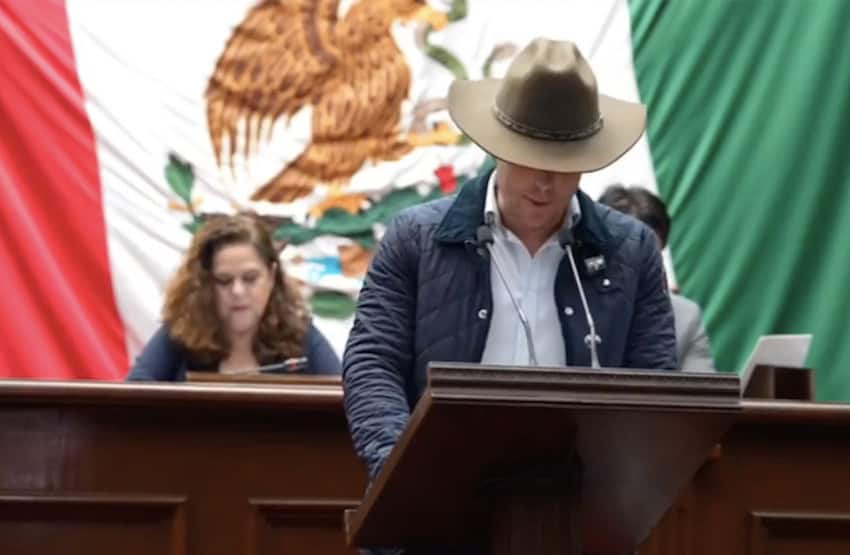
Michoacán State Deputy Carlos Bautista Tafolla, an independent, traveled to California to urge U.S. authorities to help investigate the Manzo assassination. (Screenshot/X)
The CJNG is believed to have ordered the hit on Manzo, who won election in 2024 by promising to take on organized crime in Michoacán’s second-largest city.
“So far, the only information I’ve received is that they arrested one more person who was involved in the WhatsApp group,” Quiroz said. “I haven’t spoken with the attorney general yet, but hope to have a conversation with him in the coming days.”
Prosecutors did not issue a statement about the latest arrest.
Of the other nine suspects indicted for murdering Manzo, seven served as his bodyguards and are accused of homicide by omission.
The other two detainees are Jorge Armando Gómez Sánchez, alias “El Licenciado,” and Jaciel Antonio Herrera Torres, alias “El Pelón,” alleged members of the CJNG. Gómez is accused of masterminding the crime, while Herrera allegedly recruited three hitmen at the Renacimiento Addiction Rehabilitation Center in Uruapan.
In the chat through which the alleged perpetrators communicated, the hired guns exchanged messages in the hours before the attack, demonstrating how they tracked Manzo’s movements long before he arrived at the main square of Uruapan.
The bodies of Ramiro Leal, 34, and Fernando Josué Leal, 16 — believed to have been Ubaldo’s accomplices — were found in early November on the Uruapan-Paracho highway. Prosecutors believe the CJNG murdered the two men.
Angered by the slow pace of the investigation, state Congressman Carlos Bautista is said to be considering requesting assistance from U.S. intelligence agencies.
Digital newspaper Político MX reported Sunday that Bautista may seek a meeting with U.S. Ambassador to Mexico Ronald Johnson in January.
“I will continue to urge the United States to help us clarify the facts surrounding the murder of Carlos Manzo,” Bautista said. “I will not rest until I have exhausted all possible avenues to find those responsible.”
State prosecutors maintain an arrest warrant against the head of Manzo’s security detail, Army Col. Manuel Jiménez, who managed to evade the operation carried out to arrest the other seven bodyguards.
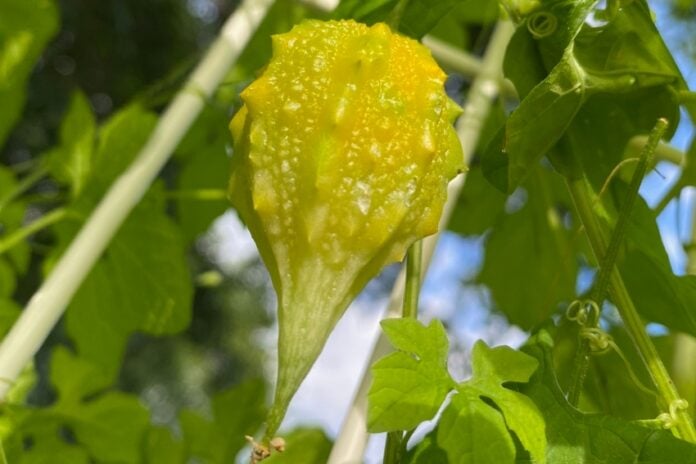
Bitter melon, one of Mexico's many tiny yet delightful treasures. (Bel Woodhouse)
I’m delighted daily by the biodiversity of Mexico. Most of all, by the wealth of its edible wild plants. Lately I’ve been obsessed with its tiniest treasures. The world’s smallest fruit and vegetables.
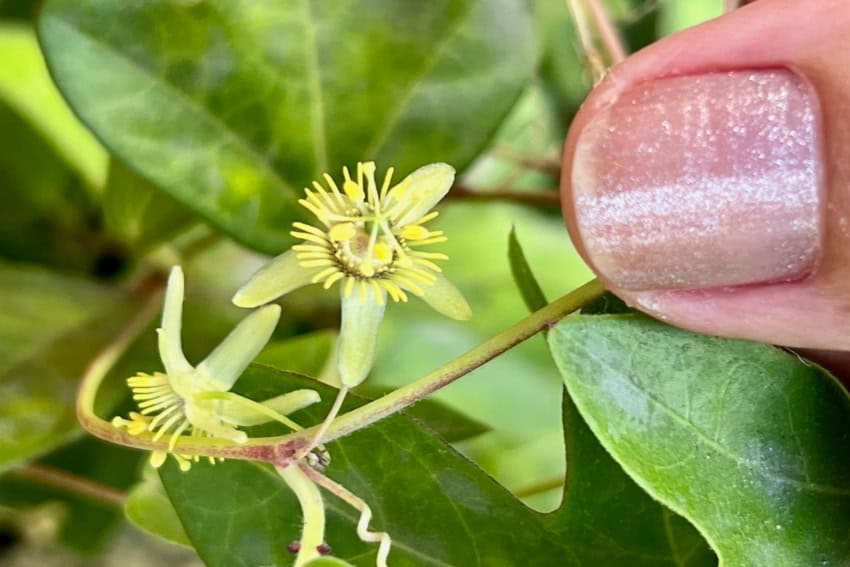
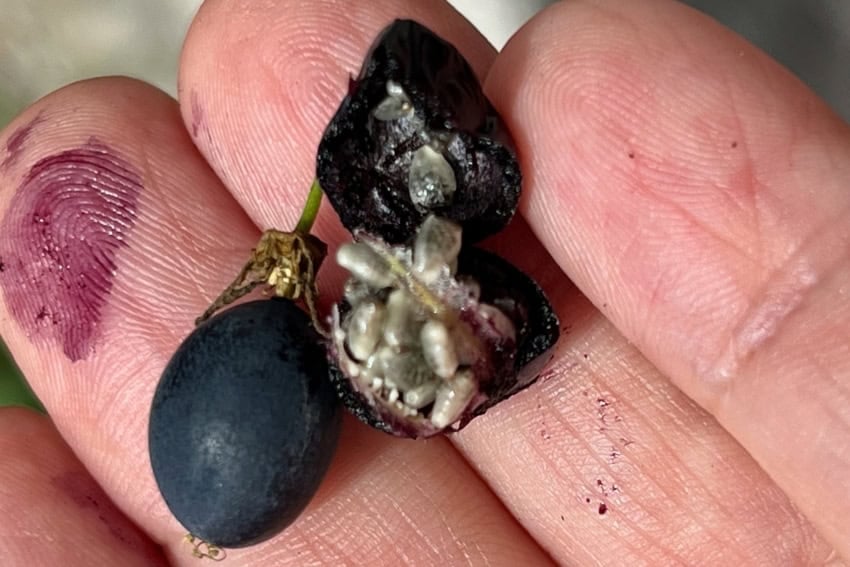
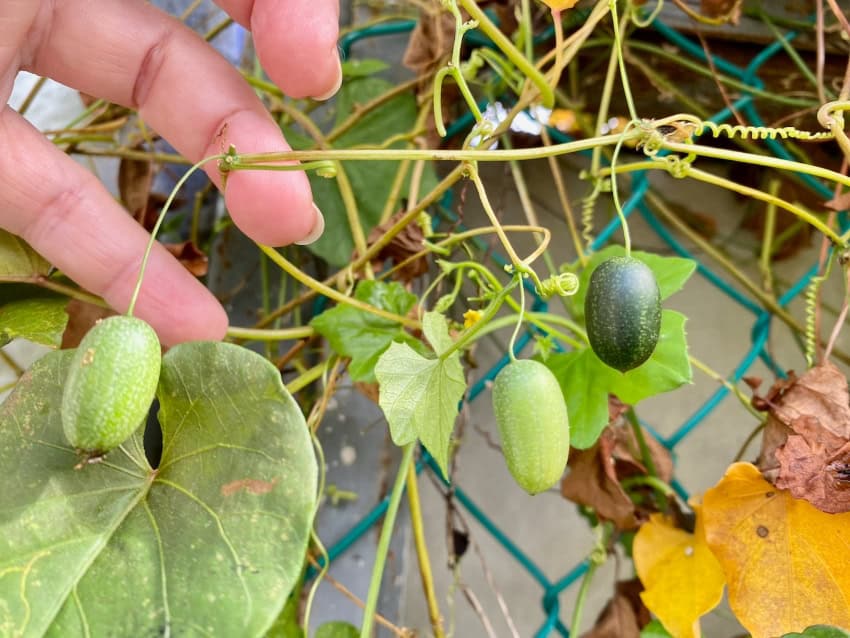
Like the world’s smallest passionfruit, which is less than the size of my thumbnail. Or, the world’s smallest cucumbers, which are about half the length of my pinkie finger, are crunchy and delicious. Now I pickle them when I find a big patch. Or pop them in my morning smoothie after a walk when I only find a handful.
The world’s smallest passionflower and a sign of the world’s smallest passion fruit. (Bel Woodhouse)
Speaking of pickling, I also stumbled across the world’s smallest bitter melon, which is also quite tasty pickled. Or sliced in stir-fries.
Now, can you see why I’m obsessed with these delightful tiny treasures? No? Then let me show you how adorable they are, and I’m sure you’ll get it.
My favorite, the world’s smallest passionfruit
Don’t laugh, but I actually squealed in delight when I found these walking back from swimming one morning. Causing other walkers to giggle and stop to see what all the fuss was about. Soon, there was a small gathering admiring these tiny treasures sprouting from the sidewalk!
It’s the world’s smallest passionflower — Passiflora pallida. With adorable flowers the size of my thumbnail, it’s not just me who loves them. They’ve caused squeals of delight worldwide. They are now adored by nature lovers in the U.S., France, England, Australia, Greece, Italy, Germany, plus Singapore and Japan, after I posted them in a Botanical Art School I’m a member of. Everyone agrees, these are the most adorable edible treasures I’ve found so far.
Funnily enough, they didn’t really taste like anything. I’ve eaten a few now, and they are so small I couldn’t get a decent mouthful to tell if they are sweet, sour, bland or delicious! But don’t worry! I’ve found several other wild passionfruit here that are slightly larger and they are delicious.
So, do you want to know which tiny treasure is the most delicious?
Did you know Mexico is home to the world’s smallest passion fruit? (Bel Woodhouse)
World’s smallest cucumber, or mouse melon if you prefer
This delicious delight is not only cute to look at, but has some pretty cute common names, too. My favorite’s being melonette and mouse melon. Can’t you just see a little mouse holding one and happily munching away? I can, and it’s delightful.
Usually called the creeping cucumber or Guadalupe cucumber, you guessed it, it’s native to Mexico. It has been enjoyed since Pre-Columbian times. Both as a food and in traditional medicine, but I usually pop it in my morning smoothie.
What does it taste like? Well, exactly like one of its larger store-bought cucumber cousins. Crisp, refreshing and cucumbery.
Sometimes they don’t even make it home! Happily eaten on walks if I only find a few, and when I find a lot, I make mini pickles — I especially love them with some cheese, they make a great snack!
Note: only eat the light green ones. Dark-skinned ones will give you an upset tummy or the squirts, and no one wants that!
But they aren’t the only tiny edible treasure I pickle. Want to know my favorite?
Tiny and delicious creeping cucumber, aka Melothria pendula. (Bel Woodhouse)
World’s smallest bitter melon
This delightful knobbly little fruit is my favorite for pickling. That sweet, sour, tangy flavor makes my taste buds sing. But then again, I’ve eaten bitter melon for years. In the markets throughout Asia and back home in northern Australia, you’ll find them readily available, so they aren’t new to me. Whereas my American friend said, “What the hell is that?” when I stopped to pick some.
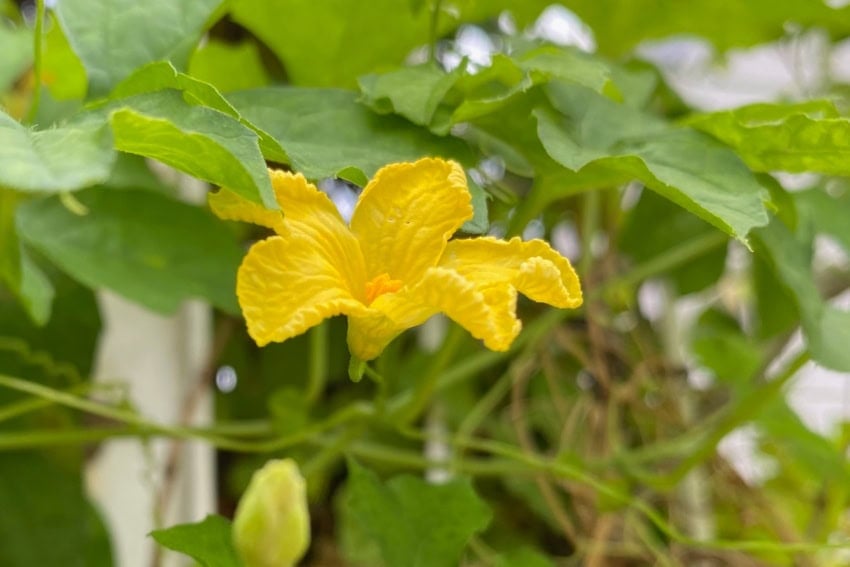
We were walking and I suddenly stopped. My heart almost skipped a beat passing a fence. This tiny thing that looked like a bitter melon was at eye level. Have you ever had those thoughts, “was that a …?” when you see something somewhere you didn’t expect to? I did. Thinking to myself, “Was that a baby bitter melon?” I stopped, turned around and went back. Seeing the lovely flowers, whose cheery sunflower yellow always delights me, yes, it was. A small wild version of the large 20-30 centimeter bitter melons I used to get at the market. What a wonderful discovery! But to be sure, I picked a few and took them home to identify them before going back to collect more.
Lastly, words of advice for wild foods
As all foragers and fans of wild food know, always double-check and identify things before you eat them. I thought this was common sense, but then I met a woman who just picks, eats, and thinks everything will be fine. I do NOT recommend this.
Always identify a plant first before consuming, ideally through a trusted and expert site like PlantNet. It’s free, and there’s a great app if you want to identify things while wandering the wilds. It’s the one I use, and it hasn’t let me down yet.
The small bitter melon flower is a sure harbinger of bitter melon fruit in Mexico. (Bel Woodhouse)
So, if you’re like me and want to head out to explore the natural world around you, get PlantNet. Then enjoy finding fun edible tiny treasures, and happy foraging!
I hope to see you out and about exploring Mexico’s biodiversity as well. Because it’s amazing what you’ll find when you take a moment to look. And a lot of times, it’s delicious!
Mexico Correspondent for International Living, Bel is an experienced writer, author, photographer and videographer with 500+ articles published both in print and across digital platforms. Living in the Mexican Caribbean for over 7 years now, she’s in love with Mexico and has no plans to go anywhere anytime soon.
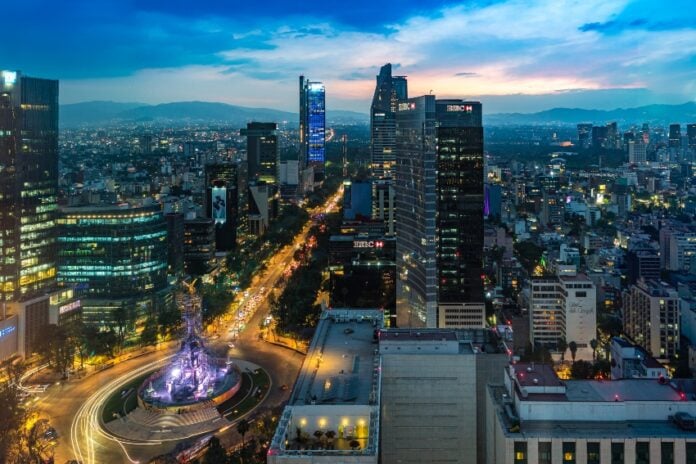
Mexico City has a wealth of great hotels. But what are the best boutique properties? That's what we asked the city's hoteliers. (Wikimedia Commons / Nan Palmero)
From a long list of internationally recognized, design-forward boutique hotels, I visited 20 properties and asked 18 hoteliers and hotel managers to name their favorite stay in Mexico City. There was only one condition: they couldn’t pick their own. To understand their selections, it’s worth tracing how Mexico City’s boutique scene developed from much humbler beginnings.
Evolution of Mexico City’s boutique scene
From Olympic Hospitality to economic crisis
Through the 1980s and 1990s, Mexico City’s hotel scene was limited to pensiones and upscale chains along Reforma and in Polanco, like the Presidente InterContinental Mexico City. Following the city’s selection as host for the 1968 Olympics, notable properties appeared, including Camino Real Polanco — considered a modern Mexican masterpiece at the time — and the Gran Hotel Ciudad de México, a Neoclassical beauty converted from a 19th-century shopping mall. The city’s reputation for hospitality was taking shape, but within narrow confines.
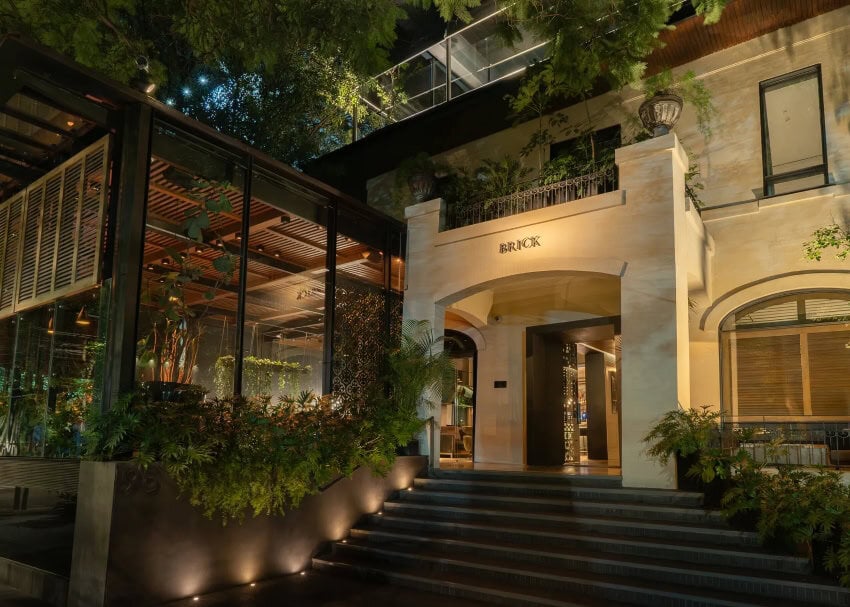
Mexico City’s hotel scene went through decades of evolution before the arrival of elegant boutique options like the Brick Hotel. (Brick Hotel)
This foundation would soon be tested. The 1980s brought dramatic shifts to the capital’s tourism landscape through a combination of national debt crisis, inflation and the devastating 1985 earthquake. A temporary drop in visitor numbers devastated the tourism sector, and 20% of the city’s hotels would be destroyed. This destruction sparked an important trend: private investors and federal authorities began pouring substantial resources into rebuilding and modernizing the damaged center zone, investments that would eventually establish Mexico City’s dominant role as a cultural hub and business destination.
The birth of boutique hospitality
The stage was set for boutique hospitality through rapid neighborhood gentrification (especially in Roma, Condesa, Juárez and Polanco), a surge in international tourism, and a wave of architectural restoration that turned historic mansions into design-forward properties.
Perhaps the most catalytic factor in Mexico’s hospitality scene was the founding of Hoteles Boutique de México in 1999. The marketing organization promoted a consortium of small, upscale, independent hotels throughout the country, chosen for their distinctive character and personalized service; details otherwise drowned out by standardized chains. Canadian-born founder John Youden selected about one dozen member properties to launch the nationwide portfolio, including Mesones Sacristía de la Compañía in Puebla, which remains a member today. Notably, no hotel in Mexico City made the initial cut.
The Condesa DF breakthrough
The breakthrough came in 2005 with Condesa DF. Housed in a 1928 French Neoclassical mansion on a tree-lined avenue in Condesa, Grupo Habita and Paris-based designer India Mahdavi transformed the property into a minimalist masterpiece inside while preserving the structure’s historic facade. Its central courtyard and rooftop terrace overlooking Parque España quickly established the hotel among Mexico City’s premier stays while cementing Condesa’s reputation as a nexus for architecture, fashion and contemporary art.
Today’s boutique landscape
Since then, the capital’s boutique hotel scene has flourished dramatically. Properties reflect their neighborhoods’ distinct characters: Condesa and Roma capitalize on Art Deco or Belle Époque facades; Polanco properties lean toward luxury; Historic Center properties emphasize their historical significance. As Colima 71’s owner told me during a walk through the iconic, contemporary enclave on the street of the same name, “boutique hotels are a business of details.” Attention to detail that often includes Mexican amenities, welcome treats like locally-inspired drinks and Mexican art on the walls. This focus on design details helps explain why such hotels attract recognition from respected collections like Design Hotels and Small Luxury Hotels.
Today, major publications including Condé Nast Traveler, Vogue and The New York Times frame Mexico City’s new generation of boutique hotels as integral to its status as a global style and food capital. It should come as no surprise that, simultaneously, the boutique scene has become much more expensive in recent years. One STR report showed average room rates during the 2024 Independence Day period about 20% higher than the year before, and ranks Mexico City among the country’s fastest‑rising markets.
With this impressive and growing landscape of boutique properties established across Mexico City’s most culturally rich neighborhoods, I wondered which ones industry professionals themselves hold in the highest regard. Two names were mentioned with notable consistency: Brick and Casa Polanco.
Brick Hotel
Trendy Brick sits in the center of Roma Norte, the European-influenced heart of the city. (Brick Hotel)
Neighborhood integration
Brick’s location on Calle Orizaba puts it among neighbors that sit shoulder-to-shoulder with low-key cafes and bars, giving the block an immediately walkable, neighborhood feel rather than a “hotel zone” vibe. The hotel’s turn-of-the-century brick façade, with tall windows and wrought-iron details, reads more like a stylish private residence than a commercial building. So it slips naturally into Roma Norte’s architectural rhythm of preserved Porfiriano houses and discreet, design-forward storefronts. That subtlety is part of the first impression: Brick doesn’t dominate the street; it mirrors the neighborhood’s mix of history and reinvention.
Architecture and design
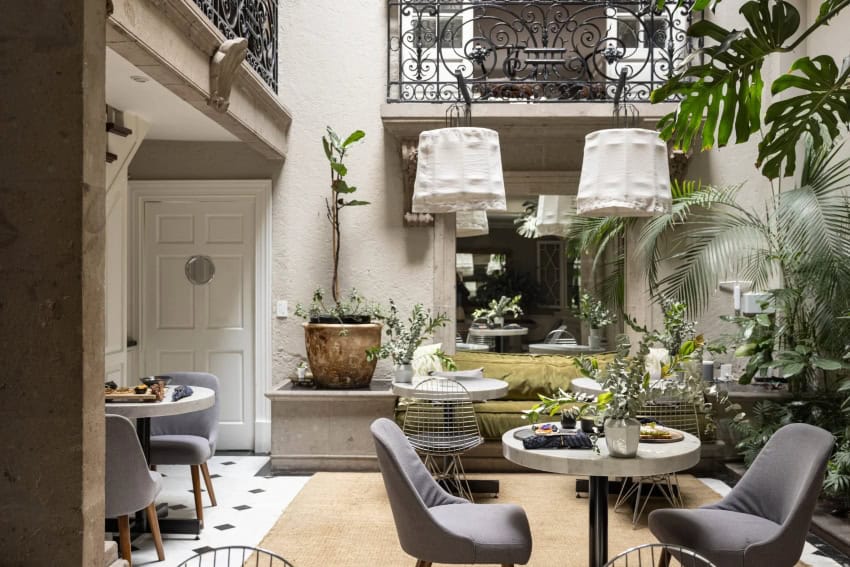
Like many of Mexico City’s most emblematic boutiques, Brick occupies an early‑20th‑century mansion in the European‑influenced Roma neighborhood, originally built for the head of the Bank of London & Mexico using distinctive bricks imported from England. After a meticulous renovation, the current hotel blends preserved Belle Époque bones with contemporary Mexican design, art and custom furniture. Suites — including some bilevel spaces with private terraces overlooking the streets — sit within the elegantly restored main house, complemented by a more modern section with sleek, neutrally toned rooms, generous windows and multiple shared terraces that reinforce its discreet, grown‑up atmosphere.
The Guest Experience
The hotel attracts a stylish adult crowd, drawing wedding parties and couples alongside seasoned travelers seeking a local feel rather than traditional sightseeing experiences. Most hoteliers who recommended Brick described it simply as “classic” — a property that delivers high-end hospitality through a calm, monochrome, design-forward look with darker accents and neutral tones.
Casa Polanco
Part of Casa Polanco’s appeal is that it looks as much like a private residence as a boutique hotel. (Casa Polanco)
Park-side elegance
Casa Polanco commands one of Mexico City’s most prestigious park‑front addresses in Polanco, with its cream‑toned, Spanish Revival–style façade, balconies and tall windows looking directly onto Parque Lincoln. The property preserves the feel of a grand mid‑20th‑century private residence rather than a conventional hotel, and outlets like Travel + Leisure and the Michelin Guide repeatedly single it out as one of Polanco’s standout boutique lodgings.
Residential architecture
The architecture showcases cream-colored stucco walls, ornamental Juliette balconies and tall, arched French windows, while interiors feature high ceilings, elegant staircases and original moldings paired with contemporary interventions like large steel-framed interior windows and minimalist custom millwork.
As a small luxury property with fewer than 25 rooms and suites offering park views and balconies, Casa Polanco emphasizes privacy, quiet and understated luxury. The property showcases Mexican design and craftsmanship through stonework, textiles and art integrated throughout its polished framework.
My personal favorites
Nima Local House is one of the author’s personal favorites among the 20 boutique Mexico City hotels she visited. (Nima Local House)
While these represented the hoteliers’ clear consensus, my personal research revealed other exceptional properties. During my visits, I found myself particularly drawn to Casa Ignacia — a discreet oasis where a team of eight has remained together since the hotel’s opening, creating an atmosphere enhanced by bold colors, leafy courtyards and a rooftop hot tub. I also like Nima Local House, a four-room stone-walled mansion featuring tiled floors, wrought-iron balconies and a serene palette of whites and grays punctuated by abundant greenery.
Which one is for you?
Brick suits travelers seeking immersion in Roma Norte’s restaurant and bar scene, offering a buzzy social atmosphere within an authentic urban townhouse setting. Casa Polanco appeals to those prioritizing quiet luxury, park views and personalized service alongside sophisticated Mexican craftsmanship.
For those drawn to more intimate, design-forward experiences, Casa Ignacia offers vibrant charm with exceptional personal service, while Nima Local House provides serene minimalism in a four-room setting. Both represent the smaller-scale, character-rich properties that make Mexico City’s boutique scene so distinctive.
Bethany Platanella is a travel planner and lifestyle writer based in Mexico City. She lives for the dopamine hit that comes directly after booking a plane ticket, exploring local markets, practicing yoga and munching on fresh tortillas. Sign up to receive her Sunday Love Letters to your inbox, peruse her blog or follow her on Instagram.
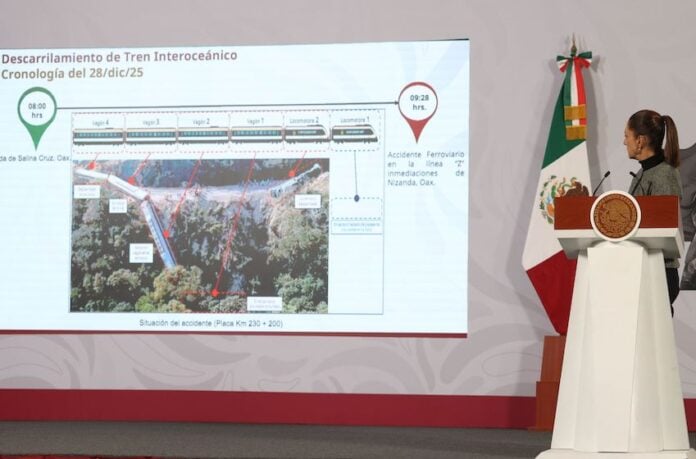
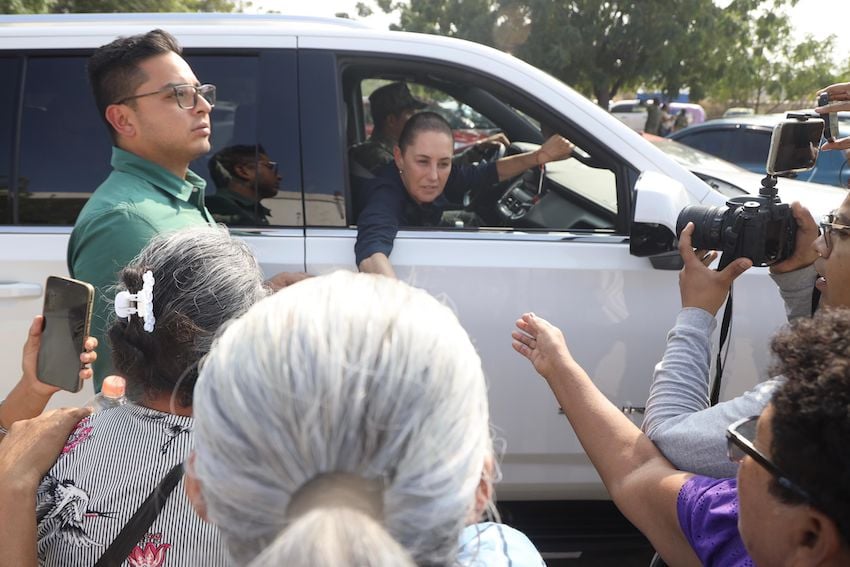
Sheinbaum announced that the Federal Attorney General’s Office (FGR) and the Oaxaca state prosecutor’s office will investigate the cause of the derailment that killed 13 people on Sunday. (Moisés Pablo/Cuartoscuro)
Sunday’s tragic train derailment in Oaxaca was the main topic of President Claudia Sheinbaum’s Monday morning press conference.
1. Guaranteeing care for victims and their families
“I instructed the Navy Minister and the Undersecretary of Human Rights of the Interior Ministry to … personally attend to the families,” she said, adding that she also ordered delegates from the federal public health system to oversee treatment of the victims.
2. Clarifying the facts through the Federal Attorney General’s Office (FGR) and the Oaxaca state prosecutor’s office
“The Transportation Regulatory Agency is also required to conduct a review, and because there were fatalities, the FGR must participate,” she said, adding that the Interior Ministry will oversee the operation.
3. Ensuring the safety of the Interoceanic Railway
“The Navy will take the point in ensuring that the railway is safe to operate again,” she said.
During his presentation, Admiral Morales said the line was in good operating condition before the accident and no adverse atmospheric conditions had been reported. He said a hi-rail had passed through the site of the accident about 90 minutes before the derailment and found no debris on the tracks.
Officials provide update on Sonora River clean-up program
Environment Minister Alicia Bárcena said the Environmental Justice Plan addressing the 2014 spill of 40,000 m³ of copper sulfate into the Sonora River will soon be launched as the government seeks to compensate the 20,000 people living within a 300-kilometer stretch of the Sonora River Basin affected by the toxic pollutants.
Bárcena said the plan focuses on resolving public health issues, ensuring access to drinking water, boosting the local economy and redressing the environmental damage.
Efraín Morales, director general of the National Water Commission (Conagua), said a permanent monitoring center that includes three automatic stations, 42 manual monitoring sites and a visualization center will be created in the region.
The center will focus on monitoring water quality in real time to prevent massive contamination.
Its laboratory will be staffed by certified personnel who will measure 64 parameters, including heavy metals, metalloids and water toxicity.
The Sonora River turned reddish-orange after a mining company owned by Grupo México spilled hazardous waste into it in 2014. (Cuartoscuro/Rashide Frias)
Rodríguez said Grupo México — accused of negligence — will supply 70% of the funding for the Environmental Justice Plan, or roughly 1.5 billion pesos (US $83.4 million).
Sheinbaum questions arrest of journalist on terrorism charges
The president said on Monday that she has no idea why Veracruz prosecutors charged journalist Rafael León with terrorism after his Dec. 24 arrest in Coatzacoalcos.
— ARTICLE 19 México y Centroamérica (@article19mxca) December 27, 2025
Sheinbaum said she was unaware of the reason why León, a journalist who covers the police beat, was apprehended, adding that his classification as a terrorist makes no sense.
“I would make three points,” Sheinbaum said. “First, I don’t know why the prosecution is using the charge of terrorism, because there has never been a terrorism charge in Mexico. Second, freedom of expression must be guaranteed. And third, if this person has committed a crime … the Prosecutor’s Office must explain it.”
Sheinbaum said Veracruz Governor Rocio Nahle has also said she is unaware of why terrorism charges were filed.
“Interior Minister Rodríguez and I will be closely monitoring this case,” Sheinbaum said.
As the Tigres put it themselves: “When music tells stories, it can reach anywhere … even Springfield.” (Screenshot)
The iconic Mexican norteño group Los Tigres del Norte joined a roster of musical greats including Paul McCartney, U2 and Red Hot Chili Peppers with their debut Sunday on “The Simpsons.”
The group performed an original corrido titled “El Corrido de Pedro y Homero” at the end of the episode, which is now available on Disney+ after airing on Fox. It was the 12th episode of the show’s 37th season.
The appearance — covered by the likes of The Hollywood Reporter, Rolling Stone and Billboard under headlines such as “From Sinaloa to Springfield” — marked the first time the series featured regional Mexican music.
“We are deeply grateful and very happy for this special moment in our history, being part of ‘The Simpsons’ universe,” the band told Rolling Stone. “When music tells stories, it can reach anywhere… even Springfield.”
Los Tigres del Norte had another big moment in 2025 when they had a street in Brooklyn named after them. They also have a street in Chicago named for them and a star on the Hollywood Walk of Fame.
Formed in 1965 in Sinaloa, Mexico, the group has long been global ambassadors of norteño music, known for chronicling migration and social justice in more than five decades of recordings.
One of the most recognized acts in Mexican music, they have sold more than 32 million albums and earned seven Grammy Awards — including four straight wins from 2007 to 2010 for best norteño album — in addition to 11 Latin Grammys.
Their first nomination for a U.S.-based Grammy Award came way back in 1987. The next year, they won in the Mexican-American music category for “Gracias!…América…Sin Fronteras,” their third No. 1 hit on the Billboard Regional Mexican albums chart.
Their appearance on “The Simpsons” was “a tip of the cap to our Latin American fans, but especially to our huge Mexican/Mexican-American fan base,” César Mazariegos, who wrote and produced the episode, told Rolling Stone.
WEY qn para hablar de lo icónico d este capítulo de los Simpsons donde Humberto Vélez dió voz EN INGLÉS a BumbleBee man Y q aparte sale un Simpson del mismo Humberto Vélez, sin mencionar q sale Iñárritu, los Tigres del Norte y actrices de doblaje Patricia Acevedo y Claudia Mota🥹 pic.twitter.com/3iO3F8IhNA
In the episode, Homer Simpson works as a stunt double for Bumblebee Man, a recurring character who stars in a Spanish-language slapstick TV show within the series. He wears a bee costume, speaks exaggerated Spanish and appears on “Channel Ocho.”
The Los Tigres corrido, sung in Spanish, narrated the duo’s friendship in classic ballad style.
Sunday’s episode, titled “The Fall Guy-Yi-Yi,” was dedicated in memory of Rob Reiner, the director, producer, screenwriter, actor and political activist who died Dec. 14.
The Felipe Ángeles International Airport (AIFA), serving Mexico City, will have served 7 million passengers in 2025, a 12% increase over 2024. (Andrea Murcia/Cuartoscuro)
Felipe Ángeles International Airport (AIFA) has moved more than 7 million passengers this year, a 12% jump over last year, which has taken the Mexico City area’s second international airport to 17 million passengers served since it began operations in March of 2022.
In a statement to reporters, Isidoro Pastor Román, head of the airport, said that AIFA’s Master Development Plan projects serving 9 million passengers by 2026, as the World Cup is expected to bring tens of thousands of additional passengers to the airport.
Copa Airlines is one of only three carriers operating internationally out of AIFA, after the U.S. barred flights out of AIFA by Viva and Aeroméxico. (Copa Airlines/X)
“Dedicated flights for national teams, as well as business travelers with private planes, will be arriving at AIFA,” Pastor said.
AIFA’s passenger count is expected to reach the 7 million milestone for 2025 despite the cancellation of 11 international routes by a unilateral action by the U.S. Department of Transportation (DOT) — two for Aeromexico and nine for Viva Aerobus. This cancellation has eliminated some 84,000 passengers this year, Pastor said.
Although the figure represents a relatively small proportion of the airport’s overall passenger volume, its impact is relevant as the canceled routes involve international flights, which are a key component of the airport’s connectivity.
As of today, only three international airlines operate at AIFA: Copa Airlines, Arajet and Conviasa. These carriers offer international routes to Santo Domingo and Punta Cana in the Dominican Republic, Bogotá in Colombia and Caracas, Venezuela. Pastor said that a charter flight also occasionally flies to Sofia, Bulgaria, with the company GullivAir.
According to Pastor, President Claudia Sheinbaum will work towards recovering the canceled routes next year.
“The challenges for next year are reflected in the efforts of President Claudia Sheinbaum Pardo to restore the international routes that were canceled during this period,” Pastor said in the statement. “We hope to recover these routes by 2026, which will help us increase the number of passengers that we have outlined in the document.”