Stocks listed on the Mexican stock exchange (the Bolsa Mexicana de Valores or BMV) had a strong year, as indicated by a 50% rise in the iShares Mexico ETF, which outpeformed equivalent U.S: benchmarks. (Andrea Murcia/Cuartoscuro.com)
Despite ongoing struggles in the Mexican economy, Mexico’s stocks are outperforming Wall Street, as the country’s financial assets complete one of the strongest years in decades, including the peso’s best showing in 32 years.
The iShares Mexico ETF — an exchange-traded fund used to track the performance of investments in a range of Mexican equities — has risen by over 50% this year, marking the fund’s highest rise since 1999. The stock significantly outpaced several major U.S. benchmarks, such as the Vanguard S&P 500 ETF, which gained around 17%, and Invesco QQQ Trust, which rose by roughly 21% over the same period.
Along with the rising stock market, the Mexican peso also had a record year, its best since 1993, with 2025 likely to end with the dollar below 18 pesos. (@tcf_updates/X)
Global investors have been stunned by the outstanding performance of several Mexican stocks in 2025, particularly after the negative predictions that followed the introduction of U.S. tariffs on a wide array of Mexican products earlier in the year.
In the face of those tariffs, the Mexican peso has surprisingly appreciated by over 14% against the U.S. dollar, which has put it on track to achieve its best annual performance since 1993, when the modern peso was first introduced as the “new peso.”
The Bank of Mexico (Banxico) has significantly reduced interest rates since the beginning of the year, by 300 basis points, as the policy rate fell to 7%.
The cuts have helped boost investor confidence in Mexican assets by reducing trade-related uncertainty, while much-needed cash has been injected into the economy.
Several individual stocks have seen strong returns in 2025. For example, mining and materials companies have benefited from higher commodity prices.
Industrias Peñoles increased by over 260%, and Gentera rose by more than 100%.
Meanwhile, Cemex and Grupo México each experienced an increase of over 80%.
Mexican stocks’ strong showing carried a reminder of the gap that often exists between the markets and the on-the-ground economy. Mexico’s GDP contracted by 0.2% in the third quarter of this year after experiencing flat growth in the second quarter.
Declining remittances, limited formal job creation, slowing credit growth and weak consumer confidence continue to hamper the country’s economic growth, despite support from government transfers and lower interest rates.
The hosting of the FIFA World Cup and the anticipated review and finalization of the USMCA North American free trade agreement could help reduce trade uncertainty in 2026, Bank of America economist Carlos Capistran was reported as saying by the Benzinga news site.
However, “If weakness persists, the central bank may continue cutting rates to stimulate demand,” Capistran said.
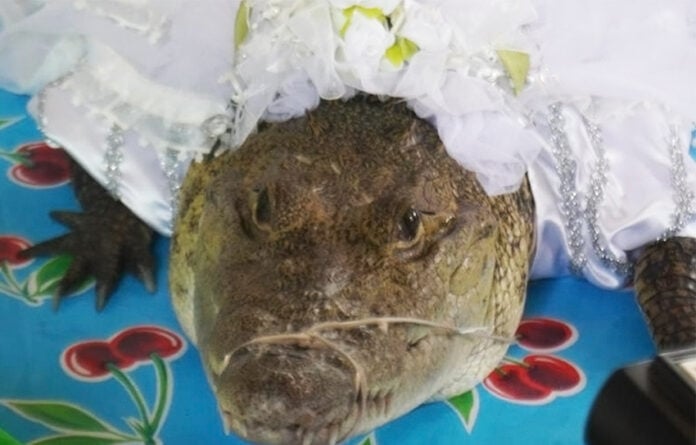
One Oaxaca town celebrated an unusual tradition this year: the marriage of its new mayor with a "caiman bride." (Diana Manzo via Aristegui Noticias)
In 2025, Mexico News Daily once again covered plenty of “hard news” and “bad news” stories.
As we have done since MND was founded more than 11 years ago, we also reported numerous stories that made us laugh, brought a smile to our faces, warmed our hearts and even left us scratching our heads in bewilderment.
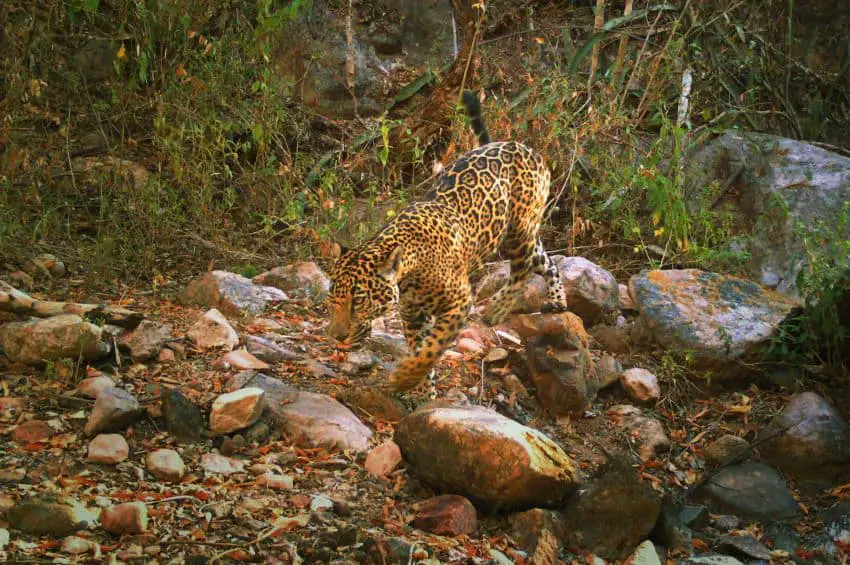
Camera trap photos like this one helped Mexican scientists measure the country’s jaguar numbers this year. Their findings: a promising population increase for the endangered species. (File photo)
Now, as we approach the end of the year, it’s time to look back at the amusing, uplifting, inspirational, heartening, gratifying, strange, surreal and “only in Mexico” stories MND published this year.
We continue today with a compilation of articles we published between July and September.
Look out for our “México mágico” compendium for the final quarter of the year later this week!
México mágico: A look back at MND’s weird and wonderful stories in the third quarter of 2025
We published a slew of articles about animals between July and September — some firmly in the good news category, while others drifted toward the strange and surreal.
In another positive development in the animal world, census results published in August revealed that Mexico’s jaguar population was climbing, although the country’s biggest cat isn’t out of the woods yet.
There was good news for another endangered species in the third quarter of 2025, with the launch of an urgent effort to save the achoque, a critically endangered salamander that’s the cousin of the famous axolotl.
If all the stories about real animals weren’t enough, there’s also the tail (excuse the pun!) of a four-legged robot dog, Waldog, who was put to work championing animal welfare in the northern city of Monterrey.
Another truck had a mishap in Tamaulipas, overturning on a federal highway and leaving its thirst-quenching cargo — beer — exposed and vulnerable to theft, which is exactly what happened. Fortunately, the driver of the vehicle was uninjured, though he might have needed a chela himself to get over the shock and loss.
Also using technology in an innovative way is Andrés ta Chikinib, an educator in Chiapas who has been teaching the Indigenous language Tzotzil to ChatGPT. His goal? To ensure that the language — spoken by more than 400,000 people in Chiapas — has a presence in the digital world.
Also in the third quarter of the year, we delved into the world of nota roja journalism in Mexico, which focuses on violent crime, accidents and other adverse events, with gory, stomach-turning photographs often accompanying the sensationalist stories.
We hope you enjoyed reading our quirkier stories this year, and perhaps found a few here that you missed. We’re already looking forward to another year of weird, wonderful and distinctively Mexican stories in 2026!
By Mexico News Daily chief staff writer Peter Davies (peter.davies@mexiconewsdaily.com)
President Sheinbaum announced that she will travel to Oaxaca later today to speak with family members of the victims. (Especial/Cuartoscuro)
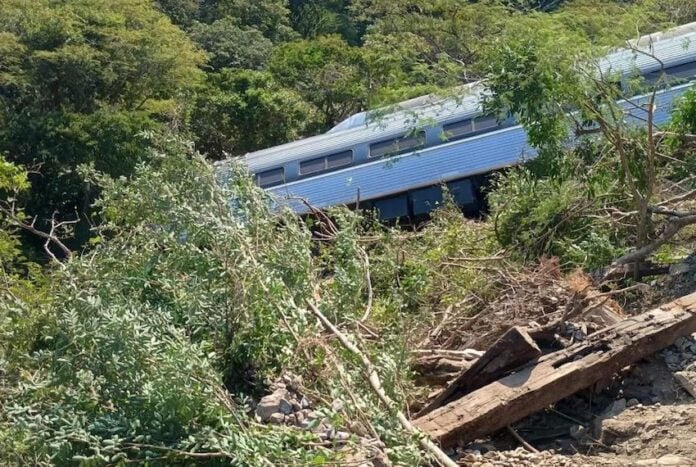
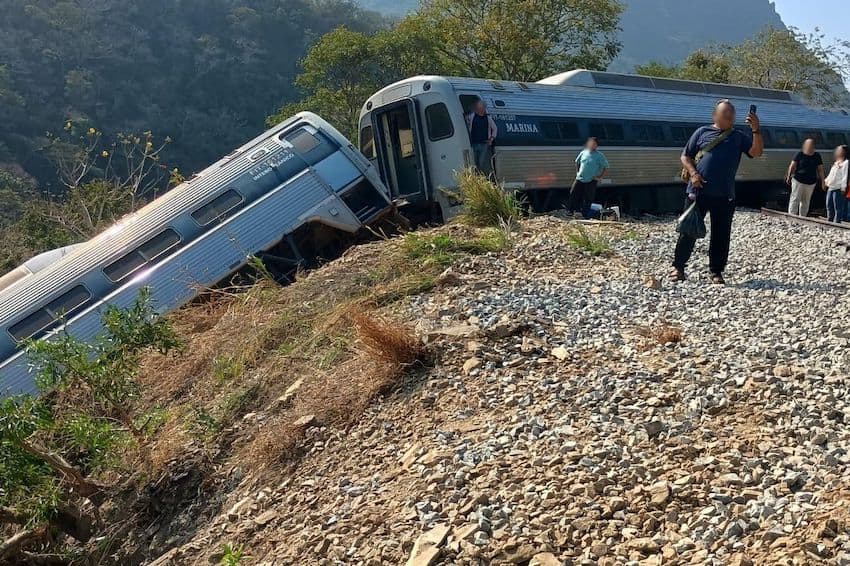
A train accident in southern Mexico on Sunday killed at least 13 people and injured more than 100 others, five seriously.
The Interoceanic Train — traveling with 241 passengers and nine crew members — derailed near the small Oaxaca town of Nizanda, about 85 kilometers (53 miles) north of its destination, the port city of Salina Cruz. The train consisted of two locomotives and four carriages.
President Claudia Sheinbaum expressed her condolences for the deaths and immediately ordered Navy Minister Admiral Raymundo Morales to travel to the site of the incident. The Naval Ministry (Semar) manages the Interoceanic Train’s operations.
Sheinbaum also sent a team from the Social Security Institute for Federal Government Employees (ISSSTE) to the area to attend to the injured.
“The ISSSTE team is on site, and I will travel to Oaxaca to speak with the families,” Sheinbaum said Monday morning.
Investigators from the Federal Attorney General’s Office (FGR) and the state prosecutor’s office have been working to establish the chain of custody and secure the scene, Sheinbaum said.
In a statement on social media, Attorney General Ernestina Godoy said agents from the FGR office in Oaxaca, as well as forensics experts from the Criminal Investigations Agency, were coordinating with federal and state authorities to carry out the respective investigations.
“There will be a rigorous analysis to determine the cause of this accident,” Sheinbaum said, adding that the Transportation Regulatory Agency is required to conduct a review, while Semar will clear and rehabilitate the tracks where necessary.
The derailment happened as the train rounded a curve on Sunday morning near Nizanda, Oaxaca. (Especial/Cuartoscuro)
The accident reportedly happened as the train passed through a curve. Though there have been no official statements as to the cause of the accident, the news magazine Proceso reported that a Semar official said the main locomotive derailed, taking the remaining cars off the track.
Arturo Medina, undersecretary of Human Rights at the Interior Ministry (Segob), indicated that each family that lost someone due to the derailment will have the support of a public servant “for the procedures, actions and arrangements, to make this difficult moment less complicated.”
He said an interdisciplinary team was deployed from the outset to visit hospitals and provide direct assistance to the injured and their families. Segob also activated an emergency phone number — 55-2230-2106 — to allow citizens to obtain official information about the condition of the injured and deceased.
Mexico’s navy minister told reporters on Monday that nine victims of the crash were treated at the scene and released, 108 were taken to hospitals and 44 remain hospitalized. While lamenting that 13 deaths had been confirmed, he said the body of one of the victims had yet to be recovered.
Semar deployed a total of 360 personnel, 20 vehicles, four ground ambulances, three air ambulances and a tactical drone for the search and rescue operations.
We all know Mexico's food is the best in the world and these writers tell us why. (Ocean Breeze Akumal)
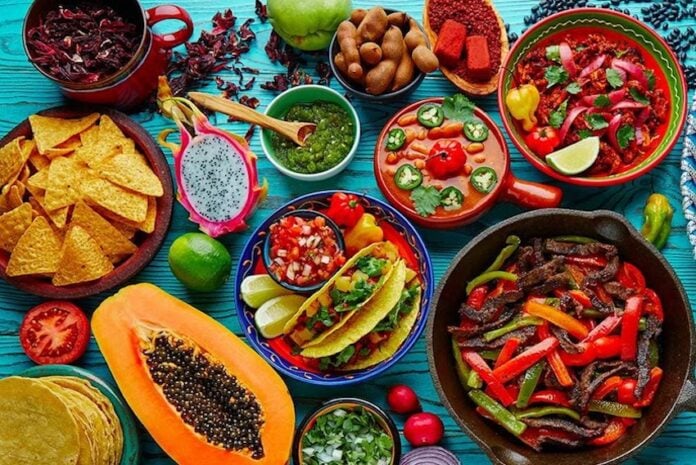
Mexico is a food lover’s paradise, from street treats like tacos and tamales to fine dining with sauces like mole that are as exquisitely complex as any in the world. Our writers took time to praise all of these culinary treasures in 2025, as well as many others.
Why eating hot sauce honors Mexico’s gods
If you come to Mexico and skip the spicy salsa, you’re missing the point. In one of the most-read articles of 2025, Andrea explains how chile has been sacred since Mesoamerican times, why capsaicin tricks your brain into thinking your tongue is on fire, and how to handle that first incendiary bite. From molcajete-made sauces to Michelin-star tacos, it’s a playful invitation to taste Mexico’s true heat — one cautious drop at a time.
No, not the country, but Mexico’s agua fresca of choice, made from hibiscus flowers, chia seed, water and other ingredients. Writer María Meléndez traced the history of hibiscus and its domestication several thousand years into the past. No, it’s not native to Mexico. But from the moment it arrived at Acapulco, where it was brought via Manila galleon — part of a global trade route that connected Spain’s colonial powers from the 16th to 18th centuries — it was passionately welcomed into the country’s kitchens.
Not only does Mexico have some of the world’s finest restaurants (just ask Michelin Guide), and a cuisine that has been declared an Intangible Cultural Heritage of Humanity by UNESCO, it also has some unique native ingredients that, through the centuries, have utterly transformed world cuisine. Did you know, for example, that there were no tomato sauces in Italian cuisine until the country sourced tomatoes from Mexico?
Thirty years after vowing never to be a coffee farmer, Julia Ortega now runs Mexico’s first carbon-neutral coffee farm in Puebla’s misty highlands. This profile follows her from reluctant heir to innovative producer, turning “waste” into soap, flour and liqueur while exporting organic specialty beans worldwide. Meet the woman whose stubbornness, science-driven husband and broken machinery helped transform a small family plot into a model of sustainable agriculture.
From ancient altars to outer space, amaranth has always punched above its tiny weight. This story traces Mexico’s beloved alegría bars back to an 8,000-year-old superseed packed with more protein than wheat or rice, natural omega fats, and a full suite of vitamins. Learn how this drought‑resistant, gluten-free pseudo-grain went from Puebla’s fields to NASA-approved astronaut food — and why it may be the future of sustainable nutrition.
In Kyoto’s backstreets, Mexico News Daily’s María Ruíz stumbles on the last thing she expects: some of the best carnitas tacos she’s ever had, made by a Japanese chef named Keita. This charming tale follows his obsession born in Baja, years perfecting tortillas, and a tiny taquería where locals eat tacos with chopsticks. Come for the culture clash, stay for the unlikely friendship forged over salsa and hiragana.
The holiday season in Mexico is a magical time of year — unless, of course, you don't like fireworks. Here are the best mini-escapes from San Miguel de Allende. (Estado de Guanajuato/Facebook)
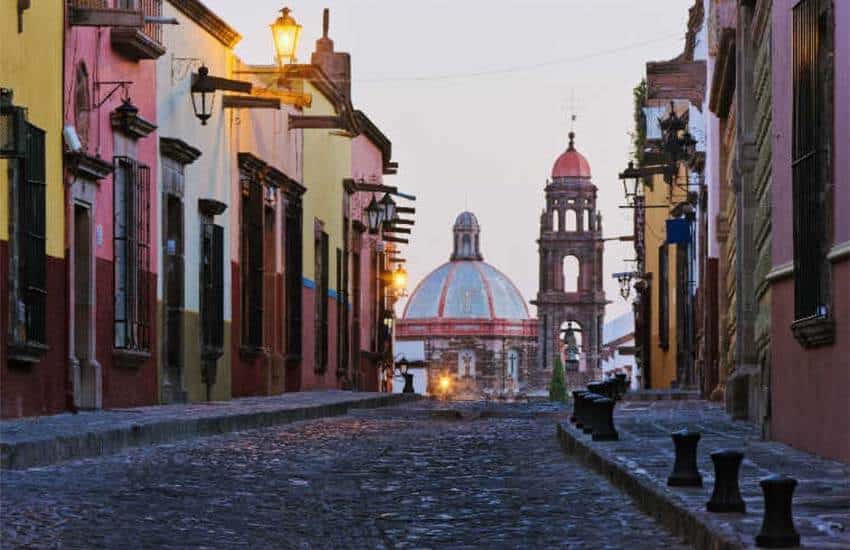
In the days between Nochebuena and the new year, the last ladles of soul-warming ponches will be doled out by family matriarchs through the end of December. But as is customary in Mexico, the brief respite from exuberant citywide festivities won’t last long. In the excitement leading up to the cutting of the ring-shaped Rosca de Reyes cakes on Three Kings Day on January 6, there will be no shortage of ostentatious pyrotechnics. Anyone who has spent more than a few days in San Miguel de Allende knows that its fireworks evoke a love-hate relationship after the first time you’re violently awakened by a barrage of them before dawn.
For many, the New Year’s Eve magic and mayhem are a welcome exclamation point to the annual celebration marathon that hasn’t let up from La Alborada in October to Día de Muertos in November, followed by countless posadas, a spectacular tree lighting in the Jardín Allende, and Día de la Virgen Guadalupe this month, among others. But not all revelers share the enthusiasm for these boisterous explosions of colors lighting up the sky. I, for one, live just far enough outside of Centro to relish in the delicious silence of the absence of fireworks. On the rare occasion when my toddlers sleep through the night, I am thrilled to hear only the peaceful hum of cicadas that allows us all to rest.
We understand if you need an escape. (El Vergel)
Though most of the families with young children and elders I know won’t be diving headfirst into the chaos on December 31, the sophisticated party crowd will indeed be racing into 2026 with roaring 1920s-style glamor at Live Aqua’s “Symphony of Elegance,” or an opulent New Year’s Eve Dinner at The Rosewood’s Pirules Garden Kitchen, followed by a midnight toast on their Luna Rooftop. And who could blame them? They’ll be perfectly positioned for a breathtaking view of the entire city when the clock strikes twelve — and a massive light display overhead.
Locals may also be partaking in centuries-old New Year’s traditions, such as Las Doce Uvas (eating twelve grapes at midnight) or spending the day conducting a “clean sweep” of their homes and souls to ensure they’re leaving all malas vibras (bad vibes) in the previous year.
If you, like me, are keen to get out of town and away from the blasts, a staycation at one of the coveted Michelin Keys properties might not be the move this time of year. These four extraordinary experiences will take you just far enough outside the city limits to appreciate the vastness of the natural world, giving you a chance to slow down, reflect, and soak up the essence of gratitude for Guanajuato’s enchanting allure in the pauses between booms.
All ages family escape
Explore an exotic safari & all-inclusive camping
(Bioparque Mexico)
Bioparque México: Approximately 3 hours by car from downtown San Miguel de Allende
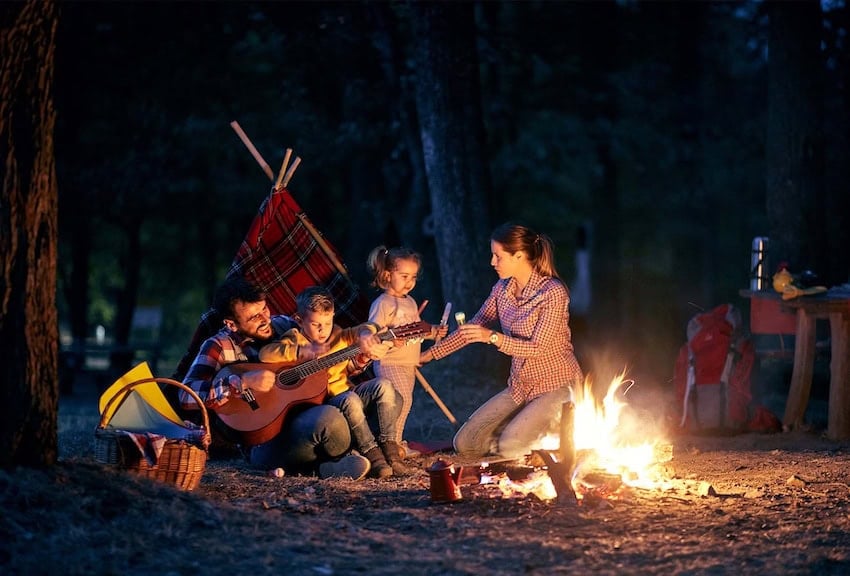
Dying to ditch the earplugs and cosmos-bound ricochets? Park your tent (or rent a fully-equipped camping setup for six people on site) in a wildlife sanctuary and eco-reserve with over 700 exotic animals freely roaming 300 hectares of the “Serengeti Safari.” At Bioparque México, located in the State of Mexico, holiday entry costs to the theme park and reserve are currently half off, granting you access to pet, feed, and snap photos of the magnificent creatures in Giraffe Paradise, plus float down the Jurassic River, go underground in the Subterranean, and watch sea lions showing off in a panoramic pool. To kick things up a notch, buckle up for the Xcalibur Alpine Coaster, a unique kilometer-long forest ride full of surprising twists and turns.
Pricing: 710 pesos per person (normally 1,480 pesos), all inclusive (breakfast, lunch, and dinner, plus Night Safari and all attractions). Children 90 cm (30 inches) and taller pay full price. Tent rentals for up to six people are available for 800 pesos per tent, equipped with an inflatable double mattress, mattress cover, and blanket. Visit the website to check available dates.
Known as both a ghost town and pueblo mágico, I consider Mineral de Pozos one of the best-kept daycation secrets near San Miguel de Allende. While the millenary ancient ruins at Cañada de la Virgen, once home to the Otomi people, are often saturated with visitors, the deep tunnels of Mineral de Pozos and the adjacent Rancho de Lavanda Pozos lavender fields are more subdued but equally enjoyable to stroll. At just 40 pesos to enter or 3,000 pesos to stay overnight, it’s ideal for a photo shoot, a tranquil recharge, or sipping a lavender beer. At any local tavern, don’t miss your chance to try escamoles (traditional ant larvae “caviar”) before or after you bike, ATV, or walk among the former gold and silver mines. Twice abandoned since its founding in the 18th century, today the Pozos are quietly reemerging as a local favorite. Treat yourself to immersive self-care side trip to the Vopper Beer Spa located inside Casa Diamante Hotel Boutique, where some rooms feature floor to ceiling glass walls to take in the sunrise or sunset over the gently undulating mountain range that frames the property.
Hotel El Nidal: Approximately 2.5 hours by car from downtown San Miguel de Allende
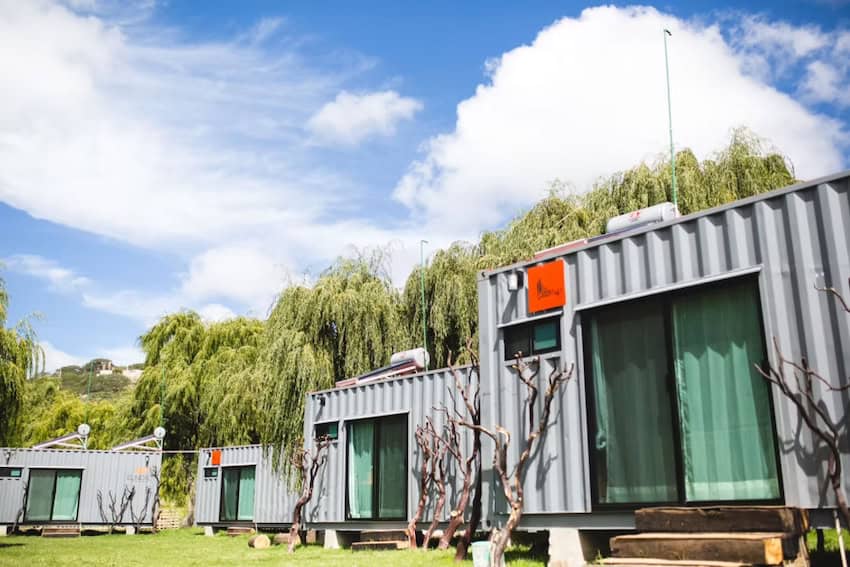
A love letter to Vergel de la Sierra worthy of several days of languishing, El Nidal has something to prove. According to owners Marcelo Castro Vera and Mukasha Dadajonova, their family’s mountain “nest” stay aims to show guests that “suffering” and “camping” don’t have to be synonymous. While the small bunkbeds in each accommodation are built for function, the towering verdant trees that have spread their roots across the land for hundreds of years more than make up for any living quarter limitations. A wood-fired open kitchen serves homestyle Mexican comfort meals (breakfast, lunch, and dinner) and café de olla throughout the day, and for those wanting more variety and autonomy, each container room has a mini-fridge and grills are available for rental. A tour of the Georgian-inspired clay vessels where Octagano’s wines are left to ferment with little to no intervention led by winemarker-sommelier Celia Alba, followed by a tasting of Castro Vera’s inventive catalogue of beer, mezcal, and artisanal spirits marks the highlight.
Information: There is no cell phone reception in Vergel de la Sierra, so reservations can be made via WhatsApp: +52-477-576-3344 or via email.
Just under 2 hours by car from downtown San Miguel de Allende
Gather 17 or so of your favorite people and head to Tequisquiapan, Querétaro, where six bedrooms, seven bathrooms, and two pools (one with a sprawling 360-degree view of the semi-desert backdrop) await you. Bridging past and future in a private restored ecosystem estate, this regenerative architectural masterpiece sleeps up to 18 guests and boasts amenities fit for royals: its own chapel, hot tub, paddle court, soccer field, hammock terrace, river access, and daily cleaning services, all tucked into 30 remote hectares of former mill ruins turned contemporary oasis. Swap the stuffy see-and-be-seen nights out on the town for stargazing around a firepit, as you marvel at the region’s expansive majesty and welcome in 2026 with reverence.
Simone Jacobson is a Burmese American cultural connector, toddler twin mama and writer based in San Miguel de Allende. By day, she is the Content Director for Well Spirit Collective. In all other moments, she strives to raise compassionate children who never lose their curiosity, tenderness and radiant light. Read more by Simone here.
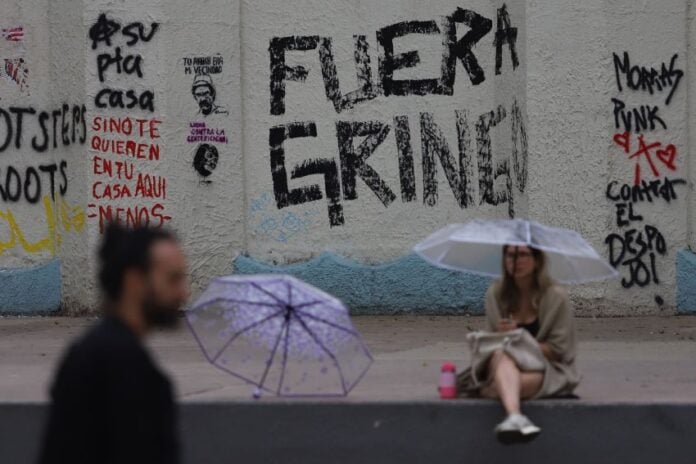
"Fuera gringo!" is the battle cry of an emerging anti-gentrification movement in Mexico City. (Daniel Augusto/Cuartoscuro)
It was one of the buzzwords of 2025: Gentrification. With a huge influx of foreign residents, especially in the years following the COVID-19 pandemic, Mexico’s cities (and beaches) have transformed from local communities to metropolitan hubs. Not everyone is happy about it.
We’ve collected some of the best Mexican and expat perspectives on these changes.
Mexico City’s cultural melting pot
In Mexico City’s Roma and Condesa, who really counts as a “local” in neighborhoods built on a century of migration? This timely essay traces Syrian Jewish shopkeepers, European refugees, U.S. veterans and today’s digital nomads to show that gentrification is about class and policy, not passports. Walk through protests, rent freezes, Airbnbs and new housing reforms in a nuanced look at a city forever shaped by newcomers.
In a Mexico City café, a casual “How much should we tip?” opens up a bigger, uncomfortable question: can generosity accelerate gentrification? This thoughtful essay follows a former U.S. restaurateur turned San Miguel local as she dissects 10–15% norms, “gringo taxes,” chronic overtipping, and who really benefits. If you live, work, or vacation in Mexico, it might change how you reach for your wallet.
Once a sleepy Maya port, Tulum is now ground zero for the glittering, pseudo-spiritual elite known as the Tuluminati. This razor-sharp piece skewers tech-funded “shamans,” US $1,000-a-night eco-hotels, ketamine-fueled “healing” raves, and cult-leader chic fashion — while listening to locals worried about eviction, rising prices and fragile cenotes. Read how enlightenment, entitlement and Instagram transformed a jungle coastline into the world’s most photogenic cautionary tale.
In Mexico City’s Roma, what happens when you realize you helped create the gentrification you now resent? In this candid, Mexican-written essay, a former “niña fresa” charts 11 years of rising rents, lost corner shops, Airbnbs, anti-gringo protests, and the government’s deliberate tourism push. It’s a raw, nuanced look at love for a neighborhood, complicity, xenophobia and what repairing a fractured community might really take.
In one of the most impactful pieces we’ve published this year, María Ruíz discusses the effects of gentrification on her hometown of San Miguel de Allende. In this deeply personal essay, she weighs the beauty, jobs and cultural festivals foreign residents brought against soaring housing prices, displaced traditions and neighbors pushed to the outskirts. From altars that vanished downtown to libraries, nonprofits and jazz festivals, discover how gentrification here is both wound and lifeline — and why everyone who moves in shares responsibility.
MEXICO CITY — In a bold move to “redefine what it means to suffer in the sky,” Volaris and Viva Aerobus announced plans this week to merge into a single airline, tentatively named Volaribus, with the explicit goal of creating the most agonizing flight experience known to humankind.
Executives from both airlines proudly unveiled their shared vision: “Why have some discomfort when you can have total despair?” said Volaris CEO Enrique Beltránena, unveiling a new aircraft mock-up that features an impressive negative three inches of legroom. “Passengers will be touching knees not only with the person in front of them — but spiritually, with everyone on board.”
For just US $20 extra, customers can enjoy the sensation of a freshly charged cattle prod to remind them when they have reached their, uh, seat.
Among the announced innovations:
Carry-on limits reduced to ‘one emotional burden per person.’
A US $7 fee for blinking too frequently during takeoff.
New “Human Cargo” seating tiers where passengers are gently stacked for maximum efficiency.
Complimentary non-reclining seats made from compressed regret and recycled boarding passes.
Volaribus’ seating configuration will encourage passengers to get to “know” one another intimately — perhaps even in the biblical sense.
Beltranena further boasted “We’ve done our homework, studying what Spirit Airlines in the U.S. and Ryanair in Europe has brought to those markets, and we are confident we are well-positioned to do worse here in Mexico. And God willing, much, much worse.”
The merged airline also teased its new slogan: “Volaribus: Because You Deserve Worse.”
Volaribus has tapped an outside consulting agency to steer the launch of the new airline — the same firm that guided Air Koryo, North Korea’s flagship airline, through a successful rebranding with unprecedented 110% passenger approval ratings previously unheard of in the travel industry.
Industry analysts are already calling the merger a milestone in aviation history. “They’ve found untapped potential in human misery,” said travel expert Ana Ruiz. “By the time you land, you’ll have paid $600 in hidden fees and lost faith in flight as a concept.”
In an unexpected twist, Ryanair CEO Michael O’Leary publicly congratulated the new airline, admitting he felt “a deep, professional jealousy.”
“I’ve spent decades trying to convince customers they should stand during flights and pay extra to breathe,” O’Leary said. “But these guys — these beautiful bastards — are taking cheapness to levels even I can’t legally achieve. I salute them.”
As a closing statement, the companies promised that all cost savings would go directly toward expanding executive bonuses and installing even smaller tray tables.
“We’re not just merging airlines,” said Viva Aerobus spokesperson Ricardo Bastón. “We’re merging pain, efficiency, and a business model built on passenger tears.”
Shares in the ADO and ETN bus networks were up 8% and 12%, respectively, on the heels of the Volaribus’ announcement.
Mexico News Daily’s satirical newswire, El Jalapeño launched this year, offering a look at a hilarious world of news headlines that might have happened… in another dimension.
From accidental airstrikes to aquatic airports (and even a celebrity taco stand), we’ve had no shortage of great headlines in 2025.
Here are some of the funniest moments of the year:
Mexico does nature really well. Enjoy the call of the wild as we look back on some of the best stories of 2025. (Pinterest)
Jungle, ocean, beach, mountain and desert. Mexico has a bit of everything. Our dedicated team of travel writers spent 2025 roaming the nation, finding some of the very best places for you to enjoy on your next trip away.
Beautiful Baja
Cross Baja California on foot, from Pacific surf to the Sea of Cortez, without ever shouldering more than a water bottle. This immersive feature follows a 111-kilometer “Coast to Coast” trek through Laguna Salada, star-filled desert skies, and Valle de los Cirios’ otherworldly boojum trees—complete with hot meals, pitched tents, and rescue “sweeper” trucks. See why hikers call this rugged, supported adventure “la pura gloria.”
While a massive new theme park grabs headlines in Nuevo Nayarit, the real magic lies farther north. This story maps out wetlands, mangrove labyrinths, near-empty surf beaches and Indigenous mountain communities where conservation, not crowds, drives tourism. Meet local cooperatives, turtle protectors and birding guides quietly shaping one of Mexico’s last true ecotourism frontiers and see why now is the moment to experience Nayarit before everyone else catches on.
If Thailand’s jungle pools are your idea of heaven, Valladolid’s cenote circuit might just steal the crown. This guide takes you from turquoise, vine-draped sinkholes to semi-secret caverns where shafts of light slice through the dark and echoing swallows circle above. See how to link multiple cenotes with nearby Maya sites like Chichén Itzá and Ek Balam for a swim-and-ruins escape that feels almost otherworldly.
On the Baja peninsula’s quieter side, Loreto is finally having its moment. Named by the BBC as one of the top 20 places to go in 2026, this Pueblo Mágico offers mission-era streets, whale-filled seas, desert islands, and 300 days of sun without Cabo’s crowds. Learn how fishermen-turned-naturalist-guides and community-led conservation are turning this small town into a global model for low-key, high-impact ecotourism.
If Florida’s glassy natural springs are your happy place, Sian Ka’an will feel like their wild, tropical cousin. Just beyond Tulum, this 1.3-million-acre UNESCO biosphere lets you float down ancient Maya canals, spot manatees, dolphins and jaguars, and explore hidden ruins with local guides. Learn how to choose between freshwater lagoon drifts and off-grid Punta Allen marine safaris in this essential guide to the Yucatán’s most untamed paradise.
Organ grinders in Mexico City's Historic Center traded their traditional uniforms for something more seasonally appropriate leading up to Christmas. (Camila Ayala Benabib / Cuartoscuro.com)
This Christmas week brought both joy and loss to Mexico. While families gathered to celebrate the holidays, the week also brought news of economic growth, infrastructure milestones and a devastating plane crash. Mexico offered assistance to a Caribbean neighbor abroad while back home, President Sheinbaum delivered messages of unity and holiday cheer.
Economic growth and trade tensions
Mexico’s economy showed signs of resilience in October, with the National Institute of Statistics and Geography reporting 1% monthly growth following a third-quarter contraction. The agricultural sector led the rebound with 1.4% growth compared to the previous month, while the tertiary sector expanded by 1.2%. However, analysts cautioned that uncertainty around U.S. trade policies and sluggish public investment continue to cloud Mexico’s economic outlook.
Trade relations took center stage as Canada, Mexico and the United States prepared to launch formal USMCA review discussions in mid-January, with a July 1, 2026 deadline to conclude negotiations. Economy Minister Marcelo Ebrard expressed confidence in the agreement’s renewal, emphasizing that Mexico remains the United States’ largest buyer. Meanwhile, Mexican baker Grupo Bimbo filed a lawsuit against Trump administration tariffs, challenging their constitutionality and seeking reimbursement of duties already paid. The case highlights mounting legal pressure on tariff policies that Bimbo argues were imposed under false pretenses of economic emergency.
In the sports business arena, U.S. equity firm General Atlantic purchased a 49% stake in Televisa’s Grupo Ollamani, owner of Club América and the 88,000-seat Banorte Stadium, in a deal valued at approximately $490 million. The partnership includes collaboration with a subsidiary of the Kraft Group, which owns the New England Patriots. Club América becomes the fifth Liga MX team with significant U.S. funding, reflecting growing foreign investment in Mexican soccer ahead of the 2026 FIFA World Cup.
Infrastructure developments
Transportation infrastructure advanced as President Sheinbaum announced the long-delayed train to Felipe Ángeles International Airport should be operational by April 2026. Originally scheduled for completion in 2022, the 30-kilometer line will connect AIFA with Mexico City’s Buenavista station in 43 minutes. Once operational, trains will depart every 15 minutes with capacity for 719 passengers each, connecting with the Suburban Train, Mexico City Metro and multiple bus systems.
Bright prospects for tourism
Mexico’s tourism sector received encouraging news as a Google and Deloitte study projected the country will crack the top five most-visited destinations globally by 2040. Currently ranked sixth, Mexico is expected to grow from 45 million foreign tourists in 2019 to 90 million by 2040, assuming annual growth of 2.5% to 3.5%. The projection reflects Mexico’s robust air connectivity with North America, diverse attractions from beaches to colonial cities, and growing interest in cultural heritage sites.
México sigue consolidándose como un destino atractivo para invertir. 🙌🏼
Durante el tercer trimestre de 2025, la Inversión Extranjera Directa Turística registró un crecimiento del 40.3%, alcanzando 787.6 millones de dólares. 📈
In a demonstration of regional solidarity during the Christmas season, Mexico sent 80,000 barrels of petroleum to Cuba to help alleviate the island’s ongoing energy crisis. President Sheinbaum emphasized the shipment’s humanitarian purpose and Mexico’s historical relationship with Cuba, noting the aid is being provided within a legal framework. Cuba has faced severe power outages for three years, with regular blackouts of 20 hours or longer stemming from insufficient fuel supplies and aging infrastructure. The Christmas week timing of Mexico’s support highlighted the government’s commitment to helping neighbors during the holiday period.
Tragedy and resilience in Texas
Christmas week also brought heartbreak when a Mexican Navy plane crashed near Galveston, Texas, immediately killing five people on a humanitarian medical mission. The Beechcraft King Air 350 was transporting a child burn victim and members of the Michou y Mau Foundation when it went down in foggy conditions on Monday. Eight people were aboard, including four Navy officers and four civilians. Two passengers were rescued, while one remains missing.
Government corruption came under scrutiny after two immigration agents working the Brownsville-Matamoros Free Trade Bridge were caught on video allegedly demanding bribes from Mexican nationals returning from the United States for the holidays. The incident prompted Sheinbaum to announce plans for a comprehensive reporting system for corruption across all government institutions.
Presidential leadership during Christmas week
During the Christmas holiday, President Sheinbaum spent December 25-27 in Acapulco, marking her first official break since taking office. The choice of destination carried symbolic weight, as the coastal city continues recovering from Hurricane Otis’s devastation two years ago. Before her departure, Sheinbaum led her Tuesday morning press conference audience in singing “Feliz Navidad” and suspended daily briefings until December 29 to give journalists time with their families for the holiday.
Mensaje de Navidad 2025 de la presidenta Claudia Sheinbaum Pardo
On Christmas Eve, the president released a video message from the National Palace celebrating unity and Mexican values during the holiday. She called on the nation to embrace solidarity and remember that “the most important thing is not the material, but values and love for others.” Her Christmas message honored those spending the holiday away from home, including workers abroad, military personnel, healthcare professionals and transportation workers.
Looking Ahead
Mexico remains relatively quiet as it takes stock and prepares for 2026. The new year will put diplomatic and trade relationships to the test with the USMCA review, starting mid-January. Economic indicators hint at recovery despite persistent headwinds, and tourism’s upward trajectory shows promise. Through it all, the holiday period reminded Mexicans of the enduring values of community, resilience and shared purpose that will shape the nation’s path forward.
Mexico News Daily
This story contains summaries of original Mexico News Daily articles. The summaries were generated by Claude, then revised and fact-checked by a Mexico News Daily staff editor.