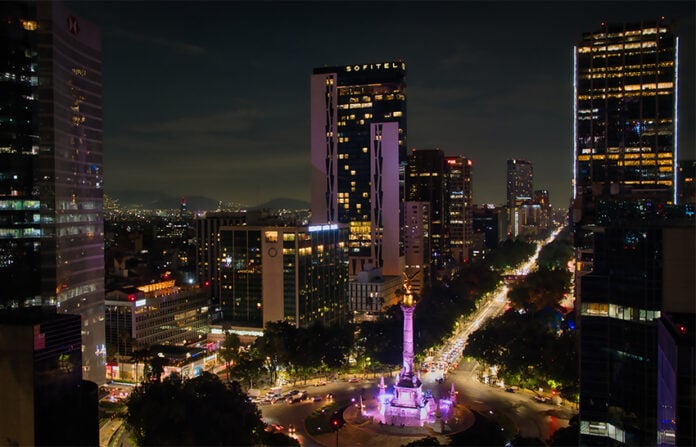
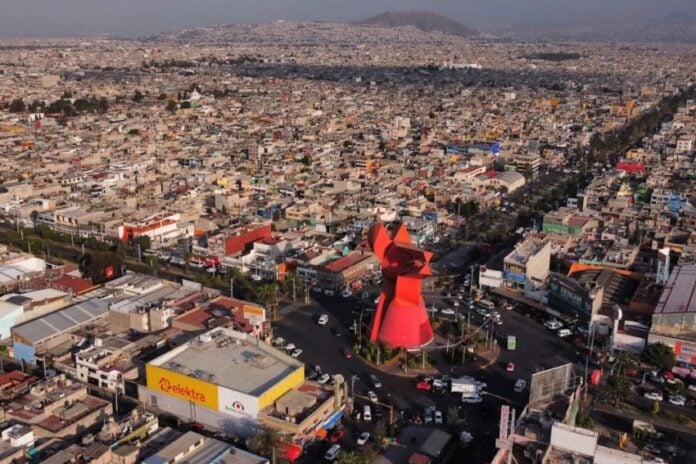
Moody's is the third major credit-rating firm to assign Mexico a low grade recently, although it did nudge the country's outlook up to stable from negative. Pictured: Paseo de la Reforma in Mexico City. (Shutterstock)
Credit rating agency Moody’s cut Mexico’s credit score to Baa3, its lowest level of investment grade and just one notch above junk status.
On the positive side, it revised Mexico’s outlook from negative to stable.
In announcing the reduction, Moody’s said Mexico’s weak economic growth reduces the government’s ability to generate revenue, while also dealing with an increasingly rigid budget, which notably includes financial support for the state-owned oil company Petróleos Mexicanos (Pemex).
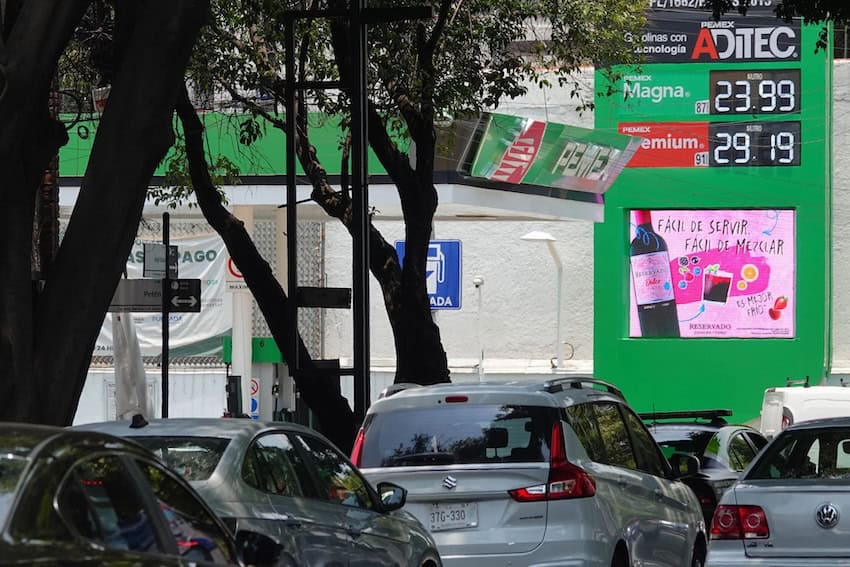
Moody’s, like S&P and Fitch earlier, minced no words in placing a good share of the blame for Mexico’s sinking credit-rating on the drain on the public treasury caused by government support of Pemex, the state-owned oil company. (Camila Ayala Benabib / Cuartoscuro.com)
In its statement, Moody’s said the lower sovereign rating “will be partially offset by Mexico’s macroeconomic stability, policy responsiveness, and underlying economic strength, adding that “Mexico does not face macroeconomic imbalances that amplify fiscal risks.”
However, Moody’s warned that “continued support for Pemex will continue to limit fiscal consolidation.”
S&P also cited Pemex as a reason for its action, saying that “expected continued substantial fiscal support for Pemex and the Federal Electricity Commission would continue to aggravate Mexico’s fiscal rigidities.”
The Moody’s rating is now in line with Fitch Ratings, which reduced Mexico to “BBB-” in April 2020 (reaffirmed this year), and is one notch below S&P’s BBB rating.
Fitch, Moody’s, and S&P are the three largest global credit rating agencies, and all three now rate Mexico near the line between investment grade and speculative (aka “junk”). But while Moody’s has now joined Fitch in giving Mexico a Stable outlook, S&P recently dropped it to negative.
After Moody’s issued its latest decision, the Finance Ministry responded by outlining recent measures it has taken to keep public finances healthy, including a push for fiscal consolidation and a plan to lure more investments.
“Mexico maintains its investment-grade rating from all eight agencies that assess its sovereign debt, reflecting its commitment to responsible economic policy and the sustainability of public finances,” it said.
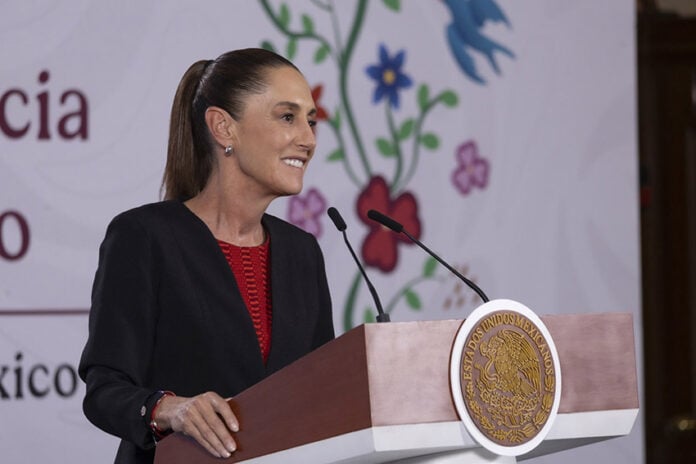
Last week after the S&P cutback, President Claudia Sheinbaum said Mexico would demonstrate that there are clear signs the economy is doing well.
Mexico’s economy contracted 0.8% in the first quarter this year, the worst result for the Mexican economy in any first quarter since 2020.
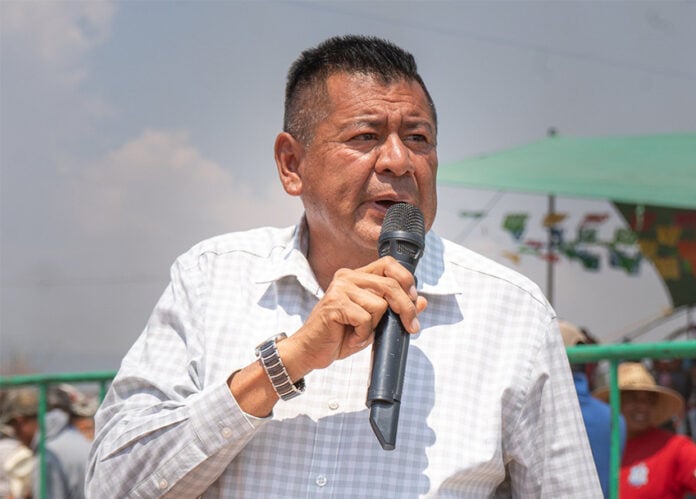
Agustín Toledano Amaro, mayor of Atlatlahucan, was arrested Wednesday along with five other officials from the central state of Morelos. (Agustín Toledano Amaro / Facebook)
Security Minister Omar García Harfuch announced Wednesday that federal authorities had arrested various officials from the state of Morelos, including the mayor of one municipality and the former mayor of another.
A total of five men and one woman were detained in Morelos and Querétaro during raids that were carried out as part of Operación Enjambre (Operation Swarm), a federal security strategy aimed at combatting collusion between organized crime and municipal government officials. More than 140 officials, including a number of mayors, have reportedly been arrested as part of Operación Enjambre since it began in November 2024.
En el marco de la Estrategia Nacional contra la Extorsión y como parte de la continuidad de la Operación Enjambre, en Morelos, elementos de @FGRMexico@SSPCMexico y @GN_MEXICO_, con información del Centro Nacional de Inteligencia, cumplimentaron
4 órdenes de aprehensión… pic.twitter.com/PG6fxbeKRa
“Within the framework of the National Strategy against Extortion and as part of the continuation of Operación Enjambre, in Morelos, officers of the Federal Attorney General’s Office, the Security Ministry and the National Guard, with information from the National Intelligence Center, executed four arrest warrants,” he wrote, adding that the mayor of Atlatlahucan and the former mayor of Yecapixtla were among those detained.
García Harfuch also wrote that “actions” aimed at arresting the mayor of Cuautla, Jesús Corona Damián, were continuing.
On Thursday afternoon, the security minister told a press conference that six people accused of involvement in organized crime had been arrested.
He also said that the government’s Financial Intelligence Unit (UIF) would block the bank accounts of 22 individuals and 10 companies related to a “corruption network” in Morelos.
“Among them are mayors, officials from the Cuautla municipal government and economic, political and social actors allegedly linked to a regional operator of the Pacific Cartel in the eastern region of [Morelos],” García Harfuch said, using an alternative name for the Sinaloa Cartel.
He subsequently confirmed that the alleged cartel operator he was referring to was Júpiter Araujo Bernard, a man known as “El Barbas” (The Bearded One). García Harfuch said that the UIF would also add Araujo and other “principal targets” to its list of “blocked persons.”
The allegation outlined by García Harfuch is that municipal officials in Morelos, including at least some of those arrested on Wednesday, and the mayor of Cuautla, have aided and abetted the criminal operations of the Sinaloa Cartel in the central Mexican state, including extortion schemes. There is video evidence that Corona, the mayor of Cuautla, and Toledano, the mayor of Atlatlahucan, and other officials met with “El Barbas” in 2024. Both mayors were backed by opposition parties when they were elected in recent years, namely the PAN, the PRI and the PRD. However, Corona first assumed the mayorship of Cuautla after winning a 2019 election as a candidate for Morena, Mexico’s current ruling party.
Cuautla, the second-largest city in Morelos, has been described as a “capital of extortion” by crime journalist Ioan Grillo. García Harfuch said on Wednesday that extortion in Cuautla and other municipalities in eastern Morelos has “directly affected” many people and sectors, including business owners, public transport operators, “productive sectors” and members of ordinary families.
FGR: Presence of organized crime detected in at least 8 municipal governments in Morelos
On Wednesday night, Ulises Lara, a special prosecutor in the Federal Attorney General’s Office (FGR), said that the FGR’s organized crime unit (FEMDO) had detected the presence of organized crime within the municipal governments of at least eight municipalities in Morelos, including Cuautla, Atlatlahucan and Yecapixtla.
He said that the arrests on Wednesday were possible thanks to investigations carried out by FEMDO.
Lara said that an organized crime group — allegedly the Sinaloa Cartel — “managed to penetrate the structure” of municipal governments in Morelos by providing campaign funds to candidates who “today serve as public officials.”
He also said there is “information” that members of that criminal group “intimidated” the political opponents of the candidates they supported.
“It is very important to note that … as a result of such infiltrations into municipal structures — which were aimed at securing permissiveness and freedom to commit criminal activities — the state of Morelos has faced various situations of violence, in which crimes such as extortion … as well as homicide, drug dealing, robbery and kidnapping occurred,” Lara said.
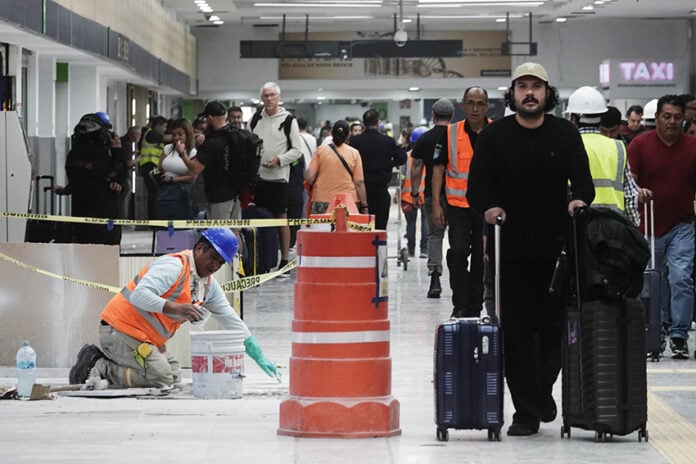
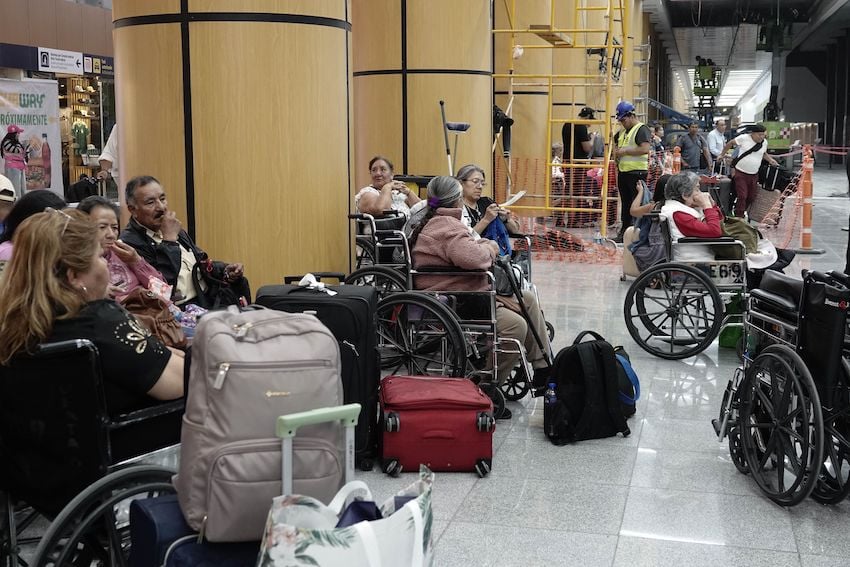
Three weeks out from the World Cup's kickoff match, construction continues at Mexico City International Airport (AICM), seen here on May 14. (Camila Ayala Benabib / Cuartoscuro.com)
Mexico City International Airport (AICM) is in a race against time to finish a thorough renovation before millions of visitors land in Mexico’s busiest air terminal for the upcoming 2026 FIFA World Cup.
The construction began in May 2025 with the understanding that they would be completed by May 30 this year — that is, in less than two weeks. With less than a month to go for the tournament’s inaugural match in Mexico City, President Claudia Sheinbaum has said that the renovations would be completed within the set deadline.
Workers at Mexico City International Airport are scrambling to finish months of disruptive renovations before the 2026 FIFA World Cup kicks off on June 11. pic.twitter.com/qUgTYbZqqw
“The works will be completed on time and in good condition […] to receive millions of tourists and athletes,” Sheinbaum said at her May 11 press conference, referring as well to the various renovation projects currently being done across the city.
However, Director General of AICM Admiral Juan José Padilla recently told the Associated Press that while the main construction projects would be completed by the end of May, some renovations would continue behind the scenes without disrupting passengers.
“Starting June, passengers will not see any construction at the airport.” Padilla said. “There will be some areas that we will continue working on, but these are areas that do not affect the comfort of the experience of passengers,” he added.
Currently, the airport’s users in Terminals 1 and 2 share the space with some 2,000 construction workers who have been working day and night for the past year in an effort to finish the construction on time.
“We guarantee [passengers] that the restrooms, parking lots, everything will be operational,” Padilla stressed.
What will change with the renovation?
Once the renovation is completed, Padilla said that passing through security would be a “very quick” experience for passengers.
“We envision it taking 5 or 10 minutes at most, even when the airport is very crowded,” he said.
Padilla also said travelers “won’t need to seek out a VIP lounge to enjoy comfort, internet access, or to sit comfortably and enjoy a coffee.”
Renovation Coordinator Arturo Flores Melgoza told the newspaper El Universal in March that the main objective of the remodel is to give the airport a unified visual identity. He also apologized to passengers for any inconveniences caused by the renovations, and promised it would be worth the wait.
“The airport is being remodeled for Mexicans, not just for the World Cup,” he said.
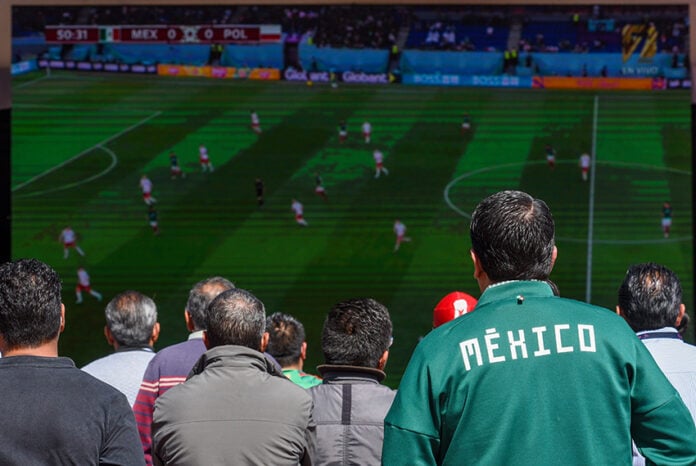
Mexican fans in Toluca gathered to watch Mexico's first match in the 2022 FIFA World Cup. (Crisanta Espinoza Aguilar / Cuartoscuro)
The start of the 2026 FIFA men’s World Cup is now just three weeks away. Mexico will co-host the 39-day tournament with the United States and Canada, and the first match will be played in Mexico City on June 11.
Exactly 21 days before El Tri (the Mexican national team) takes on Bafana Bafana (South Africa) at Mexico City Stadium (aka Estadio Azteca), today we take a look back at the Mexican team’s World Cup record since the first tournament was played 96 years ago.
Mexico will participate in the World Cup for the 18th time this year
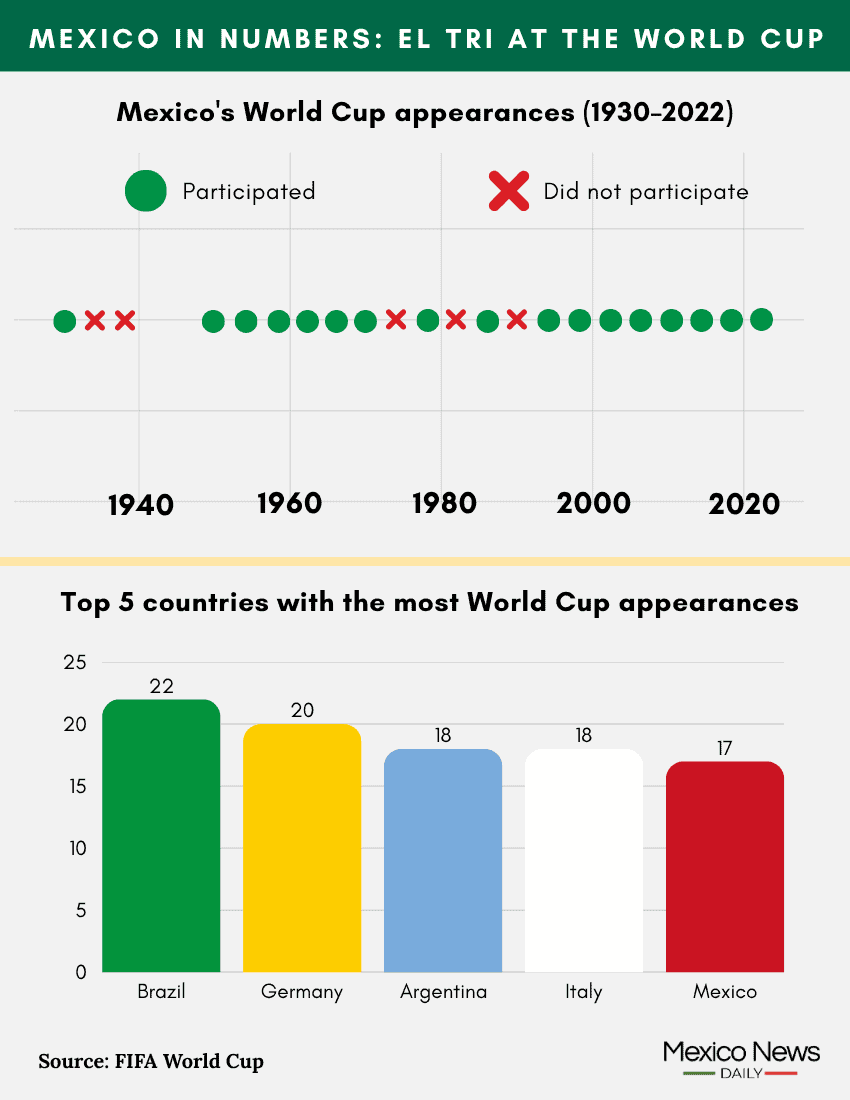
To date, Mexico has played at 17 World Cups, including the inaugural edition in Uruguay in 1930.
Mexico missed five of the 22 World Cups held between 1930 and 2022. The national team didn’t play at the 1934 World Cup in Italy, the 1938 World Cup in France, the 1974 World Cup in West Germany, the 1982 World Cup in Spain and the 1990 World Cup in Italy.
Only 4 countries have played in more World Cups than Mexico
The only countries with more World Cup appearances than Mexico are Brazil (22), Germany/West Germany (20), Argentina (18) and Italy (18). Brazil, Germany, Argentina and Italy have each won the World Cup on multiple occasions, meaning that Mexico is the country with the most World Cup appearances without having ever won the tournament.
Mexico has won fewer than a third of its 60 World Cup matches
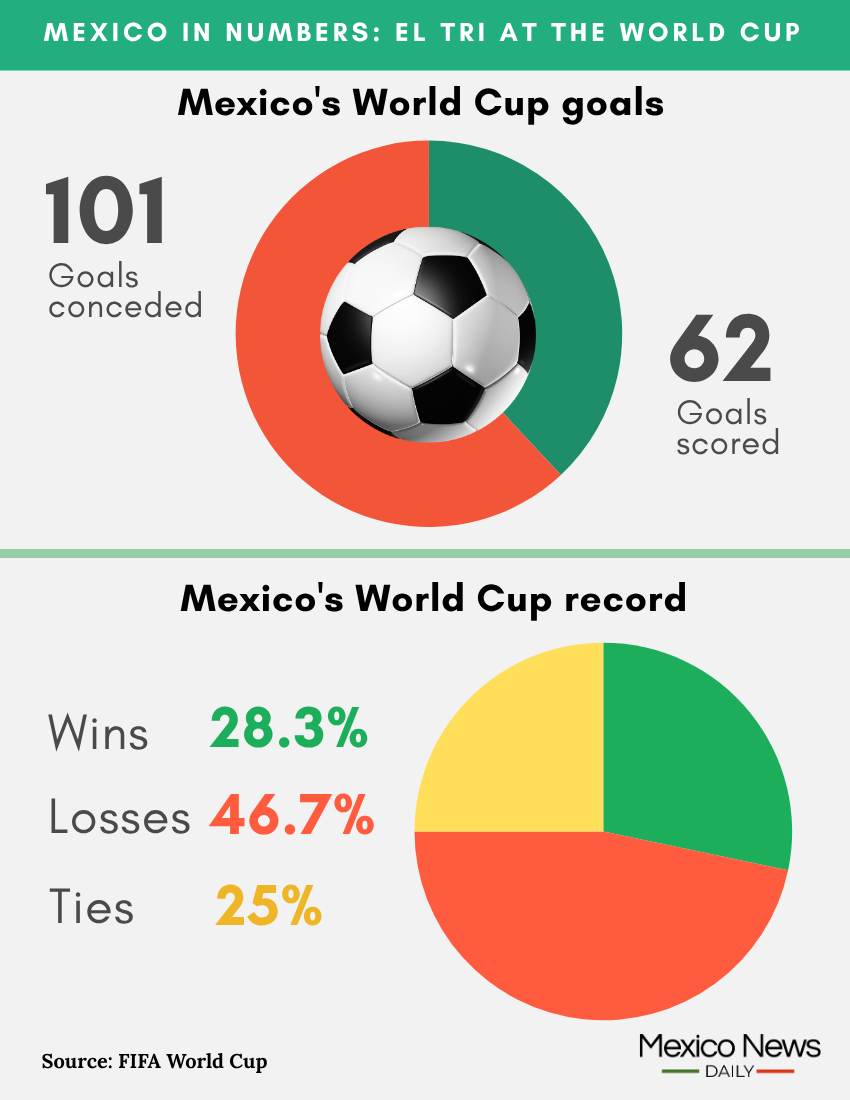
Of the 60 World Cup matches it has played since 1930, Mexico has won just 17. It has lost 28 matches while 15 matches ended in ties.
In percentage terms, Mexico has won 28.3% of its World Cup matches, lost 46.7% and tied 25%.
Mexico’s first World Cup win came in its fifth appearance
Mexico didn’t win any of its matches in its first four World Cup appearances. Of a total of 11 matches played in Uruguay (1930), Brazil (1950), Switzerland (1954) and Sweden (1958), Mexico recorded 10 losses and one tie. It lost its first nine World Cup matches before a 1-1 tie with Wales in Sweden.
Mexico finally had a World Cup victory in its third match in Chile in 1962. After losses to Brazil and Spain, Mexico defeated Czechoslovakia 3-1 on June 7, 1962. That victory came in Mexico’s 14th World Cup match.
Mexico has scored 39 fewer World Cup goals than it has conceded
In its 60 World Cup matches to date, Mexico scored a total of 62 goals for an average of 1.03 goals per match. It conceded 101 goals in the 60 matches. Therefore, an average of 1.68 goals per match got past the Mexican goalkeeper.
Mexico’s biggest World Cup victory came during the 1970 tournament when El Tri defeated El Salvador 4-0 at Estadio Azteca. Its biggest defeat came against West Germany in the 1978 World Cup in Argentina. The scoreline was an embarrassing 6-0.
Two players share the honor of most World Cup goals for Mexico
Mexico’s top World Cup goal scorers are Luis Hernández and Javier Hernández, both of whom found the back of the net on four occasions on football’s biggest stage. The two men aren’t related.
Luis Hernández, nicknamed “El Matador,” scored all four of his World Cup goals in France in 1998. He also played in the 2002 World Cup in South Korea and Japan, but went goalless in that tournament.
Javier Hernández, nicknamed “Chicharito” (Little Pea), scored his four World Cup goals at three separate tournaments. He scored two in South Africa in 2010, one in Brazil in 2014 and one in Russia in 2018.
Resumen Rusia 2018: ¡'Con 'Chicharito' y Vela! Así venció México a Corea del Sur | TUDN
Two Mexican players, Cuauhtémoc Blanco (a former governor of Morelos) and Rafael Márquez, have scored three World Cup goals.
No Mexican man has played more World Cup matches than Rafael Márquez
In addition to being one of Mexico’s top World Cup goal scorers, Márquez holds the record for the most World Cup appearances for El Tri. The Michoacán native played in a total of 19 World Cup matches across five consecutive tournaments: South Korea and Japan in 2002; Germany in 2006; South Africa in 2010; Brazil in 2014; and Russia in 2018.
Mexico’s second most-capped World Cup player is Andrés Guardado, who played in 13 matches across five consecutive tournaments between 2006 and 2022.
The fifth game curse
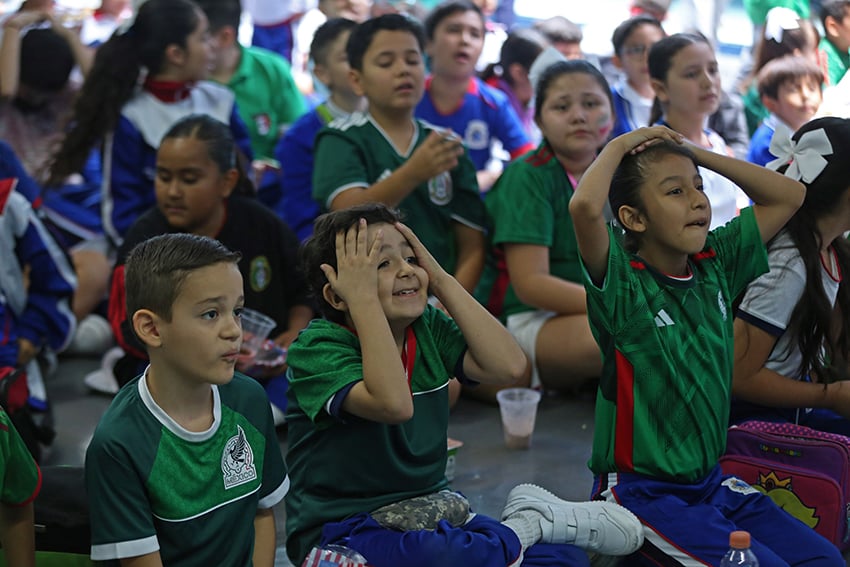
As you might know, Mexico is considered to have a “fifth game curse” at the World Cup as it has only played a fifth match at a tournament once. That match was a quarterfinal against West Germany at the 1986 World Cup in Mexico. El Tri lost on penalties after the match ended in a 0-0 tie after extra time.
The fifth game curse has long tormented Mexican fans of all ages. Pictured: Students watch Mexico tie with Poland during the 2022 World Cup. (Fernando Carranza García / Cuartoscuro)
Mexico also reached the quarterfinal stage at home in 1970. El Tri’s loss to Italy in that match was just its fourth game in the tournament, which featured 16 teams.
Mexico may have a good chance of reaching a fifth World Cup game for just a second time this year as for the first time ever, 48 teams will take part in the tournament. As 32 of those teams will progress to the knockout stage, El Tri will only have to reach the last 16 to make it to a fifth game, rather than the final eight, as was the case between 1986 and 2022.
President Sheinbaum celebrated the U.S. confirmation of Mexico's new ambassador and shared that her Security Cabinet would meet with the U.S. Secretary of Homeland Security on Thursday. (Juan Carlos Buenrostro / Presidencia)
Sheinbaum’s mañanera in 60 seconds
🇲🇽🇺🇸 New ambassador confirmed: The U.S. approved Roberto Lazzeri as Mexico’s next ambassador to Washington. Sheinbaum said he will head to D.C. in the coming weeks. A key part of Lazzeri’s mandate is likely to be trade diplomacy, including negotiations related to the ongoing USMCA review. He replaces Esteban Moctezuma, ambassador since 2021.
🤝 Sheinbaum meets Mullin: The president will meet on Thursday with U.S. Homeland Security Secretary Markwayne Mullin, accompanied by her Security Cabinet, with talks centered on the bilateral security “understanding” reached last year. Sheinbaum said she would also raisethe deaths of Mexicans in ICE custody, but would not broach the U.S. case against Sinaloa Governor Rubén Rocha Moya, noting it falls under the U.S. Department of Justice, not Homeland Security.
Why today’s mañanera matters
Among the topics discussed at President Claudia Sheinbaum’s Thursday morning press conference was the appointment of a new Mexican ambassador to the United States and the president’s imminent meeting with U.S. Homeland Security Secretary Markwayne Mullin.
Sheinbaum has accepted that the CIA participated in the operation in Chihuahua, but last week rejected a CNN report that claimed that the CIA “facilitated” a “targeted assassination” of an alleged Sinaloa Cartel member in México state in March. Meanwhile, Mexican authorities continue to maintain that there is insufficient proof to arrest Sinaloa Governor Rubén Rocha Moya and other current and former Sinaloa-based officials who U.S. prosecutors accuse of drug trafficking in league with the Sinaloa Cartel.
The security-related bilateral tension and other pressure points in the Mexico-U.S. relationship, including ones related to the USMCA review, make Mexico’s dispatch of a new ambassador to Washington and meetings between Mexican and U.S. officials particularly consequential.
On Thursday, Sheinbaum stressed that Mexico wants security cooperation with the United States to take place within the framework of a security “understanding” the two countries reached last year.
The president has stressed on countless occasions that said understanding is based on principles such as respect for sovereignty and territorial integrity, as well as mutual trust. The U.S. appears to have violated those principles with the CIA’s involvement in an operation in Chihuahua.
Mexican ambassador approved by US
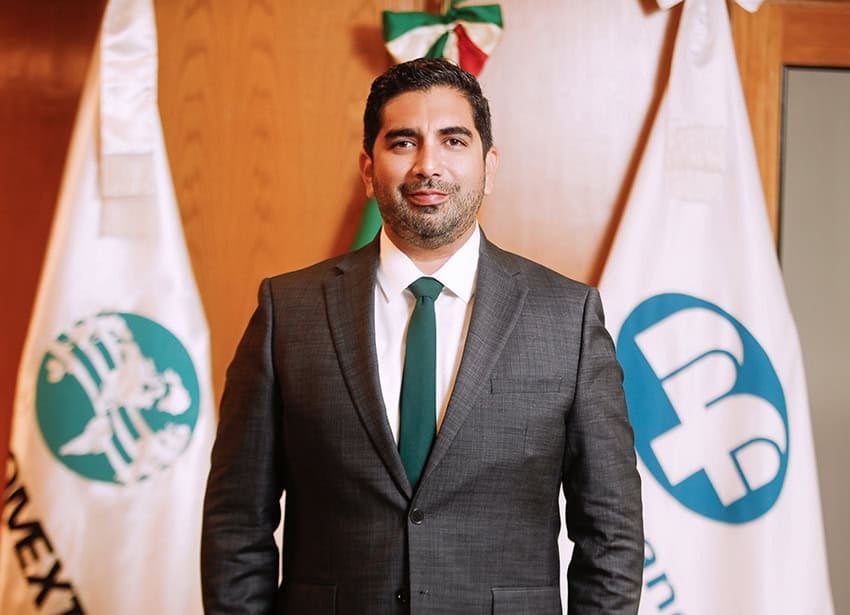
The U.S. has now approved National Financiera and Bancomext Director Roberto Lazzeri to replace Esteban Moctezuma as Mexico’s ambassador to the United States. (Bancomext)
Sheinbaum noted that the U.S. government had accepted the nomination of Roberto Lazzeri as Mexico’s ambassador to the United States.
“We received approval,” she said, adding that the incoming ambassador will be heading to Washington, D.C., to take up his position in the coming weeks.
Sheinbaum announced on April 23 that the government was proposing Lazzeri, the head of two Mexican development banks, as Mexico’s next ambassador to the United States. At the time, the president suggested that Lazzeri, a former Finance Ministry official, was well-qualified to engage with the United States on trade issues as this year’s review of the USMCA free trade pact takes place.
Lazzeri will replace former Education Minister Esteban Moctezuma, who has been Mexico’s ambassador to the United States since 2021.
Sheinbaum to meet with Markwayne Mullin
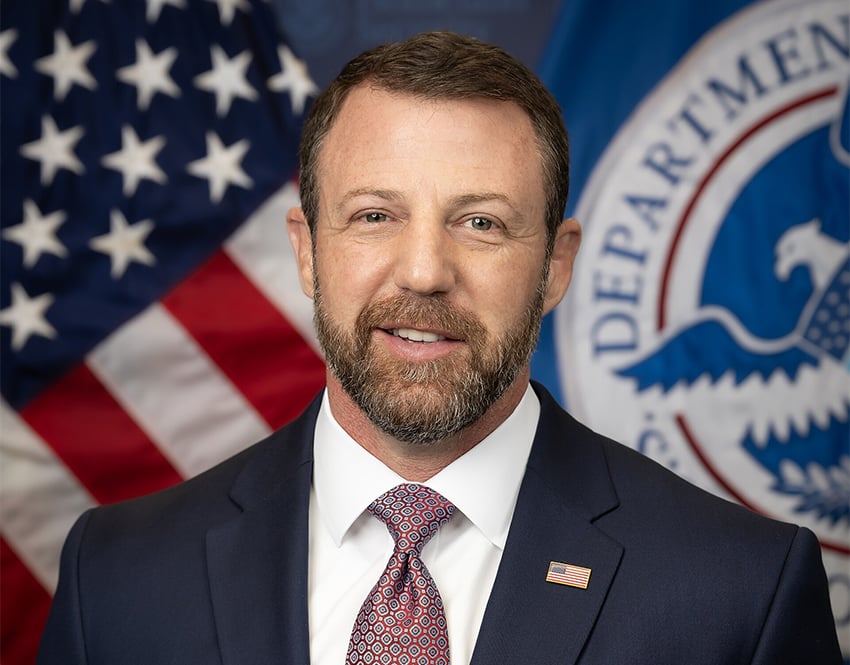
Sheinbaum noted that she would meet later in the day with U.S. Homeland Security Secretary Markwayne Mullin.
She said that members of the federal government’s Security Cabinet would accompany her in her meeting with Mullin, who replaced Kristi Noem as Homeland Security secretary in March.
US Homeland Security Secretary Markwayne Mullin is scheduled to visit Mexico City and meet with President Sheinbaum on Thursday. (Tia Dufour/DHS)
She said that the U.S. official would remain with Security Cabinet members after her meeting with him to continue working.
She said that she wouldn’t ask the Homeland Security secretary about the case against Rocha and the other officials as it corresponds to the U.S. Department of Justice.
“It’s another area of the U.S. government,” Sheinbaum said.
She also said that her planned meeting with Sara Carter, director of the U.S. Office of National Drug Control Policy, may be postponed.
Sheinbaum said that Foreign Affairs Minister Roberto Velasco told her that Carter may not make it to Mexico City next Monday due to a scheduling conflict.
By Mexico News Daily chief staff writer Peter Davies (peter.davies@mexiconewsdaily.com)
There aren't a lot of trees in Nezahualcóyotl, but thanks to nonprofits like SUGi, there are more than there used to be. (SUGi)
A year ago, a network of reforestation workers embarked on a challenging mission to plant a pocket forest in Nezahualcóyotl, an area located on the periphery of Mexico City.
Andrea Guzmán, the urban planner behind the project, realized during her studies that most city layouts were driven by architectural design rather than by the biology of the environment. When she heard about SUGi, a nonprofit that has fostered the creation of over 263 pocket forests across 62 cities, she decided to propose the creation of an urban forest in Neza. “The truth is, everything happened very quickly. They already had a funder. And within months, we were planning the project,” she said of the process.
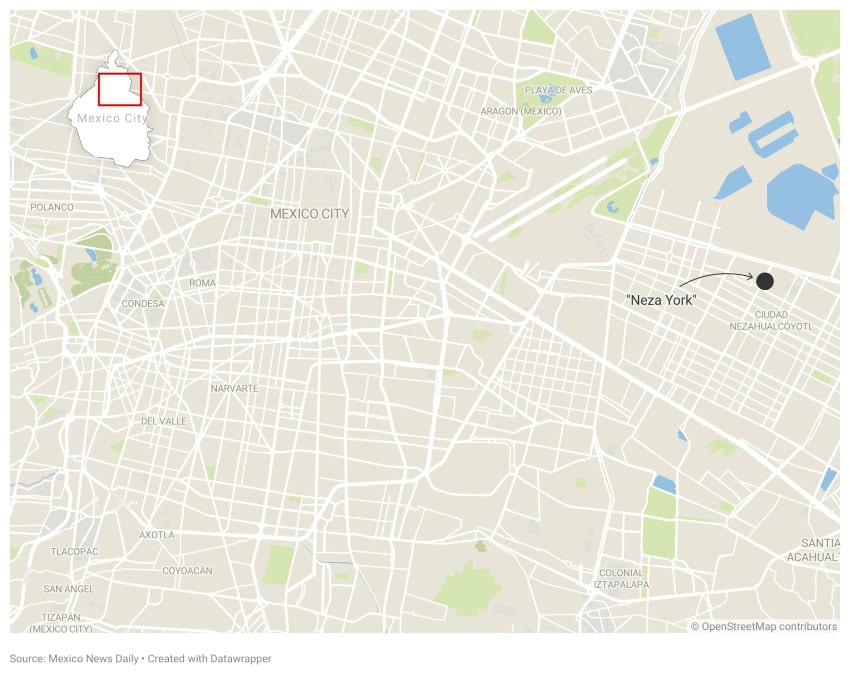
Planting Trees in ‘Neza York’
Located on the periphery of Mexico City, Nezahualcóyotl is an area badly in need of more green spaces. (Mexico News Daily)
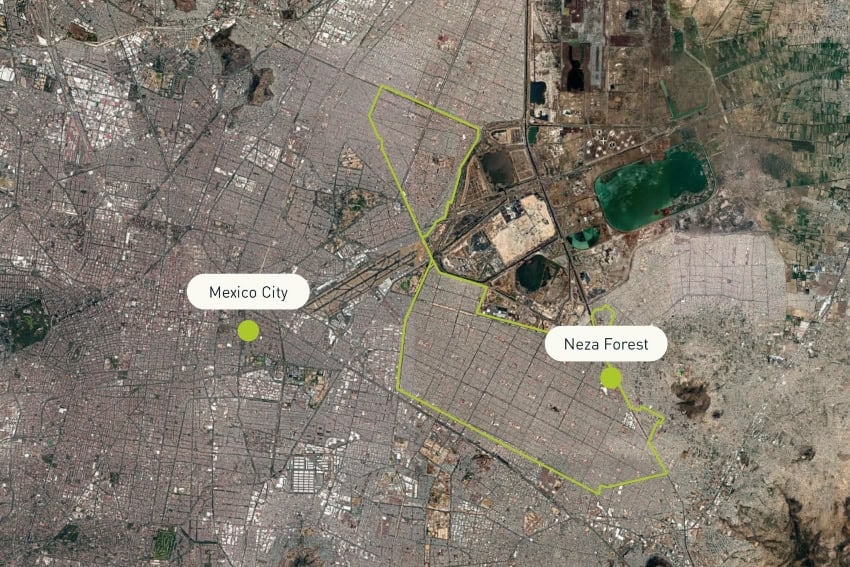
Nezahualcóyotl, also known as “Neza York,” is a densely populated urban settlement located on the former bed of the saline Lake Texcoco. It suffers from the urban heat island effect, in which concrete and asphalt absorb and re-emit the sun’s energy, creating “islands” of intense temperatures, often between 1–7 degrees Fahrenheit higher than surrounding areas. Marginalized communities are especially at risk. Due to environmental injustice, these communities often receive little to no investment in green space, which offers relief through shade and heat absorption. In Nezahualcóyotl, residents have access to just a fraction of the green area considered adequate, far below the roughly 100 square feet per person recommended by the World Health Organization.
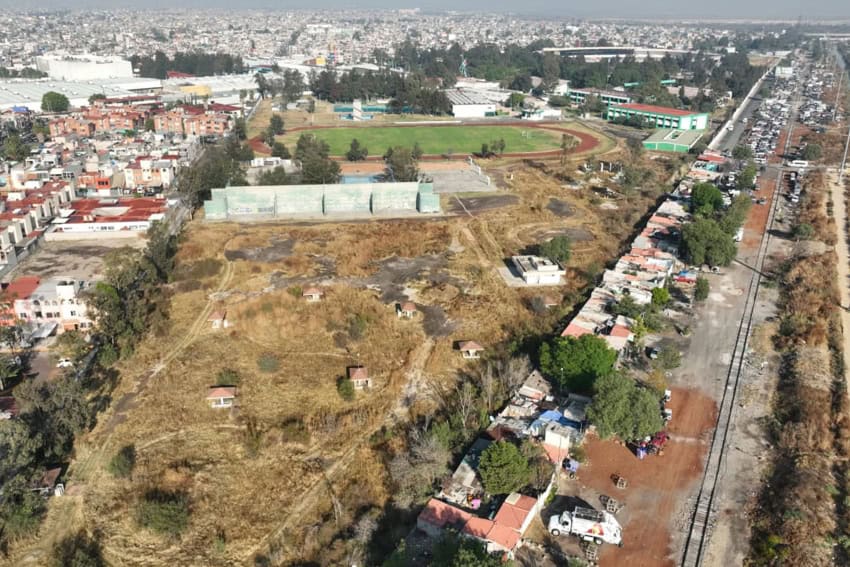
But soil conditions in Neza are also part of the problem. “Because of the high level of soil salinity, we first needed to validate that planting an urban forest would work,” said Diego, co-founder of the Chilean reforestation company Simbiótica, who was hired for the project.
Reforesting with the Miyawaki method
Funded by Steve Madden, under the direction of Andrea and Symbiotika’s team, consisting of Diego, Gabriel and Nicolás, and with the help of over 300 volunteers, the bare soil near the university campus of the Universidad Tecnológica de Nezahualcóyot was transformed into a living ecosystem. The technique used is inspired by the Japanese Miyawaki method, a “high-intensity” reforestation process mimicking forest structures in urban environments. The soil is decompacted, reoxygenated and revived with large amounts of compost. Between three and five different trees and shrubs are planted within roughly 10 square feet. The dense planting encourages vertical growth and an irrigation system supports the plants during their first three years. From the third year onward, the best management becomes no management, as the forest becomes autonomous and self-sustaining.
One year after the painting, the urban forest in Neza thrives, with a plant survival of more than 90% and some trees having reached over 10 feet. The circular green space with multi-layered vegetation holds over 25 native plants that tolerate soil salinity. The project in Neza is considered a success, proving that an urban forest, if designed purposefully, can even grow in saline soil.
What trees bring to Mexico City
“In cities, the marginal value of every new tree is higher than in landscapes that are already heavily vegetated because they provide more ecosystem services,” says Amelia Harvey, an urban planner and data analyst who created a dataset analyzing tree density, marginalization and surface temperatures in Mexico City and the peripheral area to identify the areas most in need of vegetation, such as Nezahualcóyotl and Ecatepec.
Urban forests can reduce noise pollution and capture harmful air particles. They attract biodiversity, enhance soil health, store carbon and allow water to infiltrate, helping to prevent flooding. Surface temperatures within the pocket forest can be significantly lower than in the surrounding area.
Planting urban forests has several positive effects, from reducing noise pollution to lowering the depression and anxiety levels of city residents. (SUGi)
Another benefit of green spaces in cities is their contribution to residents’ mental health. A growing body of research shows that people with little or no access to green space tend to have higher levels of depression and anxiety.
“An urban forest is a healthy place that can inspire and surprise you. A place where you can spot insects you have never seen before, different colors … where suddenly a purple flower grows. We need to be part of a world that still holds magic,” explains Andrea about the forest’s impact.
“When everything is so controlled, when you know in how many minutes the Uber will arrive or when your coffee will be ready, nothing surprises you anymore. But the natural world can still surprise us every day.”
Micro-ecosystems, ‘urban acupuncture’ and biodiversity corridors
From a global perspective, the carbon capture of urban forests may be limited, but at the local level, green spaces are a powerful solution. Climate change must be addressed in two ways: through large-scale reforestation and through the creation of biodiversity corridors and vegetation within cities.
“You cannot care for something you don’t know,” says Andrea when we talk about climate change. The urban forest becomes a teacher and reference point for city residents, who are often disconnected from the natural environment.
To help cities counter the negative effects of urbanization and climate change, she suggests “urban acupuncture,” a strategy in which small green spaces are distributed across the city to help it recover and heal. The introduction of biodiversity corridors is also crucial to help reconnect the fragmented wildlife habitats that are a consequence of urbanization. The next urban forest is planned for Iztapalapa.
Nezahualcóyotl’s green spaces relative to those in neighboring Mexico City. (SUGi)
But installing urban forests is not the only goal.
“We also want to change the perception of green areas,” says Gabriel, co-founder of Simbiótica. A green space with a lawn and a few trees does not hold the ecosystem that existed before urbanization. Andrea is working on projects that will reintroduce bountiful vegetation into existing parks and lawns in Miguel Hidalgo and Cuauhtémoc. She is convinced these micro-ecosystems work. “The response we’ve received from people has been incredible. There’s been an impressive sense of ownership over these forests, a level of participation that exceeds our expectations. People are eager; once you place it in their neighborhood, they want it and take care of it.”
Katy Alivraz is a contributor to Mexico News Daily.
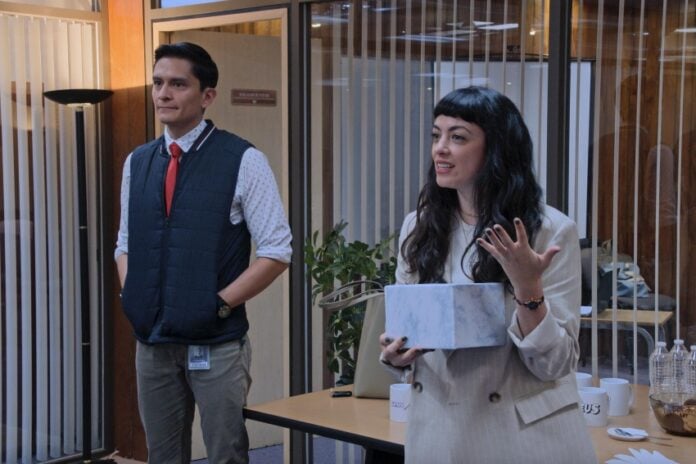
"La Oficina," the Mexican version of the hit U.K. and U.S. shows "The Office," is good ... almost surprisingly so. (IMDb)
I was very skeptical when Amazon Prime announced “La Oficina,” the remake of the classic comedy “The Office,” which began in the U.K. and went on to become an even bigger hit in the U.S. version starring Steve Carell.
As the name suggests, “The Office” — which has remakes in at least a dozen countries, including Australia, Germany and France — follows the day-to-day life of an office, its employees and their boss in a satirical documentary-style format known as mockumentary.
La Oficina | Tráiler Oficial | Prime Video
As a fan of the U.S. version myself, I cringed the first time I saw an ad for “La Oficina” in my Amazon Prime account.
“Why are they doing this? We don’t need a Mexican version of ‘The Office,'” I thought, considering the intent to be a profanation of the hugely successful show.
Still, I decided to give it a try.
The format works in Mexico, too
So, with the uncomfortable feeling of not knowing what to expect and fully anticipating turning the TV off within the first five minutes, I pushed my prejudices aside and watched the show.
To my surprise — and to the surprise of many Mexicans — the show was a joy to watch.
“‘La Oficina’ (México) is really well done!” said a user on social media.
Even specialized media like El Saber del Todo called the show “a pleasant surprise to anyone who had no faith in the project.”
In fact, the show was so well received by Mexicans that a few weeks after it was released, Amazon Prime announced it would be renewed for a second season.
Upon learning the news, I felt thrilled about what any of the employees of “La Oficina” would’ve felt if “corporate” had decided to give them an unexpected bonus.
Why did ‘La Oficina’ work so well?
When I discovered that the production behind “La Oficina” was Gaz Alazraki, it all made sense. He is the creator of two of Mexico’s most successful productions in modern times: the film “Nosotros los Nobles” and Netflix’s first Spanish language show, “Club de Cuervos.”
In an interview withSopitas, Alazraki said that what they had created with “La Oficina” was something Mexicans had never seen before. And he was right, because I can’t recall any show that depicted office reality in such a precise and humorous way.
Gaz Alazraki is as successful at capturing office dynamics in “La Oficina” as he was with soccer in “Club de Cuervos.” (IMDb)
Throughout the whole first season, I found myself nodding and almost clapping at scenes that felt strangely familiar, as if they were taken from real-life events from my days in a Mexican office environment (yes,I was a godín once).
One of the things that the show depicts really well is the reality of Mexico’s business scene.
With “The Office” franchise, the lead character is always an incompetent boss who somehow manages to successfuly run his office, despite his personal shortcomings. For “La Oficina,” however, the boss — Jerónimo, nicknamed Jero — is the grandson of the founder of Jabones Olimpo, a fictional company that sells soap. In a country where most companies are family-run businesses, this couldn’t have been better thought out.
Having the son of the owner as the boss means that no matter how hard the employees try, they’ll never succeed him. It also means that no matter how bad he messes up — or how inappropriate he may be — he’ll never be let go, which gives “La Oficina” a unique plot that accurately, and uncomfortably, represents how many offices in Mexico work.
An uncomfortable familiarity
Another thing the show did really well was choosing Aguascalientes as the setting. The original two series also take place in slightly off-kilter locations, with the fictional Wernham Hogg offices in Slough (a town so legendarily ugly that the UK’s national poet, John Betjeman, called for it to be bombed) and the U.S. version being set in Scranton, Pennsylvania. These quiet corners of the country help establish the characters that inhabit them further and it’s no different for the cast of “La Oficina,” who feel like ordinary Mexicans, not characters in a Netflix drama.
The characters will seem very familiar to those who have actually worked in a Mexican office. (IMDb)
Even the intro scene depicts ordinary streets and public bus rides that reflect how most Mexicans commute to work. In that sense, Aguascalientes accurately conveys the story’s premise: an ordinary city with ordinary people working at ordinary companies. And this feeling of “familiarity” wouldn’t have been possible without the show’s characters.
Alazraki and his team created each of the characters so masterfully that any one of them could fit perfectly into a real office. Because if you’ve ever worked in a Mexican office, you’ve surely had a colleague who does her entire make-up sitting at her desk, or you’ve seen the corporate lawyer in brightly colored shirts with white collars and the paranoid colleague spraying the entire office with disinfectant.
You’ve probably also seen Pope John Paul II’s blessing framed and displayed in a glass case (what Mexican family or company doesn’t have this image on display?) as well as the gigantic portrait of the company’s founder at the backdrop of the boss’s office.
Because if you’ve worked in a Mexican office, I’m sure the show would make you feel — even during the most bizarre moments — that this could be, in fact, your office.
Gabriela Solis is a Mexican lawyer turned full-time writer. She was born and raised in Guadalajara and covers business, culture, lifestyle and travel for Mexico News Daily. You can follow her lifestyle blog Dunas y Palmeras.
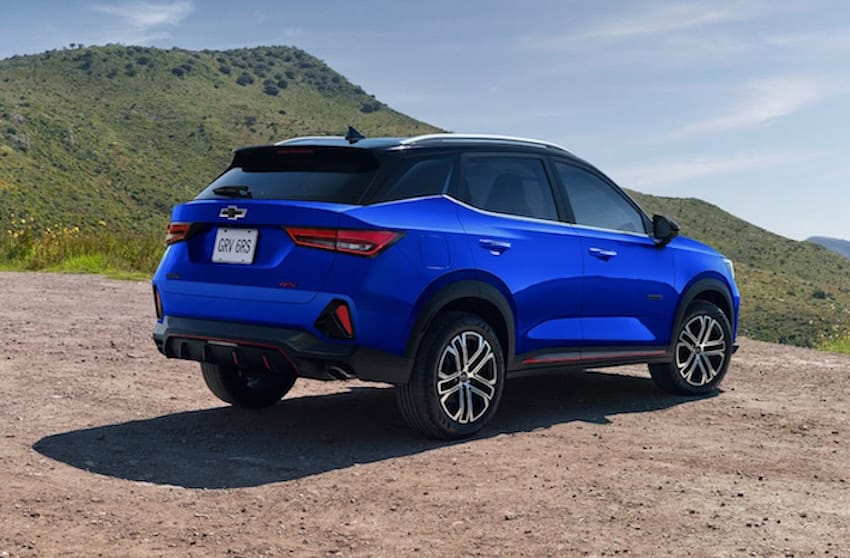
The Chevrolet Aveo will be assembled starting next year in Mexico, where it is already GM's top selling car, with over 60,000 sold in 2025. (Chevrolet)
General Motors will launch operations to assemble the Chevrolet Groove and Aveo in Mexico, as the Detroit automaker moves toward shifting more of its production supply chain to the Mexican market.
GM previously produced the cars in China to export to other markets.
The Groove, like the Aveo, was assembled in China until now. (Chevrolet)
The change is part of GM’s US $1 billion investment in Mexico, which the firm announced in January, underscoring the automaker’s long-term commitment to the country where its market share is over 12%.
President Sheinbaum made the announcement on Tuesday at an event in Toluca, México state, alongside GM Mexico CEO Francisco Garza Rodríguez, where she said that following the imposition of U.S. tariffs on the automotive industry, she held talks with global automotive executives.
“The first thing I told them was: we want you to stay in Mexico. Don’t think about leaving!” Sheinbaum said.
Economy Minister Marcelo Ebrard said the announcement was the result of months of direct negotiations between the president and GM’s global CEO, Mary Barra.
Starting next year, GM will be assembling vehicles at its Ramos Arizpe plant in Coahuila, which began operations 45 years ago and employs around 5,000 workers. The firm expects to produce around 80,000 vehicles a year by 2030.
The Aveo is one of the top sellers in the Mexican market and is GM’s top-selling car in Mexico, with over 60,000 sold in 2025.
“This announcement is concrete proof that Plan México is working and that collaboration between the government and the private sector is fundamental to strengthening employment, national productive capacity and sustainable industrial development,” Garza Rodríguez said.
GM’s investment is expected to strengthen Mexico’s automotive industry and create more skilled jobs. The move implies greater certainty in the Mexican market following GM’s decision to lay off 1,900 workers from Ramos Arizpe earlier this year, citing weak U.S. demand.
GM is responsible for approximately 200,000 direct and indirect jobs in Mexico.
The GM announcement “confirms confidence in Mexico,” the Business Coordinating Council stated on social media. “This decision represents more investment, more jobs, and greater confidence in the country’s productive capacity, in line with the objectives of the Plan México.”
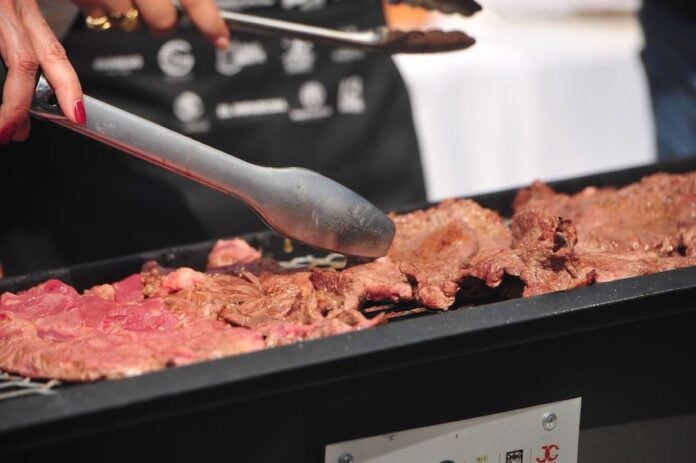
The carne asada grilling tradition is (along with seafood) Sonora's claim to culinary fame. But to enjoy it at National Geographic's "Best of the World" level, you need to accompany it with the agave-based spirit bacanora. (Guinness World Records)
Sonora, Mexico’s second-largest state and home to spectacular desert landscapes, has entered National Geographic’s Best of the World list of gastronomical destinations, joining such culinary meccas as Vietnam’s Central Highlands, Lucknow in India and Southern Tasmania’s Aboriginal region as one of the 15 best places in the world to eat.
The border state is known for seafood and its central role in northern Mexico’s carne asada grilling tradition, but neither of those two beloved foods can claim credit for Sonora’s newfound recognition. Neither can any other chewable food.
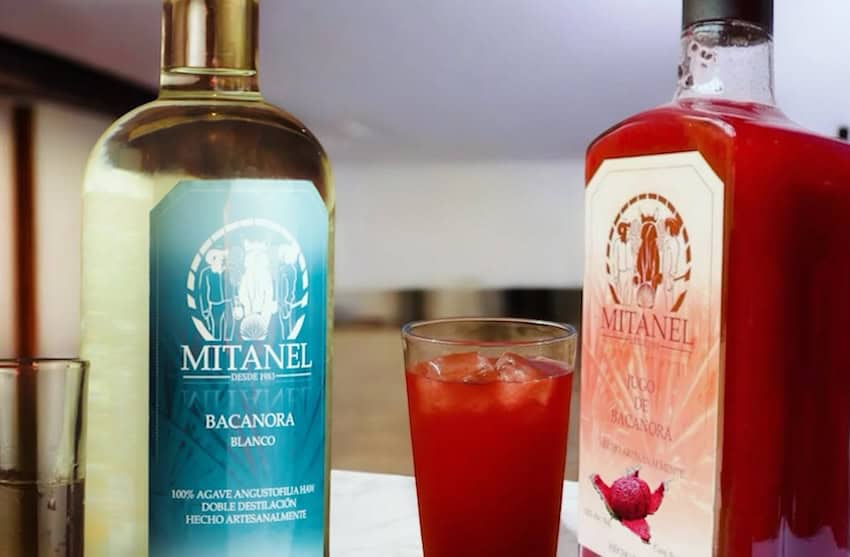
The bacanora tradition in Sonora goes back centuries, when Pre-Columbian Indigenous people consumed a molasses-like prototype. Today’s version is more like mezcal in terms of texture, but unique in its own way. (Mitanel)
That honor goes to a lesser-known agave-based spirit called bacanora, a smokier beverage stronger than tequila and tightly tied to Sonora’s identity, stretching back as it does “to the Indigenous Ópata, who sipped the [then-] molasses-like concoction, made from roasted agave hearts.”
Bacanora is distinguished from other mezcales by the type of agave used in its production. Known as Pacific agave, bacanora’s star ingredient mostly grows in the arid highlands of Sonora, where it has been consumed at ceremonies since pre-Columbian times.
With the arrival of Jesuit missionaries in the 17th century, the distillation process was perfected enough to produce a clear spirit with a smooth flavor, featuring notes “of candied agave and an earthy minerality from the arid foothills,” as National Geographic puts it.
By the 18th century, bacanora was ubiquitous at weddings, baptisms, and quinceañeras before it was forbidden in 1915 by Governor (later President) Plutarco Elías Calles, who linked the spirit to moral decay. But sonorenses didn’t stop producing it, and families would distill the beverage in 50-gallon drums and plastered vessels buried in the undergrowth in remote mountainous areas.
“Bootlegging became both an act of cultural preservation and a silent political rebellion,” the magazine said.
The Museo Estatal del Bacanora in the town of Bacanora showcases copper stills, archival photographs and contraband bottles that tell the story of the producers who kept the distilling tradition alive during prohibition.
The spirit is still mainly produced artisanally, but with the growing international demand for Mexican spirits like mezcal and tequila, bacanora is experiencing a revival. Commercialization is sure to set in, which is why National Geographic urges a visit to the Bacanora region of Sonora as soon as possible.
Union representatives are demanding better pay, shorter shifts and access to necessary training. (Galo Cañas/Cuartoscuro)
Just over three weeks before the FIFA men’s World Cup kicks off in Mexico City, Mexican air traffic controllers are threatening to go on strike over inadequate pay and “exhausting shifts,” among other concerns.
In a statement issued on Tuesday, the National Syndicate of Air Traffic Controllers (Sinacta) said that its representatives would go to the Federal Tribunal for Conciliation and Arbitration in Mexico City on Wednesday to file a formal strike notice (emplazamiento a huelga).
In doing so, the union — which represents employees of the state-controlled Navigation Services for Mexican Airspace (Seneam) — will increase its pressure on the federal government to meet its demands. It specifically wants to enter into dialogue with federal officials with the aim of securing better pay and conditions for its members, who work at airports across Mexico.
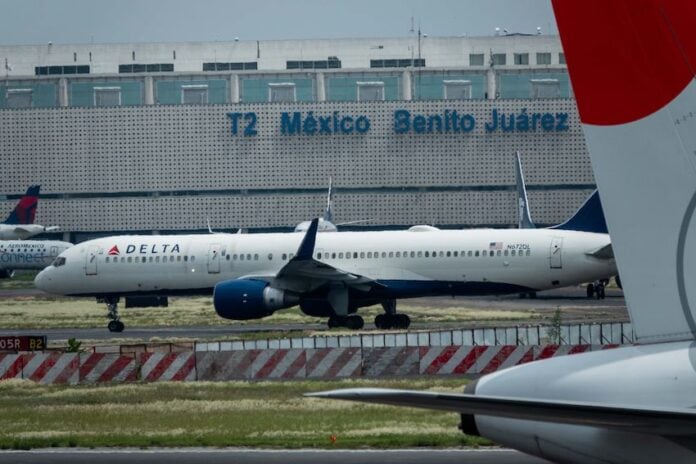
If air traffic controllers were to go on strike in the coming weeks, the operation of airports in Mexico could be severely disrupted, if not halted altogether, at a time when demand for flights to and from Mexico will be higher than normal due to the World Cup.
In its statement, Sinacta said that its members have maintained their “commitment to the safety and efficiency” of Mexico’s airspace with “irreproachable professionalism.”
However, the union asserted that federal authorities, including the Ministry of Finance and the Ministry of Infrastructure, Communications and Transport — of which Seneam is part — have responded to air traffic controllers’ “dedication with silence and indifference.”
Sinacta outlined five central complaints. It said that:
More than 19 air traffic controllers are working without the formal employment “appointment” to which they are legally entitled.
Air traffic controllers’ wages have lost 30% of their purchasing power (over an unspecified period of time.)
Air traffic controllers face “more barriers” to performing their job.
Air traffic controllers are required to work “exhausting shifts.”
Sinacta said that its decision to file a strike notice wasn’t taken lightly. However, it said that the notice is a “legal and legitimate recourse to demand that the state guarantee the minimum salary and working conditions required to practice our profession.”
“To every colleague who is today covering their shift in the control towers and centers. You are not alone,” Sinacta said.
“This [strike] notice is a tool to force the opening of a table for decisive and real dialogue,” the union said, adding that it wants commitments in writing from the federal government.
“We know the enormous responsibility we carry on our shoulders every time we sit in position. It’s time for that responsibility to be remunerated and respected as it should be,” said Sinacta, which received support for its position from the Association of Airline Pilots of Mexico.
Mexico’s airports are more chaotic than usual due to World Cup-related construction. A strike would be an additional pain for the routine traveler and a nightmare for the fútbol fan who needs to make it to a match. (Camila Ayala Benabib/Cuartoscuro)
The union issued its statement after holding its National Congress meeting on Tuesday. At that meeting, Sinacta members demonstrated their support for strike action by chanting “huelga, huelga, huelga!” (strike, strike, strike!).
José Alfredo Covarrubias, the secretary general of Sinacta, said that federal authorities — rather than air traffic controllers — posed a threat to the normal operation of airports during the World Cup, a 39-day tournament during which teams, officials and a large number of football fans will be flying into and out of Mexico, precipitating the need for additional flights.
“We lack personnel, there are equipment failures, there are communication failures,” he said on Tuesday.
“The most concerning thing is that due to a lack of personnel, the controllers have to work more hours. And, in addition, the payment for this extra work time is irregular — they take months to pay,” he said.
The newspaper La Jornada reported that air traffic controllers said at Tuesday’s meeting that they have remained on the job for as long as 30 hours.
Ulises Orozco Velázquez, a retired air traffic controller, said that the air traffic control system in Mexico is facing a critical situation that places operational safety at risk.
“While the United States is in the process of incorporating 2,400 [additional air traffic] controllers, in Mexico it’s projected that only between 50 and 60 [new] positions [will be added] in the coming years,” he said.