The governor's European itinerary includes Sweden, home of the manufacturer Scania, a participant in the Nuevo León economy. (Samuel García / Facebook)
Samuel García kicked off his 27th business trip as governor of Nuevo León by boarding Aeroméxico’s new direct flight to Paris from the state capital of Monterrey.
García will be touring several European countries to promote investment in his state, a task he has pursued energetically since he assumed office in December of 2021. Just last month, García completed a work trip through Asiawhich included meetings with Panasonic, Mitsubishi, Nissan and Yazaki in Japan.
Once airborne, Gov. García left behind him a swirl of news reports about an investigation of him by the Federal Attorney General’s Office for alleged fund diversion.
His frequent flying seems to have paid off, as Nuevo León holds the top spot among Mexican states in FINSA’s Industrial Development Index.
In a press release, García’s state government said that he plans to highlight Nuevo León’s role as host for several World Cup games as a means of promoting its value as a destination for investment and tourism.
“I’m very pleased because, in addition to [drawing] nearly US $3 billion in Swedish, Dutch, French, and Spanish investments, we have new direct flights,” García said in a video posted on his official social media channels on Monday. “And heading into the World Cup, we’ll be inviting the national teams and fan bases of Sweden and the Netherlands.”
García’s World Cup-themed agenda will include a meeting in Stockholm with the governing body of Sweden’s national team, and with the Dutch Football Association in Amsterdam (KNBV) to explore joint promotional and outreach initiatives.
In the Netherlands, García will meet with executives from Heineken, one of the world’s largest breweries, for which Nuevo León is a major market.
He will also travel to Madrid, Spain’s capital, where he will seek to strengthen collaboration with companies for energy development in Nuevo León.
In the final leg of the trip, García will meet with executives from Vinci Airports in Paris, France. Vinci Airports is the main shareholder of OMA, which operates 13 airports across Mexico.
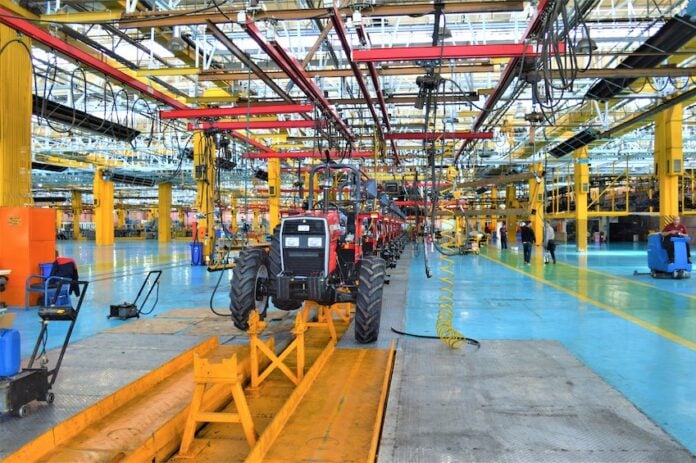
Sector activity had declined year over year in January, February and March, according to INEGI. (Unsplash)
Manufacturing sector activity in Mexico increased 1.3% in April compared to the same month of 2025, according to preliminary data published by the national statistics agency INEGI on Wednesday.
INEGI said that in April, the Timely Monthly Indicator of Manufacturing Activity had a value of 107.9 points.
“This level corresponds to an estimated annual variation of 1.3%,” the agency said.
The preliminary data indicates that activity in Mexico’s manufacturing sector — an export powerhouse — increased last month even as some high-value Mexican-manufactured products, such as vehicles and steel, continued to face tariffs when shipped to the United States.
The publication of the data comes after INEGI reported last week that Mexico’s manufacturing output increased 1.1% annually in March.
Similarly, Mexico’s export revenue — the majority of which is derived from the shipment abroad of manufactured goods — has risen despite increased protectionism from the United States, Mexico’s largest trade partner.
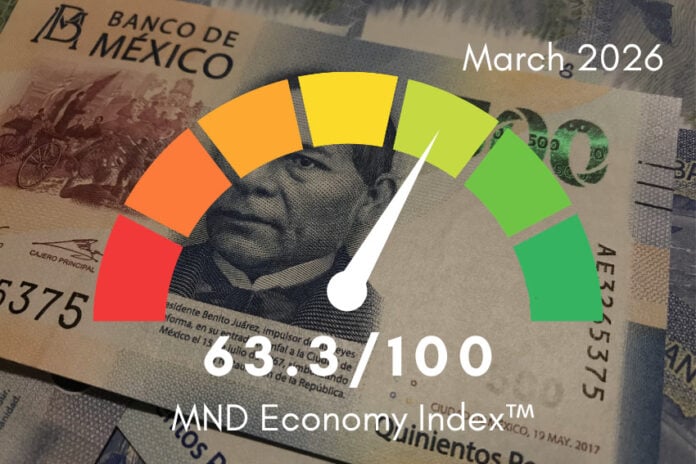
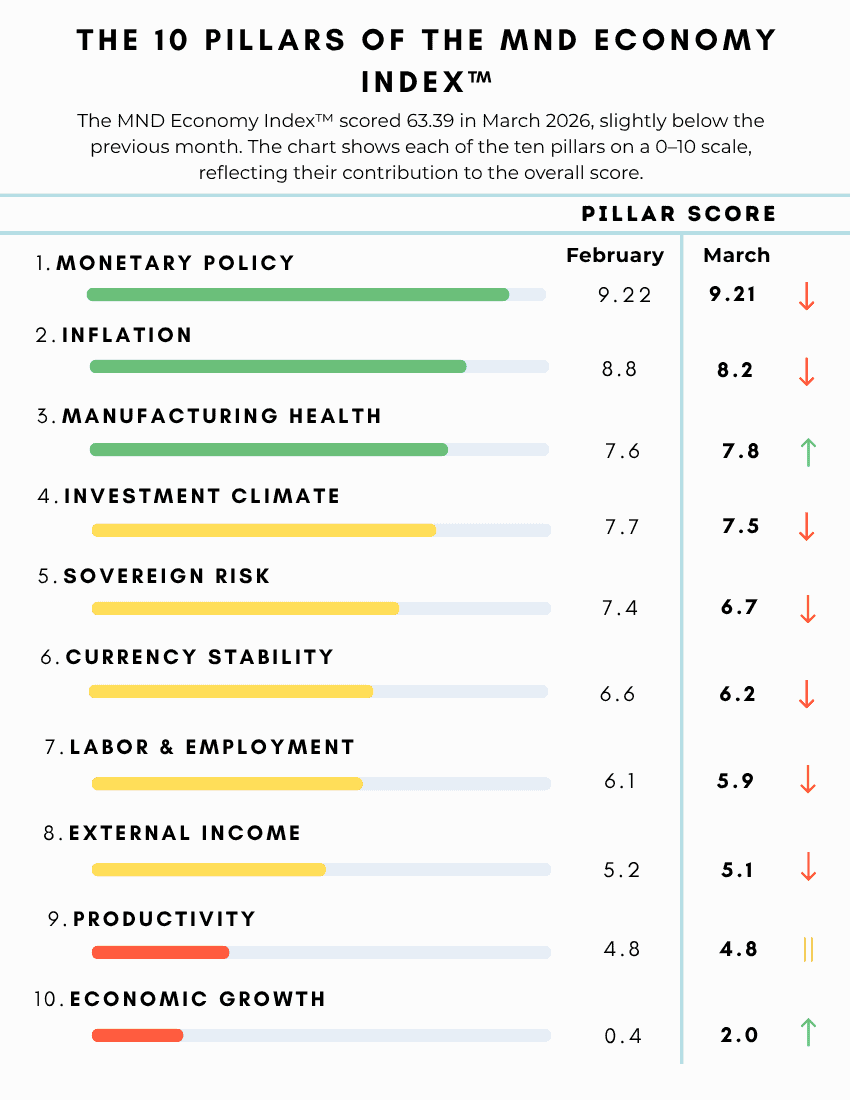
In March 2026 — our first focus month — the MND Economy Index™ scored 63.39 — above the neutral midpoint of 50, but with room for improvement. (Mexico News Daily)
THE MND ECONOMY INDEX™
Providing broad insight into the Mexican economy
MND Intelligence · Inaugural edition
Welcome to the MND Economy Index™, the latest addition to the MND Intelligence™ suite of data products from Mexico News Daily.
If you follow Mexico’s economy, you have almost certainly encountered two very different narratives. One holds that Mexico is in the midst of a historic opportunity: a nearshoring boom that could transform the country into a global manufacturing powerhouse as companies shift supply chains away from Asia. The other holds that Mexico is squandering that opportunity, held back by poor economic policy, legal frameworks, insecurity and creaking infrastructure.
Many of our readers have seen both versions of Mexico with their own eyes. You may have visited a resort city humming with tourism activity, or driven through a gleaming industrial corridor in Monterrey or Querétaro — and wondered how that squares with a country that also has some of the deepest inequality in Latin America, a country where a vast informal economy sits alongside pockets of extraordinary wealth.
The MND Economy Index™ aims to provide a realistic, data-backed and broad measure of the Mexican economy that takes both the good and the bad into account.
In our first focus month of March 2026, the MND Economy Index™ scored 63.39 — above the neutral midpoint of 50, but with room for improvement. Read on to learn about the index’s methodology, rationale and findings.
What is the MND Economy Index™?
How is Mexico’s economy really doing? It’s a deceptively simple question — and one that economic growth data alone rarely answers well. GDP for any given period tells you whether an economy is growing or shrinking, but it tells you nothing about inflation, currency stability, investor confidence or the many other forces that determine the overall health of the economy.
The MND Economy Index™ was built to go further. It is a 10-pillar, 19-indicator composite index that compiles a broad range of economic data into a single score between 0 and 100 — giving Mexico News Daily readers a clear, accessible picture of how the Mexican economy is performing across multiple dimensions.
(Mexico News Daily)
Why did we develop the MND Economy Index™?
Mexico’s economy has become increasingly difficult to read. GDP growth has been weak for some time — yet the country continues to attract record levels of foreign direct investment, and export revenue has been growing by double digits.
It is precisely that dichotomy that motivated Mexico News Daily to develop the MND Economy Index™. The index was designed to assess the Mexican economy across a broad array of areas, and to track how that performance evolves month by month.
How does the MND Economy Index™ work?
The index is built on 10 equally weighted pillars, each scored between 0 and 100 and contributing 10% to the final score. The pillars draw on 19 data points in total, sourced from Mexico’s National Institute of Statistics and Geography (INEGI), the Bank of Mexico (Banxico), the Mexican Social Security Institute (IMSS) and international financial markets.
The scoring logic falls into two types. The first are “be close to a target” pillars — where the optimal outcome is hitting a specific benchmark, and deviation in either direction is penalized. Inflation is an example: a reading of exactly 3.0% — the Bank of Mexico’s target — scores a perfect 100. Each percentage point above or below that target costs 20 points.
The second are “more growth is better” pillars — where a neutral baseline anchors to 50, and performance above or below that baseline moves the score up or down proportionally. The Economic Growth pillar is an example: growth of 2.0% scores 50 (neutral). Every additional percentage point adds 20 points; every point below subtracts 20.
It is worth noting that building an index of this kind requires judgment calls. For example, MND set the neutral benchmark for economic growth at 2.0% year-over-year growth — a modest but meaningful threshold for a developing economy — while the productivity growth neutral benchmark was fixed at 1.0%, reflecting Mexico’s historically low productivity gains. In each pillar, scores are capped at 100 and floored at 0. Given that there are 19 data points across 10 pillars, no single data point can dominate the index.
Here is a short guide to what the overall index score means.
85–100: Exceptional — the economy performing at a high level across nearly all indicators.
75–84: Strong — broad-based performance with only minor areas of concern.
60–74: Above neutral — meaningful strengths, but with notable room for improvement.
50–59: Mixed — passing marks overall, more indicators above benchmark than below.
Below 50: Broad underperformance — more indicators below benchmark than above.
Five snapshots of an evolving Mexican economy
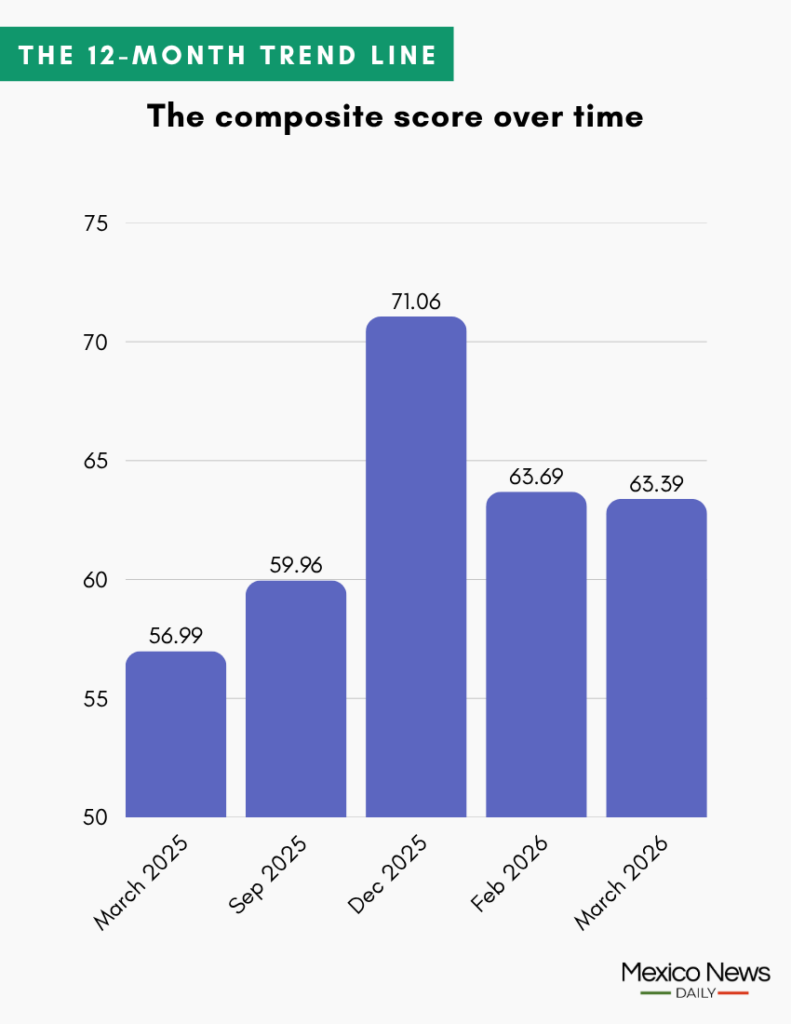
The MND Economy Index™ launches today with five months of back data — March, September and December 2025, and February and March 2026. The data paints a picture of an economy that is neither in crisis nor firing on all cylinders.
(Mexico News Daily)
The index scores ranged from a low of 56.99 in March 2025 to a high of 71.06 in December 2025, before settling in the low 60s in early 2026. In every month, the score has remained above 50 — the index’s neutral midpoint — suggesting that despite well-documented headwinds, Mexico’s economy has continued to perform above its baseline across the majority of indicators.
Economic Growth was the index’s weakest pillar during most of the reference period. In four of the five months assessed, Mexico’s monthly GDP proxy, the IGAE (Global Indicator of Economic Activity), was either contracting or barely positive — with only December 2025 bucking the trend at +2.4%.
The bright spots are consistent across all five months. Inflation remained relatively close to the Bank of Mexico’s 3% target in most months, although it edged up toward 5% in March 2026. Scores for the Monetary Policy pillar have improved steadily as the Bank of Mexico cut its overnight rate from 9.0% in March 2025 to 6.75% a year later, bringing the rate closer to the central bank’s neutral range.
Increases in export revenue — most of which is derived from the shipment abroad of manufactured goods — were a consistent bright spot, with the export component of the manufacturing health pillar hitting the scoring ceiling in December 2025 and March 2026. That growth was supported in late 2025 and early 2026 by a recovery in domestic manufacturing output.
Productivity, as measured by the IGPLE (Global Indicator of Labor Productivity in the Economy), was below the 1.0% benchmark in four of the five months of the reference period — a reflection of an entrenched structural challenge.
The MND Economy Index™ in March 2026
As noted above, the MND Economy Index™ score for March 2026 was 63.39, a slight decrease compared to the previous month. Below you will see the score for each of the ten pillars that make up the index, expressed out of 10 to reflect each pillar’s exact contribution to the final composite score.
Pillars are color-coded using a traffic light system: green (a score of 7.5 or above) indicates strong performance; yellow (5.0–7.4) signals above-neutral performance but with room for improvement; and red (below 5.0) flags a pillar that is falling short of its benchmark. Where a pillar score has improved compared to the previous month, an upward arrow appears alongside its corresponding traffic light; a downward arrow indicates deterioration; and a pause symbol denotes no change.
(Mexico News Daily)
A short description of the performance of each pillar during March 2026 accompanies each score.
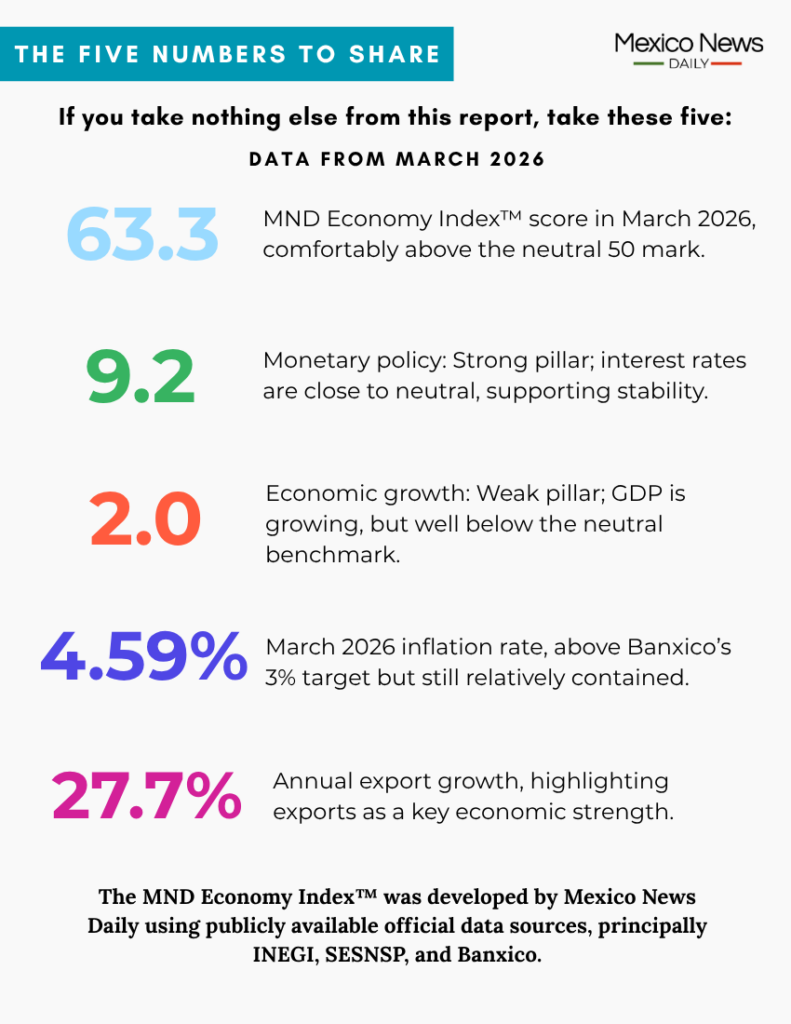
🟢 ⬇️ MONETARY POLICY (9.2):
The Bank of Mexico’s rate-cutting cycle continued in March, with the overnight rate lowered to 6.75% — just above the top end of the bank’s estimated neutral range. The real interest rate, at 2.16%, also sat close to its 2.7% neutral midpoint, even as it decreased slightly due to an uptick in inflation in March. With both the nominal and real rates near their respective neutral benchmarks, Monetary Policy remained the index’s top-performing pillar in March 2026.
🟢 ⬇️ INFLATION (8.2):
Inflation increased to 4.59% in March from 4.02% in February, causing a decline in the score for the current inflation component of the pillar. However, the 12-month forward inflation forecast — which points to a rate just above the Bank of Mexico’s 3.0% target — kept the overall pillar score strong.
🟢 ⬆️ MANUFACTURING SECTOR HEALTH (7.8):
A perfect score on the exports component due to a 27.7% annual increase in goods exports — almost double February’s increase — pushed the Manufacturing Sector Health pillar into green territory in March. The overall score was held back, however, by a more modest performance on the domestic production side. Manufacturing output grew 1.1% year-on-year, up from 0.9% in February. While the rate cleared the neutral benchmark of 0%, it fell well short of the growth needed to replicate the exports component’s perfect score.
🟡 ⬇️ INVESTMENT CLIMATE (7.5):
The top contributor to the pillar in March was the S&P/BMV FIBRAS Total Return Index, which tracks the performance of Mexico’s listed real estate investment trusts. The index grew 27.9% year-on-year, a slight softening from February’s 32.7%. Foreign direct investment, measured on a rolling 12-month basis, held steady at 10.8% year-on-year growth, unchanged from February pending the release of FDI data for the first quarter of 2026.
🟡 ⬇️ SOVEREIGN RISK (6.7):
Mexico’s sovereign credit ratings remained unchanged in March, with Moody’s and S&P both holding a BBB rating and Fitch maintaining BBB−, all with stable outlooks. The pillar’s month-on-month decline was driven entirely by a widening in Mexico’s 5-year credit default swap spread, which rose from 88.53 basis points in February to 110.29 basis points in March — reflecting a rise in the market-implied cost of insuring against a Mexican sovereign default. In May,S&P revised its outlook on Mexico’s sovereign rating from stable to negative, a development that will weigh on this pillar in future editions.
🟡 ⬇️ CURRENCY STABILITY (6.2):
This pillar penalizes significant deviation from a 19.00 USD:MXN exchange rate baseline in either direction, recognizing that a peso that has strengthened too far from this benchmark — which is based on the 2025 average rate — can erode export competitiveness and reduce the purchasing power of remittances, just as a weakening peso raises import costs. The spot rate component of the pillar performed reasonably well, as the peso depreciated from 17.23 at the end of February to 17.93 at the end of March, moving closer to — albeit still well below — the 19.00 baseline. A bigger drag came from the volatility of the peso, with the standard deviation of daily exchange rate movements nearly doubling from 0.44% in February to 0.94% in March.
🟡 ⬇️ LABOR AND EMPLOYMENT (5.9):
The pillar score declined slightly compared to February due to a marginal reduction in annual wage growth and a slight increase in the rate of informality. Nominal wages rose 7.1% year-on-year in March — down fractionally from 7.2% in February, but still well above the 3.5% benchmark. Formal employment grew 1.2% year-on-year, unchanged from February. Those two components scored fairly well, but the overall pillar was held back by the informality component, where the share of workers in the informal economy grew by 0.5 percentage points year-on-year — a deterioration from February’s 0.3 percentage point increase. Almost 55% of all Mexican workers worked in the informal economy in March.
🟡 ⬇️ EXTERNAL INCOME (5.1):
The two components of this pillar moved in opposite directions in March, leaving the overall score just above neutral. Remittances grew 4.9% year-on-year — a significant improvement from February’s 0.4% — providing a solid contribution to the pillar. Tourism revenue, however, contracted 4.4% year-on-year, reversing February’s modest positive reading and dragging the pillar down.
🔴 ⏸️ PRODUCTIVITY (4.8):
The Productivity pillar was unchanged from February, as the IGPLE — INEGI’s quarterly productivity measure — held at 0.9% year-on-year growth, a fraction below the 1.0% neutral benchmark. The pause symbol reflects the quarterly release cycle of the IGPLE. As was the case in February, data for the final quarter of 2025 was used to assess this pillar in March. While the pillar score sits in red territory, the gap between Mexico’s productivity growth and its benchmark remains narrow.
🔴 ⬆️ ECONOMIC GROWTH (2.0):
The economic growth pillar remained a drag on the MND Economy Index™ score in March. Year-over-year growth improved to 0.5% — up from a contraction of 0.3% in February — but the modest expansion remained well below the 2.0% neutral benchmark required to score 5.0 out of 10. While a score of 2 out of 10 is low, it is markedly better than the 0.4 out of 10 result recorded in February, when the economy 0.3% compared to the same month of 2025.
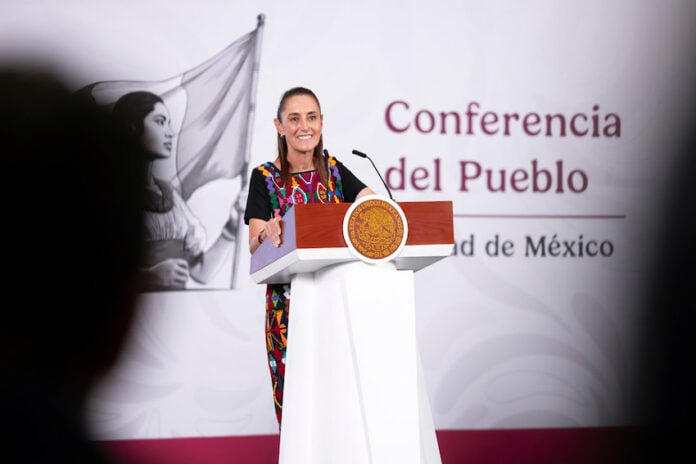
The Mexico Peace Index 2026 report states that "early indications suggest that Mexico’s evolving security strategy may be contributing to recent gains," a statement the president seized on to celebrate her political movement's results. (Gabriel Monroy/Presidencia)
Sheinbaum’s mañanera in 60 seconds
🕊️ Mexico Peace Index boost: A new report by the Institute for Economics & Peace found peacefulness in Mexico improved 5.1% in 2025, driven by a 22.7% drop in homicides. Sheinbaum credited her government’s security strategy, though the report cautioned that violence remains elevated relative to historical levels.
🇲🇽 AMLO gets credit too: Sheinbaum said the Peace Index confirms that Mexico’s long deterioration in peacefulness reversed after former President López Obrador took office in 2018. “[After] all the previous years of deterioration of peace in Mexico, peace began to be built from the arrival of President López Obrador,” she said.
🇺🇸 Trump isn’t the problem — his advisors are: Sheinbaum said she doesn’t believe Trump himself is pushing for U.S. intervention against Mexican cartels. Rather, presidential advisors are driving that pressure ahead of November’s U.S. midterms, she claimed.
Why today’s mañanera matters
At her Wednesday morning press conference, President Claudia Sheinbaum seized on a new report that states that “peacefulness” in Mexico improved markedly in 2025. The finding gave the president the opportunity to tout her government’s security strategy and the results it has achieved over the past 18 months. Sheinbaum focused on aspects of the report that serve her government’s narrative — i.e., that the security situation in Mexico has improved considerably in recent times.
Today’s mañanera was also significant as Sheinbaum revealed that she doesn’t believe that U.S. President Donald Trump is behind a push for the United States to take more forceful action against Mexican cartels, six of which were designated as foreign terrorist organizations by the U.S. government last year. Rather, a small number of presidential advisors are the proponents of such action, she said.
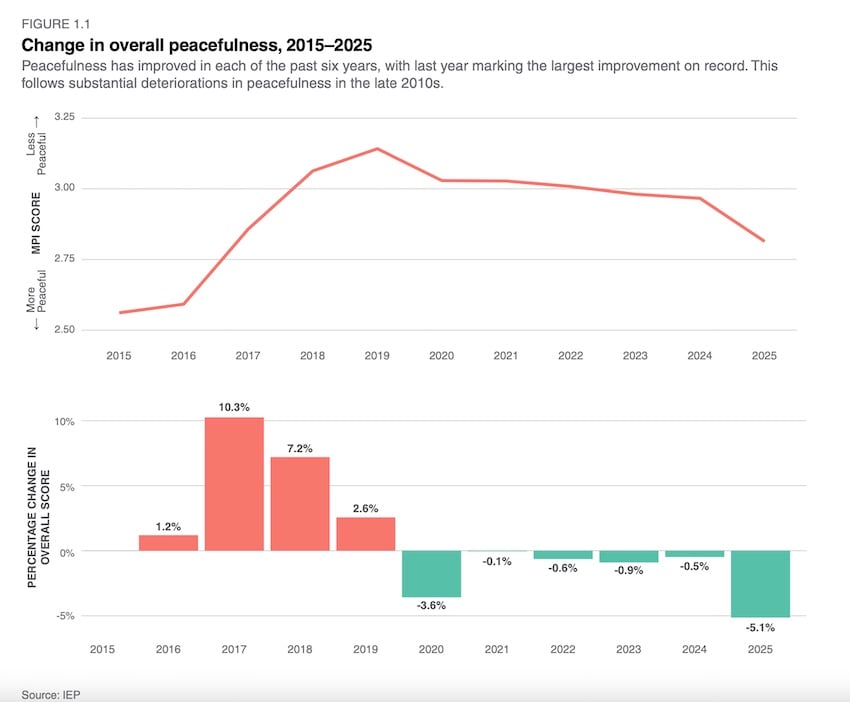
Mexico Peace Index shows peacefulness improved 5.1% in 2025
Sheinbaum highlighted that the recently released Mexico Peace Index 2026 report states that peacefulness in Mexico improved 5.1% in 2025.
(IEP)
She noted that the report states that the improvement in peacefulness in Mexico last year was the most significant in at least a decade.
Prepared annually by the Institute for Economics & Peace, a think tank based in Sydney, Australia, the report says that “the national improvement in peacefulness” in 2025 “was driven by a sharp reduction in homicides.”
“The homicide rate fell by 22.7 percent in 2025, representing nearly 7,000 fewer deaths compared to the previous year, the largest single-year decline on record,” the report states.
However, it also says that “despite this improvement, violence remains elevated relative to historical levels.”
“Mexico’s peace score is still worse than it was a decade ago, and long-term increases in firearms crime, organized crime, and gender-based violence continue to shape the country’s security landscape,” the report states.
The Mexico Peace Index is based on the Global Peace Index and includes 12 sub-indicators grouped into five major indicators: homicide; firearms crime; violent crime; organized crime; and fear of violence.
Sheinbaum: Construction of peace began when AMLO became president
Later in her press conference, Sheinbaum said that the Mexico Peace Index report acknowledges that the trend of deteriorating peacefulness in Mexico changed after former President Andrés Manuel López Obrador took office in late 2018.
“[After] all the previous years of deterioration of peace in Mexico, peace began to be built from the arrival of President López Obrador,” she said.
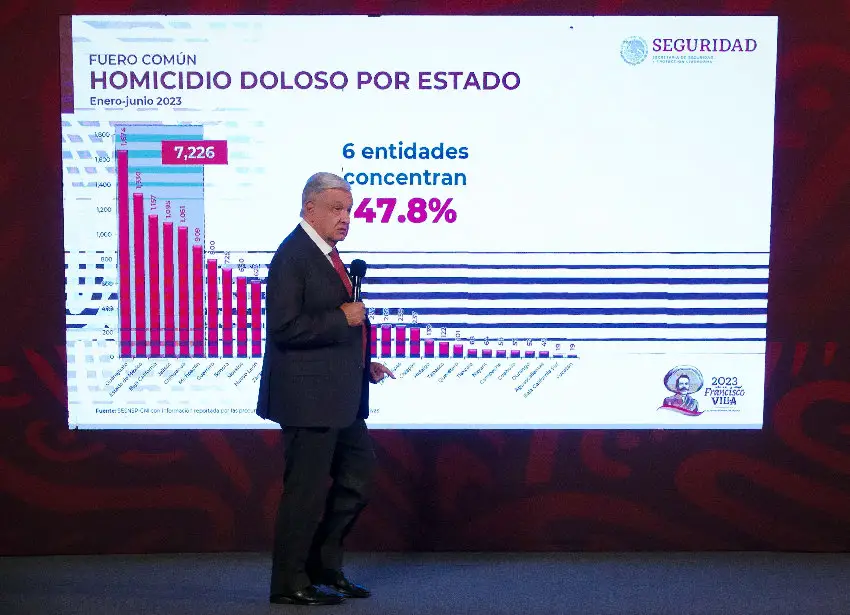
AMLO shows a chart of official homicide statistics at one of his mañaneras in 2023. (Rogelio Morales/Cuartoscuro)
AMLO, as the former president is commonly known, implemented a so-called “hugs, not bullets” security strategy that prioritized addressing the root causes of crime over combating criminal groups with head-on force. While López Obrador’s six-year term was the most violent on record in Mexico in terms of homicides, murders did decline after reaching record highs early in AMLO’s presidency.
Sheinbaum highlighted that in her first full year in office, peacefulness in Mexico — as measured by the Mexico Peace Index — improved more than ever before.
“What does that mean? That there are results,” she said.
The Mexico Peace Index 2026 report states that “early indications suggest that Mexico’s evolving security strategy may be contributing to recent gains [in peacefulness].”
“Since taking office in October 2024, the administration of Claudia Sheinbaum and its security leadership have placed a renewed emphasis on intelligence-led policing, institutional coordination, and targeted enforcement,” it says.
“There has also been a marked increase in arrests and detentions, reflected in a sharp rise in the incarcerated population during 2025. While these developments appear to have supported short-term reductions in high-impact crimes, their long-term effectiveness will depend on judicial capacity, due process, and broader institutional strengthening,” the report states.
Sheinbaum: Trump doesn’t want to intervene in Mexico
Rather, “some people” who advise Trump are pushing for U.S. action in Mexico, she opined.
Given that midterm elections will take place in the United States in November, “they want to put Mexico in their elections,” Sheinbaum said.
“[It’s] a very electoral view of a few people [in Trump’s circle],” she said.
“No,” Sheinbaum continued, rejecting any attempt to use Mexico as a political issue in the U.S.
Sharpening her tone, the president added: “Mexico isn’t anyone’s piñata, and they’re not going to intervene in … [Mexico’s] elections in 2027 either. Mexicans decide here. That’s why I say today that the essence of what we’re living through today is the defense of sovereignty.”
By Mexico News Daily chief staff writer Peter Davies (peter.davies@mexiconewsdaily.com)
Greenpeace and other advocates are hailing the decision as a victory for public pressure and a model for tougher coastal protection. (Elizabeth Ruiz/Cuartoscuro)
Mexico’s Environment Ministry has killed Royal Caribbean’s Perfect Day Mexico megaproject in Mahahual, Quintana Roo, ending a plan that environmental groups said would have scarred mangroves, reefs and the region’s fragile aquifer.
Greenpeace and other advocates are hailing the decision as a victory for public pressure and a model for tougher coastal protection.
The cancellation late Tuesday came one day after President Claudia Sheinbaum ordered a fresh environmental review of the private cruise-ship playground on Mexico’s Caribbean coast.
Mahahual, home to fewer than 3,000 people, is known for its clear, warm waters and its proximity to the Mesoamerican Reef, the largest reef in the Western Hemisphere. Turtles nest along the coast, which gives way to dense mangrove forests and tropical jungle that are home to jaguars.
There had been months of backlash over the project, which Royal Caribbean touted as including more than 30 waterslides, the world’s longest “lazy river,” and roughly 12 eateries and 24 bars — including the Tipsy Sombrero Bar, a standalone structure topped by the “world’s largest sombrero.”
Opposition was coming from many angles, including fans of K‑pop group BTS and singer Taylor Swift launching social media campaigns and Change.org petitions, including one that drew more than 4.8 million signatures.
“It is very sad to see that the fate of a community that has been forgotten for so many years is being decided on social media thousands of kilometers away when the people attacking the project don’t even know it,” said Ari Adler Brotman, president of Royal Caribbean Mexico. “Many of them, I think, couldn’t even point to Majahual on a map.”
Critics said the property would have spread across about 90 hectares of jungle and mangrove, with deep foundations, heavy construction and even more strain on an ecosystem already under pressure. Hundreds of cruise ships, including Royal Caribbean Icon-class ships that can carry 7,600 passengers, annually berth at one of Mahahual’s three piers.
Royal Caribbean said Perfect Day Mexico would be able to receive as many 20,000 to 21,000 cruise visitors a day.
Alicia Bárcena, head of the Environment Ministry (Semarnat), said Tuesday the project “will not be approved,” adding that the company was also moving to withdraw it.
Semarnat had previously said the project remained under environmental review and did not have authorization for development, construction or operation, even as Royal Caribbean marched forward with plans and on-the-ground work.
Greenpeace said the outcome should be written into formal rejection of the environmental impact statement and argued that Mahahual’s mangroves, reef system and local community all stood to benefit.
The group also urged the federal government and Yucatán Peninsula states to protect the Maya jungle and its aquifer.
Royal Caribbean, which operates a similar property in the Bahamas called Perfect Day at CocoCay, said it regretted the decision but respected Mexico’s environmental authorities.
The company said it still believes in investing in Mexico and wants talks in coming weeks about jobs, environmental infrastructure and community programs.
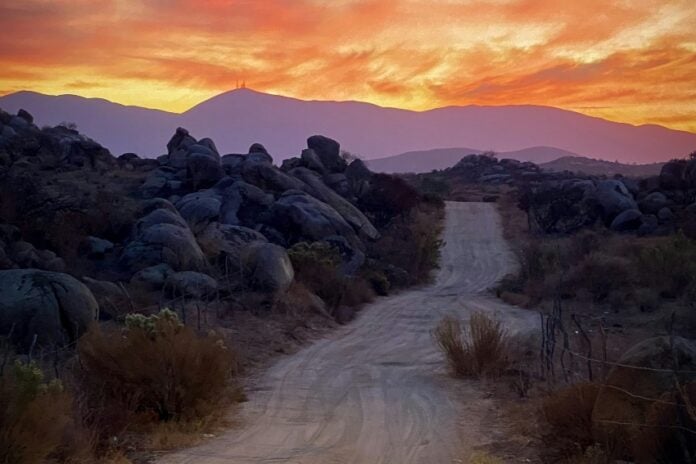
Many roads on the Baja California peninsula end in magical places, like this one, which leads to the Pueblo Mágico of Tecate. (Luis Ramírez/Unsplash)
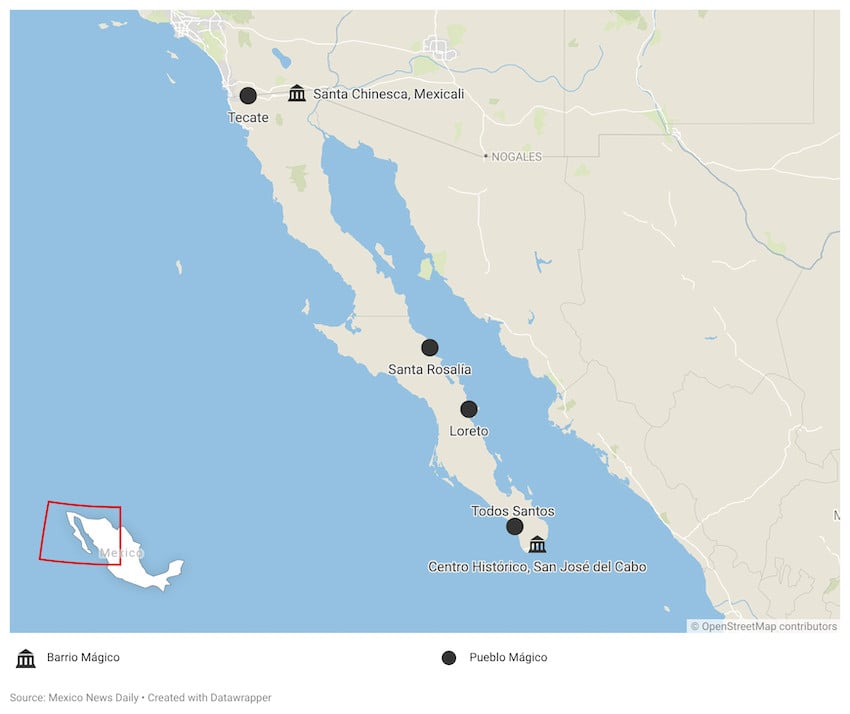
There are many magical places on the Baja California peninsula but only six have been officially designated as such: three in Baja California Sur and one in Baja California as part of the Pueblo Mágico program, launched in 2001 to promote towns in Mexico with a particularly rich history and culture; and one in each state as part of the Barrio Mágico program, founded to showcase the country’s most emblematic urban neighborhoods in 2022.
Todos Santos (Pueblo Mágico, 2006)
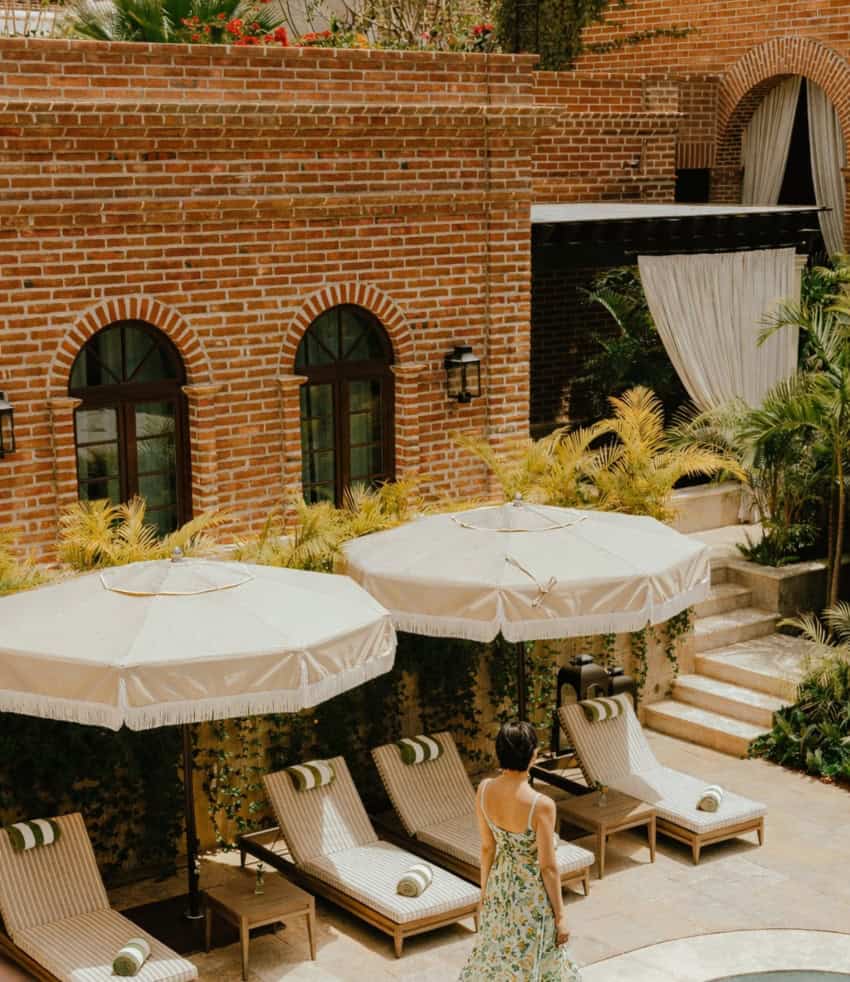
Todos Santos’ distinctive brick buildings are a legacy of its history as Baja’s sugar capital, and they can still be found in abundance today, including in some of the town’s premier boutique hotels. (Instagram)
Todos Santos is a town that has led several lives. Originally founded as the site of a Jesuit mission, Santa Rosa de las Palmas, in 1733, Todos Santos emerged after secularization in the 19th century as the peninsula’s sugar capital, with eight mills in operation by 1850. Sugar was what paid for the brick buildings that gave the town its now instantly recognizable architectural character.
However, after a drought in the 1950s lowered the water table, Todos Santos, home to a fertile oasis of lush palm groves and sugarcane fields, saw its fortunes reversed, with sugar mills shuttered and its traditional identity lost. A renaissance wouldn’t occur until the mid-1980s, when expatriate artists fell in love with the quality of light in Todos Santos and gave a boost to the town’s nascent tourism industry (A popular day trip destination from Cabo San Lucas — only an hour distant by car — it now draws half a million visitors annually).
The combination of art galleries and surfer chic gives Todos Santos its unique vibe — great surfing can be found nearby beaches like Cerritos, San Pedrito and La Pastora — but the town is also notable for its superb dining scene and many charming boutique hotels. It was a natural selection as the peninsula’s first Pueblo Mágico, and one of the original 32 named in Mexico.
Loreto (Pueblo Mágico, 2012)
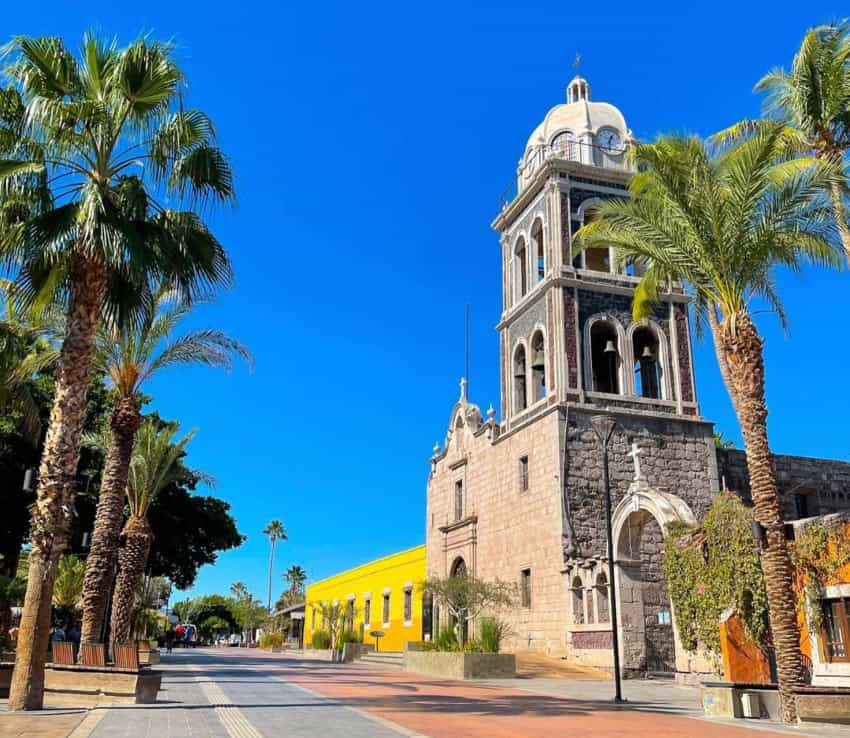
Loreto’s mission dates to 1697 and is representative of the town’s outstanding history and culture. (Instagram)
Loreto was the site of the first permanent peninsular mission, founded in 1697 by Jesuit padre Juan María de Salvatierra, and became the center of subsequent mission building, as well as the capital of California until 1777, and of Baja California until 1829. Simply put, there is no town on the peninsula with a longer or more esteemed history.
That includes the Indigenous inhabitants — most notably Cochimí and Guaycuara — whose own history in the area dates back thousands of years. In fact, one of the premier cultural attractions of Loreto, besides the mission museum, is the great rock art sites inland in the Sierre de la Giganta, which are part of the “great mural” tradition. The town of Loreto itself, with its seaside malecón and emblematic seafood delicacy, almejas chocolatas (chocolate clams, named not for their flavor but the color of their shells), is likewise a must-visit, as are the offshore islands, since designated as a national park and UNESCO World Heritage Site.
Spring is the best time to see the area’s most famous seasonal visitors, blue whales — the largest creatures ever to exist on Earth — but destination golfers can tee it up anytime of year at TPC Danzante Bay, with its spectacular cliffside holes and magnificent vistas.
Tecate (Pueblo Mágico, 2012)
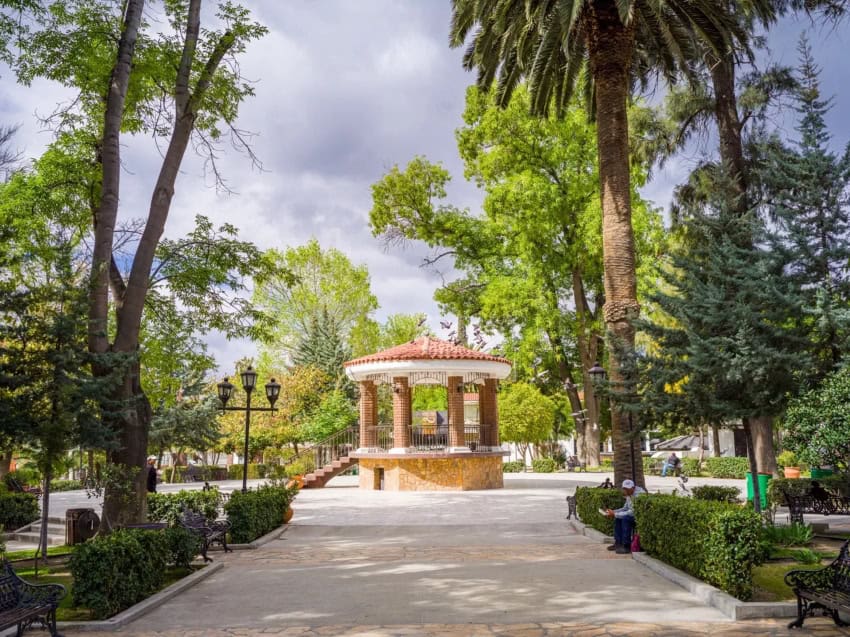
Parque Miguel Hidalgo, only a few blocks from the U.S. border, is the traditional heart of Tecate, near architectural monuments like the Tecate Hotel. (Baja California Travel)
As of 2026, there are 177 designated Pueblos Mágicos, with Baja California and Colima being the only states in Mexico to have only one. Tecate, designated in 2012, is certainly a standout, however. Although the history of the Indigenous Kumeyaay dates back thousands of years, Tecate was founded only in the late 19th century, with many of the most noteworthy buildings, like the Streamline Moderne-style Hotel Tecate, lining the picturesque Parque Miguel Hidalgo, a few blocks from the U.S. border.
Tecate was a traditional stop on the San Diego and Arizona Railway, built in the early 20th century by John D. Spreckels, which, because of the difficulty of the terrain — the origin of its nickname, the “Impossible Railroad” — dipped down into Mexico for 44 miles between Tecate and Tijuana. The historic prairie-style depot remains an attraction in Tecate, as does the Tecate brewery, which dates to 1944, the year operations began at Cervecería Tecate under the auspices of founder Alberto V. Aldrete.
Since 1940, one of the most popular attractions has also been the pioneering wellness resort, Rancho La Puerta, founded by Romanian philosopher Edmond Szekely and his wife Deborah and set on 4,000 acres with over 40 miles worth of hiking trails near the base of Mount Kuchamaa (Tecate Peak), a sacred place for the Indigenous Kumeyaay.
Santa Rosalía (Pueblo Mágico, 2023)
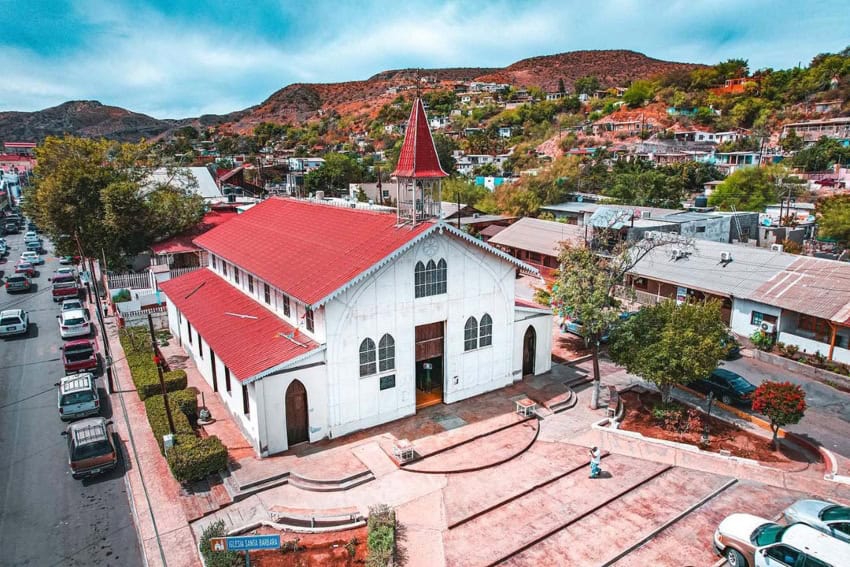
Iglesia de Santa Bárbara, one of two structures in Baja California Sur attributed to Gustave Eiffel (of Eiffel Tower fame), dates to the late 19th century. (SantaRosalía.mx)
Located a little over 60 kilometers north of Mulegé, Santa Rosalía came to prominence as a mining capital, with its House of Rothschild-owned copper mine, Compagnie du Boleo, in operation from 1885 until the 1950s. During the 1890s, the mine produced more copper than any other in Mexico, at its peak accounting for about half of all national production. It was also, it must be noted, a major regional employer. When what is today Los Cabos experienced severe droughts during the last five years of the 19th century, nearly 10% of the population is said to have left to work in Santa Rosalía’s copper mines.
The French investors brought railway cars and lumber as they built out the town, which still retains its European influences, as well as those from Indigenous residents. Many of the miners, for example, were imported Yaqui peoples, whose legacy is recalled in the El Boleo Mining Museum, as well as in a yearly Easter festival featuring Indigenous elements like traditional dances and mask burning rituals.
French-style pastries from the El Boleo Bakery remain a delicious part of Santa Rosalia’s culinary culture. Nowadays, however, the town’s signature dish is a more typically Baja-inspired seafood treat: almohaditas, or “little pillows” of foil-wrapped yellowtail. The Hotel Francés, meanwhile, is the preferred lodging of choice. Built during the 19th century to house visiting French engineers, its broad balconies hark back to an earlier era.
La Chinesca, Mexicali (Barrio Mágico, 2023)
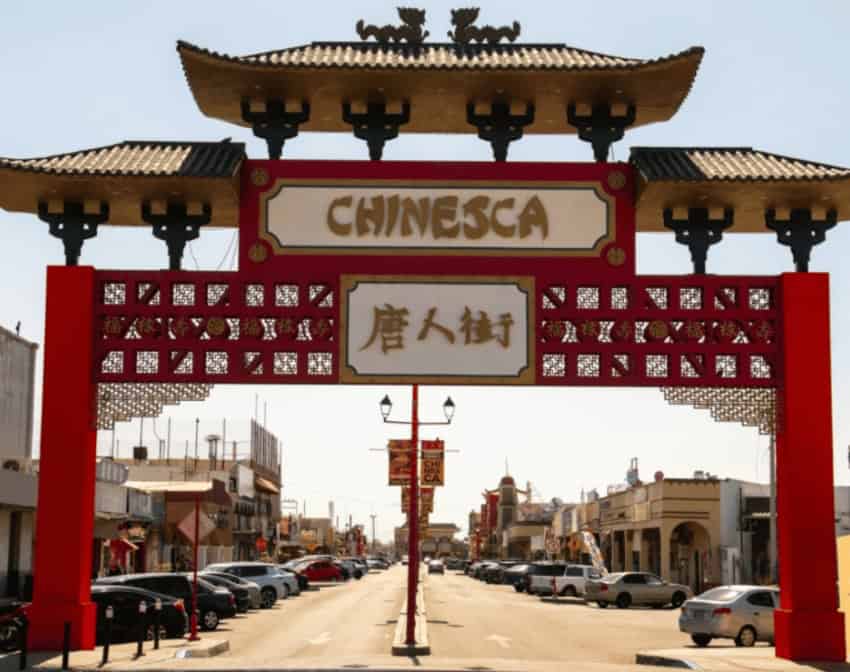
La Chinesca, the central district showcasing Mexicali’s Chinese culture, and the city’s population of over 20,000 people with Chinese heritage. (Instagram)
The oldest “Chinatown” in Mexico, La Chinesca in Mexicali, dates back to the early 20th century founding of the town, with Chinese residents initially outnumbering Mexicans 3:1 following the passing of the Chinese Exclusion Act in the U.S. There are still an estimated 20,000 people of Chinese descent living in the city.
The legendary underground tunnels — once home to opium and gambling dens — were built by the 1920s and continue to be a popular tourist attraction, as does Mexicali’s unique fusion cuisine. Today, Mexicali is thought to boast more than 300 Chinese restaurants, many of which have merged traditional wok-cooking methods with Mexican ingredients, birthing local specialties like “rice tamales.”
La Chinesca has been a Barrio Mágico since 2023, one of more than 30 in the country.
Centro Histórico, San José del Cabo (Barrio Mágico, 2024)
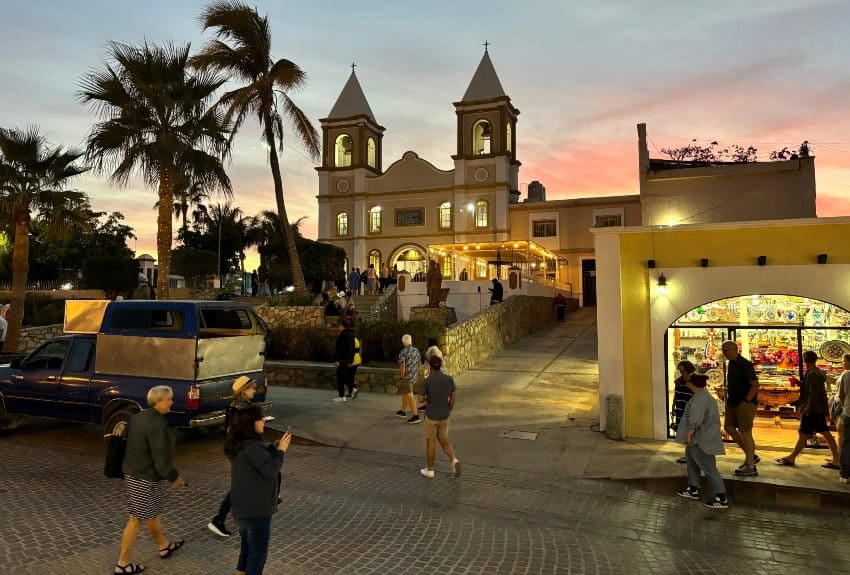
San José del Cabo’s historic Catholic Church is one of many attractions in its Centro Histórico district, named a Barrio Mágico in 2024. (Chris Sands)
For the last 20 years, weekly Thursday night Art Walks have showcased the cobblestone streets of San José del Cabo’s historic Gallery District, as well as its larger Centro Histórico neighborhood, from the broad city center, Plaza Mijares — named for a martyred hero of the Mexican-American War battle that took place in the city — to City Hall, with its historic early 20th century clock tower and interior murals, and the old Catholic church, Parroquia San José, which was rebuilt after a hurricane in 1918, with a tile mosaic above the entrance that remembers the killing of Jesuit padre Nicolás Tamaral by Indigenous Pericú in 1734.
Art Walk evenings remain the best time to enjoy this extraordinary neighborhood and newly designated Barrio Mágico, but the truth is that the neighborhood is an enjoyable stroll any time of day. Although the creation of the Los Cabos municipality is rather recent (1981), San José del Cabo is one of the most historic destinations on the peninsula, dating back to the founding of the mission in 1730, Estero de las Palmas de San José del Cabo Añuití, and of the town 100 years later.
Chris Sands is a writer and editor for Mexico News Daily, and the former Cabo San Lucas local expert for the USA Today travel website 10 Best and writer of Fodor’s Los Cabos travel guidebook. He has also contributed to numerous other websites and publications, including The San Diego Union-Tribune, Marriott Bonvoy Traveler, Forbes Travel Guide, Porthole Cruise and Travel, and Cabo Living.
MEXICO CITY — Mexican officials confirmed Monday that the country’s first domestically produced electric vehicle, the Olinia, is complete and on schedule to debut June 7, describing the compact urban car as a “landmark achievement in sovereign mobility” that industry analysts say can comfortably seat two adults, provided neither of them had lunch.
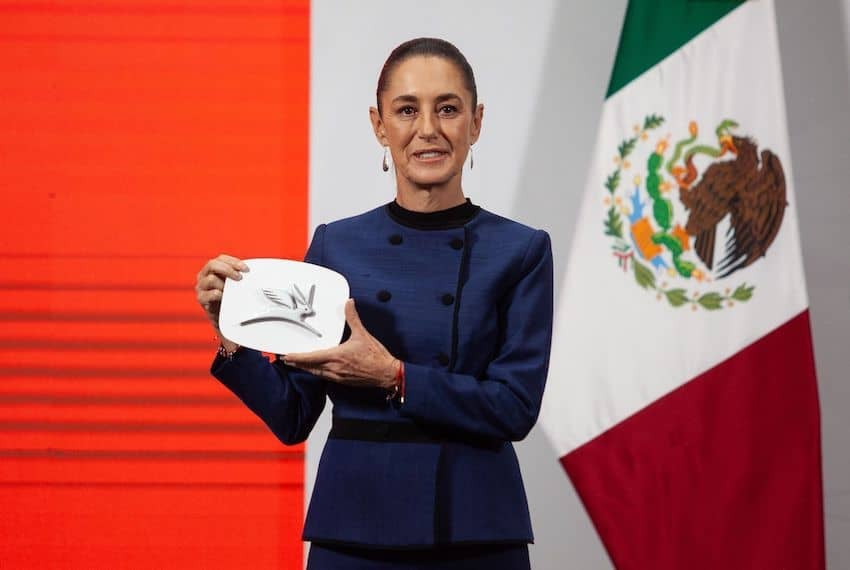
This badge is rumored to be bigger than the Olinia itself. (Andrea Murcia/Cuartoscuro)
The Olinia, developed under government direction as a practical solution to urban congestion and fossil fuel dependency, measures approximately the size of a large kitchen appliance and is expected to revolutionize short-distance travel in Mexico City, particularly among commuters whose journey does not require a highway, a hill, or any form of luggage.
“This is a historic moment for Mexican manufacturing,” said a senior official at the presentation, standing beside the vehicle in a way that made the vehicle look smaller. “The Olinia represents our commitment to clean energy, national industry, and the reality of parking in Condesa.”
The electric mini-car boasts a reported range sufficient for most intracity trips, which officials clarified means trips that do not begin and end in different boroughs. A charging infrastructure rollout is planned for select neighborhoods, with priority given to areas where residents have already accepted that certain things simply take longer than expected.
Consumer response has been cautiously enthusiastic. “I think it’s great,” said one Mexico City resident who asked not to be named. “I just need to know if my dog counts as a second passenger or cargo.”
Automotive analysts noted that the Olinia’s debut puts Mexico alongside a small group of countries that manufacture their own electric vehicles, a distinction that several larger economies with considerably more resources have yet to achieve. No further comment was made on that point, as none was felt to be necessary.
The Olinia is expected to go on sale later this year at a price point described by officials as “accessible,” a term whose definition will be clarified at a future date.
El Jalapeño is a satirical news outlet. Nothing in this article should be treated as real news or legitimate information. Check out our Jalapeño archive here!
The EU was Mexico's second-biggest export market after the US (€33.9 billion) in 2025. (Shutterstock)
The updated Mexico-European Union trade agreement that is set to be signed in Mexico City this Friday will pave the way for the creation of a tribunal that will be tasked with settling investment disputes.
The Investment Dispute Resolution Tribunal will settle disputes related to European investment in Mexico and Mexican investment in Europe. Bilateral (e.g., Mexico-Spain or Mexico-Germany) mechanisms for the resolution of investment disputes will be phased out.
📌 Conoce todo sobre el Acuerdo Global Modernizado México – Unión Europea, que será firmado este viernes entre nuestros países.
A key aim of establishing the tribunal is to provide greater legal certainty to European companies that operate in Mexico and Mexican companies that operate in Europe.
The newspaper El Economista reported that the design of the tribunal will ensure “transparency, speed and predictability” in the resolution of disputes.
“The mechanism includes clear procedures for filing claims, sets strict deadlines, and establishes precise rules of evidence. Decisions will be based on consistent interpretations of the treaty,” the newspaper reported, referring to the Mexico-EU Modernized Global Agreement (MGA) that Mexican and EU officials will sign on Friday.
Investment Dispute Resolution Tribunal panels will be made up of three people, including at least one representative from Mexico and one representative from the European Union. One of the three panel representatives will serve as the panel’s president.
A panel must hand down a final report on the dispute it was tasked with resolving no more than 120 days after it was established.
El Economista also reported that under the terms of the MGA — a pact that has been in the works for a decade — EU companies in Mexico and Mexican companies in the EU must receive the same treatment as local companies.
“If Mexico grants a license to a national company under certain terms, it is obliged to give equivalent terms to a European company,” the newspaper reported.
The MGA also seeks to establish a level playing field by stipulating the uniformity of bureaucratic procedures and tax obligations for Mexican and European companies operating in Mexico and Europe. It will allow Mexican companies that operate in the EU to return profits to Mexico without restrictions, while European companies in Mexico will be permitted to do the same.
“The EU was Mexico’s second-biggest export market after the US (€33.9 billion) in 2025. The EU’s key imports from Mexico are machinery and appliances, mineral products, chemical products, transport equipment, and base metals,” the European Commission said.
“The EU was Mexico’s third-largest source of imports in 2025 (€52.9 billion), after the U.S. and China. Key EU exports to Mexico include machinery and appliances, chemical products, transport equipment, base metals, and mineral products.”
Mexico received just under US $10 billion in foreign direct investment (FDI) from EU countries last year, accounting for almost one-quarter of total FDI that flowed into the country.
A plan to provide a space for ride-hailing app users and drivers to meet up at the Mexico City International Airport was shot down by airport taxi service providers on Friday. (Camila Ayala Benabib/Cuartoscuro)
The plan to provide spaces for ride-hail vehicles at Mexico City’s International Airport (AICM) was rejected again on Friday due to opposition from airport taxi service providers.
The AICM parking plan was aimed at converting a short-stay parking lot to facilitate quick passenger pick-up and drop-off and offer passengers a designated waiting area for ride-hailing services, such as Uber and Didi.
El #AICM está adaptando paraderos para que los taxis de aplicación puedan recoger a pasajeros. Aunque los puntos están habilitados en las terminales 1 y 2, los usuarios y conductores aseguran que no hay señalizaciones. #ImagenNoticias hizo un recorrido en la zona: pic.twitter.com/1xPn5AKL54
“The short-stay parking area would have had a capacity of 200 spaces and primarily served two purposes: one, for people who were simply picking someone up or dropping them off at the airport; and two, for ride-hailing services to have a place to wait for their customers,” explained AICM Director Juan José Padilla Olmos.
In March, taxi drivers blocked access roads to both airport terminals to protest the government’s ongoing support for ride-hailing apps operating at AICM.
During the disagreement between the government and AICM taxi services, passengers arriving at AICM have been forced to seek alternative transport or walk long distances to board Ubers.
President Claudia Sheinbaum acknowledged the situation during her daily press conference on Friday, emphasizing that the airport is still being remodeled and that once the work is completed, mobility within the airport terminals will be reorganized, including the operation of licensed taxis and ride-hailing services.
Sheinbaum also announced that traditional taxis and ride-hailing vehicles will operate in separate areas within the airport.
The new plan is aimed at stopping passengers from having to walk long distances to nearby avenues to board a taxi, as is currently the case for many.
While passengers may still have to walk further to the designated ride-hailing bays, improvements to mobility will make this easier, according to the president.
“The airport will be well-lit, with ramps and everything needed to get there,” Sheinbaum said.
The new boarding areas will be available in both Terminal 1 and Terminal 2, and the move is expected to reduce traffic congestion.
Under the new system, ride-hailing services will need to indicate designated collection spots to users to facilitate the meeting between users and drivers.
Authorities recommended checking the information within the app before leaving the terminal, as the exact pick-up point may vary depending on the time of day or service availability.
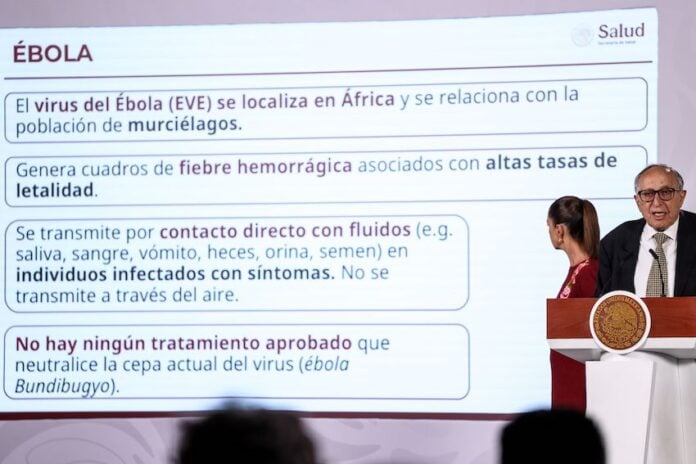
President Sheinbaum and Health Minister David Kershenobich display to the press a graphic describing some of the features of the Ebola virus, including the fact that it is transmitted through contact, not by air, and that no vaccine or treatment as yet exists for it.
(Galo Cañas/Cuartoscuro)
Mexico has issued an Ebola-based travel advisory due to an active Ebola outbreak in Central Africa that the World Health Organization has classified as an international emergency.
While the advisory is meant especially for people traveling to the Democratic Republic of Congo and Uganda, where the outbreak has been most severe, the Health Ministry (SSA) is urging all travelers to exercise epidemiological vigilance and caution.
In the past week, Health Minister David Kershenobich has penned a health warning for the hantavirus and a travel advisory for the Ebola virus, but at the same time, assured Mexicans that there are no confirmed cases of either one in the country and the probability of a local outbreak is very low. (Gaolo Cañas/Cuartoscuro)
“Given that this is an event with a risk of international spread, it is important to consider that travelers could be exposed not only to potentially sick people, but also to other health risks present in the affected areas,” the SSA said.
While authorities have stressed that there are no confirmed cases in Mexico to date and the overall risk of contagion abroad is low, individual risk depends on recent travel history, length of stay and exposure in areas with active transmission and contact with sick people or contaminated materials.
The Bundibugyo Ebola variant of the virus is deadly. No specific vaccine or approved treatment exists for the disease it causes.
The SSA has said that transmission occurs through direct contact with blood, secretions, or contaminated objects, not by air like COVID-19 or influenza. The incubation period varies between two and 21 days and timely identification and isolation of symptomatic individuals significantly reduces the risk of transmission.
Furthermore, the SSA has warned travelers that if they experience fever, severe weakness, headache, muscle pain, vomiting, diarrhea, abdominal pain and/or unexplained bleeding within 21 days of their return, they should avoid self-medication, proceed to immediate isolation and inform health authorities via telephone of their travel history.
Health authorities have stressed that due to international mobility and global air connectivity, they maintain epidemiological surveillance for emerging diseases of international concern.
Just last week, Mexico issued a preventive hantavirus alert following the confirmation of a hantavirus outbreak on May 2 onboard an international cruise ship sailing the South Atlantic Ocean.
As with Ebola, hantavirus has no approved antiviral treatment.