Home Blog Page 3

MND Local: Highway improvements and a recycling initiative in Guadalajara as the World Cup nears

4
Guadalajara in Feb. 2026
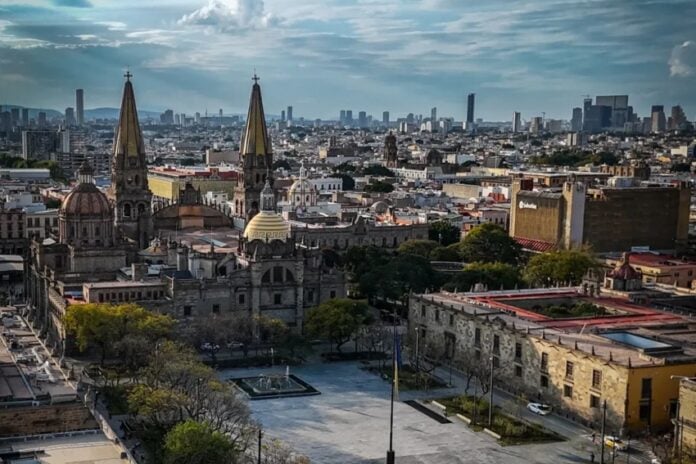
Guadalajara's putting on its prettiest face ahead of World Cup games this month. (Instagram)

World Cup fever is taking hold in “La Perla Tapatía” — as Guadalajara is nicknamed — as infrastructure projects aimed at improving visitor mobility are largely completed, and new cultural programs come to life. In addition, area residents will have a brief opportunity to responsibly recycle their old electronics free of charge courtesy of a University of Guadalajara initiative.

Transportation updates ahead of the World Cup

A topic of continuing fascination for area residents is how the various transportation projects on the Chapala Highway, which connects Guadalajara airport to the city, are progressing. As of press time, it appears that most of the planned enhancements aimed at improving urban mobility and reducing travel times for 2026 FIFA World Cup fans will be completed before the tournament begins. 

One notable exception that will not be finished anytime soon is the overpass being built by Grupo Aeroportuario del Pacífico (GAP). Conceived as a dedicated route to separate airport-bound traffic from everyday Chapala highway traffic and reduce congestion for those headed to Terminal 1, the overpass will not be finished in time for the World Cup. 

Last week, State Secretary of Public Works David Miguel Zamora ordered GAP to suspend work on the overpass, as it was obstructing portions of the Carretera Chapala. Pausing the project is essential to ensure safe and efficient access to and from the airport over the coming month, when a surge of visitors attending World Cup games will be arriving by air. 

Separately, GAP has stated that expansion of the airport’s main access road (still the only entry and exit point) from two lanes to three was to be completed by May 31, 2026. Absent the dedicated overpass, this extra lane will be critical to improving airport accessibility in the short term.

The latest on bus stations, the Periférico overpass and highway surveillance cameras

With respect to the new Line 5 (Macro Aeropuerto) bus stations on the Chapala highway, final installation of lighting and electrical wiring is ongoing, although this work has recently suffered setbacks due to the theft of copper wiring, according to local workers who spoke anonymously to El Informador newspaper last week.

Further north, the Periférico overpass, which connects to the Chapala Highway and allows Line 5 buses to merge onto the ring road, was slated for completion last Friday. According to Governor Pablo Lemus, the new Line 5 will be fully operational as of June 4, following the testing phase that is underway now.

Finally, Governor Lemus confirmed that speed cameras on the Chapala Highway will not be operational until all construction work is finished and proper signage has been installed. Motorists are not likely to be subject to fines from camera surveillance until December 4, 2026, at the earliest.

A mountain of tech waste prompts UDG to launch a free recycling campaign
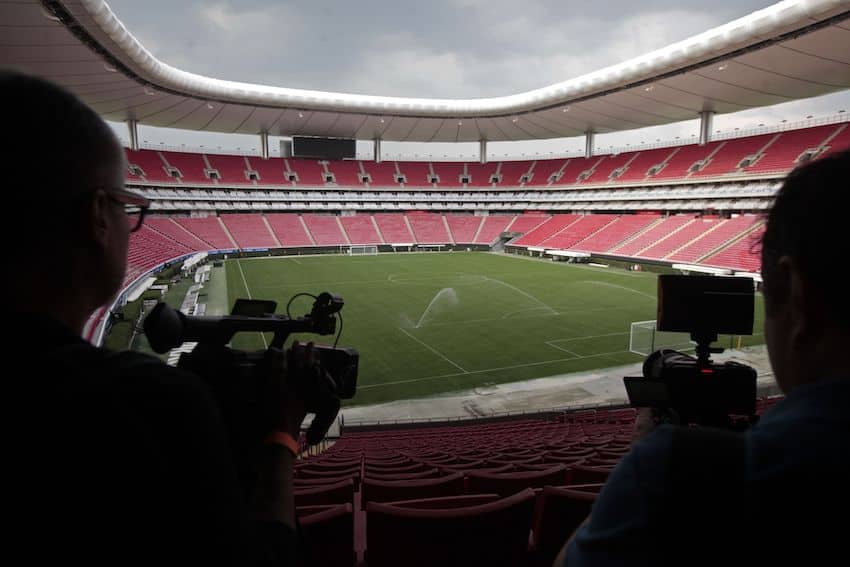
Akron Stadium
Jalisco produces enough technological waste each year to fill Guadalajara’s Akron Stadium 12 times over. (Fernando Carranza García/Cuartoscuro)

The state of Jalisco ranks third nationally in the generation of technological waste, generating 82,000 tons per year, an alarming tally and a volume equivalent to filling Estadio Akron 12 times over.

To tackle this growing problem, the University of Guadalajara (UDG) is kicking off the fifth edition of its annual Rec-olectrón 2026 campaign. The initiative offers local households a way to dispose of their e-waste responsibly, to keep it from ending up in landfills or local waterways and polluting the environment.

Households can drop items off during the first week of June from 9 a.m. to 5 p.m., free of charge, at the UDG Rectorate Building. Items eligible for disposal through the program include mobile phones, laptops, monitors, LED screens, microwaves and washing machines.

At other collection centers, surrendering electronic waste carries a charge. Due to the high cost of recycling, the program will not accept alkaline batteries or fluorescent lamps.

Besides offering a practical solution to local households with electronic waste, the university’s initiative also aims to raise awareness about the responsible disposal of these products, which contain harmful chemicals such as lead, mercury and cadmium. 

Beautification efforts won’t end with the World Cup

It turns out the beautification efforts ongoing throughout the Guadalajara Metro Area weren’t merely to impress soccer fans. Governor Lemus told the media last week that these projects will continue after the tournament ends, in an effort to burnish the city’s image and position it as a world-class cultural destination.
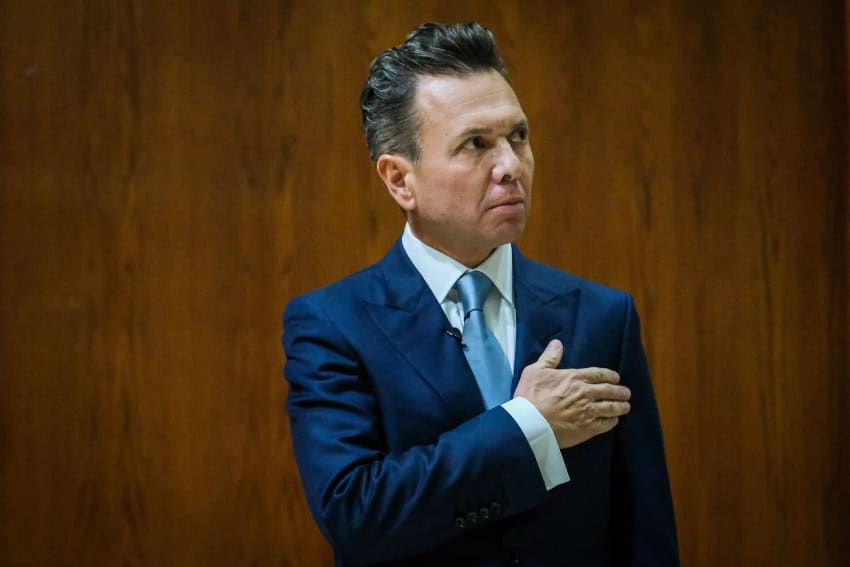
Jalisco Governor Pablo Lemus
Jalisco Governor Pablo Lemus has pledged that beautification projects will continue even after the World Cup is over. (Comunicación Jalisco)

Tackling what are viewed as tacky commercial elements, screens and billboard advertising will next be curtailed in the vicinity of the Glorieta Minerva, as a detriment to the urban landscape.  

Lemus indicated that billboards have already been removed from major throughfares such as Avenida Américas and along Avenida Patria areas near the Los Colomos Forest, as part of a joint effort with the neighboring municipality of Zapopan. 

He added that of the 50 billboards removed, 46 had expired permits or administrative irregularities, and therefore maintained that the actions were carried out legally.

With any luck, pothole repairs will be next.

A Korean-themed festival is coming to Guadalajara during the World Cup

Guadalajara is playing host to the Korean national soccer team this month, as the team chose the city for its training camp during the World Cup tournament. To capitalize on the moment, the Embassy of the Republic of Korea is bringing KFEST, a Korea-themed family-friendly event, to Guadalajara on June 6.

From noon to 6 p.m. at the Santander Performing Arts Center, there will be K-pop music, performances by Samulnori (traditional Korean music), the K-Tigers taekwondo group and the Zapopan Youth Symphony Orchestra. There will also be interactive pavilions featuring beauty, food, culture and tours.

Korean culture Guadalajara
Korean culture will be celebrated in the GMA contemporaneous with the country’s national team playing in the 2026 FIFA World Cup in Guadalajara. (Instagram)

From 7:30 p.m. at the Basilica of Zapopan, new media artist Lee Lee Nam will project a video animation that reimagines this culturally rich setting.

The festival also plans to make stops in Monterrey and Mexico City later this month. 

Date: June 6, 2026, from noon to 8:30 p.m.

Location: Santander Performing Arts Center and the Basilica of Zapopan.

Cost: The festival is free for all.

MND Writer Dawn Stoner is reporting from Guadalajara.
NY judge sees ‘abundant’ evidence against Sinaloa’s former top security official

2
Gerardo Mérida
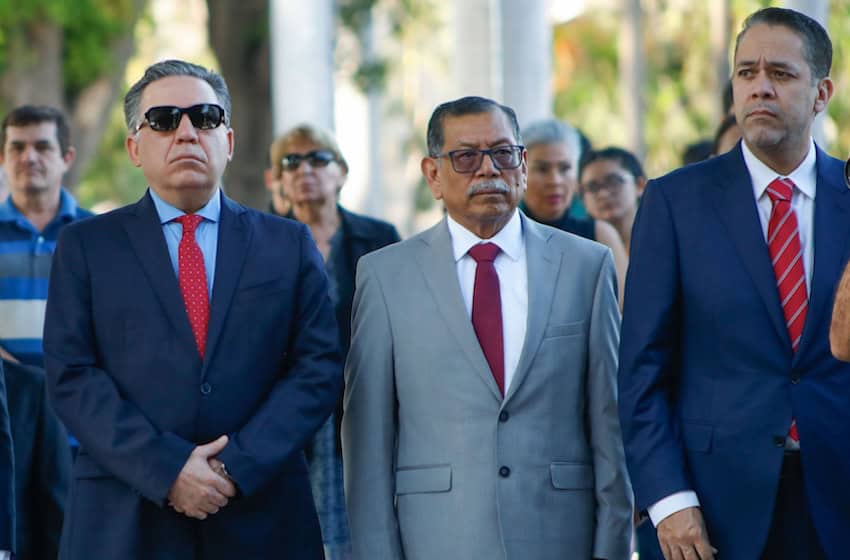
Not long ago, Gerardo Mérida was in charge of protecting residents of the state of Sinaloa from crime. Now he is facing drugs and weapons charges in the United States. (José Betanzos Zárate/Cuartoscuro)

Facing drug trafficking and weapons charges, former Sinaloa state Security Minister Gerardo Mérida Sánchez on Monday appeared in the Southern District Court of New York for a hearing during which the judge described the evidence against him as “abundant.”

Mérida, who turned himself in to U.S. authorities in Arizona on May 11, is the first of 10 current and former Mexican officials accused of having links with the Los Chapitos faction of the Sinaloa Cartel to appear in court. 

Sen. Enrique Inzunza Cázarez, former Sinaloa Security Minister Gerardo Mérida Sánchez and former Sinaloa Finance Minister Enrique Díaz Vega are three of 10 Mexican officials accused by the U.S. of cartel links. (José Betanzos Zárate/Cuartoscuro)

Former Sinaloa Finance Minister Enrique Alfonso Díaz, who surrendered to U.S. authorities in New York on May 15, is the only other suspect in U.S. custody

Mérida, shackled hand and foot, was escorted into the Manhattan courtroom by U.S. sheriffs, dressed in a brown prison uniform and a gray T-shirt. 

During the 20-minute hearing, U.S. Federal Judge Katherine Polk warned about the complexity of the legal process due to the abundance of evidence against Mérida. Polk granted the lawyers for the U.S. Attorney’s Office two months to process the evidence and advance the case against Mérida Sánchez, setting the next hearing for Aug. 4.

When asked about Monday’s court hearing during her Tuesday morning press conference, President Claudia Sheinbaum — who on Sunday denounced U.S. interference in Mexican affairs — avoided making a direct comment.

“It is up to the Attorney General’s Office to analyze the case in due course,” she said.

During his first court appearance on May 15, Mérida pleaded not guilty to the charges of conspiracy to import narcotics, possession of weapons and conspiracy to possess weapons.

If convicted, Mérida — a retired Army general — could face a minimum 40-year sentence that could reach life imprisonment. 

Last month, the newspaper El Universal reported that Mérida had been accepted as a cooperating witness by the U.S. Department of Justice.

“The general provided initial information so that the U.S. government could integrate him under those conditions within the facilities where he is being held,” El Universal reported.

Mérida is being held in the Metropolitan Detention Center in Brooklyn, a prison where high-profile Mexican cartel figures including Ismael “El Mayo” Zambada (a rival of Los Chapitos) and Rafael Caro Quintero are currently imprisoned. 

Other notable officials included in the April 30 subpoena are Sinaloa Governor Rubén Rocha, Senator Enrique Inzunza and Culiacán Mayor Juan de Díos Gámez. All three are members of the ruling Morena party and are currently on leave of absence.

With reports from W Radio, Ambas Manos, CNN en Español and Infobae

Yucatán Peninsula states create habanero council to protect the famous pepper

1
habaneros
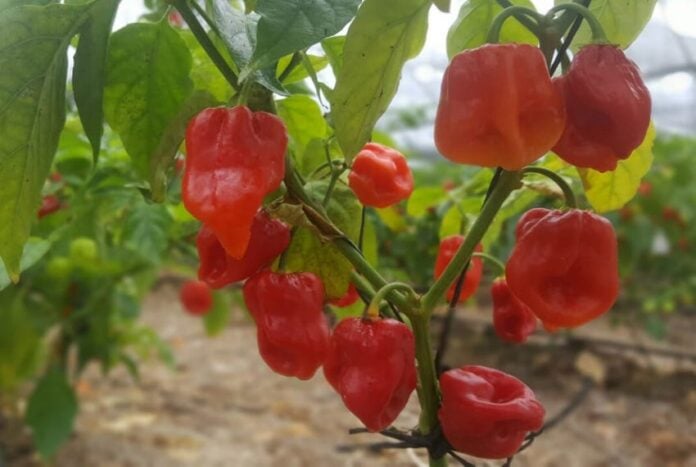
The native habanero has had the Designation of Origin recognition since 2010. (Gobierno de México)

The governments of Mexico’s Yucatán, Campeche and Quintana Roo states have created a Peninsular Council for the Regulation of the Habanero to protect and strengthen the Designation of Origin (DoE) for the region’s famous chili pepper.  

The council will be responsible for guaranteeing the traceability, certification and quality of habanero, as well as promoting it in national and international markets. The move is expected to strengthen producers’ competitiveness and generate greater marketing opportunities.

Governor of Yucatán Joaquín Díaz Mena and Governor of Quintana Roo Mara Lezama were joined by the Director General of the Mexican Institute of Industrial Property (IMPI) Santiago Nieto Castillo and other regional officials for the council’s inauguration in Yucatán’s capital of Mérida last week. 

While the habanero has had DoE recognition since 2010, the three states did not decide to establish an official joint council until February 2025. 

Providing a product with a DoE certification helps combat unfair competition and promotes awareness about its origin. In this case, it is expected to protect the Yucatán Peninsula against imitations and strengthen its commercial value.

“This Regulatory Council was created to protect what is ours, to give more value to the work of the producers and to ensure that future generations find prosperity in their own land,” Díaz Mena said.

“After 16 years, today the producers will have the certainty that the chili pepper’s flavor is what defines it; now there will be rules so that the three states can market this product in Mexico and abroad, but with its Designation of Origin,” said Lezama. 


Yucatán produces 5,000 tonnes of the pepper each year, valued at approximately 131 million pesos (US $7.6 million); Campeche produces 3,300 tonnes (90 million pesos/$5.2 million), and Quintana Roo, around 1,000 tonnes (30 million pesos/$1.7 million), according to figures released in an official statement. 

Earlier in May, the magazine Wired reported that researchers at the National Autonomous University of Mexico (UNAM) have identified alternative routes to reduce bacterial resistance by developing new antibiotics derived from habanero peppers, highlighting the chili’s promising potential for applications beyond salsa. 

With reports from La Jornada and Wired

Authorities arrest Sinaloa Cartel figure ‘Gabito’ in connection with murder of Vizsla Silver miners

0
Gabito detained in Sinaloa
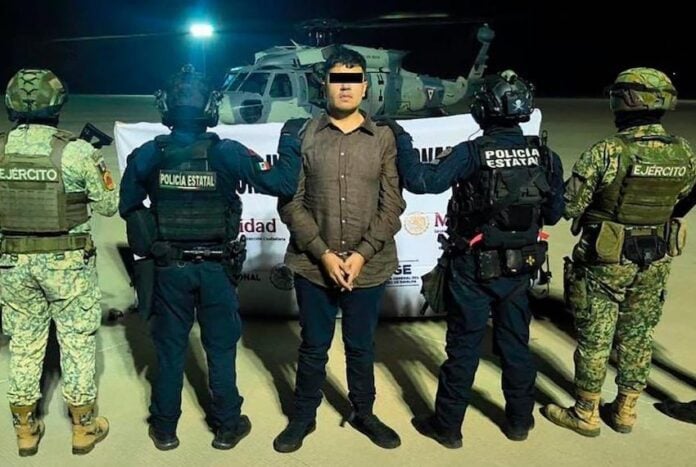
The arrest of Gabriel Martínez came a week after a nephew of "El Chapo" was detained in the northern border city of Nogales, Sonora. (Defense Ministry)

Federal authorities announced on Tuesday the arrest of an alleged Sinaloa Cartel figure who is said to be linked to the abduction and murder in Sinaloa of 10 employees of Canadian mining company Vizsla Silver.

The Ministry of National Defense (Defensa) and the federal government’s Security Cabinet announced that Gabriel “N” — identified in media reports as Gabriel Nicolás Martínez Larios — was detained on Monday in Rosario, a municipality in Sinaloa south of Mazatlán.

The Mexican Army, the National Guard and Sinaloa state police were involved in the operation to detain Martínez, known as “Gabito” and “El 80.”

Defensa said in a statement that he is considered the “regional boss” of the “Menores” faction of the Pacific Cartel, as the Sinaloa Cartel is also known. The “Menores” faction of the Sinaloa Cartel is another name for the “Chapitos” faction, led by sons of convicted drug trafficker Joaquín “El Chapo” Guzmán Loera.

According to Defensa, Martínez allegedly led the Menores in several municipalities in southern Sinaloa, including Concordia, the municipality where 10 Vizsla Silver employees were abducted in January. Nine of the 10 workers have been found dead.

Martínez “is considered a close collaborator and friend” of Iván Archivaldo Guzmán Salazar, one of El Chapo’s sons, Defensa said.

The ministry also said that he is “one of the main generators of violence in the southern area of the state of Sinaloa.”

He is under investigation for kidnapping, homicide and drug trafficking, and is linked to the kidnapping and homicide of “six workers and four suppliers of a mining company in the state of Sinaloa,” Defensa said.

Vizsla Silver has referred to the 10 abducted workers as “colleagues.” Federal Security Minister Omar García Harfuch said in February that four alleged members of the Chapitos who were arrested in connection with the abduction told authorities that the victims were mistaken for members of a rival cartel faction.

Vizsla Silver confirms 9 of 10 missing Sinaloa mine workers have been found dead

The Defense Ministry said on Tuesday that security forces seized weapons, ammunition, drugs, cash and a vehicle from Martínez, who was turned over to the Federal Attorney General’s Office in Culiacán, the state capital of Sinaloa.

The arrest of Martínez came a week after a nephew of Guzmán Loera was detained in the northern border city of Nogales, Sonora. Isaí Martínez Cepeda — who reportedly worked for the Chapitos — is wanted on drug trafficking charges in the United States.

A long-running dispute between the Chapitos and the “Mayos” faction of the Sinaloa Cartel intensified in 2024 after cartel leader Ismael “El Mayo” Zambada was kidnapped by Joaquín Guzmán López — one of El Chapo’s sons — flown to the United States on a private plane and taken into U.S. custody.

U.S. prosecutors accuse Sinaloa Governor Rubén Rucha Moya of colluding with the Chapitos on a drug trafficking conspiracy. Nine other current and former Sinaloa-based officials, including the mayor of Culiacán and a federal senator with the ruling Morena party, were also accused of drug trafficking in the same indictment that was unsealed in late April. Two former Sinaloa government cabinet ministers turned themselves in to U.S. authorities last month, but the eight other defendants, including Rocha, have not been detained by Mexican authorities, who have asked their U.S. counterparts for more proof.

Mexico News Daily 

Playa del Carmen waives fees for same-sex weddings and gender identity documents during Pride Month

4
Pride flag flying with blue sky in the background
Playa del Carmen officials, whose beach is considered one of the top LGBTQ+ destinations in Mexico, say the motive behind the free wedding policy is to “foster equality, inclusion and respect for the human rights of all people.” (Shutterstock)

Playa del Carmen will mark Pride Month by providing free same-sex marriages and gender-identity paperwork, expanding benefits from prior years as inclusion efforts intensify in Quintana Roo.

The City Council last week approved a 100% subsidy on municipal fees for collective same-sex weddings in June, though not for standard unions at city hall. Collective ceremonies will be held in June, and couples must pre-register.

The 100% discount for June weddings applies only to collective weddings, which are popular across Mexico, for both gay and straight marriages. (Unsplash)

Additionally, the city is waiving 100% of municipal fees for legal gender identity recognition certificates through Dec. 31, 2026, a process that allows people to update their official documents so their name and gender markers match their lived identity.

Playa del Carmen officials said the measures aim to “foster equality, inclusion and respect for the human rights of all people.”

Bodas colectivas (collective weddings) and mass LGBTQ+ weddings — often organized by state or local governments — are highly popular across Mexico, where same-sex marriage has been legal in all 32 states since October 2022. 

Playa del Carmen’s new policy builds on earlier programs. In 2023, the municipality offered a 100% discount on collective weddings but only a 50% subsidy on gender identity certificates.

The actions coincide with broader Pride Month activities in the region, including marches on Saturday in Cancún and Isla Mujeres, and June 28 in Playa del Carmen — which travel and LGBTQ+ publications consistently describe as one of Mexico’s top LGBTQ+ beach destinations.

Couples who want to join the collective nuptials in Playa del Carmen must sign up with the civil registry, which coordinates mass wedding events that can bring dozens of pairs to the same ceremony.

Activists say such subsidies matter even in a country where same-sex marriage is legal nationwide, because fees and paperwork can pose barriers for lower-income couples and trans people seeking to update their documents.

With reports from La Jornada Maya and Noticaribe

South Africa team arrives in Mexico after visa delays; Televisa journalists who spent months in custody due home Wednesday

0
Members of South Africa's soccer team boarding a flight
All the players made the trip, but an assistant coach, the team doctor, the head of security and one analyst were still sorting out visa issues in South Africa. (@BafanaBafana/X)

After resolving visa issues that made them “look like fools,” the South African men’s soccer team arrived in Mexico on Tuesday, two days later than planned.

The Bafana Bafana had been due to leave on a charter flight for their training base in Pachuca on Sunday, but that was delayed while the South African Football Association (SAFA) sorted out the paperwork required to obtain U.S. visas.

Also on Tuesday, Televisa journalists Julio Ibáñez and Daniel García were released from custody in South Africa and are expected to fly home Wednesday. The two men were arrested in Johannesburg on March 18 for allegedly using a drone in an area where such devices are restricted.

Visa debacle criticized

South Africa’s sports minister Gayton McKenzie slammed SAFA for the snafu that forced the postponement of the national team’s travel to Mexico. The Bafana Bafana are scheduled to play a friendly match on Friday against Jamaica in their final warm-up ahead of the inaugural World Cup match against host Mexico on June 11.

While the South African delegation was welcomed to their training base in Pachuca by a mariachi band on Tuesday morning, some members of their contingent were still unable to travel.

All the players made the trip, but an assistant coach, the team doctor, the head of security and one analyst were still sorting out visa issues in South Africa.

SAFA had announced on Sunday that the team had been forced to postpone their travel plans due to “challenges regarding visas” for some players and officials.

The visas in question were U.S. visas as the Bafana Bafana play their second group-stage match in Atlanta, Georgia, and the issue had to be resolved before departing South Africa.

This infuriated McKenzie, who, in a social media post, called the visa debacle “grossly unfair towards the players [and] coaching staff.” The sports minister demanded an investigation and called for punishment to be meted out to “those responsible for this mess.”

McKenzie also shut down criticism of the U.S. Embassy in a second post, thanking embassy personnel for “bending over backwards” to help, insisting that “[t]he fault is entirely on our side, and making statements against the US staffers is not helping the situation for future applications.”

Televisa journalists coming home after dubious legal dispute

While the South Africa team was settling into its Pachuca headquarters, Ibáñez and García were preparing to return to Mexico after a judge terminated the legal process against them.

The two journalists have now recovered their passports after nearly 11 weeks in custody, which included five days in prison beginning on March 24. Since then, they had been held in house arrest in a Johannesburg Airbnb.

“Our colleagues will arrive in Mexico tomorrow to reunite with their families,” Televisa said in a statement. “We thank the Mexican authorities for their support during this unfortunate process, which has finally concluded.” 

Ibáñez, an experienced soccer journalist, and García, a cameraman, were in South Africa to produce content related to the World Cup. While live-streaming on TikTok, the pair were interrupted by armed men who burst into their hotel room. 

In the 20-second video, Ibáñez can be seen asking fearfully, “What’s happening?” and the live stream abruptly ends, leaving viewers uncertain about what happened.

The journalists were originally accused of terrorism and espionage, but those charges were dropped on March 27. They subsequently were held on the grounds that their immigration status in South Africa was irregular, but these charges were later amended before the entire case was dropped this week.

With reports from Supersport.com, Esto, La Jornada, BBC, Eje Central and El País

Teachers’ union defaces World Cup statues, installs sit-in within blocks of Zócalo

6
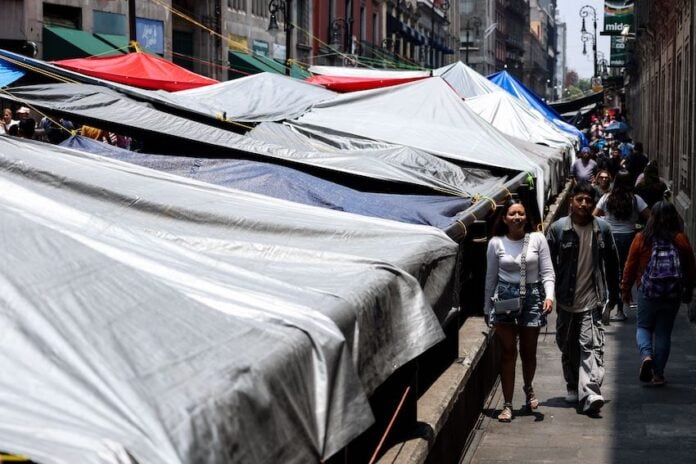
The CNTE’s current encampment along 20 de Noviembre Street
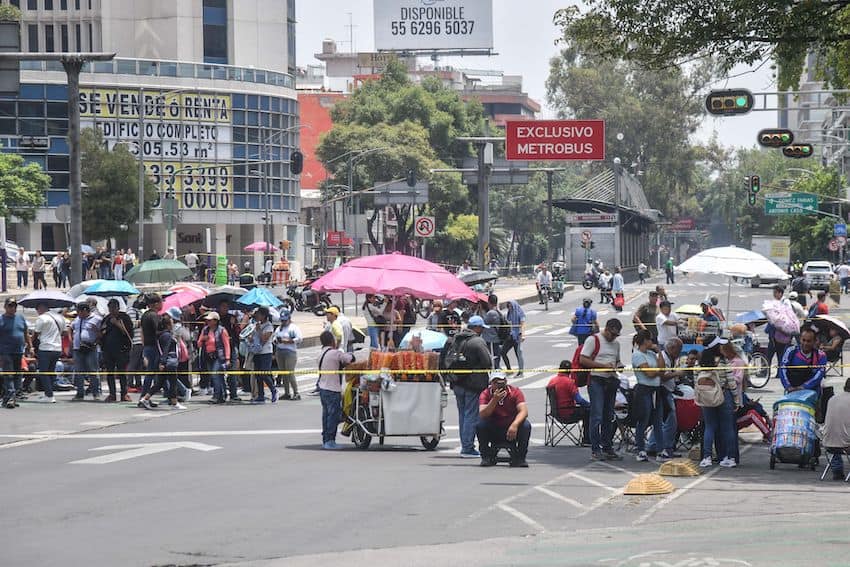
The CNTE’s current encampment along 20 de Noviembre Street followed the protesters’ failed attempt to enter and set up a sit-in within the Zócalo on Monday. (Galo Cañas/Cuartoscuro)

Mexico’s militant teachers’ union, the CNTE, has set up a protest camp within blocks of Mexico City’s Zócalo — Latin America’s largest public square — where the FIFA World Cup Fan Fest is under construction.  

With just nine days ahead of the tournament’s inaugural match on June 11, the group has escalated their public displays of dissatisfaction. On Tuesday, protesting teachers again blockaded Reforma Avenue, this time knocking down and vandalizing statues of soccer players made for the World Cup.

On Tuesday, the CNTE left its mark on World Cup statues that had been set up on Reforma Avenue on May 18.
On Tuesday, the CNTE left its mark on World Cup statues that had been set up on Reforma Avenue on May 18. (Mario Jasso/Cuartoscuro)

The CNTE’s current encampment along 20 de Noviembre Street followed the protesters’ failed attempt to enter and set up a sit-in within the Zócalo on Monday.

“We will win this fight no matter what it takes,” protesters could be heard chanting as they tried to bring down metal barriers protecting the entrance to the Plaza de la Constitución, the Zócalo’s official name. 

“It’s going to fall, it’s going to fall… that fence is going to fall!” they cried. 

In addition to the still-standing metal barriers, the public square is also guarded by hundreds of police officers due to the ongoing presence of the militant teachers, who have dubbed the World Cup “the bourgeoisie’s party.”

“This event will have to be suspended,” union leader Filiberto Frausto told AFP during the protest. “A cause like ours should be far above; it’s far more important than a bit of distraction and fun,” Frausto said, referring to the soccer tournament. 

In the aftermath of Monday’s protests, the CNTE reported two injured teachers: one struck in the cheek with a metal rod and the other at risk of losing his eye after being hit by fragments of an explosive device.  

Mexico City police have stated that they did not use rubber bullets or firecrackers.

The CNTE on Tuesday blocked the intersection of Reforma and Insurgentes, one of Mexico City's most transited areas.
The CNTE on Tuesday blocked the intersection of Reforma and Insurgentes, one of Mexico City’s most transited areas. (Mario Jasso/Cuartoscuro)

Monday’s demonstration was called by a dissident group from the CNTE with a history of disruptive protests, which has threatened to summon “millions” of teachers to the capital during the World Cup if their demands are not satisfied by the Mexican government. 

Beyond a 100% salary raise, the teachers’ union is demanding a review of education reforms and changes to the pension system.

When asked about Monday’s clashes between policemen and teachers, President Sheinbaum said that teachers have the right to protest peacefully and urged them to heed the calls from the Education Ministry to engage in dialogue and move forward with their demands. According to Sheinbaum, talks with CNTE representatives were scheduled for Tuesday, though an agreement has yet to be reached.

Meanwhile, the CNTE’s tactics are gaining more attention by the hour as international press corps arrive in Mexico to cover the World Cup. This afternoon, the president was forced to move a meeting with Spain’s Economy Minister Carlos Cuerpo online due to Tuesday’s blockade. Cuerpo and his team, who are currently in Mexico City, were unable to safely travel to the National Palace, according to the EFE news agency.

With reports from El Universal, La Jornada and El Economista

First storm systems of the 2026 hurricane season form off Mexico’s west coast

0
Rain in CDMX
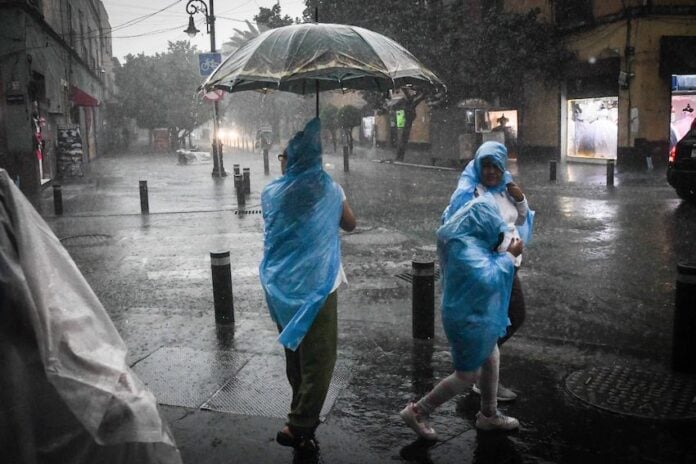
As hurricane season officially begins in the Pacific, two early storm systems that could become Hurricanes Amanda and Boris are being monitored off Mexico's west coast. (Mario Jasso/Cuartoscuro)

As hurricane season in western Mexico begins, forecasters are monitoring two weather systems off Mexico’s Pacific Coast with the potential to transform into the first two hurricanes of the year, Amanda and Boris.

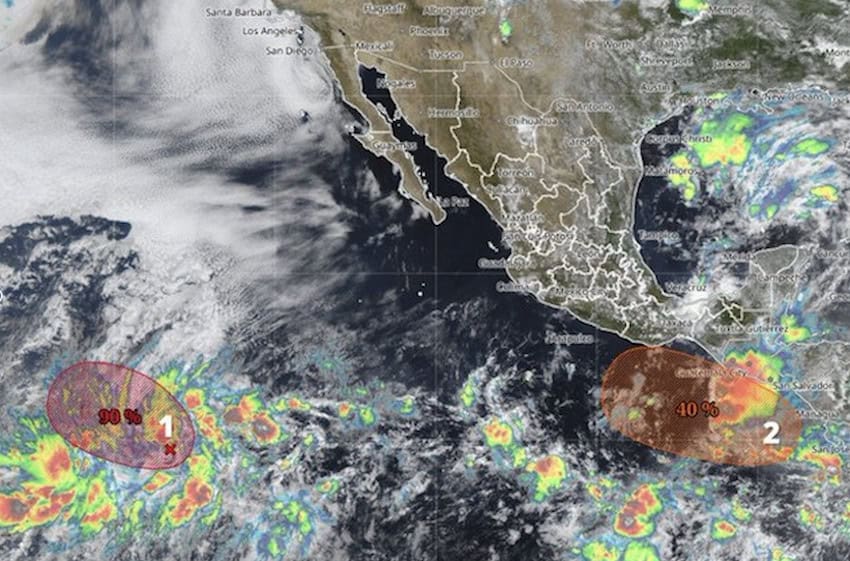
According to the National Water Commission (Conagua) and the National Meteorological Service (SMN), Amanda corresponds to a low-pressure area located southwest of the Baja California peninsula. The probability of cyclonic development is high — 90% in the next seven days — but it is already located 2,225 kilometers away from Mexico’s coastline and moving further out to sea at 16 kilometers per hour. Forecasters at the SMN say that even if it were to grow into a hurricane, it would not pose a risk to the country.

weather map
(1) The low-pressure zone southwest of the Baja Peninsula’s west coast is expected to increase in intensity soon, but it is moving farther out to sea and SMN officials say it poses no threat to the Mexican mainland. (2) The other low-pressure zone off the southwest coast is closer to land but has a much lower chance of cyclonic development.
(SMN/Conagua)

Boris, on the other hand, has a lower probability of becoming a hurricane (40%). However, if it does form, which would be off the coast of Guerrero, Oaxaca or Chiapas, it would represent a higher risk due to its closer proximity to Mexican shores.

Conagua predicts above-average activity in the Pacific for this year’s hurricane season, and near or below the historical average in the Atlantic. That translates to between 18 and 21 tropical cyclones in the Pacific and between 11 and 15 hurricanes in the Atlantic. 

Meteorologists will pay special attention to the Pacific, as the El Niño weather pattern is likely to form over the summer. This natural phenomenon causes anomalies in the water’s surface temperature that directly influence the global climate and the formation of hurricanes.

Weather forecast for Tuesday

The SMN forecasts significant rainfall in eastern and southeastern Mexico, and in parts of central Mexico, associated with a low-pressure system and other atmospheric conditions.

The rainfall forecast for Tuesday:

  • Intense rainfall (75 to 150 millimeters) in parts of Puebla, Veracruz, Oaxaca, Tabasco and Chiapas.
  • Very heavy rainfall (50 to 75 millimeters) in parts of Jalisco, Michoacán, Morelos, Guerrero, Campeche and Yucatán.
  • Heavy rainfall (25 to 50 millimeters) in Coahuila, Nuevo León, Tamaulipas, San Luis Potosí, Zacatecas, Aguascalientes, Colima, México state, Tlaxcala and Quintana Roo.  
  • Showers (5 to 25 millimeters) in Chihuahua, Durango, Nayarit, Guanajuato, Querétaro and Hidalgo.

With reports from El Financiero and El País

Sheinbaum tells US ambassador to stay in his lane: Tuesday’s mañanera recapped

3
Sheinbaum at mañanera on June 2, 2026
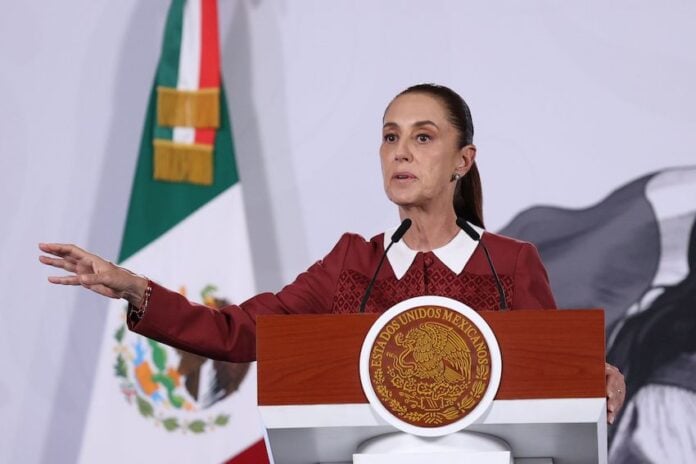
Also of note at today's mañanera were Sheinbaum's remarks about a soon-to-be-signed agreement between Mexico's state oil company Pemex and its Brazilian counterpart Petrobras. (Galo Cañas/Cuartoscuro)

Sheinbaum’s mañanera in 60 seconds

  • 🇺🇸 US ambassador told to respect Mexico’s internal affairs: After Sheinbaum’s speech on Sunday denouncing U.S. intervention in Mexico, Ron Johnson posted on X that the fight against cartels “should unite us, not divide us.” Sheinbaum said she agreed on the need for collaboration, but stressed that ambassadors must stick to bilateral issues and stay out of domestic politics. “Mexico’s affairs correspond to Mexicans,” she said.
  • 🛢️ Pemex-Petrobras deal could be signed this month: Sheinbaum said the Brazilian state oil company brings unique deep-water expertise that could help identify additional reserves in already-exploited fields. She stopped short of endorsing Carlos Slim’s claim that Mexico’s oil production could rise by up to 1 million barrels per day.
  • 🪧 CNTE clash blamed on outside provocateurs: On Monday’s confrontation between teachers union members and police in Mexico City’s historic center, Sheinbaum said she doesn’t believe actual teachers were behind the provocation. Federal-CNTE talks were set to continue Tuesday, with union demands including a 100% pay rise and repeal of the 2019 education reform.

Why today’s mañanera matters

President Claudia Sheinbaum’s most significant remarks at her Tuesday morning press conference were directed to U.S. Ambassador to Mexico Ronald Johnson.

Sheinbaum effectively called on the ambassador to stay in his lane after he took to social media and made a thinly veiled criticism of remarks she made during an address at a large rally in Mexico City on Sunday.

During her speech at the rally — held to mark the second anniversary of Sheinbaum’s election — the president railed against U.S. interference in Mexican affairs in light of the CIA’s alleged participation in a drug lab raid in Chihuahua in April and U.S. prosecutors’ request for the arrest of Sinaloa Governor Rubén Rocha Moya and various other current and former officials accused of drug trafficking in league with the Sinaloa Cartel.

Also of note at today’s mañanera were Sheinbaum’s remarks about a soon-to-be-signed agreement between Mexico’s state oil company Pemex and its Brazilian counterpart Petrobras.

Sheinbaum calls on US ambassador to respect Mexico’s ‘internal affairs’ 

A reporter noted that there have been “reactions” to the “forceful” and “powerful” speech Sheinbaum delivered on Sunday, including from some of those who were “targets of this message.”

He then read out the message that U.S. Ambassador Johnson posted to social media on Monday.

Ambassador Johnson and Sheinbaum spar over where US help ends and interference begins

On X, Johnson wrote: “The fight against cartels should unite us, not divide us. People on both sides of our border want to live safely and in peace. They deserve freedom from the intimidation, corruption, and fear that the cartels inflict. Every moment spent turning this shared security challenge into a political dispute is a missed opportunity to strengthen our partnership and protect the people we serve.”

Sheinbaum said that her government agrees with part of the ambassador’s message “because we have to work together when we have shared problems.”

“One of those is obviously violence caused by organized crime, and on that, as we have always said, we seek collaboration and coordination in order to be able to make progress together — they act in their territory and we act in … [our] territory,” she said.

Sheinbaum subsequently stressed that “it’s important for ambassadors to stick to the issue of coordination and collaboration.”

“Ambassadors have to be respectful of a country’s internal matters,” she said.

“Our ambassador in the United States, our ambassador in France, our ambassadors in any place in the world — Australia, India —  don’t offer opinions on a country’s political issues because our constitution clearly establishes [the right to] self-determination … and respect and non-intervention, ” Sheinbaum said.

“We have to also remember that it’s important for the [U.S.] ambassador to stick to bilateral issues and to respect the internal affairs of our country because Mexico’s affairs correspond to Mexicans,” she said.

Petrobras-Pemex agreement could be signed this month  

A reporter asked the president about billionaire businessman Carlos Slim’s assertion that Mexico could increase its oil production by up to 1 million barrels per day within two to three years thanks to private and public investment in new oil projects. “Would this be possible?” the reporter asked.

“We’re going to sign an agreement … with Petrobras,” Sheinbaum responded, referring to the Brazilian state-owned oil company.

“Why is this agreement important? Because Petrobras is an expert in exploration and production in deep water. And it’s also an expert in a technique that only they have,” she said, explaining that said technique makes it possible to determine whether there are additional oil reserves “at greater depths” in fields that have already been exploited.

“So I hope that this month we’re going to sign the agreement with Petrobras — Petrobras-Pemex — that will help Pemex with exploration and production,” said Sheinbaum.

Brazilian President Luiz Inácio Lula da Silva floated the idea of a joint venture between Petrobras and Pemex in March, saying that the latter could “get a great deal of help” from the former.

Returning to the reporter’s question, Sheinbaum said that she didn’t know whether the agreement between Pemex and Petrobras would allow Mexico to increase daily oil production by 800,000 to 1 million barrels per day, as Slim claimed was possible.

“What we have to guarantee is the production of oil for the country — our internal use,” she said.

“… There are also environmental considerations,” Sheinbaum added.

“That’s why for electricity generation, we’re proposing to increase renewable sources of energy,” she said.

Sheinbaum comments on clash in CDMX historic center 

Sheinbaum said that she didn’t believe teachers were responsible for the “provocation” that led to a clash between members of the CNTE teachers union and police in the historic center of Mexico City on Monday.

“Yesterday I think there was a lot of provocation. The truth is I don’t think they are teachers those who caused the provocation,” she said.

Sheinbaum said that more talks between the federal government and the CNTE would take place on Tuesday.

“There is dialogue [and] that’s very important,” she said.

Teachers affiliated with the CNTE have been protesting in Mexico CityOaxaca and elsewhere as they seek to pressure the government to meet their demands. Those demands include a 100% pay increase and the repeal of the 2019 education reform as well as the 2007 ISSSTE (State Workers’ Social Security Institute) Law, which changed their pension system and will leave them — they say — considerably worse off in retirement.

On Monday, Sheinbaum expressed confidence that progress will be made in talks with the CNTE even as she highlighted that “some” of the protesting teachers’ demands can’t be met for budgetary reasons.

By Mexico News Daily chief staff writer Peter Davies (peter.davies@mexiconewsdaily.com)

Ambassador Johnson and Sheinbaum spar over where US help ends and interference begins

27
U.S. Ambassador to Mexico
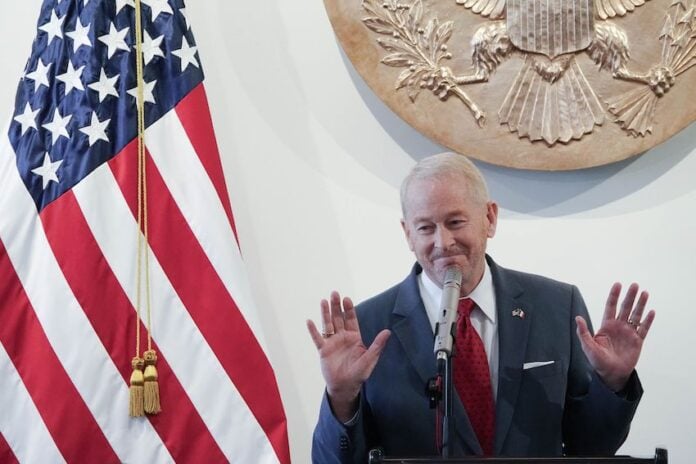
On Monday, the U.S. Ambassador to Mexico Ronald Johnson posted a message on his X account that was clearly directed at President Claudia Sheinbaum, even though the ambassador didn't mention her by name. (Camila Ayala Benabib/Cuartoscuro)

On numerous occasions, U.S. Ambassador to Mexico Ronald Johnson has taken to social media to praise the Mexican government’s actions against organized crime and highlight its close collaboration with the Trump administration on security issues.

On Monday, Johnson sent a different message via his X account, one clearly directed to President Claudia Sheinbaum, even though the ambassador didn’t mention her by name, as he often does in his social media posts.

“The fight against cartels should unite us, not divide us,” he wrote.

“People on both sides of our border want to live safely and in peace. They deserve freedom from the intimidation, corruption, and fear that the cartels inflict. Every moment spent turning this shared security challenge into a political dispute is a missed opportunity to strengthen our partnership and protect the people we serve.”

The timing of the post was telling. It came the day after Sheinbaum declared that Mexico “is not anyone’s piñata” and railed against U.S. interference in Mexican affairs during a forceful speech at a large rally in Mexico City to mark the second anniversary of her election.

Sheinbaum is not happy that U.S. Central Intelligence Agency officers allegedly participated in a drug lab raid in the northern state of Chihuahua in April without the knowledge or authorization of her government. She has expressed her dissatisfaction with U.S. authorities for requesting the arrest and extradition of Sinaloa Governor Rubén Rocha Moya and various other Sinaloa-based current and former officials without providing hard proof supporting the drug trafficking accusations against them. She has asserted that U.S. media reports claiming that the CIA was involved in a targeted assassination in Mexico are not only false, but part of an orchestrated international campaign against her government.

All this, Sheinbaum believes, amounts to U.S. meddling in Mexican affairs. All the while, she is forced to deal with U.S. President Donald Trump’s semi-regular threats to take unilateral action against Mexican cartels on Mexican soil.

At her rally speech on Sunday, Sheinbaum made her strongest statements yet against alleged U.S. interference in Mexico. Among them:

  • “The Political Constitution of the United Mexican States and the National Security Law establish with precision that no foreign agent may carry out tasks that correspond exclusively to Mexican authorities. Whoever comes to our country must do so respecting our sovereignty, accrediting themselves in accordance with the law and subject to our regulations.”
  • “An office of the United States Department of Justice issued an urgent request for the arrest for extradition purposes of 10 Mexican citizens — including a sitting governor, a sitting mayor, and a sitting senator — without publicly presenting evidence to support the request. An action of that magnitude has no precedent in the history of our bilateral relationship.”
  • “We must ask — and it is a legitimate question: … [Does the U.S. have] a genuine, legitimate interest in helping Mexico? Is it a genuine commitment to combating organized crime? Or are we witnessing sectors of the American far right using our country to position themselves ahead of their 2026 elections? Or perhaps they intend to influence the 2027 elections in our country? These are not rhetorical questions.”
  • “Let it be heard loud and clear, Mexico doesn’t accept interference. We are a free, independent and sovereign country.”
Sheinbaum stands on a stage before a rally on May 31, 2026
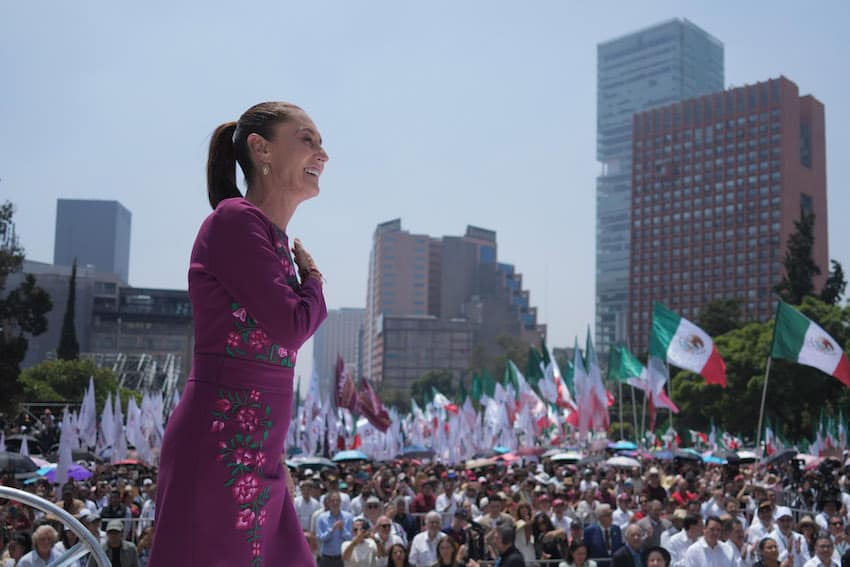
Mexico “is not anyone’s piñata,” President Claudia Sheinbaum declared during a rally on Sunday. (Hazel Cárdenas/Presidencia)

Johnson’s social media post on Monday indicates that he believes that Sheinbaum is creating a “political dispute” between Mexico and the United States by denouncing alleged U.S. interference in Mexican affairs. The ambassador evidently thinks — or at least publicly indicates — that the issues the Mexican president spoke about on Sunday, and has been speaking about for weeks, should not be an impediment to the additional strengthening of a bilateral security cooperation that he himself has described as “historic.”

For Sheinbaum, things are not that simple. While she said on Sunday that security cooperation with the United States would continue, the president evidently feels she cannot ignore, or even downplay, U.S. actions that she sees as violations of Mexican law, the Mexican Constitution and Mexican sovereignty, and/or blatant examples of U.S. interference. She frequently vows to stand up for Mexico and the Mexican people — no matter what — and with her words on Sunday, she did that emphatically.

“Strongest rhetoric I can remember hearing from Sheinbaum,” Brian Winter, a political analyst and editor-in-chief of Americas Quarterly, wrote on X.

Sheinbaum responds to Johnson 

At her Tuesday morning press conference, Sheinbaum took the opportunity to respond to Johnson, a former Green Beret and CIA officer to whom the Mexican government sent a protest note after the CIA’s alleged participation in the security operation in Chihuahua in April came to light.

She said that her government agrees with part of the ambassador’s social media message “because we have to work together when we have shared problems.”

“One of those is obviously violence caused by organized crime, and on that, as we have always said, we seek collaboration and coordination in order to be able to make progress together — they act in their territory and we act in … [our] territory,” she said.

Sheinbaum subsequently stressed that “it’s important for ambassadors to stick to the issue of coordination and collaboration.”

“Ambassadors have to be respectful of a country’s internal matters,” she said, making it clear that she believes that Johnson had overstepped the mark.

“Our ambassador in the United States, our ambassador in France, our ambassadors in any place in the world — Australia, India — don’t offer opinions on a country’s political issues because our constitution clearly establishes [the right to] self-determination … and respect and non-intervention, ” Sheinbaum said.

“We have to also remember that it’s important for the [U.S.] ambassador to stick to bilateral issues and to respect the internal affairs of our country because Mexico’s affairs correspond to Mexicans,” she added.

Sheinbaum’s remarks on Tuesday came a day after she said that she didn’t believe Trump was leading the meddling and media “offensive” against Mexico.

She also stressed that her administration wants “a good relationship with the United States government.”

As things stand, however, the bilateral relationship between the North American neighbors and trade partners is certainly strained.

By Mexico News Daily chief staff writer Peter Davies (peter.davies@mexiconewsdaily.com)