Home Blog Page 674

Ruling party Morena picks candidates for 2024 gubernatorial elections

1
A group of politicians at a podium
The Morena party national director, Mario Delgado, announced the selected candidates on Saturday in Mexico City. (Rogelio Morales/Cuartoscuro.com)

After weeks of tensions over the polling process and gender parity requirements, Mexico’s ruling Morena party has announced its candidates for the nine governorships in contention in the 2024 elections.

Results of the internal party polls were expected to be announced on Oct. 30 but were delayed until Nov. 10, during tense internal negotiations. New gender parity requirements approved by the National Electoral Institute (INE) in October require five out of nine of the candidates to be women, meaning several men who won the polls in their respective states had to be displaced by female candidates.

A close up of Clara Brugada outdoors wearing a hat
Morena selected Itzapalapa borough chief Clara Brugada as its candidate for Mexico City mayor, though she came second in party polls. (Facebook @ClaraBrugadaM)

The most high-profile upset was in Mexico City, where the former mayor of Iztapalapa, Clara Brugada, was eventually selected as the candidate, despite trailing 14 points behind Omar García Harfuch, the capital’s former security minister.

Harfuch achieved 40.5% in poll support compared to Brugada’s 26.7%, with respondents scoring him higher on voting intentions, honesty, knowledge of the city, closeness to the people and identification with the party’s values. But despite waging a fiercely-fought campaign, Harfuch’s team have stated that he will respect the party’s eventual decision and support Brugada, who has also served as a congresswoman and senator.

It is expected that if Morena’s presidential candidate — Mexico City’s former head of government, Claudia Sheinbaum — wins the election, Harfuch will be given a leading security role in her cabinet.

The gender parity rules meant that women were also prioritized over higher-scoring men as gubernatorial candidates in the states of Guanajuato and Jalisco. In an effort to preserve unity, these men will be guaranteed a seat in Congress, according to an agreement released by the Morena leadership on Thursday.

Morena selected poll leaders as gubernatorial candidates in seven states, while the runners-up were selected to represent Mexico City and Jalisco. (X @PartidoMorenaMx)

Female candidates won the polling in Veracruz and Morelos, and were thus automatically selected as candidates.

The final list of Morena’s candidates for the eight contested governorships is as follows:

  • Chiapas: Eduardo Ramírez, current coordinator of the Morena caucus in the Senate, and formerly a local and federal deputy and mayor of Comitán
  • Guanajuato: Alma Alcaraz, a Morena deputy and former local party leader
  • Jalisco: Claudia Delgadillo, a federal deputy for the Green Party (PVEM), a Morena ally. She has also been a local deputy and councilwoman in Jalisco’s capital, Guadalajara.
  • Morelos: Margarita González, former general director of the National Lottery
  • Puebla: Alejandro Armenta, former president of the Senate
  • Tabasco: Javier May, former Welfare Minister and head of the National Fund for Tourism Promotion (Fonatur)
  • Veracruz: Rocío Nahle, former Energy Minister
  • Yucatán: Joaquín Díaz Mena, a former federal and local deputy for the opposition National Action Party (PAN)

Mexico’s other political parties have yet to finalize their internal selection processes for the contested governorships. Morena and its allies currently govern in 23 of the country’s 32 states, and are hoping to expand that number.

Pre-campaigns for the 2024 elections open this month, with specific dates dependent on the state. The pre-campaign period in Mexico City officially started on Nov. 5 — before any of Mexico’s political parties had announced a candidate.

With reports from CNN and El País

Some of the best bars in Mexico are in Yucatán

0
Mérida, Yucatán, is considered one of the best cities in the world. (Yucatán Turismo)

The Sabores de Yucatán Festival is just around the corner and has a line-up of extraordinary activities that will captivate the most discerning gourmets with 6-course dinners, gastronomic circuits, free tours, market tours, academic programs and much more, where the great leaders of gastronomy such as Ferran and Albert Adria, Jordi Roca, Dabiz Muñoz, Mitsuharu Tsomura, among others, will gather to enjoy the Sabores de Yucatán. 

Mérida, the capital of Yucatán, is considered one of the best cities in the world, as well as one of the safest destinations in the country, where you can admire the beauty of its streets full of history and tradition, together with a modern and cosmopolitan city.

Emplumado offers one of the most impressive gastronomies of the destination and, of course, a refreshing and extravagant mixology bar. (Yucatán Turismo)

Emplumado

If you prefer quiet places to have fun, Emplumado is a good option. It is strategically located in front of the imposing Monumento a la Patria and the charming Paseo de Montejo. It offers a privileged view from its terrace, making it the perfect place for meeting with friends and taking refuge in the relaxing atmosphere of Mérida. It is essential to mention that Emplumado offers one of the most impressive menus of the destination and, of course, a refreshing and extravagant mixology bar.

Catrín 42

It is a very Mexican cantina in the XXI Century, which has given new life to the most emblematic dishes of the country by the talented Yucatecan chef Adrian Ramos, in addition to its challenging mixology that will test even the most daring of its visitors. At Catrín, you will experience a unique party atmosphere on a colorful terrace where artist Jacobo Roa has painted his work along with a selection of pieces chosen by himself to reinforce and accentuate the Mexican style while you dance and sing to the rhythm of the DJ and interact with other people. 

The Sabores de Yucatán Festival is just around the corner and has a line-up of extraordinary activities that will captivate the most select gourmets, 6-handed dinners, gastronomic circuits, free tours, market tours, academic programs and many more. (Yucatán Turismo)

La Negrita

La Negrita Cantina is an old and renovated bar in Mérida’s Centro Histórico with more than 100 years of history, and it is one of the most traditional places to visit. Being the first bar to open in Mérida in 1917, its unique atmosphere combines the essence of the conventional Yucatecan cantina with a modern and vibrant touch, where its tropical gardens invite you to let yourself be carried away by the rhythm of live music while you delight yourself with succulent Yucatecan appetizers and refreshing drinks.

Pipiriripau

We could say that Pipiripau is the classic cantina of today; its jovial and tropical atmosphere attracts all those looking to have fun in Mérida while admiring the fusion of the symbolic details of Mexican culture in a colonial-era mansion and a terrace with tropical tints where you can dance while sipping a cold beer or something from their cocktail bar. 

The Golden Lizard 

This cantina offers a wide variety of dishes, drinks, snacks, and typical desserts of Yucatán. As for drinks, Lagarto de Oro has a variety of beers and classic cocktails, as well as soft drinks; while you taste the gastronomy of the peninsula, let yourself get caught by the live music in the section “la bodega” where you will meet great local artists.

The flavors of Yucatán are to be enjoyed at all times, and what better way to do it than during the days of its gastronomic festival? The festival Sabores de Yucatán runs from Nov. 16 to Nov. 20. 

Jesús Ociel Baena, Mexico’s first nonbinary judge, found dead

10
Ociel Baena
Aguascalientes magistrate and LGBTQ+ activist Ociel Baena was found dead at home, with wounds from a knife. (Ociel Baena/X)

Thirteen months after being sworn in as the first non-binary electoral magistrate in Latin America, Jesús Ociel Baena Saucedo was found dead at home in Aguascalientes on Monday.

The lifeless body of one of Mexico’s most prominent LGBTQ+ activists was found around 9 a.m. with wounds caused by a knife, according to the state prosecutor’s office.

Ociel Baena
Baena was an outspoken LGBTQ+ activist. (Ociel Baena/X)

Another person, reportedly Baena’s partner, also was found dead, reportedly also with knife wounds, inside the magistrate’s home in the capital city of Aguascalientes.

“We don’t know if it is a homicide or an accident,” said Rosa Icela Rodríguez, the head of Mexico’s Ministry of Security and Citizen Protection (SSPC). “An investigation is going to be done.”

The killing sent shock waves throughout Mexico’s LBGTQ+ community and human rights groups worldwide. Immediately there were calls for Baena’s death to bring about stronger anti-discrimination laws long demanded by advocates in the country.

Baena, who was born in 1984 according to their profile on the social media site X, was an appointed judge with the Electoral Tribunal of the State of Aguascalientes, a division of the Mexican justice system that specializes in matters relating to elections.

A outdoor crowd waving dozens of rainbow flags.
Activists in Mexico have called for better protections for the LGBTQ+ community, who have suffered a recent rise in attacks against them. (Gay Games 2023/Facebook)

Born in Saltillo, Coahuila, and a resident of Aguascalientes for 11 years, Baena earned a degree in law from the Faculty of Jurisprudence of the Autonomous University of Coahuila, where they also completed a master’s degree in constitutional law and government policies.

Baena went by the pronouns they, she and he, according to a report in the newspaper Milenio.  

Earlier this year, Baena made the news by obtaining a re-issue of their birth certificate, with a box added for “non-binary,” from the Civil Registry of Coahuila.

A month or so later came the issuance of Mexico’s first non-binary passport, to Baena, in honor of the International Day Against Homophobia. 

Ociel Baena
Baena became the first Mexican to receive a non-binary passport in May this year. (Marcelo Ebrard/X)

On Sunday, Baena participated in a round table in Oaxaca, speaking about LGBTQ+ rights. In their career, they pioneered initiatives on behalf of trans children, same-sex marriage and gender-identity recognition.

Baena said activists provided “a lot of support” after their appointment in October 2022 because “it is a position where real decisions are made that change and transcend the lives of many people.”

But there was also resistance, criticism and hate speech.  “There were calls from bar associations and people from these bars who [asked] the presiding judge how it was possible that they allowed this type of daring [appointment], especially in a highly conservative state,” Baena said.

Mexico faces ongoing issues with discrimination and violence targeting LGBTQ+ individuals. According to LetraEse, a digital news site focused on sexuality and gender, murders of LGBTQ+ persons in Mexico increased by nearly a third from 2020 to 2021.

With reports from Milenio and El Universal

Soccer: How the world’s most popular sport arrived in Mexico

3
The sport grew from early informal matches between miners in Real del Monte, and by the early 1920s, Mexico’s national league had been set up. (Canva)

Call it football, fútbol or soccer, that’s your preference. One thing is indisputable, though. It’s the world’s most popular sport – loved, watched and played by over 265 million – and its growing popularity in Mexico is breaking records yearly. In 2026, Mexico will co-host the next World Cup alongside the USA and Canada, becoming the first country ever to host the renowned competition three times.

But despite its massive national and international appeal, the remarkable and deadly story of how fútbol (as it is known in Mexico) became an integral part of Mexican life remains largely unknown.

In 2026, Mexico will co-host the next World Cup alongside the USA and Canada, becoming the first country ever to host the renowned competition three times. (Canva)

Soccer’s journey to Mexico from a humble English mining town 

In the early 19th century, Mexico’s once-prolific silver mines in Real del Monte, in central Mexico, faced an uncertain future. The mines had fallen victim to years of neglect during the country’s war for independence with the Spanish. Integral mineshafts were flooded, outdated machines lay broken and disused and with little investment to help improve resources, the country’s mines were in disrepair.

Recognizing an urgent need to rejuvenate this vital part of the national economy, investors in Mexico’s silver mines turned to the United Kingdom, specifically a region on the south coast called Cornwall, for support.

The quiet coastal region had a global reputation for state-of-the-art mining equipment and specialist expertise in operating complex, modern machinery. With that, 60 Cornish miners in 1825 bid goodbye to their families and friends at the Falmouth Docks in southern England and boarded a large boat that would carry them and 1,500 tonnes of equipment over 6,000 nautical miles to Veracruz, one of Mexico’s oldest and most significant ports, before the journey on land to Real del Monte.

The transatlantic voyage to save Mexico’s ailing mining industry would claim the lives of many and leave some of those who waved goodbye to the sixty young men at Falmouth Docks as grieving widows, parents and children.

On arrival, the Spanish still held the port of Veracruz, forcing the miners to land on the beach of Mocambo. The disruption caused massive delays, leaving the English and Mexican men employed to help them with no choice but to take a dangerous route through the jungle.  

Swampy waters and the rainy season in Mexico saw several men contract Yellow Fever. According to the diaries of an English engineer, John Buchanan, 100 Mexican men and 30 English men died during these months, which forced the surviving party to abandon much of their cumbersome equipment and make their way to the safety of the mountains in Xalapa until the rainy season ended. The 250-mile journey on land, which was supposed to take the group less than a month, was in great jeopardy.

Fourteen months later, with many friends and colleagues buried along the way, the mining party made it to Real del Monte, the highest town in Mexico at 10,000 feet above sea level. Engineer John Buchanan reported in his diary: After great labour and many accidents, we conquered this great ascent and our convoy proceeded on our last stage to deposit its valuable cargo in Real del Monte.”

Life in Real del Monte or Mexico’s “little Cornwall”

Work began quickly for those who survived the first journey to Mexico, and a small, distant English enclave grew. A cemetery, built on a hilltop overlooking the town, called the Panteón Inglés, was soon constructed to honor the dead. The high-quality equipment salvaged during the 14-month journey from Veracruz was instrumental in repairing old mining machinery.

But as English miners laid down roots in Mexico, it wasn’t their technology and expertise that would have the greatest impact on Mexico’s culture but their customs and traditions. By the early 20th century, the state of Hidalgo, where Real del Monte is located, had the most British transplants of any Mexican state, most notably a regular afternoon game of fútbol enjoyed by the local Mexicans and the British expatriates.

At 4 p.m. daily, Mexican and English miners would pause work for a kickabout. The tradition became part of the working day and love of the simple game quickly spread to nearby towns and regions in Hidalgo. The town of Pachuca, just 14km west of Real del Monte, would launch the country’s first official football club by the turn of the 20th century.

The sport has become a source of pride for Mexico on the global stage. Current estimates show over 8 million play soccer in over 17,000 teams across the country. (Canva)

Today, Pachuca is known as the country’s cuna del fútbol (cradle of football) and home to the Salón de la Fama soccer museum, which charts the sport’s early history and long-lasting legacy.

The sport grew from early informal matches between miners in Real del Monte, and by the early 1920s, Mexico’s national league had been set up. In 1922, the Mexican Association Soccer Federation was founded. The national team was formed one year later, with their first participation on the international stage during the 1928 Amsterdam Olympic Games and their first appearance in the FIFA World Cup in Uruguay in 1930.

Mexico would go on to host the World Cup in 1970. It became the first country to host the tournament twice in 1986, and in 2026, Mexico will break another record by becoming the first country to host the World Cup three times.

The sport has become a source of pride for Mexico on the global stage. Current estimates show over 8 million play soccer in over 17,000 teams across the country and it’s not just a sport for the players, but also for spectators.

Mexico’s match against Argentina during last year’s FIFA World Cup became the most-watched Group Stage match in Spanish-language history in the United States. It drew a national audience of over 20 million people in Mexico.

The sport brought to Mexico from Cornwall faced an uphill battle that claimed many lives before the first game was ever played on Mexican soil. But from tragedy, the country’s most sacred and beloved sport has helped elevate Mexico’s international reputation.

Alongside stadiums in Guadalajara and Monterrey, the world-famous Estadio Azteca in Mexico City, known as a coliseum of world football which welcomed the likes of Pele and Diego Maradona across two World Cup finals, will be packed with thousands of spectators from across the world in 2026. The stage in Mexico is set for more pulsating moments during football’s most prestigious global event.

Gordon Cole-Schmidt is a freelance journalist based in Oaxaca, Mexico.

Water restrictions imposed in Mexico City metro area

2
dry tap
Low levels in the Cutzamala damn system that supplies Mexico City have caused authorities to reduce water supply to the metro area by 25%. (Ian Talmacs/Unsplash)

In response to the extreme drought affecting the Valley of Mexico, the National Water Commission (Conagua) has implemented a nearly 25% reduction in the water supply to Mexico City and México state.

The action, which was implemented on Nov. 11, was taken by federal and state authorities to address the low water levels in the Cutzamala System, which is replenished by the Valle de Bravo, El Bosque and Villa Victoria dams.

Cutzamal dam, Valle de Bravo
The Cutzamala dam is responsible for much of the water that flows into the capital. Levels have been historically low throughout 2023. (Crisanta Espinosa Aguilar/Cuartoscuro)

The reduction will affect 12 boroughs in Mexico City, leading to an overall decrease in water pressure during hours of increased demand. Additionally, 16 municipalities in México state will experience declines in water flow and supply.

The announcement, made during a Friday press conference, revealed that over 25% of Mexico City’s water supply relies on resources drawn from the Cutzamala System, which in 2021, was already “at its lowest level in 25 years.”

The Cutzamala System, built between 1982 and 1993, includes a complex network of canals, tunnels and pipelines, six pumping plants, 11 dams, 10 reservoirs, a major treatment plant, two storage tanks along the route, and four storage tanks at the terminus in Mexico City. The decision to reduce the water supply stems from a critical situation in the dams, which are registering storage levels of only 39% as of Nov. 9, which was 44% below the historical average.

The areas in Mexico City affected by the water restrictions include downtown delegations Azcapotzalco, Cuauhtémoc, Miguel Hidalgo, Benito Juárez and Coyoacán, as well as seven other delegations to the east and west of the metropolis, including Iztapalapa and Magdalena Contreras.

Batres water
Mexico City mayor, Martí Batres announced the new restrictions on Friday. (Government of CDMX/Cuartoscuro)

Municipalities affected in México state include Ecatepec, Nezahualcóyotl and Toluca.

In addition to the three dams mentioned above, the system also gets water from the Tuxpan River and Lake Avándaro.

Officials said the severe drought conditions have been exacerbated by the El Niño weather pattern, heat waves and a 30% deficit in annual precipitation. Alejandra Margarita Méndez Girón, general coordinator of the National Meteorological Service (SMN), said 93% of the Valley of Mexico is experiencing severe to moderate drought. 

The situation is expected to persist during a six-month dry period that begins in early December.

In addition to reducing water supply, the plan announced by Mexico City and México state water officials on Friday includes repairs, improvements to purification and pumping plants, efforts to combat illegal water extraction, the establishment of a unified data bank and a public portal for Mexico City that provides water information by neighborhood.

With reports from Proceso and El Economista

Bobcat to invest US $300M in first Mexican plant

1
Bobcat skid steer
North Dakota-based Bobcat plan to open their first Mexican production site in 2026, committing a US $300 million investment to Nuevo León. (Nick Sanchez/Unsplash)

The North Dakota-based construction equipment firm Bobcat will soon break ground on a new manufacturing plant in Monterrey, Nuevo León, with plans to begin production in 2026. 

The Monterrey plant will bring an investment of US $300 million to the northern state, and once operational, is expected to create an additional 600 to 800 jobs in the region.

Bobcat monterrey
The planned facility in Monterrey. Bobcat estimates that once functional, the site will create up to 800 new jobs. (Bobcat)

The 700,000-square-foot facility will manufacture the Bobcat M-Series compact loader, a skid-steer lift used for farming and construction. In addition, the plant will feature areas for welding, painting and assembly, as well as an on-site warehouse and office space.

Bobcat is the latest of several companies to move into Monterrey this year, where occupation of industrial space for the manufacturing sector has grown by 38%. According to Bobcat executives, the city was selected for its well-established industrial sector, skilled workforce, proximity to the U.S. and cost competitiveness.

“As a global company with manufacturing facilities, offices, dealerships and customers across the globe, we have seen tremendous growth and increased demand for our products,” said Scott Park, CEO and vice chairman of parent group Doosan Bobcat, in a press release. “We are excited to continue growing our footprint to meet demand for Bobcat solutions worldwide.”   

Bobcat invented the first skid-steer loader in 1960, and offers a variety of compact equipment including loaders, excavators, compact tractors and services. The Monterrey plant will be the company’s thirteenth manufacturing facility worldwide and the first in Mexico.

With reports from Ara Rental

Acapulco airport resumes operations for domestic flights

2
Aeroméxico Acapulco
Domestic services are resuming at Acapulco airport, and the humanitarian air bridge that has operated since the aftermath of Hurricane Otis has concluded. (SICT)

Acapulco airport has resumed domestic flights and ended the humanitarian air bridge service, which provided relief after the destruction caused by Hurricane Otis. 

The airport’s commercial operations restarted at 7 a.m. on Monday, 17 Nov., according to a press release by the Ministry of Infrastructure, Communications and Transport (SICT). For now, the airport remains closed to international flights.

acapulco airport hurricane damage
Passenger services in the terminal have now been restored and commercial traffic can return to the airport, according to Mexico’s air safety regulator. (Dassaév Téllez/Cuartoscuro)

Acapulco airport first reopened on Oct. 27, two days after the Category 5 hurricane ripped through the Pacific resort town, causing around US $15 billion of damage and leaving 100 people dead or missing. For 17 days it was used only as a humanitarian air bridge to evacuate people from the area and to bring in medical personnel and supplies.

According to SICT, 4,077 people were evacuated via the air bridge, while 617 doctors, technicians and support personnel were flown in alongside 18 tonnes of technical equipment and supplies. A total of 78 air operations were carried out, with Aeroméxico, Viva Aerobus and Volaris all contributing with free flights to Mexico City for those affected by Otis.

Aeroméxico, Viva Aerobus and Volaris all run domestic routes to Acapulco; however, Volaris has announced that its commercial flights will remain suspended until further notice.

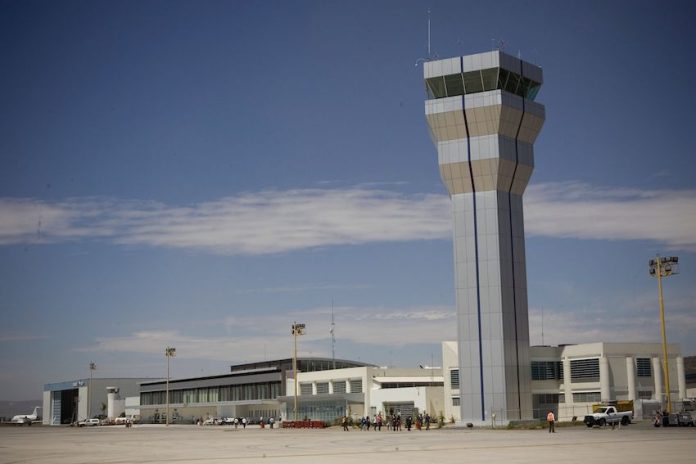
Since the hurricane, authorities have been working to repair the damage caused to airport infrastructure, including re-fencing 3.5 kilometers of the perimeter, fixing the roof of the terminal building, refitting the control tower cabin, and ensuring a stable supply of electricity, water and air conditioning.

Acapulco Airport’s infrastructure was extensively damaged during the hurricane, with the control tower being put out of action completely. (SICT)

On Sunday, Mexico’s air traffic control agency (Seneam) announced that it has regained the necessary operational control to allow the airport to safely resume commercial operations. However, the international baggage belts will temporarily operate as the only baggage claim hall. 

On the ground in Acapulco, bars and restaurants have tentatively started to reopen, while business leaders have predicted that hotels will start reopening by Dec. 15.

With reports from La Jornada and El Universal

Another US airline adds nonstop flights to Tulum

1
American Airlines also plans to add routes to Tulum this year. (Tanja Cotoaga/Unsplash)

American Airlines is the third U.S. airline to announce service to Tulum, with four new direct flights out of three cities, as the opening date of the new airport approaches.

The airport is set to commence operations in December and will offer international flights between the U.S. and Mexico beginning in March 2024.

The Tulum International Airport is scheduled to open to national air carriers on Dec. 1, with international service starting in March 2024. (Aeropuerto Internacional de Tulum/Facebook)

The Dallas, Texas-based airline will operate four daily flights across three routes to Tulum beginning March 28, 2024, with two daily flights from Dallas-Fort Worth (DFW), one daily flight from Miami International Airport (MIA) and one daily flight from Charlotte Douglas International Airport (CLT).

Whether passengers fly nonstop or connect through one of these American hubs, the carrier said that with these routes, over 200 U.S. cities will be able to connect to Tulum.  

Flight tickets are set to go on sale Nov. 13.

The first U.S. airline to announce flights to Tulum was Delta Airlines with a daily nonstop service from Atlanta International Airport (ATL). After Delta, ultra-low-cost carrier Spirit Airlines became the second U.S. carrier to announce flights from Fort Lauderdale-Hollywood International Airport (FLL) and Orlando International Airport (MCO).

Between the new airport and the inauguration of the Maya Train, tourism to the area around Tulum is estimated to exceed four million visitors in 2024.

With reports from The Points Guy, La Jornada Maya and Thrifty Traveler

Historic buildings wait for attention after the 2017 earthquakes

1
Work did not begin on this church Atzitzinuacanin 2023 (PueblaOnline )

President López Obrador has promised that all of the nearly 1,000 historical buildings in Mexico damaged in 2017 still awaiting final restoration will be finished by the end of this year. That will likely not happen and may not even be desirable to make it so.

The quakes of 2017

Six years ago, Mexico was rocked by two nearly back-to-back earthquakes on September 7th and 19th. One-third of its territory was affected from central Mexico into Chiapas and Oaxaca, a region that has the country’s largest concentration of people and historic monuments. 

Damage was widespread and in many cases, severe. Understandably, infrastructure such as hospitals, roads and schools took priority. However, the quake damaged thousands of historical buildings and sites. The long task of repairing these monuments sheds light on the massive human heritage that Mexico is custodian of.

What was damaged?

The number of damaged historical buildings is over 2,340, located in 11 states (Oaxaca, Chiapas, Guerrero, Tabasco, Morelos, Puebla, Tlaxcala, Hidalgo, México state, Veracruz, and Mexico City). The most severe damage was in Oaxaca (affected strongly by both quakes) and near the epicenter of the September 19th quake on the Puebla/Morelos border. Many of the affected buildings are located in World Heritage sites such as the historic centers of Puebla and Mexico City. In Morelos, 90% of the damage was in early colonial-era parish churches, still the centers of community life.

Partially collapsed cupola of the Nuestra Señora de los Angeles Church in Mexico City. This is a difficult case because of the original’s Talavera tile and wrought iron cross. (Secretaría de Cultura)

In response to the massive damage, Mexico’s Culture Ministry through the National Institute of Anthropology and History (INAH) created a unified program to restore the damaged buildings. The program coordinates support from international agencies and Mexican non-profits, but most of the nearly 10 billion peso effort has been funded through the country’s National Fund for Disasters (Fonden).

The challenge of restoration

The scale of the damage is challenging enough, but modern approaches to the care and repair of historical buildings make it even more so. In centuries past, old buildings were rebuilt using whatever technology and materials were available. Today, the goal is to restore buildings as close to the original as possible, meaning the involvement of experts and workmen with highly specialized knowledge.

INAH and other authorities have very strict rules and enforcement on these matters. The thousands of structures have had to be assessed not only for damage but also to determine how the original structure was built. Even after experts ascertain this, there are only a limited number of construction firms in Mexico (and the world) able to reproduce the building techniques of centuries ago. This drives up costs significantly.

Add to this that these projects have to compete for funds from the same pot as “ordinary” structures, including 166,000 residences, 41 health centers, and 12,000 educational facilities. Lack of funding is always an issue, and work has stopped in various places because of this, especially in Puebla and Morelos where the damage has been more severe and costly.

When will it all be finished?

News reports over the past six years have shown a steady advance in the percentage of projects completed although figures can vary depending on the source. INAH says that as of August 2023, 65% of the churches and other community buildings have been completed with 73% returned to use, at a cost of over 10 billion pesos (US $ 570 million).

It is an amazing feat when you consider that the federal government also had to invest over 35 billion pesos in other earthquake-related repairs in the same region. 

The hardest-hit areas still have many buildings that are closed, including 591 in Puebla, 301 in Oaxaca and 178 in Morelos. Nonetheless, López Obrador has recently asserted that reconstruction projects are over 90% complete and will be finished at the end of the year, noting that his government released 844.5 million pesos this year alone for the effort.  

This is likely not the case. Culture Minister Alejandra Frastro has spent a good part of this year visiting the hardest hit areas to reassure residents they will eventually have their churches and other community centers back. She claims most will be finished but the particularly difficult ones will not likely be ready until 2024.

There are plenty of cases where reconstruction is particularly difficult, such as the fallen roofs of the monastery in Tlayacapan and Nuestra Señora de los Ángeles in Mexico City, both from the 16th century. The church, municipal palace, and traditional market in Juchitan, Oaxaca are still unusable. 

Earthquakes have damaged Mexico’s churches and public buildings since the Mesoamerican period and will continue to do so in the future. Just as important as getting life back to normal is learning from this experience to protect structures in the future.

Puebla spokesperson Sergio Salomón Céspedes states “[The reconstruction] is a great challenge because it is specialized infrastructure, not just any ordinary thing. It involves great challenges in logistics, infrastructure, and resources. The actions are to give [our children] heritage, identity, history and culture.” 

While the government certainly does need to reassure communities long without traditional sociological support, Mexico does deserve credit for taking on a monumental task nearly single-handedly.”

Leigh Thelmadatter arrived in Mexico over 20 years ago and fell in love with the land and the culture in particular its handcrafts and art. She is the author of Mexican Cartonería: Paper, Paste and Fiesta (Schiffer 2019). Her culture column appears regularly on Mexico News Daily.
Crispy, crunchy iceberg lettuce: the foundation of the wedge salad

2
Classic iceberg wedge salad. (Photo: Tastes better from scratch)

Quietly, efficiently, and uncomplaining, iceberg lettuce does its job day in and day out. We put it in and on everything: our favorite burgers, timeless salads, beloved sandwiches. (Think BLT.) In Mexican cuisine, it’s a ubiquitous ingredient in many dishes, from tacos to taquitos. Without iceberg lettuce, those classics would not be the same. 

What iceberg lettuce does so well (one could say perfectly) is balance other ingredients—the spicy, the chewy, the gooey, the rich and drippy, the umami flavor. Its refreshing, juicy crunch is absolutely welcome in the midst of a fried chicken sandwich or New Orleans po-boy; a relief in every bite of a spicy pastor taco, an essential layer in a taco salad. The classic Wedge Salad was first served as an accompaniment to big sizzling steaks in steakhouses of the 1960s for exactly this reason.

So why do we love to hate it so much? 

Iceberg wasn’t always on the bottom of the lettuce heap. In fact, it and other crisp head lettuces were the most popular varieties until the 1970s, making up 95% of lettuces cultivated and consumed in the U.S. (Romaine, or cos, lettuce, is more popular in the Mediterranean, and only recently gained favor in other parts of the world.)

Then packaged salad mix appeared, touted as having more nutritional value than traditional iceberg. It quickly became the darling of the ever-fickle food world. Leaf lettuces were lurking too, but consumers—always looking for shortcuts—preferred the convenience of pre-washed, packaged products. 

Bagged mixed salad greens, though, are a mixed bag. (No pun intended.) They’re washed in chlorinated water and then treated with a mixture of gases known as “modified atmosphere” to give them a longer shelf life. You’ll have to decide for yourself whether that feels OK to eat. 

Iceberg lettuce is a perfect crunchy, juicy and crisp topping. (Archive)

Back to iceberg lettuce: does it have less nutritional value than other lettuces? A good rule of thumb is the darker green the lettuce, the more vitamins it has—up to 20 times more, say food scientists. So what about Romaine? If, like me, you prefer the white crunchy inner leaves of Romaine, the difference may be negligible. Darker leaf lettuces have more nutrients (most notably vitamin K and vitamin A) and are always a healthy choice. 

But the truth is, we’re not eating iceberg lettuce for its vitamins; we’re eating it for the juicy crunch it adds to a dish. 

The trick is to find really fresh and if possible, locally grown heads of iceberg lettuce. They will be sweet and juicy, never bitter or bland. Look in your local markets, farmers’ markets, or even specialty grocery stores. Many years ago, when I lived in rural Pennsylvania, I grew iceberg lettuce. Flavorful, crunchy, and juicy, the difference between my garden-grown heads and what was in the grocery stores was dramatic, the same as a just-picked, vine-ripened tomato vs. a commercially grown one. Fresh iceberg lettuce will have multiple layers of dark green leaves surrounding the inner white core—all edible, all healthy, and all delicious. Keep looking until you find one—they’re out there somewhere. You won’t be sorry.

Classic iceberg wedge salad

  • 12-15 cherry tomatoes, cut in half
  • 1 small shallot, peeled and diced (2 Tbsp.)
  • 2 Tbsp. red wine vinegar
  • Salt and freshly ground black pepper
  • 2 thick slices bacon, cooked, drained and crumbled
  • 8 oz. blue cheese, crumbled
  • ¼ cup buttermilk
  • 2 Tbsp. mayonnaise
  • 1 Tbsp. olive oil
  • 1 tsp. lemon juice
  • Dash Worcestershire sauce, to taste
  • 1 large head iceberg lettuce, the outer leaves removed, cut into 4 wedges
  • 2 Tbsp. minced chives

Combine the tomatoes, shallots, and vinegar in a small bowl. Sprinkle with salt and black pepper to taste. Set aside.

To make dressing, put half the cheese into a medium bowl; mash with a whisk. Add buttermilk, mayonnaise, olive oil, lemon juice and Worcestershire sauce. Mash and whisk until mostly smooth. Adjust seasonings and set aside.

To assemble, place one wedge of lettuce on each plate. Gently spoon dressing over it. Sprinkle with crumbled bacon, the dressed tomato halves, remaining blue cheese and minced chives.

Stir-fried iceberg lettuce with shrimp

  • 2 Tbsp. soy sauce
  • 1 Tbsp. sesame oil
  • 2 tsp. rice wine vinegar
  • 1 tsp. sugar
  • 1 Tbsp. cornstarch
  • 2 Tbsp. peanut or other neutral oil
  • 2 Tbsp. minced garlic
  • 1 Tbsp. grated or minced fresh ginger
  • 1 medium head iceberg lettuce, cored and shredded
  • ½-¾ lb. medium shrimp, shelled, cleaned and deveined
  • Salt & pepper
  • ¼ cup chopped scallion, plus more for garnish

Combine soy sauce, sesame oil, rice wine, sugar and cornstarch in a small bowl and mix well. Set aside.

In a large, deep skillet over medium-high heat, add 1 Tbsp. peanut oil, swirl it around and immediately add garlic and ginger. Cook 15 seconds, stirring, then add scallion and lettuce. Raise heat to high and cook, stirring occasionally, until lettuce barely softens, about 2 minutes, being careful not to overcook or it will get mushy. Transfer to a plate and set aside.

Turn heat down to medium, add remaining tablespoon of oil, let it get hot, then add shrimp and sprinkle with salt and pepper. Raise heat to high and cook, stirring, 2-3 minutes until shrimp turn white and are no longer translucent.

Reduce heat to medium, return lettuce to pan, and toss once or twice. Stir cornstarch sauce and add to pan. Cook quickly until everything is warmed through and sauce thickens. Garnish with chopped scallions and serve immediately.
Janet Blaser is the author of the best-selling book, Why We Left: An Anthology of American Women Expats, featured on CNBC and MarketWatch. She has lived in Mexico since 2006. You can find her on Facebook.