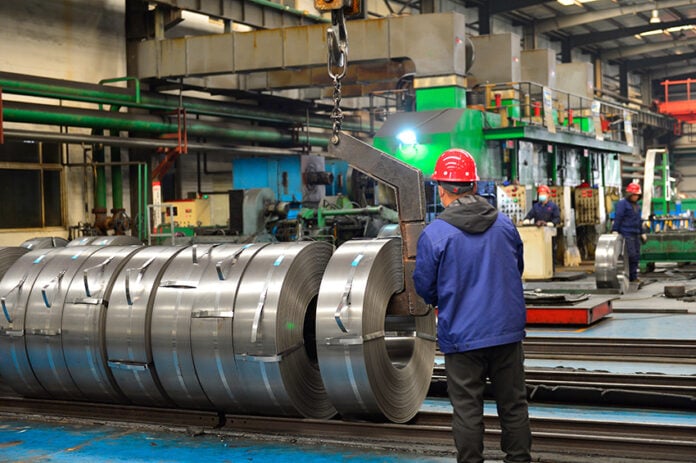
Chinese mill workers prepare hot-rolled steel coils. (QiuJu Song/Shutterstock)
The government of China said on Wednesday that it has the right to take countermeasures to the new tariffs Mexico imposed on a wide range of Chinese goods at the start of the year.
That declaration came from a spokesman for China’s Ministry of Commerce (MOFCOM), which conducted an investigation into Mexico’s tariffs and other trade measures and determined that they constitute trade and investment barriers.
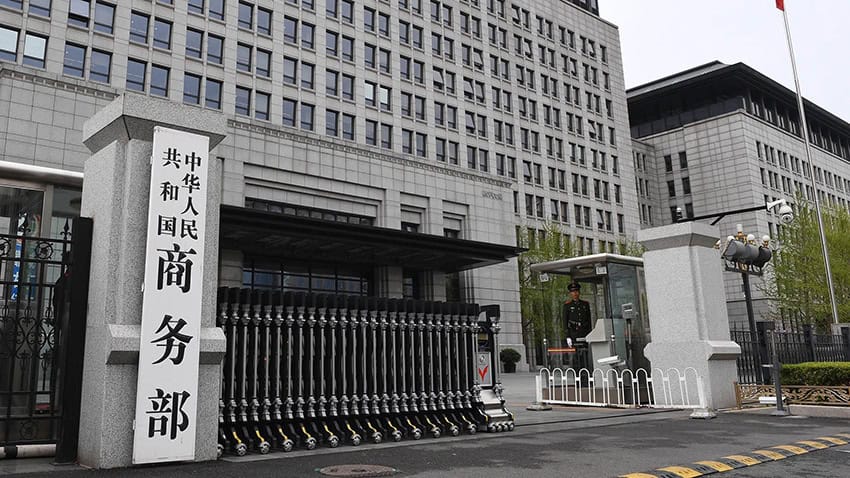
The Chinese Ministry of Commerce said an investigation found that Mexican tariffs constitute barriers to trade, giving China the right to retaliate. (China State Council Information Office)
In late 2025, the Mexican Congress approved tariffs of up to 50% on more than 1,400 products from China and other countries with which Mexico doesn’t have free trade agreements.
The new tariffs — widely seen as an attempt to appease the United States ahead of this year’s review of the USMCA free trade pact — took effect on Jan. 1.
After Congress’ approval of the duties, the Chinese government promptly urged Mexico to “correct its wrong practices of unilateralism and protectionism at an early date.” It has taken the view that Mexico yielded to U.S. coercion in imposing the higher tariffs, including 50% duties on Chinese cars.
On Wednesday, MOFCOM said that Mexico’s new and increased tariffs affect more than US $30 billion of Chinese exports to Mexico. The ministry’s probe found that Mexico’s duties could lead to losses of some $9.4 billion for China’s mechanical and electrical sectors.
MOFCOM said that around $9 billion of those losses would be borne by China’s automobile and auto parts sectors as Mexico was the biggest export destination for Chinese vehicles in 2025.
The Ministry also said that Mexico’s higher tariffs would have a negative impact on Chinese exports of some metal and chemical products as well as textiles and light industrial products.
In addition, MOFCOM said that some non-tariff trade measures Mexico has implemented in recent years, including complex customs inspection requirements, could hurt or restrict the investments and operations of Chinese companies in Mexico. Onerous customs inspection requirements can hold goods up at ports for lengthy periods, increasing costs for the companies exporting and importing the products.
What will happen now?
According to Xinhua — China’s official state news agency — a MOFCOM spokesman said on Wednesday that the Commerce Ministry “is authorized to implement corresponding measures to resolutely safeguard the interests of Chinese industries.”
China could impose retaliatory tariffs on Mexican goods, but the value of Mexico’s exports to China is dwarfed by the value of Chinese products entering Mexico, making it impossible for Beijing to inflict comparable damage on Mexican exporters. The Chinese government hasn’t announced a timeframe for when it might enact countermeasures targeting Mexican exports.
Before retaliating against Mexico, China could first seek additional dialogue or mediation.
According to the South China Morning Post, “Beijing is now positioned to pursue further bilateral talks” with Mexico “or escalate the case to a multilateral dispute resolution body, such as the World Trade Organization.”
Economy minister: ‘We don’t have anything against China’
The Mexican government has asserted that it implemented new and higher tariffs on goods from China and countries such as India, South Korea and Thailand to protect domestic industries and some 350,000 jobs.
On Wednesday, Economy Minister Marcelo Ebrard said that those industries include textiles, footwear and steel.
Speaking at an event in Monterrey, Ebrard said that another reason for the implementation of higher tariffs on Chinese goods was because “we believe [Chinese companies] are seeking to increase their markets with the help of their government” — i.e. shipping subsidized goods to Mexico, where they are sold at cheaper prices than comparable Mexican-made products.
Offering one example, he said that Chinese government assistance for producers of steel that is exported to Mexico has hurt Mexican manufacturers of the alloy.
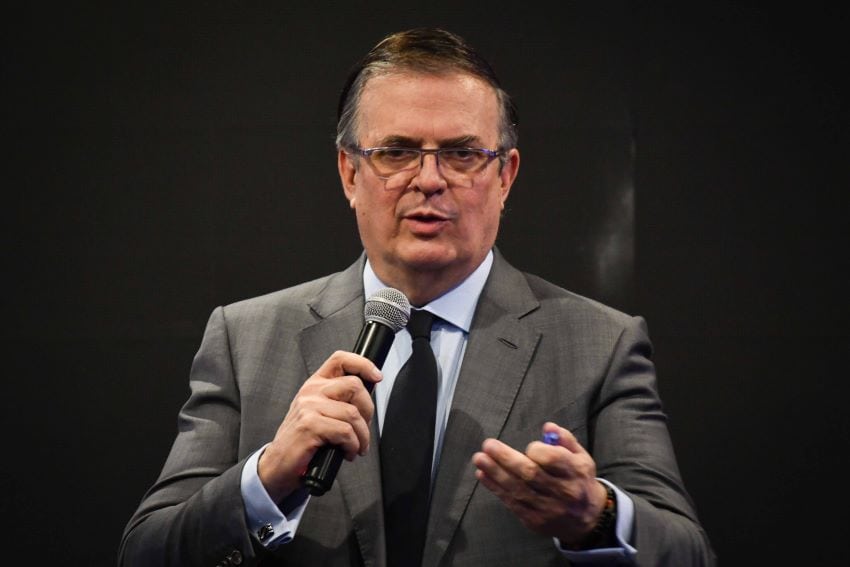
Economy Minister Marcelo Ebrard justified the tariffs, suggesting that the Chinese government has subsidized domestic products to give them a competitive advantage in foreign markets like that of Mexico. (Mario Jasso/Cuartoscuro)
Ebrard also said that Mexico has the “right” to impose tariffs, but promptly added:
“We don’t have anything against China or any other country.”
While the Mexican government has denied that pressure from Washington forced it to implement higher tariffs on Chinese goods, the fact that it did so could certainly help it during USMCA talks with the U.S. government, which have already commenced ahead of the formal review of the trade pact.
The Chinese Communist Party-controlled Global Times said in a report on Wednesday that it was told by Shi Xiaoli, director of the WTO Law Research Center at the China University of Political Science and Law, that “Mexico’s imposition of high tariffs on non-FTA partners, including China, was primarily aimed at taking actions favorable to U.S. interests before the U.S.-Mexico-Canada Agreement joint review, in order to avoid unfavorable outcomes.”
Before the implementation of the higher duties, U.S. President Donald Trump had accused Mexico of being a transshipment hub for Chinese goods — i.e., a tariff-free or low-tariff backdoor to the United States market.
Canada has also critically questioned Mexico’s economic ties with China, which is Mexico’s second largest trade partner after the U.S. However, Canadian Prime Minister Mark Carney forged a new partnership with China earlier this year, which reduced, rather than increased, tariffs on a quota of 49,000 Chinese electric vehicles.
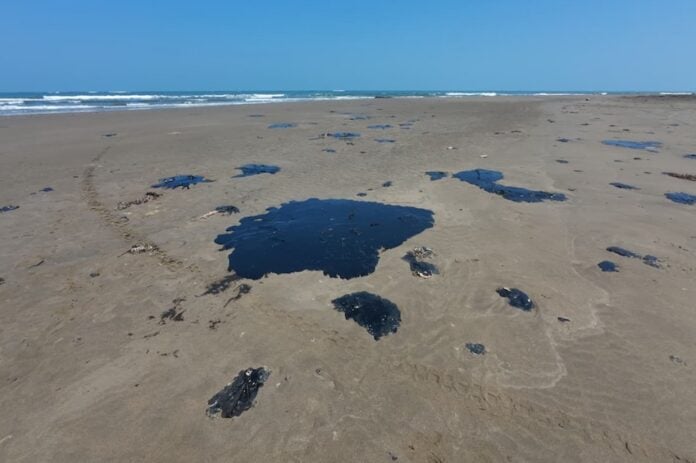
According to Greenpeace, the spill included Tamiahua, Tuxpan, Cazones, and the Reef Corridor, damaging some 630 kilometers of the Gulf coast. (Greenpeace/Cuartoscuro.com)
More than a dozen environmental organizations this week accused the government of covering up an oil spill that has despoiled some 630 kilometers of beaches along the Gulf coast.
Satellite imagery shared by Greenpeace and other nonprofits suggests the origin of the catastrophe dates to early February, but government officials didn’t acknowledge the problem until nearly a month later when complaints about oil slicks in the water and tar on Veracruz and Tabasco beaches became public.
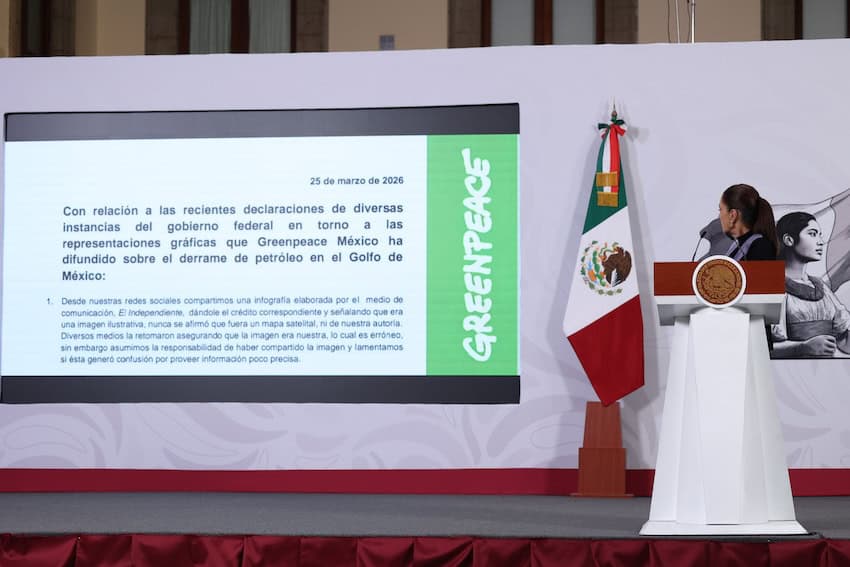
President Sheinbaum displayed a Greenpeace communication at her Thursday morning press conference in order to dismiss it as alarmist and unscientific in its use of data and imagery. (Galo Cañas/Cuartoscuro.com)
President Claudia Sheinbaum on Thursday minimized the breadth of the damage. She also criticized Greenpeace for a widely circulated infographic depicting the spill as “a fake” and “unscientific,” saying it had needlessly alarmed the public — though Greenpeace had already acknowledged the image in question was not its own nor satellite-based, and was simply illustrative.
The state-owned oil company Pemex had earlier denied responsibility for the spill itself and Veracruz Governor Rocio Nahle — a former energy secretary with close ties to Pemex — blamed a privately owned vessel operating off the coast of Campeche, though an inspection revealed the ship in question was not responsible.
That satellite imagery shows the spill originated near Pemex’s Abkatún platform as early as Feb. 6. Multiple vessels engaged in containment efforts were visible by Feb. 13 — evidence that authorities were already aware of the spill, the NGOs said.
In a press release, Cemda accused the government of mismanaging the disaster, saying “[t]here was no timely public information on the magnitude of the spill, its risks or the response measures.”
Although the National Contingency Plan “provides for immediate notification, incident assessment and inter-institutional coordination,” none of that took place, Cemda said.
By Feb. 14, “the oil slick covered approximately 50 km², or more than 1,000 times the size of Mexico City’s Zócalo,” Cemda says, adding that the failure to issue a public alert as required by law prevented coastal communities from taking preventive measures.
As of Wednesday, neither the Environment Ministry nor the Agency for Safety, Energy and Environment had published the Net Environmental Benefit Analysis or the Sensitivity Maps required to coordinate the official response.
However, nearly seven weeks after the initial spill, the oil slick has spread along 680 kilometers of the coastline with tar coming ashore on various beaches in Veracruz and Tabasco. The oil has also affected the Veracruz Coral Reef System, as well as six other natural protected areas.
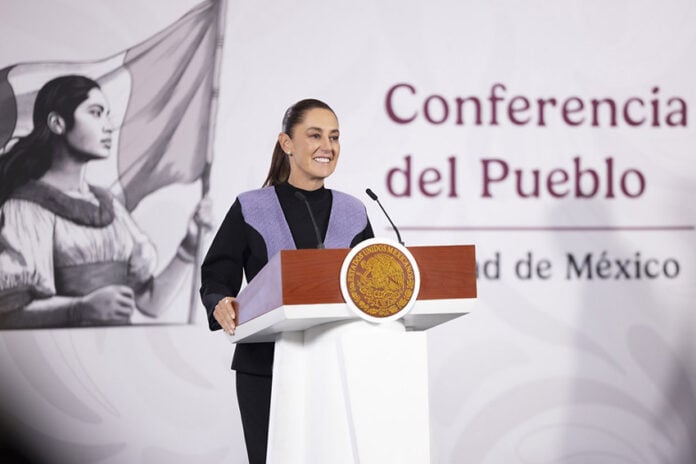
President Sheinbaum reacted Thursday to the passage of stripped-back version of her "Plan B" electoral reform, which itself was already a reduced version of her original proposal. (Gabriel Monroy / Presidencia)
Sheinbaum’s mañanera in 60 seconds
🗳️ Electoral Reform “Plan B”: Senate approved cuts to lawmaker and INE official “privileges,” with savings to be redirected to health, education & welfare — but the 2027 presidential recall provision was dropped.
💸 Budget trimming: State legislatures capped at 0.7% of state budgets; federal Senate budget will also be cut pending “Plan B” approval by the lower house.
❤️ Favorite part of the job: Traveling Mexico and meeting citizens every weekend; calls it “a balm” from the stress of the presidency — all petitions she receives get a formal government response.
⚽ World Cup countdown: FIFA chief Infantino to visit the National Palace on Monday to discuss final organizing details; Mexico vs. South Africa kicks off June 11 — and playoff action starts TODAY in Monterrey & Guadalajara
Why today’s mañanera matters
For the first time in her almost 18 months in office, President Claudia Sheinbaum is encountering congressional resistance to a legislative proposal.
Her original electoral reform proposal — which sought to change the Mexican Constitution — was rejected by the Chamber of Deputies earlier this month, and on Wednesday her “plan B” bill was amended before it was approved.
Sheinbaum used her Thursday morning press conference to assert that the most important aspect of her “take two” proposal remains intact.
Thursday’s mañanera was also noteworthy as the president spoke briefly about the pressures of her job — and what helps her destress.
Sheinbaum responds to Senate’s approval of her ‘plan B’ electoral reform
Sheinbaum acknowledged that her ‘Plan B’ electoral reform was approved by the Senate on Wednesday, albeit not exactly as she proposed it.
The part of the proposal related to reducing “privileges” for lawmakers at the different levels of government as well as National Electoral Institute officials was approved, she said.
“That’s the part that mattered most to us,” Sheinbaum said, adding that the savings generated by measures such as eliminating “special bonuses” for electoral councilors and limiting municipal governments to no more than 15 councilors will be allocated to health care, education and welfare programs.
She also noted that the Senate voted in favor of limiting the budgets of state legislatures to 0.7% of the total budget of the state in which they are located.
Sheinbaum dice que es malo para el país que el Plan B haya salido sin cambios al artículo 35 constitucional para que la consulta de revocación de mandato coincidiera con las elecciones de 2027. “¿Qué problema tiene?”. Anoche Adán Augusto no se veía muy frustrado que digamos con… pic.twitter.com/XQYfZGcPFJ
In addition, Sheinbaum highlighted that the “plan B” bill — which has not yet been approved by the lower house of Congress — proposes a reduction in the budget of the federal Senate.
“This is extremely important and it has to do with our [political] project — to continue reducing privileges for officials in general,” she said.
Sheinbaum acknowledged that an aspect of her “plan B” proposal that would have allowed a presidential recall election to be held at the same time as municipal, state and federal elections in 2027 “was not approved” — i.e. it is not part of the bill passed by the Senate.
“From my perspective, why wasn’t it approved? Probably the parties were afraid that if the president was on the ballot, some parties were going to get more votes than others,” she said.
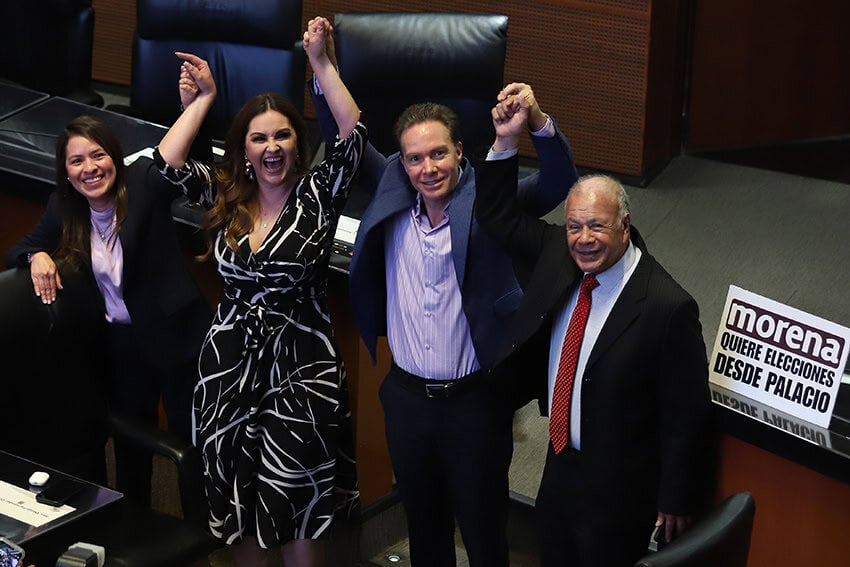
Labor Party and Green Party leaders in the Senate celebrate the failure of an electoral reform provision that would have combined the presidential recall with regular 2027 elections. (Daniel Augusto / Cuartoscuro.com)
The Labor Party, an ally of the ruling Morena party, was opposed to the recall election coinciding with the federal lower house election in 2027 as it believed that such a scenario would erode its support at the ballot box and benefit Morena.
Sheinbaum dismissed arguments against holding the recall election at the same time as other elections, pointing out that she wouldn’t be campaigning on behalf of any political party.
“One thing is the revocation of mandate [vote] and another is the … vote for deputies,” she said.
Sheinbaum’s original electoral reform proposal was rejected by the lower house of Congress earlier this month. It had a range of objectives included reducing the size of the Senate, changing the way plurinominal (proportional representation) deputies are elected and lowering election costs, including by cutting funding for political parties.
What is Sheinbaum’s favorite part of her job?
During her engagement with reporters, Sheinbaum revealed what she likes most about being president of Mexico.
“What I like most about the presidency is traveling and being with the people [of Mexico],” she said.
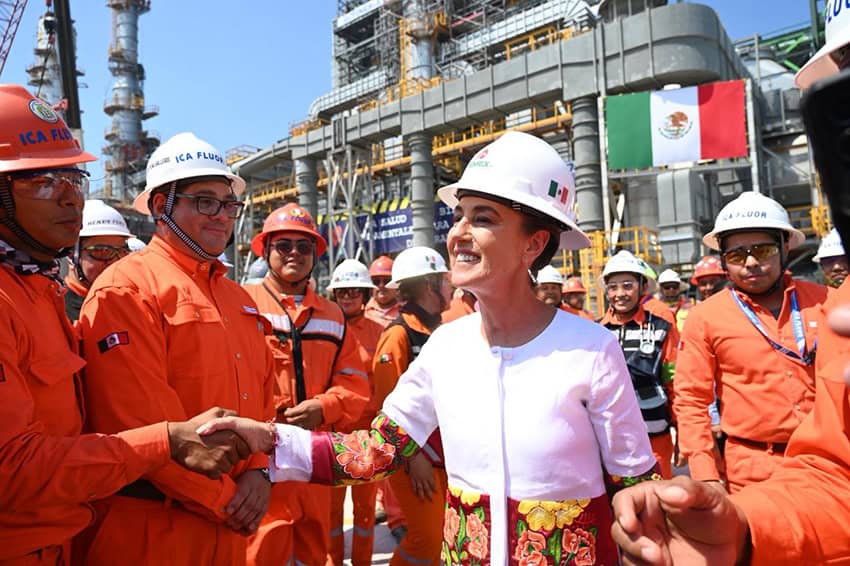
President Sheinbaum said that traveling and meeting regular Mexicans around the country — like her visit to a Oaxaca oil refinery on Sunday — are her favorite part of her job. (Presidencia)
“Here [in Mexico City] you sometimes feel overwhelmed with the problems. Of course I really like doing all the planning with the ministers, working — we meet a lot, we work a lot,” Sheinbaum said.
“But when you go out [of Mexico City to tour the country], it’s like a balm, being with the people is something beautiful,” she said.
Sheinbaum noted that she receives many petitions and letters from citizens while traveling around the country, something she does virtually every weekend.
The petitions and letters are distributed to the relevant government ministries so that they can respond, she said.
“Everyone receives a letter in response saying ‘your petition is being processed’ or they are spoken to by phone,” Sheinbaum said.
Sheinbaum to meet with Infantino on Monday
Sheinbaum told reporters that FIFA president Gianni Infantino will come to the National Palace on Monday to discuss “some outstanding organizational details” for the men’s World Cup, which Mexico is co-hosting with the United States and Canada.
The first match of the World Cup — Mexico versus South Africa in Mexico City — will be played on June 11, exactly 11 weeks from today.
A World Cup playoff tournament involving teams from six countries commences today with matches in Monterrey and Guadalajara.
New Caledonia, Jamaica, Bolivia, Suriname, Iraq and the Democratic Republic of the Congo are vying for two spots in the 48-team tournament.
By Mexico News Daily chief staff writer Peter Davies (peter.davies@mexiconewsdaily.com)
With Tap to Pay, businesses can skip the credit card terminal and accept tap payments directly from credit and debit cards to the company cell phone. Customers can also tap their phones to pay with a digital wallet. (Shutterstock)
Apple enabled Tap to Pay for iPhones in Mexico this week, a move that gives merchants a new way to accept contactless payments and boosts Mexico’s efforts to digitalize its largely cash-based economy.
This feature, which has been available in the United States since 2022, will now allow businesses in Mexico to use an iPhone to accept contactless payments by card or digital wallet.
Mexico is the third Latin American country to benefit from the feature, which is already operational in Chile and Brazil.
The move represents an expansion of digital payment options in Mexico, which currently include systems like Clip’s Tap to Pay on Android (launched in January), Mercado Pago’s PointTap and various banking apps.
Apple said that Adyen, Clip, Mercado Pago and Visa Acceptance Platform will be the first platforms in the country to offer Tap to Pay on the iPhone, “so that businesses of all sizes and sectors, from transportation and retail to food, beverage, beauty and professional services, can offer the Tap to Pay option on the iPhone as a method to complete a purchase.”
According to Apple, any model from the iPhone XS onwards with the latest version of iOS can receive payments using Tap to Pay.
Clip, one of Mexico’s leading digital payment companies, launched Tap to Pay for Android phones in January, via the Google Pay app. (Clip)
Digital payment company Clip said that by not requiring additional hardware, Tap to Pay will allow millions of businesses that operate with tight schedules to collect payments instantly.
“By enabling Tap to Pay on iPhone in the Clip app, we reinforce our commitment to the democratization of digital payments and financial inclusion,” Clip CEO and founder Adolfo Babatz said. “This allows us to make technological solutions available to all businesses in Mexico, significantly contributing to the country’s economic development, aligned with our mission to make ideas happen.”
Tap to Pay complements President Claudia Sheinbaum’s initiative to shift towards a less cash-oriented economy, as she recently announced that cash payments at gas stations and highway toll booths will be eliminated starting this year.
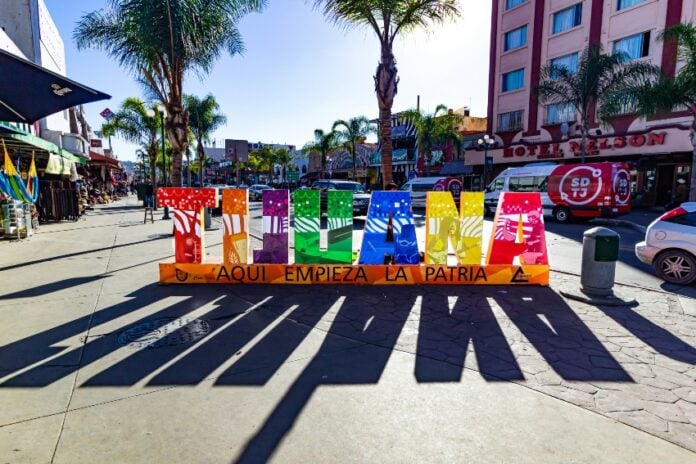
Don't judge Tijuana until you've actually visited. (Gautam Krishnan/Unsplash)
What comes to mind when you think of Tijuana? The image may not always be a positive one, but when you talk to people who have actually been there, a different picture emerges that shatters old perceptions.
Tijuana was established in the late 19th century, but became popular with Americans during the Prohibition Era, when it was a refuge for those looking to legally drink, party and listen to jazz music. It’s one of Mexico’s youngest cities, while also being full of surprises. Case in point: Caesar salad was invented there in the 1920s by an Italian immigrant named Caesar Cardini. It’s also Mexico’s craft beer capital, influencing many beer brands we know and love today, including Tecate, a beverage that was invented 45 minutes east of Tijuana.
Its reputation for partying and questionable nightlife is what sticks out to those who have never set foot in this part of Mexico. But after I saw travel blogger Chris Joondeph highlighting the actual reality of it in modern times, I had to reach out and ask him to give us a more in-depth look at why he chose Tijuana as a place to explore.
From corporate America to the road
Now with 1.2 million followers on Instagram alone, Chris has developed a strong reputation for traveling to countries that are less popular with tourists yet are quite rich in experience. He’s visited 167 countries to date, including Ethiopia, Nigeria, Syria, Iran, Guatemala, Kenya, Angola, Uruguay, Argentina and Paraguay, just to name a few.
“Prior to being a content creator, I had a corporate job, and fortunately, I had the ability to work remotely,” Chris said in our interview. “I was just traveling for the hell of it, making videos for fun. I’d go to places that people assumed were dangerous and where I’d for sure get killed.
“But then, I went to see these countries anyway. And I’d think, ‘What are they talking about?’ I made videos of myself just speaking to the camera and explaining why everything people have been told about a given country being dangerous was a total lie. After my second video on that topic, I went viral and started making more travel content that disproved what had been mentioned about a certain place in the media and online.”
“I’d always liked Tijuana, even though I didn’t know much about it. In the U.S., we just have this image of prostitution and drinking when we think of that small border town,” Chris said. “But then, my dad went there on a mission to build a house with an organization called Homes of Hope. He told me it was a great experience, and then the next year, I joined him to build another house out there.”
A favorite of border-crossing Americans since the 1920s, Tijuana has plenty of great attractions. (Barbara Zandoval/Tijuana)
“I’ve been to Tijuana five times since, and it’s not what people expect. First of all, it’s the size of Houston, and plenty of locals there speak flawless English. There’s also a lot of factories and call centers in Tijuana, so you can see the economy is steadily growing.”
Homes of Hope constructs 50 houses a year in Tijuana and draws Christians from ministries all over Mexico, the United States, as well as Central and South American countries, who volunteer their time and effort to help those in need. But that’s not the only aspect of Tijuana that Chris has experienced.
Crossing the U.S. border
Chris is passionate about Baja California, and it shows. For him, the region is a tapestry of experiences that most people never give themselves the chance to discover. South of Tijuana, the Valle de Guadalupe wine country offers a side of Mexico that surprises nearly every visitor. Further down the Baja California Peninsula, tranquil beaches and open camping grounds offer a kind of stillness that’s hard to find north of the border. And in San Quintín, the fresh oysters alone are worth the drive.
Then there’s the food. Baja California-style tacos — whether stuffed with breaded shrimp or fresh fish — are the stuff of legend, and the carne asada taco stands fill the air with aromas that are impossible to walk past. Beyond the food, Chris has found joy in the everyday rhythms of the city: the energy of a live pro baseball game, the street life, and the simple thrill of crossing into a world that feels completely its own.
But what he loves most about Baja might be the gap between its reputation and its reality. He’s vocal about the fact that Hollywood and the media have created a distorted image of places like Tijuana — one shaped more by “Narcos” than by lived experience. “Americans have told me the most insane things about safety in Mexico. I’m not going to say everything is perfect, but the reality is Hollywood and the media have painted this picture of Tijuana and Mexico that is super warped,” he said in a video that has since surpassed 124,000 views on Instagram. For Chris, Baja isn’t a place to be cautious about — it’s a place that deserves a real chance.
Why you should choose Tijuana
Mexico has a lot of popular beach towns and cities, many of which I am guilty of visiting regularly over the years. But sometimes, you need a change.
“I would say Tijuana is very safe, especially if you stay in the downtown area. You’re going to feel comfortable there,” Chris concluded. “It’s got a ton of bars and restaurants. There are hotels everywhere. It’s a really fun area. You can also go to the beach. Yes, there are dark statistics on Tijuana. But if you’re just there to relax and do legal activities, you’re going to have a great time with no problems.”
I always remind myself that Mexico has 32 states and countless areas one can experience. It’s both overwhelming and exciting. But after having gone on many solo backpacking trips myself, I’ve learned one universal truth that applies to Tijuana as well: don’t judge it until you’ve seen it. Who knows? It might be your new favorite place.
Ian Ostroff is an indie author, journalist, and copywriter from Montreal, Canada. You can find his work in various outlets, including Map Happy and The Suburban. When he’s not writing, you can find Ian at the gym, a café, or anywhere within Mexico visiting family and friends.
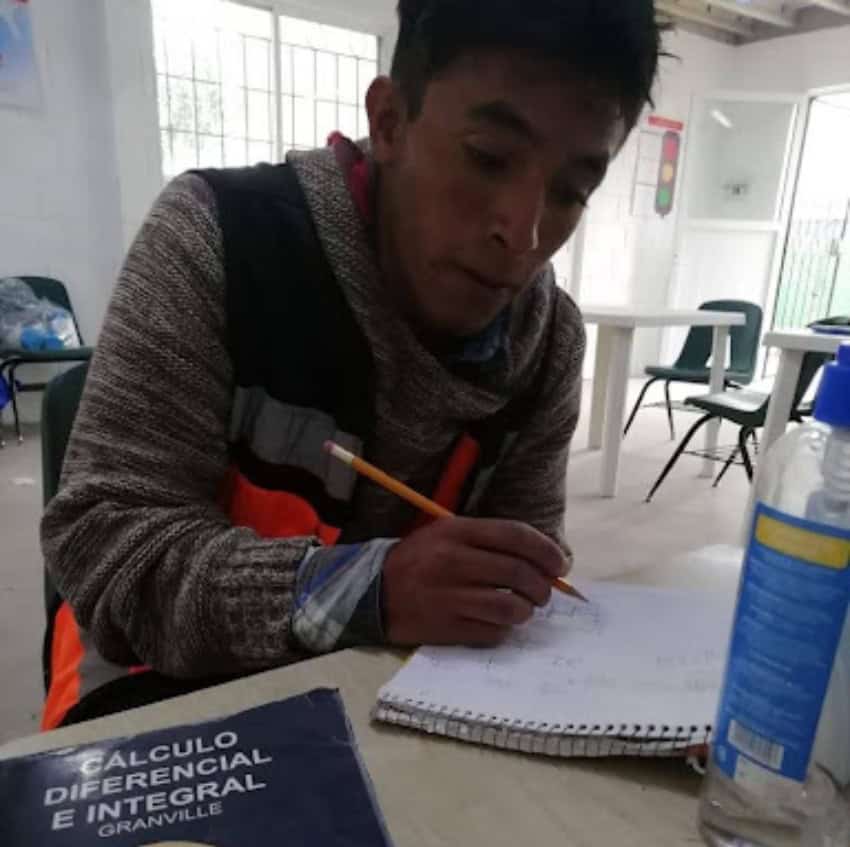
Fundación Construyendo y Creciendo is helping construction workers continue the education most of them walked away from to earn money. (Fundación Construyendo y Creciendo)
If you pass a construction site in Mexico City, Colima, Guerrero, Guadalajara, Puerto Vallarta or pretty much any pueblo or ciudad, you may just hear a different kind of sound. It’s not the usual thud of masonry or the whirr of a concrete mixer, but the gentle murmur of voices counting and sounding out syllables. It’s the sound of adults rediscovering literacy and learning.
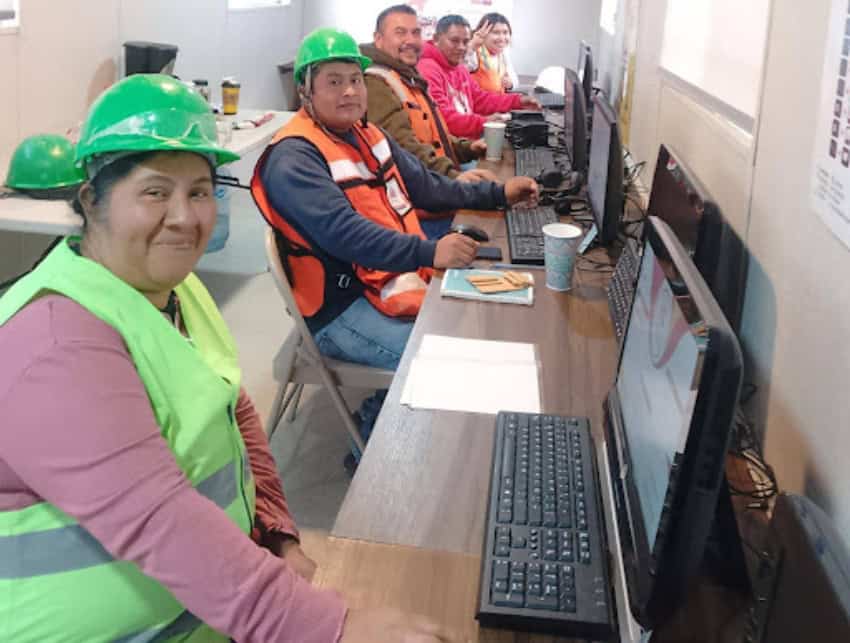
Because under a patched tarp, a dozen construction workers in fluorescent vests are sitting at folding tables with notebooks and tablets. A volunteer teacher is writing a grammar exercise on a whiteboard propped against a stack of cement bags. It may seem strange, but look closely, and you’ll see an ordinary workday that’s made room for lessons many of those sitting there thought they’d never return to.
Fundación Construyendo y Creciendo
Construction workers in Mexico have had only five years of schooling on average, which is why new opportunities are so welcome. (Fundación Construyendo y Creciendo)
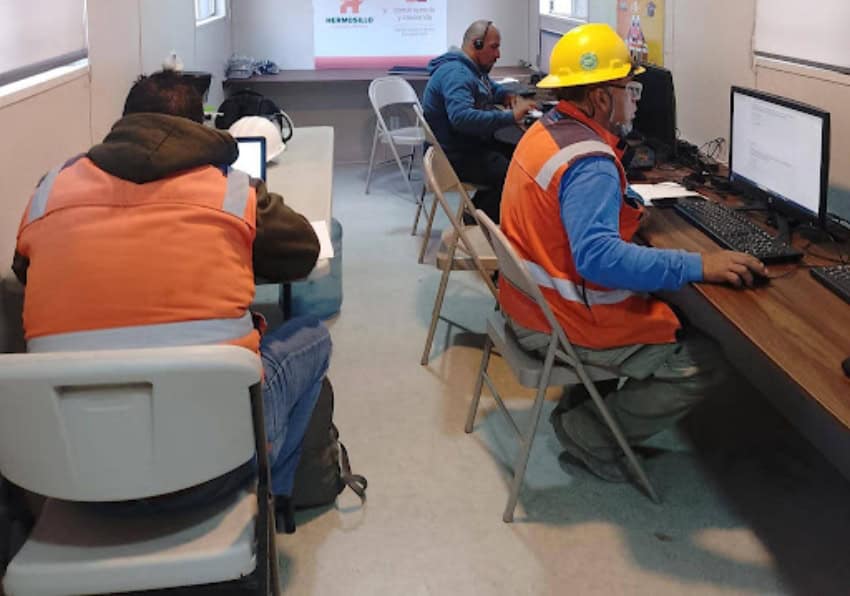
That practical audacity is the point of Fundación Construyendo y Creciendo. Rather than asking workers to come to school, the foundation brings school to them. It includes primary and secondary education, digital-literacy modules, and counseling, all of it installed in spaces within or adjacent to construction sites. Classes run before dawn, during lunch or after the shift ends, the materials are portable, and schedules bend around overtime.
The pitch is blunt and humane: You don’t have to choose between feeding your family and finishing second grade anymore.
The need to bear the model is clear. Many laborers left formal education in their early teens to help at home or migrate for work. Without a diploma, they’re now locked out of technical training, certain supervisory roles, and even basic digital services.
It’s not just about reading or sums. It’s about safety, dignity and being able to do more than muscle work.
Nationwide, the foundation estimates a large share of the construction workforce lacks a complete basic education.
The need for more schooling
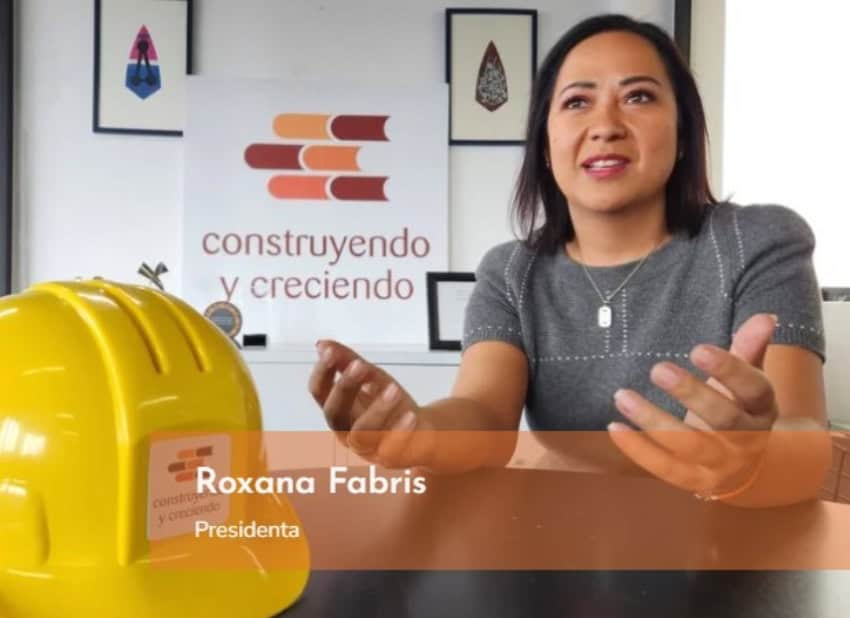
“In Mexico, a large portion of construction workers have not completed their basic education,” said Roxana Fabris, president of Fundación Construyendo y Creciendo. “Many of them began working at a young age to support their families, which prevented them from finishing elementary or middle school. The national average level of schooling in Mexico is just over nine years, while among construction workers, it is only about five years. In fact, one out of every 10 construction workers is still unable to read or write.”
Some construction workers are learning to read for the first time. (Fundación Construyendo y Creciendo)
Those stark gaps help explain why the foundation focuses on bringing education directly to job sites.
“Despite being one of the industries that contributes the most to the country’s economic development, the construction sector has the second-highest level of educational lag in the Mexican economy, only behind agriculture and fishing,” explained Fabris. “That is why this program aims to bring educational opportunities directly to job sites.”
Setting up a learning space is part carpentry, part diplomacy, so partnerships are the scaffolding of the operation. Construction companies frequently donate space and allow flexible schedules, along with some fund stipends or materials, as part of corporate social responsibility.
How construction companies are helping
“Construction companies play a fundamental role. They provide the space within construction sites where the classrooms can be installed and allow workers to attend classes. They also participate in activities such as inaugurations and graduation ceremonies, help strengthen the program within their projects, and make a donation that helps keep the classroom operating,” Fabris said.
Fundación Construyendo y Creciendo teams negotiate a quiet corner of a site and retrofit the space with seating. Typical setups are minimalist, including durable tables, a whiteboard and a rack of printed materials.
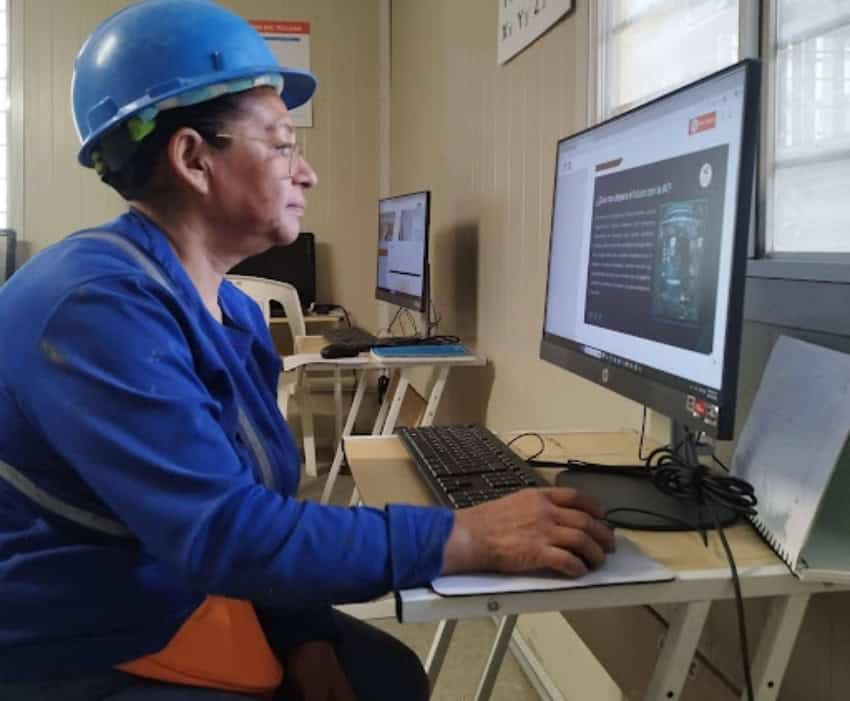
“Once the space is ready, we equip it with furniture, computers, internet access and all the materials needed for the educational programs, including books, school supplies and online learning platforms,” added Fabris.
Fundación Construyendo y Creciendo provides all books and supplies, bringing education to jobsites. (Fundación Construyendo y Creciendo)
Internet service is patched where possible, but when it isn’t, lessons are designed to work without constant connectivity. The logistical headaches of noise, security, shifting project timelines and the need to store equipment while sites move are never theoretical, but solutions have emerged from iteration. There are modular kits and local volunteers who secure materials overnight.
Logistical challenges
“One of the main logistical challenges is ensuring internet connectivity, since in some cases the classrooms are located in remote or hard‑to‑access areas within the construction site,” Fabris noted. “Even so, we do our best to ensure these spaces have everything workers need to study comfortably.”
The question of how you teach adults who haven’t been in school for years is central to the foundation’s pedagogy. Lessons are contextualized. Math problems use measurements common on site, reading comprehension revolves around workplace safety or consumer tasks, and digital modules teach practical skills like filling out forms or sending job applications. Each participant receives an intake assessment and a learning plan.
“Our process begins with an initial conversation in which we assess the person’s educational background, their level of digital literacy, and their learning interests,” Fabris explained. “If someone cannot read or write, they begin with a literacy program and move on to elementary, middle and high school from there.
The foundation also sees the importance of developing mental and emotional well-being.
Training for life
“We offer a variety of courses and training programs that support both personal and professional development, and a key component of our approach is our Human Development program,” said Fabris. “It provides students with tools that help them make the most of their learning experience and include topics such as self‑esteem, teamwork, leadership and stress management.”
Educational programs for adults could be brought to more worksites in Mexico. The issue is funding. (Fundación Construyendo y Creciendo)
Psychological support is built into the model; teachers emphasize small, visible wins to rebuild confidence.
“The goal is not only to help them become better workers and students, but also better individuals, better parents, and stronger members of their communities,” Fabris emphasized.
Who shows up to these improvised classrooms is revealing. There are men in their 30s and 40s who left school to work, younger apprentices hungry for formal credentials, workers who’ve never had steady access to education, and an increasing number of women who attend classes in nearby community centers.
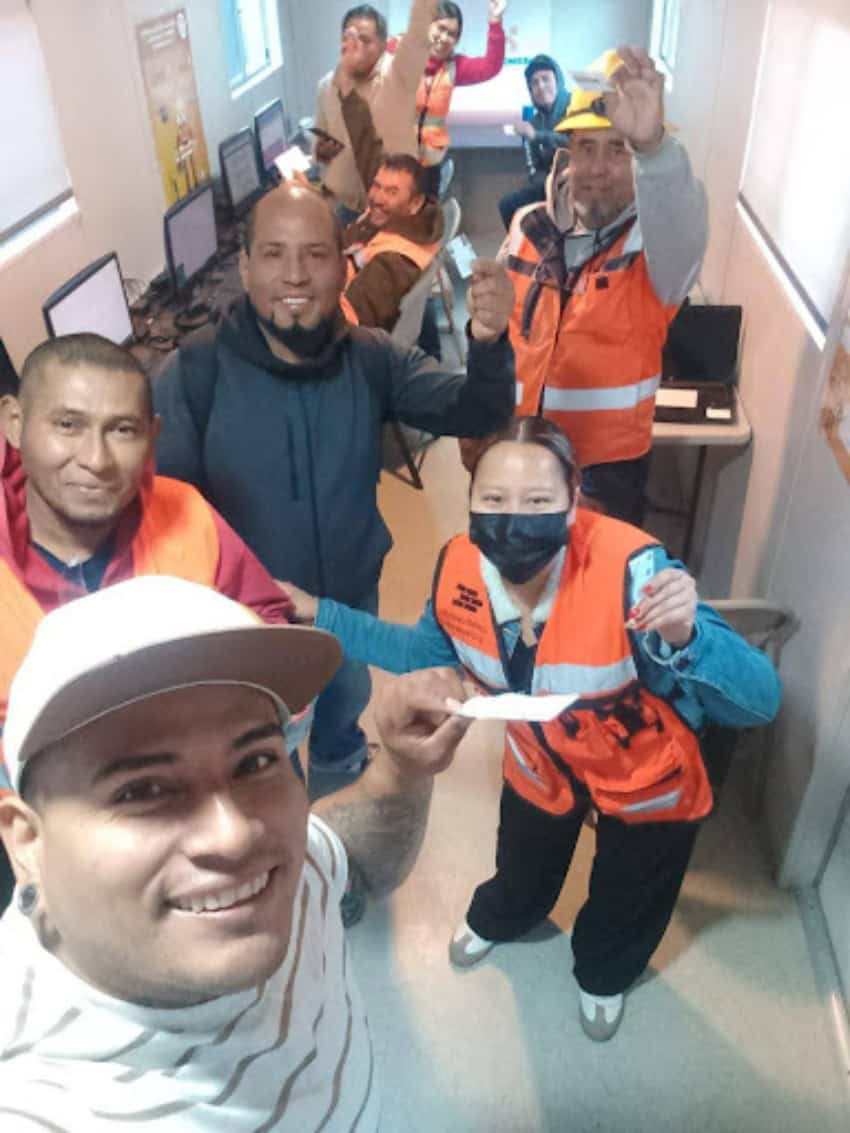
Some crews participate en masse; in other cases, a single worker studies quietly between tasks. The foundation reports reaching 40,453 enrollments across multiple states, with 101,649 educational services provided, and 278 classrooms installed.
Success rates
Completion rates vary by project, and at present, there have been 26,269 graduates. Fabris observed that overall, those numbers show outcomes are strong.
“This can vary depending on the project and the workers’ job conditions, since many of them are frequently transferred to different construction sites. However, approximately 60% of our students are able to complete their studies within the program.”
Fundación Construyendo y Creciendo collaborates with state agencies to ensure students can qualify for certificates and diplomas. (Fundación Construyendo y Creciendo)
But it’s the human outcomes that matter more than percentages, so apart from just the quantitative outcomes, qualitative indicators like self‑reported confidence and workplace engagement are tracked to measure impact.
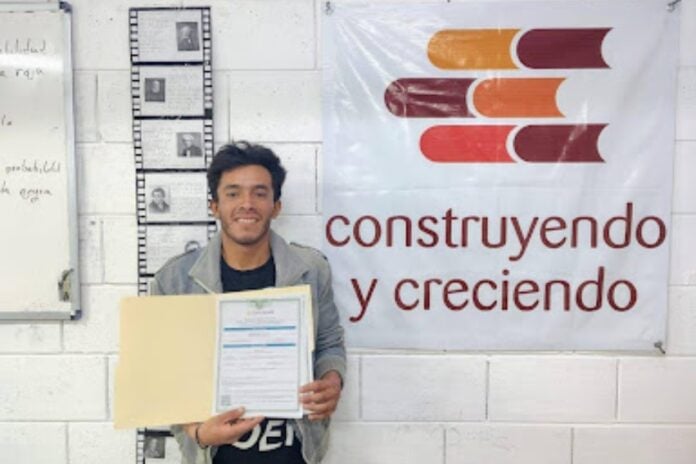
“One of our students is Sebastián, who joined the classroom at the Real Granada site while facing serious challenges with reading,” noted Fabris. “Although he knew how to write, his schooling had stopped in the fourth grade. With guidance, patience and consistent effort, he managed to complete his elementary education and later his middle school studies as well.”
But he didn’t stop there.
Transformative journeys
“He decided to continue with an online high school program filled with challenges and difficult circumstances that tested his determination. With the support of his advisor and the close guidance of the team, he eventually reached his goal. Today, we proudly celebrate the moment he received his high school certificate. For him, this achievement represents much more than a document; it is proof that perseverance, support and confidence can truly transform lives.”
Emotionally, returning to school can be a bumpy journey. People arrive wary of humiliation and sometimes ashamed of long absences from formal education. What teachers say they most often see is relief. Students are surprised at how quickly they recover literacy skills, and that leads to a steady growth in self‑esteem.
Fabris noted that the confidence shift has ripple effects, with workers taking on more responsibility, speaking up in meetings, and imagining futures beyond manual labor.
Roxana Fabris, president of Fundación Construyendo y Creciendo. (Fundación Construyendo y Creciendo)
“Many of them feel extremely proud and happy to return to their studies. At first, there may be some nervousness or insecurity, but over time, they begin to regain confidence in themselves. Going back to school often becomes a powerful motivation for building a better future for themselves and their families.”
Funding and other challenges
Educational institutions and government agencies help validate curricula and enable certifications, though aligning bureaucratic timelines with the fast cadence of construction projects remains a continual challenge.
Funding is a mixed model of corporate sponsorships, grants and in‑kind donations. The persistent obstacle is securing long‑term, predictable financing for scaling and maintaining operations in remote or highly mobile sites.
“As a nonprofit organization, we depend heavily on the support of partners and donors, and sometimes companies do not initially see programs like this as a priority investment, so we continually work to raise awareness about the positive impact education has on workers’ lives and on society as a whole,” Fabris said.
Running the program isn’t romantic, but it does have its rewards.
“One of the biggest challenges we faced was the COVID‑19 pandemic. It required us to provide distance education to vulnerable populations with limited access to technology. We responded with a program that proved to be highly successful. In fact, in 2021, we were honored with the UNESCO International Literacy Prize, becoming the first Mexican foundation to receive this recognition,” Fabris noted.
Bringing education to more adults
Wherever construction workers are on a job site, Fundación Construyendo y Creciendo is trying to set up programs. (Moisés Pablo Nava/Cuartoscuro)
The foundation’s long‑term vision is expansive: deeper integration with vocational training pathways, geographic expansion to more cities and sectors, and a normalization of workplace‑based adult education so that learning is a permanent element of employment in construction and similar industries.
“Our vision is to reach all construction workers who face educational gaps and provide them with the tools they need to improve their human development indicators. Not only for their own benefit, but also for their families and communities. At the same time, we aim to bring them closer to an increasingly digital world, helping close the digital divide so that, as the United Nations Sustainable Development Goals state, no one is left behind,” Fabris said.
There are already moves to adapt the model beyond construction.
“We have already begun installing classrooms in other industries where workers face similar educational gaps. To support this vision, we are also strengthening our institutional capacity so that our model can be replicated and scaled. In Mexico, there are still many cities where we could expand. Whenever a construction company wants to support its workers, Fundacion Construyendo y Creciendo will be there,” Fabris added.
Future possibilities
If there were one change that could reshape access to education for Mexican workers in all sectors, Fabris says it would be structural funding and policy that recognizes adult, workplace‑based learning as essential, not peripheral.
“I would make education more accessible and flexible for working people. Many workers genuinely want to continue studying, but long workdays and limited nearby opportunities often make it difficult. Bringing education closer to workplaces has proven to be one of the most effective ways to reduce those barriers,” Fabris stated.
Until that happens for all of Mexico’s workers, Fundación Construyendo y Creciendo is doing the messy, necessary work of folding education into the daily lives of people who build the country, one makeshift classroom, one completed worksheet and one newly confident reader at a time.
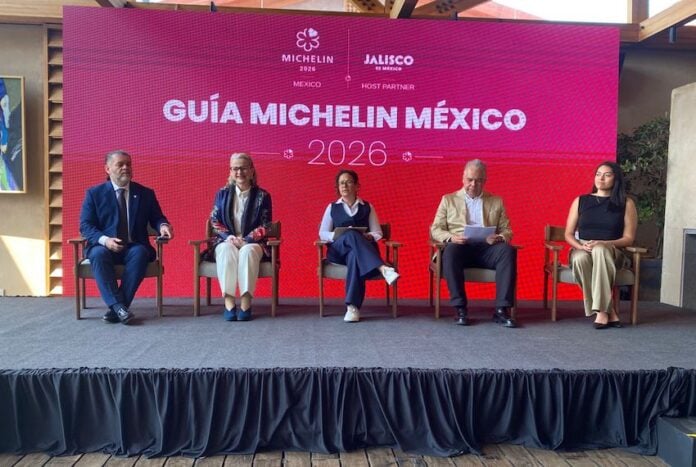
The dignitaries responsible for the famed Michelin Guide have honored Jalisco's culinary traditions by choosing its capital Guadalajara to host the May 20 opening ceremony of the 2026 version of the Michelin Mexico Guide. (Nathalie Desplas/X)
The 2026 version of the Michelin Mexico Guide, set to be unveiled in May, will feature three new states — Jalisco, Puebla and Yucatán — all three of which have strong culinary identities that set them apart from the rest of the nation.
Jalisco in particular is drawing special attention as its capital Guadalajara has been selected as the host for the guide’s opening ceremony on May 20 at the renowned event venue Edén Benavento a mere month before the city hosts World Cup games. It will reveal new Michelin Star recipients and other honorees in the food world.
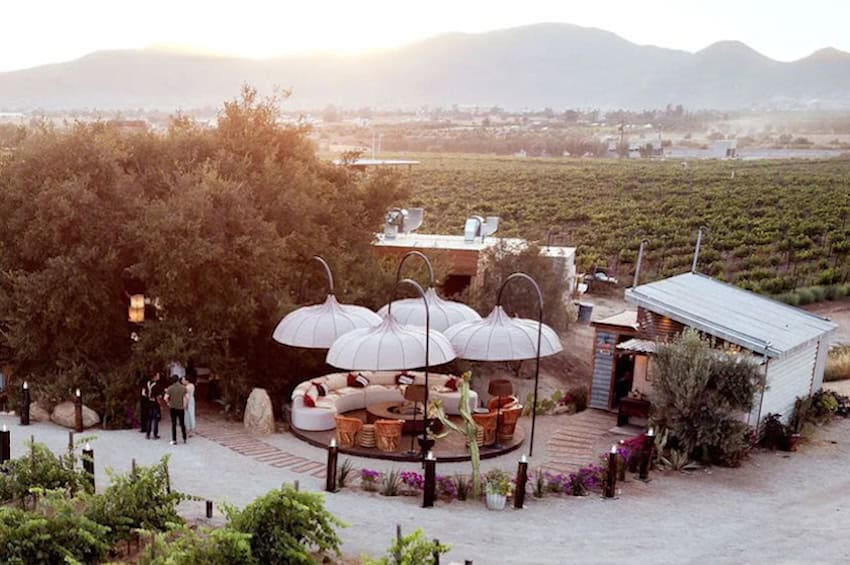
Animalón in Baja California’s Valle de Guadalupe, was one of the first Mexican restaurants to receive a Michelin star.(animalonbaja.com)
“Jalisco’s exceptional gastronomic heritage and vibrant food culture make it the perfect setting for this year’s ceremony,” Gwendal Poullennec, International Director of the Michelin Guide, said in a statement. “We’re excited to meet there with chefs, restaurateurs, and industry leaders to celebrate Mexico’s remarkable contributions to the global culinary scene.”
The advent of the Mexico Guide that year confirmed Mexico’s solidifyng reputation as a global culinary player.
“The 2026 ceremony in Jalisco will not only be a celebration of excellence but a recognition of Mexico’s growing influence in international gastronomy, uniting heritage, innovation, and community on one of the industry’s brightest stages,” Poullenec said.
The state’s tourism establishment has not been shy about capitalizing on the prestige that Michelin is affording to Jalisco, going so far as to say that “Jalisco is Mexico.”
“When we say that Jalisco is Mexico, we say it with great responsibility, humility, and pride,” state Tourism Minister Michelle Fridman Hirsch said. “Every time we travel, the first things people ask us about are tequila, mariachi, and charrería (Mexican rodeo). But we also have many well-known figures from Jalisco. Think of Gael García Bernal and Guillermo del Toro in the film industry; Checo Pérez, Canelo Álvarez, and Lorena Ochoa sports. Or when it comes to music, Carlos Santana, Alejandro Fernández, Maná, and Ximena Sariñana. We have some truly outstanding figures.”
Meanwhile, Ignacio Alarcón Rodríguez Pacheco, president of the National Chamber of the Restaurant and Seasoned Food Industry (Canirac) said that seeing Guadalajara as a host city for the Michelin Guide Mexico ceremony places Mexico “at the epicenter of the international conversation,” in addition to serving as a “global tourism promotion platform.”
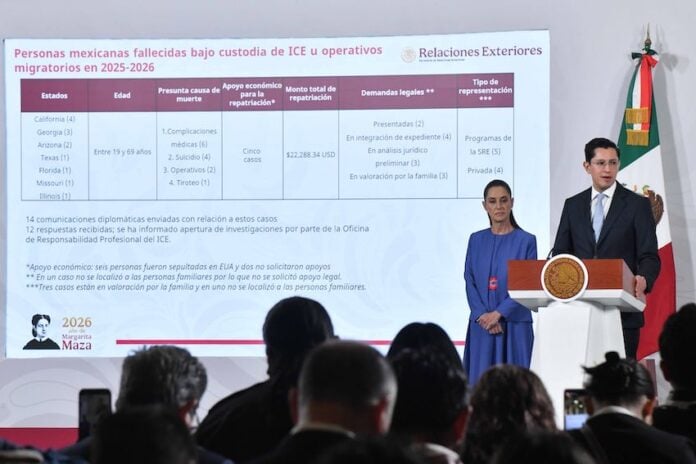
Roberto Velasco Álvarez, deputy minister for North America in the Foreign Relations Ministry, reviews with President Sheinbaum what's known about the 13 Mexican ICE detainees who died while in custody in the U.S. (Mario Jasso/Cuartoscuro)
Thirteen Mexican citizens have died while in the custody of U.S. authorities in immigration-related matters during the current Trump administration, Mexico’s Foreign Relations Ministry reported Wednesday, calling the situation “unacceptable.”
The causes of the deaths are still under investigation, but Deputy Foreign Relations Minister Roberto Velasco said two occurred during ICE operations, four were suicides and one was the result of a shooting into ICE installations that happened to hit a Mexican in custody. The other six deaths were from medical complications.
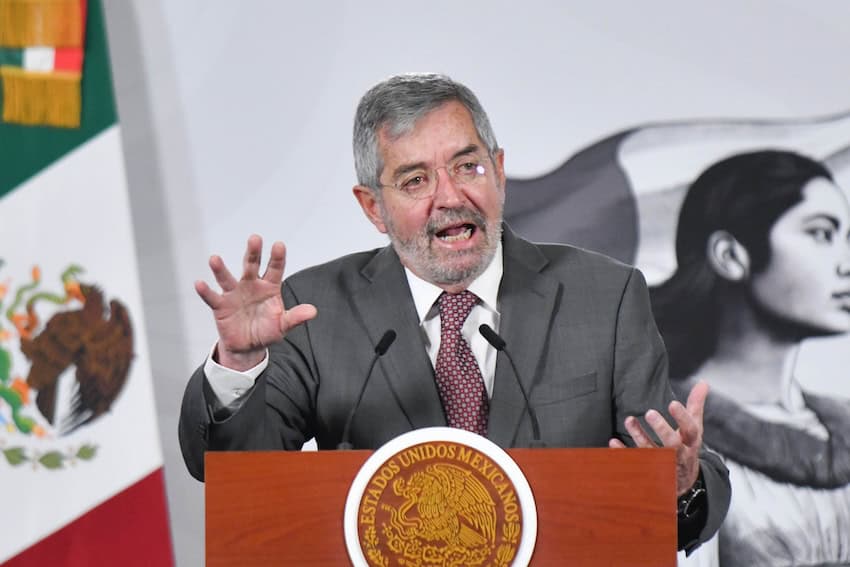
Speaking Wednesday at President Sheinbaum’s mañanera, Foreign Relations Minister Juan Rámon de la Fuente said Mexico’s consular system in the United States is being urgently modernized and strengthened in order to better protect Mexicans in the United States, who are the primary targets of ICE’s aggressive and sometimes deadly operations. (Mario Jasso/Cuartoscuro)
Velasco said that the victims ranged in age from 19 to 69 and suffered their fate in several different states across the nation, from California to Florida. He added that two lawsuits have already been filed by family members, while the remaining cases are under legal review.
“We seek justice for the families of these people who very sadly lost their lives,” said Velasco.
President Claudia Sheinbaum, who had earlier demanded a full U.S. investigation into the death of a 19-year-old Maya man in the United States, also condemned the deaths of fellow Mexicans while detained by U.S. authorities. “We have stated that we do not agree with these forms of detention (…) and we will continue to insist that the cases be investigated to determine the causes of death,” she said during her Wednesday morning press conference.
Foreign Relations Minister Juan Ramón de la Fuente said that his ministry has responded to the detention of 177,192 Mexicans since the beginning of Trump’s second term by strengthening its network of 53 consulates in the U.S. to improve services and better protect Mexican citizens. As of today, 13,722 remain in custody in the U.S.
“We are trying to standardize all consular services so that there can be more efficient, timely and consistent attention in the largest consular network in the world,” Juan Ramón said, pointing out that “no other country has as many consulates in another country as Mexico has in the United States.”
The modernization and digitization of Mexico’s consular network have helped to increase capacity and reduce the need for in-person visits, he said.
Over 31 million pesos (US $1.7 million) has been allocated to the “Mexico with M for Migrant” program, which supports the legal processes of Mexican nationals living abroad.
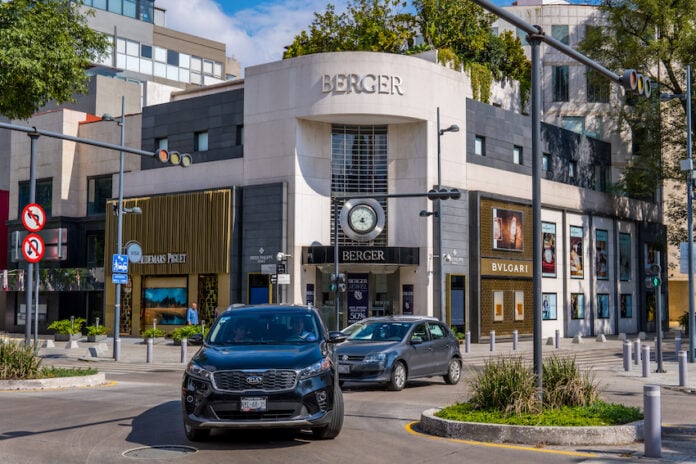
In Mexico City, Avenida Presidente Masaryk is one of the places to be if you have ample disposable income and a penchant for the finer material things in life. (Shutterstock)
In Mexico City, Avenida Presidente Masaryk is one of the places to be if you have ample disposable income and a penchant for the finer material things in life.
Located in the capital’s Polanco district, the avenue is lined with stores of many of the world’s best-known luxury brands: Gucci, Cartier, Tiffany & Co, Dolce & Gabbana, Rolex, Louis Vuitton… the list goes on.
In the market for a Mercedes or an armored luxury vehicle of your choice? Head to Masaryk, named after Tomáš Masaryk, the first president of Czechoslovakia.
I recently walked the entirety of Avenida Masaryk, which stretches for almost three kilometers from Calzada General Mariano Escobedo to Avenida Ferrocarril de Cuernavaca.
I wasn’t shopping, walking off a meal at a high-end restaurant or visiting the Embassy of Cuba — a kind of communist enclave on a highly capitalist street — but rather pondering this article, the third and final part of a series on class and wages in Mexico.
I began with this story on minimum wage and informal sector workers and continued with this report on what it means to be part of the middle class in Mexico.
Now, in this article, I focus on the upper class, the wealthy elite of Mexico, people who could go on a shopping spree on Masaryk without a second thought.
A (very) brief history of wealth and class in Mexico
The accumulation of wealth is certainly not a new phenomenon in the land now occupied by Mexico.
In pre-Columbian times, rulers in civilizations including the Mexica and Maya became wealthy through the tribute system and long-distance trade in goods such as jade, obsidian, turquoise, quetzal feathers and cacao, “one of the most important means of exchange in Mesoamerican cultures,” according to the Bank of Mexico Museum.
Within the Mexica civilization, there was a nobility called the pipiltin, whose members owned land and enjoyed a range of special privileges. Below the pipiltin in class and status were the pochteca, merchants who brought luxury goods back to Tenochtitlán from distant places.
After Tenochtitlán was conquered by Hernán Cortés, his Spanish forces and a large contingent of Indigenous allies, including the Tlaxcalans, established the colony of New Spain, and Spaniards displaced the Indigenous elite to assume the highest positions in society.
During the colonial period, peninsulares (Spaniards born in Spain) and later criollos (Spaniards born in New Spain) acquired great wealth through silver mining, large agricultural holdings known as haciendas, and the encomienda system, which granted them the right to extract tribute and labor from Indigenous communities.
In 1536 — the year after New Spain was established as a viceroyalty — the Mexican Mint began operations and for three centuries made colonial coins, allowing currency wealth to be accumulated.
Wealth remained concentrated in people with Spanish (and other European) ancestry after Mexico gained its independence from Spain in 1821, and two centuries later, the color of a Mexican’s skin remains “an effective shortcut to locate people within the social hierarchy,” the magazine Nexos wrote in a 2019 article.
What the first “pesos,” as we know them today, looked like in 1864. (Bank of Mexico)
During the Porfiriato — the period of more than three decades in the late 19th century and early 20th century when Porfirio Díaz was in power — “foreign investment poured in, railroads and industry boomed, and a small elite prospered” in Mexico, notes the website Explaining History.
“The extensive literature on economic inequality in Mexico since 1950 suggests that income inequality has been consistently high and increasing,” wrote economic historians Diego Castañeda Garza and Erik Bengtsson in a recent academic paper.
The upper class today
In 2021, INEGI said that the average upper-class household income was 77,975 pesos (US $4,430) per month.
As I wrote in my middle-class story, “with prices having risen considerably in recent years, it would be reasonable to say that such household income in Mexico City and other expensive areas of Mexico would not make a family upper class” today.
So, how much does a Mexican family really need to earn to be considered upper class? In short, considerably more than INEGI’s upper-class average.
According to Gustavo Prado, a social commentator, futurist, author and founder of the consumer trends agency trendo.mx, there is an “upper-middle class” of people in Mexico made up of 5 million people who earn at least 90,000 pesos per month.
He asserts that the real Mexican upper class, people who earn at least 1 million pesos (US $56,600) per month, “share one single trait: they don’t live in Mexico,” but reside mainly in the United States and Europe and come home every now and again to visit. While that assertion is undoubtedly an exaggeration — there are, of course, very rich people who live in Mexico — there is some truth to it, as a lot of affluent Mexicans live outside the country, including close to 40,000 people who obtained legal residency in Spain and Portugal last year. Their move to the Iberian Peninsula was described as a “silent exodus of the Mexican elite” by Forbes.
While the INEGI data is now outdated in terms of the income required to be part of the upper class, it did reveal that only a very small minority of Mexicans reached the threshold in 2020. Six years later, it remains the case that only a very small percentage of the Mexican population can truly be considered upper class.
In its “Quantifying the Middle Class” report, INEGI said that just under 430,000 households (1.2% of the national total), and just over 1 million people (0.8% of the population) were upper class in 2020 based on their monthly income.
The statistics agency also reported that Mexico City had the highest percentage of upper-class households (3.1% of the total in the capital), followed by Nuevo León (2.8%), Colima (2.6%), Querétaro (2.4%) and Yucatán (2.3%).
The states with the lowest percentage of upper-class households were Guerrero (0.2%), Tlaxcala (0.2%), Hidalgo (0.2%), Tabasco (0.3%) and Veracruz (0.3%).
In contrast to lower-class and middle-class Mexicans, upper-class people generally have a “more diversified income structure,” according to the news magazine Proceso.
In an article published last August, Proceso said that income from the rental of properties and investment returns make up a “considerable portion” of the total earnings of upper-class Mexicans. Many rich Mexicans inherited much of their wealth, making work optional in some cases.
So, with ample money and possibly lots of leisure time, how do upper-class Mexicans (or at least upper-middle-class people) in Mexico live?
According to Prado, they frequently travel to the United States, especially affluent Mexicans who live in northern cities such as Monterrey and Tijuana. In addition, rich Mexicans typically live in coveted residential areas (see below), drive expensive cars, send their children to exclusive schools, eat at the country’s most-renowned restaurants, shop in luxury stores — such as those that line Masaryk — and take lavish overseas trips. They may well have memberships to exclusive sports clubs and golf courses.
Among Mexico’s rich are a significant albeit undefined number of so-called “whitexicans,” a subculture consisting of a group of people who are both mocked and envied.
In a Mexico News Daily article published in 2024, Bethany Platanella wrote that “this class of Mexicans have lighter skin (but not always!), nice clothes, branded purses and a team of housekeepers in their exquisite and modern apartments.”
In a separate MND article, Gabriela Solis wrote that the “whitexican” label “reveals what has been apparent in Mexico since the Spanish colonization, but until a few years ago, was very little acknowledged or part of the conversation: that most of Mexico’s high-class population is white.”
Mexico’s wealthiest people and families
There is the upper class — and then there is Mexico’s mega wealthy.
At the top of the heap is a man who is very well known in Mexico and beyond, an octogenarian who was once not only the richest person in Mexico, but also the wealthiest person in the world.
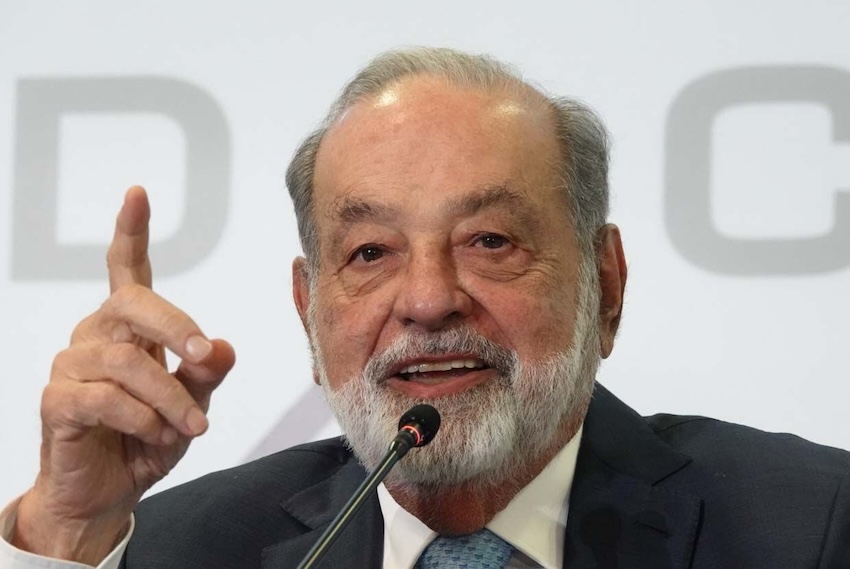
Born in Mexico City in 1940, just under two years after Lázaro Cárdenas nationalized Mexico’s oil industry, Carlos Slim Helú has a net worth of US $125 billion, according to the most recent Forbes “World Billionaires List“, making him the 16th richest person in the world.
Carlos Slim Helú has a net worth of US $125 billion. (Graciela López/Cuartoscuro)
Slim, whose ancestry is Lebanese, gained much of his immense wealth from his 1990 acquisition of the then state-owned telephone company Telmex, but he has a diverse business portfolio across a wide range of industries, including retail (Sanborns, Sears), construction, energy, mining and banking. He lives in Mexico City.
The other Mexicans among the world’s top 200 billionaires, according to the Forbes list published March 10, are:
Germán Larrea Mota-Velasco (and family): The CEO of Grupo México has a net worth of $67.1 billion, making him the world’s 30th richest person. His wealth is mainly derived from metals and mining.
Alejandro Baillères Gual (and family): With a net worth of $19.5 billion, Baillères is the world’s 140th richest person. Forbes writes that he “and his five siblings are the heirs to the mining fortune built by their father Alberto Baillères, who died in 2022.”
On the real estate website Inmmuebles24, the purchase prices of various homes in the neighborhood are listed not in Mexican pesos but in millions of US dollars. One home is on sale for an impressive (or intimidating) US $11.8 million.
Lomas de Chapultepec is located just across Anillo Períferico, Mexico City’s outer beltway, from Polanco, making it a convenient location for captains of industry and other business executives. I walked over there from Avenida Masaryk to wander the streets and get a better feel for the neighborhood. Apart from the luxurious residences on leafy streets, another apparent, albeit perhaps stereotypical, sign of the wealth in the area was a glass cabinet filled with cigars in a small Chedraui Selecto supermarket.
Wealth in the form of residential properties is not just on display in Mexico City, but all over the country.
Every large city in Mexico has exclusive neighborhoods with rich residents. Among them are Del Valle in the Monterrey metropolitan area and Puerto de Hierro in greater Guadalajara.
According to a February 2026 report by Oxfam México, Oligarchy or Democracy, the richest 1% of the population — around 1.3 million people — receives 35% of total income and holds 40% of the country’s private wealth, while 18.8 million Mexicans lack access to adequate nutrition.
“Ultra-rich Mexicans have never been so numerous or so wealthy as they are today,” the report states.
Still, the vast majority of Mexicans — more than 99% of people, according to the 2020 INEGI data — are not part of the upper class. More than 60% of Mexicans are considered lower class, many of whom are workers who largely live paycheck to paycheck, such as various people I spoke to along Insurgentes Avenue in Mexico City last year.
But at home, tens of millions of lower-class and middle-class Mexicans — including street vendors, taco cooks, cleaners, teachers and journalists — are highly laudable representatives of Mexico as well — hardworking people who strive to support themselves and their families, and do their bit to make Mexico a better place every single day.
By Mexico News Daily chief staff writer Peter Davies (peter.davies@mexiconewsdaily.com)
The new pact allows taxi drivers and riders to piggyback on Uber's app system. (Rogelio Morales/Cuartoscuro.com)
Uber, the longtime nemesis of Mexico’s licensed cabbies, is now their partner — at least on paper.
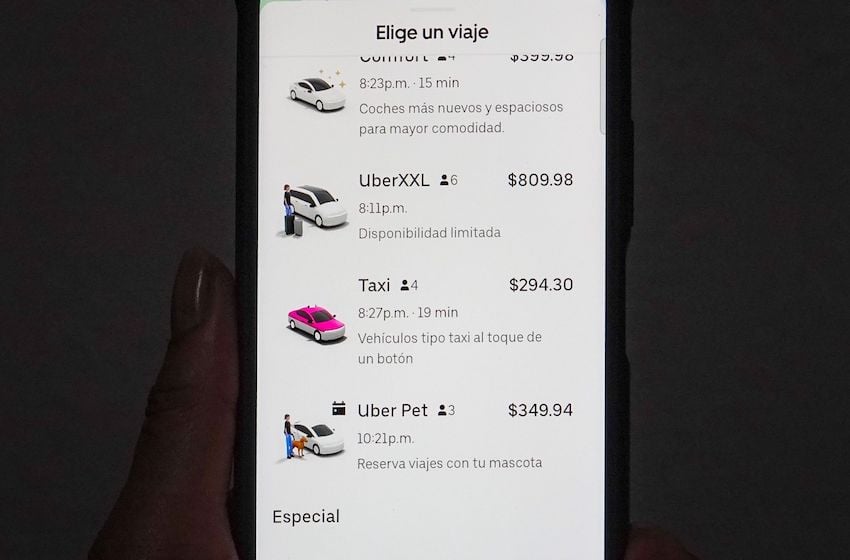
Thirteen years after launching in Mexico, Uber announced Tuesday what both sides called a “historic” alliance with MX Taxi that will let users request licensed cabs inside the app via a new taxi option, with destinations ordered in advance and fares pre-calculated.
Both parties are calling the agreement historic, as it gives Uber and MX Taxi the option of working cooperatively. (Rogelio Morales/Cuartoscuro)
The price will be based on what a normal taximeter would charge using government‑approved taxi rates, not Uber’s own fare structure. There also won’t be any dynamic pricing, such as fares based on supply and demand or time of day.
MX Taxi taxistas won’t operate as Uber drivers, but their cars will now use Uber-style safety features such as insurance, 24/7 support and RideCheck. Credit card payment can be made within the app, although in some cases, cash will be accepted if preferred.
The deal is being called national, but the rollout will effectively be city by city, not an instant switch everywhere, according to those involved.
Initial implementation is centered on big markets — especially the World Cup host areas of Mexico City, Guadalajara and Monterrey. Uber’s taxi option is already available in CDMX, with about 3,000 to 3,500 cabs participating in the pilot phase, out of a total of some 45,000 licensed cabs in the capital.
The deal comes less than three months before Mexico co‑hosts the 2026 World Cup and as authorities brace for millions of extra taxi and Uber rides.
Uber has already launched Uber Shuttle in Mexico City, a system of vans/buses with fixed routes and schedules at lower prices than its traditional services.
CDMX Secreta has issued a primer on how to hail a taxi in Mexico City using the Uber app.
MX Taxi is a Mexico City–anchored association of licensed, concession-holding taxi drivers; it is present around the country though not necessarily in every city.
With the deal, MX Taxi will plug into Uber’s massive pool of riders but keep its own brand, tech and dispatch systems.
Uber general manager Félix Olmo said the alliance responds to “demand in Mexico, whether local or from tourists, and the demand that is coming with the World Cup, which exceeds the possible number of drivers that exist.”
Spokesman Erasto Vázquez called it a “new era” for a union that lost an estimated 60% of its street presence after Uber’s 2013 arrival and saw active cabs fall from roughly 100,000 to 45,000.
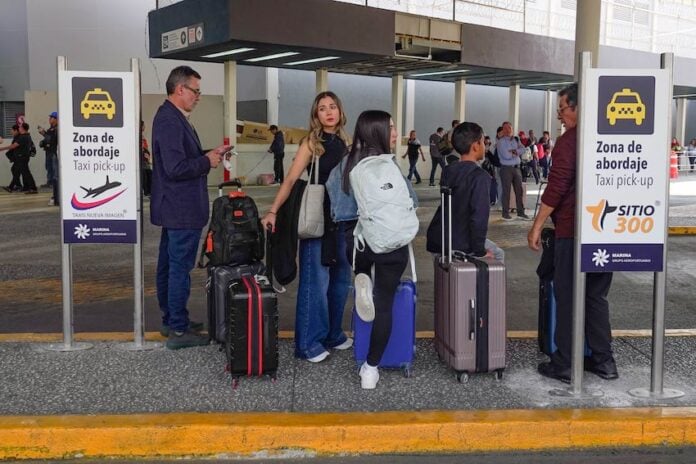
Uber maintains that a disputed court injunction allows it to keep operating at airports under “legal protection,” but the Navy‑run AICM and the federal Transport Ministry insist that app‑based services are not authorized inside the federal zone and have used the National Guard to push them out.
In recent days, however, AICM has started setting up a designated waiting and pickup zone for Uber and DiDi vehicles, located approximately eight minutes on foot between terminals 1 and 2.