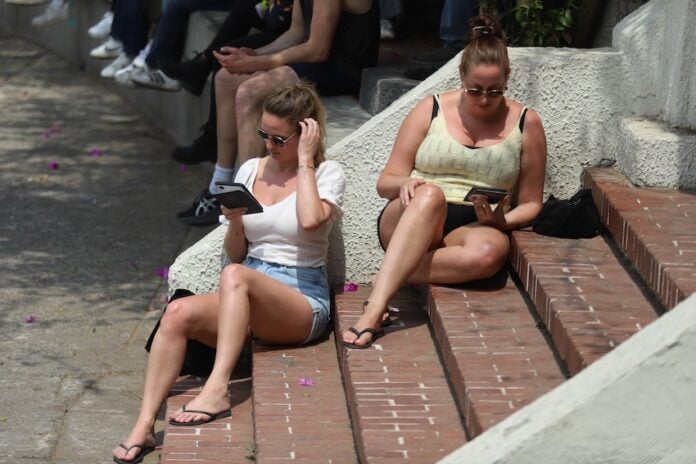
Sun lovers may be tempted by the sunny skies, but caution is urged about prolonged exposure to the extremely high temperatures across much of the country.
(Graciela López/Cuartoscuro.com)
The calendar may have barely turned to spring, but residents of 12 states might consider skipping ahead to their summer clothes going into the weekend.
The National Meteorological Service (SMN) forecast extreme heat in several northern and western states for Friday and into the weekend, advising residents to stay well-hydrated, to avoid prolonged exposure to the sun and to wear long-sleeved, light-colored clothing during the day.
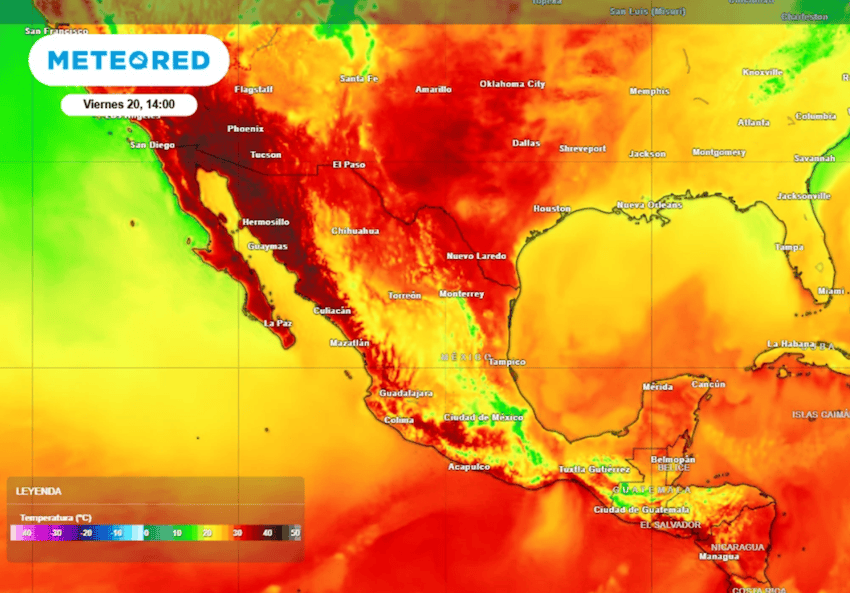
This temperature map of Mexxico released Friday by the meteorological site Meteored Mexico gives a convincing picture of the hot weather across Mexico on this first day of spring. (Meteored Mexico)
With temperatures expected to soar above 105 F (40 to 45 C) in Baja California, Sonora, Chihuahua, Sinaloa and Guerrero, the SMN is urging residents to pay special attention to children, the elderly, the chronically ill and vulnerable groups.
Temperatures of 95 F to 104 F (35 to 40 C) are expected in Baja California Sur, Durango, Zacatecas, Nayarit, Jalisco, Colima, Michoacán, Morelos, Puebla, Oaxaca and Chiapas, while Coahuila, Nuevo León, Tamaulipas, San Luis Potosí, México state, Campeche, Yucatán and Quintana Roo will see highs of between 86 and 95 F (30 to 35 C).
The heat wave in the north is expected to begin weakening by Monday, but that does not imply a significant drop in temperatures. On the contrary, the SMN warned that a possible increase in humidity could lead to muggy mornings that lead to warm afternoons.
Climatological recordings show that meteorological springs in Mexico have become increasingly warmer and drier over the last decade, according to Meteored México.
“The beginning of March now presents temperatures that were previously typical of mid-April, bringing forward water stress in sensitive ecosystems,” it said.
The National Water Commission (Conagua) reported that a progressive increase in solar radiation and a decrease in the influence of cold fronts will produce an increase in temperatures during the second half of March and through April.
May is typically the hottest month across Mexico and Conagua has predicted persistent heat waves throughout the year, projecting that several Mexican cities could see record-breaking temperatures in 2026.
Hermosillo, the Sonora state capital, and Mexicali, capital of Baja California, have already done that.
On Wednesday, Mexicali set a new record for March when the temperature topped out at 105.6 F (40.9 C). In Hermosillo, the mercury hit 108 F (42.5 C), a new record for March, on Thursday.
The SMN recorded five heat waves in 2025, with the highest temperatures concentrated in mid-May.
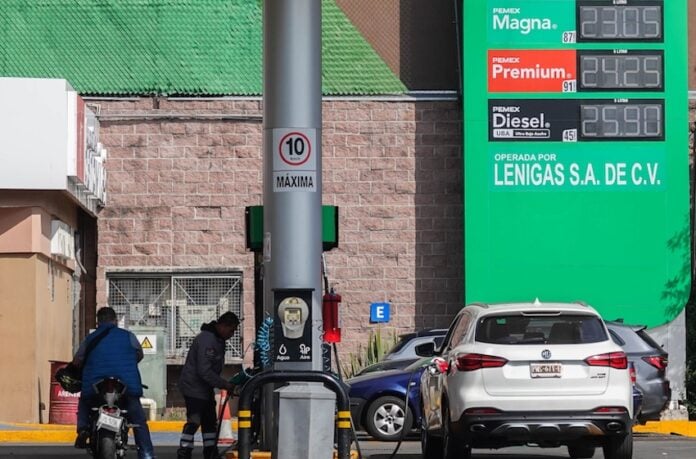
For how long will your cash be good at the pump? According to President Sheinbaum's ambitious timetable, digital payments at gasoline stations will be mandatory before the current year is up.
(Camila Ayala Benabib/Cuartoscuro.com)
As part of her goal of digitizing the Mexican economy, President Claudia Sheinbaum said on Thursday that cash payments at gas stations and highway toll booths will be eliminated starting this year.
Sheinbaum said her administration is working with the the banking sector to standardize digitized payment procedures nationwide to promote their use, and especially with Banco de Bienestar to facilitate digital payments for all Mexicans.
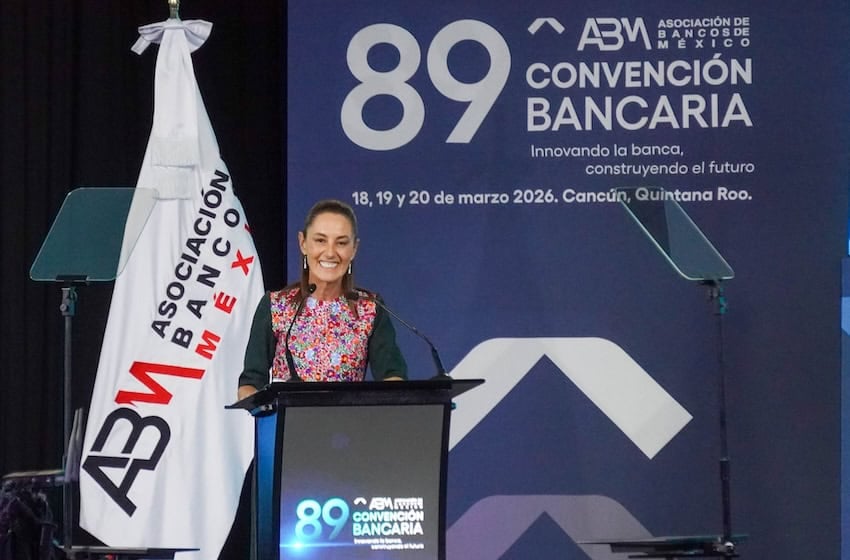
President Claudia Sheinbaum announced her digitized payment plans as she addressed the 89th Banking Convention of the Mexican Banking Association in Cancún Thursday. (Presidencia / Cuartoscuro.com)
“Our goal this year is to make digital payment of gasoline and tolls mandatory,” the president said. “This will allow us to move forward with the digitization of the country through other schemes.”
Delivering the inaugural address at the 89th Banking Convention, Shienbaum also praised recent improvements to the CoDi system which can now be accessed through cell phones with zero commissions. CoDi (Cobro Digital) is a free, real-time digital payment platform developed by the Bank of Mexico, Mexico’s central bank, often called Banxico.
Also speaking at the convention, Banxico President Victoria Rodríguez said the central bank will stage a public consultation on reforms that would standardize the procedures for electronic fund transfers through mobile devices — another step toward universal digitization.
The government is also preparing to include the Banco del Bienestar in the digitization process by allowing certain government payments to be made digitally. Banco del Bienestar is a state-owned development bank aimed at providing financial services and promoting financial inclusion, especially for beneficiaries of federal social programs and residents in remote or marginalized communities.
The banking sector has also been lobbying for digitization policies to further reduce the use of cash, especially payments for public services. Cash is used for roughly 80% of transactions in Mexico.
The economic state of the nation
Sheinbaum’s speech also touched on the economic situation of the country, emphasizing a historic reduction in poverty, a strong currency, an increase in the minimum wage, a healthy financial system and a solid domestic market.
At the same time, she encouraged the banking sector to do more, especially by expanding credit and facilitating access to financing. Among Latin American nations, Mexico offers the least amount of credit for small and medium-sized enterprises.
“The banking sector still has much to offer the country,” she said, while also recognizing the Mexican Banking Association’s commitment to raising the level of credit from 38% to 45% of Gross Domestic Product (GDP) by 2030.
“The sector is stepping up, but we need it to give even more,” she said. “That’s why the best news … is that it is going to increase credit.”
Sheinbaum said her administration’s priority is to establish an economic climate conducive to sustainable growth in order to improve Mexicans’ quality of life.
Other elements of economic policy mentioned by Sheinbaum include investment in the energy sector (to generate 30,000 MW of electricity by 2030, boost renewable energy and reduce dependence on natural gas) and new financing for technological and scientific innovation.
Migrant children in Mexico City sport their tournament uniforms while participating in group activities. While the kids want to do well in their soccer tournament, organizers say the event is focused less on the final score than on offering safe spaces to children who have fled violence and poverty. (ACNUR)
With the World Cup’s opening match in Mexico City less than three months away, migrant children in the capital are lacing up for a smaller but important tournament of their own.
Since late February, hundreds of migrant, refugee and local children living in inner-city shelters have been training on improvised fields for “Goals for Inclusion,” a European Union–funded project that uses soccer to promote integration, protection and coexistence.
Con #GolesPorLaInclusión, el futbol se convierte en un espacio donde todas y todos construyen comunidad.
En albergues y espacios comunitarios de la Ciudad de México demostramos que la inclusión transforma.
La diversidad nos fortalece cuando jugamos en equipo. 💙⚽ @UEenMexicopic.twitter.com/hq9pyIrfSp
The initiative was launched this month by the EU Delegation in Mexico alongside the Mexico City government, the United Nations refugee agency UNHCR and the International Organization for Migration.
It youth soccer program will run through next month and culminate with a big tournament in Mexico City at the end of April.
Organizers say the focus is less on the final score than on offering safe spaces to children who have fled violence, poverty and political turmoil and who now face hostility, bureaucracy and exploitation in Mexico.
Around 300,000 migrants remain stranded in the country as tougher U.S. border policies in Donald Trump’s second term as U.S. president have sharply reduced crossings and left many families unable to move forward or go home, according to humanitarian groups.
“Sport has no borders. The ball is round here or there,” Venezuelan migrant Joel Orta told Reuters as his 8-year-old son, Matías, practiced in the courtyard of a shelter in Tepito, a Mexico City neighborhood.
“Goals for Inclusion” will take place at fields in two inner-city areas considered dangerous, Tepito and Vallejo, both north of central CDMX.
At CAFEMIN, a shelter in Vallejo where the project was officially unveiled, EU Ambassador Francisco André said, “In the European Union, we are convinced that all girls and boys have the right to grow up in safe spaces where they feel respected and included. And sport creates precisely that: a community where they learn about camaraderie, solidarity, generosity and respect.”
Mexico City officials say sports can bridge tensions between residents and new arrivals.
“Projects like ‘Goals for Inclusion’ demonstrate that sports can become a real bridge between people in situations of human mobility and host communities, generating environments of coexistence, protection and shared social responsibility,” said Temístocles Villanueva, the city’s coordinator of attention to human mobility, in a United Nations statement.
“Goals for Inclusion” will include 18 community clinics that blend drills with socio-emotional support and human rights education. The clinics at migrant shelters and city-provided facilities are framed as “safe spaces.”
“Sport is a tool for change, a tool for peace,” said Perla Acosta, director of Más Sueños, a nonprofit that focuses on using sports to better society. “It helps us build community, it helps us connect.”
The 2026 FIFA World Cup will begin June 11 in Mexico City with a Mexico–South Africa match and conclude July 19 in New Jersey. Matches will be played in Mexico City, Monterrey, the Guadalajara metro area and in 11 cities in the U.S. and two in Canada.
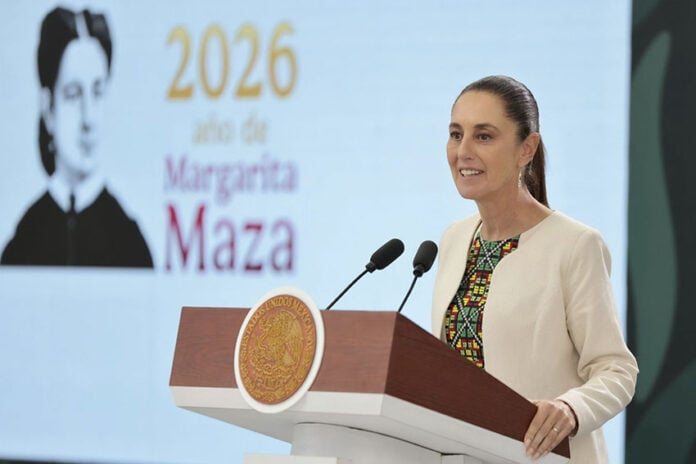
A Mexican teenager's death in U.S. immigration custody, a Quintana Roo security update and Sheinbaum's meeting with the president of Germany were a few of the topics covered at Friday's presidential press conference. (Gabriel Monroy / Presidencia)
Sheinbaum’s mañanera in 60 seconds
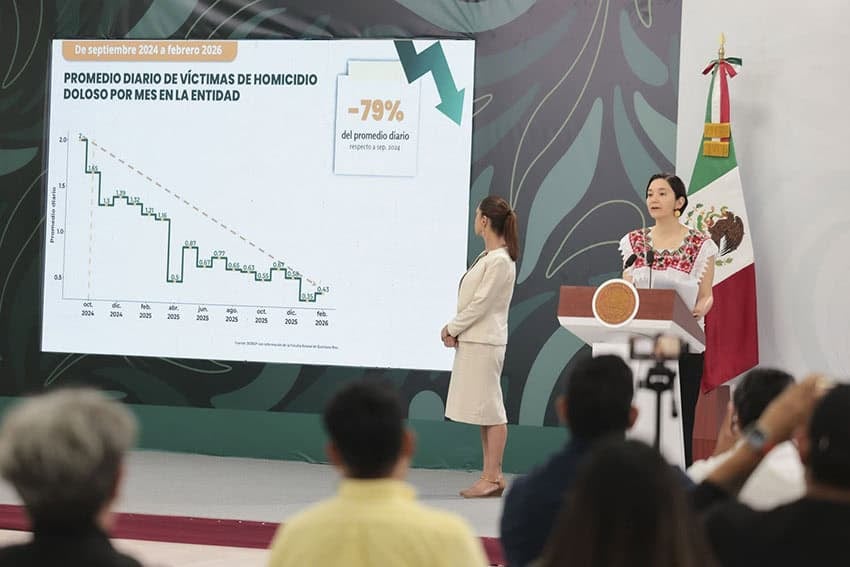
📉 Quintana Roo security gains: The daily homicide rate in Quintana Roo dropped 79% in February compared to the final month of the AMLO administration, and 68% year-over-year. Security Minister García Harfuch reported more than 3,200 arrests for high-impact crimes in the state since Sheinbaum took office.
🇲🇽 🇺🇸 Mexican teen dies in ICE custody: Sheinbaum called the death of 19-year-old Royer Pérez Jiménez — an Indigenous Maya man from Chiapas who died at a Florida detention center on March 16 — “very sad.” She said Mexico sent a diplomatic letter to Washington on Thursday, with a “much stronger” one to follow Friday. ICE listed the cause as presumed suicide; Mexico is demanding a full investigation.
🇩🇪 Sheinbaum meets German president in Cancún: Trade, investment and scientific cooperation dominated Thursday’s meeting with German President Frank-Walter Steinmeier. Sheinbaum noted that nearly 2,000 German companies already operate in Mexico, and flagged the upcoming May signing of the updated EU-Mexico trade agreement. Steinmeier extended an invitation to visit Germany.
The federal government took the opportunity to highlight that the daily homicide rate in Quintana Roo in February (0.43) was 79% lower than in September 2024 (2), the final month of the six-year term of former president Andrés Manuel López Obrador, and 68% lower than in February 2025.
National Public Security Director Marcela Figueroa highlighted the declining state homicide rate in Quintana Roo at Friday’s press conference. (Gabriel Monroy / Presidencia)
Security Minister Omar García Harfuch reported that since Sheinbaum took office in October 2024, more than 3,200 people have been arrested in Quintana Roo for allegedly committing high-impact crimes.
While the security situation in the Caribbean coast state was a significant component of the president’s mañanera, Sheinbaum also looked northeast to the state of Florida, where a young Mexican man died in ICE custody this week.
She lamented the death of the 19-year-old Indigenous Maya man, and reiterated that her government will do all it can to protect and stand up for the rights of Mexicans abroad, including those living (or who have died) in the United States as the Trump administration carries out an aggressive detainment and deportation agenda targeting undocumented immigrants.
The Friday morning press conference gave the president the opportunity to show that her government is focused not just on the well-being and security of Mexicans in Mexico’s 32 federal entities, but is also committed to supporting los paisanos (compatriots) who live beyond the country’s borders.
Sheinbaum’s remarks about her meeting on Thursday with the president of Germany added to the international focus of her final mañanera of the week.
Sheinbaum: Death of Mexican teen in ICE custody is ‘very sad’
Sheinbaum said that the death of a 19-year-old Mexican man in the custody of U.S. Immigration and Customs Enforcement (ICE) is “very sad.”
She said that her government sent a “diplomatic letter” to the U.S. government about the case on Thursday and will send “a much stronger” one on Friday.
“The report is that the young man committed suicide. However, we want a thorough investigation,” Sheinbaum said.
“This can’t be happening,” she added.
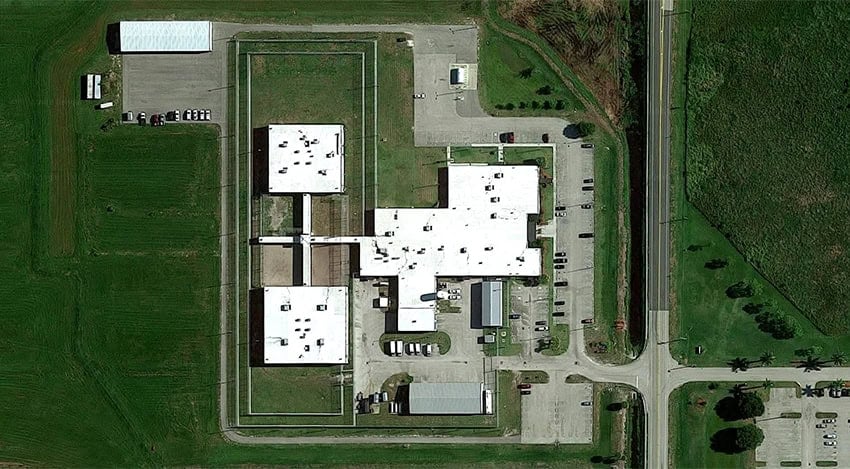
In a statement dated March 18, ICE reported the death of Royer Pérez Jiménez in the Glades County Detention Center in Florida.
An ICE statement said that Pérez died Monday at Glades County Detention Center, shown here. (Google Maps)
ICE said that Pérez — reportedly from an Indigenous community in Chiapas — was “a criminal illegal alien from Mexico who was arrested and charged with felony fraud for impersonation and resisting an officer.”
It said that he passed away in the early hours of Monday, March 16.
“At approximately 2:34 a.m., a Glades County detention officer on duty found Pérez unconscious and unresponsive. They immediately called a medical emergency in the dormitory and staff started cardiopulmonary resuscitation,” ICE said.
“Two medical personnel responded a couple of minutes later, determined Pérez to be without a pulse, and took over CPR. They requested emergency medical services. At approximately 2:42 a.m., Moore Haven Fire Rescue EMS arrived at the Glades County Detention Center and initiated life-sustaining interventions on Perez,” the agency said.
“He died of a presumed suicide; however, the official cause of his death remains under investigation.”
ICE said that Pérez was arrested in Florida in January and entered the United States on Feb. 19, 2022, but was detected by the U.S. Border Patrol and returned to Mexico on the same date. It said that Pérez “illegally reentered” the U.S. on an unknown date.
The Miami New Times reported that the 19-year-old “appears to be the youngest person to die in ICE custody since President Donald Trump took office again in January 2025, according to ICE records.”
The newspaper wrote that “on January 22, Pérez was arrested by the Volusia County Sheriff’s Office and charged with impersonation and resisting an officer, both misdemeanors, according to an arrest report obtained by New Times (although ICE’s statement characterized the impersonation charge as a felony).”
“Police say they tried to pull Pérez over while he was riding a scooter because he was crossing traffic lanes without using a crosswalk. But he allegedly refused to stop and gave officers multiple false names,” the New Times reported.
“According to the report, Pérez eventually told police he had ‘overstayed his visa and is currently in the United States illegally,’ and said he had no documentation to prove his name or date of birth.”
Mexico’s Ministry of Foreign Affairs (SRE) published a statement on Thursday, in which it said it would “pursue all diplomatic and legal avenues” following the death of Pérez in ICE custody.
“The Mexican government reiterates that such deaths are unacceptable and again demands a prompt and thorough investigation to establish the circumstances surrounding this death, determine accountability, and put in place effective guarantees of non-recurrence,” the ministry said.
“The Mexican Consulate General in Miami activated its consular protocol, visited the [ICE detention] facility, and will continue working to provide support and assistance to the family,” the SRE said.
“Mexico has requested the reports and documentation needed to establish the full facts of the case, and U.S. authorities have confirmed that an investigation is underway. Mexico will take the necessary diplomatic steps to urge the U.S. federal government to address the conditions that facilitate such incidents. All available legal avenues will be pursued to ensure the family receives full support,” it said.
Sheinbaum endorsed the SRE message on Friday morning, saying that her government would express its discontent with the death of a Mexican national in ICE custody through “all means.”
Trade a key focus of Sheinbaum’s meeting with German president
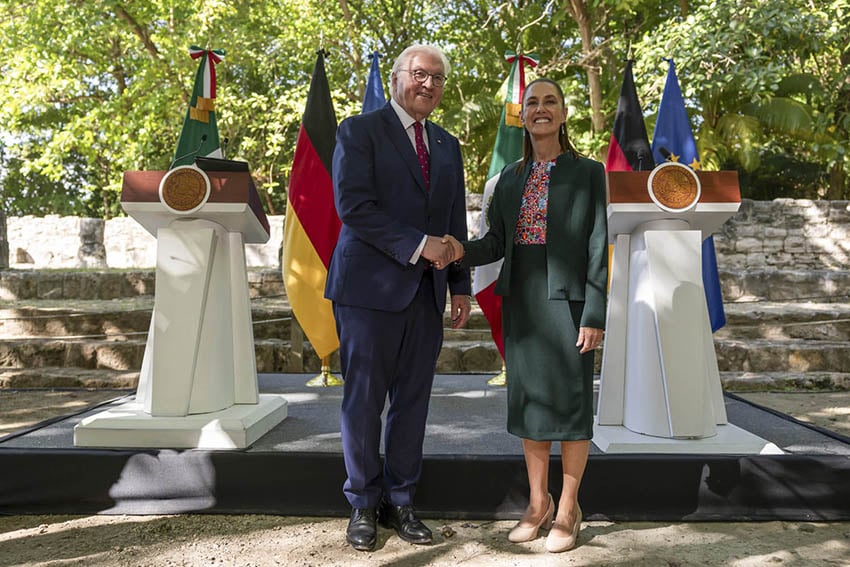
Sheinbaum said that Mexico’s “trade and economic relationship” with Germany was a key focus of her meeting in Cancún on Thursday with German President Frank-Walter Steinmeier.
“And there is a lot of interest [in Mexico] from German companies,” Sheinbaum added.
President Sheinbaum shakes hands with German President Frank-Walter Steinmeier at a Thursday press conference in Cancún. (Gabriel Monroy/Presidencia)
“There are close to 2,000 German companies with investments in Mexico and there is a lot of interest in continuing to invest,” she said.
Sheinbaum said she also spoke to Steinmeier about “scientific and cultural cooperation,” and about “technological innovation, which is very important.”
In addition, she said that she and the German head of state discussed “the international situation” and agreed that it is “essential to seek peace in the world and make progress on cooperation for development.”
“Those were the big issues,” Sheinbaum said, adding that Steinmeier — a former vice chancellor of Germany and foreign minister — is “a man of a lot of international experience.”
“He has been part of different groups to build peace in Europe and the whole world. He has been president of Germany for practically 10 years and he invited us to go to Germany,” she said.
“We’ll wait and see if we’ll make a trip,” Sheinbaum said.
The president’s office noted in a statement that she received Steinmeier at the Maya Museum of Cancún on Thursday.
Sheinbaum was accompanied by her foreign affairs, finance, economy and energy ministers.
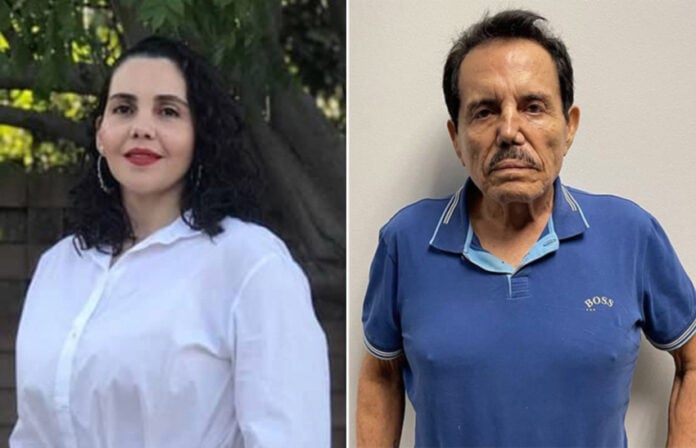
Mónica Zambada Niebla, daughter of drug lord "El Mayo" Zambada, was detained then subsequently released Thursday in Sinaloa. (via Telemundo)
Mexican security forces killed 11 members of a notorious Sinaloa Cartel faction and briefly detained a woman during an early morning raid on Thursday. The apparent target of the operation was the daughter of drug lord Ismael “El Mayo” Zambada, who is currently in prison in the United States. Now, the Security Cabinet is facing questions about why Mónica Zambada Niebla — who has been sanctioned by the U.S. government on drug-related charges — was released.
Federal forces carried out coordinated actions Thursday in rural areas surrounding Culiacán, all targeting the “Los Mayos” faction of the Sinaloa cartel. The operation resulted in the detention of Zambada Niebla in the town of El Álamo, and Omar Oswaldo Torres Cabada, alias “El Patas,” in the nearby town of Valle Escondido.
Shortly after Marines captured Zambada Niebla, a shootout occurred during which 11 members of the crime gang were slain. Torres Cabada was apprehended soon thereafter.
Within hours Zambada Niebla — who was wearing military fatigues as she was loaded onto a Navy helicopter — was released and the Security Cabinet issued a statement saying the daughter of the drug kingpin would not face charges.
“During this operation, a woman, identified as the daughter of a criminal leader, was also located. She has no connection to criminal activities nor any outstanding warrants against her, and was therefore released and handed over to her family in accordance with established protocols and in strict adherence to the law,” it said.
Security officials declared that the OFAC designation — originally issued in 2007 “for providing assistance or collaborating with a drug trafficking organization” — was lifted in 2019.
They also said that the sanction was administrative (only barring her from conducting transactions in the U.S. financial system or any type of business involving U.S. companies) and does not imply any criminal charges against her, either in Mexico or the U.S.
The EFE news agency reported that the OFAC sanctions against Zambada Niebla, her mother and three sisters still appear to be in effect.
U.S. officials had yet to comment on the matter as of Friday morning.
The confusion prompted speculation that the arrest of Zambada Niebla had not been approved by the U.S. government, with El Universal columnist Alberto Capella suggesting it might have endangered a plea deal the U.S. Department of Justice is negotiating with “El Mayo.”
Capella also questioned the official narrative — that Zambada Niebla “was simply the daughter of a criminal leader with no connection to illicit activities” — calling it “weak and incomplete,” particularly since the high-profile operation directly targeted the Zambada family and its property.
Torres Cabada, who has been linked to the “Los Mayos” faction of the Sinaloa Cartel, which has been engaged in a drug war with the “Los Chapitos” faction, remains in custody.
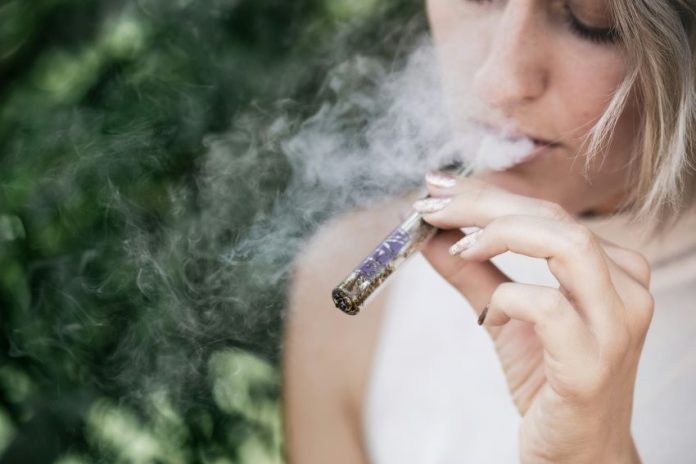
While marijuana was decriminalized in Mexico in 2021, the legal situation around the drug remains murky. (Grav/Unsplash)
Mexico’s relationship with marijuana has been a long and complicated one. While hemp, a variety of cannabis with low psychoactive properties, has been used for textiles and rope for centuries, the psychoactive version, marijuana, has had a more turbulent journey.
Decriminalized in small quantities in 2009, the plant took a historic leap in 2021 with Supreme Court rulings decriminalizing recreational and medicinal use. However, the legal scaffolding is still under construction.
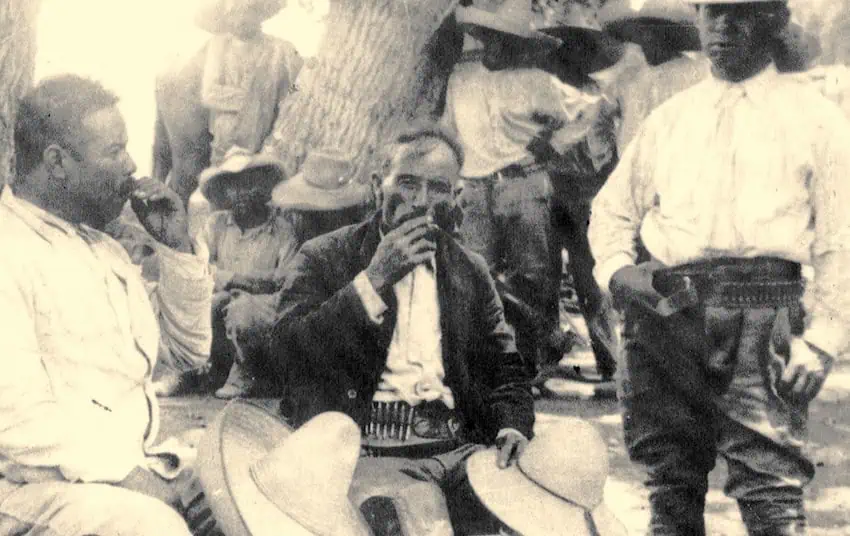
Legendary Mexican revolutionary leader Pancho Villa smoking what appears to be marijuana. (Higher Collective/Facebook)
The Past
Marijuana in Mexico has some interesting periods of cultivation, medicinal use and even prohibition.
Introduction (16th Century)
The Spanish brought cannabis to Mexico, primarily for its industrial use as hemp for making rope and textiles.
Uses (19th Century)
After Mexico gained independence, hemp cultivation declined. By the late 19th century, recreational cannabis use, known as marihuana in Mexico, became more prevalent.
Prohibition (20th Century)
Concerns about violence and social disorder led to a ban on marijuana use in military hospitals in 1882. Fueled by negative media portrayals and international drug control trends, Mexico fully prohibited marijuana production, sale and recreational use in 1920. This ban continues today.
The present
Since the LXIV Legislature commenced its term in September 2018, 13 initiatives aiming to regulate recreational marijuana use and its derivatives have been introduced in Mexico. However, 12 of these initiatives remain among the labyrinthine committees of the Chamber of Deputies and the Senate, leaving the nation in a state of legislative limbo.
Among prominent proposals lies the initiative championed by former Morena senator Gerardo Novelo Osuna, a stalwart figure in the marijuana legalization discourse. Introduced in October 2019, Novelo Osuna’s initiative advocates for creating the General Law for the Regulation, Control and Use of Cannabis and its derivatives. This bill endeavors to reform various articles within the General Health Law, the Federal Criminal Code and the Law of the Special Tax on Production and Services.
Marijuana paraphernalia is already sold in Mexico, but its legal status is still dubious. (Galo Cañas Rodríguez/Cuartoscuro)
At its core, Novelo Osuna’s proposal seeks to delineate the identification of cannabinoids, decriminalize possession for personal consumption (set at 28 grams, or one ounce), and establish a regulatory framework governing the cultivation, production, sale and consumption of marijuana. Moreover, it addresses taxation intricacies, with proposed modifications to the Law of Special Tax on Production and Services targeting products containing tetrahydrocannabinol (THC) within specified thresholds.
More reform initiatives
Echoing the chorus for reform, Senator Clemente Castañeda of Movimiento Ciudadano (MC) presented an initiative in September 2018, advocating for amnesty for individuals incarcerated due to cannabis-related offenses. This proposal underscores the societal repercussions of punitive measures stemming from marijuana prohibition, signaling a call for compassion and rectification within the justice system.
Further diversifying the legislative landscape is the initiative by PAN Deputy Éctor Ramírez, currently under review in the Health Commission of San Lázaro. Ramírez’s proposal aims to regulate the utilization of non-psychoactive cannabis within cosmetic products. By delineating thresholds for psychoactive substances and facilitating the manufacture, importation, and commercialization of hemp-infused cosmetics, the bill seeks to harness the economic potential of cannabis derivatives while ensuring consumer safety.
Legislative impasse
The Supreme Court’s 2021 decision decriminalized recreational use with a caveat — permits are still required. As of 2025, COFEPRIS has established a free administrative procedure for adults (anyone over 18 years of age) to apply for personal cultivation and consumption permits. However, CBD and recreational wellness products remain medical-only in practice, and the permit status of personal cultivation for foreign residents is still a bit cloudy.
Meanwhile, the legislative impasse persists, casting a shadow over Mexico’s aspirations to align with global trends in marijuana regulation. Despite efforts to emulate the successes of Uruguay, Chile, Canada and many U.S. states in legalizing recreational marijuana, substantive debates surrounding penalties for possession and consumption linger, reflecting the delicate balance between public health concerns and individual liberties.
Also, foreigners should be cautious — while possessing small amounts may be decriminalized for residents, tourists could face stricter consequences.
Currently, marijuana is legal to possess but not to buy, as Congress continues to stall on legalization. (Shelby Ireland/Unsplash)
The future
Mexico’s marijuana decriminalization is a landmark decision, but the road to a fully functioning legal market is still complicated. The Mexican Congress must draft and pass regulations establishing a system for licensing producers, retailers and distributors. This will likely take time, with potential revisions based on experiences in other countries.
The MMGY Travel Intelligence survey — called the Cannabis Tourism: Opportunities, Issues and Strategies report — found that 29% of all active leisure travelers, and 18% of all Americans, are interested in cannabis-related activities on vacation. If the recreational market in Mexico were regulated today, it would reach an estimated value of US $278 million in 2027.
Legislation on marijuana is important because it will prevent large interests from taking advantage of the market, train small and medium-sized companies, and provide education to prevent addictions, issues on which his organization is working.
This article was first published in 2025. It has been reviewed and updated for 2026.
Camila Sánchez Bolaño is a journalist, feminist, bookseller, lecturer, and cultural promoter and is Editor in Chief of Newsweek en Español magazine.
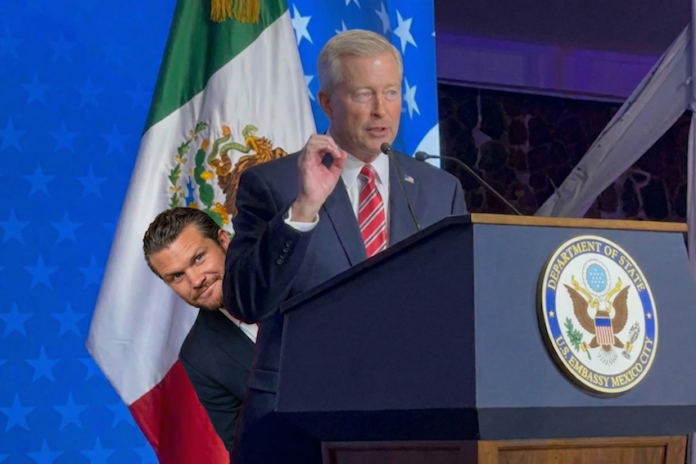
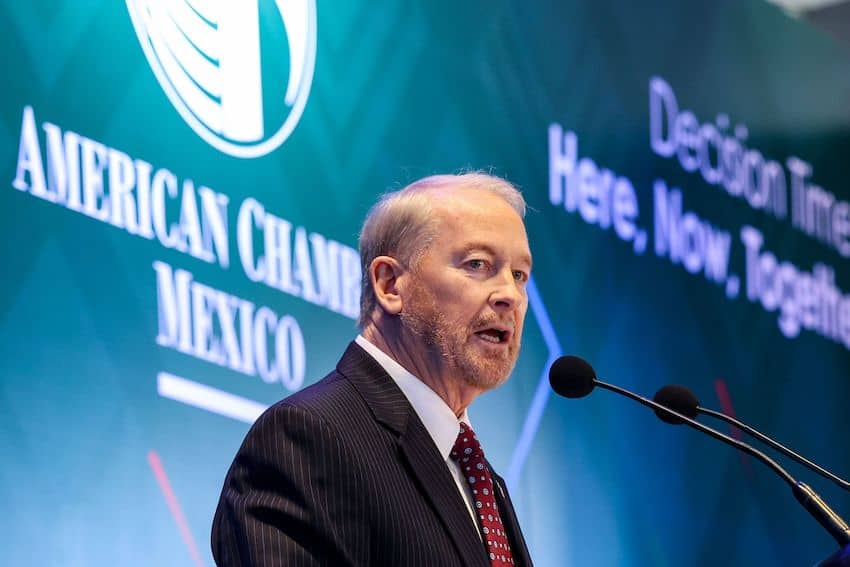
MEXICO CITY — U.S. Ambassador to Mexico Ronald Johnson struck a warm and optimistic tone at the American Chamber of Commerce’s 109th Annual Assembly Wednesday, describing the bilateral relationship as “a marriage” and confirming that the United States has been far too occupied with everything else to follow through on any previously announced military adventurism.
“We don’t see the USMCA review as a risk, but as an opportunity,” Johnson told a room full of businesspeople at the Papalote Children’s Museum. “Also, and I want to be clear about this, nobody is currently planning to annex anyone. We checked this morning.”
Ambassador Johnson described the bilateral relationship as “a marriage.” Don’t ask how many wives the U.S. President has had. (Galo Cañas/Cuartoscuro)
Johnson went on to describe a relationship of such deep interdependence — nearly a trillion dollars in annual trade, shared borders, shared supply chains, shared fentanyl concerns — that any lingering invasion talk should be understood as the kind of thing couples say during a rough patch.
“You can love each other a lot, be partners, raise children and grow businesses even when you don’t agree on everything,” Johnson said, in what diplomatic observers noted was a somewhat unconventional framing for a formal trade address, but perhaps the most accurate one in recent memory.
When asked by a reporter whether Washington’s earlier rhetoric about cartel designations, military operations on Mexican soil, and the general suggestion that Mexico was a failed state requiring external management had simply slipped through the cracks, Johnson smiled and said that the U.S. and Mexico currently have “the most secure border in history.”
Mexican Economy Minister Marcelo Ebrard, reached for comment while in Washington for the first round of formal USMCA negotiations, confirmed that talks were “going well” and that no one had mentioned annexation even once, which he described as “a solid foundation.”
President Sheinbaum, for her part, confirmed she remains open to the marriage analogy, while noting that in healthy marriages, one spouse does not typically deploy special operations forces into the other’s backyard.
Johnson closed his remarks by declaring that North America, united, “could be independent.” The audience applauded. Nobody asked independent from who.
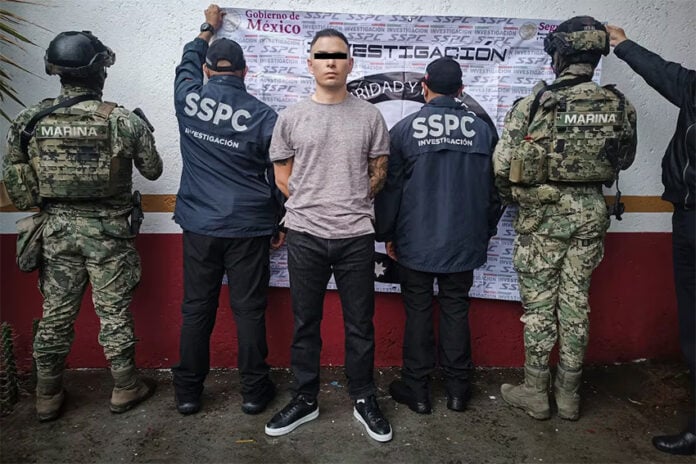
The arrest of "Lobo Menor" in Mexico City rid Ecuador of one of its most powerful alleged criminal gang members. (SSPC)
The alleged mastermind behind the assassination of Ecuadorian presidential candidate Fernando Villavicencio in Quito has been arrested in Mexico City’s affluent neighborhood of Polanco following a coordinated operation involving Mexico, Ecuador and Colombia.
The suspect, who went by the name of Juan Carlos Montero Mestre but whose real name is Ángel Esteban Aguilar Morales, aka “Lobo Menor,” had an arrest warrant for the murder of Villavicencio three years ago. He is also considered one of the leading members of the Ecuadorian gang Los Lobos.
According to Mexico’s Security Minister Omar García Harfuch, Aguilar was on Interpol’s red notice list and linked to drug trafficking, extortion and homicide.
Ecuadorian Interior Minister John Reimberg said the suspect would be held in the Encuentro Prison, a maximum security center that Ecuador President Daniel Noboa’s government designed based on the prison model of El Salvador’s Nayib Bukele.
“Hide wherever you hide, we will find you and capture you. Lobo Menor: The Encounter awaits you,” Reimberg wrote on his official X account, in a message directed to wanted criminals.
Aguilar’s capture occurred on Wednesday in the Polanco area of Mexico City, following a coordinated operation by the Navy’s Special Operations Unit, the Security and Citizen Protection Minister and the National Institute of Migration.
ALIAS “LOBO MENOR” CABECILLA DE LOS LOBOS, DETENIDO EN MÉXICO.
Ángel Esteban Aguilar Morales, alias “Lobo Menor”, cabecilla del grupo criminal “Los Lobos”, tiene orden de captura por estar procesado en el caso del asesinato de Fernando Villavicencio, consiguió papeles falsos con…
The Mexican Security Cabinet indicated that they received a tip about Aguilar’s arrival in the country and, in collaboration with Colombia’s intelligence, tracked him down to the Polanco neighborhood.
In a post on his official X account, Colombian President Gustavo Petro described him as “one of the world’s greatest killers,” as well as one of Ecuador’s most wanted criminals, linking him with Mexican cartels and Iván Mordisco, Colombia’s top public enemy.
Petro alleged that Aguilar was the mastermind behind the assassination of Ecuadorian presidential candidate Fernando Villavicencio and that his capture “constitutes a significant blow against transnational organized crime.”
Furthermore, he reaffirmed “the effectiveness of trilateral cooperation between Colombia, Ecuador, and Mexico in the fight against multi-crime networks.”
Los Lobos is an Ecuadorian criminal organization considered to be one of the largest and most violent gangs in the country. They have created alliances with other Ecuadorian groups and have forged relationships with international criminal organizations, including Mexican cartels, to move cocaine and exploit illegal gold mining.
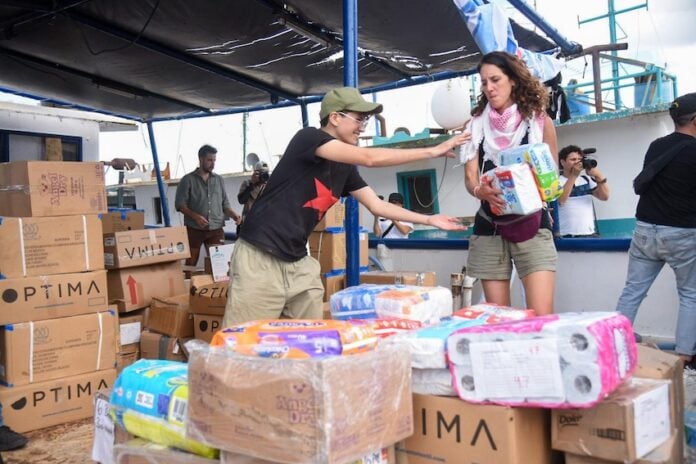
Volunteers help load a ship bound for Cuba from the Yucatán coast, carrying aid as part of Mexico's participation in “Nuestra América: Convoy to Cuba.”
(Linea Independiente/on X)
Mexican vessels participating in an international humanitarian effort to deliver food, medical supplies, and solar equipment to Cuba prepared to set off Thursday afternoon.
Four boats were scheduled to depart from Mexico starting Thursday, carrying material aid for the beleaguered island nation as part of an international solidarity initiative in response to the intensified U.S. blockade of Cuba.
🇨🇺🔴 Enviarán 30 toneladas de ayuda a Cuba desde Yucatán
A bordo se incluyen paneles solares, alimentos enlatados, agua embotellada y productos de limpieza, entre otros artículos de primera necesidad.
The first ship was preparing to depart from the port of Progreso, Yucatán, on Thursday and three more will set sail from Isla Mujeres, Quintana Roo, on Friday. The plan is to arrive in Havana on March 21.
David Adler, coordinator of Progressive International, described Mexico “as the most symbolic, powerful, strong and proactive country in its solidarity with the Cuban people.”
Brazilian climate activist Thiago Ávila, helping coordinate the Mexican convoy, said the organization has been preparing about 40 people to make the trip, applying for visas and carrying out organizational work.
“There is no time to lose, as the Trump administration intensifies its offensive against the island and its campaign to isolate its people,” Adler said in a statement. “Together we can break the siege, save lives and defend the cause of Cuba’s self-determination.”
Due to the U.S. blockade, Cuba has been mired in an economic crisis that was exacerbated by the sudden suspension of oil supplies from Venezuela in January after the U.S. ousted President Nicolas Maduro, a Havana ally.
After U.S. President Donald Trump threatened retaliation against any country sending oil to the Caribbean island, Mexico also halted shipments.
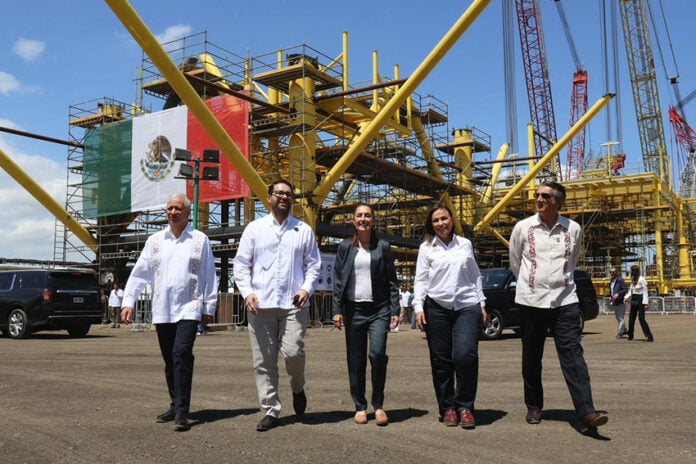
President Sheinbaum led an event celebrating the anniversary of Mexico's 1938 oil nationalization in Pueblo Viejo, the site of a historic oil refinery near Tampico on the Veracruz-Tamaulipas border. (Presidencia)
Speaking at a Pemex industrial complex on the banks of the Pánuco River in Veracruz on Wednesday, President Claudia Sheinbaum used the 88th anniversary of Mexico’s oil expropriation to set her government’s next energy goal: sharply reducing the country’s dependence on imported natural gas.
While Mexico has made significant progress reducing gasoline imports — thanks to the Olmeca refinery in Dos Bocas, the acquisition of the Deer Park refinery in Texas and the rehabilitation of six other refineries — Sheinbaum acknowledged a stubborn vulnerability remains. Mexico still imports 75% of the natural gas it consumes, a fuel that powers the country’s electricity plants and factories.
“The call to advance in energy sovereignty acquires enormous relevance every day,” she told Pemex workers at the event. “It means advancing in energy sovereignty, increasing domestic natural gas production — that is the next objective.”
Alongside natural gas, Sheinbaum said her government would continue expanding renewable energy capacity, including solar, wind and geothermal, while maintaining oil and fertilizer production.
The natural gas challenge is significant. As previously reported by Mexico News Daily, virtually all of Mexico’s gas imports arrive via pipeline from the United States, creating a dependence that some energy analysts describe as a national security risk.
Sheinbaum’s government is currently studying whether what it describes as sustainable fracking could help unlock domestic reserves, though no final decision has been made.
Sheinbaum drew a direct line between the 1938 expropriation — in which former President Lázaro Cárdenas seized the assets of 17 foreign oil companies in 1938 and founded the state oil company Pemex — and her government’s push to reduce gas imports. She presented both as responses to the same underlying challenge: ensuring that Mexico’s energy resources remain under national control rather than dependent on foreign suppliers. Pemex’s debt has fallen 13% in the past year to its lowest level in over a decade, she noted, as evidence the state oil company’s recovery is on track.
“Mexico will not be sold. Mexico will not be surrendered. Mexico will be defended,” she told the crowd.