Home Blog Page 136

Manufacturing propels Mexico’s exports to all-time high in September

1
building
Both the IMF and the OECD have attributed Mexico's upward trend to its strong external market, with exports so far holding their own despite U.S. trade policy uncertainty. (Shutterstock)

The value of Mexico’s exports surged to a record high in September, driven by a year-over-year increase of almost 16% in manufacturing sector export revenue. 

The national statistics agency INEGI reported Monday that Mexico’s exports were worth US $56.48 billion in September, an increase of 13.8% compared to the same month of 2024. 

The annual percentage-terms increase in the value of Mexico’s exports was the highest in 14 months. 

The growth rate was more than double the 5.7% increase in exports recorded between January and September, a period in which the shipment of Mexican products abroad generated revenue of $481.64 billion. 

Mexico is on track to set a new record for export revenue in 2025, and to exceed $600 billion in earnings for just the second time ever. The increase in export revenue this year has helped prop up the Mexican economy, whose pace of growth is slowing.  

Mexico’s spending on imports also increased at a fast clip in September, increasing 15.2% annually to $58.88 billion, according to INEGI. Mexico thus recorded a trade deficit of $2.39 billion last month, a 60.9% increase compared to September 2024.

Mexico’s export revenue shot up 10.6% in June, with manufacturing leading the way

In the first nine months of 2025, Mexico imported goods worth $484.56 billion, a 2% increase compared to the same period of last year. Mexico recorded a trade deficit of $2.92 billion between January and September, an 85% decline compared to the deficit in the first nine months of last year. 

Manufacturing sector drives export growth 

Like U.S. trade partners around the world, Mexico has been affected by the Trump administration’s aggressive protectionist agenda. However, Mexico has maintained a comparative advantage over most other U.S. trade partners as the majority of its trade with the United States — the recipient of the bulk of Mexico’s exports — occurs within the framework of the USMCA free trade pact and is thus exempt from tariffs.

That situation, along with the interconnectedness of the North American economy and the China-U.S. trade war, among other factors, has allowed Mexico to continue growing its export revenue this year even as the United States government collects tariffs on some Mexican exports, including light vehicles, steel and aluminum, that previously entered the U.S. duty-free.     

The year-over-year growth in export revenue in September can largely be attributed to a 15.7% increase in manufacturing sector income. 

The value of Mexico’s manufacturing sector exports was $52.37 billion last month, accounting for almost 93% of total revenue. 

The value of non-automotive sector manufacturing exports surged 23.9% annually last month to reach $36.98 billion. In contrast, revenue from auto sector exports declined 0.2% compared to September 2024, indicating that the United States’ 25% tariff on light vehicles made in Mexico — with an exemption for U.S. content — is having an effect. The annual decline in the value of auto sector exports sent to the United States last month was a more pronounced 7.2%.

All told, Mexico’s auto exports brought in revenue of $15.38 billion last month. 

In the first nine months of 2025, annual growth of 7.5% in manufacturing sector export revenue was a key factor in the 5.7% increase in the total value of Mexico’s exports in the period.  

The value of non-automotive sector manufacturing exports increased 13.6% to $300.65 billion between January and September, while revenue from auto exports declined 3.7% to $138.82 billion. The value of all manufacturing sector exports during the period was $439.47 billion, accounting for 91% of Mexico’s total export revenue between January and September. 

Another export category that recorded strong growth in September, and in the first nine months of 2025 was mining. Revenue from mining sector exports increased 20% annually to $1.16 billion in September, and 23.8% in the first nine months of 2025 to reach $9.53 billion. However,  mining exports only make a minor contribution to Mexico’s overall export revenue, accounting for around 2% of total earnings in the first nine months of the year. 

Mexico’s agricultural and oil exports both declined in annual terms in September and in the January-September period. 

The agriculture sector, which is especially susceptible to adverse climate conditions, brought in export revenue of $1.29 billion in September, a 14.5% year-over-year decrease. In the first nine months of 2025, agricultural sector export revenue totaled $16.27 billion, a decline of 8.7%. 

Mexico has been forced to halt exports of cattle to the United States in recent months due to the detection of cases of New World Screwworm in Mexican bovines.

a photo of the New World screwworm (NWS) in Chiapas, Mexico
The New World screwworm (NWS) has been steadily moving north from Central America since last year, putting the U.S. cattle industry on high alert. (Isabel Mateos Hinojosa/Cuartoscuro)

The value of Mexico’s oil exports declined 11.8% annually in September to $1.66 billion. The petroleum sector’s export revenue fell 23.6% annually in the first nine months of the year to total $16.35 billion in the period. 

Mexico is keeping more crude at home as it seeks to make progress toward achieving self-sufficiency for fuel. Petroleum sector export revenue is also affected by variable prices for oil. 

Petroleum imports are down, but spending on intermediate goods rises 

INEGI’s latest data shows that Mexico’s reliance on foreign fuel has declined, as the value of petroleum imports fell 8.3% annually to $35.19 billion in the first nine months of 2025. 

Mexico’s outlay on consumer goods fell 5.8% to $70.21 billion in the same period. That decline stemmed from a 22% decrease in spending on petroleum-related consumer goods, such as gasoline, and a 2% reduction in expenditure on the import of all other consumer goods. 

Imports of capital goods also declined between January and September, their value falling 8.8% to $41.77 billion. 

In contrast, the value of imports of intermediate goods — products used as inputs in the production of other goods — increased 5% annually in the first nine months of 2025 to reach $372.58 billion. Expenditure on the import of intermediate goods accounted for 77% of Mexico’s total outlay on imports between January and September.       

With reports from El Economista 
The motel: a Mexican institution

8
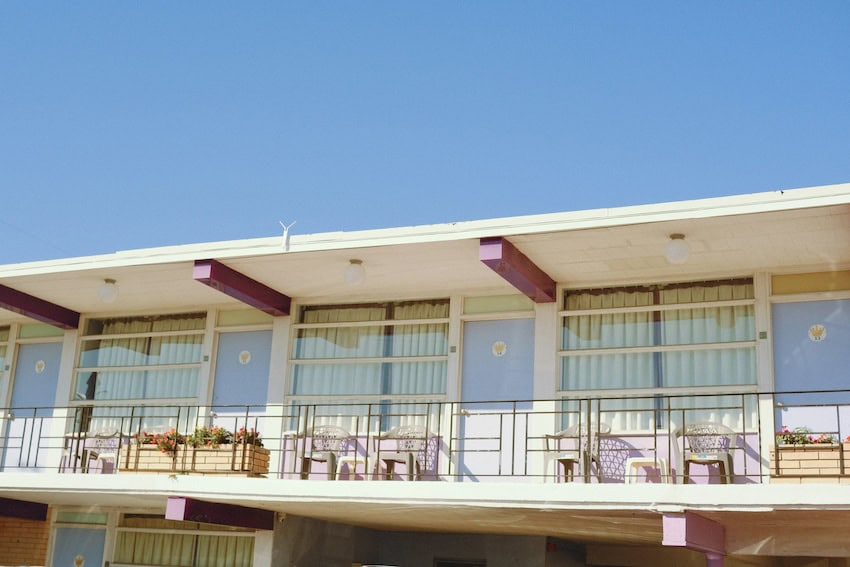
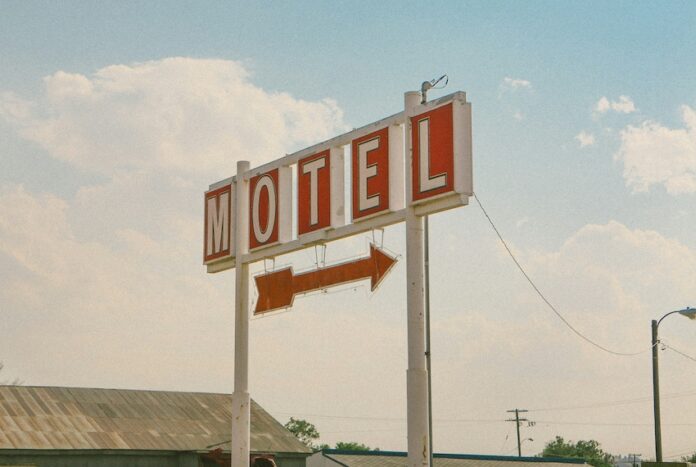
A motel sign
In Mexico, the motel is more than a place to stop for a night during your road trip. For many, it's a vital lifeline in a close-knit household. (Matthew Smith/Unsplash)

One of my favorite anecdotes is from about 20 years ago. I was in Querétaro with my now ex-husband, our first year living together. He was a university student, I was a fresh-out-of-university English teacher, and my, we were poor! Our 5th-floor walk-up apartment had a great view, but it was basically void of furniture, save a bed and a bookshelf. Eventually, we bought a used computer that sat on an old chair we’d found in the apartment while we sat on the floor to use it.

When you’re 22 and in love, you don’t need much.

A blue Volkswagen Beetle
Pictured: Mexico’s go-to loveshack in days gone by. (Volkwagen)

Most of our friends were of equal starving college student caliber. Many of them also had novios, but unlike the lucky two of us, no place to spend — ahem — quality time together.

And that’s how my boyfriend one day came home almost crying with laughter. His friend, who had one of those beat-up old Volkswagen bugs (vochos here, which used to be ubiquitous), had parked in a secluded area with his girlfriend. Soon, much to their disappointment, a police officer knocked on the window.

What did he want? Two hundred pesos to not halt their fun, of course. Thankfully, the friend was ready with a disarming quip: “If I had 200 pesos, we’d be at a motel instead of in my car!”

Ah, the Mexican motel. Truly an institution, though one could be forgiven for not connecting the dots upon their arrival.

As a kid and even a teen, I had no clue about the difference between a hotel and a motel. My family wasn’t the kind to afford too much traveling, and the novelty of staying anywhere besides my or family members’ homes was enough of a luxury.

My sister and I would marvel at the Motel 8 room in a Texas city two hours away. Everything was so clean! Lights above each perfectly made bed! The true delight, however, came from there being a Denny’s across the parking lot.

They also come with great parking. (Luis Perez/Unsplash)

Freaking. Score.

But when I moved to Mexico, I realized that there was indeed a difference between the two, and that at least here, it was significant.

But first let’s back up a bit to official definitions. A hotel, of course, tends to be bigger, with access to the rooms from hallways rather than from parking lots. They also typically have more amenities and are more expensive.

The word “motel” is a combination of the words “motor” and “hotel” (I looked it up in the Merriam-Webster dictionary). Basically, you can drive to the room you’re staying in. Simple. They also tend to be cheaper, as it’s hard to argue that a view of a parking lot and the freeway are pinnacles of elegance worth paying top-dollar for.

In Mexico, prices between low-tier hotels and motels don’t tend to differ too greatly. The difference comes from their main usages.

Now, I’m not naïve; I know that an affair can very well be carried out pretty much anywhere. But here in Mexico, the motel is the chosen place for one, or simply for a couple to find some alone time.

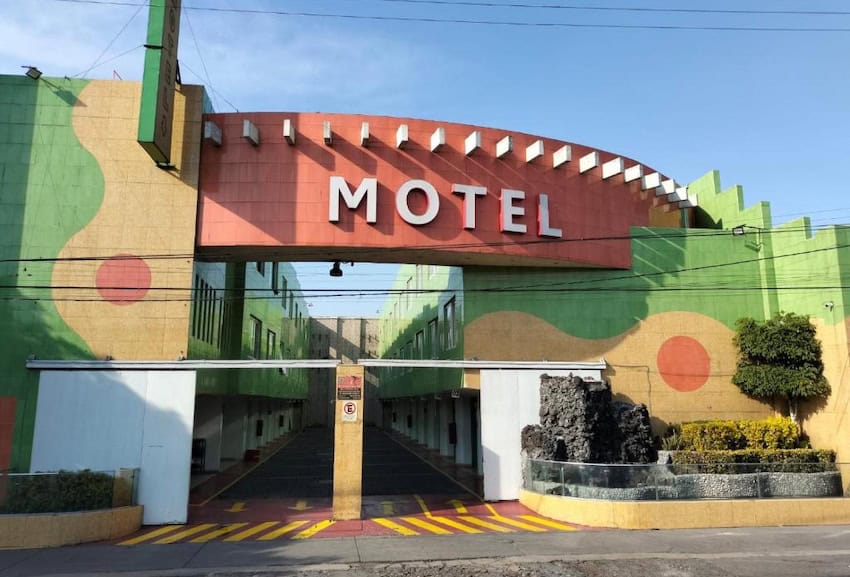
A Mexican motel
Some motels are fancier than others. (Motelesenmx)

Why?

The main plus is privacy. Whereas one’s car might be spotted near a hotel or in its parking lot — or someone might see you walking in — motels are the kings of discretion. Spending a few hours alone with your partner? Even if everyone you know drives or walks by the exact place, they’ll never know because your car will be hidden inside your own personal garage to your own personal room, sealed from the outside world. Even when you enter motel grounds, you don’t have to hang out close to the road; most are fortresses.

So first, you get onto the grounds, away from passing traffic; a motel employee comes out to ask what kind of room you’d like, then directs you to an open garage. Once inside, you can close the garage — usually they’re automatic, but I’ve seen simple curtains, too! — and walk up the steps to your room above.

(As a side note, you don’t have to have a car; you can get a taxi to drop you off! A taxi driver once told me that nearly all of his rides on Valentine’s Day, for example, are to and from motels.)

Once there, the extreme discretion continues. There’s usually a kind of turnstile — also private — device on one of the walls that leads to an outside service area for the motel workers. There, you pay for the time you want, and can even order room service! Beer, snacks, condoms, toys — they’ve got it all! It truly is a brilliant business model.

So we’ve already talked about discretion. They’re also cheap, and often available for four or eight hours rather than a full 24. (To be clear, you can rent a room in a motel for the night or for several, and I know plenty of people who do for totally non-sexy reasons. I think most accept dogs!)

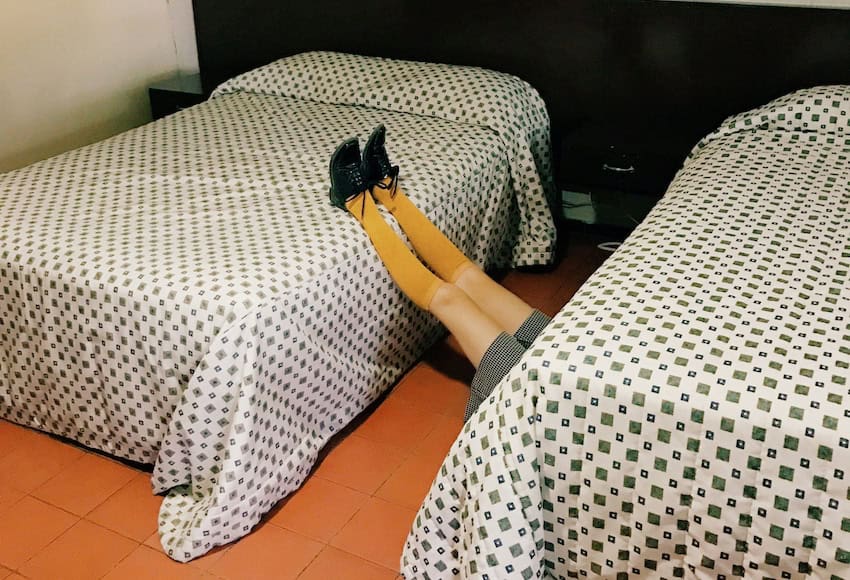
A man sleeping on the floor of a motel room
Don’t worry though, you can still use a motel just like a regular hotel if you’re feeling tired. (Ramsés Cervantes/Unsplash)

For most people, though, motels are simply a place for sex, and motels know it. And that’s how you might, as an innocent traveler just looking to sleep somewhere, might wander into a room with mirrors on the ceiling and a stripper pole. The decor can be interesting for sure, but there are times I’ve gone simply for the pleasure of sitting in hot water (some have jacuzzis!). Bath tubs, in fact, might be the home feature I miss the most when I’m down here.

Anyway! I don’t note these details to be crude, but to let you know what you’re in store for if you don’t already: wonder into a motel unaware, and it’s going to feel real weird.

Why does it seem like they’re all over the place, usually on the outskirts of cities? Well, you’ve got to think about both the culture and logistics around here.

Both because of culture and economic restraints, it’s not traditionally been common for unmarried couples to live together…especially when they’re younger. Think of our poor friend in the vocho above. And with large households but not always large houses, it can be hard to find much private time, or even to have a room of your very own.

When friends come to visit, they’re often shocked to see couples making out, sometimes heavily, in public places. “Well, they can’t make out at their houses with their whole family watching,” I say.

There are plenty of things you can’t do with your whole family watching, it turns out. Motels are the solution that have filled the void.

And where do you say you’re going? Don’t say a motel; think of something plausible!

There’s a motel in Veracruz, for example, that has caused us endless laughing every time we drive by it. What’s it called? “El Cine” (“the movies”), as in, “Be back in a few hours, fam — ¡vamos al cine!”

Sarah DeVries is a writer and translator based in Xalapa, Veracruz. She can be reached through her website, sarahedevries.substack.com.

If you love Cartagena in Colombia… then you will love Campeche in Mexico

1
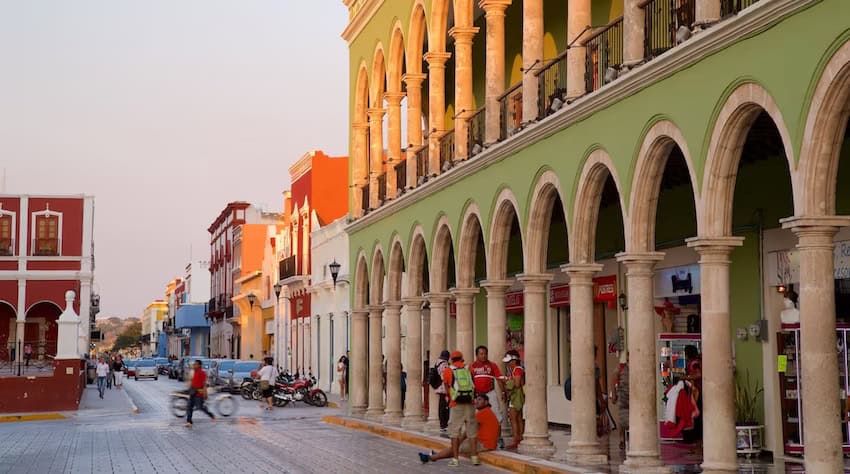
Campeche, Campeche, Mexico
Colonial Campeche offers history, culture and a taste of Caribbean living to those who take a trip to this underrated coastal gem. (descubro.mx)

While millions of tourists flock to Cancún and Tulum each year, the nearby low-key historical town of Campeche remains a little-known spot on the Yucatán Peninsula. The walled city is a pastel-hued dream, a place that has personally captivated me with its striking architecture. Grand colonial houses painted in a riot of pastel colors line its cobblestoned streets, their wooden balconies overflowing with cascades of fuchsia bougainvillea.

This is yet another installment of our series where we shine a spotlight on the lesser-known heroes in Mexico, places that rival world wonders but don’t quite garner the same recognition. In this edition, we’re bringing you to the streets of Campeche on Mexico’s Gulf Coast.

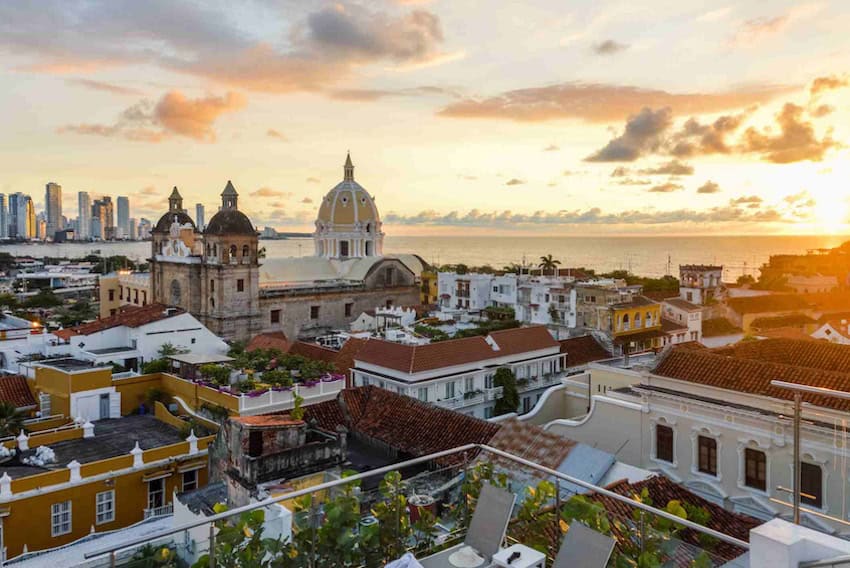
Cartagena, colombia
Colombia’s colonial jewel is world famous for good reason, but what if you could get your colonial kicks closer to home? (Trip Savvy)

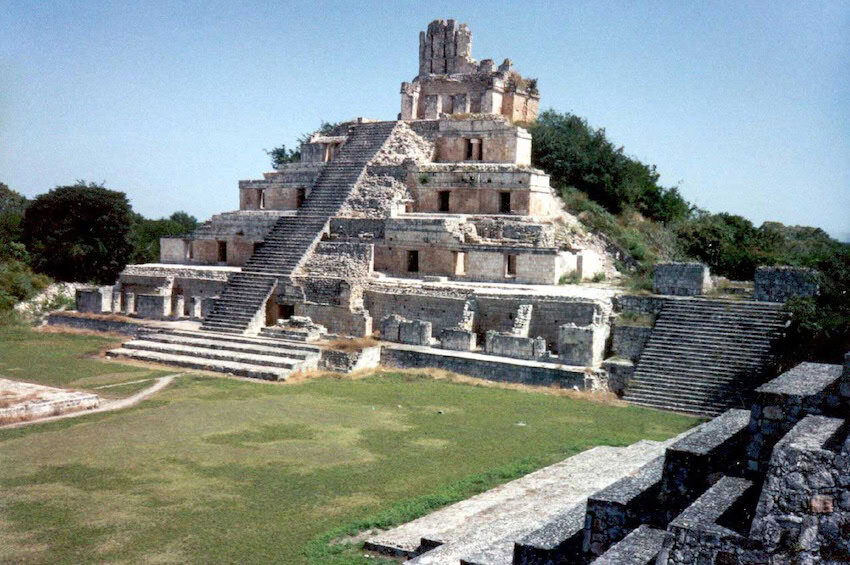
Not many international tourists make it here, which means you can wander its calm cobblestone lanes in peace. For the adventurous, it’s also the perfect launchpad to the Mayan ruins of Edzná, an under-visited archaeological wonder unique for its hieroglyphic staircases. And with the recent arrival of the Tren Maya, this city is all the more accessible and easy to reach.

Cartagena vs Campeche

At first glance, the resemblance between Cartagena and Campeche is undeniable. Both are historic colonial port cities, their old towns protectively embraced by formidable stone walls originally built to fend off pirate raids. Campeche proudly stands as the only walled city in Mexico, a powerful testament to a past spent defending itself from relentless attacks. Like Cartagena, those walls enclose a historic center that is a masterclass in color theory. 

A walk through the cobblestoned streets of both cities is a journey back in time, where centuries-old churches and houses remain standing. Both cities pulse with a vibrant energy, centered around lively plazas where locals gather. Like Cartagena, Campeche was designated a UNESCO World Heritage site for its extensive fortifications, historic center, and numerous colonial monuments.

A quieter alternative

If you’ve traveled to both cities, you’ll notice that the main difference lies in the energy: Cartagena, a celebrated star in the travel world, is always buzzing with activity. Horse-drawn carriages trample the streets of the historical center with tourists in tow, while colorfully dressed Afro-Colombian Palenqueras pose for photos with visitors. In the evenings, tourists flood the fortified walls to watch sunset with a cocktail in hand and restaurants fill to the brim with foodies.

Campeche
(Expedia)

Campeche, in contrast, offers a more laid-back and authentic travel experience. It’s a city where you’re more likely to trade smiles with a local than jostle for space with another traveler. Even travelers who frequent Mexico rarely make it to Campeche, so you can expect to be just some of the few foreigners in town. Unlike its bustling Colombian cousin, the fortified town offers a sense of peace that is a rare commodity in today’s world.

Highlights of Campeche

To truly capture the essence of Campeche, start with a stroll along the malecón, the city’s waterfront promenade. As the sun dips towards the horizon, join locals in their cherished daily ritual and watch the golden rays splash across the Gulf of Mexico. 

For a dive into history, explore the impressive remnants of the city’s fortifications. The Fuerte de San Miguel, which now houses a fascinating archaeological museum, offers incredible insights into Campeche’s swashbuckling past and reveals stunning panoramic views of the city and its coastline.

The soul of Campeche, however, lives within its fortified walls. Allow yourself to get lost in the grid of colorful streets, where every corner presents a surprise. The most photogenic street is probably Calle 59, a vibrant pedestrian-only thoroughfare lined with charming cafes, fantastic restaurants, and artisan shops. Enjoy a hearty breakfast or classic Mexican staples at the cozy cafe Luan, or treat yourself to French cuisine at my personal favorite restaurant in town, CELAVIE Bistroterie.

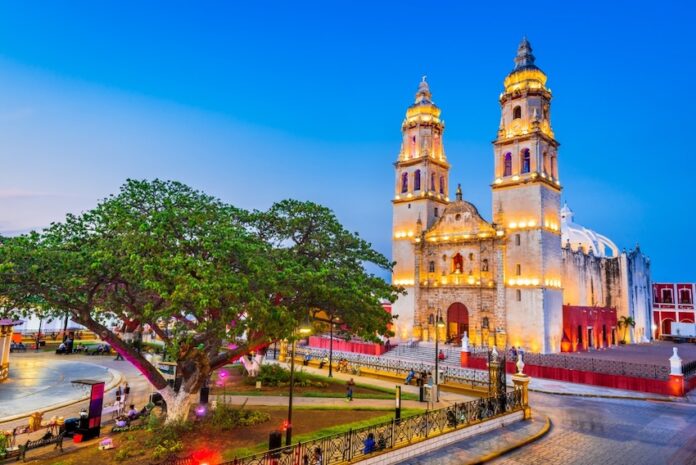
You’ll eventually end up at the Plaza Principal, the city’s main square, gracefully anchored by the beautiful Catedral de Nuestra Señora de la Purísima Concepción. Watch kids run around, couples stroll with a marquesita in hand, and groups of youngsters giggle in the park.

The ruins of Edzna. (Aprendo a mi manera)

Cool escapes

Just as both cities offer a rich colonial history, they’re also both located along the coast and there are plenty of beaches nearby for you to cool off from the sultry heat. A short 20 to 40-minute drive from the city center of Campeche will land you on the beaches along the Gulf of Mexico. 

While the Gulf waters are calm and warm, they generally lack the electric turquoise hue of the Caribbean. But if the heat gets overwhelming, the beaches provide a great respite! One of the closest beaches to Campeche is Playa Bonita, a local favorite with calm shallow waters and amenities that make it perfect for families. It was recently tested for fecal coliforms and named one of the ten cleanest beaches in Mexico. The quieter shores near the fishing village of Seybaplaya are blessed with clearer waters and fresh seafood. 

A surprising city

While Cartagena remains a well-loved travel icon, I urge you to look towards its lesser-known Mexican sister city. Campeche is living proof that sometimes, the greatest treasures are the ones we have to seek out. And believe me, Campeche is a treasure more than worth the search.

Nellie Huang is a self-proclaimed Mexico-holic. She’s the author of Lonely Planet’s Mexico guidebook and has written hundreds of articles on Mexico for various publications. Read about her adventures worldwide on wildjunket.com and follow her updates on Instagram @wildjunket.

A guide to Mexico’s most iconic cocktails

0
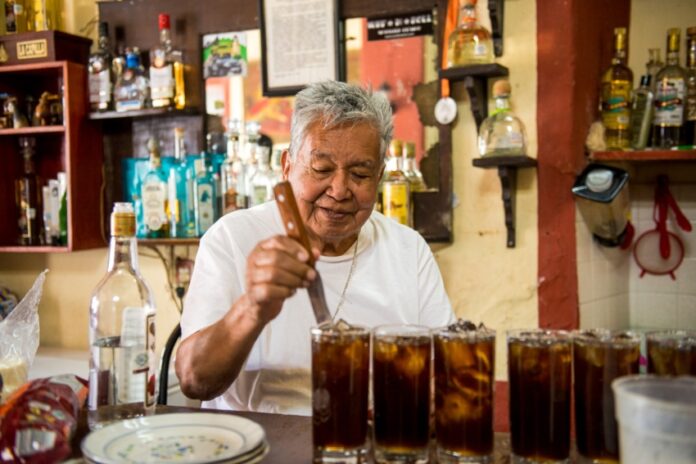
Don Javier Delgado Corona
Don Javier Delgado Corona of La Capilla cantina in Tequila, Jalisco was credited with inventing several iconic cocktails, including the batanga. (Tequila-Mexico.com)

The first cocktail recipe created in Mexico that we know about is remembered because of a tourist named Charles H. Baker, and that’s only because he wrote about his experience with the Mexican Firing Squad Special in his book “The Gentleman’s Companion.” It was published in 1939, two years after he was introduced to the potent blend of tequila, lime juice, grenadine and Angostura bitters in a Mexico City cantina called La Cucaracha.

Of course, cantinas had been around for almost 100 years in Mexico by the time Baker’s book appeared, and tequila and mezcal far longer, so there’s little doubt that cocktails had been served well before Baker went barhopping. What’s undoubtedly true, though, is that the 1930s were the decade that witnessed the creation of the first of Mexico’s most iconic cocktails, the margarita, and saw the launch of a liqueur that would be added to many more in the years to come. 

The Margarita

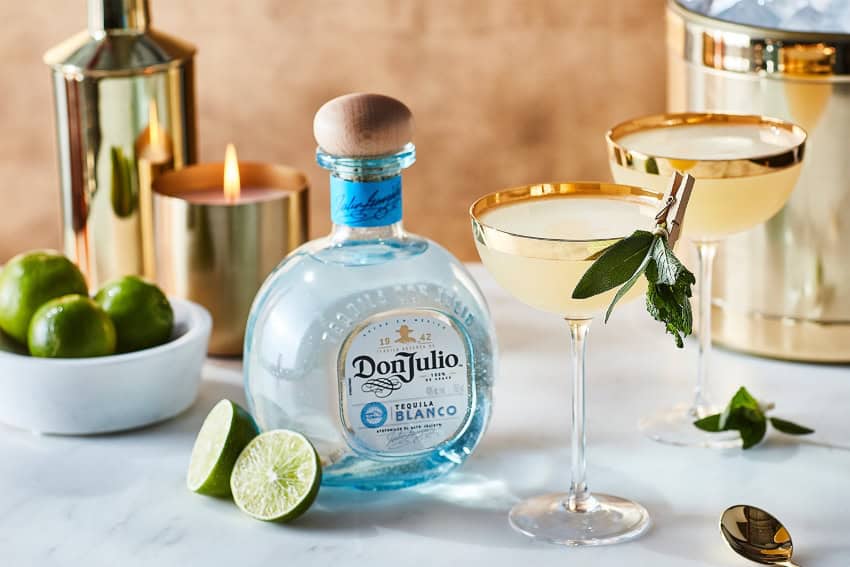
Don Julio margarita
The margarita, which dates to the 1920s or 1930s, was the first iconic cocktail created in Mexico. (Don Julio)

Despite the many colorful and disputed stories about its creation, the margarita almost assuredly evolved from a classic cocktail called the daisy, which could be made with any number of base liquors, from brandy to tequila. We know, for example, that the tequila daisy was being served in Tijuana by 1936. Yes, another tourist wrote about it, this one in Iowa’s The Moville Mail. 

Because the daisy’s name in Spanish is margarita, and because this cocktail fixture’s original ingredients included an orange cordial, it’s easy to see how the fusing of tequila with Controy (or Cointreau, or Triple Sec) began. This evolution, which included squeezing lime juice instead of lemon, is increasingly accepted as the true origin of the margarita, with Tijuana, a hotspot for cross-border boozers during Prohibition, the likeliest birthplace. 

However, that didn’t stop a slew of other origin stories, most of which were also set in Baja California. The most famous of these involved a bar owner named Danny Herrera, who reportedly created the margarita for a showgirl named Marjorie King who was allergic to every liquor except tequila. The Los Angeles Times blessed Herrera as the inventor of the margarita when he died in 1992 at the age of 90, even though, as noted, he probably wasn’t.

The Paloma

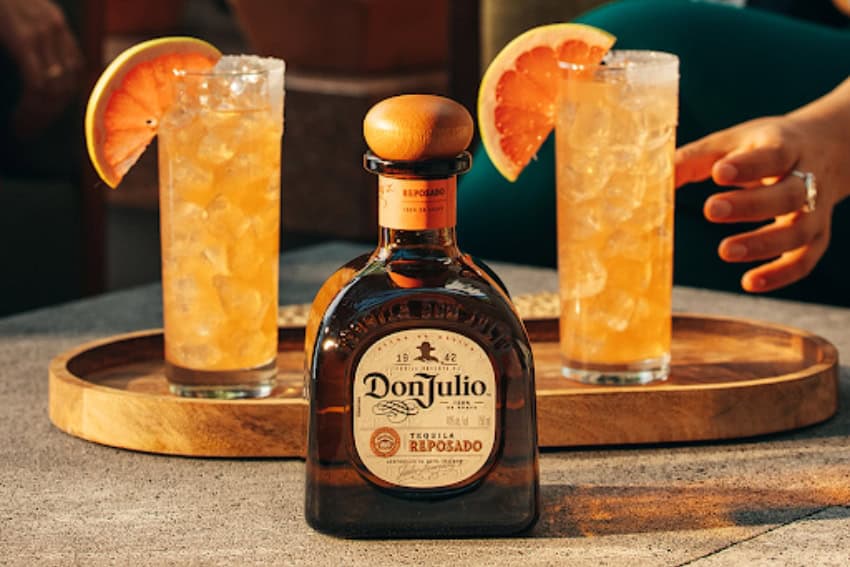
Don Julio paloma
Mexican tequila brands like Don Julio are also a perfect pairing for the iconic paloma cocktail. (Don Julio)

“La Paloma” (The Dove), written by Basque composer Sebastián Iradier circa 1863, is one of the most popular songs ever written, having been covered hundreds, if not thousands, of times. It’s particularly popular in Mexico. So it makes sense that one of the country’s most iconic cocktails, and a great summertime sipper, was created in a cantina where the song was being played. 

Most cocktail historians cite Mexico City, the center of cantina culture, as the birthplace of the paloma, and the 1950s as the decade when its creation probably occurred. This, not coincidentally, was when Squirt grapefruit-flavored soda was introduced to Mexico. Yes, grapefruit soda is one of the cocktail’s signature ingredients — along with tequila, lime juice and salt — although grapefruit juice and soda water can be blended in a pinch. 

For years, the recipe was credited to Don Javier Delgado Corona, the long-time owner of La Capilla cantina in Tequila, Jalisco. Don Javier did invent the batanga (tequila, cola, lime juice and salt), another of Mexico’s great cocktails, but he denied having anything to do with the paloma, so we’ll take him at his word. He passed away in 2020 at age 96, but his legendary bar is still open.

The Michelada

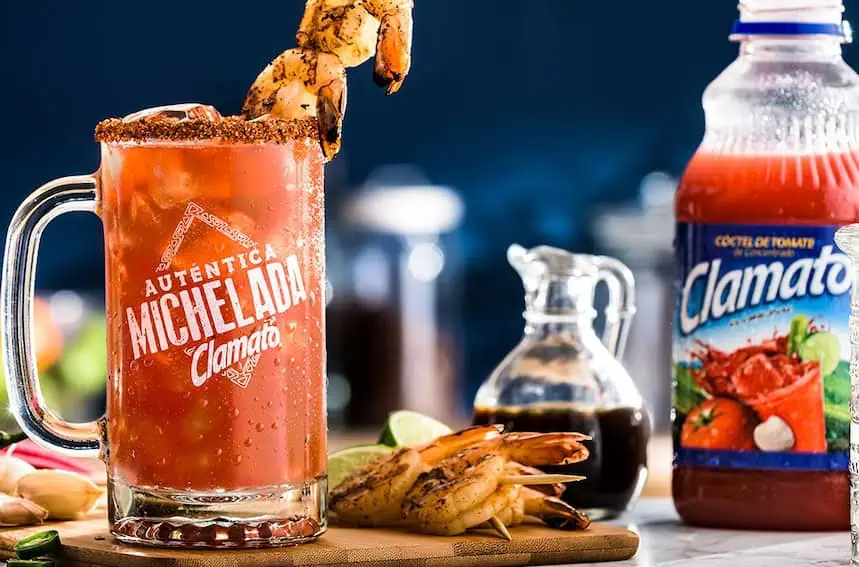
michelada beer with clamato
Whether you choose Modelo, Pacífico, Victoria or something else, this is definitely the best way to drink Mexican beer. (Clamato)

It’s hard to dispute the invention of Mexico’s ultimate beer cocktail. That’s because one can’t say michelada without mentioning its creator, Michel Ésper, whose penchant for ordering his beers with lime, salt and ice at Club Deportivo Potosino in San Luis Potosí in the 1970s quickly caught on, leading others to add their own favorite ingredients, like clamato, tamarind, tajín or salsa inglesa (aka Worcestershire sauce). 

Hard to dispute, but not impossible. After all, the phrase mi chela helada (my cold beer) turns into michelada pretty easily when you say it fast, and lime and salt tend to get added to nearly every cocktail in Mexico. So it seems well within the bounds of possibility that, like Danny Herrera, Michel Ésper benefited from a mythology that sprang up around a popular new drink. 

Whatever the case, few cocktails in Mexico have proven as enduring, or have inspired as many satisfying variations. 

The Vampiro

Mexico’s answer to the Bloody Mary should not be confused with the non-alcoholic version served in a thousand juice bars. The latter features beet, carrot and orange juice, while nothing quite so healthy is found in the more potent recipe attributed to Oscar Hernández, although according to legend, he did invent his now iconic cocktail at a juice stand. 

“It looks like you’re sucking up blood when you drink one, so I decided to call them vampiros,” he recalled to Vice, remembering how he had mixed tequila, sangrita, grapefruit soda, and salt to stay cool during hot summer days in San Luis Soyatlán, which borders Lake Chapala in Jalisco, during the late 1970s.

When customers were initially asked to try the cocktail, he gave them away for free. However, once they proved popular, he began selling them, first in cups and later in plastic bags. Over time, the more bloody Mary-like tomato juice has become an acceptable substitute for sangrita, which in Jalisco, where it was invented by José Edmundo and Guadalupe Sánchez, is typically a blend of Seville orange, lime and pomegranate juices with powdered chile. But the original is better.

The Cucaracha

@miverapaz

shot de cucarachas #shot #shotcucaracha #fuego #kalua #tequila #jueves #ahumados #juevesdeahumados #miverapaz #zona1 #gt #ribeye #parrilla #receta #ribeyeconhueso #CapCut

♬ sonido original – Mi Verapaz

As far as iconic status goes, the charro negro, a version of the Cuba libre using tequila instead of rum, is likely ordered far more commonly than the cucaracha. But the not-so-tasty-sounding “cockroach” is among the best cocktails invented in Mexico that include Kahlua, an ingredient that has to be mentioned in any serious look at the country’s cocktail culture.

Launched by Pedro Domecq in Veracruz in 1936, and featuring a flavorful blend of rum and coffee, Kahlua has since become a cocktail staple poured thousands of times daily around the world into white Russians, black Russians, mudslides, espresso martinis, and more. In Mexico, though, it reaches its zenith as a pairing partner for tequila in the fiery cucaracha.

Like the paloma, the cucaracha gets its name from a famous song — in this case, La Cucaracha. However, the cocktail’s history is less well known than that of the song, which is associated with the Mexican Revolution.

Chris Sands is the Cabo San Lucas local expert for the USA Today travel website 10 Best, writer of Fodor’s Los Cabos travel guidebook and a contributor to numerous websites and publications, including Tasting Table, Marriott Bonvoy Traveler, Forbes Travel Guide, Porthole Cruise, Cabo Living and Mexico News Daily.

Mexico’s week in review: Fentanyl kingpin handed to US as cartel pressures persist

0
President Sheinbaum, Governor of México state Delfina Gómez and Minister of Infrastructure, Transportation and Communications (SICT) Jesús Esteva supervising the construction of the Mexico-Pachuca train.
President Sheinbaum, Governor of México state Delfina Gómez and Minister of Infrastructure, Transportation and Communications (SICT) Jesús Esteva supervising the construction of the Mexico-Pachuca train. (Presidencia/Cuartoscuro)

The week of Oct. 20-24, 2025, delivered a major win in the international fight against fentanyl trafficking as Cuban authorities successfully recaptured Chinese criminal “Brother Wang” after he escaped from house arrest in Mexico City in July. The past five days also saw former President Felipe Calderón float a potential political comeback, and Sheinbaum tackle everything from breast cancer prevention to soda consumption during her daily press conferences.

Didn’t have time to read every story this week? Here’s what you missed.

Brother Wang’s capture and deportation

In a significant victory for regional drug enforcement efforts, fentanyl kingpin “Brother Wang” was recaptured in Cuba after escaping from Mexico. The arrest marked a dramatic turn in a case that had embarrassed Mexican authorities when the high-value target fled the country.

Brother Wang, whose real name is Zhi Dong Zhang, had been a priority target for both Mexican and U.S. law enforcement agencies due to his alleged role in supplying precursor chemicals used to manufacture fentanyl, the synthetic opioid that has fueled an overdose epidemic in the United States. His recapture in Cuba and subsequent deportation represented a crucial moment in bilateral cooperation against drug trafficking organizations.

Calderón hints at political return

Former president Felipe Calderón sent a shockwave through Mexico’s political class by hinting at a potential return.

Calderón, who served as president from 2006 to 2012 and launched the controversial “war on drugs” that continues to shape Mexico’s security landscape, has remained a polarizing figure in Mexican politics. His potential return would inject new dynamics into opposition efforts against the ruling Morena party, though his legacy remains contested among voters who remember both the security challenges and economic policies of his tenure.

The former president’s comments coincided with the formal relaunch of the National Action Party (PAN), which he once led, on Saturday, Oct. 18.

PAN’s relaunch shows ‘lack of sensitivity,’ says Sheinbaum: Monday’s mañanera recapped

Economic news to know

Tariff timeline

Economy Minister Marcelo Ebrard addressed mounting concerns about U.S. trade policy, as Oct. 29 is a crucial tariff deadline for Mexico. According to Ebrard, progress of “around 90%” has been made on outstanding trade issues, indicating that Mexico will reach a deal to stave off the threatened five percentage-point increase in the tariff on goods that don’t comply with the USMCA.

Also this week, Mexican scientists announced they are working on a screwworm vaccine to protect Mexican cattle, a promising development that could help safeguard the livestock industry from disruptions that have severely affected cross-border agricultural trade.

Ebrard: Mexico ‘90% done’ with US tariff negotiations as Oct. 29 deadline nears

Business expansions

Mexico’s retail landscape continued its evolution as Costco revealed plans for new stores across the country, signaling confidence in Mexican consumer markets despite economic uncertainties.

In the Riviera Maya, Puerto Aventuras announced a US $233M expansion, reflecting the ongoing strength of Mexico’s tourism sector and real estate development in key coastal destinations.

Sports highlights

Security challenges

Beyond the headline-grabbing Brother Wang case, the week brought other significant security developments across multiple states.

In Sinaloa, a shootout between federal agents and cartel members shook Culiacán, leaving four people dead.

In Michoacán, authorities arrested a suspect in the killing of a labor organizer representing lime growers, a case that highlighted organized crime’s continued targeting of the lucrative agricultural sector. Extortion of lime and avocado producers has become a persistent problem in the state, with criminal groups seeking to control or profit from legitimate industries.

In Baja California, a U.S. company was implicated in Mexican cartel fuel smuggling operations in Ensenada, exposing how cartels use cross-border business relationships to facilitate fuel theft.

Looking ahead

The successful recapture of Brother Wang demonstrated the potential for effective international cooperation on security issues, while Felipe Calderón’s maneuvering suggested that Mexico’s political landscape may become more competitive in the next year.

As the Oct. 29 tariff deadline approaches, Mexico’s ability to maintain its nearshoring advantage while managing relationships with major trading partners will be tested. The Sheinbaum administration’s handling of these interconnected challenges will mold this year’s economic and security landscape.

Mexico News Daily


This story contains summaries of original Mexico News Daily articles. The summaries were generated by Claude, then revised and fact-checked by a Mexico News Daily staff editor.

Mexico deports Chinese fentanyl kingpin Brother Wang to the US

1
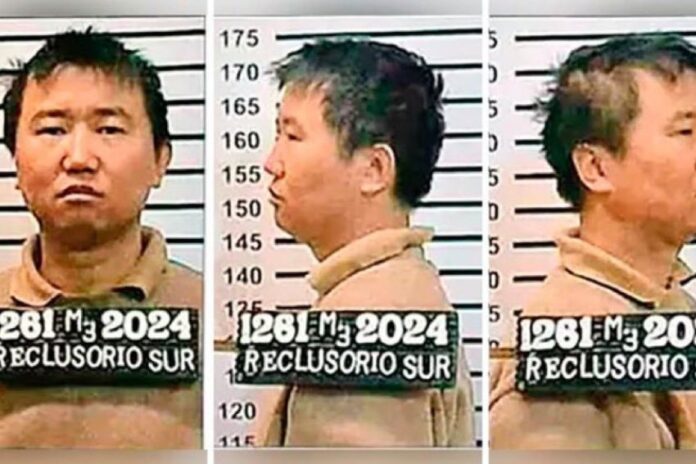
Zhi Dong Zhang mug shots
Zhi Dong Zhang, born in Beijing in 1987, escaped from house arrest in Mexico City in July and reportedly arrived in Cuba with a fake passport after he was denied entry to Russia. (Social media)

Chinese national Zhi Dong Zhang, an alleged fentanyl and cocaine kingpin, was handed over to U.S. authorities on Thursday shortly after Cuba had deported him to Mexico.

Mexico’s Security Minister Omar García Harfuch confirmed the handover on social media, thanking Cuba for its “valuable cooperation” in recapturing Zhang who had escaped custody in Mexico in July.

Calling him a major international money laundering operator, García Harfuch said Zhang was responsible for “establishing connections with other cartels for the transfer of fentanyl from China to Central America, South America, Europe and the United States.”

The trafficker was apprehended in Mexico City on Oct. 30, 2024, on charges of criminal association, international drug trafficking and operations with illicit proceeds. He was soon the subject of an extradition request by the U.S. government, as a warrant had been issued for his arrest on money laundering charges.

Also known as Brother Wang, Zhang is accused in U.S. court documents of “exporting, transporting and distributing more than 1,000 kg of cocaine and 1,800 kg of fentanyl” as well as using more than 100 shell companies and bank accounts to “launder more than US $150 million in illegal annual profits” between 2020 and 2021.

While extradition proceedings dragged on, Zhang managed to escape custody on July 11 following a controversial decision to grant him house arrest.

At the time, President Claudia Sheinbaum criticized the judge’s resolution as Mexico was negotiating a security agreement with the U.S., with a particular focus on fentanyl trafficking.

“That ruling should never have come from a judge. How is that possible?” she said, according to the newspaper El País, while citing concerns her government had about judicial corruption.

On Thursday, Mexican journalist Mario Maldonado reported that the judge in question — Juan José Hernández Leyva — has in the past issued rulings favorable to several high-profile operatives, some of which have prompted formal complaints.

After fleeing Mexico, Zhang traveled to Russia but was denied entry for using a false passport. On July 31, Zhang was detained by Cuban authorities along with a Mexican national and a Chinese national.

It is not clear why Cuba — which has not officially commented on Zhang’s arrest or his expulsion — did not inform Mexico of the arrest until this week. Interpol had issued a red notice against him in August.

With reports from El País, Reuters, CNN, CBS News, Milenio and La Jornada

Cabo San Lucas named No. 1 boating city in Latin America

0
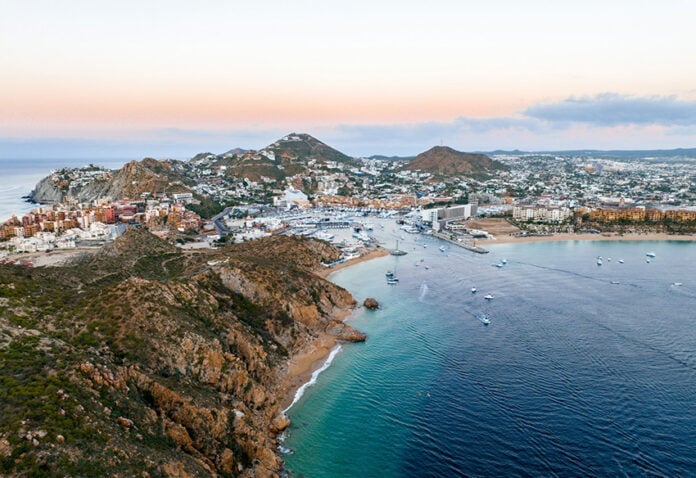
Cabo San Lucas, pictured, and three other Mexican cities ranked among the top ten boating towns in Latin America. (Josh Withers/Unsplash)

Four Mexican coastal destinations ranked in the top 10 for boating in Latin America, with Cabo San Lucas, Baja California Sur, coming out on top, according to an October assessment by yachting website Get My Boat.

Travel to and within Latin America generated over an estimated US $120 billion (2.2 trillion pesos) in revenue in 2024, an increase of 8% on the previous year.

The company recently ranked the top 11 most popular boating and yacht charter destinations across Latin America, based on the company’s booking data and traveler demand.

Cabo San Lucas was declared the winner thanks to  its world-class sportfishing, protected marina and strong yacht charter offerings.

Approximately 293 boats are available for rent and charter at an average hourly cost of US $350 (6,440 pesos). An increase in private flight arrivals has driven demand for luxury charters and day-boat experiences.

The Mexican Caribbean destination of Cancún came second in the company’s rankings, with 625 vessels available and an average hourly cost of US $280 (5,150 pesos). Boat trips allow visitors to explore the region’s turquoise waters and Mesoamerican Barrier Reef or take day trips to Isla Mujeres and Isla Holbox.

Puerto Vallarta in Jalisco state also ranked in the top five destinations, popular for its calm waters, excellent sportfishing and whale-watching season.

The complete ranking was as follows:

1) Cabo San Lucas, Mexico

2) Cancún, Mexico

3) Fajardo, Puerto Rico

4) Puerto Vallarta, Mexico

5) Cartagena, Colombia

6) Punta Cana, Dominican Republic

7) Rio de Janeiro, Brazil

8) San Juan, Puerto Rico

9) Tulum, Mexico

10) La Romana, Dominican Republic

11) Tamarindo, Costa Rica

Mexico News Daily 

Morena Senator Fernández Noroña takes leave to visit Palestine this weekend

0
Noroña
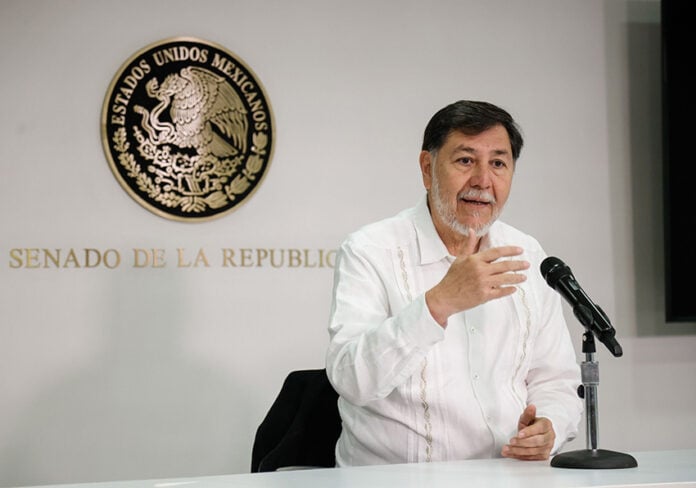
Noroña is making good on his promise to travel to Palestine. (Andrea Murcia/Cuartoscuro)

Mexican Senator Gerardo Fernández Noroña of the Morena party has taken a 10-day leave to travel to the Middle East, saying he will meet with Palestinian authorities and bear witness to “the genocide” in Gaza.

The trip was organized by the Palestinian Authority and his flight will be paid for by the United Arab Emirates, he said.

In a news conference this week, Fernández Noroña said he was accepting an invitation issued over the summer, when he served as president of the Senate, Mexico’s 128-member upper house.

His time in the rotating position ended Aug. 31, but the at-large senator elected by proportional representation (he doesn’t represent a particular state) is just 14 months into his six-year term.

In August, the Mexico City native told reporters his goal was to “rescue orphaned Palestinian children” and offer them refuge in Mexico, framing it as a humanitarian mission. However, the proposed trip did not take place then.​

This week, he said, “Despite the agreed-upon ceasefire, the genocide continues,” explaining plans to meet in the UAE and Jordan while spending “the bulk of my time” in Palestine — the geographically contiguous West Bank and East Jerusalem, and the separate, war-ravaged Gaza Strip.

“If the Palestinian Authority has a visit to Gaza planned, I’ll do it,” he added.

The senator said he was not legally required to request leave, but chose to do so given public scrutiny.

His absence began Thursday and will run through Sunday, Nov. 2, the final day of Día de los Muertos celebrations.

Fernández Noroña downplayed the risk of U.S. retaliation, saying having his visa revoked is the worst that could happen.

Senator Alejandro Murat, chair of the Senate’s Foreign Relations Committee, defended the trip as part of “parliamentary diplomacy.”

But opposition figures and activists questioned the timing and financing.

Cecilia Patricia “Ceci” Flores, the founder and national leader of the Madres Buscadoras de Sonora — a collective of mothers that searches for Mexico’s missing persons — invited Fernández Noroña to join her mission instead of flying more than 12,000 kilometers to the Middle East.

“You don’t need to go so far to satisfy that urge to help,” she wrote on social media, offering to fund his trip to Sinaloa to help find her son, missing since 2015. “In Mexico, we’re short on hands and the willingness to end the massacre that’s taking our children from us.”

Guillermo Valencia, leader of the Institutional Revolutionary Party (PRI) in Michoacán, called Fernández Noroña’s move “hypocrisy,” urging him to “speak up for the victims” at home.

(Earlier this year, a Senate session erupted into a fistfight between PRI party leader Alejandro “Alito” Moreno and then-Senate president Fernández Noroña.)

In an opinion column in El País, journalist Zedryk Raziel accused the senator of “stumbling over his own words,” highlighting doubts about whether he can legally let a foreign government fund his trip. He cited experts who called the visit “reckless” given that Noroña is no longer Senate president and remains under scrutiny for alleged ethical lapses, including luxury travel and undeclared assets.

Fernández Noroña dismissed the criticism, insisting his trip reflects “solidarity with the Palestinian people” and rejecting claims of impropriety.

“Any senator can receive this type of invitation,” he said.

With reports from El Universal, La Jornada, Infobae and El País

Report: How a US company helped a Mexican cartel smuggle US $12 million of fuel into Ensenada

5
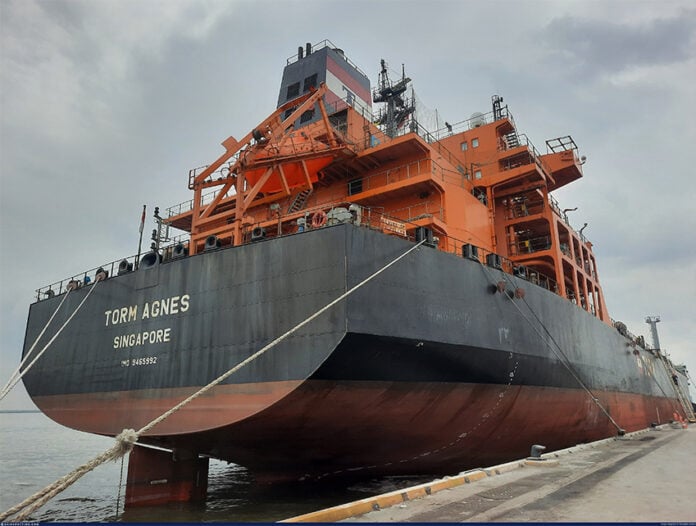
An oil tanker bearing the name Torm Agnes from Singapore
(Tomasello Letterio/Shipspotting)

In a massive, 4,600-word investigative report, the news agency Reuters detailed how a petroleum products company from Houston teamed up with a notorious Mexican cartel to smuggle US $12 million of fuel into Mexico.

The report, which traced the route of a Denmark-flagged vessel named the Torm Agnes, found that the Jalisco New Generation Cartel (CJNG) “has mastered the use of tankers to smuggle fuel to Mexico” and that “U.S. players are helping.”

Reuters identified a Houston-based company — Ikon Midstream — as a participant in the multi-million-dollar operation it describes as taking place at the Port of Ensenada in Baja California.

An attorney for Ikon Midstream told Reuters in an Oct. 18 email to stop contacting his clients, declaring that “No one will speak to your reporter!” A Torm spokesman said the company “stopped doing business with Ikon Midstream just weeks after the Ensenada incident.”

Port officials declined to speak to the news agency. Mexico’s state-owned oil company Pemex, its Tax Administration Service and the National Customs Agency also declined to comment.

More than US $20 billion worth of illegal fuel is being smuggled into Mexico by criminal gangs each year. A report issued by consulting company PetroIntelligence in May estimated that Mexico is losing US $24 million daily due to “huachicoleo” (as fuel-smuggling is known colloquially in Mexico) calculating lost tax revenues in excess of US $9.6 billion.

Reuters reported that “fuel smuggling has grown so fast that bootleg imports now account for as much as one-third of Mexico’s diesel and gasoline market,” alarming agencies on both sides of the border.

The U.S. government has offered up to US $10 million for information related to huachicoleo.

Tracing the smuggling route

Reuters described its report as the “first … full account” of the Torm Agnes’s journey which loaded fuel in Canada and discharged its payload in Ensenada and another Mexican port before beating a hasty retreat.

The tanker’s exploits — and its links to Ikon Midstream — were reported by Mexican media outlets in May but Reuters carried out a full investigation, speaking to “more than 50 people with knowledge of the racket” and reviewing cargo documents and port records.

The scheme “exploits loopholes in the vast and complex U.S. energy sector, touching a host of entities including oil majors, shipping companies and government agencies,” Reuters explained.

The Torm Agnes was transporting diesel from Canada, but by the time it reached Ensenada, “its cargo had transformed – at least on paper – into a petrochemical used to make industrial lubricants.”

The Monterrey-based company Intanza — which has no website, no social media presence and utilizes a false address — was the recipient of the fuel. Intanza is reportedly a front company for the Jalisco New Generation Cartel (CJNG).

Essentially, the operation is “a lucrative tax dodge,” often costing the Mexican treasury upwards of 50% of the cargo’s value, “by declaring the foreign fuel to be some other type of petroleum product that’s exempt from the duty.”

The CJNG is the unquestioned leader in huachicoleo, according to Mexican and U.S. security sources, and has taken it to a new level.

Of particular concern to the Mexican government are accusations that senior government officials are involved in fuel-smuggling networks. Last month, several high-ranking members of the Navy were among 14 arrested on huachicoleo charges.

President Sheinbaum weighs in

Asked about Reuters’ report at her Thursday morning press conference, President Claudia Sheinbaum said she didn’t know whether the case detailed by the news agency was related to investigations being carried out by the federal Attorney General’s Office (FGR).

“The Attorney General’s Office also does its own investigations,” she stressed.

Mexico’s Sheinbaum: US Individuals Involved in Fuel Smuggling | Reuters Investigation

Sheinbaum didn’t address the details of Reuters’ report, but spoke more broadly about the problem of huachicol fiscal — the evasion of the tax due on imported fuel by fraudulently declaring foreign fuel as lubricants or another product exempt from the applicable excise.

“There are several investigation files related to this matter in the Attorney General’s Office,” she said.

“Some were already presented to a judge in order to obtain arrest warrants,” Sheinbaum said.

She highlighted that “businesspeople” from the United States are mentioned in the FGR’s files, indicating that wasn’t a surprise given that fuel from the U.S. has illegally entered Mexico.

Sheinbaum said that the quantity of illegal fuel entering Mexico has declined “significantly,” and linked the reduction to “greater vigilance” in customs as well as huchicol fiscal-related arrests that have been made.

She said that the reduction in the illegal entry of fuel was reflected in an increase in the sales of state oil company Pemex and other firms that “legally” import fuel.

Sheinbaum also said that the U.S. Department of Justice is investigating fuel smuggling. 

In April, a husband and wife from Utah were arrested on charges of smuggling US $300 million worth of crude oil into the U.S. from Mexico. Their adult sons were also indicted in connection with the alleged crime.

With reports from La Jornada, El Economista, N+ and Reuters

**Mexico News Daily staff writer Peter Davies contributed to this report.

Mexico City Grand Prix kicks off at the Autódromo Hermanos Rodríguez

0
A Formula 1 race car drives in front of a sign reading Mexico City
Red Bull test driver Ayumu Iwasa warms up Friday in Mexico City. (X/Formula 1)

Months after its contract with Formula 1 was extended through 2028, the Mexico City Grand Prix will celebrate the 10th anniversary of its 2015 return when F1 roars into the Mexican capital this weekend.

The 20-car race will begin Sunday at 2 p.m. local time at the Autódromo Hermanos Rodríguez, a high-altitude, thin-air circuit that tests machines and drivers alike.

An aerial view of Mexico City's Autodromo Hermanos Rodriguez race track
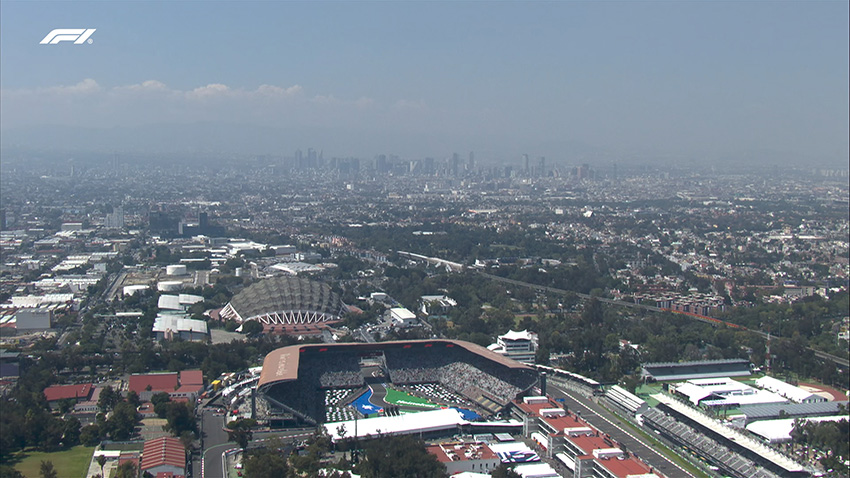
The main race will take place Sunday at Mexico City’s historic Autódromo Hermanos Rodríguez. (Formula 1)

Defending four-time world champion Max Verstappen of Oracle Red Bull Racing will enter the 305.6-kilometer race 40 points behind McLaren’s Oscar Piastri in the standings. The gap looked unreachable earlier this season but has tightened after Verstappen’s dominant Oct. 19 win in Austin, Texas.

Sitting 2,200 meters above sea level, the Mexico City racetrack poses unique challenges — low grip for the tires, reduced air density and extreme cooling demands. The altitude is equal to 7,218 feet above sea level, or 1.37 miles.

“The car always feels low on grip and on the edge around here,” former Renault driver Jolyon Palmer said.

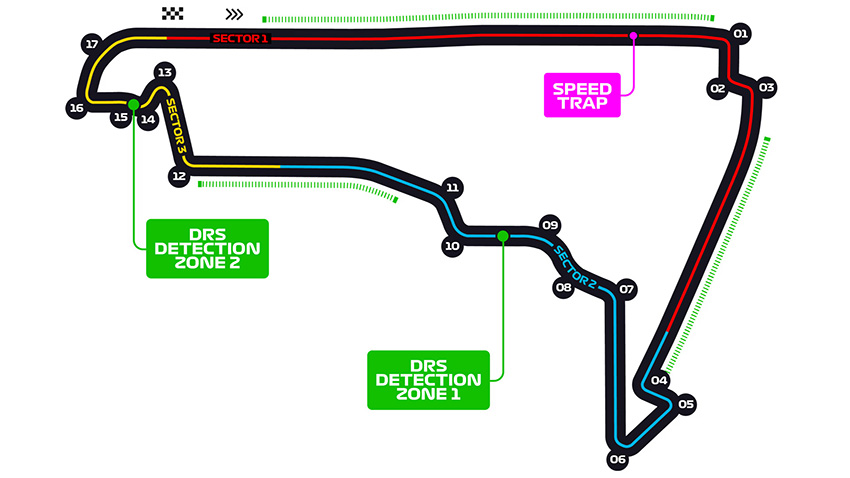
With its mix of fast straights and slow, technical sections — 17 turns on each of its 71 laps — it remains one of the sport’s trickiest circuits.

A diagram showing the layout of the Mexico City race track at the Autodromo Hermanos Rodriguez
The Mexico City track has a formidable reputation thanks to a mix of fast, straight sections and tricky turns. (Formula 1)

Verstappen — whose five wins in Mexico City between 2017 and 2023 are the most ever in the race’s history — has 306 points as he pursues his fifth consecutive season title.

Piastri leads with 346, followed by teammate Lando Norris 14 points back, setting up a fierce three-way fight with five races left on the 2025 calendar.

McLaren has already wrapped up its second straight Constructors’ Championship with 678 points, with Mercedes  (341), Ferrari  (334) and Red Bull (331) well behind.

Spaniard Carlos Sainz, who won for Ferrari last year in Mexico, returns seeking redemption after a rough outing and a five-place grid penalty in Austin.

Guadalajara native Sergio “Checo” Pérez, a 13-year F1 veteran who parted ways with Red Bull Racing in December, won’t compete this weekend as he prepares for Cadillac’s 2026 Formula 1 debut. 

Instead, hometown fans will look to IndyCar star Pato O’Ward, who was scheduled to participate in Friday’s opening practice.

Carlos Sainz stands on his car in the center of the Mexico City race track
Spanish driver Carlos Sainz is hoping for a second consecutive title after winning the Mexico City Grand Prix in 2024. (Formula 1)

Pérez, whose dead-last finish in Mexico City last year might have sealed his fate with Red Bull, has been back in the capital this week, however.

On Thursday he participated with pro soccer players and other athletes in an exhibition soccer match that also involved young people living on the streets or in addiction rehabilitation. The 35-year-old scored three goals.

The racing weekend is set to follow a traditional format, with three practice sessions Friday and Saturday, qualifying on Saturday and the main event Grand Prix on Sunday.

One new twist is the Gordon Ramsay “F1 Garage.” Fans who have purchased premium hospitality packages — starting at 207,970 pesos per person (US $11,288) — will have access to the celebrity chef’s curated gourmet menu, open bar, pit lane views and VIP paddock access.

This year’s 10th-year-anniversary posters were created by Jorge Molina, a Mexican illustrator and comic artist well known for his work with Marvel and DC Comics. Using Mexican cultural motifs,  he also created Ferrari’s race poster.

The Mexico City Grand Prix made its modern return to Formula 1 in 2015, following a 23-year absence from the calendar. After 1992, the race was taken off the F1 calendar largely due to safety issues, track surface deterioration and Mexico City air pollution concerns.

F1 had raced in CDMX from 1963 to 1970, with a second stretch from 1986 to 1992.​ By 2015, the circuit had undergone major renovations.

With reports from ESPN Deportes, The Athletic, The Sporting News and Formula1.com