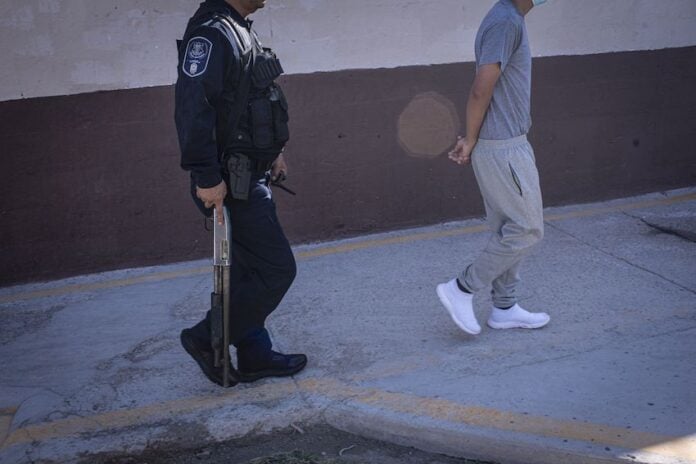
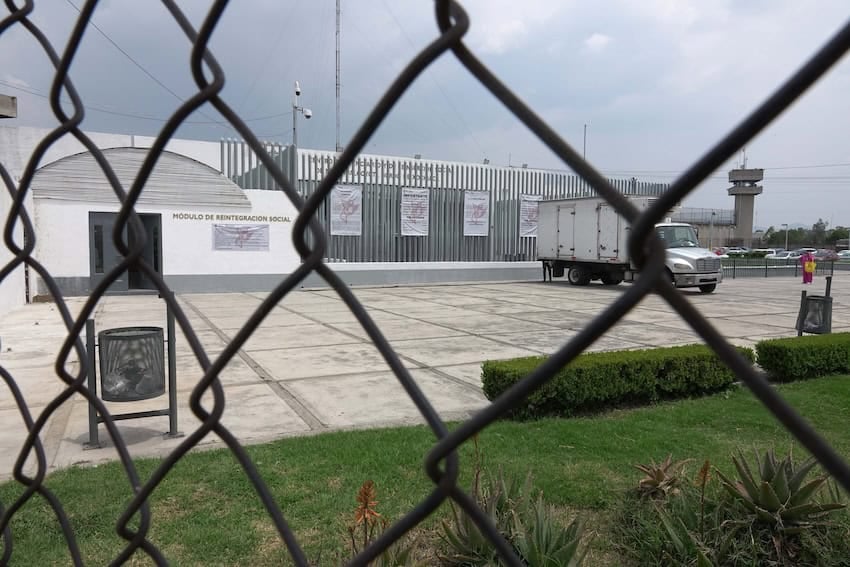
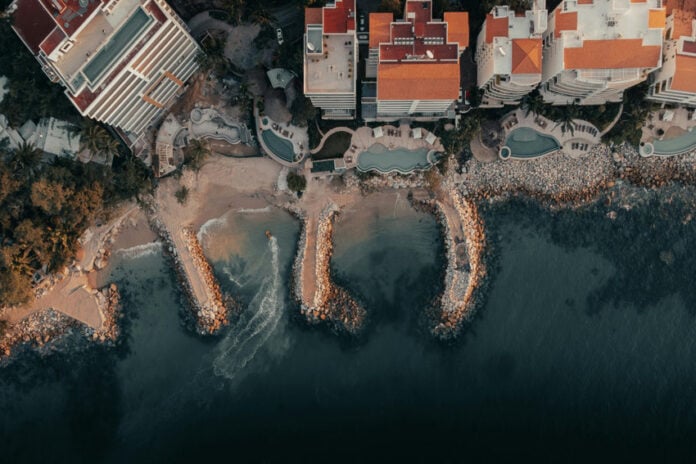
Laurence Gray, 75, has been accused of selling weapons to the Jalisco New Generation Cartel (CJNG) and the Sinaloa Cartel. (Unsplash)
The U.S. Attorney’s Office for the District of Arizona has indicted a former holder of a federal firearms license (FFL) on charges relating to selling weapons to Mexican drug cartels.
The accused is Laurence Gray, 75, owner of the shop Grips By Larry, which had a license to sell all types of weaponry.
Gray has been accused of selling weapons to the Jalisco New Generation Cartel (CJNG) and the Sinaloa Cartel, criminal groups that U.S. President Trump’s government designated as foreign terrorist organizations last year. For the crime of aiding a terrorist organization, Gray could face a maximum penalty of 20 years in prison and a fine of up to US $250,000.
The prosecution explained that in May 2025, Gray attempted to provide weapons to the CJNG and the Sinaloa Cartel, with full knowledge of who the buyers were.
“The indictment alleges that Gray knowingly attempted to provide firearms to CJNG in May of 2025, and knowingly conspired to provide firearms to both CJNG and CDS (Sinaloa Cartel) that same year,” the U.S. Attorney’s Office for the District of Arizona said in a statement.
It also said that Gray was previously indicted for firearms trafficking offenses in 2025, alongside his accomplice Barrett Weinberger, 73, of Tucson, Arizona.
According to the federal indictment, Gray stands accused of facilitating the sale of three semi-automatic rifles, a machine gun and two pistols.
The Tucson Sentinel reported that during two purchases, Gray, Weinberger and a third individual named David Prince allegedly sold two .38-caliber pistols, a .50-caliber rifle, two M249S belt-fed rifles and an Ohio Ordnance M2 SLR .50-caliber belt-fed rifle, weapons typically associated with organized crime violence in Mexico.
Reportedly, the CJNG recently used a .50-caliber rifle to knock down a Mexican military helicopter in 2015 during a cover escape of former cartel leader Ruben “El Mencho” Oseguera González, who ultimately died last month following a military operation that ended in the drug lord’s death.
For years, the Mexican government has pressured its northern neighbor to halt the smuggling of weapons into the country, arguing that the violence in the country is fueled by the illegal trafficking of weapons from the U.S.
A 2025 report by the Bureau of Alcohol, Tobacco, Firearms, and Explosives (ATF) found that the U.S. is the largest supplier of firearms to criminals in Mexico, with an estimated 200,000 weapons illegally crossing the northern border every year.
Though President Sheinbaum continues to support — in theory — her predecessor's strategy of offering potential cartel members alternative life options, her main approach has been to make more arrests, resulting in an 11% increase in the prison population since she took office in October 2024. (Pedro Anza/Cuartoscuro)
The number of people in prison in Mexico has reached a historic high, with official records showing that as of Feb. 28 there were more than 260,000 people incarcerated in the 276 local and federal prisons across the nation.
In another historic record, Mexico’s prison population grew by 20,000 inmates in a single calendar year in 2025.
President Sheinbaum’s more aggressive approach toward organized crime has increased the country’s prison population by 11%. (Rogelio Morales/Cuartoscuro)
While the data reflects the new security strategy adopted by President Claudia Sheinbaum after abandoning the “hugs, not bullets” policy embraced by her predecessor, the increase in arrests has resulted in prison overcrowding issues.
Thanks to Sheinbaum’s more aggressive approach toward organized crime, the country’s prison population has grown by 11%. When Sheinbaum was inaugurated as president on Oct. 1, 2024, there were 235,461 people incarcerated. By the end of February 2026, the figure had risen to 261,388.
During the first 17 months of her administration, 46,405 people were arrested. At the same time, however, a significant number of people were released from Mexican prisons, either because they had served their sentences or were allowed to continue legal proceedings while free or due to insufficient evidence. Thus, the prison population increase stands at 25,927 inmates.
The data also reveals the number of inmates by gender.
In October 2024, there were 221,620 men and 13,841 women in prison; by February 2026, the figures had risen to 245,022 men (up 10.5%) and 16,366 women (up 18.2%).
The success of the new strategy is causing problems for state prisons, however.
State-run facilities are currently housing 37,634 inmates more than they were built to hold. Federal prisons are also running out of space as there are only 7,816 bunks available in these penitentiaries.
According to the Security Ministry, 140 of the nation’s 276 prisons are overcrowded.
The newspaper El Sol de México reported that the state prisons with the most alarming levels of overcrowding are in Chiapas, Morelos and México state. The most extreme example is Social Reintegration Center No. 7 Huixtla, in Chiapas, with 510% overpopulation: 244 prisoners housed in a space designed for 40.
The overcrowding is attributed to the excessive reliance on pretrial detention (nearly 111,000 inmates, 42%, are awaiting trial), a situation that could be alleviated in April if the Supreme Court determines that this measure is unconstitutional.
The Bay of Banderas has quite a lot going on lately, from its own No Kings rally last week to preparations for a major oyster festival in Bucerías coming in the beginning of April. (Alessandro Aviles/Pexels)
Recent events in the Bay of Banderas news have seen a rally in Parque Hidalgo protesting U.S. governance, Bucerías welcoming its annual oyster festival, upgraded security for the Semana Santa safety holidays and Puerto Vallarta expanding public internet access for schools, parks, and civic centers.
No Kings rally
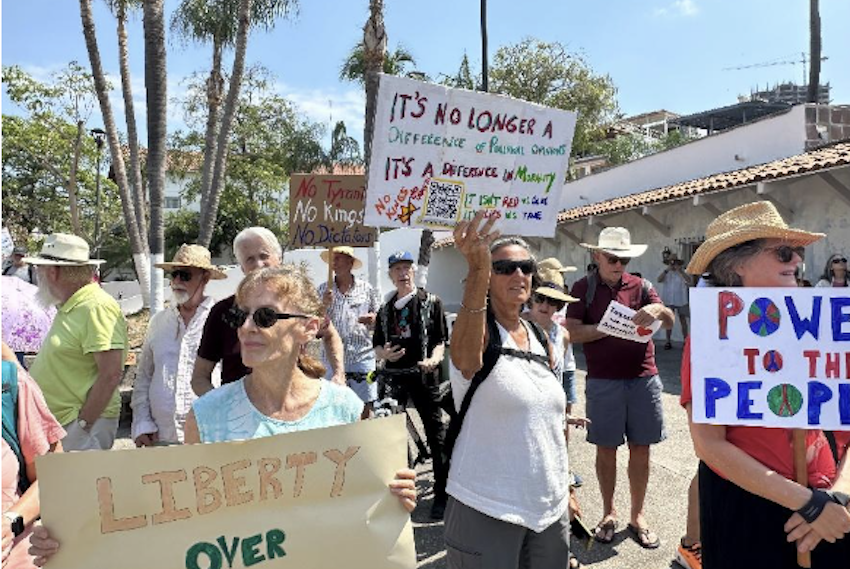
Around 250 people turned out for a “No Kings” rally in Puerto Vallarta, to protest the U.S. President. (Charlotte Smith)
A permitted peaceful demonstration by U.S. citizens living in Puerto Vallarta took place at Parque Hidalgo on Saturday, March 28, organized by Indivisible Abroad Vallarta with participation from the Costa Banderas Chapter of Democrats Abroad Mexico, under an approved permit and in compliance with local regulations.
The “No Kings” rally saw over 250 participants stand in solidarity with Americans opposing what they described as authoritarian tendencies tied to Donald Trump.
Speakers addressed perceived failures to check unlawful behavior. The remarks mixed policy critique with personal testimony from U.S. citizens who said they felt compelled to speak out from abroad.
Organizers stressed the demonstration’s nonviolent, single-issue focus and coordinated closely with municipal staff to ensure a smooth, orderly assembly.
Rally leaders linked the March 28 action to a broader wave of global solidarity protests connected to the “No Kings” movement in the United States, which grew from mass demonstrations beginning in 2025.
Bucerías Oyster Festival
According to organizers, the Bucerías Oyster Festival served 10,000 oysters and 500 kilograms of ceviche to attendees in 2025.
On April 4 and 5, Bucerías will host its annual Feria de Ostiones, a celebration honoring the town’s oyster-diving heritage with music, cultural events, and seafood along the coast. The festival, organized by the Municipal Government of the Bay of Banderas with community partners, aims to welcome Semana Santa visitors while spotlighting local traditions and the coastal economy.
Known locally as the “Place of the Divers,” Bucerías traces much of its identity and livelihood to oyster harvesting. This year’s program blends family-focused entertainment, live music, artisanal markets and abundant fresh oysters prepared by neighborhood chefs and vendors. Organizers highlight the festival’s role in sustaining seasonal income for fishers and small businesses and in reinforcing Bucerías’ reputation as a culinary destination on the Vallarta–Nayarit shore.
Visitors are encouraged to arrive early, support local businesses and respect the town’s artisan fishing zones. Municipal officials extended an open invitation to residents and tourists to join the celebrations over the holiday weekend.
Semana Santa safety
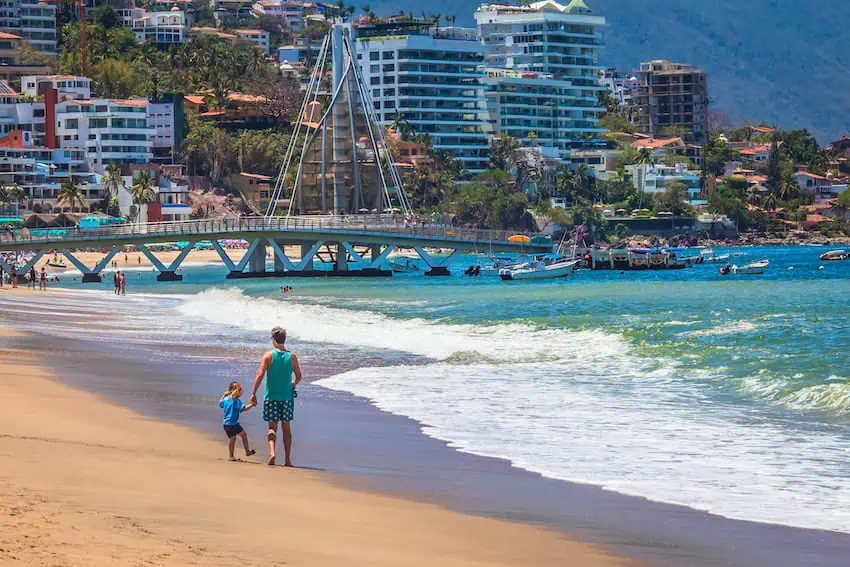
Beachgoers in Puerto Vallarta can make the most of the sunshine, as the municipal government has invested in increase security measures. (Shutterstock)
The Bay of Banderas has stepped up a coordinated municipal effort to ensure safe, welcoming conditions for residents and holiday visitors. Public works, police, port authorities and emergency medical and fire services have expanded patrols, finalized joint emergency plans and conducted readiness drills to handle peak-season demand.
Cleaning and repair crews focused on beaches, boardwalks and high-traffic corridors, and public-safety units have increased visible patrols and reinforced coordination between municipal police, port authorities and volunteer rescue squads. Fire and medical teams from neighboring municipalities ran surge-capacity exercises and reaffirmed mutual-aid agreements to ensure rapid support for larger incidents.
A central element of the safety push was national recertification of Puerto Vallarta’s lifeguard teams by the Mexican Federation of Aquatic Rescue and Lifesaving. Lifeguards underwent rigorous open-water and pool evaluations to test endurance, rescue technique and operational readiness. Officials say the recertification reinforces confidence in the lifeguard service’s on-the-water response capabilities.
The overall objective is to protect public safety and natural resources while ensuring a positive holiday atmosphere. With enhanced maintenance, tighter emergency coordination and a recertified rescue force, municipal leaders say they are prepared for the seasonal surge. They urge visitors to follow local guidance and report hazards promptly.
Puerto Vallarta expands public internet access
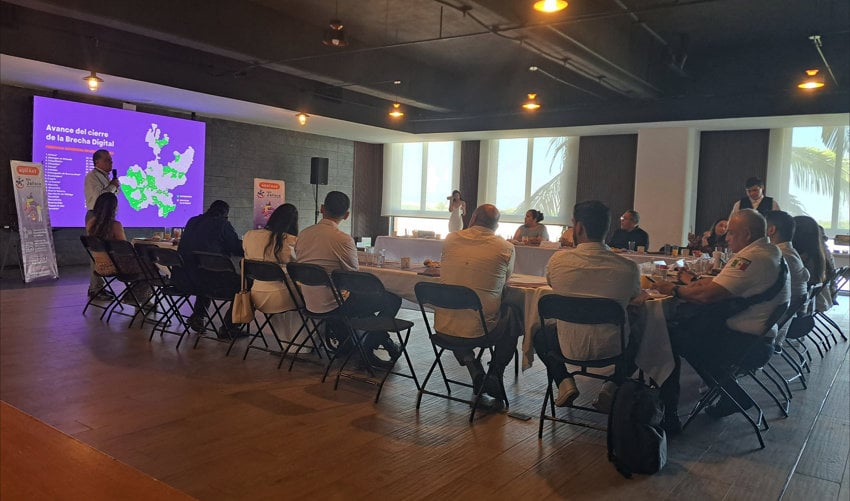
Puerto Vallarta’s increase in free, public internet connectivity is the result of a state initiative called Red Jalisco (the Jalisco Network), which has a goal to close the state’s digital connectivity gaps. (Government of Puerto Vallarta)
Puerto Vallarta has accelerated efforts to widen public internet access as part of Jalisco’s state initiative to close connectivity gaps, expanding free hotspots in parks, civic centers and schools. The state-managed Red Jalisco now reports more than 2 million users across all 125 municipalities, and Puerto Vallarta says that network has brought concrete gains for residents, students, and visitors.
City officials report over 300 active public connectivity points, including hotspot coverage in major parks and public gathering places, plus internet service now installed in 184 local schools to support teachers and online learning. Municipal managers framed reliable internet as an essential public service that enables schooling, telehealth, job searches, and access to digital government services rather than a luxury.
Beyond coverage numbers, the municipality emphasized usability and impact, including faster links to municipal services, improved Wi‑Fi at tourist sites, and initiatives to help community centers and libraries offer digital-literacy support. The expansion aligns with broader state policy to reduce the digital divide and promote inclusive access to online resources across Jalisco.
Charlotte Smith is a writer and journalist based in Mexico. Her work focuses on travel, politics, and community. You can follow along with her travel stories at www.salsaandserendipity.com.
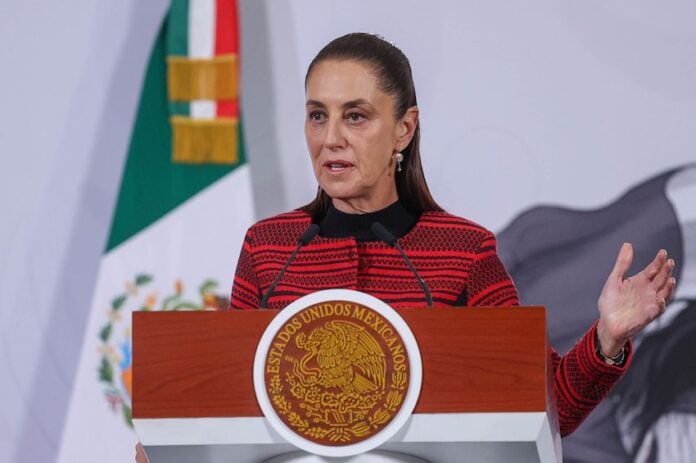
Mexican President Claudia Sheinbaum said on Monday that her donation of more than 1,000 dollars in aid to Cuba had "nothing to do" with her role as president. (Moisés Pablo/Cuartoscuro)
Sheinbaum’s mañanera in 60 seconds
🇪🇸 World Cup diplomacy with Spain? Sheinbaum wouldn’t confirm whether she’d meet King Felipe VI during his possible visit to Mexico, but the stakes are real. The president has been pushing Spain to formally apologize for the conquest, and Felipe recently acknowledged “significant abuses” during colonization, the strongest royal statement on the matter yet.
🇨🇺 Personal donation to Cuba. The president revealed she donated 20,000 pesos (US $1,100) out of her own pocket to a humanitarian fund for Cuba, stressing the move had nothing to do with her role in government.
🕊️ Another Mexican dies in ICE custody. José Guadalupe Ramos Solano passed away at California’s Adelanto Processing Center on March 25 — at least the 14th such death in ICE custody this year. Sheinbaum promised stronger protest measures, including a formal complaint to the Inter-American Commission on Human Rights.
Why today’s mañanera matters
At her Monday morning press conference, President Claudia Sheinbaum took the opportunity to comment on a range of international issues, including the death of another Mexican in the custody of U.S. Customs and Immigration Enforcement.
In her 18 months in office, Sheinbaum has shown herself to be a more outward looking president than her predecessor, Andrés Manuel López Obrador, who famously quipped that the “best foreign policy is domestic policy.”
Still, the current president — after disclosing the size of a personal donation she made to buy humanitarian aid for the people of Cuba — stressed on Monday that her top priority is to “protect” Mexico and the Mexican people.
“That is my obligation and my responsibility,” she said.
Today’s mañanera was important as it served as further testament of the international issues the Sheinbaum administration is dealing with at a time when it also faces major challenges at home, including ongoing security concerns, weak economic growth, rising inflation and legislative setbacks.
Could Sheinbaum meet with the King of Spain during the World Cup?
A reporter asked the president whether the government had received any confirmations from leaders and heads of state who were invited to come to Mexico to attend the opening ceremony and opening match of the FIFA men’s World Cup in Mexico City on June 11.
Sheinbaum responded that government officials, including World Cup coordinator Gabriela Cuevas, will look this week at which leaders and heads of state have confirmed they will attend the opening ceremony, which will take place at the Estadio Banorte (Estadio Azteca) before the opening match between Mexico and South Africa.
The reporter asked the president whether she would meet with the King of Spain, Felipe VI, if he came to Mexico, and whether such a meeting could mark a “complete reset” of bilateral relations with Spain.
“Let’s wait and see who’s coming,” Sheinbaum responded before noting that her government could hold an event a day before the World Cup opening ceremony to welcome officials from other countries.
Earlier this month, King Felipe IV acknowledged that during the Spanish conquest and colonization of America, “there were significant abuses” and “moral and ethical controversies,” marking an unprecedented statement on the matter for a king of Spain.
Sheinbaum reveals she donated 20,000 pesos to Cuba
Sheinbaum told reporters that she had made a donation of 20,000 pesos (US $1,100) to a fund created to purchase humanitarian aid for the people of Cuba.
“There were problems with the deposit,” she added, without providing further details.
Sheinbaum apparently made her donation to a bank account of a recently created non-governmental organization called Humanidad con América Latina (Humanity with Latin America).
Sheinbaum stressed that her 20,000-peso donation was “personal.”
“It’s my personal decision as Claudia Sheinbaum Pardo to donate to an account that a series of organizations opened in order to take aid to Cuba,” she said.
“… It has nothing to do with my role as president,” Sheinbaum added.
The people of Cuba are facing a situation of extreme hardship due to factors including a recent U.S. blockade of oil shipments. However, the U.S. is allowing a Russian tanker to take oil to the communist-run island.
Sheinbaum on Monday said that Mexico has “every right” to send fuel to Cuba, although it hasn’t done so recently following a threat from U.S. President Donald Trump to impose tariffs on goods from countries that supply oil to the island nation.
Sheinbaum acknowledges death of Mexican in ICE custody
Sheinbaum acknowledged that another Mexican had died in the custody of U.S. Immigration and Customs Enforcement (ICE).
She said that her government would take “more measures” than it has previously taken to express its discontent with the death of another Mexican in the custody of ICE.
In light of the latest death, Sheinbaum said that her government would take “various actions of protest,” including the submission of a complaint to the Inter-American Commission on Human Rights.
— Soledad Durazo Barceló (@SoledadDurazo) March 30, 2026
ICE said in a statement on Monday that José Guadalupe Ramos Solano, “a criminal illegal alien from Mexico previously convicted of possession of a controlled substance and theft, passed away on March 25, 2026, at 9:29 p.m.”
“Ramos was being held at the Adelanto ICE Processing Center [in California] when security staff discovered him unconscious and unresponsive. Staff immediately initiated life-saving procedures, and he was taken to Victor Valley Global Medical Center in Victorville, California, where he was pronounced deceased,” ICE said.
ICE said that Ramos had “received constant medical care” for “several medical issues,” including diabetes and hypertension. However, Mexico’s Ministry of Foreign Affairs said in a statement that it was demanding “an immediate review of the Adelanto center due to serious oversights and evident deficiencies in the provision of medical care to people under its custody.”
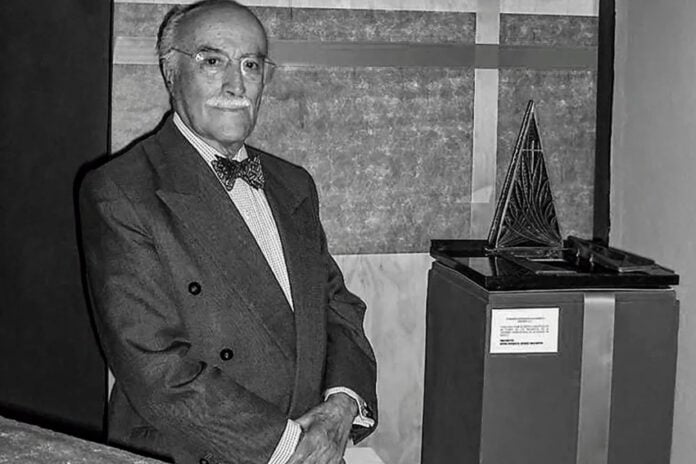
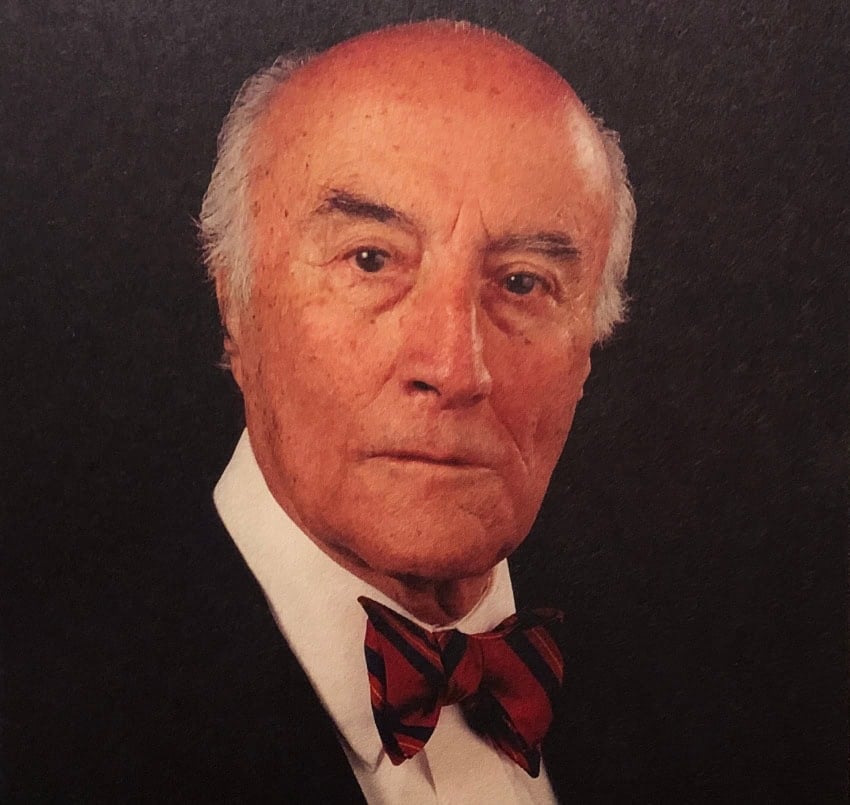
Ernesto Gómez Gallardo Argüelles was one of Mexico's most esteemed architects, and also an iconic designer of furniture. (Acervo de Arquitectura Mexicana)
Though you might not know it now, there was a time — particularly during the first half of the 20th century — when architects also engaged in furniture design. Numerous notable examples exist worldwide, including the French architect Le Corbusier, who designed the iconic LC2 and LC4 chairs; the German architect Ludwig Mies van der Rohe, known for the legendary Barcelona chair; and the Finnish-American architect Eero Saarinen, renowned for the Tulip table. Mexico also contributed to this creative wave.
During this period, prominent Mexican architects like Ernesto Gómez Gallardo Argüelles and Pedro Ramírez Vázquez — who created the National Museum of Anthropology and History — and the Mexican-Cuban architect Clara Porset, who designed iconic furniture for figures such as Luis Barragán and Mario Pani, crafted remarkable pieces that significantly impacted the history of design in Mexico. Ernesto Gómez Gallardo Argüelles, in particular, stands out.
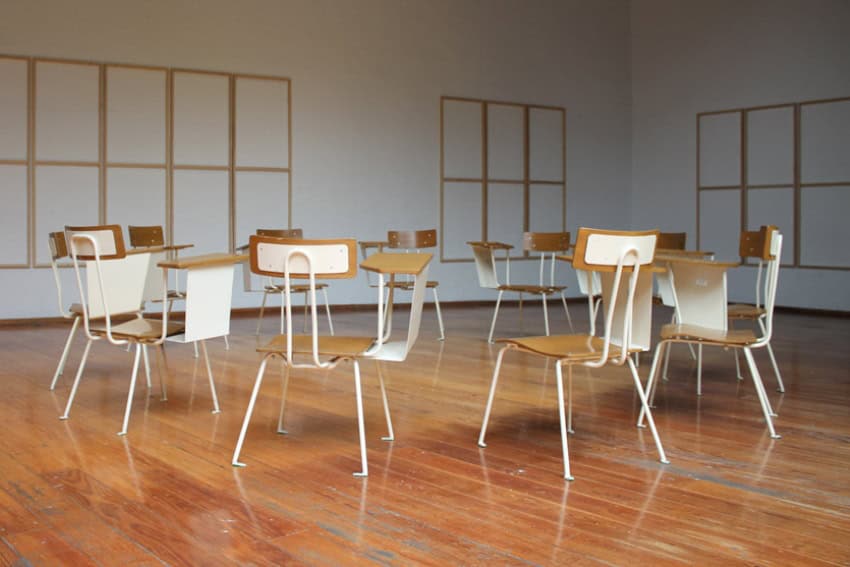
Designed in the 1950s, the iconic paleta chair of Ernesto Gómez Gallardo Argüelleshas remained a standard in Mexico. (Gaceta UNAM)
Furthermore, in Mexico during the 1970s, there was a convergence of design, industry and government, facilitating the integrated proposal and implementation of various projects. During this time, Ernesto Gómez Gallardo Argüelles emerged as a key figure and was part of the original team of architects who designed and built the National Autonomous of Mexico’s University City, now designated as a UNESCO World Heritage Site.
Ernesto Gómez Gallardo Argüelles and his iconic mobiliary
In the late 1950s, the Mexican government sought proposals for the Federal School Construction Program Management Committee, specifically targeting rural schools and appointing Gallardo as the lead. The project aimed to combine industrialized architecture with self-construction, resulting in a prefabricated school model for rural areas. This initiative was part of an 11-year campaign by the Ministry of Public Education to expand educational coverage in regions lacking suitable facilities for children. Gómez’s goal was to design desks entirely of wood, allowing for easy repairs by both teachers and students. Remarkably, his furniture for rural schools is still in use today.
One of his most notable achievements in furniture design is the paleta chair for UNAM. This chair was used in classrooms across the newly constructed university and earned him the Silver Medal at the Milan Design Triennial in 1960. It remained in use at the institution for decades.
Later, in the 1980s, he explored the use of wrought iron in designing street furniture for parks and plazas, creating structures with bent slats that formed seating. Due to its durability, ease of maintenance and ease of production, this type of furniture became integral to the city’s public spaces.
Other highlights of his career
In addition to being one of the architects behind some of UNAM’s most significant buildings, Gallardo designed the high altar of the Metropolitan Cathedral in Mexico City, as well as airports in Zacatecas, Palenque and Tuxtla Gutiérrez in Chiapas.
In terms of architecture, one of his most remarkable works is his own Casa Möbius, characterized by its unique triangular concrete roof, which reflects the architect’s fascination with mathematics. The roof serves as a simplified representation of the Möbius strip, a geometric shape discovered by the German mathematician August Ferdinand Möbius in 1858, resembling an infinite loop.
An experimenter in many disciplines of design, Ernesto Gómez Gallardo Argüelles has left a rich legacy in Mexico. (Andrés GGM/Wikimedia Commons)
Furthermore, in academia, Gómez Gallardo served as the Dean of the School of Architecture at the Monterrey Institute of Technology and Higher Education. Like many of his generation, he experimented with creations across various disciplines before hyperspecialization began to impose limitations and opportunities on both the sciences and the arts.
Ana Paula de la Torre is a Mexican journalist and collaborator for various outlets, including Milenio, Animal Político, Vice, Newsweek en Español, Televisa and Mexico News Daily.
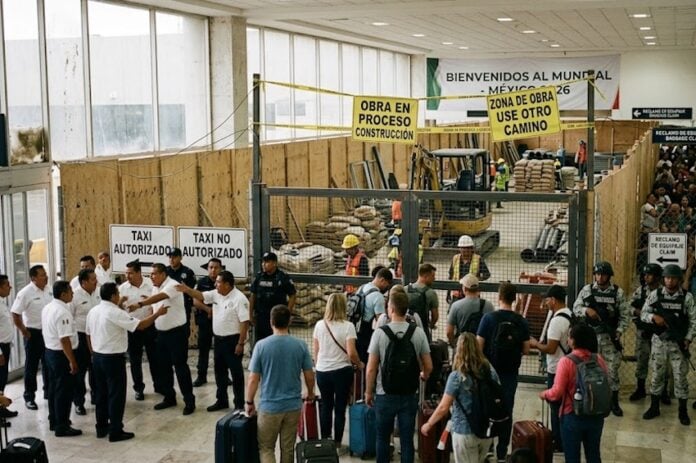
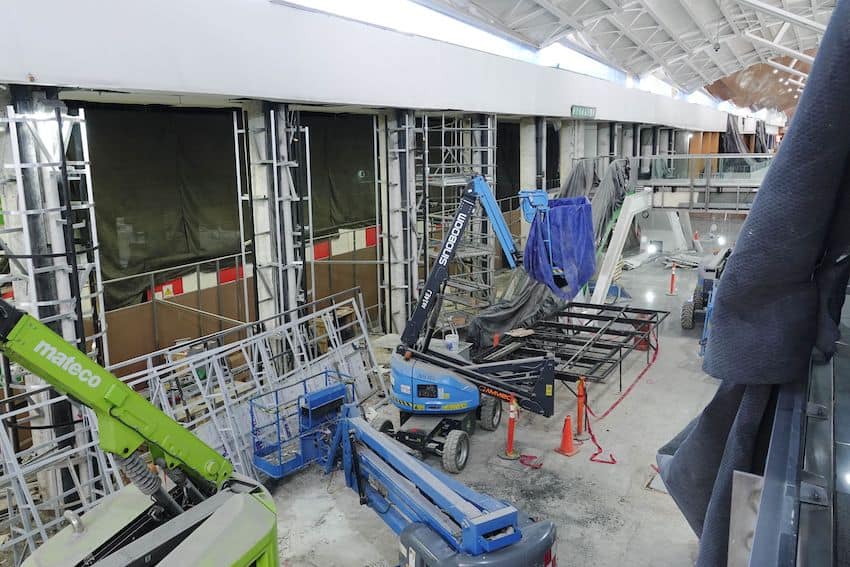
MEXICO CITY — Officials at Mexico City International Airport confirmed this week that the $416-million renovation of the facility will not be completed before the World Cup begins on June 11, assuring the estimated millions of international visitors that the experience of arriving into a half-finished building actively disputed by rival transport factions and supervised by armed federal agents will nonetheless represent “a significant improvement” on what was there before.
Airport Director General Juan José Padilla said Phase One of the renovations — defined, after some reflection, as whatever gets finished — will be 100% complete by the tournament’s opening match. Phase Two, which includes baggage carousels, elevators, drainage, staircases, and parking, will not. Padilla described this as “the original schedule,” in the same tone a man uses when he has just decided something was always the plan.
The original schedule allowed for 10-20% of the remodel to be completed after the World Cup concludes. But with under three months left before the World Cup kicks off on June 11, more than one-third of the renovations remain. (Camila Ayala Benabib/Cuartoscuro)
Visitors navigating the terminal in the meantime can expect blocked sidewalks, narrowed corridors, out-of-service staircases, reduced waiting areas, and the ambient soundtrack of heavy machinery, which officials said would give the airport “an atmosphere of momentum and progress” that reflects Mexico’s energy as a host nation.
Upon successfully exiting the construction zone, arrivals will then enter the airport’s ground transportation area, currently the site of an ongoing jurisdictional conflict between traditional taxi operators and ride-hailing apps including Uber, the resolution of which involves the National Guard and several pending court orders.
It is unclear whether Uber will be permitted to collect passengers with the same freedom it currently enjoys, a question that FIFA delegations, team coaches, and 48 national football federations are advised to consider before landing.
To stress-test the facility ahead of June, officials confirmed the airport will use the Easter holiday rush — approximately 4 million domestic tourists — as a dress rehearsal. The actual performance follows six weeks later, before a global audience, with less margin for error.
Padilla said he was confident. He said this on the radio, from somewhere that was not the airport.
2026 is the Year of the Fire Horse in the Chinese zodiac, a very rare sign that happens once every 60 years. (Fire Horse Saloon)
It’s hard to stand still when a 1,000-pound horse is galloping straight toward you —snorting, pounding her hoofs, white mane flying.
“I should get out of the way,” I remember thinking. But which way? If I stepped right and the horse veered in that direction, I might get trampled. Same thing if I stepped left. I barely had time to think or breathe.
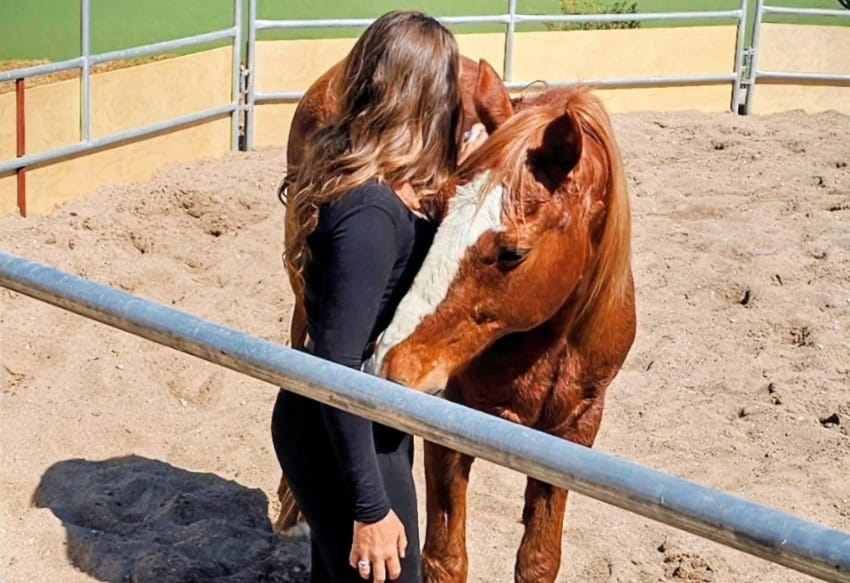
There were scary moments, as well as transformative ones, at a recent Rancho Baile de la Luna’s Spirit Horse Journey. (Rancho Baile de la Luna)
I looked at the white mare as she came closer, our eyes met, and I sensed a message: “Be still.”
The Fire Horse journey
Morita missed me by inches, narrowly avoiding another woman before galloping to the far side of the arena. I exhaled in relief.
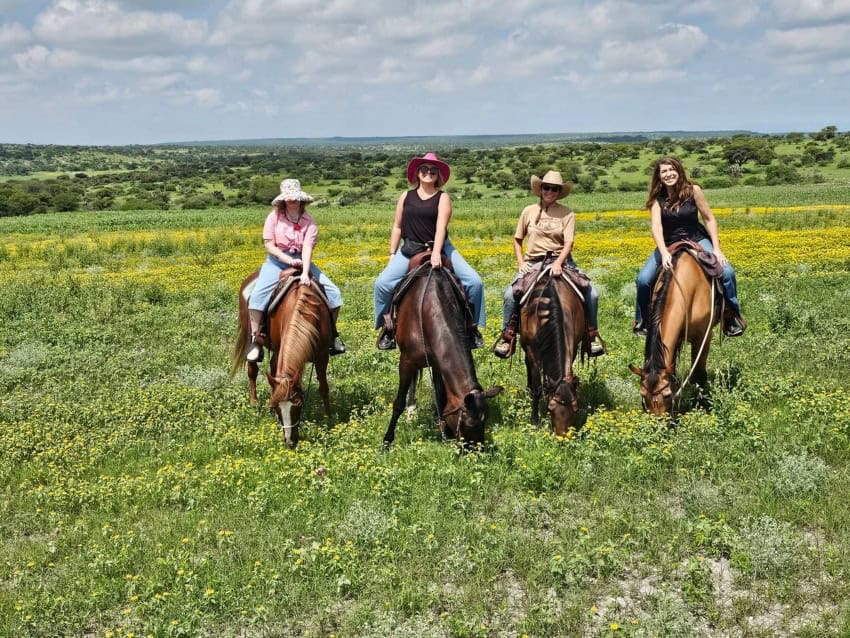
Earlier that afternoon, on a hot, sunny Tuesday in February, 12 women convened at Rancho Baile de la Luna near San Miguel de Allende, joining Chris, the ranch owner and avid horsewoman, and Amy, instructor and horse whisperer, to celebrate the rare Chinese zodiac year of the Fire Horse. We ranged in age from our 20s to our 70s and shared a passion for horses.
Each of us had unique reasons for joining this celebration. I looked forward to hanging around the ranch with women friends. Loftier motives prompted many of the other women: releasing old habits and making a fresh start in the new lunar year.
Dressed in cowgirl attire and yoga clothes (yes, there would be yoga), we introduced ourselves, sharing a word summarizing our current mindset.
Greeting the lunar new year
“Grateful,” “joyful,” “safe” and “peaceful” were among the words we offered one by one. “Escape,” someone said, and we chuckled because, in a way, we were all escaping our daily routines to share rituals and fun here at the ranch — and perhaps more.
Spirit Horse Journeys will be held throughout this year at Rancho Baile de la Luna, located just outside San Miguel de Allende. (Facebook)
Before meeting, a few participants had posted affirmations in our WhatsApp group, inviting us to choose courage, act with integrity and welcome abundance during the year of the Fire Horse.
To me, the messages sounded a little woo-woo. Personally, I tend to be more practical, keeping my boots on the ground. That said, I’ve always admired women who are in touch with their inner wisdom. I’m still looking for mine.
I was here more out of curiosity than anything else. I knew there would be horses, yoga, snacks, a bonfire, some laughs and plenty of camaraderie. Maybe I’d pick up some wisdom too, if I was lucky.
An actual fire
After our introductions, we settled onto our yoga mats near the arena. I closed my eyes, letting myself luxuriate in the poses, and tried to relax, given the extenuating circumstances. Coincidentally (or not), an actual fire was raging in the desert-dry countryside not far from Chris’s ranch. Loud crackles and pops were competing with Amy’s yoga instructions.
“Sounds like really loud bacon frying,” someone said as black smoke billowed and bright-orange flames taller than the trees licked the sky.
One gal climbed on the cement wall separating the ranch from the fire to watch its progress. The rest of us tried not to think about it (“Snap, pop, crackle”) as we focused on our yoga practice and the ensuing meditation Chris read while we lay in shavasana. It’s safe to say we weren’t very relaxed, knowing this fire was heading our way.
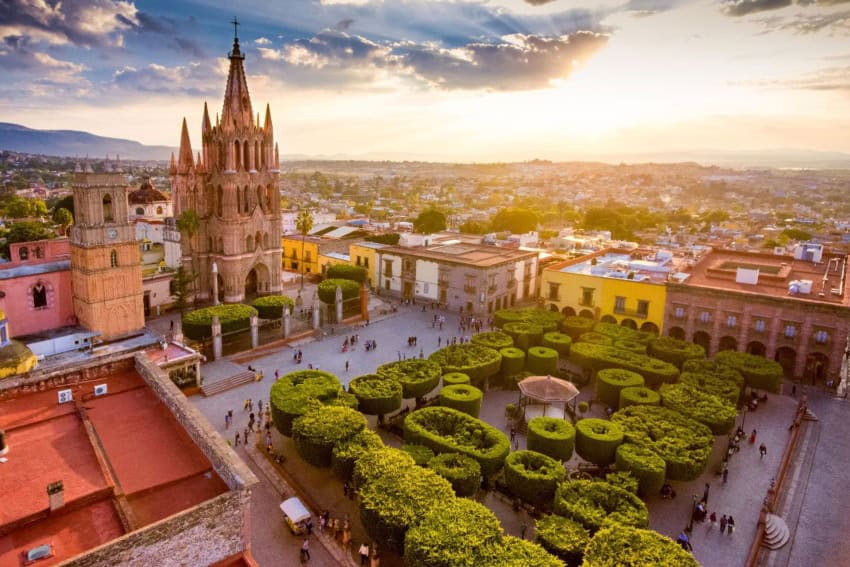
Rancho Baile de la Luna is one of many attractions in and around San Miguel de Allende. (Luxury Rental Management)
We weren’t the only ones.
As we paused for snacks and refreshing hibiscus water après yoga, someone saw flashing lights. Hurray! The fire brigade arrived to ensure the fire didn’t spread to Chris’s ranch, as well as nearby homes and farms. Soon, the flames began to diminish as the fire reached a dry riverbed and could advance no further. Peace and quiet ensued.
Emotions intensify
The timing of the fire on this fortuitous first day of the year of the Fire Horse wasn’t lost on any of us, of course. As we walked up the hill to the arena, we laughed about this strange
coincidence, most of us still carrying an extra dose of energy and anxiety — our own fire within.
For the next part of the celebration, we would commune with six or seven of Chris’ horses, who were roaming freely inside the arena. (“Be honest,” Chris said, “and the horses will respond with curiosity and peacefulness.”) As we passed through the gate, each of us chose an affirmation card and then formed a large circle with four or five feet separating us.
Next, we read our cards aloud. They contained empowering statements — sort of like you’d find in fortune cookies, I thought. Mine was “Obstacles are detours in the right direction.” I considered a few of the obstacles I’d encountered lately, wondering whether the detours they’d precipitated led to better outcomes.
As we read our cards, Amy walked around the circle with a bundle of sage and “smudged” us individually with the smoke, clearing stagnant energy and making room for the energy of the Fire Horse.
An uncomfortable moment
Quality equine time is part of the allure of Spirit Horse Journeys at Rancho Baile de la Luna. (Rancho Baile de la Luna)
Speaking of horses, a few began to walk in and out of the circle, sometimes pausing for a second or two. A couple of them trotted around the arena, and occasionally a small scuffle broke out among moody mares. Chris was a little concerned about the more active horses and asked if anyone felt uncomfortable.
That’s when Morita (aka the “Fire Horse”) came galloping straight toward our circle.
Once Chris realized everyone was safe, she caught Morita and decided to tie her up at the top of the driveway outside the arena. Clearly, the wildfire had made the horses nervous. As Chris led Morita up the driveway, the remaining horses became very active. Communing with our four-legged friends would not be possible, we realized — too much fire energy in them and now in all of us.
Jeff, Chris’s husband, suggested we head over to the fire pit at one end of the arena while Chris tied up Morita and Amy helped her secure the remaining horses.
A strange and disturbing episode
As we gathered around the fire pit, sitting on old wooden chairs and hay bales draped with colorful Mexican blankets, Jeff shared something he’d learned at a recent clinic about dealing with emotions when working with horses.
“Give your emotion a number from one to 10,” he said, “and then visualize that number going down as you breathe and relax and decompress.”
Spirit Horse Journeys can be emotional, particularly where the year of the Fire Horse is concerned. (Rancho Baile de la Luna)
Suddenly, a mare named Amiga began squealing. When I looked across the arena, I saw the front half of the horse atop a concrete wall as she scrambled to pull the rest of her body up and onto the driveway in a desperate attempt to join her friend, Morita.
We watched helplessly as Amiga squealed in pain before managing to pull herself up with her forelegs, leaving behind tufts of hair on the concrete wall. Chris took Amiga to the barn to tend to her wounds, mostly superficial, thankfully. Amy and Jeff continued fetching horses and tying them up before another one got a crazy notion to jump out of the arena or randomly gallop toward us humans.
The carefully curated agenda Chris and Amy had crafted for this ceremony, celebrating the year of the Fire Horse, was apparently never meant to be. Obstacles had appeared unexpectedly throughout the afternoon. We sat around the firepit trying to process a range of emotions — fear, turmoil, anxiety, and concern for Amiga’s well-being — as the sun sank, warming us with late-afternoon rays.
A woo-woo moment
Then something unexpected happened — you could even call it woo-woo. As we sat around the firepit with Chris, while Amy and Jeff tended to the horses, the spirit of the Fire Horse moved us to pick up where Jeff had left off and to talk about our emotions. We shared how we were feeling, even giving numbers to our emotional states, which, due to the turbulent events of the afternoon, were in a state of flux.
Somehow, the raw emotions we were feeling, the fires that were burning just below the surface in all of us, allowed us to peel back layers and share our feelings openly. It was as if the fire had burned away our reticence and allowed us to scramble onto a higher level, much like Amiga had pulled herself onto her feet, finally, instead of staying stuck, half in and half out of where she had been.
Morita, the Fire Horse, showed us how to blaze a new trail into the new year, not with baby steps but instead galloping, thundering, raging like a fire into the next place we need to be.
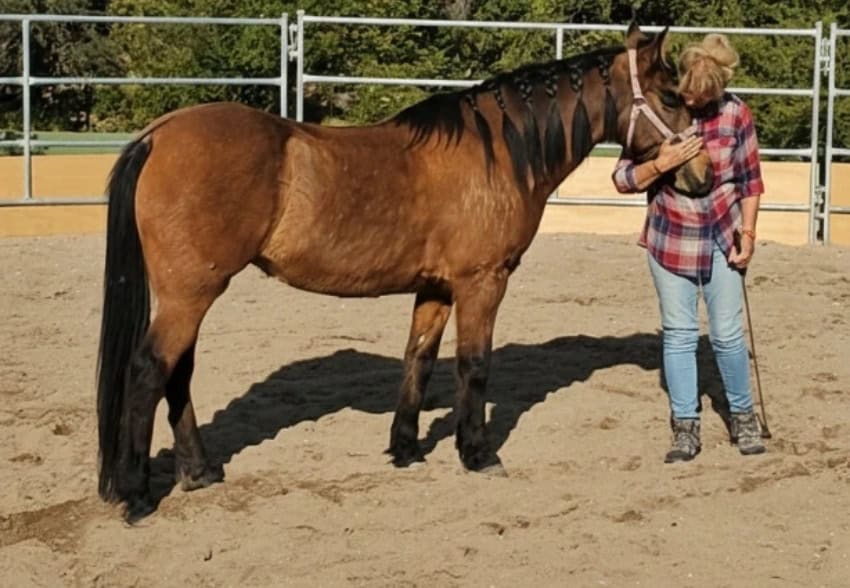
Not all horses at Rancho Baile de la Luna are as unpredictable as Morita, the Fire Horse. (Rancho Baile de la Luna)
The obstacles that presented themselves to us that day became part of the journey, leading us in the direction we were meant to go.
To be still
I thought back to the moment when Morita was running straight toward me, when I sensed the message to be still. I knew that moment was testing my courage and also reminding me that slowing down and being present helps us discover some of life’s most powerful lessons, including those brought on the back of a Fire Horse.
As I hugged these wonderful women before we went our separate ways, I could feel the energy of the Fire Horse still racing through my veins. Was it woo-woo? Inner wisdom? All I know is that the smiles and warmth and honesty we shared that day brought us all to a place of courage, integrity and abundance. I’m looking forward to what the new year brings.
For more information: The Spirit Horse Journey is an ongoing series of immersive equine wisdom experiences held throughout the year at Rancho Baile de La Luna near San Miguel de Allende. Each journey stands on its own while also weaving into the larger arc of the Year of the Fire Horse — a time of movement, courage, balance and inner truth. Reserve early — spaces are intentionally limited.
Peggy Sijswerda is a freelance writer who divides her time between San Miguel de Allende and the Netherlands. She writes about travel, food, culture and wellness, and is the author of “Still Life with Sierra,” a travel memoir. Find her on Substack at @peggysijswerda.
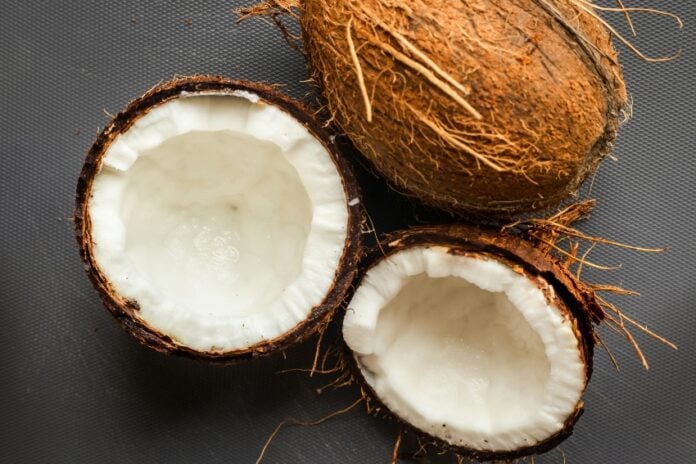
Coconuts and byproducts like copra are big business in the state of Guerrero. (Louis Hansel/Unsplash)
“You have to try the coconut candy,” says Kerry Skinner, Awareness, Brand and Culture manager of Playa Viva, an eco-friendly resort tucked into Guerrero’s wild coast where I’m staying for a long weekend. I take her word for it and sink my teeth into the sweet, round patty, known here as a cocada. Made of shredded coconut, sugar and condensed milk, the candy is baked just enough to caramelize the rounded edges to a golden brown. It’s delicious.
As I contemplate how many I can reasonably eat without calling too much attention to my lack of willpower, Kerry points to the walls above the kitchen, adorned with colorful hand-painted masks carved from coconut shells, and I think about the homemade coconut milk I poured into my coffee this morning. I pop one more candy into my mouth and resolve to find out more — but later. The hotel’s “disconnect to reconnect” policy means the internet can wait.
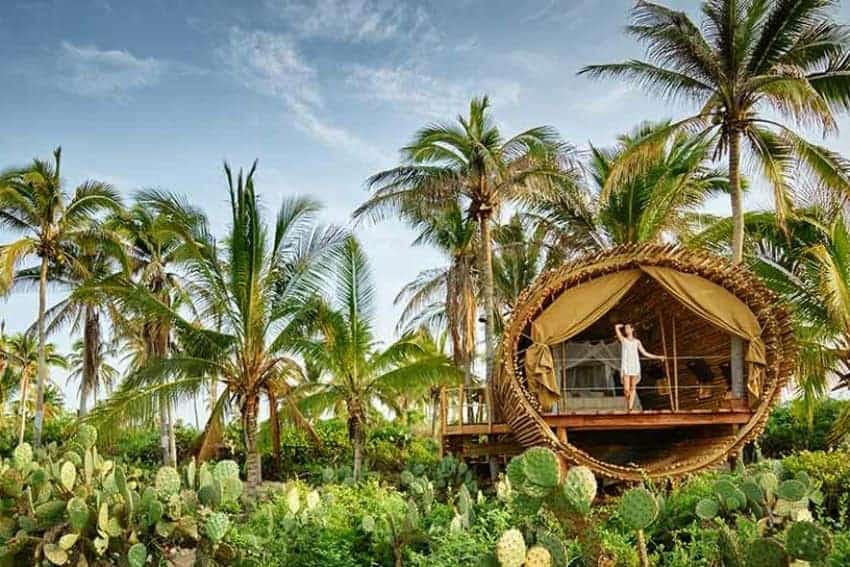
Playa Viva is an eco resort 35 kilometers south of Ixtapa-Zihuatanejo on Mexico’s Pacific Coast. (Playa Viva)
How coconut came to Guerrero’s coast
Coconut is one of Guerrero’s historic coastal crops. Spanish settlers brought coconut palms from the Philippines to the Acapulco coast in the 16th century, where they thrived in a climate as humid as the one they’d left behind. Coconuts were used for food, drink and fermentable sap — in fact, producers in the Philippines discovered coconut wine, which was temporarily banned through a royal decree in 1612 to protect the Spanish grape wine industry. The ban didn’t stick. Filipino sailors soon introduced the lightly fermented coconut wine on their visits to Guerrero. It became known as tuba, and is still found in the region’s roadside stands and markets.
The crop that built — and broke — a coastal economy
If tuba unsettled colonial wine merchants, copra would go on to reshape entire coastal economies. Copra — the dried white meat of mature coconuts — quickly became an indispensable part of Mexico’s vegetable-oil and soap industry, used to make oil for soap factories, cosmetics, detergents, industrial lubricants and food manufacturing. For a long time, coconut was grouped in the “oilseeds” category with cacao and cotton.
In the 1930s, President Lázaro Cárdenas’ post-revolutionary agrarian reform folded coastal Guerrero into a national pro-oilseed push, aimed at supplying the country’s 100-plus soap factories and dozens of oil mills. The reform gave coastal land to ejidos — communal landholding groups — and to ex-Revolutionary soldiers, integrating them more deeply into copra production and tying entire communities to the fate of a single crop. By the 1950s, Guerrero had become Mexico’s principal coconut-producing state, and it remains as such. Yet, it still ranks near the bottom on development indicators, making it a resource-rich region suffering from entrenched poverty.
When coconut money turned violent
The coconut boom came with violent undertones. Monoculture — the practice of producing just one crop over large areas — invited pests, pesticide dependence and soil exhaustion. As prices swung on global markets, middlemen and mills set the buying price of copra, taking the largest share of the value chain. At the same time, small producers absorbed the shocks of price crashes, rising input costs and costly upkeep of aging plantations.
In the 1960s, conflict involving copra money and producer unions led to Guerrero’s bloodiest memories: the “masacre de copreros” in Acapulco. A group of smallholder growers mobilized against a state-backed leadership they believed was skimming off profits and keeping prices low. The demonstration was met with bullets: dozens were killed or injured in and around Acapulco’s center, and no one in the chain of command was ever held responsible. The massacre radicalized a generation on the coast, feeding guerrilla movements and cementing coconuts’ place in Guerrero’s longer story of state violence and peasant resistance.
From roadside stands to resort spas
Roadside stands appear in abundance on the drive from Zihuatanejo — women selling rounds of cocada from plastic-covered trays, stacked on wooden stands under shady palms. The colonial-era confection has no single inventor, but has been claimed and reinvented by coastal communities across Mexico and Latin America for centuries. On Guerrero’s coast, they are inescapable in the best possible way — often flavored with guava, tamarind or pineapple.
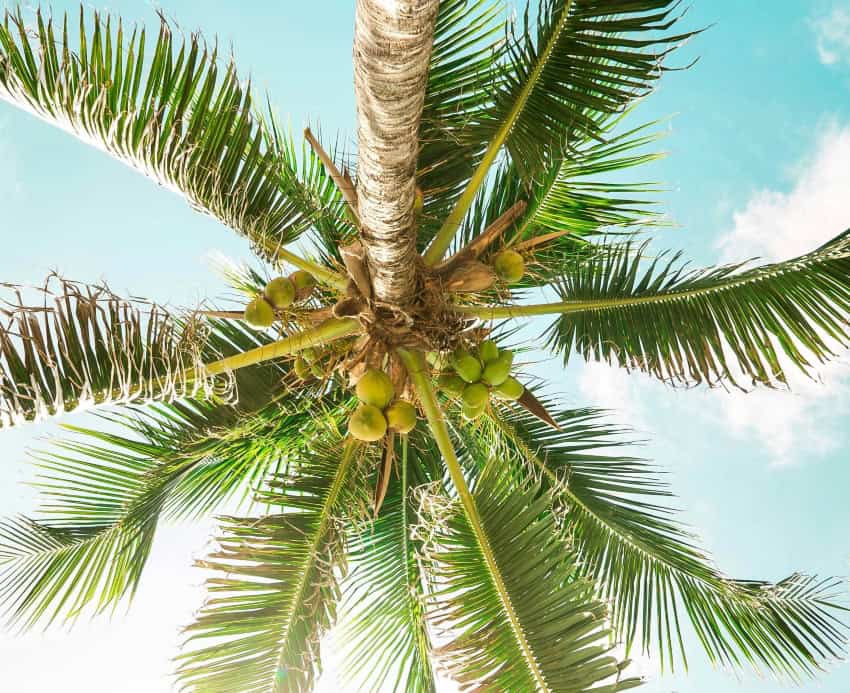
Coconut palms have been important economically in Guerrero since they were brought from the Philippines in the 16th century. (Gerson Repreza/Unsplash)
At Playa Viva, guests enjoy homemade coconut milk with coffee or poured over housemade granola. The resort obtains cold‑pressed coconut oil locally, extracted from coconuts grown in the grove using a small hand‑press. The oil shows up in the kitchen and spa, used for beachside spa treatments, often infused with lemongrass, rosemary and citrus leaves. The boutique sells bottles to take home, sourced through the Juluchuca Women’s Cooperative (a branch of ReSiMar, a watershed regeneration project), which also produces turmeric and moringa powders.
The masks on the kitchen wall are made by artisans who carve and paint coconut shells into suns, animals and carnival figures — Kerry mentions that guests commonly buy them as souvenirs, even though that wasn’t the initial intention. Near the kitchen is a small wooden stand selling fresh coconuts for water and as a snack, chopped and topped with lime, salt and tajin.
Reinventing a coconut’s contribution
Coconut production plays another surprising role on the resort grounds. In 2021, Playa Viva added six new treehouses to its original 12, inspired by the Mobula manta ray migration that passes annually in front of the property. The structures aren’t supported by conventional foundations, but rather are suspended in mid-air by palm trees transplanted from the resort’s own coconut grove. Moreover, palm trees do their part to stop beach degradation by reinforcing sand dunes. “They don’t just look pretty holding up the treehouses; they also serve a purpose,” says Kerry.
Where copra once dominated, small producers and cooperatives are finding value in what used to be considered waste: shells made into masks and bowls, husks spun into fiber for rope, mats and brushes; plus bottled coconut water for drinking and oil cold-pressed for cosmetics and cooking. A single coconut that might once have been sold off cheaply for copra now has the power to create half a dozen higher-value products.
How to ethically buy coconut
Buying coconut doesn’t automatically mean supporting the people who grow it. Profits still tend to pool with mills and middlemen unless travelers deliberately seek out cooperatives and transparent producers — looking for labels that identify a community rather than just a brand, or asking hotels directly which groups they source from. Playa Viva, for its part, invites guests on permaculture farm visits, artisan workshops and local tastings where payment goes straight to growers and makers.
Standing in the shade of Playa Viva’s palms, ready to stuff yet another cocada into my mouth, I think about how easy it is to consume all of this without asking where it comes from. The coconut in my coffee, the oil on my face, the mask on the wall — all of it connects back to communities that have tended these fruits for generations, often without seeing much of the profit. The least we can do as travelers is ask who made it, and attempt to pay them fairly for it.
Interested in supporting Guerrero’s watershed regeneration project? Playa Viva adds a 2% Regenerative Trust contribution to each guest’s bill, which is directed to its ReSiMar watershed regeneration project and community initiatives. For more about ReSiMar, click here.
Bethany Platanella is a travel planner and lifestyle writer based in Mexico City. She lives for the dopamine hit that comes directly after booking a plane ticket, exploring local markets, practicing yoga and munching on fresh tortillas. Sign up to receive her Sunday Love Letters to your inbox, peruse her blog or follow her on Instagram.
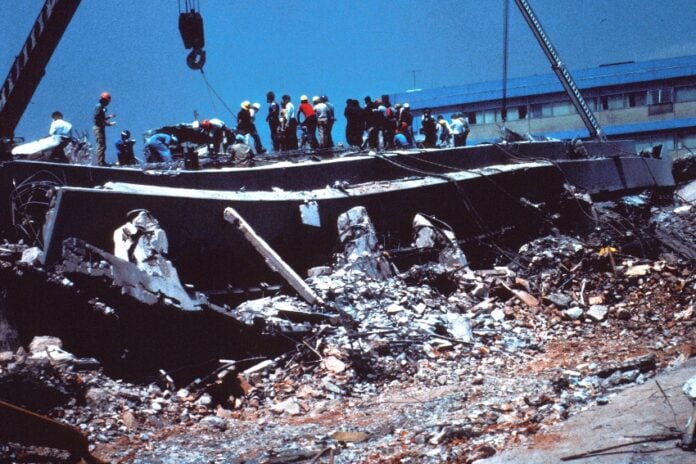
This hospital, like many other buildings, collapsed during the 1985 Mexico City earthquake. (United States Geological Survey)
María Gutiérrez returned home around 7:20 am that morning, having just dropped off her teenage daughter at school. She lived on the sixth floor of the Nuevo León, a massive cement building in the Tlatelolco housing complex. María pulled into the parking lot, and after getting out of her car, looked up: “As I got out of the car, I could see my home, everybody’s home, the entire building being ripped apart. Walls, windows, everything crumbled. And I could not get there.” While she drove her oldest to school, María’s mother-in-law and three youngest children remained behind.
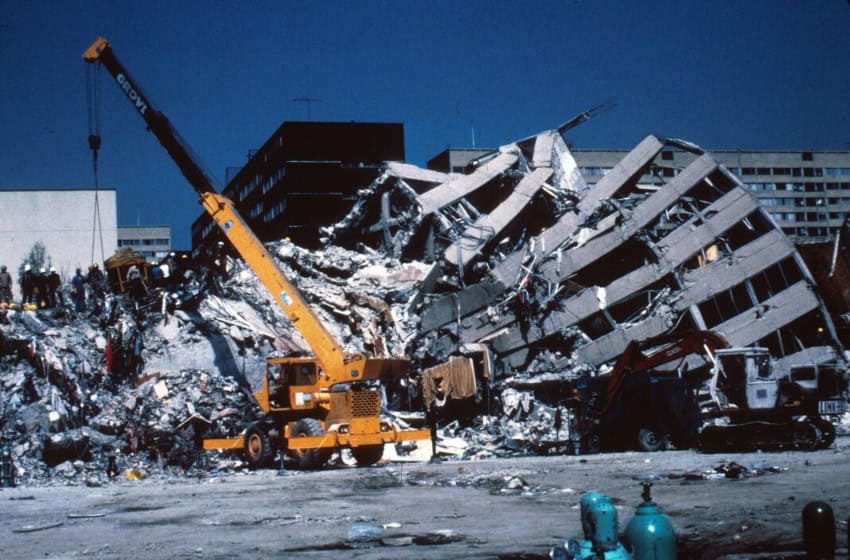
40 years on, the catastrophic Mexico City earthquake looms large in the memories of those who survived it. (United States Geological Survey)
Mexico City had experienced earthquakes before, but nothing like this. The earthquake was felt all the way in Houston, Texas, over 1,000 miles away. Unlike other tremors when the earth slid side-by-side, this time it buckled up and down as well. The ground literally bounced and buckled. Worse still, it lasted for what seemed like forever: just under three full minutes. Years later, Gloria Amador recalled, “I lived in the ‘Artega’ building of Tlatelolco. I grew up in Tlatelolco, and in 1985, I was very young, 17 years old, and I was very, very frightened by the earthquake because in my house, tiles and vases began to fall. There was a feeling that we might lose our lives at any moment.”
The tragic irony was that throughout the 1970s, most of the Tlatelolco housing complex remained vacant because of the killings that occurred in 1968. No one wanted to live at the site of one of the worst episodes in recent Mexican history, one orchestrated by their own government. The Chihuahua building, used as the staging ground by the soldiers, stood virtually empty for much of the 1970s. It was only when rents dropped to rock-bottom prices in the early 1980s that people started moving back to the area. By 1985, the housing complex was almost completely full.
The devastation
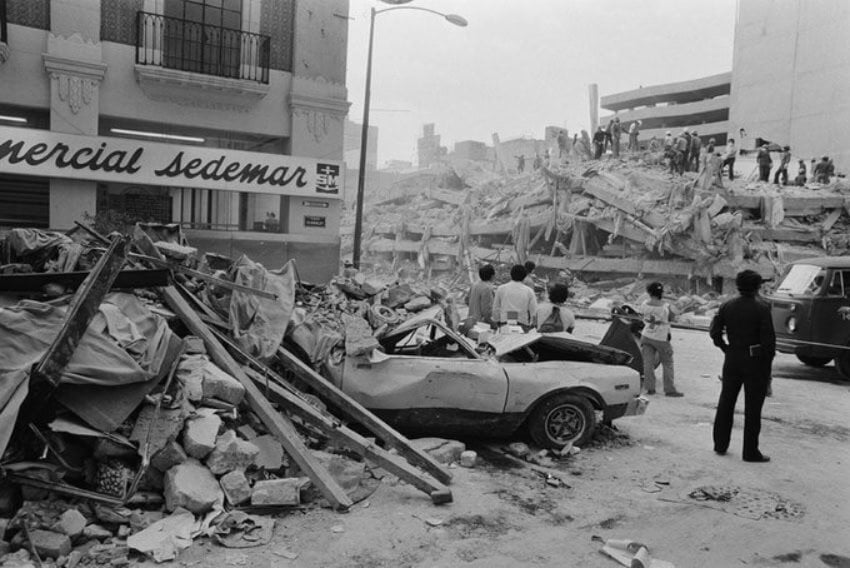
Within minutes that September morning, utter devastation reigned across the entire city. More than 370 buildings collapsed, including the National Medical Center and the Cardiology Hospital (where 70 doctors and nurses were killed), numerous government buildings, tourist hotels, the central telephone switching station and the main studio of Televisa. There was no electricity, no water, no communications and no public transport of any kind. Roads were impassable. It was as if a massive bomb had gone off, with entire neighborhoods flattened.
“On paper, at least, a well-conceived plan existed in the Interior and Defense ministries to rapidly mobilize security forces and other government personnel in the event of a massive earthquake,” according to Jonathan Kandell in “La Capital: The Biography of Mexico City.” Unfortunately for the people of Mexico City, those plans existed only on paper and were never implemented, or even attempted. The government’s immediate response was simply to send military units to the most heavily damaged areas and then cordon them off.
That was it. They did not start digging to extricate survivors or remove rubble, or assess which sites should get priority in rescue operations. Soldiers simply stood there, ostensibly to prevent looting, but in actuality, they merely prohibited local residents from attempting to mount their own rescue efforts.
The disaster
“As another sign — if one were needed — of how the system had frozen down to its very heart, the Ministry of Foreign Affairs proudly announced that ‘under absolutely no conditions’ would they request aid, least of all from the United States,” noted historian Enrique Krauze in “Mexico, Biography of Power: The History of Modern Mexico, 1810-1996.”
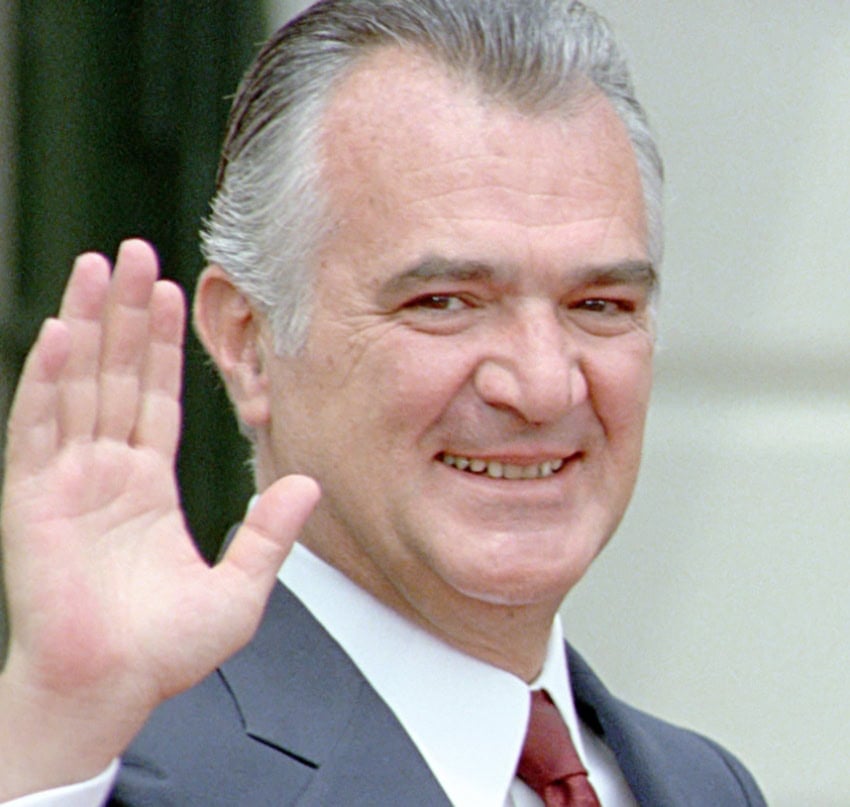
Mexican President Miguel de la Madrid in 1986, one year after the Mexico City earthquake. (Public Domain)
“The public was not only willing to accept aid; they were begging for it. The disaster was in every way immense.”
The presidential administration of Miguel de la Madrid was caught completely flatfooted, and it was obvious they did not know how to respond to such a disaster. By the next day the president even went so far as to proclaim: “We are ready to return to normal life. We are prepared to deal with this situation, and we don’t need outside aid.”
But after a second smaller earthquake hit 36 hours after the first one, he went on national television and admitted, “The truth is that in the face of an earthquake of this magnitude, we don’t have enough resources to confront the disaster quickly and easily.”
The aftermath
In the aftermath of the earthquake, with thousands of people trapped beneath the rubble, the authorities seemed utterly ill-prepared to handle any aspect of the relief effort. “Almost as soon as the ground stopped trembling, the political aftershocks began. Throughout the capital, ordinary Mexicans railed against their government for its ineptitude during the emergency,” Kandell wrote.
Although there were endless examples of ineptitude and incompetence throughout the disaster crisis, one episode stood out for the Nuevo León residents. Standing amidst the rubble immediately after the earthquake, the surviving residents began to organize themselves. One group went to get whatever food and water they could find. Another group took off trying to find ambulances and medical aid. And still another group of residents went to speak to the housing complex director, hoping to gain his assistance in finding help.
After an hour, they returned and informed their fellow residents that the director told them that he was quite busy and perhaps he would be able to see them at the end of the week. This was the director of their housing complex, an area whose residents made up 40% of those affected by the damage of the earthquake, and he said he had no time for them. Fully one-quarter of the 103 buildings in the housing complex had collapsed, and he hopefully would see them at the end of the week. The residents could not believe what they were hearing. They were rightfully stunned.
The residents of Tlatelolco
Damage from the earthquake was too severe for many residents to return to their buildings. (X, formerly Twitter)
After that meeting, the surviving residents of Tlatelolco, as well as those of Mexico City, realized they would never be able to return to their residences. The damage was too severe and it was too dangerous. They became known as the damnificados, the displaced refugees of the earthquake. On Sept. 22, the Tlatelolco damnificados held an impromptu meeting in the Plaza de Tres Culturas and elected Cuauhtémoc Abarca as their leader. Cuauhtémoc Abarca lived in the Nuevo León building, and on the morning of the earthquake, he had been up early and had gone outside to prepare for his morning jog, a simple act that probably saved his life.
“In a way we had never done before, we had to make our own decisions,” he recalled. “The earthquake hit, and then we found out that the director couldn’t see us, the borough president was not in his office and the mayor wasn’t taking visitors. All of a sudden, we were living in a city without a government.”
The surviving residents of Tlatelolco would have to make decisions on their own. This was not something the Partido Revolucionario Institucional (PRI) system encouraged. The PRI political machine was very much a top-down system, and people were not supposed to take initiative in their community. The earthquake changed that, and in fact, neighborhood associations like this one sprang up all over the city.
The work brigades
So, with the government incapable of helping in recovery efforts, ordinary Mexicans took it upon themselves to form work brigades and try to dig survivors out by hand. The people who came together in those work brigades cut across class lines. Middle-class housewives hauled rubble alongside street punks. Students from the south side bicycled to the city center to help factory workers clear rubble. It didn’t matter.
“There was an instant emergency response from the civilians, who organized themselves into teams to dig for survivors, get the wounded treatment, and get food and shelter to the displaced. Groups of everyone from chavos banda, street punks, to housewives to the tenor Plácido Domíngo cleared rubble by hand; volunteers nicknamed topos, moles, tunneled into the collapsed buildings to bring out survivors,” wrote historian Paul Gillingham in “Mexico: A 500-Year History.”
But it was a daunting task, and while these spontaneous rescue efforts served to unite ordinary Mexicans, the earthquake exposed something more sinister: government corruption.
The textile workers
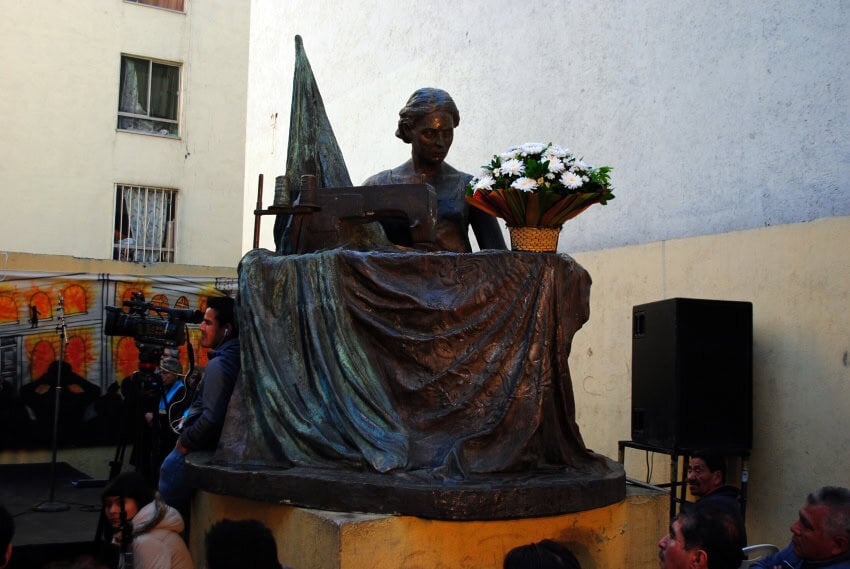
Bronze statue of a seamstress at the site of collapsed factory. (Protoplasma Kid/Wikimedia Commons)
It turned out that public buildings like hospitals and housing complexes were far more likely to have collapsed. Old rumors resurfaced about bureaucratic collusion with shady construction owners. Paul Gillingham pointed out that “Public buildings showed a greater propensity to collapse, their structural pillars turning out to be filled with sand.” Corners obviously had been cut, and kickbacks paid to attain building permit approval. Worse still, per Gillingham, “The earthquake revealed 200 illegal textile factories in the area, buildings unfit for the machinery they contained; the floors collapsed down through the buildings and killed 1,600 working women.”
One of these textile factory workers, Evangelina Corona, remembered: “We women who worked as seamstresses had horrible working conditions. What the earthquake did was to reveal this reality … In many factories, we found that the seamstresses were made to work extra hours without pay at all. Workers told stories of being punished. In some cases, bosses arrived, opened the door for the workers, they entered, the doors were closed and they couldn’t leave. That was another of the reasons why so many seamstresses remained under the rubble after the earthquake, because they couldn’t open the doors.”
“First came the screams from the seamstresses buried under one of the capital’s collapsed textile plants.” Then, said Gloria Juandiego, she began screaming. “The bosses got the equipment out, the raw materials, their safe boxes; they prioritized that.”
Press coverage
The PRI party newspaper, El Nacional, initially refused to even report on the devastating tragedy unfolding in Obrera. For them, thousands of seamstresses killed or trapped in illegal sweatshops weren’t even worth reporting about. But, eventually, even El Nacional couldn’t avoid the unfolding tragedy. However, when El Nacional finally “joined in the coverage,” wrote Gillingham, “it stressed how many of the sweatshop owners were of Jewish and Lebanese descent, not really Mexican at all.”
By Oct. 24, the people of Mexico City had gotten to the point at which they had enough. They needed a way to express their frustration, accentuate their voices, and keep pressure on an unresponsive government. So, in an effort to unify all of the neighborhood associations, they formed the Coordinadora Única de Damnificados, the Unified Coordinating Committee of Earthquake Refugees (CUD). The committee then suggested a protest march should be held in two days, and the final destination point ought to be Los Pinos.
The PRI offensive
Forty thousand people showed up and marched to the presidential palace, demanding that the government find adequate housing for all of those displaced by the earthquake (about 180,000 people by that point). The government responded by stating that their inspectors determined that 23 buildings had been so severely damaged by the earthquake that they had to be demolished, but the residents would be provided with “equivalent housing.” The government then let it be known that this equivalent housing was in Estado de México, up to 70 miles away. The Tlatelolco, in particular, would be redeveloped as office complexes, undoubtedly with lucrative construction contracts available to those shady business magnets with close ties to the PRI. These announcements only prompted more public protests by the CUD.
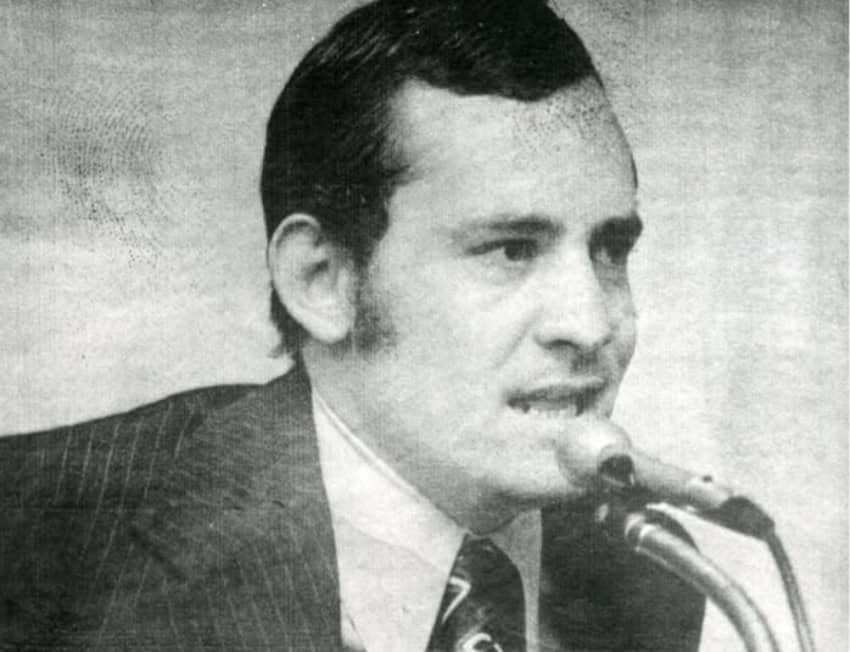
Architect Guillermo Carrillo Arena did not react well to those who questioned his culpability in earthquake deaths. (Facebook)
In response, PRI officials went on the offensive. They claimed that the protestors were in fact “bad Mexicans” who were supported by “seditious leaders moved by murky interests.” In particular, the federal minister of the environmental agency, Guillermo Carrillo Arena, an architect who was playing a key role in the earthquake recovery, leveled outrageous remarks at anyone who questioned him. As a top government official, he had approved the plans for the construction of the two government hospitals that had collapsed, which killed hundreds of people. At a press conference, reporters asked him if he felt responsible for those buildings collapsing and ultimately those deaths. Carrillo Arena responded: “The only thing I can say about that question is that whoever is asking it is a prostitute and an imbecile.” After comments like that, the damnificados’ resolve only strengthened.
A master stroke
The CUD was unsure what to do next, but determined to stage a protest that would keep pressure on the government. The damnificados then settled upon a master stroke. In the first week of January 1986, they moved back into their damaged, dilapidated buildings in whatever crevices they could find. The buildings were structurally unsound and in no way inhabitable, but the move made a statement.
Within days, President de la Madrid fired Carrillo Arena. Then de la Madrid assembled a new team of officials that opened negotiations with the CUD to develop a plan. As journalist Julia Preston noted in “Opening Mexico: The Making of a Democracy,” a new plan emerged with “much more emphasis on restoring structures that could be fixed, so that the homeless would not have to suffer the additional trauma of starting life again in a distant location.”
This was a surprising and unlikely reversal for a government that rarely, if ever, considered the wants and needs of ordinary Mexicans when proposing development projects. According to Cuauhtémoc Abarca: “People woke up. They began to see the government not as something superior to them but as an equal with whom they could talk, negotiate, and even win a round or two. No one could remember ever seeing a government project defeated as categorically as we defeated the plan to move us out of Tlatelolco.”
A turning point
This increasing sense of accomplishment permeated Mexican society and allowed Mexicans to view themselves, and their government, in an entirely new light. In fact, when President Miguel de la Madrid opened the 1986 World Cup ceremonies in Mexico City, the Mexican fans booed, whistled and shouted at him. This might never have happened before the earthquake, and the government’s failed response to that disaster.
The 1985 earthquake represented a turning point not only in Mexican society but most especially in Mexican politics. One-party rule does not work if that party is completely incompetent. Instead of looking to the government for answers, neighborhood associations (and ordinary Mexicans in general) began to work together to find solutions to local problems.
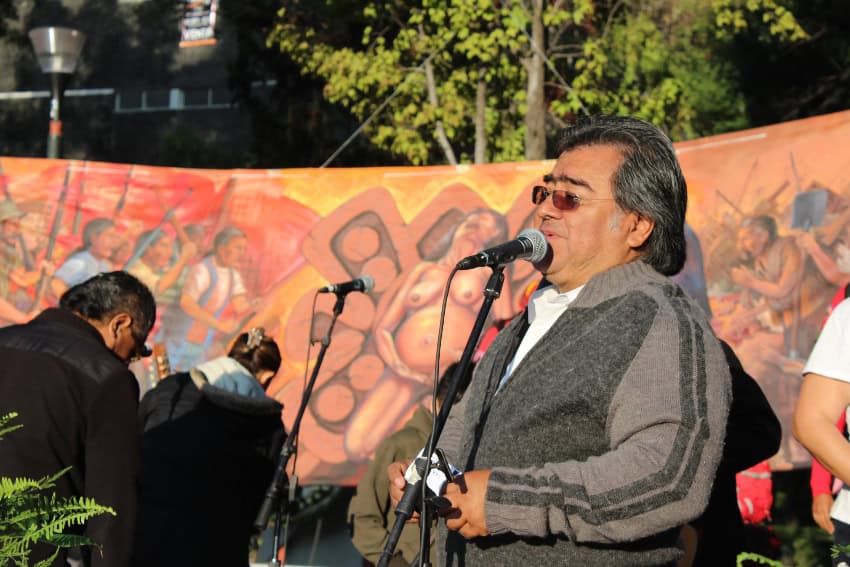
Cuauhtémoc Abarca in 2015, on the 30th anniversary of the 1985 Mexico City earthquake. (Protoplasma Kid/Wikimedia Commons)
Cuauhtémoc Abarca said, “The earthquake threw down walls, and it also threw down barriers between communities. Instead of lines of communication from the top down, suddenly we had lines of communication that were horizontal, between different organizations and barrios, or, better yet, from the bottom up.”
“The earthquake was also invigorating,” explained Preston. “In its wake, because of the government’s failure to (adequately) respond, there emerged a new form of popular political action, called autogestíon, do-it-yourself politics. … The new force that emerged from the earthquake was civil society. The citizen groups that formed were independent of the PRI, but they had no direct ties to opposition parties either. They mobilized Mexicans across class lines.
“If the 1968 Tlatelolco massacre had revealed the repressive core of the system, the earthquake exposed its depths.”
Robert McLaughlin, Ph.D. is a historian specializing in Cold War Latin American history.
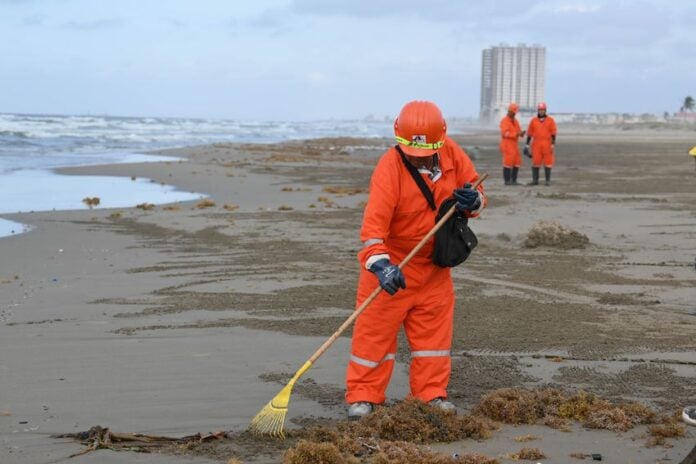
More than 50 workers from the company MAYA, a subcontractor for PEMEX, carry out intensive cleanup efforts along the beach of Coatzacoalcos, Veracruz, as part of the government's response to the presence of an oil spill in the area. (Ángel Hernández/Cuartoscuro)
A new poll published this week found that 40% of U.S. voters consider Mexico a good neighbor, while 28% say it’s a bad one. That’s not a terrible headline for Mexico, until you note that its net favorability score among Americans has fallen 16 points since last spring, with cartel activity, fentanyl and unauthorized migration topping the list of U.S. grievances.
The findings arrive at an instructive moment in the bilateral relationship. USMCA negotiations are underway, and the mood music has been notably warmer than the rhetoric coming from the White House: Last week, U.S. Ambassador Ronald Johnson told the American Chamber of Commerce that the treaty review is “an opportunity to deepen integration,” not a risk. He also applauded the “historic” security cooperation by the Trump and Sheinbaum administrations.
Domestically, the week of March 23–27 delivered economic and political friction that touched on everything from the cost of borrowing to the cost of governing.
Didn’t have time to follow the news this week? Here’s what you missed.
China threatens to hit back over Mexico’s tariff hikes
Trade tensions between Mexico and China escalated sharply this week after Beijing declared it has the right to retaliate against the tariffs Mexico imposed on more than 1,400 Chinese products at the start of the year. China’s Ministry of Commerce, following a formal probe, determined that Mexico’s duties — ranging up to 50% and affecting more than US $30 billion in Chinese exports — constitute trade and investment barriers.
The ministry said losses to China’s mechanical and electrical sectors alone could reach $9.4 billion, with the automobile and auto parts industries bearing the brunt.
In a pointed response, Economy Minister Marcelo Ebrard insisted Mexico was within its rights to protect domestic industries in textiles, footwear and steel, and denied that U.S. pressure had anything to do with it, though the duties are widely seen as a goodwill gesture ahead of the ongoing USMCA review.
China, whose goods exported to Mexico dwarfed Mexico’s exports to China by a ratio of roughly 13 to 1 in 2025, could seek dialogue, escalate to the World Trade Organization, or impose retaliatory measures on Mexican goods. However, Mexico’s relatively small export footprint in China limits Beijing’s leverage.
Banxico cuts rates despite rising inflation — and the peso pays
The Bank of Mexico’s board voted 3-2 on Thursday to cut its benchmark interest rate by 25 basis points to 6.75%, even as annual headline inflation climbed to 4.63% in the first half of March — its highest level since 2024.
The board cited weak economic activity, the exchange rate and the level of monetary restriction already in place. Banxico acknowledged that inflation risks remain tilted to the upside, and raised its forecasts for three of the four quarters of 2026, but maintained that headline inflation will converge to its 3% target by Q2 2027.
Markets reacted swiftly. The peso slid past 18 per US dollar on Friday morning for the first time since early December, pressured by the surprise cut, a stronger US dollar and geopolitical risks tied to the Middle East conflict. The currency was trading at roughly 18.12 per dollar on Saturday morning.
Sheinbaum faces further setbacks to electoral reform
After last week’s defeat in the Chamber of Deputies — where her coalition allies in the Green Party and Labor Party defected — President Sheinbaum came back this week with a recalibrated approach to electoral reform. Her new strategy avoids constitutional amendments, which require a two-thirds supermajority, in favor of changes to secondary legislation that need only a simple majority to pass.
The Senate approved a version of the bill on Wednesday, but not without further trimming it. The provisions that survived focus on reducing what Sheinbaum characterized as excessive perks for lawmakers at all levels of government and for National Electoral Institute officials: eliminating special bonuses for electoral councilors, capping municipal councils at 15 members and limiting state legislature budgets to 0.7% of their state’s total budget. Savings from those cuts are to be redirected to health care, education and welfare programs. The federal Senate’s own budget is also slated for a reduction under the bill.
What didn’t survive the Senate vote was a provision that would have allowed a presidential recall election to be held concurrently with municipal, state and federal elections in 2027. Sheinbaum suggested at her Thursday press conference that her own Labor Party allies killed it out of fear that running the recall alongside legislative races would boost Morena at their expense.
The stripped-down bill still needs to clear the lower house of Congress, where the original constitutional reform failed earlier this month. Whether Sheinbaum’s coalition holds together for this softer version remains the central political question heading into next week.
Ceci Flores finds her son after 7 years of searching
In one of the week’s most emotionally resonant stories, Ceci Flores — the founder of the search collective Madres Buscadoras de Sonora — announced that she had found what she believes are the remains of her son Marco Antonio alongside Highway 26 near Hermosillo, seven years after his disappearance.
Flores identified the site partly through clothing found at the location; DNA analysis is pending. Marco Antonio went missing in 2019 when an armed group abducted him along with another brother. Flores’s collective, which she founded in 2019, has now been involved in recovering more than 2,700 bodies and reuniting 2,400 living people with their families.
The personal milestone arrived against the backdrop of a broader national reckoning. On Friday, President Sheinbaum presented a landmark government report on Mexico’s missing persons crisis, revealing that 132,534 people remain officially listed as disappeared, the vast majority of them registered since 2006.
Authorities claim they have discovered evidence of legal activity — tax filings, phone records and other traces — for more than 40,000 of those individuals, leading to the reclassification of 5,269 as located alive. However, investigations into more than 46,000 cases have not yet begun due to incomplete data. Critics, including the NGO Causa en Común, questioned whether the data fully reflects a crisis that shows no signs of slowing.
Rare school shooting in Michoacán leaves 2 teachers dead
A 15-year-old student killed two teachers at a high school in the Pacific coast city of Lázaro Cárdenas, Michoacán, on Tuesday morning, in a shooting that President Sheinbaum addressed directly at her Wednesday press conference.
The victims, María del Rosario, 36, and Tatiana Bedolla, 37, were both teachers at the private Antón Makárenko High School. The alleged perpetrator was detained at the scene; he reportedly gained access to an AR-15 rifle and opened fire after initially being blocked from entering the campus.
President Sheinbaum addressed the shooting at her Wednesday morning press conference, calling it “very painful in many senses.” She noted that the victims appeared to have been deliberately targeted, and said her government was determined to treat the attack as an “isolated incident that is not repeated.” To that end, she announced plans to expand a mental health program already operating in some middle schools to a wider audience of students the same age as the alleged shooter.
Gulf of Mexico oil spill: Cover-up accusations mount
The Gulf of Mexico oil spill that reportedly began in early February continued to generate controversy this week as more than a dozen environmental organizations, led by Greenpeace and the Mexican Center for Environmental Law (Cemda), publicly accused the government of concealing the disaster’s scope and timeline.
The aerial images they presented suggest the spill originated near Pemex’s Abkatún platform as early as Feb. 6, with containment vessels visible by Feb. 13 — weeks before officials publicly acknowledged the problem.
The slick has now spread across roughly 600-700 kilometers of Gulf of Mexico coastline, affecting the Veracruz Coral Reef System and six other protected natural areas. President Sheinbaum disputed claims of a major catastrophe and accused Greenpeace of spreading an “unscientific” infographic — though the organization had already clarified the image was illustrative, not satellite-based.
Pemex denied responsibility, and the privately owned vessel initially blamed by Veracruz Governor Rocío Nahle was cleared following inspection.
Economy minister inaugurates joint forum of binational trade chambers
On Monday, Economy Minister Marcelo Ebrard inaugurated the first Forum of Binational Trade Chambers in Mexico, uniting over 20 Mexico-based trade chambers that represent companies from Argentina, Australia, New Zealand, Belgium, Brazil, Chile, France, Germany, Ireland, Israel, Italy, Japan, the Netherlands, Spain, Switzerland, the United Arab Emirates and the United Kingdom, among others.
The forum, organized with significant input from India’s Embassy in Mexico, is designed to align the collective market intelligence of its member chambers with the priorities of President Sheinbaum’s Plan Mexico economic initiative. Ebrard used the occasion to signal that the government sees international trade partnerships as central to its nearshoring and investment ambitions, and announced plans to visit India as bilateral trade grows.
FIFA President Gianni Infantino traveled to Guadalajara’s Akron Stadium on Thursday night to personally watch Jamaica defeat New Caledonia in a World Cup qualifying match before nearly 41,000 fans.
His presence — just 34 days after violence in Jalisco following the killing of cartel leader El Mencho — was a pointed signal of FIFA’s confidence in Mexico as host country. The game went off without incident, and Infantino is set to meet with President Sheinbaum on Monday to review World Cup preparations ahead of the June 11 kickoff at Azteca Stadium.
Good news of the week
⚖️ Mexico’s Congress passed a new anti-femicide law that broadens the legal definition of femicide and increases prison sentences — a significant step in the country’s long fight against gender-based violence, and one that carries added resonance given the incel-linked school shooting in Michoacán earlier in the week.
Several storylines from this week carry momentum into the coming days.
The stripped-down “Plan B” electoral reform still needs to clear the lower house of Congress — whether Sheinbaum’s coalition holds together for the softer bill will be an early test of her legislative footing.
On the economic front, the peso’s slide past 18 to the dollar and Banxico’s surprise rate cut raise a practical question for ordinary Mexicans: with inflation already at 4.63%, will borrowing costs coming down translate into relief at the checkout counter, or simply more pressure on the currency? And then there is the Gulf oil spill. Evidence assembled by Greenpeace and Cemda points squarely at Pemex’s Abkatún platform as the source — and suggests the government knew weeks before it said anything publicly. With Holy Week bringing thousands of tourists to Gulf coast beaches starting this weekend, the coming days may determine whether the spill becomes the first serious stain on Sheinbaum’s portrait of transparency.
Mexico News Daily
This story contains summaries of original Mexico News Daily articles. The summaries were generated by Claude, then revised and fact-checked by a Mexico News Daily staff editor.