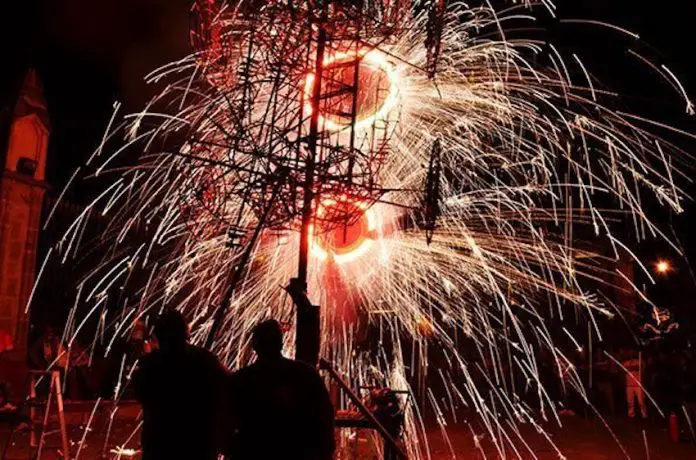
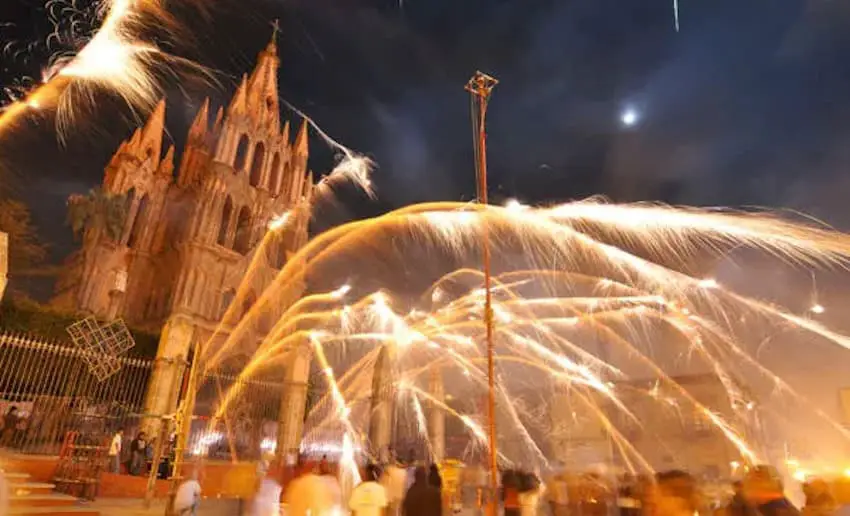
Fireworks, religion and history collide in San Miguel de Allende's "La Alborada," a festival unlike any other in Mexico. (Tres Cervezas)
Fireworks displays are at the epicenter of polarizing conversations among those passing through or planting roots in San Miguel de Allende. “But, why must they do it at such odd hours?” many newcomers wonder, voicing their exhaustion from being kept up by the earth-shattering nightly blasts. The simplest answer? It’s a tradition.
Never does this cultural patrimony ring louder or feel more ubiquitously explosive than during La Alborada, or “The Dawn,” San Miguel’s annual citywide festival honoring collective faith in the triumph of good over evil. Kicked off with a boisterous cascade of rocket-like illuminations at daybreak, the multi-day merriment will spill into nearly every street from Oct. 3-12 this year.
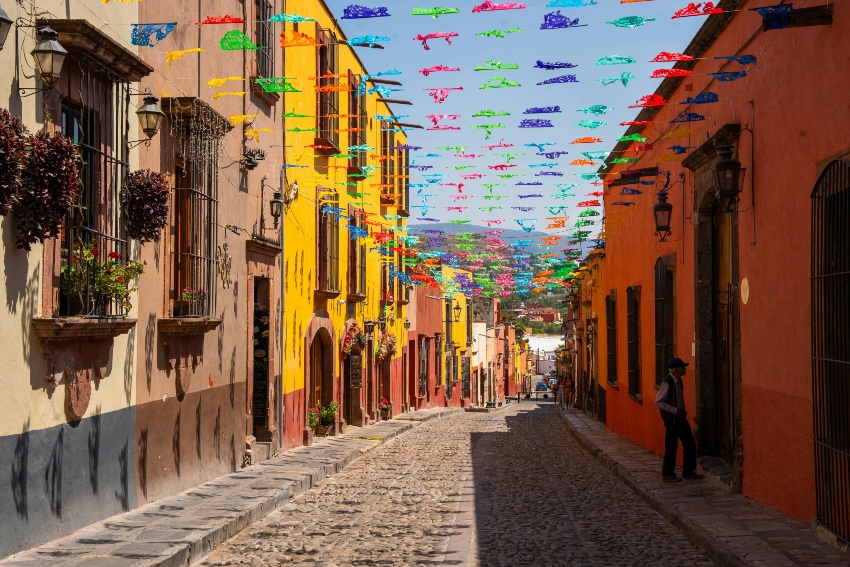
San Miguel de Allende is noted for its vibrant and diverse festivals, including La Alborada. (Unsplash/Shane Lei)
What to expect for this year’s festival
Flanked by a sea of massive paper stars, this year’s 101st iteration of the event honoring San Miguel de Allende’s patron saint begins on the eve of Friday, October 3, with drummers and dancers leading lively parades. The modern-day presentations of La Fábrica la Aurora factory workers’ visions of devotion from the 1920s will then transform into a sparkling spectacle that extends beyond downtown into El Teatro del Pueblo, the refurbished site of the county fair.
Local families will get priority access to the Feria before 7:30 p.m. As San Miguel de Allende Mayor Mauricio Trejo expressed at the Feria’s opening ceremony, “The fair is for San Miguel de Allende, although all of Guanajuato is invited. To enter, they must present a valid voter or student ID, driver’s license or any other document that proves they reside in San Miguel de Allende. After that time, people from the rest of the state will be admitted,” Trejo told the crowd, an unprecedented turnout of 55,000 fairgoers at the Feria’s 2025 inaugural event.
So grab your earplugs and prepare for nine days of uninhibited entertainment, profoundly immersive cultural exhibitions and unmissable star-studded concerts!
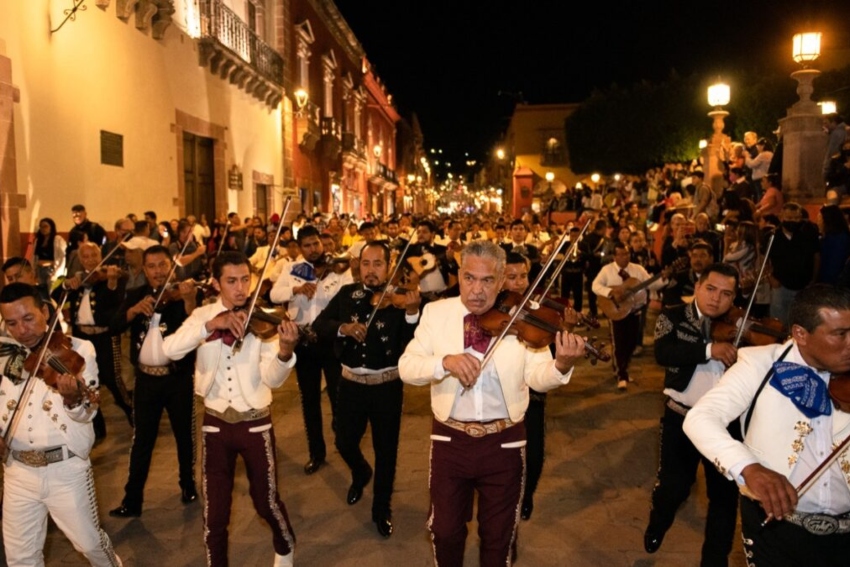
One hundred charro-clad mariachis will perform on demand in San Miguel de Allende on Oct. 1. (San Miguel de Allende Gobierno Municipal)
If the town square, El Jardín Allende, had to be summed up in a single sound, it would be the jubilant clash of its “warring” mariachis, racing nightly to be the first to fulfill song requests from lovers, travelers, and partygoers, hoping to collect a few hundred pesos in exchange for their briefly wondrous, on-demand concerts. It’s rather fitting then that these bands will pause their civil rivalries during the festival known for rejoicing in the vanquish of evil (Lucifer), by the city’s namesake, San Miguel Arcángel. On Wednesday evening, as the excitement for La Alborada rises palpably, approximately 100 charro-suited musicians will serenade the masses of revelers gathered for one night of fine-tuned folkloric harmony. Free of charge; no tickets required.
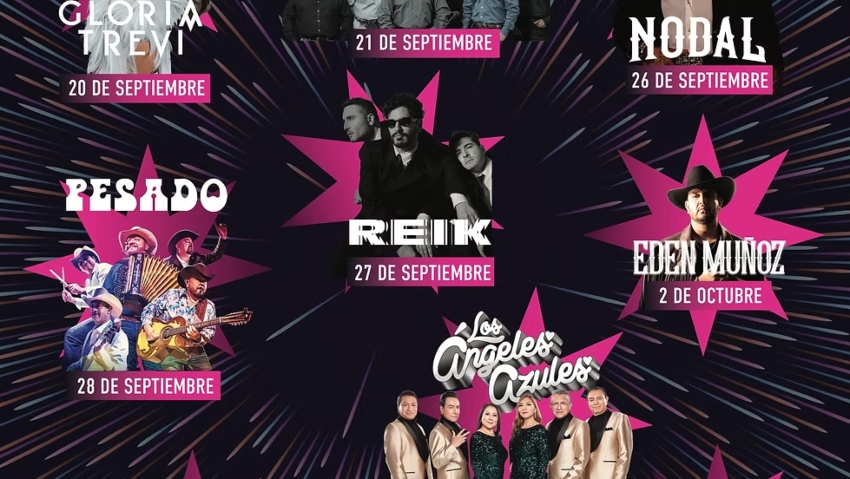
Edén Muñoz is among the top-tier musical acts performing at this year’s La Alborada festival in San Miguel de Allende. (Visit San Miguel)
This year, the Feria is welcoming an impressive lineup of top-tier musical acts. On Thursday, Edén Muñoz, who set the record for the most songs for a regional Mexican band or solo artist to have reached the top spot on the Billboard charts, Gloria Trevi (who headlined the inaugural concert on September 20). The year’s most anticipated celebration of culture and entertainment kicked off with a passionate speech from Mayor Trejo, calling on his fellow Miguelenses to come “raspar la bota” (scrape the boot) at the family fair. With a modest entry fee of 25 pesos, the feria offers free rides and games once you’re inside, hoping to instill an ambiance of inclusion, diversity, and unbridled fun.
San Miguel de Allende’s annual La Alborada festival has been going strong for 101 years. (El Vergel)
A light show that appears to shower from the heavens will begin at 4:00 a.m. on Oct. 4, followed by an Xúchiles procession later in the afternoon, whose Indigenous Chichimeca origins pay homage to fallen ancestors. Floral and cacti offerings towering nearly one and a half stories high will be made as the steps of pre-Hispanic dances are stamped into cobblestones. The festivities extend through mid-October, culminating with the iconic El Paseo de San Miguel, during which the archangel’s images are carried throughout the city’s numerous temple sites.
For those who wish to join in celebrating more than 100 years of piousness-turned-party like the locals do, the 2025 edition of La Alborada will spark curiosity, shedding light on how the Miguelenses and their customs have shaped this UNESCO World Heritage Site’s lasting legacy.
The Mexican legends themselves are making a starring appearance at the Feria. (Los Ángeles Azules)
As millennials and Gen X get swept up in the nostalgia of classic hits like “Como Te Voy a Olvidar” and “Nunca es suficiente,” featuring the inimitable Natalia Lafourçade, these living legends will carry the torch of their romantic rancheras to the next generation. Bring on the accordions, the synthesizers, the five-part harmonies and the electro-cumbia fusion. San Miguel Arcángel is patiently waiting to be reunited with the living at this celestial fiesta.
Date: Oct. 4, 9 p.m.
Location: Teatro del Pueblo
Cost: 25 pesos
Simone Jacobson is a Burmese American cultural connector, toddler twin mama and writer based in San Miguel de Allende. By day, she is the Content Director forWell Spirit Collective. In all other moments, she strives to raise compassionate children who never lose their curiosity, tenderness and radiant light. Read more by Simone here.
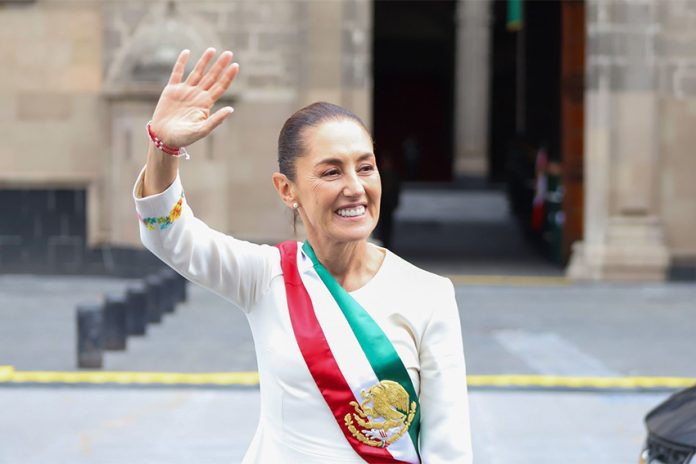
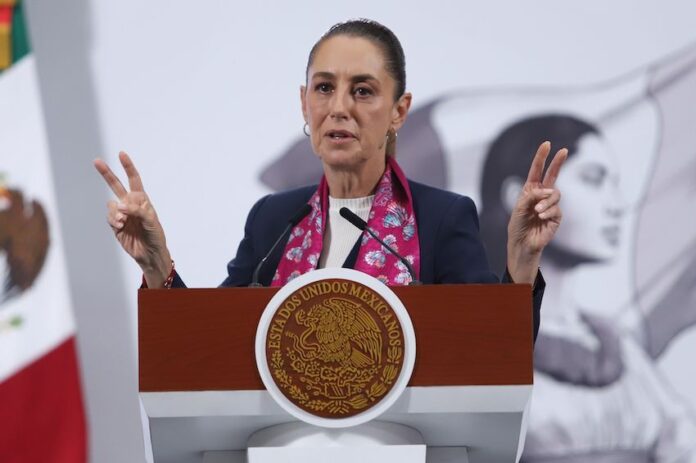
Mexico's President Claudia Sheinbaum, the nation's first-ever woman president, arriving at Mexico's National Palace after being sworn in at the Chamber of Deputies. (Daniel Augusto/Cuartoscuro)
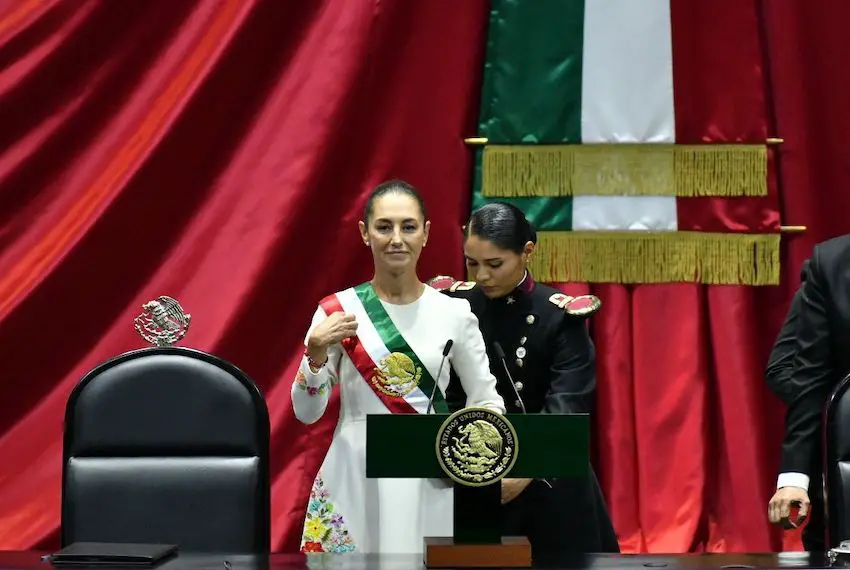
With her right arm stretched out in front of her, she pledges to govern in accordance with the Mexican Constitution. The green, white and red presidential sash, adorned with the coat and arms of Mexico, is placed over the chest of a woman for the first time ever. A chant of ¡presidenta, presidenta!rings out in the San Lázaro Legislative Place in Mexico City.
“On June 2 of this year, the people of Mexico, democratically and peacefully, said loud and clear: ‘It’s time for transformation and it’s time for women,'” says the 66th president of Mexico.
Claudia Sheinbaum Pardo assumed the presidency on October 1, 2024. (Mario Jasso/Cuartoscuro)
All this happened on Oct. 1, 2024.
That’s right. One year has now passed since Claudia Sheinbaum Pardo was sworn in as the first female president of Mexico, marking the commencement of what Sheinbaum calls the “second story” of the fourth transformation of Mexico, a political project initiated by her predecessor and political mentor Andrés Manuel López Obrador (AMLO).
To mark the occasion, Mexico News Daily is publishing a series of articles about Sheinbaum and her first year in office. Among them is a two-part overview of the first year of Sheinbaum’s presidency — 12 months of the first Mexican administration to be led by a woman in 12 numbers.
This is part 1. Part 2 will be published tomorrow, Oct. 2.
3
This is the number of new welfare programs the Sheinbaum administration has introduced.
The federal government has maintained all the welfare programs created by the López Obrador administration, including the Youths Building the Future apprenticeship scheme and the Sowing Life tree-planting employment initiative. Furthermore, it has added:
A “well-being” pension program (Pensión Mujeres Bienestar) for women aged 60-64. (3,000 pesos every two months)
A health care scheme (Salud Casa por Casa) in which doctors, nurses and other health workers visit the homes of seniors and people with disabilities to conduct health checks.
It is difficult to overstate the importance of the government’s welfare programs, both in terms of the monetary commitment to them and the impact they have, and have had, on people’s lives.
Sheinbaum said in her Sept. 1 state of the nation address that the government is allocating 850 billion pesos (US $46.4 billion) to welfare programs in 2025 alone, and highlighted that 32 million families benefit from them. In August, she said that the programs and the increases to the minimum wage in recent years were the main reasons why more than 13 million Mexicans were lifted out of poverty between 2018 and 2024.
Welfare programs have also been a crucial driver of the widespread support for the president and the ruling Morena party, especially in poor southern states such as Chiapas, Oaxaca and Guerrero.
Sheinbaum, like her predecessor, is well aware of this. Adding new welfare programs allows the president to consolidate support among her base, and put her own stamp on the national social agenda.
What they’re saying
The Economist:
“The lack of health-care coverage is not the only way in which the very poorest are worse off under Morena. Thanks to the new universality of handouts, they also get a smaller share of public resources than they used to.”
Welfare Minister Ariadna Montiel Reyes:
“13.4 million people have exited poverty; Mexican humanism is our roadmap. In the second story of the Fourth Transformation, under the leadership of our president Claudia Sheinbaum, we continue implementing and expanding the welfare programs that today are rights of the people of Mexico.”
5
This is the number of foreign countries Sheinbaum visited during the first year of her presidency.
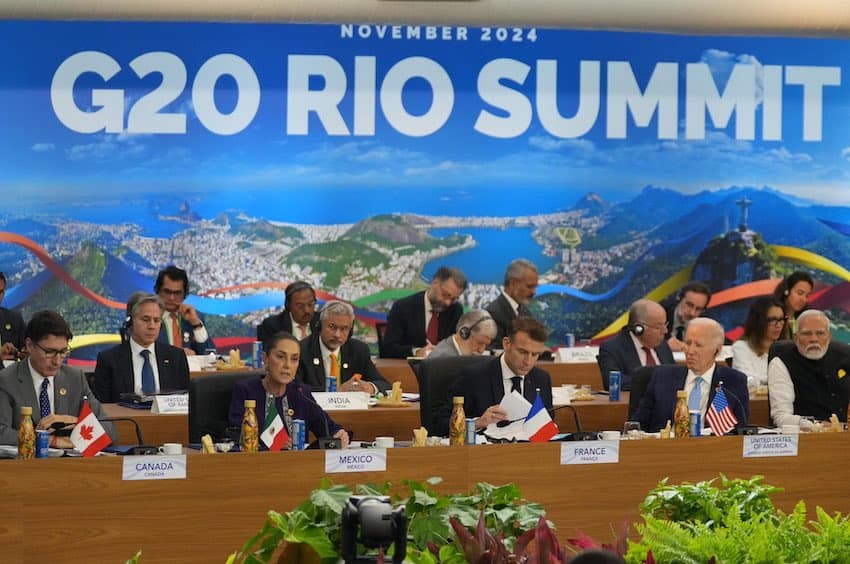
Sheinbaum completed four international trips during her first year as president, visiting five countries: Panama, Brazil, Honduras, Canada and Guatemala.
In August, Sheinbaum crossed Mexico’s southern border to travel to Flores, Guatemala, where she met with Guatemalan President Bernardo Arévalo. Subsequently, with Arévalo and Belizean Prime Minister Johnny Briceño, she unveiled an agreement creating an international area called the Great Maya Forest Biocultural Corridor.
The president’s international travel during her first year in office shows she is more willing than her predecessor to represent Mexico on the world stage and engage with different countries around the world.
In Rio, she proposed an ambitious global reforestation program and met one-on-one with some of the world’s most powerful leaders, including then U.S. president Joe Biden and Chinese President Xi Jinping.
Sheinbaum was the only woman leader at the G20 summit in Rio. (Claudia Sheinbaum/X)
In Canada, she declared that “economic well-being and cooperation for development are acts of shared responsibility of all nations,” and — amid an immigration crackdown in the United States — spoke out in defense of the “hardworking and honest” Mexicans in U.S.
As president, Sheinbaum has not yet traveled to the United States or met face-to-face with U.S. President Donald Trump. But a trip to Washington D.C., and a one-on-one meeting with Trump, could be in the cards in 2026.
What they’re saying
The Wilson Center:
“[Sheinbaum’s] participation in the G20 summit represents Mexico’s reengagement with major international forums after years of withdrawal under former President López Obrador.”
This is the number of autonomous government agencies that were disbanded as a result of a constitutional reform approved by Congress late last year.
The constitutional reform that paved the way for the disbandment of seven autonomous government agencies was one of the most controversial legislative moves during Sheinbaum’s first year in office.
The National Institute for Transparency, Access to Information and the Protection of Personal Data (INAI), the Federal Economic Competition Commission (Cofece) and the National Council for the Evaluation of Social Development Policy (Coneval) were among the agencies that were eliminated, their functions absorbed into other government departments.
Sheinbaum defended the disbandment of the agencies, touting the move as a cost-saving measure that would also reduce corruption.
However, critics claimed that the motivation for the elimination of the agencies — an initiative submitted to Congress by AMLO — would eliminate important counterweights to government power and represent a backward step for democracy. The reform was seen by many as an attempt to concentrate power in the executive branch of government.
Sheinbaum, unsurprisingly, has denied that the aim of the reform is to increase her own power and discretion.
What they’re saying
Senator Alejandro Moreno, national president of the Institutional Revolutionary Party:
“There was a lot of duplicity, opacity and even cases of corruption within these autonomous bodies. … In addition to being a very onerous expense for the people, they became white elephants.”
9
This is the number of justices on the bench of the Supreme Court after Mexico held its first-ever judicial elections in June.
Another highly controversial reform, the judicial reform, was approved by Congress just before Sheinbaum took office, but the impact of the constitutional amendment will be felt during this term of government.
Among them are nine Supreme Court justices, who assumed their positions on Sept. 1. All of them are affiliated with, seen as sympathetic to, or were at least tacitly supported by the ruling Morena party.
The popular election of judges, from Supreme Court justices to local judges, is a landmark in Mexico’s judicial history. A second round of judicial elections is scheduled to take place in 2027. The impact of the first round of elections — essentially whether Mexico’s judiciary is changed for better or for worse — will be something to watch closely during Sheinbaum’s second year in office.
The president has staunchly defended the reform put forward by her predecessor, arguing that judicial elections were needed to renew a judiciary plagued by corruption and other ills.
Critics of the reform argued that the election of judges, at a time when Sheinbaum and the ruling Morena party is extremely popular, would result in the nation’s courts being stacked with government sympathizers, thus eliminating a vital check on executive and legislative power. The future rulings of Mexico’s judges and justices, especially in cases involving government policies and projects, could reveal whether that argument is substantiated or not.
What they’re saying
Norma Piña, Supreme Court justice from 2015-25, chief justice from 2023-25:
Felipe Calderón, president of Mexico from 2006 to 2012:
“The judicial branch is [now] in the hands of militants and supporters of Morena. Some of them [the judges] were lawyers of narco-traffickers, others are people without experience.”
President Sheinbaum:
“Our adversaries say there is authoritarianism but how [can there be] if it is the people who decide [who the judges are]? Democracy is government of the people by the people for the people. And now the judicial power will serve the people of Mexico and the nation as it should have always done.”
12
This is the percentage by which Mexico’s minimum wage increased in 2025.
Supporting a healthy annual increase to the minimum wage is a clear way that governments and presidents can show they are on the side of workers and not subservient to the interests of the top end of town.
Shortly after she was sworn in, Sheinbaum said she would like to see 12% annual increases to the minimum wage throughout her presidency.
“We’ll be working toward that, seeking a consensus so that it can be a reality,” she said last October.
Supporting double-digit annual increases to the minimum wage, along with an outlay of close to 1 trillion pesos on welfare, adds credence to the Morena party slogan “For the good of all the poor come first.”
“During the entire neoliberal period, which Mexico lived from 1982 to 2018, job creation was spoken about, the salary didn’t matter. Furthermore, they boasted to the whole world that Mexico had cheap labor — that was the competitiveness of the country. What happened then? Reduction of salaries, the minimum wage didn’t increase.”
The El Economista newspaper (Aug. 20, 2025):
“Reaching a minimum wage of 9,437 pesos in 2026 – and 11,796 pesos in 2030 – seems technically possible and politically viable. The challenge lies in what is not seen in the figure: the impact these adjustments may have on labor costs, inflation, and employment dynamics, especially for small businesses. The goal is set, but the challenge will be to not lose balance along the way.”
25
This is the percentage by which homicides declined in the first 8 months of 2025 compared to last year.
At President Sheinbaum’s morning press conference on Sept. 9, security official Marcela Figueroa presented data that showed that there was an average of 68.4 homicides per day across Mexico in the first eight months of 2025. The figure represents a decrease of 24.7% compared to the average daily murder rate through 2024.
Federal officials, including Sheinbaum, were even more eager to highlight that homicides in August were 32% lower than in September 2024, the final month of AMLO’s six-year term, or sexenio.
Sheinbaum asserts that the reduction in homicides achieved during her presidency is proof that her government’s security strategy is working. The government unveiled a new security strategy shortly after it took office last October. It is based on four key pillars:
“If Mexico wanted help with the cartels, we would be honored to go in and do it. I told … [Sheinbaum] that. … She’s so afraid of the cartels, she can’t walk. … I think she’s a lovely woman, the president of Mexico is a lovely woman, but she is so afraid of the cartels that she can’t even think straight.”
By Mexico News Daily chief staff writer Peter Davies (peter.davies@mexiconewsdaily.com)
‘Tis the season! Spooky season has arrived in Mexico City, and here’s how to enjoy it at its fullest in October 2025. (Daniel Augusto/Cuartoscuro)
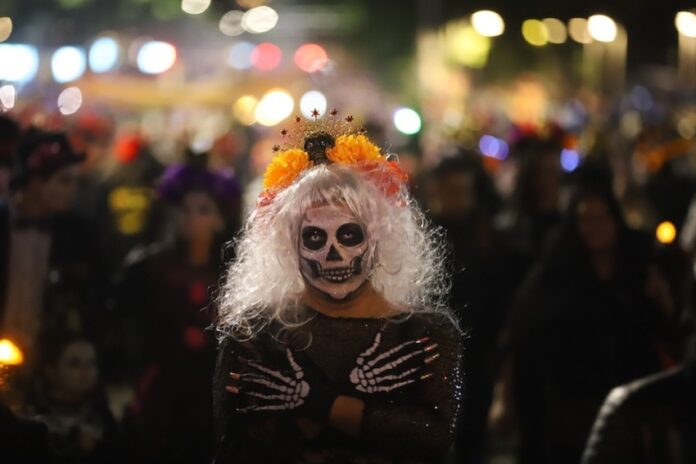
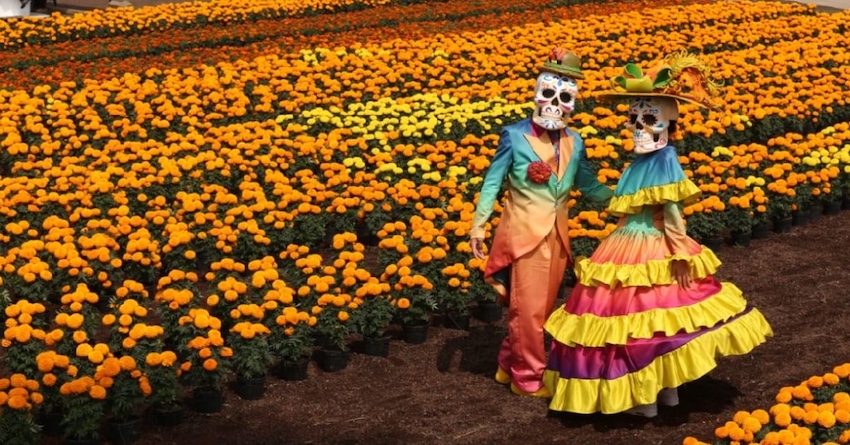
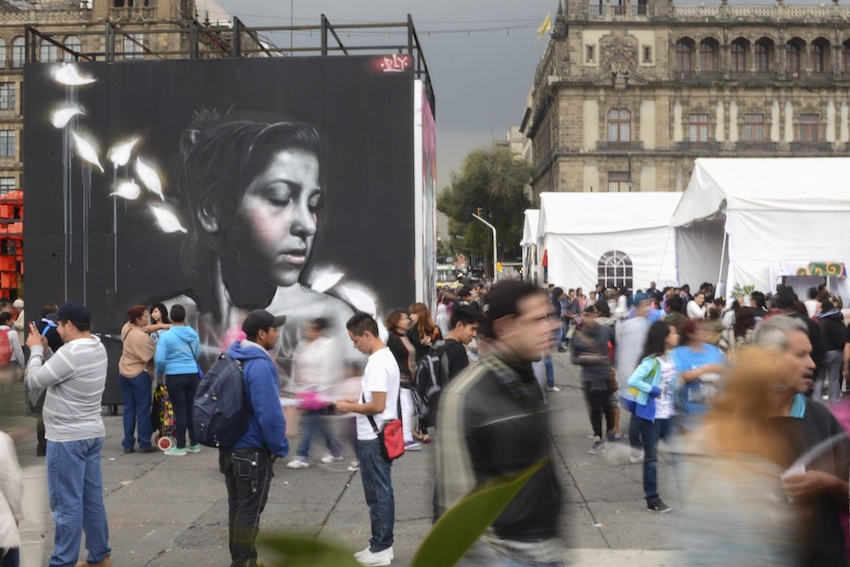
Mexico is getting ready for the Day of the Dead. And we can all feel it. In preparation to welcome the souls from our beloved departed, we start designing our altars, tending cempasúchil flowers and buying sacred copal scents at our closestlocal market. If you’re all about getting into the Spooky Season mood in the Mexican way, you can’t miss what’s on in Mexico City this October 2025.
From the spectacular Catrina parade to the traditional Chocolate and Coffee Fest, the capital’s main streets and galleries will be full of the season’s colors and joys. Here’s our monthly digest.
A journey to Mictlán
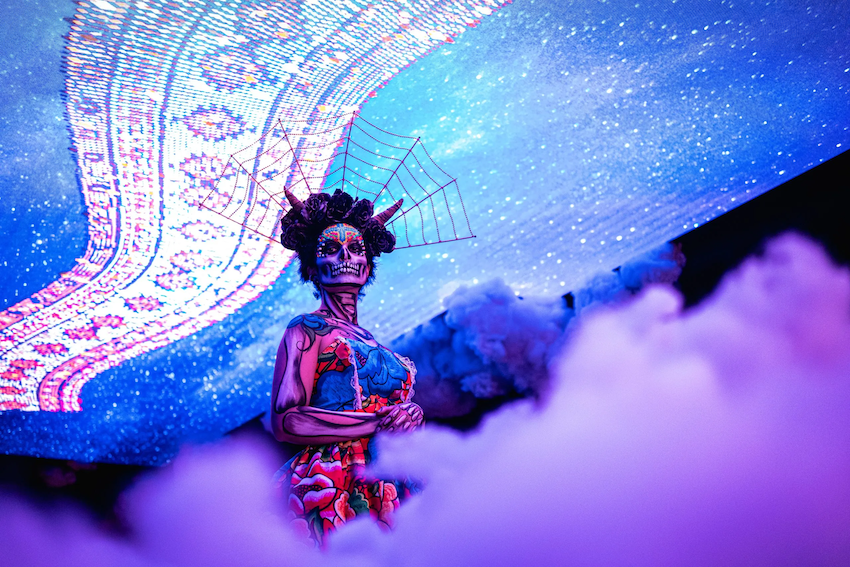
Lights, art, photography and videos will take visitors on a journey across the Mexica underworld, the Mictlán. (FantasyLab)
“Mictlán means eternal resting place of the dead,” Ayaotekatl, a representative of the Tepanec tribe in Azcapotzalco, once told UNAM’s Gaceta magazine. Both folk and pop culture in Mexico have adopted this mythical place as part of their Day of the Dead celebrations.
A great example of this is Fantasy Lab’s “Un viaje al Mictlán” (A Trip to Mictlán) immersive exhibit, where visitors will be able to explore the nine levels of the Mexica underworld. The idea is to simulate the journey that the Mexica believed the soul undertakes to arrive at its eternal resting place.
Dates: Runs through Nov. 17
Location: Av. Patriotismo 229, San Pedro de los Pinos, Benito Juárez
No one can say no to the Pan de Muerto + Café de Olla combo. (Alcaldía de Xochimilco/Trajineras de Xochimilco)
The scent of Day of the Dead’s traditional pan de muerto is starting to fill the air in Mexico City, and we love it!
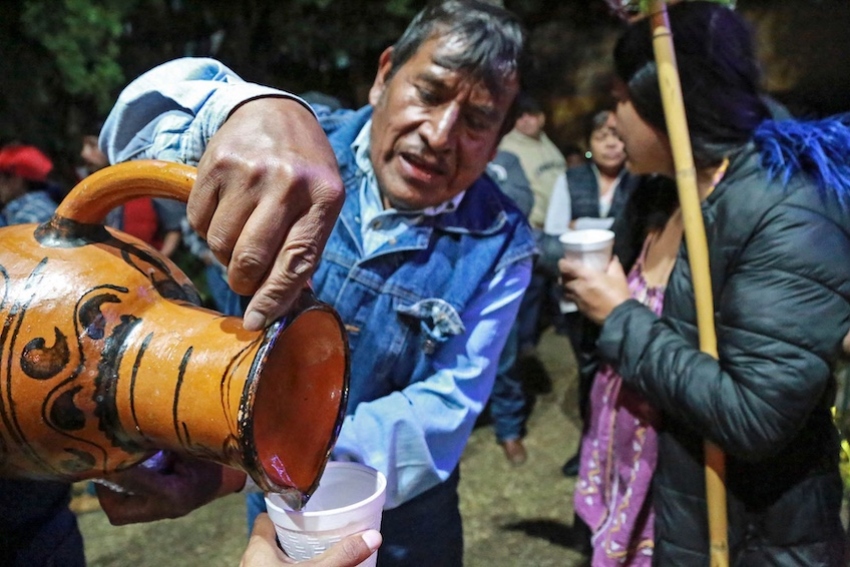
You can have a proper taste of this traditional sweet bread in Explora Xochimilco’s trajinera tour, which will feature Catrinas, cempasúchil flowers and pre-Columbian live music in the Xochimilco borough’s canals. Enjoy local altar design, sample traditional beverages and listen to ancient legends that still haunt the Xochimilca collective unconscious.
Dates: Oct. 3–Nov. 9
Location: Av. Patriotismo 229, San Pedro de los Pinos, Benito Juárez
Coffee and Chocolate Fest: Day of the Dead edition
There is nothing better to warm the heart than a good café de olla or a glass of champurrado. (Maira Tulia Pérez Bocanegra/Cuartoscuro)
October in Mexico just isn’t October without hot chocolate and cempasúchil flowers, and the Coffee and Chocolate Fest knows it. The host of this festival, the National Museum of Popular Cultures, has made an open (and very wholesome) invitation to the public on its social media: “Let’s welcome our beloved departed with lots of love, coffee and chocolate,” following the centuries-old tradition of welcoming the souls of loved ones home on Day of the Dead.
With that in mind, several workshops,cacao ceremonies and storytelling sessions will be held at the museum, suitable for all family members.
Dates: Oct. 10, 11 and 12
Location: Museo Nacional de las Culturas Populares. Av. Hidalgo 289, Del Carmen, Coyoacán
Cost: Free
International Book Fair at the Zócalo
For the nostalgic who still like to read on actual paper, the Zócalo International Book Fair is a dream come true. (Isabel Mateos/Cuartoscuro)
It’s time to bring those extra pesos: the Zócalo International Book Fair (FIL Zócalo) is coming to Mexico City in October! Staged out in the open on Mexico City’s main square, the Zócalo, you’ll get access to a ton of free activities, workshops and talks, plus a chance to snatch the best deals on physical books you’ll get this year. Major international publishing houses like Random House and Taschen have had auction prices in past editions, which can be pricey even online.
Last year, over 300 publishers participated in FIL Zócalo, so there will be plenty to choose from! Try arriving before noon, because it can get really crowded.
Dates: Oct. 11–19
Location: Plaza de la Constitución
Cost: Activity and workshop fees may vary, but they’re mostly free
Alebrije parade
Originally from Oaxaca state, alebrijes will take over Mexico City this October. (Carl Campbell/Unsplash)
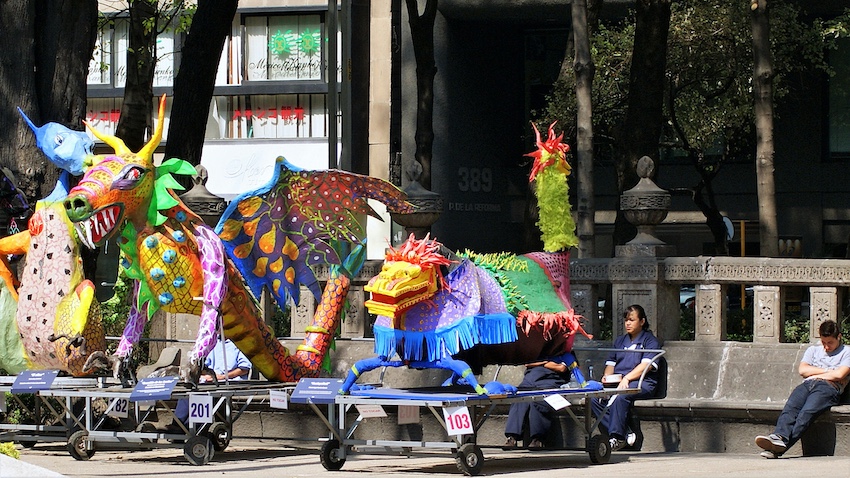
For almost two decades, the Museum of Popular Arts (MAP) has organized an annual alebrije contest. Winners get to prance with their pieces throughout the capital’s main avenues in the historic center, where thousands of spectators cheer on their mystical designs.
Starting at 12:00 p.m., the parade begins at the Zócalo, continues along 5 de Mayo, Juárez and Paseo de la Reforma avenues before concluding at the Independence Angel monument roundabout. Traditionally, once the parade is over, artists are expected to exhibit the alebrijes along Paseo de la Reforma Avenue. This year, the exhibition runs until Nov. 9.
Date: Oct.18
Location: From the Zócalo to the Ángel de la Independencia
Cost: Free
Medieval Fairies and Goblins Festival
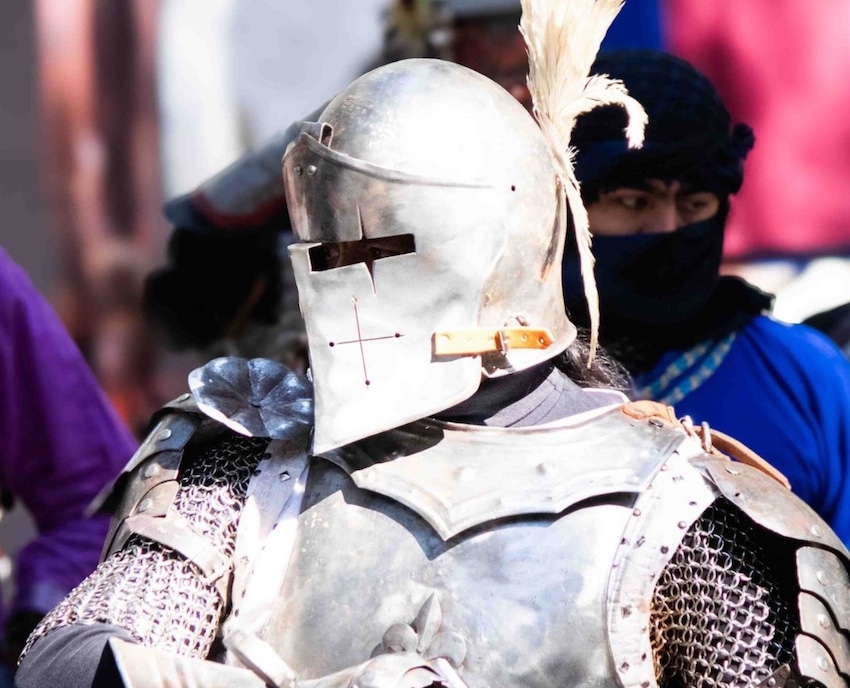
The Medieval Festival’s attendees enjoy dressing up as knights, princesses and fairies. (KAMELOT El Castillo del Rey)
Yes, I know. In an earlier post for MND, I wrote about how there wereno Middle Ages in Mexico. However! We Mexicans do still love some medieval fantasy!
Elves, goblins, dragons and tons of cosplay will fill the Ex-Convento del Desierto de los Leones for the eighth edition of the Medieval Festival. Set in a 17th-century monastery, this event is your annual chance to sample homemade root beer, magical sweets and walk around in enchanted forests.
Date: Oct. 19
Location: Carretera México-Toluca 05050, Cuajimalpa de Morelos
Cost: Entrance fees start at 200 pesos for adults. Seniors and people with disabilities get a 50-peso discount.
Mega-Catrina Parade
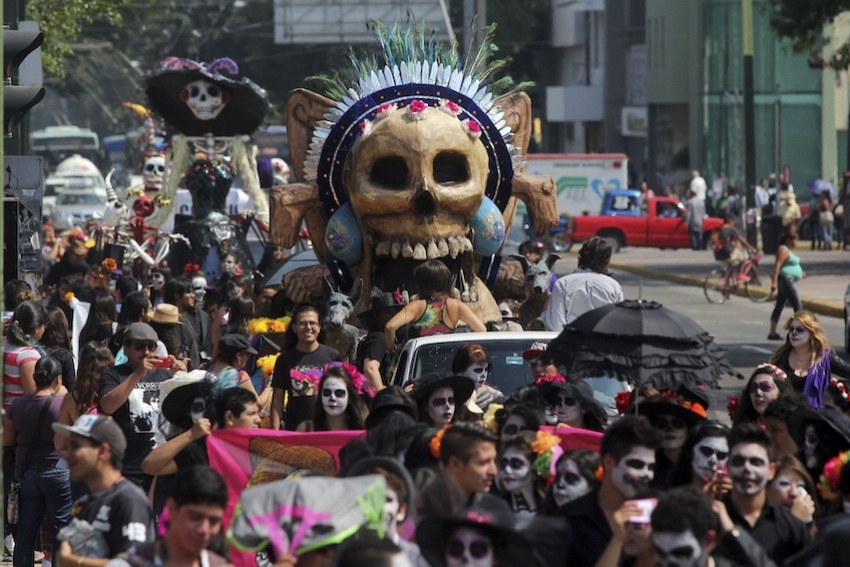
Hundreds of catrinas will parade in different thematic groups in Mexico City’s raucous Mega-Catrina Parade on Oct. 26. (Fernando Carranza/Cuartoscuro)
Scheduled this year for Oct. 26, the always entertaining Mega-Catrina Parade features hundreds of catrinas and catrines representing different Mexican art forms — including dance and performance art. The 2025 parade will begin at the Independence Angel monument and end at the Zócalo.
It’s worth noting that the Mega-Catrina Festival and the Day of the Dead parade are two separate events. The date of the latter event has not yet been confirmed.
Date: Oct. 26
Location: From Avenida Paseo de la Reforma to the Zócalo
Cost: Free
A literary afternoon with reading aloud
A literary afternoon in one of the most beautiful cultural venues in southern Mexico City? Yes, please! (Pretextos literarios por escrito)
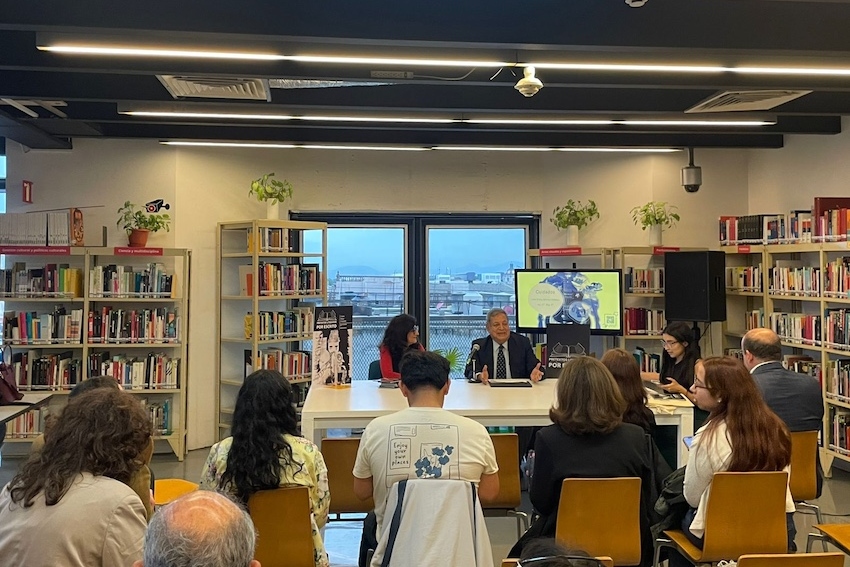
There are a few spaces in Mexico City where you can hear readings of contemporary Mexican literature. However, the magazinePretextos literarios por escrito, which bimonthly publishes the country’s new narrative and poetic voices, also arranges public talks with the launch of each new issue, in some of the capital’s best cultural venues.
In October, the magazine’s board will celebrate its 58th issue with a talk at the iconic Casa Juan Rulfo, in the colonial neighborhood of Mixcoac, where participants can hear the authors themselves narrate their pieces aloud. October’s guests are to be announced. Follow the magazine’s Facebook page for announcements.
Watch the Amalia Hernández Ballet live at Castillo de Chapultepec
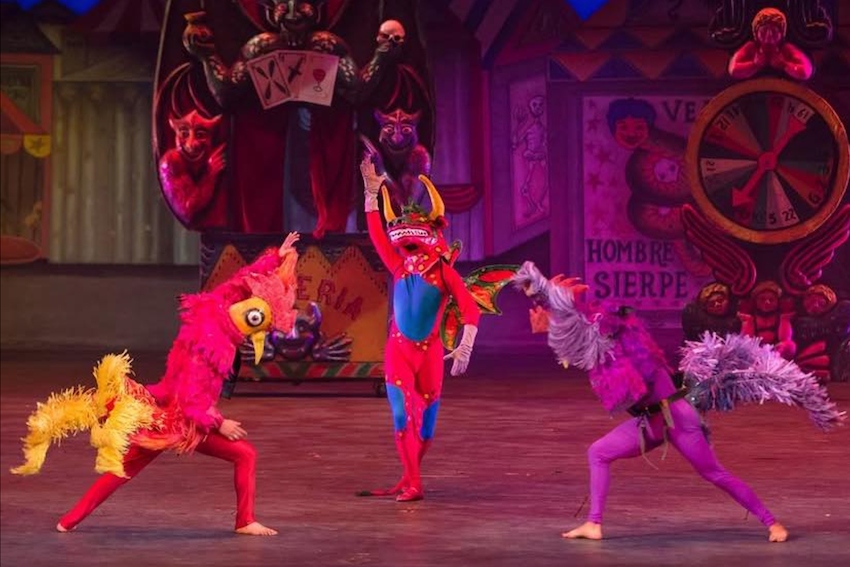
The show will pay tribute to the traditions of the states of Veracruz, Jalisco, Michoacán and Oaxaca. (Ballet Folklórico de México de Amalia Hernández)
Among the things to do in Mexico City in October is an unmissable performance led by the Amalia Hernández Folkloric Ballet. Presented at the Islet of Chapultepec Lake, the “Death in Mexico is More Alive Than Ever” show brings the very best of Mexican traditional dance to the stage, with a Day of the Dead theme.
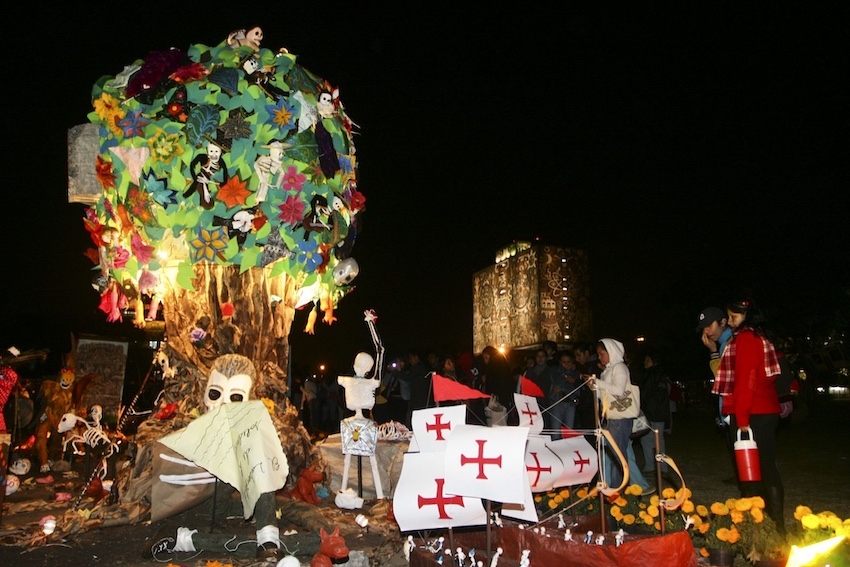
Roughly 100 Day of the Dead ofrendas are designed and constructed across Mexico City’s Ciudad Universitaria for this event. (Isaac Esquivel/Cuartoscuro)
Every year, the National University of Mexico’s Mega-Ofrenda installation is themed to a different icon of Mexican art or history. Art icons like Remedios Varo and José Clemente Orozco have been among the many inspirations for this annual altar, designed and built by UNAM’s students.
Sheinbaum also got into a bit of a battle with a reporter who accused the president of practicing favoritism at her morning press conferences. (Daniel Augusto/Cuartoscuro)
At her Tuesday mañanera, held on the final day of her first year in office, President Claudia Sheinbaum engaged in a robust back-and-forth with a reporter who accused her of bias.
Among other issues, she also spoke briefly about new regulations aimed at making the transportation of liquefied petroleum gas safer.
Reporter accuses Sheinbaum of ‘favoritism’ at her mañaneras
Reyna Haydee Ramírez, an independent reporter, accused Sheinbaum of “favoritism” at her press conferences, asserting that she always gives the same journalists the opportunity to ask her questions.
The implication was that the president favors government-friendly reporters, a number of whom regularly attend the president’s mañaneras.
Sheinbaum responded by suggesting that Ramírez should count the number of times she has given a reporter from the newspaper Reforma the opportunity to ask questions.
“It’s not as if Reforma is particularly in our favor, is it?” she said.
As Ramírez continued to press her point, Sheinbaum noted that she had given her the opportunity to ask a question and advised her not to waste it.
“It’s not fair, it’s not democratic. … There are a lot of people who haven’t asked a question for a long time,” Ramírez continued.
The interaction between the president and the reporter ensued like this:
Sheinbaum: “Look, Reyna, if it were true that here in ‘La mañanera‘ we only gave the floor to those who agree with us, then why have we given the floor to Reforma, to other colleagues who ask whatever questions they want?”
Ramírez: “Because you have to conceal [your favoritism], presidenta: four lackeys, one reporter; five lackeys, one reporter.”
Sheinbaum: “The good thing is that you have an answer for everything. I’ll give you credit for that.”
Ramírez: “Well, that’s the issue here. Let’s see if it can become a little more democratic and fairer.”
Sheinbaum’s predecessor, Andrés Manuel López Obrador, also faced accusations that he favored government-friendly reporters at his morning press conferences.
The new regulations will make the transport of the fuel safer, she said, explaining that companies that transport gas will have to comply with “higher safety standards.”
The explosion in the Mexico City borough of Iztapalapa occurred after a speeding gas tanker overturned and crashed into a wall.
Reuters reported that “the incident has stirred frustration over safety conditions on Mexico’s highways, prompting calls for tighter oversight of hazardous cargo transport and road maintenance.”
Sheinbaum slams ‘sleepy Mexican’ stereotype
A reporter asked Sheinbaum about U.S. President Donald Trump’s social media post on Monday that included an AI-generated video featuring U.S. Senate Minority Leader Chuck Schumer and House Minority Leader Hakeem Jeffries, who is depicted wearing a sombrero and with a large mustache.
“I’d rather not comment,” the president responded.
She subsequently railed against the infamous image of a Mexican “with a sombrero sitting under a cactus.”
The “sleepy Mexican” image seeks to portray Mexicans as being lazy, Sheinbaum said before asserting that nothing could be further from the truth.
“Mexican women and men are so hard working, … Mexican workers are so good that they haven’t just lifted up the economy of Mexico, but that of the United States as well,” she said.
“The United States wouldn’t be what it is if it weren’t for the Mexican workers there, female workers and male workers,” Sheinbaum said.
By Mexico News Daily chief staff writer Peter Davies (peter.davies@mexiconewsdaily.com)
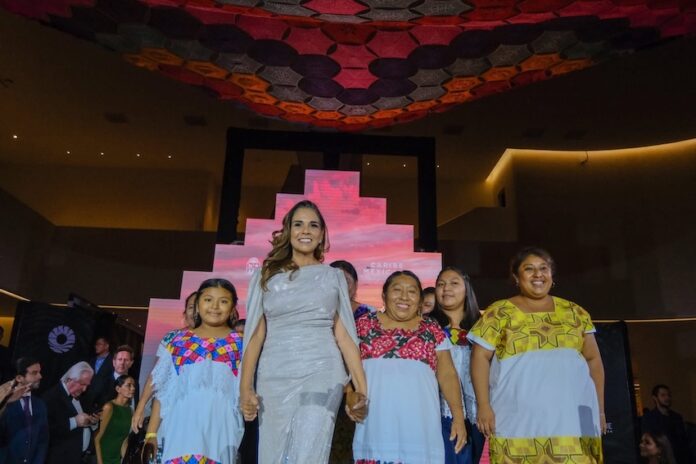
Quintana Roo Governor Mara Lezama had much to be proud of at the 2025 World Travel Awards ceremony. Her state won more than a quarter of the awards in the Mexico/Central America region, and she personally was honored for her "Outstanding Contribution to the Travel and Tourism Industry." (Mara Lezama/X)
The southeastern Mexican state of Quintana Roo received 34 accolades at the 2025 World Travel Awards, consolidating its position as one of the world’s most prominent tourist destinations and leading the way in tourism excellence in Mexico and Central America.
This figure accounts for 28% of the 120 awards given to the best of tourism in the Mexico and Central America region.
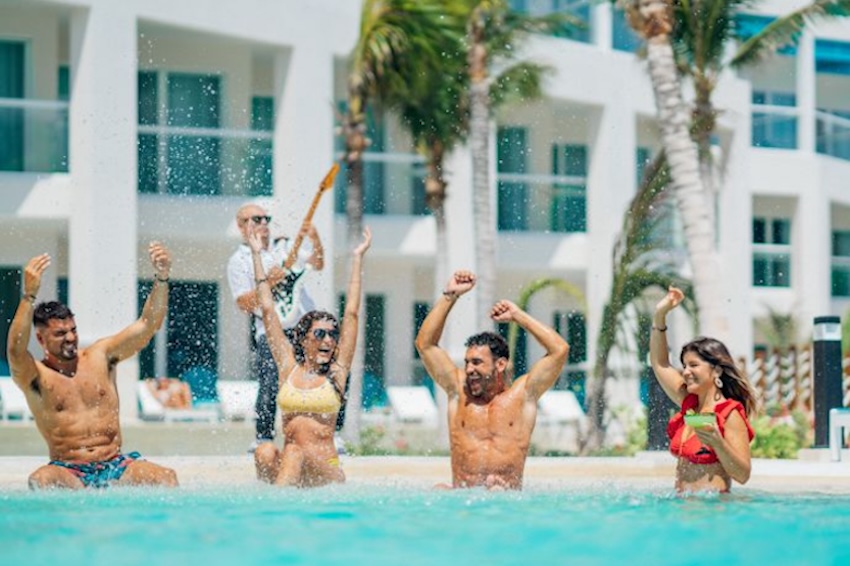
Margaritaville Island Reserve Riviera Maya, another Quintana Roo favorite, was named Mexico’s leading Adults-Only Resort, serving visitors who prefer a kid-free vacation. (margaritavilleresorts.com)
Notable wins for Quintana Roo in the region-wide awards went to Cancún International Airport as the leading airport; Cozumel as the Best Beach Destination; Puerto Morelos as the Leading Adventure Destination; Cancún as the Leading Meeting, Business and Beach Destination; Playa del Carmen as the Best City Break; Isla Mujeres as the Best Island Destination; Tulum as the Best Romantic Destination; and Ekinox Tours as the Leading Adventure Tour Operator.
The awards ceremony, held for the first time in Cancún, Quintana Roo, with representatives from 17 countries attending, also gave out “best of” honors on a country-by-country basis. For example, Xcaret was named Mexico’s Leading Adventure Tour Operator, while Margaritaville Island Reserve Riviera Maya was named Mexico’s leading Adults-Only Resort.
Other best-of-Mexico honors went to the Hilton Cancún Mar Caribe All-Inclusive, named Mexico’s Leading All-Inclusive Resort; Dreams Vista Cancún Golf & Spa, recognized as Mexico’s Leading Family Resort; Atelier Playa Mujeres, awarded Mexico’s Leading Conference Hotel; and Marriott Cancún, An All-Inclusive, designated as Mexico’s Leading New Resort, among others.
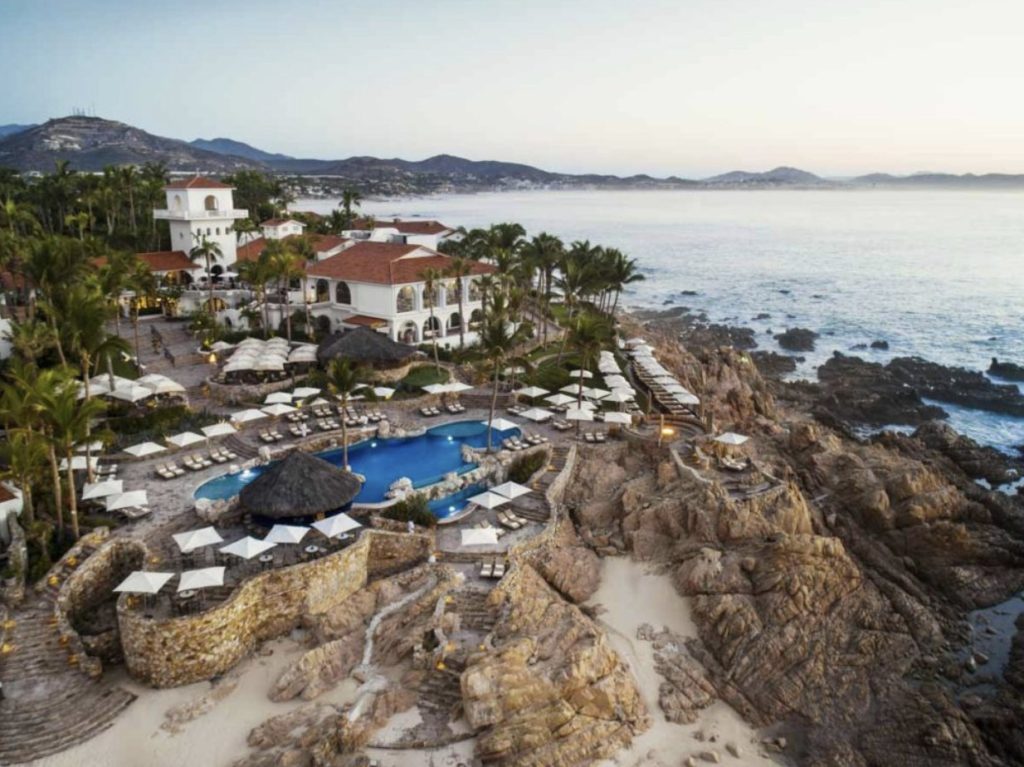
Though Quintana Roo led the pack, it was not the only Mexican state with regional and national award-winners. A small sampling of the many others includes the airline Aeroméxico; the St. Regis and Four Seasons hotels in Mexico City; the One&Only Palmilla in Baja California Sur; and the Ixtapa Zihuatanejo Convention and Visitors Bureau in Guerrero.
Los Cabos’ 20-mile-long Tourist Corridor is home to many notable luxury resorts, although few are as spectacular the resort One&Only Palmilla. (One&Only Palmilla)
A full list of the regional and national winners can be seen here.
During the ceremony, awards founder Graham Cooke presented Quintana Roo Governor Mara Lezama with the Outstanding Contribution to the Travel and Tourism Industry honor on behalf of the World Travel Awards, recognizing her leadership in the tourism industry.
The awards ceremony also served as a platform to showcase the work of Maya embroiderers and artisans. Embroiderers from Xpichil, Felipe Carrillo Puerto, and Tulum took part in the event.
“Cancún, Riviera Maya, Playa del Carmen, Tulum, Cozumel, Holbox and Isla Mujeres are among the places that have honored Quintana Roo,” Lezama said. “The list of nominations alone reflects the diversity of our offerings and the commitment of our people to maintain us as an international benchmark.”
The 10-day design festival runs through Sunday, Oct. 5, and includes more than 100 creators in 11 venues concentrated in and around Chapultepec Park. (jefaturadegobierno.cdmx.gob)
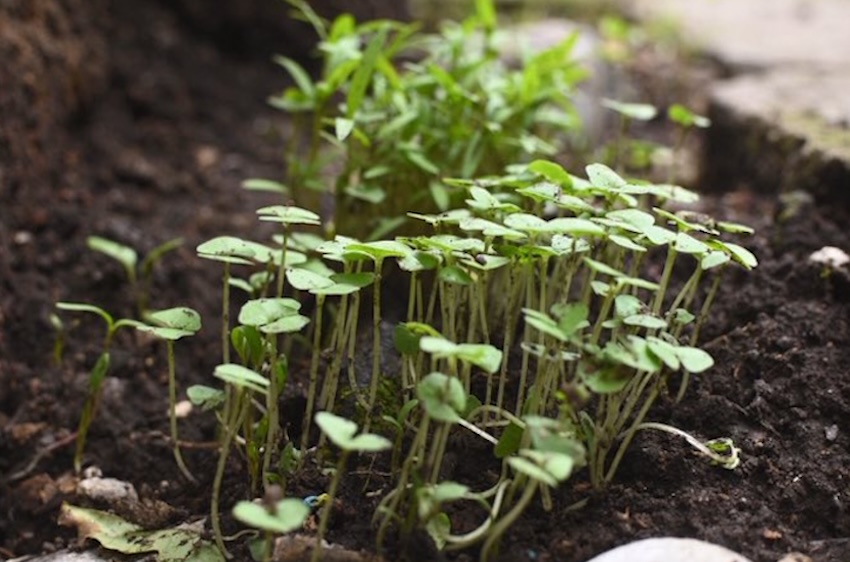
Sprawling Chapultepec Park in the nation’s capital once again has been transformed into a mecca of creativity as the ninth Mexico City Design Open unfolds its 2025 edition under the theme “Weeds. Design in Resistance.”
The 10-day festival, which began last week and runs through Sunday, Oct. 5, includes more than 100 creators in 11 venues concentrated in and around Chapultepec Park. It is free to the public.
Designs for children are also featured, some inspired by icons of Mexican culture, such as the papalote (kite) and the butterfly. (jefaturadegobierno.cdmx.gob)
The event began in 2013 but later underwent a five-year hiatus before its reboot this year.
Visitors can explore six themed pavilions — Architecture, Academic, Visual Communication, Furniture and Objects, Public Space and New Developments — and attend workshops, talks and exhibitions aimed at exploring design’s role in cultural and ecological transformation.
This year’s curatorial concept — “Maleza. Diseño en Resistencia” in Spanish — draws on the resilient metaphor of the weed: “creativity that sprouts on the margins, thrives in the face of adversity and transforms the environment without asking permission,” according to a CDMX government press release.
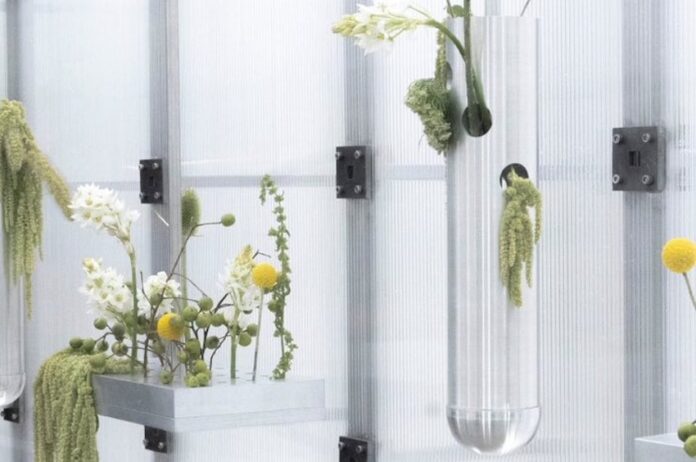
If the weed theme seems puzzling for a design event, consider this metaphor from a city government press release in which weeds are described as “creativity that sprouts on the margins, thrives in the face of adversity and transforms the environment without asking permission.” (jefaturadegobierno.cdmx.gob)
The program is also introducing Plots, or thematic clusters that explore issues in contemporary design. They include Fertility, on motherhood and its challenges; Shoots, highlighting design for children; Ecosystems, focused on sustainable practices and landscape transformation; and Pollination, which addresses migration, cultural identity, and resistance.
Among the highlights is a monumental installation by French designer Camille Walala on the terrace of the Papalote Children’s Museum. Celebrated for her colorful, exuberant geometric designs, Walala was inspired for this work by icons of Mexican culture, most notably the papalote (kite) and the butterfly.
At Lago Algo, visitors can see immersive works created from Chapultepec’s own natural waste, illustrating the importance of ecosystem restoration.
The festival opened with the “What Design Can Do México GNP” series, its title always given in English, odd syntax and all, even in Spanish texts. It features debates on ecological design, artificial intelligence and architecture.
Marcelo Ebrard, Mexico’s economy minister, inaugurated the event, calling on young designers to merge innovation with ancestral knowledge.
International voices such as Australian-born landscape designer Julia Watson (an expert in Indigenous ecological technologies) and technology-driven Swiss academic Benjamin Dillenburger (known for his research into large-scale, 3D-printed architecture) joined Mexican creators in exploring the intersections of sustainability and technology.
One of the Mexican voices was designer and Mujeres de la Tierra founder Rocío Lobato, an activist who defends native corn and promotes the dignity and visibility of rural women through art and public projects.
Mexico City’s Tourism Minister Alejandra Frausto underscored the event’s impact, stating, “The 2025 Design Open projects our city as a cultural and creative capital of international reach, fostering the talent of our designers, strengthening cultural tourism, and contributing to economic development and social well-being.”
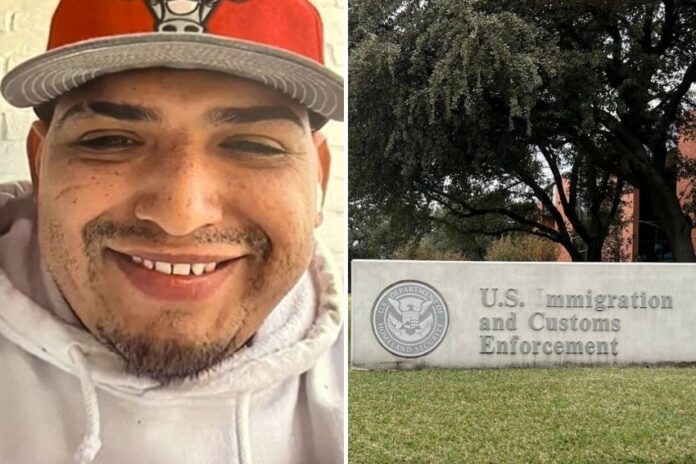
Miguel Ángel García Hernández, 32, was among three detainees shot on Sept. 24 when a sniper fired at a van inside the Immigration and Customs Enforcement (ICE) facility. (Social media)
A Mexican man shot at a Dallas immigration field office last week has died, the second immigrant to die as a result of the attack.
Miguel Ángel García Hernández, 32, was among three detainees shot on Sept. 24 when a sniper fired at a van inside the Immigration and Customs Enforcement (ICE) facility.
García was removed from life support and died on Tuesday morning.
Mexico’s President Claudia Sheinbaum asked U.S. authorities for a thorough investigation and said Mexico would intercede if it were discovered that García’s rights were violated.
“We are in contact with the families regarding all aspects, both financial and legal, and should they wish to file a complaint, we will make all diplomatic appeals at our disposal,” she said.
In a statement, García’s wife Stephany Gauffeny described him as a “good man, a loving father, and the provider for our family.” She called his death “a senseless tragedy that has left our family shattered.”
García was the father of four children, ages 3, 8, 12 and 14, and Gauffeny is 39 weeks pregnant with the couple’s fifth child.
“We had just bought our first home together, and he worked hard every single day to make sure our children had what they needed,” Gauffeny told NPR.
García, who worked as a house painter, was originally from the northern state of San Luis Potosí and had lived in the U.S. since he was 13 years old.
The Sheinbaum administration fast-tracked paperwork to allow García’s mother to travel to Dallas after the shooting.
García is the second Mexican citizen to die this month while in ICE custody.
Three other Mexicans have died while in ICE custody amid the “mass deportation” push set in motion by Donald Trump upon taking office as U.S. president in January.
Experts warn there are likely to be more such deaths as U.S. authorities attempt to reach the established target of arresting 3,000 people a day, especially as private companies are being tasked with transporting immigrants, but with little oversight to ensure their safety.
Besides the 670 arrests, DEA agents seized nearly US $30 million in cartel assets. (DEA.gov)
The U.S. Drug Enforcement Administration (DEA) on Monday announced it made 670 arrests and seized large quantities of drugs, more than US $18 million in cash and 244 guns during a week-long surge aimed at dismantling the Mexico-based criminal organization known as the Jalisco New Generation Cartel (CJNG).
During the operation that ended on Sept. 26, DEA agents from 23 domestic field divisions and seven foreign regions carried out coordinated actions that resulted in the seizure of 92.4 kilograms of fentanyl powder, 1.1 million counterfeit pills, 6,062 kilograms of methamphetamine, 22,842 kilograms of cocaine and 33 kilograms of heroin.
The five-day operation that ended on Sept. 26 involved DEA agents from 23 domestic field divisions and seven foreign regions carrying out coordinated actions. (DEA.gov)
Overall, DEA agents seized nearly US $30 million in assets.
During her Tuesday morning press conference, Mexican President Claudia Sheinbaum said Mexico did not cooperate with the DEA because “the operation was carried out there in the United States.”
“DEA is targeting the Jalisco New Generation Cartel as what it is — a terrorist organization — at every level, from its leadership to its distribution networks and everyone in between,” said DEA Administrator Terrance Cole in the press release.
In February, the notorious cartel was designated as a Foreign Terrorist Organization by the U.S. government and, according to the press release, “it is responsible for flooding the United States with deadly fentanyl, methamphetamine, cocaine and heroin to fuel addiction, overdoses and violence in communities across the United States.”
The CJNG operates globally, with tens of thousands of members, associates and facilitators in at least 40 countries, according to the DEA.
In Monday’s press release, the DEA reaffirmed its commitment to taking down CJNG’s command, control and distribution networks and will continue to pursue CJNG co-founder and leader Nemesio Rubén Oseguera Cervantes, also known as “El Mencho.” He is on the DEA’s Most Wanted Fugitives list and the U.S. State Department has offered a US $15 million reward for his capture.
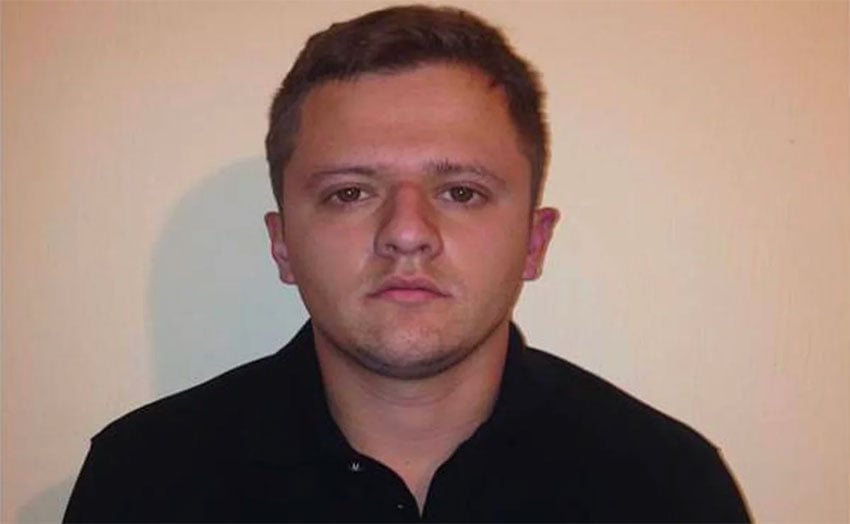
Rubén Oseguera González, or “El Menchito.” (Archive)
“El Menchito” was extradited from Mexico in 2020 and, on March 7, 2025, was sentenced to 30 years in prison for international drug trafficking and firearms offenses. He was also ordered to forfeit over US $6 billion of drug trafficking proceeds.
Additionally, Allen recounted the violence the CJNG routinely employs, including retaliation against family members of informants, while describing the threat the criminal group poses to U.S. citizens.
In an operation taking place during the final week of August, agents seized 480 kilograms of fentanyl powder, 714,707 counterfeit pills, 2,209 kilograms of methamphetamine, 7,469 kilograms of cocaine and 55 kilograms of heroin.
On top of the drugs, agents seized more than US $11 million in cash, roughly US $1.7 million in assets and took 420 firearms off the street.
Sheinbaum is significantly more popular than her five most recent predecessors were at the completion of their first year in office. (Presidencia/Cuartoscuro)
President Claudia Sheinbaum has an approval rating above 70% at the end of her first year in office, according to the results of two polls.
Sheinbaum, who was sworn in as Mexico’s first female president on Oct. 1, 2024, is thus significantly more popular than her five most recent predecessors were at the completion of their first year as president.
The newspaper El Financiero polled 1,000 Mexican adults by telephone in September, 73% of whom said they approved of Sheinbaum’s work as president.
A much larger online poll of more than 62,000 people conducted by Mitofsky for the newspaper El Economista this month detected a slightly lower 71.6% approval rating for the president.
Both polls found that close to three in ten people disapproved of Sheinbaum’s performance as president.
Women more likely to support Sheinbaum than men
The Mitofsky/El Economista poll found that 74.1% of women supported Sheinbaum, whereas 69% of men approved of the president’s performance.
The poll also found that young Mexicans were more likely to support the president than older people. Support for Sheinbaum among people aged 18-29 was 73% compared to 69.8% among those aged 30-49 and 72.6% among Mexicans aged 50 and above.
Among people with university qualifications, support for the president was 60.3% whereas 74.6% of Mexicans with lower levels of educational attainment approved of Sheinbaum’s performance.
Support for Sheinbaum highest among housewives, lowest among businesspeople
The Mitofsky/El Economista poll found that 81.1% of housewives supported the president, the highest percentage among 12 different “occupation” categories.
Three other cohorts of people — informal sector workers, retirees and farmers — expressed support for Sheinbaum in higher numbers than the national average of 71.6%.
The president’s approval rating was below 60% among three cohorts of people: businesspeople (54.8%), professionals (56%) and unemployed people (59.9%).
Among people who benefit from government welfare programs, support for the president was 80.2%.
Sheinbaum’s popularity is highest in Tamaulipas, lowest in Jalisco
Sheinbaum’s approval rating was above 80% in seven states, according to the results of the Mitofsky/El Economista poll.
Those states were Tamaulipas (83.4%); Hidalgo (82.6%); Tabasco (81.8%); Campeche (81.6%); Oaxaca (81.1%); Tlaxcala (80.9%); and Durango (80.6%).
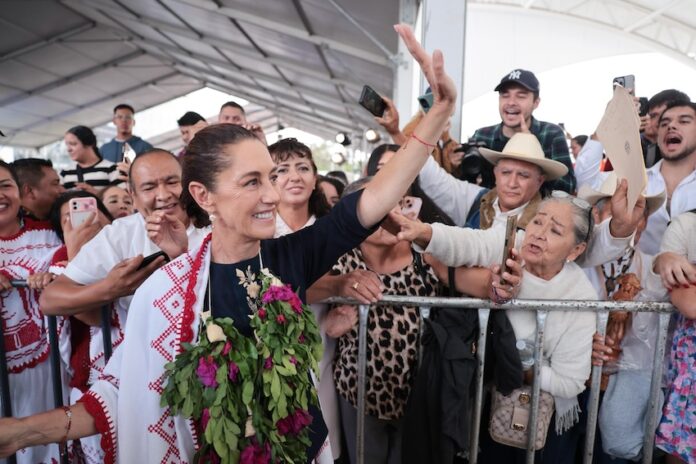
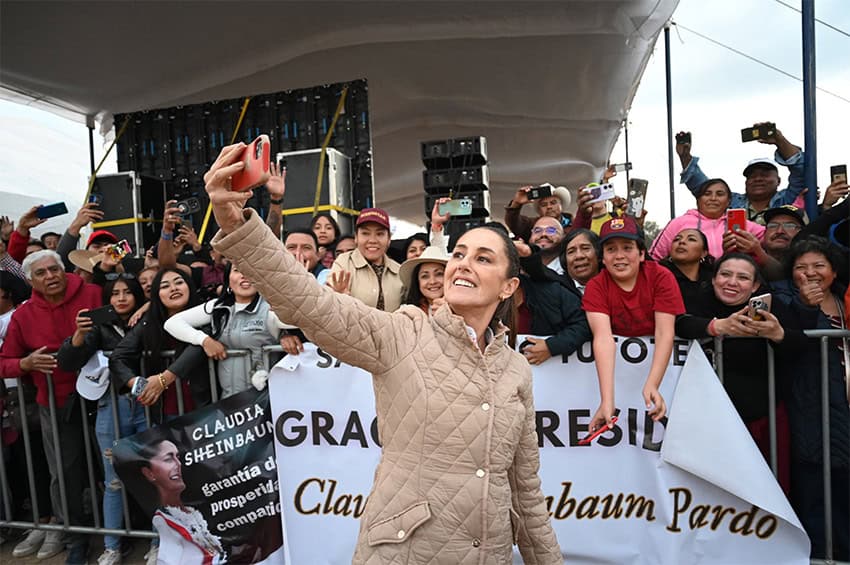
President Sheinbaum takes a selfie with supporters after delivering government pension cards to retirees in Hidalgo. (Presidencia)
Sheinbaum’s approval rating was below 60% in three states: Jalisco (55.5%); Sinaloa (56.2%); and Zacatecas (57.5%).
Two of the three states where support for Sheinbaum is lowest — Sinaloa and Zacatecas — are governed by Morena, the national party of government. Sinaloa has been plagued by security problems over the past year, but homicides in Zacatecas have declined during the Sheinbaum administration.
Strong majority sees Sheinbaum as an honest president with good leadership skills
El Financiero asked its poll respondents to rate Sheinbaum on three personal attributes: honesty, leadership and ability to deliver results.
Sixty-four per cent of respondents rated the president highly for her honesty (good or very good), while 66% praised her leadership. Only 54% of those polled said that Sheinbaum’s ability to deliver results was good or very good, down from 78% in February.
Strong support for welfare programs, considerable criticism of efforts to combat crime
Exactly three-quarters of respondents to the El Financiero poll described the social support the federal government provides to citizens as good or very good. That support comes via welfare programs, including employment, pension and scholarship schemes.
A majority of those polled (53%) also said that the government is doing a good or very good job managing the economy.
With regard to the fight against organized crime, 75% of respondents described the Sheinbaum administration’s performance as bad or very bad, while 74% were critical of its efforts to combat corruption.
Asked to rate the government’s performance in the area of public security, 53% of those polled said bad or very bad, even as homicide numbers trend down.
Mexicans optimistic that government will protect migrants, but pessimistic about health care
A strong majority of respondents to the Mitofsky/El Economista poll (64.3%) said they believed that the Sheinbaum administration would do “a lot” or “quite a lot” for Mexicans who live in the United States, where the Trump administration is carrying out an immigration crackdown.
However, only 29.4% of those polled said they believed that the government would do a lot or quite a lot to improve health care in Mexico.
More than 60% of respondents said they believed the government would do a lot to “increase the international prestige of Mexico” and “improve the situation of people in the countryside.”
But only 39.8% of those polled expressed confidence that the Sheinbaum administration would do a lot to “protect the rights of all citizens,” while 46% said they believed it would do a lot to reduce corruption.
Mexico’s biggest problem is insecurity
Asked to identify Mexico’s “main problem,” 52% of respondents to the El Financiero poll cited public insecurity.
Around one in five people (21%) mentioned the economy and unemployment, while 19% cited corruption.
Similarly, 55% of respondents to the Mitofsky/El Economista poll cited insecurity as their “main concern.”
About one in six respondents to that poll (16.2%) said that health care was their primary concern while 11.7% cited the economy.
Slim majority supports proposed tariffs on China
Among the 1,000 respondents to the El Financiero poll, 51% expressed support for Sheinbaum’s proposal to impose new tariffs on a wide range of goods from China and other countries with which Mexico doesn’t have trade agreements.
According to Mitofsky’s polling, Sheinbaum’s approval rating has increased 10.1 points compared to her first month in office.
By contrast, the approval ratings of former presidents Andrés Manuel López Obrador (AMLO), Enrique Peña Nieto, Felipe Calderón and Vicente Fox all declined in the period between their first month in office and the one-year mark of their presidencies.
Among the six most recent ex-presidents, only Ernesto Zedillo (1994-2000) and Carlos Salinas (1988-94) had improved their standing by the one-year mark.
Sheinbaum’s approval rating of 71.6%, according to the Mitofsky/El Economista poll, is 13 points higher than AMLO’s approval rating when he reached the end of his first year in office in December 2019. She is almost 22 points ahead of where Peña Nieto was at the same stage of his presidency, more than 13 points ahead of Calderón, over 12 points ahead of Fox and more than 28 points ahead of Zedillo.
Among the six most recent previous presidents, Salinas was the only leader who had a similarly high approval rating at the end of his first year in office. His approval rating at that point was 69.2%, according to Mitofsky. Salinas was president at a time when the Institutional Revolutionary Party, or PRI, continued to rule Mexico as an effective one-party state.
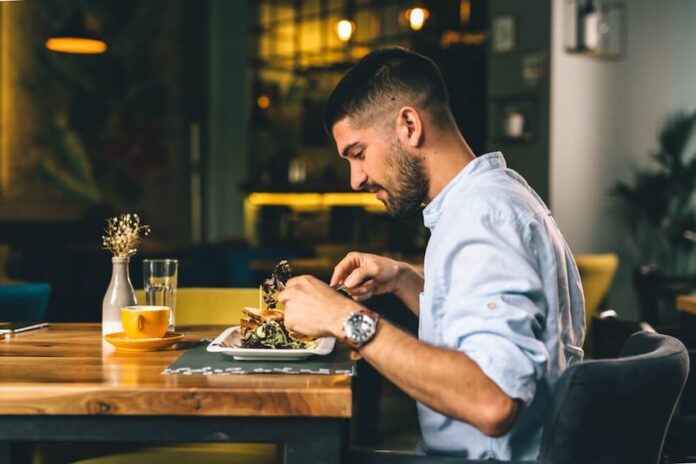
Take some time for self care and treat yourself to a gourmet night out — maybe even at one of these gems. (Shutterstock)
Eleven percent of global travel is now done solo — and that number is projected to grow by 9%–13.5% annually through 2030. That’s huge. Alongside this trend, dining out alone is becoming increasingly normalized. In fact, reservations platform OpenTable reported an 8–10% increase in solo dining bookings worldwide just last year.
Fortunately, Mexico City is packed with opportunities to treat yourself to a solo date — because, really, who’s a better companion than you?
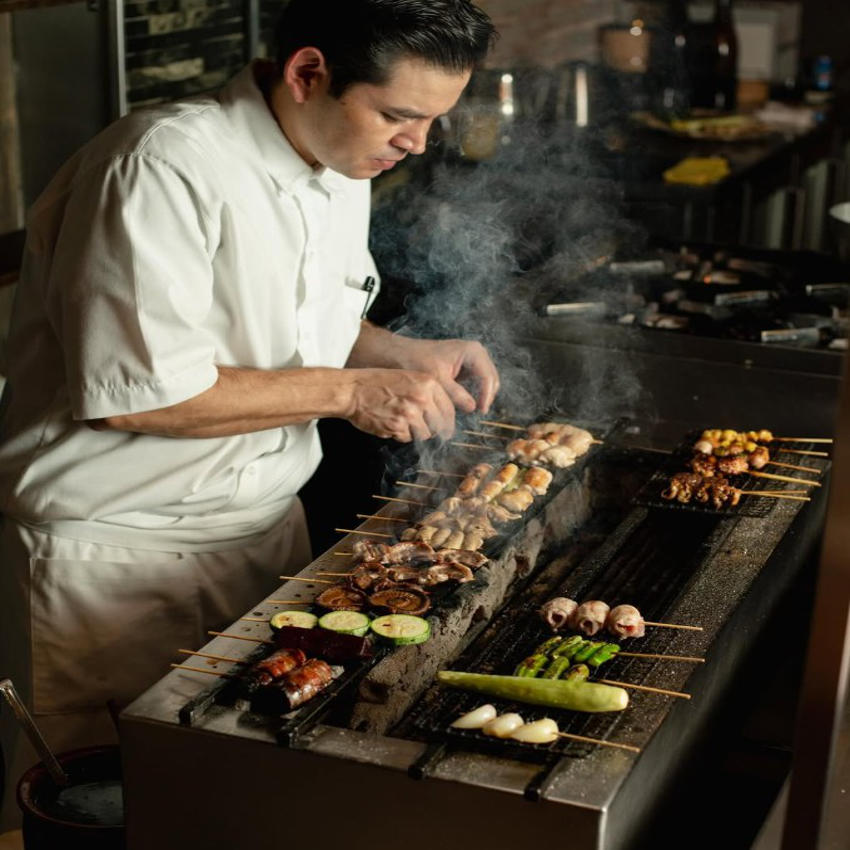
At Mexico City’s Cafe Hiyoko sushi bar, you can sit at the counter and watch your meal being made — a perfect activity for the solo diner. (Cafe Hiyoko/Instagram)
Of course, while it’s possible to dine solo just about anywhere, it can feel awkward to sit at a table for two (or four) surrounded by couples and groups. Think school cafeteria flashbacks, where you’re the kid sitting alone while everyone else is deep in chatter.
That’s why we’ve scouted out a handful of spots that are especially solo-friendly, with counter seating, kitchen-facing bars, cozy tables for one and even communal setups. So grab a book — or your phone, if you must — settle in and enjoy some quality time with your most loyal lifelong friend: you.
Pasta Mestiza, Roma Norte
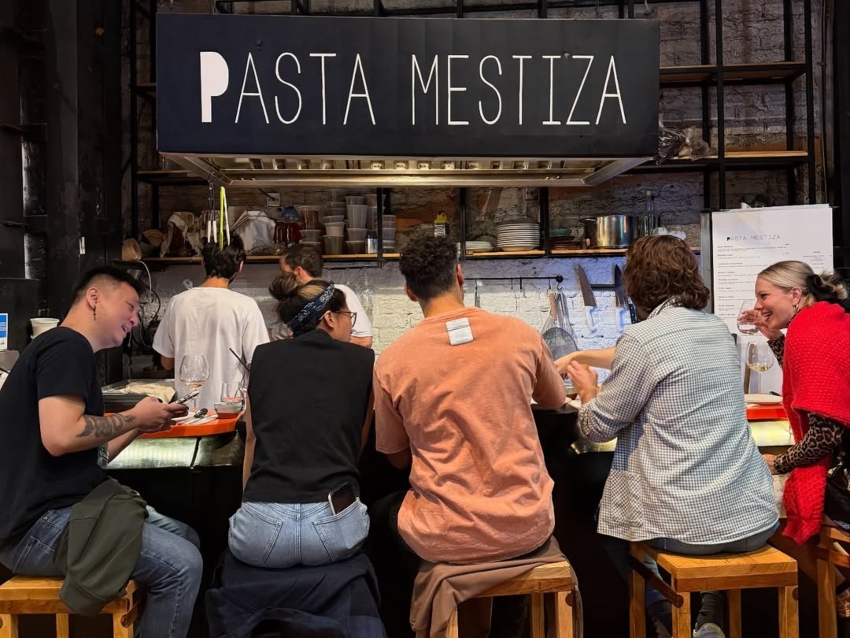
Solo diners at Pasta Mestiza can enjoy handmade pasta and chat with the chef while also making new friends. (Instagram)
In the bustling Mercado Roma, this gem offers handmade pasta in a unique and brilliantly executed mix of flavors that traverses Mexico, Italy and the Middle East. Pasta Mestiza‘s stall offers a limited number of countertop seats looking over the kitchen, where you can watch the magic at work in front of you. Grab a glass of Mexican wine and strike up a conversation with Chef Rotem over a mouthwatering pasta barbacoa or the spot’s incredible dish deconstructing Mexican street corn (esquites). Not to be missed.
Hiyoko, Cuahtemoc
Counter dining offers a front row seat for Hiyoko’s creative cuisine. (Instagram)
A cozy Japanese sushi bar, Hiyoko is all about attention to detail. This intimate sushi-ya keeps things refreshingly simple: a handful of counter seats wrapped around the kitchen, where the fresh sushi is prepared right in front of you. It’s the kind of spot where solo dining feels completely natural — you can watch the chefs work or simply savor piece after piece, in peace. Order an omakase progression if you’re in the mood to be surprised, or keep it casual with some nigiri and sake.
Curiosa, Condesa
Mono-table seating is one of many attractions at Curiosa Juice Bar and Cafe in Mexico City.
Admittedly, I’m biased as I own and love this place. But the mono-table seating and thoughtful menu offerings make it a natural haven for solo diners looking to escape the chaos of big groups and overloaded plates. Think of Curiosa as a cross between a health-forward café and a smoothie bar. It’s not uncommon here to see solo scribblers journaling over a berry almond butter smoothie while another devours gluten-free apple-cinnamon waffles with a Kindle read in hand.
La Docena, Polanco
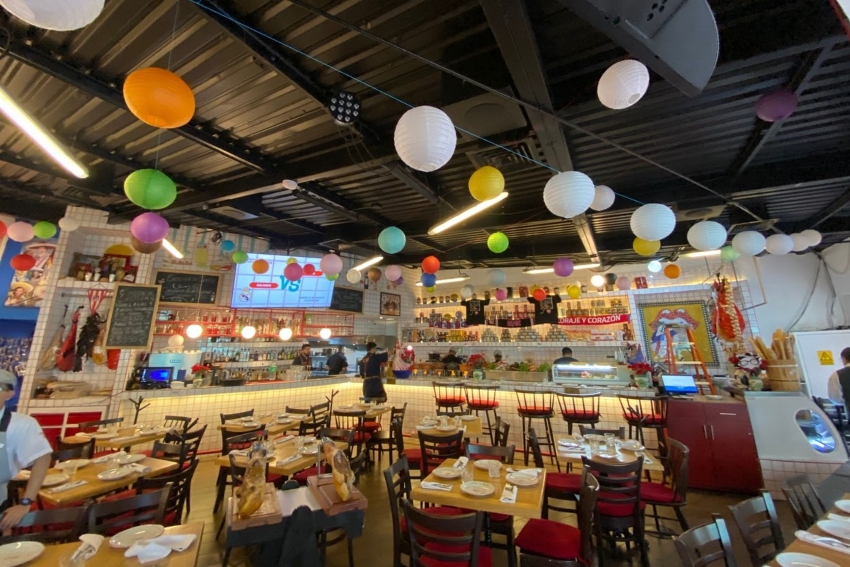
Watch food prepared from your counter perch at La Docena while enjoying the people-watching in trendy, upscale Polanco. (Facebook)
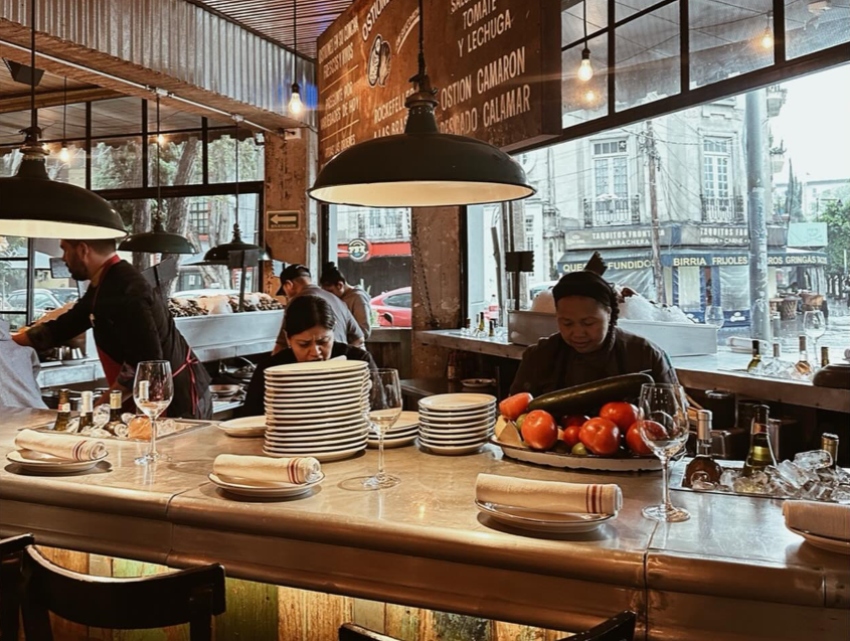
We know La Docena is an international chain, but hear us out. The Polanco location offers well-prepared and fresh seafood in a buzzy atmosphere. Center-based bar seating ensures you can observe both the food prep proceedings and have a covert people-watching session over the well-heeled Polanco crowd. It’s lively and consistently delicious. Order the lonja de pescado, a few oysters and a tostada de atún (I maintain theirs is much better than that of the over-hyped Contramar).
Escándalo, Roma Norte
There are no bad seats, only exceptional tacos and mezcal, at Escándalo in Mexico City. (Instagram)
The brainchild of the team behind Michelin-recognized Cariñito Tacos, Escándalo is a low-key neighborhood spot balancing quick bites with an old-school feel. Grab a mushroom taco at one of the standing outdoor countertops (I like to slather mine with each of their tasty salsas), or settle in at the mezcal bar for a guided tasting. It’s casual, delicious, and perfect for a solo stop that can be as quick — or as extended — as you’d like.
Parker & Lenox, Juárez
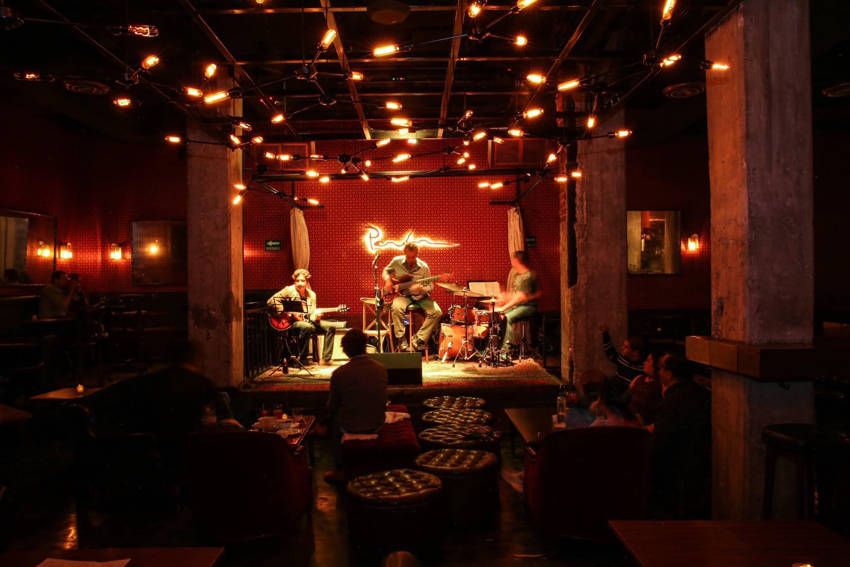
At Parker & Lenox, the vibe is glam speakeasy, featuring casual dining, craft cocktails and live jazz and blues, making for an unforgettable experience. (Parker & Lenox/Facebook)
Take yourself out for some jazz and truffle fries at this speakeasy-style venue. The velvet seating, dim lighting and red-curtained stage ooze old-school glamour. Mosey on up to the long wooden bar for a carefully crafted cocktail (there are over 30 to choose from) and enjoy live jazz, blues, or fusion. Parker & Lenox‘s food menu is light — think “munchies” more than fine dining — which makes it ideal for a solo nightcap with music.
Ticuchi, Polanco
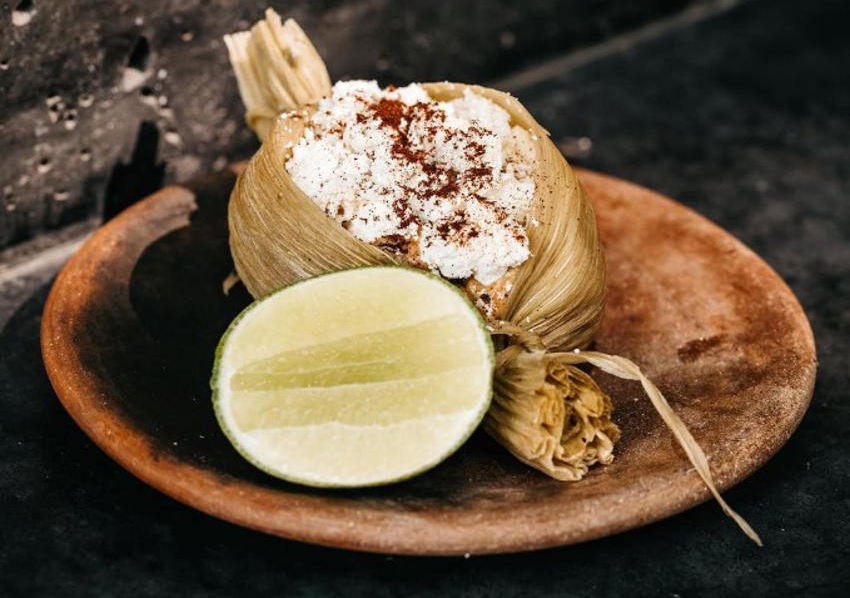
Homemade esquites prepared with fresh corn, queso fresco, and chili powder, served in a corn husk at Ticuchi. (Ticuchi/Instagram)
From the team behind Michelin-starred Quintonil, Ticuchi is more accessible and decidedly more fun. Think moody lighting, a square bar, sexy music and elevated Oaxacan plates. Snack on aguachile or tostadas while soaking in the lounge vibe — sometimes even with a live DJ. Perfect if you’re looking to dine solo but still crave some nocturnal energy.
La Cocina del Bizco, Roma
Tapas, counter seats and occasional live music are among the many reasons solo diners gravitate to La Cocina del Bisco in Mexico City’s Roma neighborhood. (Facebook)
Festive, eclectic, and never boring — Bizco is equal parts tapas bar and live-music venue. Slide into the bar counter with a glass of chilled albariño, snack on tortilla de patatas and manchego, and enjoy the din of conversation and (sometimes live) music. Dining alone here feels more like joining a party you didn’t know you were invited to.
Café Nin, Juárez
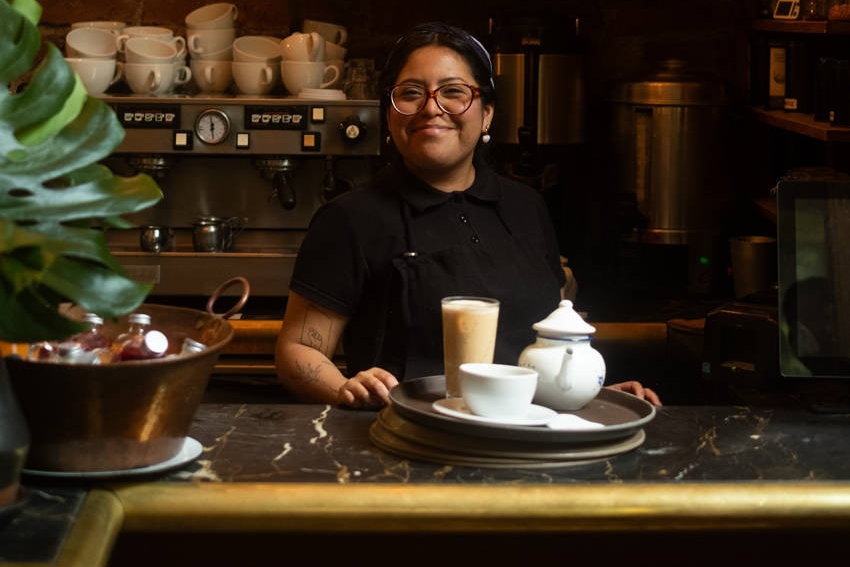
The staff always have a smile and a delicious drink on hand at Cafe Nin. (Instagram)
Already an expat darling, Café Nin is the more casual sibling of Rosetta, under famed chef-owner Elena Reygadas. It blends the pedigree of Panadería Rosetta’s beloved baked goods with a café-bistro vibe that invites lingering. For solo diners, Café Nin is excellent: there’s bar or counter seating, intimate tables and ample outdoor or patio spots. The pace allows for reading, working or simply watching the world go by. It’s polished but relaxed —sophisticated without formality. Enjoy a pan dulce with a chai latte in the mornings, or lasagna for lunch.
One of Roma’s buzziest recent openings, Sapo is a high-top-heavy Asian spot with a wrap-around bar. Expect bold flavors — yakitori skewers, bao, crispy bites — paired with craft cocktails or sake. The energy is electric, and with all seating at the bar, solo diners fit right in.
Voraz, Roma Sur
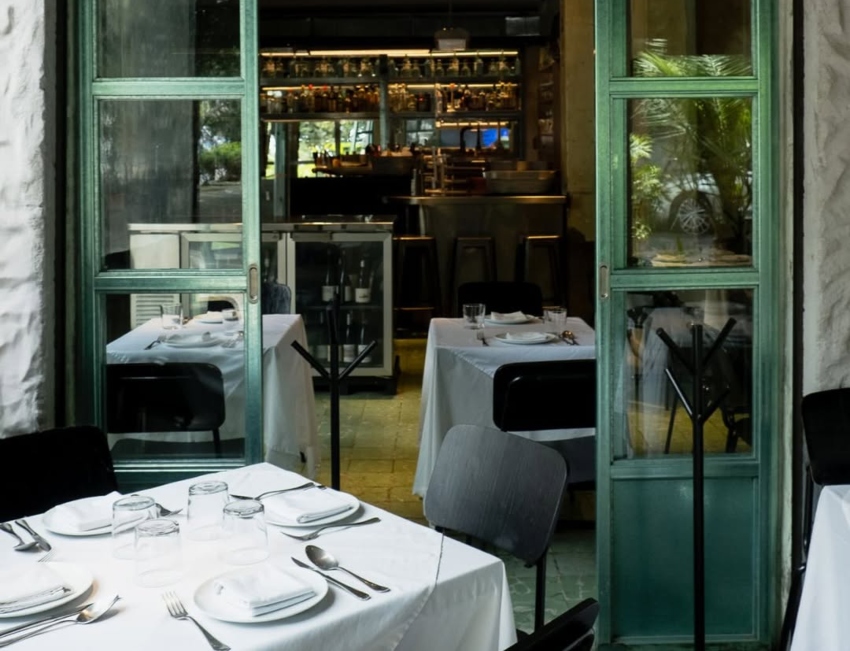
Fine dining with vintage vibes characterizes Voraz seafood restaurant in Roma Sur. (Instagram)
Still fresh on the scene, Voraz is generating well-earned hype. Its sleek concrete bar setup is tucked slightly away from the main dining area while still within it (facing a nice mirrored wall for undercover people-watching). The menu changes seasonally, but the food is always fresh and innovative and the cocktails are uniquely inventive. This is a place to come alone, indulge and leave inspired.
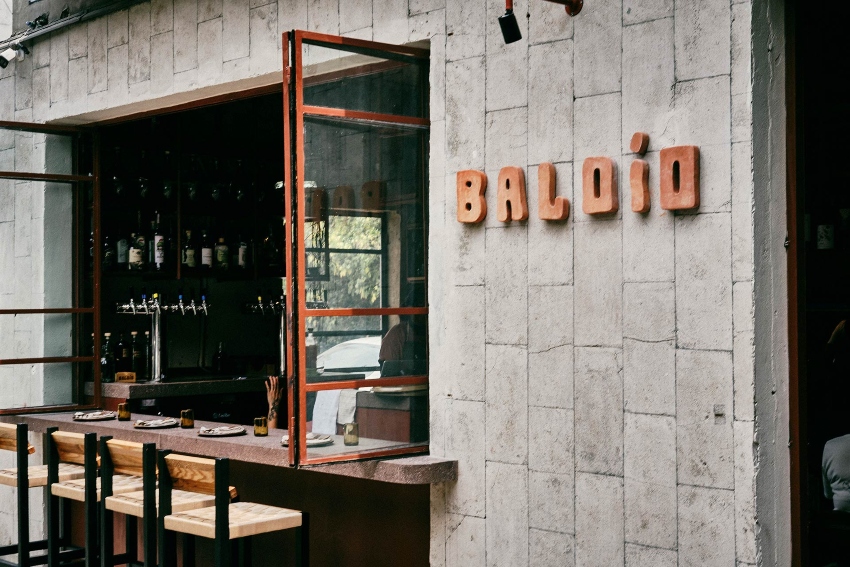
Baldío, Condesa
Grab a seat at Baldío’s high-top window overlooking the kitchen and watch the kitchen magic at this sustainable Michelin Guide favorite. (Michelin Guide)
Baldío, recently awarded a Michelin Green Star for its environmental practices, works closely with local farmers, revives ancestral chinampa agriculture and minimizes waste through fermentation and whole-ingredient cooking. The space is warm and natural, with wood accents and an open kitchen. For solo diners, Baldío is particularly welcoming: Grab a seat at the high-top window bar overlooking the kitchen and watch the fire-roasted vegetables, pipián sauces, and creative ferments come to life. It’s cozy yet elevated, and the kind of place where each dish provides food for thought.
So, there you have it — just a few of the many places to take yourself out to in Mexico City. The beauty of solo dining in the nation’s capital is discovering that some of the city’s best culinary experiences happen when you’re fully present with just yourself.
Where are your favorite solo snacking spots in the city? Share them in the comments below.
Monica Belot is a writer, researcher, strategist and adjunct professor at Parsons School of Design in New York City, where she teaches in the Strategic Design & Management Program. Splitting her time between NYC and Mexico City, where she resides with her naughty silver labrador puppy Atlas, Monica writes about topics spanning everything from the human experience to travel and design research. Follow her varied scribbles on Medium at medium.com/@monicabelot.