AT&T's corporate headquarters on Paseo de Reforma in Mexico City may have a different name in the near future as reports are circulating that the telecom company is considering selling off its Mexican unit after more than a decade in the country. (Moisés Pablo/Cuartoscuro)
AT&T may be packing its bags and preparing to leave Mexico.
Bloomberg News reported last week that the U.S. multinational, one of the world’s leading telecommunications companies, is working with financial advisers to find a potential buyer for its Mexican unit.
Though consistently lagging far behind Telcel, AT&T has some 23 million users who would be shifted to whatever entity buys the company, assuming there is in fact a sale. (Moisés Pablo/Cuartoscuro)
Dallas-based AT&T is reportedly seeking more than US $2 billion for the deal, according to unidentified sources cited by Bloomberg. The report says the talks are confidential and no final decision has been made. Additionally, there is no guarantee the deal will go through.
AT&T has been in a losing battle for more than a decade with billionaire Carlos Slim’s Telcel, the dominant carrier in Mexico. This, despite telecoms reforms that, according to Bloomberg, had given international companies hope that they could compete with Telcel.
Despite investments of more than US $10 billion in the country, AT&T’s share of the Mexican mobile market has been significantly smaller than Telcel’s, which regularly tops 60%.
The fact that the sales price reportedly being sought represents just 20% of AT&T’s total investments in Mexico seemingly highlights concerns about regulatory uncertainty in Mexico and the entrenched market dominance enjoyed by Slim’s companies.
AT&T entered the Mexican market in 2014 by paying US $2.5 billion to acquire wireless telecommunications and cellular services company Grupo Iusacell from billionaire Ricardo Salinas. Soon thereafter, the company purchased the Mexican wireless operations of NII Holdings Inc. for nearly $1.9 billion.
The competition between AT&T and Slim has been testy over the years, Bloomberg reported.
In 2022, Slim’s América Móvil — the largest wireless provider in Latin America — accused AT&T of interfering with the media giant’s efforts to obtain a television license, leading to “a dispute that escalated into insults.”
If AT&T’s business in Mexico is sold, the company’s 23 million users would become part of the future buyer, assuming the transaction is approved by the country’s regulators.
Telefonica’s Movistar México may also be up for sale
AT&T isn’t the only telecom group looking to exit Mexico, Bloomberg added. Spain’s Telefónica is also reportedly in talks to sell its Mexican subsidiary Movistar México.
Telefónica’s move is not wholly unexpected. Since 2019, the Spanish telecom giant has opted to lease AT&T’s network rather than continue investing in its own infrastructure.
If both AT&T and Telefónica exit, the telecom landscape in Mexico could change dramatically, according to Merca 2.0 magazine.
While Telcel would remain the dominant operator, other players cited by Merca 2.0 — particularly companies known as Mobile Virtual Network Operators, which don’t own their own infrastructure and rely on third-party networks, could benefit from “a reconfigured ecosystem following the exit of traditional operators.”
The only industrial sector to record a year-over-year increase in activity in June was construction, whose output rose 1.5%. (Presidencia/Cuartoscuro)
Industrial activity in Mexico declined in June compared to May and in annual terms, the national statistics agency INEGI reported on Monday.
INEGI reported that industrial activity — which includes activity in the manufacturing, mining, construction and electricity/water/gas sectors — fell 0.1% in June compared to May, the first month-over-month decline since March.
In annual terms, industrial activity was down 0.8% in June.
INEGI also reported that industrial activity declined 1.3% annually in the first six months of 2025. It was the first annual decline for the first six months of a year since 2020.
In 2025, industrial activity in Mexico has been affected by uncertainty related to trade with the United States, which has imposed new tariffs on a range of Mexican goods.
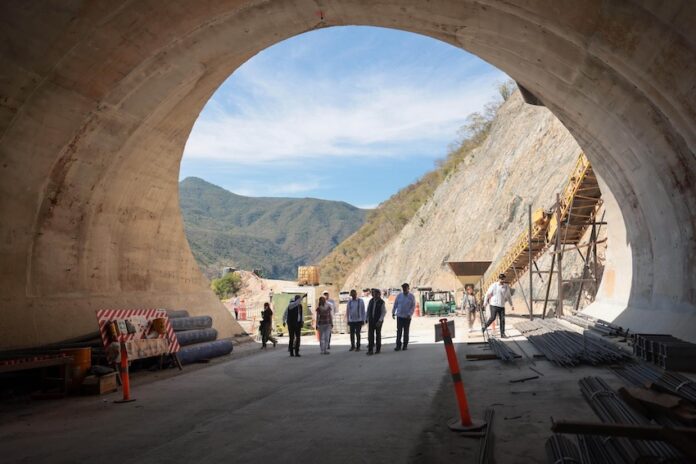
President Claudia Sheinbaum recently expressed confidence that construction sector activity will increase in the second half of 2025 as a result of public infrastructure projects, including the construction of new railroads and homes.
Mining, construction and electricity sector activity down in June compared to May
INEGI reported that mining sector activity (or output) fell 1.4% in June compared to May.
Construction sector activity declined 0.2%, as did activity in the combined sector that includes the generation, transmission and distribution of electricity as well as the supply of water and natural gas.
The only sector whose activity increased in June on a sequential basis was manufacturing. Manufacturing activity increased 0.3%, INEGI reported.
The 0.1% decline in month-over-month industrial activity came after increases of 0.7% in May and 0.1% in April.
In January, industrial activity declined 0.3% before increasing 2.4% in February. Industrial activity fell 1.1% on a sequential basis in March.
Manufacturing activity stagnant in annual terms, mining declines 8.5%
INEGI data shows that there was a variation of 0.0% in manufacturing sector activity between June 2024 and the same month of this year.
Mining activity fell 8.5% annually in June, while electricity/water/gas sector activity declined 3.8%.
The only industrial sector to record a year-over-year increase in activity in June was construction, whose output rose 1.5%.
The 0.8% annual decline in industrial activity in June came after decreases in each of the previous three months.
First January-June decline since 2020
The 1.3% annual decline in industrial activity between January and June was the first decrease for the period since 2020, when the COVID pandemic and associated restrictions caused a 13.6% year-over-year reduction.
The newspaper El Economista reported that the decrease between January and June is greater than the 1.1% annual decline recorded during 2019, the first full year of Andrés Manuel López Obrador’s presidency, “which was marked by the pessimism that was created by his decision to cancel construction of the new Mexico City International Airport in Texcoco,” México state.
Mining sector activity (including oil and gas drilling) declined 8.8% annually in the first half of 2025, while activity in the electricity/water/gas industry fell 2.1%.
Construction sector activity also fell, declining 1.1% compared to the first half of 2024. Activity related to the construction of civil engineering projects declined 24.6% due to a significant decrease in spending on public works.
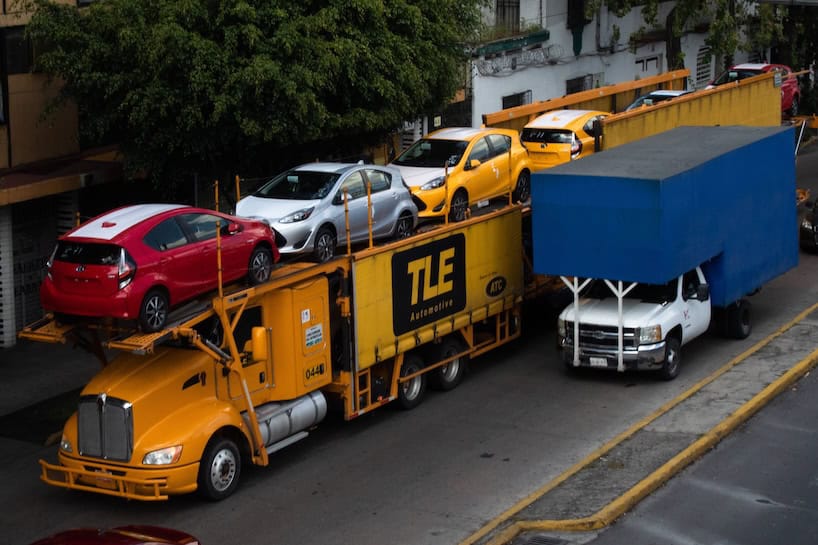
The manufacturing sector recorded a modest 0.1% annual increase in activity. Thirteen of 21 sub-sectors of the manufacturing industry, including the automotive sector, recorded year-over-year declines in activity in the first half of the year.
Thirteen of 21 sub-sectors of the manufacturing industry, including the automotive sector, recorded year-over-year declines in activity in the first half of the year. (Cuartoscuro)
Manufacturing sectors affected by imports from Asian countries, including the wood and clothing sectors, also recorded annual declines in activity.
Among the eight manufacturing sectors that recorded increases were food production, computer equipment and electrical appliances.
There were no immediate reports of injuries or loss of life due to flooding on Sunday. (Daniel Augusto/Cuartoscuro)
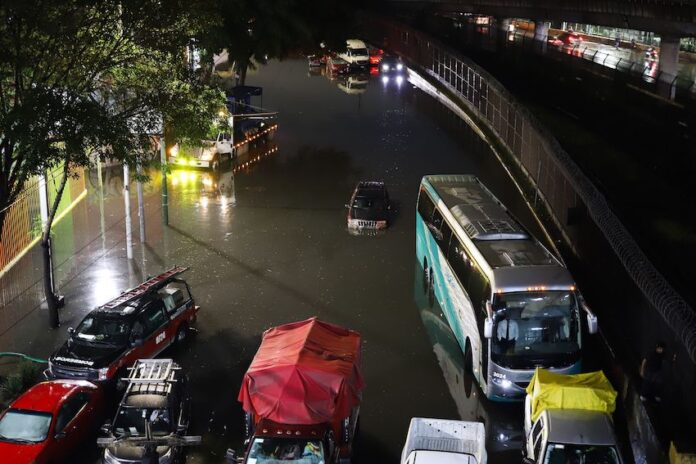
Torrential rain in Mexico City on Sunday flooded streets and homes, interrupted services on the subway system and forced the suspension of takeoffs and landings at the capital’s airport for around four hours, affecting more than 100 flights and almost 15,000 passengers.
The rainfall during a storm on Sunday evening was “the most intense” of the 2025 rainy season in the capital, according to Mexico City Water Management Minister José Mario Esparza.
Hail also fell in some parts of the city, where flooding is common during the annual rainy season.
Esparza said on Sunday night that more than 84 millimeters of rain was recorded in the Zócalo, flooding the capital’s central square and other parts of the historic center.
He said that the historic average for rainfall in Mexico City across the month of August is 152 millimeters, meaning that the capital — in its downtown area at least — received more than half the usual amount of rain for this month in a single day.
Mayor Clara Brugada said on social media on Sunday night that the city’s Plan Tlaloque was activated when the heavy rain began in the capital. The activation of the plan put “all emergency services” in Mexico City into action, she said.
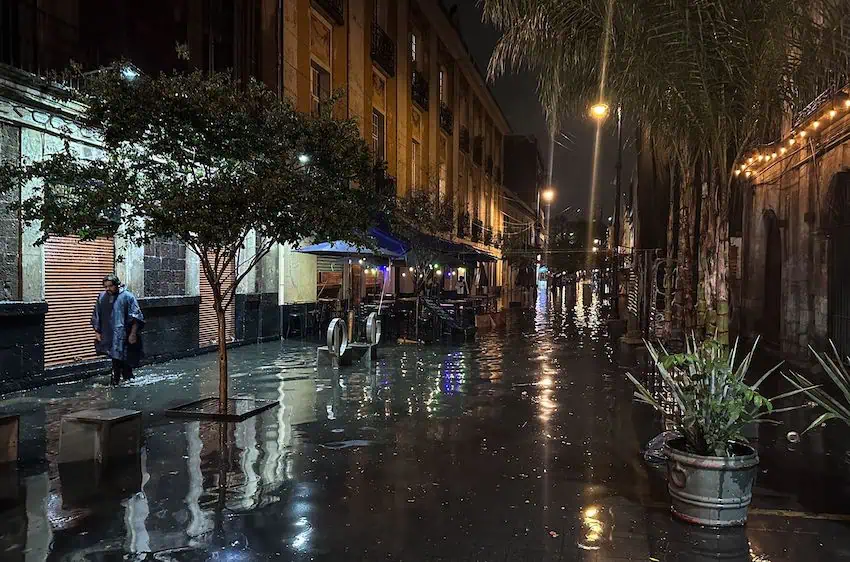
Flooding along Calle Regina in the area surrounding Mexico City’s Zócalo on Sunday night. (Andrea Murcia/Cuartoscuro)
The city’s purple alert — the highest warning level for rainfall — was activated in the central Cuauhtémoc borough, while the second-highest level, a red alert, was issued for several other boroughs.
Brugada called on Mexico City residents to exercise caution and only leave their homes if necessary on Sunday night.
There were no immediate reports of injuries or loss of life due to flooding. Cleanup efforts were continuing on Monday.
President Claudia Sheinbaum said Monday that the federal government would provide support to the areas of the capital most affected by the flooding.
More rain is forecast to fall in Mexico City on Monday.
104 flights affected by airport closure
The Benito Juárez International Airport said in a statement on Monday that air operations were suspended for around four hours from 7:45 p.m. to allow water to be cleared from the runways. Poor visibility was also a factor in the decision to suspend takeoffs and landings.
Largas filas de pasajeros se registran en el Aeropuerto internacional de la Ciudad de México, luego de las demoras y cancelaciones de vuelos por las lluvias registradas durante la tarde de ayer. #DíaEnImágenes / Alfredo Domínguez pic.twitter.com/IMfFZvIcWF
The airport said that “the intensity of the atypical storm caused several areas of the terminal buildings to also be affected.”
It said that the rain overwhelmed the airport’s stormwater drainage system.
Video footage showed the baggage claim in Terminal 2 under water on Sunday night.
The airport said that vacuum trucks and motorized pumps were used to remove water and thus “guarantee optimal conditions on runways, taxiways and aprons,” allowing them to reopen early Monday.
It said that 104 flights and 14,892 passengers were affected by the suspension of operations, with incoming flights diverted to “alternate airports.”
The airport said that flights resumed on one runway at 12:05 a.m. Monday, while operations recommenced on the other at 6 a.m. — more than 10 hours after it was closed.
#CDMX ✈️🔴|| Esta noche, la intensa lluvia con tormenta eléctrica obligó al Aeropuerto Internacional de la Ciudad de México (#AICM) a suspender operaciones, dejando pistas inundadas, retrasos de 3 a 4 horas y cancelaciones, incluyendo vuelos de Viva a Los Ángeles, mientras… pic.twitter.com/0OGGoY2dOI
The Guadalajara and Cancún airports were among the airports to which Mexico City-bound flights were diverted. Some Mexico City-bound flights landed back at the airports from which they took off, including an Air Canada flight that returned to Toronto and an American Airlines flight that returned to Dallas-Fort Worth.
Flooding in various CDMX boroughs
Serious flooding was reported in various parts of Mexico City, including the boroughs of Cuauhtémoc (which includes the historic center), Venustiano Carranza (where the airport is located), Iztacalco and Gustavo A. Madero.
The Lineal Park in Venustiano Carranza, situated in an old drainage canal, filled up with water and overflowed, flooding nearby streets and scores of homes in the area.
“I started crying because it was a desperate situation,” one affected homeowner, María del Consuelo, told TV Azteca.
Parts of the historic center of Mexico City were covered by up to 40 centimeters of water, the El Financiero newspaper reported.
The Zócalo was covered with water and nearby jewelry stores were flooded, something that hadn’t happened in decades, according to El Financiero.
The Metropolitan Cathedral, located opposite the Zócalo, was also affected, with water accumulating in various parts of the edifice. People visiting the cathedral and its personnel banded together to remove the water and avoid major damage to the building’s interior, El Financiero reported.
Flooding was also reported at several Mexico City hospitals, including the Balbuena General Hospital and the Gregorio Salas Hospital in the historic center.
At the Balbuena hospital, firefighters helped move patients out of danger, the newspaper Reforma reported.
CDMX roads and subway system affected
Dozens of roads in Mexico City, including a number of major arteries, were flooded as a result of the intense rainfall on Sunday. Authorities rescued stranded motorists and in some cases removed vehicles from floodwaters.
In the Mexico City Metro system, the downpour on Sunday evening caused the closure of six stations on Line 5 and two stations on Line 3. There was significant flooding outside some of the shuttered stations, all of which had reopened by Monday morning.
On Line 2 of the metro, an explosion and fire occurred near the San Antonio Abad station due to a short circuit caused by the rain. Line 2 services were consequently suspended for around two hours from 7:30 p.m.
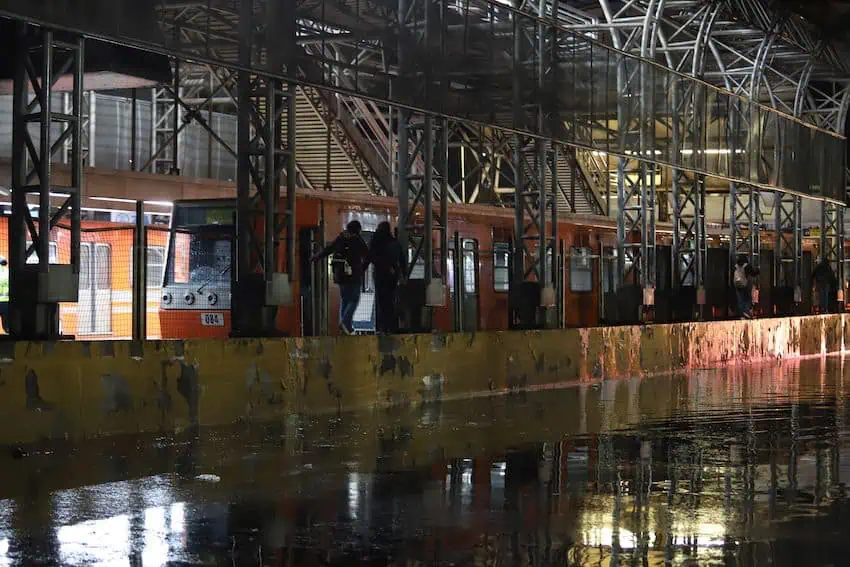
Sunday’s downpour caused the closure of six stations on Line 5 (pictured above), two stations on Line 3 and the temporary suspension of Line 2 due to a short circuit. (Daniel Augusto/Cuartoscuro)
Authorities respond to the extreme weather
Esparza, the capital’s water management minister, said that more than 200 personnel from the Water Management Ministry were deployed to respond to the flooding in various parts of Mexico City. They used electric water pumps and other equipment to alleviate flooding.
National Water Commission (Conagua) personnel also assisted the efforts to reduce the flooding.
“Due to the intense rain in the Valley of Mexico, we put 37 pumps into operation to remove 74,000 liters per second,” Conagua said on social media.
“In addition, specialized equipment was sent to [the México state municipalities of] Nezahualcóytl and Ecatepec, with the aim of supporting the population and mitigating the effects of the rain,” the water commission said.
Esparza told the Aristegui news outlet that parts of Mexico City’s deep drainage system collapsed due to the torrential rain.
“The drainage system remains full,” he said on Monday morning.
“In other words, the pipes are at their maximum capacity and everything is now flowing out of the Valley of Mexico to the Tula River basin,” Esparza said.
He said that the accumulation of trash is the main thing that affects Mexico City’s “deep” and “conventional” drainage systems.
Esparza called on residents to be “very careful” with the disposal of their trash to ensure that it doesn’t end up in stormwater drains.
The drainage systems, he said, are designed for average amounts of rainfall. The rain on Sunday, however, was “extraordinary in its volume and intensity,” Esparza said.
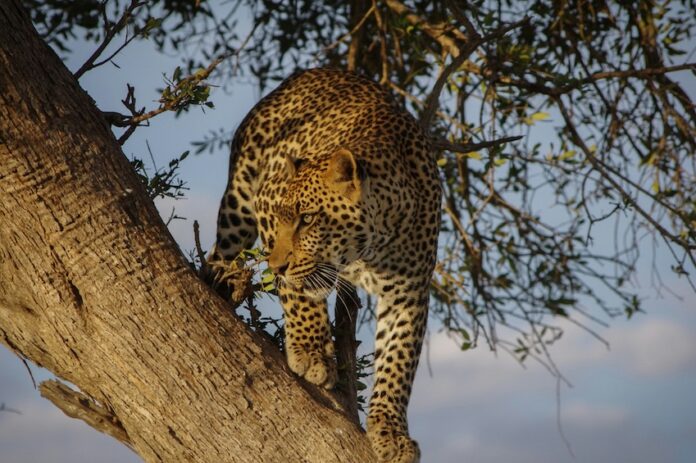
Wildlife crossings have been reduced by 86% by the border wall, and jaguars on both sides may be among the animals whose migratory patterns are affected. (Hidde Rensink/Unsplash)
A male jaguar has been spotted five times this summer on the U.S. side of the U.S.-Mexico border near a 27-mile border wall project, reigniting debate over the issue of wildlife connectivity.
ICYMI: There’s a jaguar here again in southern AZ. A team of scientists and volunteers at the University of Arizona’s Wild Cat Research and Conservation Center have recorded five sightings of one male jaguar this summer, including the detections below. 😻 https://t.co/Rp8hsNk9ptpic.twitter.com/sdYiJD753f
Two Arizona-based environmental nonprofit organizations are suing the U.S. government over the border wall being extended through the San Rafael Valley, the last major open space for wildlife migration along the U.S.-Mexico border.
Motion-activated cameras recorded Arizona’s only known resident jaguar at three different locations in June and July, including a rare daylight detection.
Based on the previous sightings, they speculate that the jaguar migrated back into Mexico before returning to Arizona sometime during the past 18 months.
Such migrations have become more problematic as new sections of the U.S.-Mexico border wall are completed. A study published in November 2024 found that the border wall has reduced wildlife crossings by 86%.
Emily Burns, program director for an Arizona environmental nonprofit organization, said the U.S. government has begun work on another wall across another important wildlife corridor that will disrupt the hydrology of the Santa Cruz River near where it crosses back into the U.S. east of Nogales, Sonora.
“If we’re going to be working toward any kind of long-term recovery (for jaguars), we need to have open corridors,” said Susan Malusa, director of the WCC. “Anything — a border wall, a mine — can cause fragmentation of these corridors, further stressing the population.”
The forbidding San Rafael Valley is not favored by migrants looking to cross into the U.S. Sky Island Alliance cameras in the valley have documented an average of five pedestrians per month, including Border Patrol agents, hunters and hikers.
On the other hand, conservationists argue, these walls will be devastating to animals that rely on the critical migratory corridors there. One solution being promoted is to include small wildlife openings in the barriers.
The "Oaxaca Slip-On Sandal" and Willy Chavarria were at the center of a binational incident stemming from their failure to work with the footwear's original Indigenous artisans. Both the company and the commercial designer have now apologized, but the legal and financial issues still need sorting out.
(Wikimedia Commons)
Global athletic brand Adidas and fashion designer Willy Chavarria have issued public apologies after intense criticism from Mexican officials and Indigenous artisans over the Oaxaca Slip-On, a shoe inspired by huaraches (sandals) but produced without involvement from the originating community.
A propósito de la polémica con #Adidas, admiré el trabajo de los artesanos oaxaqueños de Villa Hidalgo #Yalálag en la elaboración ancestral de huaraches. pic.twitter.com/5zhNY1bMoe
The shoes feature thin leather straps braided in a style similar to huaraches, but with a chunky, sports sole rather than flat leather.
The shoes were reportedly produced in China without consultation or credit to the Sierra Norte community of Villa Hidalgo Yalálag, where artisans handcraft only a few pairs of huaraches a day.
Mexican President Claudia Sheinbaum talked about the issue at her Friday news conference last week.
“Big companies often take products, ideas and designs from Indigenous communities,” she said. “We are looking at the legal part to be able to support them.”
Chavarria, a prominent Chicano designer raised among Mexican migrants in California’s San Joaquin Valley, addressed the backlash in a written apology:
“I am deeply sorry that the shoe was appropriated in this design and not developed in direct and meaningful partnership with the Oaxacan community,” he wrote. “This falls short of the respect and collaborative approach that Oaxaca, the Zapotec community of Villa Hidalgo Yalálag, and its people deserve. I know love is not just given — it is earned through action.”
Willy Chavarría, a Chicano designer from California, says he celebrates Latino culture. But the state of Oaxaca is accusing him of appropriating a part of that culture for commercial purposes without permission. (X)
Oaxaca’s state government and Mexico’s Culture and Arts Ministry (Seculta) had called for an immediate halt to sales and a formal dialogue “to reach an agreement to redress grievances with the Yalálag community.”
In a statement, Adidas said it “recognizes and values the cultural richness of Mexico’s Indigenous communities and the meaning of their artisanal heritage,” and expressed willingness to work with local authorities on “restitution to the people who were plagiarised.”
Promotional images reportedly have been removed from official websites and social media accounts.
Meanwhile, discussions are said to be continuing between Adidas and Oaxacan officials on compensation and next steps regarding the disputed footwear.
Mexico's chip makers are optimistic whereas its auto industry is wary as details remain scarce on Trump's newest plan to tax semiconductor imports. (Brian Kostiuk/Unsplash)
The United States could impose a 100% tariff on microchip and semiconductor imports to encourage investment in U.S. manufacturing, President Donald Trump announced on Wednesday. “But the good news, for companies like Apple, is if you’re building in the United States or have committed to build in the United States, there will be no charge,” he said from the Oval Office.
If introduced, a 100% sectoral tariff could impact various sectors in Mexico that export microchips or chip-dependent products to the United States. It could also slow growth in Mexico’s chip-producing states, as foreign companies with nearshoring plans look instead to launch operations in the U.S.
A tech sector divided: Mexico’s chip makers optimistic, auto industry wary
The United States was the main destination of Mexican semiconductor exports in 2024, contributing US $466 million or 75% of Mexico’s chip exports, according to information from Data México.
The Mexican states with the highest sales were:
Baja California: $348 million
Jalisco: $111 million
Coahuila: $56.8 million
Chihuahua: $32.5 million
Nuevo León: $18 million
Chip producers such as Intel, Infineon, Skyworks and QSM Semiconductors already operate in the Mexican market, while Qualcomm and other firms have announced investment plans aimed at benefiting from Mexico’s skilled workforce and proximity to the United States.
That same month, the United States Embassy in Mexico and Canieti presented a joint Master Plan for the Development of the Semiconductor Industry in Mexico for 2024 to 2030, outlining aims to double exports and jobs in the industry.
Shortly after, in November, electronics manufacturing services company Flex announced plans to invest $86 million in a microchips research center in Guadalajara.
According to Miguel Ángel Landeros, president of the Mexican Business Council for Foreign Trade (Comce Occidente), companies producing chips in Jalisco and elsewhere in the country for U.S. firms will not be subject to the new tariffs. “[The tariff] is good news because it gives us an advantage over other countries,” he told the newspaper El Informador.
In Landeros’s view, the new tariff announcement — though light on details — does not impact the Mexican semiconductor industry because its primary clients are companies with a significant production footprint within the United States. “Mexico is analyzing the issue… and it is most likely that we will not be affected; we could even obtain benefits under the umbrella of the USMCA treaty itself.”
Mexico’s automotive industry faces a different challenge. While these companies also export primarily to the United States, many of their electrical components may originate outside Mexico, leading industry representatives to expect that the 100% semiconductor tariff will apply to their exports as well.
The tariff will “contribute to an increase in production costs,” said Padilla de León, the general secretary of the National Union of Auto Parts Industry Workers (SNTIA), in an interview with the newspaper El Sol de México.
“The dozens of components that a vehicle carries, from electronic cards to chips… as they become more expensive, will make our vehicles less attractive to the American market, because they will be more expensive.”
So you want to communicate in Mexico, but you don't want to sound like a walking textbook? Try throwing in some of these everyday slang and idiomatic expressions into the mix. (Gustavo Frazao/Shutterstock)
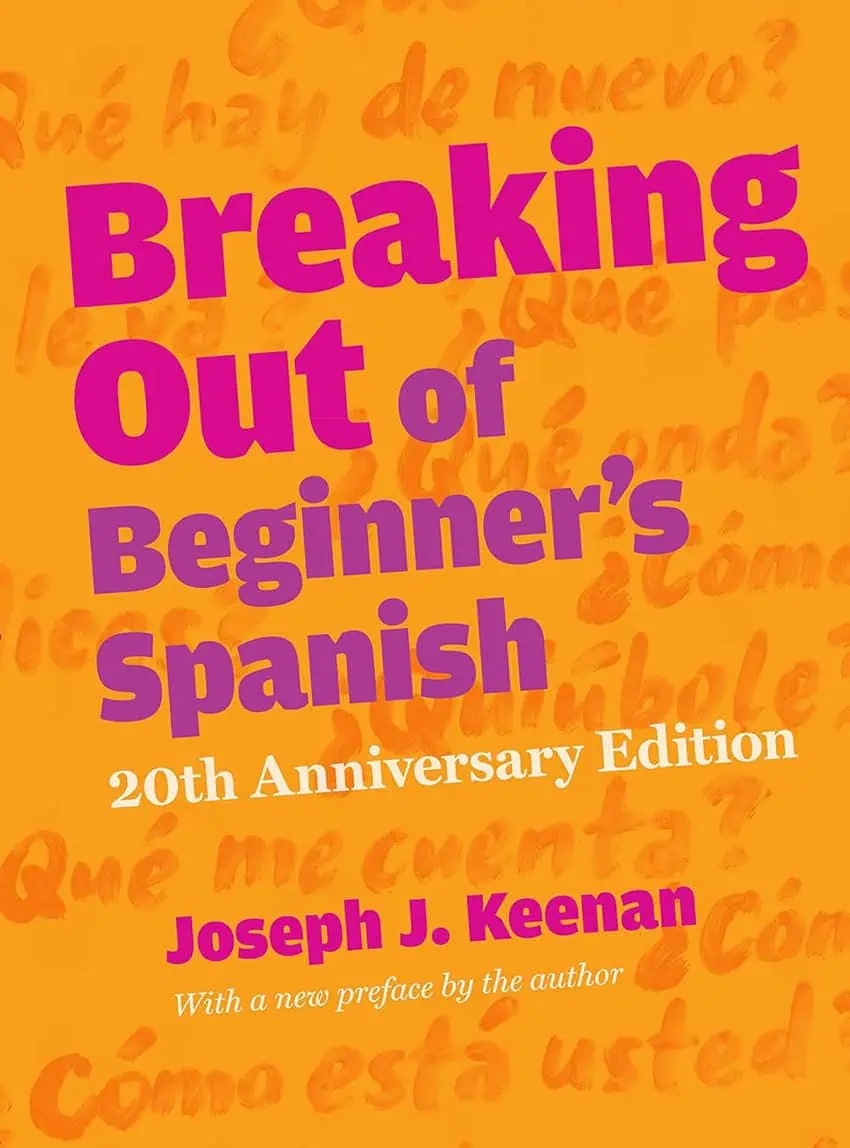
When my husband Barry and I first visited Guanajuato in 1999, we read an entertaining book called “How to Break Through Beginners’ Spanish”by Joseph Keenan. At the time, I spoke Spanish at an advanced beginner level, and the book was invaluable in helping me learn how to sound more conversational than I really was. That, in turn, gave me the confidence to persevere. Today, I’m fluent.
That book is just as relevant today — and, best of all, it’s a fun read. Borrowing from Keenan’s theme, here are some words and phrases that not only will help you sound convincing in Spanish but that are easy to learn and will build your confidence.
The book the writer used to pick up everyday phrases in Spanish that doesn’t always get taught in language books. (Texas University Press)
Starter phrases that give you time to think
When beginning to speak in Spanish, it’s helpful to take a moment to collect your thoughts. These “starter” words and idioms offer that opportunity.
Pues: This is the English word“well” when it is used to express hesitation or uncertainty. Mexicans often use “pues” as an opening response to stall for time when they’re not sure what to say.
So, for example, “Pues, no estoy seguro” means “Well, I’m not sure.”
Entonces: Similar to “pues,” this connecting word is used the way in English we use “so” or “then.”
For example, “Entonces, ¿qué vamos a hacer?” is “So, what are we going to do?”
Caught off guard and don’t know what to say in response? “Pues” can help get things started.
A ver: “Let’s see.”
So, for example, “A ver, voy a ver si puedo cambiar mi horario” means “Let’s see, I’m going to see if I can change my schedule.”
Es que or Lo que pasa es que: “The thing is…”
So, for example, if someone asks you “¿Por qué no quieres ir a la playa?” (“Why don’t you want to go to the beach?”) you can answer, “Es que tengo que trabajar” or ”Lo que pasa es que tengo que trabajar.” These both mean “The thing is, I have to work.”
Fíjate or fíjate que: “Look” or “Pay attention” A word for emphasis that means “to look” or “to pay attention to.”
My neighbor starts just about every sentence with this! “Fíjate que no puedo comer cacahuates porque soy alérgico,” which means, “Look, I can’t eat peanuts because I’m allergic to them.” Or, “Fíjate, no puedo ir a la fiesta porque voy a estar ocupada” means “Look, I can’t go to the party because I’m busy.”
¿Qué onda? and ¿Qué tal?: “What’s up?” or “How’s it going?”
As in English, note that these two phrases are fine for everyday interactions, but they’re pretty casual, so you might not want to use them in formal situations.
Mira and Oye: “Hey, look,” and “Hey, listen.”
These two are meant to get someone’s attention. So, for example: “Oye, la pelicula empieza a las 7:20, no a las 7:45” means “Hey, listen, the movie starts at 7:20, not 7:45.”
“¿Que tal?” is a fun alternative to the more conventional “como estás/como está?” but use it with friends, family and coworkers more or less on an equal level; don’t use it with your boss. (Drazen Zigic/Shutterstock)
Filler words: Not just for native speakers!
Este: This is Mexico’s “um.” Not that I recommend using a crutch word, but if you’re going to use one, better the Spanish version!
So, for example, “Este…no sé qué pasó con tu cartera” means “Um…I’m not sure what happened to your wallet.”
Es decir: “That is” or “that is to say.”
For example, “Voy a ir a la fiesta, es decir, al menos que mi hermana tenga otra crisis” means “I’m going to the party — that is, unless my sister has another crisis.”
O sea: “In other words.” Just like in English, it rephrases or clarifies a point.
So, for example, “No puedo ir al concierto, o sea, tengo que vender mi boleto” means “I can’t go to the concert; in other words, I have to sell my ticket.”
Como: “Like.” Used similarly to English.
So, for example, “Es como una fusión de japonés y mexicana” means “It’s like a fusion of Japanese and Mexican.”
Bueno: “Good” or “O.K.” This word is sometimes used to softly direct a change in the conversation or to start a new thought.
For example, “Bueno, hablando de eso” means “O.K., speaking of that…”
“Bueno” is also used when answering the phone, which surprises English speakers, who assume the response would be “hola.”
Phrases to respond to what someone is saying
Learning the sorts of phrases Mexicans use to show interest and that they are listening can help a lot when you find yourself in a discussion. (Mario Jasso/Cuartoscuro)
Órale:“O.K.,” “right, “sure,” or “Let’s go!” It’s a word that can express agreement or excitement. I’ll never forget our Mexican architect talking on the phone. Every response he offered was “orale.” For example, “¡Órale, vamos a la playa!” means “Sure, let’s go to the beach!”
Así es: “Yes, that’s right.” A phrase used to acknowledge that something is true. “La biblioteca está en el centro?” “Así es.”
The meaning of “así es” can depend on the context. In some cases, it might mean instead, “That’s the way it is,” or, philosophically, “Así es la vida” — “that’s life.”
¿En serio?: “Really?” or “Seriously?” A simple phrase expressing surprise or asking for confirmation about something someone just said.
No te preocupes: “Don’t worry about it.”
Phrases to express surprise, delight and more
One of these guys might just be saying “Andale!” in this moment.
¡Hijole!: “Wow!” Or “Oh no!”
The aforementioned “orale” can also be used this way to express impressed surprise.
¡No me digas!: A direct translation of “You don’t say!” that expresses surprise and disbelief at unexpected news.
¡Quépadre! or Qué chido!: “Awesome!” or “Cool!” Be aware, though, “chido” is more of a younger generational term. Think millennials and Gen Z.
Ni modo: “Oh well” or “Whatever.” A way of expressing acceptance or resignation. For example, if you miss the bus, you might say, “Ni modo, ya se fue” (“Oh well, it already left.”)
Ándale:“Come on!” or “Hurry up!” depending on context. It can also be used to encourage someone to keep going, like if you’re watching competitive cyclists and want to say something supportive to cheer them on.
Saying goodbye
There are many ways to say goodbye in Mexico, with varying levels of formality and warmth. But people hardly ever say “adios.” (Yan Krukau/Pexels)
Nos vemos: “See you around.” As in English, you can use this if there’s an expectation that you’ll see the person again.
Qué te vaya bien: Literally, “I hope things go well for you,” but frequently used as a positive way of leave-taking. “Qué le vaya bien” is the usted version.
Cuidate or Cuidese: A command to take care of yourself, but it is a warm way to say goodbye. The first form is used for people with whom you would use “tu.” The second form is the “usted” conjugation.
¡Suerte!: This is the word “luck,” but it means “good luck.”
A few other miscellaneous terms
¿Mande?: “Excuse me?” Or “Perdón?” This is a polite way of asking someone to repeat themselves. Saying “¿Qué?” (What?) for this purpose can be considered abrupt and slightly rude by some Mexicans.
No hay de qué and con gusto: These both mean “you’re welcome” and are alternatives to the more familiar “de nada.” Mexicans will also sometimes shorten “no hay de que” to just “de que.” The first has the feel of “Oh, it was nothing,” and the second is more like “My pleasure.”
Aguas!: “Careful!” or “Watch out!”
So, as you can see, many of these examples are simple one or two-word phrases, easily interjected here and there in any conversation. Getting into the habit of using some when you’re chatting will not only build your confidence but also help you relax and have fun, which is the whole point of living in Mexico for most of us,¿órale?
Louisa Rogers and her husband Barry Evans divide their lives between Guanajuato and Eureka, on California’s North Coast. Louisa writes articles and essays about expat life, Mexico, travel, physical and psychological health, retirement and spirituality. Her recent articles are available on her website, authory.com/LouisaRogers
A trip to the market turned into a lesson in Mexican friendliness for for Bel Woodhouse. (Bel Woodhouse)
This little story perfectly sums up the beauty of my life in Mexico, its kind people and the warm culture that surrounds me.
There was a hive of activity as I walked into the fruit and veg section of my supermarket this morning. Women laughed and chatted, showing each other something I couldn’t quite see. Nods of approval and secondary squeezes were going on, and I was dying to know what was causing such a fuss.
Like so many Mexican stories, it all began with food. (Elham Abdi/Unsplash)
Stepping closer, the beautiful, deep purplish-red hues of plums were a feast for my eyes. Okay, now I get it. We haven’t had plums on the island in a while, and they looked amazing. The ladies parted slightly so I could squeeze in and welcomed me with open arms. I’m almost 6 feet and twice their size, so it was a squeeze. But that didn’t matter. I was just another woman happy to get my hands on some sweet fruits.
It reminded me of an Italian market, where the nonnas roam daily, sniffing and squeezing fruits and vegetables for the freshest finds. That’s one unifying characteristic of women worldwide, I think. Cooking. Family. Food and home.
I picked up a large plum, one we call a blood plum back home. This got me curious. What was it called here? So I asked. The digging through the pile didn’t skip a beat as they smiled and said “ciruela.” Just plum. The little red ones are the same as the big, dark purple ones: just a plum.
That opened the doors to a delightful chat. They were fascinated that I had a plum tree back home in Australia. Eyes fixated on me like kids at storytime as I told the tale of the different types of plums we had — ones with red, white, yellow or dark purple inside. The nods of approval made my heart smile.
A quest for the plum perfection
Like a weird validation of total acceptance. I was just another woman who liked plums. It didn’t matter what I looked like, where I came from or how bad my Spanish was. They understood.
A shopping trip for some plums quickly became a cultural exchange. (Canva)
By then, we were chatting like old friends. In the whole three minutes since I’d met them, it was like we’d been friends for life. The two ladies nearest me went digging through the pile to find perfect plums for me.
They taught me how to choose the best ones. Not too soft, that’s not good. Those are for cooking. Jams and pies for those plums. Not the big ones. Those are too dry. Not as tasty or sweet, they’re a little bland. They go in the jam pot too.
No, they dug and squeezed and sniffed and held plums up to each other for second opinions. I want the ones that are firm, but not too firm. That’s the sweet spot, they said. Those are the perfect plums.
Their hands continued to dig through the pile, busily squeezing, holding them up to each other for inspection before handing them to me. Those were my plums. The sweetest, most perfect plums. That’s all that was good enough for their new friend.
When people say they can’t meet people or make friends in Mexico, I am gobsmacked.
Just by setting foot outside the door, you make friends. Most of the time, you don’t even need to do that. When I sit on my balcony with a pot of tea, sketching in the mornings, people walking past on the street say good morning and wave.
It’s a sweet life here. As sweet as my perfect plums, which have all been gobbled up now. So sweet, I think they formed a lifelong memory full of the warmth of the Mexican ladies. Those who genuinely want to help, share and communicate.
So, yeah, I love my life in Mexico; it’s just like perfect plums.
Bel Woodhouse, Mexico Correspondent for International Living, is an experienced writer, author, photographer and videographer with more than 500 articles published both in print and across digital platforms. Having lived in the Mexican Caribbean for over seven years now, she’s in love with Mexico and has no plans to go anywhere anytime soon.
Large biomasses of holopelagic sargassum — the species of seaweed that washes ashore in the Mexican Caribbean — can be used to produce various products, such as food supplements for animal husbandry, fertilizers, biofuels, bioplastics and materials for bioremediation and water treatment. (Elizabeth Ruiz/Cuartoscuro)
Mexico has officially declared sargassum a national fishing resource, according to an update published in the National Fisheries Charter (CNP) by the Ministry of Agriculture and Rural Development (SADER).
The CNP is a technical and official document that monitors the current state of Mexico’s fishery resources and issues recommendations for their management, conservation and sustainable use. According to the CNP’s new terms, sargassum may be harvested on the high seas starting Aug. 7, 2025.
Federal and local authorities, along with citizen volunteers, are battling against increasingly severe sargassum invasions on Riviera Maya beaches such as Playa del Carmen. (Elizabeth Ruiz/Cuartoscuro)
“This event is a significant milestone in the management of our country’s marine resources, opening the door to a technical, sustainable management, and economic use of sargassum,” SADER said.
Sargassum, a yellowish seaweed that floats in the central Atlantic Ocean for much of the year, provides food, shelter and breeding grounds for various marine species. But once it reaches the shore, it releases a foul smell as it rots, potentially posing health risks to beachgoers.
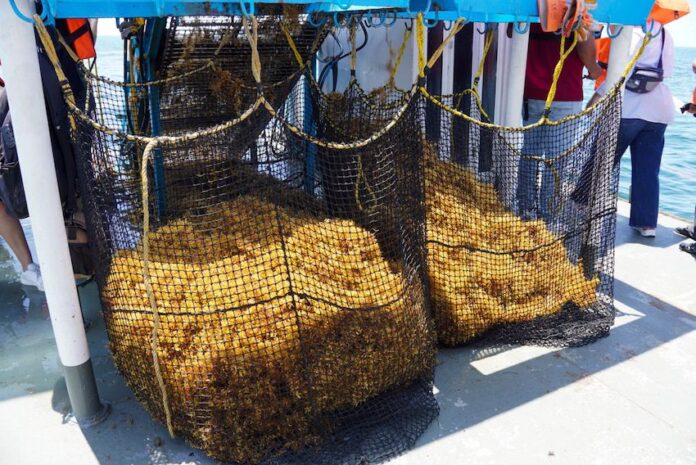
SADER’s move to reclassify sargassum expands its management beyond beach cleanup and allows equipped vessels to capture the seaweed before it reaches shores and decomposes. With the new guidelines, the government seeks to collect up to 945,000 tonnes of dried sargassum annually and utilize it as an industrial resource.
Large biomasses of holopelagic sargassum — the species of seaweed that washes ashore in the Mexican Caribbean — can be used to produce various products, such as food supplements for animal husbandry, fertilizers, biofuels, bioplastics and materials for bioremediation and water treatment. Sargassum can also be used to create fibers and dyes for the textile and footwear industries, as well as biomaterials for brick making. In Quintana Roo, efforts are currently underway to create biofuel from the seaweed.
Environment Minister Alicia Bárcena celebrated the news on her official X account, writing, “Thanks to [Agriculture Minister] Julio Berdegué and IMIPASmex for this key step that enables [sargassum’s] sustainable use.”
Sargassum: a threat to the Riviera Maya’s tourism sector
Tourism in the Riviera Maya has taken a hit due to the presence of sargassum, particularly this year. Representatives of Tulum’s tourism industry told local media that tourism has dropped by 50%, mainly due to the presence of the unsightly seaweed.
“Visitors arrive, see the dirty beaches and leave,” Francisco Cámara, tour captain at Playa Pescadores, Tulum, said in an interview with the news outlet Reportur. “There’s no real solution, only palliative measures that aren’t enough. The accumulation of seaweed has been a recurring problem in recent years, damaging both the destination’s image and the tourist experience.”
According to the Navy, between 2019 and 2025, more than 266,000 tonnes of sargassum have been collected across seven ports in Quintana Roo. However, by the end of this year, that number is likely to increase.
Nayarit has some exclusive and comfortable beachside resort towns, but for a real break from life, check out San Blas. (fity.club)
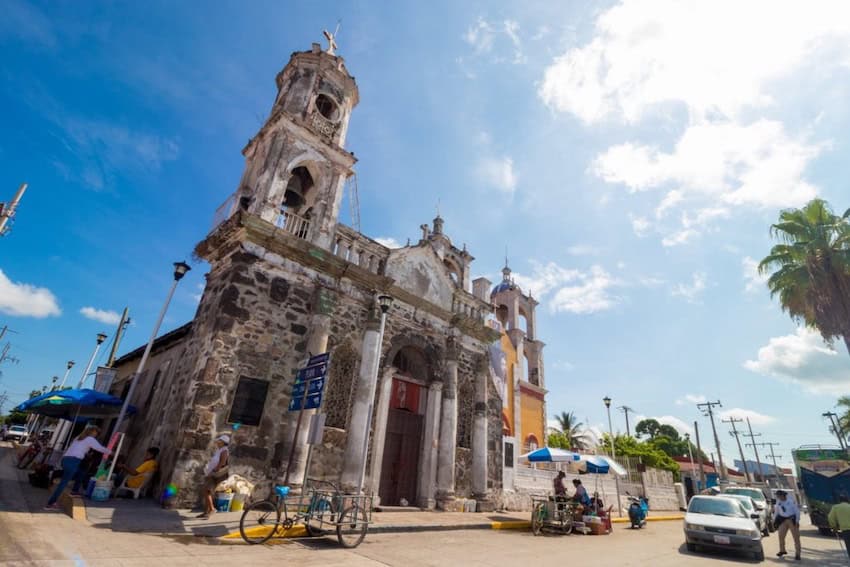
Tucked along the northern coast of Nayarit, about 90 miles north of Nuevo Nayarit and just an hour from the newly expanded Riviera Nayarit International Airport in Tepic, San Blas is still somewhat of a secret to travelers along Mexico’s Pacific coast. This sleepy port town hasn’t bowed to resort sprawl or mass tourism. Instead, it thrives in its wilderness.
Nature runs the show here. Picture four miles of raw, undeveloped beach that stretches along the coastline. Crocodiles cruise through mangrove-lined estuaries. More than 300 migratory bird species paint the skies. Surfers paddle out to the legendary breaks at Playa Las Islitas. For travelers seeking something off the radar, San Blas delivers.
The town offers all the basic amenities you need, with a charming colonial center to welcome holidaymakers and day trippers alike. (Recorriendo mí país)
Things to do in San Blas
Start with the beach. El Borrego is the main draw, a two-mile sweep of golden sand and gentle waves that backs right up to the town. Head down the coast to Playa Las Islitas, one of Mexico’s most beloved surf spots. The vibe here is chill, the water warm, and the beachfront palapas serving up fresh-caught fish are perfect.
If you’re up for an adventure, take a boat through the La Tovara National Park, just a little more than a mile from town. You’ll float through winding canals beneath thick mangrove tunnels, spotting herons, turtles, iguanas, and perhaps a crocodile or two. The ride ends at a crystal-clear spring where you can swim safely behind netted enclosures. Further down the San Cristobal River, visit the local crocodile sanctuary, where conservation efforts are in full swing. Cocodrilario Kiekari is a riverfront crocodile nursery that helps to raise baby crocodiles and return them to the wild as part of a repopulation program. You can tour the sanctuary, where you may also spot jaguars, lynxes, and migratory birds.
San Blas is also a historical heavyweight. Founded as a strategic port in the 18th century by the Spanish Crown, San Blas became the launch point for expeditions to what is now California. From here, Gaspar de Portolá and Junípero Serra departed to establish the missions that would become San Diego and Monterey.
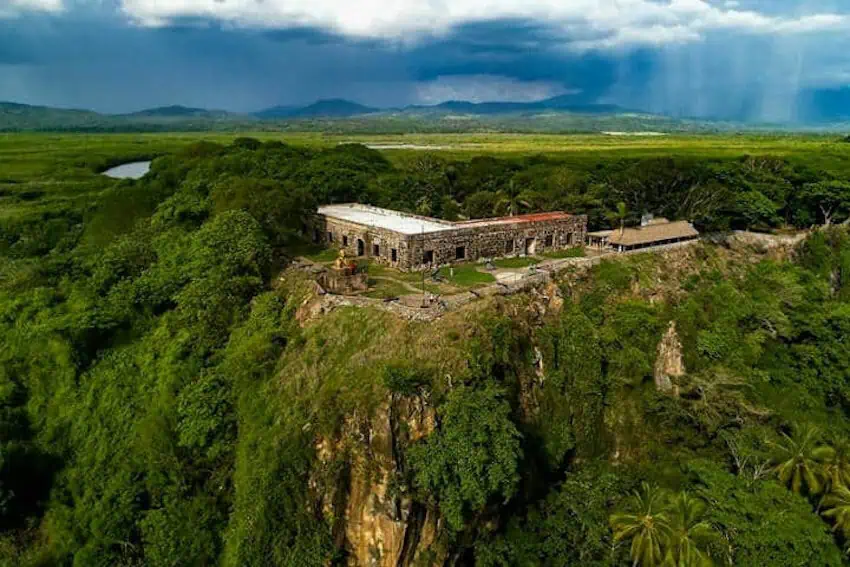
Walk up the hill to the Fort of La Contaduria, built in 1770 to guard against pirates. Its panoramic views stretch over the coastline and the mangroves. Down by the pier, the Casa de la Cultura now stands in what was once the customs house that managed trade from across the Pacific.
The fort of La Contaduria, a former lookout that defended the town from marauding pirates. (El Souvenir)
And of course, for fans of Mexican pop culture, don’t forget to visit the San Blas Pier, immortalized in the Maná song “En el Muelle de San Blas,” inspired by a local woman who waited there for her lost love for decades.
Where to eat
For a quiet town, San Blas has a surprisingly robust culinary scene, especially for seafood lovers.
Restaurante Playa Bonita (right on El Borrego) is perfect for post-beach ceviche, aguachile, or pescado zarandeado. The views of the Pacific while you sip a cold beer are hard to beat.
Caballito de Mar, also on Playa Borrego, is another solid pick for seafood. They specialize in fresh fish caught by local expeditions and served in mouthwatering, no-fuss preparations.
For something with a touch of local expat flair, head to The San Blas Social Club, run by the ever-hospitable Sandra, who also operates a dog rescue and taxi service. The vibe is easygoing, the food consistently good, and the company often colorful.
Wala Wala Restaurante is a crowd favorite for its friendly service and standout coconut shrimp with mango sauce. Owned by Pedro and his sisters, this welcoming spot is a favorite among foreign residents and locals alike.
Ofros Restaurant & Bar rounds out the list with excellent service, delicious seafood staples like monkfish and laing, and a calm, unpretentious vibe.
Where to stay
Don’t expect big resorts or all-inclusive behemoths in San Blas. What you will find are charming hacienda-style hotels with character, personal touches, and an emphasis on locally owned.
Hotel Garza Canela is a longtime favorite, known for its gracious service, cozy rooms, and beautiful gardens. Their on-site restaurant, El Delfín, is a local favorite.
Hacienda Flamingos is another top spot, with gorgeous colonial architecture, bright colors, and a rooftop terrace ideal for sunset watching.
San Blas may not be on everyone’s travel radar, but that’s the point. It’s the kind of place where you watch birds instead of your phone, eat what was swimming that morning, and walk streets layered with history. It’s a port town, a pilgrimage site, a surf haven, and a sanctuary for species (and maybe for you, too).
Meagan Drillinger is a New York native who has spent the past 15 years traveling around and writing about Mexico. While she’s on the road for assignments most of the time, Puerto Vallarta is her home base. Follow her travels on Instagram at @drillinjourneys or through her blog at drillinjourneys.com.