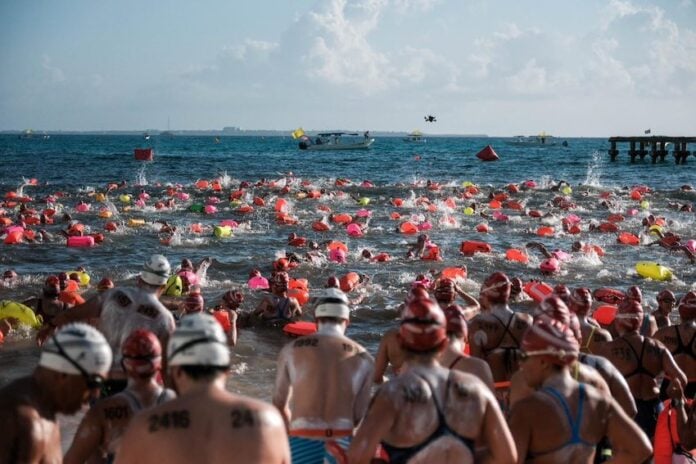
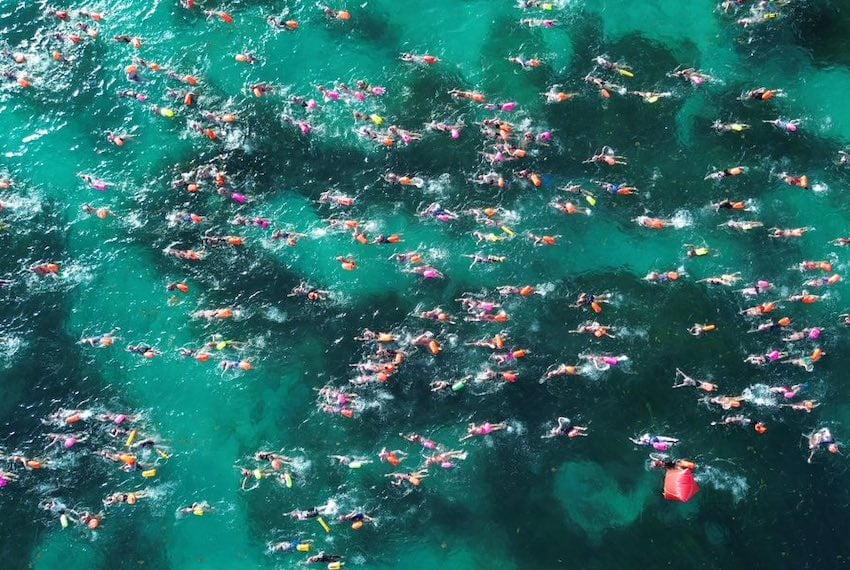
The El Cruce open water swimming compeition, considered one of the most important such events in the world, brought more than 1,600 swimmers to the Quintana Roo coast from more than 20 countries. (Mara Lezama)
Mexico’s world-renowned open water swimming competition known as El Cruce attracted 1,638 participants from 21 countries over the weekend, but at the end of the day, two local Quintana Roo athletes took home the honors.
Fernando Betanzos Rodríguez and María Elena Carreto Castro were crowned men’s and women’s winners of the 10-km competition on Sunday, the main event that took swimmers through the Caribbean Sea from Playa Caracol in Cancún to Isla Mujeres.
Patty Kohlmann, a swimmer who competed in two Olympic Games for Mexico, said El Cruce is an “emblematic swim,” a true test of endurance, strategy, and adaptation to ocean currents. (Mara Lezama)
Patty Kohlmann, a Mexican former female freestyle and medley swimmer who participated in two consecutive Summer Olympics for Mexico starting in 1984, described El Cruce (the Crossing) as a true test of endurance, strategy and adaptation to ocean currents.
“The Cruce competition is a must,” Kohlmann said about the competition on her personal Instagram account. “I believe that all open water swimmers must do it at some point because it’s an emblematic swim. It’s a swim that’s been prestigious for many years.”
She’s not alone in her opinion. El Cruce is considered by the World Open Water Swimming Association to be among the 10 most important open water swims in the world due to the physical demands of the course and the natural beauty of the turquoise waters.
Swimmers competed in 13 different categories across the competition. In addition to the 10-km swim, a Half Iron Swim (1.9 km) and an Iron Swim (3.8 km) were held on Saturday.
Quintana Roo Governor Mara Lezama Espinosa opened the 21st edition of the competition after a Maya ceremony was held as part of the traditional event.
In addition to establishing Quintana Roo as a major sporting destination, El Cruce is a significant economic and tourism driver for the state, attracting athletes, coaches, families and visitors from around the world.
Kohlmann said that the competition is particularly difficult because conditions can change dramatically from one day to the next, meaning that you must always be prepared for what might come. She emphasized the importance of the swimmers’ strategy and the ability to adapt their style depending on the conditions.
She joined the 10-km competition on Sunday. “It was a spectacular swim… some difficult conditions but always fun,” Kohlmann said when asked about her latest experience.
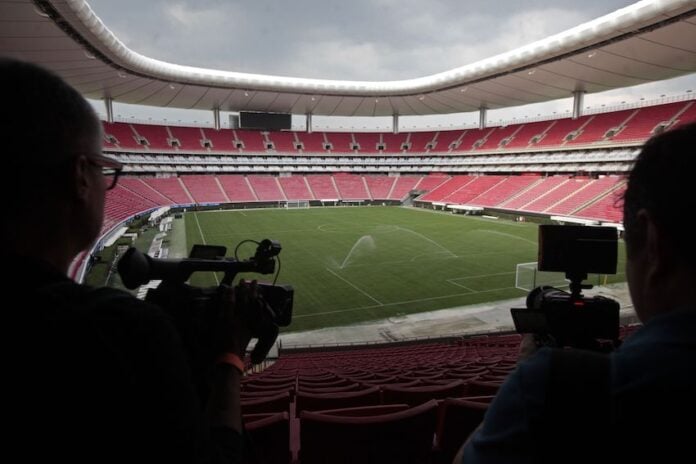
King Felipe VI of Spain's main destination during his upcoming royal visit to Mexico won't be a high-level government meeting room but the Guadalajara area's Akron Stadium (under the FIFA-imposed temporary pseudonym Guadalajara Stadium), where he will watch his country's men's national team take on Uruguay. (Fernando Carranza García/Cuartoscuro)
Among the spectators at the June 26 World Cup match between Spain and Uruguay in Guadalajara will be King Felipe VI of Spain, who has accepted a formal invitation to attend.
The Spanish Royal Household has confirmed that the king will attend the match as part of the agenda for his royal visit at the invitation of President Claudia Sheinbaum and FIFA President Gianni Infantino.
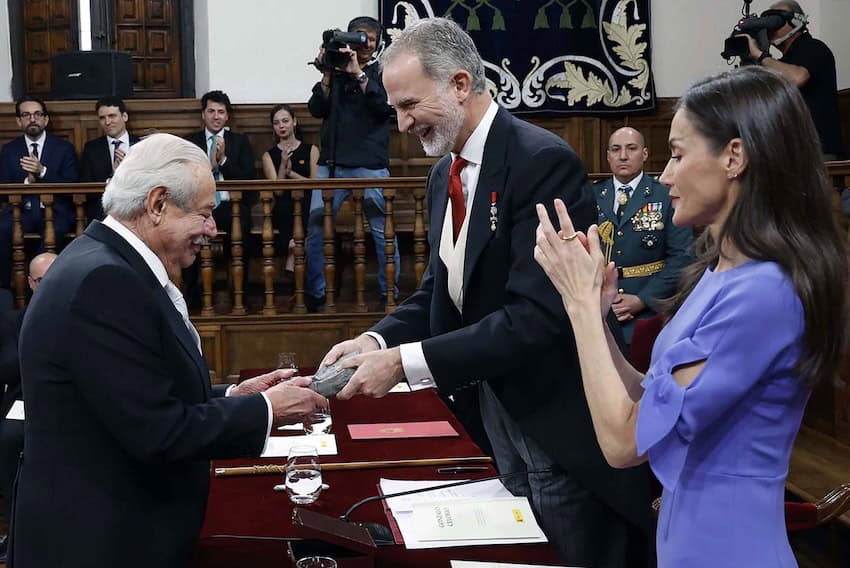
King Felipe VI of Spain, who will be visiting Mexico next month, is seen here delivering the Cervantes Award for Spanish-Language Literature to Mexican writer Gonzalo Celorio in April. (UNAM/Cuartoscuro)
In March, Sheinbaum announced that she had sent an invitation to Felipe VI to attend the World Cup. The March invitation letter reportedly emphasized that the World Cup represented an opportunity to strengthen ties between the two nations through sport, culture, and bilateral cooperation.
The invitation was sent days before the king publicly acknowledged that “there were significant abuses” and “moral and ethical controversies” during the Spanish conquest of the Americas.
Sheinbaum described those words as “a gesture; an approach that we acknowledge,” noting that further progress is needed in historical recognition.
Indeed, the king’s statements were the first in which Felipe VI has directly and publicly addressed the context of the Spanish Conquest and colonization after years of diplomatic tension between Mexico and Spain over that very subject. The recent tension began when former President Andrés Manuel López Obrador sent a letter to Spain demanding an apology for the wrongs committed against Indigenous people during and after the Conquest.
The letter went unanswered, leading Sheinbaum to refrain from extending an invitation to King Felipe VI to her presidential inauguration ceremony in 2024.
However, formal diplomatic relations were never severed between the two countries, a fact recognized by Sheinbaum during her Monday morning press conference
“What happened was a moment of differing perspectives, and we reaffirmed our view, and they acknowledged it,” Sheinbaum said when asked about the king’s visit. “They are now seeing and speaking differently about the period known as the Conquest.”
Another recent boost to the trans-Atlantic relationship was Sheinbaum’s trip to Barcelona last month to participate in the Summit in Defense of Democracy, organized by Spanish Prime Minister Pedro Sánchez.
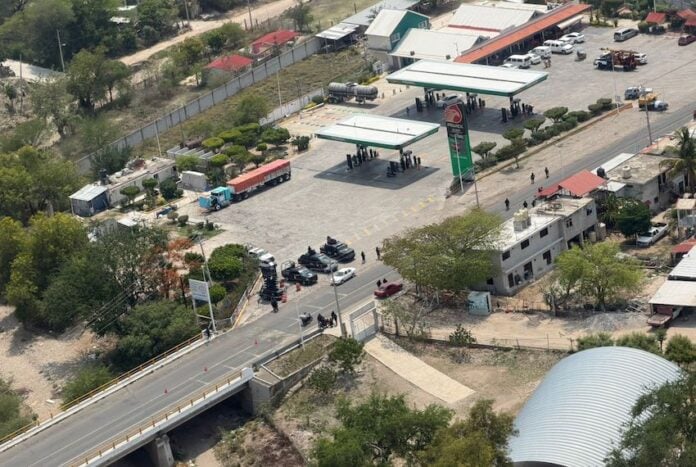
The massacre occurred on a ranch in Tehuitzingo, a municipality about 120 kilometers south of Puebla City. (@SSPGobPue/X)
Ten people including a baby girl were killed during an armed attack in the state of Puebla early Sunday, authorities said.
The massacre occurred on a ranch in Tehuitzingo, a municipality about 120 kilometers south of Puebla City.
Six of the victims were members of the same family, while four were ranch workers, Puebla Attorney General Idamis Pastor Betancourt said Monday. Two of the ranch workers were teenagers. Among the victims was a baby girl aged one month and 20 days. She wasn’t shot but rather suffocated when her mother fell on top of her after she was shot in the back, Pastor said.
The attorney general said that preliminary investigations pointed to “a family issue” related to land ownership as being the motive of the attack. Pastor said that three men related to six of the victims had been identified as the alleged perpetrators. She noted that none of them had yet been arrested, but pledged that the crime wouldn’t go unpunished.
According to media reports, one of the alleged perpetrators is a man called José Alfredo, son of the ranch owner. Along with two other armed men, he allegedly killed his father, his mother and his three siblings, one of whom was just 15.
José Alfredo reportedly escaped from a drug treatment center sometime before he allegedly killed members of his own family on a ranch called “La Marihuana.” The news magazine Proceso reported that he had been sent to the treatment center by his family “due to his addictions” and he perpetrated the attack in “revenge.”
The newspaper 24 Horas reported that José Alfredo “allegedly harbored family grudges related to addiction issues and personal disputes.”
Mass murders are common in Mexico, but are usually related to organized crime rather than family disputes.
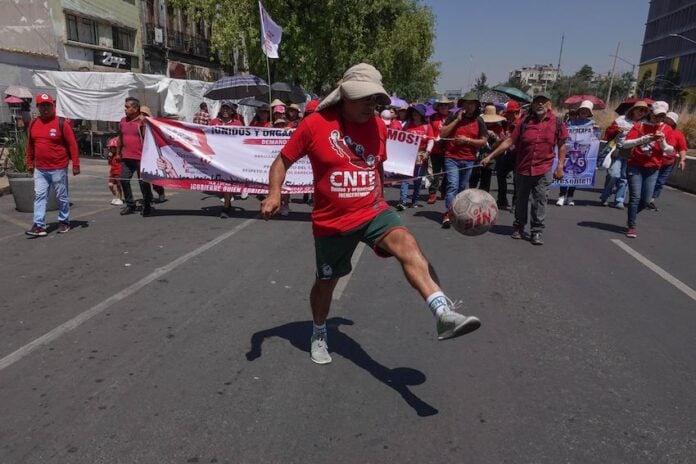
The CNTE marched through the capital on Friday, its usual Teachers' Day activity. This year's march may be a mere prelude to a June strike timed to disrupt the World Cup. (Rogelio Morales/Cuatoscuro)
An activist teachers’ union with a history of disruptive protests has threatened a national strike that could block access to Mexico City’s main public square just 10 days before the World Cup opening ceremony, some 15 kilometers away.
In calling for the strike over what they considered an inadequate 9% salary raise offer from the Education Ministry, the National Coordinating Committee of Education Workers (CNTE) left no doubt that the threatened action’s proximity to the World Cup opener is no coincidence.
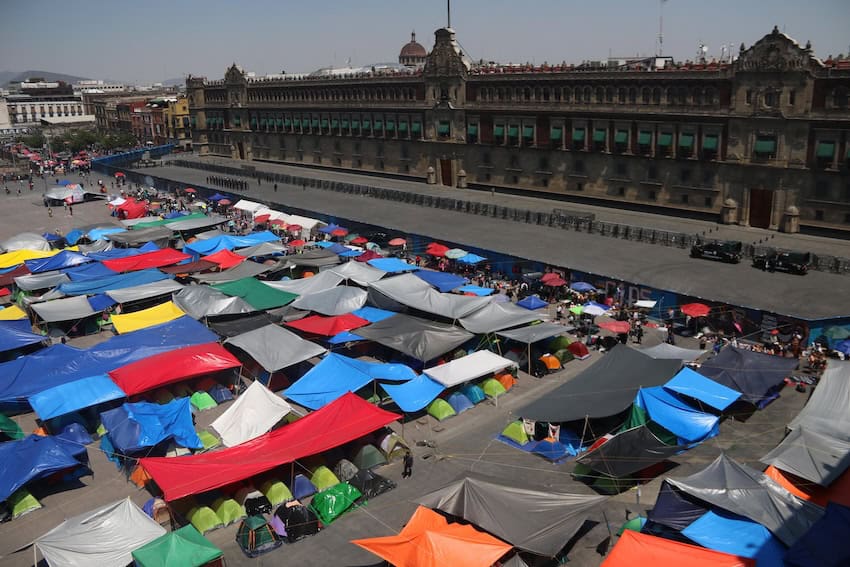
Teachers took over the Zócalo, Mexico City’s main public square, as recently as March 19. They are threatening to do it again with the World Cup just three weeks away. (Victoria Valtierra/Cuartoscuro)
“As has been announced, the national strike coincides with the World Cup,” one CNTE member told the press. “The eyes of the world will be on Mexico City, and we will be there, showing our discontent and fighting for justice.”
The strike announcement appears to be as much a negotiating ploy as a definite plan.
CNTE representative Elvira Meleces Morales said what action the strike includes — and apparently whether there will be one at all — will depend on President Claudia Sheinbaum’s response to their list of demands.
“Our actions don’t depend on this movement; they depend on the will of the federal government, because what we are seeking is to make the struggle visible,” Meleces said.
If left unsatisfied, the CNTE says it will mobilize its sections where it has a presence — mainly Oaxaca, Michoacán, Mexico City, Chiapas and Guerrero — and bring them to the capital. There, on June 1, after a mass protest march in the morning, an encampment will be set up in the Zócalo.
“If the authorities are unwilling, access to the Zócalo will be blocked,” Mereces said.
Beyond disrupting World Cup logistics, the CNTE’s aggressive posture could jeopardize the school calendar, as public schools with CNTE representation may have to suspend classes. That would create an ironic situation in which teachers themselves would accomplish what Education Minister Mario Delgado tried but failed to do: truncate the school year by more than a month.
What are teachers asking for?
According to CNTE representatives, the offered 9% (salary plus benefits) increase is too low to offset inflation.
Beyond a salary raise, the teachers demand a review of education reforms and changes to the pension system.
“These crumbs thrown to education workers are unacceptable,” representative Pedro Hernández Morales said.
Other demands include the repeal of the 2007 ISSSTE Law, which changed the federal pension scheme from pooled to individual and which President Sheinbaum previously pledged to reverse. CNTE teachers protested against this law in June last year.
The CNTE does not represent the majority of teachers. The rival SNTE is older, with a larger membership and broader distribution.
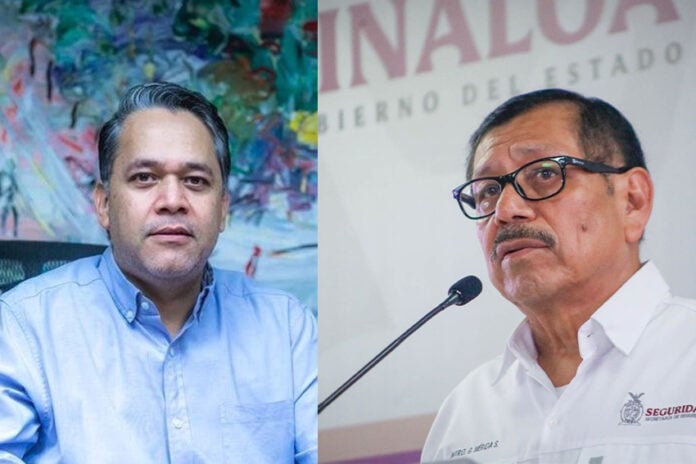
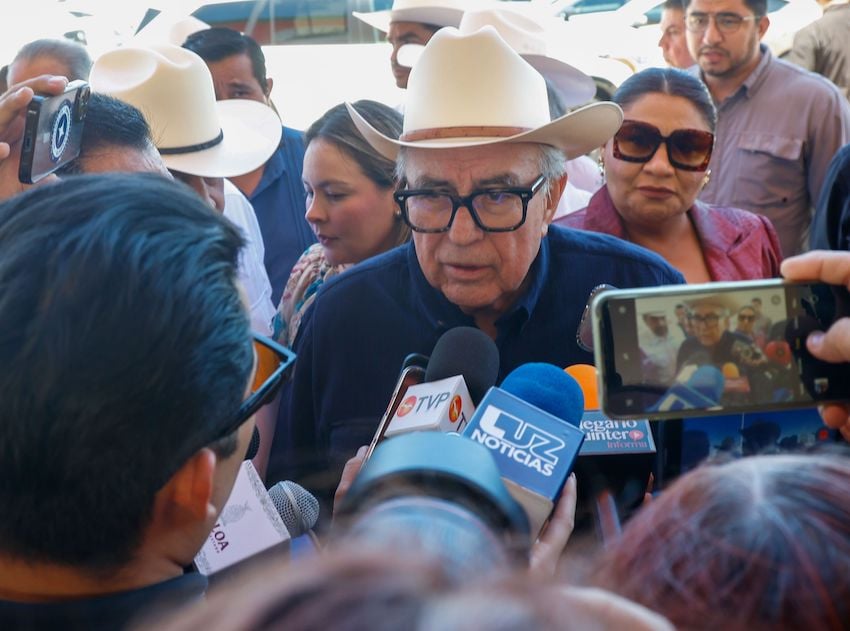
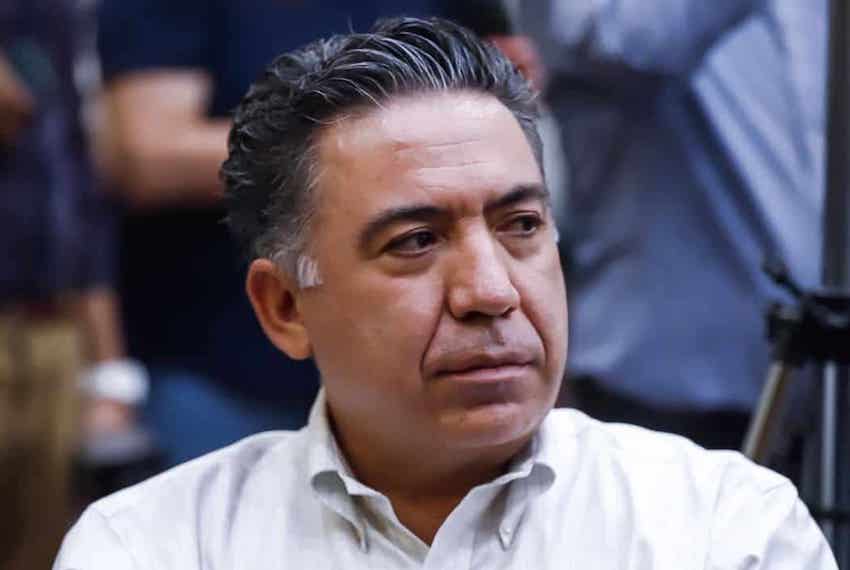
Gerardo Mérida Sánchez (R) turned himself in in Arizona; Enrique Díaz Vega (L) did so in New York. (Facebook/Cuartoscuro)
Two of the 10 current and former Sinaloa-based officials charged in a U.S. drug trafficking indictment that was unsealed last month are now in U.S. custody.
Gerardo Mérida Sánchez, a former Sinaloa security minister, and Enrique Díaz Vega, a former Sinaloa administration and finance minister, turned themselves in to U.S. authorities last week, according to the Mexican government and media reports.
Both men served in the government of Sinaloa Governor Rubén Rocha Moya, who U.S. prosecutors also accuse of drug trafficking in league with the Sinaloa Cartel. Rocha has taken leave as governor, but has not been arrested.
Federal authorities say there is insufficient proof to arrest Rocha and the other defendants for the purpose of extradition to the United States. The mayor of Culiacán and a federal senator who represents the ruling Morena party are among the 10 people accused of colluding with the Sinaloa Cartel — especially the “Chapitos” faction of the criminal organization — in exchange for political support and bribes.
Rocha also represents Morena, the party founded by former President Andrés Manuel López Obrador. The governor, an ally of Sheinbaum, has denied the accusations against him and declared that his innocence will be proven beyond doubt in due course.
The Justice Department of the United States claims Rocha Moya, along with former members of his administration, has allowed the Chapitos to operate with impunity in Sinaloa. (José Betanzos Zárate/Cuartoscuro)
Sheinbaum has said on repeated occasions that her government won’t provide cover for anyone who has committed a crime. However, she asserted on April 30 — the day after the indictment was unsealed — that if there is no “clear proof” against Rocha and the other defendants, the objective of the U.S. charges is “political.”
Mérida detained in Arizona
Mérida, security minister in Sinaloa between September 2023 and December 2024, was arrested in Arizona last Monday.
Mexico’s Security Cabinet said on social media that Mérida entered Arizona from Nogales, Sonora, and was taken into custody by the U.S. Marshals Service.
The former security minister appeared in U.S. federal court in New York on Friday, according to court records. The indictment charging him and the nine other officials was filed in the United States District Court in the Southern District of New York.
Mérida, 66, is accused of narcotics importation conspiracy; possession of machineguns and destructive devices; and conspiracy to possess machineguns and destructive devices.
According to the indictment, he “received bribes from the Chapitos” — led by sons of convicted drug lord Joaquín “El Chapo” Guzmán — “and, in exchange, provided the Chapitos with, among other things, advance notice of law enforcement raids on drug labs, so that the Chapitos could move their drugs and lab equipment before the raids.”
Díaz, the administration and finance minister in Sinaloa from November 2021 to September 2024, turned himself in to authorities in New York on Friday, according to reports.
He is accused of the same crimes as Mérida. If convicted, both Díaz and Mérida face sentences of up to life in prison.
According to the indictment, Díaz, 50, “helped the Chapitos leaders install corrupt officials to protect the Chapitos’ drug trafficking operations and served as” a liaison “between the Chapitos leaders and Rocha Moya.”
At her Monday morning press conference, President Claudia Sheinbaum said she saw “no risk” in declarations that Mérida and Díaz could make to U.S. authorities.
“It was their decision to turn themselves in and there is no risk, none,” Sheinbaum said, apparently dismissing the possibility that the two former state ministers could implicate other officials and politicians affiliated with Morena and/or say things that could damage her government.
Morena senator says he is in Sinaloa after reports claimed he was arrested in San Diego
There were reports over the weekend that federal Senator Enrique Inzunza had been arrested in San Diego by the U.S. Drug Enforcement Administration.
Inzunza told La Jornada that he would not turn himself in to U.S. authorities. (Wikimedia Commons)
However, in a social media post on Sunday, Inzunza — who is also accused of colluding with the Chapitos — said he was in Sinaloa.
“What right-wing media outlets are publishing about contact with foreign authorities is false,” he wrote.
“… I’m in Sinaloa, my land, of which I am proud, with me and mine, good and honest people,” said Inzunza, who told the newspaper La Jornada that there was no chance he would turn himself in to U.S. authorities.
In his social media post, the senator rejected the charges against him, describing them as “mendacious” and without foundation. Inzunza asserted that his innocence will be proven in due course and expressed his willingness to attend to any requirements of Mexican authorities.
Of the 10 officials accused of drug trafficking by U.S. prosecutors, Inzunza is the only one who remains in office. He has been a senator since September 2024 and previously served as general secretary of the Sinaloa government led by Rocha.
Even though he is accused of aiding and abetting the Chapitos, Inzunza is considered a possible candidate for Morena in the 2027 gubernatorial election in Sinaloa, the El Universal newspaper reported. Edgar Barraza Castillo, president of Morena’s executive committee in Sinaloa, said last week that both Inzunza and Culiacán Mayor Juan de Dios Gámez Mendívil could participate in the process to select Morena’s candidate for the election as long as they meet the contest “requirements.”
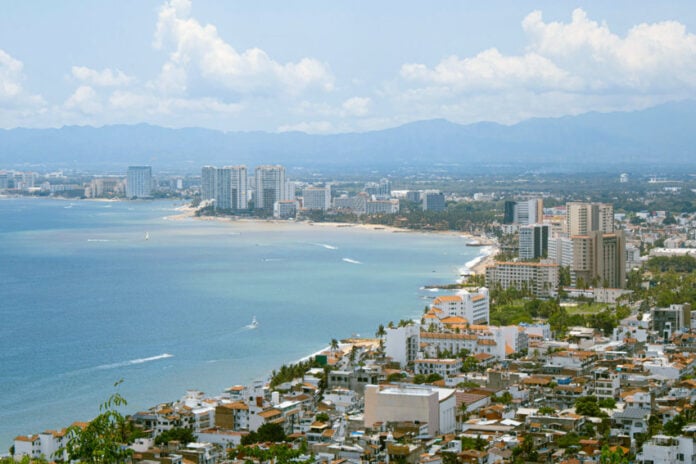
Looking for fun events in Puerto Vallarta? There's fun to be had for all interests and ages in May! Get the lowdown. (Josue Liera/Pexels)
From adrenaline-filled competition to community creativity, culinary celebration and commemorative cataloging, the Bay of Banderas is alive with a string of must-see events in the month of May. Before the month runs out, get out there and see photos documenting PV’s history, sample the region’s most popular high-end restaurants at reduced prices, build sandcastles for a good cause and more!
Restaurant Week Puerto Vallarta 2026 in full swing
(Azafrán Restaurant Puerto Vallarta/Facebook)
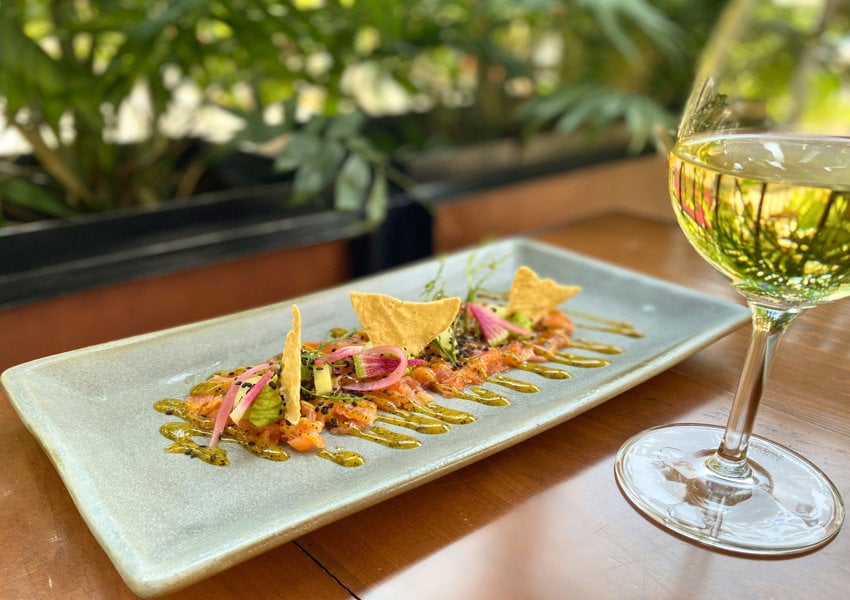
Restaurant Week Puerto Vallarta 2026 has officially begun and will continue through June 10, transforming the Bay of Banderas region for more than three weeks into a showcase of culinary talent.
The annual festival features participating restaurants across Puerto Vallarta and Riviera Nayarit that offer three-course menus at fixed prices, giving area diners the opportunity to experience some of the region’s top cuisine at affordable prices.
Although traditionally called “Restaurant Week,” the event has evolved into an extended gastronomic celebration. More than 50 restaurants will participate in the 2026 edition, with dishes ranging from contemporary Mexican cuisine and fresh seafood to international fine dining experiences.
From May 22–24, Bucerías will become the center of international kitesurfing as the 2026 Festival del Viento (Wind Festival) takes to the shores of Banderas Bay.
Athletes from across Mexico and around the world are expected to gather for three days of competition, entertainment and beachside celebration in one of the country’s most recognized wind sports destinations.
Freestyle events will highlight aerial tricks and technical creativity, while Big Air contests focus on height and precision. Visitors can also watch downwind races, slalom competitions, and foil regattas, where participants demonstrate speed, balance and endurance across open water.
In addition to the sporting events, the festival grounds will offer food vendors, live music, exhibitions and activities designed for families and visitors of all ages.
Raise funds for teachers while building sandcastles at Mango’s Beach Club
(Volcanes Community School/Facebook)
The Volcanes Community School will host its first annual Sandcastle Competition on May 29 from 9 a.m. to 1 p.m. at Mango’s Beach Club, bringing together families, students and community members for a day of creativity and fundraising in support of the school’s teachers’ fund.
Organizers say every contribution will directly support the educators who work to provide students with a safe, encouraging and enriching learning environment.
Throughout the event, participants will design and build imaginative sandcastles along the beach while enjoying a festive community atmosphere. In preparation, architect Chava Camberos recently spoke with the schoolchildren about structures and the importance of creating strong foundations and supports to secure their sand creations.
The event is open to the public and will include activities for all ages, encouraging residents and visitors alike to take part in a meaningful community initiative.
Puerto Vallarta celebrates its history with exhibition at City Hall
(Government of Puerto Vallarta/Facebook)
As part of its anniversary celebrations, Puerto Vallarta will be putting on “Puerto: Archive and Memory,” an exhibit of historical photos and ephemera dedicated to preserving and sharing the city’s historic legacy.
Scheduled for May 29 at City Hall, the gathering will showcase a valuable collection of previously unpublished photographs, antique maps, official documents and historical records that reveal how the coastal destination evolved from a small fishing community into one of Mexico’s most recognized tourist cities.
The event forms part of the commemorations marking the municipality’s 108th anniversary and the city’s 58th anniversary as an officially recognized urban center. It is part of a series of events going on that weekend on Friday, Saturday and Sunday.
Historians, archivists and cultural researchers will offer lectures and presentations designed to connect residents and visitors with the stories, traditions and milestones that shaped Puerto Vallarta’s identity through the decades.
When: May 29 Where: Puerto Vallarta City Hall Cost: Free
Charlotte Smith is a writer and journalist based in Mexico. Her work focuses on travel, politics, and community. You can follow along with her travel stories at www.salsaandserendipity.com.
It's maybe the most versatile piece of slang in Mexico, but what does farting have to do with anything? (Antonino Visalli/Unsplash)
What the heck? Or, do I mean, what fart — ¿qué pedo?
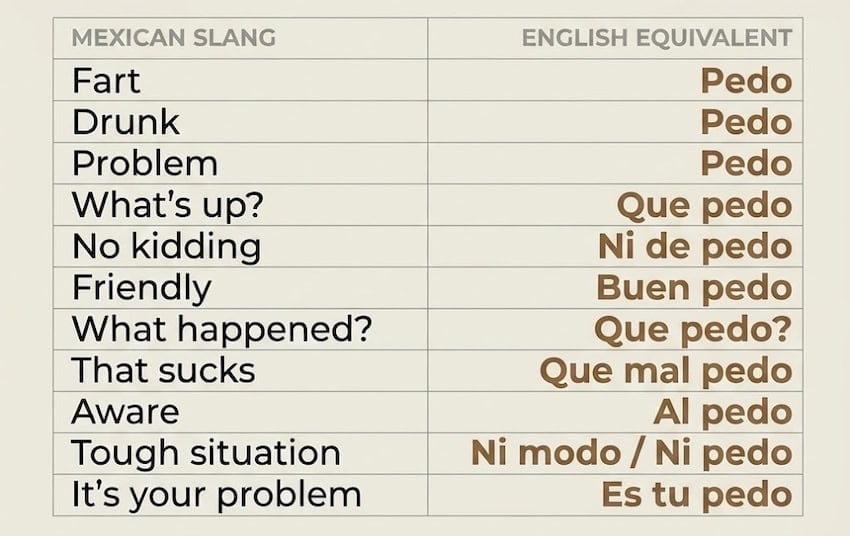
Pedo is one word in Spanish that showcases the complexity of Mexican vocabulary. While originally associated with flatulence, in Mexico, this versatile term has taken on a variety of meanings, making it a linguistic curiosity worth exploring.
Pedo in Mexico is a linguistic chameleon, adapting easily to various contexts, so let’s dive into its usage in different situations.
Difficulty or problem
In Mexico, pedo is often used colloquially to refer to a difficulty or problem. For example, someone might say, “es un pedo” when they want to express that something is a real problem or a rather difficult task to complete. You’ll also hear “me metí en un pedo,” which translates as “I’m in trouble.”
Fight or conflict
Pedo can also signify a conflict or fight. If someone mentions being in a pedo, they might be describing a heated argument or altercation. For instance, “anoche, hubo un pedo en el bar” — It went down at the bar last night.
“Hacerla de pedo,” on the other hand, means making a stink or giving someone a hard time — “se pasó un rojo y el poli se la hizo de pedo” (he ran a red and the cop gave him a hard time about it).
Describing someone or something
Another common usage of pedo in Mexico is to describe being drunk or intoxicated. Saying “estaba bien pedo anoche” — I was really drunk last night — or “estoy medio peda” — I’m a bit tipsy — is a casual way to convey the state you’re in. On the other hand, the word peda is used to describe a party or a night out with heavy drinking, which comes from this sense of pedo “estuvo buena la peda” (the party was great/last night was great).
You can call someone “mal pedo” to show that they’re a mean person, while a situation described with the same term is a bad one. Lost your keys? “¡Qué mal pedo!” Conversely, a good-natured person or a fortunate situation can be described as “buen pedo.” In English, you can say an exceptionally good movie or meal was “something else” — in Mexican Spanish, it’s “otro pedo.”
If someone says, “ni pedo,” they’re expressing resignation in regards to a situation, in the same way an English speaker sighs, “oh well.” But when adding the preposition “de,” the meaning changes to “there’s no way!” — ¡Ni de pedo! — hinting that the speaker wouldn’t do what they’re being asked even if they were drunk.
Greetings and expressions of surprise
In some cases, pedo is used as an expression of surprise or disbelief. For example, upon hearing unexpected news, someone might exclaim, “No mames, en serio? ¡Qué pedo!” (“No way, seriously? What a surprise!”), or “qué pedo, qué pasó?” (What is going on?). In addition, it is a very common way to greet your friends just by saying “Qué pedo!”
Understanding the various uses of the word pedo will add depth to your comprehension of Mexican Spanish. It’s essential to consider the context in which the term is used to grasp its intended meaning fully, and you should always keep in mind that it is an informal word. Don’t use it with your parents, your in-laws, your teachers or any person to whom you would normally speak formally. Save it for your very close friends.
Paulina Gerez is a translator-interpreter, content creator, and founder of Crack The Code, a series of online courses focused on languages. Through her social media, she helps people see learning a language from another perspective through her fun experiences. Instagram: paulinagerezm / Tiktok: paugerez3 / YT: paulina gerez
A reporter asked the president on Monday what "risk" she saw as a result of declarations that former Sinaloa Security Minister Gerardo Mérida Sánchez and former Sinaloa Finance Minister Enrique Díaz Vega — Morena party affiliates who are currently facing drug trafficking charges — could make to U.S. authorities. (Juan Carlos Ramos Mamahua/Presidencia)
Sheinbaum’s mañanera in 60 seconds
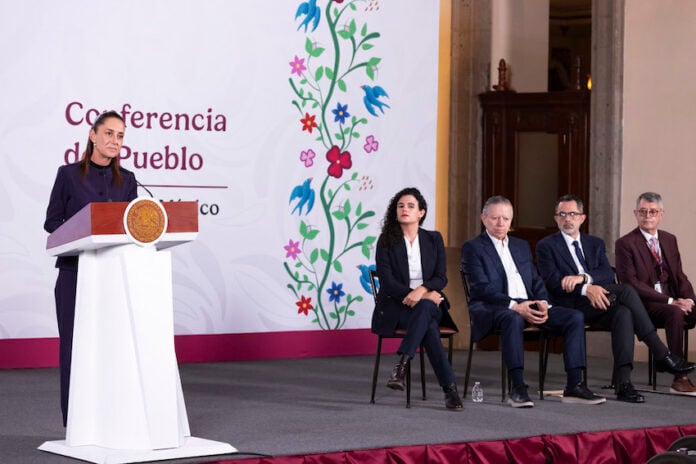
🔒 Sinaloa officials in U.S. custody pose ‘no risk’: Sheinbaum said she sees zero risk from declarations that former Sinaloa Security Minister Gerardo Mérida Sánchez and former Finance Minister Enrique Díaz Vega could make to U.S. authorities.
🇺🇸 No risk of Morena being designated as a terrorist organization by the U.S. government: Asked about the possibility following U.S. charges against officials linked to the president’s political party, Sheinbaum flatly dismissed it, reiterating that her government makes no pacts of any kind with criminals.
🔫 U.S. should focus on its own problems first: Sheinbaum said the best way Washington can help Mexico fight organized crime is by reducing domestic drug consumption and stopping the flow of weapons into Mexico.
🗳️ Second judicial elections proposed for 2028: Sheinbaum said her government will ask Congress to push back the next judicial elections from 2027 to 2028 to avoid a scheduling clash with municipal, state and federal elections already set for June of next year.
Why today’s mañanera matters
At her Monday morning press conference, President Claudia Sheinbaum responded to the news that two former officials who served in the Sinaloa state government led by Governor Rubén Rocha Moya are now in U.S. custody.
In addition, she ruled out the possibility of the U.S. government designating Morena as a terrorist organization due to the alleged involvement in drug trafficking of some officials and politicians affiliated with the ruling party.
Sheinbaum has repeatedly defended the party that backed her at the 2024 presidential election, and on Monday declared that her government — represented in Congress by Morena — doesn’t make pacts of “any kind” with criminals. She acknowledged that U.S. President Donald Trump has asserted that cartels rule Mexico, but said he has never made the claim in the conversations she has had with him, including one last Friday.
Today’s mañanera was also significant as Sheinbaum revealed that the government wants to postpone Mexico’s second judicial elections so they don’t clash with congressional, gubernatorial and mayoral elections that will take place next year.
Sheinbaum: ‘No risk’ of US authorities designating Morena as a terrorist organization
A reporter asked the president what “risk” she saw as a result of declarations that former Sinaloa Security Minister Gerardo Mérida Sánchez and former Sinaloa Finance Minister Enrique Díaz Vega could make to U.S. authorities.
The two men were detained in the United States last week. Mérida and Díaz, along with eight other Sinaloa-based current and former officials, including Governor Rocha Moya (currently on leave), are accused in the same of indictment of drug trafficking in league with the Sinaloa Cartel.
Sheinbaum responded that she saw “no risk” in declarations that Mérida and Díaz could make to U.S. authorities.
“None,” she added.
“It was their decision to turn themselves in and there is no risk, none,” Sheinbaum said, apparently dismissing the possibility that Mérida and Díaz could implicate other officials and politicians affiliated with Morena, the ruling party founded by former President Andrés Manuel López Obrador.
Asked whether there was a “risk” that the United States could designate the Morena political party as a terrorist organization due to its “alleged links” to cartels, Sheinbaum paused for a moment before responding.
Sheinbaum: US authorities should focus on US, not Mexico
Sheinbaum told reporters that the “best way” that U.S. authorities can help Mexico in the fight against organized crime is by working to reduce drug use in the United States and stopping the flow of guns into Mexico.
#MañaneraPresidenta | “Es parte de su narrativa”. Claudia Sheinbaum afirmó que el discurso sobre la “narcopolítica” proviene de medios estadounidenses y recordó el caso de Genaro García Luna durante el gobierno de Felipe Calderón.
“That’s the best way,” she said. “… And combating the cartels that operate in the United States because, as I’ve said, who distributes the drugs in the United States? Who sells the drugs in the United States?”
After declaring that her government isn’t going to protect anyone who has committed a crime, Sheinbaum questioned why U.S. officials “are so interested in Mexico” — a reference to their apparent intent to press charges against more Mexican politicians.
They should attend to problems in the United States first, she said.
“What do they need to attend to first and foremost? The use [of drugs], the entry of weapons [to Mexico],” Sheinbaum reiterated.
“Why do organized crime groups [in Mexico] have high-powered weapons? Where do they come from? According to the U.S. Department of Justice itself, 75% [of the weapons used by cartels in Mexico] come from the United States,” she said.
Sheinbaum proposes postponing judicial election to 2028
Early in her press conference, Sheinbaum said her government would submit a proposal to Congress to postpone Mexico’s second judicial elections to 2028.
She said that her new legal adviser, Luisa María Alcalde, recommended holding the judicial elections in 2028 rather than in 2027, when municipal, state and federal elections will be held. Sheinbaum said that the recommendation was due to the large number of positions that will be up for grabs at the elections in June 2027.
She said that if judicial elections were held in 2027 on the same date as municipal, state and federal elections, voters would have to cast ballots at two separate polling places.
“So we’re making a proposal to Congress … to move the [judicial] elections to 2028,” Sheinbaum said.
Mexico held its first-ever judicial elections on June 1, 2025. Those elections — at which almost 2,700 judges and magistrates, and nine Supreme Court justices were elected — were held as a result of a controversial judicial reform that was promulgated in September 2024 just before López Obrador left office.
By Mexico News Daily chief staff writer Peter Davies (peter.davies@mexiconewsdaily.com)
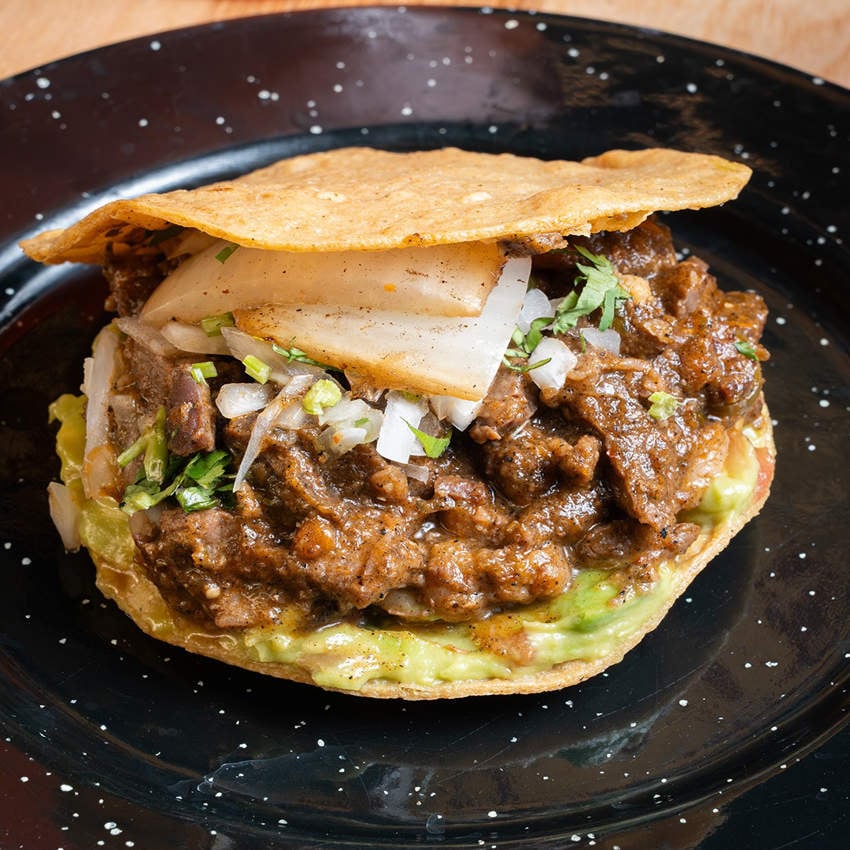
Get psyched up for the big match with authentic, delicious tacos at one of these neighborhood taquerias around Estadio Azteca. (Cristian Rojas/Pexels)
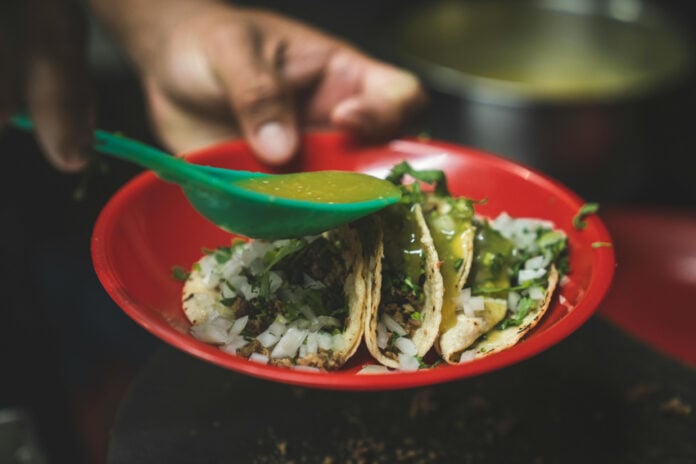
Headed south of the city to watch one of the four World Cup games happening at Mexico City’s Estadio Azteca? Then it’s a perfect time to get off the regular tourist track and discover delicious eats in other CDMX neighborhoods.
There are plenty of taquerías that aren’t far from Estadio Azteca, currently known as Banorte Stadium. Here are five mouthwatering options for tacos before or after a match.
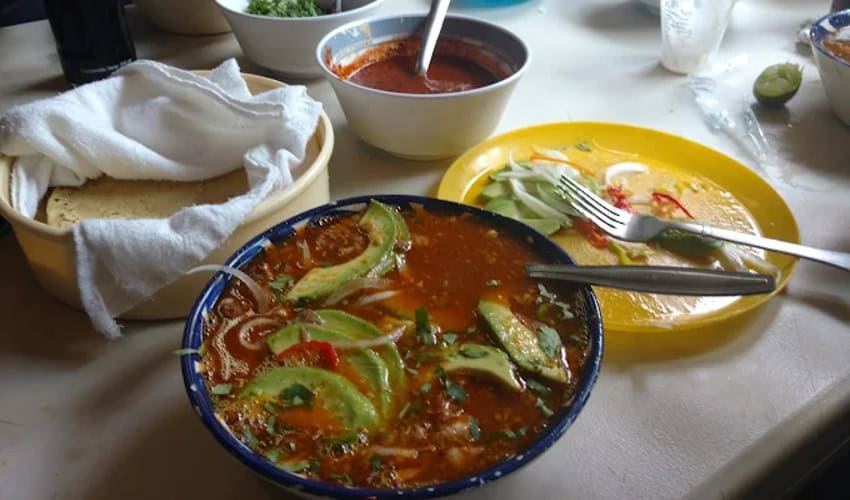
La Huacana is overflowing with locals on the weekends, but during the week, you will likely find a pretty mellow scene. There’s no sign out front, just an orange awning and a long entryway that lets you know you are there. The traditional lamb barbacoa is less seasoned than you might expect if you are accustomed to eating Tijuana-style birria, for example. But the broth is fragrant and filled with spice, the tortillas are handmade to order and the meat is fall-off-the-bone tender.
No one here will speak English, so prepare to know what you want — macisa is a leaner, less fatty selection of meat, and surtido has a bit of everything in it; both options are incredible. Don’t forget to grab a French press coffee while you are there — while not the darkest brew, this is the best coffee you’ll likely ever have at a fonda in Mexico City.
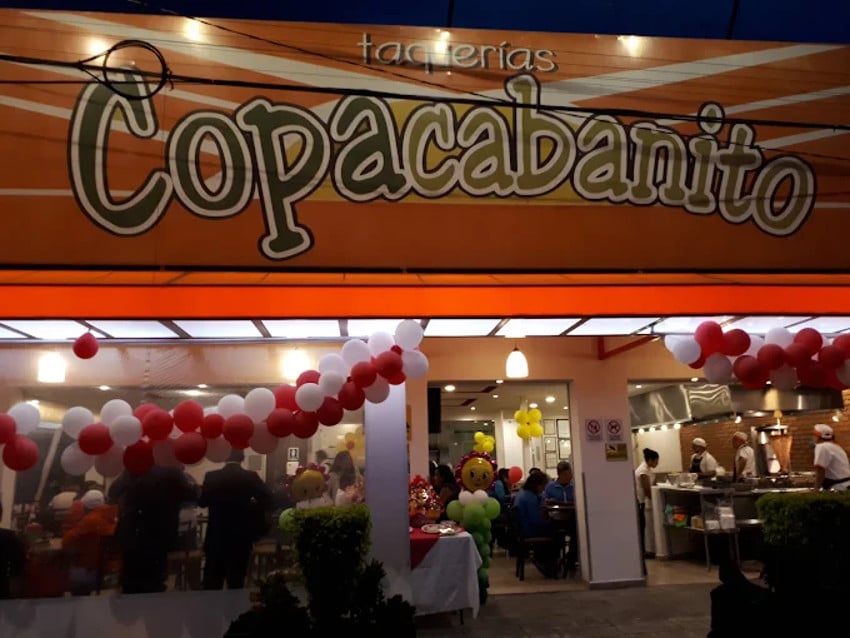
Taquerías Copacabanito — Santo Tomás Manzana 633, Pedregal de Sta Úrsula
(Miriam Reyes/Google)
Set on a residential street with mechanic shops lining its sidewalks, Copacabanito is a famous chain with locations throughout the city, but it’s also a local favorite, and not a place where you’ll see other tourists.
The al pastor has a heavy marinade that’s rich and just a touch sweet, while the tripe (intestines) is fried crispy on the outside and soft in the center. Their lengua (tongue) is buttery soft, with a trace of oregano on the palate.
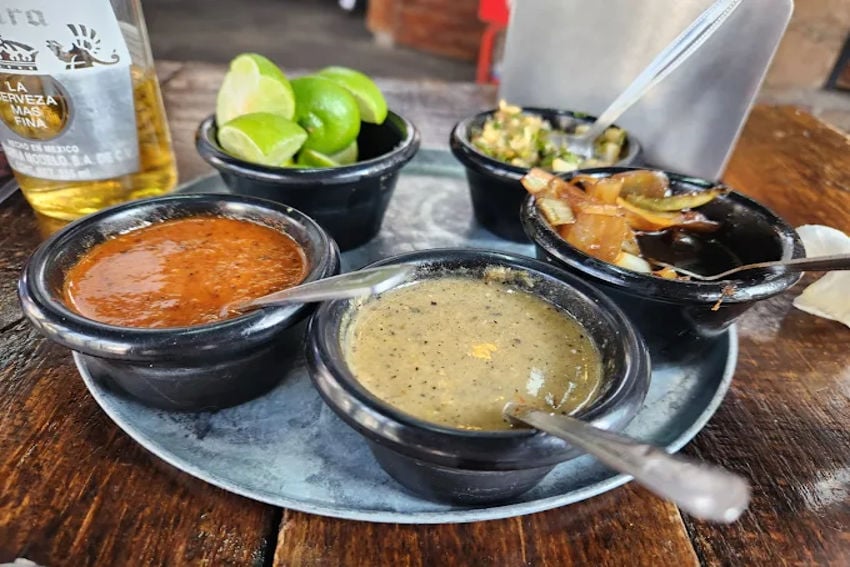
Alongside everything, they serve up a half-dozen salsas that range in heat level. The homemade tortillas, cold beers and big-screen TVs might mean you never make it to the match at all.
Brasa y Carbon — Corner of Avenida Iman and Calle Comoporis, Coyoacán
(Antonio Mendoza – Google)
A tiny place with delicious food means there’s always a line out the door and down the sidewalk — expect to wait at least a few minutes for a table. The intoxicating smell of grilling meat calls out to the crowds as they pass by, even on this loud, heavy-traffic avenue.
Chistorra (Spanish-style sausage), ribeye, arrachera (skirt steak), sirloin, bone marrow and lots more options are cooked by a single grill master in the view of the diners, and plastic plates piled high with seasoned meat are passed along. The aguja norteña (chuck eye steak) is tender, nicely salted and holds that warm taste of char from the grill.
The campechano with chistorra and tender sirloin is a showstopper, especially with a forkful of marinated onions on top. They serve beer, sodas and water to wash them down.
El Remolkito de Sirloin — Anillo Perif. 5460, Coyoacán
(El Remolkito de Sirloin/Facebook)
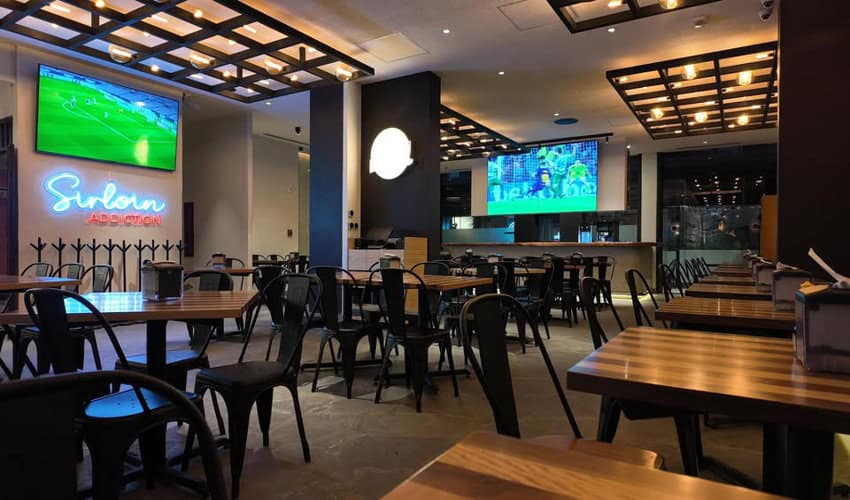
El Remolkito’s specialty is sirloin in all its versions, so don’t expect to find other meats on the menu. Right up against the multilane Periferico highway, the place is lively, crowded and fast-paced, with a dining room on both the first and second floor.
The creamy salsa verde with avocado and the chile de árbol salsa are both fiery additions to one of their tender sirloin tacos; add in a few pickled onions, and it’s a fever dream. Do yourself a favor and order the costra de sirloin, which replaces a tortilla with a delicately thin layer of crispy Gouda cheese. It is one of the most decadent things on the menu — greasy, cheesy, perfect.
Tacos Charly — Av. San Fernando 201, Tlalpan
(Michelin Guide)
The crowds at Tacos Charly have intensified since the restaurant’s inclusion in the Mexico City Michelin Guide, but this has long been a local favorite. Expect a crowd already forming a line when you arrive. It will move quickly, and you’ll have to line up twice — once to order and once to pick up.
By far, their most famous and best taco is the suadero, a style of taco reportedly invented in Mexico City that consists of slow-cooking a tough cut of beef in a slurry of oil and seasonings until it is tender and delicious.
The suadero doesn’t disappoint, but be sure when they ask you “Con todo?” (“With everything?” — meaning salsa, onion and cilantro) that you say “Sí, y esta salsa” and point to the salsa behind the glass divider where the taquero is. This is a special salsa they make with a little bit of the meat’s cooking juices, and it is absolutely essential to this taco.
What to know before you go
All these are local places in non-touristy spots in Mexico City — with the exception of maybe Tacos Charly in the Tlalpan neighborhood, which has become sort of famous. They will all be easier to navigate with a little Spanish taco vocabulary and the knowledge that you might be the only foreigner there.
Have no fear: People are chill, and they want to feed you as much as you want to eat.
Lydia Carey is a freelance writer and translator based in Mexico City. She has published extensively both online and in print, sharing her insights about Mexico for over a decade. She lives a double life as a local tour guide and is the author of “Mexico City Streets: La Roma.” Follow her urban adventures on Instagram and see more of her work at mexicocitystreets.com.
Mexico arrived at Wembley Stadium with a legendary coach and a strong team of Cup veterans and promising young players. So why couldn't El Tri make it past the group stage that year? (UAF)
Sixty years ago, the 1966 FIFA World Cup was staged in England, the spiritual home of the sport, where the rough street game had been given both rules and passion, and Mexico’s national selection team that year arrived at Wembley with an experienced Mexican coach and a team full of strong players.
Mexico’s play during the Cup was solid and steady, even against bigger names like England and France. The team had enthusiastic fans cheering them on at Wembley. Mexico was also on a high, having been chosen to host the next World Cup in 1970, as well as the Olympics in 1968. It all should have added up to a Cup performance to remember here in Mexico. But once the tournament started, the national team never made it out of the group round. What went wrong?
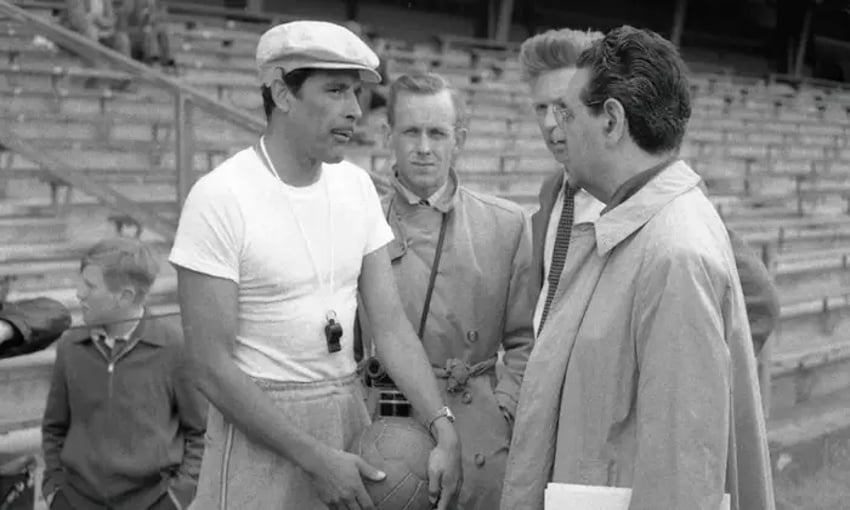
Mexico’s 1966 World Cup team members pose for a photographer with London’s Evening Standard newspaper two days into the tournament.
The 1966 tournament, like many from the era, employed a format that remained largely unchanged: 16 teams in four groups, with the top two in each group advancing to the knockout stages. It was a very exclusive affair, with Europe and South America reserving 14 of the 16 places.
One spot went to North America — with Mexico always the favorite to qualify — and one had to be shared between Asia and Africa. In 1966, it was North Korea, of all countries, that came through a heavily boycotted qualifying tournament.
Mexico had a far less controversial path to the finals. The first round of matches took place in March 1965, with Mexico’s national teamdispatching Honduras and the U.S.
The second round started a month later, when Mexico joined the other group winners, Jamaica and Costa Rica. Two away games, a draw with Costa Rica and a 3-2 win in Jamaica put the Mexicans in control, and they went through undefeated. Over the two rounds, they had won six of their eight games, scoring 20 goals and conceding just four.
Isidoro Diaz, one of Mexico’s most underrated players of this period, was a standout with five goals.
A balance of veterans and bright young players
Mexico’s team in the 1966 World Cup was coached by legendary Mexican player and coach Ignacio Trelles, who was on his third Cup stint. (Mexsport)
The draw for the finals took place in the Royal Garden Hotel in London. For the first time, the ceremony was televised live. There were four pots, representing South America, Europe, Latin Europe and the rest of the world. The last group consisted of Mexico and North Korea, with Bulgaria and Switzerland considered the weakest of the European teams. By the time this fourth pot was brought forward, the groups were already taking shape, and Mexico was the first name out, placing them in Group 1 alongside England, Uruguay and France.
Mexico started the World Cup year with a series of friendly games against local clubs. Preparations picked up momentum in June with the opening of Estadio Azteca. This was celebrated by a club tournament, after which Tottenham stayed on to play the Mexico national team, the visitors winning 1-0. The great Ignacio Trelles was the coach for his third World Cup tournament and was notably loyal to his regular players.
Even so, four years is a long time in football, and the squad for England was a balance of veterans (eight players from 1962) and new faces. Raúl Cárdenas was missing from the defense after three World Cups, but Gustavo Peña was an excellent replacement. Two young strikers, Aaron Padilla and Enrique Borja, had been added, and 22-year-old goalkeeper Ignacio Calderón was in the squad. Five of the players came from Club Deportivo Guadalajara, which was expected, as Chivas were the team of the decade, having won the Mexican championship in 1964 and 1965. However, 10 clubs would contribute players.
Antonio Carbajal’s milestone Cup
Upon reaching London, Mexico based itself in the Alexandra National Hotel. Little was known of Mexican football in those pre-Internet days, and the press, in search of a story, focused on Antonio Carbajal, the 37-year-old goalkeeper who would be appearing in his fifth World Cup. This is still a record — although barring injury, both Cristiano Ronaldo and Lionel Messi look set to play in a sixth tournament later this year.
There was a bit of drama before a single ball was kicked, with the World Cup trophy being stolen from a display. There was a ransom demand, an arrest and a hero dog who found the trophy while being taken for a walk.
The Jules Rimet Trophy is placed into a safe at Cannon Row Police Station in London, March 1966. Stolen at a public exhibition, the trophy was found a week later in a garden hedge by a dog named Pickles.
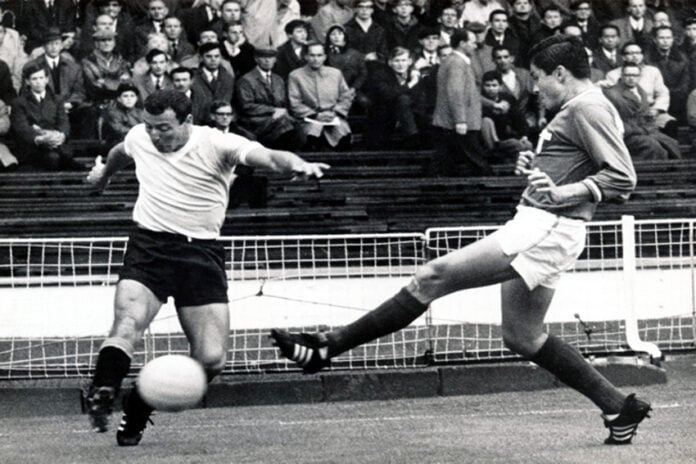
The tournament kicked off on a Monday evening with a dull 0-0 draw between England and Uruguay. Two days later, Mexico came out onto the Wembley pitch to play France. Despite 75,000 tickets having been sold, the stadium was half empty. Many fans had bought blocks of tickets to secure their seats for the semifinals and final, and it seems that some of these did not consider this a particularly attractive match.
However, there was no lack of support from the Mexican community in London, with the press photographers drawn to the small gathering of sombrero-wearing supporters that gathered in one section. It was all good-natured. When the fans got a bit excited, jumping up and down and waving their coats in the air, the police walked over more because they were bored than because they feared a riot.
Mexican fans rush the field during the Mexico vs. France match. They placed a sombrero on the head of Mexican player Guillermo Hernández.
This match was a typical Mexican performance under Trelles, packing the defense and counting on quick counterattacks. Ignacio Calderón was preferred to the veteran Antonio Carbajal in goal, and while he seemed hesitant to come out of the six-yard box, he was a big man who would not be bullied on his line. There was plenty of action and a fair bit of muscle, the Mexican defense giving out as good as they received. The halftime band marched on with the score still 0-0, but then, in the 48th minute, Mexico produced the breakthrough. A young Enrique Borja muscled the ball away from Gabriel De Michèle, and although he was facing the wrong way, his natural striker’s instinct kicked in; he twisted and turned to put the ball into the net as if by sheer determination. Both sides now began searching for a decisive goal: France to get back in the game, Mexico to secure a second point.
The goal, when it came, was soft. France’s Gérard Hausser was outside the penalty area with four defenders between him and the goal. However, the defenders had not closed him down, and he saw the opportunity to shoot. His shot hit the post and had the luck to bounce in. It was one of only two goals Hausser would score in his short international career.
It was probably a matter of bad luck that Mexico didn’t come away with more. The team had an early goal discarded, and both sides might have claimed penalties.
Mexico vs. England
Otra vez CAÍMOS con el ANFITRIÓN | Inglaterra vs México | Mundial 1966
During the 1966 match between Mexico and England, fans on both sides were on the edge of their seats for a full 37 minutes before either side scored.
Their second game was against England, which was probably the toughest of the two remaining matches. Mexico continued the same tactics, but more so, at times packing eight or more men between the ball and the goal, so England resorted to a series of long crosses.
The front men for England were Roger Hunt and Jimmy Greaves, small, nimble players who wanted the ball on the ground, and the home crowd grew restless as the minutes ticked by. Then, in the 37th minute, England finally scored. Bobby Charlton collected the ball in his own half, ran forward unchallenged, edged to his right to create more space and let off a blast from well outside the penalty area. It was probably the most iconic goal of a long and distinguished career.
Mexico came out for the second half a little more adventurous, but they also seemed limited to sending long balls into the area. Only Borja and Padilla showed any flair, reported The Times newspaper. The issue was decided in the 75th minute when Roger Hunt pounced on a mistake from Calderón to tap in a goal that was as scrappy and simple as the first had been brilliant.
Antonio Carbajal’s last World Cup appearance
England would not play their final game until the following day, so there were numerous permutations. However, presuming England did not totally collapse against France, then Mexico would have to beat Uruguay by at least two goals, while Uruguay would secure its place in the next round with a draw. The major change on the Mexican side was giving the goalkeeper’s jersey to Antonio Carbajal. Whether this was in order to secure his record of playing in five World Cups, or due to concerns over the way Calderón had fumbled the ball — leading to the second English goal — is uncertain.
A respectable crowd of 61,000 gathered on a rainy and gray Tuesday afternoon. The first half was surprisingly one-sided, with Mexico running their more favored South American opponents into the ground. There was a stream of near misses, including hitting both post and bar, and one great save and lots of safe hands from goalkeeper Ladislao Mazurkiewicz. The English fans, always likely to cheer for the underdogs, became more pro-Mexican as the Uruguay defenders resorted to some nasty fouls.
An underestimated team
Whatever coach Ondino Viera said at halftime worked, and the second half saw Uruguay far more competitive in midfield. Both sides created chances, but the game ended goalless. The English press praised the performance of the “brave and now-underestimated Mexicans as they fought for a win.” Their play, the report continued, “was sharp and intelligent.” Isidoro Diaz was described as “a bulky left wing half with a silky touch and a fearsome tackle.” Enrique Borja and Aaron Padilla also got mentions.
And so Mexico departed from the World Cup. They had taken two points, and the narrow defeat to England looked better and better as the home side made their way through the tournament. Much of the attention was once again on Antonio Carbajal and his fifth World Cup appearance.
“We shall never see the likes of Carbajal again,” suggested the Times.
Mexico, the reporter also noted, had played well and had only been let down by their inability to score. They might well, he predicted, be a force next time, when the tournament would be coming to Mexico.
Bob Patemanlived in Mexico for six years. He is a librarian and teacher with a Master’s Degree in History.