Home Blog Page 30

Mexico’s week in review: A spy scandal and a governor’s indictment put Mexican sovereignty at center stage

0
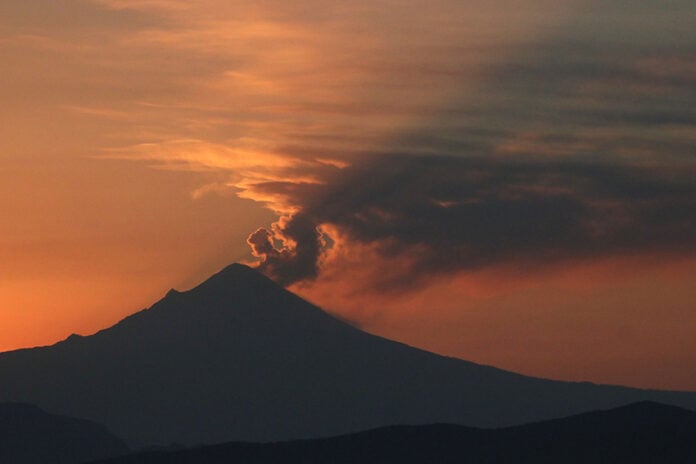
Small clouds of ash from Popocatépetl volcano catch the light of the rising sun
Small clouds of ash from Popocatépetl volcano catch the light of the rising sun, as seen from Cuernavaca on Tuesday. (Margarito Pérez Retana / Cuartoscuro.com)

The week began where last week left off — with the fallout from the discovery of an unauthorized CIA surveillance operation in Chihuahua. On Monday, Mexico’s Foreign Ministry delivered a formal protest note to U.S. Ambassador Ronald Johnson over the operation, demanding an explanation and asserting that any intelligence activity on Mexican soil requires prior government authorization. By Tuesday, Sheinbaum told reporters that Washington had verbally agreed to respect Mexican law going forward — though she acknowledged no written commitment had been received and that an investigation into the extent of the operation remains open.

That fragile equilibrium was immediately complicated by a new bilateral flashpoint. On Wednesday, the U.S. Department of Justice unsealed an indictment charging Sinaloa Governor Rubén Rocha Moya and nine other state officials with drug trafficking and alleged ties to the Sinaloa Cartel. It was the most direct U.S. action against a sitting Mexican governor in recent memory, and it landed with force on both sides of the border. Sheinbaum responded that Mexico would not extradite Rocha — or any official — without what she called “irrefutable evidence,” reaffirming national sovereignty as the governing principle of her response. In Washington, members of Congress went further: A bipartisan group of U.S. legislators called on Mexico to impeach Rocha and warned of legislative consequences if Mexico failed to act. Mexico’s own opposition parties echoed that demand domestically.

Opposition demands Rocha’s impeachment as US lawmakers escalate pressure on Mexico

All of this unfolded against a backdrop of economic data that told its own complicated story. Mexico’s economy contracted 0.8% in the first quarter of 2026, the first quarterly contraction in three years — even as export revenue surged 27.7% in March, driven by a 43.7% increase in non-automotive manufactured goods including electronics. The contrast underscores the difficult position Mexico finds itself in heading into the summer: strong trade numbers masking underlying economic weakness.

Didn’t have time to catch this week’s top stories? Here’s what you missed.


CIA fallout: A verbal assurance, an open investigation

Mexico’s formal protest over the CIA’s unauthorized operation in Chihuahua marked the first time the government has put its objections in writing to the U.S. ambassador since the operation was disclosed last week. The protest note expressed Mexico’s opposition to U.S. personnel participating in domestic security operations without federal knowledge, and stated that the government expects the incident to be a one-time exception. The following day, Sheinbaum said U.S. officials had privately acknowledged the violation and pledged to comply with Mexican law going forward — but stopped short of saying the matter was resolved. An internal investigation into who in Mexico may have facilitated the operation, and whether the Chihuahua state government had any role, is ongoing.

Sinaloa governor indicted: Mexico pushes back on U.S. pressure

The U.S. indictment of Governor Rocha (a member of the ruling Morena party) and nine Sinaloa state officials on drug trafficking charges set off a rapid chain of political reactions. The timing drew immediate comment: Days after Morena senators accused Chihuahua’s PAN Governor Maru Campos of facilitating the unauthorized CIA operation on Mexican soil, Washington’s legal pressure landed squarely on a Morena-affiliated governor — a sequence that both sides of Mexico’s political divide exploited.
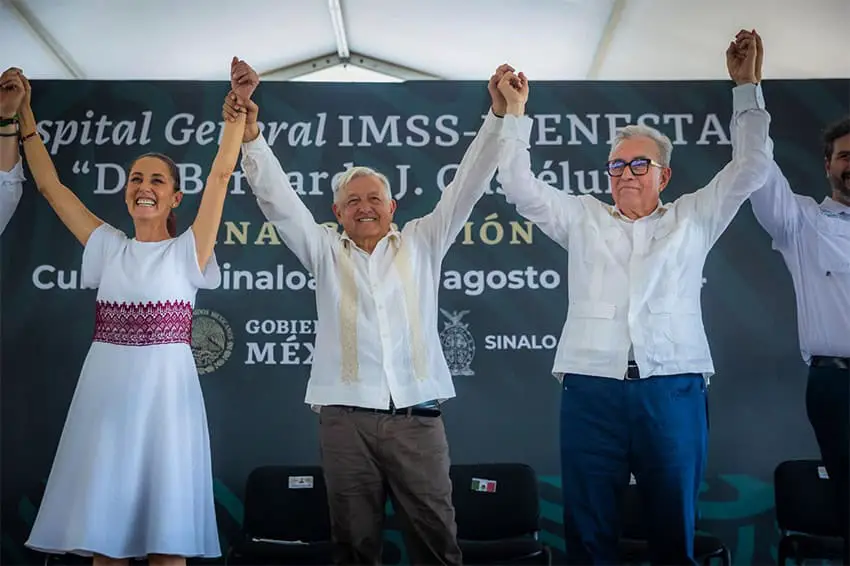
Sinaloa Governor Rubén Rocha Moya stands on stage holding hands with AMLO and President-elect Claudia Sheinbaum.
Sinaloa Governor Rubén Rocha Moya, seen here in Culiacán shortly before President Sheinbaum entered office, is a Morena party member and close ally of former President López Obrador. (Rubén Rocha Moya/Facebook)

Rocha denied the charges, while Sheinbaum refused to commit to extradition, saying the evidence presented was insufficient under Mexican law and that any next steps would be determined by the FGR’s independent review — not by U.S. pressure. In Washington, the U.S. House Foreign Affairs Committee warned that the indictments are ‘only the beginning’ and vowed accountability for anyone ‘complicit in trafficking drugs into the United States. Mexico’s Citizens’ Movement party and other opposition groups sided with the U.S. position domestically, calling for impeachment proceedings — a demand the ruling Morena bloc has not endorsed.

In a significant security operation largely overshadowed by the week’s diplomatic turbulence, the Mexican Navy arrested CJNG commander Édgar “El Jardinero” Tabares Murillo in Nayarit state. El Jardinero is allegedly a top operational commanders of the Jalisco New Generation Cartel in the Pacific region, responsible for overseeing drug trafficking routes and cartel territorial control across several states. The arrest was carried out by naval infantry forces and resulted in no military casualties.

Economy: Contraction, export surge and an auto sector warning

Mexico’s GDP shrank 0.8% in the first quarter of 2026 compared to the previous quarter with all three economic sectors — primary, secondary and tertiary — contracting quarter-over-quarter. The headline figure contrasts sharply with trade data: Export revenue rose 27.7% year-on-year in March, with manufacturers of electronics, auto parts and agricultural products all posting double-digit gains.

Separately, new global rankings showed that Mexico has fallen out of the world’s top five vehicle-producing nations for the first time in years, a slide attributed to reduced U.S. demand and plant slowdowns linked to tariff uncertainty. On a more constructive note, Sheinbaum signed a pact Wednesday requiring that all federal public infrastructure projects use Mexican-made steel, a move framed as both an industrial policy measure and a direct response to U.S. tariffs on Mexican metal exports.

Introducing the MND Sheinbaum Index™

Mexico News Daily this week debuted the MND Sheinbaum Index™, a new monthly tracker that measures presidential performance across five weighted categories: economic management, security, sovereignty and foreign relations, social policy, and governance and transparency. Sheinbaum’s inaugural score for March 2026 came in at 60.1 out of 100 — a passing grade, the index notes, but with notable drags from economic indicators and security metrics. The index is designed to offer a data-grounded alternative to purely narrative assessments of the administration’s progress, and will be updated monthly.

Introducing the MND Sheinbaum Index™

World Cup: The squad takes shape, and the city prepares

Mexico’s national football federation released its first batch of World Cup player selections, naming a mix of younger, national players with an eye on ending the country’s long-running round-of-16 elimination streak. The full squad will be finalized in coming weeks. In Mexico City, authorities announced that free fan festivals will be held across all 16 boroughs during the tournament, with outdoor screens, cultural programming and food markets planned for each venue — an effort to ensure the World Cup experience reaches beyond the stadiums.

Travel and tourism developments

The travel industry gathered in Acapulco this week for Tianguis Turístico’s 50th anniversary edition, the country’s flagship tourism trade fair, returning to the Pacific port city in a symbolically significant homecoming given Acapulco’s ongoing post-hurricane recovery. In infrastructure news, Sheinbaum inaugurated the suburban train connecting Mexico City’s downtown rail network with Felipe Ángeles International Airport, addressing one of AIFA’s most persistent criticisms since the airport opened in 2022. Offsetting some of that good news for the tourism sector, Playa del Carmen declared a red alert as an unusually heavy sargassum influx blanketed beaches along the Riviera Maya, with authorities warning of potential economic impact heading into the high season.

Looking ahead

The indictment of the Sinaloa governor, a member of the ruling Morena party, will likely continue to dominate the bilateral agenda with the U.S. in coming weeks. Sheinbaum has framed Mexico’s position clearly — no extradition without formal process and evidence — but U.S. pressure and the threat of legislative retaliation mean the standoff is unlikely to be resolved quickly. Domestically, opposition calls for Rocha’s impeachment will test the unity of the Morena party and its allies. On the CIA front, the investigation into the Chihuahua operation remains open, and any new disclosures about the scope of foreign intelligence activity on Mexican soil could reignite that crisis. With the World Cup now weeks away, the government is also managing the enormous logistical and security demands of hosting a global tournament — including matches in Mexico City, Guadalajara and Monterrey — while navigating one of the most turbulent bilateral moments in recent years.


Also in the news this week

Mexico News Daily


This story contains summaries of original Mexico News Daily articles. The summaries were generated by Claude, then revised and fact-checked by a Mexico News Daily staff editor.

Looking for last week’s round-up?

MND Tutor | Tren AIFA

0

Welcome to MND Tutor! This interactive learning tool is designed to help you improve your Spanish by exploring real news articles from Mexico News Daily. Instead of just memorizing vocabulary lists or grammar rules, you’ll dive into authentic stories about Mexican culture, current events, and daily news.

As part of Mexico’s new rail revolution, the Felipe Ángeles airport now boasts a direct connection to Mexico City’s Buenavista terminal. Inaugurated by President Claudia Sheinbaum this week, the line offers travelers the chance to reach the distant, but growing AIFA without the need for a long Uber or bus ride.

The new route has six stations and is expected to carry over 57,000 passengers daily, with a capacity of more than 80,000 people. Initially running four of its ten trains every half hour, the service will eventually increase to a frequency of every 12 minutes. The line forms part of the Morena government’s broader strategy to revive Mexico’s passenger rail network, a project that began under former President López Obrador and has been accelerated under Sheinbaum.

Read the full article here.


Let us know how you did!

Check out our complete MND Tutor archive here!

Opinion: ICE detentions are a humanitarian crisis the world will remember long after Trump

17
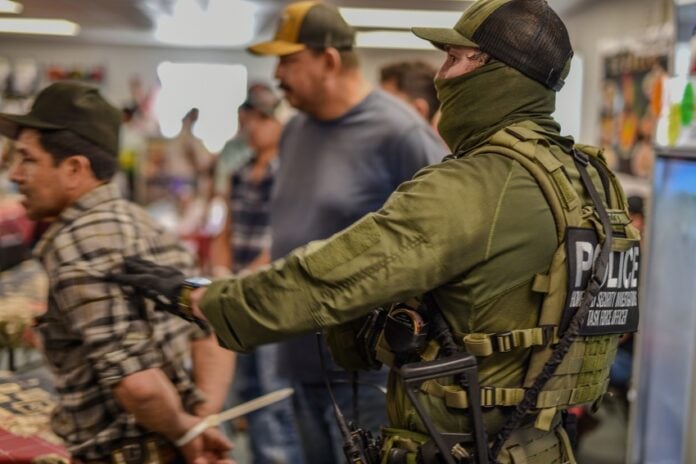
ICE detaining a Mexican
The number of deaths of Mexicans in ICE custody has climbed to 15 already this year, a shocking total for people detained for civil, not crinimal offenses. (ICE)

Fifteen. That’s the number of Mexican deaths in ICE custody so far in the U.S. in the past year.

Can you imagine what the response would be if 15 Americans had recently died in Mexican detention? Even if they were criminals, I’m sure the outrage would be overwhelming. “Sure, they were scammers, but they’re still human beings!” I imagine people saying.

ICE handcuffs
People shouldn’t lose their humanity just because they’ve been charged with committing a civil offense. (ICE)

For a certain portion of the U.S. population — even for some readers of this paper — trauma and possible death at the hands of U.S. authorities are simply “risks” immigrants took when they crossed the border. This is true, apparently, for children as well.

An un-Christian attitude towards immigrants

Whatever your view on immigration in the U.S., legal or otherwise, you probably at least recognize that we haven’t been this hard on immigrants since the days of Japanese internment camps. Many immigrants, in keeping up with their appointments, have been detained for — as so many often demand of them — “doing things the right way.” They’re showing up for their immigration check-ins and being arrested on the spot.

This was the fate recently of a Venezuelan family with a young teen daughter who showed up for their legal asylum case. As The Texas Tribune reported, “The judge dismissed the family’s case without hearing any testimony, following a Trump administration order that immigration judges dismiss cases en masse so officers could arrest immigrants before they walked out of courtrooms.”

When the family was finally released a month later, they decided to return to Venezuela.

The US piles up human rights violations

ICE detainee
Most ICE detainees have no criminal records and are not being arrested for a criminal charge, and yet they’re shackled as if they had robbed banks. (ICE)

ICE’s human rights violations are numerous and well-documented. Their violations of basic decency are as well: grandmothers, pregnant women and the newlywed wife of a U.S. service member.

Again, imagine the equivalent of this in Mexico: how many of you reading this have ever had an “irregular” status here of any kind? Would you ever say that time in detention, being treated like criminals, is what you deserve?

It seems that they are truly not in the business of simply picking up violent criminals who shouldn’t be in the U.S. off the street — the vast majority of ICE detainees have no criminal record whatsoever — but of creating maximum misery for whoever gets caught in their net.

The ICE facilities themselves, of course, are privately run. They’re privately profitable too, courtesy of U.S. taxpayers, many unwillingly. And there is obviously a lot to keep hidden in these places; if not, ICE wouldn’t regularly deny entry to elected officials.

Zero oversight and an armed response to civil offenses

As a reminder, immigration violations are not criminal offenses; they are civil ones. Immigrants that ICE officers encounter, however, are being treated as if they’d robbed a bank rather than, well, started working.

With arrest quotas and carte blanche from Trump, many are out in full force. In an economy in which stable middle-class jobs are quickly disappearing, well-paying ICE jobs have essentially become “a jobs program for the bigoted” (not my phrase, but I don’t remember where I read it). If you don’t believe me, have a look at their recruiting material.

So we know that ICE facilities receive essentially zero oversight. We know that, especially the most recent crop of ICE officers, have received very little training. (With so many needing to be hired so quickly, chances are they’re not the cream of the crop, either.)

And we know that people are dying. It’s not just Mexicans who have been victims of ICE detention deaths, but immigrants from all over. Because as much as Stephen Miller might thirst for it, a nationwide network of detention centers can’t be built overnight. Infrastructure, professionals, physical space, food and doctors can’t be produced from thin air. And when there’s a motivation to keep costs down, the people in charge of these things will certainly race to the bottom as far as they can get away with.

What little Mexico can do

Mexico President Claudia Sheinbaum
President Sheinbaum has limited leverage with which to pressure the U.S. about Mexican deaths in ICE custody, but some steps can and are being taken to try to protect Mexican citizens. (Moisés Pablo/Cuartoscuro)

So, naturally, people in these detention centers are not doing well. Death, of course, is the most extreme example, but insufficient food and medical care are also ongoing and well-known problems. Some people are going to slip through the cracks of faulty planning and of even worse luck than they already have.

President Sheinbaum, for her part, has not taken the news of these deaths lightly. That said, she has limited courses of action available to her — certainly fewer than if the roles were reversed.

What can the government do about Mexicans in ICE custody? Well, basically, what they’re doing now:

1) Sending consulate staff to detention centers daily to check on their nationals.

2) Helping families take legal action against the detention facilities? Individuals? On this, I am not very clear.

3) Referring cases to the Inter-American Commission on Human Rights.

A legacy of suffering that won’t be forgotten

Trump with ICE
Suffering and death: It’s an un-Christian legacy that the U.S. has earned, thanks to the current White House leadership.

Well, Sheinbaum’s actions are better than nothing, and the problem is at least not being ignored. But it’s so, so frustrating that Mexico is not in a position to pressure the U.S. in any other way. Even if it decided to be equally rough with U.S. immigrants here, it’s doubtful that the current administration would see it as a problem:

“Did they vote for me? If not, let them rot.”

Sadly, Mexico really has no more moves to make in this situation. Many more detainees will likely die — Mexicans and those from other countries. We hear about the deaths because they’re headline news.

What we don’t hear about as much is the day-to-day suffering in cold and crowded cells with insufficient food and medical attention. And what we don’t know is how much hatred this will ultimately engender toward the U.S.

Lives are being ruined as we speak — including children’s lives. It’s been said so many times now that it’s practically a cliché, but the cruelty really is the point. Punish, punish and punish is the credo — mostly from self-identified Christians, mind you.

Mexico and the world will not forget, and the U.S. will not always be on top — especially the way things are going now. Like Scrooge, the U.S.’s fate is nearly sealed — and the death and suffering being caused by this administration will certainly be back later for a haunting.

Sarah DeVries is a writer and translator based in Xalapa, Veracruz. She can be reached through her website, sarahedevries.substack.com.

The MND News Quiz of the Week: May 2

1
News quiz
(Mexico News Daily)

What's been going on in the news this week? Our weekly quiz is here to keep you on top of what’s happening in Mexico.

Get informed, stay smart.

Are you ready?  Let’s see where you rank vs. our expert community!

Mexico has 11 entries on the 50 Best Bars list for 2026, including one that made the No. 2 spot. Which Mexico City establishment was it?

The U.S. government is seeking to extradite Mexican state Governor Rubén Rocha Moya. Which state does Rocha currently govern?

New week, new railway: Where has Mexico's latest railroad project officially opened?

Mexican special forces captured CJNG leader "El Jardinero" in Nayarit earlier this week. What does "El Jardinero" mean?

The Amado Nervo bridge, one of Mexico's biggest infrastructure projects, is now 70% complete. What two states will it connect?

The national Tianguis Turistico is back in Acapulco to celebrate a milestone anniversary. How many years has the landmark tourism fair run for?

To beat the heat, animals in Mexico City's zoos have been getting what cooling treat in their enclosures, according to CDMX's Environment Ministry?

Mexico has fallen off a top five global list of manufacturers in which industry, after making the list in 2024?

Morena senators on Tuesday accused Chihuahua Governor Maru Campos of treason — for what reason?

A new federal pact will require what item of Mexican origin to be used in all future public infrastructure projects?

Looking to scale a mountain? Tlaxcala’s La Malinche might be one to try

1
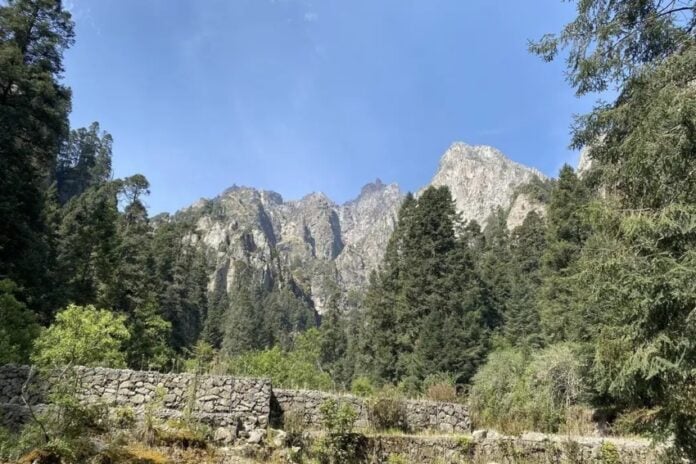
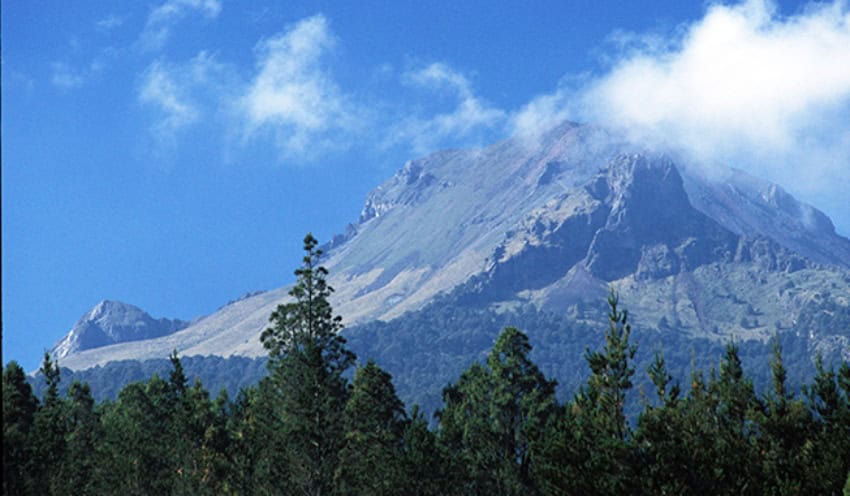
La Malinche
La Minche is a volcanic peak and national park attraction rolled into one beautiful destination. (AllTrails)

Upon entering La Malinche National Park from its eastern slopes — coming in from Veracruz, through the pueblo mágico of Huamantla in Tlaxcala — you can grasp the sheer magnitude of La Malinche. Listed as Mexico’s sixth-tallest peak, the inactive volcano rises with muscularity above the desert surroundings. The adjacent hills and peaks in the region are dwarfed by La Malinche’s vast circumference, which takes up a large chunk of real estate in Tlaxcala, and also creeps into the bordering state of Puebla. 

At roughly 4,500 meters high, and occupying 458 square kilometers, La Malinche is an ideal getaway for mountain climbers, hikers and campers in central Mexico — with plenty of outdoor space to roam, explore and stay overnight. Roughly two and a half hours from Mexico City’s bustling core, and a short drive from Puebla’s International Airport, it’s conveniently located, yet surprisingly tranquil and only lightly visited.

A microhistory of La Malinche

The name Malinche (or Malintzin) refers to the historical figure of that title, an Indigenous woman who was enslaved by the Spanish and served as interpreter and advisor for Hernán Cortés during the conquest of the Mexica. Though “Malinche” generally denotes a negative connotation in Mexico, akin to being called a “Benedict Arnold” in the United States (a Revolutionary War hero who turned traitor), Tlaxcaltecos have a different view on her role in Mexico’s history. Rather than scorning her, she is viewed as a crucial ally because she facilitated an alliance between the Tlaxcalans and Cortés against their rival oppressors, the Mexica. That is, Malinche, in their view, is a key person who helped to liberate the region from Mexica control.

The mountain’s original name, as denoted by Indigenous communities, is Matlalcueye or Matlalcuéyatl, which roughly translates to “lady of the blue skirt,” and refers to a goddess of rain and water. In folk tradition, Matlalcueye (or Malinche) has always been paired with the volcanic peak of Poyauhtecatl (or Pico de Orizaba, the tallest in all of Mexico, located in neighboring Veracruz) as a feminine and masculine pairing. 

The making of a national park

Today, La Malinche is an underrated destination for Mexico’s outdoor crowd — cyclists, bikers, mountain climbers and families camping for a weekend. Its national park designation was anointed in 1938 in an effort to conserve its unique, biodiverse ecosystem. The National Commission of Protected Natural Areas (CONANP) in Mexico has formally designated, and is tasked with managing, 79 national parks — in addition to 232 total areas that are federally protected — ranging from rainforests that surround archaeological sites in Chiapas, Monarch biosphere reserves in Michoacán and over 3,000 square kilometers of coral reefs off the coast of the Yucatán Peninsula. (Trivia bonus: the first national park to be inaugurated in Mexico’s history is Desierto de los Leones, established by then-President Venustiano Carranza in 1917 on the outskirts of Mexico City.)

Today, La Malinche is a well-kept bastion of pine and oak trees, bisected with smoothly paved roads that wind through the high-altitude grasslands and dense forests, leading in and out of both Tlaxcala and Puebla on either side of the volcano. To enter the park by vehicle, you must cross a series of free checkpoints, where attendants can answer your questions — to the best of their abilities — and guide you through the park.

On the mountain’s north-facing side, there is the Malintzi Vacation Center (appearing as Resort IMSS Malintzi on GPS) — an easy-to-reach, all-inclusive lodging area replete with rentable cabins, courts, playgrounds and areas for grilling. Be sure to reserve in advance, as that section of the park doesn’t always seem to be open (in a recent trip, my family found out the hard way that many sections of the park don’t seem to be open on certain hours of weekdays, although it’s still unclear to me what those hours are). 

A mountain climber’s paradise

When visiting without a toddler or physically incapable family member, the majority of La Malinche’s visitors go to climb. The trail is listed as an intermediate level, with an approximate 5 to 8-hour round trip. It’s used by climbers-in-training as a way to acclimatize for higher peaks. The trail includes pine forests and, towards the summit, alpine tundras, depending on the season. November to March are dry seasons, but you are more likely to see snowfall, so prepare accordingly. Ice, strong winds and cold temperatures are highly probable in December and January. 

La Malinche
The peak of La Malinche is nearly 4,500 meters, making it one of Mexico’s tallest mountains. (Gobierno de Mexico)

One notable element from my visit to La Malinche, and its surrounding towns — which include beautiful haciendas, cabins, saunas and more, often with a ridiculously unreal vista of the celestial peak — is the amount of friendly, stray dogs. There are reports of such dogs accompanying hikers and climbers to the mountain summit and back. Just as common are writing and experiences that describe a “false summit” frustration; the trail has many areas that appear to be the end, only to reveal more rocky terrain ahead.

Descent to cold beer

One experienced American climber describes his descent, after reaching the top, in hilariously true Mexican fashion: “After a snack and some photos, we descended, boot skiing down the scree slope and dropping 1500′ in what seemed like only a few minutes. The formerly slow and steady [guide] Roberto was now flying down the slope, his mass and inertia sending him down at an impressive speed. I could barely keep up! We made it back to the cabins in about 2 hours from the summit, and Roberto headed straight for the park restaurant for a Modelo, ‘the cream of Mexican beers!’” The beauty of mountain climbing in Mexico? You can hang out with friendly locals and drink bang-for-your-bucks Mexican brews, then maybe explore some nearby ruins the following day.

National treasures

Though the U.S., in contrast to Mexico, is internationally renowned and revered for its extensive national park system and plethora of outdoor offerings, Mexico — the geographically 13th largest territory on Earth — isn’t something to scoff at, either. A day or two exploring La Malinche and its provincial peripheries will prove that Mexico is, in fact, more than just beach getaways and taco tours — it’s also a naturally abundant and well-resourced land with national parks that await.

Alan Chazaro is the author of “These Spaceships Weren’t Built For Us” (Tia Chucha Press, 2026), “Notes from the Eastern Span of the Bay Bridge” (Ghost City Press, 2021), “Piñata Theory” (Black Lawrence Press, 2020), and “This Is Not a Frank Ocean Cover Album” (Black Lawrence Press, 2019). He is a graduate of June Jordan’s Poetry for the People program at UC Berkeley and was selected as a Lawrence Ferlinghetti Poetry Fellow at the University of San Francisco. His work can be found in NPR, The Guardian, SLAM, GQ, L.A. Times, and more. He is currently based in Veracruz.

Off-grid and off-script: What it really takes to open a hotel in remote Mexico

3
Playa Viva in Guerrero, hotel in remote Mexico
What inspires someone to open a hotel in remote Mexico? Certainly not the assumption that it will be easy. (Playa Viva)

If you scroll Tasman’s Instagram, you’ll come across a reel of an owl. Her name is Catalina, and she’s AMINA Wind Hotel’s unintentional mascot. One day, she showed up and built a nest on the windowsill of one of the guest rooms — and never left. Now she’s something of a celebrity and is helping to entice bookings from curious guests. 

It’s the dream, isn’t it? Open a beachfront hotel on an untouched coastline, where your only neighbors are humpback whales or great egrets. But the reality behind opening a hotel in a landscape like this isn’t necessarily what social media suggests. 

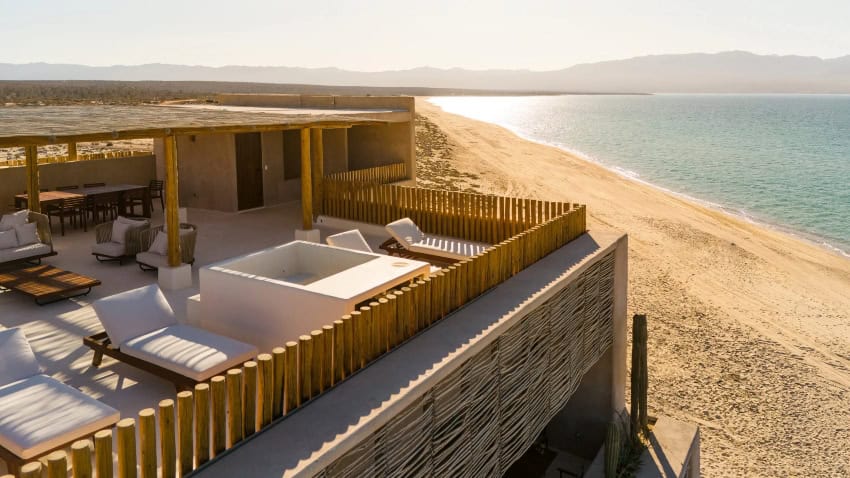
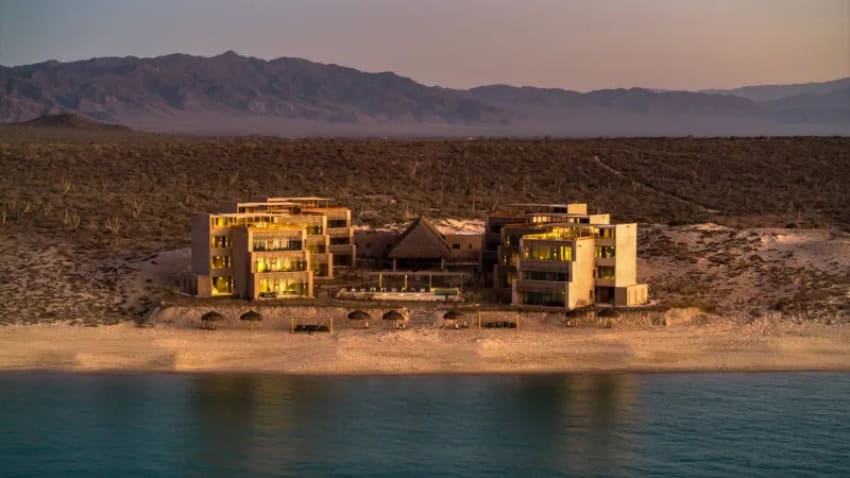
Ámina Wind Resort
Ámina Wind Resort boasts a gorgeous setting in La Ventana, in the La Paz municipality of Baja California Sur. (Tasman)

Between Jaco Luchtan, co-founder and hospitality director of Tasman, operating off-grid properties in remote coastal Mexico, and David Leventhal, founder of Playa Viva, a regenerative resort in Guerrero that’s been operating for 17 years, the duo have navigated financial collapses, solar systems that failed in the heat and weeks without basic amenities. From storms to Christmas parties, they’ve had their share of surprises, some so frustrating they’ve stopped to wonder why in the world they’re doing this.

But then, Catalina’s babies crack out of their shells. An international fuel crisis surges while your monthly expenses remain unaffected. People start changing their habits, swapping what’s easy for what’s eco-friendly. “There are times when you say, ‘ Is it worth it?’ But then you see the impact,” notes Luchtan. 

The off-grid hotel business is a journey. A journey that requires tenacity and passion, plus a thick skin. If that sounds like an adventure you’re itching for, here’s what two experts want you to know before you start.

Why developers avoid these places (and why these two didn’t)

First, the question every outsider asks: Is it safe?

Guerrero, where Playa Viva operates, is currently rated Level 4 (“Do Not Travel”) by the U.S. State Department. Baja California Sur and Oaxaca, where Tasman runs properties, sit at Level 2. The ratings make potential tourists skeptical, particularly in Mexico. But remote coastal land at Level 4 is often untouched precisely because it’s been left alone.

Leventhal’s property in Guerrero sits on pre-colonial agricultural terraces, surrounded by mangrove and intact coastal forest. Before breaking ground, his team spent a year cataloguing species and planting trees. “The form of the project came out of that process,” he says. “We did a proper history of the place — what was here, how did it become degraded, what’s our role in restoring it.” 

Playa Viva, remote hotel in Mexico
Playa Viva is located in remote Guerrero, but that hasn’t kept people from visiting, despite the U.S. Level 4 Travel Advisory. (Playa Viva)

The land, the history and the communities that haven’t been priced out of their own coastline are what bring operators like these two to places most developers avoid. Avoid, because it’s far from easy to develop here.

Before you open, you have to build everything else first

Water, power and waste management aren’t utilities you really need to think much about when running a city hotel. Out here, they’re often projects for you to figure out on your own.

One of Tasman’s properties had no access to water — the pipes didn’t exist. Water had to be trucked in, pipes built from scratch and permits filed for both, a process often quite painstaking in Mexico. To top it off, local garbage collection ran the property around 2,000 pesos per truck visit, a far cry from urban collection costs. For reference, Mexico City and Mérida’s municipal collection is heavily subsidized and barely registers as a line item.

Above all, power is by far the biggest variable. Playa Viva runs entirely off solar, but getting to that point took three installations. A storm in Oaxaca caused several trees to collapse, taking out local power lines. “It’s key to build a good relationship and collaborate with local authorities. This ensures an uninterrupted guest experience,” says Luchtan. That relationship came in handy when clearing the branches. Without it, they’d have been waiting weeks — instead, the group and the government worked together for a faster result.

Then there’s the regulatory layer. Any tourism project that uses Mexico’s federal beachfront strip (Zofemat) or alters coastal ecosystems falls under federal jurisdiction for concessions and environmental permits through Semarnat, and the rules aren’t always totally clear. In the early days of construction, Leventhal’s lawyer mentioned, almost in passing, that you can’t build on dunes. His property was dune-front. “The next day, we go back to the lawyer’s office and he says, ‘Oh, that wasn’t a law. That was a proposed law.'”

When you run out of toilet paper in the middle of nowhere

When something breaks or runs out at a remote property, there’s no quick fix. No same-day delivery, no hardware store down the road. “When you need a plumber,” says Luchtan, “there might be one or two in the whole town.” Whether they pick up the phone is another matter.

Ámina Wind Resort, remote hotel in Mexico
When something breaks at a remote hotel in Mexico, finding a solution (or a repair person) can take a minute. (Tasman)

Tasman learned that lesson in the bathroom, so to speak. Its properties use biodigesters: on-site systems that process waste through a delicate bacterial balance that regular toilet paper disrupts. When their supply of biodegradable paper got stuck in international customs, they were forced to use whatever was on hand — not a good solution for the system or the guests.

Leventhal’s supply chain education was more gradual. Seventeen years ago, certified organic bath products in plastic-free packaging simply didn’t exist in Mexico. For some time, he sourced from a U.S. supplier and carried shampoo in his luggage on every trip down. 

The bigger wake-up came at a Christmas party for village kids. A piñata exploded plastic-wrapped candy across the property, and debris turned up for days. “This doesn’t work. We can’t do this,” he told his team. That conversation became a grueling department-by-department audit. Today, staff bring labeled Tupperware to the butcher in town — no plastic bags, just filled containers. The hotel has since switched to plastic-free shampoo bars after a guest whose company manufactured them happened to stay.

In short, procurement is less a supply chain problem and more of a design flaw; one that’s usually solved on the spot.

The real price tag of an off-grid hotel in Mexico

Guests often arrive expecting a discount. Remote, off-grid and back-to-basics — surely that means cheaper? It doesn’t.

“Many times they get to know (the costs) only once they book,” says Luchtan. “When they leave the place, they understand.”

Playa Viva, remote hotel in Mexico
Just because the resort is off-the-grid doesn’t mean it will be cheaper. (Playa Viva)

Leventhal has long stopped thinking about his business in terms of quarterly profit. His solar system tells the story: three installations, unit costs dropping each time and now an energy infrastructure whose operating costs don’t move with fuel prices. Meanwhile, a conventional hotel’s energy bill climbs indefinitely. 

As the owner, costs aren’t always yours to pay. “Think of Coca-Cola,” Leventhal says. “They save money using plastic bottles, but the cost of collecting that plastic, the environmental damage and the damage to human bodies from microplastics — those get dumped on everyone else. A regenerative business tries not to do that.”

The market is catching up to that logic. Mexico’s ecotourism sector — the broadest category that captures what both operators are building — was estimated at around US $3.3 billion in 2024, with projections pointing sharply upward.

Am I crazy to do this? Financial collapse, swine flu and a failed solar system

Leventhal launched Playa Viva into what he calls “a perfect storm”: the 2008 global financial collapse, a swine flu outbreak that cut foreign tourism to Mexico by roughly 55–60% in a single quarter and a simultaneous federal crackdown on cartels. Hotel occupancy in coastal destinations collapsed. He pivoted the model homes he’d already built into a boutique hotel and kept going. “You don’t know what you don’t know, so you stay flexible.”

When COVID hit, he was ready. Rather than contract, he pre-built capacity to expand from 12 to 19 rooms, betting on a travel surge on the other side. The bet paid off. Mexico received 45 million international tourists in 2024, up 7.4% from 2023 — the strongest numbers since before the pandemic. 

Tasman’s solar system failed because the installer hadn’t accounted for battery behavior in extreme heat — discovered in the field, with guests on the property. Energy costs skyrocketed and remained high for months. Instead of giving up, the group made clear communication a company policy. “Don’t cover it up,” says Luchtan. “Transparency.” From there, the solution arises.

The ultimate question: Is it worth it?

Playa Viva, hotel in remote Mexico
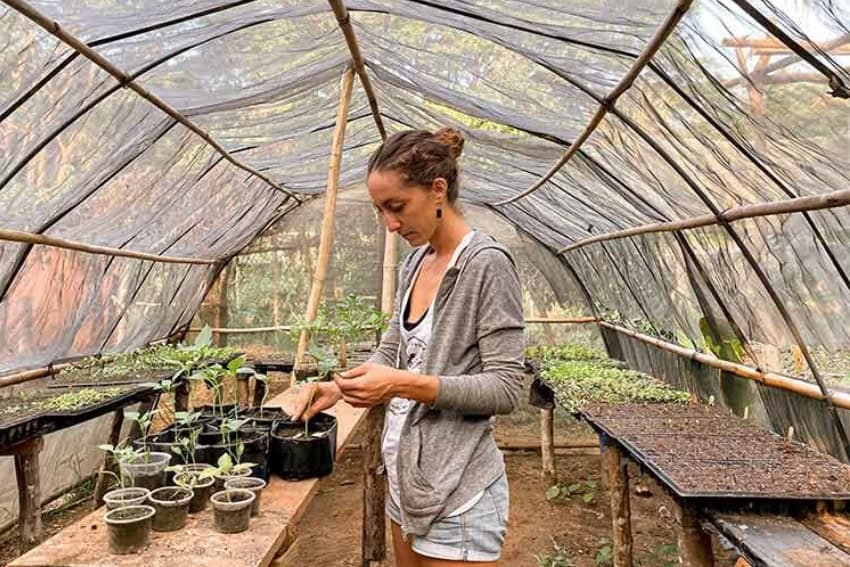
Reforestation efforts are part of the commitment to permaculture at Playa Viva. (Playa Viva)

Almost two decades later, Leventhal still lights up talking about Playa Viva’s growth: beyond the treehouses, it’s home to a 20-acre permaculture farm and works with Resimar, a community-based watershed restoration project working to regenerate the land and waterways surrounding the property. The project came out of the land, he says. The land picked them.

Luchtan is coaching his current general manager through a five-year career plan. The purpose was, initially, to fill a role; now, it’s to expand local youth’s horizons. “We want to open the horizons of maybe 20 or 30 people who work in the hotel and grow to be rich with them.”

Neither makes this sound easy. Yet both are still doing it.

Did Catalina the owl read Tasman’s company motto? No. Do the humpback whales off La Ventana care about solar installation costs? Not at all. But they show up anyway, on a coastline that exists because someone decided it was worth protecting — and worth the fight to keep it that way.

“The goal is to build richer soil — literally and metaphorically,” says Leventhal. It appears that’s exactly what he’s done.

Bethany Platanella is a travel planner and lifestyle writer based in Mexico City. She lives for the dopamine hit that comes directly after booking a plane ticket, exploring local markets, practicing yoga and munching on fresh tortillas. Sign up to receive her Sunday Love Letters to your inbox, peruse her blog or follow her on Instagram.

What people say vs. the hard data: A perspective from our CEO

21
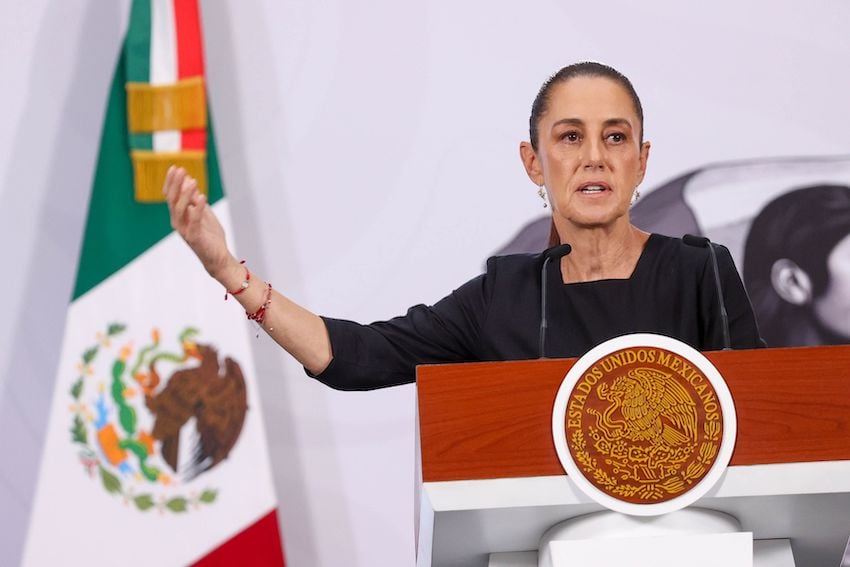
President Sheinbaum waves from the stage of a press conference
President Claudia Sheinbaum at a recent press conference in Morelos. (Presidencia via Cuartoscuro)

I love the Wall Street Journal and have read it daily now for 30-plus years. But earlier this week, they ran an uncharacteristically weak article about Mexico titled “Claudia Sheinbaum is learning the price of appeasing Trump.” It was so weak that our team actually even considered holding off on our new MND Sheinbaum Index, which we ultimately published the next day. Let me explain.

When I say “uncharacteristically weak,” what I mean is that the WSJ article felt gossipy — almost tabloid-like. The title was pure clickbait. The lead photo showed Sheinbaum peering out from the shadows, looking pensive and tired. The article repeatedly suggested that she is torn between former President AMLO and President Trump. A quote: “People close to her worried that she was beginning to buckle under the dual pressures from Trump and AMLO.” This particular talking point — that she is being managed “behind the scenes” by AMLO — has become the single most recycled line among her critics, repeated so often that its currency has almost nothing to do with whether it is true. Frequent critic Jorge Castaneda, a former foreign minister, said: “I disagree with almost everything she has done … but I don’t know what she could have done differently.” Alejandro Werner, who worked in the Mexican government years ago for an opposing party, and now weighs in from Washington, D.C.: “She feels like nothing has worked for her.”

Some other actual quotes from the article:

  • “Sheinbaum has been getting little sleep, often just four hours.”
  • “She is more hesitant and exhausted.”
  • She is “drained after spending long hours in the cold halls and dark corridors of the ornate National Palace.”
  • “She’s often indecisive, weighed down by worries over how both Trump and AMLO loyalists will react.”
  • “She also has a fan in First Lady Melania Trump, who likes her elegant yet traditional dresses with Indigenous embroidery.”
  • “One of her biggest complaints is that her orders are executed poorly, and sometimes not at all.”
  • “Known for her short temper, she often snaps at her staff.”

Take a minute to re-read those lines. Each of them was credited to “people close to her,” or “people said,” or “the people say.” Not a single quote came from someone currently operating a business in Mexico, a manufacturer navigating tariff uncertainty, or a developer making investment decisions in the current climate. The voices selected were political figures from the past. This is not unique to the WSJ, but rather a pattern across major media platforms covering Mexico today. Pundits and former officials share opinions based on past experiences, rarely acknowledging the challenges of leading in the current geopolitical climate.

This is exactly the kind of superficial analysis that we are looking to move beyond with our recently-released MND Sheinbaum Index. As it was being constructed, we thought long and hard about human nature and popularity polls. As we encourage our readers to “look beyond the popularity polls and analyze the actual results,” we reflected not just on Sheinbaum, but on other world leaders. Vladimir Putin has maintained high popularity, despite what he has done to the Russian people and economy. Donald Trump has declining popularity numbers, but many of those who continue to support him would argue that he is the best president ever. So we have to ask ourselves, do we live in an age where actual results might not even matter? An age in which perception and popularity might be more important than results? A time when we can say that a president is “doing well” based on popularity alone — even if the country is actually not doing well?

I recently heard a quote that “good journalism should leave you feeling smarter.” To me, an entire article where nearly everyone has been quoted “off the record,” as in the case of the WSJ article, feels gossipy and unprofessional. It caters to what readers might already think rather than challenging them to think deeper. By referencing real data, we can elevate the level of dialogue and debate far beyond “people said.”

Introducing the MND Sheinbaum Index™

As our team was building this index, we found ourselves drawing on experiences from the corporate world, where both a 360-degree evaluation and a performance review are often conducted. Personality matters (the 360-degree evaluation), but so do the actual results (the performance review). One without the other is incomplete. One without the other feels too emotional, too personal, too opinion-based.

And so with that backdrop, we decided to go ahead and move forward with publishing our index this week. I want to reiterate that our goal with this index is neither to be an advocate nor a critic of Sheinbaum, but rather to give you a framework that helps better inform your own views in a more data-driven manner. Our goal is to arm readers with information that allows them to discuss and debate Sheinbaum’s actual performance versus just her likability or what former politicians say about her. We want to inspire readers to question whether we have held former presidents before her to a high enough bar. We wish to challenge Mexico to strive for a level of performance it has rarely achieved, but must continue to strive for.

It does the country no good to have some people love the president with little regard to actual results. It equally does the country no good to have other people dislike the president, no matter what the results. This index seeks to provide the analysis for a common ground of understanding, with the hope that it leaves us all feeling smarter.

As always, we welcome your feedback.

Travis Bembenek is the CEO of Mexico News Daily and has been living, working or playing in Mexico for nearly 30 years.

‘Confidently Wrong about Safety in Mexico’: A new podcast episode from MND

1
colorful paper papel picado flags fly around the cathedral of San Miguel de Allende
From expat meccas like San Miguel de Allende (pictured) to remote Pacific beach towns, foreign residents of Mexico shared their perspective in MND's new safety survey. Hear about the good, the bad and the unexpected in this week's episode of "Confidently Wrong." (Shutterstock)

The number one question anyone living in Mexico hears from family and friends is, “Is it safe there?” It’s rarely about if we enjoy living here or if we would recommend it, but rather about the degree of safety that we feel in day-to-day life.

Why is that? Obviously, Mexico has its issues with violence. But so do many countries. And yet people seem to extrapolate what they read or hear about Mexico across the entire country, regardless of where one lives.

It is with that in mind that Mexico News Daily recently launched a new survey of expats (or immigrants) nationwide to find out what the safety situation is really like in Mexico — from their own lived experiences. Not from the headlines, not from the social media posts, but from the people actually living in the country.

The results of our first survey are certain to surprise you and are highly recommended reading for your friends and family back home. Check out today’s “Confidently Wrong” podcast, where Travis and George walk through the results.

Confidently Wrong about Safety in Mexico - Special episode

Travis Bembenek is the CEO of Mexico News Daily and has been living, working or playing in Mexico for nearly 30 years.

Opposition demands Rocha’s impeachment as US lawmakers escalate pressure on Mexico

21
Sinaloa Gov. Rocha
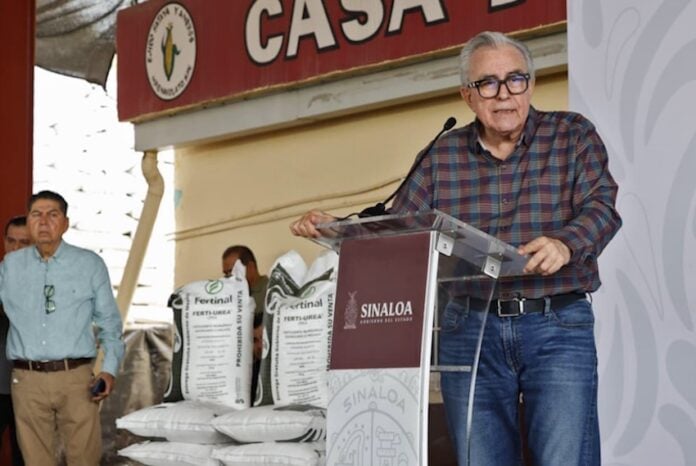
Sinaloa Gov. Rubén Rocha Moya, shown here addressing an agricultural gathering, has continued with his duties after the U.S. indictment. (Sinaloa Government /Cuartoscuro)

The U.S. House of Representatives’ Foreign Affairs Committee warned that the U.S. Justice Department’s formal indictment of Mexican officials, including Sinaloa Governor Rubén Rocha, “is only the beginning.” 

In a statement published on X, the Committee said that “if you’re complicit in trafficking drugs into the United States, we will hold you accountable,” adding that “the days of impunity for narcoterrorists are over.”

The Committee referenced a Wall Street Journal article about the indictments issued on Wednesday by the U.S. Attorney’s Office in the Southern District of New York, which described the action as “sparking a diplomatic dispute with [Mexico’s] federal government amid rising pressure to fight powerful cartels.”

While President Claudia Sheinbaum has declared that she won’t protect anyone who has committed a crime, she insisted that until U.S. prosecutors present “irrefutable evidence,” the accusation must be viewed as politically motivated.

U.S. authorities are requesting the extradition of Rocha — a member of Sheinbaum’s ruling Morena party — creating a significant diplomatic challenge.

The committee’s stance suggests it views the issue as an international crisis, with potential to strain bilateral relations if the extradition is not handled quickly.

The Mexico-United States relationship is historically complex, and is currently experiencing a period of tension marked by security interests, political pressure and electoral calculations, as well as critical trade talks.

International security expert Abraham Serrano told the newspaper El Universal that, from Washington’s perspective, it’s not enough to simply combat the cartels; the goal is to dismantle the political “protective shield” that enables their operation. 

On the other hand, Serrano said, Mexico insists that any action must be based on solid evidence and follow domestic legal procedures, especially when it involves active officials.

The content of the indictments

U.S. prosecutors accuse Rocha and nine other Sinaloa-based politicians and former government officials of ties to organized crime, specifically alleging their participation in narcotics distribution into the U.S., protection of the “Los Chapitos” faction of the Sinaloa Cartel and weapons offenses.

The document alleges that the accused “abused their positions” to support the cartel in its activities in exchange for bribes and, in Rocha’s case, to guarantee his election through direct (and sometimes violent) intervention in the 2021 election process.  

Rocha has vehemently denied the accusations and insists he will not seek a leave of absence. 

While saying he has not had direct contact with Sheinbaum since the news broke, he acknowledged her public statements, saying that he understands she is seeking “to avoid stigmatizing the nation while defending national sovereignty amid a complex political and media environment.”

The opposition’s reaction

The opposition, however, is calling for Rocha to be removed from office and stripped of his immunity.

The Citizens Movement Party (MC) on Thursday submitted a formal request to Congress asking that it authorize impeachment proceedings.

Jorge Álvarez Máynez,
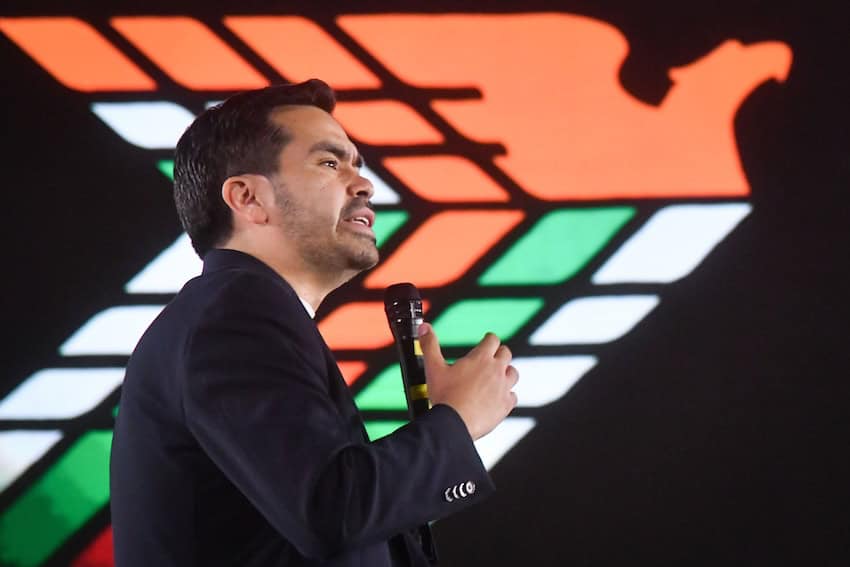
Jorge Álvarez Máynez of the Citizens Movement Party has requested impeachment proceedings against U.S.-indicted Sinaloa Gov. Rubén Rocha. (Mario Jasso/Cuartoscuro.com)

“The least that Sinaloa officials formally accused by U.S. authorities can do is face this process without immunity,” said Jorge Álvarez Maynez, MC’s national leader.

The indictment also names Senator Enrique Inzunza and the mayor of Culiacán, the Sinaloa state capital, Juan de Dios Gámez. Both are members of Morena and both are mentioned in the MC impeachment request.

Mexico’s Congress is in recess and will not resume sessions until Sept. 1. Instead, the Permanent Congressional Commission will have to determine the admissibility of the impeachment request.

Morena holds a comfortable majority in the Permanent Commission and party members have voiced support for Rocha.

However, unlike in 2024 (after drug lord Ismael “El Mayo” Zambada publicly accused Rocha of nefarious dealings) when Morena lawmakers and governors took out full-page newspaper ads to proclaim their solidarity with the beleaguered governor, no such actions have been taken this week.

The stern warning issued by the U.S. Foreign Affairs Committee no doubt stirred concerns for other Morena politicians, at least 50 of whom have seen their U.S. visas revoked.

Rocha is also expected to skip the Morena national convention this weekend so as to avoid potential political costs for the ruling party and the government. 

With reports from La Jornada, El Universal and El Financiero

Chapala official asks foreign residents to follow the rules — and learn some Spanish

20
A view of the Magical Town of Ajijic on the shore of Lake Chapala
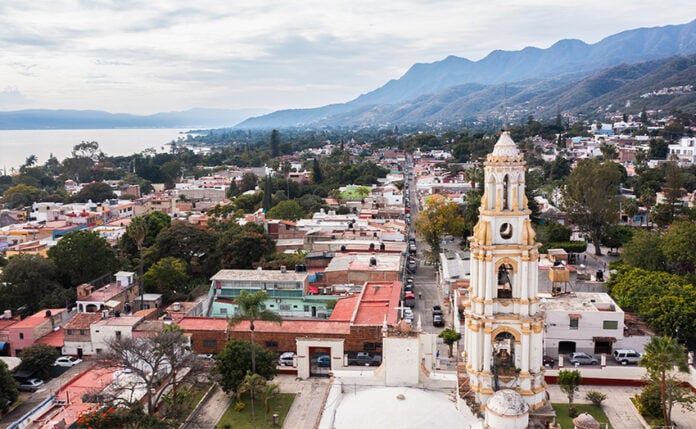
The town of Ajijic, Jalisco, on the shore of Lake Chapala. (Shutterstock)

A municipal official at Lake Chapala has published an open letter to the region’s sizable foreign community, addressing complaints about traffic violations, pet etiquette and language barriers — a move observers say is unusual for local government and suggests informal remedies have not been enough.

Ricardo Razo Navarro, who serves as liaison between the Municipal Government of Chapala and the foreign community, published the appeal covering residents of Chapala, Ajijic and San Antonio Tlayacapan. The letter, framed in welcoming language, opens by acknowledging the foreign population’s economic contributions and cultural presence before cataloguing a set of specific behavioral concerns.

“The office under my charge has received different reports that some members of the foreign community have incurred in improper behaviors that affect the rest of the inhabitants,” Navarro wrote.

Among the concerns cited: running red lights, traveling the wrong way on one-way streets — not only in cars but on bicycles and electric vehicles — and failing to pick up after pets in public spaces. The letter also flags the presence of animals on restaurant chairs and inside shopping carts at large supermarkets.

The level of specificity in the document points to a pattern of repeated complaints rather than isolated incidents. Municipal offices do not typically issue public letters addressing day-to-day conduct unless quieter outreach has already been attempted.

Navarro also addressed language. Noting that most American and Canadian residents tend to communicate in English, the letter urged the foreign community to learn at least basic Spanish — framing the issue as one of social integration and mutual respect rather than legal obligation.

“We reiterate our call to learn at least the basics of Spanish … We hope to have your support and solidarity.”

Foreign residents interviewed by Mexico News Daily supported the sentiments expressed in the letter.

“Knowing the Mexican culture (my wife is Mexican), his letter was more than mortifying, it was agonizing for him to write,” Ajijic resident David Lea wrote. “Mexicans, unlike Americans, are ultra reluctant to criticize anyone in a public forum … so the circumstances had become so egregious that he wrote what he did. And I would agree with him, having lived here going on nine years, about many foreigner’s behavior.”

Bradford Burns, another local resident, agreed with the accuracy of the letter and lamented how it reflects on the foreign community.

“I think the statement accurate in each aspect. I don’t think the majority of foreigners behave in those ways but we foreigners all know that we are going to be judged … by the behavior of others,” Burns said. “We don’t like those behaviors at all and … usually speak up if we see it happening.”

Notably absent from the letter are threats of fines or enforcement action, even for behaviors — such as traffic violations — that carry legal consequences under Mexican law. Navarro instead appealed to shared values of community and coexistence.

The restrained tone reflects the economic reality of lakeside communities, which have depended for decades on international residents and retirees. The foreign population, concentrated around Lake Chapala in one of the largest expatriate communities in Mexico, contributes significantly to local commerce and real estate.

Razo Navarro had not responded to requests for additional comment as of publication. The letter itself, advocates and observers say, may be the clearest indicator of what prompted it: a slow accumulation of grievances that have moved from informal conversation to official record.

“We remind those who incur in such misconducts that everyone must respect the basic rules of traffic and coexistence,” the letter states.

Charlotte Smith is a writer and journalist based in Mexico. Her work focuses on travel, politics, and community. You can follow along with her travel stories at www.salsaandserendipity.com.