Home Blog Page 36

After a decade of growth, why is Los Cabos tourism down in 2026?

4
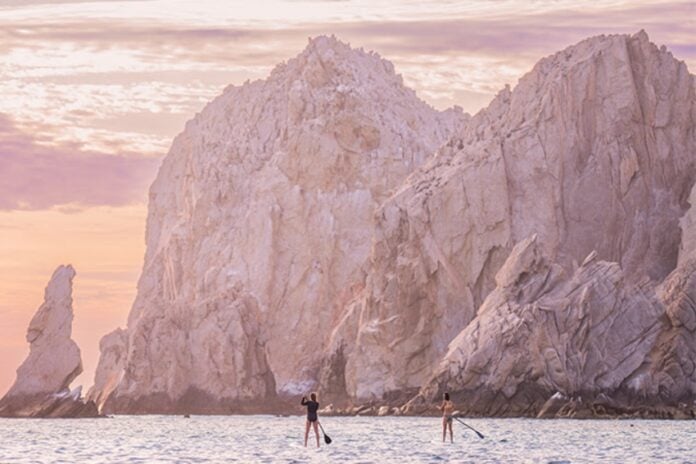
Land's End in Cabo San Lucas
Los Cabos tourism is down in 2026, which means fewer people are enjoying the destination’s signature attractions. (Los Cabos Tourism Board)

Irrational fears pose no actual danger. But the people who have them are still afraid.

Such is the paradox that confronts Los Cabos as tourism numbers dwindle in 2026, a trend at least partly based on perceptions with no basis in fact. 
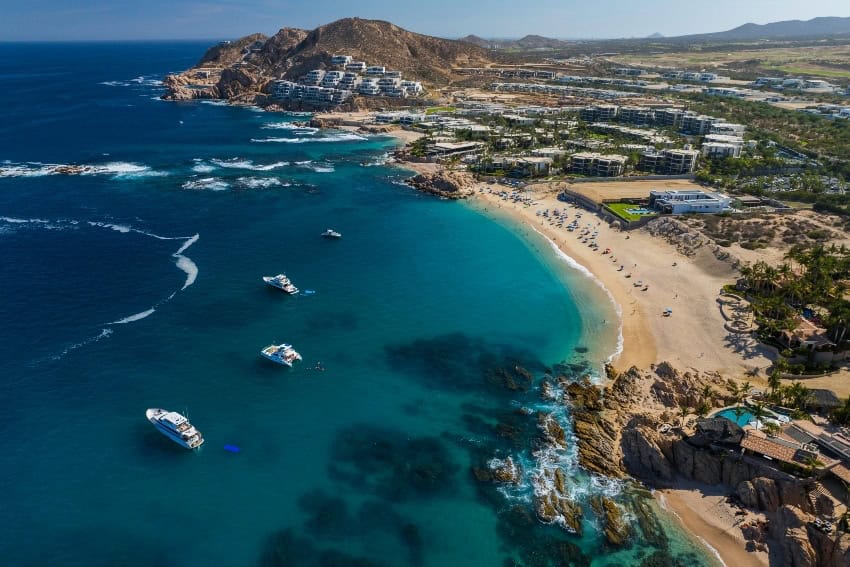
Los Cabos coastline
Following arson attacks on the Mexican mainland in the wake of the death of CJNG cartel leader “El Mencho” in February, Los Cabos saw a 7.1% dip in international travel in March. (Los Cabos Tourism Board)

‘El Mencho’ and the Los Cabos paradox

“We have to take into account that the beginning of this year was marked by an atmosphere of insecurity that permeated the perception of the destination abroad,” explained Mauricio Salicrup, the Secretary of the Board of Directors of the Los Cabos Hotel Association, referring to the incidents of cars set ablaze in several areas of Mexico — although, notably, not in Los Cabos — following the arrest and death of CJNG cartel leader Nemesio “El Mencho” Oseguera Cervantes in the state of Jalisco on Feb. 22. 

“Although the Los Cabos Tourism Board (FITURCA) promotes and clarifies the situation in Los Cabos compared to what happens in the rest of the country, it still affects us because there is always a decrease in tourism due to companies sending notices to their employees prohibiting travel to Mexico for safety reasons.”

A solid, if unspectacular year so far

Which is to say, despite Los Cabos’ superb safety record and peninsular isolation from mainland Mexico, the destination is losing business due to perceptions of Mexico as a whole among U.S. and other international travelers.

How much is it being hurt? Salicrup, in an interview with Sudcaliforniano, said there has been a 49% decrease in demand from U.S. travelers during the first quarter of 2026, a 23% loss of Canadian travelers and a 16% dip in the domestic market. Those numbers sound alarming and could certainly cause very rational fears for business owners in Los Cabos who depend on tourism. However, some context is needed.

Although there is no public data regarding reservations made with area hotels and resorts, there is ample data on the number of tourists who fly into Los Cabos, and by that standard, Los Cabos is having a solid, if unspectacular, year. So far, at least.

What the numbers say about international arrivals

The number of international tourists arriving in Los Cabos was up relative to 2025 in both January and February 2026 (by 2.6% and 4.2%, respectively), according to Grupo Aeroportuario del Pacífico (GAP), which operates Los Cabos International Airport. 

Now, since the aforementioned incidents in which no tourists were hurt happened in late February, March is where one would expect to see a decline, and indeed that did happen. International arrivals were down by 7.1%, falling from over 545,000 in 2025 to 507,000 in 2026. But there was also a record number of spring breakers in March and, in the first week of April, robust 90% hotel occupancy for Semana Santa, so it’s not as if the sky is falling, especially since, for the year, Los Cabos has seen only a 0.7% dip in international arrivals. 

The long-term fallout
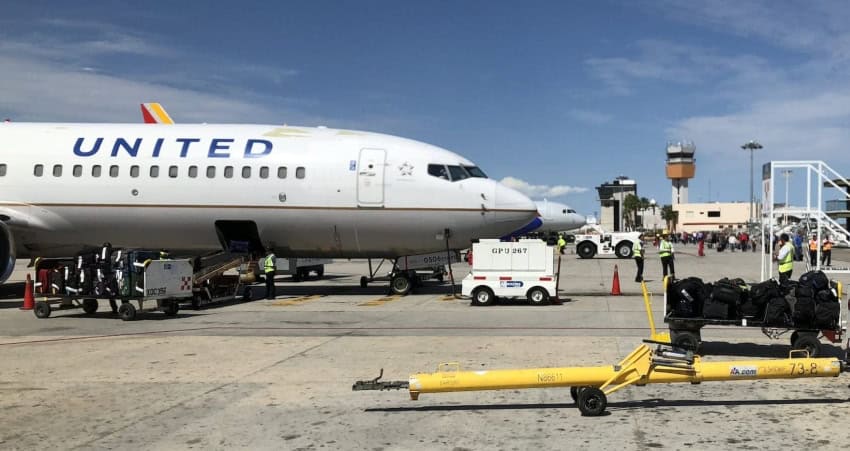
Los Cabos International Airport
International visitors to Los Cabos are down slightly in 2026, but it’s the drop in domestic visitors that’s really concerning. (Los Cabos International Airport)

Of course, Salicrup’s point is that the drop in demand is driven largely by insecurity fears, so that being the case, it’s too early to tell what diminishing reservations right now might mean for summer, or for the remainder of the year. Perhaps this is the start of a precipitous drop, or perhaps it all ends up being a tempest in a teacup.

In a recent interview with Travel Weekly, CruisingStores CEO Dwain Wall, whose company sells more than just cruises to Mexico, noted that bookings for the country had been down 40% in the weeks immediately following the images of burning cars being broadcast on American and Canadian televisions. But, with the exception of Puerto Vallarta — where insecurity was most glaringly obvious and where international arrivals plunged by 32% in March he expects tourism in Mexico to bounce back pretty quickly, assuming nothing else happens this year to alarm tourists.

As for Los Cabos, Wall said, bookings had indeed softened but should pick up soon. 

The domestic tourism decline in Los Cabos

Despite the attention given to speculations on the international tourism market in Los Cabos, it’s the domestic market that has proven to be a clear and demonstrable problem. Domestic tourism has declined in Los Cabos for nine straight months relative to year-over-year (YoY) numbers.

In July 2025, per GAP numbers, domestic passengers were down by over 10,000 from the same month in 2024. In August, by over 6,000 from the previous year; in September, by more than 12,000; in October, by over 17,000; in November, 9,000; in December, 13,000; in January, 13,000; in February, 6,000; and in March, more than 15,000!

These numbers add up quickly and point to the real issue dragging down tourism in Los Cabos. While it’s true international arrivals have decreased by only 0.7% in 2026, overall tourism is down 2.5%, a much more significant number that is largely due to this ongoing domestic nosedive.
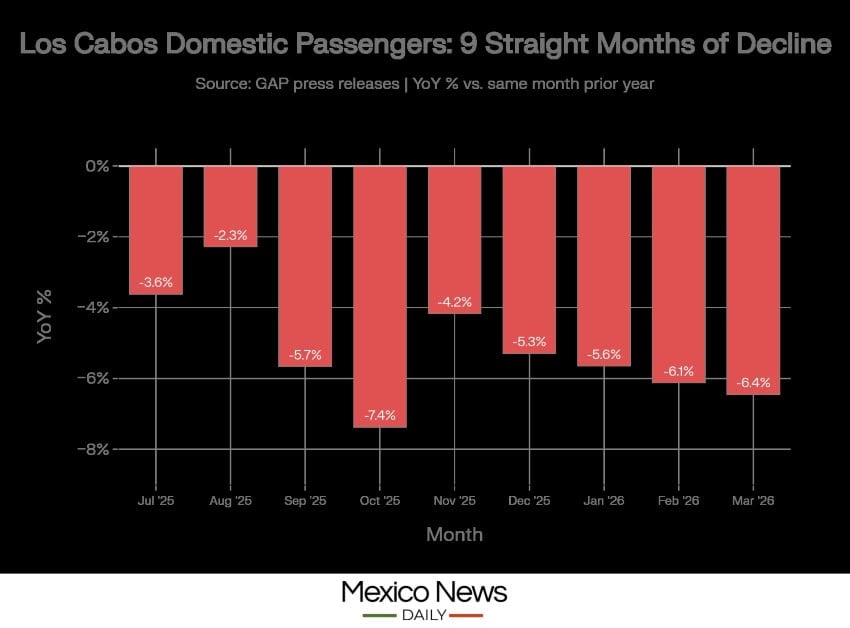
Domestic tourism decline in Los Cabos
Domestic tourism to Los Cabos has been in a downward spiral since July 2025, according to passenger data from the Los Cabos International Airport.

Why is domestic travel in Mexico down?

This is not just a Los Cabos issue. As Mexico News Daily reported earlier this year, the domestic tourism market in Mexico saw flatline growth in 2025 due to a combination of factors, including a weakening economy and an inflationary rise in prices for tourism goods and services. 

But the squeeze is being felt acutely in Los Cabos, which has the highest average hotel prices in the country and is one of the most expensive destinations in general. Yes, average daily hotel rates have declined in Los Cabos in recent years, falling from a yearly average of US $458 in 2024 to “only” US $429 in 2025. But that’s still a lot to pay — nearly US $3,000 for a weeklong visit — particularly when one’s pesos have less purchasing power than they used to. And there are plenty of other attractive domestic destinations, some of which are likely closer to home, meaning that the plane fares are cheaper too.

Traditionally, international visitors have accounted for about two-thirds of annual tourism in Los Cabos, domestic visitors for about one-third. So maybe this domestic downturn didn’t seem like such a big deal when international tourism was thriving. 

But it sure seems like a big deal now.

Chris Sands is a writer and editor for Mexico News Daily, and the former Cabo San Lucas local expert for the USA Today travel website 10 Best and writer of Fodor’s Los Cabos travel guidebook. He has also contributed to numerous other websites and publications, including The San Diego Union-Tribune, Marriott Bonvoy Traveler, Forbes Travel Guide, Porthole Cruise and Travel, and Cabo Living.

How am I meant to find anything in a Mexican pharmacy and why is everything so confusing?

11
Mexican pharmacy drugs
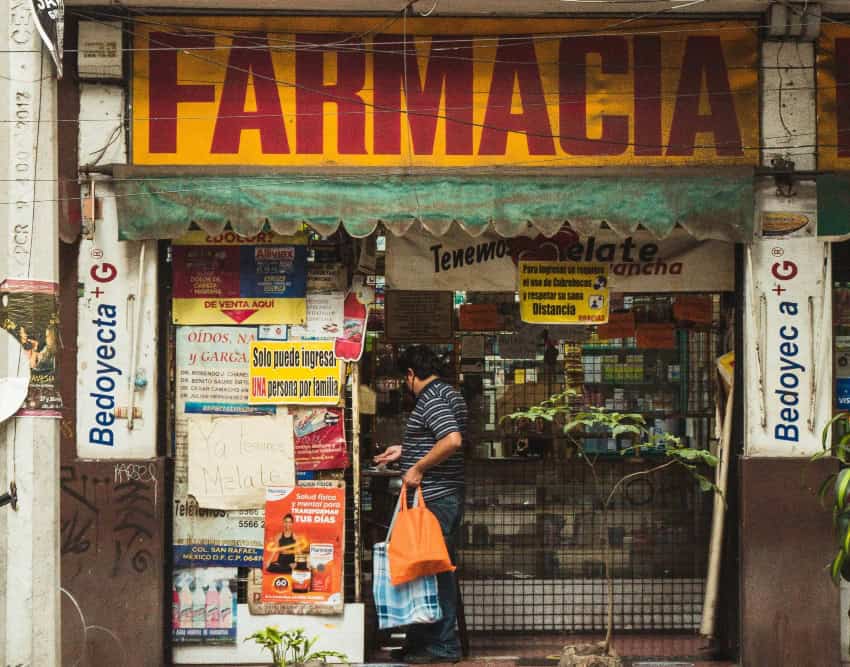
Walking into a pharmacy in Mexico can be quite a different experience than walking into a CVS or Walgreen’s in the U.S. (Unsplash)

The first time I walked into a Mexican pharmacy, I stood still in the doorway for a few beats. 

Why was it so small? Where was everything? No candy aisle, no greeting card aisle, no sexual health or feminine hygiene products aisle. In fact, there was nothing that could even be called “an aisle.”

Mexican pharmacy
Mexican pharmacies, or farmacias, may seem confusing or forbidding to those who haven’t visited one before. (Anastasiia Malai/Unsplash)

For such a cramped space, it was incredibly confusing.

I soon learned the ropes, and now, my fine readers, it is time to pass that knowledge on to you. Here’s what to remember when it’s time to go to the pharmacy in Mexico.

Not all pharmacies are created equal

In my neck of the woods, we can divide pharmacies into three tiers. When I say “tiers,” by the way, I’m not necessarily referring to quality but to familiarity for those of us from the United States who are used to stores like Walgreens and CVS.

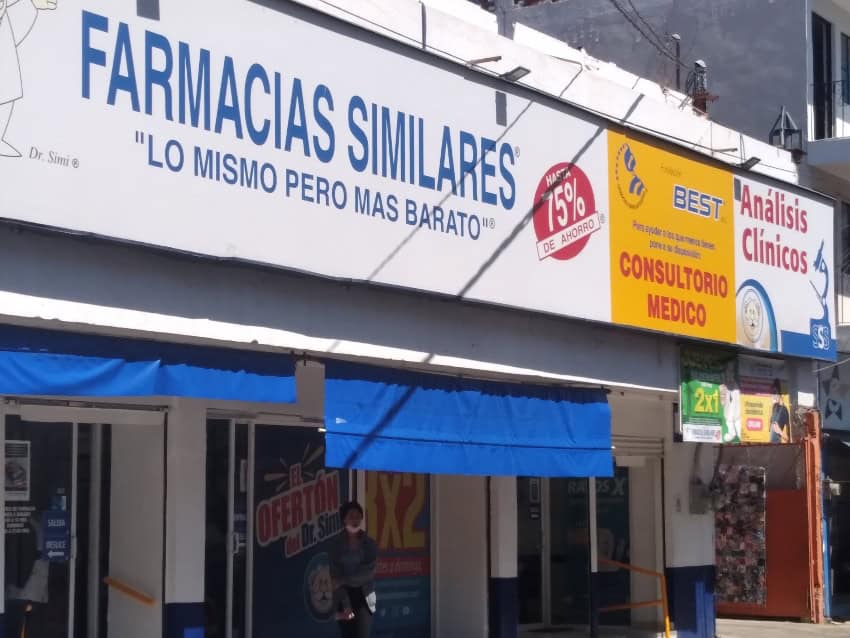
At the bottom is Farmacias Similares, which is a regional low-cost pharmacy chain stocked with cheap generic versions of many medicines. Many of these pharmacies also come with an attached consultorio (doctor’s office), where one can see a general doctor for minor illnesses like digestive or respiratory infections. The doctor will write you a prescription if one is warranted and recommend other medicines for your symptoms, which you can, of course, buy at the pharmacy.

The fee for seeing the doctor is symbolic (about 50 pesos, or close to US $3), and in most places, the pharmacy itself is countertop-style and pretty no-frills — meaning, there’s no “store” to walk into. You don’t browse the shelves; you ask an attendant to fetch the medicines you need. The supply of basic toiletries is fairly limited.

Farmacias Similares, by the way, is where you might find someone dressed up in a Dr. Simi mascot costume, a staple of modern Mexican culture. As far as I’m concerned, their medicines are just as good as any others, though I have had doctors tell me not to buy certain medicines there, so apparently, there are medical professionals out there who have their doubts, valid or not.

Farmacia Similares
“It’s the same but cheaper” is the slogan at Farmacia Similares, which offers generic versions of name-brand medicines. (DogeGamer2015MZT /Wikimedia Commons)

More pharmacy tiers

The next tier would include chains like Farmacias del Ahorro and Yza, which may or may not come with an attached consultorio — Farmacias del Ahorro usually does, and theirs is free. At these pharmacies, there is a little “store” area with items you can pick up and examine, though these are restricted to a fairly small variety of toiletries and over-the-counter medicines.

Condoms are mercifully available in this area now as well (you had to ask for them at the counter when I first arrived in Mexico). On the shelves, you can also find things like nail clippers and lip balm, and maybe a few snacks and refrigerated drinks. A few different brands of baby formula and diapers are available behind the counter. Most independent pharmacies are similarly stocked.

Finally, there are the larger pharmacies like Farmacias Guadalajara and Farmacias San Pablo, which are the most similar in terms of selection to a place like CVS, though without as much variety; I’d include grocery store pharmacy sections in this tier as well. Medicines tend to be a little pricier, but if you need more specific toiletries or other things on the same trip that you might normally look for in a tiendita or grocery store, these pharmacies can be very convenient.

Lastly, homeopathic pharmacies are in their own class, and there’s usually a homeopathic doctor available if you choose to go that route.

You don’t need a prescription for everything

When I first arrived, you could ask for pretty much any kind of medication in pharmacies — including antibiotics — and staff would just sell it to you. That’s no longer true for antibiotics nor for stronger pain medications — more on that below.

One notable area on this subject is birth control: In Mexico, you can simply ask a pharmacy for birth control pills (by brand, as there are many), as well as the morning-after pill, both without a prescription. While abortion before 12 weeks of gestation is now officially legal at the federal level in Mexico, asking for the abortion pill (Mifepristone) may yield success on a case-by-case basis, depending on the pharmacist you are dealing with. A quick online search of local pharmacies makes it appear that this is completely possible, but seek the advice of a medical professional.

This Mexico City farmacia boasts an elegantly simple sign to lure visitors. (Nahima Aparicio/Unsplash)

What’s available and what’s not

Other medicines you might be surprised to learn you don’t need a prescription for are psychiatric, like many SSRIs, a class of antidepressants used to treat depression and anxiety. Medicines that are known to be addictive, like stimulants, for example, are more tightly controlled and can still only be bought with a prescription. They are also often subject to shortages, so you may have to visit multiple pharmacy chains to find the one that currently has it in stock. Weight-loss wonder drugs like Ozempic are available over the counter across all of Mexico.

Part of the confusion customers sometimes experience at Mexican pharmacies comes from the fact that certain brand-name over-the-counter medicines haven’t expanded into Mexico yet. (Luckily, Excedrin Migraine finally has. Now if I could only get a hold of some Tylenol Sinus!) The lesson? If you have a go-to over-the-counter medication that works for you, you might want to stock up during trips back home.

And if you’re looking for something particularly strong, such as opioids, you’re likely not going to find them anywhere outside a hospital. If you do happen to find them, I’d advise you to be incredibly suspicious of their origin and authenticity. That level of pain medication in Mexico is typically reserved for palliative care. My mother couldn’t even access them after having surgery here.

Since certain pharmacies in tourist and border areas have been found to sell counterfeit medications containing fentanyl — those that do typically advertise these drugs heavily to foreigners, another telltale sign worthy of suspicion and avoidance — it’s best to stay far away from such purchases.

As with many things in Mexico, a trip to the pharmacy will be a different experience than you’re probably used to, one in which you’ll need to interact with the people who work there to get what you need. Thankfully, you’ll likely find people to be as helpful and accommodating as they are elsewhere. Happy shopping, and get better soon!

Sarah DeVries is a writer and translator based in Xalapa, Veracruz. She can be reached through her website, sarahedevries.substack.com.

This article was first published in April 2024.

Why getting uncomfortable may be the most important skill you can give your child today: A perspective from our CEO

10
A digital illustration shows a nervous teen girl sitting on a bean bag and an dotted line to a far-off destination
Spending time in a foreign country gets kids out of their comfort zone, building resilience and cross-cultural fluency, Travis Bembenek writes. (Shutterstock)

Before I begin, a disclosure: My wife and I don’t have kids. Our “baby” is Mexico News Daily. But having spent time with the kids of friends and family — and enough time studying what the world is demanding of the next generation — I think that I have a well-reasoned perspective. And frankly, sometimes an outside observer has an advantage because they aren’t as deeply immersed and invested in the day to day of what parents go through. I am also someone who has spent over 30 years navigating significant personal and professional change — from studying abroad, to traveling to 60+ countries, to now building a life and a business here in Mexico. That experience is the lens through which I write this.

Here is something that many parents already know: Research consistently shows that today’s young people are measurably more anxious, more depressed and less resilient than any previous generation on record — despite living in conditions of historically unprecedented comfort and safety. More comfort. More anxiety.

That is not a coincidence. A growing body of thinkers, researchers and leaders have begun to make the case — compellingly — that our level of comfort is actively undermining the mental and physical health of our children. The data backs it up: A significant percentage of American parents now say they believe that their children’s emotional health is getting worse.

And yet the dominant response to this crisis in most households I observe is to double down on comfort. Kids have their own cars if parents can afford it. Grade inflation is accepted as normal. Mental health days are routine. Many kids don’t have jobs. And if you ask a parent about their child’s development, nine times out of ten the answer involves sports. Never books. Never struggle. Never a job.

To be fair, sports matter. I played them. They teach discipline, time management, how to win graciously and how to lose without falling apart. They build teamwork, accountability to others, and the ability to perform under pressure. These are real skills, and I don’t dismiss them. But sports are a managed discomfort. The rules are fixed, the coaches are supportive, the metrics are clear. When a season ends badly, there is always next year. Life does not work that way.

Sports prepare kids to compete within a known system. What they rarely teach is how to navigate a system that doesn’t exist yet — which is precisely what the next decade will demand. Life does not come with a referee. The world your child will inherit is not managed. It is chaotic. Geopolitical instability, climate disruption, trade wars and the seismic arrival of artificial intelligence are reshaping every industry, every career path, every assumption about what skills will matter. The CEOs of the most powerful AI companies on earth have said publicly that intelligence itself is becoming a commodity.

When intelligence is a commodity, what becomes scarce? Character. Judgment. Adaptability. The ability to stay calm, curious, and capable when everything around you is shifting. That kind of character is not built in a comfort zone.

Consider that one of the most successful builders of our era, CEO of Nvidia Jensen Huang, spent his teenage years washing dishes and scrubbing toilets for minimum wage. He didn’t just survive it — he credits it as foundational. He came to the U.S. as an immigrant child from Taiwan, was dropped into a world entirely foreign to him, and had to adapt or fail. That daily friction of not fitting in, having to learn the rules, not having it easy — is precisely what helped him forge the mindset and skill set that built the largest company in the history of the world.

I ask myself: What is pushing kids out of their comfort zones today? In many cases, what could be growth-building discomfort instead is replaced by curated extracurriculars, producing a generation that is impressively scheduled yet likely very unprepared for real life.

Which brings me to the single most underutilized growth opportunity available to a college student: a genuine study abroad experience, chosen not for the Instagram aesthetic but for the productive discomfort it delivers.

I recently returned to my alma mater, the University of Wisconsin-Madison, to understand why more students aren’t choosing to study in Mexico and find out how I could help. What I found was striking: Of 32 business school study abroad options available today, five are in Italy, five in Spain, four in France — and zero in Mexico. Over 200 students a year go to Barcelona alone. When I spoke to students, professors and administrators, the framing was nearly universal: Study abroad is a resume item, an extended vacation, a box to check. The discomfort is being optimized out of the very experience designed to create it.

Students sit on steps in a street scene from Mexico City
Students who choose Mexico over more common European study abroad destinations immerse themselves in a new language and culture while getting to know a nearby neighbor with deep, longstanding ties to the U.S. (Shutterstock)

I want to be clear: Any study abroad program is valuable. But not all destinations are created equal — and I say this not as someone promoting Mexico, but as someone shaped by it. When I studied in Guadalajara 30 years ago, I was forced into discomfort. The language barrier was real, the cultural norms were different, and the relationships required patience I didn’t know I had. That friction rewired how I think and how I lead. More than 60% of employers globally now say graduates with international experience are stronger candidates, specifically because they demonstrate adaptability and cross-cultural competence.

Mexico — a country that shares a 2,000-mile border, $800 billion in annual trade, and generations of human connection with the United States — offers that formative friction in one of the most professionally relevant contexts imaginable. It is not about Mexico for its own sake. It is about what genuine immersion does to a developing mind. The same mechanism that shaped an immigrant child from Taiwan into a world-changing technologist is available to any student willing to be challenged and grow with the harder path of a study abroad experience in a country like Mexico.

So, what do kids gain from this experience?

  • Resilience — the ability to stay grounded when the world shifts beneath them
  • “Figure-out-ability” — the capacity to solve problems that don’t have a playbook
  • Cross-cultural fluency — a competitive edge in a globally connected, AI-disrupted economy
  • Self-reliance — earned confidence that no participation trophy can replicate
  • A story worth telling — the kind of formative experience that shapes identity and character, not just a resume
  • Perspective — seeing the world and the United States from another point of view

The window to take six months, step outside of everything familiar, and grow in ways a classroom simply cannot provide — is short. Most adults never again have the opportunity once they leave college. Every parent I meet says that they are worried about their kids’ futures. Here is the most actionable thing you can do about it: Stop protecting them from the discomfort that helps build the future they will need to face. The most important gift you can give your child right now is not a safer path; it is a harder one.

Travis Bembenek is the CEO of Mexico News Daily and has been living, working or playing in Mexico for nearly 30 years.

Dave Matthews announces a 2027 10th anniversary date for his Riviera Maya destination concert

3
Dave Matthews and Tim
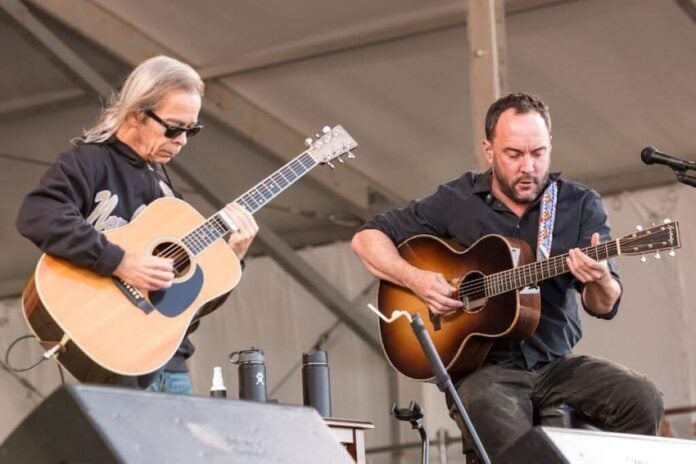
In this year's ninth edition of the Dave and Tim Riviera Maya destination concert, Matthews and Reynolds paid tribute to Bob Weir, the late Grateful Dead rhythm guitarist and singer. (Dave Matthews /Facebook)

Rock & Roll Hall of Famer Dave Matthews and his band’s lead guitarist, Tim Reynolds, will return to Mexico next winter for the 10th anniversary edition of their Dave & Tim Riviera Maya concert vacation, it was announced this week.

Matthews is the frontman of the Dave Matthews Band — one of the most successful touring rock bands of the past three decades — and Reynolds is a guitar virtuoso who also plays acoustically with Matthews.

The duo will headline three such unplugged shows from a beachfront stage during the four-night event scheduled for Jan. 20-23, 2027, at Moon Palace Cancún, a luxury resort on the Riviera Maya.

The “10 Years on the Beach” shows will offer “a mix of classic hits, fan-favorite rarities and unexpected covers in a relaxed, stripped-down setting,” according to an announcement on the Dave Matthews Band website.

The lineup also will include two sets from jam favorites Goose on opening night, along with performances by Sierra Ferrell and Stephen Wilson Jr., and possibly more artists to be announced.

The 2027 shows “reflect the incredible community Dave and Tim have fostered around this event, bringing fans closer to the music they love in a setting that feels both intimate and deeply connected,” said Dan Berkowitz, CEO of producer 100x Hospitality, a company that specializes in destination concerts.

The concert getaway has evolved into a winter pilgrimage for fans, who over the years have been able to hear deep-catalog sets and special tributes.

At this year’s edition three months ago, Matthews and Reynolds joined members of bluegrass band Trampled by Turtles to honor Bob Weir, the Grateful Dead co-founder, rhythm guitarist and vocalist who died Jan. 10 at age 78.

The concerts included Grateful Dead classics such as “Friend of the Devil” (played by an iteration of the Dave Matthews Band for the first time since 2015) and “Casey Jones,” an outright debut.

That show opened with a cover of Jimmy Buffett’s “A Pirate Looks at Forty,” performed by the duo for the first time since 2017, and also featured a cover of Neil Young’s “Ohio.” Both songs highlighted a 26‑song acoustic set that leaned on deeper catalog choices. 

All-inclusive packages for next year will go on sale beginning April 29. For details, visit the website.

With reports from Live for Live Music, Relix and Pollstar News

Mother-in-law wanted in femicide of ex-beauty queen Carolina Flores in Polanco

1
Carolina Flores Gómez
Carolina Flores Gómez, a former beauty queen originally from Baja California, was murdered earlier this month apparently by her mother-in-law, whom a baby-monitor recording captures saying, "She made me mad." (Facebook)

The investigation into the April 14 murder of former beauty queen Carolina Flores Gómez took a surprising turn this week after a video appeared to confirm that she was murdered by her mother-in-law.

Mexico City prosecutors obtained an arrest warrant for Erika María Herrera and have accused her of femicide. They are also questioning the husband who was present during the murder, but did not report it to police until the next day.

Warning: Though the video does not clearly show the murder, it’s contents may be distressing to viewers.

The video in question — apparently from a baby monitor — shows the moment when Flores, 27, was shot dead.

In the 60-second recording leaked to the public, Flores can be seen walking into a room inside her apartment in the Polanco neighborhood of the capital as her mother-in-law follows.

Then comes the sound of at least six gunshots and screams. Alejandro, Flores’s husband, appears in the frame and can be heard confronting his mother, saying “What was that? What did you do, Mom?” 

Herrera calmly replies, “Nothing, she made me mad.”

Alejandro then says, “What’s wrong with you, she’s my family.”

Herrera responds, “You are my family, not hers … you’re mine, she is not.”

When detectives arrived the following day, they found the former Miss Teen Universe face down on the floor with multiple bullet wounds.

Under questioning, the husband admitted his mother had shot Flores while he and their 8-month-old son were present in the apartment. Alejandro justified his failure to immediately report the shooting by saying he was doing what he thought was in the best interest of the baby.

The suspect remains at large. Authorities have issued an immigration alert and continue to look for the 9mm gun used to murder Flores, originally from Ensenada, Baja California,

Prosecutors say they continue to classify the murder as femicide, which in Mexico is defined as when a woman is murdered under circumstances that may be related to gender violence.

New anti-femicide law seeks expanded definition and increased prison time: Tuesday’s mañanera recapped

Femicide is a significant problem in Mexico, with an average of eight to 10 women murdered every day. The data on how many of those murders qualify as femicides varies widely, with some putting the number as high as 2,800. 

The impunity rate for femicide in Mexico is 95%.

Last month, the attorney general proposed a new anti-femicide law seeking to increase penalties and unify criminal codes among all 32 states.

One major concern is the tendency of investigators to repeat old sexist patterns of negligence, indifference or even misogyny. Among these patterns is suggesting the missing woman might have eloped.

Family members of Edith Guadalupe Valdés, murdered in Mexico City three days after Carolina Flores, say police officials demanded money before opening a case file, then asked whether she might have run off with her boyfriend.

The family started an investigation on their own and tracked Edith Guadalupe — who had left home for a job interview — to a building in the borough of Iztapalapa only for the police to wait until the following day to send agents to the building where the body was found in the basement.

Three police officials were fired for negligence in that case.

With reports from La Jornada, Reporte Indigo, El País, El Financiero and Milenio

Mexico gears up to regulate AI, with prison sentences for wrongful uses

1
The Mexican Senate
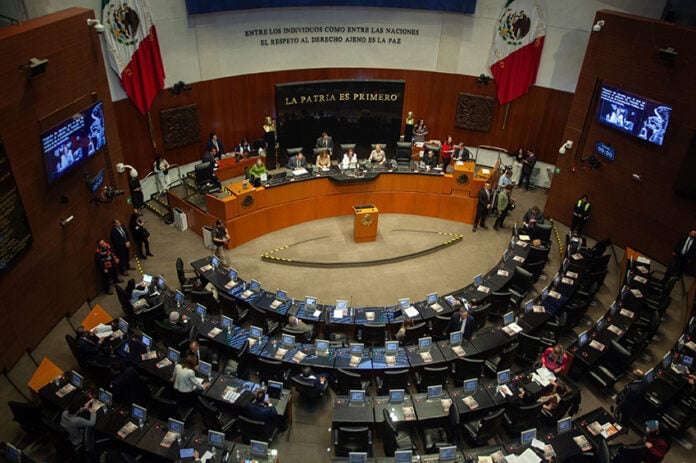
The Mexican Senate in its regular session on April 14. The Senate is currently preparing a bill to regulate the use of artificial intelligence in Mexico. (Andrea Murcia / Cuartoscuro.com)

Artificial intelligence is increasingly ubiquitous, touching nearly every industry and country around the world — and begging the question of how governments can prevent the powerful new technology from being misused. Now, while the United States takes a piecemeal approach to regulation, Mexico is preparing a sweeping federal law to regulate AI, including new regulatory institutions and fines or prison sentences for misuse.

The bill seeks to prevent sexual deepfakes, electoral manipulation and lethal AI-based systems that work without human input.

The current proposal prohibits the creation and dissemination of sexually explicit deepfakes without consent, especially when they involve minors, in which case no authorization, even if explicit, would be valid.

Similarly, it prohibits “the manipulation of images, audio, or video for the purpose of humiliating, harassing, extorting, or perpetrating violence against a woman; the deliberate automation of hate campaigns, defamation, smear campaigns, or gender-based attacks; as well as the design or use of artificial intelligence systems primarily intended to facilitate cyberbullying, harassment, or digital persecution.”

To promote innovation and ensure technical and ethical compliances, the bill proposes a national artificial intelligence strategy, an AI development fund and a federal certification system.

Since it is often unclear online whether content has been manipulated using AI, the bill also seeks to establish basic rules of transparency.

Fake fires, real fear: Debunking the lies that went viral after ‘El Mencho’ fell

Experts in the field have warned that the bill could affect freedom of speech, political debate and technological innovation due to the vagueness of some concepts such as “cognitive manipulation” and “information risks.”

“Without precise definitions, these terms can be open to broad interpretations by the authorities,” Víctor Ruiz, CEO of the cybersecurity firm SILIKN told Expansión magazine.

Created by the Senate’s specialized committee on AI, the bill has seen participation from all political parties represented in the federal Congress.

Senator Rolando Zapata, who chairs the committee, said that the project is the result of 16 months of work and dialogue sessions that involved 72 specialists from different sectors, including academia, the private sector, representatives of the public sector and human rights organizations.

Zapata argued that the bill “does not censor opinions or criticism” and that it does not penalize political communication made in accordance with the law and democratic principles.

“This project in no way limits or restricts freedom of expression or political debate. It does not censor opinions or criticism, nor does it establish penalties for expressing oneself,” Zapata wrote on his official X account.

After the initial discussion phase, the bill will be presented and debated in the Senate.

With reports from Wired en Español, Expansión and Infobae

Fugitive Mexican Navy officer wanted for fuel smuggling arrested in Argentina

1
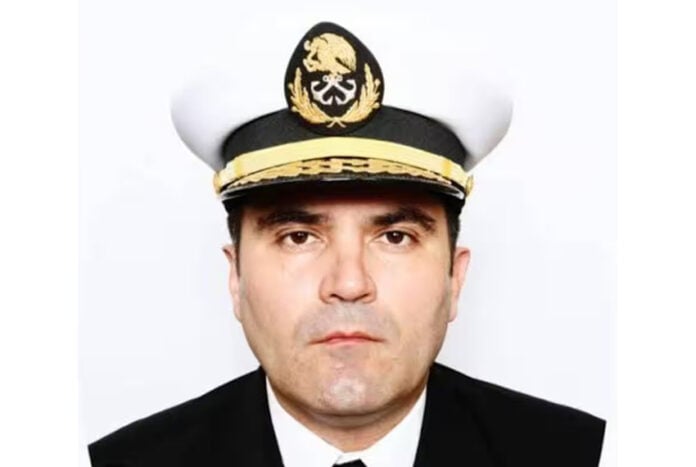
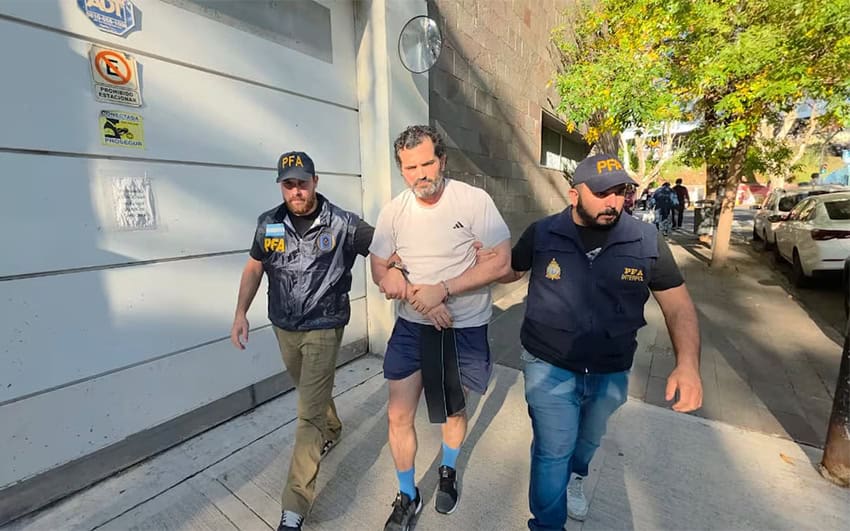
Mexican Navy Rear Admiral Fernando Farías Laguna was arrested Thursday by Argentine security forces while holding a forged Guatemalan passport. He is wanted in Mexico for illicit sales of fuel, which included arranging for 31 ships from the U.S. to enter Mexico with approximately 1.5 million liters of fuel every week. (Social media)

Rear Admiral Fernando Farías Laguna, a Mexican Navy officer and alleged fuel trafficker, was arrested in Buenos Aires on Thursday and faces extradition. 

Wanted by Mexican authorities for his role in a scheme to sell stolen fuel, Farias is the nephew of former Navy Minister Admiral José Rafael Ojeda Durán. He was holding a forged Guatemalan passport when apprehended.

Two Argentine police officers escort Mexican Navy official Farías, dressed casually
Argentine authorities arrested Farías, who is wanted in Mexico on fuel trafficking charges, in Buenos Aires on Thursday. (Fiscalía Argentina)

Farías stands accused by Mexican authorities of leading a hydrocarbon trafficking network uncovered in March 2025 when 17 million liters of stolen fuel was seized in a northeastern Mexican port.

A fugitive since skipping out on pre-trial hearings last November, Farías was also the subject of an Interpol red notice for organized crime charges, through which he was wanted in 192 countries.

Security Minister Omar García Harfuch attributed the capture to “international information exchange and cooperation mechanisms” that informed a “coordinated operation involving the Naval Intelligence Unit, the Federal Attorney General’s Office and its Organized Crime Unit, Interpol Mexico and the National Intelligence Unit.”

Harfuch also expressed gratitude to Argentine authorities for their collaboration in the operation.

Farías will undergo a recognition hearing to begin extradition proceedings on charges of organized crime and “huachicol fiscal” (falsifying customs documents to introduce fuel and passing it off as another duty-free product, often lubricating oils). 

The network, which allegedly involved public officials, private companies and naval personnel, operated in customs offices in Manzanillo, Colima; Lázaro Cárdenas, Michoacán; and Tampico, Tamaulipas, among others. 

The March 31, 2025, bust — six months after their uncle’s term ended — exposed a criminal network led by Farías and his brother Vice Admiral Manuel Roberto Farías (in custody since September). 

Investigations revealed a scheme that allowed 31 ships from the U.S. to enter Mexico with approximately 1.5 million liters of fuel per week. The authorities believe the network may have smuggled at least 564 million liters of fuel into Mexico since June 2023.

On Sept. 7, 2025, Manuel Roberto Farías was arrested along with 13 other suspects, including three businessmen, five Marines (one retired) and five customs officials.

At the time, Fernando Farías was out of the country and in October he managed to win an injunction against arrest. A month later, however, an appeals court threw out the injunction and Farías had been a fugitive since.

Hours before Fariás’ arrest in Buenos Aires, Harfuch announced the dismantling of the remainder of the “huachicol” network and 14 additional arrests. Combined, the actions constitute the first large-scale corruption case uncovered by the Sheinbaum administration, a case that shook the Navy from within and greatly weakened the narrative of the incorruptibility of Mexico’s armed forces.

With reports from La Jornada, Infobae, TV Azteca, El País and Proceso

Approval of President Sheinbaum holds strong in March with over 60% support

4
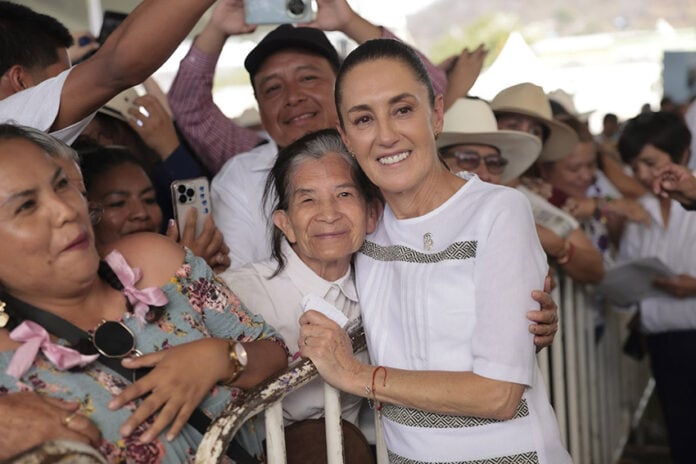
President Sheinbaum hugs a constituent at a packed rally
Just over two-thirds of Mexican survey respondents supported President Sheinbaum's in March. (Presidencia)

The latest Mitofsky poll shows that President Claudia Sheinbaum’s approval rating slipped slightly for a sixth consecutive month in March, but more than two-thirds of those surveyed still had a positive opinion of her job performance.

The survey — conducted last month for the newspaper El Economista by interviewing 59,548 Mexicans over the age of 18 with smart mobile devices and internet access — revealed that 68.4% of those polled expressed approval for Sheinbaum. This is down from 69.1% in February and 3.2 points below results from September 2025, her 12th month in office.

A poll conducted late last month by Brazilian company AtlasIntel also yielded declining approval ratings though the numbers were considerably lower (53.9% support).

Mitofsky noted that March 31 marked the one-quarter mark of Sheinbaum’s term.

Among the challenges Sheinbaum faced in March were the initial rejection of the electoral reform bill she submitted to Congress, rising inflation, a stagnating economy and an oil spill in the Gulf of Mexico, which the government at the time denied was the fault of state oil company Pemex. (Admission of Pemex’s responsibility in the matter finally came on April 16.)

Workers in the informal economy registered the highest approval of the president, Mitofsky found, with 76.4% support, down from 78.7% in February. Housewives and pensioners followed close behind with 75.9% and 72.5% support, respectively.

In contrast, the segment showing the lowest approval rating for Sheinbaum was the business sector, at 56.1%. However, this represents an increase of 4.6 points compared to the meager 51.5% approval they gave her in February.

With regard to issues of concern, the poll revealed that security remains the top priority for 48.2%, followed by economic matters (24.1%) and healthcare (12.3%).

When considering responses by political persuasion, Sheinbaum unsurprisingly received a 96% approval rating from those identifying as members of Morena, her party.

Approval by members of the center-right National Action Party (PAN) sits at 71% (down from 74%), while those linked to the former ruling Institutional Revolutionary Party (PRI)indicated 53% support (down from 57%). Members of the center-left Citizens Movement (MC) party came in at a low 43% approval (down from 45%).

Of those who say they voted for Sheinbaum in 2024, 94% voiced approval, while 34% of those who did not vote for Sheinbaum now support her.

With reports from El Economista and Mitofsky

Gov. Campos gets an official talking-to over CIA operations in Chihuahua: Friday’s mañanera recapped

1
President sheinbaum at her morning press conference
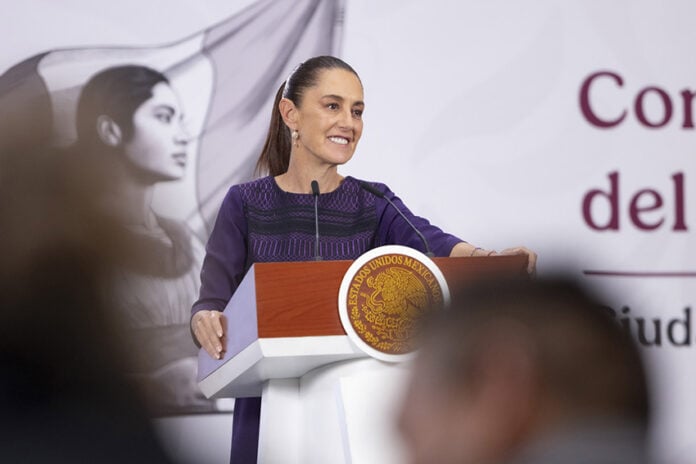
Sheinbaum touched on CIA operations in Chihuahua, responded to the U.S. ambassador's criticism of corruption in Mexico and celebrated the re-opening of the Teotihuacán pyramids after Monday's shooting, at her Friday morning presser. (Gabriel Monroy / Presidencia)
Sheinbaum’s mañanera in 60 seconds
  • 🚨 García Harfuch meets Chihuahua governor over unauthorized CIA drug lab raid: Sheinbaum said Security Minister García Harfuch met with Gov. Maru Campos to request information on last weekend’s drug lab operation, in which CIA officers allegedly participated without federal authorization. Campos agreed to provide details, Sheinbaum said. 
  • 🇺🇸 Sheinbaum brushes off U.S. ambassador’s corruption comments: Asked about Ambassador Ron Johnson’s remarks in Sinaloa calling for “certainty, security and an environment free of corruption” for investment to prosper, Sheinbaum laughed before responding that her government is already doing exactly that. She pointedly noted that the U.S. could stand to do the same.
  • 🔺Teotihuacán reopens to large crowds after Monday’s shooting: The archaeological site drew long lines of visitors on Wednesday, two days after a gunman killed a Canadian woman and wounded several others at the Pyramid of the Moon. Sheinbaum said most of the injured have returned to their home countries and those still hospitalized are out of danger.

Why today’s mañanera matters

The most noteworthy item out of today’s mañanera was President Sheinbaum’s revelation that Security Minister Omar García Harfuch essentially read the riot act to Chihuahua Governor Maru Campos at a meeting in Mexico City on Thursday.

It has been a challenging week for the president as she has been forced to respond to allegations that CIA officers participated in a security operation in Chihuahua without the knowledge or consent of her government. Sheinbaum — a staunch defender of Mexican sovereignty and ardent opponent of U.S. interventionism — has accepted that the CIA did indeed participate in a drug lab raid in the northern state.

Also of note at today’s mañanera was Sheinbaum’s blunt response to remarks made by the U.S. ambassador to Mexico. The president also commented on the reopening of the Teotihuacán archaeological site, where an unprecedented armed attack occurred on Monday.

Security minister meets with Chihuahua governor after CIA involvement in drug lab operation 

Sheinbaum told reporters that García Harfuch requested information from Governor Campos about a drug lab raid in the northern state last weekend in which U.S. Central Intelligence Agency officers allegedly participated without the knowledge or authorization of the federal government.

“She agreed to provide the information,” she said.

Sheinbaum said that García Harfuch outlined to the governor “all the principles that have to be followed” and “all the laws that have to be followed in order to collaborate with a foreign government.”

“In this case, this process wasn’t followed,” she said.

“… It was a cordial conversation and it is now up to the governor [to respond],” Sheinbaum said.

On Thursday, Sheinbaum assigned most of the blame for the apparently secret, allegedly illegal security collaboration between Chihuahua and the United States to the Chihuahua government, although she also stressed that U.S. authorities have questions to answer.

Sheinbaum turns the tables on US ambassador 

A reporter asked the president her opinion on U.S. Ambassador Ron Johnson’s declaration in Sinaloa on Thursday that the private sector “needs certainty, security and an environment free of corruption” in order for investment in Mexico to “prosper.”

Sheinbaum’s first reaction was to laugh at the reporter’s question.

“Let’s say, that’s what we’re doing,” she subsequently said, asserting that her government is working to provide the conditions needed for investment in Mexico to succeed.

“Them there and us here, because in the United States it is also important that there be a [favorable] environment for companies and investment, free of corruption, with legal certainty. And in Mexico too. That’s it,” Sheinbaum said.

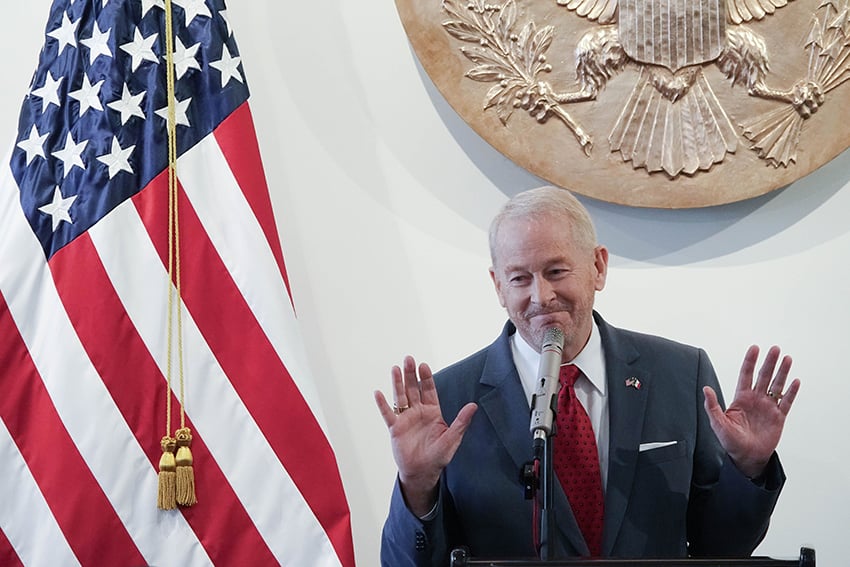
U.S. Ambassador to Mexico Ronald Johnson with an American flag
U.S. Ambassador to Mexico Ron Johnson, seen here at a March press event, called for “an environment free from corruption” to boost investment in Mexico. (Camila Ayala Benabib / Cuartoscuro.com)

Visitors return to Teotihuacán 

Sheinbaum said that people returned to Teotihuacán in large numbers when the archaeological site reopened on Wednesday, two days after a gunman killed a Canadian woman and wounded several other foreigners before turning his gun on himself.

“There were a lot of visitors, there were lines to get in,” she said.

“People were waiting before the door opened. There are a lot of videos on social media,” Sheinbaum said.

She also said that “a lot” of the people injured at Teotihuacán on Monday “already returned to their countries.”

“They were given support so that they could return. There are still some people in hospital. They are out of danger,” Sheinbaum said.

The gunman — who was allegedly inspired by the 1999 Columbine High School massacre — shot eight people, including the Canadian woman he killed, before committing suicide. Several other people were injured when they fell while escaping the attack, perpetrated on the Pyramid of the Moon at Teotihuacán, a pre-Columbian city located approximately 50 kilometers northeast of downtown Mexico City.

By Mexico News Daily chief staff writer Peter Davies (peter.davies@mexiconewsdaily.com)

5 places to visit in Mexico if you like adventure, nature and fewer crowds

2
Grutas de Tolantongo
Mexico News Daily CEO Travis Bembenek shares his favorite, under-the-radar travel picks to beat the crowds while enjoying the best of Mexico's natural wonders. (Gobierno de Mexico)

I am often asked about my favorite places to travel.

In general, I think a very good destination with fewer tourists is much better to visit than a “great spot” mobbed by people taking selfies.

I might sound a bit dated in saying this, but travel in the social media era baffles me. I am often astonished at people who seem to care more about their selfie than actually looking at and enjoying the place they are visiting. So many times, I’ve seen people spend significant time and energy trying to get the perfect photo (with themselves in it), and then simply move on to the next selfie spot.

In search of the less crowded

I also have noticed over the years, and increasingly so, that many beautiful spots around the globe are getting a lot more crowded than they used to be. It might still be the post-pandemic travel bounce or increased accessibility of travel, but it feels like something more than that. These really photogenic places around the globe are shared on social media so voraciously — of course, with absolutely perfect photos — that they’re now crowded with tourists looking to replicate those photos for their own social media accounts.

Part of what makes Mexico so special to me is that you can still find unbelievable places that are unspoiled, beautiful and uncrowded. Of course, they are getting discovered too and receiving more tourists, but they are still years behind the huge crowds of many other tourist hotspots.

With that in mind, I am sharing here five special places in Mexico for anyone looking for nature, adventure and fewer people. It’s still a good idea to follow some tips to avoid crowds, even in these less-discovered locations.

These destinations most certainly aren’t for everyone – perhaps not for most – as they don’t have the same range of accommodations, they aren’t easy to get to and they might entail some decidedly “unglamorous” moments. My intention here is, of course, not to increase mass tourism to these destinations, but rather inspire the truly adventurous out there to add these locations to their bucket lists.

Huasteca Potosina, San Luis Potosí

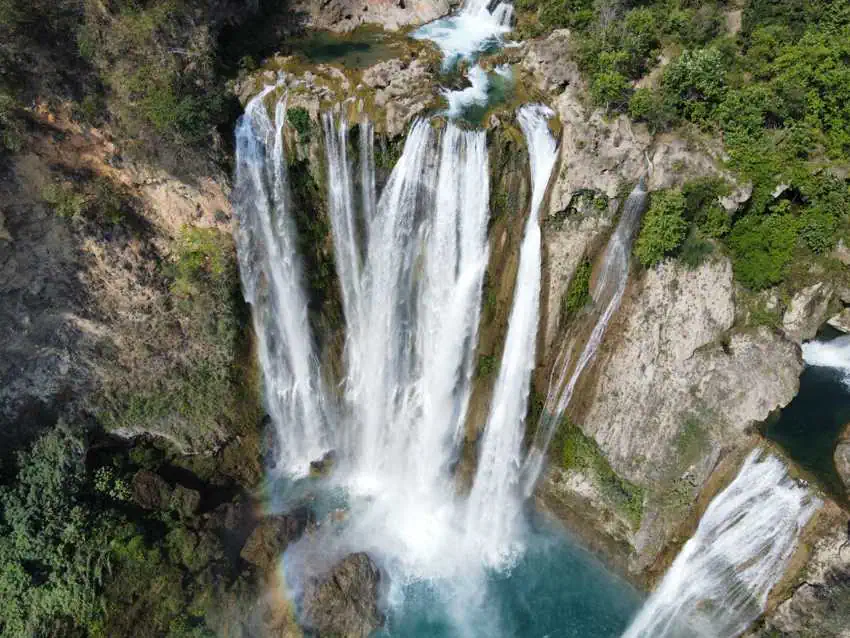
Aerial view of multiple streams of a waterfall cascading down into a turquoise pool in the Huasteca Potosina region of Mexico.
The stunning Minas Viejas waterfall in the Huasteca Potosina area of San Luis Potosí is a highlight that adventure seekers shouldn’t miss. (Nellie Huang)

Never in my life had I stayed in one hotel for seven consecutive nights until we did here. Seven days straight of pure, unspoiled, uncrowded nature.

Waterfalls, thermal pools, stand-up paddleboarding in a jungle river, whitewater rafting, canoeing, ziplining, waterfall jumping, birdwatching, seeing pumas and jaguars in their natural habitat, I could go on and on.

It’s not fancy, it can be swelteringly hot, but this part of Mexico is a guaranteed awesome natural adventure.

Grutas de Tolantongo, Hidalgo

Grutas de Tolantongo
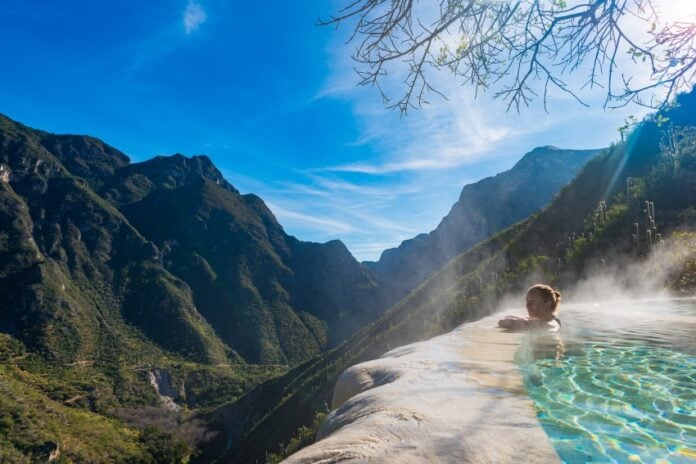
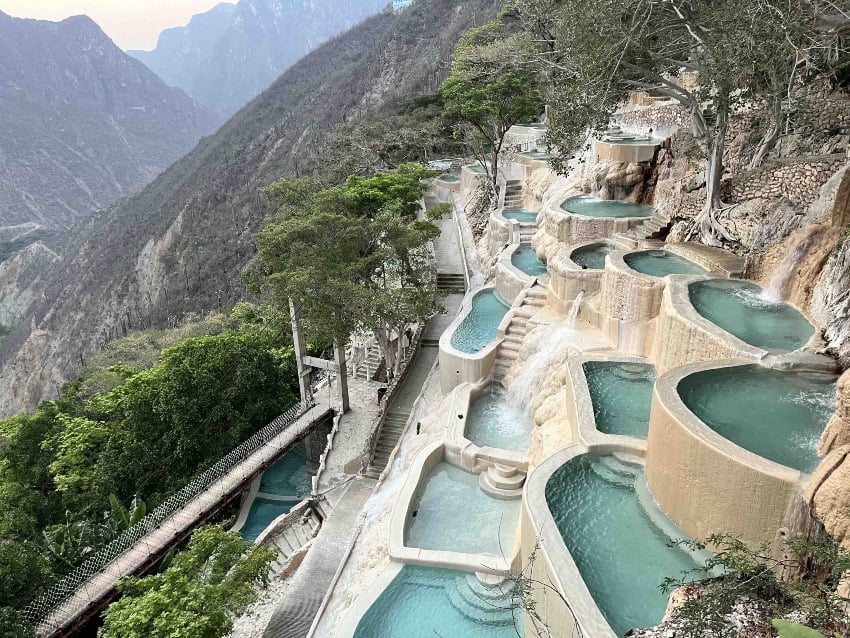
Views of the mountains from hot spring pools in Grutas de Tolantongo, Hidalgo, are epic. (Visit Mexico)

Imagine over 80 natural hot spring pools in the mountains, each with different temperatures, each with an amazing view, each of which can be enjoyed during the day or under the stars.

An underground spring of hot water feeds this incredible cave and river system. The hotels are 2 stars at best, the food is 1 star at best, but the spot is absolutely epic!

Isla Holbox, Quintana Roo

Isla Holbox, Quintana Roo
Isla Holbox is one of the best places to visit in Mexico if you’re looking for spectacular scenery with fewer crowds. (Visit Mexico)

A 2-3 hour drive from Cancún, Playa del Carmen or Tulum and then a ferry ride out to the island means Isla Holbox is not easy to get to, but it’s worth the effort.

All vehicles on the island are golf carts or smaller. The island is growing fast, but it still has a pace no longer found in most places on the planet.

Strolling in the crystal-clear water on the sandbar that goes on for miles into the ocean is the main activity. It’s a surreal experience to walk so far out into the ocean in ankle- to-knee-deep water — spotting fish, sting-rays, flamingos and more.

Bacalar, Quintana Roo

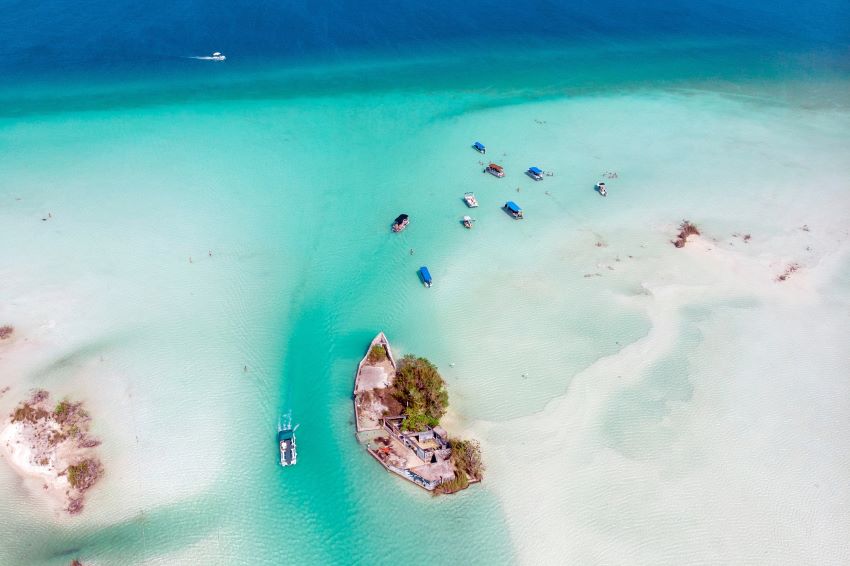
Lake Bacalar
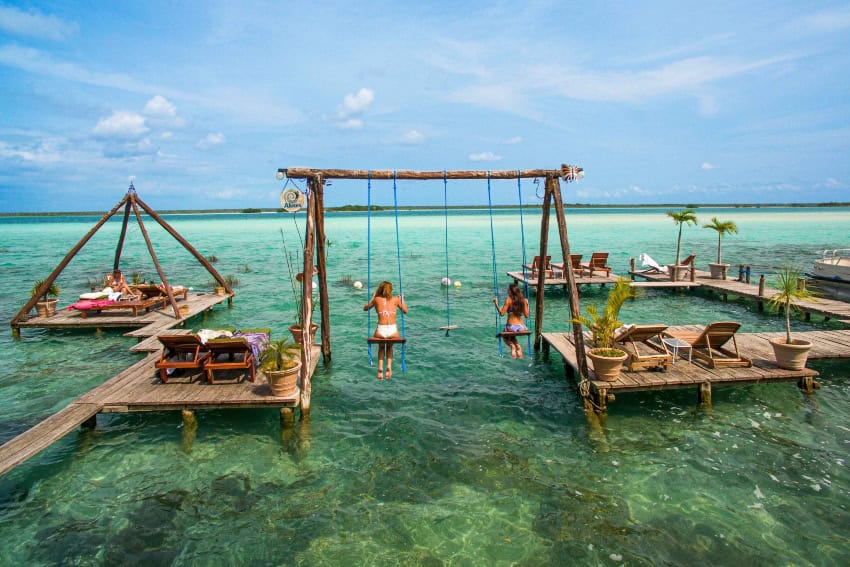
Despite the perfect mix of sun, sea and sand, Bacalar has somehow remained off the radar for many tourists. (Gideon Ikigai/Shutterstock)

A 2.5-hour drive south of Tulum, and soon with its own Maya Train stop, Bacalar is increasingly getting discovered and touted as the “Maldives of Mexico.”

Bacalar is actually a large lake that is also known as “the lagoon of 7 colors.”

The water color is stunning, the nature activities amazing, and it’s just now getting discovered. Truly a beautiful and relaxing place to visit.

Puerto Escondido-Mazunte, Oaxaca

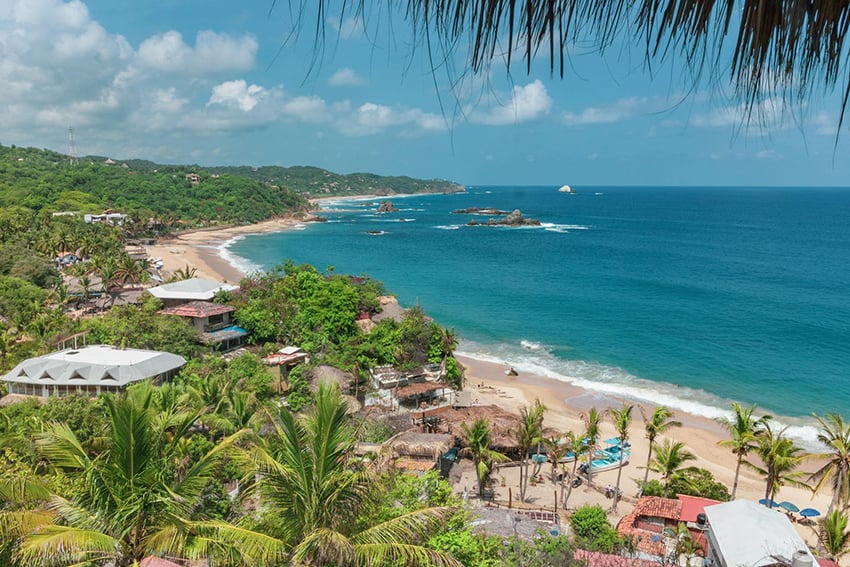
An aerial view of the Oaxacan coast in Mazunte
The town of Mazunte, located between Puerto Escondido and Huatulco on the Oaxacan coast, is one of those quiet coastal areas that made Oaxaca’s Costa Chica one of Nat Geo’s favorite spots. (Hersom Alexander / Pexels)

This stretch of about 70 kilometers of coastline is still truly wild and undiscovered compared to many beach areas in Mexico.

On these beaches, I have been within a few meters of pods of whales, seen thousands of dolphins, taken a small river boat next to giant crocodiles, sat next to hundreds of sea turtles laying eggs, kayaked at dawn with thousands of birds, and released baby sea turtles at sunset.

Every one of these wildlife events was truly special and among the top nature experiences I have had in my life. Oaxaca sunsets are stunning, the crashing waves mesmerizing and the beaches are still unspoiled. Throw in the people, the food and the culture, and you have an unbeatable experience.

If you love nature and have a sense of adventure, you can count on enjoying these recommendations. So forget about that selfie, leave the phone in your backpack and get out and explore this amazing country!

Travis Bembenek is the CEO of Mexico News Daily and has been living, working or playing in Mexico for over 27 years.

This article was originally published in May 2024.