Home Blog Page 40

El Jalapeño: Kid Rock to headline World Cup opening ceremony in Mexico City

10

All stories in El Jalapeño are satire and not real news.

MEXICO CITY — FIFA announced Tuesday that Detroit rapper Kid Rock will perform at the 2026 World Cup opening ceremony at Estadio Azteca, calling the choice “a celebration of North American unity.””When you think Mexico City, you think Kid Rock,” said FIFA president Gianni Infantino at a press conference. “His music transcends borders, languages, and good taste.”

Kid Rock, born Robert Ritchie, will reportedly perform a 45-minute set including hits “Bawitdaba,” “All Summer Long,” and a new bilingual track titled “Cowboy y Vaquero” written specifically for the occasion.

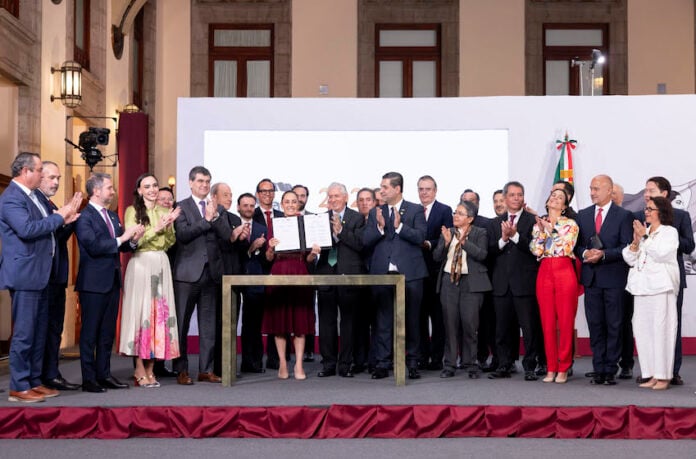
Man and Sheinbaum hold up a mock ticket
Infantino would not confirm how much Ritchie paid for the dubious honor. (Presidencia/Cuartoscuro.com)

Mexican officials expressed cautious optimism. “We requested regional artists like Bad Bunny or Los Tigres del Norte,” said one government spokesperson who requested anonymity. “They sent us a man who once released an album called ‘Cocky.'”

The performance will take place before the tournament’s opening match, with FIFA confirming Rock will emerge from a giant foam sombrero while pyrotechnics spell out “SOCCER” in English only. When asked about potential cultural sensitivity concerns, Rock told reporters he’s “been preparing by eating Taco Bell twice a week” and learning to say “let’s party” in Spanish.

Tickets for the opening ceremony have seen unprecedented availability, with 60,000 seats still available as of press time.

FIFA defended the decision, noting that their second choice, Nickelback, was unavailable.

Check out our Jalapeño archive here.

Got an idea for a Jalapeño article? Email us with your suggestions!

Made in Mexico: Octavio Paz and the search for a national soul

2
Octavio Paz
Octavio Paz is one of Mexico's greatest authors and poets. (Getty Images)

Amigos, so far I’ve told you about writers that I think are quintessential for
understanding from another perspective what Mexico really is. Of them all, Octavio Paz
is my favorite — admitting that in mixed company, and especially in front of women, this admission can be controversial.

Paz is the only Mexican writer to have won the Nobel Prize in Literature. Yet for many,
the prize is tarnished by his friendliness with the ruling party of his era, the PRI. For
some women, the Nobel means little in light of his treatment of his ex-wife, the writer
Elena Garro.

Octavio Paz young
A young Octavio Paz published his first collection of poems at the age of 19. (Gobierno de Mexico)

More than merely a writer, Paz was a thinker who knew how to use language. His work
spans poems, essays, cultural criticism and philosophy. He developed as both a writer
and a diplomat, a dual life that let him see Mexico from afar and return with a clearer
view. His prose and poetry capture the tensions of a nation shaped by conquest,
religion, revolution, solitude and a long, fraught effort to reconcile Indigenous and
European inheritances.

To read Paz today is to wrestle with the same conflicts he confronted throughout his life:
art and politics, national identity and global exchange, solitude and community.

The making of a poet and philosopher

Octavio Paz was born in Mexico City on March 31, 1914, into a family marked by both
intellectual engagement and the upheavals of the Mexican Revolution. His grandfather,
a liberal intellectual with a substantial library, introduced him early to literature. Paz
published his first poetry collection, “Luna Silvestre” (“Wild Moon”), at just 19.

He briefly studied law at the National University of Mexico before abandoning it for
writing and journalism. In 1937, he traveled to Spain during the Civil War and joined the
Second International Congress of Anti-Fascist Writers — an experience that left a lasting
mark and revealed a pattern: Paz habitually looked outward, toward other countries and
traditions, to better understand his own. Hearing firsthand the conversations and
laughter of those behind the opposing lines convinced him that people on the other side
were human too, which made him more inclined toward tolerance and a readiness to
understand their perspectives.

Made in Mexico: Octavio Paz and the search for a national soul

After World War II, he entered Mexico’s diplomatic corps, spending two decades
abroad. His postings took him to the United States, France, Japan and India — years
that profoundly shaped his thinking. In Paris, he engaged with surrealism and European
modernism; in Japan, he absorbed Zen aesthetics and the discipline of haiku; in India, he
encountered Hindu and Buddhist thought. These cross-cultural encounters broadened
his sense of what poetry and identity could be, sustaining an intellectual curiosity that
resisted simplistic ideological labels.

The view from outside: Writing Mexico’s identity

Paz’s most celebrated work remains “El Laberinto de la Soledad” (1950), translated
as “The Labyrinth of Solitude.” It is not a conventional history of Mexico. It is an inquiry
into the psychological and cultural forces that shape Mexican experience.

Octavio Paz
In a career spanning decades, writer and diplomat Octavio Paz wrote extensively about what it meant to be a Mexican. (Poblanerías)

Paz argued that Mexicans navigate a profound sense of solitude forged by the legacy of
conquest and mestizaje (cultural and racial mixing), and that this solitude expresses
itself in ritual, celebration, death, music and language. His reflections on
masks — symbolic and emotional — suggest a people negotiating between pride and
defensiveness, intimacy and distance.

His interpretations of fiestas, Day of the Dead rituals, and the figure of La Malinche are
not folkloric descriptions but attempts to chart a collective emotional landscape. “The
Labyrinth of Solitude” became essential reading in Mexico and abroad for anyone
seeking to understand the paradoxes at the heart of Mexican identity: joy entangled with
melancholy, pride layered over trauma.

Poetry as inquiry

Paz’s poetry is as probing as his essays. His early work reveals influences from
Marxism, surrealism and existentialism; his later poetry immerses itself in eroticism,
time and the inner life of language.

His long poem “Piedra de Sol” (“Sunstone”), published in 1957, is widely considered his
masterpiece. Structured around the 584-line cycle of the Aztec calendar, the poem
offers a circular meditation on love, time, memory and myth. It earned international
acclaim and was central to the body of work recognized by the Nobel committee.
Paz believed poetry did more than reflect reality — it transformed perception. His later
works often blur the boundaries between lyricism and philosophy, asking readers to
reconsider what it means to read, experience and interpret.

Politics: Between dialogue and dissent

Paz’s political positions resist easy categorization. Early in his career, he aligned himself
with left-leaning causes but never adhered strictly to ideological dogma. Experiences in
Spain, France and the United States made him cautious of rigid political identities long
before Cold War polarities hardened across Latin America.

His most famous political rupture came in 1968, when he resigned as Mexico’s
ambassador to India in protest of the government’s massacre of student demonstrators
in Tlatelolco. Few public intellectuals within the establishment took such a visible stand,
and his resignation cemented his reputation as someone willing to break ranks on
matters of principle.

Octavio Paz
Octavio Paz remains the only Mexican writer to be awarded a Nobel Prize in Literature. (Rafael Doniz/Wikimedia Commons)

Yet in later decades, he supported political and economic reforms that put him at odds
with more radical currents. He welcomed openings within Mexico’s political system,
defended liberal democratic ideals, and openly debated figures across the ideological
spectrum.

One of the most emblematic moments occurred during a televised conference in the
early 1990s, when Paz invited Mario Vargas Llosa to speak. After Paz remarked that
Mexico was the only Latin American country without a dictatorship, Vargas Llosa
famously countered that Mexico lived under “the perfect dictatorship.”

His discomfort stemmed partly from the fact that he was, indeed, close to certain
political actors. He believed that the new generation of PRI politicians in the late 1980s
and the 1990s were genuinely attempting to steer Mexico toward greater political openness. History ultimately showed that the party was undergoing a deep internal rupture and that there were figures committed to democratic reform.

For critics, this proximity to power damaged Paz’s credibility. For admirers, it
underscored his belief in dialogue rather than dogma. Whether one agrees with him or
not, his political thought was never simplistic; it reflected a consistent skepticism toward
authoritarianism and a faith in humanistic reason.

A cultural bridge and critical legacy

Paz’s influence extended well beyond his books. Through the literary
magazines Plural and later Vuelta, he helped shape intellectual debate across the
Spanish-speaking world. Vuelta, in particular, became a crucial forum for essays on art,
politics and culture, drawing contributions from Latin America, Europe and the United
States.

Paz anticipated discussions that today dominate cultural studies: the intersections of
identity and history, the weight of colonial legacies, and the friction between tradition
and modernity. His sustained engagement with Asian philosophies long before “global
literature” became a buzzword marks him as a thinker ahead of his time.

Why Octavio Paz still matters

Octavio Paz and his ex-wife Elena Garro
Octavio Paz and his first wife, the renowned writer Elena Garro. The couple divorced in 1959. (Humanidades.com)

Nearly three decades after he died in Mexico City in 1998, Octavio Paz remains
central to discussions of Mexican culture and identity. His writings are not relics but
living documents that invite readers to ask difficult and often uncomfortable questions.
Paz endures not because he offered final answers but because he insisted on
formulating the right questions:

What does it mean to be Mexican after conquest and revolution? How can poetry reveal
our deepest anxieties and desires? How do culture and history shape the self? Can
dialogue across traditions deepen our shared humanity?

These are not abstract inquiries. They continue to resonate across Mexico — on its
streets, in its newspapers, and in the diverse voices shaping its future.

Where to Start?

If you want to explore Paz’s work with greater depth, here are some accessible books in
English:

The Labyrinth of Solitude” — the essential book for understanding Paz’s view of
Mexican identity.

In Light of India” — reflections on India, selfhood and cross-cultural encounter.

Sunstone” — his most celebrated long poem, and a modern classic.

Octavio Paz cover art
From the cover of Octavio Paz’s “Piedra de Sol,” a modern classic. (New Directions Publishing)

The Bow and the Lyre” — Paz’s philosophical meditation on poetry, language and
meaning.

Octavio Paz may remain uncomfortable for some readers — too nuanced, too elusive,
too willing to confront contradictions. But it is precisely that refusal to be easily
categorized that makes him one of Mexico’s most enduring cultural voices.

Lastly, if you’re wondering what happened with his ex-wife, and why many feminists
despise Paz, stay tuned for the Elena Garro piece.

Maria Meléndez writes for Mexico News Daily in Mexico City.

MND Local: Discover Los Cabos’ one-of-a-kind brunch and dinner experiences in February

0
A bearded man in glasses holding a dark red sunflower over his right eye, posing against a blurred desert landscape in Mexico. He is Chef Paul Barbosa, who will be presenting a one-time pop-up dinner in Los Cabos, Baja California Sur.
Chef Paul Barbosa will be welcoming guests to an intimate pop-up dinner at Etéreo, a psychedelic retreat near Los Cabos. (Etéreo)

Want to know what’s going on in Los Cabos this month? Check out our new events page here! 

Almost every meal in Los Cabos is special — not only in the sense that you’re in one of the world’s most beautiful locations but also in that the municipality’s best restaurants almost invariably offer striking coastal settings with ocean views, delicious dishes from talented chefs featuring locally sourced ingredients and superb service. 

But, of course, some meals are a little more special than others, either because they’re for one night only, feature special guest chefs or offer access to spaces not usually open to the public. Remarkably, during the next few weeks, one-of-a-kind lunches and dinners showcasing all of these characteristics will take place in or near Los Cabos.

A mind and palate-expanding dinner at Etéreo

This image is perfect for a feature on Mexican gastronomy or local farmers' markets. The earthy tones and rustic presentation scream "farm-to-table" lifestyle. Here are the SEO-optimized alt-text options for Mexico News Daily: SEO-Optimized Alt-Text Options Option 1: Culinary/Regional focus (Best for food & drink articles) Overhead view of fresh Mexican ingredients including green serrano peppers on a stone slab, passion fruit, and heirloom beans on rustic clay plates.
The menu at Etéreo’s pop-up dinner will remain a mystery until Barbosa begins prepping for it. (Etéreo)

The clarifier “near” is added for psychedelic retreat and sanctuary Etéreo Baja, which is set on 24 acres in Elías Calles, just outside Los Cabos in the La Paz municipality. However, it’s certainly accessible by those in Los Cabos, since it’s only about 40 minutes by car from Cabo San Lucas.

Founded by Paije Alexandra West and Fletcher Welsh Burdick, the retreat specializes in iboga, huachuma, and 5-MeO-DMT ceremonies and rituals, which not only are mind-expanding but also have therapeutic benefits for depression, substance abuse and other issues. 

Iboga, for instance, is a Central African shrub long used in Bwiti spiritual practices in Gabon. More recently, it has been used in the West in clinical settings to treat addiction and post-traumatic stress disorder. The signature Iboga retreat at Etéreo is eight days long, costs US $7,000 and combines plant medicine with boutique hospitality through a partnership with Proyecto Palmita in El Pescadero. 

Pop-up dinners at Etereo are rare, since access to the property is typically exclusive to retreats, for which Executive Chef Paul Barbosa crafts culinary experiences built entirely around guests’ emotional and physical journeys. But on Saturday, March 7, the chef will prepare a small pop-up dinner for an intimate gathering of attendees. 

No psychedelic medicines are on the menu, but the evening is expected to be a one-of-a-kind culinary experience (call Etéreo at +52 (612) 111-0382 for more details).

Formerly a personal chef for celebrity couple Chrissy Teigen and John Legend, Barbosa has family roots in Mulegé in Baja California Sur and took up his present role after his own transformative psychedelic experience. He’s looking forward to the upcoming pop-up dinner, but don’t ask him what he’s going to be serving yet.

“Normally I don’t make menus like this,” Barbosa explains. “I just bought or found a bunch of stuff. I have a general idea, but I just take it day by day, wake up and decide, you know what, I’m gonna do this.

“For me, it’s more fun that way. I don’t know how to plan a menu and then cook that menu. It feels boring when I have to.”

One night only: Michelin-starred Koli takes over Humo restaurant at Zadún Los Cabos

Zadún, A Ritz-Carlton Reserve
Humo, the signature restaurant at Zadún, A Ritz-Carlton Reserve, will see its kitchen taken over by the Michelin-starred staff from KOLI for “one night only.” (Zadún, A Ritz-Carlton Reserve)

There exists but one Michelin-starred restaurant locally: Cocina de Autor at the luxury all-inclusive resort, Grand Velas Los Cabos. But for one-night-only on Feb. 28, at Zadún, A Ritz-Carlton Reserve in San José del Cabo, there will be two. That’s because the staff from KOLI, a Michelin-starred restaurant in Monterrey, is taking over Humo, Zadún’s signature restaurant. 

KOLI, intriguingly, is led by a trio of brothers: Chef Rodrigo Rivera Rio; Patricio Rivera Rio, who is the head sommelier and in charge of the cocktail program; and Daniel Rivera Rio, the restaurant’s pastry chef. The family-oriented team will bring their skills to Los Cabos for an eight-course tasting menu, and, yes, reservations are open to the public for the dinner, priced at 3,500 pesos per person (about US $200).

Regional flavors new to Los Cabos will undoubtedly be spotlighted since, as Rodrigo told me after KOLI earned its Michelin star in 2024, “We are a tasting menu project focused on the traditions and stories of our state,” meaning Nuevo León. So local foodies take note: Dinner starts at 6 p.m.

Boutique Drift San José del Cabo begins Sunday all-you-can-eat brunch buffet 

Close-up of large clay cooking pots with lids, labeled "Red Pozole Sinaloa" and "Pork Tamal," sitting on individual warming stands on a rustic wooden buffet table.
Culinary specialties from around Mexico are served every Sunday at Drift. (Drift San José del Cabo)

Drift San José del Cabo, the 29-room boutique hotel that opened in the heart of the city’s downtown Gallery District in 2021, is a hospitality gem. But its status as one of San José del Cabo’s best-kept secrets is in jeopardy due to its new weekly Sunday Mexican brunch buffet — sure to be a popular feature.

Starting Feb. 1, between 8 a.m. and 4 p.m., for 400 pesos apiece, guests can embark on a culinary journey through Mexico’s tastiest pleasures, from slow-simmered red pork pozole and classic tamales to Oaxacan tlayudas, enmoladas and al pastor sopes. Yes, there are cocktails too, although these cost extra.

“Our intention as a team is always focused on creating memorable experiences,” notes Cristina Soto, Drift’s general manager. “This brunch is an invitation for both locals and visitors to discover a bit more about Mexico’s different regions through their aromas, flavors and the music that represents us. Our goal is for guests to take home a special memory that stays with them after they leave.”

The operative word, naturally, is “special.” As it is also for Jueves de Drift, the hotel’s lively weekly backyard parties that coincide with San José del Cabo’s seasonal Art Walk on Thursday evenings and feature taco trucks, mezcal and DJs — and the hotel’s new FORM program partnership, with in-room movement kits and guided workout regimens. 

Chris Sands is a writer and editor for Mexico News Daily, and the former Cabo San Lucas local expert for the USA Today travel website 10 Best and writer of Fodor’s Los Cabos travel guidebook. He’s a contributor to numerous websites and publications, including The San Diego Union-Tribune, Marriott Bonvoy Traveler, Forbes Travel Guide, Porthole Cruise and Travel, and Cabo Living.

Mexico declines Trump’s invitation to join Board of Peace: Tuesday’s mañanera recapped

9
Sheinbaum Feb. 17, 2026
President Sheinbaum explained on Tuesday that Mexico's refusal stemmed from Palestine's absence at the inaugural session of the board — despite its stated mandate to oversee the reconstruction of Gaza — and noted that Mexico recognizes Palestine as a sovereign state. (Galo Cañas/Cuartoscuro)

Mexico’s decision to turn down U.S. President Donald Trump’s invitation to join his Board of Peace and the strengthening of the economic relationship with Canada were among the issues President Claudia Sheinbaum spoke about at her Tuesday morning press conference.

Here is a recap of the president’s Feb. 17 mañanera.

Mexico declines Trump’s invitation to join Board of Peace 

Sheinbaum told reporters that her government declined the offer from Trump to join his Board of Peace (BoP), an organization he formally established earlier this year.

The White House said in January that the BoP would “play an essential role in fulfilling all 20 points” of Trump’s Gaza peace plan, “providing strategic oversight, mobilizing international resources, and ensuring accountability as Gaza transitions from conflict to peace and development.”

Sheinbaum said that her government had already communicated its decision not to join the board to the United States.

She explained that the decision to turn down the invitation Trump extended in late January was because Mexico recognizes Palestine as a state, but Palestine won’t be represented at a BoP meeting scheduled to take place in Washington, D.C., this Thursday. Israel, in contrast, will be represented at the inaugural BoP meeting as it is a member of the board.

“The participation of both states, Israel and Palestine, is important. But that is not how it is being set out in the meeting,” Sheinbaum said.

“It’s being proposed that we go [to the meeting] as observers. So, our ambassador to the United Nations will probably go as an observer,” she added.

Among the countries that accepted Trump’s offer to join the BoP are Argentina, Hungary, Indonesia, Pakistan, Saudi Arabia, Turkey and the United Arab Emirates.

Trump said on Truth Social on Sunday that the board has “unlimited potential,” and noted that he will be joined by its members “at the Donald J. Trump Institute of Peace in Washington, D.C” this Thursday.

At the meeting, “we will announce that Member States have pledged more than $5 BILLION DOLLARS toward the Gaza Humanitarian and Reconstruction efforts, and have committed thousands of personnel to the International Stabilization Force and Local Police to maintain Security and Peace for Gazans,” he wrote.

“Very importantly, Hamas must uphold its commitment to Full and Immediate Demilitarization. The Board of Peace will prove to be the most consequential International Body in History, and it is my honor to serve as its Chairman,” Trump said.

Sheinbaum: ‘We’re strengthening our relationship with Canada’

A reporter noted that there has been speculation that the United States could withdraw from the USMCA — which is up for trilateral review this year — and highlighted that a view has emerged that Mexico is seeking a “plan B with Canada.”

“More than a plan B, we’re strengthening our relationship with Canada,” Sheinbaum said.

Mexico, Canada announce joint economic action plan for a post-USMCA future

Indeed, Mexico and Canada are aiming to deepen their economic integration via a joint action plan, an initiative Economy Minister Marcelo Ebrard announced on Monday after meeting with Dominic LeBlanc, Canada’s minister for Canada-U.S. trade, intergovernmental affairs and One Canadian Economy.

Sheinbaum noted that a large contingent of Canadian businesspeople is currently in Mexico exploring investment opportunities.

The “objective” in the relationship with Canada is “to strengthen not just trade but investment as well,” she said.

“There are many Mexican agri-food products that we can export to Canada [and] we can also import products from Canada. We also want more investment from Canadian companies in our country, … and we want Mexican companies to have investments in Canada,” Sheinbaum said.

“So the Mexico-Canada relationship will be strengthened, but that doesn’t mean the agreement won’t exist,” she said, referring to the USMCA.

“As I’ve said several times, the USMCA will remain. There may be some modifications, but it will remain in place because it is beneficial for the three countries,” Sheinbaum said.

Sheinbaum: There is ‘a lot of interest in Mexico’ as an investment destination 

Asked what concerns she has heard from foreign businesspeople about investing in Mexico, Sheinbaum initially asserted that “nobody” has spoken about “any problem.”

However, she subsequently conceded that concerns have been raised about the length of time it takes to complete the bureaucratic procedures that are required to get a project of the ground.

Sheinbaum told reporters that the government is working hard to reduce the time it takes for investors to complete those procedures. Indeed, reducing the average time between an investment announcement and the execution of a project from 2.6 years to 1 year is one of the goals of the government’s Plan México economic initiative.

Sheinbaum didn’t mention insecurity or infrastructure bottlenecks as concerns for investors, although they are commonly cited as problems that prevent Mexico from reaching its full potential as an investment destination.

Instead, she stressed that there is “a lot of interest in Mexico” as an investment destination.

Mexico received just over US $40.9 billion in foreign direct investment (FDI) in the first nine months of last year, a record high. The Economy Ministry has not yet reported the FDI total for the entirety of 2025.

By Mexico News Daily chief staff writer Peter Davies (peter.davies@mexiconewsdaily.com)

Scientists identify new snake species endemic to Mexico

0
new snake species
Yakacoatl tlalli lives and eats underground and is found only in the Balsas River basin in the south-central part of Mexico. (UNAM)

Often cited as the country with the most recorded snake species in the world, Mexico has now added a new, uniquely underground dweller to that list.

Researchers have identified Yakacoatl tlalli as a nonvenomous, subterranean snake from the Balsas River basin in the south-central part of the country that represents not only a new species but also a whole new genus endemic to Mexico.

The discovery further underscores Mexico’s standing as one of only 17 nations in the world categorized as “megadiverse” — countries that collectively hold a very large share of Earth’s total biodiversity and endemic species.

Within the last 10 months, two new crocodile species were discovered off the Yucatán Peninsula, a new species of firefly was found in Mexico City and a new gecko species was discovered in a biocultural region spanning the states of Puebla and Oaxaca. Overall, Mexico contains between 6.5% and 12% of all of the world’s known species.

In terms of snakes, Mexico is believed to contain somewhere between 430 and 440 known species — or roughly 11% of the world’s known snake species, according to one oft-cited database. Brazil is next on the list with 420.

Only three specimens of the new Yakacoatl tlalli are known.

Two were found dead — one had been preyed on by a family’s chicken, the other was found dehydrated nearby — and one was observed alive, photographed and released.


View this post on Instagram


A post shared by Seasia Stats (@seasia.stats)

The two dead snakes were both found in a lowland stretch of Puebla state — within the Balsas River basin that runs from Puebla in the east to Michoacán on the Pacific coast. The live snake was found in the same basin, though its exact locality was not reported.

With dry conditions, semi-arid vegetation and surrounding mountains, the basin has characteristics, researchers said, that promote endemism, in which a species is naturally found in only one specific geographic area and nowhere else on Earth.

The research was conducted by the National Autonomous University of Mexico (UNAM), the Meritorious Autonomous University of Puebla (BUAP), the University of Texas at Arlington and Argentina’s National Scientific and Technical Research Council. 

Also playing a role was Mexico’s Ministry of the Environment and Natural Resources (Semarnat).

The snake belongs to the Sonorini tribe, a group of small, nonvenomous, mostly burrowing snakes concentrated in the dry lowlands of northern Mexico and the southern U.S.

Yakacoatl tlalli shows adaptations to subterranean life, including a head with reduced scales, a rearranged and fused skull and a shovel-shaped scale on the snout that helps it dig through compact soils.

In contrast to many fossorial snakes — those that dig and live primarily underground — it retains relatively large eyes.

Taxonomic work on the male reproductive organs revealed a shape and arrangement unlike those of any other known snake, confirming Yakacoatl tlalli as a new genus restricted to Mexico.

Limited dietary evidence — a scorpion tail was found in one specimen — points to subterranean arthropods and possibly soil invertebrates as prey, but researchers say there is still a lot to learn.

With reports from La Jornada, Mi Morelia and UNAM Global

US $115M Sonora project joins growing catalog of made-in-Mexico EVs

2
Beyond Movilidad Compartida
BMC plans to present a functional prototype at the 39th Electric Vehicle Symposium and Exhibition in Long Beach, California, in June. (Beyond Movilidad Compartida)

Mexico’s electric future is taking shape in the northern state of Sonora where local businessmen have invested US $115 million in a “Made in Mexico” electric car that is scheduled to be unveiled in four months.

The private-sector initiative Beyond Movilidad Compartida (Beyond Shared Mobility), or BMC, this week announced plans to present a functional prototype at the 39th Electric Vehicle Symposium and Exhibition in Long Beach, California, in June.

BMC intends to create synergies with other companies and institutions so as to “accelerate the learning curve” in Mexico, while taking advantage of the value chain around the Ford plant in Sonora.

Its producers say the vehicle is intended to be a customized solution that can be adaptable to the specific needs of the customer. As such, the goal is that it can be fitted for last-mile deliveries, passenger transport or a hybrid of both.

The car is being developed by Beyond Borders Automotive Mexico and, in addition to protecting the environment, it aims to boost the state economy by generating jobs and supporting dozens of local suppliers.

The project also aligns with the federal government’s Plan México economic development initiative, which, among other things, seeks to incentivize national manufacturing production.

The first model, a ShowCar, was presented in late January to demonstrate the basic features that the functional and commercial prototype will have, such as inclusive design and the latest safety technology.

The initiative is part of the Sonora Sustainable Energy Plan, which aims to promote a transition to electromobility and technological innovation. It also emphasizes the development of a green industry so that Sonora can become “a national and international benchmark in energy matters.”

Other Mexican electric cars in production include “Olinia,” an electric mini-vehicle developed to improve urban mobility, which the government hopes to unveil during the opening ceremony of the 2026 World Cup. 

It will be available in three models: one for personal mobility, one for neighborhood use, and one for last-mile delivery. Its price will range between 90,000 and 150,000 pesos (US $5,252 to $8,712).

The “Totally Tlaxcalan” five-seater car has been in development since 2023 and 80% of its parts are being produced in the state of Tlaxcala. It will have a range of up to 50 km per charge and will be priced around 100,000 pesos.

With reports from Expansión, El Universal and El Financiero

Transition Industries set to break ground on US $3.3B methanol plant in Sinaloa

0
The facility, to be built near Topolobampo, will produce approximately 1.8 million tonnes of blue methanol and 350,000 tonnes of green methanol per year.
The facility, to be built near Topolobampo, will produce approximately 1.8 million tonnes of blue methanol and 350,000 tonnes of green methanol per year. (Pacifico Mexinol)

Houston-based Transition Industries is set to begin construction of a US $3.3 billion blue and green methanol production facility on the Sinaloa coast after signing a natural gas supply contract with a subsidiary of Mexico’s state-owned Federal Electricity Commission (CFE).

The company announced on Monday that it had signed “a long-term firm natural gas supply contract” with CFEnergía for its planned Pacifico Mexinol project near Topolobampo, a port town southwest of Los Mochis.

“The contract signing with CFEnergía represents the final outstanding commercial milestone, enabling the start of the construction phase, and confirming the timeline for Mexinol’s operational readiness in late 2029 to early 2030,” Transition Industries said in a statement.

“… With the gas supply contract secured, Mexinol enters the execution phase, solidifying its position as a key project in the transition to net-zero emissions and establishing itself as a strategic industrial platform for innovation in Mexico,” the company said.

Transition Industries said that CFEnergía has agreed to supply “approximately 160 million cubic feet per day of natural gas over the long term, ensuring a critical input for Mexinol’s production of ultra-low carbon methanol.”

“The supply will be provided by CFEnergía at market prices and will optimize the use of existing infrastructure,” the company said.

“CFEnergía will source the natural gas from the USA. The agreement is subject to customary conditions,” it noted.

Sustainable fuel megaplant to be built in Sinaloa

When the methanol plant begins operations, it is “expected to be the largest ultra-low carbon chemicals facility in the world,” Transition Industries said.

The firm said the facility will produce approximately 1.8 million tonnes of blue methanol and 350,000 tonnes of green methanol per year.

“With an investment exceeding USD 3.3 billion, its prime location on the west coast of Mexico meets emerging demand for clean methanol in the Pacific and beyond,” Transition Industries said.

The company first announced its intention to build the Pacifico Mexinol project in 2023. The International Finance Corporation, a member of the World Bank Group, and Australian investment bank Macquarie are partnering with Transition Industries on the project.

The project is supported by the Sinaloa government, but has been opposed by a local environmental group.

Transition Industries said that “Mexinol is committed to the highest environmental and sustainability standards, leveraging technology and innovation to treat and use municipal wastewater instead of seawater and other natural sources of water.”

“Mexinol will have no wastewater discharge into the Bay of Ohuira. Mexinol’s purpose-driven water strategy is designed to completely avoid impacting the Bay of Ohuira,” the company says on the Pacifico Mexinol website.

In its press release, the firm said that the project will support “the long term socioeconomic development in the local area” via the creation of “more than 6,000 jobs in Sinaloa during construction and at least 450 permanent jobs (direct and indirect) in operations.”

The company’s CEO, Rommel Gallo, said the project “further creates bilateral economic development through the creation of jobs in both Mexico and the U.S., and the export and consumption of more than US $4 billion worth of U.S. natural gas.”

A Japanese company will be the facility’s top customer 

Transition Industries said that the Pacifico Mexinol project “positions Mexico as a reliable supplier of ultra-low carbon methanol to strategic markets in Asia, including Japan, while also boosting the development of the domestic market and the Mexican chemical industry.”

“Mitsubishi Gas Chemical (MGC), a world-class company based in Tokyo, has committed to purchasing approximately 50% of the project’s production,” the company said.

Transition Industries said that the project’s location near Topolobampo “strengthens its export profile, facilitates access to global markets, and improves its logistical competitiveness, while also boosting domestic market development and the integration of the national chemical industry.”

Methanol can be used as fuel, including by container ships, and has a range of other applications.

Mexico News Daily  

Mexico City and México state to hold earthquake drill Wednesday

0
People evacuating during an earthquake alarm in Mexico City
The public is expected to participate in the Mexico City and México state earthquake drill scheduled for 11 a.m. on Wednesday, Feb. 18. (Mario Jasso/Cuartoscuro)

Mexico City and México state will hold a regional earthquake drill on Wednesday, Feb. 18, at 11 a.m. to promote prevention in a region prone to seismic activity. 

According to National Civil Protection Coordinator Laura Velázquez, the drill will activate 13,900 loudspeakers in addition to cell phone alerts, signaling residents to evacuate.

Clara Brugada
Mexico City Mayor Clara Brugada (left) spoke in advance of the most recent previous quake simulation that took place on Sept. 19, 2025, the 40th anniversary of the tragic 1985 earthquake. (Victoria Valtierra/Cuartoscuro.com)

While tomorrow’s drill will take place only in Mexico City and México state, federal authorities have announced two others for May 6 and Sept. 19, which will be national. 

“September 19 will also be very important because for the first time we will be conducting a national drill on a Saturday,” Velázquez said. “This puts us in an unusual context for all our work-hour activities.”

Historically, strong earthquakes have hit the capital on weekdays. 

“This change will allow for the evaluation of the mechanisms of action and family organization in a non-work and weekend context,” an official statement explained

Sept. 19 marks the anniversary of strong earthquakes that struck Mexico City in three different years: 1985, 2017 and 2022. They happened on a Thursday, a Tuesday and a Monday.

Velázquez noted that the Seismic Alert System has operated normally and successfully during the seismic movements recorded so far this year, specifically those that occurred on Jan. 2 and 16 with epicenter in San Marcos, Guerrero, and the one on Feb. 8 in Puerto Escondido, Oaxaca.

Authorities have called on residents to remain calm upon hearing the alert, locate the safest areas, follow evacuation routes from buildings and heed the instructions of the authorities, remembering that preparation and active participation are essential to safeguard life.

Mexico News Daily

Navy warns of record sargassum season ahead of Easter holiday

0
People bathing in the ocean with sargassum nearby
Last year, some 73,224 tonnes of sargassum were collected from Mexico's beaches. (Elizabeth Ruiz/Cuartoscuro)

The Mexican Caribbean could be in for its worst sargassum season yet, with the Navy warning that arrivals along the Quintana Roo coast may run more than 75% above historical averages during March and April.

The source of the concern is a mass of roughly 280,000 tonnes of the brown macroalgae currently drifting westward through the Central Western Atlantic. If currents and wind conditions hold, a significant portion of that could end up washing ashore on beaches from Cancún to Tulum.

According to a statement, Semar has assembled what it calls a record-scale containment operation: 16 surface vessels, an oceangoing ship, 11 coastal boats, four amphibious collection crafts and 9,500 meters of offshore barriers already in the water, with plans to add another 6,000 meters in partnership with the Quintana Roo government.

Easter week is one of the most critical periods for tourism to the Mexican Caribbean, and this summer will bring unprecedented scrutiny to the region’s beaches as the FIFA World Cup draws international visitors and media.

Sargassum typically arrives on Mexico’s easternmost beaches between April and November. According to a crowd-sourced sargassum map, beachgoers located between Puerto Aventuras and Tulum have already reported the presence of the seaweed on the coastline.

Playa del Carmen installs 5-km sargassum barrier

Playa del Carmen is installing the longest anti-sargassum barrier in its history ahead of the spring arrival season — a five-kilometer stretch running offshore from Playa Fundadores, in the city center, north to Playa Esmeralda.

That doubles the reach of the previous 2.5-kilometer barrier that had protected the same section of coastline. The project is a joint effort between the municipality and Semar.

Irving Lili Madrigal, director of the Federal Maritime Land Zone, said the expanded barrier will cover essentially all of the city’s public beach access points — around 21 in total.

Hotels along the coast maintain their own separate barriers, and officials say they’re working to better coordinate those private systems with the municipal deployment.

With reports from Reportur and Sipse

This year, Mexico City has had only 3 days of acceptable air quality

0
smoggy Mexico City February 2026
The Mexico City area's highly polluted air over the weekend and into the early part of this week is a seasonal phenomenon associated with late winter's warmer days, cool nights and dry conditions. (Rogelio Morales/Cuartoscuro)

Nearly 50 days into the new year Mexico City residents have experienced only three “good” air quality days so far. 

The Mexico City Environment Ministry reported that the situation is even worse for those living in the greater Valley of Mexico and México state where not a single good air quality day has been recorded.

Traffic in CDMX
“Doble Hoy No Circula” days were imposed beginning last Friday in the Mexico City metropolitan area, meaning three different groups of license plate numbers plus one group of taxi plates are restricted from transiting between 5 a.m. and 10 p.m. (Victoria Valtierra/Cuartoscuro)

So far in 2026, capital authorities have declared four Phase 1 environmental alerts, primarily due to high ozone levels. Last year, the fourth Phase 1 alert was not declared until early April.

Tuesday marks the fifth day that the city’s environmental contingency has been activated in less than a week, bringing the total to more than 100 hours in which transit restrictions have been applied to reduce ozone levels in the environment.

The Environmental Commission of the Megalopolis (CAMe) has called on the public to heed health recommendations to avoid exposure to pollution peaks between 1 p.m. and 7 p.m., especially for minors, the elderly, pregnant women and people with respiratory and cardiovascular diseases.

The most recent stretch of bad air saw the CAMe declare an alert last Thursday that was maintained for more than 40 hours before it was suspended. Then, just 15 hours later, the Phase 1 alert was reissued and remains in place for a third straight day.

The current Phase 1 alert is a reaction to solar radiation and high temperatures, with conditions further impacted by a huge fire consuming the grasslands in Ciudad Nezahualcóyotl to the east of Mexico City.

Today, ground-level ozone remains the air pollutant of greatest concern for health officials.

A high concentration of ozone typically occurs through late winter and early spring. The phenomenon is directly linked to the climate in the Valley of Mexico, which is dry this time of year, creating the perfect conditions for ozone to form.

Ground-level ozone is formed through the interaction of nitrogen oxides with volatile organic compounds, and ultraviolet radiation from the sun accelerates the reaction. This month’s unseasonably high temperatures — and the forecast is for highs between 83 (28.3 °C) and 86 degrees Fahrenheit (29.4 °C) the rest of this week — have resulted in high ozone levels. 

Live in Mexico City? Here’s what you need to know about air quality

President Sheinbaum also pointed out on Tuesday morning that seasonal factors are mainly responsible for the current contamination levels, including thermal inversion.

“It happens at this time of year because it is still cold (but only) at night,” said Sheinbaum, who is a climate scientist with a PhD. “Normally, the warmest air is on the ground and as you go higher, it is colder, but what happens in the metropolitan area is that at night the lower part cools down while above it is hot as the sun begins to rise.”

Therefore, the pollutants concentrated in the lower layer stagnate, right at the level where people breathe.

The so-called “ozone season” typically ends with the first rains in June, when weather conditions change and the dispersion of pollutants improves.

CAMe has forecast between five and 11 ozone contingencies for the 2026 dry season in the Metropolitan Area of ​​the Valley of Mexico. 

With reports from El Financiero, El Universal, La Jornada and Sopitas