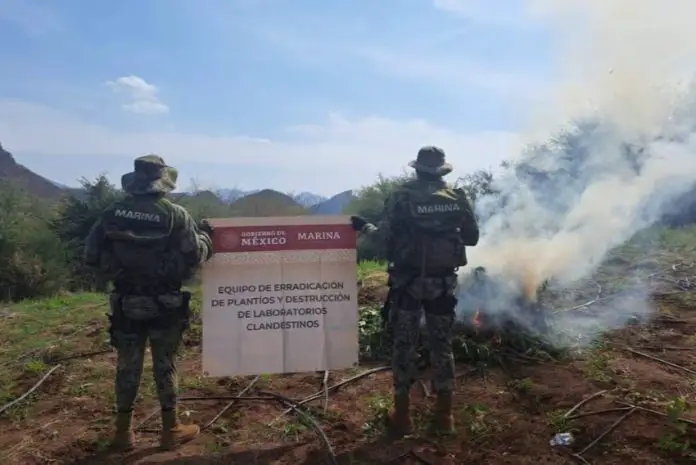
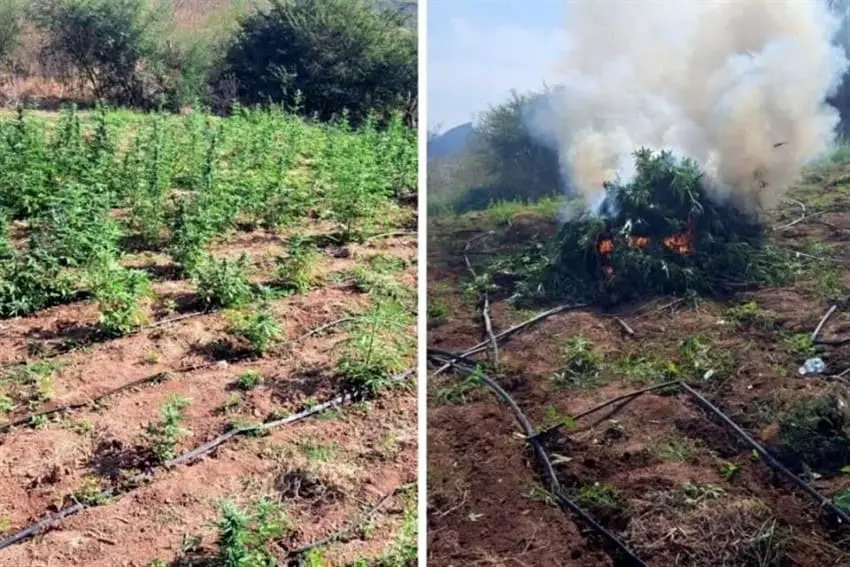
The illegal plantings allegedly belonged to “Los Chapitos,” a faction of the notorious Sinaloa Cartel linked to the sons of Joaquín “El Chapo” Guzmán. (Foto especial)
The Mexican Navy located and destroyed 6 metric tons of marijuana on Saturday in collaboration with the Federal Attorney General’s Office (FGR) in the northwestern state of Sinaloa.
While carrying out helicopter patrols over rural areas of north-central Sinaloa, the Naval Ministry (Semar) personnel spotted a sizable field of suspicious plants and alerted troops on the ground.
The Marines moved in and found 22,113 plants in a large tract of land outside the community of Zalate de los Ibarra, near the state’s capital, Culiacán. Semar reported that the plants were cut down and incinerated on Sunday, in cooperation with FGR officials.
The newspaper El Universal reported that the herbage was found in an area controlled by Los Chapitos, a faction of the notorious Sinaloa Cartel linked to the sons of Joaquín “El Chapo” Guzmán, currently serving a life sentence in a U.S. federal prison.
In a related development, Security Minister Omar García Harfuch on Friday announced the capture of Omar “N,” a leader of the Los Chapitos faction. Though the suspect’s name was censored for privacy, it was clear that the man in question was alleged Chapitos leader Omar Félix Loaiza, also known as “El Pelón.”
García Harfuch said the suspect was arrested in Culiacán during a joint operation by the Defense Ministry, Semar, the National Guard and the FGR.
The Navy and FGR burned 6 metric tons of marijuana that had been growing in the fields. (via Reforma)
Félix Loaiza is allegedly the cartel’s top man in the border town of Sonoyta, Sonora, and, according to the newspaper El País, was said to be leading Los Chapitos in their war against Los Mayos — another Sinaloa Cartel faction — that began in early September.
“El Pelón” is wanted on charges of homicide, arms trafficking and human trafficking by the U.S. government, which also accuses him of smuggling fentanyl into the southern state of Arizona.
He is also accused of arming drones with explosives, according to the newspaper Milenio, a tactic that has heightened the violence in the Sinaloa Cartel’s internal conflict.
Early Monday morning, the rival gangs engaged in a shootout in Imala — 25 kilometers east of Culiacán — that left parts of the Culiacán municipality without electricity.
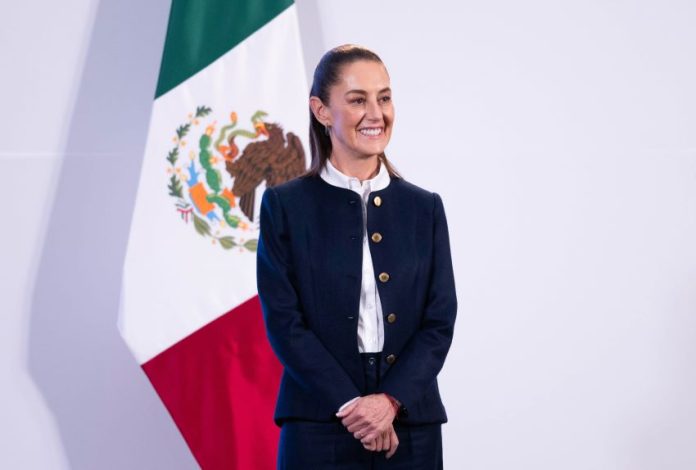
President Claudia Sheinbaum, an internationally recognized climate expert, has proposed an ambitious plan for Mexico's renewable energy transition. (Presidencia/Cuartoscuro)
Time Magazine has named President Claudia Sheinbaum as one of the 100 most influential climate leaders in business for 2024, a list that includes decision-makers, executives, researchers and innovators who are deemed to play an important role in driving successful and equitable climate action.
“Few world leaders can claim to know as much about climate science as Mexico’s new President Claudia Sheinbaum,” Time Magazine wrote.
The recently elected president holds a doctorate in energy engineering from the National Autonomous University of Mexico (UNAM) and has contributed to two major reports for the U.N.’s Intergovernmental Panel on Climate Change.
Sheinbaum has vowed to expand renewable energy to 45% of total power generation by 2030, compared to around 24% in 2022. “We all need strong, public state energy companies that guarantee clean energy at low prices to current and future generations,” she said during her inaugural presidential speech on Oct. 1.
The president has extensive experience implementing green energy policies in her previous role as mayor of Mexico City, where she launched the city’s first electric bus fleet and developed one of the world’s biggest urban solar projects at the Centro de Abasto wholesale market.
However, many are questioning whether she will pursue the energy strategy of her predecessor, Andrés Manuel López Obrador. As president, AMLO focused on nationalizing Mexico’s energy industry, invested heavily in the indebted national oil company Pemex and curbed private spending on renewable energy during his six years in office.
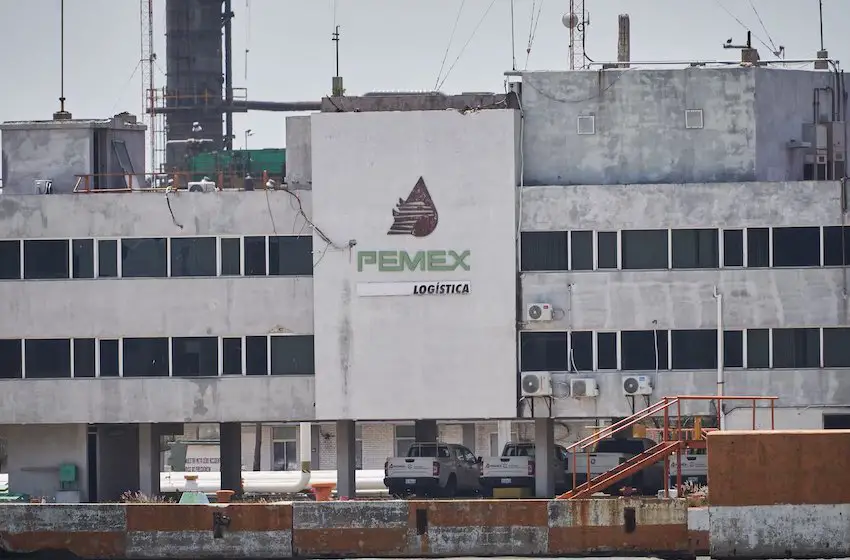
Sheinbaum faces the complicated task of supporting the state oil company Pemex while transitioning the country toward more renewable energy sources. (Refinería Olmeca-Dos Bocas/X)
Sheinbaum has pledged to continue supporting Pemex, while also delivering an “ambitious” state-led plan for the energy transition, Time wrote.
In April, Sheinbaum announced plans to invest $13.6 billion in new energy generation projects including gas, wind, solar and hydroelectric power plants, in addition to thousands of kilometers of new transmission lines.
Yet, in the 2025 federal budget, announced on Nov. 15, funding for the Environment Ministry was cut by 39.4% to 44.37 billion pesos. This aligns with Sheinbaum’s implementation of “republican austerity” measures aimed at reducing the budget deficit.
Sheinbaum may also influence international energy initiatives in her role as president. On Monday at the G20 summit in Rio de Janeiro, Brazil, Sheinbaum proposed the creation of a global fund for “the biggest reforestation program in history.” Under her proposal, countries would redirect 1% of their military spending to the fund, raising around $24 billion to reforest 15 million hectares of land every year.
“The proposal is to stop sowing wars, let’s sow peace and let’s sow life,” Sheinbaum said.
Mexican parkour athlete Ella Bucio won gold in the speed category and silver in the freestyle category at the second annual FIG Parkour World Championships in Japan on Saturday. (Gymnastics/X)
Ella Bucio cemented her status as one of the best parkour athletes in the world with a gold and a silver at the FIG Parkour World Championships in Japan over the weekend.
The 27-year-old native of Mexico City won the gold in the speed competition, in which athletes try to complete an obstacle course in the shortest time possible. The course requires climbing, running, jumping, vaulting, swinging, walking on all fours and other types of movement.
Mexico City native Ella Bucio, 27, has been involved in parkour since she was 10 years old. (FIG Parkour World Championships)
On a course that featured two imposing, near-vertical walls near the halfway mark, Bucio won on Saturday with a time of 38.28 seconds, with Audrey Johnson of the United States taking second place (38.62) and Swede Miranda Tibbling in third (39.55). Bucio served notice from the start, posting the fastest qualifying mark among 28 competitors.
Bucio also returned home with a silver medal in freestyle, in which the goal is to show originality, skill and creativity.
In the first-ever Parkour World Championships two years ago in Tokyo, Bucio won the freestyle gold, a feat she duplicated at the 2023 World Cup in Montpellier, France.
Run under the auspices of the International Gymnastics Federation (FIG), the three-day competition in Kitakyushu, Japan, was plagued by rain. Three out of eight finals ended up being canceled.
“It was quite exhausting both physically and mentally because of the schedule changes due to the weather and not knowing whether we would compete or not,” Bucio said in a press release published by CONADE, Mexico’s National Commission for Physical Culture and Sport. “But in the end, if you don’t try, you can’t succeed. I’m happy to have won despite all those doubts.”
Bucio could have fared better in freestyle had rain not canceled the finals. With the results based on the qualifying rounds, Shang Chunsong of China was first, Bucio second and Johnson third.
According to CONADE, Bucio has been involved in parkour since she was 10 years old — when she was usually the only female in competitions. She also has trained as a gymnast and attended a circus arts school in Brussels, Belgium.
Often referred to as “art of movement,” parkour uses no equipment and forces athletes to adapt to the features of their surroundings, be they urban (such as cityscapes with walls, rails and rooftops) or natural (like forests or rocky terrains). Competitors often vault over obstacles, climb walls and leap between surfaces.
Developed in France about 35 years ago, the sport has grown in popularity and is now featured in films, video games and commercials. Many people do it as a personal practice rather than for competition, and it’s not an Olympic sport.
Bucio and other top competitors often work as stuntpeople in movies and TV shows. Bucio also has taken part in two Mexican reality series, “Reto 4 Elementos” (Master of the 4 Elements) and “Guerreros” (Warriors).
As for parkour, she said she is “pleased to see that there are more and more women in this sport, and if I helped make that happen, it makes me very happy.”
Mexico had a number of competitors in Kitakyushu, with two other medal winners: Emiliano Torres of Guadalajara (silver in men’s junior freestyle) and Felipe Macedo of Morelia (silver in men’s junior speed). Both are 15 years old.
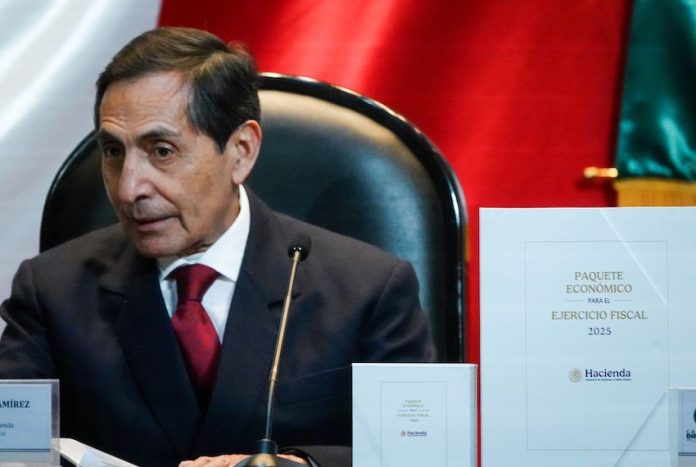
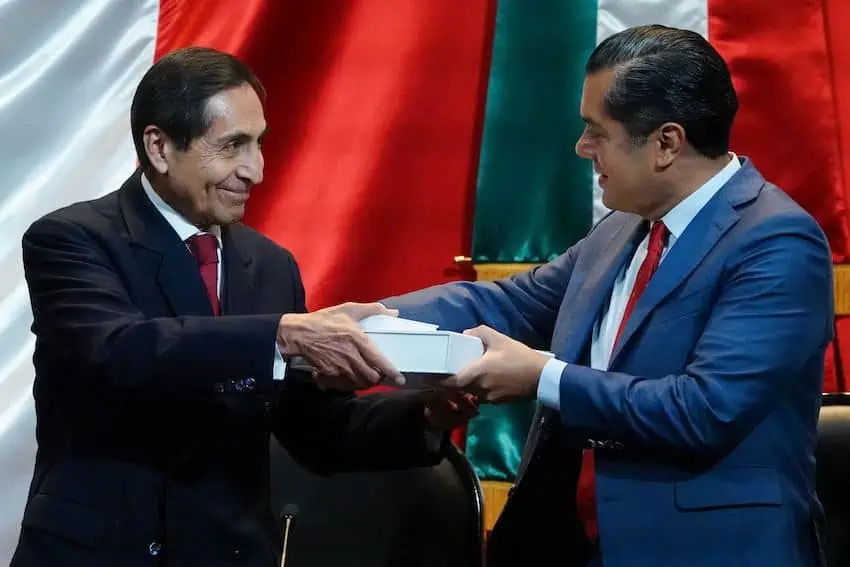
In addition to presenting the federal budget proposal, Finance Minister Ramírez de la O outlined a range of projections on Friday, including government revenue of just over 8 trillion pesos in 2025, and economic growth of 2-3%. (Galo Cañas/Cuartoscuro)
The federal government has outlined its spending plans for 2025, presenting a budget proposal that details expenditures in excess of 9 trillion pesos.
Finance Minister Rogelio Ramírez de la O submitted a 9.3-trillion-peso (about US $460 billion) budget proposal to the lower house of Congress on Friday. The total planned expenditure is 2.6% higher than federal government spending in 2024, but represents a 3.6% reduction in real terms.
Finance Minister Rogelio Ramírez de la O submitted a 9.3-trillion-peso (about US $460 billion) budget proposal to the lower house of Congress on Friday. (Galo Cañas/Cuartoscuro)
The Congress, dominated by lawmakers from the ruling Morena party and its allies, is expected to approve the proposal in the coming weeks.
In terms of year-over-year funding decreases and increases in percentage terms, the Defense Ministry (Defensa) is the biggest loser while the Agrarian, Land and Urban Development Ministry (Sedatu) is the biggest winner.
Let’s take a closer look at the federal government’s planned allocation of funds in 2025.
The losers
The Defense Ministry, now abbreviated as “Defensa” after the ministry used the Sedena acronym for almost 90 years, has been allocated 151.99 billion pesos in funding for 2025, a reduction of 43.8% compared to 2024.
Funding for four state-owned companies under the Defense Ministry’s purview, including the firm responsible for operating the Maya Train railroad, has been cut by 70%. (Cuartoscuro)
Funding for four state-owned companies under the Defense Ministry’s purview, including the firm responsible for operating the Maya Train railroad, has been cut by 70%.
In addition to carrying out national defense tasks and responding to natural disasters, Defensa is involved in a wide range of non-traditional tasks including public security and infrastructure construction. Among the infrastructure projects the ministry built or partially built are the Tulum Airport, which opened in late 2023, and the Maya Train railroad, most sections of which are now operational.
After Defensa, the federal government entities set to face the next biggest budget cuts in percentage terms in 2025 are as follows:
The Environment Ministry (Semarnat): funding to decline 39.4% to 44.37 billion pesos. The biggest funding cut is in the realm of “economic development” within Semarnat, but the allocation for scientific research will also decline.
The Security Ministry: funding to decline 36.2% to 70.44 billion pesos. The ministry’s funding is set to be cut even though it will have new investigative powers as the result of a recent constitutional reform, and despite high levels of insecurity in various parts of the country.
The Health Ministry: funding to decline 34% to 66.69 billion pesos.
The Energy Regulatory Commission: funding to decline 32.9% to 200 million pesos.
National Hydrocarbons Commission: funding to decline 32.9% to 173 million pesos.
Energy Ministry: funding to decline 31.3% to 138.3 billion pesos.
Culture Ministry: funding to decline 30.8% to 12.08 billion pesos.
National Transparency Institute (INAI): funding to decline 18.1% to 994 million pesos.
National Institute of Statistics and Geography (INEGI): funding to decline 17.5% to 12.25 billion pesos.
Mexico’s 2025 federal budget proposal includes a 7.5% annual cut in funding for state oil company Pemex. (@ProyectoNacion_/X)
Among the other government entities whose budget is set to be cut in 2025 is state oil company Pemex. The Finance Ministry proposed funding of 464.25 billion for Pemex next year, a 7.5% annual cut. Some 136 billion pesos are projected to go to the heavily indebted oil company to cover debt repayments in 2025.
A number of other ministries including Mexico’s Tourism Ministry, the Interior Ministry, the Foreign Affairs Ministry, the Finance Ministry (SHCP), the Labor Ministry, the Agriculture Ministry and the Economy Ministry will receive fewer resources in 2025. The budget of the president’s office will also be cut.
The winners
The government entities set to receive the biggest increases in funding in percentage terms next year are as follows:
Agrarian, Land and Urban Development Ministry (Sedatu): funding to increase 183.3% to 38.04 billion pesos. The ministry is set to receive a major funding boost as the government implements an ambitious plan to build 1 million new homes over the next six years.
Infrastructure, Communications and Transportation Ministry (SICT): funding to increase 72% to 140.79 billion pesos. Among the government’s top infrastructure priorities are new passenger rail projects, highway repairs, water projects and the development of new industrial corridors.
“Non-sectored entities,” including the National Institute for Indigenous Peoples and the Executive Commission for Attention to Victims: funding to increase 21% to 174.62 billion pesos.
State Workers Social Security Institute (ISSSTE): funding to increase 6% to 525.61 billion pesos.
Federal Electricity Commission (FCE): funding to increase 6% to 525.47 billion pesos.
Mexican Social Security Institute (IMSS): funding to increase 4.7% to 1.47 trillion pesos.
National Electoral Institute (INE): funding to increase 2.8% to 40.47 billion pesos. The INE will be responsible for organizing Mexico’s first-ever judicial elections in June 2025.
Welfare Ministry: funding to increase 2.3% to 579.88 billion pesos. This ministry is responsible for making payments to old-age pensioners as well as beneficiaries of various government social programs and scholarship schemes.
Public Education Ministry (SEP): funding to increase 1.6% to 450.88 billion pesos.
Funding for the judiciary, federal Congress, the Federal Auditor’s Office and the Federal Attorney General’s Office will also increase in 2025.
Funding for the Agrarian, Land and Urban Development Ministry (Sedatu) will increase 183.3% to 38.04 billion pesos. Sedatu promotes affordable housing and community infrastructure projects throughout the country, many of which have won prestigious architecture awards in recent years. (Sedatu)
Funding for states and municipalities
The Finance Ministry proposed combined funding of 4.89 trillion pesos (US $241 billion) for Mexico’s 32 state governments and thousands of municipal governments.
The figure represents an increase of 7% compared to the funding approved for 2024.
SHCP’s 2025 projections
The Finance Ministry (SHCP) and Finance Minister Ramírez outlined a range of projections on Friday. They include:
Government revenue of just over 8 trillion pesos in 2025, mostly from tax collection. Ramírez said that tax collection would reach 14.6% of Mexico’s GDP.
A budget deficit of 3.9% in 2025, down from an estimated 5.9% shortfall this year.
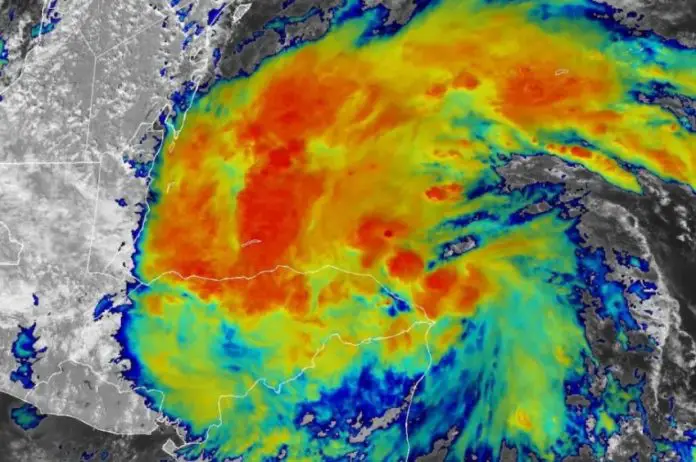
Tropical depression Sara will bring heavy rain to the southeastern states of Tabasco, Campeche, Yucatán and Quintana Roo. (NOAA)
Tropical Storm Sara, which caused widespread flooding in Honduras and Belize over the weekend, weakened to a tropical depression in the Gulf of Mexico on Saturday and has dissipated to a low-pressure trough as of Monday afternoon.
The National Meteorological Service (SMN) reported that the storm’s center is currently located 35 kilometers west of Sabancuy, Campeche, and 145 kilometers southwest of the state capital. It is moving northwest at 20 kilometers per hour.
With sustained winds of 45 kilometers per hour and gusts reaching up to 65 kilometers per hour, the storm’s remnants are expected to bring heavy rains to the southeastern states of Tabasco, Campeche, Yucatán and Quintana Roo.
Additionally, winds with gusts of 40 to 60 kilometers per hour and waves between one to three meters high are forecast along the coasts of Campeche, Yucatán and Quintana Roo.
Due to the effects of Tropical Storm Sara, all ports in Quintana Roo remain closed to small navigation, water tourism activities and sport fishing. Consequently, Governor of Quintana Roo Mara Lezama called on residents to remain alert and updated through the authorities’ official communication channels.
Rain forecast for today
Very heavy rainfall (75 to 150 millimeters): Chiapas.
Intervals of showers (25 to 50 millimeters): Oaxaca, Campeche, Yucatán and Quintana Roo.
Scattered rainfall (5 to 25 millimeters): Nayarit, Jalisco, Colima, Michoacán, Guerrero and Tabasco.
Isolated rains (0.1 to 5 millimeters): Coahuila, Chihuahua, San Luis Potosí, Querétaro, Hidalgo, Puebla, Tamaulipas and Veracruz.
Weather forecast for today
Cold front No. 10 will move over northern Mexico this week, impacting the northeast region before spreading to the rest of the country.
The cold air mass associated with this front may lead to cold and very cold temperatures at daybreak and evenings, with frost likely at dawn in high-altitude areas of the northwest, north, and northeast.
Minimum temperatures are forecasted to range from -10 to -5 degrees Celsius in mountainous regions of Baja California, Sonora, Chihuahua and Durango. During the day, the northwest and northern regions of Mexico will experience cool to temperate conditions.
The result is identical to last year’s Concacaf quarterfinal when Mexico came home from Honduras with a 2-0 deficit. (Mi Selección MX/X)
Mexico’s “El Tri” men’s soccer team has their backs against the wall after a listless 2-0 loss to Honduras on Friday in the first leg of the Concacaf Nations League quarterfinal series.
Honduras scored two second-half goals and will try to protect the advantage in the second-leg match at the Nemesio Díez Stadium in Toluca, México state, on Tuesday.
¡PESIMA SEGURIDAD Y ORGANIZACIÓN! ❌
Javier Aguirre se llevó un fuerte golpe con una lata de cerveza lanzada desde las gradas lo que provocó que se le abriera la cabeza y terminara sangrando 🇲🇽
In a statement, the Honduras Football Association (FFH) said it “regrets the isolated actions of a small group of fans,” but claimed Aguirre was partly to blame, according to Goal.com.
“[T]he FFH categorically rejects the words, obnoxious gestures and provocative attitudes on the part of the coach of the Mexican national team, who insulted and provoked the Honduran fans from the beginning of the match.”
El Tri’s discombobulated defense failed to stop two goals from Honduras’s Luis Palma. (@FFH_Honduras/X)
On the field in San Pedro Sula, El Tri started slow, before enjoying lengthier possessions. However, the team lacked decisiveness and precision — errant passes and overdribbling were among Mexico’s most common mistakes — failing to effectively probe the Honduras defense.
Mexico was woefully inefficient in its offensive third and rarely carried the ball into Honduras’ box. Indeed, El Tri managed a meager four shots on goal, none of which caused Catracho goalie Edrick Menjivar any worry.
Aguirre’s line-up decisions also raised eyebrows in just his fifth game as coach since taking over for Jaime Lozano, who was fired in July.
The veteran manager — now in his third stint as coach of El Tri — utilized the aging Guillermo Ochoa in goal, moved right-footed center-back César Montes to the left side and inserted Israel Reyes as his partner in place of the injured Johan Vásquez. Aguirre also started Julián Quiñones at right wing whereas the five-time Liga MX champion has typically played on the left side.
Mexico will again face Honduras on Tuesday night at the Nemesio Díez Stadium in Toluca, México state.
Playing out of the back, Montes stubbed his clearance, sending the ball right to Edwin Rodríguez who fired on goal from 22 meters. Ochoa blocked the low shot, but coughed up the rebound, bundling it right to Luis Palma who thumped it past the prone goalie.
In minute 83, Montes unsuccessfully chased a play into the Honduras half and the hosts took advantage of the gaping hole he left in the middle of Mexico’s back line.
The result is identical to last year’s quarterfinal when Mexico came home from Honduras with a 2-0 deficit. In the return match at Estadio Azteca, El Tri forced overtime with a late goal by Edson Álvarez then won the ensuing penalty shootout.
With 800 years of history, empanadas predate Mexico by centuries. (Canva)
Let’s talk empanadas, a wonderful delicacy, whether savory or sweet, that is a part of Mexican culture and cuisine and an age-old tradition.
Empanadas are believed to have originated in the Iberian Peninsula with references made to them in medieval cookbooks dating from the 13th century. In fact, the name “empanada” comes from the Galician verb empanar, which means “to wrap or coat in bread.”
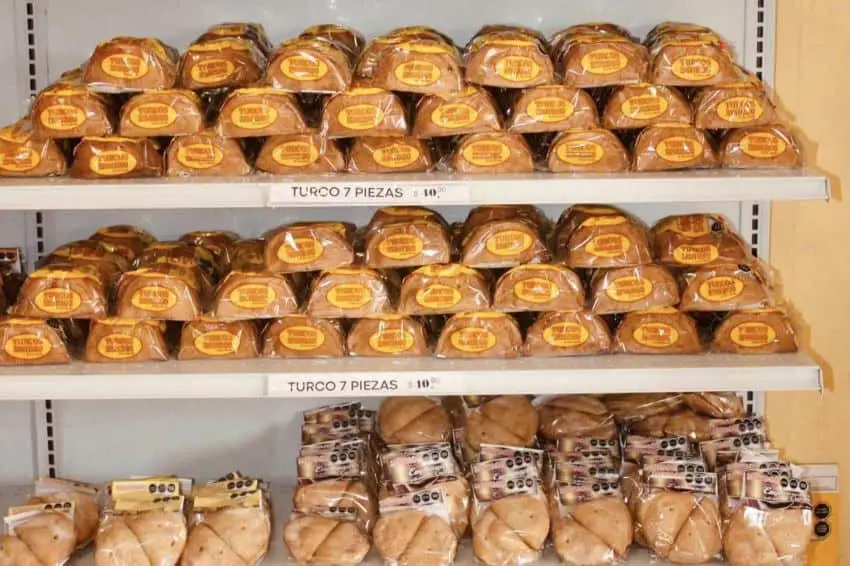
Empanadas are a popular snack throughout Mexico. (Turcos Santiago/Facebook)
The first empanadas were savory with aged cheese or preserved fish used for fillings, reflecting the limited ingredients available in the Middle Ages. It wasn’t until the 16th Century that empanadas reached Latin America, brought to Mexico by the conquistadors. Naturally, the Mexicans adapted them using local ingredients and spices to make them their own. A notable exception became the “turco” that originated in Nuevo Leon, inspired by Turks who traveled here in the 1840s and introduced pork fat to the dough (as Emeril says, “Pork fat rules!”), which transformed empanadas into a savory pastry. Turcos are filled with meats and cheeses and are known for their sweet, rich flavor due to the pork fat in the dough. In Guerrero, on the other hand, you might find empanadas filled with seafood or fish while in Oaxaca, you might find them stuffed with mole or other sauces.
Now let’s talk “sweet” empanadas, so popular in Mexico. They may be filled with cinnamon-spiced apples, or pumpkin and cream-cheese (like our recipe) and other goodies, but what separates them from their savory counterpart is the dough. The dough of a sweet empanada contains sugar, butter or lard (adding richness and flavor), and flavorings like cinnamon, vanilla, chocolate or even almond flour. This results in a softer and more tender product that’s often flaky, like pastry. The savory version, however, focuses on three factors: Flour; salt; and fat (usually lard), resulting in a firmer and sturdier crust, which means it can be baked or fried without becoming overly soft.
Since the holidays are approaching, I thought it might be fun to incorporate the holiday dessert foods we think of like pumpkin and cheesecake into one Mexican delicacy that would make an amazing dessert for any holiday dinner or occasion! So, let’s get baking!
Pumpkin Cheesecake Empanadas
Recipe adapted from castellonskitchen.com. Makes 16 empanadas. (Canva)
Filling:
1 Cup (250 g) pumpkin puree* (puré de calabaza). Make your own. It’s easy and you’ll never taste anything like it!
5-8 lbs. (2.25 kg – 3.6 kg) pumpkin (roughly two small pumpkins)
Preheat oven to 375F/190C. Wash pumpkin. Line baking sheet with parchment paper. Cut the stems off the pumpkins and cut in half, lengthwise. Scrape the seeds from inside the pumpkins. Place pumpkin halves, cut side down, on the baking sheet. Bake for about 35-45 minutes or until the pumpkin is tender when pierced with a fork. Scoop the cooked pumpkin out of the shells and put in a food processor or blender. Blend until smooth. Add a tablespoon or two of water, if needed.
1/4 Cup (50 g) brown sugar (azúcar moreno)
1 tsp. (4.2 g) vanilla extract* (extracto de vanilla) *
Mexican brands noted for intense flavor: Villa Vainilla; Vainilla Totonac’s; Molina Vainilla
1 1/2 tsp. (2.8 g) pumpkin-pie spice
4 tsp. (10.4 g) ground cinnamon (canela); *2 tsp. (5.62 g) ground ginger; *1 tsp. (2.1 g) ground cloves (clavo molido); *1/2 tsp. ground nutmeg (nuez moscada molida). Mix together and store in an air-tight container.
1/4 tsp. cinnamon, ground (canela)
Instructions:
Preheat oven to 350F/175C
Spray baking dish with cooking spray
In a large bowl, mix together pumpkin, condensed milk, sugar, cream-cheese and eggs until well combined, reaching a light and fluffy texture (about 3 minutes).
Add vanilla, pumpkin-pie spice and cinnamon and beat until incorporated.
Pour batter into baking dish.
Bake mixture until set, about 25 minutes.
Cool on racks.
Cover and refrigerate for about an hour until completely cool or overnight.
Empanada Dough:
Preheat oven to 400F/204C
Line a baking sheet with parchment paper
Ingredients:
2 /12 Cups (325 g) all-purpose flour
Use only American flour, available online.
1/2 tsp. (3 g) salt (sal)
1/4 tsp. (1.2 g) baking powder (polvo de hornear)
1/2 tsp. (0.69 g) ground cinnamon (canela)
1/2 Cup (115 g) unsalted butter, cut into small pieces (mantequilla sin sal)
1/2 Cup (95.5 g) shortening*
Use Inca Manteca brand, found in Mexico.
3/4 Cup (171 g) ice water (agua)
Cinnamon-sugar* for sprinkling empanadas.
To make cinnamon-sugar: Add 1/4 Cup (99.4 g) cinnamon (canela) to 1 Cup (200 g) sugar (azúcar estándar). Store in air-tight container.
Egg-wash for Crust: 1 large egg, beaten with 1 tsp. (4.9 g) water
Directions:
In a large bowl, whisk together flour, salt, and baking powder.
Add butter and shortening.
Working quickly and using your fingers, combine mixture until it resembles coarse meal.
Add water. Flour your hands and mix together.
Knead once or twice to fully combine. (The less kneading the better.)
Divide dough in half.
Cover each half with plastic wrap and refrigerate 15 minutes. (Dough can be refrigerated up to 5 days. Bring to room temperature before using.)
Divide each piece of dough into 8 pieces.
Take one piece of dough from refrigerator and using a floured rolling pin on a floured surface, roll the piece into an 1/8-inch-thick oval. (Leave the rest of the pieces in the refrigerator. Roll one at a time.) * Using a medium sized cookie scoop, place 2-3 scoops of pumpkin-cheesecake filling into center of the dough. Fold dough over to enclose filling and seal edges with a fork. Using a spatula, transfer the empanada to a parchment-lined cookie sheet.
Coat each empanada with egg-wash and sprinkle generously with cinnamon sugar.
Bake for 20-25 minutes.
Let cool and serve with or without icing.
Icing:
2 Cups (230 g) powdered sugar
1-2 Tbs. (15.3 g to 30.6 g) milk
Mix until blended. Add more milk as needed to reach desired consistency. Drizzle over empanadas.
Disfruta!
Deborah McCoy is the one-time author of mainstream, bridal-reference books who has turned her attention to food, particularly sweets, desserts and fruits. She is the founder of CakeChatter™ on FaceBook and X (Twitter), and the author of four baking books for “Dough Punchers” via CakeChatter (available @amazon.com). She is also the president of The American Academy of Wedding Professionals™ (aa-wp.com).
The discovery of Mexican scratch maps sent Bel Woodhouse on an frenzied series of trips to discover everything Mexico has to offer. (Rasca Mapas)
I admit it: I geek out on Mexico stuff. My favorite thing is exploring new places and learning about their beautiful traditions. So when Robin, who is exploring Mexico’s Pueblos Mágicos, introduced me to the Rasca Mapas scratch map of the Magical Towns I was hooked. I had to have one and ordered my own that same day.
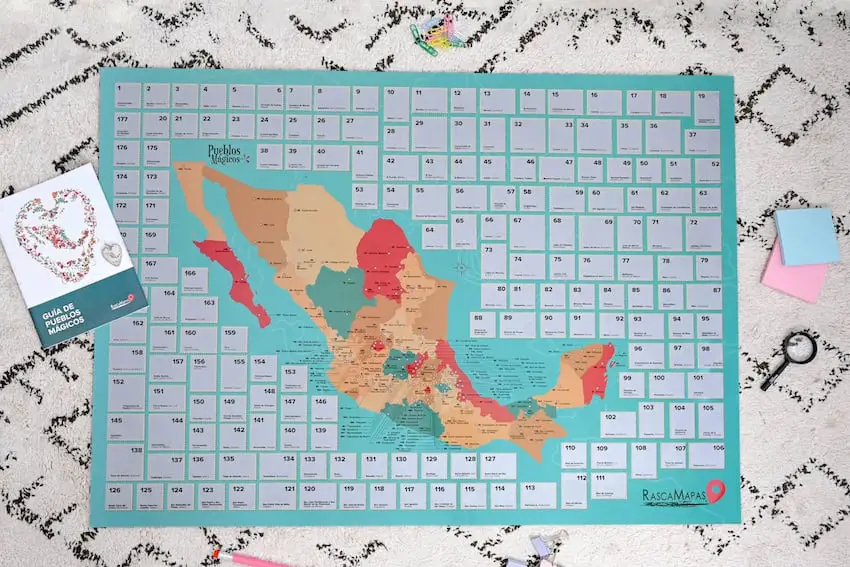
When it arrived, a new side of Mexico opened up for me. All 32 states with the 177 Pueblos Mágicos are listed. They are just begging to be visited so I can scratch them off my map. But there are other scratch maps, too. There are maps of Mexico showing the 32 states, one for the municipalities, and one for Mexico City. There’s a scratch map of the Archaeological Sites of Mexico, too — I want that one).
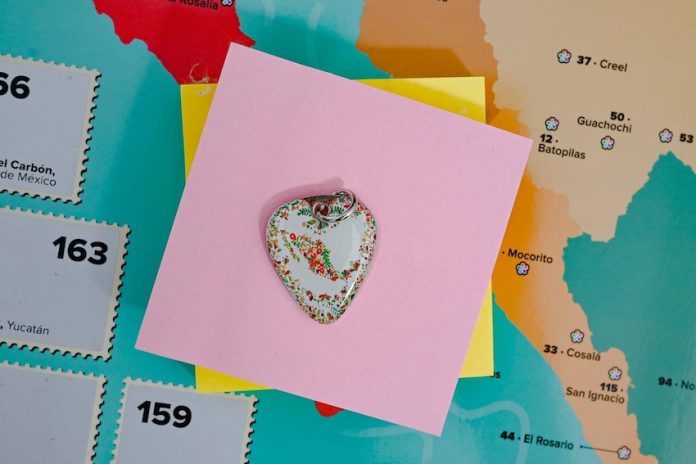
The scratch map that inspired Bel. (Rasca Mapas)
Best of all, there is a travel journal to accompany them. This has to be the most fun way to explore Mexico. It’s enriching my knowledge and understanding of the country I live in, and it even helps my Spanish!
177 Pueblos Màgicos
What I love most about this scratch map is that it makes me want to get out and go to more places. To scratch off another adventure, explore and experience the beauty of Mexico.
So far, eight have been scratched off my map. One was a no-brainer: Cozumel, where I live. So, it didn’t hold the kind of excitement that the most recent one, Tequisquiapan, did. It was amongst three new Pueblos Mágicos scratched off my map last month. On a trip to the central highlands visiting Querétaro and Guanajuato, I got to scratch off Bernal, Tequisquiapan and Dolores Hidalgo.
Having the map makes me put visiting Pueblos Mágicos at the top of my list when traveling. When planning a trip, the first thing I look at now is which Pueblos Mágicos are nearby. I read up on their history and what they are famous for. It’s making me more interested in every part of Mexico.
My Fun Scratch Map Travel Journal
Plus, there is a matching travel journal with its own scratch map guide inside.
The travel journal
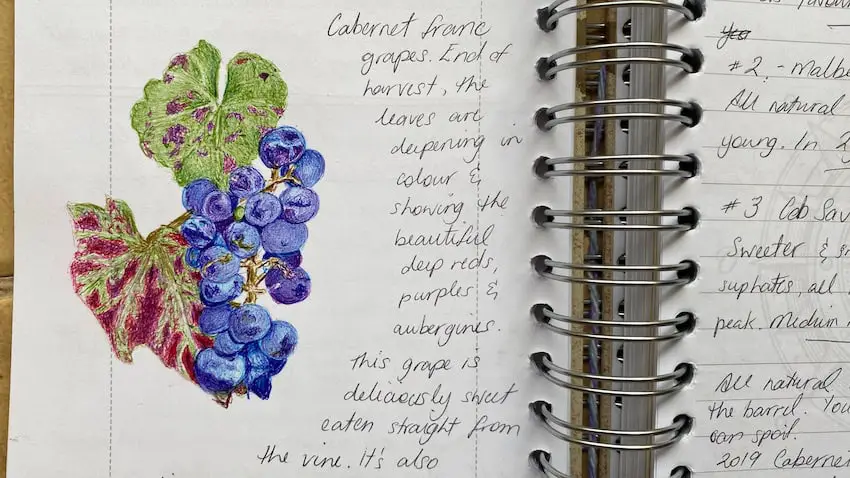
When I received my travel journal, I swear the heavens opened and angels sang. I love the feel of it in my hands. It’s hard-covered and sturdy enough to withstand a frequent traveler like me. As an avid note-taker and sketcher, it has the perfect balance for me. Lined pages are on one side for notes, and a blank page is on the other to fill with sketches.
If I hadn’t written down Tequisquiapan, it would have been very frustrating trying to figure out how to spell it. It’s not the easiest name to remember or say. Try saying it three times fast. My guide and I played that game and ended up in fits of laughter.
This journal is more than just a journal. It’s an educational tool, a work tool, and a tool to help me immerse myself in this beautiful country. It’s even helping me get more fluent in Spanish by writing down new words, names, and phrases. Plus, it’s a sketchbook to catalog the beautiful botanicals I find. Mexico’s biodiversity is astounding.
As a botanical artist, I adore learning about Mexico’s native plants and recording my findings in my journal, showing where in Mexico I found them.
Fun exploring Mexico
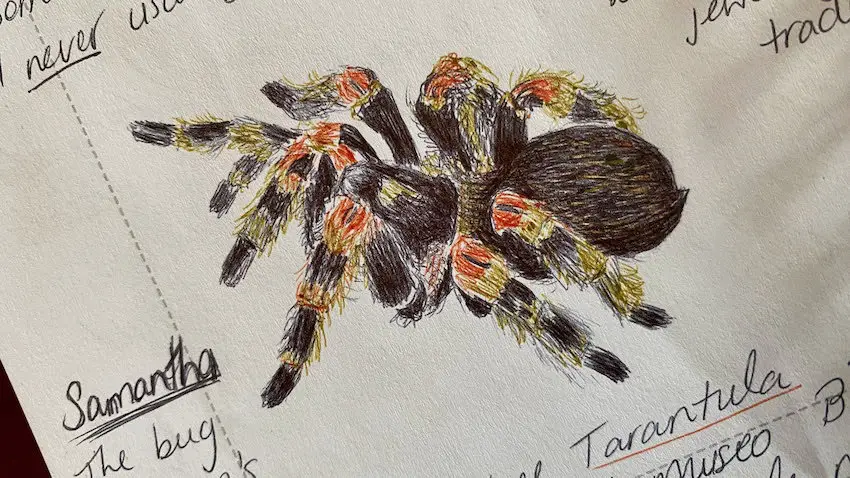
Samantha the spider. (Bel Woodhouse)
My journal is now a sanctuary. When traveling it provides me with balance. Some time for me to take note of all the beauty I see. Unusual things I find, and beautiful yet unusual experiences I have. Like meeting Samantha.
Samantha is the gorgeous Mexican Fire Knee Tarantula I met at the Museo de Bichos in Querètaro. Like something I’d only ever seen in Indiana Jones movies, I wasn’t quite prepared for how Samantha melted my heart. It was fascinating. One man’s private collection catalogs a 35-year entomology career with over 2,400 specimens worldwide. Plus, I love supporting small private museums like this.
And I’ll admit, Samantha was an angel. Sitting so quietly in my hands. So, of course, she was added to my travel journal because I would never want to forget that experience of handling a tarantula. It’s not something I do every day.
What Mexico is teaching me
Ever since getting this scratch map and journal, it has made a big impact on my life. Before, I loved living in Mexico. Now, I feel like a part of Mexico. Learning more about the beautiful Pueblos Mágicos, traditions, textiles, and history and visiting them has enriched my life.
This fabulous scratch map and journal are scratching my travel itch, my art itch and my Discover Mexico itch.
Mexico Correspondent for International Living, Bel is an experienced writer, author, photographer and videographer with 500+ articles published both in print and across digital platforms. Living in the Mexican Caribbean for over 7 years now she’s in love with Mexico and has no plans to go anywhere anytime soon.
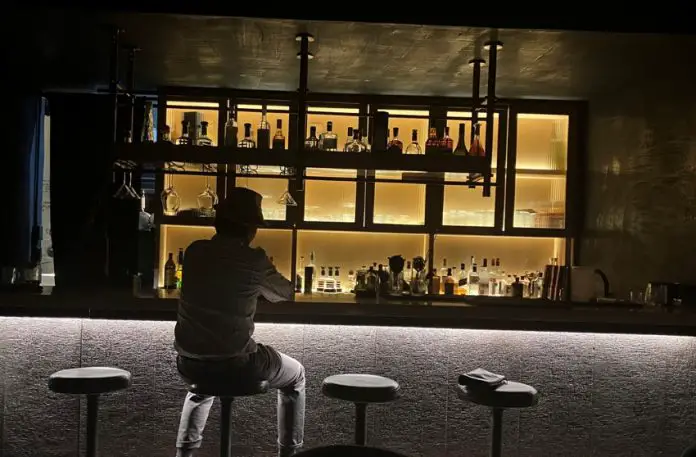
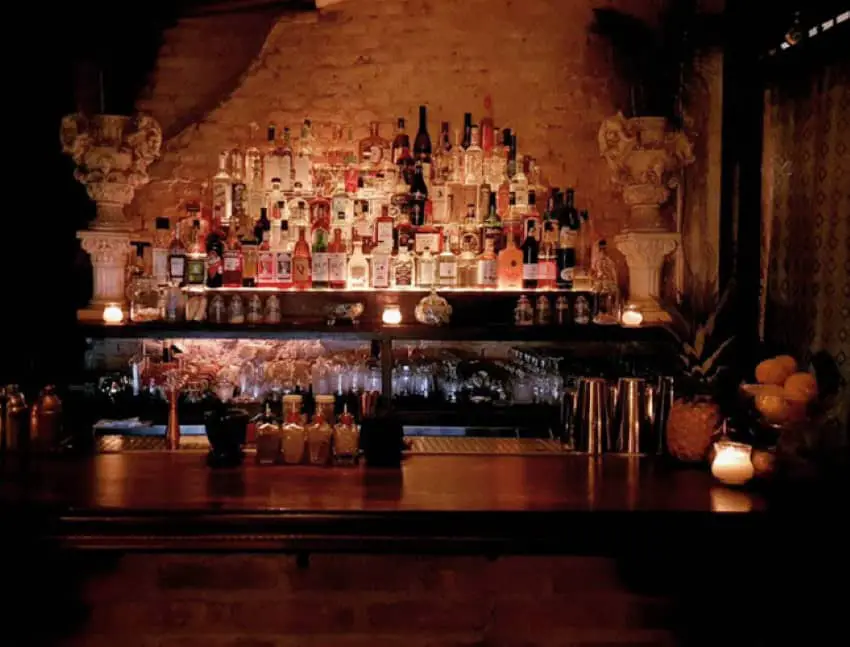
From Prohibition vintage to modern hideaways, Guadalajara has a speakeasy for everyone. (Dawn Stoner)
Prohibition in the United States ended long ago, but nostalgia for that bygone era has revived speakeasy-style bars worldwide, and Guadalajara is no exception.
Modern speakeasies aren’t illegal, but they recreate the vibe of the old clandestine bars with discreet, low-lit spaces accessed via unmarked doors, back alleys and hidden staircases. Some up the ante further with secret passwords and reservations-only policies. The reward for intrepid visitors is an underground spot to relax and imbibe with like-minded souls. Below are five of my favorite Guadalajara speakeasies that are worth the trouble to find.
Búnker Brew Club
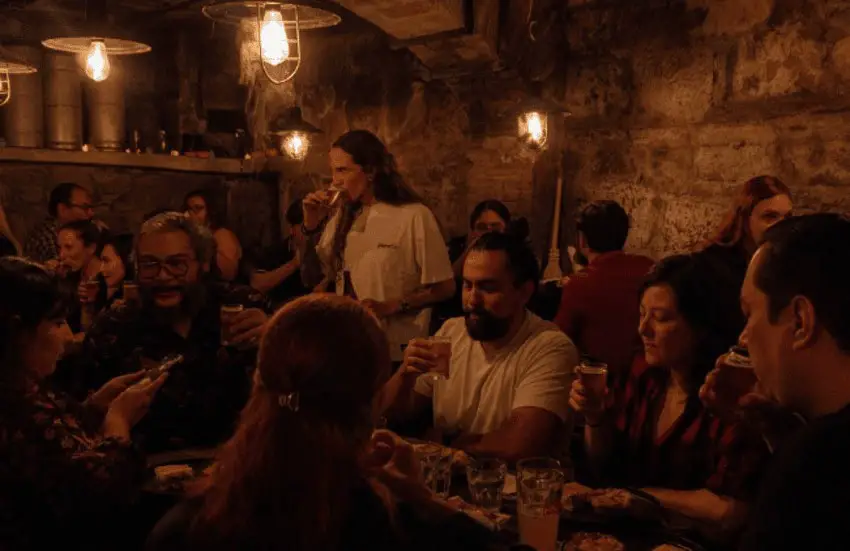
(Bunker Brew Club)
If the idea of quaffing craft beer in a real bunker 10 meters underground dating back to World War II sounds cool, then Búnker Brew Club is the place for you.
Located in Zapopan’s charming Seattle neighborhood, BBC is known for its rotating selection of international craft brews from places including Belgium and California. The pub’s owners have an encyclopedic knowledge of beer and are happy to offer suggestions. For connoisseurs, I recommend ordering a flight of the bartender’s choosing.
Cool and dark, BBC is an especially good choice during one of Guadalajara’s diabolical spring heatwaves. You can forget about the suffocating heat when seated 45 feet below ground with a crisp pilsner in hand.
To find the bar, look for the pink sign that reads “Ceci” above an outdoor staircase, then descend four flights.
San Jorge 225, Colonia Seattle, 45150 Zapopan. Reservations required. Book via OpenTable.
Galgo Speakeasy
(Dawn Stoner)
When you arrive, head through the lobby to a closed gate in back. If no one is there, ring the bell. Once you provide the password, the doorman will let you through. To enter the bar, pass through a frosted glass door that reads “GalgoCriminología,” like some old-timey detective agency.
Packed with a young, well-dressed crowd, Galgo feels like it’s been around forever. There are wingback leather chairs, a marble top bar, vintage books, a British telephone booth and Art Deco posters on the walls.
If the ambience harkens to a bygone era, Galgo’s music brings you back to the present. On the night we visited, remixed disco beats gave way to thumping house music as the night progressed.
Galgo’s stocked bar can handle most any request, but their custom cocktails are where it’s at. Most are tequila-based — this is Jalisco, after all — and served in vintage glassware with botanicals, fresh fruit and flowers. The Barragán and Apocalypto are standouts, and oh-so-Instagramable.
As an aside, if you’re hoping to chat with whoever accompanied you, consider arriving early. When the DJ takes over around 10:30 p.m., conversation becomes nearly impossible.
Avenida Pablo Neruda 3055, Colonia Providencia. Reservations by phone or DM. Password required. More information via Instagram.
PIMP
(PIMP Bar Speakeasy)
Unlike most speakeasies tucked into windowless back rooms and basements, PIMP occupies the floor above a Tuscan restaurant, Osteria 10.
To enter, ascend the wooden staircase next to the restaurant’s pizza oven. Once upstairs, open the door masquerading as a bookshelf, and… benvenuti!
For my money, this is the coolest spot to grab a cocktail in Colonia Americana. PIMP’s indoor-outdoor space overlooking the treetops is bathed in soft light and perfect on cool evenings.
This secret lair feels like your eccentric aunt’s apartment. Its shabby chic décor features faux Renaissance art, exposed brick walls and vintage chandeliers. Wingback chairs, mismatched sofas and puffy ottomans provide plenty of comfy gathering spots.
Unlike other speakeasies in town, PIMP’s music is Prohibition-era jazz and blues, and isn’t too loud for conversation. It may explain why this spot attracts a lot of couples.
Cocktails are straightforward and cheap at just 90 pesos each. PIMP also offers Bohemia beer. I suggest visiting on a weeknight, as the place gets packed on weekends.
Calle Manuel López Cotilla 1498-A, Lafayette, 44150 Guadalajara. No reservation or password required. More information via Instagram.
Fat Charlie
(Dawn Stoner)
Some speakeasies should come with an experts only warning label. Nabbing a reservation at Fat Charlie took us a week and multiple inquiries via social media. For best results, use Facebook Messenger.
Finding the place was easier. When you arrive at the unmarked storefront, just walk through the black curtain with a red pig on it and knock. When the door opens, provide the correct password and you will be let inside.
Upon entering, be sure to say hello to the owner’s adorable side kick, a scruffy mutt named Jack who staff members refer to as the manager.
Once your eyes adjust to the low light, Fat Charlie offers guests a haven for a chill night out. The drinks menu includes all the usual suspects, but I’d skip the Negroni in favor of an innovative cocktail like No Rules. It blends cognac, berries, balsamic vinegar and mascarpone cream. After consuming one, you might want to skip dessert.
In addition to being a cool hangout, Fat Charlie hosts mixology classes for those looking to level up their cocktail game.
Calle Manuel López Cotilla 1940, Colonia Americana. No entry without the password. More information via Facebook.
Nomu
(Dawn Stoner)
Nomu is a gorgeous, cozy, candlelit bar hiding in plain sight. You enter from inside a sleek Japanese restaurant called Honne via an unmarked door next to the sushi bar.
While dining at Honne, I didn’t even notice the door until someone exited through it. Its black tile façade matches the wall perfectly, rendering it invisible.
Nomu’s vibe is low-key and sophisticated, making it the perfect spot for a special date, secret rendezvous, or conversation with an old friend.
Their drinks menu features various concoctions with tequila, mezcal and raicilla, all derived from the agave plant. It’s also a great spot for fans of Japanese sake and whiskey. Like the décor and drinks, service at Nomu is also top-shelf.
While this upscale neighborhood isn’t popular with out-of-towners or expats, Nomu is a great option if you find yourself on the west side of Guadalajara for dinner or a concert at the 3 de Marzo stadium.
Avenida Naciones Unidas 4839, Int. 103, Jardines Universidad. No password or reservation required. More information via Instagram.
After discovering that life in Mexico was a lot more fun than working in corporate America, Dawn Stoner moved to Guadalajara in 2022, where she lives with her husband, two cats and Tapatío rescue dog. Her blog livewellmexico.comhelps expats live their best life south of the border.
MND Perspectives: Will Mexico benefit from nearshoring?
This podcast was produced using AI tools. All information collected and discussed in this episode was investigated, written and edited by human journalists. Compiled from Mexico News Daily articles by Travis Bembenek. Edited by Caitlin Cooper and Rose Eglhoff. Podcast produced by Chris Havler-Barrett.