Home Blog Page 87

Michelin Guide adds Jalisco, Puebla and Yucatán to its Mexico edition

2
An image of the Michelin Guide logo next to a spread of food on a restaurant table
(Michelin Guide/File photo)

The Michelin Guide Mexico has just announced it will incorporate Jalisco, Puebla, and Yucatán to its 2026 edition, cementing the country’s culinary relevance in the global market.

“Since its launch in the country in 2024, the publication has been dedicated to recognizing the exceptional talent and diversity of the culinary scene, and this expansion further cements Mexico’s status as a global gastronomic destination,” the Michelin Guide said.

The MICHELIN Guide Expands in Mexico

Mexico had its first Michelin Guide in 2024, focused on Mexico City, Oaxaca, Baja California, Baja California Sur, Quintana Roo and Nuevo León. The new addition will incorporate new restaurants in new states, expanding the brand’s presence across Mexico.

In a statement sharing the news, the Michelin Guide released a video featuring images from the new states, along with adjectives that celebrate each region.

“Jalisco is renowned for its vibrant culinary traditions, blending Indigenous and Spanish influence,” the gastronomic guide said. “Puebla celebrates a rich legacy of layered flavors and techniques shaped by both colonial and Indigenous cultures,” while Yucatán “draws on Mayan and colonial influences, highlighting its distinctive approach to local ingredients and culinary innovation.”

Ignacio Alarcón, National President of Michelin’s partner in Mexico Canirac (National Chamber of the Restaurant and Seasoned Food Industry) said that this expansion creates “benefits that go beyond recognition for a restaurant,” as the gastronomic guide helps travelers around the world to make travel choices.

“[Michelin’s guide] transforms the local offering, builds brand value and positions Puebla, Yucatán and Jalisco on the international stage, attracting travelers seeking world-class dining experiences,” he remarked.

Last year, Mexico’s Michelin Guide boasted 181 restaurants including two restaurants that earned two Michelin stars, 21one-star  restaurants, 50 with a Bib Gourmand distinction and 108 “recommended” restaurants without a star or Bib Gourmand.

Mexico’s only Michelin two’star restaurants are Pujol and Quintonil, both in Mexico City.

Beyond the restaurant selection, the Michelin Guide expanded in 2024 to the hospitality industry through the Michelin Keys program, a parallel recognition for excellent hotels in Mexico and around the world.

Starting this year, the Michelin Keys will also cover the three new states.

Mexico News Daily

Mexico extends tariffs on steel imports from Asian countries with no trade pact

0
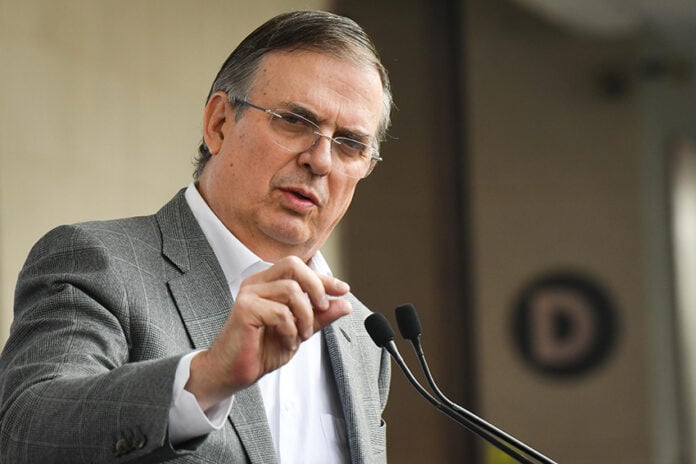
Economy Minister Marcelo Ebrard, seen here at a January press conference, announced on Thursday that Mexico's tariffs imposed on Asian steel imports will be renewed to protect Mexican industry. (Mario Jasso / Cuartoscuro.com)

Economy Minister Marcelo Ebrard has announced the permanent renewal of tariffs on steel imports from Asian countries without a trade agreement with Mexico.  

Ebrard also presented a new policy of increasing government purchases based on Mexican content, which will direct government entities to prioritize national content over lower costs.

steel slabs
The extended tariffs are part of an ongoing effort to boost Mexico’s domestic steel industry. As Economy Minister Marcelo Ebrard put it: “We must make a special effort to protect and defend the industry.” (Industria de Acero Inoxidable/Facebook)

Speaking to business leaders on Thursday at the 78th Assembly of the National Iron and Steel Industry Chamber (Canacero), Ebrard said the tariffs, which range from 10% to 35%, will protect Mexico’s domestic industry from unfair imports from Asia by renewing duties on 220 steel products from South Korea, Vietnam, China and other nations.

Since April 2024, the tariffs have been applied to 1,466 products (220 of which were steel products) from various industries, but the program was scheduled to expire next month.

“We must make a special effort to protect and defend the industry,” Ebrard said, adding that President Claudia Sheinbaum has already ordered that the extension be applied. 

Ebrard also mentioned the tariffs imposed on steel products by the United States, calling them “illogical.”

“This is unprecedented, that a 50% tariff is imposed on a product for which you have a trade surplus,” he said. “There is no other example in history. Tariffs are normally imposed when you have a deficit.”

The economy minister said he will address this issue next week when Mexico begins the first round of negotiations ahead of the formal review of the US-Mexico-Canada trade pact (USMCA).

“We will seek to strengthen and standardize the treaty’s legal instruments to address unfair trade practices, primarily from China and other Asian countries,” Ebrard said.

Mexico is keen on reducing its dependence on imports from Asia and the new policy of favoring national content over cost is designed to do just that, while also lending support to the domestic steel industry. 

In this regard, Sheinbaum has also asked the Economy Ministry to review the IMMEX program, which allows companies to temporarily import materials tax-free.

As a result, Ebrard said, some temporary imports of steel products will be eliminated from the program.

“We hope this helps to ensure that purchases of domestically sourced materials are used in public works by the federal and state governments,” he said.

In response, Sergio de la Maza, the new Canacero president, expressed support for the measures, saying government cooperation will allow Mexican steel to compete “in a complex trade environment featuring market distortions primarily due to overcapacity and unfair trade.”

With reports from El Economista and Reforma

Irapuato zoo welcomes a pair of rare African leopard cubs

0
two newbordn leopards
The mother of the two newborn African leopards, a male and a female, is too old at 15 to nurse, so they are being hand-reared by staff with a special formula. (Zoológico de Irapuato/Facebook)

Two African leopard cubs born recently in the central state of Guanajuato are giving the at-risk species a boost — and visitors a rare look at one of the world’s most elusive big cats.

The male and female cubs were born Feb. 12 in a breeding program for endangered species at the Irapuato Zoo, which houses about 500 animals from 120 species, zoo veterinarian Gabriela Moreno said.

The cubs’ 15-year-old mother produces little milk at her age, so staff are hand-rearing the pair with a specialized formula. (Most sources put leopards’ lifespan at 10-15 years in the wild and into the low 20s in captivity — ages when reproductive performance and milk production tend to decline.)

Both yet-to-be-named cubs are doing well and are at “optimal health for their age,” Moreno said. No sizes were given, but leopard cubs typically weigh under 2 pounds at birth.

Moreno said the cubs  “will be in the maternity area from 11 a.m. to 5 p.m. so that [visitors] can observe them. There will be no interaction with them, since they are still very small, but you will be able to observe them.”

Adult African leopards often weigh up to around 90 kilograms (200 pounds), measure up to 1.9 meters (6-foot-3) in body length and reach roughly 70 centimeters (28 inches) in height.

In their native range of sub-Saharan Africa, they occupy an unusually wide variety of habitats — woodlands, grassland savannas, forests, semi-deserts and even mountainous regions — a flexibility that gets them listed among the world’s most adaptable big cats.

Their species, Panthera pardus, is listed as “vulnerable” on the International Union for Conservation of Nature Red List, meaning scientists estimate more than a 30% drop in the global leopard population over roughly three generations, with more expected declines. This is due to habitat loss, prey depletion and poaching.

Overall numbers are hard to find, with older estimates of hundreds of thousands of leopards in the wild now considered unreliable. In captivity, one survey cited by the San Diego Zoo showed only 48 leopards suitable for breeding in North American zoos as of 2012 — with the hope of getting it up to 100.

Along with an animal sanctuary in Oaxaca, the Irapuato Zoo has recorded several big-cat births in recent years, including two African leopards (Kibó in 2024 and Kito in 2025), a rare black-coated leopard and a Mexican jaguar.


View this post on Instagram


A post shared by ZooIra (@zooirapuato)

It has also bred zebras, a llama calf and a Mexican monkey under the endangered‑species breeding program for which it is known.

The mid-sized regional zoo — commonly called “ZooIra” as a contraction of Zoológico de Irapuato — later exchanges the animals with other facilities to prevent inbreeding and to support conservation-focused collections.

Other recent births of note include four Mexican wolf pups at a wildlife conservation center in Mexico City and the world’s smallest turtle at the Guadalajara Zoo.

With reports from La Jornada, El Sol de Irapuato, Local10.com and Tribuna de México

Uber defies National Guard crackdown, citing court order to continue operating at Mexico City airport

12
National Guardsmen watch cars pull up to terminal 2 of Mexico City International Airport
Starting Thursday, the National Guard resumed enforcement of a policy banning rideshare services like Uber, DiDi and InDrive from picking up passengers from the terminals of Mexico City International Airport. (Galo Cañas / Cuartoscuro.com)

After the Mexico City International Airport (AICM) re-established its policy of denying ride-hailing apps and unauthorized taxis from operating on the grounds, Uber responded defiantly.

Company officials noted that its lawsuit against the policy has yet to be adjudicated and, last October, a federal judge ordered an end to “arbitrary fines and detentions” until it is resolved. In the meantime, Uber drivers continued to pick up passengers at the AICM this week.

A National Guard member leans over a car to speak to a rideshare driver at Mexico City International Airport (AICM)
Rideshare drivers caught picking up passengers at AICM terminals Thursday received verbal reprimands and were warned that their cars could be seized if they returned. (Galo Cañas / Cuartoscuro.com)

National Guardsmen patrolled the grounds of military-operated airport on Thursday, stopping and issuing warnings to rideshare drivers who arrived to pick up passengers.

“For now, violators are only receiving a verbal warning, a reprimand,” one Guardsman told El Universal. “However, if we notice a repeat offense, the car will be towed to a vehicle impound lot.”

The reimposition of the restrictive policy occurred after dozens of licensed drivers representing the 11 authorized airport taxi companies used their cars to blockade access to Terminals 1 and 2 on Wednesday, snarling traffic and forcing passengers to haul their luggage as much as 2 kilometers to reach their gates.

The airport and the taxi companies insist the judge’s injunction does not allow Uber to operate at airports, it simply prohibits the arrest of drivers and “arbitrary fines.”

Late Wednesday, the Transportation Ministry (SICT) issued a statement affirming that “Uber is not authorized to provide services within the area of ​​the Mexico City Airport and other airports.”

The SICT also said authorities may issue citations to enforce the rule as long as they do so “in accordance with established regulations.”

Uber insists the ruling allows them to freely operate at airports, arguing that the airport authorities could themselves face sanctions for ignoring the injunction.

This week’s action by taxi drivers was prompted by proposed legislation that would allow ride-hailing apps to operate on all federal properties, which the protesters say would threaten their livelihoods.

The new bill aims to level the playing field with regard to insurance and tax regulations, while establishing equivalent controls for all participants — and comes just in time for a flood of World Cup visitors who may prefer familiar apps over Mexican taxi services.

The court case seeks to dismantle the closed market taxi system at airports across the country. Mexico’s regulatory authority has twice taken action against the Marina Airport Group, the Mexico City airport authority, for collusion, fare-fixing and anti-competitive practices.

Taxi drivers announce blockade at Mexico City International Airport

The conflict has escalated since 2022, after the federal government tightened the ban on apps that pick up passengers in federal airport zones, protecting the companies taking advantage of a captive market.

In the meantime, travelers might have to dodge National Guardsmen to board rides booked through digital platforms. Those doing so on Thursday told La Jornada newspaper that Uber fares are significantly cheaper than licensed taxis.

According to financial correspondent Mario Maldonado, licensed taxi services at the AICM cost between 87% and 282% more than Uber, and between 239% and 672% more than DiDi, depending on the destination and the website consulted.

With reports from La Jornada, El Financiero and El Universal

Sheinbaum applauds US-Cuba talks: Friday’s mañanera recapped

4
President Sheinbaum at her morning press conference podium
Sheinbaum cheered news of talks between Havana and Washington at her Friday presser, held in the Pacific coast state of Colima. (Saúl López / Presidencia)

Today’s mañanera in 60 seconds

  • 📉 Colima homicides down 26%: National Public Security System chief Marcela Figueroa reported that the state’s daily homicide rate fell 26% in 2025 to 1.7, though February’s rate rose 49.6% compared to the same month last year.
  • 🪖 2,790 arrests and a major federal deployment in Colima: Security Minister García Harfuch said Colima is a priority for the government, with 4,000+ federal forces deployed, nearly 2,800 arrests for high-impact crimes, and 4.5 tonnes of drugs seized since Sheinbaum took office.
  • 🇨🇺🇺🇸 Sheinbaum welcomes Cuba-US talks: Asked about Cuban President Díaz-Canel’s announcement that Havana held talks with the Trump administration, Sheinbaum responded “qué bueno” — adding that Mexico will “always promote peace and diplomatic dialogue,” particularly given what she called the longstanding injustice of the US embargo against Cuba.

Why today’s mañanera matters  

President Claudia Sheinbaum held her Friday morning press conference in Manzanillo, a Pacific coast city in Colima that is home to Mexico’s largest port.

Sheinbaum regularly holds her Friday mañanera in a regional city before embarking on a weekend tour to inaugurate infrastructure projects, promote her government’s welfare programs and get up close and personal with her many supporters across Mexico.

At today’s press conference in Colima, Mexico’s least populous state, security was a key focus and for good reason. The state has long been the country’s most violent in terms of homicides per capita.

A key reason why violence is a major problem in the state is the presence of the Manzanillo port, a major entry point to Mexico for illicit products, including Chinese precursor chemicals used to make fentanyl. Criminal control of the port is thus highly coveted by crime groups, as are trafficking routes that run north and northeast from the Pacific coast state.

Today’s mañanera was important simply due to the presence in Colima of Sheinbaum as well as top security officials, including Security Minister Omar García Harfuch and Defense Minister Ricardo Trevilla Trejo.

They were able to tout some progress in reducing violence in the state, the setting of Juan Rulfo’s legendary novel “Pedro Páramo.”

President Sheinbaum stands on stage with military and civilian government officials
President Sheinbaum was joined at her Friday morning press conference by Colima Gov. Indira Vizcaíno Silva, Security Minister Omar García Harfuch, Navy Minister Raymundo Morales Ángeles and Defense Minister Ricardo Trevilla Trejo, among other officials. (Saúl López / Presidencia)

Homicides declined 26% in 2025

National Public Security System chief Marcela Figueroa reported that the daily homicide rate in the state of Colima in 2025 was 1.7, down 26% compared to the previous year.

She also reported that the daily homicide rate in February was 2.14, down 25% from the peak during Sheinbaum’s administration to date, which was a rate of 2.87 murders per day in November 2024.

The data Figueroa presented also showed that the homicide rate last month increased 49.6% compared to February 2025.

Almost 2,800 arrests in Colima since Sheinbaum took office 

García Harfuch told reporters that Colima is a “priority entity for the government of Mexico,” before noting that more than 4,000 members of federal security forces including the Army, the Navy and the National Guard are deployed to the state.

The security minister said that between Oct. 1, 2024 — the date Sheinbaum took office — and March 10 of this year, 2,790 people were arrested in Colima for allegedly committing high-impact crimes such as murder, kidnapping and extortion.

Among those detained were 54 alleged members of the Jalisco New Generation Cartel who were taken into custody during a Navy operation in November.

García Harfuch also reported that more than 4.5 tonnes of drugs were seized in Colima in the 17-month period to March 10.

Sheinbaum pleased that Cuba and US are talking 

A reporter asked the president her opinion on the announcement by Cuban President Miguel Díaz-Canel that his government held talks with the Trump administration.

Qué bueno,” responded Sheinbaum, who had said on repeated occasions that Mexico could act as mediator in diplomatic talks between Cuba and the United States, if those two countries were willing to engage with each other.

In a message broadcast on Friday morning, Díaz-Canel said that Cuban officials “recently” held talks with U.S. government representatives “to seek through dialogue the possible solution to bilateral differences.”

The U.S. government has effectively stopped oil from reaching the Communist-run Caribbean island, exacerbating what was already a grim situation in Cuba, as President Donald Trump pushes for political change, if not regime change, in the country.

Mexico, the top supplier of oil to Cuba in 2025, recently ceased sending oil to the island due to a tariff threat from Trump. However, last month Mexico shipped more than 2,000 tonnes of humanitarian aid to Cuba.

Why is Mexico suddenly Cuba’s biggest oil supplier?

On Friday morning, Sheinbaum said that Mexico will “always promote peace and diplomatic dialogue” between countries, “particularly in the face of this injustice that has been committed against the people of Cuba for many years.”

She was referring to the longstanding U.S. embargo against Cuba, which she said has caused a range of different problems.

“It’s essential that there is this dialogue [between Cuba and the U.S.],” Sheinbaum said, adding that Mexico would continue supporting the Cuban people in any way it can.

Díaz-Canel said there were “international factors” that facilitated his government’s talks with the Trump administration, but Mexico wasn’t directly involved, according to Sheinbaum.

She said that Mexico’s role was one of “promoting dialogue” to both U.S. and Cuban authorities.

By Mexico News Daily chief staff writer Peter Davies (peter.davies@mexiconewsdaily.com)

El Jalapeño: Trump warns Shakira her crowds are fine but his crowds are much bigger, maybe the biggest ever

2
The bigliest crowd ever? Many people are saying it. (Chino Lemus/Ocesa/Cuartoscuro)

All stories in El Jalapeño are satire and not real news. Check out the article that inspired this piece here.

MAR-A-LAGO — President Donald Trump attacked Colombian pop star Shakira on Truth Social Wednesday, describing her recent Mexican concert tour as “very average, frankly disappointing” and noting that his own rallies have consistently drawn larger crowds, better energy, and “in many cases, much better music.”

“Looked empty to me,” Trump posted, of a Zocálo that was held an estimated 400,000 people. “I’ve had rallies in places you’ve never heard of — smaller states, very beautiful states — and the people, the crowds, were incredible. Nobody covers it.”

The post, which arrived at 5:54am, caught Shakira’s publicity team off guard, largely because no one had previously suggested that a Shakira concert and a Trump rally occupied the same competitive category.

MÉXICO, D.F27MAYO2007.-La cantante colombiana Shakira durante su presentación en el zocalo capitalino como parte de su gira Fijacion Oral FOTO: SAÚL LÓPEZ ESCORCIA/CUARTOSCURO.COM
These hips have never been sued by Dominion voting machines. (Saúl López/Cuartoscuro)

White House press secretary Karoline Leavitt confirmed Wednesday that the president “stands by his crowd size record,” which she described as “unimpeachable and well-documented,” declining to specify which documents she was referring to.

Political analysts noted that Trump has raised the subject of crowd sizes in contexts including a CIA memorial ceremony, a papal funeral, and now a Shakira tour, suggesting the issue remains a consistent presidential priority.

Shakira, currently somewhere in Latin America to considerable public enthusiasm, has not responded.

Her hips, sources close to the situation confirmed, do not lie.

President Sheinbaum, asked about the president’s comments at her morning press conference, paused for a moment, thanked the reporter, and moved on.

Check out our Jalapeño archive here.

Got an idea for a Jalapeño article? Email us with your suggestions!

Beyond drugs: How cartel economics are killing the monarch migration

5
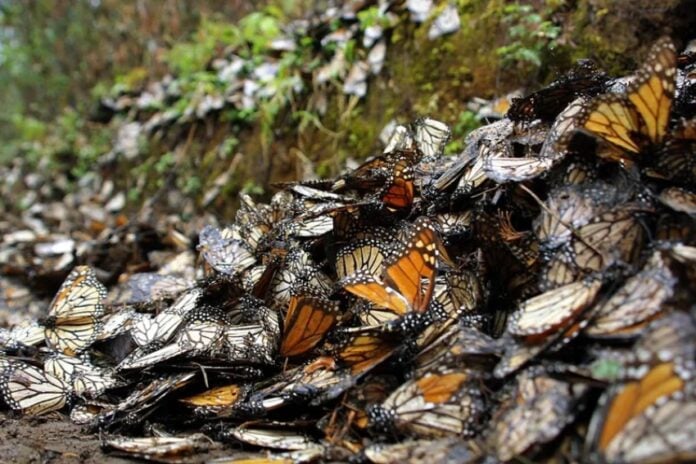
Monarch butterflies dead
Once the forests and the water disappears, so too will the monarch butterflies. (Getty Images)

The monarch butterfly weighs roughly one gram — about the same as a raisin. It navigates thousands of miles on instinct, chasing the same high-elevation oyamel fir and pine-oak forests in which every monarch butterfly before it has found refuge. Like the thousands of Americans and Canadians flooding Florida’s coasts each winter, monarchs are snowbirds. But unlike their human counterparts, the world is not their oyster. The forests of Michoacán and Estado de México — cool, humid and dense — are the only place on earth where the eastern monarch migration ends. There is no Plan B.

But something is burning through these forests. And it isn’t fire.

The cartel economy beyond drugs

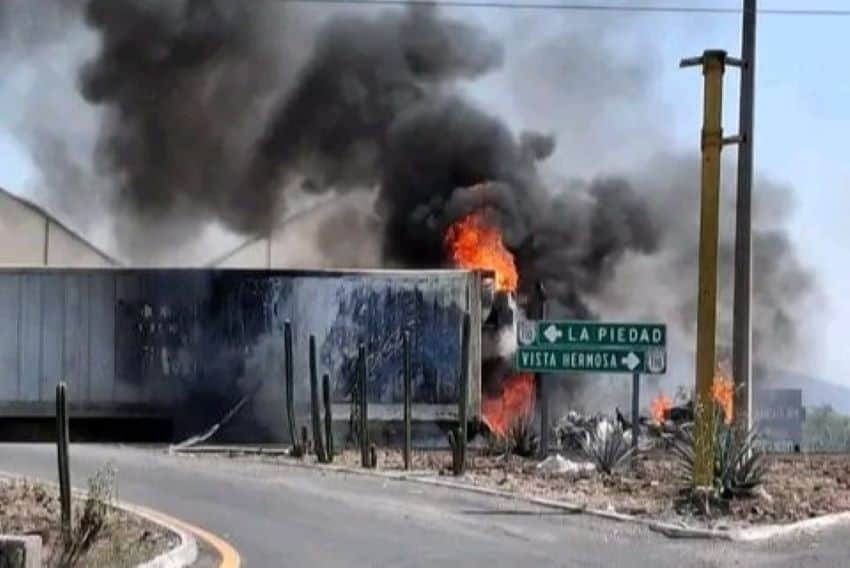
A semi trailer on fire blocks a Michoacán highway
While the federal government attributed the mayhem to an inter-cartel dispute, state officials said it was a reaction to an increased presence of federal forces in Michoacán. (X, formerly Twitter)

The cartels operating across Michoacán and Estado de México, two of Mexico’s poorest and most conflict-ridden states, have built a thriving economy most people never consider – assuming it’s a drug-only network.  The reality is far broader: timber, land conversion, extortion, water and avocado. When the revenue from one market softens, as it did in the 2010s when U.S. demand for heroin and marijuana nosedived, cartels simply readapt. Organized crime groups move swiftly into regions rich in natural resources that yield heavy profits. Right now, that includes one of the most important ecological corridors in the western hemisphere. 

The monarch butterfly, it turns out, winters in cartel territory.

Illegal logging and the monarch butterfly reserve

The Monarch Butterfly Biosphere Reserve (MBBR) is a UNESCO-protected territory that spans across southern Estado de México and northern Michoacán. It covers just over 56,000 hectares across three core zones, where logging is prohibited so monarchs can spend the winter. Two buffer zones of about 42,000 hectares extend in a ring-like fashion from the MBBR; here, farming, logging, and tourism activities are permitted within a controlled program. It is also home to Indigenous and ejido communities who use that land to make their living, and the organized crime cartels that control them.

When the drug market shifted, cartels diversified their portfolios, expanding into logging in Mexican forests that often overlapped with butterfly territory. Traffickers personally threatened or co‑opted ejidos (communal rural land) and private loggers, taking control of community permits that define volume limits and authorized areas. Many forcibly demanded fixed cuts of profits in exchange for “protection.” Others brought in their own felling crews; locals who refused to join were often left with no choice but to abandon the area.

The model proved profitable, and traffickers started using forest roads to move timber and drugs under the cover of legal activity, then setting up clandestine labs to process narcotics deeper in the mountains. To run these operations, they altered natural river flows for water, clearing more forest to open access and feed their labs’ demand. The more forests they cleared, the more springs dried up, stripping monarchs of the shelter, water and cool, humid microclimate required to survive the winter. Some locals tried to stop the destruction, leading to their own.

Murder in the sanctuary

On Jan. 13, 2020, Homero Gómez González attended a local fair in his town and was never seen alive again. Two weeks later, his body was found in a retention pond with blunt head trauma.

Male monarch butterfly
The forests that the monarch butterflies covet are also covered by avocado farmers and the cartels who control them in Michoacán. (Rhododendrites/Wikimedia Commons)

González had been a logger before becoming a conservation leader upon seeing the effects of deforestation. By enlisting community leaders, he built El Rosario into one of Mexico’s most visited monarch sanctuaries, organized reforestation projects and anti-logging patrols, and negotiated compensation for communities willing to stop cutting their forests. This involved disrupting the illegal logging operations of groups that did not appreciate his efforts.

Just days after his body was recovered, Raúl Hernández Romero, a conservation guide working in the same region, was found dead by stabbing inside the El Campanario sanctuary. Authorities have not publicly resolved either murder. International condemnation followed, and the Mexican government’s response did little to protect the activists — or the butterfly sanctuaries they had given their lives to defend.

Green gold, dead forests

The avocado boom in Michoacán began in the 1990s and to date, has never slowed. The cultivation area in the state has nearly tripled to roughly 400,000 acres, and as existing farmland filled up, growers pushed into the forests. By 2018, nearly 2,400 acres inside the reserve itself had already been converted to avocado orchards. According to researcher Alfonso De la Vega-Rivera, this has happened despite “not one single legal authorization for forest clearing” being issued in the state — a clear indicator that the majority of avocado orchards established in recent years are illegal. 

Drug cartels use the avocado to launder profits and dominate the market through extortion of farmers and bribery of government officials. The pattern is the same one playing out in the logging sector: threaten, co-opt, extract. 

Clearing trees isn’t the only problem here. Avocado orchards require at least 75,000 gallons of water per acre during a typical dry season, with farmers drawing from local springs, wells and streams — leaving many local rivers running dry. For a butterfly that depends on moisture to survive the winter, a drying watershed is as damaging as a chainsaw.

What the butterfly pays

In the winter of 1996–1997, the overwintering colony covered 18.19 hectares of forest. This past December, it measured 1.79 hectares — up from a record low of 0.9 hectares the winter before, but still well below the long-term average.

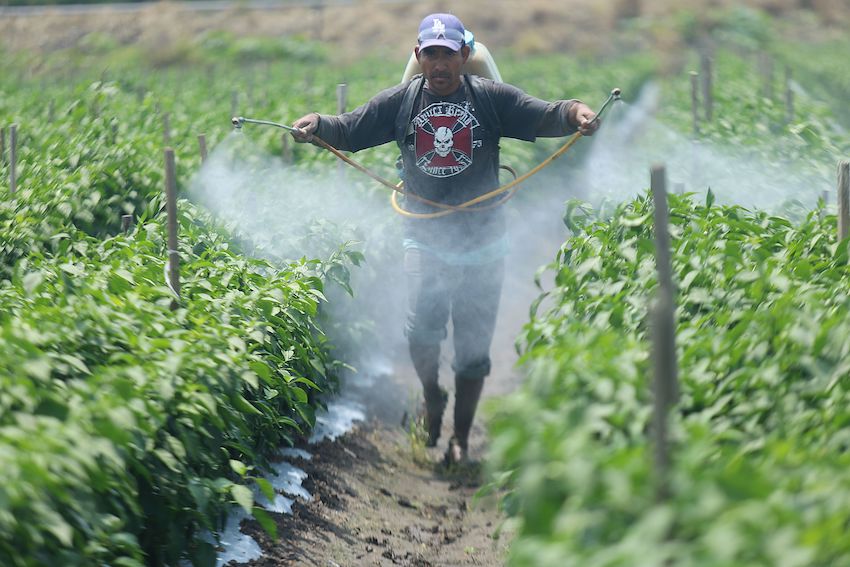
man spraying crops
Pesticides, deforestation and climate change are all contributing to the loss of monarch butterfly populations. (Juan José Estrada Serafin/Cuartoscuro)

Climate change, pesticides and milkweed loss on breeding grounds all play a role in that decline, and it would be reductive to blame cartel activity entirely. But if the overwintering forests fall, nothing else matters.

The relationship between cartel economics and ecological collapse is not a simple one. Deforestation has many drivers, monarch decline has many causes and some Indigenous communities are actively holding the line against both. What’s clear is that organized crime has made an already fragile situation significantly harder to reverse — by turning forest defense into a life-threatening act, and the forests themselves into a revenue stream. The butterfly has no margin for error. The cartels have plenty.

Bethany Platanella is a travel planner and lifestyle writer based in Mexico City. She lives for the dopamine hit that comes directly after booking a plane ticket, exploring local markets, practicing yoga and munching on fresh tortillas. Sign up to receive her Sunday Love Letters to your inbox, peruse her blog or follow her on Instagram.

How Mexico reshaped Hollywood — and then outgrew it

0
Mexican directors in Hollywood
Mexican film directors Alejandro González Iñárritu, Alfonso Cuarón and Guillermo del Toro, and Mexican cinematographer Emmanuel Lubezki are reshaping Hollywood. (RealGDT/X)

With the Oscars approaching, Mexican talent will, again, shine on Hollywood’s biggest stage. Led by Guillermo del Toro, with nine nods for his movie “Frankenstein,” the Mexican contingent features José Antonio García, for sound on “One Battle After Another,” Ibel Hernández for visual effects in “Avatar: Fire and Water,” and Mexican-Americans Adrian Molina, for co-directing “Elio,” and Yvett Merino, for producing “Zootopia 2.” 

Though del Toro himself may have been snubbed for Best Director — an award he won a decade ago — nominations for “Frankenstein,” the third-most among films this year, are an outstanding achievement for an auteur at his peak. Yet, “Frankenstein” is an undeniably odd choice for a Mexican director. Like all of del Toro’s work over the last twenty years, it is an English-language movie, based on a European story, made by a Hollywood studio. It doesn’t get less Mexican than that. 

Frankenstein | Guillermo del Toro | Official Trailer | Netflix

Still, del Toro, long the ultimate Hollywood insider, resolutely stands by the Mexicanness of his films; a sentiment shared by star Oscar Isaac, who plays Dr. Frankenstein and is Latino himself. “‘Frankenstein’ is this very European story, but told through a very Latin American, Mexican, Catholic point-of-view,” Isaac told Deadline. Del Toro is often blunter: “When people say, ‘What is Mexican about your movies?’ I say ‘me.’”

While del Toro and his movies are celebrated throughout Mexico, the question — and his response — speak to a bigger tension at play. This is about Mexico’s influence on Hollywood: how Mexican directors, producers and cinematographers are embedded in Los Angeles, and are changing the very grammar of American filmmaking from within; and the state of Mexican cinema from afar.  

The ‘Tres Amigos’

That Mexico could change Hollywood was entirely improbable. 

When Guillermo del Toro began his career, Mexico’s film industry was a long way from its Golden Age. By the late 1980s, Mexican cinema had cratered: production had collapsed and the national film archive had recently burned down; what remained was mostly ficheras — campy sex comedies — and narco films.  

With something like 10 Mexican features per year, del Toro was clawing his way into an industry that barely existed. Around this time, he met two others — Alfonso Cuarón and Alejandro González Iñárritu — in the same predicament. Realizing, as Mexican director Álvaro Curiel says, that “Mexico could not provide them with any opportunity,” the “Tres Amigos” soon left for Hollywood. 

Cuarón went first and del Toro soon followed. Iñárritu arrived last, catapulted by “Amores Perros” — a film he finished, legend has it, only after Cuarón helped him re-cut it, on the recommendation of their mutual friend, cinematographer Emmanuel Lubezki.

21 Grams (2003) Trailer | Sean Penn | Benicio Del Toro

By the 2000s, the “Tres Amigos” were all helming big-budget studio features — del Toro had landed “Hellboy” (2004), Cuarón, “Harry Potter and the Prisoner of Azkaban” (2006), while Iñárritu had “21 Grams” (2003) and Oscar-nominated “Babel” (2006). Beyond Lubezki, they came with the best of their generation — Oscar winners Rodrigo Prieto, Guillermo Arriaga and Eugenio Caballero, among others.   

Conquering Hollywood

What happened next was unprecedented.

Between 2014 and 2018, the “Tres Amigos” won four of five Best Director Oscars: Cuarón for “Gravity,” Iñárritu back-to-back for “Birdman” and “The Revenant,” and del Toro for “The Shape of Water.” Meanwhile, Lubezki — the “fourth Amigo” — won three consecutive Best Cinematography Oscars, something nobody had ever done. And then came “Roma” (2019): Cuarón’s black-and-white, Spanish-and-Mixtec-language memoir of his Mexico City childhood, which became the first Latin American film ever nominated for Best Picture, and won him his second directing Oscar. 

The dominance was so total that it obscured how unusual the arrangement really was. These were Mexican filmmakers, trained in Mexico, bonded by their Mexican sensibility — yet almost everything they made, and won for, was in English. The exception, “Roma,” was so unique — a big-budget production as much about Netflix’s Hollywood arrival as Cuarón’s directorial homecoming and his childhood — that it proved the rule; to win creative freedom, Mexican filmmakers had to first work in English. 

In Mexico, where cultural critics have long asked whether the “Tres Amigos” represent a triumph or a brain drain, the pattern raised uncomfortable questions. Were they Mexico’s greatest cultural ambassadors or Hollywood’s most talented recruits?

The debate remains unresolved. 

ROMA | Official Trailer | Netflix

Critic Saúl Arellano Montoro was philosophical about it: “Hollywood is a global village, and they already belong to it.” Their films may not represent Mexican cinema, but they represent what a Mexican filmmaker can say beyond Mexico’s borders. Other critics were less sanguine: some praised their technical mastery; others dismissed the Hollywood output as “gringo cinema” — commercial work that erased national identity. 

At the heart of this debate is Nestor García Canclini’s question, posed presciently in 1993. Can Latin American cinema continue as a space for national cultural identity, or would globalization dissolve it completely? 

For 30 years, Mexico’s answer seemed painfully clear. And then came … 

A disaster named Emilia

“Emilia Pérez,” Netflix’s French-directed musical about a transitioning Mexican cartel boss, arrived at the 2025 Oscars with 13 nominations — the most ever for a non-English film. It left with 11 losses, tying the record for most defeats.

The disastrous campaign underscored the tension within Hollywood’s global village; director Jacques Audiard openly admitted he hadn’t done much research on Mexico (or the Mexican accent). Set within the backdrop of the cartel violence that critics and victims described as wildly misrepresented, thousands petitioned to block the Mexican release of “Emilia Pérez.” When it opened anyway, thousands more demanded refunds, forcing Mexico’s federal consumer protection agency, Profeco, to intervene.

In Mexico, “Emilia Pérez” wasn’t just a flop — it was wholly rejected as deeply disrespectful. When critic Ana Iribe wrote, “We don’t want a white French director to portray the violence we have to face every day,” she spoke for Mexicans everywhere confronted by the gross appropriations and mischaracterizations of today’s global Hollywood. 

EMILIA PÉREZ | TRÁILER

The outcry ultimately reached the Oscars. When Zoë Saldaña won Best Supporting Actress for the film, she used the moment to address the backlash directly: “I’m very, very sorry that you and so many Mexicans felt offended. That was never our intention.” Then she added that “the heart of this movie was not Mexico” — a statement that, for many Mexicans, proved the point entirely.

A new chapter for Mexican Cinema

The “Emilia Pérez” debacle drew a line in Hollywood. Mexico’s cultural influence had evolved into something with real authority: Hollywood could no longer use Mexico as a backdrop, borrow its pain and tell its stories without Mexican authorship. The era of Hollywood’s yellow-tinted “Mexico” — the stereotypical sepia filter of “Traffic” and “Sicario” — was over, not because Hollywood decided, but because Mexico did. 

Whether the “Tres Amigos” contributed to this change-from-within triumph or were just a generational brain drain, the reality is that the Mexican film industry is now booming. One year after the premiere of “Emilia Pérez,” and six years after the success of “Roma,” Netflix committed US $1 billion over four years to Mexican productions, plus upgrades to Mexico City’s historic Churubusco Studios and a huge expansion of their Latin American corporate headquarters. It was, by any measure, the largest foreign investment in Mexican cinema history.     

As Hollywood localizes — setting up shop in creative cities around the world — Mexico City, in particular, is primed for more success. With pre-existing infrastructure, film-friendly incentives, and a deep pool of talent, Mexico City is more than a cheap backlot for now-unaffordable Los Angeles shoots; it is an undisputed creative destination for the vast Spanish-speaking world. 

The Mexican audiovisual industry now contributes US $3 billion annually to the national economy. Central to this growth is the new generation of Mexican filmmakers who are choosing to stay in Mexico. From Tatiana Huezo and Fernanda Valadez to Michel Franco and Fernando Frías, top Mexican talent today is primarily working at home, in Spanish, with stories that are unmistakably Mexican. Franco, who won prizes at Cannes, has been blunt about it: “I am convinced there is no place where I can make better films than Mexico.” Whereas Cuarón, del Toro and Iñárritu had to leave for Hollywood, their “kids,” as Amazon Head of Mexican Originals Alonso Aguilar calls them, are proving that Hollywood, increasingly, will come to them. 

On March 15, the 98th Academy Awards will air to what may be among its smallest audiences ever. With U.S. viewership (the only viewership stat released) cratering from 55 million to under 20 million in barely two decades, the Oscars — and, by extension, Hollywood — may be more irrelevant than ever. Rather than serving as the singular gatekeeper of global cinema, today, the Oscars are one stage among many.  

For many Mexicans — and millions more around the world — that is precisely the point. Mexican cinema now speaks for itself, without Hollywood’s sepia filter, in its own languages, and on its own terms. 

Logan J Gardner formerly worked for Netflix Original Film in Content Strategy and Analysis. Today, he is a Mexico City-based content strategist, writer, photographer and filmmaker. Sign up to receive his newsletter, Half-Baked, peruse his blog or follow him on Instagram for more. 

Nogales train construction uncovers pre-Columbian town and petroglyphs

0
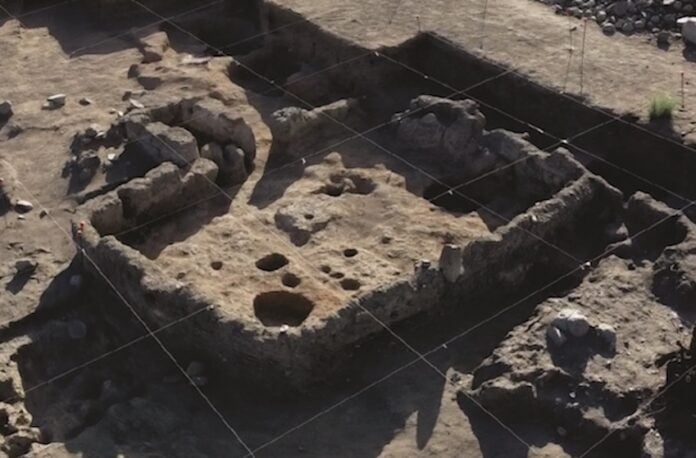
La Cienega finding
Once the railroad work exposed the presence of ruins, researchers excavated three residential compounds and documented dozens of burials of children and adults tied to the Trincheras tradition of that northern Sonoran region. (Jupiter Martínez/INAH)

Researchers in the northern state of Sonora have uncovered a pre-Columbian village that predates the nearby Cerro de Trincheras archaeological zone and offers rare evidence of cross-modern-border ties with ancient cultures in what is now Arizona.

In northern Sonora’s Cocóspera River valley and canyon — about 100 miles south of Tucson, Arizona — specialists from the National Institute of Anthropology and History (INAH) have identified an earthen village they say was occupied roughly 1,000 years ago.

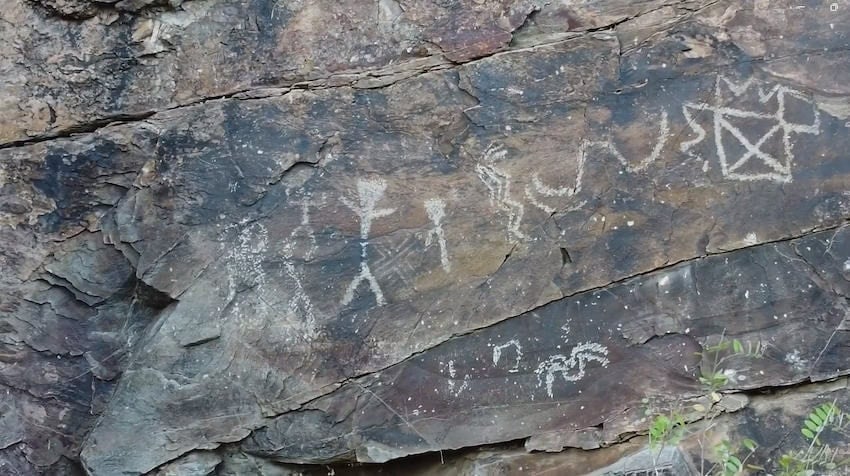
petroglhyphs sonora
The researchers also uncovered two petroglyph sites — Babasac and Bear’s Footprints — that likely date to 800-1400 CE.(INAH)

The find emerged during archaeological salvage work tied to construction of the Ímuris-Nogales railway bypass, a controversial rerouting of Sonora’s “ghost train” line that has drawn environmental concerns.

Identified as La Ciénega (The Marsh), the village has been linked to the Trincheras people, a farming culture in northern Sonora that built extensive terraced hillsides, dug irrigation canals and produced distinctive ceramics from about 800 to 1500 CE.

Archaeologists pegged La Ciénega to 800-1200 CE, which predates the nearby Cerro de Trincheras (Trench Hill), a hilltop settlement of more than 900 stone-built terraces considered one of the most important archaeological sites in northern Mexico. INAH pegs its occupation to 1200-1500 CE.

The newly found site, in a green river corridor of Sonoran Desert country, includes foundations of up to 60 dwellings, a cemetery with 40 human remains and 28 urns holding the ashes of people who were cremated, according to INAH.

Analysis of ceramics also points to contact with the Hohokam people, whose descendants include the Pima and Tohono O’odham of southern Arizona, according to the U.S. National Park Service.

INAH said the find “confirms this region was a cultural meeting place and a corridor connecting [Sonora to what is now] the southwestern U.S.”

Archaeologist Júpiter Martínez Ramírez said earlier surveys in 2008 had registered 10 houses, but new excavations reveal a far larger community.

“The architectural evidence is spread across the entire plateau, an area 250 meters long by 250 meters wide,” he said during a recent INAH “Coffee Afternoons” lecture series.

Researchers with the SALFIN project (SALFIN is the acronym INAH is using for the archaeological salvage of the Ímuris-Nogales railway bypass) excavated three residential compounds and documented dozens of burials of children and adults tied to the Trincheras tradition.

The oval and rectangular semi-subterranean houses, dug up to more than 2 meters below the surface and with internal walls, formed neighborhood-like clusters of multi-generational families.

As part of the same project, archaeologists also recorded two smaller Trincheras settlements, Ojo de Agua and La Curva, and two petroglyph sites — Babasac and Bear’s Footprints — that likely date to 800-1400 CE.

With reports from Artistegui Noticias, El Sol de Hermosillo, Border Report and INAH

Mexico extends its gas price cap as the Iran war spikes oil prices

3
Pemex gas station prices
More than 20 gas companies agreed to extend a pact to keep regular gas prices below 24 pesos per liter. (Camila Ayala Benabib / Cuartoscuro.com)

As oil prices surge due to the war in the Middle East, causing pain at the pump for motorists in many countries, the Mexican government has renewed a gasoline price cap agreement with gas station owners for an additional six months.

President Claudia Sheinbaum, Energy Minister Luz Elena González Escobar and other federal officials met with representatives from more than 20 gas station companies on Wednesday to renew a pact to keep the price of gasoline below 24 pesos (US $1.34) per liter, equivalent to US $5.07 per gallon.

After the National Palace meeting, Sheinbaum took to social media to trumpet the renewal of the agreement that first took effect just over a year ago.

“While gasoline prices rise around the world, in Mexico we are protecting families’ economies through the renewal of the voluntary agreement with 96% of service stations so that regular gasoline remains below 24 pesos per liter,” she wrote on X, Facebook and Instagram.

Gónzalez published a similar post to her X account. She asserted that the agreement between the government and gas stations “confirms that energy must always be at the service of the people of Mexico.”

According to an Energy Ministry statement, representatives of 25 gas station companies voluntarily joined the agreement.

Among those companies — some of which operate Pemex-branded gas stations — are G500, Grupo Hidrosina, OXXO Gas, Servifácil and Petrodiésel del Centro.

On behalf of the companies, the CEO of Servifácil, Eugenio del Valle, “reiterated the willingness of the gasoline industry to continue working in coordination with the Mexican government toward a common goal,” according to the Energy Ministry statement.

That goal is for fuel to “continue to be an engine of development, competitiveness, and well-being for all Mexicans.”

Gas stations in Mexico source a lot — but not all — of their fuel from Mexican refineries, helping them to maintain lower prices. The government can also temporarily reduce or eliminate the IEPS excise tax on fuel to keep prices low.

Sheinbaum said Monday she was prepared to reduce the IEPS on gasoline amid the conflict in the Middle East “if necessary.”

Pemex CEO: Government could forge a similar pact for diesel 

After the meeting between federal officials and the representatives of gas station companies, the CEO of state oil company Pemex said that the government could reach a similar pact with the fuel sector to cap the price on diesel, which is around 4 pesos more expensive than gasoline per liter.

Víctor Rodríguez Padilla said that a price cap for premium gasoline is not necessary as the market for that fuel is very small and motorists who purchase it are generally better off.

“The majority of [fuel] sales are of Magna [regular] gasoline,” he said.

According to Energy Minister González, regular gasoline is used by more than 85% of vehicles in Mexico.

Brent crude tops $100 per barrel on Thursday

The New York Times reported on Thursday afternoon that “the price of Brent crude, the global benchmark for oil, was about $99 a barrel on Thursday, up nearly 8 percent, after briefly crossing above $100 earlier in the day.”

On Monday, “the price of Brent spiked to nearly $120 a barrel as traders feared long-lasting cuts in supplies,” the Times reported.

Before the United States and Israel attacked Iran on Feb. 28, Brent was selling for around $73 a barrel. A key factor in the increase in the price of oil is the closure of the Strait of Hormuz, located off Iran’s southern coast. Around 20% of global oil supply usually passes through the narrow waterway that links the Persian Gulf to the Gulf of Oman, which connects with the Arabian Sea.

Prices for West Texas Intermediate (WTI) crude, the U.S. benchmark, and Mexican crude have also increased during the war in the Middle East, but they are both cheaper than Brent.

The Times reported that WTI rose to $95.73 per barrel on Thursday, while Mexican crude closed at $81.59 per barrel.

Gasoline prices have increased in the United States this week, although motorists there still pay considerably less than their counterparts in Mexico.

With reports from El Economista and Sin Embargo