Home Blog Page 18

The boom up north: A perspective from our CEO

7
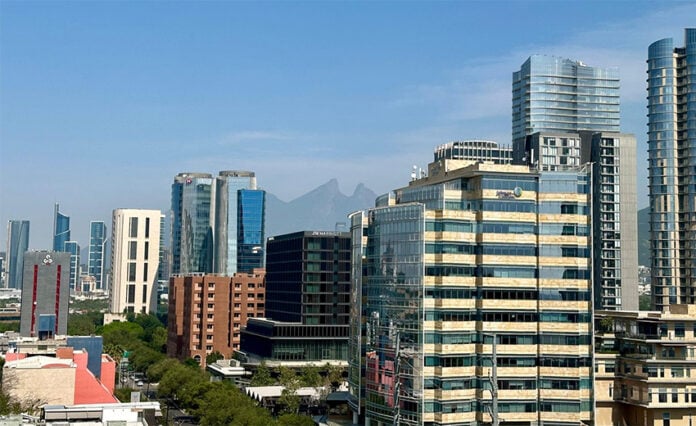
A cityscape of Monterrey, Nuevo León
Mexico News Daily CEO Travis Bembenek recently visited Monterrey for the annual members meeting of the American Chamber of Commerce of Mexico's Northeast chapter. (Travis Bembenek)

At the risk of offending some Mexican friends, the northern city of Monterrey, Mexico, was not love at first sight for me. I vividly remember my first trip there, almost 30 years ago. I had recently been hired, fresh out of college, and the company I was working for had a quality problem with some product that had been sold to a customer in Monterrey. It was the middle of summer, the heat was unbearable, and nobody wanted to go — so they sent me to go check things out.

I assumed that the meeting would be held in our customer’s offices, and so I dressed accordingly (which was a full suit and tie back in those days). The meeting started off in their air-conditioned offices, but the customer then encouraged me to go see the extent of the problem firsthand in their warehouse. I accepted and was driven about thirty minutes away to an industrial park outside of town. As I was escorted into a massive warehouse, I quickly realized that it was NOT air-conditioned. Imagine the scene — temperatures in the upper 90s, me wearing a full suit, and spending hours opening pallets of dusty boxes to inspect the product inside. By the time the day had ended, I think I had lost 5 pounds from sweating so much, my new suit was a sweaty, dirty pulp, and I swore I never wanted to return to Monterrey. I didn’t see any reason to go back to the hot, dry, dusty industrial city again.
Skyline of Monterrey, Nuevo León
Monterrey, the northern state of Nuevo León’s capital, is now the second-largest metropolitan area in Mexico. (Travis Bembenek)

But come back I did, and frequently. Over the following 25 years, I estimate that I returned to Monterrey well over 50 times, each time learning to like it a little more. But when the pandemic came and I left the corporate world, I stopped going. I did not visit again until this past week — the first time in six years. The American Chamber of Commerce of Mexico graciously invited me to their annual members meeting for the Northeast chapter and I jumped at the chance to go check out the city after a long absence.

Of course, I have read a lot about Monterrey’s boom over these past years in Mexico News Daily. Foreign direct investment (FDI) has poured into the area. The population has increased dramatically — nearly doubling in the past 30 years to 5 million-plus people — and it is now the second-largest metropolitan area in the country. For perspective, the Mexico City metro area has grown over 30% while the Guadalajara metro area grew roughly 70% in that same time period. Equally impressive is the infrastructure boom of highways, trains, bridges, subways and more.

The governor of Nuevo León, the state in which Monterrey is located, is Samuel García. Samuel is a 38-year-old, supremely confident, ambitious politician who is not a member of the Morena political party. I first heard him speak two years ago at a meeting of businesspeople in Mexico City. He essentially told the audience that the rest of Mexico was getting left behind as Monterrey was racing ahead, while imploring them to come invest in Monterrey.

And in many ways, he is right. The state has taken in a significant share of the country’s FDI since the pandemic. An infrastructure boom is transforming the city. The airport, already much larger, is still expanding and rapidly adding flights to destinations across Mexico, North America, and even Europe and Asia. The city already has three subway lines and is currently building three monorail lines. Highways and train lines are being built to better integrate trade between the region and the United States. Dams have been built to address the water scarcity problem. New office and condo towers are going up everywhere, including what will be the second-tallest building in the Americas. It’s all pretty damn impressive.

A under-construction skyscraper and a partially built light rail in Monterrey, Nuevo León
New monorail lines, skyscrapers and other infrastructure projects are underway in Monterrey, including the soon-to-be second-tallest building in the Americas (at right). (Travis Bembenek)

Many of our readers might be thinking, “Ok fine, but why would I ever want to go there?” My simple answer: To get inspired by the energy of what the people are accomplishing there, as well as be awed by the beauty of the mountains surrounding the city. People from Monterrey are very proud of their heritage and their mountains — and rightly so. They do not allow themselves to be so encumbered by the bureaucracy of the federal government. They are excited about the business opportunities ahead of them. They view themselves as the Texas of Mexico: part of Mexico, yet fundamentally different.

As the state economy minister, a bright young woman named Betsabé Rocha, reminded the AmCham meeting crowd: “The giant beer brewer Cervecería Cuauhtémoc had extremely humble beginnings, starting by making ice.” Her message was clear: that the people and companies of Monterrey have massive ambition and abilities to evolve and grow. Her message was also inspiring, as were many others at the meeting. It was fascinating to see so many women leaders presenting and attending, especially given Monterrey’s reputation for having a machista culture.

After the AmCham meeting, I met with Tatiana Cloutier. My timing was perfect. Tatiana started the week as the head of the Institute for Mexicans Abroad, working directly for President Claudia Sheinbaum. But that changed by the end of the week as Sheinbaum announced that Tatiana was stepping down to run for the governor of Nuevo León in next year’s election as a candidate for the Morena party. Over a lunch of tostadas and soft drinks at a humble local restaurant, we talked about why she wanted to run for governor.

Tatiana didn’t deny that Monterrey and the state were booming economically. She was clearly proud that it was attracting new residents from across Mexico, companies from around the world, and building impressive infrastructure. But she talked at length about her concerns that the boom was leaving too many in the middle and lower classes behind. In her words, too many Regios (as people from Monterrey are called) are seeing a rapidly increasing cost of living with a lack of focus on issues that matter most to them. Issues like improved security, water availability, education, bus routes, etc. In my very unscientific study talking to a dozen or so working-class locals, I heard similar concerns.
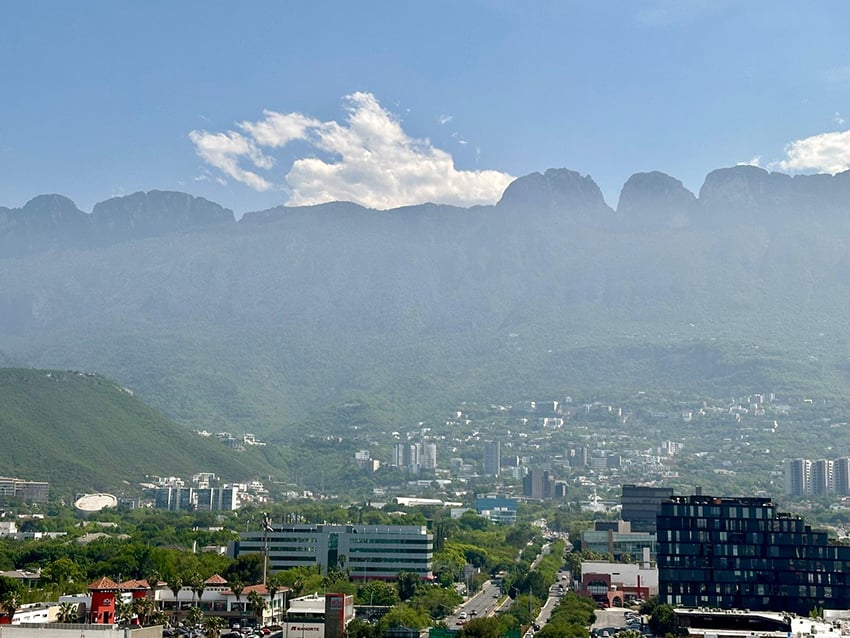
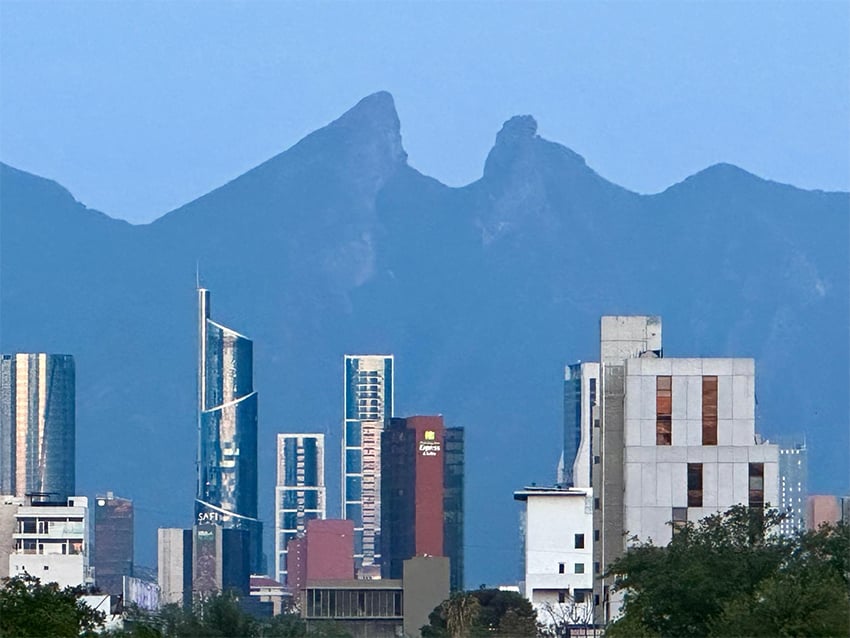
The city of Monterrey, Nuevo León
The mountains surrounding Monterrey are a point of local pride, providing a dramatic natural backdrop to one of Mexico’s most industrial cities. (Travis Bembenek)

Monterrey is a city on the move. A few days in the San Pedro area of the city will most certainly leave you inspired by the transformation and ambition of the city and its people. The views of the surrounding mountains will leave you awestruck — such beautiful nature so close to such a major city. The political future of the region will be fascinating to watch: if Tatiana is successful in bringing Morena leadership to a state that has yet to embrace a governor from the party, or if the state will continue to chart its own independent path.

As I returned to the airport in an Uber, I chatted with the driver, a recent immigrant to Mexico from Belarus. He told me he was on vacation a few years ago in Playa del Carmen and fell in love with his now wife, who is from Monterrey. They married, moved to the city two years ago, and just recently had a baby girl named María Elena. He proudly showed me photos of her on his phone. I asked him how life was. His answer: “Monterrey has been good to both me and my family.”

A proud immigrant to a booming city.

I encourage you to go check out what is now Mexico’s “second city.” You won’t regret it.

Travis Bembenek is the CEO of Mexico News Daily and has been living, working or playing in Mexico for nearly 30 years.

The short and unnecessary drama of Mexico’s aborted school year reduction

7
Two children playing outside in Mexico
The 2025-2026 school year in Mexico almost ended early, until parents nationwide complained. (Josue Michel/Unsplash)

When I heard the news last week that the Public Education Ministry (SEP) had decided that Mexico’s school calendar would be shortened by a month and a half — seemingly out of nowhere — I was already grouchy.

“A month and a half early? That’s got to be a prank,” I typed in a group chat I have with a few parents I get along especially well with. “Anyway, about this Mother’s Day event …”

Secretary of Education Mario Delgado
Education Minister Mario Delgado is the man ultimately responsible for Mexico’s brief attempt at shortening the school year. (ITAM)

The real source of my grouchiness at the time was the kids’ proposal — apparently accepted without question by the teacher — that we be invited to school to play a soccer game with our children. Competitive physical exercise as a Mother’s Day gift? I kid you not.

I was incredulous and ready to cause a stink about it.

A puzzling and preposterous idea

Alas, that soon faded into the background as I realized that we had more pressing issues to discuss — mainly, what we would do with our children for an extra month and a half this summer? And what would become of the lessons they hadn’t yet completed, or the exams? This particular generation of sixth graders had missed their kindergarten graduation because of COVID-19. Now, thanks to officials deciding to shorten the Mexico school calendar, it looked like they’d miss their elementary school graduation as well.

The first thing I watched was Education Minister Mario Delgado’s announcement on a Facebook post in which he explained that the school year was going to end on June 5 instead of July 15, as previously planned.

“Because of various circumstances and petitions, we’ve made the decision to move up the end of the school year,” he said in a recorded video.

Hmm. Circumstances and petitions? Like, from his kids?

The man behind the announcement

So who was this guy who’d decided “with other state education ministers” (and who are they, for that matter?) that the World Cup and hot weather in some parts of Mexico were good reasons to cut the school year short for the entire country with less than a month’s notice?

From what I could glean from a cursory internet search, Delgado is essentially a “party man” with Morena. He’s an economist who’s held various positions, including as a senator and as a deputy in the Mexican Congress. He also served as head of the Morena party and was the Mexico City education minister before that. He resigned as the Morena party boss in 2024 to join President Sheinbaum’s cabinet as her education minister.

Most glaring to me was the fact that he has not, as far as I can tell, ever worked in any capacity at a school. He hasn’t been a teacher or a principal. His degrees have nothing to do with education. Also, revealingly, Delgado was at the center of a controversy regarding some lavish spending habits by Morena officials — members of a political party whose central identity is built around austerity.

Now, my belief that all politicians should take a vow of poverty, priest-style, is another article entirely. They have not, but it’s still not a great look.

Does having kids qualify you to be education minister?

All this begs the question of why he was chosen as education minister. Surely, having once been a student and having kids who are students isn’t enough alone to qualify you to lead an educational institution. But it did seem to explain why he’d proudly announce such a preposterous idea.

Even more preposterous was his apparent surprise that anyone might have a problem with the new plan. I mean, how out of touch do you have to be with regular people to not realize that they might be upset about this? Did he assume that most Mexicans would be taking their children to World Cup games?

Some dumb reasons given for the calendar change

Mexico's national team for 2026 World Cup
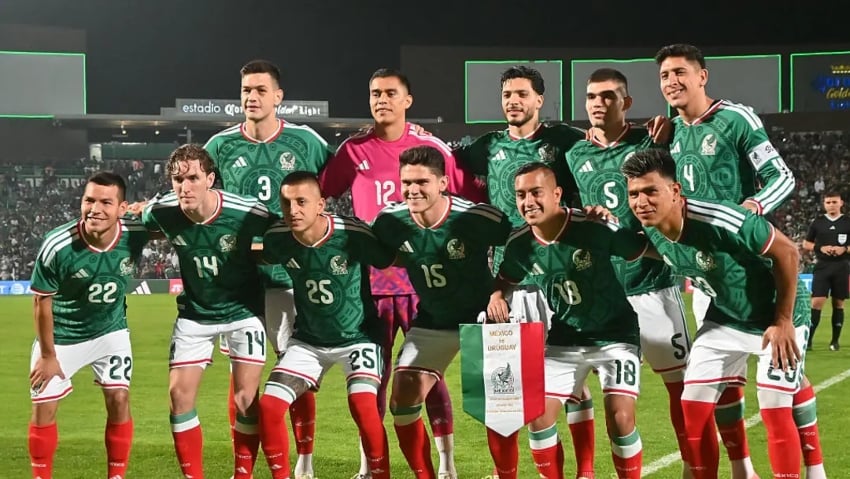
What’s more important: World Cup games or the education of Mexico’s children? (Getty Images)

As both a parent with a child currently in the Mexican schools and someone who was a teacher here for years, I feel particularly qualified to comment on this, so let’s look at some of the points that he — or they, if I’m being fair, as the state secretaries apparently agreed unanimously on this calendar change — considered:

  • Some kids and their parents might want to watch or attend the World Cup 2026 games instead of going to school.
  • Some students might be affected logistically by the games.
  • In some parts of Mexico, it’s going to be hot during June, especially if you live in the desert. Maybe it will be too hot to go to school.
  • According to Delgado, kids don’t really do anything in their classrooms after June 15 anyway.
  • Parents unfairly treat the school as daycare (how dare they have jobs!), and teachers should get to rest instead of being required to babysit.

Some things they failed to consider

  • Shortening the school year in this way is illegal. Save for extraordinary circumstances — say, a worldwide pandemic — national law says there must be at least 180 days of classes. The exact number can vary between 180 and 200; this year’s original calendar was set for — and is once again — 185 days long.
  • Delgado hadn’t apparently run the idea by the president. On the day after his announcement, at her daily press conference, President Claudia Sheinbaum seemed to be put on the defensive. She responded by saying that the decision was not yet “set in stone.”
  • Childcare. In this economy, as in many economies, it is common for both parents to work. It is common for both parents to need to work, in fact. School is, indeed — at least in part — a very necessary daycare.

Gender assumptions are still alive and well

In a country that seems to be trying hard, at least at an institutional level, to find gender parity, it saddens me that basic gendered assumptions are so alive and well in Mexico. Aunts, grandmas, moms — there’s always assumed to be some woman in the family just sitting around, waiting to swoop in to care for children at a moment’s notice. When there’s not, that’s taken to be a private family problem, not an institutional one.

This is probably the point that made me the most upset. How telling that the decision-makers who wanted to shorten the Mexico school calendar apparently thought releasing kids a month early wasn’t a big deal at all! Morena may be a party of the poor, but its politicians are quite privileged. They would not have any trouble securing childcare for their own kids: They could afford camps, tutors and nannies.

The little people? Meh, they’d figure it out — just flatter them with how great they are: “Something something, strength of the Mexican family, something something.”

Really? Nothing happens during the last month of school?

As someone who was a high school teacher here in Mexico for five years, I can personally tell you that this idea is not true. Teachers have a curriculum. We plan our curricula and space them out in the time we have. The only time I didn’t “do much” academically with a class was the last couple of weeks when I had seniors about to graduate. But we still didn’t just sit around.

No self-respecting teacher is just going to sit around with their students doing nothing for a month, and the assumption that this is what happens speaks to the very little faith institutional leaders have in those charged with the job of educating the nation’s children.

Also, most families and many businesses make long-term plans based on the SEP calendar: When can summer camp programs be offered? When can families plan vacations? When should you set your ice cream cart outside of schools, and when should you make other plans? When do we need to talk to a boss or two to see if we can get reduced hours or an adjusted schedule in advance? All these “little people” logistics without the resources required for sudden change were apparently forgotten.

The plan is off again

Happily, the plan for the new calendar was quickly scrapped. What unnecessary drama! In his remarks regarding the backtrack, Delgado stated, “We know how to correct course because we know how to listen. The proposal of May 7 served its purpose of sparking a necessary debate about the flexibility of the school calendar.”

Uh-huh. Sure, man.

Once it was over, our busy parent chat for my kid’s classroom received a message: On June 5, the kids would be giving presentations on historical mathematical figures, and did we want to dress them up in Greek togas?

Mathematical formulas
A student presentation on historical mathematical figures — complete with toga costumes that parents would be asked to supply — had at least one parent reconsidering her opposition to the shortening of the Mexico school calendar. (Arthur Jalli/Unsplash)

“Sheesh,” joked one of the moms, as exhausted as the rest of us by endless school-related requests. “Maybe the school year should have ended on June 5.”

Mother’s and Teacher’s Day gifts

As for Mother’s Day? In the end, I didn’t go. My kid was sick with a bad fever, which is in line with most Mother’s Days for me — there’s always something, and those somethings are not usually cards or flowers.

I had actually been planning to go to our “soccer-game gift,” but the gods had other plans for me that did not involve me giving the teacher the stink eye for not having told her students, “Now, children, how about we think about something your moms might actually enjoy?”

But later, when the group leader asked for suggestions for a Teacher’s Day gift, I was ready.

“I’ve got it! We let her play soccer with our kids!”

Sarah DeVries is a writer and translator based in Xalapa, Veracruz. She can be reached through her website, sarahedevries.substack.com.

Víctor Rodríguez resigns as Pemex director after a month of troubles

5
Sheinbaum, Rodriguez Carpio and Luz Gonzalez
Outgoing Pemex Director Víctor Rodríguez (right) and his announced replacement Juan Carlos Carpio met Thursday with President Sheinbaum and Energy Minister Luz Elena González Escobar. (Presidencia / Cuartoscuro)

President Claudia Sheinbaum appointed Juan Carlos Carpio to be the new director of Mexico’s state-owned oil company after the embattled former CEO stepped aside on Thursday. 

Víctor Rodríguez resigned to return to his academic pursuits and will continue to support the government from the Institute of Electricity and Clean Energy, Sheinbaum said.

Characterized as a resignation, Rodríguez’s departure was considered a foregone conclusion even before credit ratings agency S&P on Tuesday revised Mexico’s outlook to “negative,” citing the government’s continued fiscal support of the debt-ridden oil company. 

S&P reaffirmed Pemex’s credit rating (“BBB” with a negative outlook), but acknowledged that its “capital structure is unsustainable, given its low liquidity and high leverage.”

Rodríguez faced considerable criticism in April over a massive oil spill that affected almost the entire southern half of the Gulf of Mexico. 

After initial denials that Pemex was responsible, Rodríguez confirmed on April 16 that a pipeline belonging to the state-owned oil company was the primary source of the disaster, but insisted he was unaware of the problem and was misled by his subordinates.

Despite this, Sheinbaum said the oil spill had nothing to do with the change of leadership at Mexico’s flagship company.

In a video released Thursday night on social media entitled “Relevant news,”  (shown here in Spanish), Sheinbaum explained that Rodríguez’s departure was premeditated.

“When I won the election I asked Víctor to come help me at Pemex and he said, ‘I’m busy at the [national university], it’s going to be very difficult,’ but … after thinking about it, he told me, ‘Yes, I’ll help you, but on one condition, only a year and a half’,” she said.

Sheinbaum and Rodríguez have known each other for decades, studying physics at the National Autonomous University (UNAM), collaborating on academic projects and publishing papers together on energy matters while working at the Faculty of Sciences.

Sheinbaum tapped Rodríguez to head Pemex “to boost Pemex’s profitability and rescue the company from ballooning debt and recurring accidents,” calling him “an expert in energy economics and policy.”

For his part, Rodríguez said it was an honor to have served in Sheinbaum’s administration, saying “I retire with the satisfaction of having served with honesty and commitment.”

The newspaper El País reported that Rodríguez had twice submitted his resignation last year only to have Sheinbaum refuse to accept it.

In addition to the environmental disaster in the Gulf, Rodríguez’s tenure at Pemex was marred by a fatal accident at the Olmeca refinery in Tabasco, the failure to manage the company’s persistent debt while unable to attract foreign capital, significant financial issues including losses of US $2.6 billion in 1Q 2026 and declining oil production.

In January, Pemex reported a debt of approximately US $84.5 billion, a 13.4% decrease compared to 2024. The reduction was achieved due to the support of nearly US $22.65 billion granted last year by the Finance Ministry for debt repurchases and the issuance of pre-capitalized notes.

The appointment of Carpio, formerly Pemex’s finance director, must be approved by the Pemex Board of Directors.

An economist ​trained at UNAM, Carpio is close to Energy Minister Luz Elena Gonzalez, for whom he worked ​when she was head of Mexico City’s finances during Sheinbaum’s tenure as mayor of the capital.

With reports from Reuters, The Associated Press, La Jornada, Infobae and N+

Opinion: Sheinbaum, Meloni and Takaichi — a comparison worth exploring

17
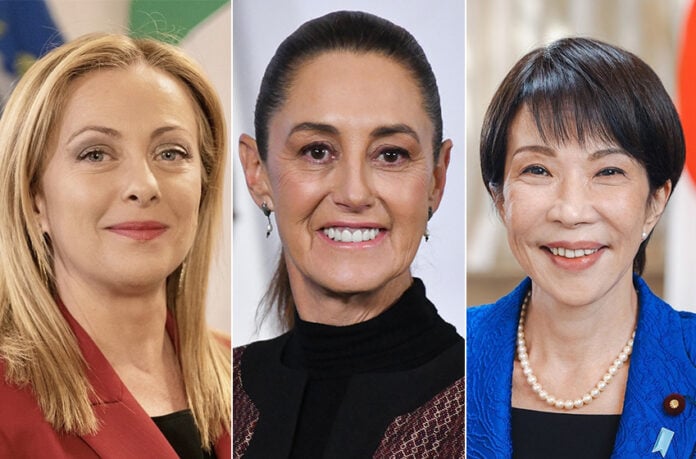
Italian PM Giorgia Meloni, Mexican President Claudia Sheinbaum and Japan PM Sanae Takaichi
Italian Prime Minister Giorgia Meloni, Mexican President Claudia Sheinbaum and Japanese Prime Minister Sanae Takaichi are each the first woman to lead their country. Is that where the similarities end? (Government of Italy/Cuartoscuro/Government of Japan)

Let me start with a confession. When I was first asked to compare Claudia Sheinbaum, Giorgia Meloni and Sanae Takaichi, my instinct was to push back. The piece felt like the kind of thing you write about women that you would never even think to write about men. Nobody, as far as I know, has published a piece comparing Macron, Xi Jinping and Trump on the grounds of them being males in positions of power. Beyond the fact that they are all women leading their countries, what is the basis for putting them in the same sentence? They disagree on almost everything: migration, climate, gender, China, the role of the state. Treating them as a category because they share a chromosome felt reductive.

Female heads of government are not news in themselves, either. Thatcher, Merkel, Bachelet, Indira Gandhi, Jacinda Ardern. The list is long, the ideological span runs from hard-right to socialist, and that already tells us something useful: Being a woman predicts almost nothing about how someone will govern.

So why bother?

Because the more I sat with the assignment, the more the discomfort was the point. In a world where machismo is not the exception but the operating system — in Mexico, in Italy, in Japan — the fact that three of the world’s largest economies are simultaneously led by women, each the first ever in her country’s top job, is genuinely remarkable. Thatcher, Merkel and Bachelet broke their ceilings one at a time, decades apart.

What is new in 2026 is that all three breakings happened almost at once. That is rare. And when history clusters its exceptions like this, I think it is usually trying to say something about the rules they’re breaking.

Three women, three doorways

Giorgia Meloni grew up in working-class Garbatella, raised by a single mother after her father walked out when she was a baby. She joined the youth wing of Italy’s post-fascist movement at fifteen, never went to university, and in 2022 became the first far-right head of government in Western Europe since 1945. Hers is now the third-longest-serving government in Italian republican history.

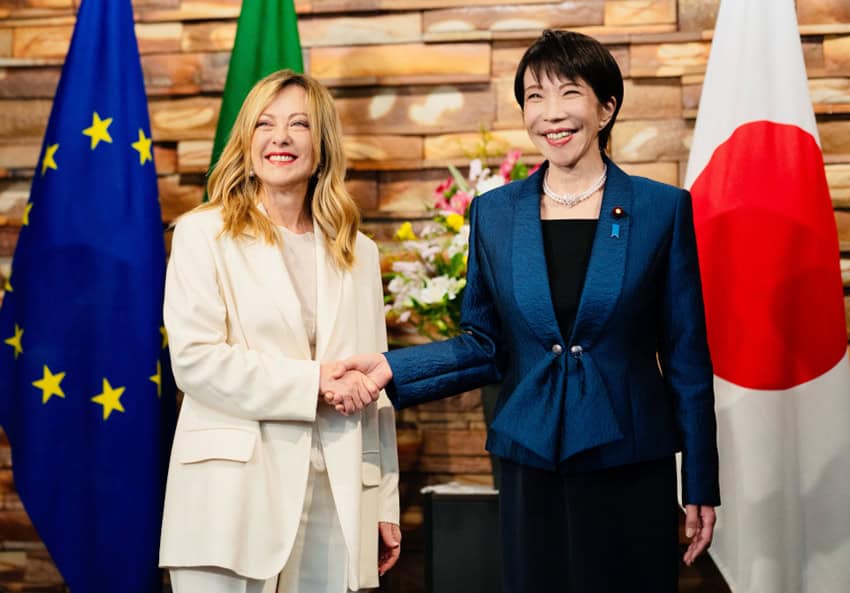
Italian Prime Minister Giorgia Meloni and Japanese Prime Minister Sanae Takaichi shake hands
Italian Prime Minister Giorgia Meloni and Japanese Prime Minister Sanae Takaichi meet during Meloni’s January visit to Japan. (Government of Italy)

Sanae Takaichi was a heavy-metal drummer in college and remains a vocal Iron Maiden fan. Her three declared political heroes are Margaret Thatcher, Shinzo Abe and Ronald Reagan. Protégée of the assassinated Abe, she won the leadership of Japan’s ruling LDP in October 2025; in February 2026 she gambled on a snap election and won a two-thirds supermajority, the largest ever for a single party in the lower house. The Economist promptly called her “the most powerful woman in the world.”

Claudia Sheinbaum is the daughter of two scientists who were also activists in Mexico’s 1968 student movement. She was a student activist in the 1980s and spent time at Berkeley while working on a Ph.D. on energy use in Mexico’s transportation and building sectors. In June 2024 she won 35.9 million votes — close to 60%, the largest absolute count in Mexican history — and used her constitutional supermajority to pass six amendments in her first three months in office.

What they share — and it isn’t what you’d think

Despite ideological distance, three patterns repeat. None came from a political dynasty. All three built their careers outside the inner circles of their establishments — and may govern with that outsider impatience because they did not inherit the system, so they owe it less. Each succeeded a charismatic male predecessor whose shadow still defines the landscape: AMLO for Sheinbaum, Abe for Takaichi, Berlusconi for Meloni. Managing a male predecessor’s ghost — invoking him when useful, distancing oneself when necessary — is one of the most consistent challenges of female leadership in major economies. And none campaigned on gender, yet all three are judged through it: Meloni’s voice is “shrill,” Takaichi’s marriage history is dissected, Sheinbaum is “cold” and “robotic.” Descriptors that almost never travel to male leaders.

How each is actually governing

Eighteen months into Sheinbaum’s term, three-and-a-half years into Meloni’s, and six months into Takaichi’s, we have enough material to evaluate not just their arrivals but their actual records. The scorecard below tracks six dimensions; four are worth pulling out in prose.

On the economy, all three have so far avoided crises. Italy under Meloni has grown slowly — projected GDP growth of 0.6%-0.8% — but kept its deficit near 3% and absorbed €194 billion (US $226 billion) in EU recovery funds. Mexico under Sheinbaum has held macroeconomic stability through a turbulent year: Foreign direct investment hit a record $36 billion in the first half of 2025, the major credit rating agencies have all kept Mexico’s rating intact, and growth has been sluggish at around 0.7%. Japan under Takaichi has rolled out a roughly $134 billion stimulus, heavy on semiconductors, AI and strategic technology — too early to judge results, but large enough that markets are paying attention.

On security and sovereignty, the three look most different. In Mexico, perceived insecurity remains the country’s top concern: 48% of Mexicans named it the country’s main problem in March, even as government data has reported falling homicides since October 2024. In Italy, Meloni’s government issued more than 450,000 migrant work permits between 2023 and 2025 — a quietly pragmatic policy that contradicts her hardline rhetoric. In Japan, Takaichi has redefined the country’s posture more dramatically than her domestic predecessors: She accelerated the timeline to reach 2% of GDP in defense spending, lifted decades-old restrictions on lethal weapons exports, and broke long-standing strategic ambiguity by stating that a Chinese attack on Taiwan could trigger a Japanese military response. Beijing retaliated with flight cancellations, seafood import bans and increased military patrols.

And then there is the Trump factor.

Trump’s relationship with Meloni was, until early this year, the warmest of any European leader’s; she was the only one to attend his second inauguration. That changed in April, when Trump publicly attacked her over her support for Pope Leo XIV and her position on the Iran war, calling her “much different than I thought.” The relationship has cooled. Takaichi has been more careful. She has kept the relationship warm but said little, and six months in, I think Washington still cannot quite tell what kind of partner she is going to be. That ambiguity is probably her foreign policy at the moment.

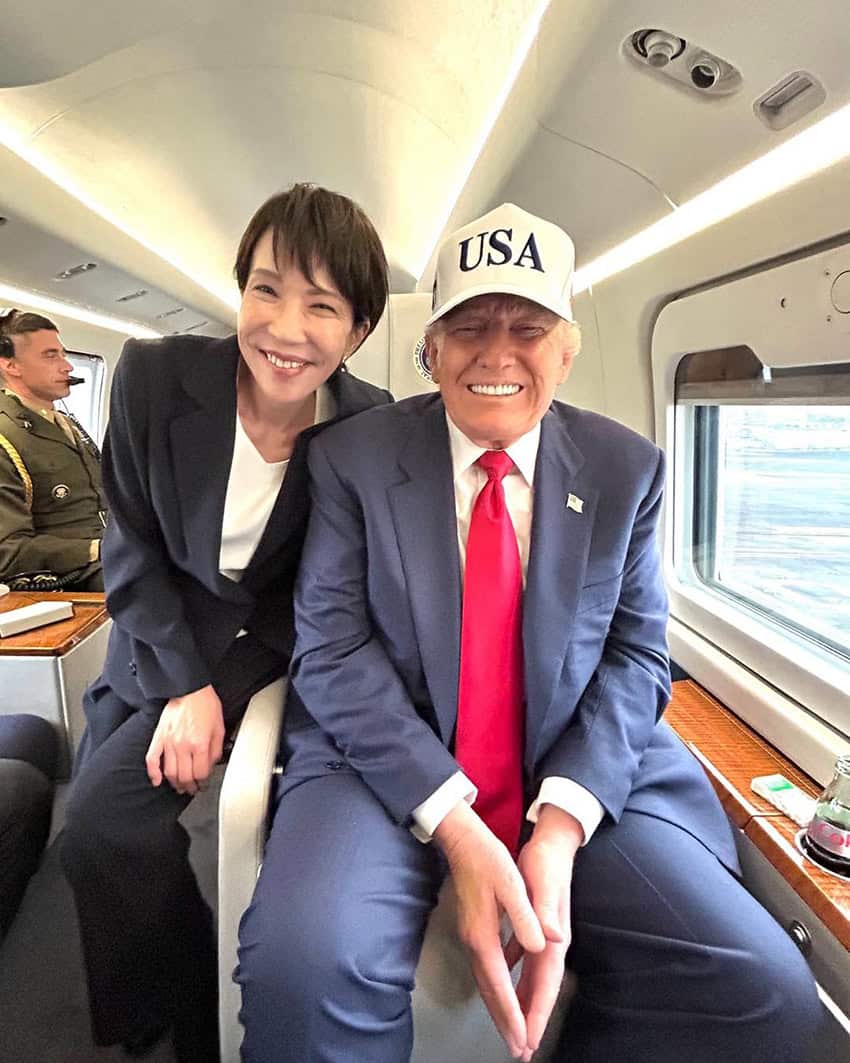
Japanese PM Takaichi poses for a photo with Trump on Air Force One
Takaichi maintained a friendly but neutral relationship with the U.S. and President Trump. (Sanae Takaichi)

Sheinbaum, by contrast, has executed what most analysts now consider a textbook performance under impossible pressure. She has avoided retaliatory tariffs; secured at least three separate extensions on Trump’s tariff deadlines; kept USMCA largely intact through repeated 25%, 30% and 35% threats; and, according to multiple reports, earned the personal respect of Trump and his inner circle, including Stephen Miller. Her formula has been to keep a cool head and maintain mutual respect. She publicly emphasizes that “dialogue and respect have prevailed” while quietly tightening cooperation on fentanyl interdiction, migration and — controversially — imposing tariffs of up to 50% on roughly 1,400 goods from China and other Asian countries without trade agreements with Mexico, a move that aligns Mexico with U.S. concerns about Chinese transshipment. So far, only Sheinbaum has so far managed to turn the experience of being cornered into something that looks like a strategy.

Finally, on the question this article is really asking — what each has actually delivered for the women coming after — the contrast is sharp. Meloni and Takaichi run conservative governments that have actively rolled back, or refused to advance, gender-related rights: Meloni has tightened reproductive politics and restricted LGBTQ+ family rights; Takaichi opposes same-sex marriage, separate marital surnames, and female imperial succession. Sheinbaum is the only one who openly identifies as a feminist; she elevated the women’s affairs body to a full Ministry and has pushed substantive-equality reforms — though Mexican feminist movements remain critical of how much of that agenda has been substantive versus rhetorical.

The harder question

So we have three women, three exceptions, three different politics. The interesting question is no longer whether their gender matters — it clearly does, in the obstacles they have faced and the scrutiny they receive — but whether their gender is producing different outcomes. And the honest answer, eighteen months in, is: I cannot really see it. Not yet, anyway. Not in the ways we were promised.

There are two competing theories. The optimistic one says women in power govern differently: more cautious, more consensus-driven, less prone to the testosterone-fueled brinkmanship that produces wars, market crashes and constitutional crises. The skeptical one says the opposite: women who reach the top in male-dominated systems do so precisely by out-hawking the men. They have to be tougher, more disciplined, more willing to break things, because the margin for error is smaller. Thatcher, the original Iron Lady, is the patron saint of this theory.

So look at our three. Each one shows us, in her own way, what governing actually costs. And what they show is not as neat as we might like.

Meloni has been smarter than her rhetoric. She governs to Berlusconi’s right on migration but to his left on Europe — this is calculated moderation, not a softening. The 450,000 migrant work permits she quietly issued between 2023 and 2025 are the gap between the speech and the governing. Isn’t this the most interesting thing about her premiership? Then in April 2026, when Trump pressured her over Pope Leo XIV, she stood with the Pope. You can disagree with everything else she has done and still recognize that for what it was: a leader choosing conviction over advantage, which is rarer than it should be.

Takaichi has done in six months what three decades of Japanese prime ministers would not attempt. She has accelerated rearmament, broken strategic ambiguity on Taiwan, and visited the Yasukuni shrine in a way her male predecessors only dared in private. Whether that is courage or recklessness, we will only know later. What is harder to argue is that she did not know what she was doing. She knew and did it anyway. In a moment that confuses noise with strength, a leader who acts quietly but forcefully is worth watching.

Sheinbaum’s record under pressure is the most instructive of the three, because the pressure on her has been the most relentless. She has never raised her voice or lowered her standards — a rare trait in Mexican politics. She held the line against Trump’s tariff threats by acting as if the line did not need to be defended — which, as it turned out, was the right way to defend it. Judicial reform is where admiration gets complicated, but in the first days of April we learned that Morena congressmen are proposing an update, which could address some key concerns of judicial reform critics. Anyhow, history grades on what gets left standing, and we will not really know that for years.

This is going to sound like a joke except it isn’t. Three women walked into the hardest rooms in the world. One chose conviction over favor. Another chose action over approval, even when the action was the kind that closes doors permanently. The third chose “cabeza fría” over confrontation, and turned it into the most underrated form of leverage of the year. None of them looks particularly cautious. None looks consensus-driven. All three look, in their own ways, like leaders who reached the top by being harder than the men around them — and who are governing accordingly. That is not a failure of female leadership. It may be the most honest demonstration we have ever had of what the top of politics actually requires of anyone, regardless of gender. None of them chose easy, because  none were offered easy.

I think this is the real finding. The table doesn’t change because of who sits at it. The people who sit at it may not share an ideology, or a background, or even an ambition the rest of us would recognize. What they share is the loneliness of those who got to the top and found out power is nothing like they had been told. In a few decades, we will discuss their legacies and get to a fair scorecard. Hopefully by then we will be talking about the office itself — what it selects for, what it rewards, what it slowly asks you to give up in exchange for keeping it. They didn’t invent those terms. They, like us, inherited them.

Let us know what you think in the comments.

Maria Meléndez writes for Mexico News Daily in Mexico City.

FIFA takes over Azteca Stadium, now ‘Mexico City Stadium,’ for World Cup

0
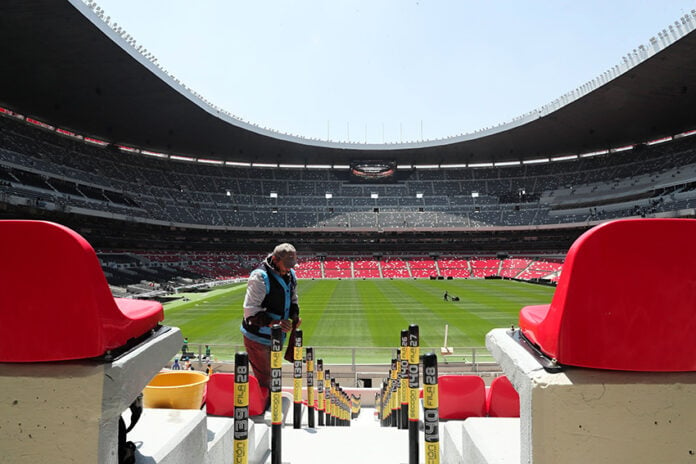
The interior of Banorte Stadium, aka Azteca Stadium, now Mexico City Stadium for the duration of the 2026 World Cup
Workers finish the remodel of Banorte Stadium (now temporarily renamed Mexico City Stadium) in late March. (Tomás Pérez de la Cruz / Cuartoscuro.com)

Soccer’s world governing body FIFA on Thursday formally received full control of Mexico City’s Banorte Stadium — better known as Azteca Stadium — only to learn that there remain logistical issues related to the arena’s box seats.

With the handover, the venue has now been officially renamed Mexico City Stadium for the duration of the World Cup as FIFA prohibits corporate-sponsored names, a long-standing policy intended to prevent sponsors not affiliated with the organization from receiving exposure.

Banorte Stadium management announced the administrative transfer in a social media post.

“Throughout the 2026 World Cup, the stadium will be known as ‘Estadio Ciudad de México,’ as mandated by FIFA. … [T]he stadium’s operation and communications will be handled through FIFA and its official channels,” it said.

The reassignment occurred two days later than originally planned as the stadium obtained special permission to delay the handover to allow Cruz Azul — one of the two Mexico City soccer clubs that call Banorte Stadium home — to stage a playoff game on Wednesday night.

While Banorte also celebrated the stadium’s nearly two-year renovation project with a separate social media post, FIFA immediately got to work effecting the name change along the roof of the venue and draping a banner over the Banorte Stadium lettering above the turnstiles on both sides of the stadium.

However, while World Cup organizers moved in to put the finishing touches on the historic venue, FIFA learned that an issue related to box seats has become more complicated.

In order to finance the construction of the stadium in the 1960s, boxes were sold to private investors in an arrangement that granted owners rights to use them at any and all events for 99 years. 

As FIFA requires full and complete control of stadiums during the World Cup, box seat owners were informed they would not be permitted to use them during the tournament.

Mexico sought to arrange compensatory payments to those who ceded their rights to FIFA, but a large group resisted and in September 2025 Banorte Stadium management reached a deal with FIFA to grant box owners full access to their seats.

However, FIFA responded last month by saying it would prohibit box seat owners from entering the stadium with food and drinks and said it would not allow resale of seats in the boxes.

Roberto Ruano, a lawyer representing the luxury box owners, said some of his clients received messages that organizers were going to remove refrigerators, blenders and other personal property in the boxes as part of this new rule.

On Wednesday, a federal judge granted box owners an injunction against the FIFA action.

Ruano celebrated the ruling and defended the box owners, saying that “no regulation from an international body (FIFA) can trample on the rights we have as Mexicans.”

He added that the contracts clearly stipulate that “seats and stands can be sold, rented or transferred, contrary to the threatening statements indicating that if these spaces were offered through any external channel, they would be suspended by FIFA.” 

Meanwhile, FIFA has also taken control of Guadalajara’s Akron Stadium — renamed Guadalajara Stadium — and Monterrey’s BBVA Bancomer Stadium, now named Monterrey Stadium. Those stadiums will each host four World Cup matches, while Mexico City Stadium will host five games.

With reports from ESPN, Proceso, La Jornada, El País and Reform

Forget crime: Potholes are the top urban grievance across Mexico

5
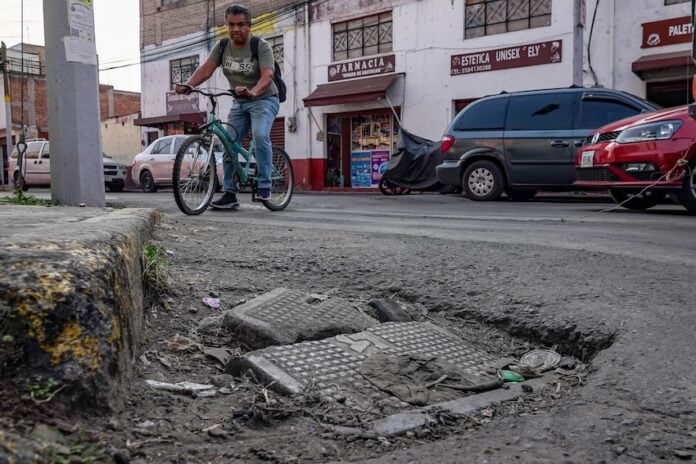
big pothole
Unlike most crime, potholes can be an everyday annoyance to urban residents, and some grow so large that they present a real danger to vehicles and their drivers. (Rogelio Morales / Cuartoscuro.com)

For residents of Mexico’s cities, potholes remain the primary concern, followed by the supply and delivery of drinking water, insufficient public lighting and traffic congestion.

According to the latest National Survey of Urban Public Safety conducted by the national statistics agency INEGI, 82.7% of those surveyed considered street potholes to be the most important problem in Mexican cities.

The survey was carried out by interviewing adults in more than 27,000 homes across 91 urban areas from Feb. 23 to March 13.

Although Security Minister Omar García Harfuch and others focused on the reduction of the perception of insecurity when the survey was first published in late April, a deeper dive into the data by the newspaper El Economista examined how other details might impact the country’s economy.

The fact that more than eight out of 10 adults expressed such concern about potholes while worries about crime fell from 56.6% to 52.1% should be instructive for authorities, who tend to spotlight insecurity.

Of the 91 urban areas where the survey was taken, El Economista pointed out that potholes were identified as the No. 1 concern in 81 of them. It also found that in the northern city of Ciudad Obregón, Sonora, 99.8% of respondents said potholes were their top concern.

In addition to being a priority for constituents, the issues identified as top concerns by the public ought to be recognized as disincentives to attracting investment, particularly for the largest local economies in the country.

After potholes, 59.2% of respondents identified failures and leaks in the drinking water supply as a top concern. This was followed by worries over insufficient public lighting (56.3%), frequent traffic congestion (53.6%) and then criminal activity. The fifth-ranked concern among urban residents was overcrowded or poorly served hospitals (51.4%).

Other issues identified in the survey results were street drains clogged by accumulated waste (50.6%), neglected parks and gardens (41.2%), deficiencies in the public drainage network (40.9%) and poor public transport service (39.9%).

With reports from El Economista and Infobae

A sunken Japanese ship adds to the reef system off the Tamaulipas coast

1
ship sunl for artificial reef
The Onjuku, a former research vessel donated by Japan to Mexico in the 1970s, was stripped of any toxic materials, taken out 27.8 kilometers off the Tamaulipas shore and set off with explosives, causing it to sink to the ocean floor, where it will serve as base material for an artificial reef that will benefit fish and marine fauna and flora. (Navy Ministry)

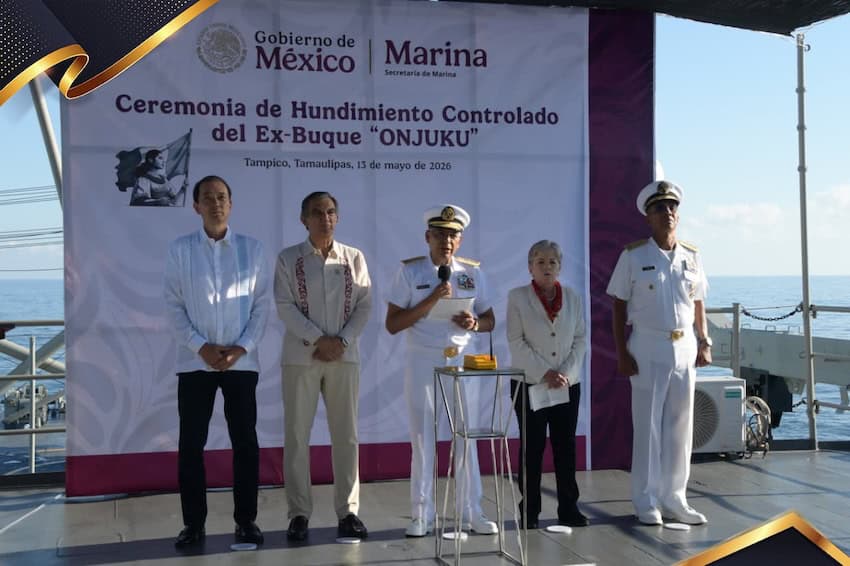
The Mexican Navy sank a donated Japanese ship off the coast of Tamaulipas this week, expanding a growing artificial reef system in the Gulf of Mexico that officials say will boost marine life, fishing and tourism.

The former oceanographic research vessel Onjuku, donated by Japan in the late 1970s and used for more than four decades by Mexico’s navy, was sunk Tuesday in a controlled operation about 15 nautical miles (27.8 kilometers) off the coast.

After holes were cut in the ship’s hull, small explosive charges were applied. The sinking was also shown during President Claudia Sheinbaum’s Tuesday morning press conference.

Admiral Raymundo Pedro Morales Ángeles described the broader initiative as “the vision of a country that transforms steel into life.”

An artificial reef is a human-made structure placed on the seafloor to mimic some functions of a natural reef — giving fish, various types of coral and other organisms hard surfaces to colonize where the bottom was previously flat or barren, according to marine agencies.

Around the world, decommissioned ships have been sunk — such as this one in Florida — to enhance fish habitat, support wreck diving and ease pressure on natural reefs.

In Mexico, the Navy has used obsolete vessels to form artificial reef systems off both the Pacific and Gulf coasts, including projects in the states of Sonora, Michoacán and Colima. 

This national artificial reef program has been promoted as a way to restore marine ecosystems, foster biodiversity, support sustainable fishing and draw eco-tourism.

The Onjuku is the second of at least nine navy ships slated for sinking off the Tamaulipas coast, following last year’s sinking of the former coastal patrol vessel ARM Huracán.

Both were sunk east of El Mezquital, a fishing area on the state’s long, narrow strip of coastline that separates the Laguna Madre from the gulf.

ceremony for sunken ship
A burial of a ship at sea, even for a good cause, calls for a ceremony, and the Mexxican Navy Ministry obliged this week in Tampico, Tamaulipas, where Navy Minister Admiral Raymundo Pedro Morales Ángeles presided over the “Ceremony of the Controlled Sinking of the ex-ship Onjuku.” (Navy Ministry)

Tamaulipas also hosts the wreck of a former U.S. Navy destroyer that was later commissioned as the Mexican destroyer Usumacinta E-20. Now considered a mature reef structure, it was sunk in 2004 off Altamira, a port city in the Tampico metro area.

Authorities say the new reefs offer refuge for species such as pompano, wahoo, Spanish mackerel and dogfish in a strategic area where the Laguna Madre meets the Gulf of Mexico, while also helping deter illegal and unreported fishing.

The latest sinking is also part of an “underwater museum” concept that aims to create living reefs for divers and researchers.

Some environmental groups have criticized such projects, warning that old hulls can leach toxins or that governments use reefing as a cheap way to dump scrap. They argue that badly prepared vessels risk releasing fuel residues, asbestos or other contaminants into the food chain and that some historic ships would be better recycled or preserved on land.

Artificial reef supporters say that when a ship is thoroughly stripped and cleaned before sinking, what is left is mostly bare steel that quickly attracts corals, sponges and fish. Mexican officials say the Onjuku was stripped of its equipment and decontaminated before it went down, including the removal of fuels, oils, wiring, plastics and other hazardous materials.

With reports from El Sol de Tampico and El Heraldo de México

Why is swearing in Mexico related to moms?

2
Mother and daughter in Mexico
Everyone loves their mother, so why is she mentioned in so many Mexican swear words? (Instagram)

There are several words to refer to moms in Mexican Spanish, from the classic mamá to a more formal madre, to say nothing of coloquial words such as amá or jefa (or jefita if you are feeling loving). In Mexico, moms can be the bosses at home and yet the first ones brought up when a stranger wants to start a fight. But why?

A long tradition

Mexicans are not the only ones to use female progenitors to insult their listeners. From Cicero to Shakespeare, history has used allusions to mothers, including their physical and personal traits, to incite violence in confrontational situations. It seems reasonable that the one who brought you into this world can be seen as someone to take care of, but also — for your opponent — a point of weakness.

An image of Raphael's Madonna del Granduca, featuring the Virgin Mary, dressed in a Renaissance-period dress and robe, holding an infant Jesus in her arms against a black background.
Clearly, the world’s fascination with mothers goes way, way back. Why should Mexico be any different?

Although often used in jokes, there’s a specific expression whose roots are tied up in Mexican identity from the colony the country once was, and represents a lot of values that may have been erased from our everyday lives, but remain just beneath the surface: hijo de la chingada (a deeply offensive insult, not to be used lightly).

Octavio Paz and ‘La Chingada’

One of the clearest and maybe the most extensive explanations of this phenomenon was written by Octavio Paz in his “The Labyrinth of Solitude.” He dissects the word, linking its offensive popular use to our mestizo origins. A lot of our female ancestors did not procreate in fairy tale-like conditions, but rather in a violent environment in which their very culture was in peril.

“Who is La Chingada? Above all, she is the Mother. Not a mother of flesh and blood, but a mythical figure,” he said. “La Chingada is one of the Mexican representations of Motherhood, like La Llorona or the ‘long-suffering Mexican mother’ we celebrate on May 10th. La Chingada is the mother who has suffered — metaphorically or in reality — the corrosive and defaming action implicit in the verb that gives her her name … La Chingada is the Mother opened, violated or mocked by force. The ‘son of La Chingada’ is the offspring of violation, abduction or mockery.”

From this comes the verb chingar, which can mean something as mild as to bother, or something as intense as to rape. According to Paz, the word could have come from xinaxtli, the Nahuatl word for a specific seed. However, in response to this idea, the Real Academia de la Lengua Española says that the expression has been part of the Spanish language even before the conquest of Iberian Romani: čingarár.

No, I’m not your ‘mamacita’

A studio promotional photo of Colombian musical artist Lady Yuliana posing in a hot pink, tight fitting shirt, leaning with her arm against a white wall.
Although your mamá is sacred, a mamacita is sexualized. (Lady Yuliana/Instagram)

Besides insults and swearing, there’s another adaptation from a maternal word: mamacita is used to catcall. It is annoying, but the link to reproduction lies beneath the surface. As journalist Laura Martinez states about her own uncomfortable encounter with a street harasser: ”A man calls you mamacita because what he really wants is to get in bed with you and turn you into the mother of his children.”

Writer Elena Poniatowska depicts a similar situation when her preadolescent character Lilus Kikus is called mamacita at the beach. Kikus’ reaction is rather detached, reflecting that she is not the catcaller’s mom after all.

Some other expressions about moms

Que poca madre
Poca madre, or little mother, is a popular descriptor in Mexican Spanish. Its varied meanings, however, have nothing to do with moms. (Facebook)

Una madre (a mother) can be used to refer to something in a contemptuous way. For example: Pásame esa madre (pass me that mother).

No tener madre (to have no mother) is used alternatively as either a good or bad expression. It all depends on context. It can, for instance, refer to a shameless or cowardly person. Or it can refer to something amazing, cool or fun. For example, No tienes madre (you have no mother), generally means you don’t own up to things, while esta salsa no tiene madre (this salsa has no mother) means you’re tasting something extremely good to go with your tacos.

Much like no tener madre, poca madre (little mother) can be good or bad. Compare how, for example, qué poca madre tienes (what little mother you have) is often negative, whereas tu casa está pocamadre (your house is little mother) means your house is awesome — with the positive pocamadre written as a single word.

Madrear (to mother someone) is a rather offensive way of talking about physical violence. For example: A Juan se lo madrearon (Juan was badly beaten).

Something disgusting can be described as a madres. For example: Aquí huele a madres (it smells like mothers in here) describes an intense stench.

Lydia Leija is a linguist, journalist and visual storyteller. She has directed three feature films, and her audiovisual work has been featured in national and international media. She’s been part of National Geographic, Muy Interesante and Cosmopolitan.

Mexico launches ‘Plan China’ to lure more Chinese tourists: Friday’s mañanera recapped

1
President Sheinbaum at her morning press conference podium
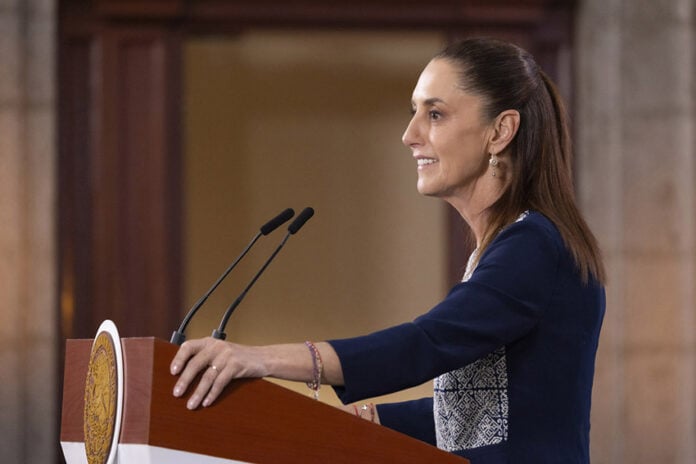
President Sheinbaum spoke in defense of her education minister after a recent controversy and supported a plan to beautify Mexico City ahead of the World Cup next month. (Carlos Ramos Mamahua / Presidencia)

Sheinbaum’s mañanera in 60 seconds

  • 🎓 Delgado stays put: Sheinbaum dismissed rumors that Education Minister Mario Delgado will resign or be fired, saying he’s doing a “great job” and pointing to plans to create 330,000 new university places. She downplayed the school calendar fiasco, saying, “There was a proposal, people didn’t agree with it, and we returned to the original proposal.” In addition, Sheinbaum accused The Economist and other outlets of blowing the affair out of proportion.
  • 🇨🇳 Plan China: Tourism Minister Josefina Rodríguez unveiled a strategy to grow Chinese tourism to Mexico. The government wants China to become Mexico’s 10th-largest source of tourists by 2029, up from 14th today. Key moves include debut participation at the ITB China fair in Shanghai and a presence on Chinese social media platforms like Weibo.
  • 🏙️ Ajolotización” defended: Sheinbaum backed Mexico City Mayor Clara Brugada’s decision to plaster the capital with axolotl imagery and purple-painted pedestrian bridges ahead of the World Cup, saying the color and murals “give happiness to the city.” Not everyone agrees: One Mexico City motorcyclist told Televisa there’s still “a shitload of potholes” whose repair should take priority.

Why today’s mañanera matters

At her Friday morning press conference, President Sheinbaum responded to “rumors” that Education Minister Mario Delgado would leave his job — either by resigning or being fired.

There have been calls for Delgado to go after his announcement last week of an ill-conceived plan to end the school year 40 days early due to Mexico’s World Cup hosting duties and hot weather. The plan was abandoned, but just hours before that announcement was made, the education minister put his foot in it again by essentially saying that the last month of classes is a waste of time.

Sheinbaum has stuck by Delgado, a Morena party powerbroker, and continued to do so at today’s mañanera.

Also of note at the president’s final press conference of the week was Tourism Minister Josefina Rodríguez’s announcement of a plan aimed at attracting more Chinese tourists to Mexico, and Sheinbaum’s defense of Mexico City Mayor Clara Brugada’s decision to make extensive use of the image of the ajolote (axolotl) and purple paint to beautify the national capital ahead of the FIFA men’s World Cup.

‘Plan China’: Government aims to attract more Chinese tourists

Tourism Minister Rodríguez told reporters that tourism to Mexico from China is “very important” and the government wants to “consolidate the market.”

She said that 107,000 Chinese tourists came to Mexico in 2025, representing an annual increase of 8.2%. Rodríguez highlighted that the top ten states visited by Chinese tourists are Mexico City, México state (where the Teotihuacán archaeological site is located), Nuevo León, Jalisco, Baja California, Chiapas, Querétaro, Guanajuato, Quintana Roo and Chihuahua. She also said that Chinese tourists, in the main, are not seeking “sun and beach” (sol y playa) when they travel to Mexico, but rather “culture, gastronomy and experiences,” including ones related to Day of the Dead.

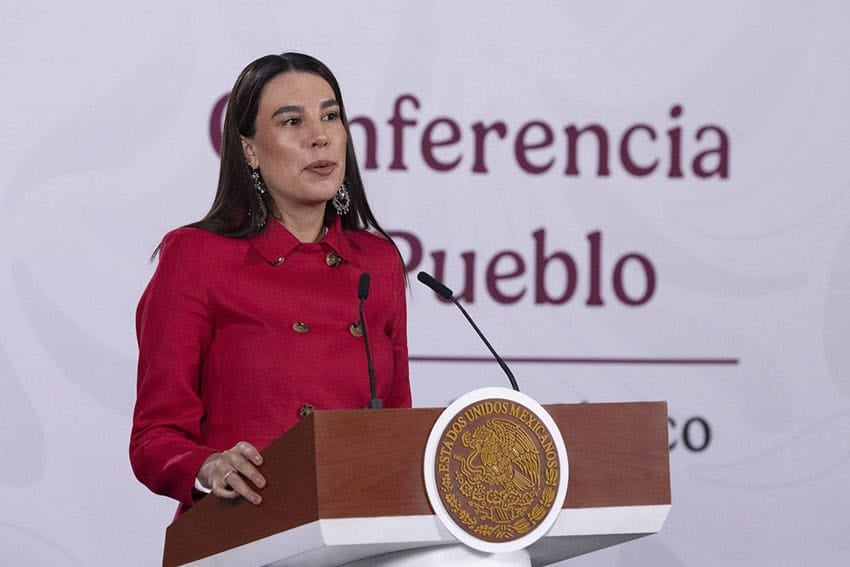
Tourism Minister Josefina Rodríguez unveiled the new Plan China strategy to draw more Chinese tourists to Mexico. (Carlos Ramos Mamahua / Presidencia)

After noting that Mexico held its first-ever tourism fair in China last year, the tourism minister said her ministry’s “goal” is for China to become the 10th-largest source country of tourists to Mexico by 2029. She said that China is currently the 14th-largest source of tourists to Mexico.

As part of a tourism promotion strategy dubbed “Plan China,” Rodríguez said that Mexico, for the first time, will be represented at ITB China, a leading tourism trade fair that will take place in Shanghai later this month.

Among the other aspects of Mexico’s “Plan China” strategy are attendance at other tourism fairs in China and the presence of the official “Visit Mexico” brand on Chinese social media sites such as Weibo.

Sheinbaum rejects ‘rumors’ that Delgado will leave education minister role 

A reporter asked the president about “rumors” that Education Minister Mario Delgado will leave his position.

Sheinbaum said that was not the case, before noting that she would attend a meeting with Delgado later in the day.

She said that Delgado — a former lawmaker and ex-chief of the ruling Morena party — is doing a “great job” as education minister, highlighting that he is working on a number of projects, including one aimed at creating 330,000 new places for students at campuses of the Rosario Castellano University and “other universities.”

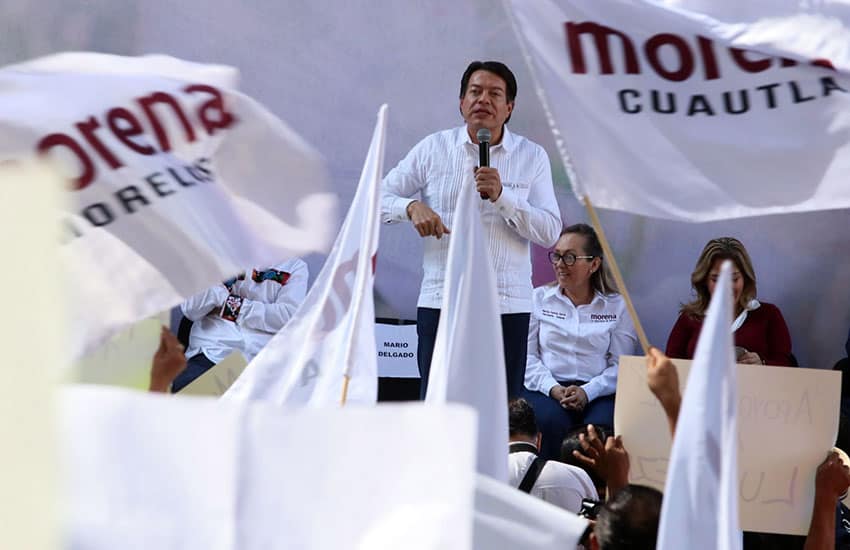
Mario Delgado, current education minister and former president of the Morena party, came under fire after announcing that the current school year would be cut short due to the World Cup — a controversial proposal that was quickly walked back. (Cuartoscuro)

Sheinbaum played down the controversy surrounding the announcement and subsequent cancellation of the plan to end the school year almost six weeks early on June 5.

“There was a proposal, [people] didn’t agree with it, and we returned to the original proposal [to end the school year on July 15],” she said.

Sheinbaum noted that The Economist published an article on the “school calendar issue.”

“… The eyes of the world are on Mexico,” she said before suggesting the issue was blown out of proportion by The Economist and other media organizations.

“They made it big news — I mean, it’s remarkable,” said Sheinbaum, who has accused Mexican and international media outlets of deliberately seeking to damage her government.

Published under the headline “Mexico’s daft plan to cut the school year for the World Cup,” The Economist article said that the retreat on the plan to end the school year early “made it look as though the [Education] ministry was freestyling one of the most basic parts of its job.”

“The affair is a blot on Mexico’s education system, which has several serious problems,” The Economist wrote.

Sheinbaum defends the ‘ajolotización‘ of CDMX 

A reporter asked Sheinbaum about the “ajolotización” of Mexico City — the extensive use of the image of ajolotes (axolotls), in murals, on light rail carriages, etc. — as well as the beautification of public infrastructure in the capital, such as pedestrian bridges, by painting it purple.

Mayor Clara Brugada has defended the ajolotización of the capital amid criticism that the city government is failing to adequately respond to real — and serious — infrastructure and transport problems.

Now dubbed ‘El Ajolote,’ Mexico City’s light rail to Xochimilco debuts its US $139M makeover

Sheinbaum told reporters that “all governments paint pedestrian bridges … and Clara decided that in order to beautify the city she was going to use the color lilac” — which matches the flowers of Mexico City’s ubiquitous jacaranda trees, and is not too dissimilar to the political color of Morena.

“Now there is great criticism, I don’t see why,” she said. “In addition, the truth is the bridges look very beautiful.”

Sheinbaum also said that the use of color and the painting of murals on streets and in other public spaces “gives happiness to the city.”

“It makes it beautiful and that greatly changes the mood of those who live in the city,” she said.

Sheinbaum also noted that “Brugada chose the ajolote, an animal endemic to the Valley of Mexico, as a symbol of the city.”

“I don’t know why there is so much criticism,” she said.

One Mexico City resident who spoke to the broadcaster Televisa said that the government should first focus on fixing streets in the capital, rather than painting pedestrian bridges purple.

“There is still a shitload of potholes,” said Gerardo Franco, a motorcyclist.

“They should focus on what society really needs,” he said.

By Mexico News Daily chief staff writer Peter Davies (peter.davies@mexiconewsdaily.com)

40 years speaking Spanish and I can’t read the newspaper? The differences between spoken and written Spanish

7
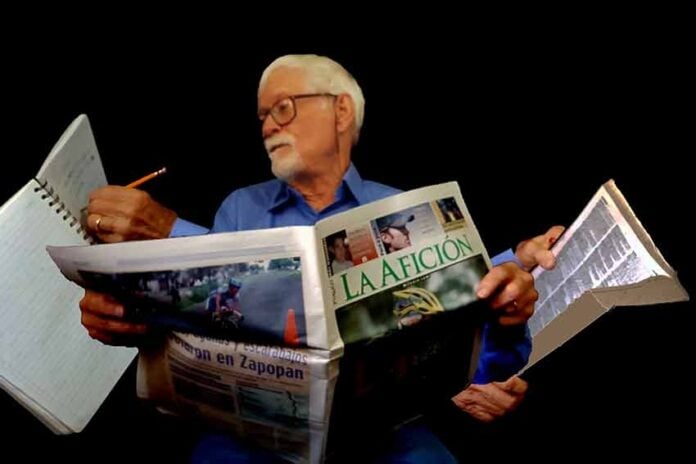
Learning Spanish from the newspaper
Learning Spanish from a newspaper sometimes seems as if it requires six arms, as the language used is often different from that of conversational Spanish. (John Pint)

Long ago, I reached the point where I could carry on a conversation in Spanish about practically any topic. It gave me the feeling I had reached a certain mastery of the language.

After all, I’ve spent years living in a genuine Mexican community with very few foreigners. On top of that, my wife just happens to be a first-rate Spanish teacher who never fails to let me know cuando metí la pata (when I made a blooper).

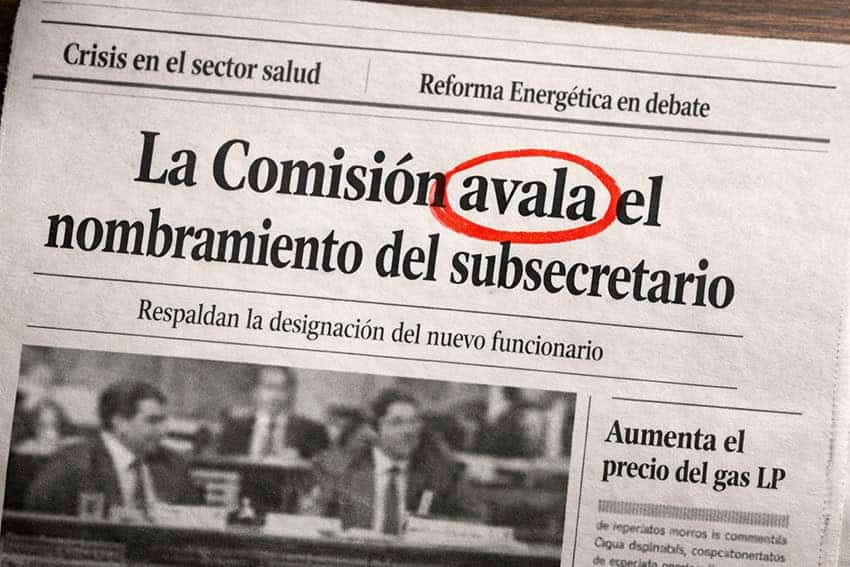
newspaper headline using precise language
Just as in other languages, the Spanish vocabulary used in newspapers is often more elevated, precise and formal. (John Pint)

Nevertheless, every time I picked up a newspaper and glanced at the front page, I would wince. It seemed like every headline contained at least one word I had never heard of. A few examples:

  • Otorgan premio a Selene Argueta
  • El Congreso insta a modificar la ley
  • El Banco Central sale al quite para frenar la caída del peso.
  • La Comisión avala el nombramiento del subsecretario
  • El tribunal suspende cautelarmente la aplicación de la norma
  • El Congreso subsanará omisiones del dictamen

Buying the newspaper and reading a few paragraphs frequently left me even more depressed, as I would inevitably come upon yet more words that I’d swear had never been spoken in my presence. In fact, I questioned whether they had ever been spoken in anybody’s presence!

So, what’s going on here?

Conversational versus cool

First, it’s important to note that journalists around the world — writing in any language — delight in using expressions beyond those commonly used in casual conversation: trendy words, sports jargon, idioms, metaphors and allusions — anything to spice up those headlines.

Here are just a few examples in English. The italicized words would probably perplex most nonnative speakers of our language, no matter their fluency:

  • Iran war roils markets
  • Gulf states fend off attacks
  • Mexican peso tanks
  • “Don’t turn Kharg Island into America’s next quagmire
  • Couple snared in phony kidnapping scheme
  • North Korea vows to ramp up nuclear weapons production

In the Spanish-speaking world, this tendency to “juice up” headlines and stories leads writers to use metaphors and sport-inspired expressions, just like their colleagues around the world. Just bear in mind that one of those sports could be bullfighting, with jargon all its own.

Spanish-language journalism’s formal vocabulary

In addition, the Spanish-speaking world has something that journalists and linguists call el registro formal, a kind of elevated journalistic register that was shaped over the years by law, bureaucracy and editorial tradition.

In this elevated lexicon, decir is replaced with a more precise word like aseverar. Hacer may become confeccionar. Instead of tener, you may see ostentar, and buscar is elevated to indagar.

Admirers of this lexicon claim that it brings precision, conciseness and clarity to journalism, substituting vague expressions with more exact terminology.

I think the same could be said for the lexicon you find in legal contracts. After all, who but a lawyer enjoys reading “legalese?”

This Spanish journalistic register differs sharply from everyday speech. Headlines favor abstract, authoritative words that sound precise and official — but are rarely used in daily conversation.

In other words, newspaper Spanish is not harder Spanish. It is a different kind of Spanish.

Less-official-sounding Spanish

Someone reading a newspaper
Enjoying newspapers in Spanish requires a familiarity with the “institutional” form of the language. (Public Domain)

Here are the Spanish headlines presented earlier, followed by a less-elevated version of the same.

  • Otorgan premio a Selene Argueta
    Le dieron un premio a Selene Argueta.
    (Selene Argueta was given an award.)
  • El Congreso insta a modificar la ley
    El Congreso pide que se cambie la ley.
    (Congress is calling for the law to be changed.)
  • El banco central sale al quite para frenar la caída del peso
    El banco central actúa para frenar la caída del peso.
    (Central bank steps in/comes to the rescue to halt the peso’s fall. Note: salir al quite is an expression used in bullfighting for the maneuver by which one torero distracts the bull to save another who is in danger.)
  • La Comisión avala el nombramiento del subsecretario
    La comisión aprueba el nombramiento del subsecretario.
    (The committee approves the appointment of the undersecretary.)
  • El tribunal suspende cautelarmente la aplicación de la norma
    El tribunal frena temporalmente la aplicación de la norma.
    (The court temporarily halts the enforcement of the regulation.)
  • El Congreso subsanará omisiones del dictamen
    El Congreso corregirá los errores de la opinión.
    (Congress will fix the omissions in the ruling.)

Reading the newspaper in Mexico doesn’t just require good Spanish. It requires familiarity with institutional Spanish.

The six-arm solution

In bygone days, the procedure for mastering journalistic vocabulary was simple but overwhelming: You would take in hand a good bilingual dictionary (the thicker the better), the newspaper of your choice and a spiral notebook where you would write the new words and their translation for future review and reference. It was an approach that required the patience of a monk, and to do it, you needed six arms.

Today, you can whiz through a newspaper or an obra of Spanish literature using the tap-and-hold feature of your smartphone or e-book reader, which will give you an instant definition or a translation of “elevated” words like otorgar and cautelarmente.

Try MND Tutor

To help you find your way through the maze of las noticias en español, take a look at our own MND Tutor. It operates at three levels, plunging you into topics like los carteles, the FIFA World Cup, Mexico’s dark colonial past and the deep roots of El Día de San Valentín. After each reading, you will take a quiz to let you know how much you’ve picked up.

For even more help, you can visit websites like EasySpanishNews or Spanish in Levels, designed to help you expand your vocabulary in Spanish.

Just be warned: Teachers of Spanish as a foreign language consider learning to read the newspaper one tiny step along the long road to the mastery of Spanish literature. But take that first step!

John Pint has lived near Guadalajara, Jalisco, for more than 30 years and is the author of “A Guide to West Mexico’s Guachimontones and Surrounding Area” and co-author of “Outdoors in Western Mexico.” More of his writing can be found on his website.