Home Blog Page 49

Opinion: Bad Bunny’s Super Bowl performance reaffirmed the life I’ve chosen here

59
A publicity shot of the musical artist Bad Bunny in a cream suit and white button down shirt and metal rimmed sunglasses, looking sideways off camera. He is holding a stylized silver stand-up microphone.
Bad Bunny's unapologetically Latino performance at Sunday's Super Bowl halftime show has provoked a mix of enthusiastic praise and outraged criticism. (Rimas Entertainment)

I woke up this morning with a feeling I don’t get often enough: pride. Not the inflated kind that demands an audience, but the quiet, grounded kind that comes from knowing I didn’t flinch when it mattered.

I made a geographical, emotional and some might even say existential leap years ago. Today, sitting on my patio with a cup of coffee at my side, listening to Mexico begin another ordinary day, I know I chose well.

Why Bad Bunny’s Super Bowl show felt like home

Bad Bunny performs at the Super Bowl 2026 halftime show

Didn’t see it? Catch a glimpse of the Super Bowl halftime show that’s provoking so much fuss.

Every day I wake up to in Mexico is richer, more vivid and more alive than I ever thought possible.

Outside, life is already underway. Voices carry. Metal scrapes against the pavement as someone sets up a stall. A radio blares too loudly and without apology. Nothing remarkable, and yet everything.

This is the texture of my mornings now, and it’s the texture that lingered with me after watching Bad Bunny’s performance last night during the Super Bowl. That’s why it’s stayed with me long after the screen went dark.

Not everyone I know back in the United States saw what I saw. They told me it was boring. They didn’t understand what it was meant to be. I understood immediately. Not because I’m particularly sophisticated or tuned in, but because I live inside the world he was showing.

What looked flat to them felt dimensional to me. What felt uneventful to them felt true.

Beyond the spectacle 

A Mexican elderly couple sit on a short concrete wall in a Mexico City park. They are wearing warm clothing and are both looking at a red flyer that the woman is holding in her hand. They are surrounded by tree trunks.
In her life in Mexico, the writer has found that immersion doesn’t mean perfect Spanish or passing for Mexican. It’s noticing and participating in the cotidian existence of one’s community. (Camila Ayala Benabib/Cuartoscuro)

There’s a particular kind of blindness that comes from distance, especially cultural distance. When you’re accustomed to spectacle, to being entertained rather than invited in, everyday life can register as empty.

But if you live here, if you wake up here, shop here, argue here, mispronounce words here and laugh here, those same scenes feel loaded. They’re not trying to impress you. They’re simply telling the truth.

I’m British by birth and a U.S. citizen by naturalization, which means I’ve already lived several lives before this one. Mexico isn’t an extension of either of those places. It doesn’t mirror them, and it doesn’t adjust itself to accommodate their expectations. That’s part of what makes living here feel honest. It demands things of you: attention, effort, presence.

What matters here is how you live. It’s whether you build a life or merely occupy a space. It’s whether you stay tethered to your former home for identity and validation. It’s whether you allow the place you’re in to reshape you.

Mexico reshapes you whether you resist or not.

The welcome here is real, but it’s not performative. It isn’t delivered with a sales pitch or a smile meant to reassure you of your importance. It shows up in patience, in generosity of time. In the way people help you without making you feel small for needing help.

Hospitality here isn’t about making you feel special; it’s about making you feel included, which is far more powerful.

Life without subtitles 

A Mexican teenaged girl wearing a Powerpuff Girls tee shirt in white and wearing a headband feature a green monkey with yellow sunglasses. She is laughing at something off camera and is in a park in Mexico City
A Mexican teenager in Chapultepec Park experiences a comic moment with a souvenir she just bought. (Mario Jasso/Cuartoscuro)

Inclusion, though, isn’t passive. You don’t get it by osmosis.

Learning Spanish wasn’t optional; it was foundational. Not just vocabulary and grammar, but cadence, tone and restraint. Knowing when to speak and when not to. Knowing which word fits the moment, not just the sentence.

Mexicans are often far more fluent in English than they let on, held back by the same fear everyone has: of sounding foolish. When I stumble through Spanish, I recognize that fear in myself. But when they hear me try anyway, something softens because the effort matters.

It always has.

Integration isn’t about becoming Mexican. I never will be. Every person I meet knows that instantly just by looking at me, and that fact won’t fade with time. But there’s a vast difference between being foreign and being detached; between being visible and being present.

I can usually put people at ease quickly. Not because my Spanish is perfect, but because it’s local. It carries awareness and signals that I’m not just passing through.

A Mexican man sits on two industrial sized paint buckets with a wooden board on top, a makeshift scaffold attached to ropes. The man is lowering himself down a multistory building and looking down at the ground below.
Life as an expat means accepting not always understanding everything and not always being understood. But that life is worth it if you’re open to leaving your comfort zone. (Camila Ayala Benabib/Cuartoscuro)

That awareness is what made Bad Bunny’s performance feel like a mirror rather than a puzzle. It didn’t arrive with instructions. It didn’t slow itself down to explain its references. It assumed a viewer who was either willing to meet it where it stood or content to be left behind.

There’s confidence in a refusal to translate oneself into something more easily digestible.

Bad Bunny’s performance: Images of an inhabited life

Bad Bunny putting on a show at the Estadio Azteca in Mexico City in 2022. He is wearing green cotton pants and a white tank top undershirt with a sequined jacket in light greens and pinks. Behind him is a trunk of a fake palm tree and a projected image of water.
The hugely popular Puerto Rican singer consistently sells out tickets in Mexico. Part of his appeal to fans is the joy he takes in embracing his ethnicity. (Cuartoscuro)

What I saw wasn’t a halftime performance, it was daily life rendered without apology. It was the kind of imagery Anthony Bourdain understood so well. Not the postcard version of a place, but the unstyled, lived-in one.

The moments between moments.

The humanity that doesn’t need subtitles.

Some saw emptiness where I saw density. They saw a lack of narrative where I saw recognition. That gap says less about the performance and more about proximity.

When you don’t live inside a culture, you expect it to announce itself. When you do, you recognise it by its silences as much as its noise.

This morning, as the city continues to wake around me, I’m thinking about how much of my life now would register as “nothing happening” to someone watching from afar.

Two Latin American migrant boys smiling and laughing as one holds a Sony digital SLR camera to take photos of his friend. They are in a migrant holding center in Mexico City.
Two Latin American migrant children have fun with a camera at a migrant center in Vallejo. (Rogelio Morales/Cuartoscuro)

The routines. The conversations. The way days unfold without spectacle.

And yet, this is the richest my life has ever felt. Not because it’s dramatic, but because it’s inhabited.

Choosing to live in Mexico required giving up the ease of being immediately understood, the ease of cultural dominance, and the ease of assuming the world would bend towards me.

In return, it offered something far more valuable: perspective, a daily reminder that the world isn’t built around any one audience.

That’s the leap I’m proud of today.

I didn’t choose comfort. I chose immersion. I chose to live somewhere that doesn’t perform itself for me, somewhere that requires me to pay attention. Somewhere that asks me, every day, to listen harder, speak more carefully, and see more clearly.

Last night’s performance didn’t move me because it was the most amazing thing I’ve ever seen, but it certainly comes close. It moved me because it felt true. And this morning, waking up in the middle of the life it reflected, I feel an overwhelming gratitude.

Not just for the place I live, but for the version of myself that was brave enough to stay.

Charlotte Smith is a writer and journalist based in Mexico. Her work focuses on travel, politics and community.

What to cook this February: Don’t miss out on these warming winter veggies

4
Fresh yellow squash blossoms attached to green zucchini, a staple ingredient for the best winter Mexican vegetable recipes like quesadillas de flor de calabaza.
OK, technically, Mexican grey squash isn't a winter crop, but Mexicans use it year-round as the center of a deliciously warming side dish known as calabacitas. (Ben Michel/Unsplash)

Leafy greens like kale and chard (acelgas) are some of my favorite winter crops. Amazing when added to those hearty soups on a cold night, which we all love. At this time of year, they’re bursting with freshness and nutrients, and every time I see a nice big bunch, I grab it for soups, stews and pastas, steamed as a side or baked into bread.  

Chard (Acelgas) and Potato Soup

A white bowl of sopa de acelgas con papas, a traditional Swiss chard and potato soup.
This bowl of sopa de acelgas con papas, a traditional Swiss chard and potato soup, will keep you warm on a cold winter night! (Bel Woodhouse)

Ingredients:

  • 2 tablespoons olive oil
  • 2 cups diced potato (approximately 1 large potato)
  • 1 bunch acelgas (chard)
  • 2 medium tomatoes, chopped
  • ½ cup white onion, diced
  • 2 cloves garlic, minced
  • 8 cups broth (vegetable or chicken)
  • 8 oz queso fresco (optional, but I love it)
  • Salt and pepper to taste.

Instructions:

Peel and dice the potato before adding it to a medium saucepan. Cover with cold water and bring to the boil over a medium-high heat. Once boiling, reduce to a simmer and cook for 10 minutes. (Don’t overcook, they will finish with the rest of the soup.)

While potatoes are cooking, cut the chard. Remove the stems, cut into 2-inch pieces. 

Heat oil in a large pot over medium heat. Cook the onion until transparent (2–3 minutes). Add the garlic and cook for 2 more minutes until the onion is slightly browned. 

Add chopped tomatoes and cook until they release their juice, about 5 minutes. Add in the potatoes and cook for 2 minutes, then stir in broth and chard leaves. Season with salt and pepper. 

Reduce the heat and simmer partially covered for 15 minutes until the vegetables are tender. 

Serve in bowls, top with cheese and warm crusty bread or tortillas

Mexican squash (calabacitas)

Similar to zucchini in appearance, Mexican squash is one of the most beloved Mexican veggies. With a milder, sweeter flavor, it’s very versatile. This recipe is a crowd-pleaser —  quick, easy and so good, you’ll want to add it to your weekly rotation. Really big ones I make into Parmesan-crusted fries, so drop a comment if you want the recipe! 

Mexican Squash with Cheese 

A decorated white bowl with light-blue trim is filled with Mexican squash with cheese, a sautéed zucchini and tomato dish with melted panela cheese.
If you can’t get Mexican grey squash for this dish, zucchini will work just fine. (cookingwithcurls.com)

Ingredients: 

  • 1 tablespoon olive oil
  • 3 tomatoes (about 11oz)
  • 2 medium calabacitas 
  • ¼ cup white onion, diced
  • 1 small clove of garlic
  • ¼ cup water
  • 1 tablespoon butter
  • 2 sprigs cilantro
  • ¾ cup panela cheese, diced
  • Salt to taste

Instructions:

Roughly chop the tomatoes and garlic, then add to a blender with ¼ cup water. Puree until it’s a smooth salsa, then set aside.

Heat the oil or butter in a medium-sized skillet over medium-high heat. When hot, add the onion and cook for 3 minutes. While that’s cooking, dice the squash, making sure they’re all even in size. Set aside.

When the onion is transparent, pour in the tomato sauce. Add the cilantro sprigs and cook for another 3 minutes. Then stir in the squash, a pinch of salt and cook for 10–12 minutes until tender. 

Just before serving, gently stir in the diced panela cheese. 

Enjoy as a meal, in tacos or as a side dish.

Peppers

I’ll admit to going a little pepper crazy at this time of year. Sweet or savory peppers, which do you prefer? No matter your preference, all peppers are in abundance and peak freshness right now.

I love them raw and roasted, marinated and mashed into a spread, but this nice, hearty dish is just the thing for brunch!

Creamy Poblano Potatoes

A cast iron skillet of Rajas con Papas, featuring roasted poblano chile strips and potatoes in cream. The skillet is sitting on a wooden table.
This hearty blend of roasted poblano strips and tender potatoes — with just a little kick of spice — is perfect for warming up on cold winter nights. (Bel Woodhouse)

Quick, easy and amazing, once you’ve had these poblano potatoes, you won’t be able to stop eating them.

Ingredients:

  • 2 tablespoons vegetable oil
  • 1 lb potatoes diced 
  • 2 poblano peppers
  • ½ medium white onion 
  • ½ cup crema
  • Salt and pepper to taste

Instructions:

Add the peeled and diced potatoes to a medium saucepan. Cover with water and bring to a boil over medium heat until cooked but still firm, about 15 minutes. Check around the 10-minute mark to ensure you don’t overcook them. Once cooked, drain and set aside.

While the potatoes are cooking, roast the peppers over an open flame, in the oven or under a broiler. Cook, turning now and then until the skin is blackened in places. Remove from heat, place in a bowl and cover with a plate or aluminium foil to let them steam for five minutes so the skins loosen. 

Remove the skins, then cut open to remove seeds and veins. Cut into strips. 

Heat the oil in the large skillet over medium-high heat. Add the onion and cook until transparent and turning golden. This gives them more flavor.

Add the potatoes, stirring for 3 minutes before stirring in the pepper strips and pouring in the cream. 

Cook for 2–3  minutes to warm the peppers and cream. Season to taste with salt and pepper, then serve with warm corn tortillas. 

Mexico Correspondent for International Living, Bel is an experienced writer, author, photographer and videographer with 500+ articles published both in print and across digital platforms. Living in the Mexican Caribbean for over 7 years now, she’s in love with Mexico and has no plans to go anywhere anytime soon.

Are tourists in Los Cabos being over-taxed?

0
Hyatt Ziva beach
Los Cabos is very relaxing … until tourists see all the taxes added to their bills. (Hyatt Ziva)

On July 1, 2025, the government of Baja California Sur, through its Secretariat of Finance and Administration, launched what it termed an “Embrace It” tourist fee of 470 pesos (since raised to 488 pesos, or about US $28), mandatory for everyone over the age of 12 who arrives in the state by land or air from outside Mexico, and stays for more than 24 hours. The fee is paid digitally at an online site, with tourists then given a QR code that can be shown to any officials who ask for proof of payment. 

Despite the good causes that underlie the implementation of this fee — namely, to strengthen environmental conservation and improve tourism infrastructure in the state —  it has not been well-received by tourists.

Land's End in Cabo San Lucas
Los Cabos is already the most expensive tourist destination in Mexico, and that’s before all the local and regional taxes that target tourists. (Carlos Gilbert/Unsplash)

In fact, a great many of them are successfully ignoring the fee due to inconsistent enforcement. During the six months the fee was in force last year, 256 million pesos were collected, which translates to payments from 544,680 tourists. 

However, considering over four million people flew into Los Cabos internationally (primarily from the U.S., but also from Canada, Europe and Central America), that suggests a significant percentage of the two million or so who flew in during the latter half of the year, after the fee had been initiated, simply didn’t pay. 

Perhaps because the requirement was not properly communicated to them, or perhaps because they’re fed up with what is just another in an increasingly long line of taxes on visitors to Los Cabos.

The many taxes paid by Los Cabos tourists

Yes, the fee is being implemented by Baja California Sur, but it’s essentially a tax on visitors to Los Cabos, since the overwhelming majority of international tourists (83.2% in 2025) to the state are going only to that destination. 

Once there, tourists can expect to be taxed on virtually every aspect of their stay.

This begins when buying an airline ticket, since a surcharge of about US $42 is added to the ticket price to account for the tourist visa needed to visit Mexico. The most significant taxes, however, begin to pile up once they check into a Los Cabos hotel. There’s the 4% lodging tax, which is used to fund the Los Cabos Tourism Board and infrastructure improvements. Then there’s the Environmental Sanitation Tax (only about US $4 per night) and the Impuesto al Valor Agregado (IVA), the 16% sales tax applied to room rates, food and beverage, and other hotel amenities.

Montage Los Cabos
Guests staying at luxury resorts like Montage Los Cabos in the Ruta Escénica typically pay more in hotel taxes than those in Cabo San Lucas or San José del Cabo, where room rates on average are lower. (Montage Los Cabos)

But don’t confuse it with the service charge, which is between 15-18% and can be added in addition to the IVA on some purchases. In sum, it’s not uncommon for taxes on hotel stays in Los Cabos to total as high as 30%

High hotel and Airbnb rates, plus cruise ship taxes

Did we mention Los Cabos also has the highest hotel rates in the country? The average hotel rate along the Ruta Escénica, the coastal corridor between Cabo San Lucas and San José del Cabo that’s home to the highest percentage of luxury resorts, was US $596 per night as of October 2025. That means on a single night’s stay, taxes could run upwards of $175. For those staying for a week or more, that’s upwards of 1,000 dollars in taxes on top of the standard room rate.

Airbnb rentals are not exempt either, with taxes increasing by 600% in 2025.

About the only way to avoid all these taxes used to be to visit by cruise ship, but as of last July, a tax had also been initiated for all cruise passengers to Mexico. Now, it’s only US $5 per person. However, in July 2026, it goes up to $10, then to $15 in 2027, and to $21 in 2028. 

Why some in Los Cabos are pushing back on taxes

It’s not just tourists who are upset about all these charges. It’s also tourist-related employees and organizations in Los Cabos that understand the implications. Namely, that once tourists get fed up with all of these taxes, they may decide to spend their vacation somewhere else.

“This is something to be careful about,” Agustín Olachea Nogueda, president of the Association of Hotel and Tourism Companies in La Paz, said recently, echoing the sentiments of many in Los Cabos. “If we become a very expensive destination, tourists start looking at other places where it’s cheaper to travel.”

San Jose del Cabo
Tourists to Los Cabos should be treated like ATMs, or instead of Los Cabos’ destinations, such as San José del Cabo, they may go somewhere else. (Mary West/Unsplash)

“The concern is not about paying taxes,” a Los Cabos hotel manager clarified to Vallarta Daily when the Embrace It fee was implemented last year. “It’s about how many taxes are stacked on top of each other without clear explanations or tangible returns. Tourists shouldn’t feel like ATMs.”

The stacking appears to be intensifying, with the cruise ship tax, Embrace It fee and Environmental Sanitation Tax all added within the last three years. Nor do these new taxes necessarily have all the bugs worked out before implementation. When Embrace It took effect in 2025, both the Los Cabos Tourism Board and the Los Cabos Hotel Association issued nearly identical statements to the effect that “No regulatory framework or operational system has been formalized.” 

Problematic aspects of the ‘Embrace It’ tax

The Embrace It tax has the potential to be particularly problematic based on the history of the similar VISITAX in Quintana Roo. Both taxes, for instance, rely on the same Canadian tech company, Travelkore, for payment processing. 

Implemented in 2021, four years before the launch in Los Cabos, VISITAX has experienced numerous issues that may foreshadow ones with Embrace It. These range from problems getting the online system to approve payment, even from valid credit cards, to scam websites claiming they’re legally authorized to accept payments, thus ripping off unwary tourists. As mentioned earlier, however, the real problem — at least from the taxer’s point-of-view — is a lack of efficient enforcement. What was supposed to be a mandatory tax has seemingly become only a voluntary one, with the likelihood of payment based on age.

As Yahoo Finance has reported, older tourists in the 45-59 and 60 and over age ranges are by far the most likely to pay the Embrace It tax, while younger tourists in the 18-29 age bracket are by far the most likely to skip paying.

Based on all the other taxes they have to pay, can you blame them? 

Chris Sands is the former Cabo San Lucas local expert for the USA Today travel website 10 Best and writer of Fodor’s Los Cabos travel guidebook. He’s also a contributor to numerous websites and publications, including Tasting Table, Marriott Bonvoy Traveler, Forbes Travel Guide, Porthole Cruise, Cabo Living and Mexico News Daily.

El Jalapeño: San Miguel homeowners lament gentrification after struggling on ‘only’ seven-figure housing budgets

2
Oh, the humanity.

All stories in El Jalapeño are satire and not real news.

SAN MIGUEL DE ALLENDE — Expressing deep concern for the town’s shifting character, recently arrived San Miguel de Allende residents said this week that rampant gentrification has made it “nearly impossible” to find a tasteful colonial estate for under US $2 million.

“I just wanted something authentically local — maybe a centuries-old home with hand-painted tiles, rooftop terrace, infinity pool, and private chef — but locals have completely priced us out,” lamented newcomer Karen Fitzpatrick, sipping a lavender cortado in what used to be a neighborhood hardware store. “How can anyone live like this? It’s tragic what’s happening to real people like us.”

This is too far away from centro. We might as well be in Honduras. (Unsplash / Daniels Joffe)

Many residents blame the sudden wave of remote-working expats for driving prices sky-high. “When I first got here last year, you could get a three-bedroom villa in Centro for a mere $1.6 million,” said part-time novelist and full-time resident expat Brian Ellison. “Now? Forget it. You have to go way out to the edge of town — sometimes as far as a 10-minute golf-cart ride.”

Local community members say they’re torn between amusement and disbelief. “It’s touching to see people who earn Silicon Valley salaries concerned about affordability,” said lifelong San Miguel resident Alejandra Juárez. “They keep asking how to support the local economy, but then drive out all the Mexicans.”

At press time, distraught newcomers were reportedly gathering at the farmers’ market to organize a protest against rising property costs — right after their $150 organic brunch reservation.

Check out our Jalapeño archive here.

Got an idea for a Jalapeño article? Email us with your suggestions!

The day the world nearly ended and nobody — except one Mexican scientist — noticed

3
Great Comet of 1882
The Great Comet of 1882 passes by Earth. An even greater one would pass by the following year, largely unnoticed. (Public Domain)

The internet is alive with UFO reports at the moment, the excitement sparked by a comet identified as 3I/ATLAS. Comets are not uncommon visitors to our solar system, but this is a rare type. Its speed, its path and its composition identify it as an object that is not circling within our solar system, but racing through it. 

It is only the third such object ever observed and is believed to have originated from close to the galactic center of the Milky Way. When the first photographs arrived, its unusual cigar-like shape threw UFO believers into a frenzy, convinced that this was a spaceship and that we are just a few months away from making contact with an alien civilization.

Early photos of astronomical phenomena

Daguerreotype of the moon
Louis-Jacques-Mandé Daguerre’s “daguerreotype” of the moon in 1839 was one of the first celestial photographs ever taken. (X, formerly Twitter)

People might be surprised to learn that the first photograph of a comet was probably taken here in Mexico, a remarkable feat completed by José Árbol y Bonilla

Born in Zacatecas in February 1853, Árbol studied topographical engineering and was sent on a scholarship to the Escuela de Minas in Mexico City. A bright young man, he completed the three-year course in one year and then returned home to become a teacher at the García Literary Institute, where he continued his own studies. 

After developing an interest in photography, he moved to Paris in 1879, taking the opportunity to study the new skill of celestial photography, the photography of astronomical objects, celestial events or areas of the night sky. 

The first attempts at celestial photography are credited to Louis-Jacques-Mandé Daguerre, a French scientist, artist and photographer recognized today for his invention of the daguerreotype photographic process. This involved polishing a sheet of silver-plated copper to a mirror finish, then treating it with fumes that made its surface light-sensitive. 

Evolution of photographic techniques

Taking photos in this way required a long exposure, so while a skilled artist with a patient model could produce impressive portraits, any attempt to capture the sky in a photo was limited to the brightest of objects — the moon or the sun. Even then, the results were hardly impressive.  

The invention of the gelatin silver “dry plate” process, attributed to Richard Leach Maddox, improved photography considerably, making it more accessible and far more versatile.  In 1880, Henry Draper used this new process with a refracting telescope to picture the Orion Nebula. This required a 51-minute exposure and was a significant breakthrough. Within three years, amateur astronomer Andrew Ainslie Common recorded images of the Orion Nebula that were so clear that they revealed new stars too faint to be seen by the human eye. This was the exciting world that Bonilla entered. 

Astronomical observations and photography in Mexico

Observation point in Zacatecas for Bonilla in 1883
Cerro de la Bufa, the point from which Bonilla made his observations in Zacatecas in 1883. (JavierDo/Wikimedia Commons)

After Paris, Bonilla returned to Mexico, and when, in December 1882, the State of Zacatecas opened an astronomical observatory, he was the obvious candidate to become its first director. Indeed, it is uncertain — but seems quite likely — that Bonilla had been one of the voices calling for its creation. 

The following year, Bonilla was in the observatory for a routine observation session when he noticed unidentified objects passing across the sun. He telegraphed the observatories in Mexico City and Puebla so that they could also observe this strange event. Working through two days in August, Bonilla counted 447 such objects. He also used the skills he had acquired in Paris to capture several photographs of the event.

Bonilla sees and photographs mysterious objects in the night sky

Bonilla could tell simply by focusing his telescope that these mysterious objects were passing close to Earth, for when he focused on the sun, they blurred, and when he focused on the moon, they became sharper. To his surprise, the other observatories in Mexico had been unable to see them. This might suggest that there was some fault with his telescope, but it could also be another indication that the objects were very close to the Earth: An airplane just taking off is only visible to people close to the runway, but a plane at 30,000 feet can be seen by the entire city.

Bonilla struggled to find a publisher to report his observations, but after two and a half years, Camille Flammarion, whom Bonilla knew from his time in Paris, published an account in the highly prestigious French magazine “L’Astronomie.”

Flammarion was a strange combination of scientist and conspiracy theorist, a man who firmly believed, for example, that there was life on Mars. Even Monsieur Flammarion could not come to any conclusion as to what Bonilla had observed, but he was not particularly supportive, suggesting Bonilla had photographed birds or insects, or that there had been dust on his telescope. 

Bonilla’s life afterward

The story slipped from public view, and Bonilla went on to have a successful career — and, we can only hope, a happy life. He toured the United States, England and Northern Europe to visit observatories. At home, he wrote the first modern cosmography text for Mexicans schools, and he located a rare meteorite that had been seen falling to the earth. He supported the local children’s hospice and, in 1911, became director of the National School of Arts and Crafts in Mexico City. He married, had two children, and died in 1920 at the age of 66.

Camille Flammarion
Camille Flammarion was the only one to publish an account of Bonilla’s observations in his French magazine “L’Astronomie,” and he thought they were insignificant. (Public Domain)

Bonilla’s observations returned to the news in 2011. Along with his photographs, Bonilla had left descriptions of the mysterious objects as “fuzzy” or “misty” in nature. He also referred to them as having “dark tails,” and this caught the attention of Hector Manterola at the National Autonomous University of Mexico. 

Bonilla’s mysterious objects are tentatively identified

Manterola and his team argued for a new possibility: Bonilla had photographed neither a UFO nor geese. What he had seen was the remains of a massive comet that had broken up and fragmented.

The team started with a hypothesis: “Our working hypothesis is that what Bonilla observed in 1883 was a highly fragmented comet, in an approach almost flush to the Earth’s surface.” 

Having raised this possibility, the team started their calculations. Although Bonilla’s photographs had done a great deal to draw attention to the sightings, they did not prove particularly useful in the investigation. We are actually uncertain how many plates Bonilla made. He spoke of “several,” and there were at least three. One might have been sent to Paris to be used for the illustrations in “L’Astronomie.” However, it is just as likely that Bonilla sent a high-quality facsimile.

In 1919, Charles Fort, that great collector of weird and wonderful science stories, suggested there was one plate at the Zacatecas University — one with the Zacatecas School of Engineering, and possibly others in Bonilla’s files at the Autonomous University of Zacatecas.

A massive comet and thousands of fragments pass by

Since then, they all seem to have disappeared, and Manterola’s team only had a digitally enhanced copy of the illustration that had appeared in the scientific journal, “L’Astronomie.” This did give some supporting evidence as to the size of the objects captured in this one photo, but mostly, the team worked with Bonilla’s notes and observations. The advantage they had over Bonilla himself was that science now had a much better idea of how a fragmented comet should behave. 

Bonilla photograph of a comet in 1883
One of the hundreds of comets seen by Bonilla in 1883, and a rare photograph of one outlined against the moon. (Public Domain)

As a starting point, they had the important fact that astronomers at observatories in Mexico City and Puebla had not seen the objects. As mentioned above, for the objects to have been visible from Zacatecas but not from other Mexican observatories, they would have had to be very close to the Earth. The team could now put a number to that, calculating a rough distance of 80,000 km, which is much closer than the moon. 

Bonilla had also recorded the time each fragment had taken to pass across the sun. Unfortunately, we don’t know what instruments Bonilla used to make these timings. Therefore, we don’t know how accurate they are. However, this data, if accurate, brought the objects to within 600 to 8,000 kilometers of the Earth’s surface. 

Terrifying calculations revealed

This, in turn, allowed a calculation to be made for the size of each individual chunk of rock, which the team suggested ranged between 50 and 800 meters wide, very similar in size to the comet that struck at Tunguska in 1908. Bonilla had not spotted one comet but a shower of 447 objects over a period of three hours and 25 minutes. Presuming this rate continued for the whole time the objects were passing, it can be estimated that 3,275 large fragments of rock had rushed past the Earth over 25 hours. 

This raised another question. If these had been visible against the sun during the day, they should have put on a dramatic meteorite show during the night. So why didn’t they? One answer to this was that the fragments had passed over an area that was largely ocean or desert and might not have attracted any attention. 

With so little data to work with, the team probably never expected to reach a definitive conclusion. What they hoped was that the evidence would support the possibility that Bonilla had seen a fragmented comet. This was indeed the scenario they put forward. 

Scientists on the other side of the argument have pointed out that the tightly focused stream of objects is not quite what you might expect — that the lack of sightings of any meteorites that night is not fully explained, and that there is a lack of a candidate comet.

Extinction spared

Tunguska event
The Tunguska impact was the largest ever measured from a comet, knocking down trees over hundreds of square miles in Russia in 1908. One of the comets Bonilla spotted was even larger, eight times the size of Halley’s Comet. (Public Domain)

However, if the National Autonomous University team is correct in their interpretations, then the Earth had a very near miss. Had this debris passed a fraction closer, we might have been bombarded by a string of Tunguska-like events for two days, bringing untold destruction. Ours would be a very different planet today. 

There was also the question of the “mother” comet. The speed of the fragments suggests it had only recently broken up. Two comets spotted in 1883 are possible candidates, although it is just as likely that the original comet went unnoticed. It was, however, a giant, an extinction-threatening piece of rock 8.18 times the mass of Halley’s comet.

In 1883, the British were fighting wars in Egypt, and the French in Vietnam. Later in the year, Krakatoa would explode, striking Southeast Asia with a massive tsunami. It is possible that a far greater danger to mankind went completely unnoticed.

Bob Pateman is a Mexico-based historian, librarian and a life-term hasher. He is editor of On On Magazine, the international history magazine of hashing.


A history of the Maya: Late Classic period

2
The Temple of the Great Jaguar in Tikal, which at at its height boasted a population of perhaps 150,000 people. (Mundo Maya/Wikimedia Commons)

As part of an exploration into Mexico’s long and rich history, Mexico News Daily has teamed up with one of the country’s top Maya experts to examine the ancient world that flourished across Mesoamerica. This is Part 3 in a series of articles on the ancient Maya. Follow the links to read Part 1 and Part 2.

Traditionally, the Classic period has been considered to end in approximately A.D. 1000, with A.D. 550 marking the beginning of the period known as the Late Classic. But it’s worth noting that academics still debate these dates. 

Maya map
Academics still argue over dates, but the important sites for the classic and post-classic Maya are well-established. (Kmusser – Foster, Lynn (2002)/Wikimedia Commons)

Some scholars have questioned the A.D. 550 to 909 timeframe for the Late Classic period — A.D. 909 being the last date recorded in the Long Count calendar system on monuments in cities like Toniná or Calakmul. Other scholars have proposed subperiods, designated as the Epiclassic or Terminal Classic, extending from A.D. 800 to 1000. These debates remain open.

The increasing complexity of the Maya world in the Late Classic period

No matter the academic disagreements about time, what is indisputable is that the Late Classic period is characterized by a process of increasing complexity at all levels in the Maya world. 

Governmental structure was now configured around the figure of the k’uhul ajaw, the “sacred ruler” of the chiefdom. The structure under the k’uhul ajaw included various entities that accompanied and complemented the ruler’s authority. Thus, in hieroglyphic records found in various artifacts — such as ceramic vessels, stelae and murals we find references to these power groups forming a “courtly elite,” with different titles, positions and privileges. 

For example, Panel 3, from the city of Piedras Negras (Figure 1) in Guatemala, allows us to observe an everyday courtly scene. The ruler of the site is depicted in the center, seated on his large throne and resting on a cushion covered with jaguar skin, a symbol of authority.

Seated before the ruler, at a lower level that emphasizes their secondary status are a series of individuals whose names and titles we know thanks to the accompanying hieroglyphic inscriptions. Advances in deciphering Maya hieroglyphic writing have allowed researchers to discover the existence of priestly titles such as ajk’uhun, military titles such as yajawte’, political titles such as baahkab, administrative titles such as yebet, honorary titles such as itz’aat, and so on, demonstrating a social organization far more complex than previously assumed in 20th-century studies. Likewise, the iconographic study of various archaeological materials reveals the great diversity of professions and individuals who lived in the Classic Maya courts, highlighting the presence of artists, musicians, contortionists, people with achondroplasia and others who accompanied the k’uhul ajaw (Figure 2).

Sacred rulers and the vertical authority model

The sacred ruler and his blood relatives formed the apex of the chiefdom’s vertical authority. Indeed, the k’uhul ajaw was the earthly embodiment of the gods —  patron deities and dynastic ancestors who conferred upon him the legitimacy to rule. However, the k’uhul ajaw also needed the support of various corporate entities to help him maintain power and control of the sociopolitical structure he ruled over. 

Piedras Negras Maya monument
Figure 1, a court scene from Piedras Negras, with the ruler in the center. (Mesoweb.com)

Although hereditary succession from father to son was the most common practice, there are also known cases where the rule of the chiefdom fell to women who exercised their authority with an iron fist. Such is the case of the woman known as “Six Heaven,” ruler of the city of Naranjo in Guatemala in the eighth century. She was instrumental in the territorial expansion controlled by this political dynasty. 

Marriage between elite members of different cities was a recurring strategy among ruling lineages to forge intricate political alliances during the Late Classic period. For example, we know that Lady Six Sky of Naranjo (Figure 3) — a city in the Peten area of Guatemala — was the daughter of B’ajlaj Chan K’awiil, the ruler of the city of Dos Pilas, also in the Peten area. Lady Six Sky’s father was allied with the rulers of the Kanu’l dynasty, based in the great city of Calakmul, approximately 200 kilometers away in what is now Campeche, Mexico. 

The Kanu’l dynasty

It’s not surprising that this alliance existed. The Kanu’l dynasty dominated the geopolitical landscape of the Late Classic period. In a shrewd political move, Calakmul’s rulers pressured their allies in Dos Pilas to establish this marriage of convenience in Naranjo in order to control this important strategic enclave near their great rival city: Tikal. In this way, Naranjo and Dos Pilas would fall under the network of strategic allies of the Kanu’l dynasty, along with the Belizean city of Caracol, against the latent Tikal threat. 

During this historical period, cities increased their architectural spaces to house the elite. These residential units were typically restricted spaces characterized by a large number of rooms connected by courtyards where the elite could gather, work and hold social events. Thanks to bioarchaeological studies, we can also infer the culinary preferences of these groups, in particular maize and squash, but also other protein-rich foods such as venison and fish, among others. Ceramic archaeological remains found both in these areas and in burial sites have revealed the use of plates, vessels and cups, particularly those intended for cacao and maize beverages mixed with different flavorings, which were the most sought after by these elite.

Population and construction booms

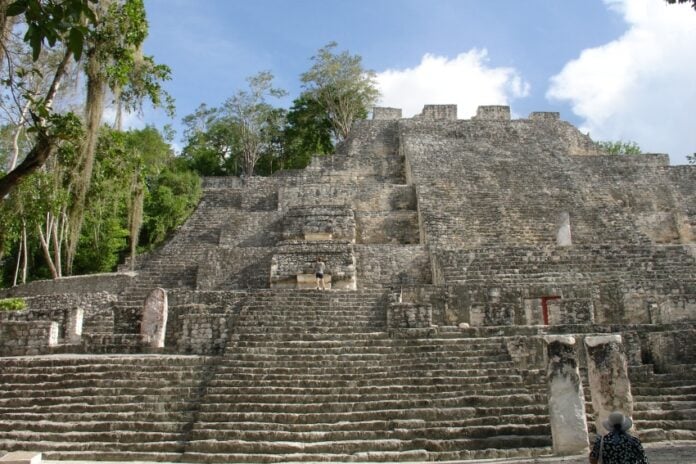
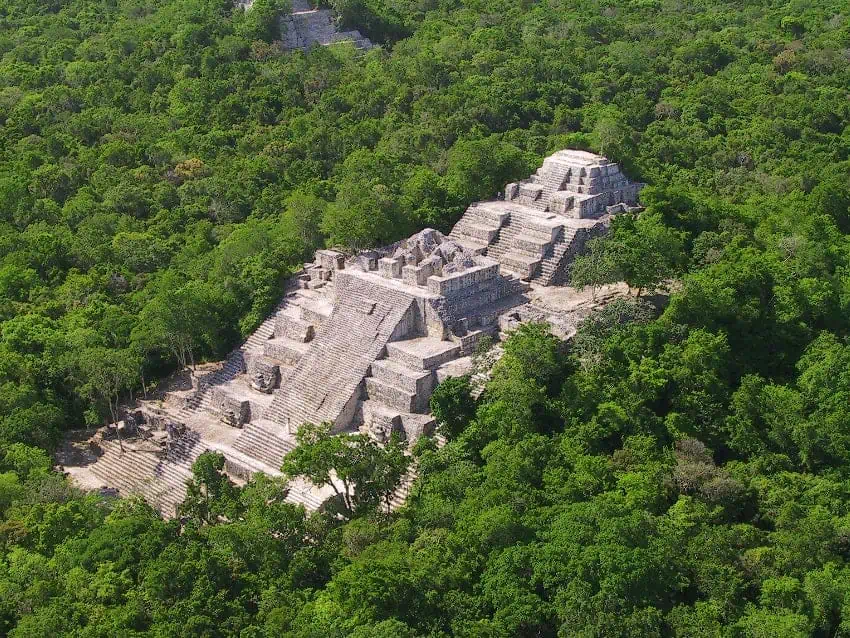
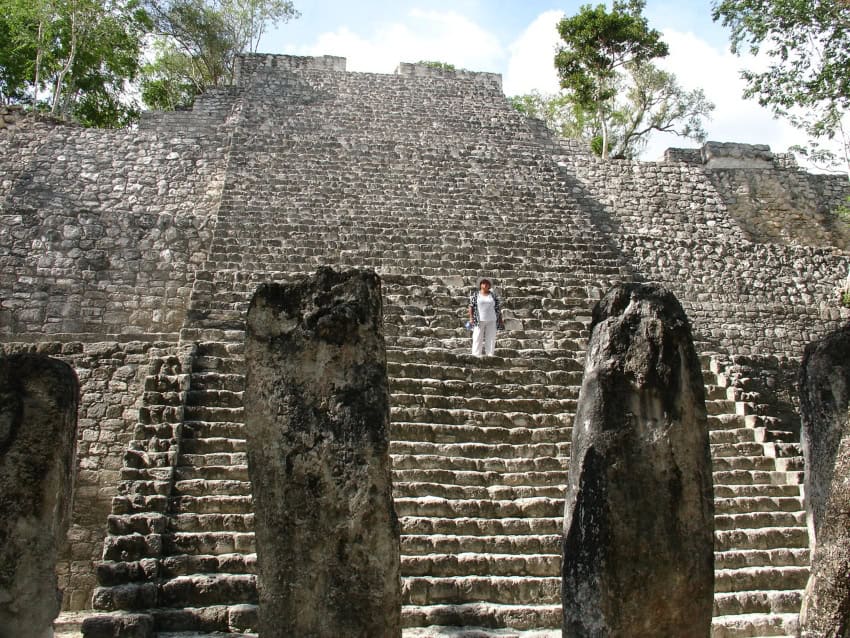
The significant population growth of this period was accompanied by an increase in cities’ urban spaces, and, consequently, in the size of the cities’ civic-ceremonial structures. For example, in the Campeche city of Calakmul’s great pyramid, also known as Structure II, the site eventually reached approximately 55 meters in height after having been renovated during seven construction stages since its initial construction in the Preclassic period. 

This construction boom was accompanied by a considerable increase in the number of stone monuments, altars, stelae and so on, which bore hieroglyphic and iconographic inscriptions due to the great development, refinement and specialization of writing and art. The artists of cities like Palenque deserve special mention for the skill of their master scribes and carvers, who depicted the dynastic, mythological and political histories of their ruling lineages in spectacular works such as the polychrome ceramics known as “dynastic vessels” or panels carved and painted in vibrant colors.

Maya vase art
Figure 2, from a polychrome vase showing the diversity of court life in the Late Classic Maya period. (Mayavase.com)

Researchers have estimated that large cities like Calakmul and Tikal at their peak may have housed around 150,000 inhabitants. This intense population pressure that began at the beginning of the seventh century also meant that these cities’ agricultural systems had to be intensified to support these large populations. It also motivated the strongest political entities to expand their territory in order to dominate trade routes that facilitated their access to both essential goods and the luxury goods that the elite demanded. 

Warfare and major rivalries

Not surprisingly, this resulted in increased warfare throughout the Maya world, with ruling dynasties clashing in bloody wars. Toniná, located in modern-day Chiapas, for example, engaged in protracted conflicts with the rulers of Palenque, and its victories and captives were depicted on many of the city’s stone monuments. 

In the Usumacinta River basin, the cities of Yaxchilán and Piedras Negras, in Chiapas and Guatemala, respectively, engaged in a major rivalry as they vied for control of the river route and regional hegemony. In the Petexbatún region, in southwestern Petén, Guatemala, the battles surrounding control of the Pasión River were significant. This crucial river route connected the southern territories — from which many of the jade, obsidian, and quetzal feather cores originated — with the central Petén region. In this area, the major competitors included Dos Pilas, Ceibal and Tamarindito, among others, not to mention the great Early Classic power: Tikal.

The clashes between Tikal and Calakmul

Following the boost Tikal had received by the arrival of foreigners from the immense city-state of Teotihuacán in the fourth century, Tikal became the dominant power in the southern Maya Lowlands until the early seventh century, controlling the region’s main trade routes. However, in A.D. 562, the geopolitical reality of the Maya Lowlands was shaken by a crucial event. 

Altar 21 from the city of Caracol in Belize — about 75 kilometers east of Tikal —  allows us to understand the regional political configuration at the beginning of the sixth century, in which Tikal and Caracol were allies. A few years later, however, the alliance broke down with the start of a conflict involving a powerful group from a city located far to the north, in Quintana Roo, Mexico. This was the city of Dzibanché, ruled by the Kanu’l dynasty.

In A.D. 562, the Kanu’l dynasty — whose emblem was the serpent-head glyph — allied with Caracol and went to war together against the leaders of the city of Tikal, marking a turning point in the sociopolitical history of the Maya Lowlands. 

Stela of Lady Six Heaven
Figure 3, a stela of Lady Six Sky in the ancient Maya city of Naranjo. (Guatemala.com)

With its defeat, Tikal entered a period of decline, and the Kanu’l rulers cemented their presence in the territory, establishing their new capital in the great city of Calakmul, becoming the dominant power and a bitter enemy of Tikal and its allies.

Pablo Mumary holds a doctorate in Mesoamerican studies from UNAM and currently works at the Center for Maya Studies at IIFL-UNAM as a full-time associate researcher. He specializes in the study of the lordships of the Maya Lowlands of the Classic period. 

Mexico’s week in review: Cuba dispute escalates as Mexico faces security challenges at home

3
President Sheinbaum in front of a large seal reading Estados Unidos Mexicanos
President Sheinbaum led a ceremony in honor of Constitution Day on Thursday at Querétaro's Theater of the Republic. The week also featured another major holiday: On Monday, Catholics around the country gathered to celebrate Candlemas. (Presidencia)

High-stakes diplomacy, security operations and mixed economic news marked the first week of February in Mexico. Diplomatic tensions with Washington reached new heights as President Donald Trump celebrated the 1847 U.S. invasion of Mexico as a “legendary victory” and challenged Mexico’s Cuba policy, which Sheinbaum countered with defiant assertions of sovereignty.

Economic headwinds strengthened as business confidence sank to a three-year low and remittances posted their steepest decline in 16 years, even as the government unveiled a 5.6-trillion-peso infrastructure plan meant to revive growth.

Security challenges multiplied across states: 10 mine workers remained missing in Sinaloa, two relatives of the education minister were murdered in Colima, and Tequila’s mayor was arrested on cartel-linked extortion charges. Yet Friday’s presidential press conference in Morelia showcased Plan Michoacán’s success in cutting homicides 43%, offering a rare bright spot in an otherwise turbulent week testing the administration’s capacity to govern amid mounting pressures.

Didn’t have time to catch the top stories of the week? Here’s what you missed.

Strained Mexico-US relations

Monday brought the week’s most inflammatory moment when President Donald Trump released a White House message celebrating the 1847 U.S. invasion of Mexico, describing it as a “legendary victory” that expanded American territory. The statement, marking the 178th anniversary of the Treaty of Guadalupe Hidalgo — which forced Mexico to cede 55% of its territory — drew sharp rebuke from Sheinbaum, who declared, “We’re not Santa Anna.” Former ambassador Arturo Sarukhan called it an “in your face F… You” to Mexico.

Cuba policy tensions also intensified. Trump claimed Saturday that Sheinbaum had agreed to stop oil shipments to Cuba, an assertion the Mexican president flatly denied Sunday. Instead, she announced Mexico would send food and essential supplies via the Navy, carefully avoiding petroleum to prevent potential U.S. tariffs.

Sheinbaum promises continued humanitarian aid for Cuba — just not oil

At Monday’s press conference, Sheinbaum revealed Trump had invited Mexico to join his Board of Peace initiative. At Tuesday’s press conference, she backed former Chilean president Michelle Bachelet for UN secretary-general, declaring “it’s time for a woman” to lead the organization.

Despite the tension, the countries continue to work together on bilateral issues. On Wednesday, Mexico and the U.S. announced a plan to secure critical mineral supply chains for lithium, cobalt and copper, while Mexico committed to yearly Rio Grande water deliveries to avoid new deficits under the 1944 Water Treaty — though the U.S. reserved the right to impose tariffs for future non-compliance.

Economic warning signs

Finance Minister Edgar Amador unveiled an ambitious 5.6 trillion peso infrastructure plan through 2030 targeting energy, railways and highways, other indicators raised alarms. Business confidence, however, hit its lowest point in three years in January, with the fourth consecutive monthly decline across all sectors.

Remittances dropped 4.6% in 2025, the steepest decline in 16 years, falling to $61.8 billion as Trump’s deportation policies, a weakening U.S. labor market and stronger peso affected millions of Mexican families.

But environmental news provided hope: Mexico started 2026 with its lowest drought levels in six years, with only 7.4% experiencing water shortage — down from 76% at 2024’s crisis point. After several tough drought years, a year of abundance could help agriculture recovery and take the pressure off water-intensive industries.

An infrastructure milestone

Monday brought the completion of the Toluca-Mexico City El Insurgente train line, connecting the cities in 45 minutes for 90 pesos. The 58-kilometer line took nearly 12 years and 141 billion pesos — more than four times the initial estimate — but officials framed it as transformative for metropolitan mobility.

Observatorio station photographed from above
The completed line runs from Zinacantepec (west of Toluca) to the Observatorio station in Mexico City, stopping at downtown Toluca, Metepec, Lerma, Santa Fe and Vasco de Quiroga along the way. (José Luis Conde/Presidencia)

Security crises and enforcement

Sinaloa remained a focal point as federal forces intensified the search for 10 kidnapped mine workers from the Vizsla Silver project in Concordia. The government deployed 1,190 additional personnel including Army troops, Special Forces and armed helicopters. Authorities also detained suspected Sinaloa Cartel operator Jesús Emir “N” connected to the shooting of two legislators, part of Monday operations that arrested 16 organized crime suspects and dismantled four meth labs.

Violence reached the highest government levels when two close relatives of Education Minister Mario Delgado were murdered in their Colima home Saturday; three suspects were later killed in a police confrontation.

At Friday’s presidential presser in Morelia, Sheinbaum touted Plan Michoacán’s results, showing homicides declined 43% between October and November. She also discussed the arrest of Tequila Mayor Diego Rivera Navarro on extortion charges and alleged CJNG ties, emphasizing “no political party, least of all Morena, can be a cover for crime.”

Environmental enforcement also advanced: Authorities fined Zinc Nacional 83.2 million pesos after finding dangerous heavy metal contamination near its Monterrey plant.

Political reforms and pushback

Sheinbaum announced electoral reform measures to block organized crime funding, though opposition critics warned of “formalizing narco-politics.” When a BBC correspondent pressed her about Sinaloa violence — “Murders, assassinations, terrible mutilations. What’s it going to take?” — Sheinbaum defended her security strategy.

The week’s viral moment came when Sheinbaum publicly scolded Morena lawmakers in San Quintín after they requested a photo op following complaints from impoverished agricultural workers about infrastructure failures.

Cultural highlights

Despite serious challenges, not all was doom and gloom in early February. The country remains a powerhouse of culture and innovation as Art Week kicked off in Mexico City and cities prepare for Carnival 2026. Here are a few of the highlights:

Looking forward

The honeymoon phase of Sheinbaum’s term appears to be winding down, as she finds herself under more pressure at home and abroad. Domestic security and US relations remain top challenges for Mexico, with Trump’s provocations signal confrontation extending beyond policy into cultural antagonism. The infrastructure plan’s success depends on securing private capital amid declining business confidence, and persistent cartel violence continues to test security coordination and political alliances. How Sheinbaum navigates Washington’s aggressive stance while pursuing development and maintaining sovereignty will define her administration’s 2026 trajectory.

Looking for last week’s round-up? Check it out here.

Mexico News Daily


This story contains summaries of original Mexico News Daily articles. The summaries were generated by Claude, then revised and fact-checked by a Mexico News Daily staff editor.
MND Tutor | Grammys

0

Welcome to MND Tutor! This interactive learning tool is designed to help you improve your Spanish by exploring real news articles from Mexico News Daily. Instead of just memorizing vocabulary lists or grammar rules, you’ll dive into authentic stories about Mexican culture, current events, and daily news.

Mexican composer Gabriela Ortiz just had a Grammy night for the ages — but her journey from childhood folk musician to classical music powerhouse is the real story. The 61-year-old’s latest work draws inspiration from Mexico’s mystical cenotes, blending her deep cultural roots with cutting-edge composition.

Discover her story, and more about Mexican music as you explore this fascinating tradition and take the opportunity to learn some Spanish in today’s lesson. If you would like to read the original article, click here.


Let us know how you did!

The MND News Quiz of the Week: February 7th

0
News quiz
(Mexico News Daily)

What's been going on in the news this week? Our weekly quiz is here to keep you on top of what’s happening in Mexico.

Get informed, stay smart.

Are you ready?  Let’s see where you rank vs. our expert community!

It's time for Mexico's biggest carnaval! Where is it held?

Train-crazy Mexico has opened yet another new line, beginning in Mexico City. Where does it terminate?

Churro institution has opened a second location in the United States. Where?

The Luz de Esperanza Collective are helping some of Mexico's disappeared tell their stories. How?

Los Cabos luxury hotel Viceroy has partnered up with Petite Plume to produce an exclusive new range. What are they making together?

Remittances to Mexico are at their lowest level in 16 years. Which state receives the highest number of transfers?

President Claudia Sheinbaum delivered a 'warm scolding' to Morena party members at a press conference this week. Why?

U.S. President Donald Trump has found another way to antagonize Mexicans, releasing a “presidential message” of celebration. What did he celebrate?

Mexican airport operator Grupo Aeroportuario del Pacífico is expanding several airports across the country. Which one of these airports is NOT expecting an upgrade by 2030?

The mayor of Tequila, Jalisco has been arrested for corruption. Which of these crimes is he NOT accused of?

What does news industry carnage mean for MND? A perspective from our CEO

25
As social media and AI ramp up the pressure on the media industry, publications' survival is in the hands of their readers. (Shutterstock)

The past few weeks have brought more troubling news across the news media landscape. To name a few:

1. The Washington Post, a top-five circulation newspaper in the United States and in publication since 1877, announced significant cuts this week. The company fired over a third of its journalists, more than 300 people out of a total of 800.

2. The Pittsburg Post-Gazette, the largest newspaper serving Pittsburg and in business since 1786, shut down last month after 240 years in business. That’s 240 years of community journalism — gone!

3. “60 Minutes” — once one of the most respected news shows on TV for decades — has seen an erosion of trust from its viewers as the program has been seen as increasingly politically biased. In late 2025, it faced a scandal related to what was deemed favorable editing of an interview with Kamala Harris. Now again in 2026, under new leadership, it faces accusations of favoritism towards the Trump administration. What was once a rock steady pillar of unbiased journalism now has a serious credibility and reputation problem from both sides of the political aisle.

4. Since 2005, the United States has lost nearly 40% of its newspapers, almost 3,500 in total. This means that in a typical week, an average of two newspapers in the U.S. shut down!

5. Versant Media Group — the owners of the business news network CNBC and other outlets like MS NOW and the USA Network — had its IPO in early January and has since seen its stock drop by a third in just one month!

This is scary stuff if you own an online newspaper like my wife and I do. But the real question is: What does this mean for all of us?

For publishers:

1. “Being political” or picking sides in today’s political climate is a very risky business.

2. It’s nearly impossible to outrun a legacy print media business model as the “innovators dilemma” slows the transition to digital.

3. A polarizing leader, such as Jeff Bezos of the Washington Post or Bari Weiss of CBS News, makes for an easy target for readers/viewers.

4. The ad-based revenue model that sustained the media industry for decades simply doesn’t work anymore for most companies.

5. Big tech companies and their AI models are truly an existential threat to the entire news media industry.

A smartphone showing various news headlines
Big tech companies and AI have contributed to the crash of the news industry — though some publications still manage to defy the odds. (Unsplash)

For consumers of news:

1. Understand that although much of the pain being experienced by the industry is self-inflicted, much of it is not. The news industry has faced massive threats and challenges over recent years. From a shift of print to digital to a massive decline in ad revenues, to the rise of social media, to now the threat of AI. This has been exceptionally difficult to navigate and very few companies have been successful in managing it.

2. Social media is not a “like for like” replacement of the traditional news media. It is less transparent, it is not fact-checked and it is easy to hide the author’s identify. It is also fraught with misleading or downright fake news, and it is increasingly filled with AI-created content that is completely false and misleading. Although traditional news media is far from perfect, social media news, relatively speaking, is a cesspool.

3. Most importantly — it’s critical for you to support the media sources that you value. Put simply, if you don’t, they will disappear. It’s not hyperbole to imagine a world where unbiased, fact-checked news sources no longer exist — in fact, it’s happening before our very eyes at the rate of two newspapers per week!

Imagine a world where all news reporting is just opinions — we are racing towards that world. Although there are some great opinion perspectives out there, we cannot lose the agency to make up our own minds based on our own review of the facts. We cannot outsource thinking and opinion-forming to the loudest (or most well-funded) voices.

Once we reach that world, how do we ever go back? How do we ensure our children and grandchildren become trained, active, curious seekers of knowledge and truth? Very serious questions for very serious times.

Our commitment — and our ask

The team at Mexico News Daily will continue to provide you, day in and day out, with fact-based, objective reporting on Mexico and Mexico’s relationship with the world. We will continue to do so without advertising, in order to give you the best reading experience possible. And we will continue to invest in our business to increase our impact, with initiatives like our new MND Kids platform now being used in schools in both the U.S. and Mexico.

This is not an easy business and my wife and I still have not taken one peso of salary in the nearly 3.5 years since we have purchased MND. That’s not right. That’s not fair. But it’s the reality we have chosen as we have eliminated advertising, built up and invested in our team, and added new platforms like MND Kids and MND TV on YouTube.

I am often asked “How can I support the great work MND does?” The answer is simple and urgent:

Subscribe. Encourage others to subscribe. Share our content with people who value complete, fact-based reporting on Mexico and its place in the world.

We will soon be adding a new feature on our website that allows paid subscribers to “gift” several free MND articles to friends each month — helping us reach future subscribers.

Here’s one last thing that you need to know: Just reading our free newsletter or following us on social media generates zero revenue for us. I can’t tell you how many times I hear, “I love you guys, I follow you on social media” or “I love you guys, I get your free newsletter.”  To which I am forced to say, “Thank you, but that isn’t really supporting us. If you truly value our work, we need you to become a paid subscriber.”

The business model is simple: Paid subscribers fund independent journalism. No subscribers means no journalism. We are asking you to choose which world you want to live in and which world do you want to leave behind for your children and grandchildren to live in.

Thank you for taking the time to read my perspective today and for supporting our work and our team.

The Mexico News Daily team at a recent meet-up in Mexico City.
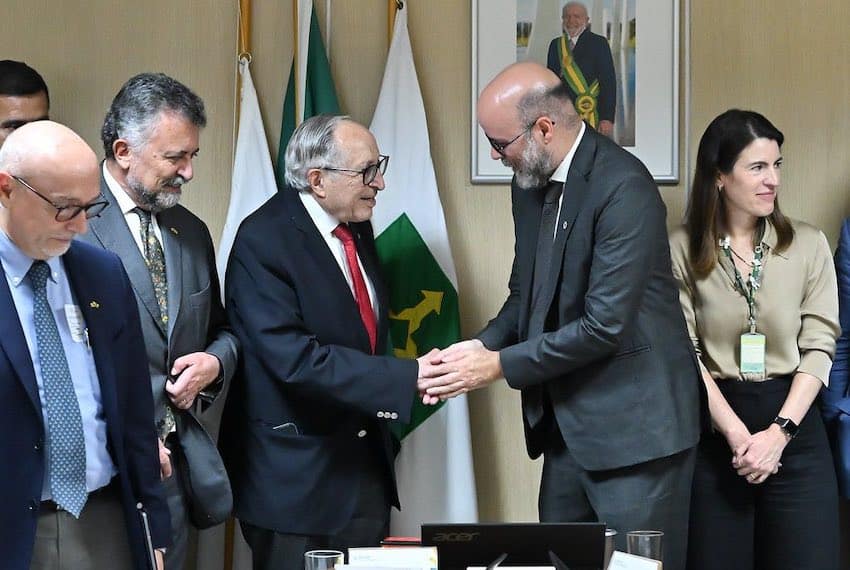
Part of the Mexico News Daily team at a recent meet-up in Mexico City. (Travis Bembenek)

Travis Bembenek is the CEO of Mexico News Daily and has been living, working or playing in Mexico for nearly 30 years.